
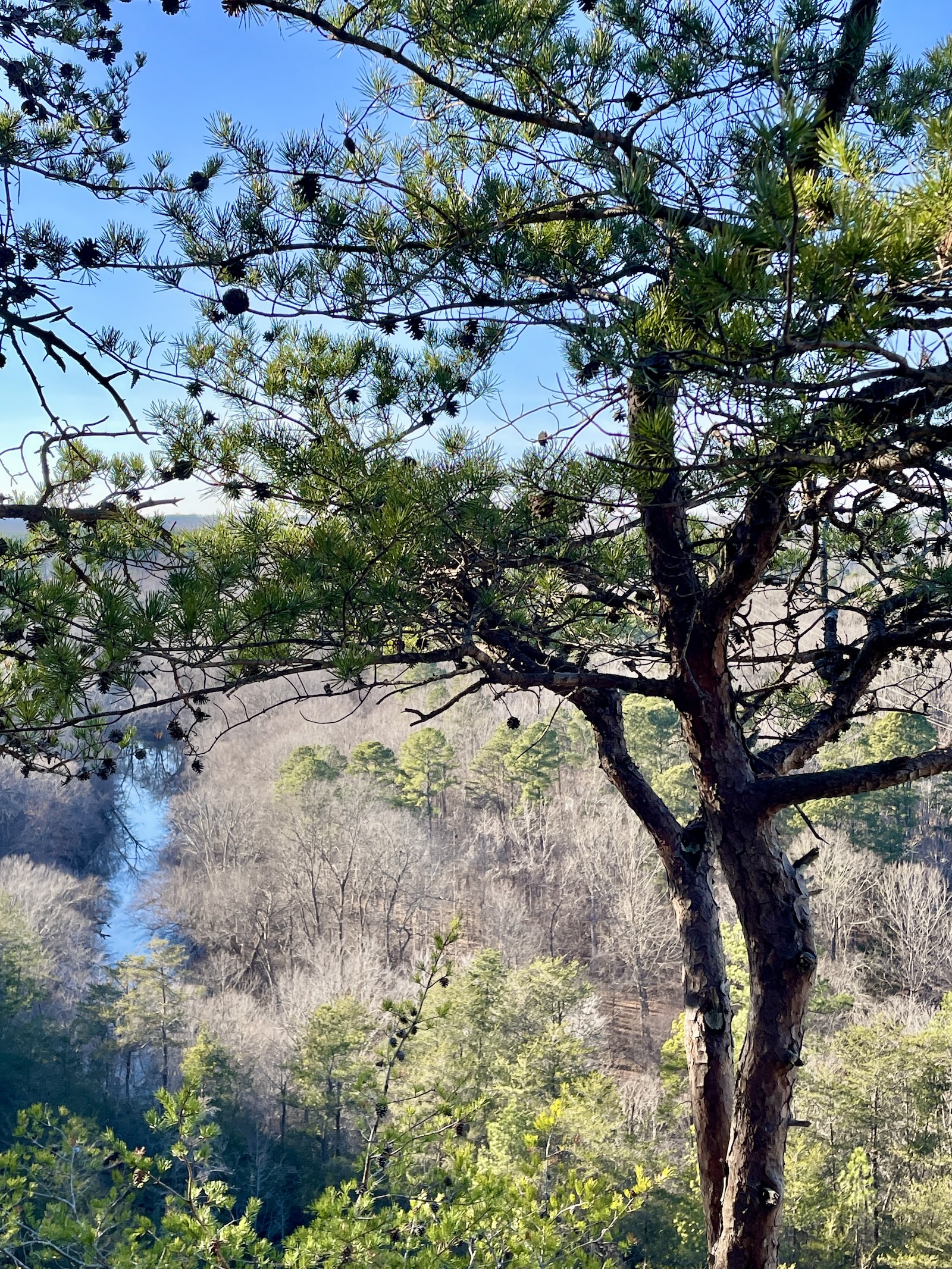
If God exists, he isn’t just churches…He’s the forest, He’s the desert. He’s the ice caps, that are dying….” Mary Oliver
…We have the intelligence to grasp what is happening…and the courage to take steps that may bear no fruit in our lifetime.” Barry Lopez
THIS IS A CORRECTED VERSION OF A PREVIOUS POST.
As I write this, the temperature at the Raleigh-Durham International Airport is 98 degrees.
We’ve had almost no rain this spring and early summer. The Triangle has reached “exceptional drought” levels, the most severe category used by the U.S. Drought Monitor.
The Eno River is dangerously low, with flow far less than 30 percent of the historical median for this time of year. Yet in 2025, the Eno rose to 26 feet during Tropical Storm Chantal, flooding the immediate area and reaching the height of a local overpass bridge, during a day with over 10 inches of rain. Earlier in 2025, Hurricane Helene nearly wiped Asheville off the map and completely destroyed nearby towns.
Yet our mighty little community is awake, aware, and responding.
In April, Hillsborough volunteer groups held a Climate Challenge that was exceptional in its breadth and depth. My husband and I attended a dozen events between us. All the bases were covered. On the technical side, an expert from The Nicholas Institute for Energy, Environment, and Sustainability at Duke University gave a presentation on heat. I didn’t know heat is the leading cause of weather-related death in the United States.
A panel of experts discussed drinking water and flooding, and the local Bluestem Conservation Cemetery held an open house with information about green burial. There were excellent presentations on permaculture and composting, as well as a documentary about Duke Energy’s climate deception. Concerned Carolinians led a rally for climate action at the courthouse square.
On a clear night, stargazing at the Confluence Natural Area, where the two forks of the Eno River merge to form the river’s main stem, drew a crowd, and so did a regenerative farm tour. Local restaurants hosted three “Meatless Mondays,” and there were guided nature walks on the Riverwalk and at the Confluence.
I believe we are urgently called to change our relationship with nature. With our technical knowledge, we are fully capable of making this transformation, but not without a strong sense of intention, devotion, and joy. Art, literature, music, poetry, spiritual practices, celebrations, and rituals that honor the earth – all of these and more can help us step up to the challenges ahead, and I was delighted that the Climate Challenge included these dimensions as well.
In fact, the many Climate Challenge events complemented one another, making for a rich overall experience. I especially appreciated seeing familiar faces show up at event after event. There was a strong sense of community.
Amazingly, our town has a Poet Laureate. Amal Kassir wrote original poetry for the Challenge, gave a beautiful reading on Earth Day, and led a poetry-writing workshop. Please be sure to listen to the three brief poetry selections below – they are the shining stars of this blog post.
Poet Laureate of Hillsborough, Amal Kassir, inspiring us with her original poetry written for the Climate Challenge. When she says, “I keep the family tree afruit,” Amal means this literally – she and her husband are expecting a baby this summer.
I had the opportunity to lead an earth meditation, and a therapist taught practices to help us acknowledge and express our grief over climate change and disruption. Someone who attended the eco-grief event talked about her sorrow over what her grandchildren may face going forward, and said it hadn’t occurred to her that these feelings are actually a form of grief.
One of the reasons I became a mindfulness meditation teacher is that I believe our culture hesitates to express and even name grief stemming from climate change or the inevitable personal loss that comes with life.
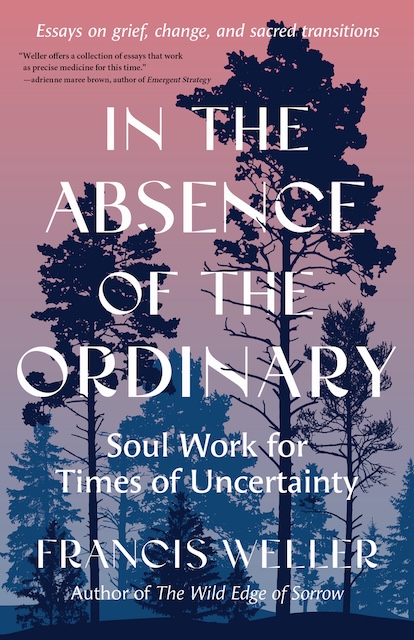
As Francis Weller writes in his books The Wild Edge of Sorrow and In the Absence of the Ordinary, “In today’s world, most of us carry grief and do not even know it. We have been trained at a very young age how not to feel.”
I love how mindfulness meditation teaches us to listen deeply to ourselves, cut through the numbing and constant distraction, and unearth emotions that may be causing needless suffering. The beauty of this kind of “awakening” is that the opening of our hearts that comes with accepting, welcoming, and normalizing our grief opens us to the infinite goodness inherent in the universe. We come to balance our grief with a hopeful and replenishing sense of emergence and possibility.
The poetry of fireflies and awe…..
To me, Amal’s poetry embodies this sense of emergence and possibility. Despite our lack of respect for nature and the widespread diminishment of species and landscapes across the planet, a mysterious life force presses on, replenishing and renewing the earth and all of us.
One final snippet of poetry from Amal……
“…that is to say, love is a seed.”

