We can all be saved by the beauty of the world

One of the most famous American poems ever written is calling to you:

Wild Geese

…..Whoever you are, no matter how lonely,

the world offers itself to your imagination,

calls to you like the wild geese, harsh and exciting – 

over and over announcing your place

in the family of things.

One of the most famous American poets is calling to you:

“When they [people] are in a state of being torn open by life, and they need someone to speak to that state of the soul – it’s Mary Oliver. It’s a Mary Oliver poem that they find themselves held by. And they don’t need a critic to explain to them why.”    

Ariana Reines, in “Saved By the Beauty of the World.”

Mary Oliver’s poetry is for everyone. 

You don’t have to be a poetry connoisseur. You don’t need to know anything about poetry to experience the pleasure of encountering one of her poems for the first time and the deep solace her words offer in times of grief.

It gave Mary Oliver immense satisfaction to see her poems have such wide appeal, even among people who don’t typically read poetry. That was exactly what she intended.

The new PBS American Masters documentary, “Mary Oliver: Saved By the Beauty of the World,” which airs at 9 pm EST on Tuesday, August 25, is now playing in select theaters across the country, many of which are sold out. 

If you’re new to Mary Oliver, your “beginner’s mind” might be dazzled by what you hear.

If you are already a Mary Oliver fan, you may not see as much of her in the documentary as you’d like, since she gave so few interviews, but you’ll appreciate the famous and immensely cool people singing her praises and savoring her poems. 

Mary Oliver and I are from the same suburban Cleveland town, though she came along twenty years before my time. She wrote about skipping school and heading into the woods with a book of Walt Whitman poems; I know the woods (now long gone) she described. 

She wrote a poem about a beloved pond replaced by the then-largest shopping center in America; I know that shopping center (now largely neglected and abandoned), where we bought our school clothes and our fancy birthday cakes.

I didn’t pay much attention when Mary Oliver won the Pulitzer Prize in 1984. Even though I’d majored in English literature and was working in book publishing in New York City, I hadn’t read poetry in years. When I sampled a few poems from her collection, “American Primitive,” they didn’t speak to me, maybe because, amid skyscrapers and endless concrete, nature felt distant and irrelevant.

But somewhere along the line, I gave Mary Oliver another try. It must have been the right poem (I don’t remember which) at the right time. I don’t have the words to describe what I felt. I suppose you could call it a revelation, a kind of conversion. By then, I’d left New York City, in part to be closer to the natural world. Here was a poet inviting me to go even deeper into nature.  I have read Mary Oliver’s poems ever since. They tell me how to live.

Below are a couple of the best performances of Mary Oliver’s poems I was able to find online.

Candace Barrett Birk’s recitation of “When Death Comes” is captivating. Despite the bleak title, I think Mary’s expansive vision will lift you up.


“The Journey,” which hints at trauma and the instinct to survive, is one of Mary Oliver’s most powerful and best-loved poems. I prefer this performance by singer/songwriter Chris Thile to the one in the documentary, though both are moving.  

The day I went to the theater in Cleveland Heights to see “Saved By the Beauty of the World,” the air quality was so poor because of the Canadian wildfires that I wore a mask. 

I’d just heard, in an oddly definitive and poorly reported PBS newscast, that the age of reading (and, by implication, writing) is now over because of screens and AI.

I want poems written by humans, not by machines, don’t you?

I want poems that urge us to consider very, very carefully what we plan to do with our one wild and precious life.

Mary Oliver died in 2019, but I don’t think her poetry will fade. I believe her voice will become more relevant, more urgent, and more treasured as we face a very uncertain future. 
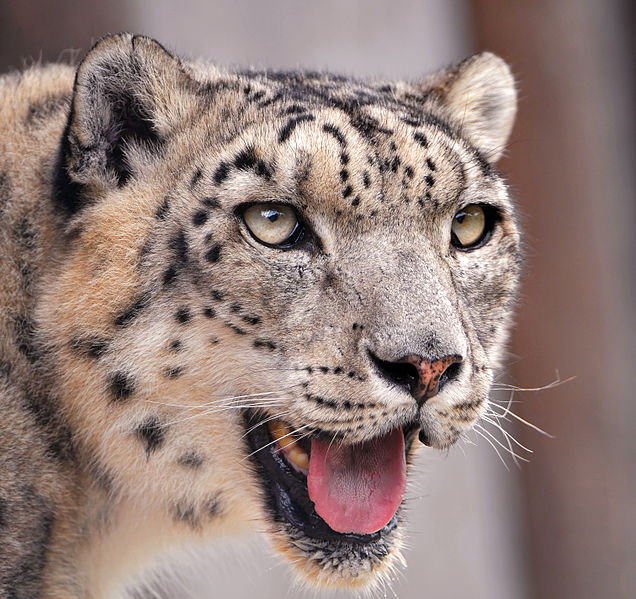
Barry Lopez brought us I, Snow Leopard

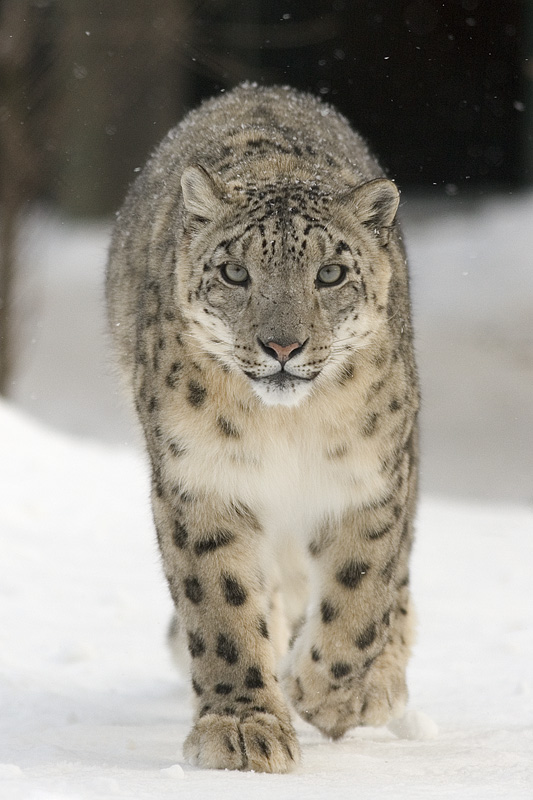
Snow Leopard

Photo by Tambako The Jaguar Creative Commons Attribution-Share Alike 2.0 Generic license

“I, SNOW LEOPARD is both a lyric and an elegy. It is easy to imagine its lines being loudly hailed in whatever country the poem finds itself in. It’s publication comes at a time when people everywhere have begun to wonder what a voice like this, suppressed for centuries, wishes to say now, in this moment when the Snow Leopard’s human brothers and sisters find themselves side by side with him. Imperiled.”   Barry Lopez

Barry Lopez

Happy New Year, everyone! In honor of Barry’ Lopez’s passing on Christmas Day, I’m reposting my previous Books Can Save a Life writings about him. I wrote the following post on April 16, 2016, after Lopez visited Rochester, NY:

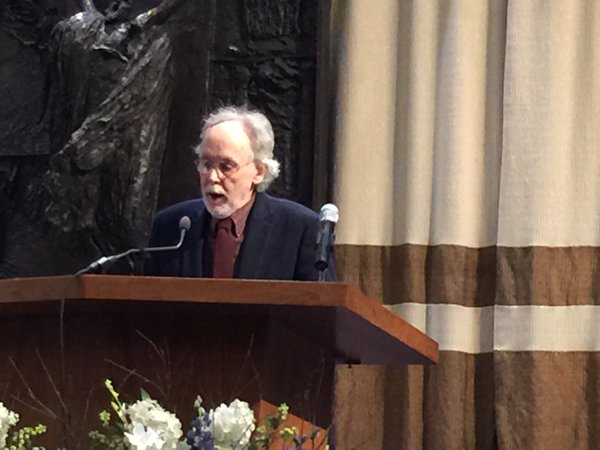
Barry Lopez came to Rochester this week to receive “The Art of Fact” award for literary nonfiction presented by The College at Brockport Writers Forum and M&T Bank.

If you’ve been following my blog, you know that Barry Lopez is one of my heroes, not quite at the level of Pope Francis and the Dalai Lama, but close. (See my blog’s header quote.)

Lopez is one of the very best nature writers, and if you love animals and wildlife, you’ll love his nonfiction books, essays, and short stories. He has travelled to 90 countries and has a tremendous respect for the animal world and the many indigenous peoples he’s come to know.

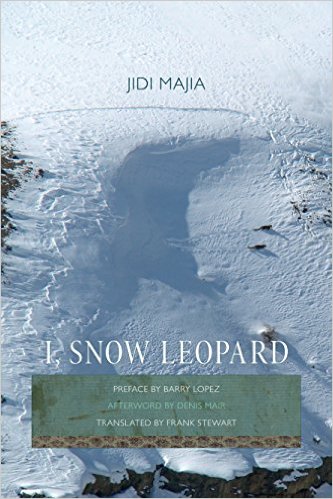
I, Snow Leopard

Lopez came to Rochester to receive his award and to deliver to us the poem “I, Snow Leopard” by Jidi Majia. 

I wasn’t familiar with either the poet or the poem, but Lopez said that when he found out “I, Snow Leopard” had been published in Asia and Europe, but not in the United States, he had to set things right.

He felt that it was vitally important that the American people hear the words of the snow leopard in this poem. So he saw to its publication here, and wrote the foreword to the English edition.

Jidi Majia, a member of the indigenous Nuosu (Yi) people who live in the mountains of southwestern China, has won numerous literary awards.  As far as I could tell from what I found online, few of his poems have been translated into English.

Majia’s poem is written in the words of a snow leopard, which is viewed by the Nuosu as a wisdom keeper, a being with “biological authority,” according to Lopez.

He told us that when he first began traveling the world and exploring, in his thirties, he viewed wild animals in an amateur, superficial, childlike way, until he learned to embrace the much more refined view held by native peoples.

A poem is a door anyone can walk through, Lopez said, and this poem is the mysterious and elusive snow leopard’s expression of grief and a warning to human kind:  “Do not hunt me any longer.”  Human violence toward animals puts everyone in peril, animals and humanity alike.

Before Lopez began, he said he wasn’t worthy to read “I, Snow Leopard,” but he’d try. He said that, as far as he knew, we’d be the very first American audience to hear the poem.

We listened to this exclusive reading in the soaring space that is the chapel in Rochester’s Temple B’rith Kodesh. “I, Snow Leopard” is beautiful, haunting, simply expressed and accessible even to listeners not accustomed to hearing poetry.

Uncia_uncia
Photo by Bernard Landgraf. CC BY-SA 3.0

After the reading Lopez answered questions and spoke informally and earnestly. As we listened, the audience seemed to be hanging on his words.  Here are some direct quotes I managed to scribble in my notebook:

“Each soul is essential to the warp and weft of the universe.”

“I want to see people come alive.”

“We know what to do and we have to do it now.”

Fixing our world “will take people of great courage. People like you. Because Washington is not doing it.”

“We should be holding hands.”

“The only thing that really matters is to be in love.”

I wrote down the following words, too, but I don’t recall if they are from the poem or if they are Barry Lopez’s words. I believe they are both:

“There is no other place for any of us to go.”

“I, Snow Leopard” is available on Amazon. Barry Lopez told me it is also to be published in a future issue of Orion Magazine.

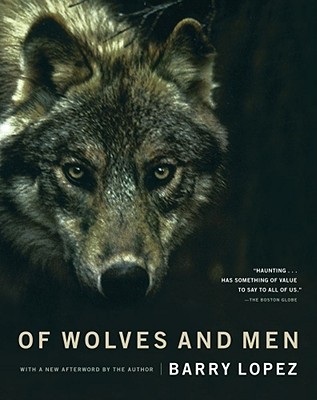
Of Wolves and Men

If you’d like to read Barry Lopez, Arctic Dreams, his nonfiction work about the Far North that won the National Book Award, is a great book to start with. I haven’t yet read Of Wolves and Men, but when I saw the mesmerizing cover photo of a wolf on display at the reading, I added it to my to-read list.

Lopez writes fiction, too. I especially liked his subversive collection of short stories, Resistance, which he wrote shortly after 9/11, about surveillance and “parties of interest” to the government.

If you want to know more about the fascinating snow leopard, Peter Matthiessen’s memoir, The Snow Leopard, is a great read.

The Secret Life of Walter Mitty, with Ben Stiller and Sean Penn, is one of my favorite movies. Watch it. You might spot a snow leopard.

Barry Lopez brings us I, Snow Leopard

Snow Leopard
Male snow leopard

Photo by Tambako The Jaguar Creative Commons Attribution-Share Alike 2.0 Generic license

“I, SNOW LEOPARD is both a lyric and an elegy. It is easy to imagine its lines being loudly hailed in whatever country the poem finds itself in. It’s publication comes at a time when people everywhere have begun to wonder what a voice like this, suppressed for centuries, wishes to say now, in this moment when the Snow Leopard’s human brothers and sisters find themselves side by side with him. Imperiled.”   Barry Lopez

Barry Lopez


Barry Lopez came to Rochester this week to receive “The Art of Fact” award for literary nonfiction presented by The College at Brockport Writers Forum and M&T Bank.

If you’ve been following my blog, you know that Barry Lopez is one of my heroes, not quite at the level of Pope Francis and the Dalai Lama, but close. (See my blog’s header quote.)

Lopez is one of the very best nature writers, and if you love animals and wildlife, you’ll love his nonfiction books, essays, and short stories. He has travelled to 90 countries and has a tremendous respect for the animal world and the many indigenous peoples he’s come to know.

I, Snow LeopardLopez came to Rochester to receive his award and to deliver to us the poem “I, Snow Leopard” by Jidi Majia. 

I wasn’t familiar with either the poet or the poem, but Lopez said that when he found out “I, Snow Leopard” had been published in Asia and Europe, but not in the United States, he had to set things right.

He felt that it was vitally important that the American people hear the words of the snow leopard in this poem. So he saw to its publication here, and wrote the foreword to the English edition.

Jidi Majia, a member of the indigenous Nuosu (Yi) people who live in the mountains of southwestern China, has won numerous literary awards.  As far as I could tell from what I found online, few of his poems have been translated into English.

Majia’s poem is written in the words of a snow leopard, which is viewed by the Nuosu as a wisdom keeper, a being with “biological authority,” according to Lopez.

He told us that when he first began traveling the world and exploring, in his thirties, he viewed wild animals in an amateur, superficial, childlike way, until he learned to embrace the much more refined view held by native peoples.

A poem is a door anyone can walk through, Lopez said, and this poem is the mysterious and elusive snow leopard’s expression of grief and a warning to human kind:  “Do not hunt me any longer.”  Human violence toward animals puts everyone in peril, animals and humanity alike.

Before Lopez began, he said he wasn’t worthy to read “I, Snow Leopard,” but he’d try. He said that, as far as he knew, we’d be the very first American audience to hear the poem.

We listened to this exclusive reading in the soaring space that is the chapel in Rochester’s Temple B’rith Kodesh. “I, Snow Leopard” is beautiful, haunting, simply expressed and accessible even to listeners not accustomed to hearing poetry.

Uncia_uncia
Photo by Bernard Landgraf. CC BY-SA 3.0


After the reading Lopez answered questions and spoke informally and earnestly. As we listened, the audience seemed to be hanging on his words.  Here are some direct quotes I managed to scribble in my notebook:

“Each soul is essential to the warp and weft of the universe.”

“I want to see people come alive.”

“We know what to do and we have to do it now.”

Fixing our world “will take people of great courage. People like you. Because Washington is not doing it.”

“We should be holding hands.”

“The only thing that really matters is to be in love.”

I wrote down the following words, too, but I don’t recall if they are from the poem or if they are Barry Lopez’s words. I believe they are both:

“There is no other place for any of us to go.”

“I, Snow Leopard” is available on Amazon. Barry Lopez told me it is also to be published in a future issue of Orion Magazine.

Of Wolves and MenIf you’d like to read Barry Lopez, Arctic Dreams, his nonfiction work about the Far North that won the National Book Award, is a great book to start with. I haven’t yet read Of Wolves and Men, but when I saw the mesmerizing cover photo of a wolf on display at the reading, I added it to my to-read list.

Lopez writes fiction, too. I especially liked his subversive collection of short stories, Resistance, which he wrote shortly after 9/11, about surveillance and “parties of interest” to the government.

If you want to know more about the fascinating snow leopard, Peter Matthiessen’s memoir, The Snow Leopard, is a great read.

The Secret Life of Walter Mitty, with Ben Stiller and Sean Penn, is one of my favorite movies. Watch it. You might spot a snow leopard.

April is National Poetry Month

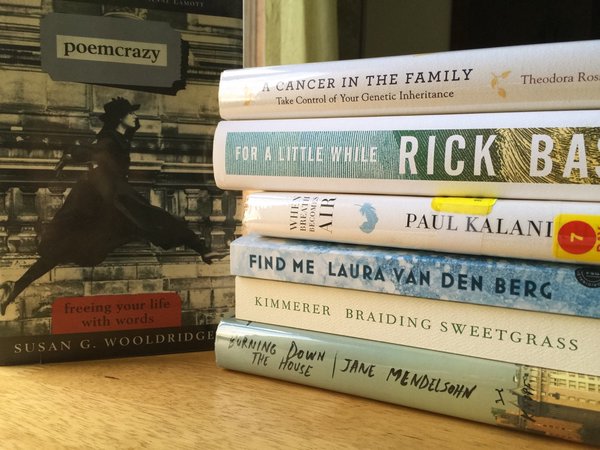
Book Spine Poetry.jpg


Let’s go poemcrazy.

Here is some book spine poetry to celebrate National Poetry Month.

This is in memory of my brother. His birthday is April 5.


A Cancer in the Family

For a little while,

When breath becomes air,

Find me

Braiding sweetgrass &

Burning down the house.


If you have book spine poetry to share, please leave it in the comments. 


Where Do Poems Come From?

I recently had a poem published in Verse-Virtual: An Online Community Journal of Poetry.  In this excellent and unique publication, the published poets are encouraged to contact each other to show their support for poems that move them. (No critiquing allowed.) The editor, Firestone Feinberg, is a joy to work with and warmly encouraging of new writers.

I wrote “Nadezhda, If You Were Here” quite a while ago, and as I prepared it for submission I was thinking about where poems – my poems – come from. In this case, I was reading a memoir by Paul Auster (I believe it was The Invention of Solitude.) In it, he includes an extraordinary letter written by Nadezhda Mandelstam to her husband, the poet Osip Mandelstam, after he’d been sent to a labor camp by Stalin. I had never heard of these people, but I was so struck by the letter I just had to read Nadezhda’s amazing memoir, Hope Against Hope, about her life with Osip.

I was reading the memoir in Wegmans grocery store on a cold winter day, when I was inspired to get another cup of coffee and start writing. That’s where my poem came from. I wasn’t sure I had much to say, but it turned out to be a direction worth exploring.

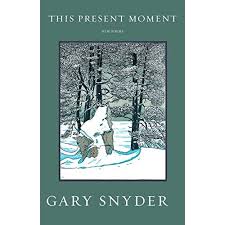
The Present MomentThis summer I’m enjoying This Present Moment, a collection of poems by Gary Snyder, who is now 85. Remember the Beat Generation? Gary Snyder is one of America’s greatest living poets. This volume includes poems about being a homesteader, father, husband, friend, and neighbor. (I’m paraphrasing the jacket copy because it is a good summary of the subject matter.) The final poem, “Go Now,” is about the death of his wife.

Even if you’re not a fan of poetry, I encourage you to take three minutes to listen to this poem by Nobel laureate Wislawa Szymborska, “Life While-You-Wait,” read by Amanda Palmer and passed along by Maria Popova and Brain Pickings. (Scroll down the page to get to the recording.) I think you’ll like it.

I’ve ordered a copy of Laudato Si’, Pope Francis’ encyclical on climate change. It is available from Amazon and other booksellers, and you can download the pdf at this link: Laudato Si’ . I’ll be writing about it here in late July, mostly from a secular perspective. Why don’t you read it with me – I welcome your thoughts, faith-based or otherwise.

Wishes in a Japanese garden

Wishes

Remembering spring (just a few weeks ago) in the Jardín Japonés, Buenos Aires. All these wishes placed end to end would make a poem long enough to fill a book.