Returning to ourselves

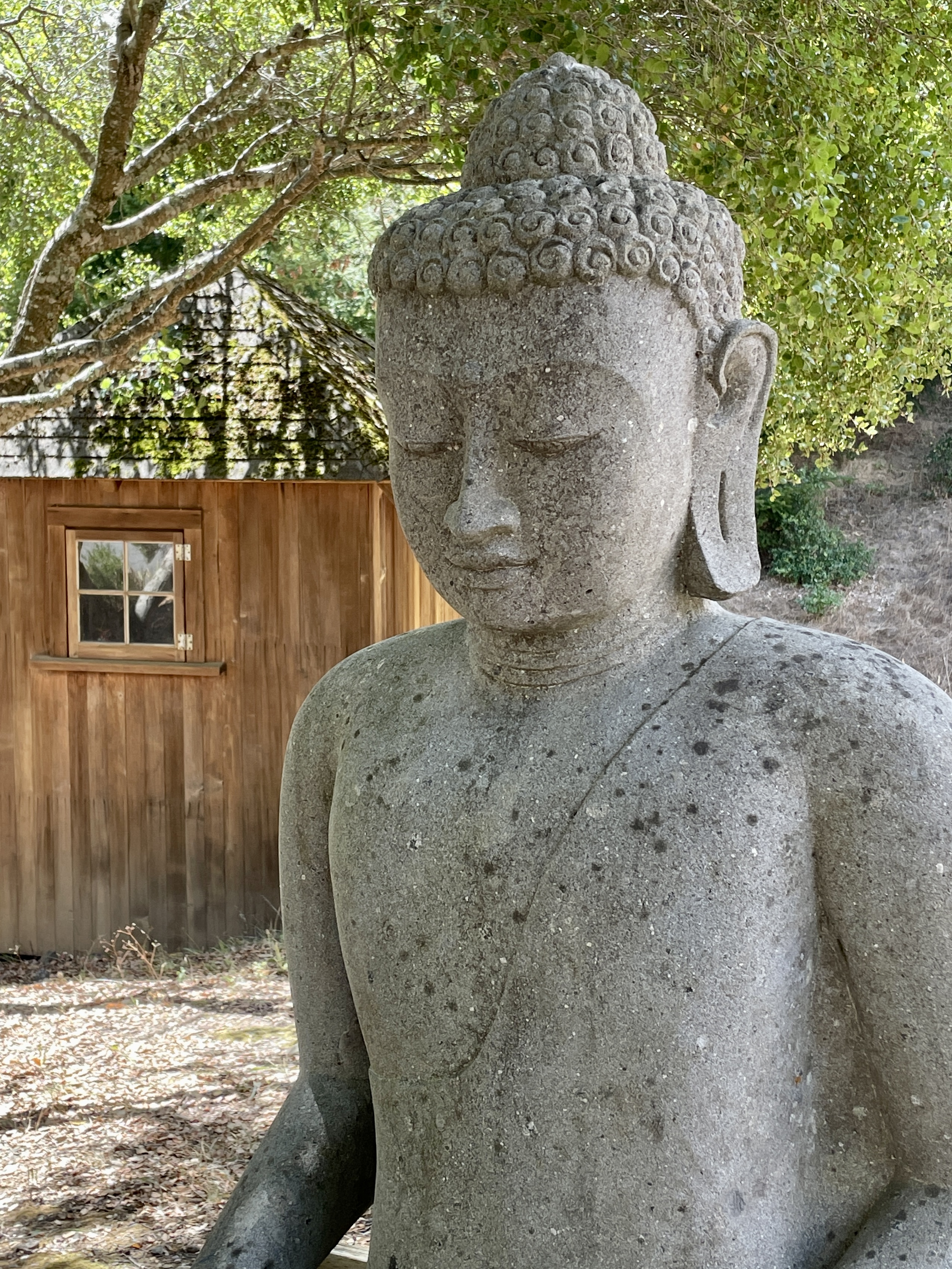
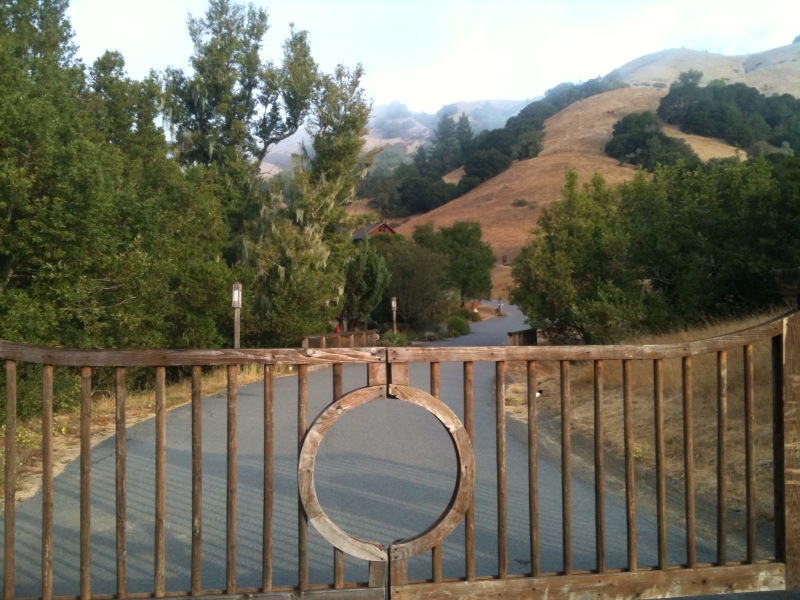
Spirit Rock gate
Spirit Rock Meditation Center, 2010

Nine of us were about to begin our first small-group meeting at Spirit Rock Meditation Center, where I was on a silent retreat. The meetings gave our teachers a chance to check in on our well-being and meditation practice. Did we have any questions? Were we facing any challenges?

Six young to middle-aged men sat across from me. My son, who works in tech, said meditation was gaining popularity in his field, and I guessed several of the men in my group worked in tech. Most of them were new to meditation and had never attended a silent retreat.

When I last went to Spirit Rock over a dozen years ago, there were far more women than men, but now only two other women my age were in our small group.

This will be interesting, I thought.

L was a teddy bear of a man with a presence that filled the room. His words tumbled out on top of each other, peppered with comic, self-deprecating asides: “I’ve never been diagnosed, but no question I have ADD. I constantly monitor six screens in my office. At home, I’ve got more screens, plus my smartphone and the TV remote, and I work them all while my kids and I watch football. Multitasking is my default setting, and my friend and work pal sitting here next to me wanted me to try meditation. I don’t know about all this silence and sitting, but I guess I’ll see what happens…”

***
Two days later, we met for our second small-group session.

L had had enough.

“I can’t sit for one more minute. I’m bored out of my mind. This isn’t for me. I’m leaving, except I can’t because I came with my friend, and he’s driving…”

“Boredom is a good sign,” Howie, our teacher, interrupted. “Meditation can be a purity practice, and as discomfort arises, you practice sitting with it…”

“That doesn’t work for me. I know when I’ve reached my limit. I’m not cut out for this. We can move on to the next person; they can take my turn to speak because I have nothing…”

Howie leaned forward, visibly annoyed. “Look at me, L. Stop talking and look at me.” Howie was not going to let L deflect.

“You don’t even know how much you’re suffering. You think you do, but you have no idea.”

L was silent, and the rest of us were, too. J, a young man with whom I seemed to share a vibe and whom I fancied would be a great partner for my son (see my previous post), caught my eye, as if to say, are you catching this drama, too?

“You need to stay here,” Howie said. “You need to sit with this. Because if you don’t face this now, when will you ever? Is this how you want to spend your life, going from screen to screen? Is this how you want to be with your family? Years will go by, and you’ll have spent your life everywhere but in the present moment.”

L listened, taking in Howie’s words.

We sat with L in his vulnerability; I hoped he felt our goodwill surrounding him. After all, when you get right down to it, weren’t we all in the same boat? Weren’t we all constantly moving from screen to screen and distraction to distraction, distanced from ourselves, our loved ones, and the unprecedented challenges urgently demanding our attention?

***

The evening before the last day of the retreat, L happened to sit next to me at dinner. We ate in silence for a while, and then I turned to him. “Do you mind if I say something?”

“Not at all.”

“You’re still here. I’ve been watching, and you’re still here.” I smiled. “Would you come back to Spirit Rock?”

L didn’t hesitate. “100 percent. 100 percent, I’d come here again.”

Truly, I was amazed. L seemed to be in a very different place.

“I’m so glad you stayed. Maybe someday you’ll teach meditation.”

“Me?” L looked surprised, doubtful.

“You’d be good at it. You’ll really know what you’re talking about.”

“My friend and I went hiking yesterday,” L said, “and we were discussing you.”

Now it was my turn to be surprised. (I figured he already knew he wasn’t supposed to be hiking and talking with a friend on a silent retreat, and I decided not to tease him about that.)

“We both think you have no reason to feel low self-esteem. You literally exude happiness and joy.”

I hadn’t expected these kind, sweet words. I’d told the group that my low self-esteem issues had been showing up, especially when I worked on revising my memoir.

“Thank you for telling me that.” I almost said that happiness and joy certainly weren’t my default state; like everyone else, I often had to work at it. But, of course, L already knew that, too.

L reached out and shook my hand. “I’ll say goodbye now because we have to leave tonight.”

“Maybe we’ll meet again someday on the path,” I said.

L stood up, dishes in hand. “These vegetarian meals are great, but I hope the next time I’m here they’ll have seen the light and started serving dessert.”

***

I wasn’t sure if I should write about L, but I don’t think he would mind. This past month since the retreat, I’ve remembered him from time to time, somewhere in Pittsburgh, perhaps with fewer screens in his life. I’ve imagined J at work in Manhattan, and the others I met at Spirit Rock going about their day-to-day lives.

Now and then, I send a meditation their way from North Carolina: May you be filled with loving-kindness. May you be safe and protected. May you be well in body and mind. May you be happy.

***
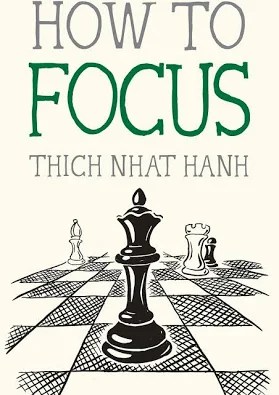
How to Focus by Thich Nhat Hanh fits in the palm of your hand. You can keep it nearby while meditating and read a page or two. I adore this little book. Below are two passages from it.

“Conscious breathing is a marvelous way to return to ourselves. When we are aware of our breath, we come back to ourselves as quick as a flash of lightning. Like a child who returns home after a long journey, we feel the warmth of our hearth, and we find ourselves again. To come back to ourselves like that is already a remarkable success on the path of mindfulness, concentration, and insight.”

“The day your mother passes away, you suffer. If someone sits close to you and shows concern, you feel some relief. This is the world of waves. It is characterized by birth and death, ups and downs, being and nonbeing. A wave has a beginning and an end, but we cannot ascribe these characteristics to water. In the world of water, there is no birth or death, no being or nonbeing, no beginning or end. When we touch the water, we touch reality in its ultimate dimension and are liberated from all these concepts. If you know how to touch your mother in the ultimate dimension, she will always be with you; you can see that she is there in you, smiling. This is a deep practice and it is also the deepest kind of relief.”

Photo: Cannon Beach, Oregon
I feel hope coming

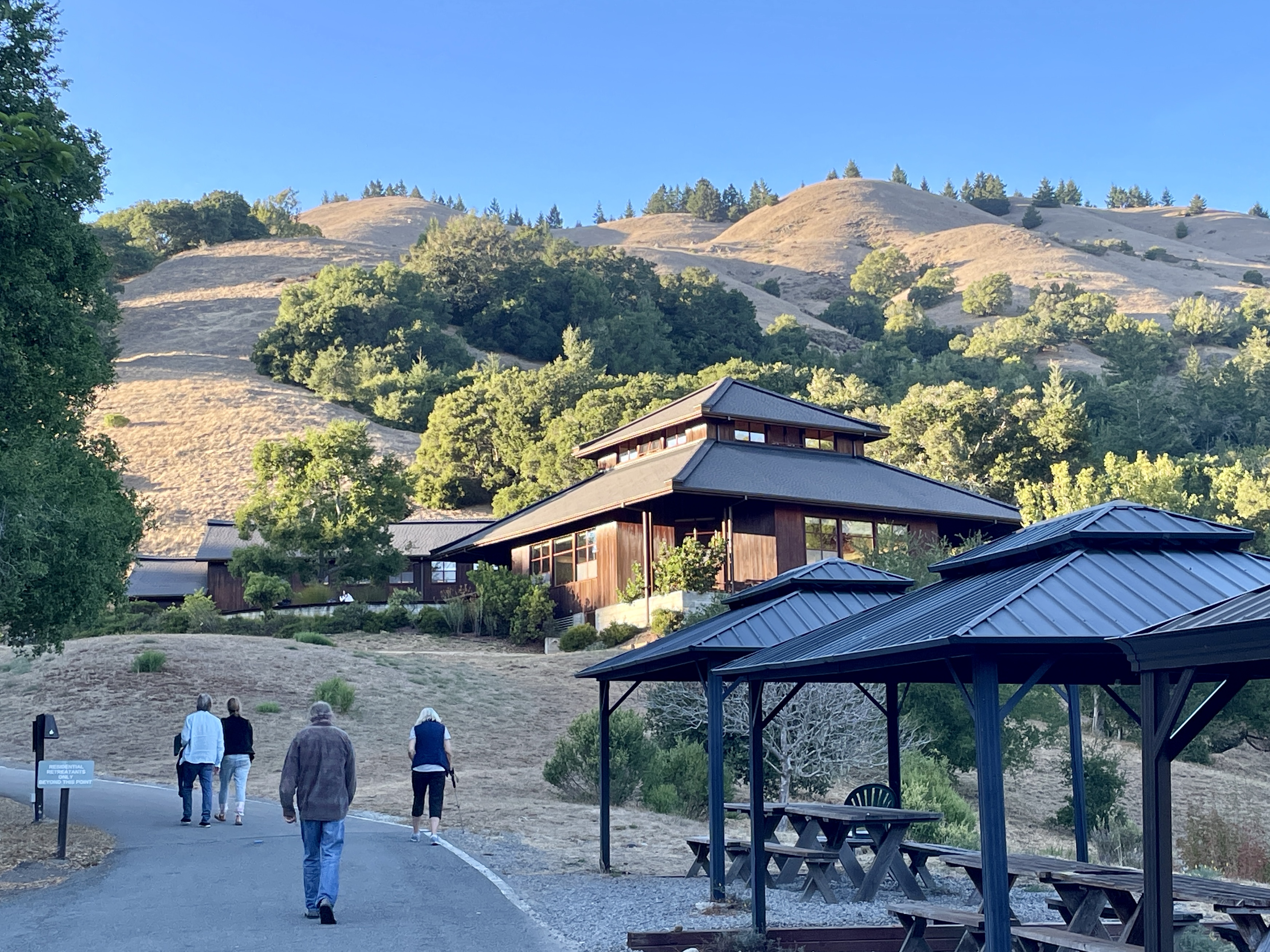
Walking to the meditation hall at Spirit Rock.

I don’t want your martial law, I want clean air.

I don’t want no enemies that ain’t even there.

– “I Feel Hope Coming,” Alabama Shakes

Attending a silent retreat at Spirit Rock Meditation Center in California. Remembering 9/11. Marking the passing of poet, novelist, and essayist Wendell Berry. A lot of life happened in the space of a dozen September days.

When I was living in New York City and working in book publishing, I’d take out-of-town guests to see the World Trade Center and my favorite view of the five boroughs. We’d gaze at the city from the observation deck or, if the wind was calm, from the rooftop. I never tired of the dizzying height or the panorama. I’d imagine my maternal and paternal grandparents from Sweden and Sicily, sailing into New York Harbor past the Statue of Liberty along with thousands of other immigrants.

By the time 9/11 happened, I was living upstate and raising a family. My husband and I limited our TV viewing of the tragedy because our sons were so young. In the years after, I never took the time to look back at that day.

But this September 11, on the 25th anniversary, I did. Social media, which I usually avoid, streamed dozens of interviews with survivors and the families of those killed, telling their unbelievable stories. After the Spirit Rock retreat, my heart was wide open, and I listened to those touched by 9/11. They had looked deeply at life and had made it their work to share their joys, sorrows, and hard-won wisdom.

A silent retreat can open your heart that way.

Days of silence and hours of meditation might seem like an impossible feat, but the routine of a silent retreat changes on the hour, with a beautiful rotation of sitting and walking meditations, a daily work assignment, teachings, Q & A sessions, and small-group meetings with the teachers. Each day begins at 5:30 am with a wake-up bell and ends at 9:30 pm, often with music. There are, of course, no smartphones or other devices. You find yourself rising to the occasion in surprising ways. The expansive silence holds every possibility.

“Spiritual practice can be as simple as a breath.” Brad Stuhlberg, The Way of Excellence: A Guide to Deep Satisfaction and True Greatness in a Chaotic World.

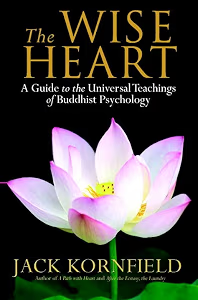
Nearly twenty years ago, Jack Kornfield and his book, The Wise Heart: A Guide to the Universal Teachings of Buddhist Psychology, enticed me to follow the insight, or vipassana, meditation path. When I pulled the book off my shelf the other day, I noticed that one chapter had an abundance of notes and underlinings: The Storytelling Mind, something many of us find ourselves working with on retreat.

We tell ourselves stories of varying accuracy as we strive to make meaning in our lives. This is normal and natural, but sometimes we forget that these stories are shaped by our personal filters and idiosyncratic interpretations. As we grow more discerning, we learn to revise or abandon a particular story that may not accurately reflect reality.

For example, on the retreat, I felt a particular kinship with J, a young man in my small practice group. I began to imagine that he could be the perfect partner for my son, who had just gone through a breakup. A fantasy, I realized, which I tried to hold lightly with a measure of humor. My maternal instinct (I’ve raised two sons and have two younger brothers) must have been working overtime.

One morning, I skipped meditation and walked instead. Over the Marin Hills, shafts of sunlight parted the fog like curtains opening to the light. As if someone were standing next to me and whispering in my ear, I heard a message that seemed to brilliantly capture the essence of a piece of writing I’d been struggling with. I knew I would be able to move forward in the writing with greater confidence and clarity.

On day 4 of the retreat, I went with anticipation to the afternoon talk because we’d been encouraged not to miss it. Before I knew it, Jack Kornfield was walking up to the dais. One of the most venerable teachers of insight meditation in America today, and the author of some of the most life-changing books I’ve ever read, gave us a beautiful teaching and led us in a lovingkindness meditation. I don’t have the words to describe the great kindness and wisdom with which Jack spoke to us that day.

We train our hearts to hold the 10,000 joys and 10,000 sorrows. This is not easy. But we learn to hold it all, even amid the chaos. And we sweep our gardens. We do the work the world asks of us. – Jack Kornfield

“The mind creates the abyss; the heart crosses it.” – Nisargadatta, Indian sage

“The thinking mind constructs views of right and wrong, good and bad, self and other. These are the abyss. When we let thoughts come and go without clinging, we can use thought, but we rest in the heart. There is an innocence to the heart. We are the child of the spirit. And there is an innate wisdom. We are the ancient one. Resting in the heart, we become trusting and courageous, and our patience grows. We do not have to think things through. Life is unfolding around us.” – Jack Kornfield, The Wise Heart

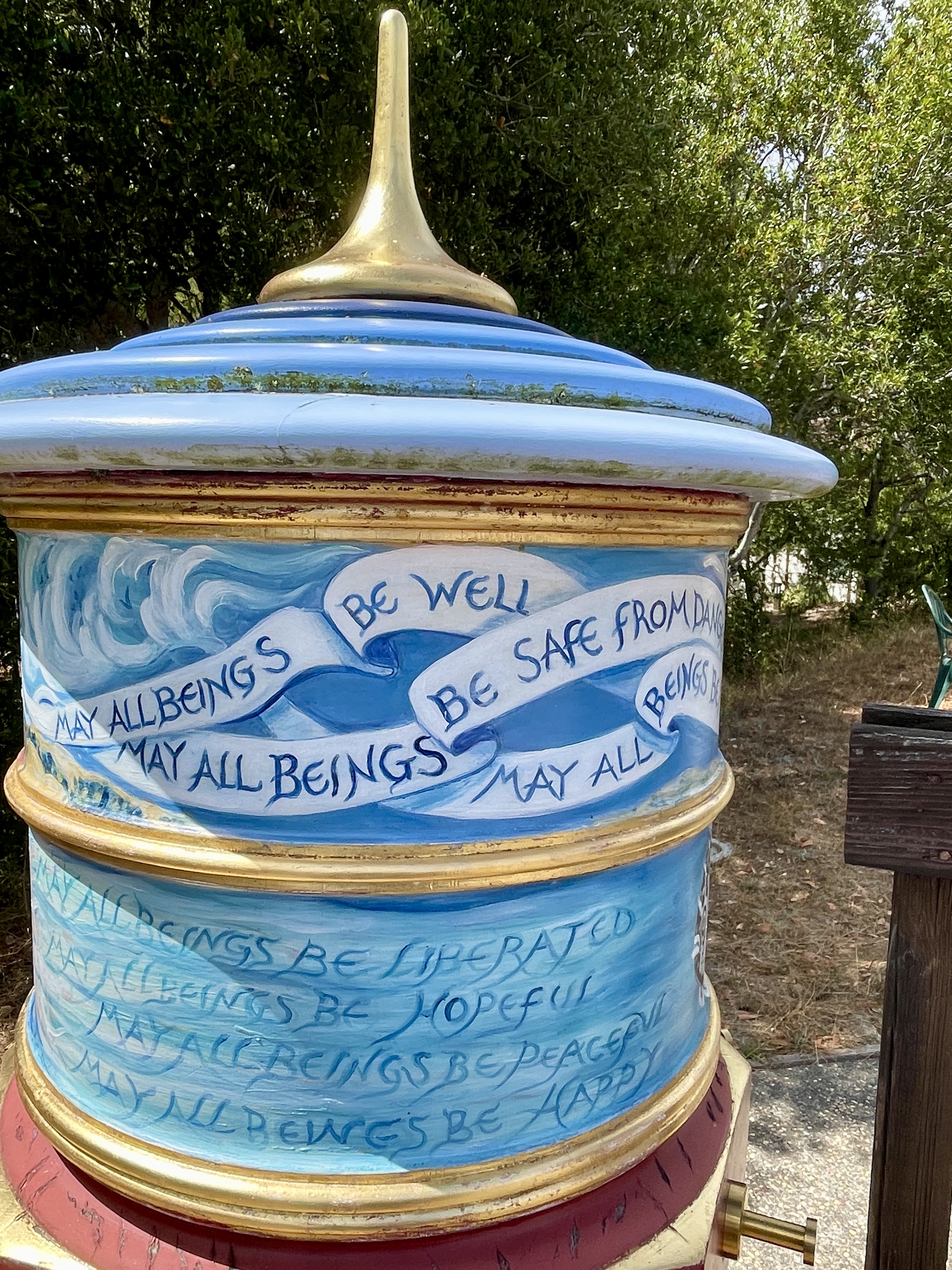
Prayer wheel at Spirit Rock.

May all beings be filled with loving kindness.

It is amazing how close you feel to people after sitting with them in silence for five days.

By the way, Spirit Rock offers scholarships.

***

Wendell Berry passed away on August 31. In 2017, I wrote about his novel, Hannah Coulter, and a collection of his essays, Our Only World, on Books Can Save a Life. I’m struck by the excerpts of Berry’s work that I included in the posts – this is extraordinary writing, folks. And I’d forgotten about all the heartfelt comments left by my blog readers.

The novel Jayber Crow and the essay collections Citizenship Papers, The World-Ending Fire, and The Art of the Commonplace wait on my to-be-read bookshelf, and I’ve moved them up in the queue.

Below is a 7-minute meditation on the passing of Wendell Berry by Dale Biron. Dale’s stunning rendering of “The Peace of Wild Things” captures Berry’s iconic poem with nuance and tenderness. Each word, each pause, is given its due. Please listen!

***

A friend told me about this beautiful song that speaks especially to our times.

***

water lily
No mud, no lotus. – Thich Nhat Hanh
Remembering our beloved water garden, upstate New York, 2012.

We train our hearts to hold the 10,000 joys and 10,000 sorrows. This is not easy. But we learn to hold it all, even amid the chaos. And we sweep our gardens. We do the work the world asks of us. – Jack Kornfield

Walking for Peace in Liberty, NC

The Walk for Peace is an offering to the community regardless of faith, culture, or background…to promote national healing, unity, and compassion by awakening the peace that lives within each of us. – Paraphrased from the Dhammacetiya website of the Huong Dao Vipassana Bhavana Center, Fort Worth, Texas

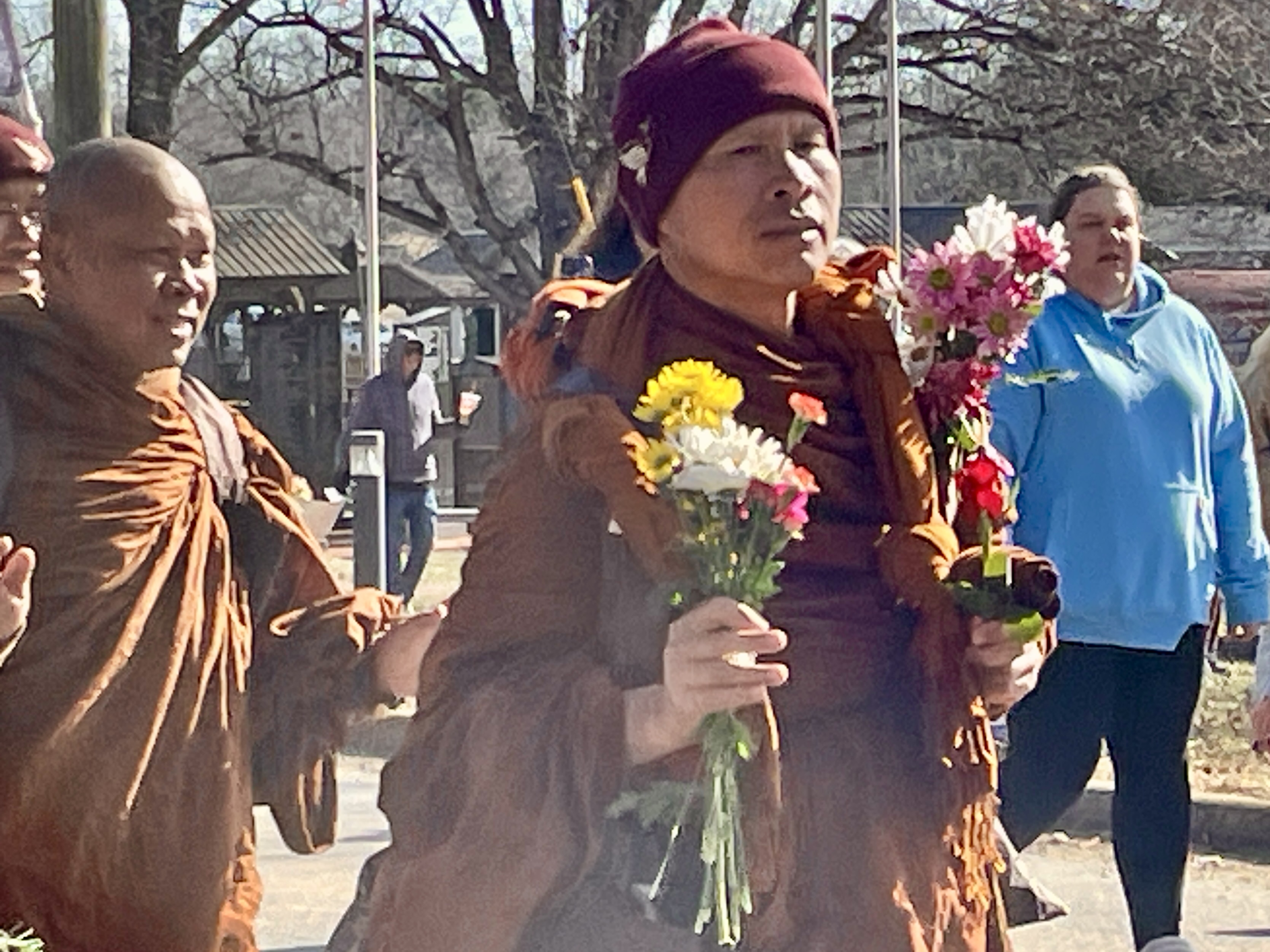
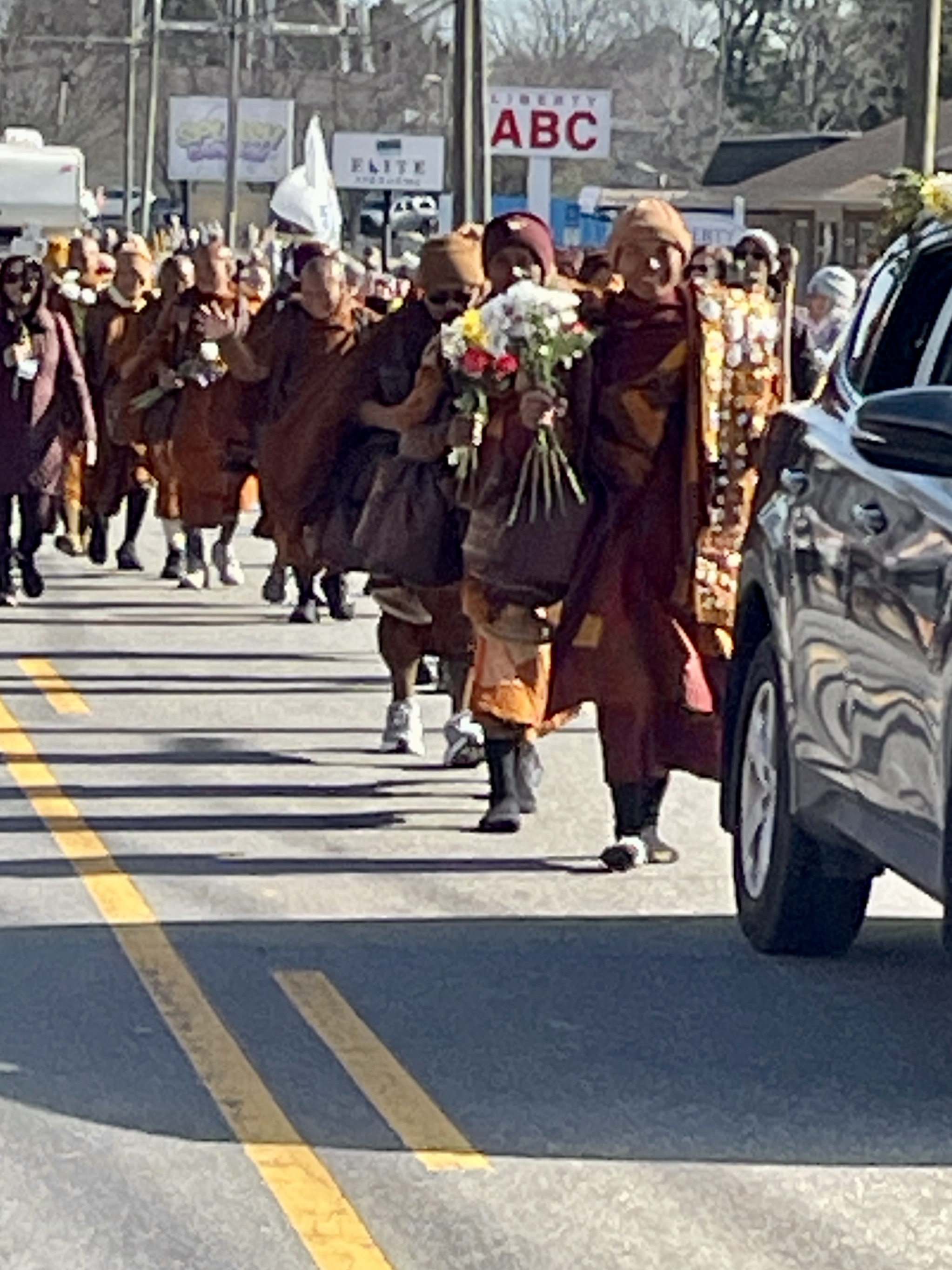
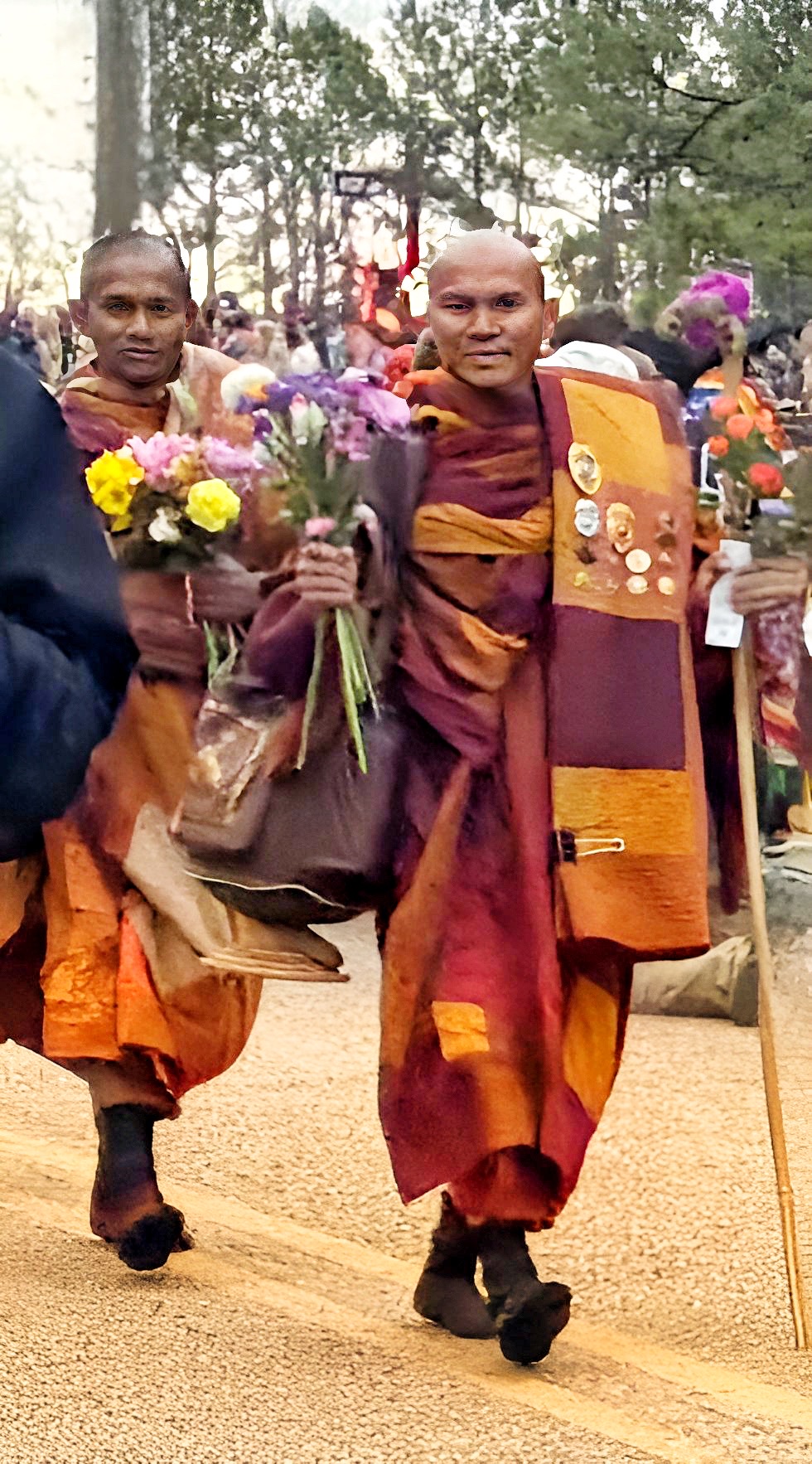
The nearly two dozen Buddhist monks walking 2300 miles for peace have been making their way across North Carolina for the past several days, with large, enthusiastic turnouts. The monks set out from their home base, a Vietnamese Buddhist monastery in Fort Worth, with Washington, DC, as their final destination.

My husband, our friend Beth, and I wanted to see them, but figuring out their route was a challenge, as it often changes. On Day 88 of their journey, we caught up with them in Liberty, North Carolina. The day turned out to be deeply restorative and unforgettable.

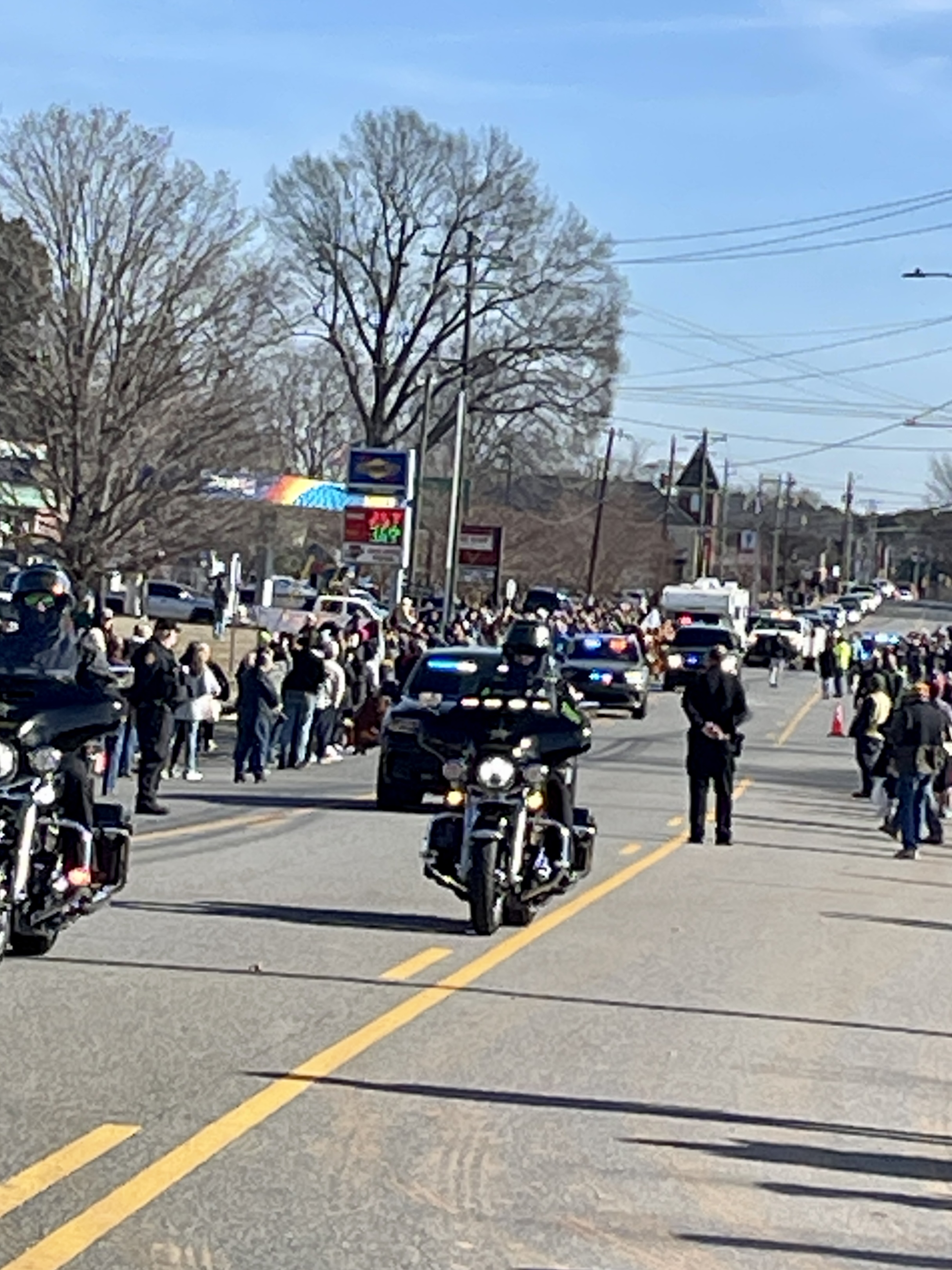
The town gave the monks a full escort. As they approached, a hush came over the crowd.

I’d never set foot in Liberty, a small, rural, and diverse town. When we arrived, the streets were blocked off, and crowds were gathering on the sidewalks and at the fire station, where the monks would have their only meal of the day, give a talk, and pass out peace bracelets.

I spoke with the clerk at the mini-mart, the other customers, and a few of the volunteer traffic monitors, but no one knew the monks’ arrival time. The clerk, perhaps of Indian descent, seemed excited but unsure of who exactly they were. I encouraged her to step outside when the monks passed by, saying she wouldn’t regret it.

There was such a sense of anticipation, and the community vibes were so welcoming. We stood next to a long-time resident, Faye, a committed Christian, thrilled that Buddhist monks were going to pass through her town.

Nearby, a young man with a megaphone and loudspeaker preached about Jesus and how the monks were unsaved, sent by Satan. More than one person asked him to stop, but he persisted. I was relieved to see everyone leave him alone and then forget all about him when the monks passed by a short time later.

Venerable Bhikkhu Pannakara spoke about mindfulness meditation and its benefits; he pointed out that meditation has nothing to do with religion or Buddhism, per se. It is something any of us can do to become grounded, centered, and focused in an age of distraction.

Learning to be mindful and in the present moment may sound like a cliché, but it can give us our lives back, he said. I’ve recently become certified to teach mindfulness meditation, and hearing his message confirmed the work I’ve been doing.

“We should feel grateful because we have so many religions in the world to serve all human beings…At the end we are having one religion together, the religion of peace, loving kindness, and compassion.”

Venerable Bhikkhu Pannakara

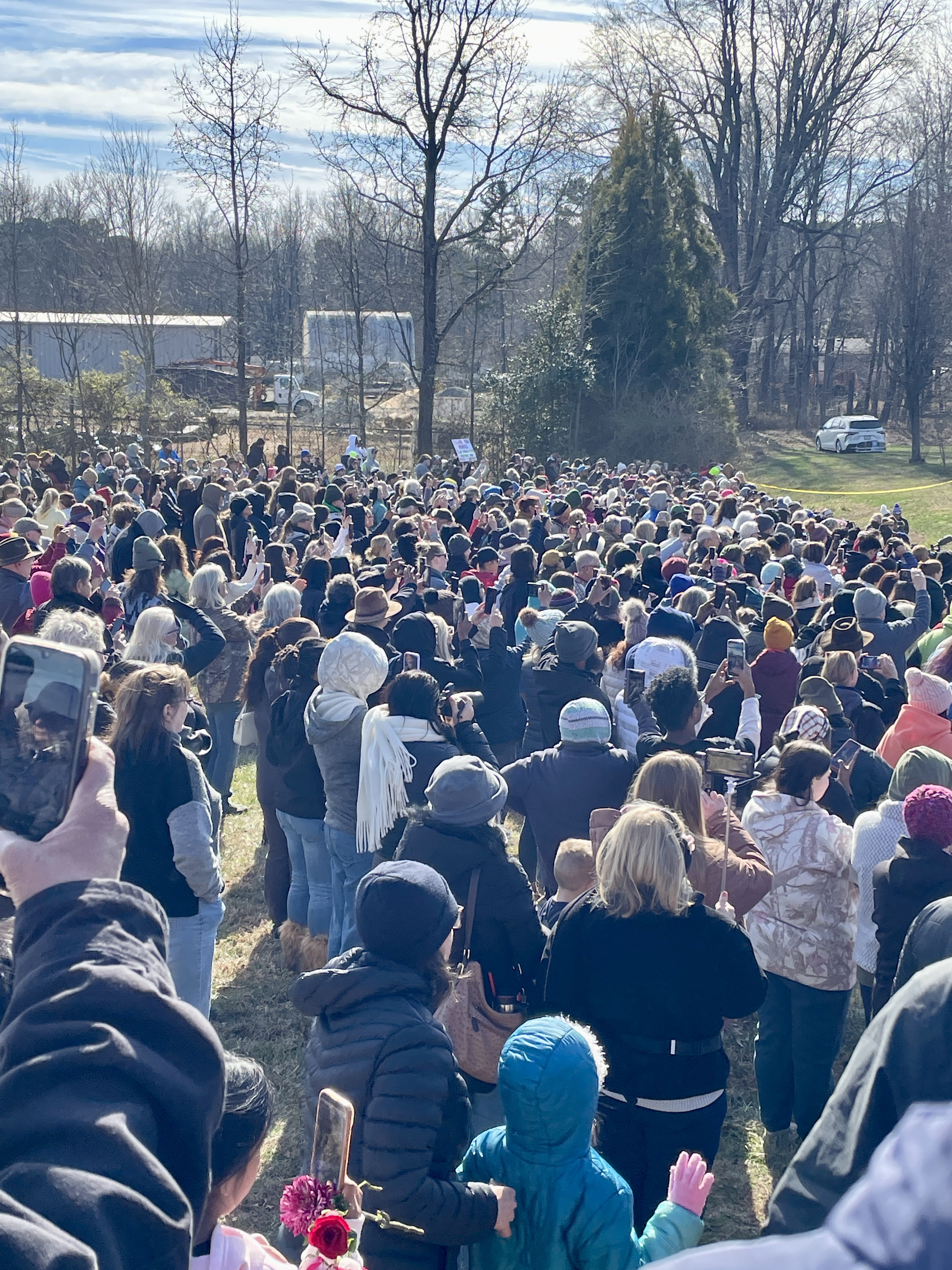
In the midst of Venerable Bhikkhu’s talk, there was a medical emergency in the crowd. As the paramedics arrived, Bhikkhu encouraged us all to place our hands on our hearts, sense our hearts beating, and maintain silence. I’d never seen such a large crowd in deep, meditative silence, which lasted about 15 minutes. The love and caring were palpable. Fortunately, after a time, the woman recovered enough to walk to the ambulance.

Deep silence as the crowd meditated

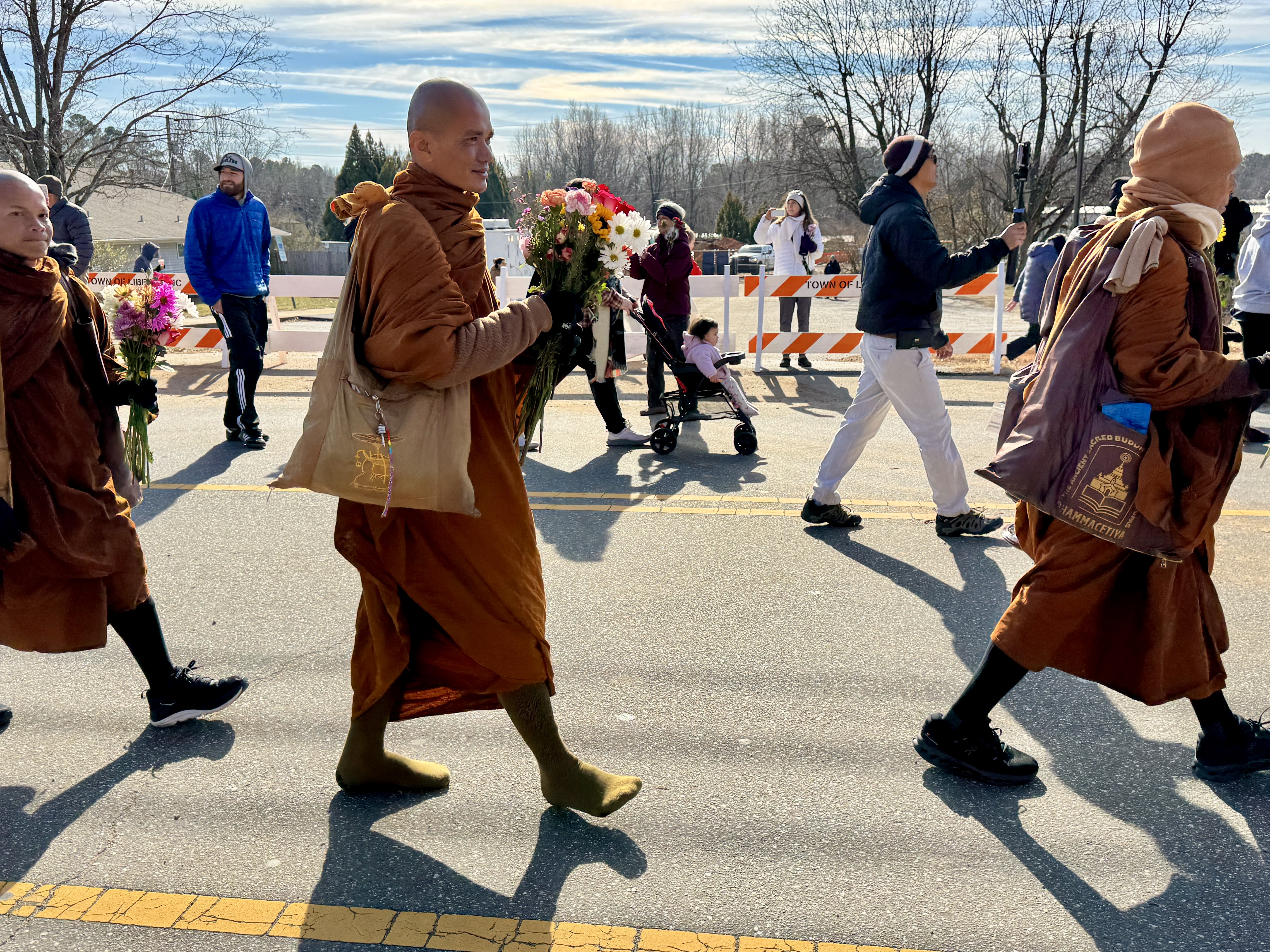
Some of the monks walk without shoes. They have one meal a day.

The monks say that peace is not a destination, but a practice. Beautiful encounters such as these can touch something sacred deep within a person, which begins to unfold.

I thought about how sustaining a mindfulness practice can be for anyone fighting to preserve freedom and democracy, as these difficult times demand.

Photo by MJ Merwin

I wrote this post as news reports emerged that federal agents shot and killed Alex Jeffrey Pretti in Minneapolis.

The world will surely need this great gift that the monks would like us to know about.

Sacred pauses

IMG_6714
“Crisis is always a purification if we understand it correctly. The very word ‘crisis’ comes from a root that means sifting out. Crisis is a separation, a sifting out of that which is viable and can go on from that which is dead and has to be left behind.” – David Steindl-Rast, Music of Silence: A Sacred Journey Through the Hours of the Day   Photo (Rochester, NY) by A. Hallinan.


I’ve been wondering how to render my long, isolating, pandemic days so they are meaningful, enjoyable, and conducive to doing the deep writing and other work I’ve been wanting to do.

It just so happens that a friend of mine recently published an essay about her practice of observing sacred pauses throughout the day based on the Benedictine practice of marking the hours. She does so not for religious purposes, but to structure and inspire her days and to be in touch with the cycles of the natural world.

Her essay motivated me to see if this approach might be helpful. Plus, I’ve long been interested in books of hours which, originally, were personalized medieval Christian prayer books that marked the sacred hours of the day.

I tracked down a used copy of a book Louisa recommended by Macrina Wiederkehr, Seven Sacred Pauses: Living Mindfully Through the Hours of the Day. 

Macrina led me to David Steindl-Rast’s book, Music of Silence: A Sacred Journey Through the Hours of the Day.

Both books are rich and motivating, a pleasure to read in small bits. You don’t have to be religious to structure your day around these sacred pauses; you can make the practice your own, and I think you’ll find many unexpected benefits.

I’ve been delving into these books of hours and taking sacred pauses while also renewing my mindfulness meditation practice (with the help of an online class offered by the teacher who originally got me into meditation over a dozen years ago.) Mindfulness mediation and marking the sacred hours are both concerned with consciously embracing the present moment. The two pursuits complement each other.

Here are some of my favorite passages from David Steindl-Rast’s book:

“….the hours of their days and nights have turned into couriers for them, each with a distinctive dispatch.” “…each hour had a character and presence infinitely richer and more complex than our sterile clock time.”   “The hours are the inner structure of living consciously and responsively through the stages of the day.”

“The original notion of hour is something quite different from a unit of time composed of sixty minutes. It is not a numerical measure; it is a soul measure.”

“…time is not conceived as running out, but as rising like water in a well, rising to that fullness of time that is now. It is to that centered, present living in the now that chant calls us.”

IMG_2266
“The paced hours teach us how to pace our lives.” David Steindl-Rast, Music of Silence


And these from Macrina’s book:

“God’s angels companion you on your pilgrimage through the day. You are never alone. Pausing to remember such truths changes the hours to gold.”

“Even if you have a lot of work to do, if you think of it as wonderful, and if you feel it as wonderful, it will transform into the energy of joy and fire, instead of becoming a burden.” – Tulku Thondup Rinpoche, as quoted in Seven Sacred Pauses.


IMG_9358
A still from the video installation “Visitation” by Bill Viola, in Uppsala Cathedral, Sweden. I took this photo on my trip to Sweden last year. “Visitation” is an extraordinary silent work that held me for 20 minutes like it was just twenty seconds. Viola’s subjects are birth, death, transformation and liberation. In this baptism by water, the subject goes from “a life of obscurity to another life where light and color envelop her, perhaps like an inner birth giving her the strength to move on.”  (Quoted from the installation commentary) Some people view our difficult times as a sweeping and necessary transformation. This still photo, a sacred, single moment from the video, seems relevant to me.


The sacred pauses:

Matins or Vigils (The Night Watch) “Vigils is a time of exquisite beauty. It is a time for waiting and watching under the mantle of mystery.” DS-R

Lauds or Morning Prayer (Daybreak, The Awakening Hour) “Dawn is like medicine, and morning is a healing drink that I have to brew in my heart just as I brew my coffee.” MW

Prime (About 6 am, Deliberate Beginning)  “…the monastic attitude is to begin deliberately and to do anything we do with an even, stately pace and with whole-hearted attention. This is how master artisans, weavers, experienced farmers, and other sage laborers work. That way even difficult tasks can be done leisurely and with joy, for their own sake. And then they become life-giving.” DS-R

Terce (9 am, The Blessing Hour) “Imagine you are sitting at the dawn of your workday watching your creativity blossom. Rather than trying to grab the first blossom you seek, spend time beholding that blossom and looking at it from all angles. Prayerfully reflecting on the first blossom of your day will awaken other ideas that are in the budding stage.” MW

The Sixth Hour (Noon, The Hour of Illumination; Fervor and Commitment) “The hour is rousing us to summon the courage to stay the course, to remain true to our ideals through the rest of the day.” DS-R

None (3 pm, The Wisdom Hour) “Our doing flows out of our being, and that is why it is necessary for us to learn to pause.”  MW

Vespers or Evensong (Early evening, The Twilight Hour) “The way that we can actively bring the spirit of Vespers into everyday life is to light whatever lights we can in this dark world.” DS-R

Compline: (Just before retiring, Entering the Great Silence)  “Preparing for the night, for going into the realm of dreams, we pray for good dreams: nourishing dreams, teaching dreams.”  DS-R


IMG_9344
As we explored Uppsala Cathedral, the organist was practicing, and we were lucky to hear Toccata and Fugue in D minor by Bach several times. The chandeliers (ljuskrona, or “light crown” in Swedish) are common in Swedish churches. Delving into the sacred hours and reading Kristin Lavransdatter reminded me of my visit to this 13th century cathedral.


Christ Church in Rochester, NY, which draws upon many fine musicians, singers and composers from the Eastman School of Music, has been streaming great music during the pandemic. I like the description of this short Bach piece and its moods by organist David Higgs almost as much as I like the piece itself:


A Letter from the virus

The powerful, poignant video letter from the coronavirus at the link below is pure poetry. Please listen: our troubled times could be viewed as one gigantic pause imposed on us by the virus for the most sacred of purposes. This version is narrated in beautiful Italian with English subtitles – as the poet I’m linking to suggests, the Italian version has more urgency and poetry than the English version:

https://www.jhwriter.com/a-letter-from-the-virus-italian-with-english-subtitles/

“We have a right to feel at home here in the universe.” David Steindl-Rast

Coming up on Books Can Save a Life: A luscious, luscious newly published book. (Think: flowers; floral masterpieces; color; design; creativity; art; literature; deep ecology; learning how to see; things of the spirit.)

On the twelfth day of Christmas: James Fielden

lake, close-up of water

I discovered James Fielden’s site more than a year ago. Ever since, I’ve been enjoying his writing, photography and, more recently, his music and audio meditations – all paths in which James explores aspects of spirituality and the inner life. James lives in Los Angeles, where he mixes sound for film and television.

His 23-minute guided meditation, Journey Across a Lake, is a wonderful way to begin the new year.

Photo by James Fielden.

Summer day meditation, week 5

Waterfall

Last meditation class.

He says pay attention, notice.

He says look forward to getting old.

He says keep changing, you just get more who you really are.

He says live with the world inside you.

Contentment is Life living through you.

                          excerpts from  Hokusai Says, by Roger Keyes

Summer day meditation, week 4

water lily
I found this in the backyard pond this morning.

In meditation class, our instructor read a poem by Rumi about welcoming all emotions as you would a house guest, even the negative ones, as they may be clearing you out for something else.

Also a poem by Derek Walcott about loving again the stranger who was yourself, published in David Whyte’s book, The Heart Aroused: Poetry and the Preservation of the Soul in Corporate America. For a time, David Whyte was a visiting poet at a major corporation. I’ve never read a book quite like it.

You can sample some of David Whyte’s poems on his beautiful, rich website. David leads groups on hiking tours in Italy, England, and Ireland, where he reads his poetry and visits artists, cooks, gardeners, farmers, and other creatives committed to their locales.

Summer day meditation, week 3

pergola, hummingbird feeder
Under the pergola

A moment of pleasure: Sitting under the pergola at my brother’s house outside of Cleveland. Taking in the Cleveland-ness of being here.

I can’t really explain this. Something in the air has a distinctive quality, maybe the humidity and the heat of Ohio, and it takes me back to summers growing up here: listening to the Beatles on my transistor radio (WIXY 1260), swimming with my friend, Nena, at Stafford Park, play-by-play of the Indians’ baseball game always in the background….

In meditation class this week, our teacher read Wild Geese by Mary Oliver, who is from my hometown.

Summer morning meditation, week 2

Pond with Buddha
Meditation at the pond, 7:30 am.

For my mindfulness meditation class, this week we are to record one pleasurable moment each day.  Here are two:

Friday morning: helping a medical student find information about adolescent health. Enjoying her youth, beauty, enthusiasm, the unfolding of her potential. She will help many people.

Saturday morning: visiting the backyard pond, enjoying the coolness.

I’m thinking that a great book to read, lying in the hammock next to the pond, would be The Narrow Road to the Deep North, by Matsuo Basho.

Please share your recent moments of pleasure in the comments.

Summer evening meditation, week 1

Tonight I attended the first of five mindfulness-based stress reduction classes, which include instruction in meditation. Four years ago, I took a similar series of classes; this summer I hope to renew and re-commit to my meditation practice.

We followed our breath for several minutes. We ate a raisin, mindfully. We practiced the body scan (progressive relaxation of each part of the body, preferably while lying down.) I thought I was totally relaxed, lying on my yoga mat on the hardwood floor. But when our instructor read Mary Oliver’s poem, “The Summer Day,” I found myself lying in a field of grass, giving myself up to it as if I were a kid.

That was my second encounter with Mary Oliver today. The first occurred in my wanderings around the Internet, where I found out she will publish a new book of poems this fall, “A Thousand Mornings.”

When I came home from class, my son had just arrived with fresh-picked raspberries. I ate some with whipped cream. Mindfully, of course.

raspberries
Image by madlyinlovewithlife     Creative Commons 2.0