Sons of Madness

Sons of Madness book cover

Growing Up and Older with a Mentally Ill Parent

Considering the huge numbers of people who have a mental illness, their suffering and lost potential, and the tremendous cost to society, it’s high time we made mental illness a priority. Instead, it continues to be a topic we avoid. Our mental health services are shamefully and sorely lacking. Those who suffer from mental illness are not being served, nor are their families.

I’ve written about this topic before at Books Can Save a Life when I’ve featured books about families with mental illness, particularly the plight of children and adult children with mentally ill parents. (See Children of Mental Illness Part I, Children of Mental Illness Part 2, Encountering the Dark Matter of Mental Illness, and Do Genes Affect Our Mental Health?) I grew up with a mother who had schizophrenia and, as I’ve conducted research for a memoir about our family’s experiences, I’m sad to say many aspects of the mental health system are no better than they were decades ago, and mental illness carries as much stigma today as it did in the 1960s.

Today, I’d like to highlight the newly published Sons of Madness: Growing Up and Older with a Mentally Ill Parent, by Susan Nathiel, PhD, LMFT. It’s a companion volume to her first book, Daughters of Madness: Growing Up and Older with a Mentally Ill Mother. Susan (whose mother had schizophrenia) has collected here interviews with twelve men whose mother or father suffered from schizophrenia, depression, bipolar disorder, or another serious mental illness.

These are deeply disturbing stories of men who in many cases have never talked about their families or their childhood and teen years. They were too ashamed and traumatized to reveal their family secrets, and they’ve never been asked. Consider these chapter titles: “Nobody cared until my family was destroyed,” “My mother’s lobotomy saved my life,” “If you leave the house, you’ll be murdered,” “Our family code: Protect Dad at all costs,” “I called them nightly shows – all violence,” and “I should have been able to save her.”  While it’s never easy having a mentally ill parent, boys and men are especially challenged by the cultural expectation that they not show their emotions.

Some of these men have healed, some have not, and all are scarred. I want to point out that most people with mental illness are not violent, but their families, including their children, must contend with a high degree of dysfunction that can be continual, extremely frightening, and traumatizing. It’s painful to read the words of these men, but what impressed me especially was their profound isolation as children. In many cases, it was impossible to get the mentally ill parent anywhere near a psychiatrist or treatment facility. Saddest of all is that extended family members and sometimes the healthy parent turned a blind eye to the needs of the children. No one helped them, and no one seemed to care.

I can’t fathom how children this neglected, with no support systems, encouragement, or empathy, can grow up to be healthy, trusting, fulfilled, and able to contribute their unique talents and gifts to society. Many do. But consider all the lost potential. I also wondered, as I read the interviews, where child abuse and addiction end and mental illness begins – my point being that I believe many children grow up contending, alone, with parents whose dysfunctions can cause lifelong damage and persist across generations, whether or not the parents are ever formally diagnosed with an identifiable mental illness.

There’s been some criticism of the many memoirs of family dysfunction that have been published in the last few decades, and accusations of whining and naval gazing. This only increases shame and makes those who’ve been affected hesitate to bring their experiences into the light of day, where solutions can be found and those who need it given relief and support.

We need to pay more attention to our children and the invisible traumas they may be contending with.

In his New York Time’s column today, Nicholas Kristof has identified mental illness as an issue that needs more attention. I hope you’ll add your thoughts about mental illness and families here in the comments or on Kristof’s blog, On the Ground.  You can also visit his Facebook page and leave a comment. I welcome comments about this on my Facebook page as well.

“Be kind, for everyone you meet is fighting a hard battle.” Ian Maclaren, Scottish author and theologian

Books to read in 2014

Here’s my to-read list for 2014. It’s incomplete, always changing, and I’m sure I won’t get to all of these, not by a long shot, but it’s a convenient list when I’m choosing my next book. You may see a few of them featured on Books Can Save a Life. I’ve included titles that will be published in 2014, so you won’t find all of them on the shelves yet.

If you have enticing choices on your list, please share them in the comments!

Watch for my book giveaway in February to celebrate the second anniversary of Books Can Save a Life.

FICTION

The Snow Queen book cover

The Snow Child, by Eowyn Ivey    “If All of Rochester Read the Same Book,” 2014

The Goldfinch, by Donna Tartt

Someone, by Alice McDermott

Carthage, by Joyce Carol Oates

Arctic Summer, by Damon Galgut

The Unknowns, by Gabriel Roth

The Circle, by David Eggers

Colorless Tsukuru Tazaki and His Years of Pilgrimage, by Haruki Murakami

The Signature of All Things, by Elizabeth Gilbert

Life After Life, by Kate Atkinson

How Should a Person Be? by Sheila Heti

The Paying Guests, by Sarah Waters

And Then We Came to the End; The Unnamed; To Rise Again at a Decent Hour, by Joshua Ferris

Orfeo, by Richard Powers

Never Go Back, by Lee Child

The Language of Flowers, by Vanessa Diffenbaugh

The Snow Queen, by Michael Cunningham

The Bone Clocks, by David Mitchell

The Interestings, by Meg Wolitzer

The Luminaries, by Eleanor Catton

Lila, by Marilynne Robinson

By Blood, Ellen Ullman

Canada, by Richard Ford

In Sunlight and in Shadow; and Winter’s Tale, by Mark Helprin

The Cuckoo’s Calling, by Robert Galbraith (J.K. Rowling) and Untitled (2014)

The Woman Who Lost Her Soul, by Bob Shacochis

Off Course, by Michelle Huneven

Gone Girl; Dark Places, by Gillian Flynn (movies in 2014)

Wolf Hall, by Hilary Mantel (Best book of the 21st century, according to Elizabeth Gilbert)

****************

IN TRANSLATION

My Struggle, Books 1, 2, 3 by Karl Ove Knausgaard (Norwegian)

Treasure Hunt; The Dance of the Seagull by Andrea Camilleri (Sicilian)

Story of a New Name, by Elena Ferrante (Italian)

YOUNG ADULT

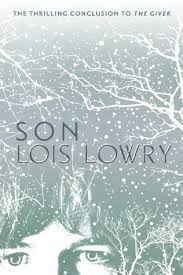
Son book cover

The Giver Quartet Series (including Son), by Lois Lowry

Divergent Series, by Veronica Roth

Mockingjay, by Suzanne Collins

The Fault in Our Stars, by John Green

*************************

MEMOIR

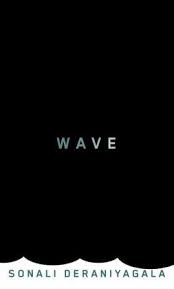
Wave book cover

Men We Reaped, by Jessamyn Ward

Still Writing, by Dani Shapiro

This Is the Story of a Happy Marriage, by Ann Patchett

Wave, by  Sonali Deraniyagala

Intensive Care: A Doctor’s Journey; and Medicine in Translation: Journeys with My Patients, by Danielle Ofri

**************

NONFICTION

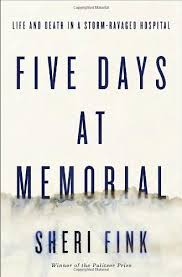
Five Days at Memorial book cover

Big Data: A Revolution that Will Transform How We Live, Work, and Think, by Victor Mayer-Schonberger and Kenneth Cukier

Who Owns the Future? by Jaron Lanier

The Burglary: The Discovery of J. Edgar Hoover’s Secret FBI, by Betty Medsger

Thank You for Your Service, by David Finkel

Five Days at Memorial: Life and Death in a Storm-Ravaged Hospital, by Sheri Fink

What Doctors Feel: How Emotions Affect the Practice of Medicine, by Danielle Ofri

Manson: The Life and Times of Charles Manson, by Jeff Guinn

The Unwinding: An Inner History of the New America, by George Packer

Margaret Fuller: A New American Life, by Megan Marshall

The Skies Belong to Us: Love and Terror in the Golden Age of Hijacking, by Brendan I. Koerner

The Gorgeous Nothings: Emily Dickinson’s Envelope Poems

Stalking the Divine, by Kristin Ohlson

Sons of Madness: Growing Up and Older with a Mentally Ill Parent, by Susan Nathiel

Is There No Place on Earth for Me? by Susan Sheehan

Dear Genius: The Letters of Ursula Nordstrom, by Leonard S. Marcus

Books Can Save a Life: most viewed posts in 2013

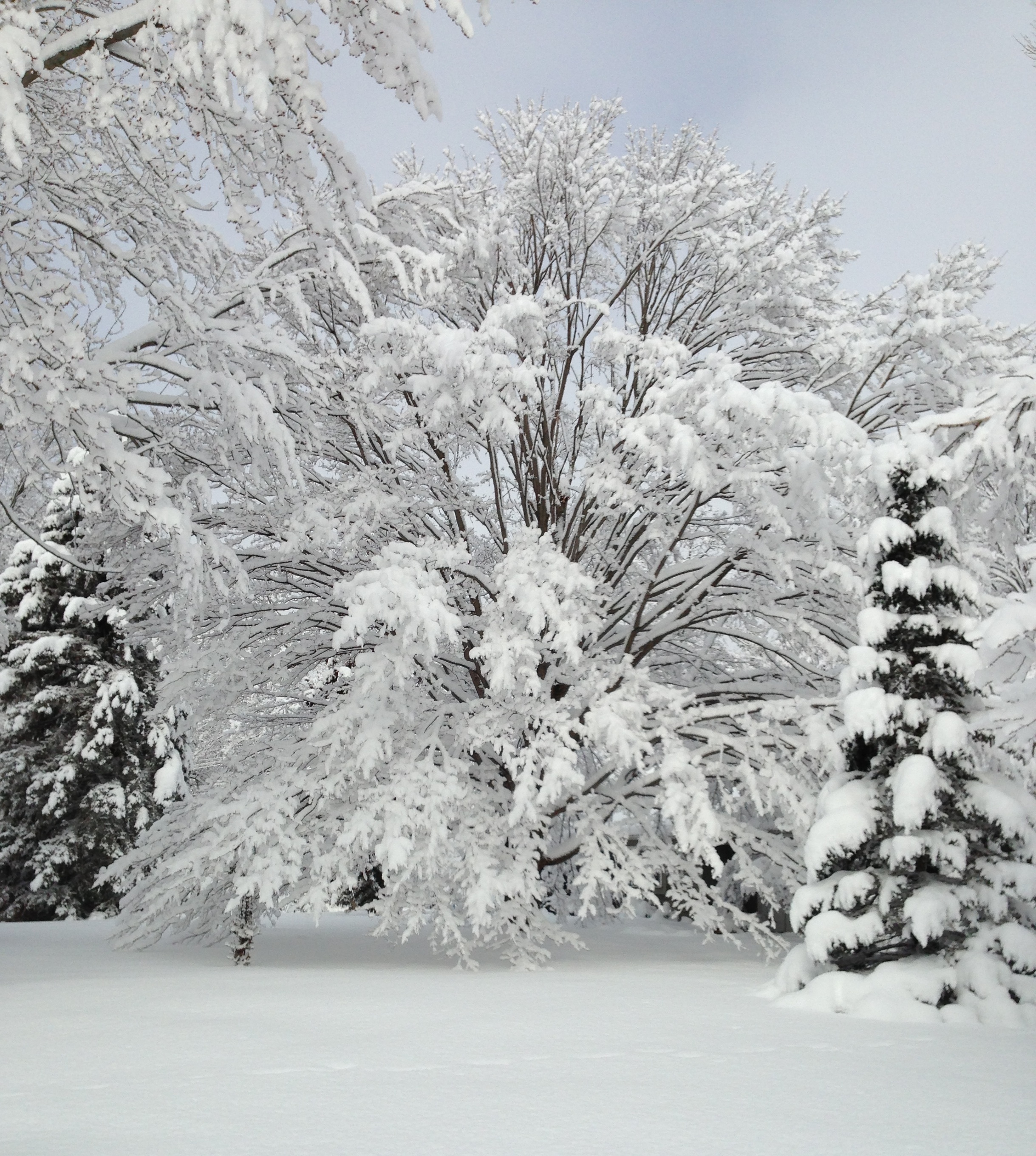
Snow-covered trees

Attractions in 2013

These are the Books Can Save a Life posts that got the most views in 2013.

I was gratified to see three of my most popular posts are about having a family member who suffers from mental illness. Early in the new year I’ll be writing about Susan Nathiel’s new book, Sons of Madness: Growing Up and Older with a Mentally Ill Parent. There is still very little written about the experience of having a mother or father with a mental illness; Susan’s book is an important contribution.

On the twelfth day of Christmas: James Fielden

lake, close-up of water

I discovered James Fielden’s site more than a year ago. Ever since, I’ve been enjoying his writing, photography and, more recently, his music and audio meditations – all paths in which James explores aspects of spirituality and the inner life. James lives in Los Angeles, where he mixes sound for film and television.

His 23-minute guided meditation, Journey Across a Lake, is a wonderful way to begin the new year.

Photo by James Fielden.

On the eleventh day of Christmas: Michael Cherney

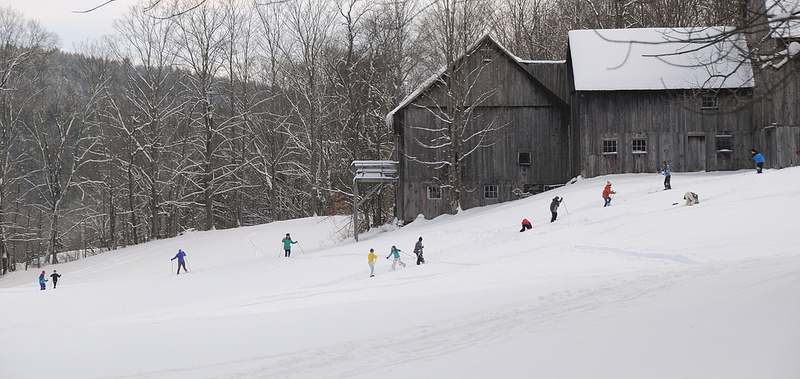
Children skiing

Today’s selection is not a blog, but an artist’s website, quite simply, one of the most unusual and stunning I’ve ever seen. Viewing Michael Cherney’s photographic Asian scrolls is like taking a journey to a secret, faraway place. See, for example, Five Peaks. Enjoy.

Young skiers photo by Putneypics under CC By-NC 2.0

On the tenth day of Christmas: Brain Pickings

Deer in snow

7 Essential Books on the Art and Science of Happiness, at Brain Pickings. If you’re not familiar with this site, you’ll want to browse its long, generous excerpts from books by artists, scientists, and other fascinating people. See The Best of Brain Pickings 2013. This is not really a blog, but “a human-powered discovery engine for interestingness” by Maria Popova that has been praised by The New York Times and is included in the Library of Congress permanent web archive.

Photo: Christmas Eve visitors, through binoculars, by A. Hallinan

On the ninth day of Christmas: Bealtaine Cottage

Cardinal

Bealtaine Cottage is luscious, especially if you like Irish cottages, and midwinter.

On the eighth day of Christmas: The Teacup Chronicles

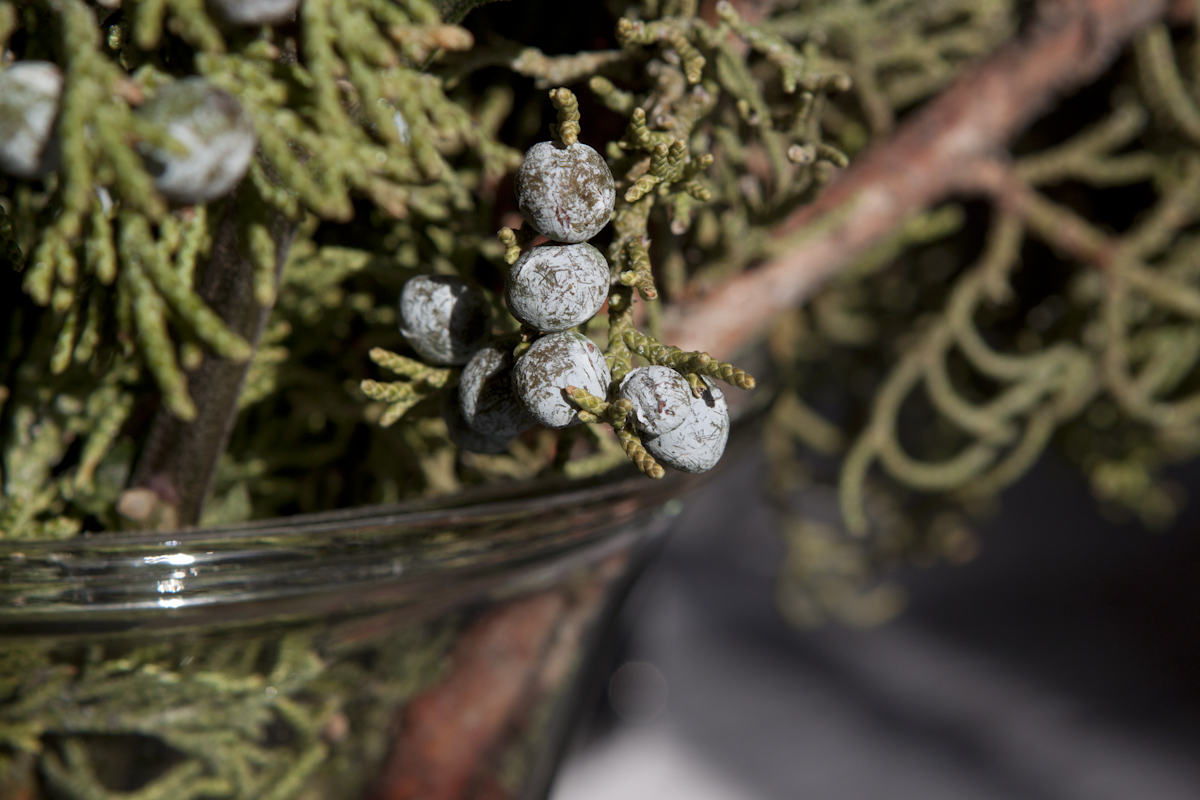
juniper berries

The Teacup Chronicles

Because I like good stories about ordinary things, fine photographs, unusual recipes, and anything with “teacup” in the title.

On the seventh day of Christmas: Los Rodriguez Life

Winter snow scene

Los Rodriguez Life always makes me happy when I visit. Bilingual, so I can practice reading Spanish, and it feels like a grand celebration of family and being alive. There’s gardening, food, travel, photography, music and lots of personality.

I think you’ll enjoy “Fly On.” (Scroll down to the music video.) I love fiddle music.

December morning photo by Putneypics under CC By-NC 2.0

On the sixth day of Christmas: Letters of Note

Cardinal

Letters of Note is, in the words of its editor, Shaun Usher, “an attempt to gather and sort fascinating letters, postcards, telegrams, faxes, and memos.”

They are the extraordinary words of real people. Here are a few of my favorites:

Our Frank

The Outsiders

We were not found wanting

I am very real

Everything comes to an end

There is a Letters of Note book, too!

Northern Cardinal photo by Putneypics under CC By-NC 2.0