In Sicily

“I had found my island, and I wanted to stay forever.”  Theresa Maggio, Mattanza

Villa window


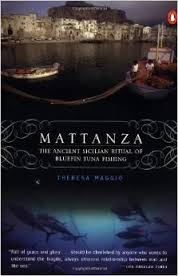
Mattanza book coverWhen I visit Sicily, I enjoy following in the footsteps of Theresa Maggio, author of Mattanza: The Ancient Sicilian Ritual of Bluefin Tuna Fishing and The Stone Boudoir: Travels through the Hidden Villages of Sicily.  

My family and I first travelled to Sicily 14 years ago, in part to re-connect with my father’s relatives. That was when I discovered Theresa’s splendid books.

Reading them again on our recent trip was like meeting up with an old friend. When I see Sicily through Theresa’s eyes, I see the island so vividly, with a more nuanced understanding of the complex people, culture, and history of this stunningly beautiful place.

We usually stay on the outskirts of Scopello, a small fishing village that is now a quiet, secluded haven for tourists. On this trip, we rented a villa halfway up a mountain on the edge of Zingaro Nature Reserve. Once the home of a tonnara (tuna factory), in years past Scopello celebrated the mattanza, the ritualized killing of bluefin tuna, every May and June. The mattanza was first practiced by the Arabs, or perhaps the Carthaginians before them.  The custom died out in the 1980s when industrial over-fishing made it obsolete.
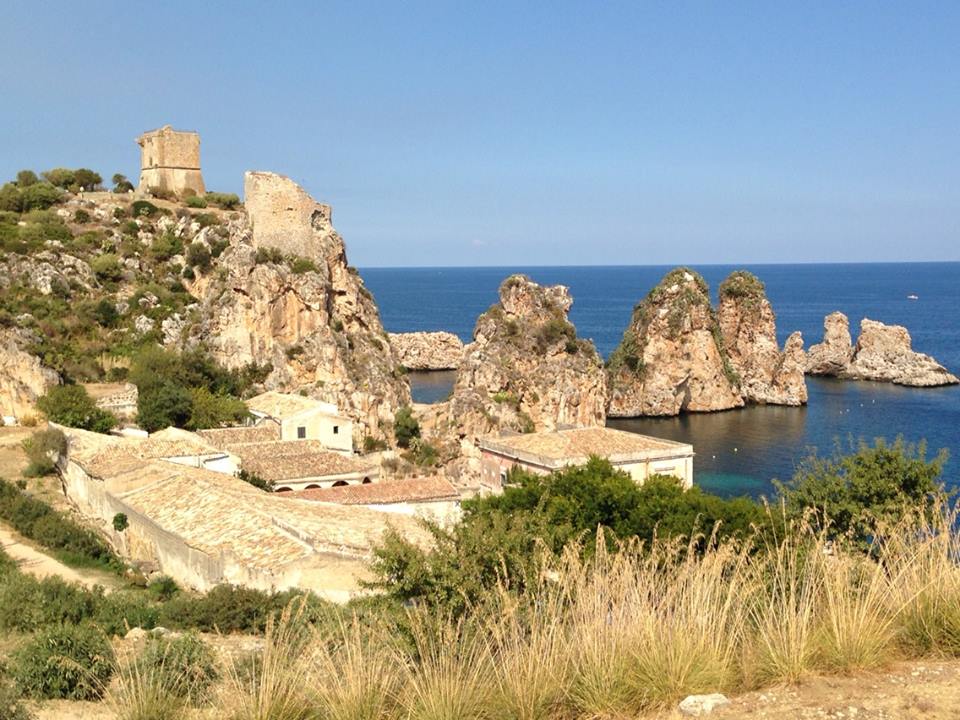
 

Former tuna factory in Scopello
Scopello’s former tonnara, converted to tourist apartments


Theresa’s book is a love letter and an elegy to the mattanza and the people whose lives were intimately bound to it. During one of the last years of the mattanza, Theresa befriended the fishermen (tonnatori) on the island of Favignana and accompanied them on their boats as they watched and waited for the tuna to become trapped in their underwater chambers of ropes and nets. When several hundred tuna had been captured, the tonnaroti lured them from one chamber to the next, while chanting thanks and prayers to God, the Virgin Mary, the saints.

The bluefins’ final destination: the chamber of death.

“After a while huge black shapes rose up into the backlit square. Their slow rising was mystical, like a birth. They rose higher. Dorsal fins swirled, wild animals drawn up from a silent abyss.

They were giants, eight feet long, some bigger, and there were hundreds of them. The net was drawn taut and they skittered in front of us, half out of the water. I looked into their glassy black eyes. The fish were as big as men, some bigger than four men. When their tails slapped the water it rose in columns above our heads. I remember the din, the thunder of falling water, and their frantic thrashing. They darted to the corners of the net, but there was no way out.

The crowd went wild. People were soaked, screaming and cheering….The fish were churning the sea into a white froth, and then the froth turned pink.”

Rusted anchors
Tonnara anchors


At one time, these hand-made tuna traps were in Spain, France, Algeria, Tunisia, Turkey, Dalmatia and Corsica, as well as Italy; some sixty tonnaras dotted the Sicilian coast.

“Gone, all gone,” writes Theresa.

The old tonnara in Scopello is beautiful, but I didn’t like seeing it in the hands of tourists. In their heyday, the tonnaras employed, directly or indirectly, thousands of men and women; some even had child care centers on site. Theresa writes with great sadness of the tonnaroti who netted fewer and fewer tuna each year until they had to stop.

I don’t like a world where men and women who love working on or near the sea, who make their living by physical labor, can no longer do so because it is not profitable. I’ve never seen a mighty bluefin tuna, but I’d prefer to have our seas teeming with them.

Theresa Maggio is a compassionate and keenly intelligent traveler. Her passion for discerning the heart and soul of a people and a place will enrich your own explorations.

Scopello sunset
Scopello sunset

Sunset photo by A. Hallinan.


The Summer Book

“It was a particularly good evening to begin a book.”   The Summer Book, Tove Jansson


Reading a book in the hammock
Reading in the hammock


I’m discovering Tove Jansson this summer, thanks to Claire McAlpine and her blog, Word by Word. I don’t know how I went this long without delving into this amazing Finnish, Swedish-speaking writer and world-renowned creator of the Moomintroll comic strip.

Next week I’ll show you her Moomins, but today I’m reading The Summer Book, a novel about a girl spending the summer with her grandmother, who lives on an island at the end of the Finland archipelago.  The island in the book is like the one Tove lived on with her partner for many years, a wild and beautiful place superbly evoked in this story.

I’m lazy on these idyllic summer weekends, so I’m going to borrow the copy that’s written on the back of the book, which captures the novel much better than I could:

The Summer Book cover, Swedish
The Summer Book, by Tove Jansson

“….Jansson distills the essence of the summer – it’s sunlight and storms – into twenty-two crystalline vignettes. This brief novel tells the story of Sophia, a six-year-old girl awakening to existence, and Sophia’s grandmother, nearing the end of hers, as they spend the summer on a tiny unspoiled island in the Gulf of Finland. The grandmother is unsentimental and wise, if a little cranky; Sophia is impetuous and volatile, but she tends to her grandmother with the care of a new parent. Together they amble over coastline and forest in easy companionship, build boats from bark, create a miniature Venice, write a fanciful study of local bugs. They discuss things that matter to young and old alike: life, death, the nature of God and of love.”

This slim paperback, a New York Review Books Classic, was originally published in 1972. I love the cover illustration by Tove Jansson, which was on the original jacket cover. Jansson’s simple, black and white sketches are scattered throughout the book.

Her novel has inspired me to begin planning a summer vacation in Sweden, where my grandparents are from. It would be fun to stay in a fisherman’s cottage like the one Sophia’s grandmother lived in, perhaps near to the farm where my grandmother grew up.

To come: Jansson’s memoir, Sculptor’s Daughter; her collection of stories about the artist’s life – Fair Play; and the Moomins.

Mushrooms next to tree
I don’t know if you’d find these mushrooms on Tove’s Finnish island, but that’s what I thought of when I saw these in our neighborhood.


Slow flowers

 “There were Lupines, Sweet Peas, Phlox, Bluebells, Day and Tiger Lilies, Monkshood, Peonies, Columbine, Daffodils, single and double, a Bleeding-heart bush in the front yard, and vines at each corner, which at times nearly covered the house. And always there was Golden-glow by the kitchen door.”   An Old-Time Gardener

Lilies
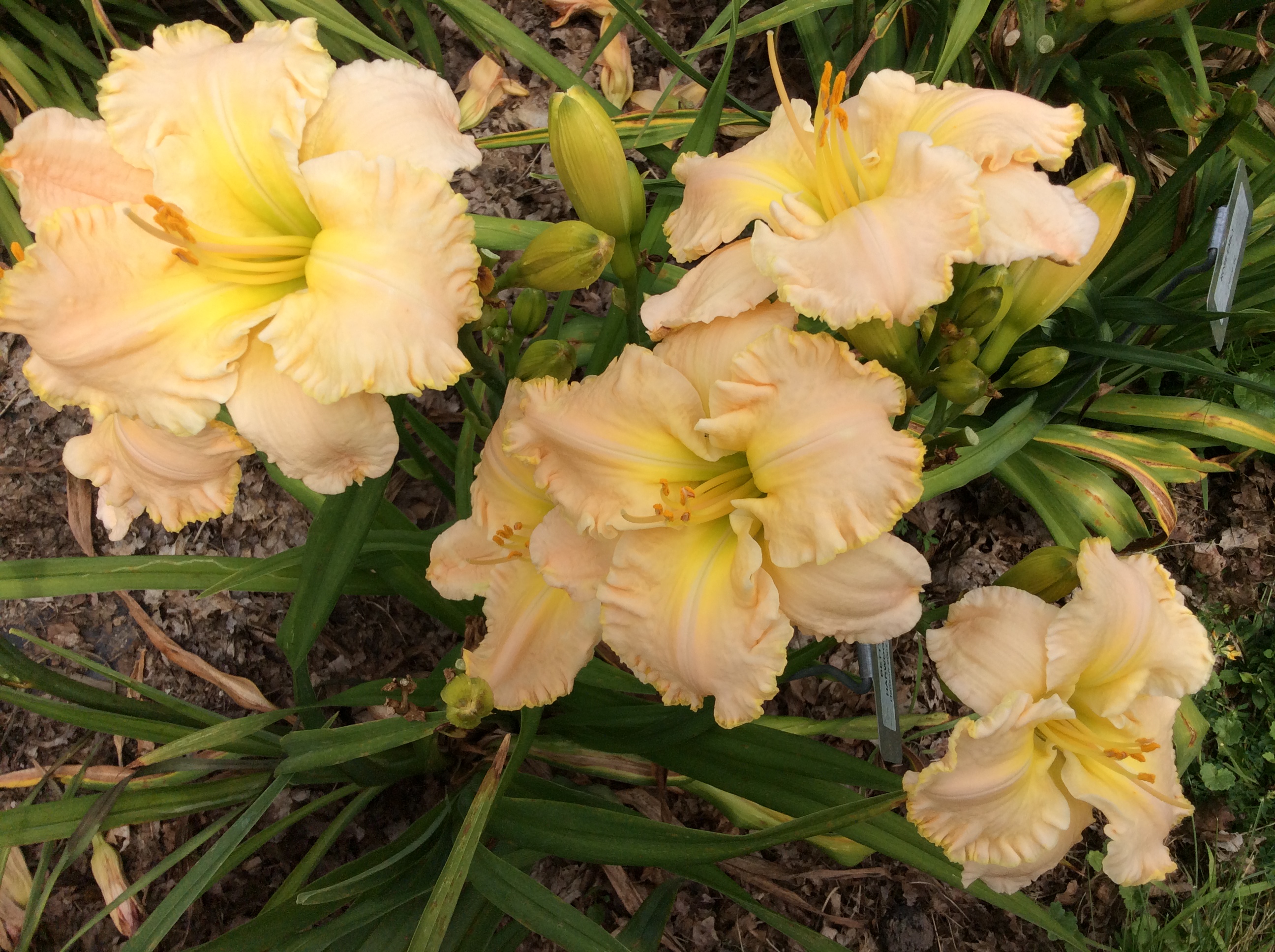
Grace’s Garden lilies


In The Language of Flowers, the main character, Victoria Jones, is a floral designer with a knack for choosing just the right foliage and blossoms for her customers, based on Victorian-inspired flower dictionaries that she’s studied. Having grown up in an Ohio floral shop, I was intrigued by the contemporary, upscale San Francisco flower scene depicted in Vanessa Diffenbaugh’s story.

In the 1950s, 60s, and 70s, our shop carried the standard blooms – roses, carnations, gladiolas and the like – which were shipped from California and South America – and laden with pesticides, though at the time we didn’t give that much thought. Nowadays, floral designers are artisans who use seasonal, locally grown, pesticide-free cultivated and wild flowers, in artful, natural-looking bouquets and arrangements.

Slow Flowers book coverWriter and horticulture expert Debra Prinzing coined the term slow flowers, which has caught on in the floral industry. I’ve been enjoying two of her books, The 50 Mile Bouquet, and Slow Flowers: Four Seasons of Locally Grown Bouquets from the Garden, Meadow and Farm.  They were a timely discovery for me, as this summer we sold the building where my parents had their floral shop for nearly fifty years.

In both books, Debra highlights American flower farmers who are passionate about sustainable methods and land stewardship. Slow Flowers is a colorful, lush, small-sized, book with flower arrangements for every week of the year. As in a cookbook, Debra lists the “ingredients” (4 stems hydrangea, 9 stems pink snowberry, 5 stems Dahlia ‘Nijinsky,’ 15 stems amaranth), provides instructions, and suggests vintage and unusual vases and containers.

In The Language of Flowers, Victoria Jones falls in love with Grant, a flower farmer. She first meets him at a flower market, where he is selling varieties of lilies: tiger, stargazer, imperial, and pure white Casablancas. Here is what Victoria has to say about Grant:

“His face had the dusty, lined look of a manual laborer. I imagined he planted, tended, and harvested his flowers himself. His body was lean and muscular as a result, and he neither flinched nor smiled as I examined him…

He withdrew a single orange tiger lily from a bucket.

‘Take one,’ he said, handing it to me.”

Lily

The language of flowers

“I wanted to spend my life choosing flowers for perfect strangers.”     The Language of Flowers, Vanessa Diffenbaugh

Daylily garden
Grace Gardens, Penn Yan, NY


Flowers were part of my earliest days and inseparable from family life. My parents opened a flower shop in July, 1952. This month, fifty-eight years later, we sold the building that housed our shop, though the floral business closed some years ago.

To commemorate the flowers of my past and mark how flowers remain part of my life, I’m highlighting a handful of books and authors, and a Finger Lakes “secret” garden. First, a book. Here’s an excerpt:

I’m single but I don’t want to be, the woman said.

She watched me work, arranging the white lilac around the roses until the red was no longer visible. I wound sprigs of rosemary–which I had learned at the library could mean commitment as well as remembrance–around the stem like a ribbon. The rosemary was young and supple, and did not break when I tied it in a knot. I added a white ribbon for support and wrapped the whole thing in brown paper.

First emotions of love, true love, and commitment, I said, handing her the flowers.

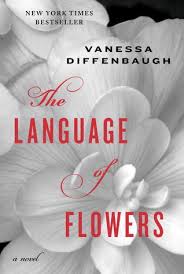
The Language of Flowers book coverIn a review of the novel The Language of Flowers by Vanessa Diffenbaugh, Paula McLain (author of The Paris Wife and herself a foster child) writes: “I feel it’s only fair to warn you, dear reader, that Vanessa Diffenbaugh’s central character, Victoria Jones, is going to break your heart three ways from Sunday.”

The character of Victoria Jones and her fate drew me to The Language of Flowers, as did the lush California landscape of flowers against which this story is set. 

Victoria has lived in more than 30 foster homes, and when she is emancipated at 18, she isn’t ready. It’s difficult to imagine any child emerging intact from our foster care system. I don’t know which was more heartbreaking, to see foster care let down Victoria time after time, or to see the ramifications of this in Victoria’s adult life.

Victoria’s talent with flowers, which may ultimately be her salvation, is another dimension of the novel that intrigued me. Her one kind and loving foster parent, Elizabeth, passed on to Victoria her floral “genius.” Victoria can not only artfully arrange flowers, she has a knack for giving people the particular flowers they need.

I loved this book and plan to read it again.

Vanessa Diffenbaugh cofounded the Camellia Network to support youth transitioning from foster care to independence. The flower camellia means my destiny is in your hands.

A Victorian Flower Dictionary coverThere is a companion volume to this novel, A Victorian Flower Dictionary, compiled by Mandy Kirkby. Neither of these books is to be confused with the classic Kate Greenaway’s Language of Flowers, first published in 1884.


A secret garden

Hidden away in the woods on a hillside overlooking Seneca Lake in the Finger Lakes is a stunning collection of over 40,000 day lilies. Grace Rood planted her first lilies in 1957, and now her son oversees Grace’s Garden. We visited the garden in mid July, when the day lilies were at their peak.

In the language of flowers, lily (Lilium) stands for majesty.  A white lily stands for purity and sweetness. In Kate Greenaway’s dictionary, a day lily stands for coquetry.

A passionate bouquet could consist of bird of paradise for magnificence, bougainvillea for passion, and lily for majesty.

Doesn’t the secret language of flowers inspire you to make your own bouquet for someone you love?


Bright orange lilies
Some lily names: Serene Madonna; Miss Jessie; Golden Chimes; Angels Unawares; Little Dancing Dress; Little Fat Cat; Buttered Popcorn; Coyote Moon
A cottage window
Grace’s cottage


If you enjoy flowers, check out Rambling in the Garden, and join the “In a Vase on Monday” crowd.


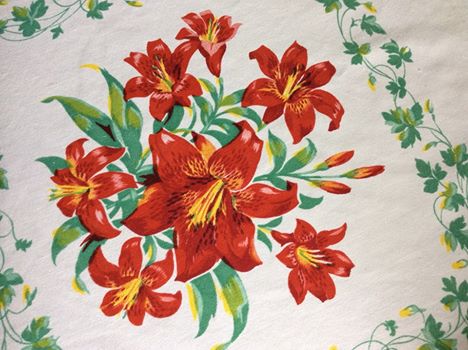
Tablecloth with lilies
I found this lily-laden tablecloth in a Finger Lakes antique shop. Perfect for a summer picnic.


Standing in front of floral shop
Our flower shop opening day, July 24, 1956

More flowers to come in my next post.


Summer reading

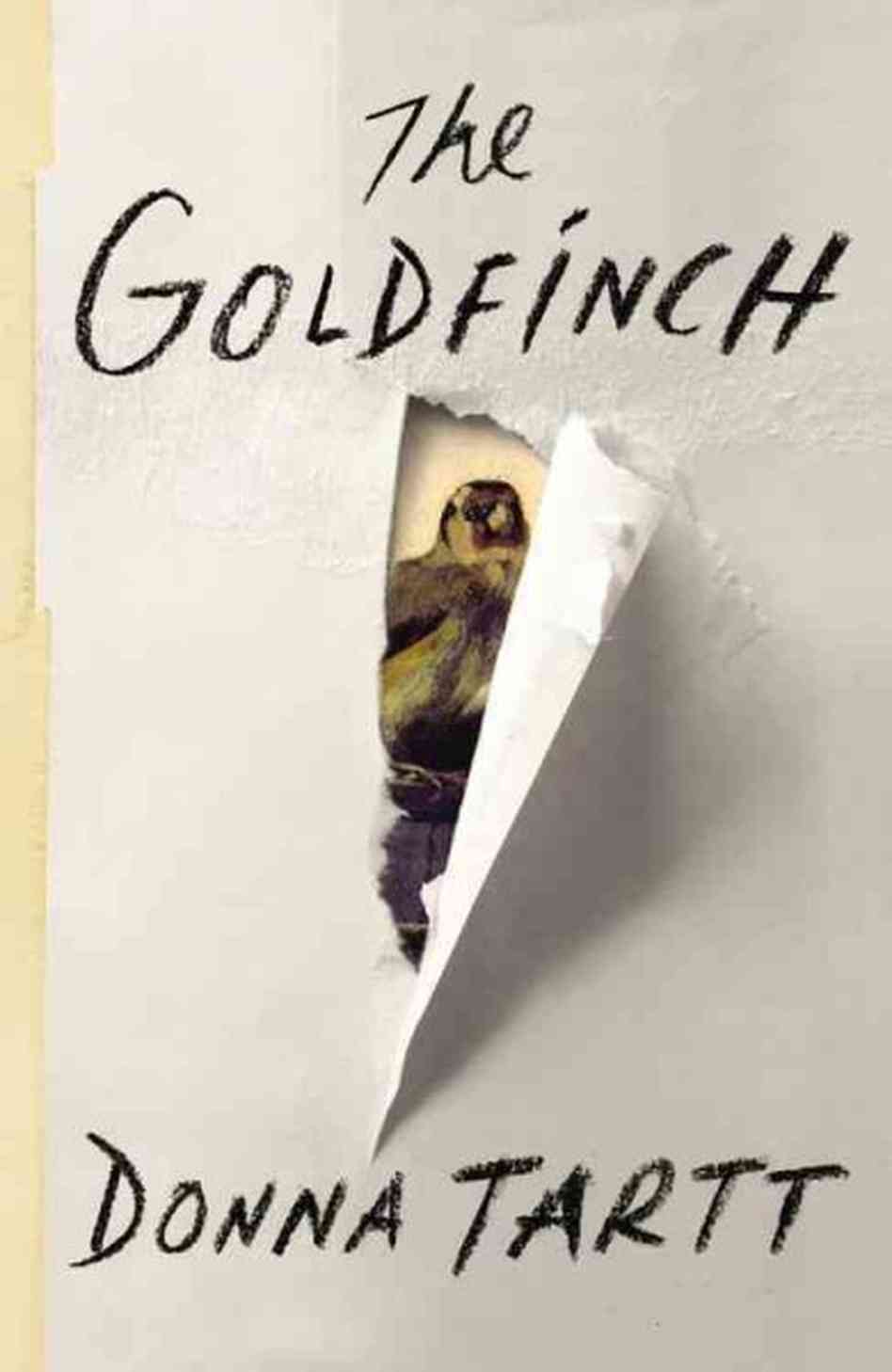
The Goldfinch book coverI am now thoroughly in the grip of Donna Tartt’s The Goldfinch. (In book circles, it seems as though half the universe is reading Tartt’s latest novel.)

After surviving a terrorist bombing at the Metropolitan Museum of Art in New York (a hellishly claustrophobic, terrifying scene masterfully written), a shell-shocked Theo Decker is making his way home amidst dozens of fire engines, blaring sirens, and chaos in the streets, where he is certain he’ll be reunited with his mother, who had been in the museum gift shop during the blast. Knowing Tartt, I believe things will only go further downhill for Theo in a tragic – comic, picaresque way. I’ll keep you posted over the next few weeks, without spoilers, of course. Having read Tartt’s previous books, The Secret History and The Little Friend, her latest book is a must-read for me.

In the Kingdom of Men book coverIn my perpetual online quest for good reads, I happened upon Kim Barnes the other day. I can’t believe I haven’t yet sampled her writing. In my stack of library books, I now have In the Kingdom of Men, the 1960s story of “a barefoot girl from red dirt Oklahoma, and all the marble floors in the world will never change that” who marries a college boy from her hometown. He takes a job with the Arabian American Oil Company in Saudi Arabia. The novel is loosely based on the experiences of Barnes’ aunt and other American women married to oil executives who worked in the Persian Gulf in the “Mad Men” era. I’ve also placed library holds on Barnes’ two memoirs, In the Wilderness and Hungry for the World.

My Struggle book coverAs usual, I’m overly ambitious, but I’ve decided to take on Norwegian Karl Knausgaard’s three-volume My Struggle after reading intriguing reviews. The fact that our local Barnes & Noble did not have Volume 1 only makes me more determined.

I just purchased Turn Right at Machu Picchu by Mark Adams (someday we’ll get there) and The Shelf: Adventures in Extreme Reading, by Phyllis Rose. (She wrote A Year of Reading Proust.) Rose read, straight through, all the 30 or so books from LEQ – LES on a random shelf in the New York Society Library stacks – no matter how obscure the author. The books and authors include The Phantom of the Opera, California detective fiction, a novel by an Afrikaans writer, stories of French Canadian farmers, and one “feminist, humane earth-mother Jewish writer” who raises award-winning Newfoundlands.

Domestic Matters

A Woman's Shed book cover

We’ve been putting in raised beds at our house, and my latest obsession is backyard domesticity. I just bought Gill Heriz’s delightful A Woman’s Shed. From our local library I borrowed three or four how-to titles about building fences (made of wood, stone, metal, and plants) and backyard sheds, gazebos, cabins, and other nature retreats.


The Kitchen Garden Cookbook coverI’ve also been browsing through Sylvia Thompson’s The Kitchen Garden Cookbook (1995). Thompson has also written The Kitchen Garden, which I’ll have to track down. Both are semi-classics endorsed by Alice Waters and other culinary experts. The cookbook is good reading, and if you’re growing your own vegetables you’ll like Thompson’s tips about when to harvest. The recipes are inventive and  sound delicious – I’m looking forward to trying some of them out. How did I find this title? It was on display at our library – a great way to discover good, not-so-new books.

In my quest to learn about gardening and raising vegetables, I’ve been reading Eliot Coleman’s Four-Season Harvest, as we hope to experiment with raising food through the winter. Eliot’s neighbors were Helen and Scott Nearing, who launched the modern-day homesteading movement. He has made the Nearing’s home farming techniques accessible to home gardeners and small organic farmers. Living the Good Life book cover(The Nearing’s influential book, Living the Good Life (1954) is a fascinating read, by the way.)  I like Coleman’s book because it is simple and straightforward, especially accessible and inspiring to the lay person. I’ve also rediscovered a book I purchased years ago, Barbara Damrosch’s The Garden Primer. Reading the forward to Coleman’s book, I discovered that he and Damrosch are married to each other.

Kitchen Garden book coverI love to visit the many small second-hand and consignment stores in our village. We have a used crafts supply shop I like to browse in, and there I discovered old copies of Betty Crocker’s delightful Kitchen Garden (1971) by Mary Mason Campbell with illustrations by Tasha Tudor; Gardening Made Easy binder coverand Gardening Made Easy (1995), International Masters Publishers, a collection of full-color pamphlets that you order individually and store in a three-ring binder. (I believe these are now out of print.)


The Supper of the Lamb book cover

For good measure, I requested from the library a copy of The Supper of the Lamb, (1969) by Robert Farrar Capon; this “culinary entertainment” written by an Episcopal priest comes highly recommended by a friend.

So there you are, my summer reading plans – all over the map, highbrow and not, typical for me.

What will you be reading this summer?


Raised beds
A work in progress


Reading The Snow Child in a Deep Freeze

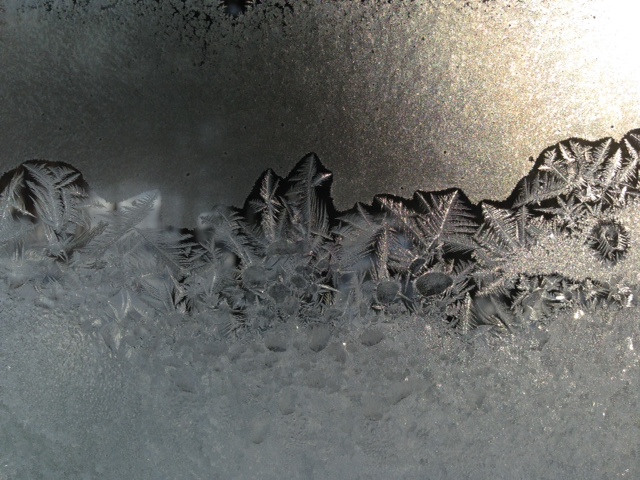
frost on window
Frost on our window

It was a bright winter’s day when I took this photograph, but it came out dark, evoking for me the deep winter chill of our snowbound evenings in upstate New York, which are perfect for reading books by the fire.

Before winter’s end, you must read The Snow Child.  Based on a Russian folk tale, The Snow Child suspends readers between fantasy and reality in remote, 1920s Alaska. (One of many English versions of the Russian folk tale is “The Little Daughter of the Snow” in Arthur Ransome’s Old Peter’s Russian Tales.)

Mabel and Jack, a childless, middle-aged couple, move from Pennsylvania to the Alaskan Territory to homestead on 160 acres of land. For ten years, they’ve been locked in a private world of grief over their stillborn child; Mabel, especially, hopes to escape from and the young families and children in Pennsylvania who remind her of her sadness.

One day, Mabel and Jack build a snow child whom they dress in a red scarf and mittens. The snow child melts, but a little girl with a fox begins to appear in the woods around their cabin. Is she real, or is she an unearthly fairy child born of their own longing? You’ll find yourself seesawing between Jack’s harsh, real-world view of who, exactly, the girl they call Faina is, and Mabel’s wishful, fantastical, mystical one.

For me, The Snow Child (a Pulitzer Prize finalist) was ideal reading: perfect for the time of year, entrancing, deceptively simple storytelling set in a frontier that has fascinated me of late. I kept thinking of the breathtaking world evoked in Barry Lopez’s Arctic Dreams. Lopez writes of virgin land, animals and people at risk from encroaching civilization, and I think of Faina as a metaphor for the wild and untamable.

Faina embodies, for me, my deep-rooted desire to have and love children. Mabel and Jack, through Faina, do find their hearts’ desire but, like all parents, they eventually must let go.

I loved how Mabel finds another kind of fulfillment through her art, and learns to channel grief, insights, and a growing love of the natural world into renderings and sketches.

The Snow Child is our city’s “If All of Rochester Read the Same Book” choice for 2014. The author, Eowyn Ivey, will travel here from her home in Alaska for three days (March 19- 21) of readings and talks at local schools, libraries, and Rochester’s Writers & Books.

We take “If All of Rochester Read the Same Book” very seriously here. We began marking it in January with countless book clubs discussing The Snow Child over tea and hot chocolate; writing workshops and readings by Ken Waldman, an Alaskan poet and fiddler; short, short plays that contain the word “fox” written and performed by locals at Geva Theatre Center; and for kids, making paper snowflakes and readings/discussions of fairy tales from Russia and around the world.

Still to come:  on February 20 a presentation of “Alaskan Odyssey: Cruising the Inside Passage and Beyond”; on February 28 an exhibition of winter images at Image City Photography Gallery; on March 4 a demonstration of basket weaving in the Alaskan tribal pattern; and a Snow Day party with music, fruit pies in flavors inspired by the novel, and a scavenger hunt on March 7.

On March 8 a how-to-survive-in-the-snow adventure at Mendon Ponds Park sponsored by the local Sierra Club chapter will explore whether or not a little girl could survive in the winter wilderness. Also on March 8 there will be an Afternoon of Winter Fancies: Creative Movement Workshops and Flights of Winter Fancy at the Hochstein School of Music & Dance; and on March 18 – 19 an exhibition of quilts inspired by The Snow Child, sponsored by the Genesee Valley Quilt ClubEach quilt will be a “novel” and feature the artist’s love of quilting and reading.

On March 4, Rick French of Pack, Paddle, Ski, who has been to just about every country in the world, will host a Sleeping in Ice class at the Penfield Public Library. (Rick has spent many nights sleeping in igloos and snow shelters; my husband travelled to Alaska with him, but that’s another story.) Rick will demonstrate how to make an igloo in the backyard and how to survive a surprise blizzard in the mountains.

For those of you who are local, you can find a complete schedule of Snow Child events here.

Snow Maiden in forest
Snow Maiden, Viktor M. Vasnetsov

The Snow Child book cover

On the twelfth day of Christmas: James Fielden

lake, close-up of water

I discovered James Fielden’s site more than a year ago. Ever since, I’ve been enjoying his writing, photography and, more recently, his music and audio meditations – all paths in which James explores aspects of spirituality and the inner life. James lives in Los Angeles, where he mixes sound for film and television.

His 23-minute guided meditation, Journey Across a Lake, is a wonderful way to begin the new year.

Photo by James Fielden.

On the ninth day of Christmas: Bealtaine Cottage

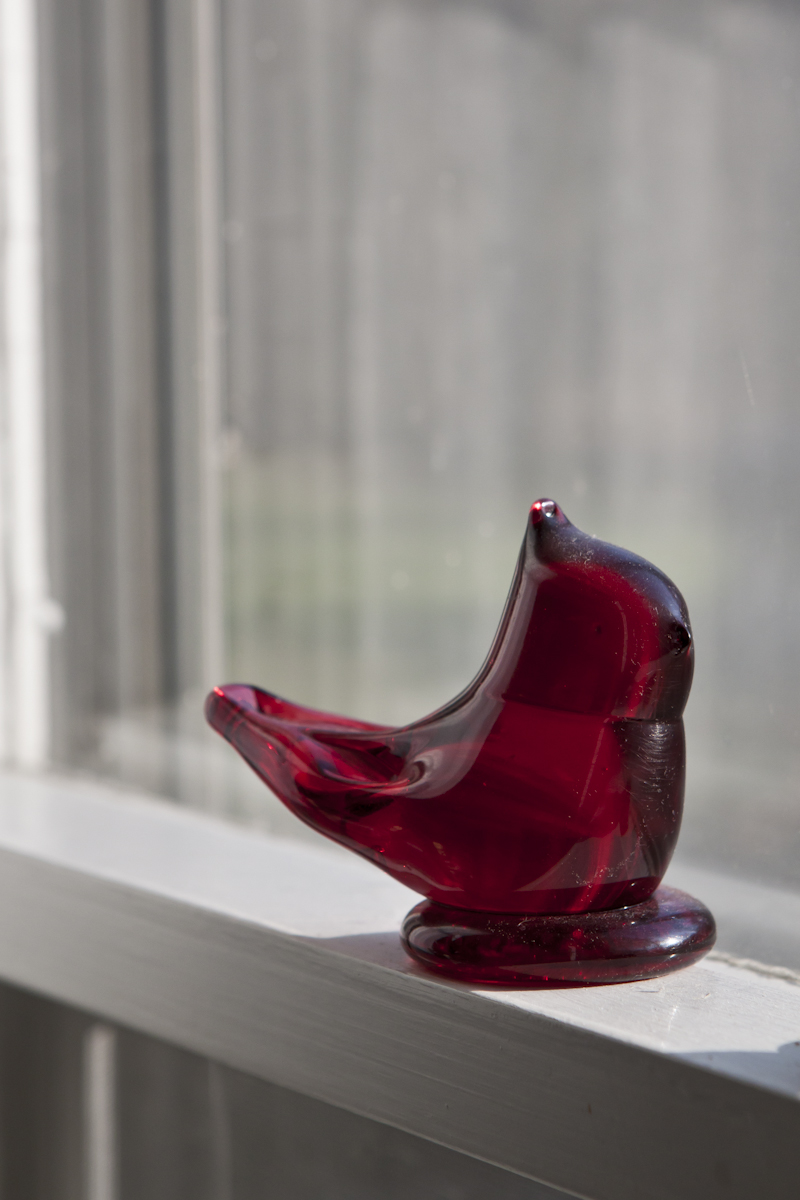
Cardinal

Bealtaine Cottage is luscious, especially if you like Irish cottages, and midwinter.

On the eighth day of Christmas: The Teacup Chronicles

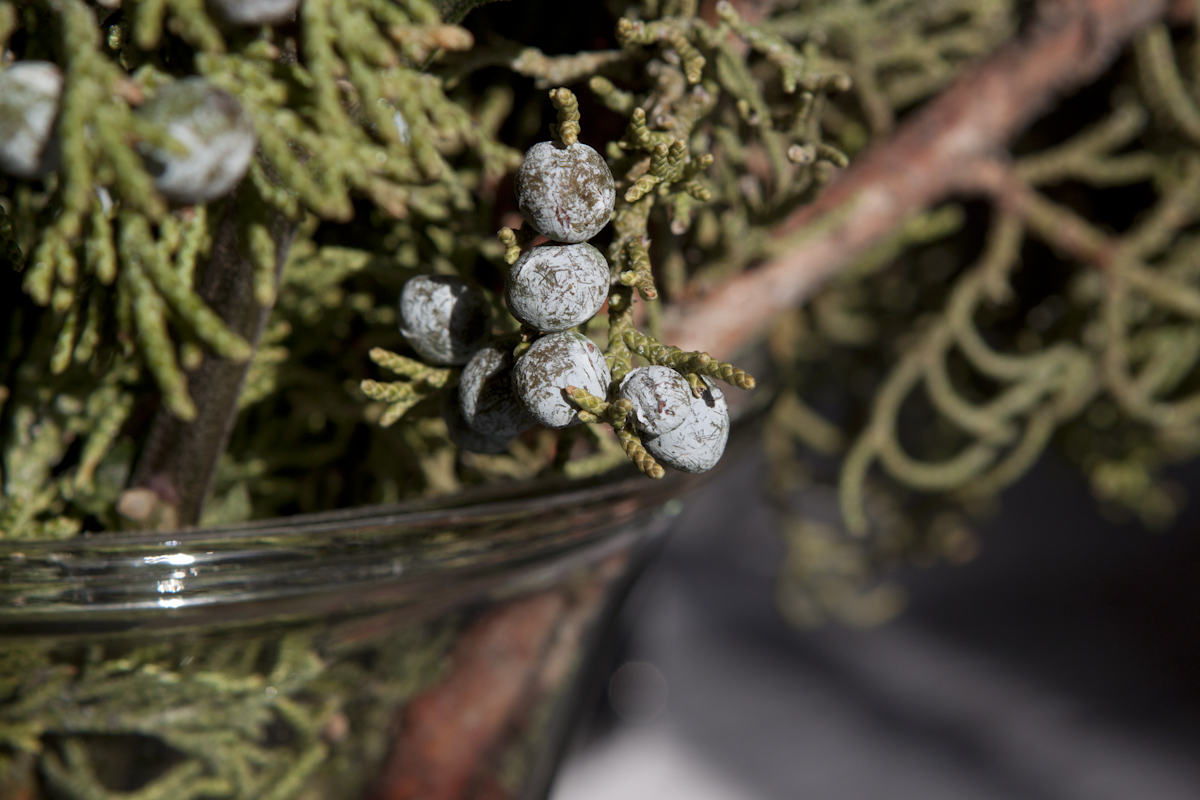
juniper berries

The Teacup Chronicles

Because I like good stories about ordinary things, fine photographs, unusual recipes, and anything with “teacup” in the title.

On the second day of Christmas: 66 Square Feet

Two turtle doves

Originally from South Africa, 66 Square Feet blogger Marie Viljoen lived in Brooklyn for many years while cultivating an amazing garden (from which she harvested fruits and vegetables) on her small terrace. Recently, she moved to Harlem, and it will be interesting to see her new not-so-secret garden in progress. Marie calls herself a writer, gardener, forager, and cook.

66 Square Feet book coverI have her new book, 66 Square Feet: A Delicious Life, which I love. I’m a former New Yorker, and I especially enjoy her nature and foraging expeditions around the city. I don’t have much of a garden, but I garden vicariously when I visit 66 Square Feet.

If you only have time for a quick blog stop, 66 Square Feet is perfect – the photography is fabulous, and often there is just a bit of text. Marie has another blog, 66 Square Feet (The Food) where you’ll find her recipes.

It so happens Marie was in South Africa when Nelson Mandela passed away. Here is a link to her post, Madiba’s Garden, about Mandela cultivating a garden while he was in prison and what it meant to him.

(Vintage bird illustration, turtle doves, photo from Vintageprintable1 is licensed under CC BY-SA 2.0)