“Martin holds his burning cigarette upright. The cherry is just barely visible in the dark; above it, the tower of ash. He turns it slowly, inspecting it from all angles. He says, ‘You want me to eat that scorpion?’
‘Try it!’ Cayenne says.
Turtle can see that the girl wants to share this with him. She wants this to be something they’ve all done together. But Turtle doesn’t want him to do it. She wants to show Cayenne something important here, about her own substance and about Martin’s because Martin, Turtle thinks, is afraid.
Martin says, ‘You didn’t eat a scorpion.’
‘Why would we make this shit up?’ Turtle says.
Martin chews his lip. At last, he says, ‘You really want to see me eat this scorpion, huh?'” – My Absolute Darling, by Gabriel Tallent
This novel and its author have been getting so much attention, I had to find out what all the fuss was about. Stephen King declared My Absolute Darling a masterpiece, and there are endorsement quotes on the book jacket from Phil Klay, who won the National Book Award for the short story collection Redeployment, and Celeste Ng, author of the novel Everything I Never Told You. All are writers I’ve enjoyed whose opinions I respect.
On the other hand, another writer I like, Roxane Gay, the author of Bad Feminist, is not a fan of My Absolute Darling.
So readers are divided about this first novel by Gabriel Tallent, whose mother, by the way, is the writer Elizabeth Tallent. I decided to read other reviews before I wrote this post because I was conflicted about the novel, and I wanted to see if these could help clarify my thinking. If you are up for reading a disturbing story of incest and obsessive love, I do recommend My Absolute Darling. I think the book has flaws but, in the end, they didn’t fatally undermine the story for me, which is a true page-turner – I stayed up late reading it on two consecutive nights. And despite its dark theme, the protagonist, 14-year-old Turtle, is a brave, noble spirit I won’t soon forget.
Turtle lives with her father, Martin, on the northern California coast near Mendocino. Martin is an autodidact partial to reading David Hume and other inscrutable texts of the great philosophers, a survivalist waiting for the end of the world, and a sociopath who is sexually abusing his daughter. Guns are everywhere in their decrepit house, as well as stocks of food and medical supplies. Martin began teaching Turtle how to shoot when she was six, and now she is an excellent markswoman with superb survival skills.
Martin worships Turtle as a goddess he can’t live without, but his mood can turn on a dime and Turtle suddenly turns to filth in his eyes. Having endured this abuse for years, Turtle has a fragile sense of herself. When two boys from the local high school come into her life and Turtle develops a crush on one of them, Turtle realizes that forming bonds with others endangers them. Turtle must go to great lengths, both inside herself and out in the world, to break free from the dark power her father holds over her.
Tallent’s prose can be flashy and mesmerizing. There is a strong sense of place, with lush descriptions of coastal California. Sometimes the language is technical and the paragraphs are long, peppered with words I wasn’t familiar with but, generally, this didn’t bother me; other readers may feel this interferes with the story. I love good nature writing and, for the most part, I felt that Tallent nailed the dramatic beauty and wildness of the California coast.
The writing was sometimes over the top in other ways. For example, Martin, Turtle’s father, could be so senselessly sadistic, he sometimes wasn’t believable. I think the author wanted to write a keep-the-pages-turning story, and he may have been influenced by the current highly sensational nature of movies and television drama. I’m revealing my age as far as literary taste goes, and younger readers might not find aspects of the story so extreme. That said, there are also echoes of fine literary works evident, among them The Adventures of Huckleberry Finn and Lolita. These deepen and enrich the story of Turtle and Martin.
More problematic than Tallent’s occasionally self-conscious prose are issues that Roxane Gay points out in a Goodreads review. Gay, who has written about sexual abuse, feels that there are elements of Turtle and Martin’s incestuous relationship that Tallent simply got wrong. I can’t speak to this, but I did feel, occasionally, that Turtle would not have acted in certain ways or that she would have made different decisions. Destructive relationships are complicated, and it’s incredibly difficult to capture the psychological dynamics involved.
I’m listing so many caveats you might think I didn’t like the novel, but that’s not the case. Turtle is an unusual heroine, a real survivor, though not the kind her father envisioned. Gabriel Tallent is young – about thirty – and he chose to tell an extremely challenging story. His writing will mature. He’s now working on a second novel.
Here are a few more excerpts from My Absolute Darling:
“‘You are the most beautiful thing,’ he says, ‘that’s what I think. Everything about you, kibble, is perfect. Every detail. You are the platonic ideal of yourself. Your every blemish, every scratch, is inimitable elaboration on your beauty and your wildness. You look like a naiad. You look like a girl raised by wolves. You know that?'”
********
“Walk away, Turtle. Just walk away from him, and if he follows after and if he will not let you go, you kill him. He’s given you everything and all you need to do is walk away. Do you remember when blood ran in your veins like cool, clear water? You could find that place again and it would be hard but it would be good. Nothing and no one can keep you away from it; only you can take yourself back into the dark, only you can do that. He can’t do it to you, and don’t lie about that. So walk away, Turtle. Think about your soul, and walk away.”
Who else has read this novel by a brand new American novelist, and what did you think? I’d love to hear from other readers.





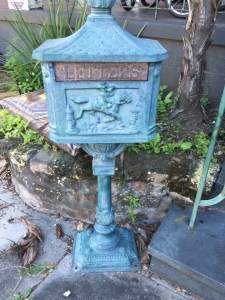
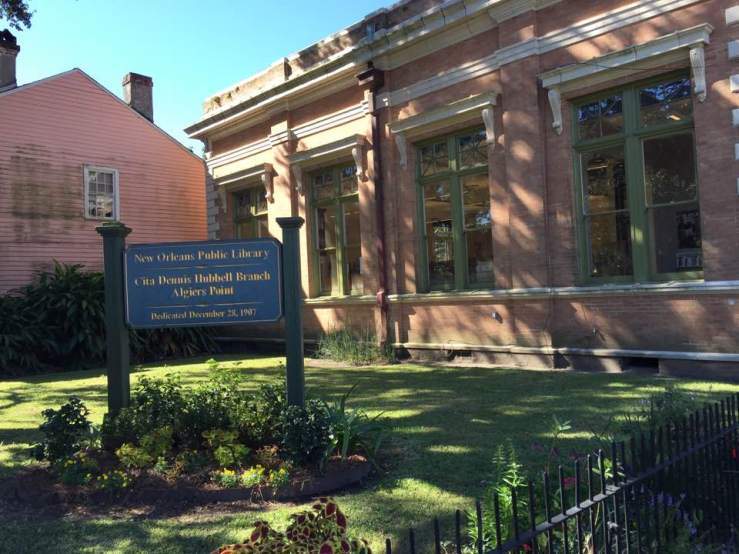
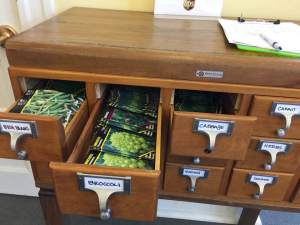
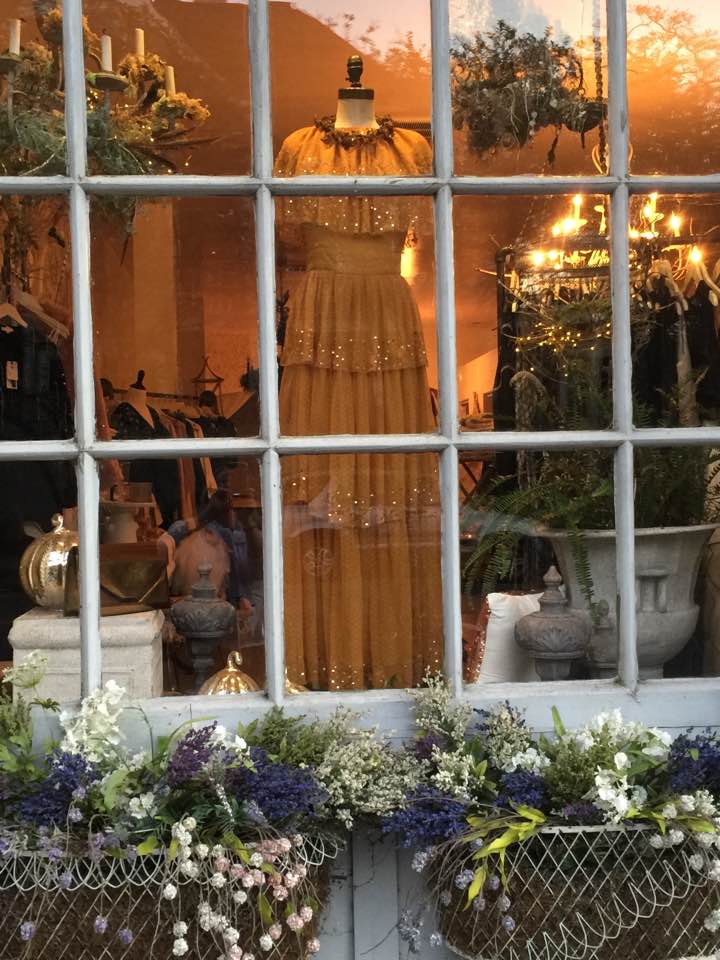


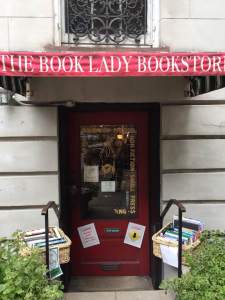 On our road trip across the US (south to Florida, then west to Tucson, Arizona, then north to Portland, Oregon) we spent nearly two weeks visiting family in the St. Petersburg area. Along the way, we stopped in Savannah, Georgia, my first time in that lovely city. An afternoon wasn’t nearly long enough, but we did visit
 with adorable Old Florida bungalows, many being renovated. Even though most of the windows of our airbnb were painted shut, we had air conditioning, and two large windows in the sleeping porch let in breezes from Tampa Bay two blocks away.









 “From 2000 to 2004, five Black young men I grew up with died, all violently, in seemingly unrelated deaths. The first was my brother, Joshua, in October 2000. The second was Ronald in December 2002. The third was C.J. in January 2004. The fourth was Demond in February 2004. The last was Roger in June 2004. That’s a brutal list, in its immediacy and its relentlessness, and it’s a list that silences people. It silenced me for a long time. To say this is difficult is understatement; telling this story is the hardest thing I’ve ever done.
  If you enjoy memoir, Men We Reaped is a good one. If you want to sample the National Book Award short list for fiction, Ward’s novel, Sing, Unburied, Sing, would be a great choice. I hope to get to it soon.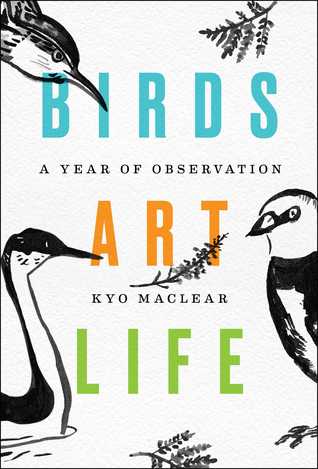
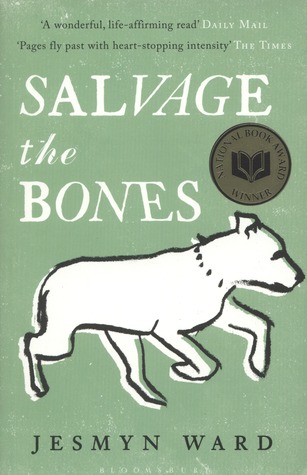 “I will tie the glass and stone with string, hang the shards above my bed, so that they will flash in the dark and tell the story of Katrina, the mother that swept into the Gulf and slaughtered. Her chariot was a storm so great and black the Greeks would say it was harnessed to dragons. She was the murderous mother who cut us to the bone but left us alive, left us naked and bewildered as wrinkled newborn babies, as blind puppies, as sun-starved newly hatched baby snakes. She left us a dark Gulf and salt burned land. She left us to learn to crawl. She left us to salvage. Katrina is the mother we will remember until the next mother with large, merciless hands, committed to blood, comes.”
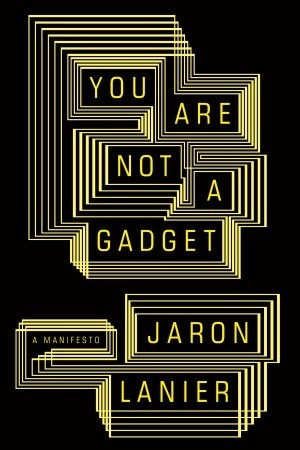 “Humans are free. We can commit suicide for the benefit of a Singularity. We can engineer our genes to better support an imaginary hive mind. We can make culture and journalism into second-rate activities and spend centuries remixing the detritus of the 1960s and other eras from before individual creativity went out of fashion.
 I haven’t had a chance to synthesize my thoughts about You Are Not a Gadget. Before too much time goes by and I forget what I read, I wanted to at least post a few of my favorite quotes from the book, which inspired me as much as Who Owns the Future?