“Those who have taken up homesteading – whether in the late nineteenth century, in midcentury, or in more recent periods – have all been acting out particular versions of larger experiments in American cultural dissent and spiritual creativity.”
I wake up early, not so usual for me, and when I raise the blinds it’s always sunny here on the dry side of the Columbia River Gorge in Washington.
I put on a thick woolen sweater with a Native American design in sepia and acorn hues, owned by the artist who lives and works here. I grab my cereal and juice, head outside, and eat my shredded wheat looking at Mt. Hood.
We just sold our home of 23 years, where we raised two sons. Wanting to get our minds off of what we left behind, we flew across the country to an artist’s studio and retreat in the Pacific Northwest. New terrain and evidence of an artist hard at work teaching, learning, sharing, and making are reviving my creative spirit.
These things inspire:
a weaver’s loom
artwork on all the walls, mostly nature based
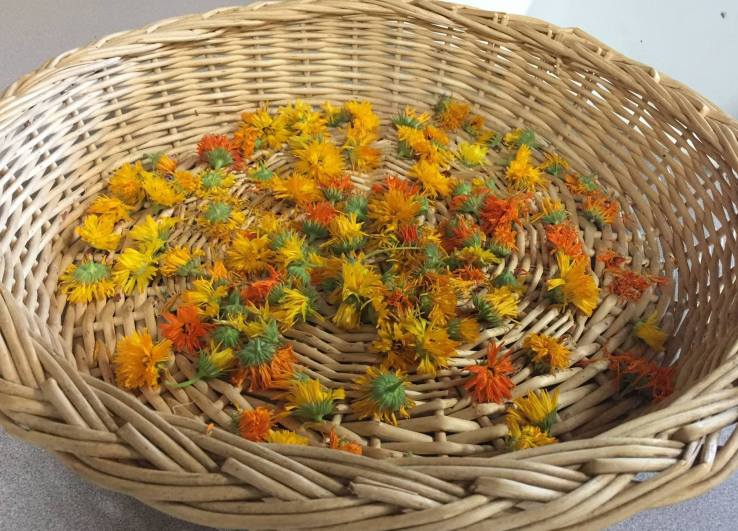
marigolds drying in a basket
a display of cloth swatches dyed from goldenrod, Queen Anne’s lace, turmeric, eucalyptus, horsetail, walnut, and blackberries
a fragrant garden with mint, basil, tomatoes, squash and other goodies
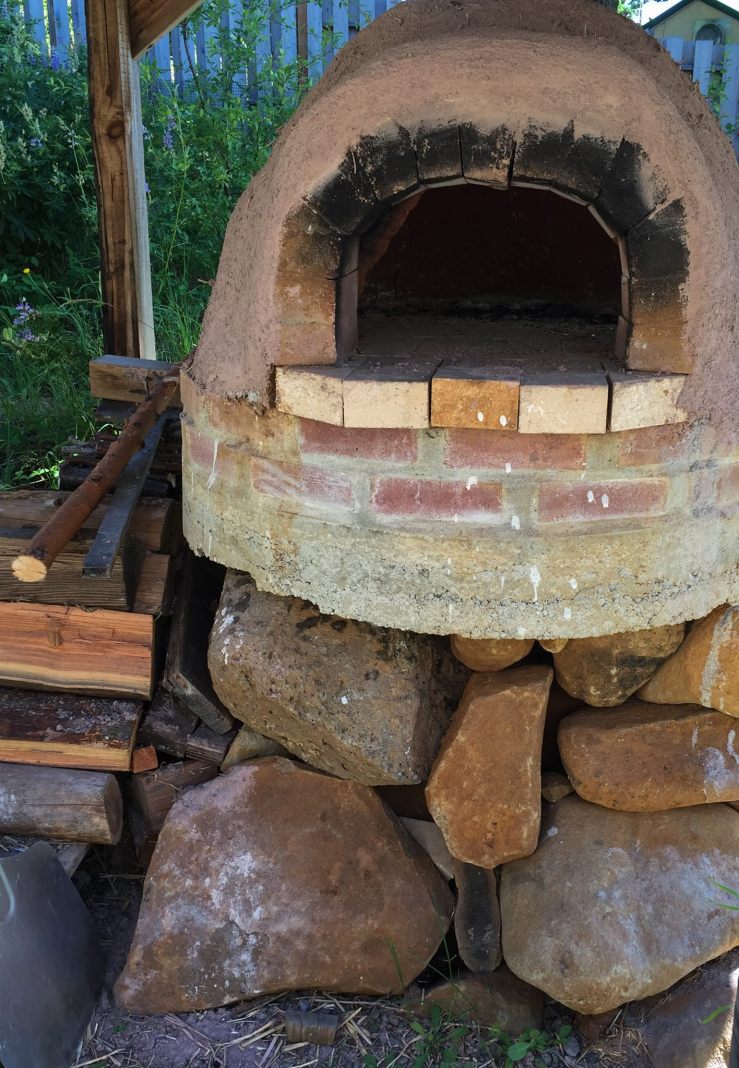
a handmade bread oven
poppies everywhere in gold and fiery red
jars filled with mysterious things, such as dried flower petals and I don’t know what
thick, blush-pink pear slices put by in glass jars
a catalog of enticing classes like Wooden Spoon Carving, Flower Farm Dyes, Ikat Weaving, and Columbia Plateau Beadwork
It’s chilly in the morning, often windy, always sunny.
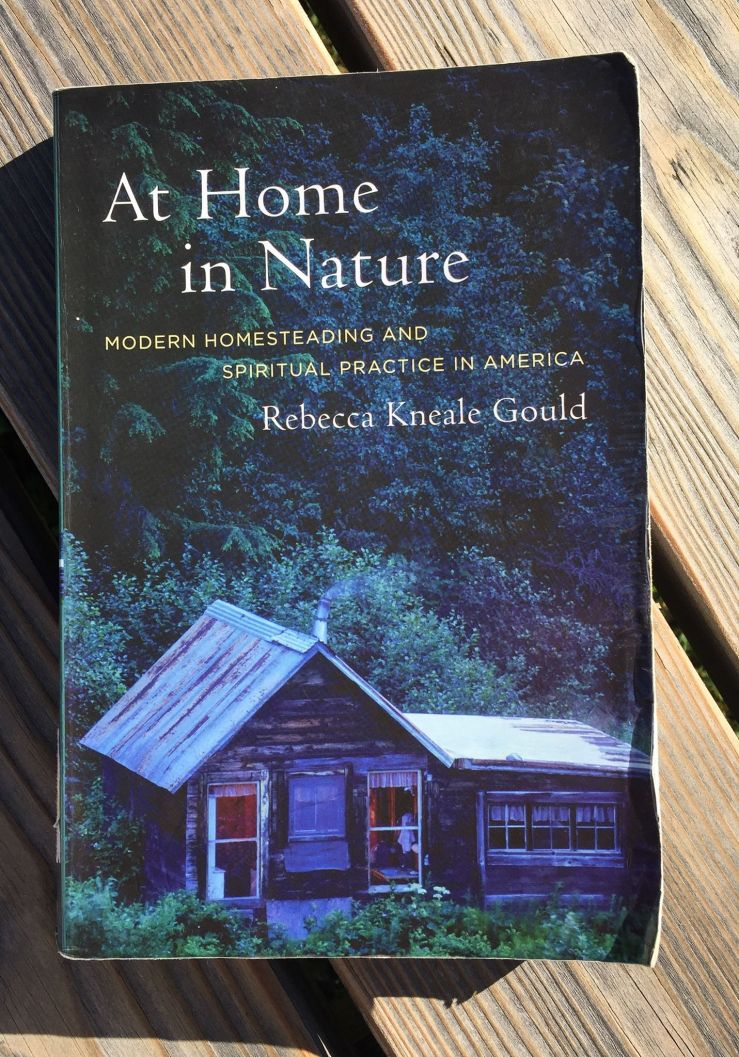
Other people’s book collections take us down unforeseen paths, and sometimes the more off the beaten path, the better. There are many books to sample here. At the moment, I’m delving into At Home in Nature: Modern Homesteading and Spiritual Practice in America, by Rebecca Kneale Gould, learning about John Burroughs, Henry David Thoreau, Helen and Scott Nearing, and lesser known American homesteaders – an intriguing slice of American history. It’s perhaps more scholarly than I’d prefer, but I’m enjoying it.
Some other books that live here:
which “aesthetics” do you mean? ten definitions, by Leonard Koren
Coming to Stay: A Columbia River Journey, by Mary Dodds Schlick
A Dyer’s Garden: From Plant to Pot, Growing Dyes for Natural Fibers, by Rita Buchanan
Pacific Feast: A Cook’s Guide to West Coast Foraging and Cuisine, by Jennifer Hahn
Art of the Northern Tlingit, by Aldona Jonaitis
The Textiles of Guatemala, by Regis Bertrand and Danielle Magne
Native Arts of the Columbia River Plateau: The Doris Swayze Bounds Collection, edited by Susan E. Harless
In Zanesville,a novel by Jo Ann Beard (I loved her memoir,The Boys of My Youth.)
Red Brick, Black Mountain, White Clay: Reflections on Art, Family & Survival,by Christopher Benfey
Recommended by my son, which I packed in my suitcase:
The Third Plate: Field Notes on the Future of Food, by Dan Barber
Other books I brought with me:
The Golem and the Jinni, by Helene Wecker (book club reading)
The Artist’s Rule: Nurturing Your Creative Soul with Monastic Wisdom, by Christine Valters Paintner
No Experience Required! Watercolor, by Carol Cooper
I’ll likely read just a couple of these but it’s nice to be able to choose.
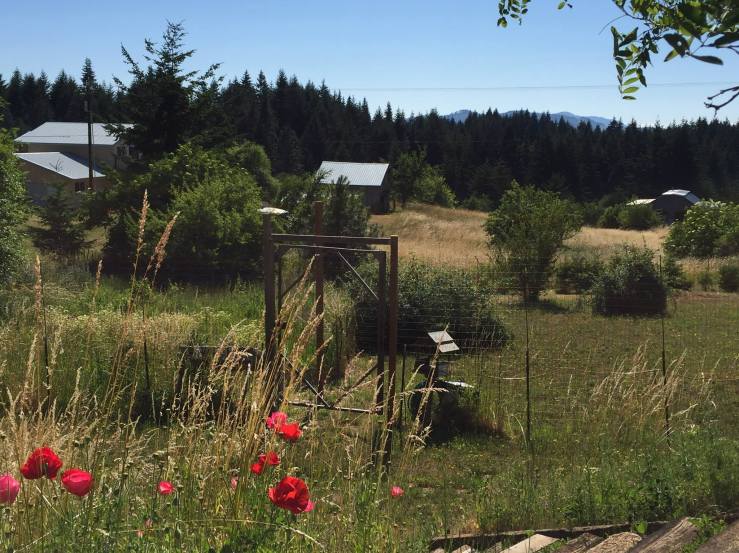
View from the backyard. (I zoomed in on Mt. Hood.)
A homemade bread oven. At the moment, a burn ban prohibits its use.
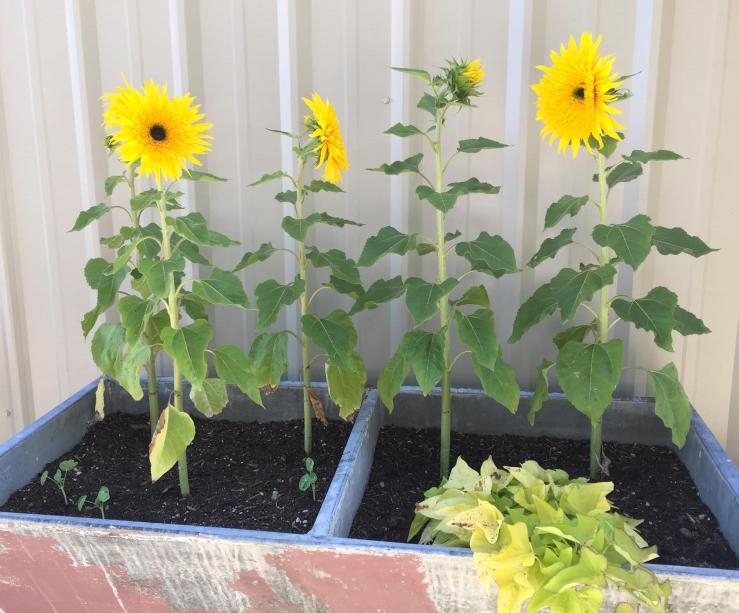
I think these sunflowers would be a relatively easy watercolor project for a beginner like me.
Marigold blossoms drying
Climbing a small mountain is another way to get your mind off things. I have more stores of endurance than I thought and limbs that are plenty sore, but the climb gave me a sense of accomplishment.
View of Mt. Hood from Little Huckleberry Mountain in Gifford Pinchot National Forest
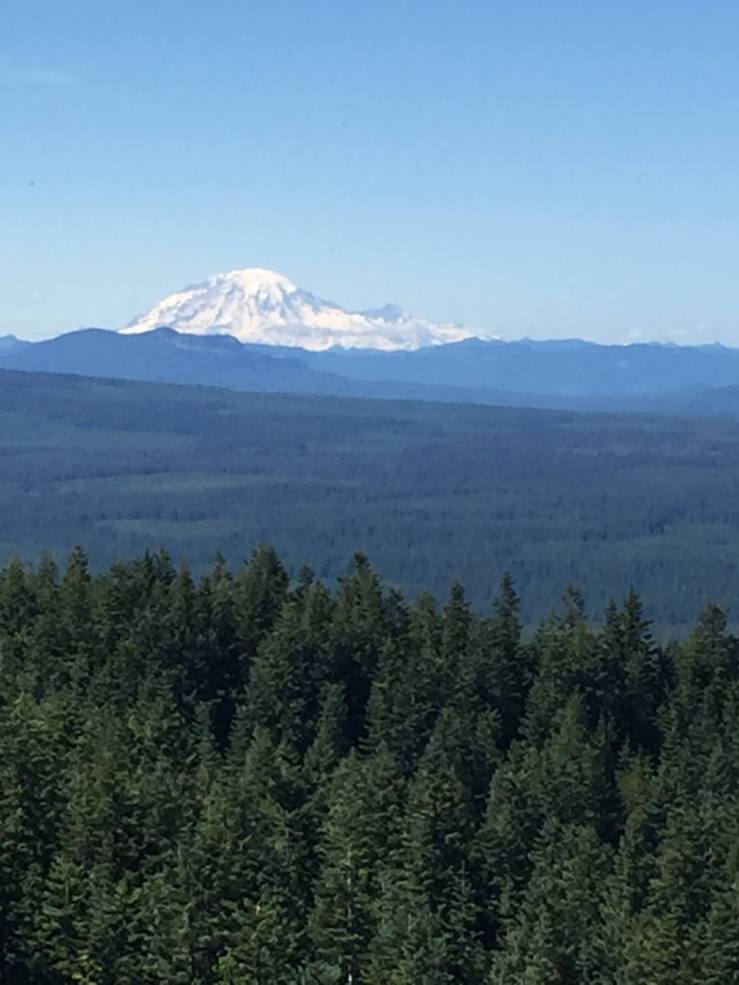
We saw three of the Cascade mountains once we made it to the top…
Mt. Adams
….which I could not have done without the encouragement of my husband.
Mt. Rainier
Atop Little Huckleberry Mountain, on the ruins of an old fire lookout. Elevation: 4,781 feet.
An artist’s tools and artifacts. Books that belong to another. Climbing a small mountain. How do you feed your creative spirit? Can you recommend any books? Are you traveling this summer or working on a creative project?
“Food for Mama was equal to love, and, though she might withhold it when fasting, she usually meted it out to Papa and me straight from her heart. The preparing, cooking, and storing of food made up the pulse of her days. I’d wake in the mornings to the sound of Mama grinding grain. Clamped to the kitchen counter, that steel mill from Hatch’s was her magic tool, transforming inedible whole grains into vital ingredients as she stood beside it, hair pulled back, working the crank. The groats went in a funnel in the top, to be ground by opposing metal wheels attached to the crank, and depending on the setting, meal or flour streamed or puffed from the spout into a bowl.”This Life Is in Your Hands,by Melissa Coleman
Coleman’s memoir, This Life Is in Your Hands, is about her childhood years with her two younger sisters on the Maine farmland her parents, Sue and Eliot Coleman, bought from the Nearings. It’s an ode to people in love with the land and a certain way of life; it’s also an elegy for a family and a time forever lost: when Melissa was seven, tragedy struck and her family splintered.
As I read the memoir, it dawned on me that I recognized the name Eliot Coleman, and that, in fact, I have one of his books, Four-Season Harvest,which I bought when I became interested in year-round gardening. From the standpoint of American history, This Life Is in Your Hands is a fascinating look at the back-to-the-land movement. Regarded suspiciously as radical hippies by many in mainstream America, the Colemans and others like them pioneered an important movement flourishing on new fronts today.
Eliot Coleman criticized the ravages wrought by industrialized farming. He advocated small-scale, biological farming, which emphasizes high quality soil that eliminates the need for pesticides, and a return to ancient farming practices. When Melissa Coleman was a young child, Eliot went on research forays to Europe, where he observed French farmers cultivating gardens all year round. He began to import their age-old farming wisdom to America and has been influential in the organic farming movement ever since.
There is much to admire in This Life Is in Your Hands as a memoir, and there are limitations, too. Melissa Coleman’s writing is uneven, and her storytelling skills fall short in some readers eyes. But at her best she is exquisitely poetic about daily life on their plot of land.
“The cookstove was our most important possession, without which we would either starve or freeze to death. To my young imagination it looked like a black animal with four stout legs under a square body, a flat top with lids that opened to the fire, and one long tail of a chimney that curved through the wall to puff smoke outside. It had three mouths, a small one to make little fires for cooking, a bigger one for overnight fires, and the biggest of all for the oven, with white enamel around a temperature dial ranging from “cool” to “very hot” and the brand name, “Kalamazoo.” When the bread was done, Mama opened the oven door and the loaves came out golden brown and steaming, to be placed on the counter to cool.”
Of course, Melissa must also tell how this edenic existence fell apart. The lifestyle entailed constant, backbreaking work, and the Colemans did not have electricity or indoor plumbing. The children were allowed to run free on the farm, and the constant work meant they weren’t attended to closely, which contributed to a tragedy: the accidental death of Melissa’s sister.
Coleman’s portrayal of her parents, Sue and Eliot, is mostly compassionate, but confusing, to me. From the beginning it’s drummed into us that Sue didn’t have the inner confidence and drive of her husband, Eliot. We’re told he was extraordinary, while Sue is depicted as lacking, and some of this judgement seems unfair to Sue. Understandably, Melissa suffered greatly when Sue fell apart and abandoned her role as a mother after the tragedy. But for a long time their farm and family flourished thanks to Sue’s efforts, not just Eliot’s. She gardened, cooked, cleaned, preserved food, hauled water, and gave birth to two of her children at home–one of those times she was home alone.
Sue suffered from bouts of depression and postpartum depression, but she was caring for three young children while adhering to superhuman lifestyle standards and married to an impossibly driven man. At one point, before the tragedy, Eliot procured a rental car and told Sue to leave with the children, that the marriage was over. It’s not clear to me why this was warranted–Sue’s worst sin seems to be what some might call neediness–unless Melissa left information out to protect her mother. I found Eliot’s actions harsh. The situation hints at sexism and unrecognized mental illness. Despite the sexual revolution and women’s lib, there were plenty of sexist marriages in the 1960s and 1970s. Like any young mother in her situation, Sue needed more support, although as readers, we may not know the whole story.
The Nearings apparently remained somewhat aloof after the tragedy. Helen Nearing, in fact, had not been pleased when Sue became pregnant the first time, telling her she should have waited because it was unrealistic to take on both motherhood and the farm.
The author’s conclusions about the meaning and fallout from her family’s grand experiment and tragedy struck me as pat. But telling the whole, accurate truth in these fraught family stories, from the point of view of the child and then as an adult with hindsight, is difficult. Memoir has pitfalls, but I think this one is an important and intriguing story on many levels.
Eliot and his third wife, Barbara Damrosch, currently own and operate Four Season Farm in Harborside, Maine, on the site of the original farm Melissa wrote about in her memoir. Today, many small organic farmers are flourishing in central Maine, some owned by apprentices who worked for the Nearings and the Colemans.
“Our staple was a yeast-free flatbread called a chapati, which Mama learned to make from David Hatch, who learned in India. Mama let me help mix the flour from the grain mill with water and salt to make a pliable dough, then kneaded it to bring out the gluten and let it set for an hour before making round gold balls of dough that she flattened with a rolling pin into thin, but not too thin, pancakes. She prepared the cookstove ahead so there was a bed of red hot coals in the firebox, and heated a greaseless twelve-by-sixteen-inch cast-iron skillet to sear both sides of the chapati and trap the steam inside. The chapati was then placed on a bent clothes hanger over hot coals inside the firebox, where it would blow up into a steamy balloon. Once it was removed from the flame, the air in the middle was released and the balloon flattened to form a perfect tortilla-like vehicle, warm or cold, for whatever you chose to put on or inside it.”
Here is a short video about Helen and Scott Nearing; Eliot Coleman appears in the opening:
“If technologists are creating their own ultramodern religion, and it is one in which people are told to wait politely as their very souls are made obsolete, we might expect further and worsening tensions….People must not be gradually equated with machines if we are to engineer a world that is good for people. We must not allow technological change to be driven by a philosophy in which people aren’t held to be special.”Who Owns the Future? by Jaron Lanier
I’m glad I found my way to this book and Jaron Lanier. Although Who Owns the Future? was at times frustrating, perplexing (and even annoying), Lanier’s message is an important one. If you care about where the human race is heading in light of the highly disruptive information revolution that is only speeding up, I encourage you to become familiar with Lanier’s views and think about the issues he raises.
A computer scientist who pioneered virtual reality and a co-founder of start-ups now part of Oracle, Adobe, and Google, Lanier currently works at Microsoft Research on top-secret projects. In Who Owns the Future? he hints at a project involving the manipulation of fault lines in the earth to prevent quakes. Big stuff like that. Lanier is a musician and composer too, and his music has been performed all over the world.
Lanier proposes that we work toward “a humanistic information economy that rewards ordinary people for what they do and share on the web.” (Italics are mine.)If you follow my blog, you know I’ve been reading Wendell Berry, who writes about the displacement of farmers, small business owners and families in rural America by industrial-scale farming. Massive displacement of much broader swaths of society by technology is coming if we don’t make adjustments, and this is what Lanier is concerned about. I see Berry, who is in his 80s, and Lanier, a Gen X’er, as kindred spirits sounding the alarm about our cold, competitive, mechanistic society and its degradation of the human spirit.
Lanier does not think “Luddite” is a derogatory term. He believes the Luddites were onto something.
Technology has made it increasingly difficult to earn a living in music, photography, publishing, and journalism. Lanier warns that this could eventually be the case in manufacturing, medicine (robots performing surgery and caring for the elderly are two examples) and other mainstream fields. He predicts the middle class will continue to hollow out, with money and power concentrating among “Siren Servers” such as Facebook and Google, financial and insurance companies, national security agencies, and other powerful corporations that gather vast amounts of data for free and profit enormously by it. If the middle class implodes, so will the Siren Servers and everything else.
“A Siren Server…is an elite computer, or coordinated collection of computers, on a network. It is characterized by narcissism, hyperamplified risk aversion, and extreme information asymmetry. It is the winner of an all-or-nothing contest, and it inflicts smaller all-or-nothing contests on those who interact with it.
Siren Servers gather data from the network, often without having to pay for it. The data is analyzed using the most powerful available computers, run by the very best available technical people. The results of the analysis are kept secret, but are used to manipulate the rest of the world to advantage.
The plan will always eventually backfire, because the rest of the world cannot indefinitely absorb the increased risk, cost, and waste dispersed by a Siren Server.”
Lanier gives an example that is close to home. As Kodak, headquartered in my city, downsized nearly its entire workforce of 140,000 employees, Instagram arose, a social media giant where amateur and professional photographers post their photos for free. I love Instagram; I post photos there often. At the time of its founding, Instagram employed thirteen people.
A few other personal examples: 1. I have a loved one in photography. He and his colleagues are finding it increasingly difficult to earn a living. 2. My brother was laid off from his city’s newspaper as it hemorrhaged journalists and printing staff. 3. The house and shop where I grew up became worthless nearly overnight because of the mortgage crisis in 2008; Lanier says the housing crisis came about, in part, because of high-speed, networked financial transactions.
To make a long, complicated book short, Lanier believes people should be paid micro-royalties for the information they give away for free on the internet. It wouldn’t be difficult to make this possible from a technology standpoint, and Lanier delves into the accounting aspects, too, which I skimmed over. These micro-payments could be a viable way for people to earn a living, as they are reimbursed for the value they now provide for free. I can’t help but think of Henrietta Lacks, who was never given a cent for her “immortal” cells; they have been replicated around the world and have contributed enormously to medical research.
Lanier admits that, like many other Silicon Valley techies, he bought into the utopian vision of how wonderful it would be when information flowed freely to everyone on the Internet. Years ago, I drank the Kool-Aid, too, though grudgingly, because I’d made a living at writing. I have not been overjoyed to see writers go unpaid. Lanier contends that the rewards we get–such as free services like Facebook and WordPress for blogs such as this one–are not, ultimately, enough remuneration for what we’re contributing. Universal health insurance and other social fixes, if they ever come about, will not be enough.
Many disagree with Lanier, but my gut tells me he’s right. I find his message liberating. If, for example, I publish a quality memoir, I don’t want to give it away for 99 cents, or for free. I really don’t.
If I choose to have my DNA analyzed, what will be done with this unique, precious, and sensitive data now owned by some company?
I don’t want to spend hours in front of a screen, either, as so many of us do now, while Amazon and Facebook grow rich from the data we give away. This is no way to live. For a variety of reasons, I find myself trying to cut back on screen time; I’d rather be hiking or gardening or otherwise living my life out in the world.
“When enough people lack economic dignity, there’s no way for the economy overall to function well. ….Some decades from now all those idealistic people who contributed to open software or Wikipedia will be in the same position as today’s aging jazz musicians….In a humanistic information economy, as people age, they will collect royalties on value they brought into the world when they were younger. This seems to me a highly moral use of information technology. It remembers the right data. The very idea that our world is construed in such a way that the lifetime contributions of hardworking, creative people can be forgotten, that they can be sent perpetually back to the starting gate, is a deep injustice.
Putting it that way makes the complaint sound leftist. But today there’s also an erasure of what should be legitimate capital. The right should be just as outraged. The proposal here is not redistributionist or socialist. Royalties based on creative contributions from a whole lifetime would always be flowing freshly. It would be wealth earned, not entitlement.”
In Who Owns the Future? Lanier sometimes used terms and references new to me. Techies and younger folks will probably have an easier time, and there is a glossary that’s helpful. Lanier’s style and syntax are different, too, but I persisted, because I’m intrigued by how we might work toward a future that is ethical, human-centered, and filled with meaning. What I found dispiriting was his statements about baby boomers. If Lanier’s vision comes to fruition, he predicts it will not be until we have come and gone. That may be true, but the way he expresses this seems insensitive to his boomer readers. I hope to engage online for many years; Lanier implies this will be a largely unremunerated one-way street for my generation.
Lanier devotes a short section to the future of books, too. He offers a mixed outlook, but I’m encouraged by his conclusion. I won’t give it away here.
“My hope for the future is that it will be more radically wonderful, and unendingly so, than we can now imagine, but also that it will unfold in a lucid enough way that people can learn lessons and be willful. Our story should unfold unbroken by perceived singularities or other breaches of continuity. Whatever it is people will become as technology gets very good, they will still be people if these simple qualities hold.”
“I avoid looking down at my body, not so much because it’s shameful or immodest but because I don’t want to see it. I don’t want to look at something that determines me so completely.” – The Handmaid’s Tale by Margaret Atwood
I belong to an amazing book club of ten women, and we just finished reading and discussing The Handmaid’s Tale by Margaret Atwood. It was my first exposure to this iconic dystopian novel about the theocratic Republic of Gilead (formerly the United States), where fertile women have been enslaved for purposes of reproduction due to dramatically declining birth rates.
Atwood has said that every aspect of extreme female oppression depicted in the novel has actually happened. The ghosts of New England puritanism and witch hunts haunt The Handmaid’s Tale: the novel takes place in Cambridge near a university (Harvard) that has been shut down. There are also strains of American slavery, the Bible, and the Third Reich, among other periods.
NOW is the perfect time to read The Handmaid’s Tale if you haven’t already. It has been getting a lot of attention because of the new Hulu series starring Elizabeth Moss and, of course, because of the unsettling political era unfolding in the U.S. As Emily Nussbaum in The New Yorker put it, “Our President is a Playboy-brash predator; his Vice-President is pure Gilead.”
I decided to simultaneously watch the unfolding Hulu series, which added interesting contrasts and depths to my reading and viewing experiences.
I quote Emily Nussbaum below because I think our book club would agree that reading Handmaid inspired us to reflect on how it was for women in the Reagan era when the book was published. (We range in age from 40s to 60s.) I was thirty when The Handmaid’s Tale came out in 1985. I’d just moved out of New York City, where I’d watched the Trump Tower go up on Fifth Avenue directly across the street from my office. In fact, the book publisher I worked for moved to a humbler downtown neighborhood once Trump’s golden tower was in place and the rent became unaffordable.
“…for many readers of my generation, “The Handmaid’s Tale” is also a time machine back to the Reagan era, a mightily perverse period for sexual politics. Just a decade earlier, a woman could be denied a credit card without a man to co-sign, and yet, by 1985, when the novel was written, the media was declaring that feminism was over, dunzo, defunct—no longer necessary, now that women wore sneakers to jobs at law firms. At the same time, sexual danger was a national obsession, seen from two opposing angles, each claiming to protect women. On the right, there was the anti-abortion New Christian Right—led by figures like Phyllis Schlafly and the televangelist Tammy Faye Bakker—intent on restoring traditional marriage. On the left, there was the anti-porn movement….It was a peculiar era in which to be a teen-age girl, equally prudish and decadent: the era of Trump Tower and cocaine, AIDS and “Just Say No.”Emily Nussbaum, The New Yorker
While I read and watched The Handmaid’s Tale, I’d been working on a scene in my memoir that takes place in New York City in 1978. I’d been trying to remember how I’d seen myself in the context of the times at twenty-three, but my memories were delivering up a great deal of ambivalence and little clarity. I knew I’d felt grateful for the second-wave feminists and the 1960s cultural pioneers and that I’d thought that women’s liberation had done its work. Yet carving out a career wasn’t proving to be easy; mostly I’d blamed myself for that. Reading Nussbaum’s essay helped me flesh out my scene and my thoughts by reminding me that the late seventies already heralded a backlash: Phyllis Schafly and Ronald Reagan were just around the corner.
Atwood’s book, of course, shows us that history can move in cycles. Freedoms won can be lost.
Nussbaum points out in her essay that the Hulu show has to keep going season after season, while the novel is a self-contained work. Because of this, the spirit of the TV show eventually departs from the claustrophobic bleakness of the book. Offred’s quest on television becomes escape and reunification with her daughter and lover. (Offred is a handmaid forced to have sex with her married Commander; should she become pregnant, the baby will be turned over to the Commander and his barren wife.) The TV series becomes more like a thriller, while in the book there seem to be few ways the women can work toward liberation. The TV show is more hopeful, but be warned that it is graphic and violent. I think both the book and the series are excellent, but I don’t know how long I will watch the series. Season after season, a series can lose power and focus. It could eventually pale next to Atwood’s book, which reads like a bomb going off.
Have you read The Handmaid’s Tale or are you watching the Hulu series? What do you think?
“How easy it is to invent a humanity, for anyone.”
(On the heels of The Handmaid’s Tale, I happened to find out about a new documentary series on Netflix, “The Keepers.” My husband and I watched all seven episodes in two nights.“The Keepers” depicts a real-life dystopia for young women who attended a Catholic school in Baltimore beginning in the 1960s, the life-long ramifications of untold secrets, and the confounding process of recovering memories. Well-crafted documentaries remind me how truth can be stranger than fiction. It’s got me thinking about how story and dramatization, no matter what the medium or genre, can so powerfully reveal truths about the human spirit. It’s not easy to depict such depth of character in documentary. I’m still thinking about the good women–and the handful of good men–in “The Keepers.”)
“Never doubt that a small group of thoughtful, committed citizens can change the world. Indeed, it is the only thing that ever has.” Margaret Mead
“The tag on that little butterfly sent me off on a journey of my own – one that would over and over again astound me at the miracle of it, the wonder of nature, the tenacity of living things. Over the next ten years I would continue to add to my knowledge and experience about something that had been going on for centuries, with a part of it still taking place right in my own backyard.”The Monarch: Saving Our Most-Loved Butterfly, by Kylee Baumle
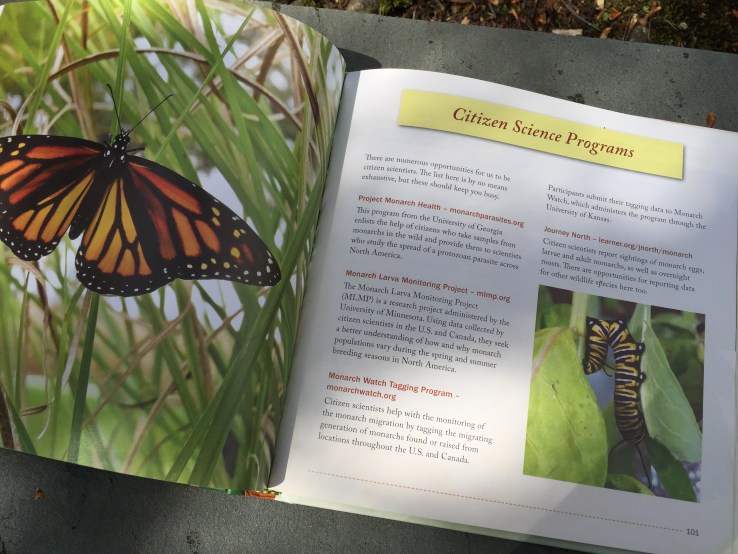
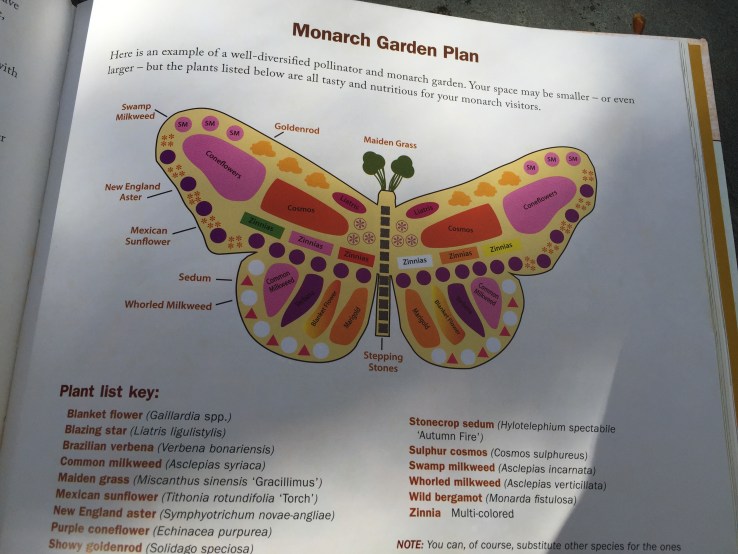
I had no idea monarch butterflies were so fascinating. I didn’t know there are such things as Certified Monarch Waystations and that I could easily create one myself, or that I could monitor monarch butterflies as a citizen scientist. I didn’t know there was a Beautiful Monarch Facebook group with 11,000 members. (As of this writing, I’m one of their newest.)
My favorite nature and gardening publisher, St. Lynn’s Press, kindly sent me a review copy of their new book, The Monarch: Saving Our Most-Loved Butterfly, by Kylee Baumle. I thought this would be the perfect time to feature it on Books Can Save a Life in honor of the People’s Climate March this weekend in cities around the world.
Kylee Baumle – a citizen scientist, lifelong gardener, blogger (Our Little Acre), and columnist for Ohio Gardener magazine – has written a beautiful book about the monarch butterfly, its perils, and what we can do to help make sure this magnificent creature is still here generations from now.
The author begins by telling a personal story about a monarch encounter that involves miraculous detective work and speaks volumes about her passion for this threatened creature. She follows up with fascinating chapters about monarch biology that focus on the miracles of its five-stages of development and nearly unbelievable cross-country migration.
“The monarch’s migration is extraordinary; there is none like it in the butterfly world. Think of it: A butterfly born in Canada or the U.S. begins an epic journey of up to 2900 miles south to a place they’ve never been before – a very specific place, where their great-great-grandparents went the year before, but never the other generations between them.”
(Baumle tells us that the winter location of the migrating monarchs was unknown until 1975. Now we know they overwinter in the oyamel fir forests of the Transvolcanic Belt mountains in central Mexico. This location was first shared with the world in the August 1976 issue of National Geographic. Read more about the discovery here.)
“The final generation of monarchs in late summer and early fall are called the Methuselah generation. Why Methuselah? The name is borrowed from the Bible, in which Methuselah was said to have lived for 969 years, much longer than his contemporaries. Migrating monarchs live five to eight times as long as their parents and grandparents.”
You don’t have to be an expert gardener – or a gardener at all – to enjoy The Monarch and find inspiration to become involved in its preservation. Baumle has carefully and thoroughly presented the most up-to-date research about the monarch, and she’s included a range of easy, fun activities that will appeal to all ages. This is an excellent book for the lay person as well as for teachers and students, young and not-so-young.
Here are some things you can do to honor and help save the monarch butterfly: 1. Become a Citizen Scientist (8 programs are listed in this book.) 2. Create a Monarch Waystation with milkweed and other plants to attract and nourish monarchs. 3. Make a butterfly watering station. 4. Raise a monarch in your home. 5. Tag a migrating monarch. 6. Get a grant to plant a school garden. Several grant sponsors are listed in this book.
I admire St. Lynn’s Press for publishing books that encourage us to savor and preserve the natural world. They have an impressive backlist of gardening and nature titles, and they’ve done it again with The Monarch: Saving Our Most-Loved Butterfly. Kylee Baumle’s love for the monarch and enthusiasm for spreading the word is contagious.
” A group of butterflies goes by several names. ‘Kaleidoscope’ is my favorite, but others have used the terms ‘swarm’ and ‘rabble.’ Take your pick.”
“Where have all the butterflies gone? It’s a question I hear being asked quite a bit these days.”
For more about Danaus Plexippus (the monarch butterfly) and how you can get involved, here are excellent websites listed in The Monarch:
“There aren’t many such widespread issues whose directions can be changed by ordinary people like you and me, or in which people truly believe that anything they do will have any measurable effect. But reversing the decline in the number of monarchs is one where we really can make a difference.”
“No one is an environmentalist by birth. It is only your path, your life, your travels that awaken you.”Yann Arthur Bertrand, photographer and creator of the book Earth from Above and the film Home.
If you plan to participate in one of the climate marches this weekend, happy marching!
“She was a good cook, but she also did the main work that kept us eating. She made the garden, and all we didn’t eat fresh she preserved and stored for the winter. She took care of the hens and the turkeys. She milked two cows. My father was in charge of the meat hogs, but Grandmam was the authority and head worker at the butchering and sausage making and lard rendering and the curing of the meat. In the summers she, and I with her, roamed the fencerows and woods edges and hollows to pick wild berries for pies and jam. She was always busy. She never backed off from anything because it was hard. She washed and ironed, made soap, sewed and patched and darned. Every Saturday she carried a basket of eggs and a bucket of cream to the store at Shagbark.”Hannah Coulter, by Wendell Berry
Hannah Coulter is a great book club choice. I think that reading Wendell Berry’s novels, essays, and poetry over several months could spark conversations so relevant to our times.
As I wrote in my previous post, Berry doesn’t subscribe to strictly liberal or conservative thinking. Influenced by this Baptist faith and deep bonds with the Kentucky farming community of his birth, he has over a lifetime and in a large body of work mapped out a moral code for living ethically on this earth, with compassion toward each other and a deep understanding of what the land we live on requires of us.
At eighty years of age, Hannah Coulter looks back on her life. When she was a girl, her mother died and was soon replaced with an uncaring stepmother. When Hannah was a young wife and mother-to-be, her husband, Virgil, was killed in World War II. A few years later, Hannah married Nathan, a war veteran who fought at Okinawa. Together they raised three children. Hannah’s is a story of farming and family in a close-knit Kentucky community, a way of life that she recognizes is vanishing.
Or is it? The ending of this short but powerful novel offers signs of hope that maybe it is not. Even though I haven’t lived the farming life, I care about its preservation and resurgence, so I loved the ending of this novel.
Hannah Coulter spoke to me on many fronts, and left me unsettled, too.
After 20+ years in our home raising two children, we’ve been getting ready for a garage sale and deciding what to part with. These words resonated:
“And then we got married and moved in.
Those were fine days. Everything we did seemed to start something that was going to go on and on. I’ll never forget the feeling it gave me just to make this house clean, to fill it with fresh air and the good smell of soapy water, to wash the dingy windows and see the rooms fill with light, to get here one morning and find that Nathan had mowed the yard, sparing the day lilies and the rambler rose. I cut a few blossoms and stuck them in a jar of water in the living room.”
By far, though, one of the most powerful sections of Hannah Coulter for me was when, after Nathan’s death, Hannah goes to the library so she can find out what the Battle of Okinawa was all about. Nathan had never spoken of the war or that terrible battle.
I understand Hannah’s impulse to want to know this about her husband. Writing my memoir, I’ve found it challenging to write intelligently and fairly about my parents in a full-bodied, compassionate way. Parents keep stories from their children and remain enigmas long after they are gone.
A few years after my father died, we went to Metz, France, a town he helped liberate in World War II when he was about my son’s age. We saw the countryside where he was wounded and visited the American cemetery with thousands of white crosses as far as the eye could see. My father always told war stories that fascinated me, but I’d never really known much about the Battle of Metz–what a suicidal mission it was. That day in France, when we found the grave of a young man in my father’s battalion who was killed the same cold November day Dad was wounded, I realized in a way I never had before how much my father must have been censoring when he told his stories.
When Hannah goes to the library, she wants to know what Nathan experienced during the Battle of Okinawa. She wants details: what he saw, heard, smelled, touched, and tasted. Wendell Berry gives these to her, in spades. He reminds her, too, of the Japanese farmers and their families who were there when the bombs rained down.
Wendell Berry isn’t keen on runaway capitalism and the industrialization of farming, and I think this powerful chapter about Hannah researching the Battle of Okinawa is, in part, an indictment of the military-industrial complex.
“Want of imagination makes things unreal enough to be destroyed. By imagination I mean knowledge and love. I mean compassion. People of power kill children, the old send the young to die, because they have no imagination. They have power. Can you have power and imagination at the same time? Can you kill people you don’t know and have compassion for them at the same time?”
Over Easter weekend, I heard someone report, with great satisfaction, of the rising ISIS death toll from our “mother of all bombs,” as troops cleaned up and found more bodies.
Some final, true, and thankfully uplifting words, from Hannah Coulter:
“The world is so full and abundant it is like a pregnant woman carrying a child in one arm and leading another by the hand. Every puddle in the lane is ringed with sipping butterflies that fly up and flutter when you walk past in the late morning on your way to get the mail.”
I’m better off for having read Hannah Coulter. I draw inspiration from these words about Grandmam, and have written them in the notebook where I record and track my creative work:
“She never backed off from anything because it was hard.”
“I can tell you confidently that the many owners of small farms, shops, and stores, and the self-employed craftspeople who were thriving in my county in 1945, did not think of their work as ‘a job.’ Most of these people, along with most skilled employees who worked in their home county or home town, have now been replaced by a few people working in large chain stores and by a few people using large machines and other human-replacing industrial technologies. Local economies, local communities, even local families, in which people lived and worked as members, have been broken.” Wendell Berry,Our Only World
A few days before I wrote this post, people in our government were planning to vote on a cruel, senseless health care bill that would have meant insurance companies would no longer be required to cover outpatient care, emergency services, hospitalization, pregnancy, maternity and newborn care, mental health and substance abuse treatment (mental health is a cause especially close to my heart), prescription drugs, rehabilitation, laboratory and diagnostic tests, preventive and wellness services and pediatric care.
I thought about all the working poor and those without jobs in Ohio, where I grew up. This health care bill would have wrought only further misery and suffering, and yet many of those who would have been adversely affected had voted in the current administration.
I was afraid to look at the news on Friday, and relieved and thankful when I finally did. There had been no vote on the bill. The fate of health care in the United States would be determined another day.
For some reason, it seems we are forcing ourselves to sort everything into the categories of liberal or conservative, and pro-government or anti-government, when of course the world is far more complex, and far more beautiful.
To keep myself sane and as a balm when I’m tired of all the vitriol, I’ve been reading Wendell Berry. I’ve wanted to dive into his writing for a long time. Needless to say, Berry doesn’t give much credence to strictly liberal or conservative world views.
He is a long-time Kentucky farmer and a devout Christian who writes poetry, short stories, novels, and essays, brilliantly. Affectionately known as “the mad farmer,” Wendell Berry is an American prophet, a voice of reason, humility, and humanity who has been compared to Emerson and Thoreau. If every person in America, young and old, read a few of his poems or stories, maybe we’d be in a better place.
Our Only World, a collection of ten essays, is a good choice if you want a concise introduction to Wendell Berry. (The book pictured above refers to eleven essays, but my copy had only ten, so I assume an essay was removed before publication.)
There were so many passages I wanted to quote, it was hard to choose. When I read the passages below, I thought of the economic devastation I’ve seen in my home town and in my home state of Ohio:
“….the disposability of people….is one of the versions of ‘creative destruction,’ which is to say the theme of heartlessness, heartbreak, and permanent damage to people and their communities….We now use ‘Luddite’ as a term of contempt, and this usage, often by people who consider themselves compassionate and humane, implies a sort of progressivist etiquette by which, in the interest of the future (and the more fortunate), we are to submit passively to our obsolescence, disemployment, displacement, and (likely enough) impoverishment. We smear this over with talk of social mobility, upward mobility, and retraining, but this is as false and cynical as the association of ‘safe’ with the extraction, transportation, and use of fossil and nuclear fuels.”
“The ruling ideas of our present national or international economy are competition, consumption, globalism, corporate profitability, mechanical efficiency, technological change, upward mobility – and in all of them there is the implication of acceptable violence against the land and the people. We, on the contrary, must think again of reverence, humility, affection, familiarity, neighborliness, cooperation, thrift, appropriateness, local loyalty. These terms return us to the best of our heritage. They bring us home.”
“If one accepts the 24th and 104th Psalms as scriptural norms, then surface mining and other forms of earth destruction clearly are perversions. If we take the Gospels seriously, how can we not see industrial warfare and its unavoidable massacre of innocents as a most shocking perversion? By the standard of all scriptures, neglect of the poor, of widows and orphans, of the sick, the homeless, the insane, is an abominable perversion. Jesus taught that hating your neighbor is tantamount to hating God, and yet some Christians hate their neighbors as a matter of policy and are busy hunting biblical justifications for doing so. Are they not perverts in the fullest and fairest sense of that term? And yet none of these offenses, not all of them together, has made as much political-religious noise as homosexual marriage.”
Even more than mental health and health care, I care about our earth and climate change. Here are some things Wendell Berry has to say about our relationship to the natural world:
“…. the limited competence of the human mind… will never fully comprehend the forms and functions of the natural world. With the development of industrialism, this misfitting has become increasingly a contradiction or opposition between industrial technologies and the creatures of nature, tending always toward the destruction of creatures, creaturely habitat, and creaturely life. We can respond rationally to this predicament only by honest worry, unrelenting caution, and propriety of scale. We must not put too much, let alone everything, at risk….
….all our uses of the natural world must be governed by our willingness to learn the nature of every place, and to submit to nature’s limits and requirements for the use of every place.”
A poet and writer I know writes of “the daily bread of language,” and lately I’ve enjoyed partaking of the daily bread of Wendell Berry. One of my blog readers suggested that I look at Berry’s fiction, too, so next week I’ll write about Hannah Coulter and a few other novels that take place in Port William, a fictitious Kentucky town.
The Bill Moyers interview below is a wonderful introduction to Wendell Berry. Listening to him measuring out wisdom in his musical Kentucky cadence calms the mind and soothes the soul.
*****
By the way, the march for climate, jobs and justice, sponsored by the People’s Climate Movement, will take place in Washington, D.C. on April 29, 2017, together with thousands of Sister Marches around the world. My husband and I are planning to march in Washington or New York City. Will there be a march near you?
Have you read Wendell Berry? Which of his books would you recommend? Are you a fan of other writers of a similar nature?
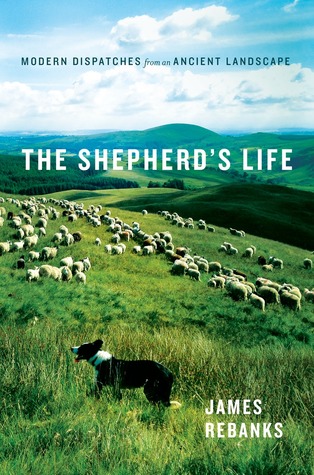
“…modern life is rubbish for so many people. How few choices it gives them. How it lays out in front of them a future that bores most of them so much they can’t wait to get smashed out of their heads each weekend. How little most people are believed in, and how much it asks of so many people for so little in return.”The Shepherd’s Life, by James Rebanks
On a recent trip to the United States to promote his book, Rebanks toured Kentucky and saw the economic devastation and dying towns in rural America, caused in part by industrial scale agriculture that has put small farms out of business. In fact, Rebanks was here the week that Trump won the election.
He and his family are sheep farmers in England’s Lake District; they lead a centuries-old way of life. Rebanks is blunt in rejecting the American model of industrialized agriculture. He believes it has wreaked havoc on families, our health, and the environment.
His memoir is a fascinating, day-by-day account of what it means to be a shepherd and adhere mostly to the old ways in a modern world. He takes us through a full year of tending to 900 sheep with his close-knit family and community.
Woven into this shepherding story is a history of Lake District shepherds and a recounting of Rebanks’ coming of age and adult life path. Determined to follow in his ancestors’ footsteps and become a shepherd, Rebanks ended up taking a brief detour to attend Oxford. Then, he recommitted to sheep farming. He went from being an uneducated local boy to a college-educated adult, relatively at ease moving back and forth between these two worlds, but still firmly committed to the old ways.
His views on the tensions between these two worlds makes for provocative reading. As a young boy, his teachers preached that staying on the farm was a dead end, and urged local kids to leave and make something of themselves. As I skimmed through reviews on Goodreads, I saw that some readers didn’t care for Rebanks’ tone, which can be highly critical of the world of so-called progress and intellectuals. But he does have important points to make about the value of his nearly forgotten lifestyle and the happiness and fulfillment it can garner.
He points out that shepherds possess knowledge that has been passed down for thousands of years, though they may never crack open a book.
“The great flocks of sheep are the accumulation of countless achievements at these shows and sales over many years, each year’s successes or failures layering up like chapters in an epic ancient poem. The story of these flocks is known and made in the retelling by everyone else. Men, who will tell you they are stupid and not very bright, can recall encyclopaedic amounts of information about the pedigrees of these sheep. Sheep are not just bought: they are judged, and stored away in memories, pieces of jigsaw of breeding that will come good or go bad over time. Our standing, our status, and our worth as men and women is decided to a large extent by our ability to turn out our sheep in their prime, and as great examples of the breed.”
And….
“They are sheep that show the effort several generations of shepherds have put into them. Each autumn for centuries someone has added to their quality with the addition of new tups from other noted flocks. There is a depth of good blood in them. They are big strong ewes, with lots of bone, good thick bodies, and bold white heads and legs. They return from that fell each autumn with a fine crop of lambs that are a match for most other flocks in the Lake District.”
I especially enjoyed reading The Shepherd’s Life on the heels of finishing Wendell Berry’s Our Only World, which I’ll write about next week. The two books go hand in hand, with similar themes and messages. Wendell Berry (who has been called a modern-day Emerson or Thoreau) has been a life-long farmer in rural Kentucky. On his visit, Rebanks saw the economic devastation there that Berry has written much about.
Here is another excerpt from The Shepherd’s Life that I like:
“I have met and talked with hundreds of farmers, stood in their fields and their homes, talked to them about how they see the world and why they do what they do. I have seen the tourism market shift over the last ten years with greater value attached to the culture of places. I see people growing sick of plastic phoniness and wanting to experience places and people that do different things, believe in different things, and eat different things. I see how bored we have grown of ourselves in the modern western world and how people can fight back and shape their futures using their history as an advantage, not an obligation. All of this has made me believe more strongly, not less, in our farming way of life and why it matters in the Lake District.”
My favorite section of The Shepherd’s Life is about the spring, when the lambs are born– hundreds of them in the space of a few weeks. The shepherds and their families must work nearly 24/7 scouting their acreage for ewes and lambs that might be in trouble due to difficult births or inclement weather. Families must be ready to respond to emergencies at a moment’s notice. It’s a matter of economic survival and an act of devotion. I was entirely caught up in the dramatic tension of these chaotic and miraculous spring days, as told by James Rebanks.
Some new “nature” words I learned:
Fell: An old English word for hill or mountain. A high, wild mountain slope or stretch of pasture.
Heft: to become accustomed and attached to an area of upland pasture. In The Shepherd’s Life, it refers to both the sheep and the shepherd.
If you like unusual memoirs and lyrical nature writing (although the editing of this book could have been improved), The Shepherd’s Life is a wonderful read.
Here is James Rebanks on the shepherd’s life:
Have you read Rebanks’ The Shepherd’s Life or any of Wendell Berry’s work? Or do you have a favorite memoir with a similar theme to recommend?
I was not happy when the President tweeted that our nation’s news media is the enemy of the people.
I am not a practicing enemy of the people, but as an undergraduate, my minor area of study was how to be an enemy of the people. I liked it so much I studied it in grad school, too. I have a brother whose previous job at a major newspaper was to help oversee the printing of work by enemies of the people for distribution to an entire city. When I was a librarian, my colleagues and I taught how to tell the difference between authentic enemies of the people and fake enemies of the people.
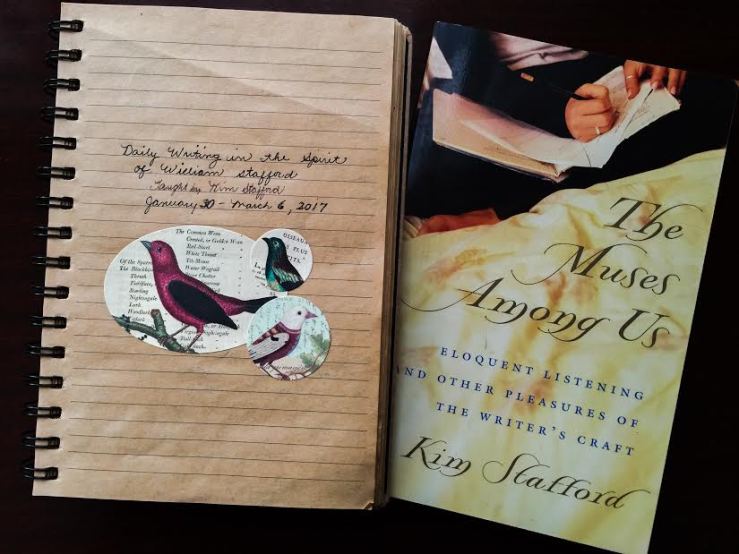
Given the President’s careless and disrespectful words, it was a comfort to be taking an online class with like-minded people, “Daily Writing in the Spirit of William Stafford,” taught by his son, poet and essayist Kim Stafford.
A poet and pacifist, William Stafford was amazingly prolific, having written some 22,000 poems during his lifetime.
He had an early morning writing practice, and he never missed a day. Kim Stafford introduced us to his father’s writing process, gleaned from the stacks of journals William Stafford left behind. Kim encouraged us to relax into our writing, to be seekers as William Stafford was, to experiment and explore.
Our only requirement in this five-week class was to maintain a daily writing practice and share one day’s unedited writing with the class once a week. As you can imagine, the daily post-election drama weighed heavily on many of us and showed up often in our writing.
I chose not to work on my memoir during the 30 – 60 minute daily writing practice I began in connection with this class. Kim Stafford believes that, though writing can be hard work, it can be a pleasure, too, something to look forward to. When the writing isn’t easy, Kim looks for ways to make it more easeful. Since working on the memoir is goal-driven and often difficult or stressful, I decided to see if I could make my early morning writing time something separate and satisfying.
It did become that, and I now have the beginnings of several writing projects that I could develop further if I choose to:
An essay on whether the President has a mental illness, drawing on my experience of mental illness in the family
an essay on dystopias – whether we’re in one now and how each of us is a kind of “hero” character with a role to play
a personal essay in which I remember a disastrous first-grade art class and contrast it with a watercolor class I’m taking now, my first art class in decades
a sample first entry for my next book project, in which I observe, moment by moment, the sunrise outside my window.
I met some wonderful people, writers of all levels, including: a poet who is also a traditional letterpress printer and bookbinder in Virginia’s Blue Ridge Mountains; a professor of psychology and education with a background similar to my own (she also had a mother with schizophrenia) who developed a psychological tool to measure levels of humiliation that is used around the world; and another poet whose dream is to establish a retreat for artists and writers at her home on Whidbey Island.
This quote is on the Northwest Writing Institute website:
“The problems of our time are political, ecological, economic—but the solutions are cultural. How do people speak their truth? How do we listen eloquently? If communication is the fundamental alternative to violence and injustice, what is the work of each voice among us?” Kim Stafford
For a time, twenty of us enjoyed communally “the daily bread of language,” as my new poet/printer friend would say.
A poem by printer Emily Hancock of St. Brigid Press. Emily refers to “the daily bread of language,” and that is what we enjoyed in Kim Stafford’s class.Visit the St. Brigid Press website, where you’ll see stunning photos of hand-set type, hand-carved illustrations, foot-powered presses, and hand-sewn books. If you frequently contact your representatives, consider ordering “The People’s Post Cards.” And be sure to see “This Is a Printing Office.”
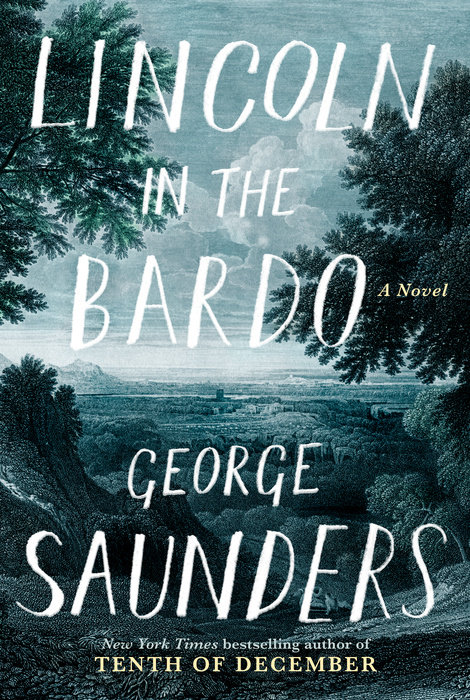
“I assisted in washing him and dressing him, and then laid him on the bed, when Mr. Lincoln came in. I never saw a man so bowed down with grief. He came to the bed, lifted the cover from the face of his child, gazed at it long and lovingly, and earnestly, muttering, ‘My poor boy, he was too good for this earth. God has called him home. I know that he is much better off in heaven, but then we loved him so. It is hard, hard to have him die!'” – Lincoln in the Bardo byGeorge Saunders
Lincoln in the title refers to Abraham Lincoln, and the bardo is, in Tibetan tradition, the suspended state between lives when the soul is separate from the body. Abraham Lincoln’s son, Willie, has entered the bardo upon death from typhoid, where he meets all manner of discontented souls who are similarly suspended, unable to let go of their former lives and move on to whatever comes next. In this bardo, whatever obsessed the person or remained unresolved at the time of death looms large (literally).
After Willie’s funeral, a stricken Abraham Lincoln came to the cemetery alone in the night to assuage his grief, according to historical sources. In this extraordinary novel, at the cemetery, Lincoln is unable to see the panoply of ghost-souls around him desperately trying to persuade the young Willie to move on because, in Saunders’ conception of the bardo, children who remain suffer a terrible fate.
It is the early stages of the Civil War, which weighs heavily on the President. Three years of staggering bloodshed loom and over half a million deaths, mostly sons of other grieving parents.
During this one chaotic evening, all of the restless souls, living and dead, are changed.
“The gentleman had much on his mind. He did not wish to live. Not really. It was, just now, too hard. There was so much to do, he was not doing it well and, if done poorly, all would go to ruin. Perhaps, in time (he told himself) it would get better, and might even be good again. He did not really believe it. It has hard. Hard for him.”
Lincoln in the Bardo is not an ordinary novel by any means, but Saunders is no ordinary writer. (See my post about his collection of short stories which I loved, Tenth of December.) Bardo reads like a play, and I believe plans are already in the making to produce a play. If so, I predict it will be every bit as popular as Hamilton.
George Saunders is a consummate writer of short stories, and he has often said in interviews that novels aren’t his thing – he’s tried without success to write three or four. And then, Lincoln in the Bardo, came along.
It took me a few pages to acclimate to this strange story, which is essentially a collection of formally cited historical sources, a few brilliantly conceived fictional sources, and lots of dialogue by a grand chorus of characters. It’s a quick read and vintage Saunders: funny, heartbreaking, with piercing, essential truths about life. When I reached the end, I went back to page one to begin again, so I could pick up on what I missed. I missed a lot, there is so much nuance in every scene.
You must read Lincoln in the Bardo. Besides, everyone is talking about it, and you want to be in on the conversation too, don’t you? If you love it, I recommend you follow it with Tenth of December.
“And there was nothing left for me to do, but go. Though the things of the world were strong with me still. Such as, for example: a gaggle of children trudging through a side-blown December flurry; a friendly match-share beneath some collision-tilted streetlight; a frozen clock, bird-visited within its high tower; cold water from a tin jug; toweling off one’s clinging shirt post–June rain. Pearls, rags, buttons, rug-tuft, beer-froth. Someone’s kind wishes for you; someone remembering to write; someone noticing that you are not at all at ease.”
Here, George Saunders talks with Stephen Colbert: (Fair warning, there is some talk of Trump here and the cultural divide.)
Have you read Lincoln in the Bardo or any of George Saunders’ extraordinary short stories? What did you think? Let us know in the comments.






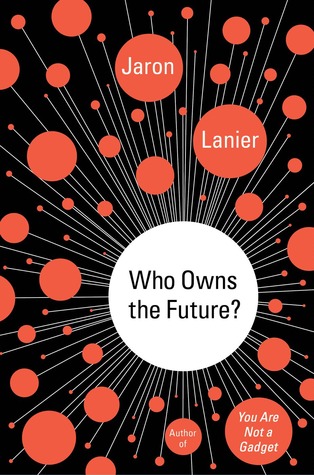 “If technologists are creating their own ultramodern religion, and it is one in which people are told to wait politely as their very souls are made obsolete, we might expect further and worsening tensions….People must not be gradually equated with machines if we are to engineer a world that is good for people. We must not allow technological change to be driven by a philosophy in which people aren’t held to be special.” Who Owns the Future? by Jaron Lanier





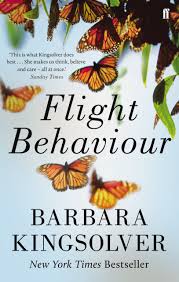 If you would like to read a great work of eco-fiction about the migration of butterflies, follow up your reading of The Monarch with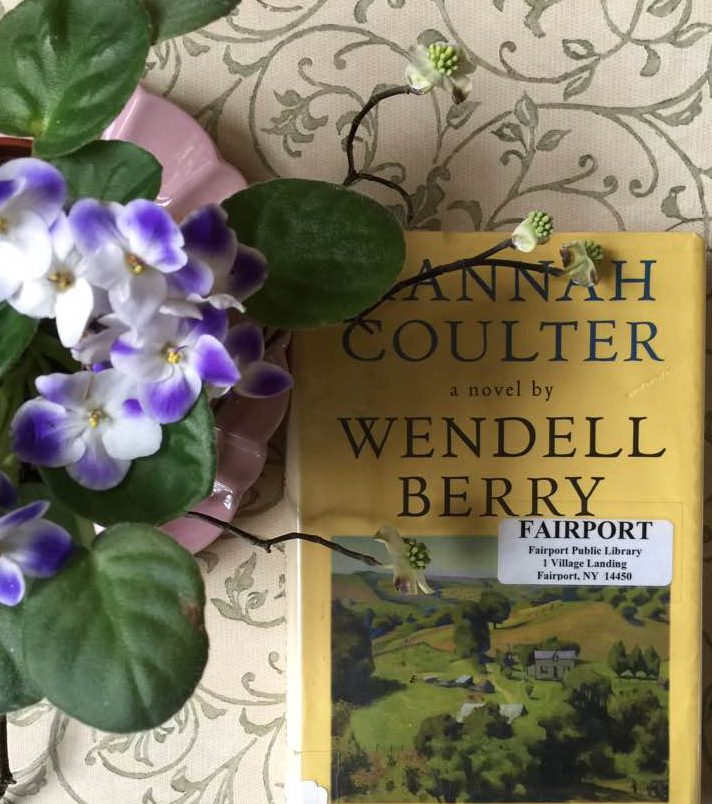


 I am not a practicing enemy of the people, but as an undergraduate, my minor area of study was how to be an enemy of the people. I liked it so much I studied it in grad school, too. I have a brother whose previous job at a major newspaper was to help oversee the printing of work by enemies of the people for distribution to an entire city. When I was a librarian, my colleagues and I taught how to tell the difference between authentic enemies of the people and fake enemies of the people.
 He had an early morning writing practice, and he never missed a day. Kim Stafford introduced us to his father’s writing process, gleaned from the stacks of journals William Stafford left behind. Kim encouraged us to relax into our writing, to be seekers as William Stafford was, to experiment and explore.