Discovering Argentina

What we did on our fall vacation:

Immersed ourselves in spring.

Each day balmier than the one before, with occasional chilly rain. Crescent moon from another point of view, an unfamiliar family of constellations in the night sky.

In Lelé de Troya’s green room (there are also red, yellow, and blue rooms), Malbec by candlelight, the Beatles, two couples celebrating 25th wedding anniversaries reminiscing about disco dancing in NYC, leisure suits, and long-ago first jobs. Finishing dessert at midnight while the rest of Buenos Aires just gets started.

Talking with many a taxi driver (Claudio, Lila, Juan, and a few more whose names I don’t recall) thanks to one of our foursome’s exuberant Spanish. (Buenas noches! Cómo estás? Yo hablo español pero no comprendo nada. Háblenos de Buenos Aires.) Our drivers are warm, friendly, opinionated, proud of their city but wanting things to be better, eager to speak with us. Trying to follow their rapid-fire Spanish, wishing we understood more.

Japanese Gardens
Jardin Japonés, Buenos Aires

Spanish haiku in the Japanese Gardens, a circle of Spanish-speaking Japanese women deep in conversation under a silk floss tree.

Reading in bed Pico Iyer’s Falling Off the Map: Some Lonely Places of the World, disliking his essay on Argentina in which he contends people here strive for the wealth and sophistication of Europe, but are only pale imitations of it. True for some, perhaps, but I see down-to-earth, hard-working Argentinians and a genuine, vibrant culture that is what it is.

Watching amazing tango dancers, learning the tango was partly invented by Italians who emigrated to La Boca, a working class section of Buenos Aires. Never before realizing the inventiveness and variation possible within the structure of tango.

More reading in bed after a long day walking the city, Lawrence Thornton’s novel, Imagining Argentina. Letting myself imagine, for a moment, what it would be like to have one’s teen-age daughter stolen away to the pampas in the night, never to be seen again. Recalling the crosses and banners of the Mothers of the Plaza de Mayo we’d seen.

Iguazu evenings, drinking Caipirinhas in the secret garden of our bed and breakfast run by a photographer from Calcutta who has spent forty years in Argentina. John cares deeply about local flora and fauna and plans to offer walk-about tours to teach people about the region’s ecology. Meeting Natalie (British), Christina (from Mexico, now British) Helen and Andre (British and South African, respectively, now living in Austria). And some Argentinians from Buenos Aires who say the middle class here is disappearing. Does that sound familiar?

In Iguazu National Park, hundreds, thousands of butterflies: deep purple on brown, art deco, Italian modern. They hitch a ride on our hats, sleeves, shoulders. Clusters of mint green and yellow-winged moths delicate as parchment, scattering like confetti in the wind. Monkeys, coatis, lizards, turtles, toucans.

Garganta del Diablo
Garganta del Diablo

Ending our trip viewing some of the 300 waterfalls in Iguazu. People from all over the world come to this remote place where Argentina, Brazil, and Paraguay meet. Standing before the immense, overwhelming Garganta del Diablo (the Devil’s Throat), welcoming the cool spray after our subtropical hike. Like Andre said one evening after he and Helen braved a boat that takes you as close as you can get to one of the biggest waterfalls, every particle of your body awakens.

You feel totally alive.

Waterfalls at Iguazu

If you’ve been to Argentina or can suggest good books about this beautiful country, please tell us in the comments below.

Zen in Nature

I was interested to read “Finding Zen in a Patch of Nature” in the New York Times today. David Haskell’s new book, The Forest Unseen: A Year’s Watch in Nature sounds wonderful. Plan to add it to my reading list.

Bookstores (of course) and tombs in Recoleta, Buenos Aires

Cuspide Libros

We visited Recoleta, a well-to-do neighborhood in Buenos Aires, and browsed at Cúspide Libros, a popular chain in Argentina. Here we found a collection spanning many subjects – politics, history, travel, art, design, cooking, current fiction and nonfiction, the classics, and more.

Cúspide Libros is in an upscale shopping mall.  In the U.S., you might not expect to find a bookstore with such a broad, deep selection of titles.

Our traveling companions, who live in New York City, commented that Buenos Aires seems especially devoted to bookstores and reading.

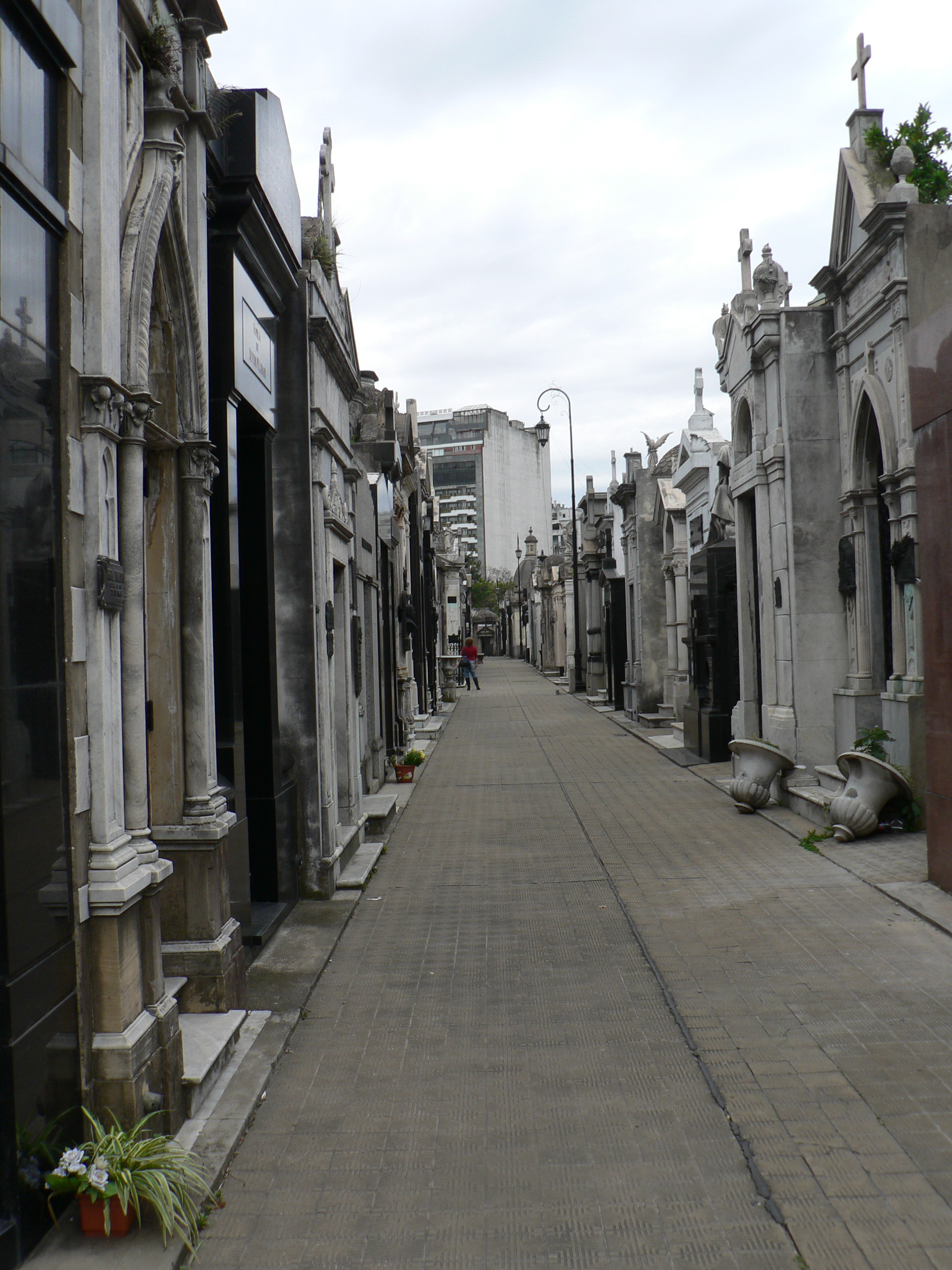
La Recoleta Cemetary is across the street, where many Argentinian notables have elaborate tombs. It’s a fascinating place, a dense grid of narrow walkways lined with mausoleums, some crumbling and in disrepair, others pristine. Despite the somewhat morbid undertones, it’s quiet and peaceful, a stunning outdoor art gallery.

Recolate angel

recoleta statue

Mother and children statue

Recoleta vault

recoleta angel

Recoleta cemetary

Recoleta angel

Recoleta cemetary

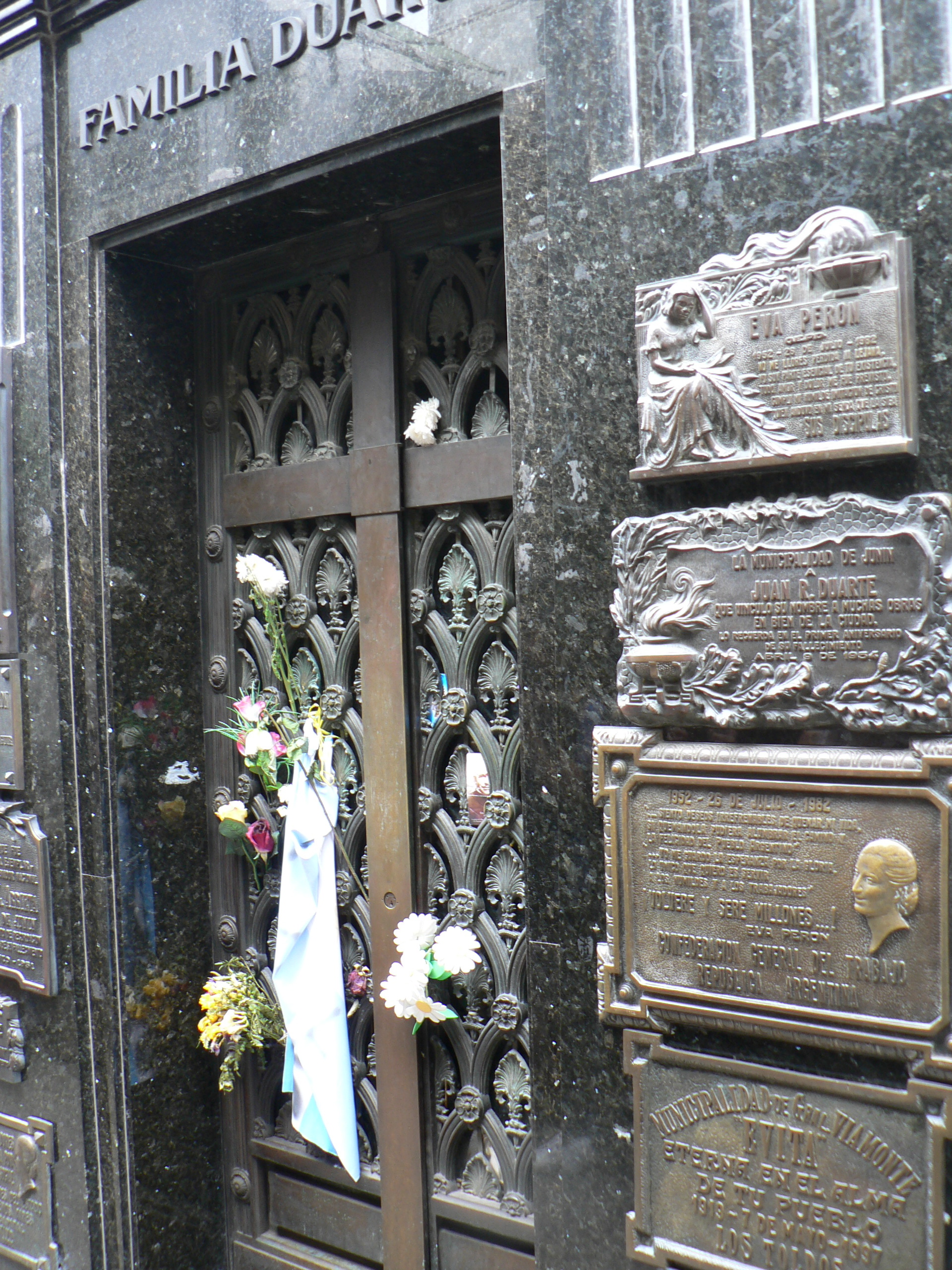
Eva Peron's final resting place
Eva Peron’s final resting place

Book shopping in Palermo Soho, Buenos Aires

[El Carrusel] nos permite viajar como viaja un niño. Dando vueltas y más vueltas y otra vez a casa…a un lugar en el gue sabemos que nos quieren.   Don Draper, “Mad Men”

The Carousel allows us to travel as a child travels. Going round and round and home again … to a place where we know we are loved. Don Draper, “Mad Men”

We visited Prometeo Libros, an excellent bookstore on Avenida Honduras in the Palermo Soho neighborhood of Buenos Aires.

Guia de Madmen cover

I bought Madmen: Reyes de la Avenida Madison, by Jesús G. Requena and Concepción Cascajosa, figuring if I’m familiar with the subject matter it will be easier for me to understand the Spanish. I like the quote especially because I produced slide shows for the Carousel when I worked for Kodak.

Also a collection of poems by Jorge Luis Borges, El oro de los tigres/La rosa profunda. Short bits of poetry are easier to understand than long prose passages.

children's books
Children’s books at Prometeo Libros

Cupcakes, shoes and many other fine things in the shop windows of Palermo Soho.

ShoesCupcakes

Quote from: MadMen: Reyes de la Avenida Madison, Jesús G. Requena and Concepción Cascajosa, Capitán Swing Libros, Madrid: 2010.

El Ateneo in Buenos Aires

El Ateneo stage cafe

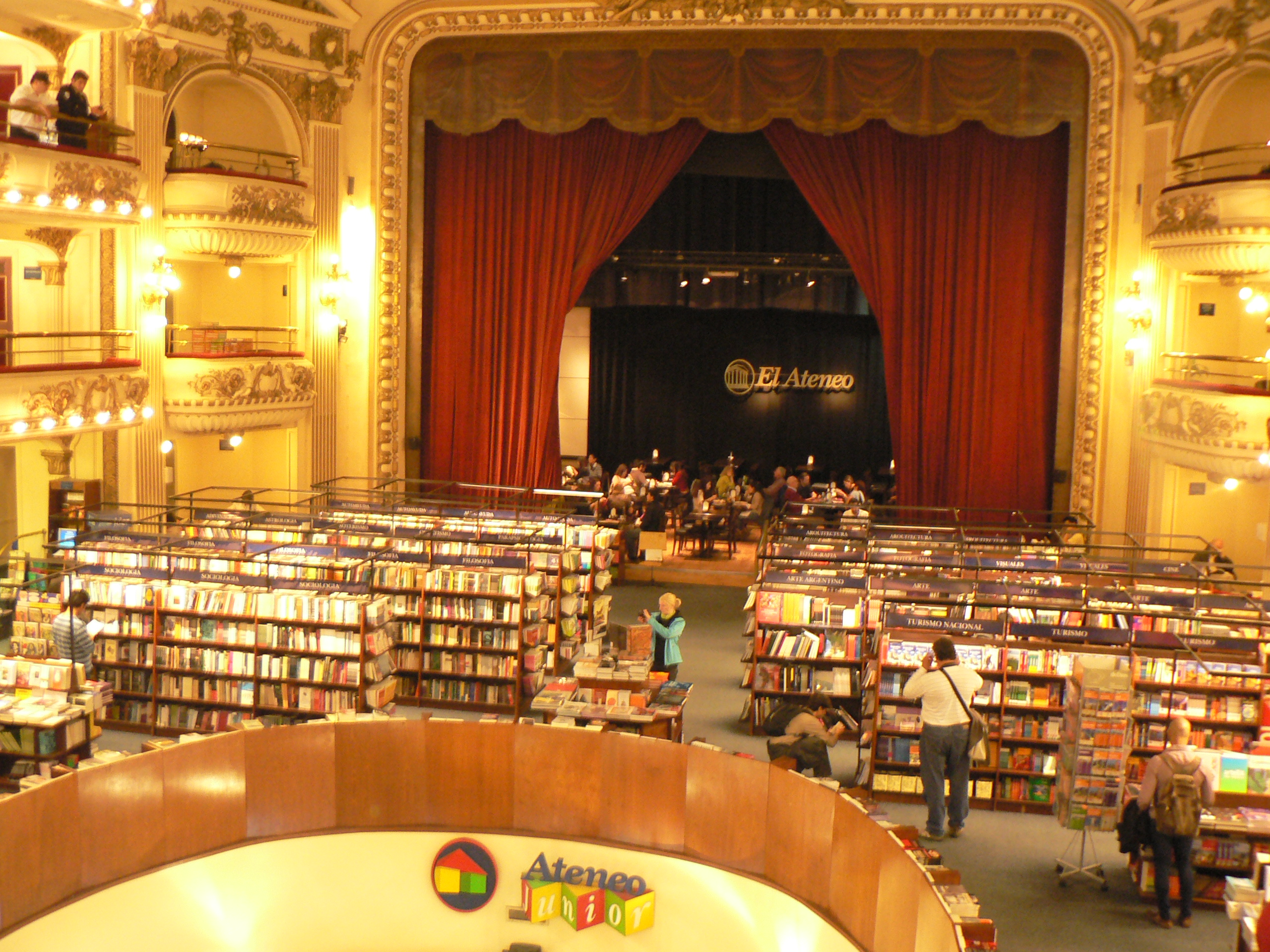
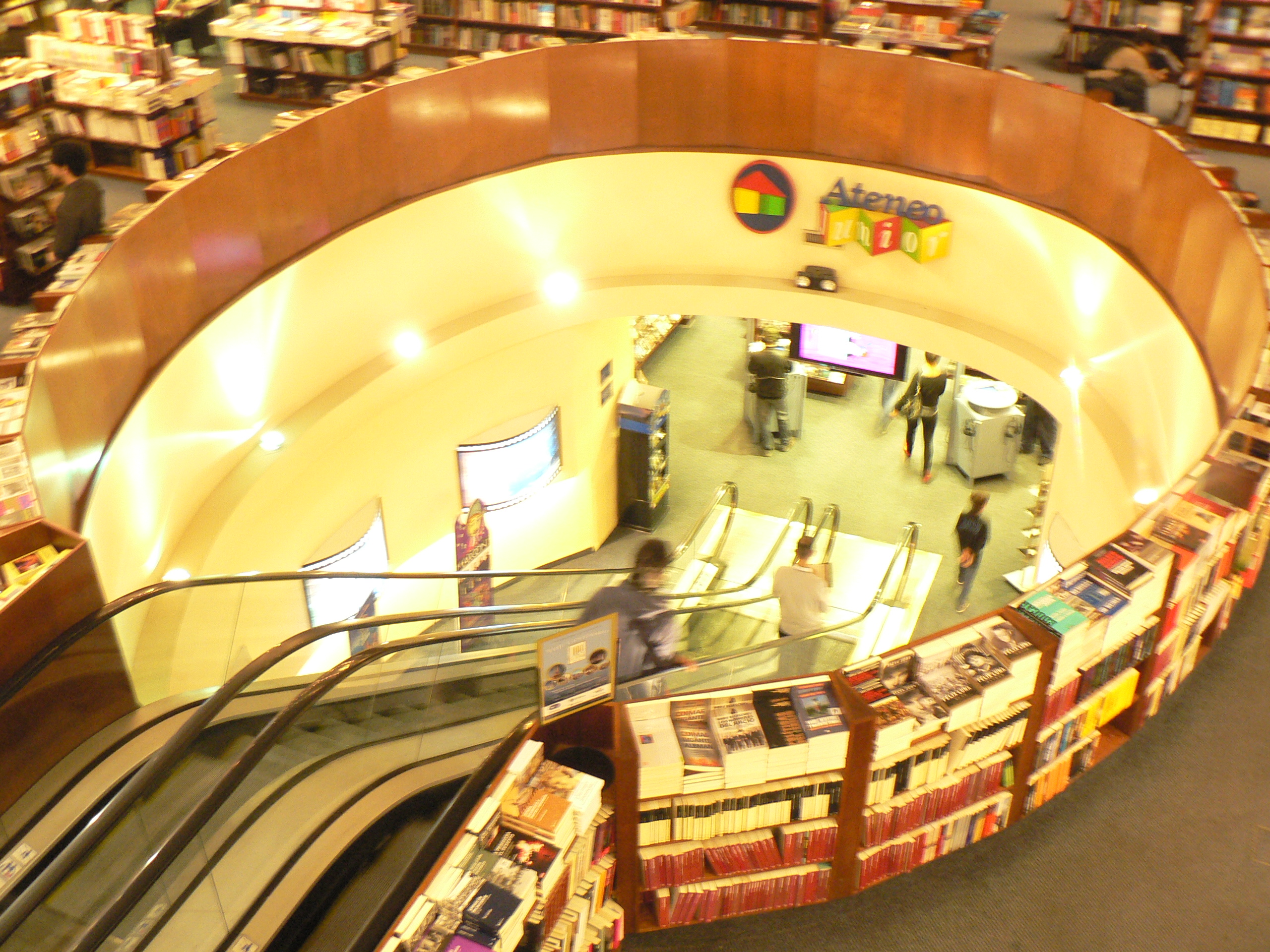
Monday was a holiday in Argentina, Dia del Respeto a la Diversidad Cultural, and many businesses were closed. We’d come across town to visit El Ateneo Grand Splendid, one of the largest and most beautiful bookstores in the world, and we were relieved to find it was open.

El Ateneo bookstore

This former theater in the Barrio Norte section of Buenos Aires featured some of the greatest tango artists and premiered the first sound films in Argentina.

El Ateneo ceiling

There are Italian ceiling frescoes and original theater boxes where you can relax and browse through books.

El Ateneo bookstore

We spent a couple of happy hours in the cafe located on the former stage.

El Ateneo bookstore

Reading Junot Diaz

This Is How You Lose Her book coverYou ask yourself why you’re reading This Is How You Lose Her, the short story collection by Junot Diaz. How could you possibly relate to Yunior, the irreverent, hard-drinking Dominican-born narrator and serial cheater of the most extreme sort?

You write this post in second person point of view, as Diaz does in his short story, “A Cheater’s Guide to Love,” just to try it on for size.

You read that Yunior cheated on the love of his life with no less than 50 women over six years. And then she found out.

Diaz writes, “You claim you’re a sex addict and start attending meetings. You blame your father. You blame your mother. You blame the patriarchy. You blame Santo Domingo. You find a therapist. You cancel your Facebook. You give her the passwords to all your e-mail accounts. You start taking salsa classes like you always swore you would so that the two of you could dance together.”

Yunior’s ex-fiancee assembles all the damning evidence (emails, photos, etc.) in an album (the Doomsday Book) and sends it to Yunior with a note: For your next book.

You think: This is one funny writer.

The writing is so musical and overflowing with Spanish, maybe you can brush up on the language: blanquita, moreno, salcedeña, sucio, cuero. Then you realize some of the words are made up, and others are words you’re not likely to use any time soon.

Yunior’s suffering seems to know no bounds, as if he’s channeling all the deprivation of his poor, difficult, immigrant life  (which the other stories in this collection portray) into mourning his lost love.

Yunior becomes a professor of fiction in Boston. Having grown up in Santo Domingo and New York City, he has a hard time in New England: “White people pull up at traffic lights and scream at you with a hideous rage, like you nearly ran over their mothers….Security follows you in stores and every time you step on Harvard property you’re asked for ID.”

Yunior visits the Dominican Republic with his friend, Eric, to see Eric’s presumed love child; the child and mother live in the Nadalands, where Yunior’s father was born and where his ex-fiancee is from. Mud, shanties, no running water or electricity, raw sewage.

You remember the volunteer work your family did in Nicaragua – you’ve only seen that kind of poverty once and, after a few days, you could return to your comfortable home in America.

You know Diaz’s  fiction is partly autobiographical and you wonder which parts are true, which are made up. You find the second person point of view can be confusing: Does the “you” refer to Yunior, or to the author himself? Sometimes you think the “you” refers to you, the reader, because by now you’ve become so invested in Yunior you find yourself beginning to understand and identify with him.

There is that moment of self-reckoning when Yunior has to face what he has done. You agree with Yunior’s assessment of the half-life of love.

You think: this blurring of boundaries between author, narrator, reader – maybe that’s the point.

If you’ve read this book, please comment!

Quotes from This Is How You Lose Her, Junot Diaz, Riverhead Books, New York: 2012.

First sentences, Junot Diaz

This Is How You Lose Her book coverSelected first sentences, from short stories in This Is How You Lose Her by Junot Diaz:

“I’m not a bad guy.”

“Nilda was my brother’s girlfriend. This is how all these stories begin.”

“You, Yunior, have a girlfriend named Alma, who has a long tender horse neck and a big Dominican ass that seems to exist in a fourth dimension beyond jeans.”

“Your girl catches you cheating. (Well, actually she’s your fiancee, but hey, in a bit it so won’t matter.”)

“Those last months.”

“Years later you would wonder if it hadn’t been for your brother would you have done it?”

As fate would have it, one day in April when I went to Joe Bean (whose website has great photos, including one by A. Hallinan) to meet my son and have a cup of incredible coffee, I was given a free book, The Brief and Wondrous Life of Oscar Wao by Junot Diaz in celebration of World Book Night.

I haven’t read this Pulitzer Prize winning book yet, so I thought I would now, right along with This Is How You Lose Her.  Both books feature the narrator, Yunior, who, according to NPR reviewer Carmen Gimenez Smith, “might someday rank with Philip Roth’s Nathan Zuckerman or John Updike’s Harry Angstrom as an enduring American literary protagonist.”

While we’re getting to know this next great American literary protagonist, whose native land is the Dominican Republic, I’ll be posting from Argentina, where I’ll also be rereading Imagining Argentina, visiting a larger-than-life bookstore, and….well, we’ll see.

Quotes from This Is How You Lose Her, Junot Diaz, Riverhead Books, New York, 2012.

Books at my door

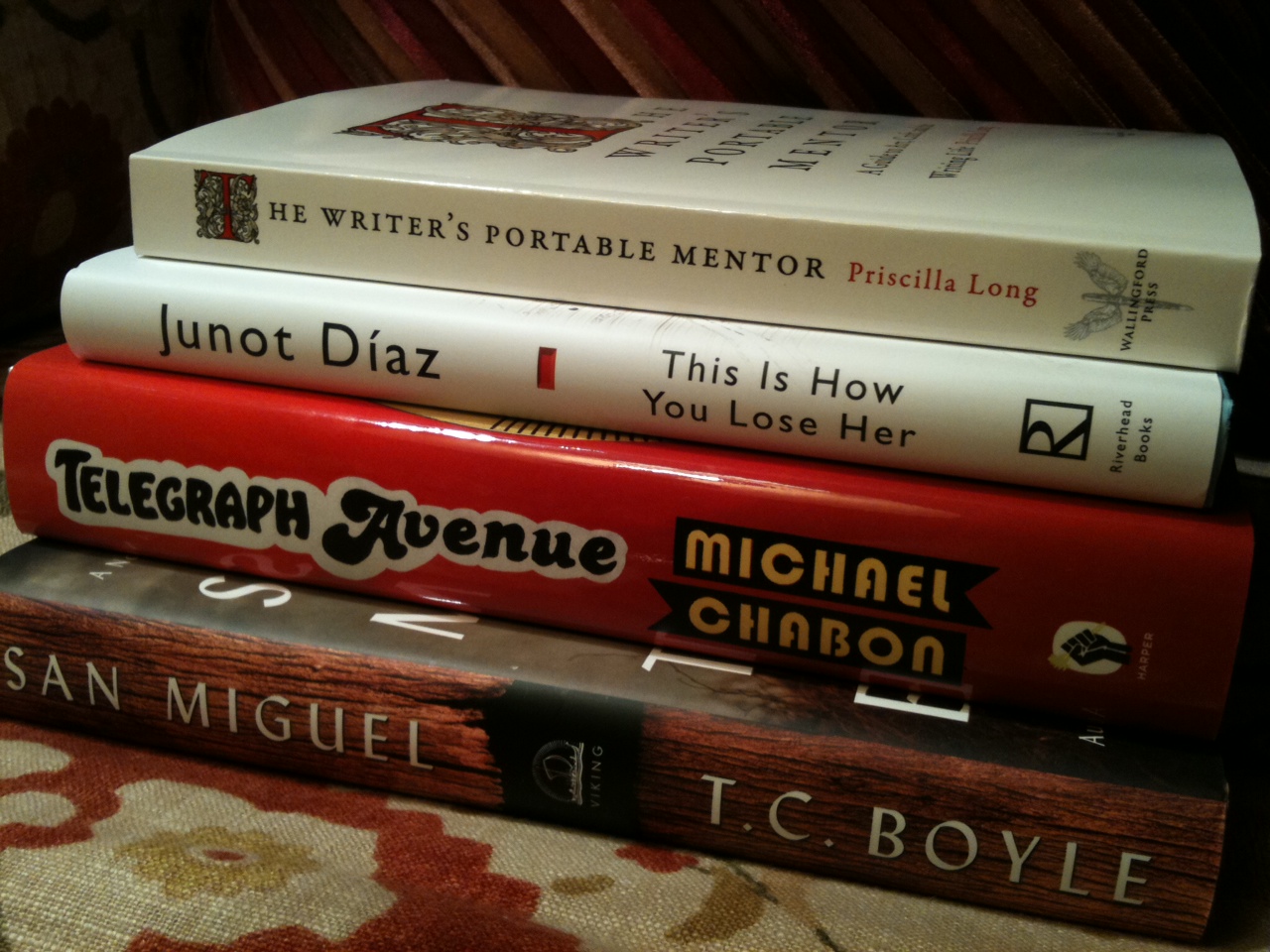
Four fall books 2012 I love it when I find new books waiting on my doorstep.

Agatha Christie – few heroes, but justice prevails

Ten little Indian boys went out to dine;
One choked his little self, and then there were nine.

Growing up, I knew few real-life heroes. Therefore, I wanted the books I read to have heroes, and I wanted escape and redemptive endings, as well.  Agatha Christie’s mesmerizing stories and blazing honesty about human nature would have fascinated me but, ultimately, I wanted to be comforted and given hope that people can change for the better.

Not so my friend from high school, Doug, whose take on reading was braver and more mature. I admire it. We didn’t discuss books back then, but now I wish we had. My reading life would have been all the richer.

I didn’t know what Doug was reading, but I did know he could take command of a stage like no one I’d ever met. I always thought there was something rock-solid real about Doug, and that carried through in the roles he played in our high school productions. Whatever “character” he portrayed came so naturally to him, with such depth and nuance, the rest of the actors seemed mere shadows. That sprang from Doug’s talent and hard work, of course, but I can’t help but think that, as a discerning reader, he started off with a close and perceptive reading of the script.

Of the many hundreds (thousands?) of books Doug has read, he had this to say about one in particular:

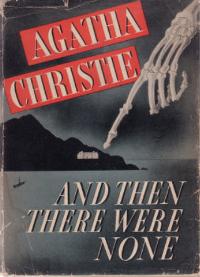
And then there were none book coverRecently, I discovered that the thriller I loved as a child, Agatha Christie’s And Then There Were None, is in sixth place among the best-selling novels of all time.

Ten people, mostly strangers to each other, are mysteriously invited to an isolated island.  On the island, a disguised, recorded voice accuses each of having gotten away with a murder. One by one, in circumstances resembling the children’s rhyme, “Ten Little Indians,” they are punished for their crimes.

If you read the original 1940 novel after seeing the stage version (“Ten Little Indians”) or a subsequent film adaptation, you may be jarred by the absence of anything like a redemptive ending. On stage and film, two romantically linked characters (Vera and Lombard) among the ten doomed to destruction manage to outwit their persecutor. Coincidentally, these two are revealed as innocent of the murders for which they were condemned.

Christie’s novel offers no such hogwash; the wolfish hero and the fast-shooting heroine are both guilty as sin, and they pay dearly for it.

Thoroughly bored by “children’s literature” as a 10-year-old, I savored Christie’s descriptions and plotting. Three matters fascinated me: the structure of effective stories, the accountability of adults who are hypocrites, and the assurance that justice will somehow be done.

As to structure, Christie is marvelous. The book wastes little space on peripheral matters: the characters are introduced, the problem presented, and each succeeding crisis fluidly developed.

On the accountability side, I was thrilled as a child that each adult was truly guilty behind all the posturing. Agatha Christie wrote a story without heroes; to me, that was heroic honesty.  I knew enough about school teachers who practiced petty cruelty, clerics who were status-driven, and older family role models who considered the law something to break when getting caught was unlikely. I had a child’s faith in the abstractions of good and evil described in the Bible, but I was sharply aware that no one was completely one or the other.

Conversely, the inevitability of justice satisfied me. For all my contempt for two-faced authority, I still relished the idea of wrongdoers punished by divine oversight.  My sense of my own weakness as a child needed that reassurance. (When Vera discovers a waiting noose, I was convinced supernatural justice was at hand, a conclusion with which the character herself concurs.)  To me, Christie’s revealing the true killer in a post script seemed logically necessary, but somehow anticlimactic.

Today, I reread Christie mysteries and still admire her superb craftsmanship, though I wince at the stilted dialogue and wooden characters. But it was Agatha Christie who showed me when I was a child just how enthralling a well-plotted book can be.

Without And Then There Were None, there might not have been copies of Crime and Punishment or The Sea, The Sea sitting on my bookshelf.

One little Indian boy left all alone;
He went and hanged himself and then there were none.

Doug Hoehn’s to-read list isn’t too ambitious, just all the great works of philosophy and the most critically recognized novels of every nation on earth, while he rereads mysteries, westerns and science fiction – as he says, the snack between meals. I hope to entice Doug back some time for a guest post on his international reading.

Doug has starred in countless amateur theater productions, including the title role in “Macbeth,” the role of Bottom in “A Midsummer Night’s Dream,” and a one-man show of readings by Edgar Allen Poe.  His favorite playwrights are Shakespeare, Eugene O’Neill, and Tennessee Williams.  Doug is a job coach for Toward Maximum Independence, an agency that supports people with developmental disabilities in the workplace.  He lives in El Cajon, California with his life partner.

Visit the official Agatha Christie information and community website.

Quotes from And Then There Were None, Agatha Christie, HarperCollins Publishers, New York, 2011.

Book cover from Wikipedia.

Children’s lit of my ancestry – Cuore: The Heart of a Boy

Coincidence or serendipity?

I was writing this post about my Sicilian cousin and his favorite children’s book in Wegmans when I heard the strumming of a mandolin. It was the theme song from The Godfather. Today, the cafe was featuring Italian folk songs along with Italian food.

Then, I heard someone speaking Italian. At a nearby table, a young girl was giving an Italian lesson to an older woman.

I’m not in Italy. I’m at a Wegmans in upstate New York.

But to get on with this post: My cousin Giuseppe, who lives in Carini, Sicily, recently graduated from the University of Palermo with a degree in translation. (Actually, he is my much younger cousin. His grandmother and my father were cousins, making him my third cousin, I think.) Giuseppe plans to further his studies in literary translation. Recently, he was the translator for Susan Vreeland when she was in Sicily speaking about her books and her passion for Italy.

Now that he’s finished his studies, Giuseppe had time for some literary discussion. He told me his favorite American writers are Jack London, Ernest Hemingway, Truman Capote, and Stephen King. Currently, he’s reading E’ Stato il Figlio, (loosely translated, “It Was the Son”) a book about the Mafia by the Sicilian writer Roberto Alajmo.  Giuseppe calls Alajmo a “wizard” of a writer; the book was recently made into a movie.

When I asked Giuseppe if books had made a difference in his life, and if there was one in particular that was special to him, he said:

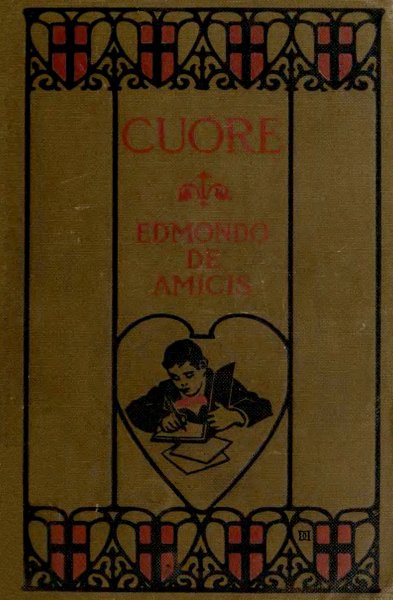
book cover: Cuore: The Heart of a Boy“I can’t imagine my room without my personal bookcase, or a world without books. One of the first books that I read when I was a child was Cuore: An Italian Schoolboy’s Journal, by Edmondo de Amicis, which left an indelible mark in my life. I believe this book must be read during childhood, with the sensibility and imagination of a child, when one can physically enter the story and share the characters’ feelings with one’s own heart.”

The books was written by de Amicis during the unification of Italy in 1866 and is one of the most famous books in Italian children’s literature. It has influenced generations of Italians and has also been widely read in East Asia (where it was published as “The Education of Love” in China) and Latin America.

Some modern-day readers may find it didactic and sentimental, but I’m fascinated to know more about books that my grandparents and great grandparents may have grown up with. I wonder if my father read Cuore. I wish I could ask him.

If you read reviews of Cuore on Amazon you’ll find that people have revisited this book later in life and have been as moved by it as when they were young, if not more so. The best children’s books resonate at any age.

Perhaps someday Giuseppe will return to Cuore with the full heart of an older man.

An English translation of the book (also known as Cuore: The Heart of a Boy), can be downloaded from Project Gutenberg. The translation leaves something to be desired and the format is difficult to read, but you might want to sample a few chapters, especially if you have Italian ancestry. Illustration from Cuore: Heart of a Boy(Or Latino or Asian)

Giuseppe told me that for his thesis he created a medical glossary of terms related to the heart in Italian, English, and French. He said he had no particular reason for choosing this topic. But I wonder.

Giuseppe Di Stefano is affiliated with the translation services website http://www.icanlocalize.com/site.

Are you familiar with books your parents or grandparents read as children? If so, tell us about them in the comments below.

A housekeeper, a professor, a boy, a baseball game

The Professor never really seemed to care whether we figured out the right answer to a problem. He preferred our wild, desperate guesses to silence, and he was even more delighted when those guesses led to new problems that took us beyond the original one. He had a special feeling for what he called the “correct miscalculation,” for he believed that mistakes were often as revealing as the right answers. This gave us confidence even when our best efforts came to nothing.

Paulownia tree
Photo courtesy Coolmitch

The Housekeeper and the Professor by Yoko Ogawa is a quiet story you’ll want to experience just for what it is. A story I don’t want to say a lot about, because too much talking will diminish it.

The Professor is a number theory expert with a traumatic brain injury. He remembers nothing after 1975, with one exception: in the present, his memory lasts exactly 80 minutes.

He rarely leaves his house. He wears scraps of paper pinned to his clothes to remind him of the important things: “My memory lasts only eighty minutes” and “the new housekeeper” (next to a sketch of the housekeeper’s face). He must live in the moment because that is all he has. He is a humble, self-effacing man who loves baseball and the great Japanese pitcher, Yukata Enatsu.

The housekeeper, a single mother, has come to cook the Professor’s meals, clean his small bungalow, and tend to his needs for a few hours every day. Her son has never known his father.

The Professor nicknames the housekeeper’s son “Root” because the top of his head is flat, like the square root symbol. These three lonely people become a self-made family. They find peace and refuge in the daily rituals of preparing and eating a meal, solving a math problem, listening to the radio.

When the Professor isn’t lost in his numbers or helping Root with his math homework, he likes to watch the housekeeper prepare dinner. With great fascination and single-mindedness he observes her stuffing and wrapping dumplings; he’s entirely caught up in the watching. Surprised by the undivided attention the Professor shows her, the housekeeper is given to understand she and her daily tasks are not insignificant.

They attend their first baseball game together. We see the stadium, the lights, the players, the crowds as if for the first time through the eyes of Root, the Professor, and the housekeeper.

The Professor buys Root popcorn, ice cream, and juice only from one particular girl selling food in the stands. “Because she’s the prettiest,” he says.

Another moment: “The ball cracked off the bat and sailed into the midnight blue sky, tracing a graceful parabola. It was whiter than the moon, more beautiful than the stars.”

In her spare prose, Yoko Ogawa never uses the word “love,” but that is what this story is about.

Quotes from The Housekeeper and the Professor, by Yoko Ogawa, Picador, New York, 2009.