“…cookbooks were more to me than a reflection of my past. They’d been agents of my recovery – from childhood misery, from profound self-loss, from my fear, even as an adult, that the world would never seem like home. I’d cooked from them to save my life, and I’d succeeded.”
In her newly published memoir, writer and historian Judith Newton looks at her own life and the culture of her time, from the 1940s to the 2000s. Along the way she writes of the cookbooks and cuisine that fed her in body and spirit.
I can’t say enough good things about Tasting Home: Coming of Age in the Kitchen – I just loved it. Judith writes of her difficult early childhood in Compton, California, of coming of age at Stanford and Berkeley in the 1960s, and of her beautiful and haunting relationship with her husband, Dick. I found Judith to be especially eloquent in describing her intellectual and spiritual awakening and continual growth.
As a young girl, I watched the 1960s unfold mostly on television and in newspapers and magazines. Reading Judith’s memoir, for me, was like hearing stories from an older sister who actually lived those events.
And the food! Judith includes childhood recipes inherited from her parents and the land they lived on (Death Valley Date Nut Bread, for example) and recipes from influential and groundbreaking cookbooks of the day, such as Mastering the Art of French Cooking by Julia Child, et al., and The New York Times Cookbook by Craig Claiborne. (Moosewood Cookbook is another classic Judith knows well. See a previous post with an excerpt from Tasting Home.) Throughout her memoir, Judith speaks of the joy, fulfillment, and healing power of cooking and sharing meals with loved ones.
Here is part 1 of an interview with Judith. Watch for part 2 in my next post. Thank you for talking with me and sharing your thoughts with us, Judith!
When I read your comment about cookbooks being an agent of your recovery, I realized I view books and music in the same way. I’m sure many of your readers have had a beloved pastime that got them through tough times. Has reader response to Tasting Home borne this out? Did this theme resonate with those who supported you during the writing process?
 Yes, it did! One woman in my writing group found release in jazz and in singing and dancing. Another reader, Linda Joy Myers, who is herself a memoirist, writes of how she was sustained by the warmth of a music teacher, by the beauty of music, art, and the Midwestern plains. Several of my old colleagues at Davis found refuge in cooking and understood very well how a kitchen table can lay the groundwork for political community.
How did you come to believe the personal affects the political and society?
My years of teaching women’s studies had made me aware that the private and public spheres are dependent on each other and that the personal always informs the political. Traditionally, for example, women have fed, cared for, educated, and humanized members of their household including men, children, and the old. This frequently invisible and unpaid labor is essential to having a society at all, and especially one that involves people working in cooperation with each other.
In writing a book that celebrates home cooking as a humanizing and healing kind of work, I think of myself as carrying on a feminist project—that of giving value to a traditionally female, often unseen, but essential form of labor, one that the political scientist Janet Flammang, in her book A Taste for Civilization, calls a preparation for civil society itself.
Another feminist project has been to show how political movements also depend on a kind of emotion work. The sociologist Belinda Robnett, for example, in her book How Long? How Long? African American Women and the Struggle for Civil Rights, writes about how African American women worked behind the scenes during the Civil Rights Movement, meeting ordinary people, listening to their needs, and building face to face relations of friendship and trust. This emotion work was critical to the success of building a grassroots movement, and is critical to the success of present-day coalition as well. By demonstrating how cooking can bring people into connection with each other, not just in a domestic setting but in a political group as well, Tasting Home continues this project of linking the political to the personal and emotional.
Do you feel this healing through cooking helped you make a more meaningful contribution through your work?
 Absolutely! I learned from reading James Baldwin in 1963, the year I joined the Civil Rights Movement, that a committed political life could and should involve “sensuality.” “To be sensual,” Baldwin wrote, “is to respect and rejoice in the force of life itself, and to be present in all that one does, from the effort of loving to the breaking of bread.”
For me sensuality and joy in life were primarily expressed in food. Being able to access this joy in a daily way kept me going in every facet of my life and work, making it possible for me to retain the optimism that has informed my politics and my writing. If I didn’t feel that optimism, I wouldn’t write at all.
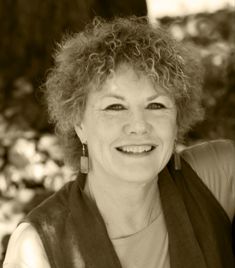
Judith Newton is Professor Emerita in Women and Gender Studies at U.C. Davis. While at U.C. Davis she directed the Women and Gender Studies program for eight years and the Consortium for Women and Research for four.
Tasting Home is the recipient of a 2013 Independent Publisher Book Award.
In addition to Tasting Home, she is also the author and co-editor of five works of nonfiction on nineteenth-century British women writers, feminist criticism, women’s history, and men’s movements. Four of these were reprinted by Routledge and the University of Michigan Press in fall 2012. Currently, she writes for The Huffington Post.
The Stories We Tell
Speaking of memoir, this just-released family documentary directed by Sarah Polley looks so tantalizing, and it’s gotten rave reviews. There are a few trailers floating around but I like this one the best: The Stories We Tell.

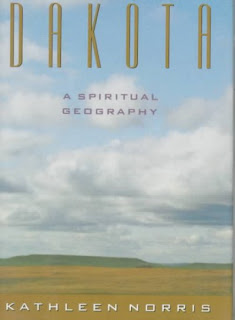 Dakota, by Kathleen Norris
 In the Neighborhood: The Search for Community on an American Street One Sleepover at a Time, by Peter Lovenheim
 Home Cooking: A Writer in the Kitchen, by Laurie Colwin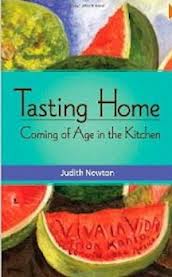


 Books Can Save A Life