Was Harper Lee ahead of her time?

Go Set a Watchman cover

As most of the world knows by now, Go Set a Watchman was an early draft of what went on to become To Kill a Mockingbird. Harper Lee turned Watchman in to her publisher in 1957, and her editor encouraged her to write a very different story.

Lee’s initial draft was about a young women (based on Lee herself) living in New York City who visits her Alabama hometown and clashes with the racist views of her father, Atticus Finch, and her boyfriend, Henry, in the aftermath of the 1954 Supreme Court Brown vs. Board of Education decision, which declared unconstitutional state laws establishing separate public schools for black and white students.

This story morphed into the iconic novel we all know and love, set in the 1930s when Harper Lee was a child and Atticus defended a falsely accused black man.

In my last post, I wrote about how Lee’s publisher has marketed Go Set a Watchman as a newly discovered novel, a sequel to To Kill a Mockingbird. This has confused, upset, and disappointed devoted Harper Lee fans. Some people believe Lee has dementia and would not have wanted this second book published. Harper Lee has stated in the past that she’d said all she wanted to say with To Kill a Mockingbird and that she would not publish again.

Nonetheless, we now have Go Set a Watchman, and before I ever opened the book I decided to read it to the end because I was curious. As many have pointed out, usually a first draft of this nature is of interest only to literature scholars and writers seeking to learn from another writer’s process. Now the rest of us have the opportunity to read a young novelist’s first attempt and make of it what we will.

Some things have surprised me. First, while many readers have been disappointed (as a novel it doesn’t work for me, but I didn’t expect it to), other readers are enjoying Go Set a Watchman, happy to experience more work by a beloved author. For some, Watchman is simply a good story; for others, it’s fascinating to read an author’s first crack at writing a novel; and still others see this new vision of an imperfect Atticus living in an imperfect time as especially relevant, given the racial tumult playing out in America. They find Watchman’s Atticus a more authentic, believable character than the idealized hero portrayed in Mockingbird.

Much as I dislike the publisher’s tactics, I do think Go Set a Watchman is a valuable contribution to our conversation about race. In the end, I don’t think Harper Lee’s reputation will be damaged. Nothing can take away from the power of To Kill a Mockingbird. And those who are interested in the genesis of truly great literature can see, by comparing the two books, how far and difficult a road a writer must sometimes travel to craft a story that speaks to readers. It’s been said that at one point in writing To Kill a Mockingbird, Harper Lee threw the manuscript out of her apartment window in despair.

There is something that I wonder about, though. Harper Lee initially tried to tell the story of a young person striking out on her own who can’t abide the attitudes and beliefs of those she loves in her hometown.  Isn’t this what many of us have experienced? At the time, Harper Lee’s editor may have persuaded her that American readers weren’t ready to grapple with the provocative views held by Atticus and Henry as Harper portrayed them. I think it is a shame that Harper Lee never had the opportunity to take her initial idea and give voice to that story as well, in a more fully formed and crafted novel than the current Watchman.

So much of Atticus, the fictionalized character, was based on Harper Lee’s true father. It takes a lot of courage to portray someone you love in a less than attractive light, and it takes a lot of skill. Contemporary writers of memoir and autobiographical novels do it all the time, but only a few succeed in doing it well. I’m sure Harper Lee had it in her to bring her original story to life, if she’d had the right editor and artistic support (clearly not those currently at the editorial helm of HarperCollins), but I’m not sure Harper Lee herself knew she had it in her.

Many have wondered why Harper Lee never published again. After the initial overwhelm of To Kill a Mockingbird’s publication, Harper Lee granted no interviews. Though she shared with friends a list of the additional books she wanted to write, she apparently never wrote them. She said herself that she couldn’t face the intense publicity again, and that she wouldn’t be able to top To Kill a Mockingbird, that the only place for her to go was down.

Who’s to say how Harper Lee really felt, but it may have been very frustrating for her if she was blocked in her writing after Mockingbird. Perhaps having her original story of a family portrayed in a less than flattering light rejected by her editor, and then being encouraged to craft a more idealized, palatable one, alienated Harper Lee from her own truth.

Writers of memoir and autobiographical novels often struggle with a sense of shame as they write the truth as they see it. Often they are criticized for being self-serving or narcissistic or for violating privacy. Cheryl Strayed’s Wild and Mary Karr’s The Liar’s Club are two memoirs that come to mind which required brutal honesty and tremendous courage to write. Nowadays, there are coaches, instructors, and editors skilled at helping memoir writers, especially, write their own truth; this wasn’t so much the case when Harper Lee was writing.

In Go Set a Watchman I see the seeds of an equally valuable story that may have been ahead of its time.

Have you read Go Set a Watchman? What do you think? Should it have been published? Has it changed your views of Harper Lee? How do Go Set a Watchman and To Kill a Mockingbird compare, or are they incomparable?
Go Set a Watchman: What do publishers and book bloggers owe their readers?

Go Set a Watchman cover

“To those whose bubble was burst about Atticus, well, Santa Claus was really our parents, Bill Cosby wasn’t really Bill Cosby, and Bruce Jenner is now Caitlyn Jenner. Let’s get over it and get real about racism. How can we fix it otherwise?” Wally Lamb

“It’s being sent to us as a gift. It’s a blueprint to decode, something that we need to be better than we are.” Nikky Finney

I don’t have insider information about the controversy surrounding the publication of Harper Lee’s novel, Go Set a Watchman. I know only what I’ve learned from the articles and opinion pieces I’ve read since the book came out a few weeks ago.

I’ve chosen to trust Harper Lee’s biographer, Marja Mills, who doubts that Lee would have wanted Go Set a Watchman published if she were fully functioning. Harper Lee had a stroke a few years ago and currently resides in a nursing home, where a guard posted at the door maintains a list of people who are allowed to visit her. Some have questioned whether Harper Lee is capable of making informed publishing decisions, especially since she maintained for decades that no further books by her were forthcoming.

Go Set a Watchman was the initial draft of what would be transformed into To Kill a Mockingbird. It was problematic because it was a draft written by a novice writer learning her craft, though Harper Lee’s editor saw the talent and potential behind it. What’s more, the Atticus Finch portrayed in this first draft was not the iconic hero America went on to embrace. He was an Atticus Finch that perhaps American readers were not ready for. Lee’s editor, Tay Hohoff, mentored and guided Harper as she crafted quite a different story, the one that became To Kill a Mockingbird.

Fast forward many decades. After Harper Lee’s sister, Alice, died (Alice was a lawyer who looked after Harper’s estate and protected her interests), Harper’s new estate lawyer and the publisher HarperCollins spearheaded the publication of the initial manuscript, the one Harper Lee had originally called Go Set a Watchman.  

The manuscript was lightly copy edited, but no substantive editing was done. Any revisions, of course, would have required consultations with Harper Lee and perhaps some rewriting on her part, which many believe she cannot do since she is nearly deaf and blind and may be otherwise incapacitated.

HarperCollins has marketed the book as another, newly found novel by Harper Lee.

I’ll save my opinions about the literary quality and content of Watchman for my next post. Here, I want to say how disappointed I am in HarperCollins and the current big business model of book publishing. The publication of Go Set a Watchman has been called a money grab on the part of a publisher capitalizing on Harper Lee’s name and reputation. I agree with that assessment.

Back in the day, I started my career as a book editor in educational publishing, and I’ve been told by a friend who has remained in the business that I wouldn’t be happy if I’d stayed. Books must rake in the profits. Literary and other books with less popular appeal are often not supported or even published in the first place, regardless of their artistic merit. Fortunately, independent publishers, university presses, and self-published authors are filling the gap to some extent; many are committed to producing literary works of art regardless of their profit potential.

I believe, too, that the publication of this unedited first draft shows a profound disrespect for Harper Lee and puts her at risk of an undeserved tarnished reputation.

What if the unedited first drafts of F. Scott Fitzgerald or Ernest Hemingway or Margaret Atwood were published and marketed as new novels? Might our opinions of them as writers change?

Writers, sculptors, painters and other artists have a right to their first drafts, their initial conceptions, their trial and error efforts, and they have the right to keep this work to themselves or at least have it viewed in context.

I’ve been disappointed by a couple of bloggers and social media bibliophiles I’ve read, who seem to have no knowledge of the controversy and circumstances behind the publication of Go Set a Watchman, and little understanding of or interest in book editing, authorship, and responsible publishing. They are providing no context for their readers.

In one case, a book lover on Instagram with many followers heaped nothing but vitriol on Harper Lee. He claimed that she “knows nothing” about race – a serious misreading of her – and seemed to not take into account that Go Set a Watchman is a dated first draft written by a young writer in the 1950s. Many of this Instagram-er’s readers thanked him for steering them away from the book and seemed to take his indictment of Harper Lee at face value.

I unfollowed him.

Sometimes I’m ambivalent about being a book blogger, though most of the time I believe blogging is valuable. I was educated as a journalist, I was a book editor for a highly regarded book publisher that produced quality work, and I was paid for the editing and writing I did, with the expectation that I’d maintain the highest standards.

As bloggers, we can write whatever we want, with no one to fact check or edit our work. That’s the beauty of it – no gatekeepers, the opportunity to express ourselves, explore our passions, and share them with others. But there is a down side, too.

All of this said, I believe the publication of Go Set a Watchman will turn out to be a good thing, as you can likely tell from the opening quotes I’ve chosen. More about that in my next post.

Please share your thoughts about Go Set a Watchman. Should it have been published? And if you’ve read it, what do you think? If you find this post valuable, please share it so more readers can join in the discussion!

Here is a video of Ursula Le Guin talking about books as commodities. I’ve posted this before:

Read Go Set a Watchman with me

Go Set a Watchman coverBarnes & Noble in Rochester opens at 7 am tomorrow for the release of the story Harper Lee originally tried to tell. I expect, wherever you live, your local bookstore will have plenty of copies of Go Set a Watchman on hand.

Maybe we weren’t ready for the book in 1960.

Lee’s editor set aside Go Set a Watchman and worked with Harper for 2 years as she wrote To Kill a Mockingbird, the book we grew up with.

I’ll be talking about Go Set a Watchman here and on my FB fan page.  I would love for you to join in the discussion. But be prepared to be shocked by a very different Atticus Finch. If you like your memories about To Kill a Mockingbird just the way they are, then this book probably isn’t for you.

Please share this post with your friends so we can get a good discussion going on Books Can Save a Life.  I’ll be kicking off comments at the end of July, so go buy or borrow your copy of Go Set a Watchman now and get reading!

Summer book giveaway

Guess book & flower

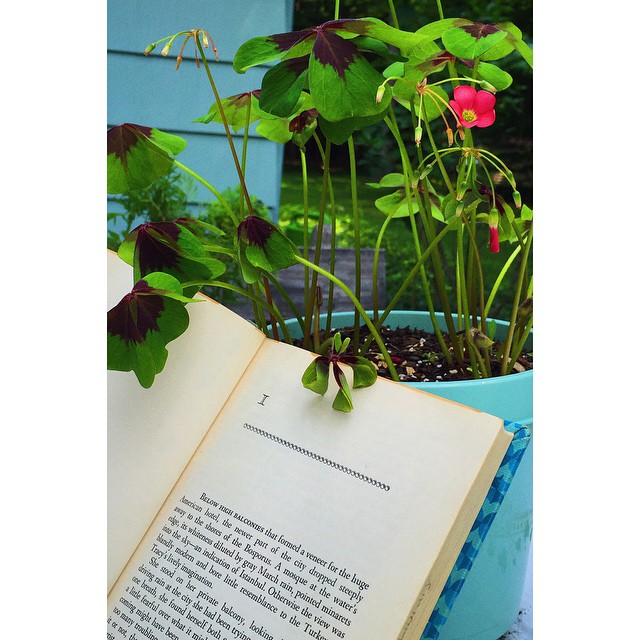
Guess the book (hint: gothic romance) and/or the flower for a chance to win a book or a package of seeds. You don’t have to get the correct answer to win. Ends Wednesday, June 24, midnight EST.

Here are a few of the books I’ll be reading and writing about this summer:

How to Be Both, by Ali Smith

Laudato Si: Praise Be to You, On Care for Our Common Home, by Pope Francis

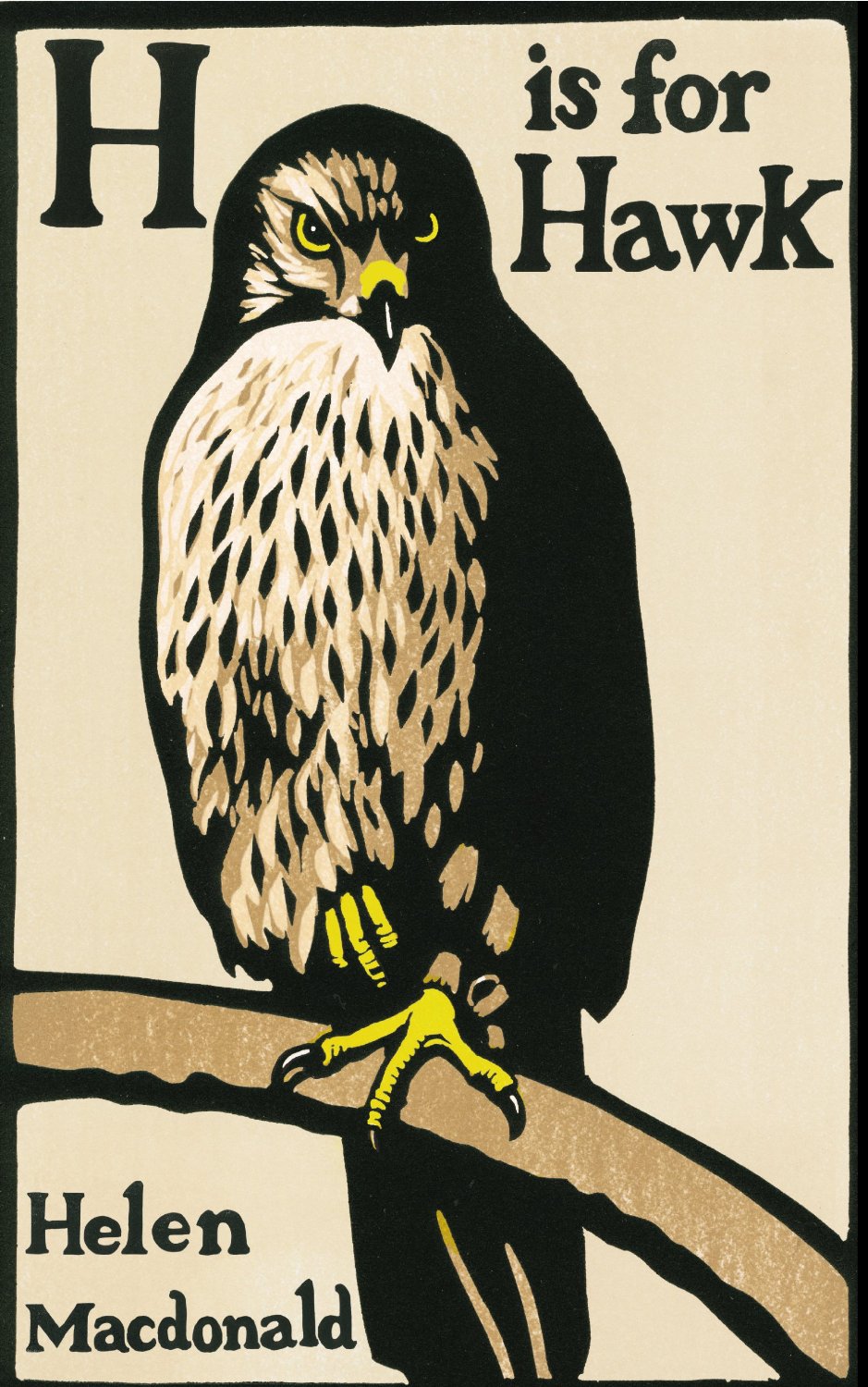
H Is for Hawk book coverH Is for Hawk, by Helen Macdonald

Bad Feminist, by Roxane Gray

Smile of a Midsummer Night: A Picture of Sweden, by Lars Gustafsson & Agneta Blomqvist

Rhythm of the Wild, by Kim Heacox

How Should a Person Be? by Sheila Heti

The Collapse of Western Civilization, by Naomi Oreskes & Eric M. Conway

Everything I Never Told You, by Celeste Ng

Laudato Si books

Mad Men

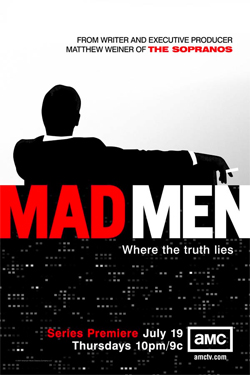
Mad Men posterI was surprised at how bereft I was the day after the Mad Men finale, as though I’d said goodbye to my childhood forever. The only thing that made me feel better is the memoir I’m writing; nearly every day lately I return to the 1960s.

This post has spoilers, so if you haven’t seen the last episode of Mad Men, or if you’ve yet to watch the entire 7-season, 92-hour epic, you may want to stop reading right here. (Or click on these links to the New York Public Library’s Mad Men reading lists and NPR’s guide to the music of Mad Men. If you plan to watch or re-watch the series, you could supplement with books and music of the times.)

A few seasons into Mad Men, a couple of friends predicted that Don Draper would commit suicide, given his self-destructive tendencies. Many viewers thought the opening animation of a man in a suit falling from a skyscraper foreshadowed such an ending.

No, I thought. That’s wrong. A misreading of his character. Don is a survivor. (Indeed, so says one of the characters in the final episode.) Cheever Collected Stories book cover

I bristled at the judgmental tone I sometimes heard, as if Don deserved such an end, given his many faults. On the contrary, Don was emblematic of a certain kind of self-made man of his time–raised in poverty and neglect, a traumatized war veteran who became a successful ad man, rich beyond his wildest dreams, yet alienated and lonely. Like all humans, he struggles. Like The Man in the Gray Flannel Suit, he’s lost.

You can find Don Draper in much of the literature of the 1950s and ’60s. The show’s creator, Matthew Weiner, drew heavily on bestselling books of that era, and was particularly influenced by the short stories of John Cheever, as well as Cheever’s journals. In fact, at the beginning of every season of scriptwriting, Weiner read the introduction to Cheever’s stories to the writers as a source of inspiration.

Weiner says that he loved reading the journals of 1950s and 1960s writers and ad executives and found them enormously helpful. While many of us look upon advertising with distaste, or at least ambivalence, Don Draper and his colleagues were in fact supporting families while doing deeply creative work. I think Weiner got it so right as he charted the highs and lows of these highly creative men and women. Weiner also points out that many famous artists have had to do advertising work to make a living.

When I was in college, a couple of my male friends had fathers who were prominent ad men, having commuted from the suburbs into Manhattan every day for thirty years. They seemed to feel pressure to follow in their fathers’ footsteps, and I sometimes sensed they were afraid they wouldn’t measure up. Advertising was a difficult, high-pressure career, but also an exciting and fulfilling way to make a living. And, of course, most ad execs were not deeply flawed Don Drapers.

One note of nostalgia for me is that the show ends in 1970, and in 1977 I moved to Manhattan, where I worked in book publishing. For a time I was in the advertising department of a large publisher, where I worked with artists, graphic designers, photographers, and other creative people. Publishing was a different world from high-stakes Madison Avenue advertising, of course, a backwater compared to the pressure of Mad Men agencies. But when I saw Mad Men’s meek Peggy Olson show up for her first job in that office in the sky, I was taken right back to my New York City days. Peggy’s world, where women in the workplace were all secretaries, was to a large degree my world. Needless to say, watching Peggy’s transformation has been riveting. Mad Men poster

In a remarkably candid interview conducted by the author A.M. Homes at the New York Public Library, Weiner says that he often discussed with his therapist the challenges of his work as the creator of Mad Men, and they often talked about Don Draper–his flaws, his motivations, his journey in life. Weiner reveals that his therapist helped him figure out whether it was necessary to be miserable when one is in the midst of creating. (Weiner implies that he was often miserable and concludes that, no, one does not have to be miserable when one is creating.)

Weiner says Frank O’Hara’s poetry in particular helped him understand the zeitgeist of the times. He read Lunch Poems and Meditations in an Emergency (which we see Don reading in one episode), and says that Meditations changed his life. That makes me curious, so I’ve added O’Hara to my reading list.

Here’s another fascinating tidbit: when they were looking for an actor to play the stranger that Don reaches out to at the Esalen style retreat, Weiner told the talent scouts that the stranger had to be an actor who was not famous and that this character “was the most important character in the entire series.” Weiner has more to say about this character and the closing scene in the New York Public Library interview. (The final scene is shown during the interview.)

The last episode concludes with what has been called the most famous commercial of all time: the Coke ad with the song, “I’d Like to Teach the World to Sing.” People critical of this ending feel cynical about pairing this uplifting message, sung in harmony by people of all races, with crass commercialism. As for me, I thought the ending was perfect, in sync with the person Don is, and in sync with the times. Yes, Don Draper the ad man may have risen like the phoenix to create the most popular commercial in history. But I took his encounter with the lonely stranger at Big Sur to be an authentic moment of growth and greater self-awareness. I haven’t been to Esalen, but I’ve been to a place called Spirit Rock, and things like that do happen to people.

If Mad Men were to continue, I think Don Draper would still be the flawed man we know, far from perfect.  And yet, a better man, too. You can hear Matthew Weiner’s thoughts about Don here in the NYPL interview.

I think Matthew Weiner ranks right up there with the great novelists of our time.

If you’d like to meet the real ad man who created the Coke commercial (Bill Backer, who makes clear he has nothing in common with Don Draper), click here.

Mad Men Books and Music Meditations in an Emergency book cover

Mad Men characters love to read. Here are lists of the books they are seen reading on screen:

The Mad Men Reading List compiled by Billy Parrott, Managing Librarian at the New York Public Library

Mad Men Reading List Collection of 25 books read by characters throughout the series

Weiner chose a popular song of the time to close each program:

A Comprehensive Guide (Nearly) to the Music of Mad Men from National Public Radio

Are you a Mad Men fan and have you watched the ending? What did you think? If you’d like, please share your thoughts about any aspects of Mad Men.

Modiano’s elusive Paris: what my father never saw

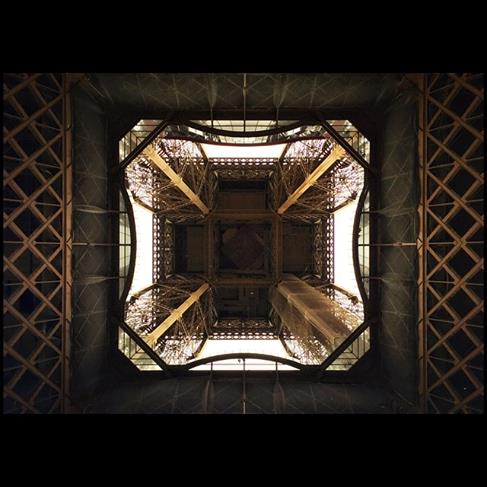
Eiffel Tower
La tour Eiffel. (Photo by A. Hallinan)

“Tell all the truth but tell it slant–“ Emily Dickinson

If you dislike ambiguity and prefer straightforward plots, you may become impatient with Patrick Modiano’s inconclusive and sometimes maddening quests. In his stories of Paris during and after the Occupation, the “missing” person in question is never found; the mystery of his or her identity is never solved.

Modiano tells the truth–what little of it he knows–but he tells it slant.

Reading is a way for me to immerse myself in other times and places, and on our recent trip to France, I wanted to see the country through the lens of World War II, when my father was a soldier there. So I brought along Irène Némirovsky (I wrote about Suite Française in my last post) and Patrick Modiano’s The Search Warrant (published as Dora Bruder in Europe). Coincidentally, my son had just read three novellas by Modiano: Afterimage, Suspended Sentences, and Flowers of Ruin, so I read them, too. (These are published in one volume entitled Suspended Sentences.)

I was thinking about my father, who passed away five years ago, and musing about events in 1940s Europe that may soon be all but forgotten. Once I became accustomed to Modiano’s method and spirit of storytelling, I could appreciate the author’s preoccupation with identity and memory, and his attempts to reconstruct and understand the past.

Even as I explored the Jewish quarter of Le Marais, where we stayed, and conjured up the WWII Paris I’ve seen in movies, I realized that a new story is playing out in France, making my father’s time seem even more remote. We passed by many military personnel armed with automatic weapons guarding Parisian monuments, temples, churches, and other sites in the wake of January’s Charlie Hebdo attack.

My father never got the chance to explore Europe as he’d hoped. He’d been fascinated by France and Luxembourg (where he spent the weekend in training before he was wounded in the Battle of Metz in 1944), and he’d planned to visit Sicily, where he was born. Instead, he was shipped out to Liverpool after he was injured, and then back to America, where he spent over a year in recovery. Though he did visit Sicily later in life, my father never returned to France. Suspended Sentences book cover

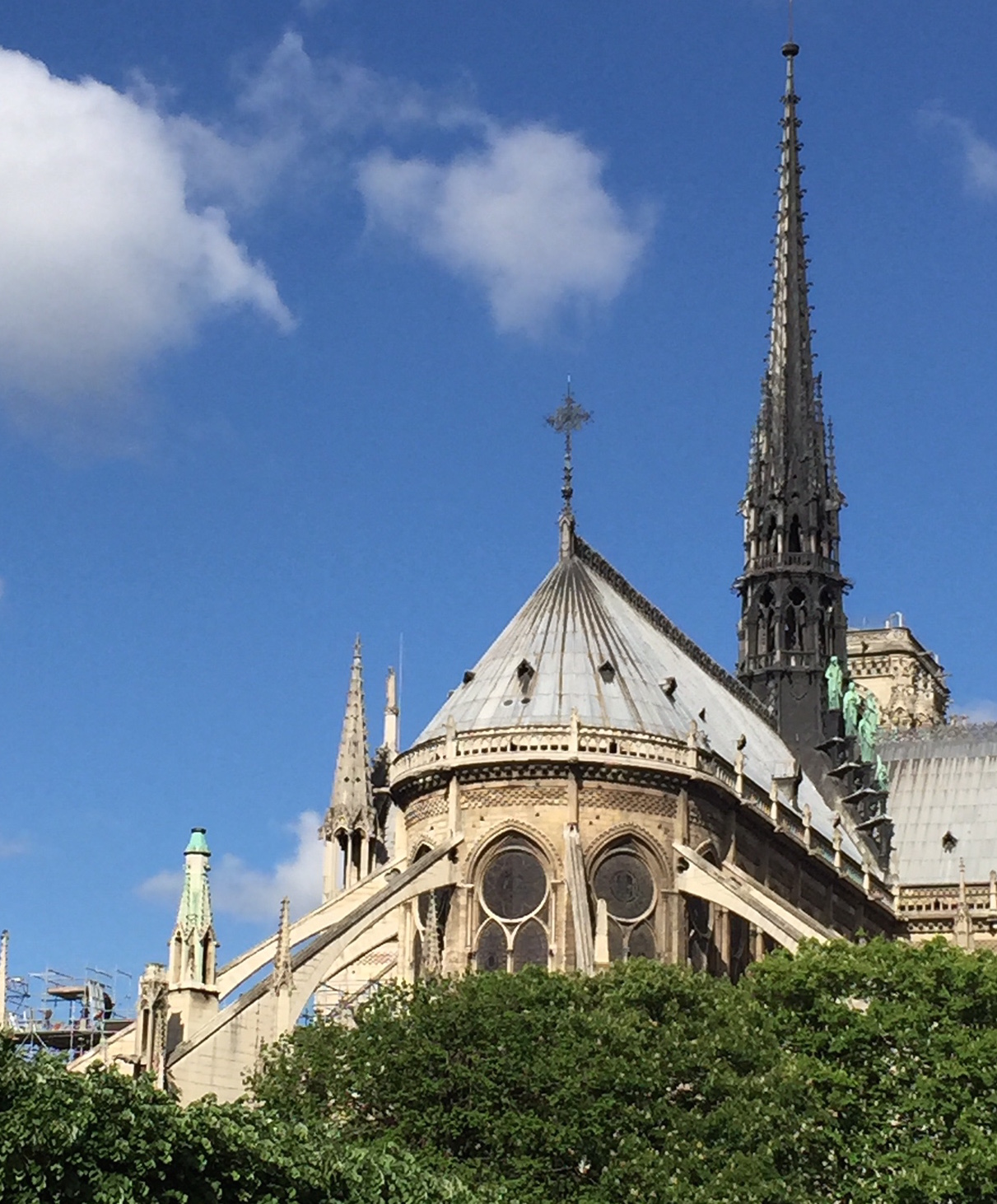
I found myself imagining what he might have thought if he’d seen Notre Dame (he was awed by cathedrals) or tasted Parisian escargot (which he would have relished) or strolled across the many old bridges spanning the Seine.

During our drive to Metz, I looked out over the French countryside and along the Moselle River, thinking that perhaps my father had been injured in one of the passing fields or forest groves.

In The Search Warrant, Modiano is obsessed with reconstructing the life of a young Jewish girl who died at Auschwitz. In a 1941 Parisian newspaper, he’d discovered an ad placed by the parents of Dora Bruder, asking for information about the whereabouts of Dora, who had run away from her convent school. It’s as if Modiano can’t accept that someone–that so many, in fact–could live lives so brief and obscure and die such senseless deaths, as they did in the war.

The Search Warrant fuses nonfiction (the facts he unearths about Dora Bruder) with memoir (Modiano’s autobiographical speculations about his father during the Occupation) and fiction. As I read, sometimes I couldn’t separate truth from fiction.

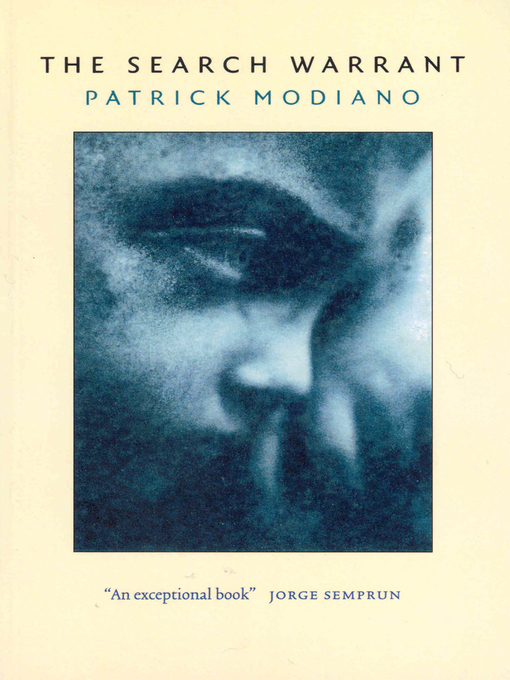
The Search Warrant book coverInterrupting the narrative flow are lengthy lists of the names and last known addresses of people deported to concentration camps. Modiano seems compelled to show his readers the documentation and proof behind any fact he asserts about Dora. He meticulously describes the Paris neighborhoods that he wanders in, too: the old, timeworn urban landscapes and the bland contemporary ones that have replaced them.

Such lists and geographical minutia also appear in Modiano’s three novellas. Each story portrays a protagonist searching for a person he’s lost touch with long ago or seeking to understand some incident from the past.

Before I started the three novellas, I read the editor’s introduction to see if I could better understand what Modiano was trying to do with his stories. I learned that his mother had been an actress and was often absent during his childhood, while his estranged father paid little attention to Modiano and his younger brother. Modiano surmises that his father was a black market smuggler and somehow aligned with French Nazi collaborators. Another heartbreaking autobiographical fact is that Modiano’s beloved brother, Rudy, died from an illness when they were young. Modiano’s obsessive search for Dora Bruder is emblematic of Modiano’s search for his lost family, and for a pre-war Paris that no longer exists.

Patrick Modiano won the Nobel Prize in 2014.

From Flowers of Ruin:

“Little by little, that man melted into the wall. Or else the rain, from falling on him so heavily, had dissolved him, the way water dilutes a fresco that hasn’t had time to dry properly. As hard as I pressed my forehead against the glass and peered at the dark gray wall, no trace of him remained. He had vanished in that sudden way that I’d later noticed in other people, like my father, which leaves you so puzzled that you have no choice but to look for proofs and clues to convince yourself these people had really existed.”

Notre Dame
Notre Dame
Cafe in Paris
Where to eat….they all look so good. Can you see the maître d’ beckoning?
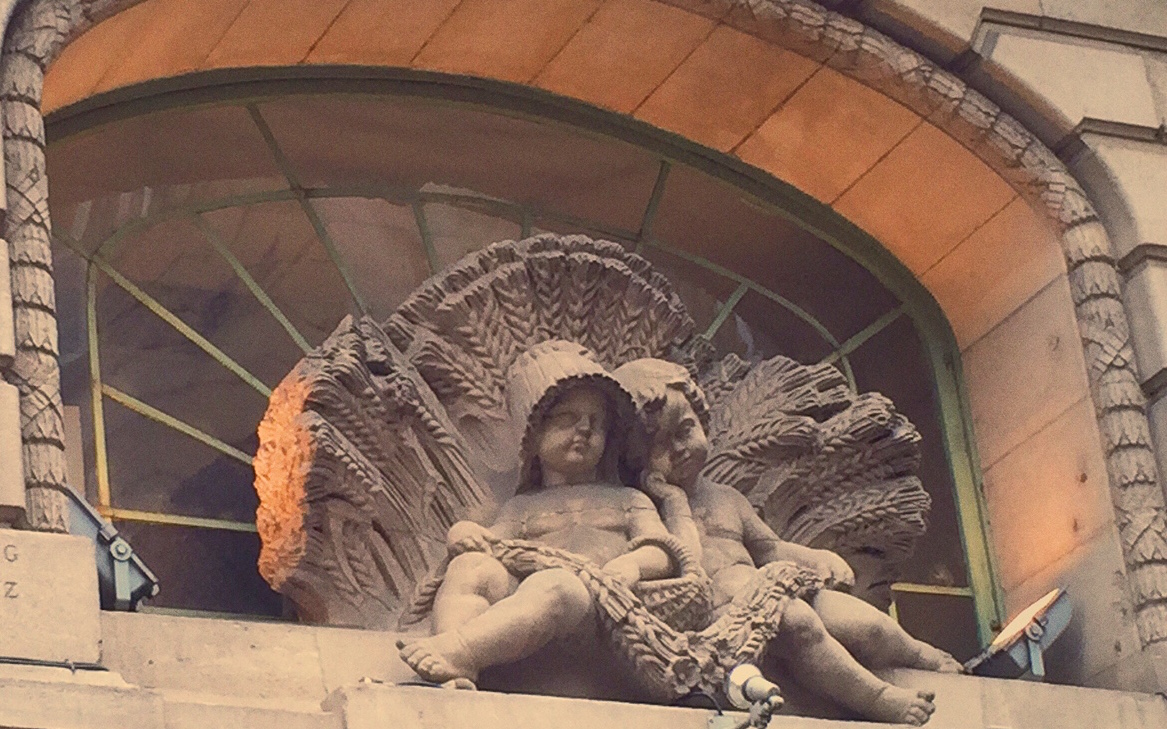
Stone carving of two children
Children on a street corner in France.

Suite Française and my father

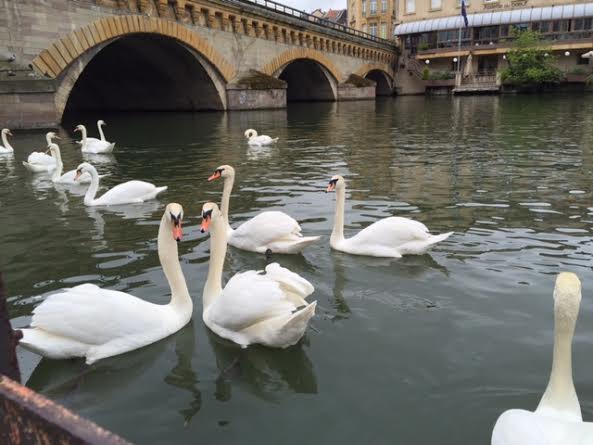
Bridge over Moselle River, Metz, France
The Moselle River in Metz, France. My father was wounded on November 14, 1944 in the weeks-long Battle of Metz. After the city was liberated, the Allies went on to break through to Germany in the Battle of the Bulge.

Storm in June and Dolce, by Irène Némirovsky

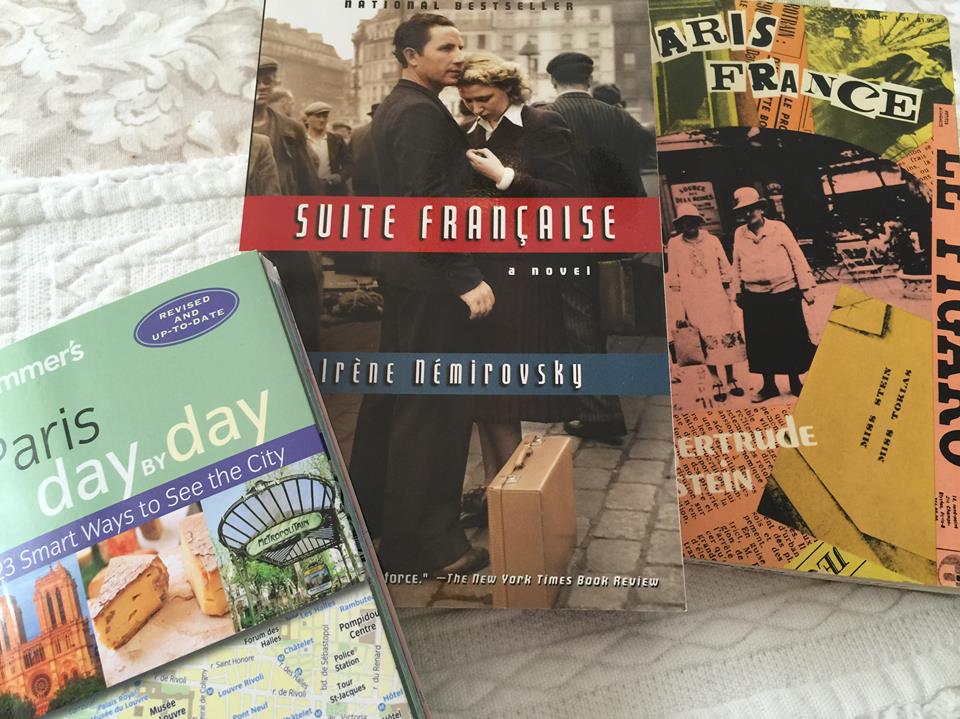
I brought Suite Française by Irène Némirovsky with me when we travelled to France just before V-E Day to visit our son, who had a work coop in Paris, and to explore the region near Metz in northern France, where my father was wounded in World War II.

Suite Française consists of two novels set during the early days of the French Occupation, with exquisitely drawn French and German characters that dramatize the complicated relationship between France and Germany at that time.

Suite Française book coverI don’t know how Némirovsky could write during the terrible days of the French Occupation. An acclaimed novelist from a wealthy Russian family and a member of the highest social circles in France, she was also Jewish. Némirovsky knew at any moment she could be deported to a concentration camp, separated from her husband and her two young daughters.

But write she did, and superbly. She was driven and disciplined, and the writing must have given structure to her days and helped her cope. She finished two of the five novels she’d intended for Suite FrançaiseStorm in June and Dolce–before she was, indeed, arrested and deported in July, 1942. Némirovsky died a month later of typhus in a concentration camp. Her husband, Michel, was deported that fall and died in the gas chambers.

The family’s devoted nanny hid the two young daughters, Élisabeth and Denise, who were being hunted by Vichy officials, and they managed to survive the war. Fifty years later, Denise discovered that the papers left behind in one of her mother’s suitcases were two novels–she had thought they were diaries and had been reluctant to read them. Storm in June and Dolce were finally published in 2004 as Suite Française, which became an international literary sensation.

Included in my edition of Suite Française are the journal Némirovsky kept as she wrote the novels, and the desperate correspondence of Irène and Michel with Némirovksy’s publisher and French officials as they tried to avoid deportation.

On fleeing Paris:

“…groups of people appeared outside their houses–women, old people and children, gesticulating to one another, trying, at first calmly and then with increasing agitation and a mad, dizzy excitement, to get the family and all the baggage into a Renault, a saloon, a sports car…Not a single light shone through the windows. The stars were coming out, springtime stars with a silvery glow. Paris had its sweetest smell, the smell of chestnut trees in bloom and of petrol with a few grains of dust that crack under your teeth like pepper.”

On being a young, married French woman with a German soldier billeted in her home:

“She felt a very feminine pleasure, an almost sensual, sweet sensation at seeing this childish look on a face that was, after all, the face of an implacable enemy, a hardened warrior. For we can’t pretend, she thought, that we aren’t all in his hands. We’re defenseless. If we still have our lives and our possessions, it’s only because of his goodwill. She was almost afraid of the feelings growing within her. It was like stroking a wild animal–an exquisitely intense sensation, a mixture of tenderness and terror.”

On the French villagers and the Germans:

“Little by little, darkness spread across the lawns; they could still make out the gold decorations on the uniforms, the Germans’ blond hair, the musicians’ brass instruments on the terrace…All the light of the day, fleeing the earth, seemed for one brief moment to take refuge in the sky: pink clouds spiraled round the full moon that was as green as pistachio sorbet and as clear as glass; it was reflected in the lake. Exquisite perfumes filled the air: grass, fresh hay, wild strawberries. The music kept playing. Suddenly, the torches were lit…There was the lively, happy sound of champagne corks popping.

“Oh, those bastards! And to think it’s our wine they’re drinking, the Frenchmen said, but without real bitterness, because all happiness is contagious and disarms the spirit of hatred.

And of course, the Germans seemed to like the champagne so much (and had paid so much for it!) that the Frenchmen were vaguely flattered by their good taste.”

From Némirovsky’s journal:

“I must create something great and stop wondering if there is any point. Have no illusions: this is not for now. So mustn’t hold back, must strike with a vengeance wherever I want.”

“Never forget that the war will be over and that the entire historical side will fade away. Try to create as much as possible things, debates…that will interest people in 1952 or 2052.”

“What lives on:

1. Our humble day-to-day lives

2. Art

3. God”

Suite Française has just been made into a movie but, as far as I can tell, a US release date is not yet known. I can’t vouch for its quality. A writer I know who lives in France told me many reviews have not been favorable. Usually, I don’t see movies adapted from books that I like unless I know the production is a good one. Nonetheless, below is the UK trailer. I do like Michelle Williams and Kristen Scott Thomas.

A personal connection

Cemetery with white crosses
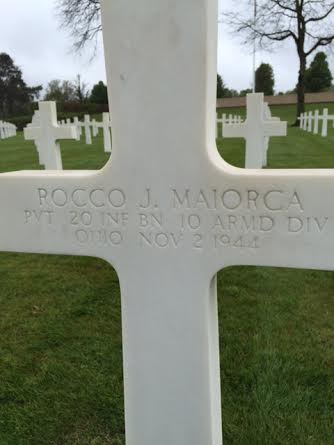
The Lorraine American Cemetery in France, where many soldiers from the Battle of the Bulge and the Battle of Metz are buried.
White cross, gravesite
This soldier was in my father’s battalion. Perhaps they knew each other.
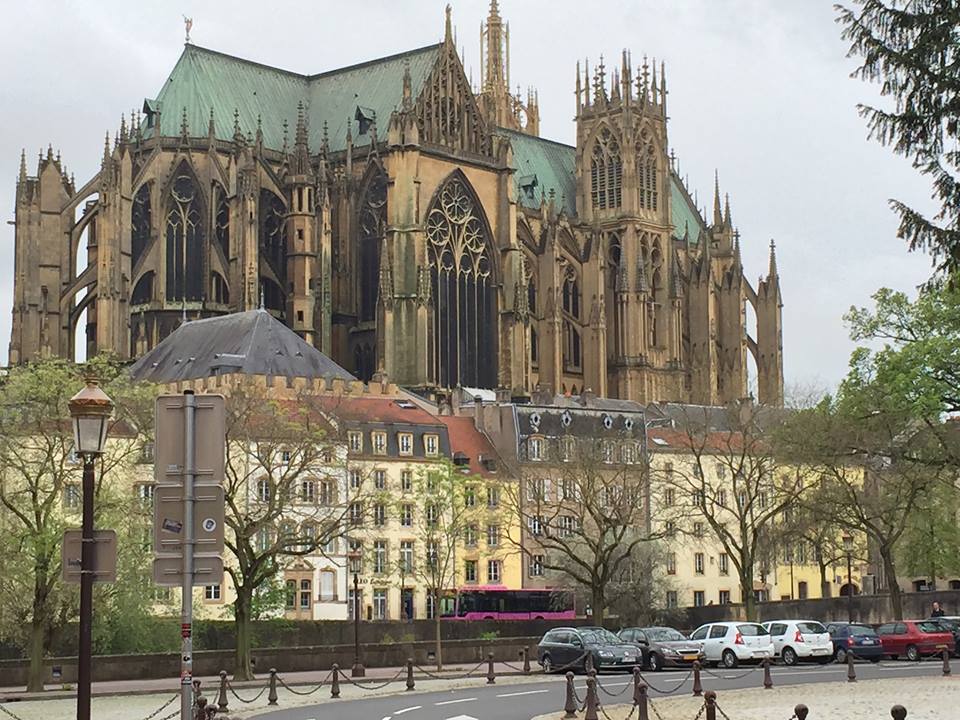
Cathedral and buildings, Metz
Cathedral of St. Etienne, Metz. My father was wounded before the Allies took Metz, so he never got to see the cathedral or this beautiful city.

I imagine the bells of St. Etienne rang on VE Day:

Moselle River, swans

Remembering Jonathan Crombie’s Gilbert Blythe

Anne of Green Gables cover, illustration

Did you ever see the Canadian Broadcasting Corporation’s 1985 TV mini-series of Anne of Green Gables? One of the finer book-to-television adaptations. Remembering Jonathan Crombie’s Gilbert Blythe. Crombie passed away yesterday.

Illustration by Troy Howell, in the Children’s Classics Division/dilithium Press Ltd edition of Anne of Green Gables by Lucy Maud Montgomery, published in 1988.

The epigraph: “The good stars met in your horoscope, Made you of spirit and fire and dew.”  Browning

Packing for Paris

Books

I try to make my traveling adventures reading adventures, too. We’re headed to Paris to see our son, with a two-day stop in London, my first visit to both cities.

Then we’ll go to Metz, France for a couple of days, with a road trip to Luxembourg City. In World War II, my father fought in the battle of Metz, and we think we’ve figured out approximately where he was wounded (on November 14, 1944). So we’ll investigate and see what we find.

My father spent a weekend in Luxembourg City just before the battle and had an interesting story to tell about that, which I’ll share in an upcoming post.

Metz
Metz, France (Wikipedia)
Luxembourg City
Luxembourg City (Wikipedia)

Besides Gertrude Stein, Irene Nemirovsky and our trusty travel guides, I’m bringing Henry Miller and Ernest Hemingway. (No books related to London because I won’t be able to contain myself in the bookstores.)

Tropic of Cancer book cover
One of the most banned books in history

A Movable Feast Book Cover

I’ll share my impressions, literary and otherwise, in upcoming posts.

Which books or authors would you recommend to a reader visiting France? Please comment!

On Reading the Tough Stuff

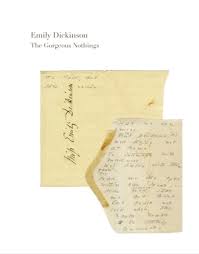
The Gorgeous Nothings book coverThis week I’m passing along a few of my favorite bloggers, people who have important things to say and they say it well.

I’ve recently become a follower of Book Guy Reviews, written by James Neenan, a Denver high school English teacher. I love what he says about reading difficult books.

On Reading the Tough Stuff