Mysterious Elena

“I concluded that first of all I had to understand better what I was. Investigate my nature as a woman. I had been excessive. I had striven to give myself male capacities. I had thought I had to know everything, be concerned with everything. What did I care about politics, about struggles. I wanted to make a good impression on men, be at their level. At the level of what, of their reason, most unreasonable. Such persistence in memorizing fashionable jargon, wasted effort. I had been conditioned by my education, which had shaped my mind, my voice. To what secret pacts with myself had I consented, just to excel. And now, after the hard work of learning, what must I unlearn. Also, I had been forced by the powerful presence of Lila to imagine myself as I was not. I was added to her, and I felt mutilated as soon as I removed myself. Not an idea, without Lila. Not a thought I trusted, without the support of her thoughts. Not an image. I had to accept myself outside of her. The gist was that. Accept that I was an average person. What should I do. Try again to write. Maybe I didn’t have the passion. I merely limited myself to carrying out a task. So don’t write anymore. Find some job. Or act the lady, as my mother said. Shut myself up in the family. Or turn everything upside down. Home. Children. Husband.”      Those Who Leave and Those Who Stay, Elena Ferrante

My Brilliant Friend book cover


I don’t often read books in translation, but when I visited Sicily this summer I decided to bring along a contemporary Italian writer. I chose Elena Ferrante and her trilogy of Neapolitan novels – a fourth novel will be published next year – not realizing what an incredible reading experience it would turn out to be.

Elena Ferrante is a pseudonym. The author of My Brilliant Friend, The Story of a New Name, and Those Who Leave and Those Who Stay does not grant in-person interviews. She does not do book signings or promotional tours. Even her translator, Ann Goldstein, has never met this international literary sensation.

There is a rumor that Elena Ferrante is a man, which many female readers find absurd. A myth, they say, spread by condescending males who think a woman wouldn’t write about male-female relations in the way that Ferrante does. I would be surprised and disappointed if Ferrante is ever revealed to be male. Certainly, such a thought never occurred to me as I read her novels. To me, she seems authentically female, though one who is remarkably uninhibited and self-revealing: a kind of brutal honesty born of the harsh, corrupt city where her novels are set.  It could be that professional anonymity gives Ferrante the freedom to write in this unfettered way. But I have the feeling that Ferrante’s strong, unusual voice would prevail regardless of her circumstances.
The Story of a New Name book coverThe Neapolitan novels span the 1950s to the present, depicting the fraught friendship of Elena Greco and Lila Cerullo, who live on a violent, poverty-stricken Naples stradone, and the fates of their neighborhood friends. Elena manages to become educated and lift herself out of poverty. She writes a bestselling novel, marries an esteemed professor of literature and “escapes” the old neighborhood. Lila, who Elena views as the more brilliant and talented of the two, is not permitted to attend school beyond the fifth grade. She fashions a very different kind of life that remains enmeshed in the corruption and conflict of Napoli.

The friendship between these two women is arresting, electrifying. Lila and Elena love each other but visit treachery and betrayal upon one another, too.  Lila takes the lead with bold, unconventional action; Elena reacts, making important life decisions almost in the wake of Lila. Elena senses Lila is the true, more talented writer, the one more deserving of success; she consciously crafts her own writer’s voice from a story Lila wrote as a child. No one knows Elena better than Lila, and vice versa. If one woman were to die, the other would lose her identity, and her life would be stripped of much of its meaning.

These novels remind me of the movie The Best of Youth in its depiction of an Italian family caught up in the cultural and political upheaval of the 1960s. Feminism is a strong theme, but as the decades pass, in these Neapolitan novels, men and women do not seem to make any progress understanding each other. Do you remember the vitriolic scene in The Godfather when Connie (Talia Shire) hurls the wedding china at her husband, Carlo (Gianni Russo) and they scream at each other? I thought of them when I read Ferrante’s riveting depiction of Lila’s wedding night. Returning from her honeymoon with a black eye, Lila visits her mother, who looks the other way, saying nothing. Such a thing was not out of the ordinary.

If you appreciate complex psychological portraits of women and female friendships, you will like these novels. I enjoyed them, too, for their depiction of Elena’s emotional and creative challenges as a writer, and because they helped me better understand the problematic history of women’s roles in Italian family and culture. The novels will resonate for anyone who has reinvented themselves through geographical distance or education or immersion in a different stratum of society.  We see Elena renouncing the rough dialect of Naples for cultured Italian, yet reverting to the aggressive language of her childhood when she’s angry or upset. Elena hovers between two identities: alienated from her people and place of origin, yet never really at home in her new life.

Those Who Leave and Those Who Stay book coverThis article in Slate is one of the better reviews I’ve read of Ferrante’s Neapolitan novels. There is an excellent discussion of Elena Ferrante by her translator Ann Goldstein and others in this New Yorker: Out Loud interview.

I plan on reading the fourth novel next year when it is published. Have you read any novels by Elena Ferrante? If so, what do you think?


The Summer Book

“It was a particularly good evening to begin a book.”   The Summer Book, Tove Jansson


Reading a book in the hammock
Reading in the hammock


I’m discovering Tove Jansson this summer, thanks to Claire McAlpine and her blog, Word by Word. I don’t know how I went this long without delving into this amazing Finnish, Swedish-speaking writer and world-renowned creator of the Moomintroll comic strip.

Next week I’ll show you her Moomins, but today I’m reading The Summer Book, a novel about a girl spending the summer with her grandmother, who lives on an island at the end of the Finland archipelago.  The island in the book is like the one Tove lived on with her partner for many years, a wild and beautiful place superbly evoked in this story.

I’m lazy on these idyllic summer weekends, so I’m going to borrow the copy that’s written on the back of the book, which captures the novel much better than I could:

The Summer Book cover, Swedish
The Summer Book, by Tove Jansson

“….Jansson distills the essence of the summer – it’s sunlight and storms – into twenty-two crystalline vignettes. This brief novel tells the story of Sophia, a six-year-old girl awakening to existence, and Sophia’s grandmother, nearing the end of hers, as they spend the summer on a tiny unspoiled island in the Gulf of Finland. The grandmother is unsentimental and wise, if a little cranky; Sophia is impetuous and volatile, but she tends to her grandmother with the care of a new parent. Together they amble over coastline and forest in easy companionship, build boats from bark, create a miniature Venice, write a fanciful study of local bugs. They discuss things that matter to young and old alike: life, death, the nature of God and of love.”

This slim paperback, a New York Review Books Classic, was originally published in 1972. I love the cover illustration by Tove Jansson, which was on the original jacket cover. Jansson’s simple, black and white sketches are scattered throughout the book.

Her novel has inspired me to begin planning a summer vacation in Sweden, where my grandparents are from. It would be fun to stay in a fisherman’s cottage like the one Sophia’s grandmother lived in, perhaps near to the farm where my grandmother grew up.

To come: Jansson’s memoir, Sculptor’s Daughter; her collection of stories about the artist’s life – Fair Play; and the Moomins.

Mushrooms next to tree
I don’t know if you’d find these mushrooms on Tove’s Finnish island, but that’s what I thought of when I saw these in our neighborhood.


Slow flowers

 “There were Lupines, Sweet Peas, Phlox, Bluebells, Day and Tiger Lilies, Monkshood, Peonies, Columbine, Daffodils, single and double, a Bleeding-heart bush in the front yard, and vines at each corner, which at times nearly covered the house. And always there was Golden-glow by the kitchen door.”   An Old-Time Gardener

Lilies
Grace’s Garden lilies


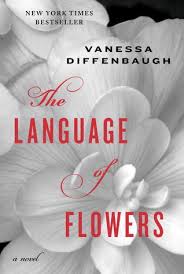
In The Language of Flowers, the main character, Victoria Jones, is a floral designer with a knack for choosing just the right foliage and blossoms for her customers, based on Victorian-inspired flower dictionaries that she’s studied. Having grown up in an Ohio floral shop, I was intrigued by the contemporary, upscale San Francisco flower scene depicted in Vanessa Diffenbaugh’s story.

In the 1950s, 60s, and 70s, our shop carried the standard blooms – roses, carnations, gladiolas and the like – which were shipped from California and South America – and laden with pesticides, though at the time we didn’t give that much thought. Nowadays, floral designers are artisans who use seasonal, locally grown, pesticide-free cultivated and wild flowers, in artful, natural-looking bouquets and arrangements.

Slow Flowers book coverWriter and horticulture expert Debra Prinzing coined the term slow flowers, which has caught on in the floral industry. I’ve been enjoying two of her books, The 50 Mile Bouquet, and Slow Flowers: Four Seasons of Locally Grown Bouquets from the Garden, Meadow and Farm.  They were a timely discovery for me, as this summer we sold the building where my parents had their floral shop for nearly fifty years.

In both books, Debra highlights American flower farmers who are passionate about sustainable methods and land stewardship. Slow Flowers is a colorful, lush, small-sized, book with flower arrangements for every week of the year. As in a cookbook, Debra lists the “ingredients” (4 stems hydrangea, 9 stems pink snowberry, 5 stems Dahlia ‘Nijinsky,’ 15 stems amaranth), provides instructions, and suggests vintage and unusual vases and containers.

In The Language of Flowers, Victoria Jones falls in love with Grant, a flower farmer. She first meets him at a flower market, where he is selling varieties of lilies: tiger, stargazer, imperial, and pure white Casablancas. Here is what Victoria has to say about Grant:

“His face had the dusty, lined look of a manual laborer. I imagined he planted, tended, and harvested his flowers himself. His body was lean and muscular as a result, and he neither flinched nor smiled as I examined him…

He withdrew a single orange tiger lily from a bucket.

‘Take one,’ he said, handing it to me.”

Lily

The language of flowers

“I wanted to spend my life choosing flowers for perfect strangers.”     The Language of Flowers, Vanessa Diffenbaugh

Daylily garden
Grace Gardens, Penn Yan, NY


Flowers were part of my earliest days and inseparable from family life. My parents opened a flower shop in July, 1952. This month, fifty-eight years later, we sold the building that housed our shop, though the floral business closed some years ago.

To commemorate the flowers of my past and mark how flowers remain part of my life, I’m highlighting a handful of books and authors, and a Finger Lakes “secret” garden. First, a book. Here’s an excerpt:

I’m single but I don’t want to be, the woman said.

She watched me work, arranging the white lilac around the roses until the red was no longer visible. I wound sprigs of rosemary–which I had learned at the library could mean commitment as well as remembrance–around the stem like a ribbon. The rosemary was young and supple, and did not break when I tied it in a knot. I added a white ribbon for support and wrapped the whole thing in brown paper.

First emotions of love, true love, and commitment, I said, handing her the flowers.

The Language of Flowers book coverIn a review of the novel The Language of Flowers by Vanessa Diffenbaugh, Paula McLain (author of The Paris Wife and herself a foster child) writes: “I feel it’s only fair to warn you, dear reader, that Vanessa Diffenbaugh’s central character, Victoria Jones, is going to break your heart three ways from Sunday.”

The character of Victoria Jones and her fate drew me to The Language of Flowers, as did the lush California landscape of flowers against which this story is set. 

Victoria has lived in more than 30 foster homes, and when she is emancipated at 18, she isn’t ready. It’s difficult to imagine any child emerging intact from our foster care system. I don’t know which was more heartbreaking, to see foster care let down Victoria time after time, or to see the ramifications of this in Victoria’s adult life.

Victoria’s talent with flowers, which may ultimately be her salvation, is another dimension of the novel that intrigued me. Her one kind and loving foster parent, Elizabeth, passed on to Victoria her floral “genius.” Victoria can not only artfully arrange flowers, she has a knack for giving people the particular flowers they need.

I loved this book and plan to read it again.

Vanessa Diffenbaugh cofounded the Camellia Network to support youth transitioning from foster care to independence. The flower camellia means my destiny is in your hands.

A Victorian Flower Dictionary coverThere is a companion volume to this novel, A Victorian Flower Dictionary, compiled by Mandy Kirkby. Neither of these books is to be confused with the classic Kate Greenaway’s Language of Flowers, first published in 1884.


A secret garden

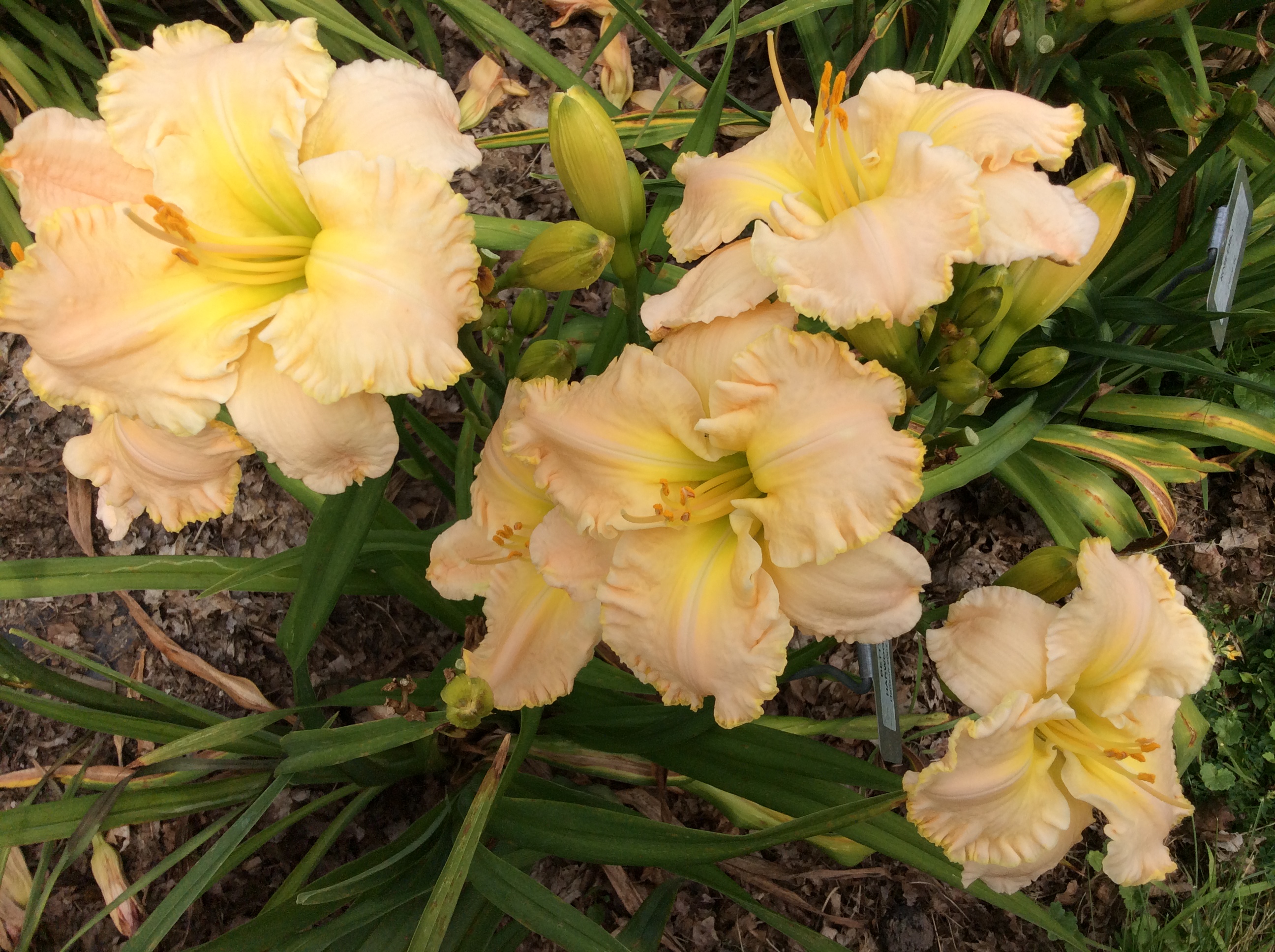
Hidden away in the woods on a hillside overlooking Seneca Lake in the Finger Lakes is a stunning collection of over 40,000 day lilies. Grace Rood planted her first lilies in 1957, and now her son oversees Grace’s Garden. We visited the garden in mid July, when the day lilies were at their peak.

In the language of flowers, lily (Lilium) stands for majesty.  A white lily stands for purity and sweetness. In Kate Greenaway’s dictionary, a day lily stands for coquetry.

A passionate bouquet could consist of bird of paradise for magnificence, bougainvillea for passion, and lily for majesty.

Doesn’t the secret language of flowers inspire you to make your own bouquet for someone you love?


Bright orange lilies
Some lily names: Serene Madonna; Miss Jessie; Golden Chimes; Angels Unawares; Little Dancing Dress; Little Fat Cat; Buttered Popcorn; Coyote Moon
A cottage window
Grace’s cottage


If you enjoy flowers, check out Rambling in the Garden, and join the “In a Vase on Monday” crowd.


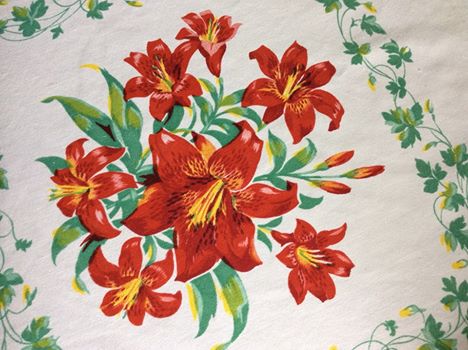
Tablecloth with lilies
I found this lily-laden tablecloth in a Finger Lakes antique shop. Perfect for a summer picnic.


Standing in front of floral shop
Our flower shop opening day, July 24, 1956

More flowers to come in my next post.


The Goldfinch

“Every new event—everything I did for the rest of my life—would only separate us more and more: days she was no longer a part of, an ever-growing distance between us. Every single day for the rest of my life, she would only be further away.”   The Goldfinch 

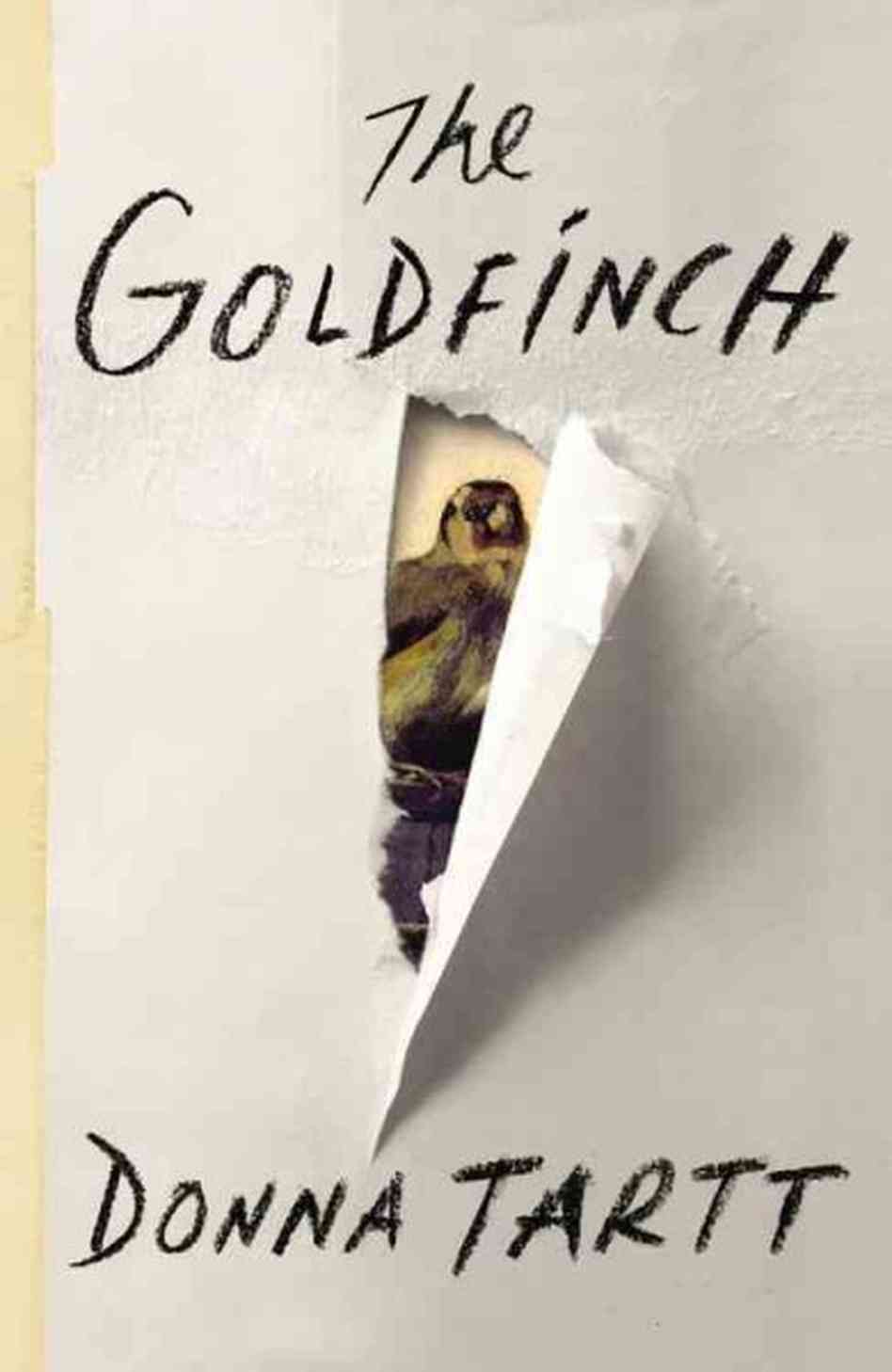
The Goldfinch book coverI made it through all 771 pages of The Goldfinch. That may sound as though reading it was a struggle. It was, occasionally, but I couldn’t abandon Theo Decker, even though things get awfully dark, because just about everyone else in Theo’s life lets him down one way or another. This doesn’t mean I don’t like the novel – I do, very much. But Donna Tartt’s fiction is a commitment, in the way I remember David Copperfield being a commitment when I read it in high school.

(After I wrote this, I found out Stephen King has compared Donna Tartt to Charles Dickens.)

You have to be a reader to take this one on, and a devotee of fiction, and willing to grapple with life’s big questions.

Thirteen-year-old Theo and his mother, a lover of art, are in the Metropolitan Museum of Art when a terrorist bomb explodes. Unbeknownst to Theo, his mother is killed instantly, while Theo finds himself comforting a dying man in his last moments. The delirious man urges Theo to take the painting that has landed in the rubble nearby. In shock, Theo obeys, managing to find his way out of the museum clutching The Goldfinch, a priceless 17th century painting by Carel Fabritius.

Theo is left completely alone. His alcoholic, flimflam artist father abandoned Theo and his mother some years before. So Theo goes to live with the wealthy family of one of his friends from school. Theo still has The Goldfinch in his possession, though no one knows. He can’t bear to part with it.

“How was it possible to miss someone as much as I missed my mother? I missed her so much I wanted to die: a hard, physical longing, like a craving for air underwater.”

Eventually, Theo’s father and his father’s new girlfriend whisk him away to a god-forsaken development in the Nevada desert, where most of the houses are in foreclosure or were abandoned, half-built, by the developer.

Donna Tartt’s third novel is a serious, funny, sad, wicked story, which won the Pulitzer Prize. It takes her about ten years to write a novel; she has also published The Secret History and The Little Friend. 

Theo’s life is suffused with, and saved by, the spirit of The Goldfinch. He has this to say, which I think also applies to Tartt’s novel:

“I add my own love to the history of people who have loved beautiful things, and looked out for them, and pulled them from the fire, and sought them when they were lost, and tried to preserve them and save them while passing them along literally from hand to hand, singing out brilliantly from the wreck of time to the next generation of lovers, and the next.” 

Summer reading

The Goldfinch book coverI am now thoroughly in the grip of Donna Tartt’s The Goldfinch. (In book circles, it seems as though half the universe is reading Tartt’s latest novel.)

After surviving a terrorist bombing at the Metropolitan Museum of Art in New York (a hellishly claustrophobic, terrifying scene masterfully written), a shell-shocked Theo Decker is making his way home amidst dozens of fire engines, blaring sirens, and chaos in the streets, where he is certain he’ll be reunited with his mother, who had been in the museum gift shop during the blast. Knowing Tartt, I believe things will only go further downhill for Theo in a tragic – comic, picaresque way. I’ll keep you posted over the next few weeks, without spoilers, of course. Having read Tartt’s previous books, The Secret History and The Little Friend, her latest book is a must-read for me.

In the Kingdom of Men book coverIn my perpetual online quest for good reads, I happened upon Kim Barnes the other day. I can’t believe I haven’t yet sampled her writing. In my stack of library books, I now have In the Kingdom of Men, the 1960s story of “a barefoot girl from red dirt Oklahoma, and all the marble floors in the world will never change that” who marries a college boy from her hometown. He takes a job with the Arabian American Oil Company in Saudi Arabia. The novel is loosely based on the experiences of Barnes’ aunt and other American women married to oil executives who worked in the Persian Gulf in the “Mad Men” era. I’ve also placed library holds on Barnes’ two memoirs, In the Wilderness and Hungry for the World.

My Struggle book coverAs usual, I’m overly ambitious, but I’ve decided to take on Norwegian Karl Knausgaard’s three-volume My Struggle after reading intriguing reviews. The fact that our local Barnes & Noble did not have Volume 1 only makes me more determined.

I just purchased Turn Right at Machu Picchu by Mark Adams (someday we’ll get there) and The Shelf: Adventures in Extreme Reading, by Phyllis Rose. (She wrote A Year of Reading Proust.) Rose read, straight through, all the 30 or so books from LEQ – LES on a random shelf in the New York Society Library stacks – no matter how obscure the author. The books and authors include The Phantom of the Opera, California detective fiction, a novel by an Afrikaans writer, stories of French Canadian farmers, and one “feminist, humane earth-mother Jewish writer” who raises award-winning Newfoundlands.

Domestic Matters

A Woman's Shed book cover

We’ve been putting in raised beds at our house, and my latest obsession is backyard domesticity. I just bought Gill Heriz’s delightful A Woman’s Shed. From our local library I borrowed three or four how-to titles about building fences (made of wood, stone, metal, and plants) and backyard sheds, gazebos, cabins, and other nature retreats.


The Kitchen Garden Cookbook coverI’ve also been browsing through Sylvia Thompson’s The Kitchen Garden Cookbook (1995). Thompson has also written The Kitchen Garden, which I’ll have to track down. Both are semi-classics endorsed by Alice Waters and other culinary experts. The cookbook is good reading, and if you’re growing your own vegetables you’ll like Thompson’s tips about when to harvest. The recipes are inventive and  sound delicious – I’m looking forward to trying some of them out. How did I find this title? It was on display at our library – a great way to discover good, not-so-new books.

In my quest to learn about gardening and raising vegetables, I’ve been reading Eliot Coleman’s Four-Season Harvest, as we hope to experiment with raising food through the winter. Eliot’s neighbors were Helen and Scott Nearing, who launched the modern-day homesteading movement. He has made the Nearing’s home farming techniques accessible to home gardeners and small organic farmers. Living the Good Life book cover(The Nearing’s influential book, Living the Good Life (1954) is a fascinating read, by the way.)  I like Coleman’s book because it is simple and straightforward, especially accessible and inspiring to the lay person. I’ve also rediscovered a book I purchased years ago, Barbara Damrosch’s The Garden Primer. Reading the forward to Coleman’s book, I discovered that he and Damrosch are married to each other.

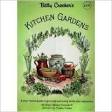
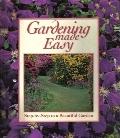
Kitchen Garden book coverI love to visit the many small second-hand and consignment stores in our village. We have a used crafts supply shop I like to browse in, and there I discovered old copies of Betty Crocker’s delightful Kitchen Garden (1971) by Mary Mason Campbell with illustrations by Tasha Tudor; Gardening Made Easy binder coverand Gardening Made Easy (1995), International Masters Publishers, a collection of full-color pamphlets that you order individually and store in a three-ring binder. (I believe these are now out of print.)


The Supper of the Lamb book cover

For good measure, I requested from the library a copy of The Supper of the Lamb, (1969) by Robert Farrar Capon; this “culinary entertainment” written by an Episcopal priest comes highly recommended by a friend.

So there you are, my summer reading plans – all over the map, highbrow and not, typical for me.

What will you be reading this summer?


Raised beds
A work in progress


Life After Life

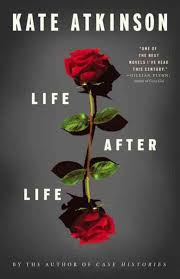
Life After Life book cover

The first time Ursula Todd is born, on a snowy winter night in England, 1910, she dies before she makes it out of the birth canal. Then the story starts over and Ursula is born again, only to die a few years later when she falls off a roof. She’s born yet again and subsequently dies in childhood from the Spanish flu.

Ursula is born over and over again, and along the way she makes different choices that prolong her life and send her down alternate paths. Ultimately, she and the reader arrive at World War II, which is at the heart of this novel, and a new round of opportunities for Ursula to live or die.

Once I got the hang of this unusual plot device, I became entranced with Kate Atkinson’s Life After Life. Judging from the reviews I’ve read, readers either love or hate that Ursula has multiple lives and multiple deaths. In moments of deja vu, Ursula senses death is just around the corner and, somehow, she must do something different in order to stay alive.

There is a short opening scene in Life After Life that occurs before Ursula’s birth that is completely mystifying until many pages into the book, when you begin to understand Ursula’s lives could eventually lead to something big, to her being in the right place at the right time to prevent great suffering.

As each death opens the door to a new life, Ursula begins to discover a moral purpose for her existence, one that requires great courage and sacrifice. In a sense, she lives each life more perfectly than the one before it.

We see, for example, that who you marry can make a difference in who you ultimately become, and it can change the course of your life entirely.

I’m partial to fiction about World War II, and through Ursula’s many lives I saw her experience the war from different vantage points, all riveting and poignant. She has many second chances – wouldn’t we all like to have second chances?

Watching Ursula inspired me to think about how I want to live my life. It made me want to make more courageous choices and not worry so much about the outcome.

This is one book that will stay with me. I look forward to reading more of Kate’s fiction.

Have you read any of Kate Atkinson’s novels? Which ones, and what did you think?

The Storied Life of A.J. Fikry

“I do not like postmodernism, postapocalyptic settings, postmortem narrators, or magic realism….I do not like genre mash-ups a la the literary detective novel or the literary fantasy. Literary should be literary, and genre should be genre, and crossbreeding rarely results in anything satisfying. I do not like children’s books, especially ones with orphans, and I prefer not to clutter my shelves with young adult. I do not like anything over four hundred pages or under one hundred fifty pages. I am repulsed by ghostwritten novels by reality television stars, celebrity picture books, sports memoirs, movie tie-in editions, novelty items, and – I imagine this goes without saying – vampires. I rarely stock debuts, chick lit, poetry, or translation….Above all…I find slim literary memoirs about little old men whose little old wives have died from cancer to be absolutely intolerable.”   A.J. Fikry, bookseller, in The Storied Life of A.J. Fikry

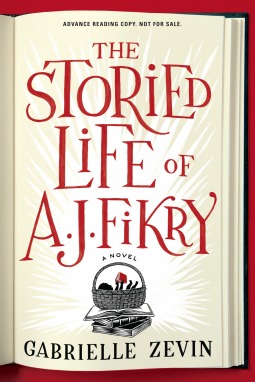
The Storied Life of A.J. Fikry bookcover

This is a quick, funny, sweet read about a bookseller who is down on his luck and turning quite bitter in his middle age. It’s a tribute to booksellers, book lovers, beloved authors, and their stories.  A Good Man is Hard to Find” (Flannery O’Conner), Lamb to the Slaughter” (Roald Dahl), The Diamond as Big as the Ritz” (F. Scott Fitzgerald), The Tell-Tale Heart” (Edgar Allen Poe), Ironhead” (Aimee Bender), What We Talk About When We Talk About Love” (Raymond Carver), Infinite Jest (David Foster Wallace), and many others have little parts to play in Gabrielle Zevin’s clever story.

After something good follows the tragic turn in A.J.’s life, he begins to change.

He’s inspired to write pithy little reviews for someone he loves. This is what he has to say about A Good Man is Hard to Find”  – 

“It’s Amy’s favorite. (She always seems so sweet on the surface, no?)…When she told me it was her favorite, it suggested to me strange and wonderful things about her character that I had not guessed, dark places that I might like to visit.”

You can tell a lot about a person by the books she loves.


Reading The Snow Child in a Deep Freeze

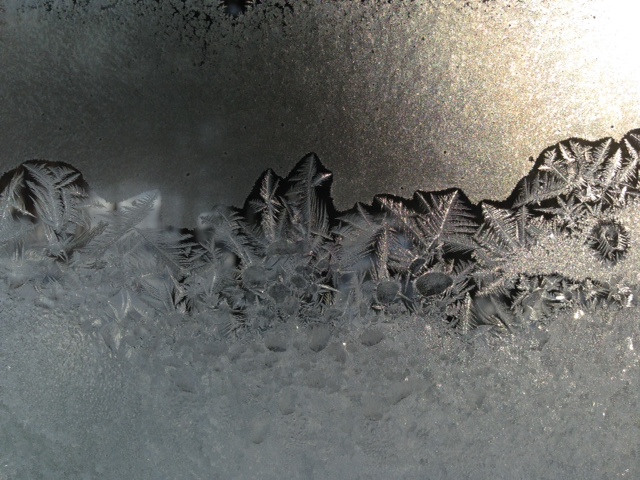
frost on window
Frost on our window

It was a bright winter’s day when I took this photograph, but it came out dark, evoking for me the deep winter chill of our snowbound evenings in upstate New York, which are perfect for reading books by the fire.

Before winter’s end, you must read The Snow Child.  Based on a Russian folk tale, The Snow Child suspends readers between fantasy and reality in remote, 1920s Alaska. (One of many English versions of the Russian folk tale is “The Little Daughter of the Snow” in Arthur Ransome’s Old Peter’s Russian Tales.)

Mabel and Jack, a childless, middle-aged couple, move from Pennsylvania to the Alaskan Territory to homestead on 160 acres of land. For ten years, they’ve been locked in a private world of grief over their stillborn child; Mabel, especially, hopes to escape from and the young families and children in Pennsylvania who remind her of her sadness.

One day, Mabel and Jack build a snow child whom they dress in a red scarf and mittens. The snow child melts, but a little girl with a fox begins to appear in the woods around their cabin. Is she real, or is she an unearthly fairy child born of their own longing? You’ll find yourself seesawing between Jack’s harsh, real-world view of who, exactly, the girl they call Faina is, and Mabel’s wishful, fantastical, mystical one.

For me, The Snow Child (a Pulitzer Prize finalist) was ideal reading: perfect for the time of year, entrancing, deceptively simple storytelling set in a frontier that has fascinated me of late. I kept thinking of the breathtaking world evoked in Barry Lopez’s Arctic Dreams. Lopez writes of virgin land, animals and people at risk from encroaching civilization, and I think of Faina as a metaphor for the wild and untamable.

Faina embodies, for me, my deep-rooted desire to have and love children. Mabel and Jack, through Faina, do find their hearts’ desire but, like all parents, they eventually must let go.

I loved how Mabel finds another kind of fulfillment through her art, and learns to channel grief, insights, and a growing love of the natural world into renderings and sketches.

The Snow Child is our city’s “If All of Rochester Read the Same Book” choice for 2014. The author, Eowyn Ivey, will travel here from her home in Alaska for three days (March 19- 21) of readings and talks at local schools, libraries, and Rochester’s Writers & Books.

We take “If All of Rochester Read the Same Book” very seriously here. We began marking it in January with countless book clubs discussing The Snow Child over tea and hot chocolate; writing workshops and readings by Ken Waldman, an Alaskan poet and fiddler; short, short plays that contain the word “fox” written and performed by locals at Geva Theatre Center; and for kids, making paper snowflakes and readings/discussions of fairy tales from Russia and around the world.

Still to come:  on February 20 a presentation of “Alaskan Odyssey: Cruising the Inside Passage and Beyond”; on February 28 an exhibition of winter images at Image City Photography Gallery; on March 4 a demonstration of basket weaving in the Alaskan tribal pattern; and a Snow Day party with music, fruit pies in flavors inspired by the novel, and a scavenger hunt on March 7.

On March 8 a how-to-survive-in-the-snow adventure at Mendon Ponds Park sponsored by the local Sierra Club chapter will explore whether or not a little girl could survive in the winter wilderness. Also on March 8 there will be an Afternoon of Winter Fancies: Creative Movement Workshops and Flights of Winter Fancy at the Hochstein School of Music & Dance; and on March 18 – 19 an exhibition of quilts inspired by The Snow Child, sponsored by the Genesee Valley Quilt ClubEach quilt will be a “novel” and feature the artist’s love of quilting and reading.

On March 4, Rick French of Pack, Paddle, Ski, who has been to just about every country in the world, will host a Sleeping in Ice class at the Penfield Public Library. (Rick has spent many nights sleeping in igloos and snow shelters; my husband travelled to Alaska with him, but that’s another story.) Rick will demonstrate how to make an igloo in the backyard and how to survive a surprise blizzard in the mountains.

For those of you who are local, you can find a complete schedule of Snow Child events here.

Snow Maiden in forest
Snow Maiden, Viktor M. Vasnetsov

The Snow Child book cover

Winners of the Literary Blog Hop Are…

Lynne Clark at Two Reads and Marie Stone are the Literary Blog Hop winners at Books Can Save a Life. Many thanks to Judith at Leeswammes for hosting this great event, and for all of you who stopped by to share what you’ve been reading.

The Signature of All Things book coverI’ll be sending Elizabeth Gilbert’s The Signature of All Things to Lynne.

We Are Water book coverAnd to Marie, We Are Water by Wally Lamb.

Here is the list of tantalizing books you shared:

Back When We Were Grown-Ups, by Anne Tyler

The Luminaries, by Eleanor Catton

Forever, by Pete Hammill

Gone Girl, by Gillian Flynn

Netherland, by Joseph O’Neill

Dreams of Joy, by Lisa See

The Kite Runner; A Thousand Splendid Suns; And The Mountains Echoed, by Khaled Hosseini

Dept. of Speculation, by Jenny Offill

Easy: Burial Rites, by Hannah Kent

Good Bones and Simple Murders, by Margaret Atwood

The Fault in Our Stars, by John Green

I Am Livia, by Phyllis T. Smith

The Goldfinch, by Donna Tartt

Dr. Sleep, by Stephen King

NOS4A2, by Joe Hill

Written in Red, by Ann Bishop

The Great Gatsby, by F. Scott Fitzgerald

The Dovekeepers, by Alice Hoffman

The Book Thief, by Markus Zusak

Life After Life, by Kate Atkinson

Mansfield Park, by Jane Austen

Wuthering Heights, by Emily Bronte

Dear Life, by Alice Munro

Dark Triumph, by Robin LaFevers

We Have Always Lived in the Castle, by Shirley Jackson

We Are Water, by Wally Lamb

The Snow Child, by Eowyn Ivey

In the Garden of the Beast, by Erik Larson

Under the Wide and Starry Sky, by Nancy Horan

The Kabbalist, by Yoran Katz

The Dog Boy, by Eva Hornung

Dinner With Lenny, by Jonathan Cott

Isolation Door, by Anish Majumdar

The Count of Monte Cristo, by Alexandre Dumas

The Rosie Project, by Graeme Simsion

The Constellation of Vital Phenomena, by Anthony Marra

One Thousand Gifts, by Ann Voskamp

Standing in the Rainbow; The All-Girl Filling Station’s Last Reunion; Can’t Wait to Get to Heaven, by Fannie Flagg

Solomon the Peacemaker, by Hunter Welles

Once We Were Brothers, by Ronald H. Balson