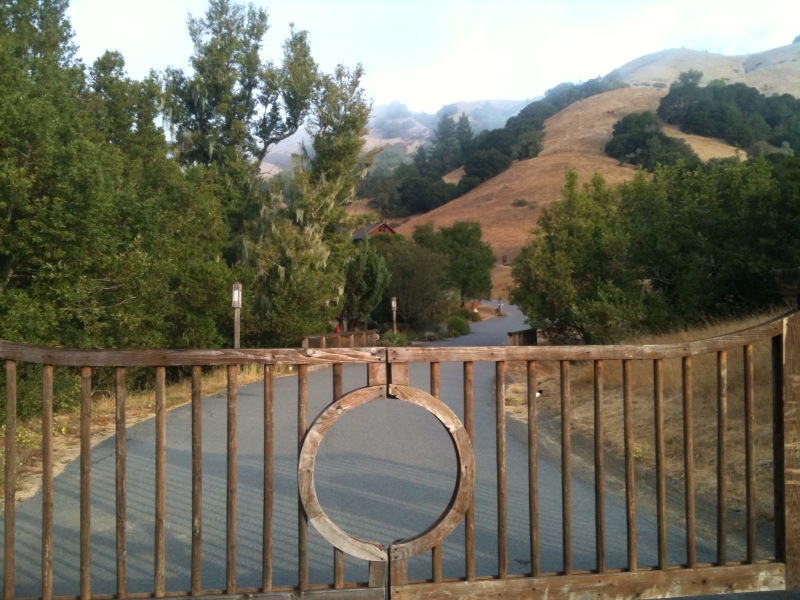
Returning to ourselves

Spirit Rock gate
Spirit Rock Meditation Center, 2010

Nine of us were about to begin our first small-group meeting at Spirit Rock Meditation Center, where I was on a silent retreat. The meetings gave our teachers a chance to check in on our well-being and meditation practice. Did we have any questions? Were we facing any challenges?

Six young to middle-aged men sat across from me. My son, who works in tech, said meditation was gaining popularity in his field, and I guessed several of the men in my group worked in tech. Most of them were new to meditation and had never attended a silent retreat.

When I last went to Spirit Rock over a dozen years ago, there were far more women than men, but now only two other women my age were in our small group.

This will be interesting, I thought.

L was a teddy bear of a man with a presence that filled the room. His words tumbled out on top of each other, peppered with comic, self-deprecating asides: “I’ve never been diagnosed, but no question I have ADD. I constantly monitor six screens in my office. At home, I’ve got more screens, plus my smartphone and the TV remote, and I work them all while my kids and I watch football. Multitasking is my default setting, and my friend and work pal sitting here next to me wanted me to try meditation. I don’t know about all this silence and sitting, but I guess I’ll see what happens…”

***
Two days later, we met for our second small-group session.

L had had enough.

“I can’t sit for one more minute. I’m bored out of my mind. This isn’t for me. I’m leaving, except I can’t because I came with my friend, and he’s driving…”

“Boredom is a good sign,” Howie, our teacher, interrupted. “Meditation can be a purity practice, and as discomfort arises, you practice sitting with it…”

“That doesn’t work for me. I know when I’ve reached my limit. I’m not cut out for this. We can move on to the next person; they can take my turn to speak because I have nothing…”

Howie leaned forward, visibly annoyed. “Look at me, L. Stop talking and look at me.” Howie was not going to let L deflect.

“You don’t even know how much you’re suffering. You think you do, but you have no idea.”

L was silent, and the rest of us were, too. J, a young man with whom I seemed to share a vibe and whom I fancied would be a great partner for my son (see my previous post), caught my eye, as if to say, are you catching this drama, too?

“You need to stay here,” Howie said. “You need to sit with this. Because if you don’t face this now, when will you ever? Is this how you want to spend your life, going from screen to screen? Is this how you want to be with your family? Years will go by, and you’ll have spent your life everywhere but in the present moment.”

L listened, taking in Howie’s words.

We sat with L in his vulnerability; I hoped he felt our goodwill surrounding him. After all, when you get right down to it, weren’t we all in the same boat? Weren’t we all constantly moving from screen to screen and distraction to distraction, distanced from ourselves, our loved ones, and the unprecedented challenges urgently demanding our attention?

***

The evening before the last day of the retreat, L happened to sit next to me at dinner. We ate in silence for a while, and then I turned to him. “Do you mind if I say something?”

“Not at all.”

“You’re still here. I’ve been watching, and you’re still here.” I smiled. “Would you come back to Spirit Rock?”

L didn’t hesitate. “100 percent. 100 percent, I’d come here again.”

Truly, I was amazed. L seemed to be in a very different place.

“I’m so glad you stayed. Maybe someday you’ll teach meditation.”

“Me?” L looked surprised, doubtful.

“You’d be good at it. You’ll really know what you’re talking about.”

“My friend and I went hiking yesterday,” L said, “and we were discussing you.”

Now it was my turn to be surprised. (I figured he already knew he wasn’t supposed to be hiking and talking with a friend on a silent retreat, and I decided not to tease him about that.)

“We both think you have no reason to feel low self-esteem. You literally exude happiness and joy.”

I hadn’t expected these kind, sweet words. I’d told the group that my low self-esteem issues had been showing up, especially when I worked on revising my memoir.

“Thank you for telling me that.” I almost said that happiness and joy certainly weren’t my default state; like everyone else, I often had to work at it. But, of course, L already knew that, too.

L reached out and shook my hand. “I’ll say goodbye now because we have to leave tonight.”

“Maybe we’ll meet again someday on the path,” I said.

L stood up, dishes in hand. “These vegetarian meals are great, but I hope the next time I’m here they’ll have seen the light and started serving dessert.”

***

I wasn’t sure if I should write about L, but I don’t think he would mind. This past month since the retreat, I’ve remembered him from time to time, somewhere in Pittsburgh, perhaps with fewer screens in his life. I’ve imagined J at work in Manhattan, and the others I met at Spirit Rock going about their day-to-day lives.

Now and then, I send a meditation their way from North Carolina: May you be filled with loving-kindness. May you be safe and protected. May you be well in body and mind. May you be happy.

***
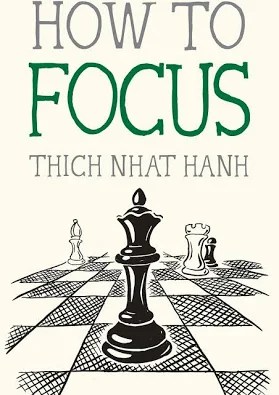
How to Focus by Thich Nhat Hanh fits in the palm of your hand. You can keep it nearby while meditating and read a page or two. I adore this little book. Below are two passages from it.

“Conscious breathing is a marvelous way to return to ourselves. When we are aware of our breath, we come back to ourselves as quick as a flash of lightning. Like a child who returns home after a long journey, we feel the warmth of our hearth, and we find ourselves again. To come back to ourselves like that is already a remarkable success on the path of mindfulness, concentration, and insight.”
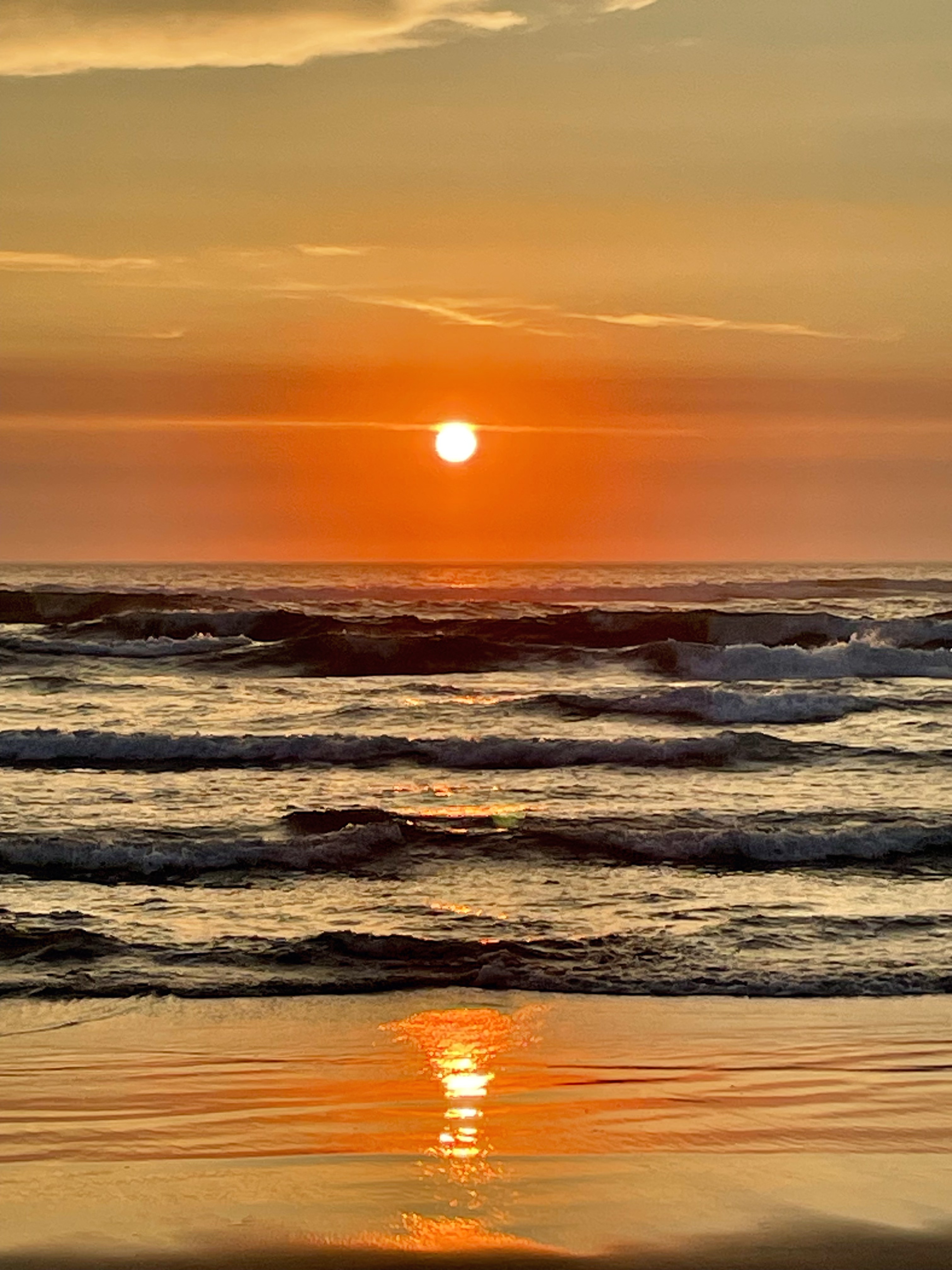
“The day your mother passes away, you suffer. If someone sits close to you and shows concern, you feel some relief. This is the world of waves. It is characterized by birth and death, ups and downs, being and nonbeing. A wave has a beginning and an end, but we cannot ascribe these characteristics to water. In the world of water, there is no birth or death, no being or nonbeing, no beginning or end. When we touch the water, we touch reality in its ultimate dimension and are liberated from all these concepts. If you know how to touch your mother in the ultimate dimension, she will always be with you; you can see that she is there in you, smiling. This is a deep practice and it is also the deepest kind of relief.”

Photo: Cannon Beach, Oregon
I feel hope coming

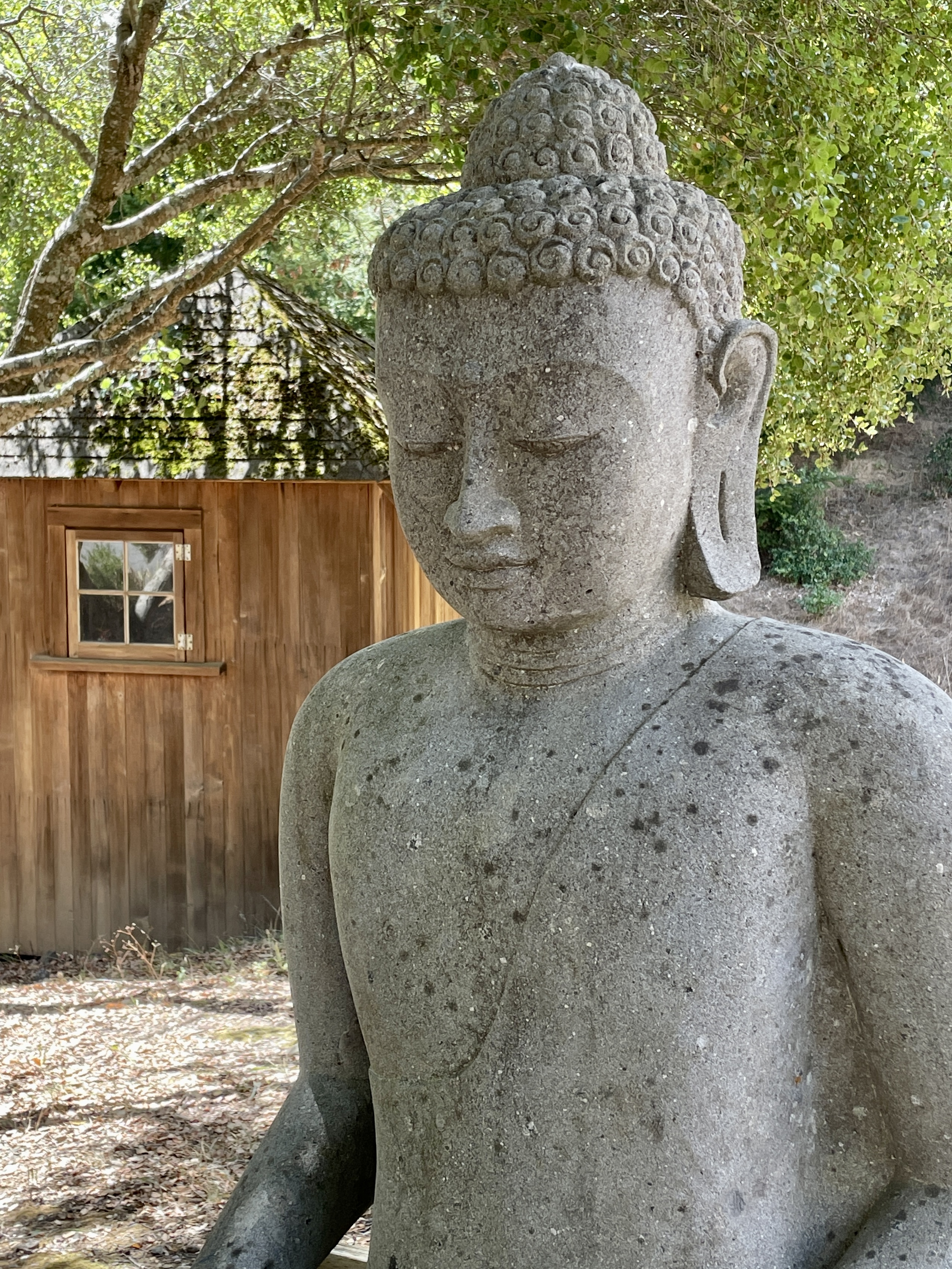
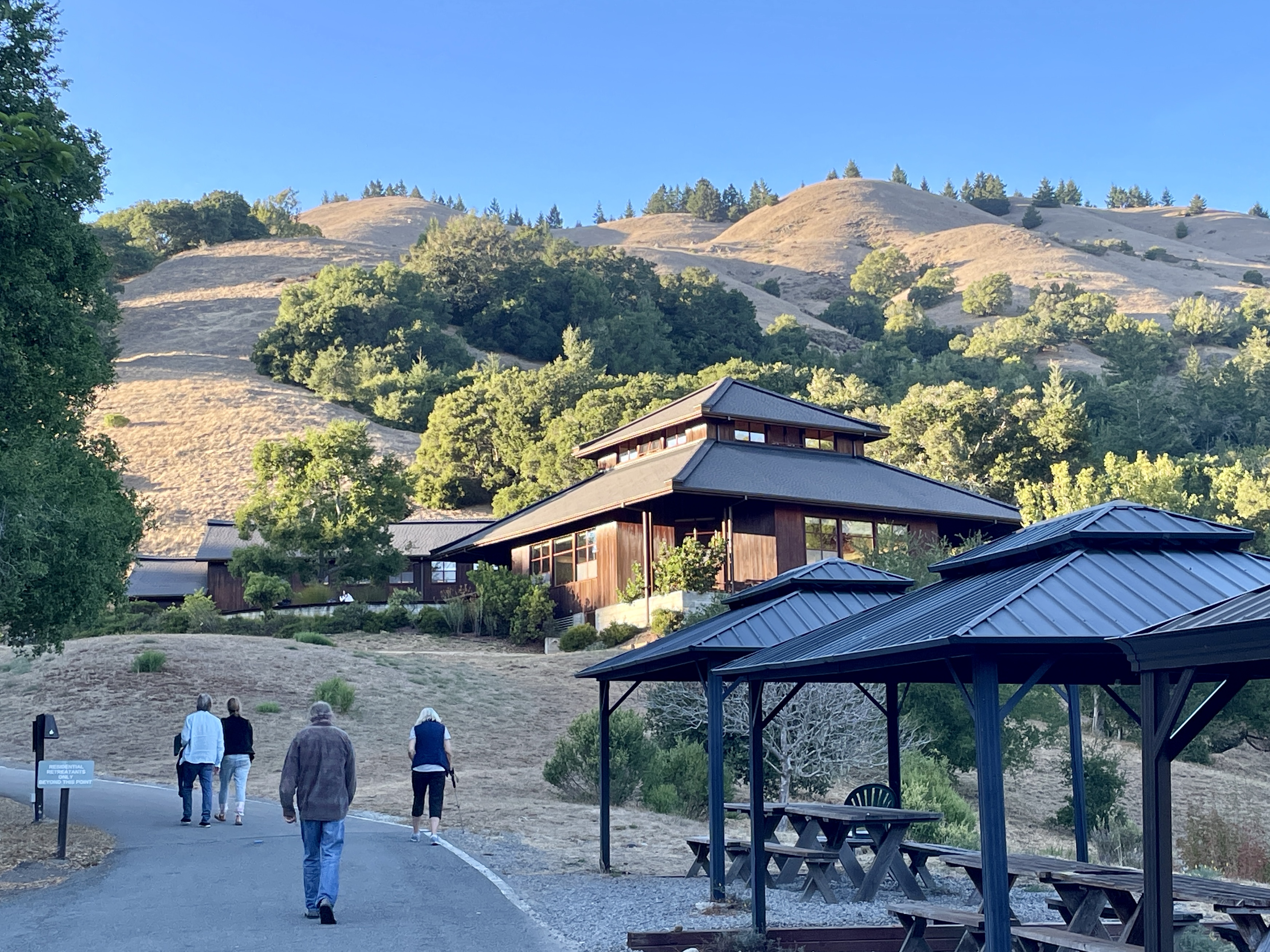
Walking to the meditation hall at Spirit Rock.

I don’t want your martial law, I want clean air.

I don’t want no enemies that ain’t even there.

– “I Feel Hope Coming,” Alabama Shakes

Attending a silent retreat at Spirit Rock Meditation Center in California. Remembering 9/11. Marking the passing of poet, novelist, and essayist Wendell Berry. A lot of life happened in the space of a dozen September days.

When I was living in New York City and working in book publishing, I’d take out-of-town guests to see the World Trade Center and my favorite view of the five boroughs. We’d gaze at the city from the observation deck or, if the wind was calm, from the rooftop. I never tired of the dizzying height or the panorama. I’d imagine my maternal and paternal grandparents from Sweden and Sicily, sailing into New York Harbor past the Statue of Liberty along with thousands of other immigrants.

By the time 9/11 happened, I was living upstate and raising a family. My husband and I limited our TV viewing of the tragedy because our sons were so young. In the years after, I never took the time to look back at that day.

But this September 11, on the 25th anniversary, I did. Social media, which I usually avoid, streamed dozens of interviews with survivors and the families of those killed, telling their unbelievable stories. After the Spirit Rock retreat, my heart was wide open, and I listened to those touched by 9/11. They had looked deeply at life and had made it their work to share their joys, sorrows, and hard-won wisdom.

A silent retreat can open your heart that way.

Days of silence and hours of meditation might seem like an impossible feat, but the routine of a silent retreat changes on the hour, with a beautiful rotation of sitting and walking meditations, a daily work assignment, teachings, Q & A sessions, and small-group meetings with the teachers. Each day begins at 5:30 am with a wake-up bell and ends at 9:30 pm, often with music. There are, of course, no smartphones or other devices. You find yourself rising to the occasion in surprising ways. The expansive silence holds every possibility.

“Spiritual practice can be as simple as a breath.” Brad Stuhlberg, The Way of Excellence: A Guide to Deep Satisfaction and True Greatness in a Chaotic World.

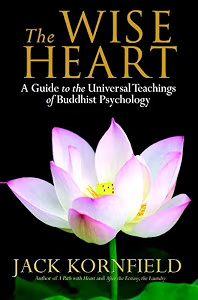
Nearly twenty years ago, Jack Kornfield and his book, The Wise Heart: A Guide to the Universal Teachings of Buddhist Psychology, enticed me to follow the insight, or vipassana, meditation path. When I pulled the book off my shelf the other day, I noticed that one chapter had an abundance of notes and underlinings: The Storytelling Mind, something many of us find ourselves working with on retreat.

We tell ourselves stories of varying accuracy as we strive to make meaning in our lives. This is normal and natural, but sometimes we forget that these stories are shaped by our personal filters and idiosyncratic interpretations. As we grow more discerning, we learn to revise or abandon a particular story that may not accurately reflect reality.

For example, on the retreat, I felt a particular kinship with J, a young man in my small practice group. I began to imagine that he could be the perfect partner for my son, who had just gone through a breakup. A fantasy, I realized, which I tried to hold lightly with a measure of humor. My maternal instinct (I’ve raised two sons and have two younger brothers) must have been working overtime.

One morning, I skipped meditation and walked instead. Over the Marin Hills, shafts of sunlight parted the fog like curtains opening to the light. As if someone were standing next to me and whispering in my ear, I heard a message that seemed to brilliantly capture the essence of a piece of writing I’d been struggling with. I knew I would be able to move forward in the writing with greater confidence and clarity.

On day 4 of the retreat, I went with anticipation to the afternoon talk because we’d been encouraged not to miss it. Before I knew it, Jack Kornfield was walking up to the dais. One of the most venerable teachers of insight meditation in America today, and the author of some of the most life-changing books I’ve ever read, gave us a beautiful teaching and led us in a lovingkindness meditation. I don’t have the words to describe the great kindness and wisdom with which Jack spoke to us that day.

We train our hearts to hold the 10,000 joys and 10,000 sorrows. This is not easy. But we learn to hold it all, even amid the chaos. And we sweep our gardens. We do the work the world asks of us. – Jack Kornfield

“The mind creates the abyss; the heart crosses it.” – Nisargadatta, Indian sage

“The thinking mind constructs views of right and wrong, good and bad, self and other. These are the abyss. When we let thoughts come and go without clinging, we can use thought, but we rest in the heart. There is an innocence to the heart. We are the child of the spirit. And there is an innate wisdom. We are the ancient one. Resting in the heart, we become trusting and courageous, and our patience grows. We do not have to think things through. Life is unfolding around us.” – Jack Kornfield, The Wise Heart

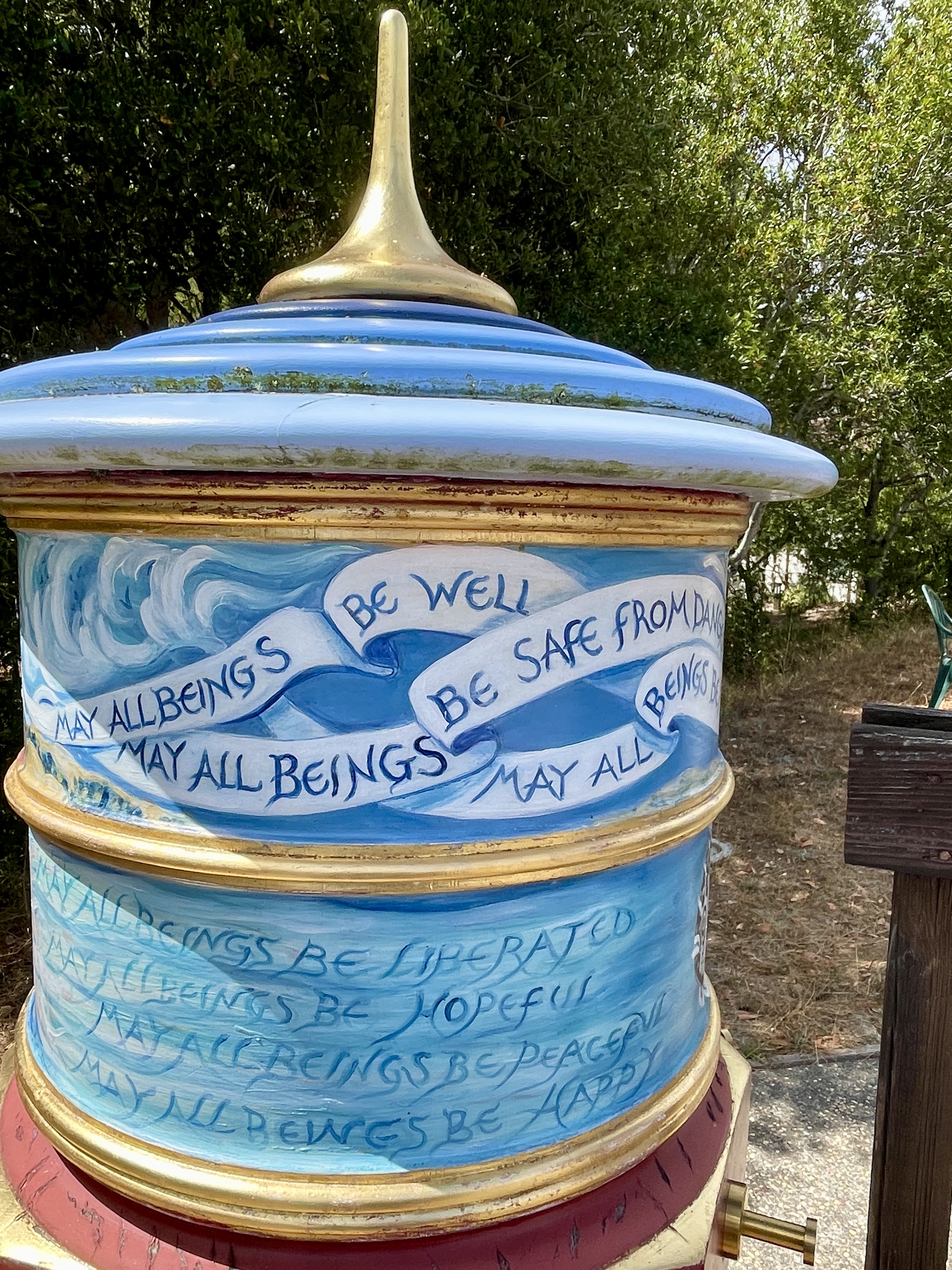
Prayer wheel at Spirit Rock.

May all beings be filled with loving kindness.

It is amazing how close you feel to people after sitting with them in silence for five days.

By the way, Spirit Rock offers scholarships.

***

Wendell Berry passed away on August 31. In 2017, I wrote about his novel, Hannah Coulter, and a collection of his essays, Our Only World, on Books Can Save a Life. I’m struck by the excerpts of Berry’s work that I included in the posts – this is extraordinary writing, folks. And I’d forgotten about all the heartfelt comments left by my blog readers.

The novel Jayber Crow and the essay collections Citizenship Papers, The World-Ending Fire, and The Art of the Commonplace wait on my to-be-read bookshelf, and I’ve moved them up in the queue.

Below is a 7-minute meditation on the passing of Wendell Berry by Dale Biron. Dale’s stunning rendering of “The Peace of Wild Things” captures Berry’s iconic poem with nuance and tenderness. Each word, each pause, is given its due. Please listen!

***

A friend told me about this beautiful song that speaks especially to our times.

***

water lily
No mud, no lotus. – Thich Nhat Hanh
Remembering our beloved water garden, upstate New York, 2012.

We train our hearts to hold the 10,000 joys and 10,000 sorrows. This is not easy. But we learn to hold it all, even amid the chaos. And we sweep our gardens. We do the work the world asks of us. – Jack Kornfield

Resistance

resistance


Off the Beaten Path

“The letter’s authors informed us of the nation’s persisting need for democratic reform. Each of us was told of widespread irritation with our work, and the government’s desire to speak with us.”      Resistance, by Barry Lopez

This is a remarkable collection of short stories by Barry Lopez published in 2004, in the wake of 9/11 and the Patriot Act. If you’ve been following Books Can Save a Life, you know I’m a huge fan of Lopez. I read Resistance a couple of years ago and thought about it this week as the inauguration approached.

It’s hard to capture the essence of these nine singular and unusual stories–I don’t think there is a collection quite like it. If you want to read something off the beaten path, these stories are perfect. The characters are not your ordinary, everyday people.

If you are looking for courage, strength, and inspiration in difficult times, give this book a try.

Barry Lopez
Barry Lopez speaking in Rochester in 2016.

The stories are fictional testimonials by a translator, an indigenous rights expert, a doctor, a cabinetmaker, an architect, a historian, and others. They live and work in China, Brazil, France, Germany and across the globe.

Each has undergone a spiritual or political awakening and chosen to resist the mainstream. For them, the personal has become political. Their causes include environmental degradation, materialism, indigenous rights, war, and mindless conformity.

Because of their resistance, they have become “parties of interest” to the government. All have gone into hiding.

This isn’t entertaining, light, or necessarily comforting reading, and the collection won’t appeal to everyone. I’ve enjoyed reconnecting with Resistance in the days before the inauguration.

Here are selected excerpts:

“We regard ourselves as servants of memory. We will not be the servants of your progress. We seek a politics that goes beyond nation and race. We advocate for air and water without contamination, even if the contamination be called harmless or is to be placed there for our own good. We believe in the imagination and in the variety of its architectures, not in one plan for all, even if it is God’s plan. We believe in the divinity of life, in all its human variety. We believe that everything can be remembered in time, that anyone may be redeemed, that no hierarchy is worth figuring out, that no flower or animal or body of water or star is common, that poetry is the key to a lock worth springing, that what is called for is not subjugation, but genuflection.”

***

“Our strategy is this: we believe if we can say what many already know in such a way as to incite courage, if the image or the word or the act breaches the indifference by which people survive, day to day, enough will protest that by their physical voices alone they will stir the hurricane.”

***

“We are not to be found now. We have unraveled ourselves from our residences, our situations. But like a bulb in a basement, suddenly somewhere we will turn on again in darkness….We will disrupt through witness, remembrance, and the courtship of the imagination.”

Resistance also features the work of artist Alan Magee.


Mask
Photo by Peter Hallinan, Melanesian art expert.  I didn’t know Peter well enough to know his political beliefs, but his unconventional life reminds me of the characters in Resistance.


Off the Beaten Path: De Potter’s Grand Tour


De Potter's Grand Tour

“She is fascinated but not dismayed to discover that she has forgotten so much.

Is she really the same woman who celebrated Easter 1889 in Athens and walked up to the Acropolis with her husband?

Who spent a ‘most interesting day viewing the cisterns of Carthage’ with Victor and Armand in 1896?

Who once wrote on her anniversary in 1900, in an apartment on 97 rue de la Pompe in Paris, ‘In afternoon we went to Exp. and up the Trocadéro tower, then to Élysée Palace Hotel, saw King Leopold come in. In evening at dinner we ordered St. Honoré and champagne. M. Guerrier got up and improvised a poem and there was much gaiety and good humor. Armand gave me a gold watch charm’?”  De Potter’s Grand Tour,  Joanna Scott

This much, we know: In 1905, Joanna Scott’s great grandfather disappeared while on board a ship off the coast of Greece. A collector of ancient Egyptian art (some of it is at the Brooklyn Museum) and a world tour guide, he was at his wit’s end, hounded by creditors and litigators.

The question is: Did he commit suicide? Was he pushed overboard? Or, did he fake his own death and assume a new identity, leaving behind his beloved wife, Aimée, and his son?

How would you like to inherit that family mystery?

Joanna Scott did, in the form of Armand’s letters, postcards, photos, and documents, and the multi-volume journal of his wife, Aimée. This treasure trove had been sitting in a steamer trunk in Scott’s mother’s storage unit for years, until one day they unearthed it while searching for a diploma.

Intrigued, Scott threw herself into research and began writing a nonfiction account of Armand de Potter’s life. Ultimately, that proved too confining: Scott discovered that the mysterious and elusive Armand wasn’t who he said he was, and no one knew, not even his wife. So Scott switched to fiction, which gave her more freedom to suppose and imagine.

I read this novel ages ago and never got around to posting about it, but the book has stayed with me all this time. It’s not for everyone–Joanna Scott is a celebrated writer, but this particular novel didn’t garner the best of reviews.


To Travel.jpeg
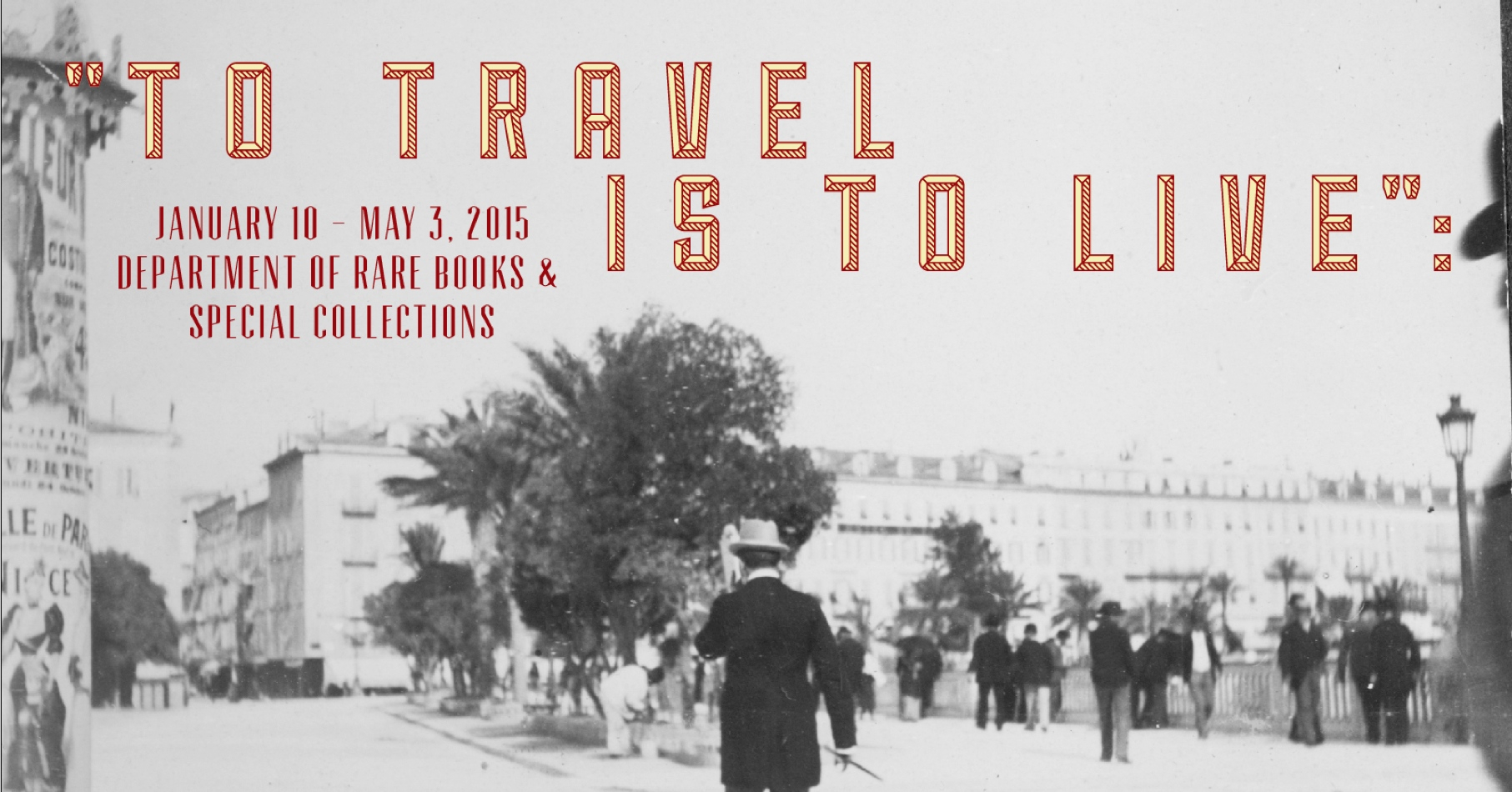
A photo of Armand de Potter, the author’s great grandfather, walking away from the camera. He was, indeed, a mysterious figure.


I, on the other hand, loved it. I loved the larger-than-life way Armand and Aimée lived traveling all over the world leading their educational tours. Armand was an autodidact who pretended to be descended from Belgian royalty and more educated than he was. Nonetheless, as Scott portrays him, he was a scholar and a lover of the world with a passion for sharing that love with the people who signed up for his tours.

“To travel is to live,” Armand de Potter wrote in one of the documents Scott found in the steamer trunk.

His tour company went to these places: Algeria, Austria, Belgium, Czech Republic, Egypt, England, France, Germany, Gibralter, Greece, Hong Kong, Hungary, India, Italy, Japan, Malaysia, Monaco, Netherlands, Romania, Scotland, Singapore, Spain, Sri Lanka, Switzerland, Tunisia, Turkey, various locations in the US, and Yemen.

Some time in the late 1800s, Armand also wrote this prescient and hopeful passage: “The incalculable benefits of foreign travel can only be half told by our children….They will be appreciated by their sons and daughters, at a time when travel will have made the world very small and the human race what it is destined to be–one great fraternity.”

If you’re an armchair traveler, if you love history, and if you want an unusual story, I think you might like De Potter’s Grand Tour.

I enjoy Joanna Scott’s novels a great deal. One of my all-time favorites is Liberation, which takes place in Sicily, one of my favorite places in the world, during World War II. Scott is a much loved Professor of English here at the University of Rochester.

Speaking of family history, I’m off to a family reunion next week, where we’ll be reading a book loosely connected with a couple of the more colorful family members. I’ll tell you about it when I return.

I’ll leave you with what Armand de Potter had to say about good books (I would also add “women” of course):

“In the most beautiful books, great men speak with us, they give their most precious thoughts, and pour their soul into ours. Let us thank God for the creation of books. They are the voices of those that are far and of those that are dead; they make us heirs of the intellectual life of the past ages. Books furnish to all those who will use them with sincerity the society, the spiritual presences of the best and the greatest men.”