Where Do Poems Come From?

I recently had a poem published in Verse-Virtual: An Online Community Journal of Poetry.  In this excellent and unique publication, the published poets are encouraged to contact each other to show their support for poems that move them. (No critiquing allowed.) The editor, Firestone Feinberg, is a joy to work with and warmly encouraging of new writers.

I wrote “Nadezhda, If You Were Here” quite a while ago, and as I prepared it for submission I was thinking about where poems – my poems – come from. In this case, I was reading a memoir by Paul Auster (I believe it was The Invention of Solitude.) In it, he includes an extraordinary letter written by Nadezhda Mandelstam to her husband, the poet Osip Mandelstam, after he’d been sent to a labor camp by Stalin. I had never heard of these people, but I was so struck by the letter I just had to read Nadezhda’s amazing memoir, Hope Against Hope, about her life with Osip.

I was reading the memoir in Wegmans grocery store on a cold winter day, when I was inspired to get another cup of coffee and start writing. That’s where my poem came from. I wasn’t sure I had much to say, but it turned out to be a direction worth exploring.

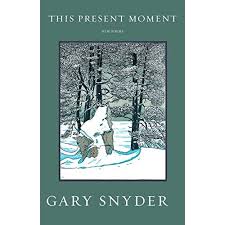
The Present MomentThis summer I’m enjoying This Present Moment, a collection of poems by Gary Snyder, who is now 85. Remember the Beat Generation? Gary Snyder is one of America’s greatest living poets. This volume includes poems about being a homesteader, father, husband, friend, and neighbor. (I’m paraphrasing the jacket copy because it is a good summary of the subject matter.) The final poem, “Go Now,” is about the death of his wife.

Even if you’re not a fan of poetry, I encourage you to take three minutes to listen to this poem by Nobel laureate Wislawa Szymborska, “Life While-You-Wait,” read by Amanda Palmer and passed along by Maria Popova and Brain Pickings. (Scroll down the page to get to the recording.) I think you’ll like it.

I’ve ordered a copy of Laudato Si’, Pope Francis’ encyclical on climate change. It is available from Amazon and other booksellers, and you can download the pdf at this link: Laudato Si’ . I’ll be writing about it here in late July, mostly from a secular perspective. Why don’t you read it with me – I welcome your thoughts, faith-based or otherwise.

Mad Men

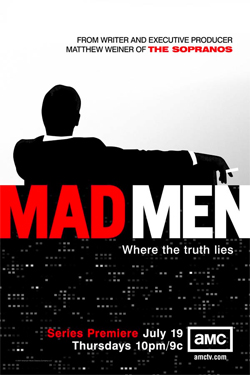
Mad Men posterI was surprised at how bereft I was the day after the Mad Men finale, as though I’d said goodbye to my childhood forever. The only thing that made me feel better is the memoir I’m writing; nearly every day lately I return to the 1960s.

This post has spoilers, so if you haven’t seen the last episode of Mad Men, or if you’ve yet to watch the entire 7-season, 92-hour epic, you may want to stop reading right here. (Or click on these links to the New York Public Library’s Mad Men reading lists and NPR’s guide to the music of Mad Men. If you plan to watch or re-watch the series, you could supplement with books and music of the times.)

A few seasons into Mad Men, a couple of friends predicted that Don Draper would commit suicide, given his self-destructive tendencies. Many viewers thought the opening animation of a man in a suit falling from a skyscraper foreshadowed such an ending.

No, I thought. That’s wrong. A misreading of his character. Don is a survivor. (Indeed, so says one of the characters in the final episode.) Cheever Collected Stories book cover

I bristled at the judgmental tone I sometimes heard, as if Don deserved such an end, given his many faults. On the contrary, Don was emblematic of a certain kind of self-made man of his time–raised in poverty and neglect, a traumatized war veteran who became a successful ad man, rich beyond his wildest dreams, yet alienated and lonely. Like all humans, he struggles. Like The Man in the Gray Flannel Suit, he’s lost.

You can find Don Draper in much of the literature of the 1950s and ’60s. The show’s creator, Matthew Weiner, drew heavily on bestselling books of that era, and was particularly influenced by the short stories of John Cheever, as well as Cheever’s journals. In fact, at the beginning of every season of scriptwriting, Weiner read the introduction to Cheever’s stories to the writers as a source of inspiration.

Weiner says that he loved reading the journals of 1950s and 1960s writers and ad executives and found them enormously helpful. While many of us look upon advertising with distaste, or at least ambivalence, Don Draper and his colleagues were in fact supporting families while doing deeply creative work. I think Weiner got it so right as he charted the highs and lows of these highly creative men and women. Weiner also points out that many famous artists have had to do advertising work to make a living.

When I was in college, a couple of my male friends had fathers who were prominent ad men, having commuted from the suburbs into Manhattan every day for thirty years. They seemed to feel pressure to follow in their fathers’ footsteps, and I sometimes sensed they were afraid they wouldn’t measure up. Advertising was a difficult, high-pressure career, but also an exciting and fulfilling way to make a living. And, of course, most ad execs were not deeply flawed Don Drapers.

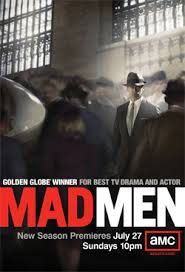
One note of nostalgia for me is that the show ends in 1970, and in 1977 I moved to Manhattan, where I worked in book publishing. For a time I was in the advertising department of a large publisher, where I worked with artists, graphic designers, photographers, and other creative people. Publishing was a different world from high-stakes Madison Avenue advertising, of course, a backwater compared to the pressure of Mad Men agencies. But when I saw Mad Men’s meek Peggy Olson show up for her first job in that office in the sky, I was taken right back to my New York City days. Peggy’s world, where women in the workplace were all secretaries, was to a large degree my world. Needless to say, watching Peggy’s transformation has been riveting. Mad Men poster

In a remarkably candid interview conducted by the author A.M. Homes at the New York Public Library, Weiner says that he often discussed with his therapist the challenges of his work as the creator of Mad Men, and they often talked about Don Draper–his flaws, his motivations, his journey in life. Weiner reveals that his therapist helped him figure out whether it was necessary to be miserable when one is in the midst of creating. (Weiner implies that he was often miserable and concludes that, no, one does not have to be miserable when one is creating.)

Weiner says Frank O’Hara’s poetry in particular helped him understand the zeitgeist of the times. He read Lunch Poems and Meditations in an Emergency (which we see Don reading in one episode), and says that Meditations changed his life. That makes me curious, so I’ve added O’Hara to my reading list.

Here’s another fascinating tidbit: when they were looking for an actor to play the stranger that Don reaches out to at the Esalen style retreat, Weiner told the talent scouts that the stranger had to be an actor who was not famous and that this character “was the most important character in the entire series.” Weiner has more to say about this character and the closing scene in the New York Public Library interview. (The final scene is shown during the interview.)

The last episode concludes with what has been called the most famous commercial of all time: the Coke ad with the song, “I’d Like to Teach the World to Sing.” People critical of this ending feel cynical about pairing this uplifting message, sung in harmony by people of all races, with crass commercialism. As for me, I thought the ending was perfect, in sync with the person Don is, and in sync with the times. Yes, Don Draper the ad man may have risen like the phoenix to create the most popular commercial in history. But I took his encounter with the lonely stranger at Big Sur to be an authentic moment of growth and greater self-awareness. I haven’t been to Esalen, but I’ve been to a place called Spirit Rock, and things like that do happen to people.

If Mad Men were to continue, I think Don Draper would still be the flawed man we know, far from perfect.  And yet, a better man, too. You can hear Matthew Weiner’s thoughts about Don here in the NYPL interview.

I think Matthew Weiner ranks right up there with the great novelists of our time.

If you’d like to meet the real ad man who created the Coke commercial (Bill Backer, who makes clear he has nothing in common with Don Draper), click here.

Mad Men Books and Music Meditations in an Emergency book cover

Mad Men characters love to read. Here are lists of the books they are seen reading on screen:

The Mad Men Reading List compiled by Billy Parrott, Managing Librarian at the New York Public Library

Mad Men Reading List Collection of 25 books read by characters throughout the series

Weiner chose a popular song of the time to close each program:

A Comprehensive Guide (Nearly) to the Music of Mad Men from National Public Radio

Are you a Mad Men fan and have you watched the ending? What did you think? If you’d like, please share your thoughts about any aspects of Mad Men.

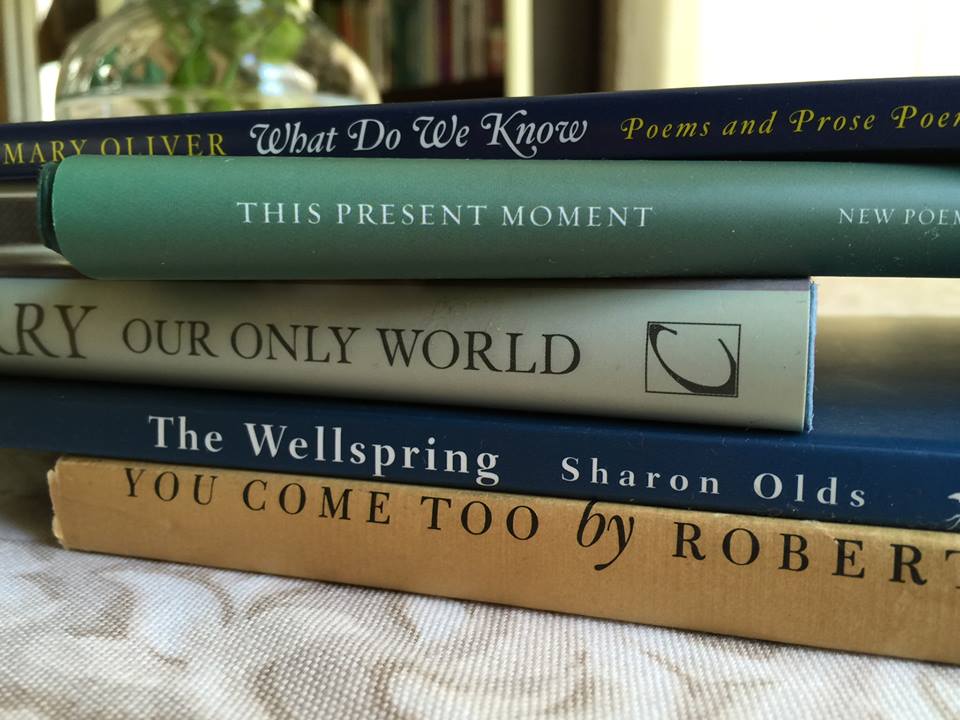
Book spine poetry for National Poetry Month

Stack of poetry books

What do we know

This present moment

Our only world

The wellspring.

You come too.

The Narrow Road to the Deep North

“On the bedside table by the living Buddha, now dead, was an old copy of Basho’s great travel journal The Narrow Road to the Deep North. Hashimoto opened it to a page marked with a dry blade of grass. Days and months are travellers of eternity, he read. So too the years that pass by.”   (Last book read before death by a WWII Japanese commander of the Thai-Burma Death Railway, in Richard Flanagan’s The Narrow Road to the Deep North)

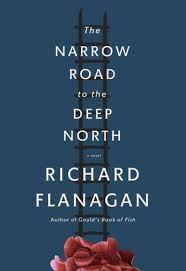
The Narrow Road to the Deep North book coverRichard Flanagan’s father was one of nearly 3,000 Australian POWs who worked on what became known as the Thai-Burma Death Railway in World War II. Flanagan’s father survived. According to Wikipedia, estimates of the death toll are guesses: about 180,000 Asian civilians and 60,000 Allied POWs labored on the railway under inhuman conditions battling cholera, starvation, and beatings. Some 90,000 perished, including over 12,000 Allied POWs. Over 100 Japanese and Koreans were tried for war crimes, and 32 were sentenced to death.

I’m partial to WWII novels, but I don’t know much about the Pacific theater of the war, and next to nothing about the prisoners of war who worked on the Thai-Burma Railway. I’m so glad I read The Narrow Road to the Deep North and encountered Flanagan’s extraordinary writing, but do not attempt it unless you can stomach brutally explicit prose about hellish conditions.

An Australian surgeon, Dorrigo Evans, tries to save as many of the men under his command as he can, but his efforts are mostly futile. We see Dorrigo as a young boy in Tasmania, as a young soldier in an affair with his uncle’s wife who is the love of his life, as a prisoner of war, and as an older, successful, but deeply scarred surgeon and war hero.

There are several moving, intimate, stream-of-consciousness portrayals of other Australian POWs under Dorrigo’s command  as well. Especially riveting is a scene in which the Japanese commanders, cruel and relentless in their mission to get the railroad built, discuss the fine points of haiku. Flanagan follows these men after the war, too, those who managed to have others take the fall for their crimes, and their amazingly clear consciences after the war.

The Narrow Road to the Deep North won the Man Booker Prize and has received many excellent reviews. Michiko Kakutani of The New York Times  is more mixed in her review: she feels that Amy, Dorrigo’s lover, should have been excised from the book for the sake of unity and coherence; she describes Flanagan’s writing about the love affair as “treacly prose,” whereas I found many of these passages beautiful. I disagree with her assessment here.

Have you ever thoroughly loved a book or movie only to encounter a respected critic who points out how seriously deficient or flawed is the thing you absolutely love? At this link is an especially vicious review in the London Review of Books. Flanagan must have poured his heart and soul into writing about a terrible time that his father survived, and he spent years working on the novel. This negative review is not reasoned literary criticism that I value or trust, and I wonder what motivates the critic. Sometimes I think critics analyze so much creative work they become jaded, unable to approach a novel or movie in a fresh, unbiased way.

By the way, I don’t consider my blog posts to be book reviews or literary criticism. My intention is to write about how a book affects me, personally, or how I think it might affect you, the reader, or why it may be especially significant in some way. If I don’t feel a book is well written, or if it doesn’t speak to me in some strong way, I don’t write about it here.

I’ll leave you with a passage I especially love, about POWs newly home from the war:

“He brought the fish and chips to their table, then filled some small glass tumblers behind the counter with red wine and brought them out too. Then he sat with them. As they ate, he let them talk. When they flagged he talked of how such a winter meant it would be a good summer for apricots, yes….Then he started up about his own life….How people told him coming to his fish shop made them happy. He hoped that was true. I really do, he said. That’s a life….The old Greek made his own coffee for them – little cups, thick, black and sweet – and he gave them walnut pastries his daughter had made….The simple chairs felt easy, and the place, too, felt right, and the people felt good….”

The Narrow Road to the Deep North illustration


The Narrow Road to the Deep North book coverBasho’s The Narrow Road to the Deep North, written in the 17th century, is a classic work of haibun, which melds haiku with prose. It makes for excellent reading alongside Flanagan’s contemporary novel.

Have you ever encountered scathing criticism of writing that you love? How does it make you feel? Does it alter or influence your opinion of the work?


Books from Around the World, Under Our Tree

The Narrow Road to the Deep North Book CoverThe Narrow Road to the Deep North, by Richard Flanagan. This World War II novel about an Australian surgeon in a Japanese POW camp won the 2014 Man Booker Prize.  (The purpose of this UK prize is to bring quality fiction to intelligent general readers who might otherwise not hear about the work.) The prisoners helped build what became known as the Thailand-Burma Death Railway. The Narrow Road to the Deep North book cover The books is named after one of the most famous books in Japanese literature, written by the 17th century Japanese poet Matsuo Basho. I plan to read the books together. I’ll let you know how that works out.


A Platter of Figs cookbook coverA Platter of Figs and Other Recipes, by David Tanis I like this cookbook because it’s about eating with the seasons, and it features uncomplicated family meals you can easily make at home. Sections include “How to Cook a Rabbit,” “Feeling Italian,” “Nuevo Mexico,” “Peasant from a Parisian Kitchen,” and “Hot Day, Cold Chicken.” David Tanis is the head chef at Chez Panisse in Berkeley six months of the year; the other six months he lives in Paris, where he prepares meals in a tiny galley kitchen for his private dining club. I will read any cookbook affiliated with Alice Waters and Chez Panisse. My son bought this book at Spoonbill & Sugartown Booksellers in Williamsburg.


Cereal magazine coverCereal: Travel & Lifestyle Magazine, Vol. 8 Click on this link right now and visit Cereal, a stunningly photographed and designed magazine and online journal. This volume features, among other things, a section on Yukon, Canada with spreads on Kluane National Park & Reserve and the Demptster Highway which leads to the Arctic Circle. (Someone in the family has been to the Arctic Circle via the Dalton Highway.) This mag’s style and visual aesthetic reminded me of a cookbook and lifestyle book I received last Christmas, The Kinfolk Table: Recipes for Small Gatherings. (Kinfolk is a magazine, too.) So I got out the book and saw there are a couple of recipes and a profile of food writer Rosa Park, who happens to be the editor of Cereal. Both Cereal and Kinfolk are beautifully designed and photographed, wonderful for browsing.


Southern Light: Images of Antarctica book coverSouthern Light: Images from Antarctica, by David Neilson. Someone in our family dreams of visiting Antarctica.  This is a luscious collection of black and white and color photos, including several gatefolds that open up to three panels of photos on each side. At least seven kinds of penguins, all the major mountain ranges, Deception and Elephant Islands, historic exploration sites, and essays on climate change, too. Our son bought this book at Strand Books in New York. (“Come for the books and stay for the synth musik.”)


RHS Vegetables for the Gourmet Gardener book cover

RHS Vegetables for the Gourmet Gardener, by Simon Akeroyd. To feed my gardening habit and enrich my gardening and nature writing. RHS stands for Royal Horticultural Society, the UK’s leading gardening charity. This beautiful book was designed and produced by Quid Publishing in England, the same publisher that produced another volume I own, RHS Latin for Gardeners.

Our son purchased this at Daunt Books for Travellers in London. On the bookmark tucked inside:  “The heart of Daunt Books is an original Edwardian bookshop with long oak galleries and graceful skylights. Its soul is the unique arrangement of books by country – where guides, novels, and nonfiction of all kinds will interest traveller and browser alike.” If I ever get to London this shop will be on my bookstore list.


Four Seasons in Rome book coverFour Seasons in Rome: On Twins, Insomnia, and the Biggest Funeral in the History of the World, by Anthony Doerr. If you read my blog, you know I’ve been wild about Anthony Doerr lately. His novel, All the Light We Cannot See, was a National Book Award finalist and has become a bestseller. He happened to visit Rome when Pope John Paul II was dying and attended the vigil. I can’t wait to see Doerr’s take on this fabulous city.


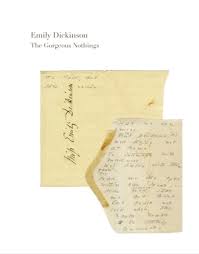
The Gorgeous Nothings book coverEmily Dickinson: The Gorgeous Nothings, by Marta Werner, a scholar of poetry, and Jen Bervin, a visual artist. No other book is quite like this one – a work of art, a facsimile publication of Emily Dickinson’s poems as she wrote them on fifty-two envelopes. These artifacts let the reader see Emily’s original line breaks and words spread across the entire space of a page, together with variant word lists that are meant to be part of the texts themselves. Reading these poems in their original medium, as opposed to in a traditional typeset book, is an entirely different experience.


My Struggle book coverMy Struggle, Book Three, by Karl Ove Knausgaard. My son has read the first two autobiographical novels in the hugely popular series (there are to be six!) by the Norwegian author, published in 22 languages. I hope to tackle the first two volumes myself this year.


Berlin Wonderland book coverBerlin Wonderland: Wild Years Revisited 1990 – 1996 Amazing photos by seven photographers documenting the wild, artistic subculture that bloomed after the Berlin Wall came down. One of our sons is studying in Germany and bought this at Hundt Hammerstein in Berlin, a gift for the photographer in our family. The text is in English and German.


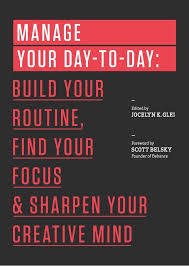
Manage Your Day to Day book coverManage Your Day-to-Day: Build Your Routine, Find Your Focus & Sharpen Your Creative Mind, edited by Jocelyn K. Glei. This is a great little book about how to meet creative goals and fulfill your calling rather than spend your days reacting to the demands of social media and new technology – a huge issue creative souls in the past did not have to deal with. Creative work, in the context of this book, can be anything from painting to starting a business to launching a volunteer effort or charity drive.

These very short articles by creatives and thought leaders like Seth Godin and Gretchen Rubin are practical and full of wisdom. I love this tiny red and black book and decided to pass it on to my photographer son (the industrial designer has browsed through it, too.) The most important take-away for me: disconnect from the Internet and get creative work done first thing, NO MATTER WHAT. Produced by Behance, which “is on a mission to empower the creative world.”   (See: http://www.99u.com; http://www.behance.com)


Buenas Noches, Luna

Buenas Noches, Luna book cover

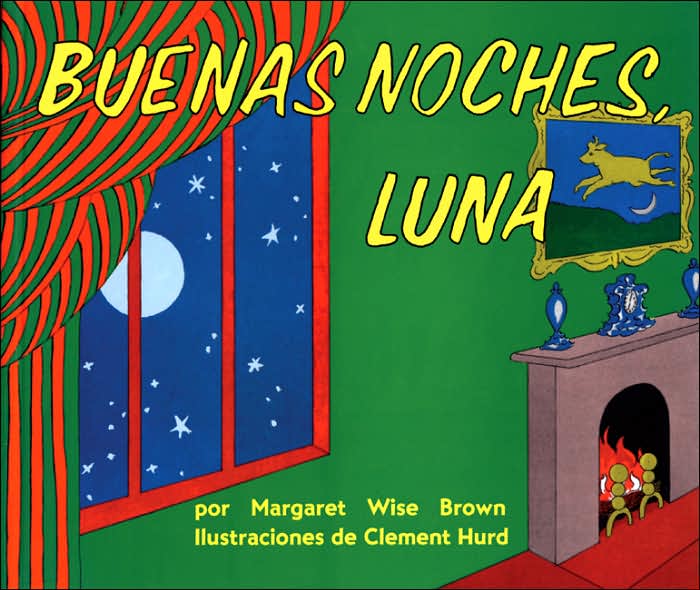
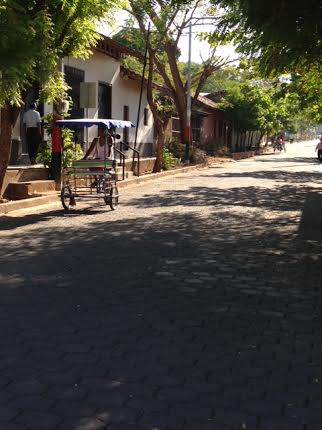
We’ve been in El Sauce, Nicaragua on vacation and doing volunteer work. We gave the classic Buenas Noches, Luna by Margaret Wise Brown to a couple of children in El Sauce. Reading it was a nightly ritual with my oldest son many years ago. This wonderful book still has universal appeal.

Street in El Sauce, Nicaragua
Morning in El Sauce
Volcano in Nicaragua
Nica volcano
Ruben Dario passage on chalkboard
We saw this passage by Nicaraguan poet Ruben Dario in a Leon cafe.
Moon over the Pacific
Goodnight, moon (over the Pacific)

Wishes in a Japanese garden

Wishes

Remembering spring (just a few weeks ago) in the Jardín Japonés, Buenos Aires. All these wishes placed end to end would make a poem long enough to fill a book.

Discovering Argentina

What we did on our fall vacation:

Immersed ourselves in spring.

Each day balmier than the one before, with occasional chilly rain. Crescent moon from another point of view, an unfamiliar family of constellations in the night sky.

In Lelé de Troya’s green room (there are also red, yellow, and blue rooms), Malbec by candlelight, the Beatles, two couples celebrating 25th wedding anniversaries reminiscing about disco dancing in NYC, leisure suits, and long-ago first jobs. Finishing dessert at midnight while the rest of Buenos Aires just gets started.

Talking with many a taxi driver (Claudio, Lila, Juan, and a few more whose names I don’t recall) thanks to one of our foursome’s exuberant Spanish. (Buenas noches! Cómo estás? Yo hablo español pero no comprendo nada. Háblenos de Buenos Aires.) Our drivers are warm, friendly, opinionated, proud of their city but wanting things to be better, eager to speak with us. Trying to follow their rapid-fire Spanish, wishing we understood more.

Japanese Gardens
Jardin Japonés, Buenos Aires

Spanish haiku in the Japanese Gardens, a circle of Spanish-speaking Japanese women deep in conversation under a silk floss tree.

Reading in bed Pico Iyer’s Falling Off the Map: Some Lonely Places of the World, disliking his essay on Argentina in which he contends people here strive for the wealth and sophistication of Europe, but are only pale imitations of it. True for some, perhaps, but I see down-to-earth, hard-working Argentinians and a genuine, vibrant culture that is what it is.

Watching amazing tango dancers, learning the tango was partly invented by Italians who emigrated to La Boca, a working class section of Buenos Aires. Never before realizing the inventiveness and variation possible within the structure of tango.

More reading in bed after a long day walking the city, Lawrence Thornton’s novel, Imagining Argentina. Letting myself imagine, for a moment, what it would be like to have one’s teen-age daughter stolen away to the pampas in the night, never to be seen again. Recalling the crosses and banners of the Mothers of the Plaza de Mayo we’d seen.

Iguazu evenings, drinking Caipirinhas in the secret garden of our bed and breakfast run by a photographer from Calcutta who has spent forty years in Argentina. John cares deeply about local flora and fauna and plans to offer walk-about tours to teach people about the region’s ecology. Meeting Natalie (British), Christina (from Mexico, now British) Helen and Andre (British and South African, respectively, now living in Austria). And some Argentinians from Buenos Aires who say the middle class here is disappearing. Does that sound familiar?

In Iguazu National Park, hundreds, thousands of butterflies: deep purple on brown, art deco, Italian modern. They hitch a ride on our hats, sleeves, shoulders. Clusters of mint green and yellow-winged moths delicate as parchment, scattering like confetti in the wind. Monkeys, coatis, lizards, turtles, toucans.

Garganta del Diablo
Garganta del Diablo

Ending our trip viewing some of the 300 waterfalls in Iguazu. People from all over the world come to this remote place where Argentina, Brazil, and Paraguay meet. Standing before the immense, overwhelming Garganta del Diablo (the Devil’s Throat), welcoming the cool spray after our subtropical hike. Like Andre said one evening after he and Helen braved a boat that takes you as close as you can get to one of the biggest waterfalls, every particle of your body awakens.

You feel totally alive.

Waterfalls at Iguazu

If you’ve been to Argentina or can suggest good books about this beautiful country, please tell us in the comments below.

Zen in Nature

I was interested to read “Finding Zen in a Patch of Nature” in the New York Times today. David Haskell’s new book, The Forest Unseen: A Year’s Watch in Nature sounds wonderful. Plan to add it to my reading list.

Book shopping in Palermo Soho, Buenos Aires

[El Carrusel] nos permite viajar como viaja un niño. Dando vueltas y más vueltas y otra vez a casa…a un lugar en el gue sabemos que nos quieren.   Don Draper, “Mad Men”

The Carousel allows us to travel as a child travels. Going round and round and home again … to a place where we know we are loved. Don Draper, “Mad Men”

We visited Prometeo Libros, an excellent bookstore on Avenida Honduras in the Palermo Soho neighborhood of Buenos Aires.

Guia de Madmen cover

I bought Madmen: Reyes de la Avenida Madison, by Jesús G. Requena and Concepción Cascajosa, figuring if I’m familiar with the subject matter it will be easier for me to understand the Spanish. I like the quote especially because I produced slide shows for the Carousel when I worked for Kodak.

Also a collection of poems by Jorge Luis Borges, El oro de los tigres/La rosa profunda. Short bits of poetry are easier to understand than long prose passages.

children's books
Children’s books at Prometeo Libros

Cupcakes, shoes and many other fine things in the shop windows of Palermo Soho.

ShoesCupcakes

Quote from: MadMen: Reyes de la Avenida Madison, Jesús G. Requena and Concepción Cascajosa, Capitán Swing Libros, Madrid: 2010.

Visiting Buenos Aires

Angel sculpture

Angels, and poetry in the streets.

Poetry