The Collapse of Western Civilization (in 50 pages)

WesternCivilization“The year 2009 is viewed as ‘the last best chance’ the Western world had to save itself…”

The Collapse of Western Civilization is a disturbing 50-page work of fiction that reads with the authority of nonfiction.

In the Second People’s Republic of China in the year 2393, a scholar writes an account the Great Collapse of 2093, brought about by failure to take action on climate change.

Pair it with CCR’s Bad Moon Rising; you can read it in an hour or two.

The book came about when co-author Naomi Oreskes, a geologist and historian who teaches at Harvard, reviewed the scholarly literature on climate change to see if indeed there was a lack of consensus among scientists, as is often claimed.

After looking at 1,000 peer-reviewed articles, she concluded that in fact scientists do agree that a high concentration of greenhouse gas is causing climate change.

When Oreskes published her findings in Science, she was championed by the likes of Al Gore. At the same time, to her astonishment, she began receiving hate mail. As she said in an interview, articles published in the scholarly literature are typically ignored by the public.

She and coauthor Eric Conway hoped a work of fiction that remained true to the facts of science might change opinions. Conway is a fan of science fiction and has been especially influenced by Frank Herbert’s Dune and Kim Stanley Robinson’s trilogies about Mars and climate change.

It’s unsettling to read about ideas and ways of life that we take for granted portrayed as extreme short-sightedness, self-delusion, and magical thinking.  The Collapse of Western Civilization will give you a jolt. It’s a quick, page-turning read to put you in a receptive frame of mind when the UN/Paris Climate Change Conference begins on November 30.

Here are some excerpts:

“There is no need to rehearse the details of the human tragedy that occurred; every schoolchild knows of the terrible suffering. Suffice it to say that total losses – social, cultural, economic, and demographic – were greater than any in recorded human history. Survivors’ accounts make clear that many thought the end of the human race was near.”

“At the time, most countries still used the archaic concept of a gross domestic product, a measure of consumption, rather than the Bhutanian concept of gross domestic happiness to evaluate well-being in a state.”

“…survivors in northern inland regions of Europe, Asia, and North America, as well as inland and high-altitude regions of South America, were able to regroup and rebuild. The human populations of Australia and Africa, of course, were wiped out.”

Commonly used terms that we don’t question are cast as old-fashioned and obsolete in the Lexicon of Archaic Terms at the end of the book:

“capitalism: ….One popular notion about capitalism of the period was that it operated through a process of creative destruction. Ultimately, capitalism was paralyzed in the face of the rapid climate destabilization it drove, destroying itself.”

“invisible hand: A form of magical thinking, popularized in the eighteenth century, that economic markets in a capitalist system were “balanced” by the actions of an unseen, immaterial power, which both ensured that markets functioned efficiently and that they would address human needs. Belief in the invisible hand….formed a kind of quasi-religious foundation for capitalism.”

“Period of the Penumbra: the shadow of anti-intellectualism that fell over the once-Enlightened techno-scientific nations of the Western world during the second half of the twentieth century, preventing them from acting on the scientific knowledge available at the time and condemning their successors to the inundation and desertification of the late twenty-first and twenty-second centuries.”

Coming Back to Life book coverFor an antidote to all the doom, read Joanna Macy‘s books, Coming Back to Life and Active Hope: How to Face the Mess We’re In Without Going Crazy. See also her short film, Joanna Macy and The Great Turning, about civilization’s shift from industrial growth to sustainability.

Have you read any good books about climate change? Are you planning to follow upcoming events related to the UN Conference on Climate Change? Are there local activities planned for your area?

Read Go Set a Watchman with me

Go Set a Watchman coverBarnes & Noble in Rochester opens at 7 am tomorrow for the release of the story Harper Lee originally tried to tell. I expect, wherever you live, your local bookstore will have plenty of copies of Go Set a Watchman on hand.

Maybe we weren’t ready for the book in 1960.

Lee’s editor set aside Go Set a Watchman and worked with Harper for 2 years as she wrote To Kill a Mockingbird, the book we grew up with.

I’ll be talking about Go Set a Watchman here and on my FB fan page.  I would love for you to join in the discussion. But be prepared to be shocked by a very different Atticus Finch. If you like your memories about To Kill a Mockingbird just the way they are, then this book probably isn’t for you.

Please share this post with your friends so we can get a good discussion going on Books Can Save a Life.  I’ll be kicking off comments at the end of July, so go buy or borrow your copy of Go Set a Watchman now and get reading!

Bad Feminist? Good Feminist? Anti-Feminist?

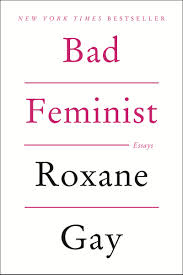
Bad Feminist book cover“You think you are alone until you find books about girls like you. Salvation is certainly among the reasons I read. Reading and writing have always pulled me out of the darkest experiences in my life. Stories have given me a place in which to lose myself. They have allowed me to remember. They have allowed me to forget. They have allowed me to imagine different endings and better possible worlds.”  Roxane Gay, Bad Feminist

Where do I begin? It’s hard to know because Roxane Gay covers so much ground in her collection of essays, Bad Feminist. Her voice is unmistakable: hilarious, informed, opinionated, eloquent, vulnerable.

What a great read for a book club, especially if your club is diverse in terms of race, gender, political persuasion, and economic status. (Or are book clubs of such diversity scarce?) Oh, the discussions you’ll have.

Roxane Gay is a black woman, a feminist (a darn good one), a Ph.D and professor, a single woman of a certain weight, a liberal, a fan of reality TV and rap music, a best-selling novelist and author. She’s tired, because she does all these things – Roxane admits as much, but as one of those driven people she says she can’t stop.

She writes about all of this and more in her essays. Occasionally she leans toward the shrill, but mostly not – Roxane is very good at getting you to think while entertaining you at the same time. For certain, you won’t always agree with her, but you’ll have plenty to mull over.

Her writing is so, so timely in light of the discussions we’re having in this country about race. Roxane recounts movingly what it’s like to be the only female black professor in her academic department. She dissects her reactions to movies such as The Help and other depictions of race and racism in entertainment, discussions I found nuanced and enlightening, and sometimes difficult to take as I recognized myself in some of the attitudes she highlights.

I had chosen not to see The Help when it was released a few years ago, because I’d read an opinion piece by a black woman who said all the women in the movie who are racist are nasty, while all the women who are not racist are likable–when in fact it had been her experience that many people who were racist were the nicest people you’d ever meet.  Roxane highlights these and other kinds of stereotypical and overly-simplistic portrayals in a number of popular TV shows and movies.

As for feminism, Roxane writes honestly about personal trauma that in part has shaped her views. (I won’t go into that here, to avoid spoilers.) She addresses the sad state of affairs for women in the US, where women of reproductive age are finding it harder to obtain contraception, where politicians make outrageous statements about rape and other matters they don’t seem to understand. (Such as the infamous, women who are victims of “legitimate rape” rarely get pregnant.)

Recently Yahoo CEO Marissa Mayer took a lot of flak for criticizing feminism.  Yet look at what is happening in the tech world, with apparent widespread discrimination against women who are coming up in their careers. One would think things would be better for younger women but that doesn’t appear to be the case.

I have to admit that at one time I would not have considered myself a feminist, though not anymore, especially given that I’m startled by how much ground women have lost in this country. Being of a certain age, I’ve come to respect much more than I did what the first and second wave feminists accomplished for all of us. I’ve been concerned, too, when I’ve not heard more of an outcry from younger women over recent trends. So it’s a relief to read Roxane Gay’s take on all this.

Here are some of my favorite quotes from her essays:

“I embrace the label of bad feminist because I am human. I am messy. I’m not trying to be an example. I am not trying to be perfect. I am not trying to say I have all the answers. I am not trying to say I’m right. I am just trying—trying to support what I believe in, trying to do some good in this world, trying to make some noise with my writing while also being myself.”

And,

“We don’t all have to believe in the same feminism. Feminism can be pluralistic so long as we respect the different feminisms we carry with us, so long as we give enough of a damn to try to minimize the fractures among us.”

And,

“It’s hard not to feel humorless, as a woman and a feminist, to recognize misogyny in so many forms, some great and some small, and know you’re not imagining things. It’s hard to be told to lighten up because if you lighten up any more, you’re going to float the fuck away. The problem is not that one of these things is happening; it’s that they are all happening, concurrently and constantly.”

Did I say I think you should read Bad Feminist?

Have you read Bad Feminist? What did you think?

I’ve ordered a copy of Laudato Si’, Pope Francis’ encyclical on climate change. It is available from Amazon and other booksellers, and you can download the pdf at this link: Laudato Si’ . I’ll be writing about it here in late July, mostly from a secular perspective. Why don’t you read it with me – I welcome your thoughts, faith-based or otherwise.