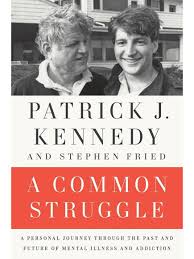
A Common Struggle

A Common Struggle image

A Personal Journey Through the Past and Future of Mental Illness and Addiction

“‘I have never seen a case worse than you, Patrick. You’ve been at this for so long, and the fact that you’ve survived and you’re still doing it almost makes you more dangerous. You’re able to manage it, just like your father managed it….’

He [Chris Lawford, Patrick Kennedy’s cousin] said he knew that at any given moment, I could say I wanted to go off to Australia with all my money and drink and drug myself to death. What he didn’t know, and neither did Amy, was that I had considered such a plan.”   Patrick J. Kennedy, A Common Struggle

I never thought I’d read a Kennedy memoir, we’ve been so saturated through the years with media coverage about the Kennedy family. Usually, I read literary memoirs, and this one isn’t. But I knew I had to read A Common Struggle, given my interest in mental health issues and wanting to see things change for the better, for once, rather than for the worse.

Patrick Kennedy has bipolar disorder, severe anxiety disorder, and has struggled with addiction to alcohol and prescription medication most of his life. His memoir, A Common Struggle, co-written with Stephen Fried, describes in excruciating detail how Ted Kennedy’s son managed somehow to keep this a secret (more or less) even as he served as Congressman from Rhode Island for many years.

In fact, Patrick’s entire nuclear family struggled with addiction, and all of them went through rehab at least once, if not multiple times – all except for Ted Kennedy. Not that he didn’t need it – Ted Kennedy’s family staged an intervention once, but Kennedy refused to acknowledge or accept that he had an addiction to alcohol.

This is a fascinating read. The Kennedys have a remarkable record of public service and, despite his debilitating mental health and addiction issues, Patrick Kennedy led the fight for successful passage of the Mental Health Parity and Addiction Equity Act. Given our complex and often dysfunctional political system, this is truly an achievement, even though the act, which requires insurance coverage of mental illness and addiction equal to coverage of physical illnesses, hasn’t yet been fully implemented.

Patrick Kennedy and others had to fight hard to make sure that addiction was included along with mental health. This was an enlightened step. It’s about time, since there is an epidemic of opioid and heroin addiction and overdose in the US. Only now are attitudes beginning to change so that addiction is increasingly viewed as a health problem, not a crime or a personal weakness.

Patrick ultimately decided that he couldn’t sustain his lifestyle as a Congressman and handle his addiction and mental health issues, so he eventually left Congress. He is currently the leading advocate in the US for mental health and substance abuse care, research and policy.

I’ve sometimes been dismissive of the Kennedys and their privilege, but Patrick’s memoir made me realize how devoted the extended family is to public service and what a difference they’ve made on many fronts. If you are interested in mental health and substance abuse issues, and/or if you want to become an advocate for better mental health care and research, I think you’ll get a lot out of Kennedy’s memoir. He weaves into his personal story a detailed history of mental health legislation in this country – legislation that is woefully lacking.

There are fantastic appendices, too, that summarize the many issues we need to advocate for and change, and that list the most prominent mental health and substance abuse support groups and organizations in the US.

I get discouraged about the lack of funding and services for people who suffer from mental illness and addiction and the long road it has been over the years to see improvement. Seems like common sense that we’d want to make changes for the better, but sadly our priorities are elsewhere. This is a shame, because these issues affect one out of five families – so is there anyone among us who hasn’t been touched in some way by mental illness or addiction?

Last weekend my husband and I took part in NAMI Walks in Rochester, an annual May is Mental Health Month fund-raiser for the National Alliance on Mental Illness. Over a thousand people walked. (There is still time to donate, go to the NAMI Walks link!)

I’m also proud to report that NAMI Rochester has such an extensive and devoted cadre of family members and volunteers working on behalf of mental health education and advocacy, they have been named the TOP NAMI affiliate in the country for 2016. They will be honored at the NAMI National Convention in July.


NAMI Walks
NAMI Rochester Streakers take the lead for NAMI Walks.
NAMI Walks On the March
NAMI Walks leaving the Village Gate in Rochester’s Neighborhood of the Arts.

Why I Write Memoir (Excavating a Life)

SoldiersA long-time friend and important supporter of my work wisely suggested that I come out of the closet and become less close-mouthed about being a writer.

Hence this new Excavating a Life page on Books Can Save a Life, a kind of journal I’ll update from time to time as I work on a memoir.

My friend’s suggestion opened up a host of personal issues for me too numerous to delve into here: some are addressed in my memoir, and some I’ll write about in future posts. But suffice it to say I hesitated, in part because I believe in NOT saying much about the book or poem or essay one happens to be writing. Many writers would agree with this.

But not talking about a specific project isn’t the same thing as not talking about being a writer. And, let’s face it, I gave up a job I really liked and often miss because I needed more time and energy to see the memoir to completion. Since my days now largely revolve around writing the memoir (or they’re supposed to), it becomes very weird not to talk about this when other people ask me what I do with my time.

So, now I tell people I’m working on a memoir. Which generates all kinds of interesting questions and comments.

Liars' ClubYou may or may not know that memoirs have a REALLY bad reputation in some quarters. Mary Karr, whose memoir The Liars’ Club I view as a work of genius, wryly says memoir resides in the “low-rent” district of books and literature.

Some literary critics don’t even consider memoirs literature. Navel-gazing, they say, and often navel-gazing not done well.

For a time this bothered me. Was I spending my days navel-gazing?

But I’ve heard this criticism of memoir so many times now, that I’ve lost interest in it. For the most part, (not always) it no longer has the power to make me self-conscious when I write.

Without apology, I can say writing a memoir does require a good bit of navel-gazing. There’s no getting around that. The very nature of memoir is internal, psychological. It is first person point of view, however flawed and unreliable that interpretation of reality may be. (This is not an original thought on my part. See for example Brooke Warner’s thoughts at HuffPost Books.)

It is trying to figure out what the hell happened and then trying to make sense of it in a way that pulls the reader in. The writer’s journey becomes the reader’s journey, because the reader has had his own baffling, mind-blowing life. As the writer works things out on the page, the reader is right alongside her trying to come to grips with whatever blindsided her (the reader) on her own life journey.

If the memoir is powerful and offers a bit of wisdom and insight, that’s a win/win for the writer, the reader, and the world.

(This “without apology” business I learned from Eric Maisel and his Deep Writing seminar. He taught us to honor our writing, to make no apologies for it. He taught us to say this to ourselves when we need to: “That thought doesn’t serve me or my writing.” So if I get to thinking I’m navel-gazing, or if I hear someone else speak dismissively of memoir, I say to myself: “That thought doesn’t serve me if I want to complete my memoir and get it out into the world.”)

Getting back to those comments and questions I’ve gotten about memoir: A few people have a hard time with the idea that I reconstruct dialogue. How can I remember someone’s remark from twenty years ago, let alone an entire conversation? Aren’t I really just making things up? Isn’t that suspect?

If I’m making up the dialogue, what else might I be making up or misremembering? How else might I not really be writing the truth?

Considering how problematic memoir is, why not write a novel? Since I can’t guarantee 100 percent accuracy, why not write fiction? That way if I get something wrong it doesn’t matter. Fiction isn’t “the truth.”

Now, this is a loaded, much-debated issue with many facets. This is what I want to focus on here:

The Glass Castle
Another highly regarded memoir

My memoir is about growing up with a mother who had a serious mental illness. The illness was bad enough, but everyone pretended there was nothing wrong. No one spoke about or acknowledged the elephant in the room. Everyone seemed to feel it was perfectly fine to leave us kids alone with our mother, even though they certainly wouldn’t want to spend an afternoon with her. She could be, at best, decidedly unsociable and, at worst, hostile and scary.

(To be clear, my mother was a brave, strong, caring woman, and as good a mother as she could be.)

Not knowing what to do with my feelings of distress, sensing people didn’t want to deal with them and that no one was going to help us, I swallowed them. I pretended I was happy. I became ashamed of the dark feelings I shared with no one.

A parent in the throes of psychosis doesn’t really see her children. Her demons have all her attention, at least for the moment. The children become invisible to her, and the children know this. Between their parent not seeing them, and other people not acknowledging their unfortunate family situation, they begin to feel invisible.

They enter adulthood hollowed out, still feeling invisible. This they bring to their work, their relationships, their life. They pay a heavy price. They don’t really know themselves or why they do some of the things they do. Often, they don’t go after all they can in life. They hold back. They hesitate to take risks. Their lives are the poorer for it, and so is the world, which is robbed of their full talents, wisdom, and unique contributions.

As someone who wanted to write, who wanted to be creative, I found that I’d locked away my most essential, authentic self. I was alienated from my own shadow, my own best “material,” the very bedrock I should have been writing about. So I didn’t write, at least not for a long time.

One way to re-connect with one’s essential self is to write a memoir, as difficult as that process can be. One way to no longer feel invisible is to write a memoir.

I’m writing a memoir because I want to (and feel compelled to) tell my story, my own true story. I want to say what really happened, at least from my perspective. For me, writing fiction just won’t cut it.

Lord knows, the world is full of people far, far more wounded than I. In so many respects, I’ve been exceedingly fortunate. The best memoirists are not out to portray themselves as victims or to gain attention or sympathy. If they’ve made it as far as having a memoir published, they don’t need a reader’s sympathy. They are, among other things, trying to bring valuable stories into the world.

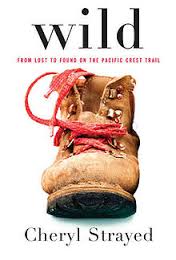
Wild
One of the most influential memoirs in recent years

I believe this is the age of the memoir, and it’s about time, because the world needs memoirs. (Though I acknowledge that reading memoirs isn’t for everyone.)

We’re bringing to light the dark secrets we hid growing up. We’re looking at what it means to be a family, what holds one together and what tears one apart. We’re hoping to change things so people like my mother get the help and support that is their right. We’re questioning long-accepted social values that have brought us to some bad places.

Just think of all the memoir writers – and readers – who no longer feel invisible, whose energy and creativity and wisdom are being liberated, helping all of us achieve a more enlightened world.

Next up: Back to books – The Buried Giant by Kazuo Ishiguro (I’m loving it.) Down the road on Excavating a Life: Memoir and shame.

Please share this post with memoir lovers, memoir writers and memoir skeptics. Do you have a favorite memoir? Do you dislike memoirs? Are you writing one? Tell us about it in the comments.

Do genes shape our mental health?

mybeautifulgenome

“I want to know what it feels like to have a close encounter with my DNA, this invisible, digital self that lies curled up like a fetus in every single cell of my body.”  – Lone Frank

When asked by the researcher if she has first-degree relatives with mental health problems, Lone Frank says yes.

Asked which ones, Lone says: all of them.

Depression, multiple suicides, bipolar disorder, alcoholism. With mordant humor, Lone Frank describes her family history. She’s forthcoming about her own three episodes of depression, then lies to the researcher about how many drinks she has each week. Fourteen glasses of red wine, for the health benefits. (But it’s really closer to twenty drinks or more. At least, that’s what she tells the reader.)

Lone, a Danish science journalist with a PH.D. in neurobiology, volunteered to take part in a major research project to study the connection between personality, an inclination toward depression, and specific genes.

In My Beautiful Genome: Exploring My Genetic Future One Quirk at a Time, she takes us along as she undergoes genetic testing, completes questionnaires and personality tests, and talks with multiple experts who interpret the results. Along the way she grapples with many questions.

Does she, indeed, have genes that predispose her to depression?

How does the environment factor in, as well as her upbringing and her own free will to pull herself out of depression and make cognitive and lifestyle changes to prevent it?

Does she unwittingly contribute to her own dark moods and temperament by building her own, unique environment – under the influence of her genes – that is conducive to depression?

On the other hand, does she possess certain genes or genetic variations that give rise to traits that help her excel in certain areas?

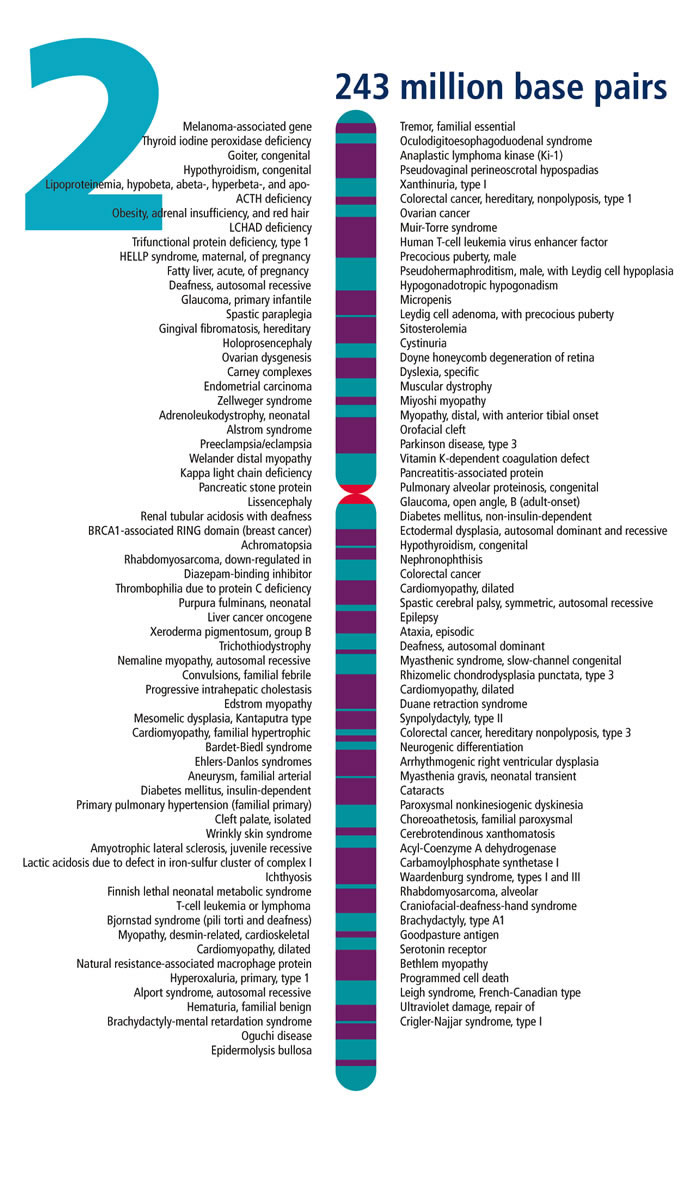
Chromosome 2
Chromosome 2 (click twice for larger image)
Genome Management Information System, Oak Ridge National Laboratory
Human Chromosomes from “Human Genome Landmarks: Selected Genes, Traits, and Disorders” Poster, 2002. (Gene Gateway)

Do some genetic variations mitigate the effects of others?

Are there “good” and “bad,” “healthy” and “unhealthy” genetic variations, or simply variations that lead to different outcomes depending on one’s circumstances?

I won’t give away what Lone discovers, but she finds out a lot and, in the end, concludes the information is enormously helpful.

Let me stress that the average lay person could not mine their own genome for this information the way Lone did. Because she’s a journalist with a doctorate in neurobiology, she had access to sophisticated genetic tests and, more importantly, to experts who could interpret the results and how they might affect her personality and behavior.

Nonetheless, mining Lone’s genome with her is a glimpse into what may be possible for all of us, eventually, if we want it.

How much would you want to know about your genes and how they might shape your personality and behavior? Please share your thoughts in the comments.

Coming up, what Lone’s DNA reveals about her future health.

Quote from My Beautiful Genome: Exploring My Genetic Future One Gene at a Time, by Lone Frank, Oneworld Publications, Oxford, 2011.