Inside an enchanting herban apothecary in Portland

herban enclave in Portland

as we round the midpoint between autumn equinox & winter solstice,
the leaves blaze lighting up the darkening sky
before they dance towards the earth.
the moon waxes full as we bask in the light of the beaver moon, a supermoon.
soak in the luminous glow & energies.

times continue to be be unprecedentedly wild
as the cold sets in. this season of release as the light fades
& the leaves fall leaving a bare lacework of branches.
this liminal season, a threshold.

i am reaching out with an offer of winter comfort.
bolstering against both the winter chill & the heartache from the news cycle.

remember always to lean in to the plant allies and the potency of community.

- Polly Hatfield, herban enclave November newsletter

Every CSA (community supported agriculture) venture is unique, but Polly Hatfield’s home-based, herban apothecary in the heart of Portland, Oregon is SO special. You can think of it as community-supported alchemy as well – read on, and you’ll see what I mean.

I was thrilled to have the chance to meet Polly and her teeming gardens, front yard and back, when I was in Portland at summer’s end.

I’d been on Polly’s mailing list for a few years, delighting in her poetic, strikingly visual seasonal newsletter, and occasionally sampling her offerings or sending them as gifts. Every year when I enroll in artist Suzi Banks Baum’s Advent Dark Journal workshop, a packet of Polly’s homemade bath salts is tucked into the envelope of art supplies Suzi sends us. (You’ll meet Suzi and Advent Dark Journal in a future post.)

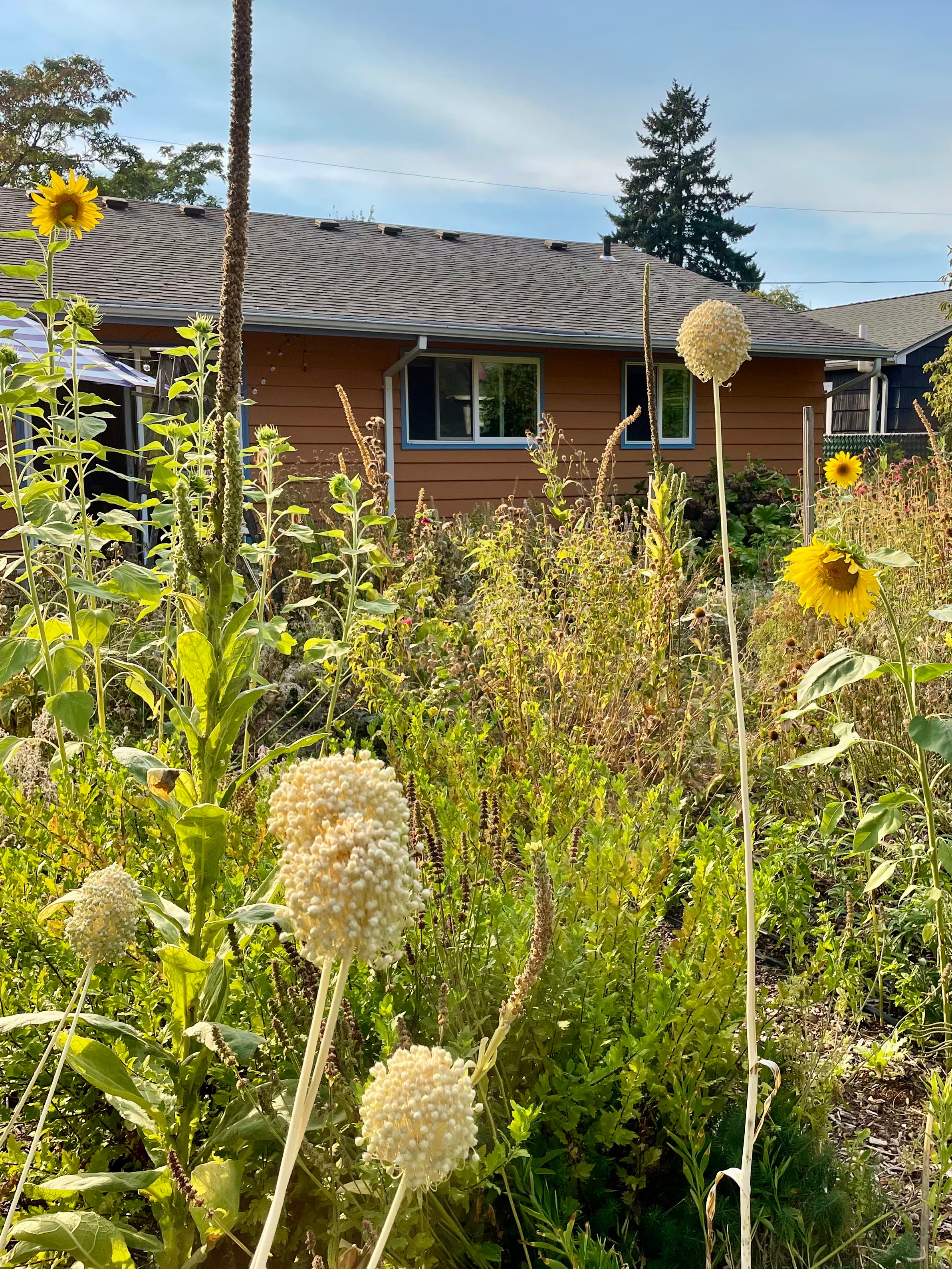
Portland neighborhoods can be one delight after another: poetry boxes, little free libraries, sidewalk chalk drawings galore, pocket gardens, and other inventive gifts to be shared with the community. But herban enclave stands out. The moment I turned down Polly’s street, I guessed which home was the one I was looking for. Clearly, this was a neighborhood of gardeners, but one lot in particular burst at the seams with late-summer plantings.

No space there is wasted, and I marveled at how Polly and her partner managed to grow and lovingly handcraft so many offerings on this modestly sized patch of land.

For example, in November, herban enclave’s winter csa care package (available to order until November 21) includes:

  • syrup made from aronia berry, rose, and holy basil
  • nasturtium flower finishing salt (with sichuan peppercorns, smoked salt, and rose)
  • a “winter quiet” tincture of milky oats, ashwaganda root, rose, and wood betony
  • a replenishing tea of nettles, raspberry leaf, oatstraw, and other plant allies
  • a soaking salts blend of eucalyptus, lemon, ginger, ashwaganda elixir, and wild rose flower essence
  • A “breathe deeply” oxymel of nasturtium, anise hyssop, holy basil, and aronia berry

(Photos by Polly Hatfield)

Polly’s conjurings have me heading for the dictionary or to my plant and flower identification app because, quite often, I’ve never even heard of the plants and flowers she cultivates that become her ingredients.

By the way, can you tell from Polly’s newsletter sentiments and herbal conjuring names that she is not just a master gardener, but a published poet, too? (Photo by Laura Glazer)

In addition to a seasonal care package, Polly usually has small batch offerings on hand. These enticements and several others are currently available until November 21:

  • nocino (an Italian liquor made from immature green walnuts)
  • a variety of tinctures, topical balms, and salves
  • an herbal gomasio (look it up!) of jimmy nardello peppers, smoked salt, black sesame seed, and rose
  • a douglas fir elixir
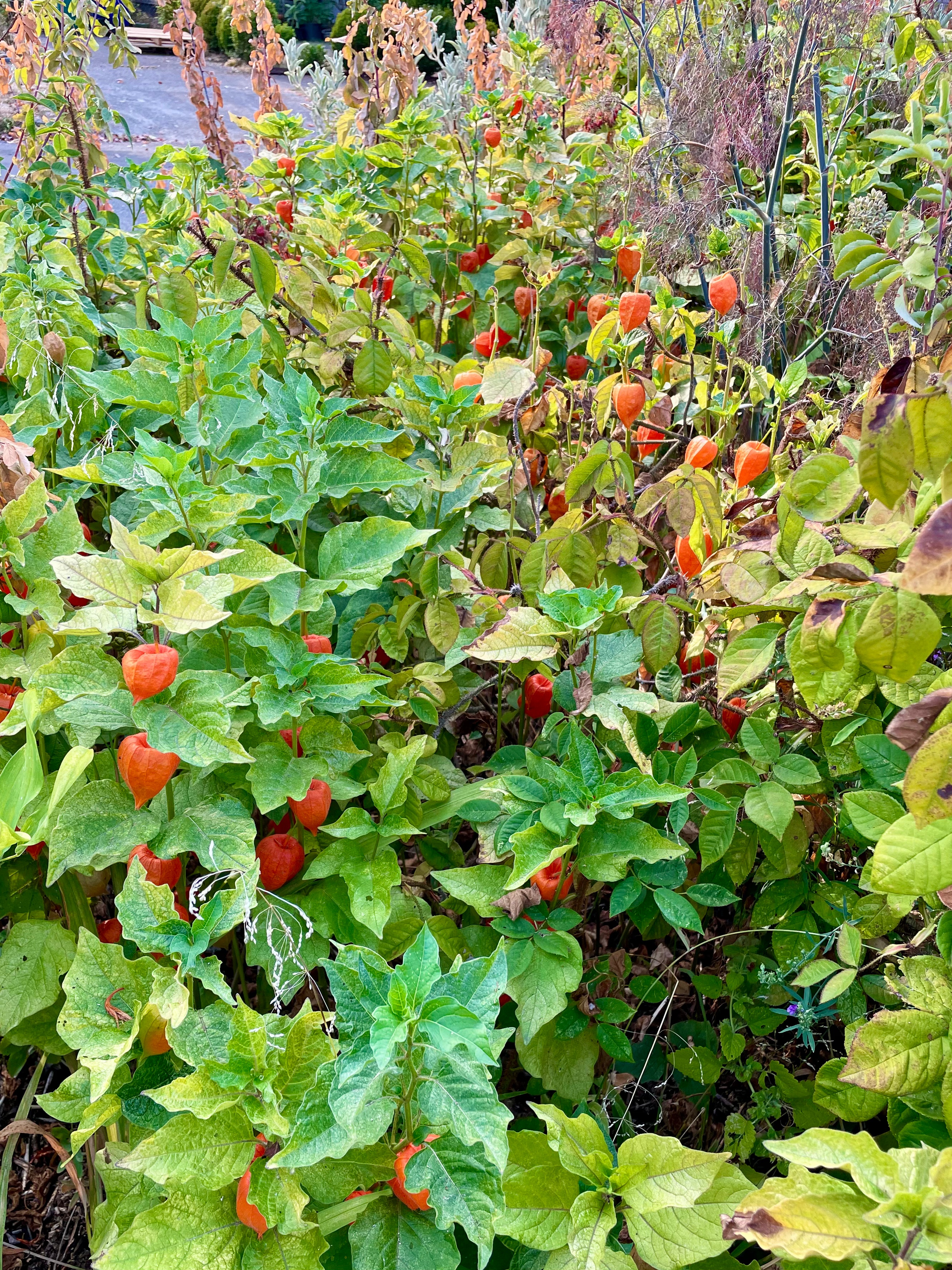
Chinese lantern, Physalis alkekengi

The September afternoon when Polly and I visited, the weather was gorgeous. We sat outside in the sun and I soaked up Polly’s earth-based knowledge as she told me the story of how she and her beloved found their ideal home, planted the extensive gardens, and established such a unique CSA.

Before our meeting, I’d asked Polly if a particular book had been her “bible,” one that had contributed to a vision for her work and way of living. “Gardening at the Dragon’s Gate,” she’d said, and I ordered a used copy.

As I write this, I’m two-thirds of the way through Wendy Johnson’s classic book about gardening and Zen Buddhism (published in 2008), still wondering how I got to be my age without encountering this extraordinary title. I’m a middling, on-again, off-again gardener with grander ideas than I know how to execute. I’m an insight meditation student and teacher as well (and I admire the Zen school of thought, too.) So Gardening at the Dragon’s Gate speaks to me on many levels. Turn to any page and you’re likely to find a nugget of wisdom. You’ll never plumb all of its depths.

Author Wendy Johnson is one of the first influential, ground-breaking California organic farmers and gardeners who came of age in the 1960s and 70s. Johnson, Alice Waters, Eliot Coleman and others pioneered the farm-to-table movement. She is the founder of the extensive gardens at Green Gulch Farm Zen Center near San Franscisco and a Buddhist meditation teacher.

In Buddhist texts, consciousness is said to be a field, a piece of earth on which every kind of seed is planted. On this field of consciousness are sown the seeds of hope and suffering, the kernel of happiness and sorrow, anger and joy. The quality of our life depends entirely on which seeds we garden and nourish in our consciousness.

Growing a garden, like cultivating the wide field of consciousness, is original work. Each time we plant a garden we are returning to origin, to the source of every garden ever grown. The word “origin” derives from the Latin verb oriri, to rise, as the sun and moon rise in a cyclical pattern in the day and night sky. Originality has a still older meaning described by the upwelling of deep springwater through stony ground. Growing a garden depends on this double force of originality that is both rhythmic and permeating. – Wendy Johnson, Gardening at the Dragon’s Gate

I’ve learned as a meditator that we can deliberately and lovingly set an intention for our days. We can do the work of our intentions in a way that gives meaning and shape to our lives. I think that master gardener/herbalist Polly Hatfield and her partner are doing this every day at herban enclave. I love how the work of gardening and a way of life inevitably become woven together.

I think about other home gardens we enjoy seeing in another part of Portland when we visit extended family. They have a gorgeous new garden, and another more vintage garden that is a vital part of the Montessori school they founded, where very young folks spend lots of time playing, learning, and enjoying nature’s riches.
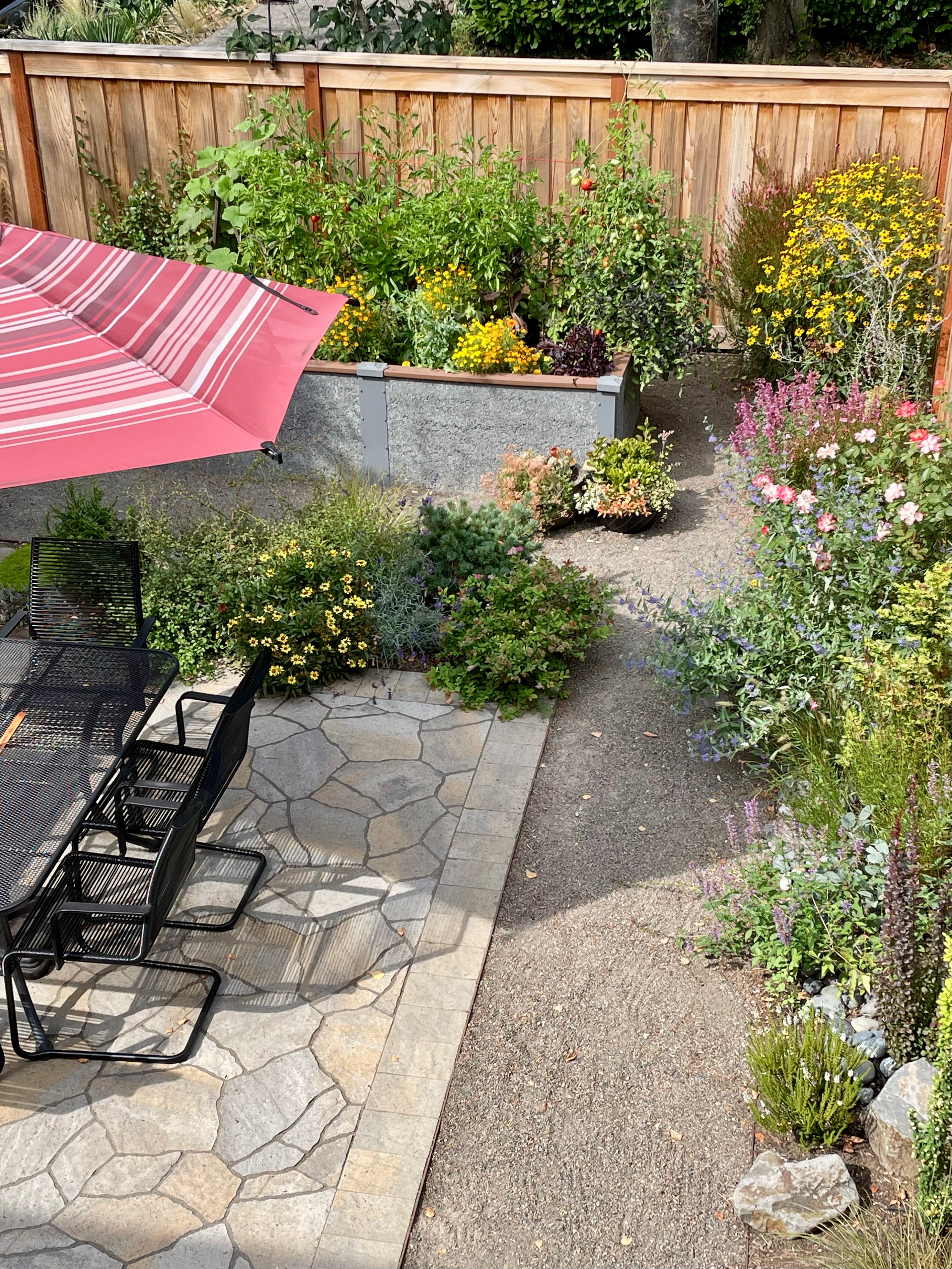
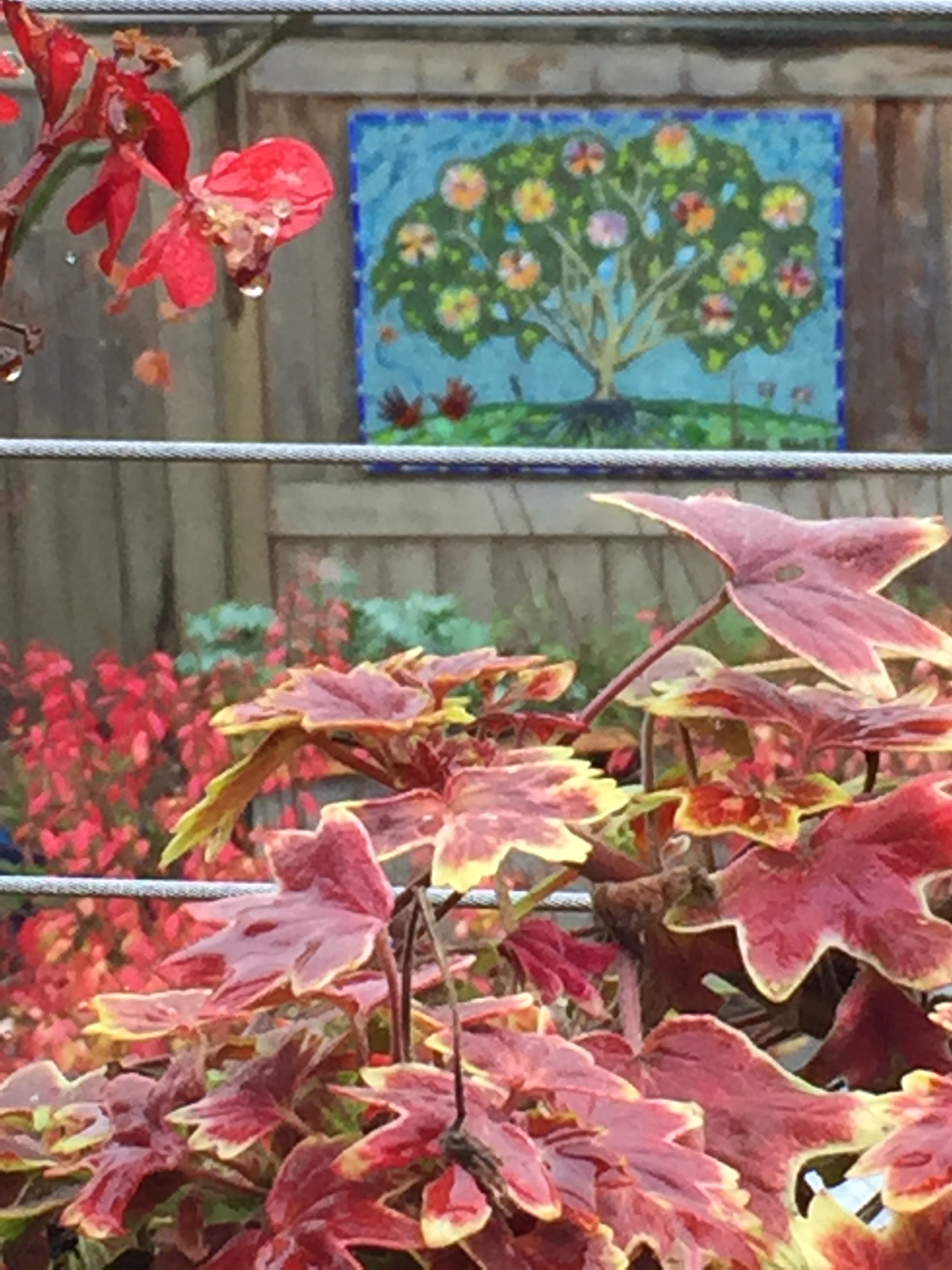
Portland is a city of gardens and garden lovers. Here is one of two home gardens created by my niece, sister-in-law and family. (This is the new garden.)

The Montessori garden, where children spend time every day.

As I write this post at my desk, the wind is kicking up, I hear the patter of raindrops, and I’ll need to close my studio window soon. After a balmy Indian summer, the temperature here in North Carolina is expected to drop twenty degrees. We’re entering the cold, dark time, when Polly’s makings (even simply reading about them) can give us warmth and comfort.

And with that, I will let Miss Polly have the honor of signing off:

may you allow yourself to rest.
to sink into a season of dormancy.
& to tend your heart well.

with love & full moon blessings galore,
heal // whole // holy
warmly & always with love, polly

Here is a link to Polly’s newsletter, with ordering information (order by Nov. 21, 2025).

https://mailchi.mp/b57eef719645/rose-magic-summer-spell-solstice-love-12930906?e=b8a80062f5

You can find Polly Hatfield on Instagram, and sign up for her seasonal newsletter on her linktree site:

https://www.instagram.com/achilleaswooning/

linktr.ee/Miss_Polly
Wild Arts!

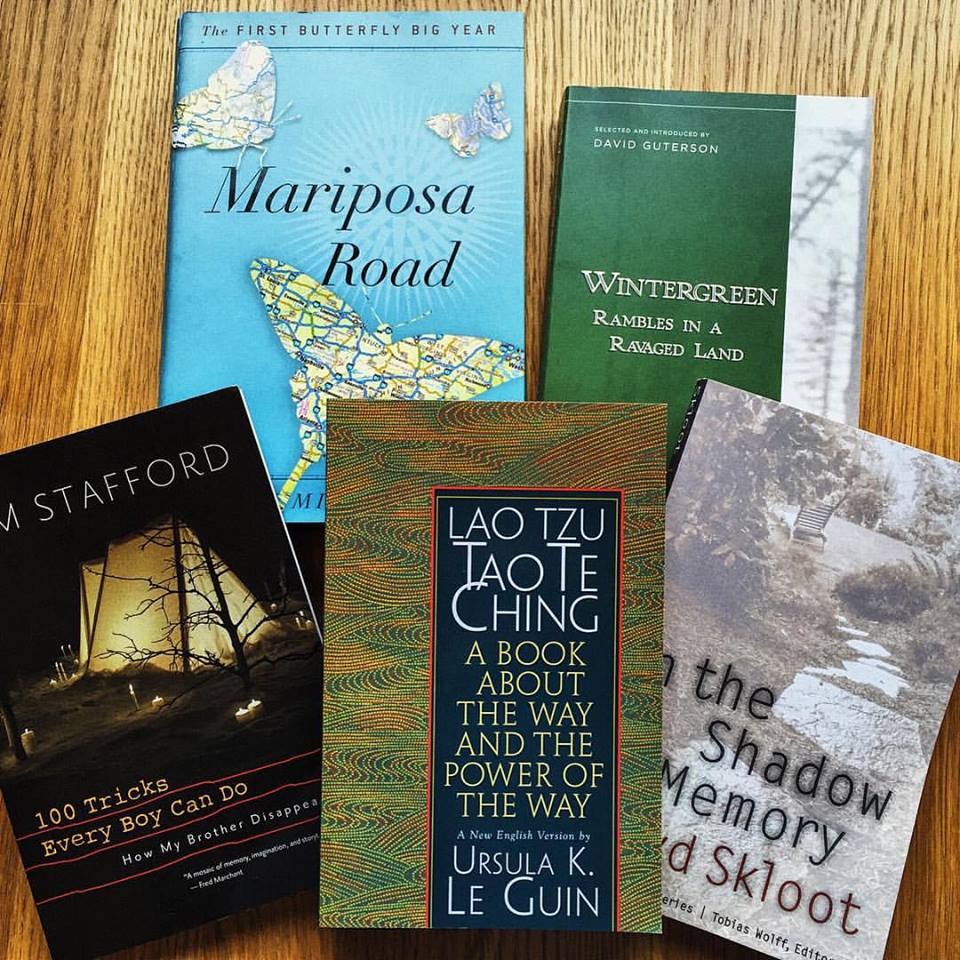
Five books
Books purchased at the Wild Arts Festival in Portland, signed in person by the authors.


Litmosphere: 1. the vast domain of the world’s readers and writers 2. a lively literary mood permeating the air ~ sign in Powell’s Books, Portland

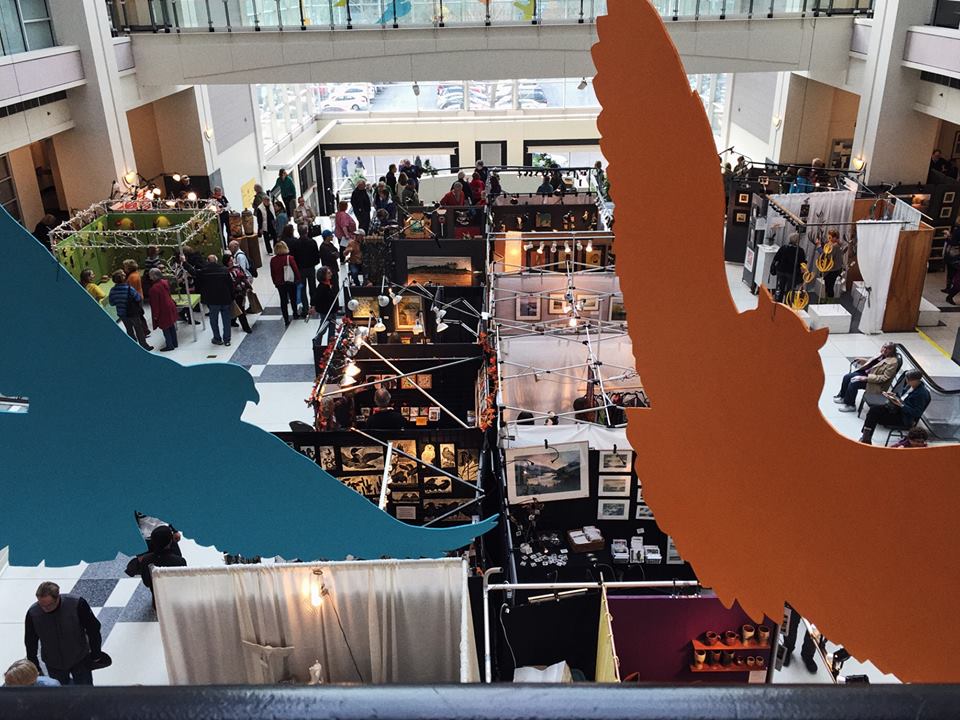
Wild Arts FestivalI love the literary scene in Portland. Our Thanksgiving visit there coincided with the annual Wild Arts Festival, a celebration of nature in art and books hosted by the Audubon Society of Portland in the old Montgomery Ward building, now known as Montgomery Park.

Walking into the festival, where hundreds of artists and authors were on hand, was like getting a gigantic embrace from the creative community.

I couldn’t decide among Ursula Le Guin’s many, many science fiction and fantasy books. In the end I chose her translation of Lao Tzu: Tao Te Ching: A Book About the Way and the Power of the Way, and she graciously signed a copy for me.

Next, we met Robert Michael Pyle, a jolly teddy bear of a man who spent no less than 15 minutes entertaining us with stories about how, in his Honda Civic with 345,000 miles on the odometer, he spent a year searching for as many of the 800 species of American butterflies as he could find. I could have spent hours listening to this man; instead I bought his memoir and travelogue, Mariposa Road, which he signed with, “May these far rambles on bright wings incite your own wild road trips!”

A dedicated ecologist and naturalist, Robert Michael Pyle has written nearly 20 books and is the co-editor of Nabokov’s Butterflies: Unpublished and Uncollected Writings. (The literary genius Vladimir Nabokov was a butterfly expert and had an extensive collection.)

I purchased another of Robert’s memoirs, Wintergreen: Rambles in a Ravaged Land, about Washington’s Willapa Hills, whose forests have been plundered by lumber companies. Robert lives on a farm in Grays River once owned by a Swedish immigrant. I’m descended from Swedes, who were attracted to the deep forests of the Pacific Northwest because it reminded them of home; I’d love to see Willapa country one day. Of course, Robert signed Wintergreen, too, with these words, together with a sketch of a snail: “May these moss murmurs and fern-words honor your own hills of home – and maybe urge you Northwesterly!”

I can’t say enough about Floyd Skloot and Kim Stafford. They are both poets, and they’ve both written memoirs. (Actually, they’ve both written more than one, and I look forward to reading all of them.)

Since I’m writing a memoir myself, I decided to go for the memoirs: In the Shadow of MemoryFloyd Skloot’s first memoir (part neuroscience and part autobiography about a virus that left Skloot disabled and bereft of memories) and 100 Tricks Every Boy Can Do: My Brother’s Disappearance by Kim Stafford (his brother committed suicide.)

Both of these generous writers spoke with me about their work and asked at great length about mine. Kim wanted to know the working title of my memoir and, when I told him, he gave me a writing assignment to try. As I did the exercise Kim recommended, I discovered that one particular word in the title is especially important to my memoir’s theme. It got me thinking about how I could bring out the theme more vividly as I revise.

The authors I spoke with at the Wild Arts Festival were incredibly kind and gracious. I had instant connections with these generous writers, who are among the best in America today. Don’t be shy at these kinds of events. Writers and artists are the most giving and engaged people you’ll ever meet.

Portland is a book-loving town, and as I walked around the neighborhoods with family, I noticed several Little Free Libraries. It’s also a poetry-loving town, and a couple of the homes I passed by had poems on display – including one by Kim Stafford’s father, the great poet William Stafford.

Slipped inside the Kim Stafford memoir I bought was the gift of a poem that begins, “The only heroic thing is to not be a hero.” I believe Kim borrowed this phrase from a poem by his father, William: “At the Un-National Monument Along the Canadian Border.”

Kim’s poem is called “A Few Words, Each Day,” and it includes this line: “The only heroic thing is to be a child of four…of fifteen…of forty…of eighty – trying with the heart and mind to listen to the self, each other, and the earth….”

Litmosphere definition sign in Powell's Books
We stopped by Powell’s Books for good measure, where I learned a new word.


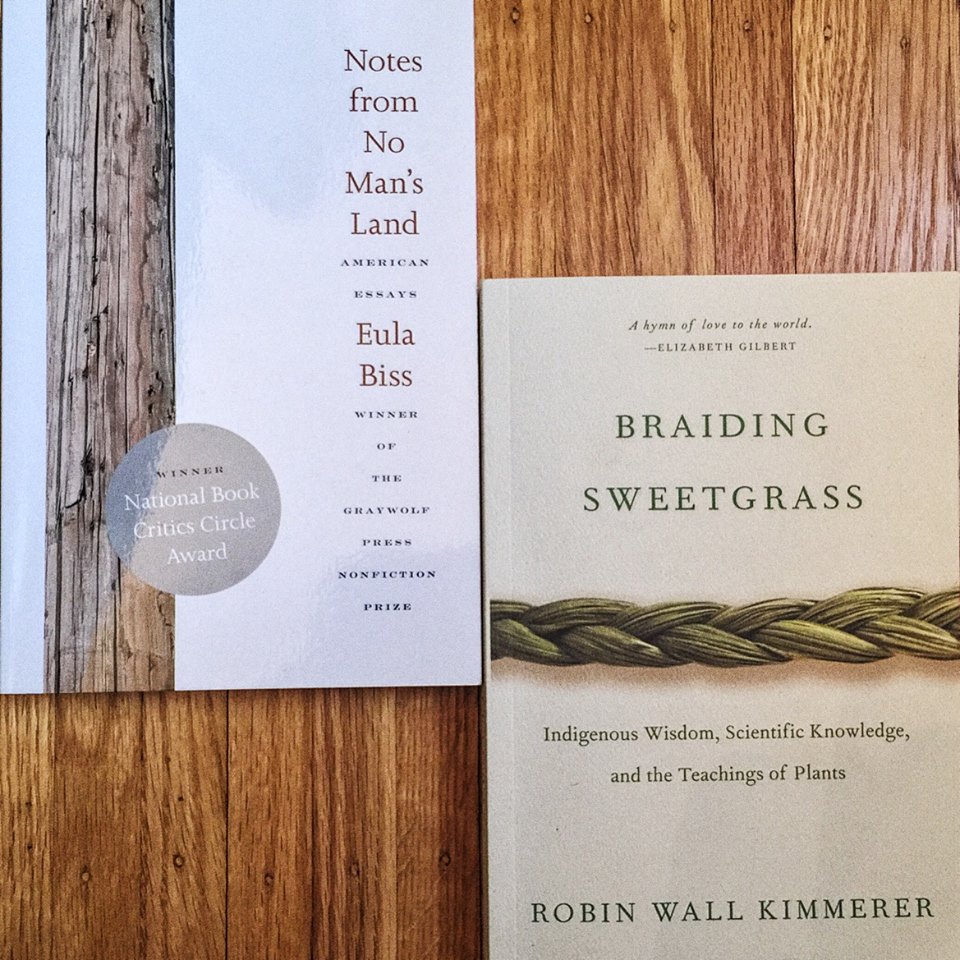
Books: Braiding Sweetgrass; Notes from No Man's Land
At Powell’s I bought Eula Biss’s collection of essays and the latest book by Robin Wall Kimmerer, who is a botanist and member of the Citizen Potawatoni Nation.


Northern spotted owl at the Wild Arts Festival


Kim Stafford: “That is my story.”


Supermoon and journeys: Cheryl Strayed’s Wild

Moon in my backyard

I write this on the night of the supermoon, high in the sky outside my dining room window.

In her journal, Cheryl Strayed kept a list of the books she burned as she walked the Pacific Crest Trail:  Dubliners by James Joyce; Lolita by Vladimir Nabokov; The Novel by James Michener; The Pacific Crest Trail, Volume 1: California and Volume 2: Oregon and Washington; plus a few more.

Every evening she’d make a campfire, tear out the pages she’d read that day, and feed them to the flames to lighten the load in her over-stuffed pack. I imagine her performing her nightly ritual, the words on paper turning to ash.

Cheryl carried one book the length of her trip: The Dream of a Common Language, by Adrienne Rich.

Reading Wild, I remember this stray fact: In college, I wrote my senior seminar English paper on Adrienne Rich’s Diving Into the Wreck. I’d like to find that old English paper so I can read it after all these years and see what I had to say about Rich’s poetry.

Reading Wild, I remember a vacation in Portland, Oregon to visit family. Our boys were six and nine at the time.

We decided to hike with my sister-in-law and her family along the lower elevations of Mount Hood in search of a waterfall whose name I can’t remember. The map posted at the trail head indicated the hike was a couple of miles. A manageable trip for young children, we thought. The day was hot and sunny, but we walked in the shade of a beautiful pine forest along an easy, well-cleared path.

When Cheryl began walking, her pack was so heavy she couldn’t lift it, and her brand new REI hiking boots were too small.  Along the way, she shed many layers of skin from the pads of her feet and several toenails as well.

She’d walk a week without seeing anyone. She’d go days with a handful of change to her name until she reached a town where a supply pack (mailed by a friend) awaited, with necessities and two ten dollar bills to tide her over for the next couple hundred miles.

The day of our hike we walked. And walked. And walked some more. Until it got to be not so much fun anymore. Until the children were dragging, and the teenage cousin and her friend decided to go on ahead.

One of our boys (who shall remain nameless) grew cranky. The heat was intense and our water was running low. But we figured we were almost to the waterfall, so we kept going.

We walked another half hour, and then in a full meltdown, the thoroughly overheated and tired boy refused to go any further. We’d stopped next to a creek, and my husband took his handkerchief, dipped it in the ice-cold mountain water, and we took turns bathing our faces with it.

My in-laws decided to keep going with their children while we cooled off at the stream. Before long, I was ready to move on. My husband stayed behind with the tired one, cajoling him to take off his shoes and socks and wade in the stream.

Our original group had now split into four groups, which made me uneasy. Walking along holding my son’s hand, I hoped the path wouldn’t split off. What if we went the wrong way and got lost? We saw an older couple approaching as they headed back down the trail.

“Are we close to the waterfall?” I asked.

“You’re getting there. But you’ve a ways to go,” the man said. Not what I wanted to hear.

At the age of 26, with little preparation and no extreme hiking experience, Cheryl decided to hike the Pacific Crest Trail. She was grieving for her mother, who had died in her early forties a month after a cancer diagnosis, and Cheryl had been making a mess of her life ever since. She hoped the trip would save her in some way.

My son and I heard rushing water and felt a million invisible, blessedly cool droplets on our skin before we saw the waterfall. In the clearing ahead, ribbons of spray curved and tumbled down a wall of solid rock, like a bridal veil fluttering in a breeze. Instantly, the temperature dropped ten degrees. We were like parched plants coming back to life after a generous watering.

Everyone had arrived except for my husband and the tired one; they came along a few minutes later. In this peaceful and secluded Shangri La we stretched ourselves out on large, flat rocks and talked as the kids splashed about the stream looking for tadpoles.

Having walked 1100 miles, Cheryl ended her journey at the Bridge of the Gods spanning the Columbia River, which lay between Oregon and Washington.

She’d become a different person, inside and out.

Do good books make you remember, too?

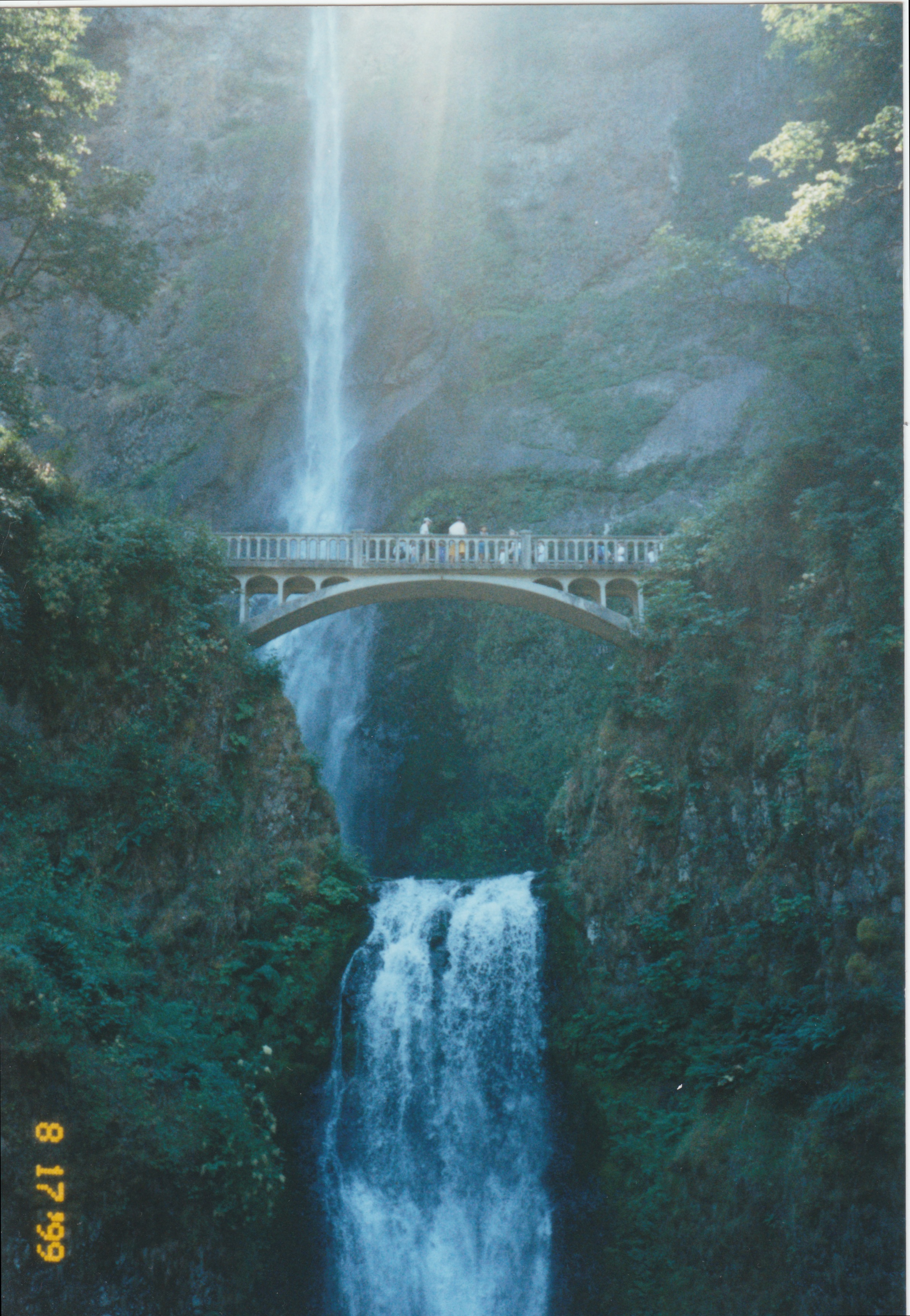
Multnomah Falls, Oregon

With that, I leave you “A Story for Tomorrow,” posted today on Brain Pickings.