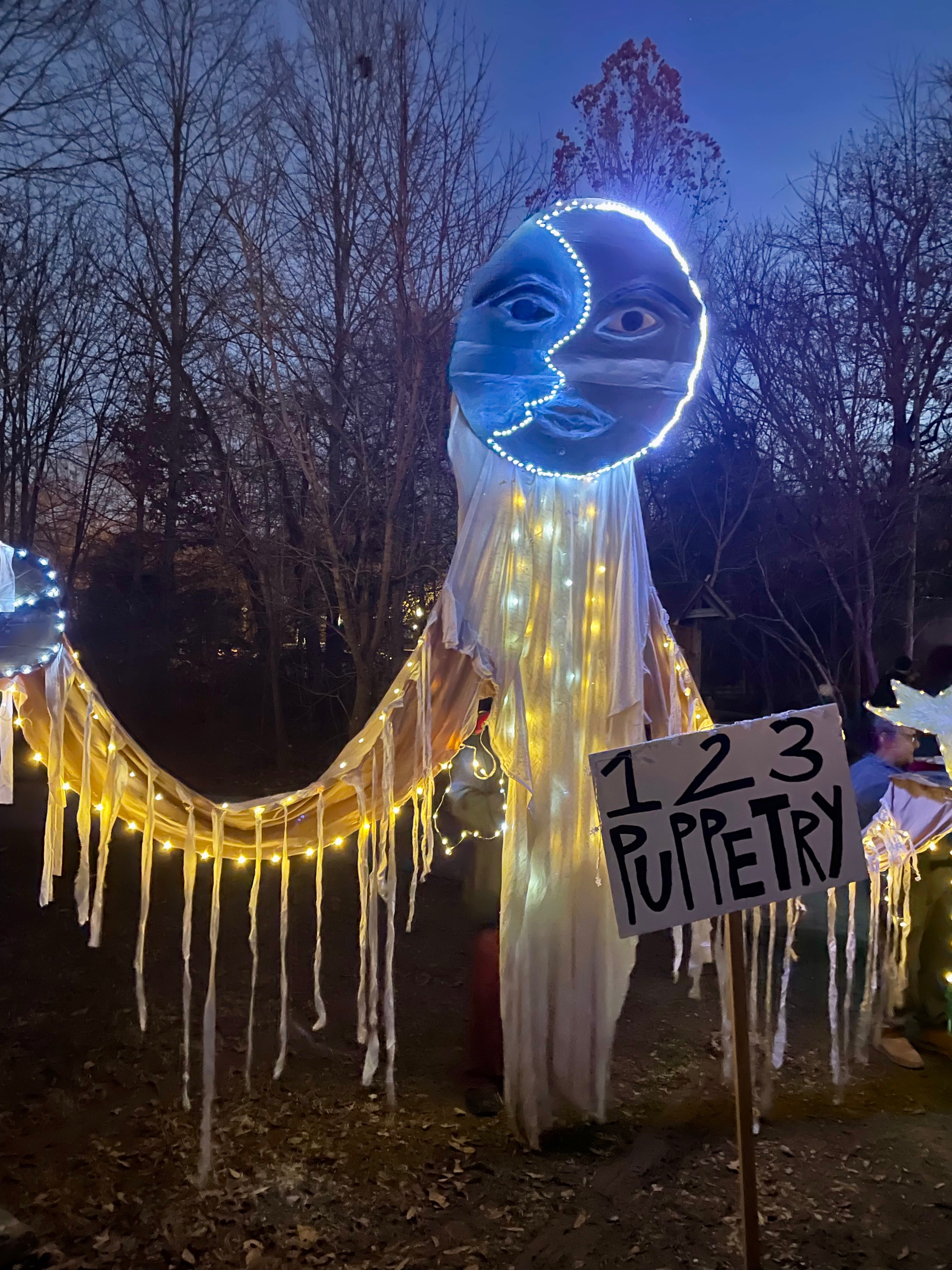
A highlight of the Winter Solstice Lantern Walk along the Eno River, NC, 2025.
The fear is ancient and uncomplicated, part of our human-animal inheritance…will the darkness swallow me, will it swallow us all together? Nina MacLaughlin, Winter Solstice: An Essay
Happy New Year to my friends and readers!
Here is a post full of little treasures to light up your midwinter days and usher in the New Year.
Never in my life have I seen the winter solstice celebrated with so much exuberance. Last year, on our first winter solstice in Hillsborough, North Carolina, I assumed the annual lantern walk along the Eno River would be a quiet affair with a few dozen souls. Not at all. Thousands of people showed up with the most inventive homemade lanterns I’d ever seen.
Before you read past this paragraph, PLEASE click the link below to last year’s walk. It will put you in the mood for the rest of this post, which is full of all things Winter Solstice. In last year’s video, you’ll see drone footage of the magical riverside procession, an illuminated spiral, and beyond-belief lanterns, with a poetic narration by our town’s very own Poet Laureate, Amal Kassir. (YES, our town has a Poet Laureate. More about Amal at the end of this post.)
Here is the link. Please turn up your volume, enjoy, and then hop back over here:
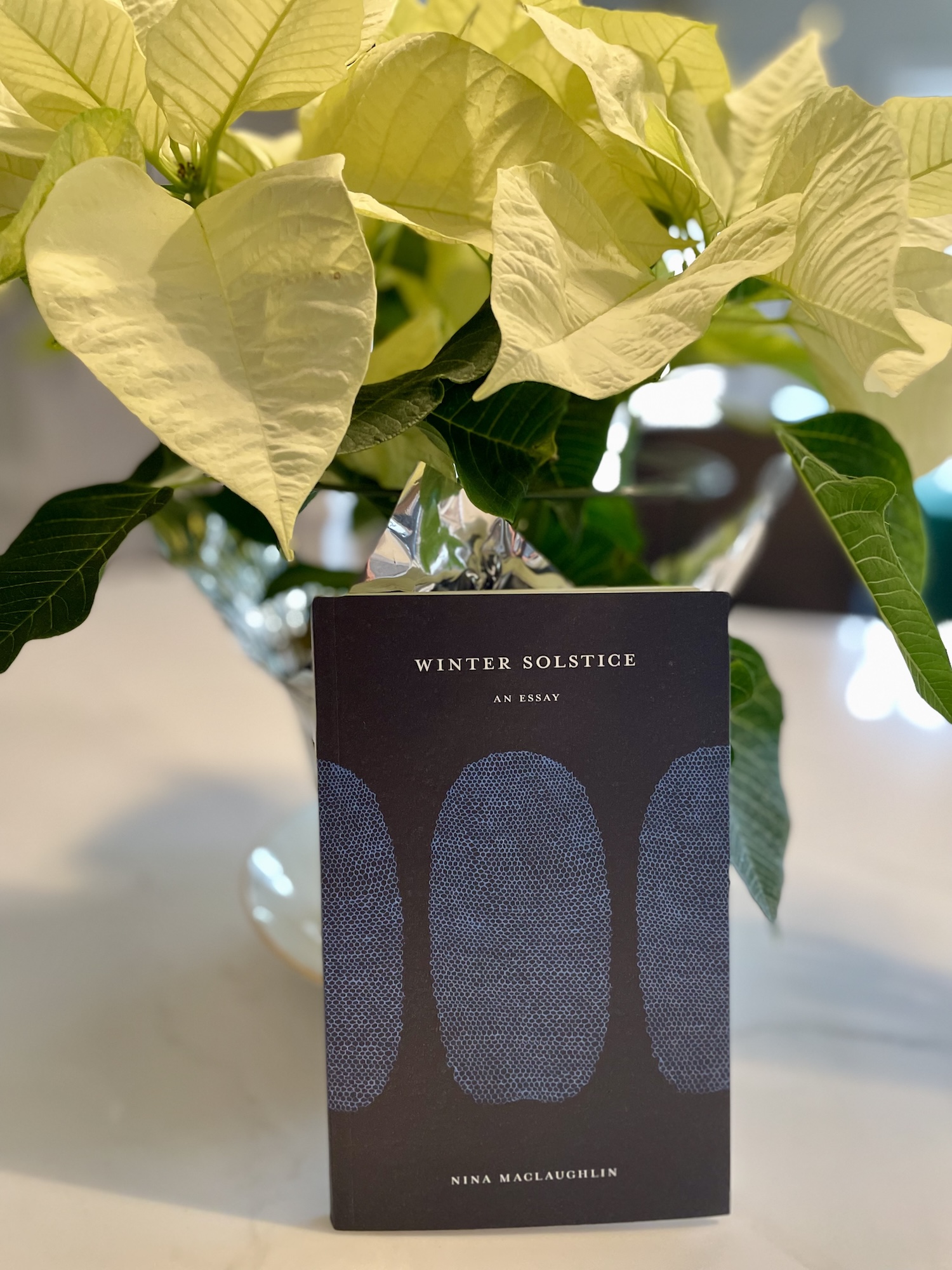
I’ve sprinkled quotes from Nina MacLaughlin’s earthy, primal Winter Solstice essay throughout this post, because it speaks deeply to writer and mixed-media/book artist Suzi Banks Baum, who created and leads Advent Dark Journal. This is an immersion in art, writing, nature, and daily creative practice that I enjoy during the last six weeks of the year.
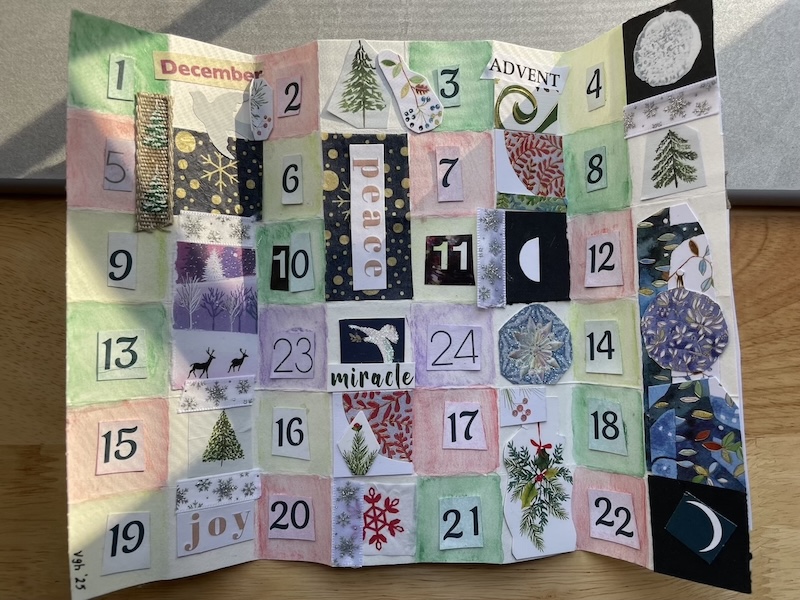
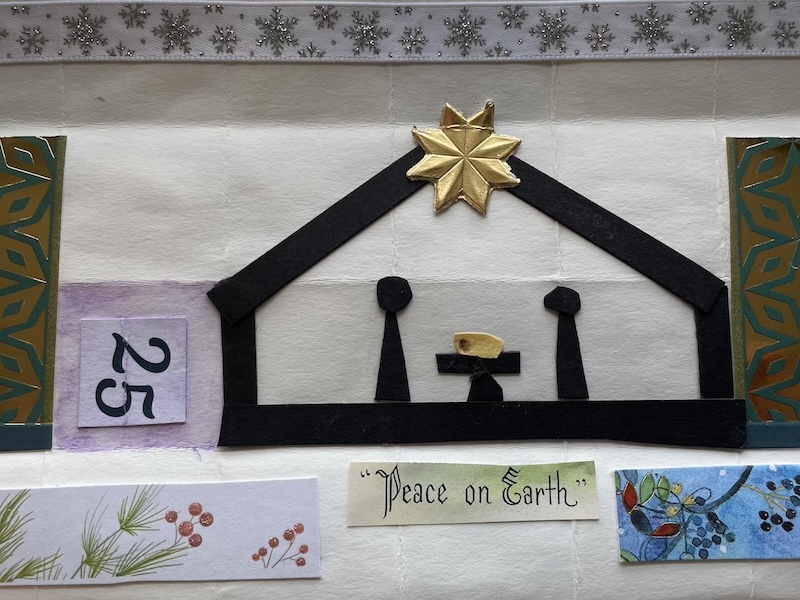
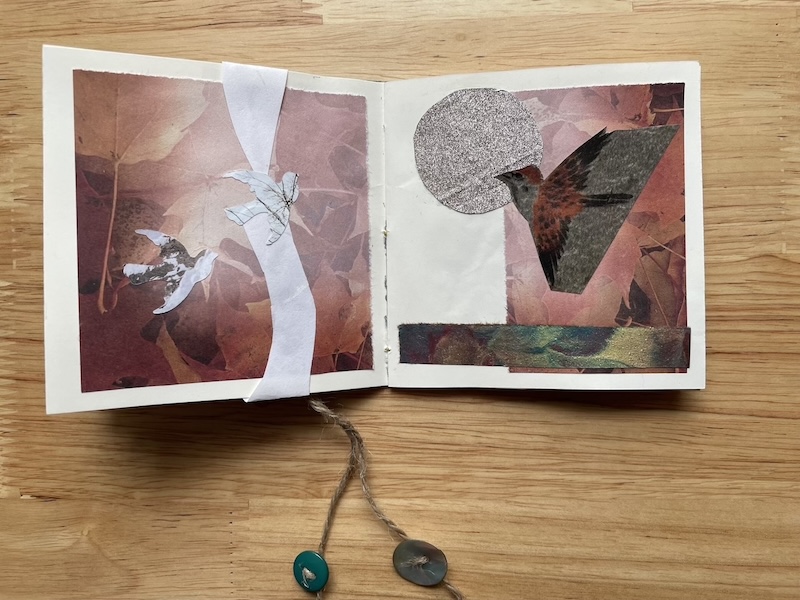
I’ll write more about Advent Dark Journal in an upcoming post, because Suzi and her creation are worth an in-depth look. For now, here is a glimpse of the small collage and art projects I’ve completed as part of this experience. You’ll see that my Advent calendar has a religious theme, but Advent Dark Journal is not centered around organized religion; rather, it is a “container” of rituals for participants to explore wherever our soulful arisings lead us during this sacred time of year.
“Advent Miracle”
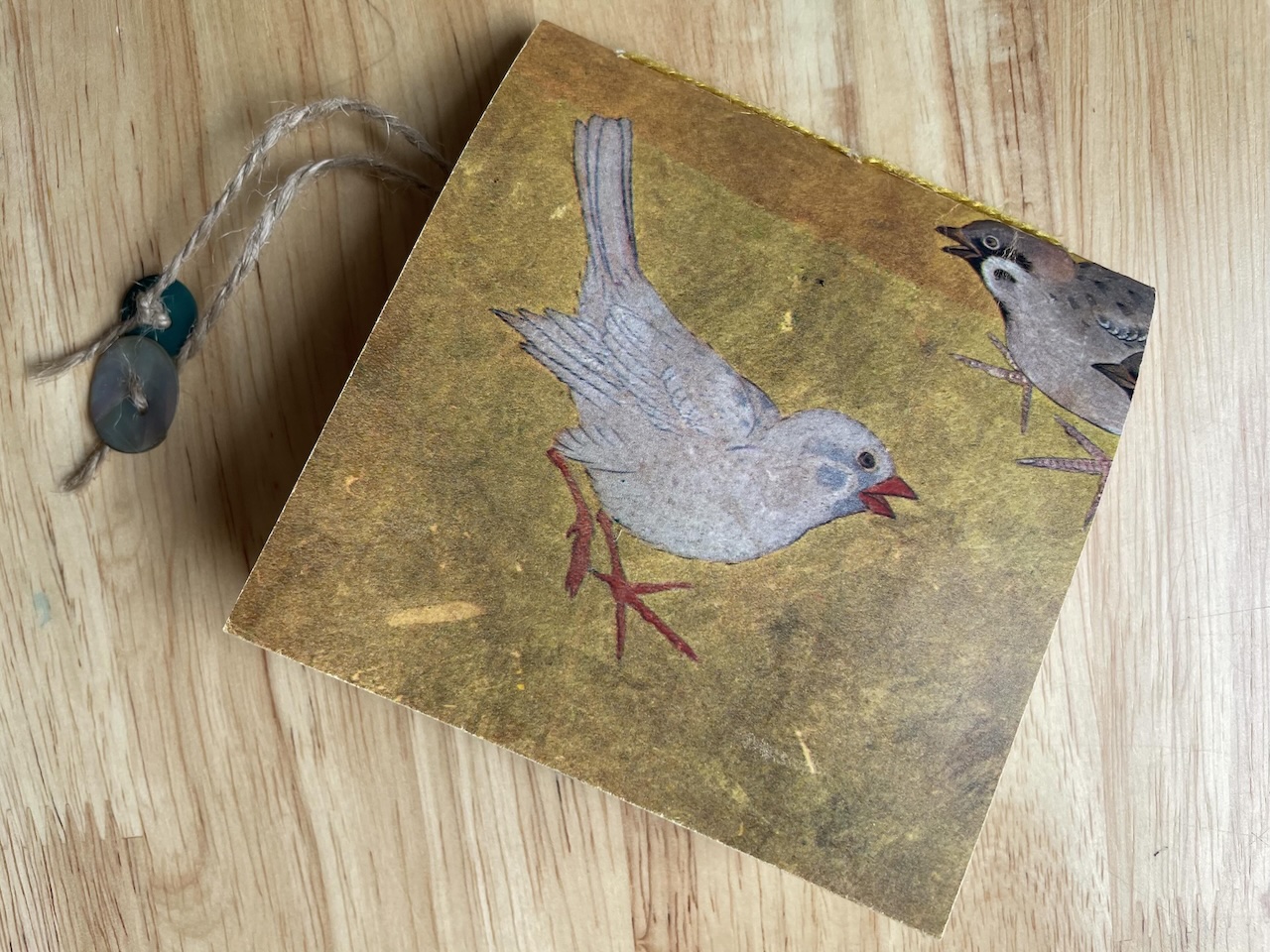
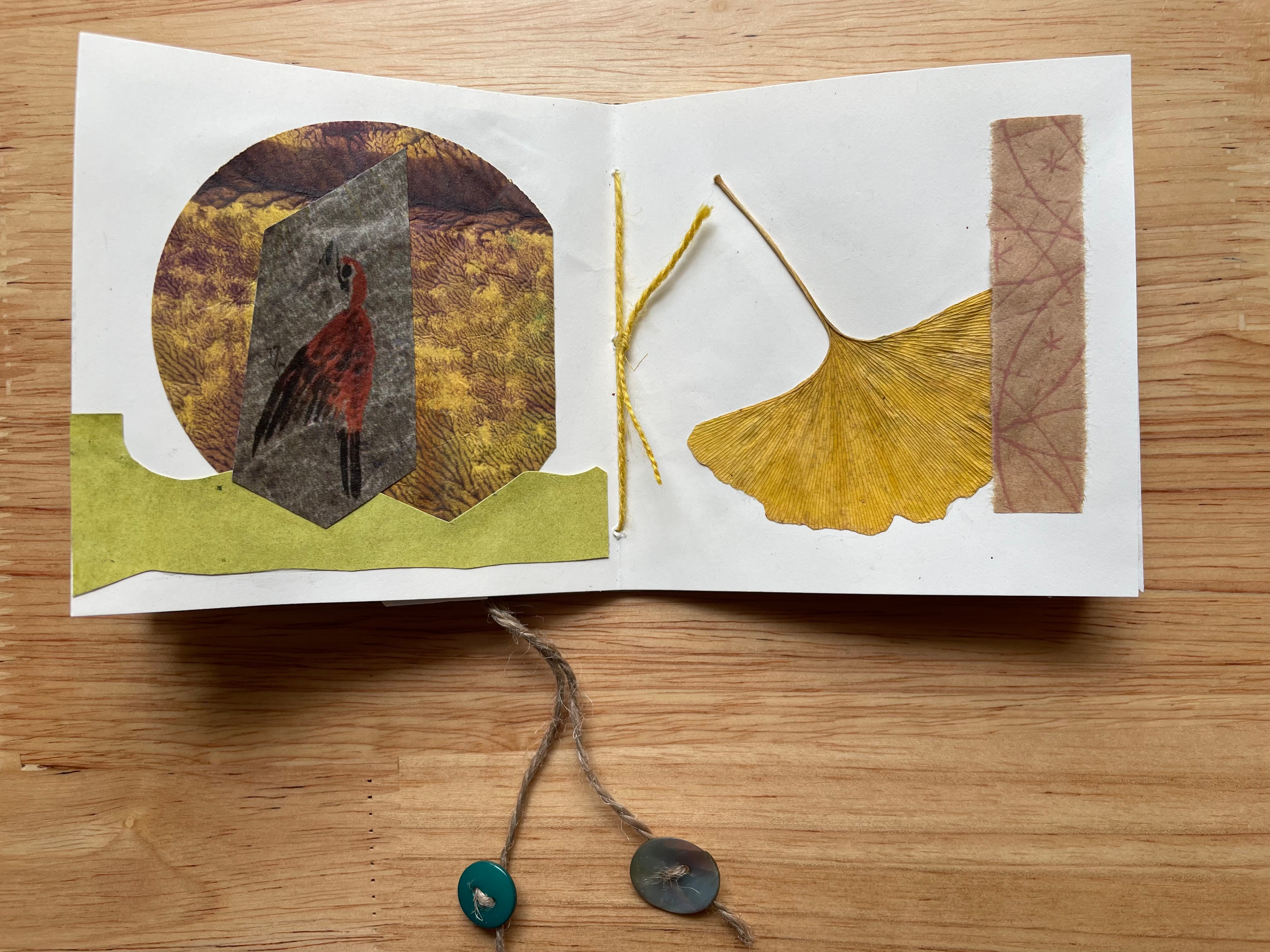
“Earth Holder”
These small, collaged journals and art pieces were sent off to friends – one in Australia – as soon as I completed them. In addition to the art we create in Advent Dark Journal, Suzi encourages us in new, transformational directions. Since I’ve become a regular in Suzi’s workshop, I’ve added a tradition our adult sons and partner enjoy when they visit for the holidays – a fireside Winter Solstice ritual. More about that in an upcoming post, but suffice it to say, Suzi has shown me how to weave a daily creative practice into my life in ways that promote my well-being and that of others in my life.
It is the animal in us that knows the dark. This season stirs that animal in us, and stirs the memories that live in all of us, submerged so deep, of the ancient dark, of a time before gods, before form and words and light….Winter reminds us: the dark was first.
…maybe death is all potential, a means of moving on. And on we go, absorbed into the wet warm belly of eternity, or the roaring big black void, back here as a robin or a wren, in dusted orbit around another planet’s moon, riding on the light. Winter Solstice
Nina MacLaughlin’s Winter Solstice is stellar writing, moody and mysterious. She reminds us of our primal, animal origins; ultimately, we are bound up in the life web and rhythms of the earth, whether we recognize this or not. I purchased Nina’s Summer Solstice essay as well, which I’ll read come summer.
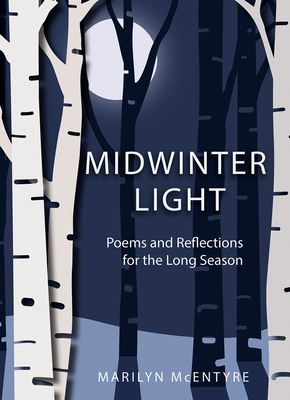
If you are interested in writing that is more traditional, something you can read in small bits alongside your daily journaling or meditation, I recommend Midwinter Light: Poems and Reflections for the Long Seasonby Marilyn McEntyre. Each day, she includes a poem with commentary that honors this dark season, when growth seems to stop but germinates unseen, to be manifested as the light returns.
“Winter makes us see differently. Noticing is rooted in desires so easily satisfied in spring we barely feel them—for color, for movement, for the sound of birds, and things that bloom. On a walk in midwinter, we experience solitude in a different key. We are surrounded by reminders of mortality and loss, by the absence of what is lush and vivid. We are clothed in layers and aware of our bodily needs in new ways. And the quiet, sometimes, is palpable. It is a good time for prayer: the veil between this dimension and the next seems to have thinned.” Marilyn McEntyre, Midwinter Light: Meditations for the Long Season
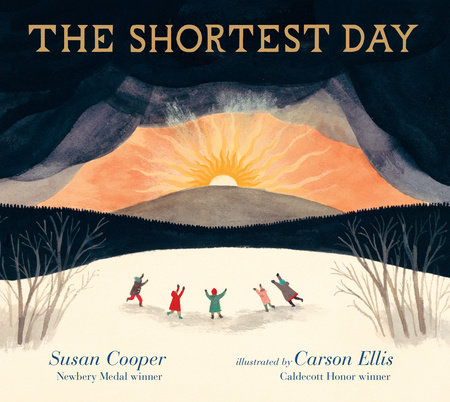
Finally, I discovered an excellent picture book with a poem by Susan Cooper and art by Carson Ellis. Both Susan and Carson have won the highest honors for children’s books, and this particular collaboration is special. Susan’s poem “The Shortest Day” is easy to find online. I encourage you to read it. I think you’ll find that Susan’s half-rhymes and cadence create an incantation that perfectly captures the magic and mystery of this dark season.
If you would like the perfect picture book for this time of year, for yourself, or as a gift, I suggest The Shortest Day, written by Newbery Medal winner Susan Cooper and illustrated by Caldecott Honor recipient Carson Ellis.
Happy New Year!
I will return in January with more about Advent Dark Journal, as well as commentary about a provocative documentary you won’t want to miss, especially if you are an avid reader and book-lover.
As Amal Kassir says in her winter solstice poem you may have listened to in the above-linked video, “It only gets brighter from here.”
By the way, PLEASE be sure to check out Amal Kassir’s website and watch her perform her heartbreaking poem, “Broken Arabic.” Her poetry collection, Scud Missile Blues, is available from Amazon. I encourage you to consider purchasing it. We need to support our young poets, and Amal is immensely talented. Just think of all the poems she has yet to give to the world!
Broken Top and Three Sisters, sunset. The star (can you see it?) is Venus. Photo by MJHallinan.
“We can find ways to believe in survival and to live for the children….In our tribal and indigenous cultures, which have endured for thousands of years, every decision must leave no one behind. ‘Progress’ has caused us to miss love and reciprocity… these can be restored through narrative. Can you tell us a story that helps?” Barry Lopez, Portland Festival of Books, 2019
On the very last day of 2019, my husband and I concluded our two-year and three-month grand adventure in central Oregon. We left the delightful, quirky little town on the edge of the wilderness that has been our home, and returned to the place on the Erie Canal in upstate New York where we’d raised our family.
Our plane landed just a few hours before the New Year at Greater Rochester International Airport.
We were sad to leave Sisters, Oregon, but happy to come back to the town we think of as home. In December, I made it my mission to soak up as much Sisters holiday joy and central Oregon natural beauty as I could.
Winter solstice: walking the Sisters Community Labyrinth. “At the end of every journey lies a labyrinth.” – St. Atilla
For the winter solstice, we did something special. Dozens of townspeople and visitors gathered in the diminishing light to silently walk the Sisters Community Labyrinth at the edge of the Deschutes National Forest. Each person carried a natural object – the husk of an acorn, a bone fragment, a pine cone – and threw it into a fire that symbolized transformation. Each object represented something the bearer was releasing, or something new arising in the flames.
We walked single file, each walker on his own journey in companionship with other souls on their journeys. We walked with our two sons, my meditation friends from the amazing Sisters Sangha, and many others – members of the community and visitors from afar who came to enjoy Sisters at winter’s portal. This communion is part of the beauty of the labyrinth.
At the Portland Festival of Books, November 2019
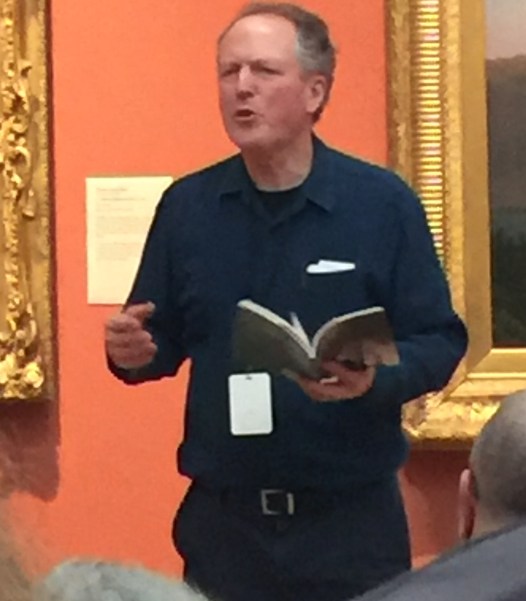
Oregon Poet Laureate Kim Stafford at a pop-up poetry reading, Portland Art Museum, Portland Festival of Books
Attending the Portland Festival of Books in November was a meaningful way to conclude my in-person Oregon literary explorations. My husband and I listened to the American author Barry Lopez and the Russian author Anna Badkhen converse about the role of the writer as explorer, seeker, and witness. Both have traveled the world many times over: Anna has written in depth about civilians in war zones, and Barry has reported in award-winning prose on flora, fauna and indigenous cultures across the globe.
They touched on how a writer finds meaning in her work and the moral and ethical responsibilities that come with bearing witness. There wasn’t a single empty seat in the auditorium, and the audience seemed to hang upon every word. I had the sense that we all knew what a privilege it was to hear the words of these great contemporary writers.
Barry Lopez asked this question:
“How are we going to take care of each other?
The storyteller recognizes when there is a disturbance … and has an ethical responsibility to take care of those in a culture living in disarray.”
First light. A friend advised us to come to this little park on the edge of town, where people enjoy waiting for sunrise.
Christmas shopping in Sisters
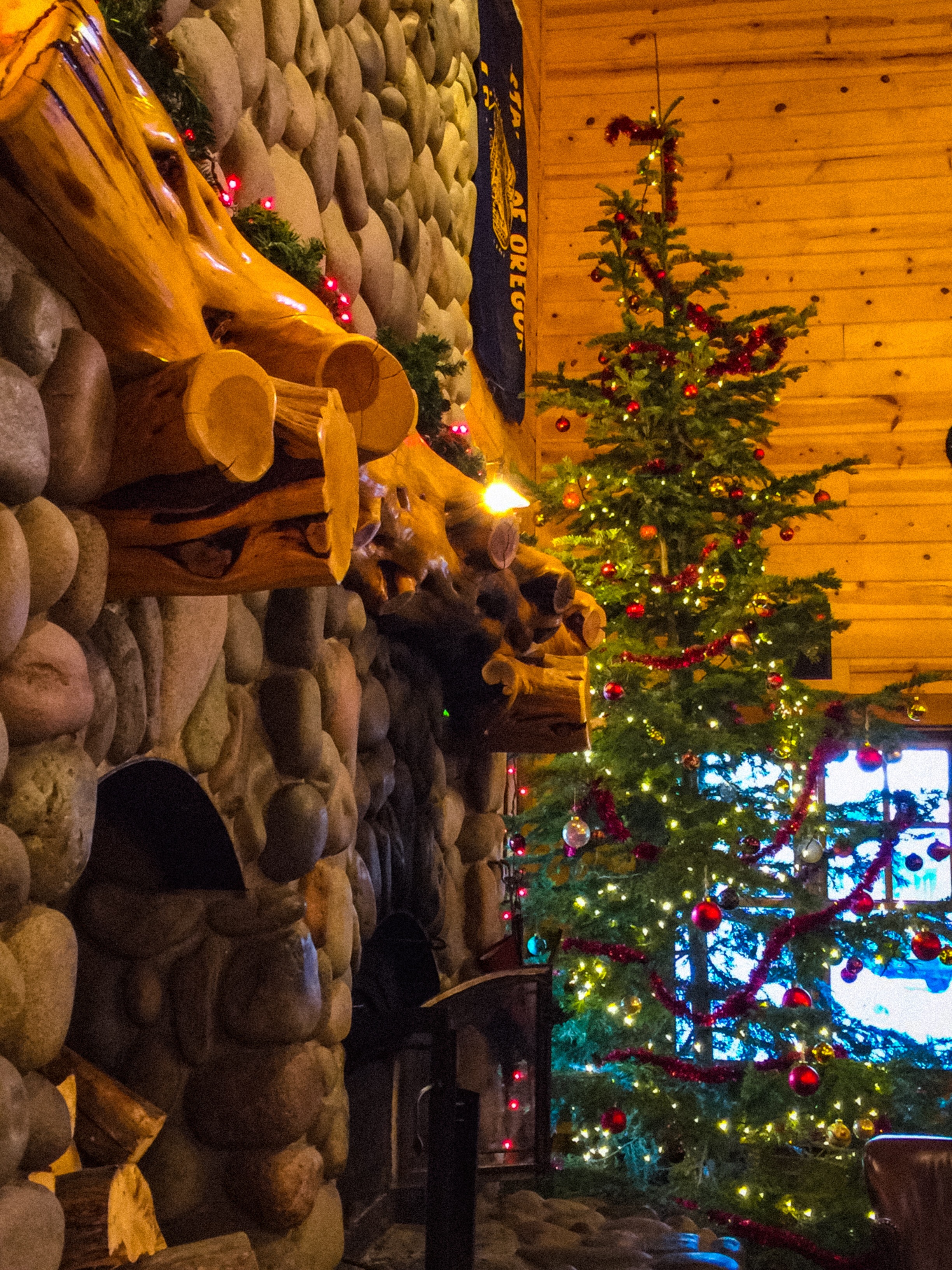
Warming up by the river rock fireplace at the magnificent Sisters Coffee Company. The flagship shop was designed by Sisters Coffee founder Winfield Durham and made from ponderosa pine, western larch, grand fir, and juniper.
Sometimes Santa and his reindeer need a little help. Ready for take-off at Sisters Eagle Airport.
Ponderosa pine sunrise
Coming up on Books Can Save a Life:
Five memoirs by five women with superpowers
Just about the coolest and most uplifting and loving and literary and funny and expansive collection of essays you could ever read, by a beloved Oregon writer







 Books Can Save A Life