Between the World and Me

Between the World and Me


“We should seek not a world where the black race and white race live in harmony but a world in which black and white have no real political meaning.” Ta-Nehisi Coates, Between the World and Me

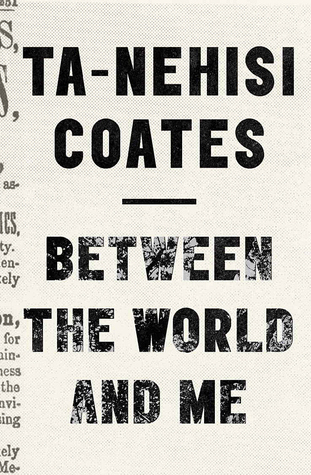
Between the World and Me, winner of the National Book Award, is written as a letter by Ta-Nehisi Coates to his 15-year-old son.

“You are growing into consciousness, and my wish for you is that you feel no need to constrict yourself to make other people comfortable.”

I read this book together with Ta-Nehisi Coates’ The Beautiful Struggle, a coming of age memoir about growing up black in West Baltimore, and the two are excellent read back to back. If you want to see what Ta-Nehisi Coates is all about, I recommend reading the memoir first, so you’ll have background about Coates’ childhood and family, and then follow up with Between the World and Me so you have some context.

Fair warning, though, I found neither book an easy read emotionally, and you may not either if you are a white American. (Or, as Coates would say, if you think you are white. Coates believes race is a falsehood.)

“Americans believe in the reality of ‘race’ as a defined, indubitable reality of the natural world. Racism – the need to ascribe bone-deep features to people and then humiliate, reduce, and destroy them – inevitably follows from this inalterable condition. In this way racism is rendered as the innocent daughter of Mother Nature, and one is left to deplore the Middle Passage or the Trail of Tears the way one deplores an earthquake, a tornado, or any other phenomenon that can be cast as beyond the handiwork of men.”

There is plenty of uncomfortable truth in these two books, and Coates does not mince words. Between the World and Me, especially, is meant to awaken America from its false Dream.

I grew up in a somewhat racially diverse town outside of Cleveland and attended public school alongside African Americans, but there was de facto segregation, with blacks in their own neighborhood not far from where I lived. In retrospect, and especially after having read Coates, I see how absolutely separate and different our lives actually were.

When I began reading The Beautiful Struggle, I found myself baffled by the words and phrases Coates used and many of his cultural references. I was reading a different language, the language of urban black America. The language is perhaps deliberately exaggerated in the first pages, and not decoded, maybe to act as a kind of culture shock or wake-up call to the reader.

A senior writer at The Atlantic, Ta-Nehisi Coates grew up in one of the toughest, most marginalized and deprived communities in America. His father was a Black Panther who later became a librarian; his employment at the Howard University library enabled his children to attend school there tuition free.

I’m not going to summarize too much about the books, because I can’t do justice to Coates’ eloquent, powerful prose as he describes how the African American body has been violated through slavery, segregation, incarceration, and death at the hands of our criminal justice system. His words are sometimes hard to take, and both books are unfailingly hard to put down. I was especially struck by these aspects:

  • How very terrifying it is to be pulled over or questioned by a police officer if you are black in America. I think the only thing more powerful than Coates’ words are the videos we’ve seen of incidents gone wrong these past few years. I respect the bravery of police officers doing incredibly challenging work, but I’ve also been following the news in Cleveland, where I grew up, and how the police department there has been investigated by the US Department of Justice. My son attends the U. of Cincinnati, where this past year an unarmed black man was killed by a campus security officer for no apparent reason. (The officer has been charged with murder.) When the video went viral, I was chilled by what I saw, frightened for my son and anyone who might be at the wrong place at the wrong time.
  • Coates recounts the first time he visited Paris, France. Growing up in West Baltimore, he could never have imagined such a gracious and beautiful place or that he would ever go there. It was moving to read Coates’ description of how easy it was for him to walk the streets of Paris, how differently he was treated, and how for the first time he wasn’t afraid.
  • Coates concludes that the fate of all of us is in the hands of those with power who think they are white – he believes many, though not all, African Americans are still too disenfranchised to change the system. But he fears that we as a country will reap what we’ve sown; that our hunger for power has also meant the abuse and destruction of the earth. He fears that in the end the earth will prevail, likely at great cost to humanity.

Here is one more quote from Between the World and Me, an example of his powerful use of language that some may see as divisive or offensive:

“The truth is that the police reflect America in all of its will and fear, and whatever we might make of this country’s criminal justice policy, it cannot be said that it was imposed by a repressive minority. The abuses that have followed from these policies—the sprawling carceral state, the random detention of black people, the torture of suspects—are the product of democratic will. And so to challenge the police is to challenge the American people who send them into the ghettos armed with the same self-generated fears that compelled the people who think they are white to flee the cities and into the Dream. The problem with the police is not that they are fascist pigs but that our country is ruled by majoritarian pigs.”

(And from “Whitey” Tim Kreider, read this. I happened to discover this link on my Facebook page the day I wrote this post.)

Have you read Between the World and Me or The Beautiful Struggle? What do you think of the final quote above? Please share your thoughts in the comments.
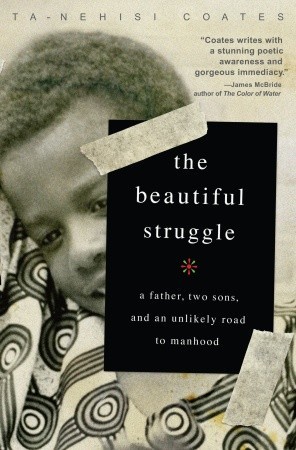


The Beautiful Struggle

My Favorite Things


Tulips in Orange


Books, writing, creativity, cool media and other delights….

  • Walking book clubs. Did you know these existed? Here are a couple in the UK hosted by two book bloggers who write fabulous reviews: Emily’s Walking Book Club with Daunt Books – turns out the one and only time I’ve been in London we went to Daunt Books, where we browsed for over an hour. Wish I’d known about Emily then, I’d have tried to connect with her; and  The Northern Reader – see also her Flower Power if you love gardening, flowers and nature lit.
  • Book spine poetry. A few weeks back in honor of April being National Poetry Month, I wrote some book spine poetry and asked readers to share theirs. Here is what Naomi at Consumed by Ink came up with. I love her little poems. Try it yourself, and if you’ve created book spine poetry you like, please share in the comments.
  • A good book. My favorite book bloggers always give me titles to add to my to-read list. I love this review of Hill by the French writer Jean Giono that Melissa wrote at The Bookbinder’s Daughter.
  • Instagram flat lays. I’ve been messing around with photography lately, teaching myself to do still lifes of books, flowers, and whatnot, and posting some of it on Instagram. I adore Cristina Coli’s floral work on IG, and enjoyed her “A Day of Creative Connection” blog post recently.

Have a great week!

litricity: a potent form of energy generated by great literature – – from Powell’s Compendium of Readerly Terms

April Lit
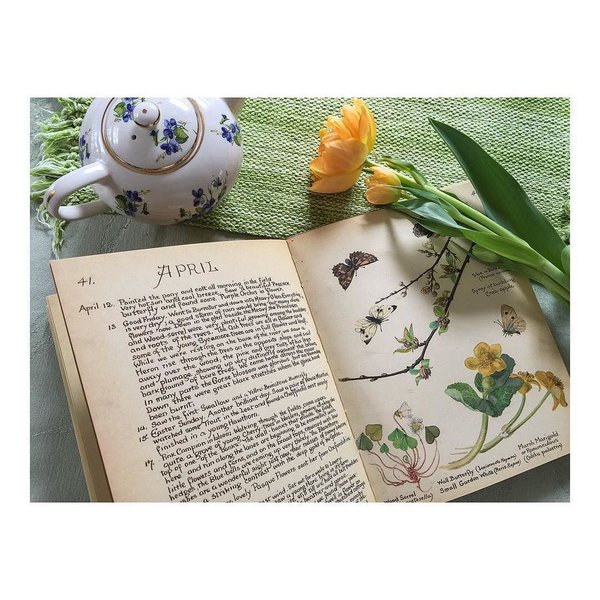
The Country Diary of an Edwardian Lady, by Edith Holden. First entry, January 1, 1906.


Barry Lopez brings us I, Snow Leopard

Snow Leopard
Male snow leopard

Photo by Tambako The Jaguar Creative Commons Attribution-Share Alike 2.0 Generic license

“I, SNOW LEOPARD is both a lyric and an elegy. It is easy to imagine its lines being loudly hailed in whatever country the poem finds itself in. It’s publication comes at a time when people everywhere have begun to wonder what a voice like this, suppressed for centuries, wishes to say now, in this moment when the Snow Leopard’s human brothers and sisters find themselves side by side with him. Imperiled.”   Barry Lopez

Barry Lopez


Barry Lopez came to Rochester this week to receive “The Art of Fact” award for literary nonfiction presented by The College at Brockport Writers Forum and M&T Bank.

If you’ve been following my blog, you know that Barry Lopez is one of my heroes, not quite at the level of Pope Francis and the Dalai Lama, but close. (See my blog’s header quote.)

Lopez is one of the very best nature writers, and if you love animals and wildlife, you’ll love his nonfiction books, essays, and short stories. He has travelled to 90 countries and has a tremendous respect for the animal world and the many indigenous peoples he’s come to know.

I, Snow LeopardLopez came to Rochester to receive his award and to deliver to us the poem “I, Snow Leopard” by Jidi Majia. 

I wasn’t familiar with either the poet or the poem, but Lopez said that when he found out “I, Snow Leopard” had been published in Asia and Europe, but not in the United States, he had to set things right.

He felt that it was vitally important that the American people hear the words of the snow leopard in this poem. So he saw to its publication here, and wrote the foreword to the English edition.

Jidi Majia, a member of the indigenous Nuosu (Yi) people who live in the mountains of southwestern China, has won numerous literary awards.  As far as I could tell from what I found online, few of his poems have been translated into English.

Majia’s poem is written in the words of a snow leopard, which is viewed by the Nuosu as a wisdom keeper, a being with “biological authority,” according to Lopez.

He told us that when he first began traveling the world and exploring, in his thirties, he viewed wild animals in an amateur, superficial, childlike way, until he learned to embrace the much more refined view held by native peoples.

A poem is a door anyone can walk through, Lopez said, and this poem is the mysterious and elusive snow leopard’s expression of grief and a warning to human kind:  “Do not hunt me any longer.”  Human violence toward animals puts everyone in peril, animals and humanity alike.

Before Lopez began, he said he wasn’t worthy to read “I, Snow Leopard,” but he’d try. He said that, as far as he knew, we’d be the very first American audience to hear the poem.

We listened to this exclusive reading in the soaring space that is the chapel in Rochester’s Temple B’rith Kodesh. “I, Snow Leopard” is beautiful, haunting, simply expressed and accessible even to listeners not accustomed to hearing poetry.

Uncia_uncia
Photo by Bernard Landgraf. CC BY-SA 3.0


After the reading Lopez answered questions and spoke informally and earnestly. As we listened, the audience seemed to be hanging on his words.  Here are some direct quotes I managed to scribble in my notebook:

“Each soul is essential to the warp and weft of the universe.”

“I want to see people come alive.”

“We know what to do and we have to do it now.”

Fixing our world “will take people of great courage. People like you. Because Washington is not doing it.”

“We should be holding hands.”

“The only thing that really matters is to be in love.”

I wrote down the following words, too, but I don’t recall if they are from the poem or if they are Barry Lopez’s words. I believe they are both:

“There is no other place for any of us to go.”

“I, Snow Leopard” is available on Amazon. Barry Lopez told me it is also to be published in a future issue of Orion Magazine.

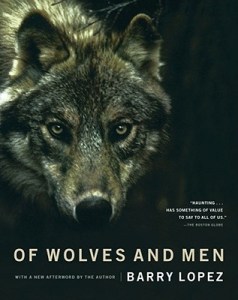
Of Wolves and MenIf you’d like to read Barry Lopez, Arctic Dreams, his nonfiction work about the Far North that won the National Book Award, is a great book to start with. I haven’t yet read Of Wolves and Men, but when I saw the mesmerizing cover photo of a wolf on display at the reading, I added it to my to-read list.

Lopez writes fiction, too. I especially liked his subversive collection of short stories, Resistance, which he wrote shortly after 9/11, about surveillance and “parties of interest” to the government.

If you want to know more about the fascinating snow leopard, Peter Matthiessen’s memoir, The Snow Leopard, is a great read.

The Secret Life of Walter Mitty, with Ben Stiller and Sean Penn, is one of my favorite movies. Watch it. You might spot a snow leopard.

When Breath Becomes Air

When Breath Becomes Air

“There is perhaps only one thing to say to this infant, who is all future, overlapping briefly with me, whose life, barring the improbable, is all but past.

That message is simply:

When you come to one of the many moments in life where you must give an account of yourself, provide a ledger of what you have been, and done, and meant to the world, do not, I pray, discount that you filled a dying man’s days with a sated joy, a joy unknown to me in all my prior years, a joy that does not hunger for more and more but rests, satisfied. In this time, right now, that is an enormous thing.”   Paul Kalanithi, in a letter to his daughter.  Excerpt from When Breath Becomes Air

My brother passed away from pancreatic cancer last fall, and I didn’t feel quite ready for When Breath Becomes Air, a Stanford neurosurgery resident’s memoir about his cancer diagnosis. Also, in my work as a clinical librarian, I’d spent time supporting and rounding with clinical staff in neurology/neurosurgery. I had a special affection and respect for the brilliant, hard-working residents, who were about the same age as my sons. So to read about the death of a young resident from lung cancer….

But if you are a living, breathing person who likes to read memoir and nonfiction, and if you consider yourself an engaged participant in our death-denying culture, I would say When Breath Becomes Air is required reading.

One of my favorite authors, Ann Patchett, who owns a bookstore that practices the art of making personal recommendations to readers based on their interests, says, “This is one of the handful of books I consider to be a universal donor – I would recommend it to anyone, everyone.” 

On publication, When Breath Becomes Air shot to number 1 on the New York Times Nonfiction Bestseller List. So when I saw Paul Kalanithi’s memoir on our library’s “Most Wanted Book” shelf, I decided to grab it.

Paul Kalanithi set out to be a writer and then switched to medicine and neurosurgery, one of the most challenging and consuming of all clinical disciplines. He believed that a person’s brain determines his identity, which is inseparable from his values and sense of life’s meaning.

Finding meaning was all-important to Kalanithi. During his residency, Paul came to see it was his responsibility to do his best to give his patients the quality of life that would allow them to live according to their most precious values.

We need more doctors who have both the time and desire to get to know and serve their patients in this way, wouldn’t you say?

In his memoir, Kalanithi says the twin pursuits of caring for patients with brain illnesses and writing as a way to explore the meaning of life’s joys and traumas was his perfect calling.

It’s just that he hadn’t planned on doing the writing part until much later in his career. Many months after his diagnosis, when he could no longer work as a neurosurgeon, Paul chose to use his remaining time to write a memoir that, among other things, explores living and dying from the unique perspective of someone who is both a patient and healer.

He and his wife decided to have a child, too. Paul writes of becoming a father with great joy. It reminded me of last summer, when my brother (and our extended family) lived with end-of-life illness, even as we celebrated his daughter’s wedding.

As you can see from the memoir excerpt above, Paul was an extraordinary writer. Medical humanities literature, also known as narrative medicine, written by patients, doctors, nurses, and clinicians, is really coming into its own, and I think When Breath Becomes Air will become a classic.

Paul Kalanithi stands right alongside Anthony Verghese, Danielle Ofri, Sherwin B. Nuland, Tilda Shalof, Theresa Brown, Atul Gawande, Oliver Sachs, and others as one of the best. Really, his memoir is not to be missed.

“The fact of death is unsettling. Yet there is no other way to live.”  Paul Kalanithi

Below is the trailer for When Breath Becomes Air.

Have you read When Breath Becomes Air, and what did you think? Have you read another medical humanities or health related memoir, novel, or essay that you have especially liked? Please share your thoughts and recommendations in the comments.


My Favorite Things

I’m trying something new.

Once or twice a month I’ll share newsy items, links to some of my favorite blogs about books, writing, and creativity, and whatever else strikes my fancy that I think you might like.

Here is what’s caught my eye lately:

  • A short, beautiful video, “Lessons from Flowers,” that is a narrative about death and loss. Larisa Minerva at Wildest Blue says we could stand to change our attitudes about death. My next post will feature a new memoir about death and dying.

67 Shots


April is National Poetry Month

Book Spine Poetry.jpg


Let’s go poemcrazy.

Here is some book spine poetry to celebrate National Poetry Month.

This is in memory of my brother. His birthday is April 5.


A Cancer in the Family

For a little while,

When breath becomes air,

Find me

Braiding sweetgrass &

Burning down the house.


If you have book spine poetry to share, please leave it in the comments.