To the Bright Edge of the World

To the Bright Edge

Lieut. Col. Allen Forrester, June 25, 1885:

“Pruitt keeps shouting above the storm–Do you feel that? Can’t you feel that?

What he says makes no sense. He says there are hands on him. Something pulls at him. He says he has to run. I have warned him to stay put.

(undated entry)

My dearest Sophie. I pray you will read this. You are first and last to me.

I do not know if we will survive the night. They are all around us. They scream and cry so that it is hard to think to put these words on the page.

You must know that I love you.

I am not afraid of death but instead of the passage from here to oblivion, of being aware of its coming. I would rather have been run through with a spear than face this long dread.”

Eowyn Ivey’s novel, To the Bright Edge of the World, is truly a standout for me, a cut above the rest.

Many of you know that I’m partial to nature and wilderness stories, especially historical ones. To the Bright Edge of the World reminds me of one of my all-time favorite novels, Voyage of the Narwhal by Andrea Barrett. The novel and short stories of Anthony Doerr come to mind as well when I read Eowyn Ivey’s writing, which is lyrical and replete with exquisite detail. A Woman in the Polar Night by Christiane Ritter is another fine book, a memoir, in the same vein.

“I fell in love with this book; it captured both my head and my heart, completely and utterly.” – Jane, Beyond Eden Rock.  — I was browsing on Goodreads and found Jane’s endorsement of To the Bright Edge of the World. Her words spoke to me because they are my sentiments about the novel, too, and I couldn’t have said it better.

I loved Eowyn Ivey’s first novel, The Snow Child, which was selected for If All of Rochester Reads the Same Book in 2014. Like The Snow Child, To the Bright Edge of the World takes place in Ivey’s native Alaska. It’s a great love story, a  wilderness tale of a hero and heroine’s quests infused with magical realism, and a flawlessly researched portrayal of 19th century Alaska.

Lieutenant Colonel Allen Forrester must lead a dangerous, seemingly impossible expedition through the fictitious Wolverine River Valley deep in the Alaskan wilds of 1885, a journey no one has ever survived. His pregnant wife, Sophie Forrester, stays behind in Vancouver Barracks, destined to have adventures and heartbreaks of her own.

Ivey has cleverly constructed the narrative entirely from letters, journals, diaries, newspaper articles, military reports, photographs, and other documents.

We, the readers, are privy to the contemporary correspondence between Walter Forrester, Allen Forrester’s great nephew, and Joshua Sloan, who is part Native American and curator of the Alpine Historical Museum in Alaska. Walter sends his great uncle’s papers to Joshua in the hopes that he’ll display and archive them for safekeeping. As Joshua makes his way through the journals, diaries, and letters, he and Walter piece together Allen and Sophie’s stories, fill in the gaps, and reflect on their own lives.

As always, Ivey’s descriptions of geography and landscape take us vividly to long-ago Alaska:

“The canyon bound the Wolverine so that when, over the course of the winter, the ice moved, it crumpled violently. Great blocks three feet thick & as much as twenty feet high had been torn asunder & turned sideways. It seemed an impassable range of buckles & ridges & upended slabs of ice pressed up against the canyon walls, which are vertical rock the color of lead.”

Here are Sophie’s words as she undergoes her own dark night of the soul:

Sophie Forrester, Vancouver Barracks, April 26, 1885:

“…it continued its steady and hard rapping, and the sound became more and more horrible…The raven stopped its knocking and cocked an eye toward me.

I then noticed something most peculiar….A bird’s eye ought to be flattened in shape, with a dark iris surrounded by a dark-gray sclera, and entirely unmoving in its socket. Yet this eye was round, with white sclera, and it rotated about in the socket. It looked nothing like a bird’s eye, but rather that of a mammal. More to the point, a human.” 


nypl.digitalcollections.510d47e1-2a08-a3d9-e040-e00a18064a99.001.w
A raven shape shifts into a trickster who brings Allen and Sophie good fortune and sorrow.

The New York Public Library. (1849). Raven.

nypl.digitalcollections.510d47e1-29f2-a3d9-e040-e00a18064a99.001.w
Sophie Forrester teaches herself the art of photographing birds. Her descriptions of the technical and creative challenges are beautifully rendered, and inspiring.

The New York Public Library. (1901 – 1914).Horned And Tufted Puffins.


nypl.digitalcollections.510d47e1-1af4-a3d9-e040-e00a18064a99.001.w
Allen Forrester’s darker mission is to assess tribal threats to US expansion in Alaska, even as native tribes give life-saving aid to Forrester and his men. The author weaves Native American myths into the plot. These fierce stories blur the line between humans, animals and nature. In the end, the hard wisdom of the stories so valued by indigenous people seems far truer than the scientific knowledge possessed by “civilized” people.

The New York Public Library. (1869-04). Indian summer encampment.


Have you read To the Bright Edge of the World or The Snow Child? What did you think? Can you recommend similar historical books about nature, travel, and adventure, fiction or nonfiction? Click on the comments link in the left sidebar and let us know.

What does Tribe (the book and the noun) have to do with family reunions? I’ll be writing about that in my next post…
Welcome to the Goddamn Ice Cube

WelcomeToTheIceCube

“For all its occasional monotony, driving a dogsled never let my mind wander. It was an overwhelmingly physical experience: the cold, the shifting runners, the wandering trail. It made my mind shallower. There was the brushing sound of snow under the sled. There were the dogs, the beautiful dogs, running, and I could spend hours watching the changing, hypnotic rhythms of their back legs punching up and down. Occasionally I talked to them, and then I’d drift off in midsentence and recall the rest of my thoughts minutes later. Or else I’d run up a hill, or fix a tangle, or scooter my feet to keep warm. It didn’t matter. I was still just driving dogs.”

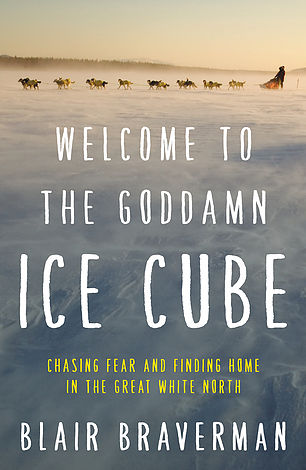
Blair Braverman sent me an advance copy of her just-published memoir, Welcome to the Goddamn Ice Cube: Chasing Fear and Finding Home in the Great White North.

I’m so glad she did, and not just because it was great reading in the middle of a hot July. This is an exquisitely written coming of age story about Blair’s love affair with the North, focusing especially on her stays in Norway, where she set up a small museum, learned to drive sled dogs, and befriended a town; and her stint as a tour guide on a glacier in Alaska.

I loved reading about Blair’s adventures, and her depictions of nature and the wild are so well done. But for me the heart of the story was her relationship with the folks in a northern Norwegian town, Mortenhals, especially a sixties-something shopkeeper, Arild, who becomes a beloved friend and Blair’s Norwegian “father.”

There is a dark theme that motivates Blair to make her way in the North that is just as strong as her love of the harsh and beautiful land, but this is not really a memoir about trauma: there is so much more light than shadow.

Raised in California, Blair had a clear calling for the North, but one of her first stays in Norway had an unfortunate twist. As a 16-year-old exchange student, she didn’t feel safe around the strange, sexually threatening father of the family she was placed with. Her subsequent journeys North become, in part, a way for Blair to prove to herself she could be tough and strong in a world where women are often vulnerable to physically threatening men.

If you are a fan of autobiographical writing, you’ll appreciate the quiet, intimate scenes of small town life just as much, if not more, as Blair’s adventures out in the elements. I marveled at the skill with which Blair rendered scene after scene, and found myself deconstructing long passages so I could capture some of her magic in my writing.

Blair is now a dogsledder in northern Wisconsin and training to race the Iditerod in 2019. She’ll have lots more to write about, which is great for us readers who love top-notch memoirs and nature writing.

Here’s a 9-minute look at what it’s like to run a 100-mile dogsled race.


My Favorite Things

BuddhaEdited

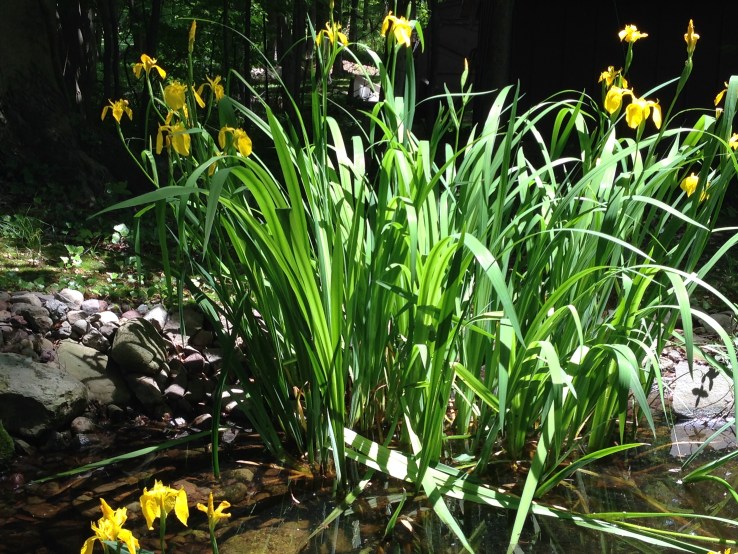
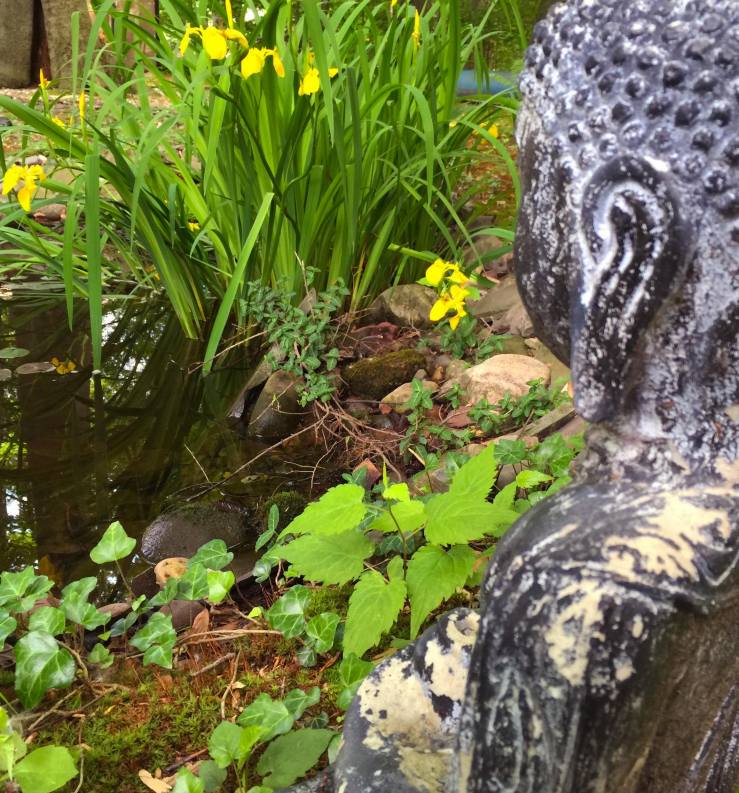
Our backyard pond. If you’d like to listen to a story about this special place, please click on this link: “Water Bewitched.”


Not long ago, I wrote about podcasts being one of my favorite things and how I was in the midst of creating one myself. My audio essay about home, “Water Bewitched,” is now finished and up on Terrain.org: A Journal of the Built + Natural Environments.

(Technically, it isn’t a podcast because you can’t subscribe to get new episodes. You can, however, subscribe to Terrain.org, in which case the next essay in my audio series will be emailed to you.)

It’s been a difficult week here in the US, and if the news has been getting to you like it has me, I hope you’ll take a restorative six minutes and listen to my little story. It’s the first in a series called From Where I Stand, in which I’ll explore our connection to the places we call home.

Please let me know what you think in the comments here or on the Terrain.org site, and share the link with your friends.

I’m honored to have my work on Terrain.org, which has great fiction, nonfiction, poetry, videos, interviews, articles, and other fabulous content.

IMG_2983Speaking of podcasts, I recently discovered a great book podcast, WSIRN, which stands for What Should I Read Next, with Anne Bogel. You can subscribe to it on iTunes.  I love this series, especially What Should I Read Next Podcast #28, which features Browsers Bookshop owner Andrea Y. Griffith.

Some of you may recall that I wandered into Andrea’s bookstore when we were vacationing in the Pacific Northwest. Olympia is lucky to have Andrea and such a finely curated bookstore. On the podcast, Andrea talks about how she came to own Browsers Bookshop, what she’s been reading that she loves, what she’s read that she hasn’t loved (I whole-heartedly agree with her choice on the latter), and what’s she’s craving to read.

And last, but certainly not least, there is this. I wish Choir!Choir!Choir! would come to my town.

What are you reading or listening to this summer? Any 5-star recommendations?

The Eagle Tree


IMG_2983
Browsers Bookshop in Olympia.

We spent part of our recent Pacific Northwest vacation in Olympia.

I know exactly one person who lives there, but she doesn’t know me – the artist Nikki McClure, whose work I admire.

We were exploring the center of town, when I spotted Browsers Bookshop, and of course we had to go in. About three minutes later, Nikki McClure walked in. She was there to sign copies of her most recent book, Waiting for High Tide.

But it gets weirder than that. After I finished browsing and had chosen a couple of books, I introduced myself to the bookstore owner, Andrea Y. Griffith. Turns out, Andrea knew my name. We are both former medical librarians, and apparently a few years back I edited an article she wrote for a Medical Library Association conference.

Waiting for High Tide
Nikki McClure’s latest book

I love Andrea’s bookstore, which has been in business since 1935. Andrea and her husband recently bought the shop and are reviving it. She’s doing a terrific job. I enjoyed browsing the store; I saw many new and intriguing titles I’m unfamiliar with, and she had an excellent selection of titles about the Pacific Northwest and nature, as well as other categories. I could tell immediately that the book selections are carefully curated – that’s of course what you can expect from a librarian.

I encourage you to read a bit about what Browers Bookshop is all about here.

IMG_2994I purchased the young adult book The Eagle Tree by Ned Hayes, who is from Olympia, as well as another book I’ll tell you about in my next post. The artwork on the cover of The Eagle Tree pulled me in, and since I’d been awed by the massive and venerable old trees we were seeing in Olympic National Park, I thought the book would be a good traveling companion.
It’s about a 14-year-old boy, March Wong, who is on the autism spectrum and obsessed with trees. Written in first person from the viewpoint of March, the novel often reads like encyclopedia entries because that is how March expresses himself, so you have to be fascinated by trees to bond with this book. I took to it immediately, as have many other readers, although there are some readers on Goodreads who disliked it for this reason.

I loved learning about the ecosystem of trees and watching March become willing and able to connect to other people as he tries to save the Eagle Tree, a monolithic Ponderosa Pine, from being cut down. Even though the tone can be factual and didactic, it’s really more expressive and lyrical than anything else, which is a tribute to Ned Hayes’ fine writing. I highly recommend this book to young adults, and their parents.

I was impressed when I saw that an author’s talk sponsored by Browsers Bookshop featured local actors performing scenes from The Eagle Tree. This is an independent bookstore that goes above and beyond to enrich the community and promote local authors.

Here is some of what March Wong has to say:

“I do not like this idea that we have begun to kill off—at great velocity and accelerating speed—all of the things that sustain us. I didn’t like it at all when I first thought of it, but most people around me do not seem that disturbed by it, even though the knowledge of this is obvious and readily available to anyone who looks up trees on the Internet. At least, no one seems bothered, because no one has taken action to amend it. So they must not care. That is the only explanation I can think of for the lack of reaction to this fact.”

IMG_3252
In Olympic National Forest

“Most of the trees are already dying. All across North America from Mexico to Alaska, forests are dying. Seventy thousand square miles of forest—that’s as much land as all of the state of Washington—that much forest has died since I was born. What if I am growing up in a world that will not have trees anymore by the time I am my grandfather’s age?”

IMG_2907
This is a nurse log. March Wong in The Eagle Tree will tell you what that is.

“There is an ocean of light around us. We are surrounded by it, we swim in it, we move through it every day.”

IMG_2912
Reminds me of the flowing creek nearby


IMG_3240
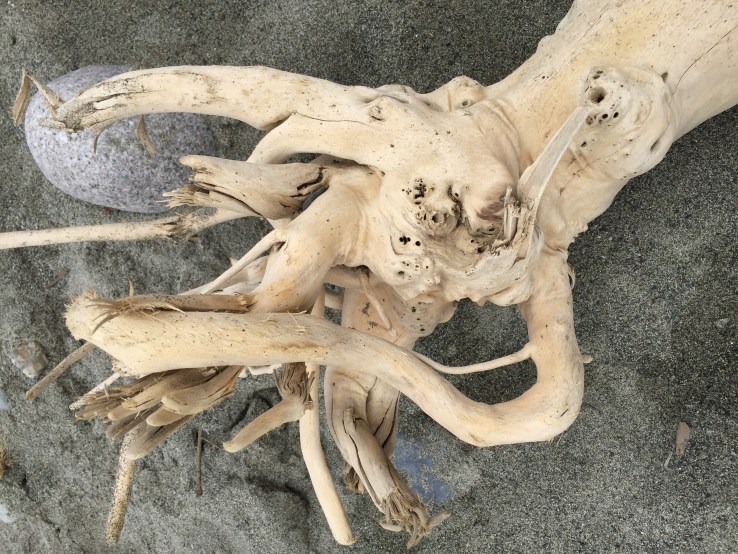
Nature’s sculpture. Dungeness Spit is littered with driftwood.


IMG_3229.JPG
What you can make from a tree. This is in Sequim, Washington.

My Favorite Things

….on the Olympic Peninsula….

We’re on vacation exploring the magnificent beauty of the Olympic Peninsula and getting to know Port Townsend, Sequim, Port Angeles, and Olympic National Park.

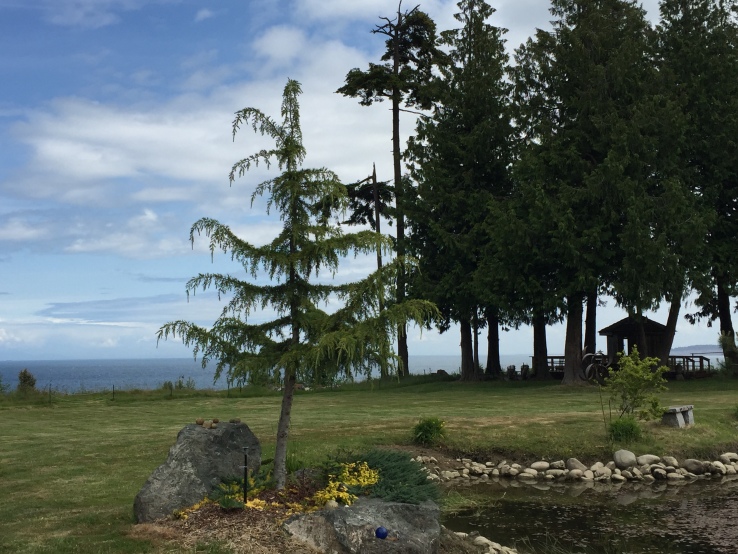
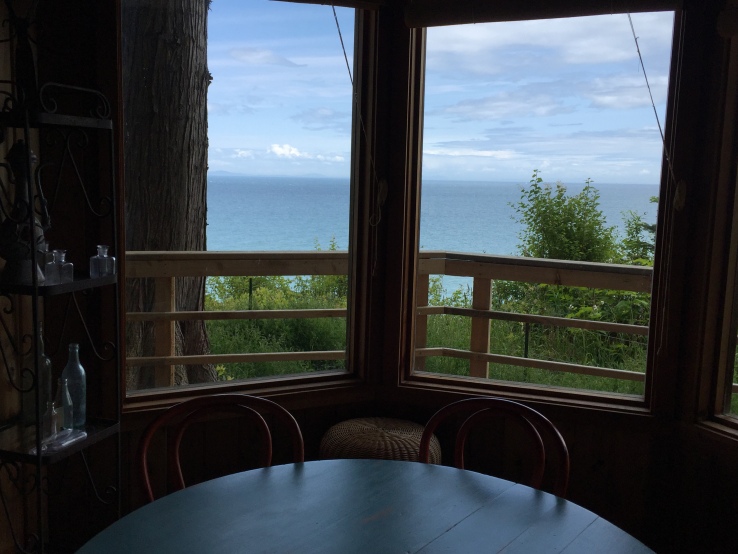
The airbnb  where we’re staying is on a cliff overlooking the Strait of Juan de Fuca. The octagonal structure in the photo below is where I’m writing this blog post.

IMG_3056.JPG

Our temporary home is a former barn that has been beautifully converted into a comfortable dwelling filled with Native American, Mexican, and Americana art, quilts, and rugs. I spent more than a few hours on airbnb looking for a place to stay, and my research paid off.

IMG_3033

There are lush gardens on the property and a tree farm across the road along with a view of the magnificent snow-covered Olympic Mountains. Sea in the backyard, mountains in the front yard.

IMG_3196

IMG_3171.JPG

IMG_3210.JPG

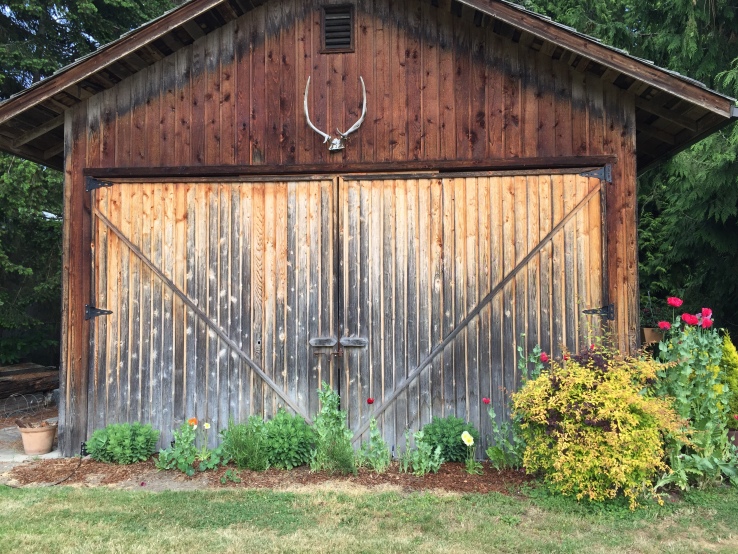
I love the weathered colors and textures of this old structure. It is a workshop/studio filled with fabrics – I believe one of the owners is a textile artist, and several of her quilts grace the walls where we’re staying.

IMG_3052

IMG_3053

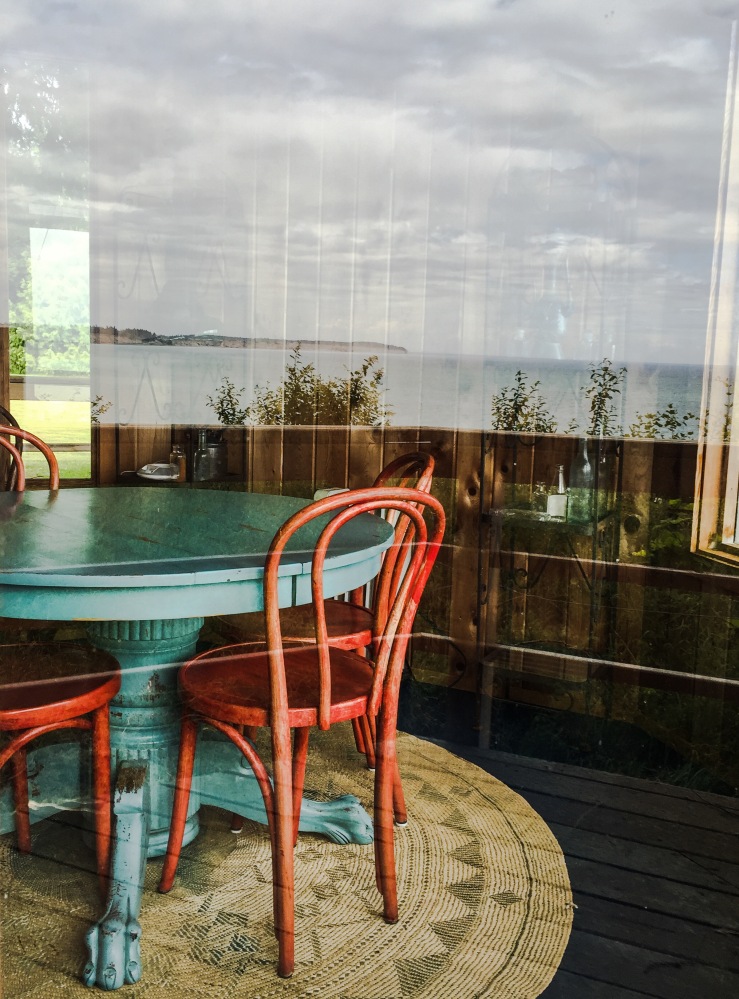
Below is the interior of the little octagonal retreat, which comes equipped with a heater and bookshelves. All you need is a mug of hot coffee or tea to feel right at home. You can see a reflection of the view in the top half of the photo.

Early this morning my husband saw two bald eagles perched on a tall, dead tree nearby. It had rained in the night, and the pond visible in the first photo was filled to overflowing.

IMG_3223.JPG

IMG_3109

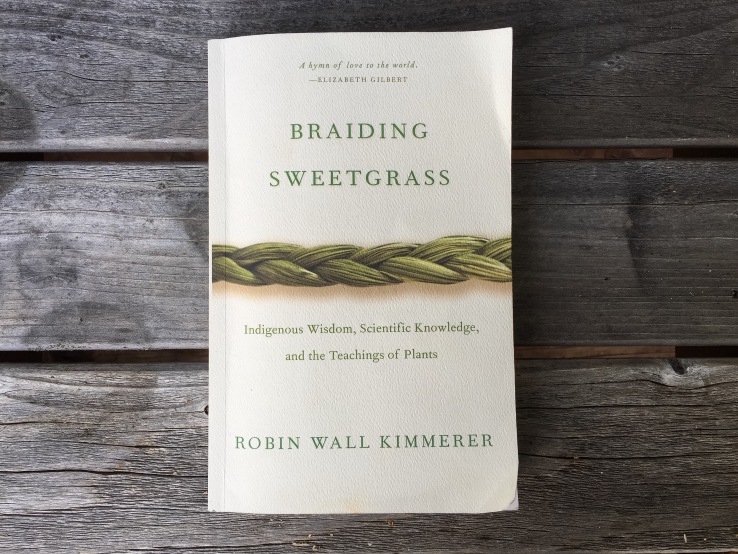
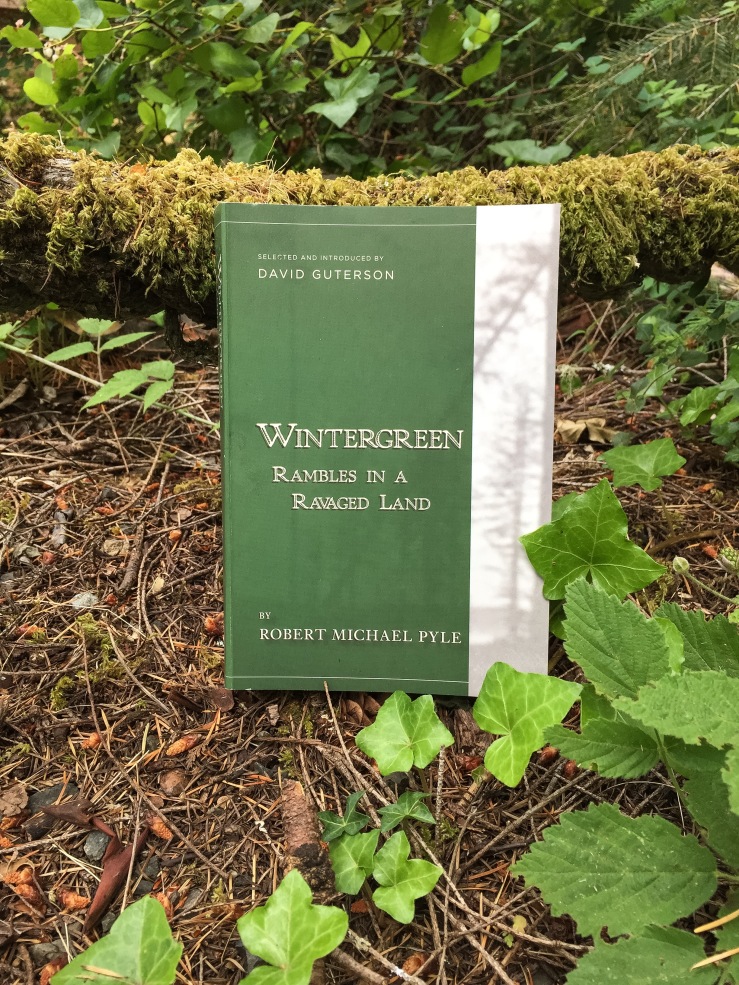
I’d started reading Braiding Sweetgrass back home, and I’m continuing to read it slowly, a chapter at a time. A good companion is Wintergreen: Rambles in a Ravaged Land by Robert Michael Pyle, who writes of the extensive logging that has stripped the Willapa Hills of southwestern Washington, where he has lived for thirty years.

I had the pleasure of meeting the author at the Wild Arts festival in Portland last fall. Note that there is an introduction by David Guterson in this edition. Robert Michael Pyle is a generous Santa Claus of a man who teaches every year at Fishtrap, a retreat for writers who are passionate about the West.

IMG_2894

IMG_2892.JPG

IMG_3201

More later. I’ll tell you about a wonderful indie bookshop I visited, its dynamic owner, the person I happened to run into there in a moment of serendipity, and the books I bought.

Have you been to the Olympic Peninsula? If so, what are your favorite spots? Can you recommend books or authors connected with this part of the world?


Braiding Sweetgrass

Braiding Sweetgrass cover

“Hold out your hands and let me lay upon them a sheaf of freshly picked sweetgrass, loose and flowing, like newly washed hair… Hold the bundle up to your nose. Find the fragrance of honeyed vanilla over the scent of river water and black earth and you understand its scientific name: Hierochloe odorata, meaning the fragrant, holy grass. In our language it is called wiingaashk, the sweet-smelling hair of Mother Earth. Breathe it in and you start to remember things you didn’t know you had forgotten.”   Robin Wall Kimmerer, Braiding Sweetgrass

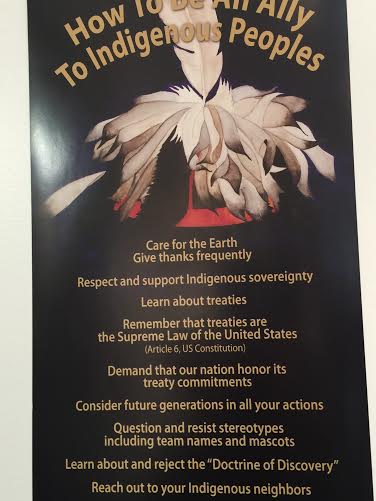
I’ve been working on my first podcast in a nature series, and as part of my research I visited Ganondagan, a cultural center and historic site that was the home of the Seneca Nation of the Iroquois Confederacy. It has an intriguing array of programs, from animal tracking to music to meditation to dance. Last Sunday, I heard Robin Wall Kimmerer speak about her book, Braiding Sweetgrass, which I highly recommend to anyone who cares about nature, the land, and saving the earth.

IMG_2842
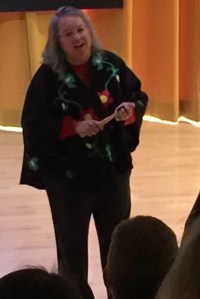
Robin Wall Kimmerer leads us in a song to save the earth at Ganondagan

I first heard of Robin Kimmerer via Elizabeth Gilbert, who found the inspiration for her book, The Signature of All Things, when she read Gathering Moss by Kimmerer.

I’m about a quarter of the way through Braiding Sweetgrass. I’m loving the poetry of her writing as I take in the simple but profound indigenous wisdom Kimmerer is eager to pass on. It’s wisdom we as a culture have long overlooked and which may save us all, if we pay attention. Braiding Sweetgrass is a book to read slowly and savor.

Robin is a botanist, a professor of environmental biology, and a member of the Citizen Potawatomi Nation. She is descended from the Anishinabekwe of the New England region; in the forced Native American migration her people settled in Oklahoma.

There, her grandfather, by law, had to leave the reservation when he was nine years old to attend public school. At that point, their language and most of their indigenous wisdom was lost.

Robin has spent a good part of her adulthood reclaiming both as she also pursues the life of a botanist and university professor.


597px-Making_Sweet_Grass_Medicine

Making sweet grass medicine. © Ad Meskens / Wikimedia Commons

Here Robin expresses what she aimed for in writing Braiding Sweetgrass:

“I offer…a braid of stories meant to heal our relationship with the world. This braid is woven from three strands: indigenous ways of knowing, scientific knowledge, and the story of an Anishinabekwe scientist trying to bring them together in service to what matters most. It is an intertwining of science, spirit, and story – old stories and new ones that can be medicine for our broken relationship with earth, a pharmacopoeia of healing stories that allow us to imagine a different relationship, in which people and land are good medicine for each other.” 

I’ve still many pages to go, so I’ll write more once I finish the book. I’ll leave you with this:

“In the settler mind, land was property, real estate, capital or natural resources. But to our people, it was everything: identity, the connection to our ancestors, the home of our nonhuman kinfolk, our pharmacy, our library, the source of all that sustained us….It belonged to itself; it was a gift, not a commodity, so it could never be sold.”


Indigenous Peoples

My Favorite Things

P1060521
Our backyard water garden, where I’ve been hanging out making a podcast.


Podcasting!

I’ve been dusting off my out-of-date media production skills and taking a podcasting class online with Creative Nonfiction magazine. It’s been fun, aggravating and, at times, all-consuming. Last night I put the finishing touches on “Water Bewitched,” the first in my nature series entitled “From Where I Stand.”

Fingers crossed, there is an eco-literary site interested in my series. (I think I maybe made up the term eco-literary. Don’t know. There is something called eco-fiction, so…) We’ll see if they like my first one.

Quite some time has passed since I did media production for Kodak, and decades ago I received a master’s degree from the Newhouse School at Syracuse University. Since then, technology has reinvented itself. Now, anyone can be creative with media, but the learning curve can be steep and complex, at first.

There are about eight of us in the class from around the country and Australia who have been immersed in scripting and audio production, under the guidance of a devoted and patient reporter/teacher who works for an NPR affiliate. It’s been fascinating to see everyone’s projects as they progress. Occasionally, we meet together via Google Hangout to learn the audio editing software, trouble shoot technical difficulties, and give each other creative support.

During this, our final week, we’ll work on finishing touches and draft pitch letters for placing the podcasts.

Podcasting has taken off these past few years to become a HUGELY popular medium. The debut of the NPR podcast, Serial, was groundbreaking. This free podcast tells a true story in weekly installments. My friends and my son who listened to the first season became so hooked, they could hardly wait for each Thursday’s new episode. Sarah Koenig, the writer/producer, pioneered this new way of telling a story through sound. She’s immensely talented.

I confess I have not listened to Serial, which is in its third season, because I know I’d be hooked too, and I didn’t want it to take up lots of my time. That said, now that I’ve produced my first humble 6-minute podcast, I’ll be listening to Serial, out of curiosity and for inspiration. I highly recommend you check out Serial if you want to hear the powerful storytelling potential of podcasting.

Here are more noteworthy podcasts that I like. There are literally thousands, though, so if you’re interested, see what you can find by simply exploring online:

  • I highly recommend StoryCorps, if you haven’t heard it already. It is a public service dedicated to sharing and preserving humanity’s stories. These unscripted conversations are fascinating. If you live in certain big cities, like San Francisco or Chicago, you can reserve time in the StoryCorps booth to record your own conversation with a friend or loved one.
  • Radiolab is another high quality podcast that evolves around curiosity. These are longer programs that explore something fascinating or mysterious about…just about anything. Heady and intellectual.
  • This American Life is currently the most popular podcast in the US – that’s what they say, anyway. This is fine journalism. You can hear This American Life on your local NPR radio station, and you can subscribe to the shortened version as a podcast.
  • You can post your own podcast on SoundCloud, or you can browse to find podcasts of interest.
  • On Being with Krista Tippett is one of my favorite, favorite podcasts. It’s on public radio, too, in addition to being a syndicated podcast. A spiritual conversation that explores what it is to be human.
  • If you have a creative practice or you’re interested in the creative process, Elizabeth Gilbert, author of the excellent book Big Magic, produces a series I love, called Magic Lessons.
  • Check out The Moth Podcast, based on the fine Moth Radio Hour on public radio.
  • Oops, almost forgot Tiny Desk Concerts, another NPR creation.  Fabulous, and we are lucky to know one of the talented co-producers!

There are lots more!

IMG_0876
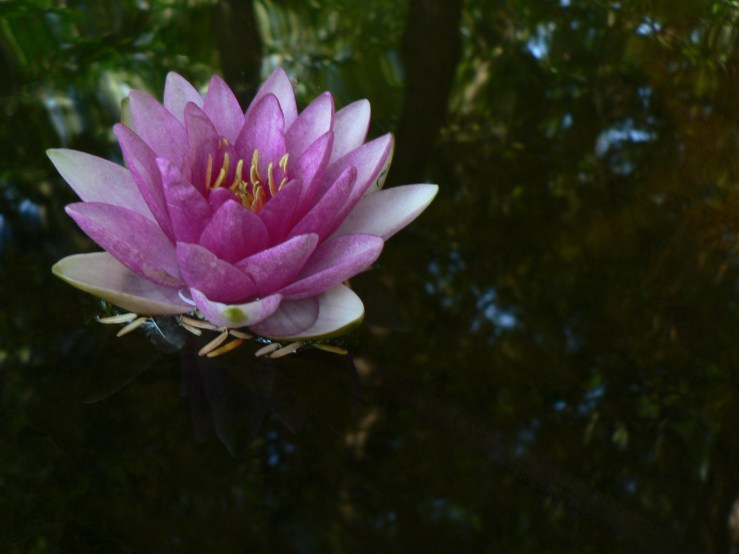
Water irises in our backyard pond

My Favorite Things


Tulips in Orange


Books, writing, creativity, cool media and other delights….

  • Walking book clubs. Did you know these existed? Here are a couple in the UK hosted by two book bloggers who write fabulous reviews: Emily’s Walking Book Club with Daunt Books – turns out the one and only time I’ve been in London we went to Daunt Books, where we browsed for over an hour. Wish I’d known about Emily then, I’d have tried to connect with her; and  The Northern Reader – see also her Flower Power if you love gardening, flowers and nature lit.
  • Book spine poetry. A few weeks back in honor of April being National Poetry Month, I wrote some book spine poetry and asked readers to share theirs. Here is what Naomi at Consumed by Ink came up with. I love her little poems. Try it yourself, and if you’ve created book spine poetry you like, please share in the comments.
  • A good book. My favorite book bloggers always give me titles to add to my to-read list. I love this review of Hill by the French writer Jean Giono that Melissa wrote at The Bookbinder’s Daughter.
  • Instagram flat lays. I’ve been messing around with photography lately, teaching myself to do still lifes of books, flowers, and whatnot, and posting some of it on Instagram. I adore Cristina Coli’s floral work on IG, and enjoyed her “A Day of Creative Connection” blog post recently.

Have a great week!

litricity: a potent form of energy generated by great literature – – from Powell’s Compendium of Readerly Terms

April Lit
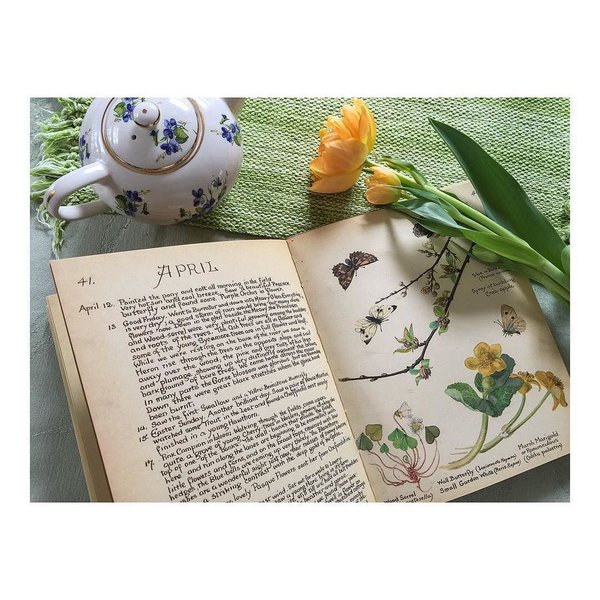
The Country Diary of an Edwardian Lady, by Edith Holden. First entry, January 1, 1906.


Barry Lopez brings us I, Snow Leopard

Snow Leopard
Male snow leopard

Photo by Tambako The Jaguar Creative Commons Attribution-Share Alike 2.0 Generic license

“I, SNOW LEOPARD is both a lyric and an elegy. It is easy to imagine its lines being loudly hailed in whatever country the poem finds itself in. It’s publication comes at a time when people everywhere have begun to wonder what a voice like this, suppressed for centuries, wishes to say now, in this moment when the Snow Leopard’s human brothers and sisters find themselves side by side with him. Imperiled.”   Barry Lopez

Barry Lopez


Barry Lopez came to Rochester this week to receive “The Art of Fact” award for literary nonfiction presented by The College at Brockport Writers Forum and M&T Bank.

If you’ve been following my blog, you know that Barry Lopez is one of my heroes, not quite at the level of Pope Francis and the Dalai Lama, but close. (See my blog’s header quote.)

Lopez is one of the very best nature writers, and if you love animals and wildlife, you’ll love his nonfiction books, essays, and short stories. He has travelled to 90 countries and has a tremendous respect for the animal world and the many indigenous peoples he’s come to know.

I, Snow LeopardLopez came to Rochester to receive his award and to deliver to us the poem “I, Snow Leopard” by Jidi Majia. 

I wasn’t familiar with either the poet or the poem, but Lopez said that when he found out “I, Snow Leopard” had been published in Asia and Europe, but not in the United States, he had to set things right.

He felt that it was vitally important that the American people hear the words of the snow leopard in this poem. So he saw to its publication here, and wrote the foreword to the English edition.

Jidi Majia, a member of the indigenous Nuosu (Yi) people who live in the mountains of southwestern China, has won numerous literary awards.  As far as I could tell from what I found online, few of his poems have been translated into English.

Majia’s poem is written in the words of a snow leopard, which is viewed by the Nuosu as a wisdom keeper, a being with “biological authority,” according to Lopez.

He told us that when he first began traveling the world and exploring, in his thirties, he viewed wild animals in an amateur, superficial, childlike way, until he learned to embrace the much more refined view held by native peoples.

A poem is a door anyone can walk through, Lopez said, and this poem is the mysterious and elusive snow leopard’s expression of grief and a warning to human kind:  “Do not hunt me any longer.”  Human violence toward animals puts everyone in peril, animals and humanity alike.

Before Lopez began, he said he wasn’t worthy to read “I, Snow Leopard,” but he’d try. He said that, as far as he knew, we’d be the very first American audience to hear the poem.

We listened to this exclusive reading in the soaring space that is the chapel in Rochester’s Temple B’rith Kodesh. “I, Snow Leopard” is beautiful, haunting, simply expressed and accessible even to listeners not accustomed to hearing poetry.

Uncia_uncia
Photo by Bernard Landgraf. CC BY-SA 3.0


After the reading Lopez answered questions and spoke informally and earnestly. As we listened, the audience seemed to be hanging on his words.  Here are some direct quotes I managed to scribble in my notebook:

“Each soul is essential to the warp and weft of the universe.”

“I want to see people come alive.”

“We know what to do and we have to do it now.”

Fixing our world “will take people of great courage. People like you. Because Washington is not doing it.”

“We should be holding hands.”

“The only thing that really matters is to be in love.”

I wrote down the following words, too, but I don’t recall if they are from the poem or if they are Barry Lopez’s words. I believe they are both:

“There is no other place for any of us to go.”

“I, Snow Leopard” is available on Amazon. Barry Lopez told me it is also to be published in a future issue of Orion Magazine.

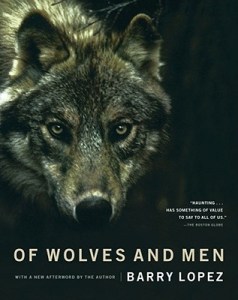
Of Wolves and MenIf you’d like to read Barry Lopez, Arctic Dreams, his nonfiction work about the Far North that won the National Book Award, is a great book to start with. I haven’t yet read Of Wolves and Men, but when I saw the mesmerizing cover photo of a wolf on display at the reading, I added it to my to-read list.

Lopez writes fiction, too. I especially liked his subversive collection of short stories, Resistance, which he wrote shortly after 9/11, about surveillance and “parties of interest” to the government.

If you want to know more about the fascinating snow leopard, Peter Matthiessen’s memoir, The Snow Leopard, is a great read.

The Secret Life of Walter Mitty, with Ben Stiller and Sean Penn, is one of my favorite movies. Watch it. You might spot a snow leopard.

April is National Poetry Month

Book Spine Poetry.jpg


Let’s go poemcrazy.

Here is some book spine poetry to celebrate National Poetry Month.

This is in memory of my brother. His birthday is April 5.


A Cancer in the Family

For a little while,

When breath becomes air,

Find me

Braiding sweetgrass &

Burning down the house.


If you have book spine poetry to share, please leave it in the comments.