On the sixth day of Christmas: Letters of Note

Cardinal

Letters of Note is, in the words of its editor, Shaun Usher, “an attempt to gather and sort fascinating letters, postcards, telegrams, faxes, and memos.”

They are the extraordinary words of real people. Here are a few of my favorites:

Our Frank

The Outsiders

We were not found wanting

I am very real

Everything comes to an end

There is a Letters of Note book, too!

Northern Cardinal photo by Putneypics under CC By-NC 2.0

On the fifth day of Christmas: The Quivering Pen

12 Days of Christmas

The Quivering Pen has been my happiest blog discovery of late. It’s a rich, beautifully written site about books, writing, and the literary life by David Abrams, a former Army journalist and author of The Fobbit, a comic novel about the Iraq War.

David is an expansive, passionate reader who writes eloquently about new, backlist, classic, and “lost gem” titles. You’ll find unusual and off-the-beaten-path books to add to your to-read list, and if you’re a writer, you’ll appreciate David’s generous sharing of his own journey and the wisdom of other writers.

I’m looking forward to reading David’s enticing backlist of posts. Among other attractions, he features Trailer Park Tuesday (new book trailers), Friday Freebie (a book giveaway), Sunday Sentence (the best sentences he’s read that week), My First Time (writers talk about virgin experiences in their writing and publishing careers), and Bookstore of the Month.

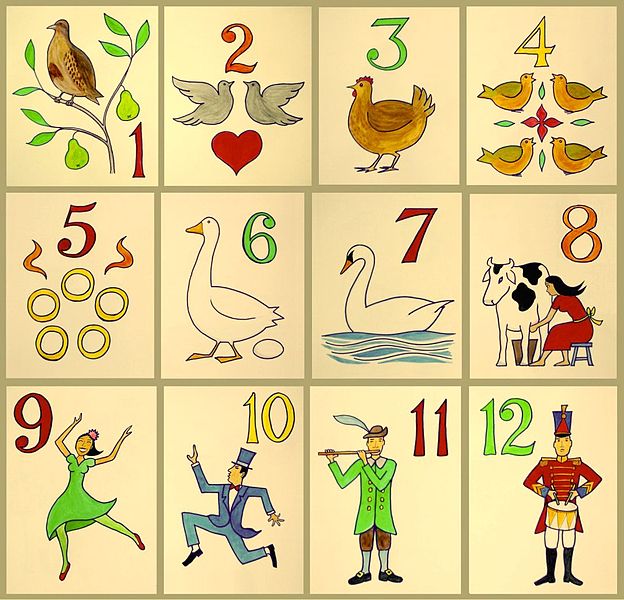
The Twelve Days of Christmas Song Poster by Xavier-Romero Frias is licensed under CC BY-SA 3.0.

On the second day of Christmas: 66 Square Feet

Two turtle doves

Originally from South Africa, 66 Square Feet blogger Marie Viljoen lived in Brooklyn for many years while cultivating an amazing garden (from which she harvested fruits and vegetables) on her small terrace. Recently, she moved to Harlem, and it will be interesting to see her new not-so-secret garden in progress. Marie calls herself a writer, gardener, forager, and cook.

66 Square Feet book coverI have her new book, 66 Square Feet: A Delicious Life, which I love. I’m a former New Yorker, and I especially enjoy her nature and foraging expeditions around the city. I don’t have much of a garden, but I garden vicariously when I visit 66 Square Feet.

If you only have time for a quick blog stop, 66 Square Feet is perfect – the photography is fabulous, and often there is just a bit of text. Marie has another blog, 66 Square Feet (The Food) where you’ll find her recipes.

It so happens Marie was in South Africa when Nelson Mandela passed away. Here is a link to her post, Madiba’s Garden, about Mandela cultivating a garden while he was in prison and what it meant to him.

(Vintage bird illustration, turtle doves, photo from Vintageprintable1 is licensed under CC BY-SA 2.0)

Hildegard of Bingen, slow medicine, God’s Hotel

Recolate angel“Angels…what glorious shapes take place within you….”  Hildegard of Bingen

“I discovered Hildegard and her medicine…and that is where God’s Hotel starts.”…..Victoria Sweet, MD, author of God’s Hotel

The Hŏtel-Dieu (God’s Hotel) cared for the sick in the Middle Ages.  Hildegard’s music.

(And it’s All Saints’ Day weekend.)

Victoria Sweet at TEDxMiddlebury.

Photo: Recoleta Cemetary, Buenos Aires

Body and mind

What are the pros and cons of getting genetic testing if your parent has Huntington’s Disease? What about dating and relationships?

A resident in the pediatric intensive care unit wants patient education information about shaken baby syndrome and traumatic brain injury.

A mother whose child has just been diagnosed with epilepsy wants to know if a special diet will help.

At teaching rounds, medical students on their first patient rotations are led through the process of making a diagnosis. “He has weakness in his arm and leg,” says the neurologist. “If his symptoms are on the right side, where is the lesion in the brain?”

These are some of the situations I’ve seen as a medical librarian. Sometimes we forget how precious and fragile are our bodies and minds. We can walk, run, speak, love, laugh, cry, sing, read, write, think, create, make plans, give comfort, enjoy a meal with family and friends. Until one day something changes.

I know from personal experience a mind can become irrevocably altered and an identity can vanish seemingly overnight. Which is probably why I am so fascinated by medicine, especially medicine having to do with the brain and behavior.

Here are some of my favorite books (fiction and nonfiction) about illness, recovery, medicine, the search for cures and miracles, and the people caught up in it all: medical professionals, researchers, patients and families. If you follow my blog, a few of the books will be familiar.

FICTION

I Know This Much Is True book cover

I Know This Much is True, by Wally Lamb

“On the afternoon of October 12, 1990, my twin brother Thomas entered the Three Rivers Connecticut Public Library, retreated to one of the rear study carrels, and prayed to God the sacrifice he was about to commit would be deemed acceptable.”

This is the best evocation of schizophrenia I’ve ever read. Wally Lamb is my hero.

By the way, Wally’s newest novel, We Are Water, was just published this month. It is on my nightstand in my little stack of books to read.

Saturday book cover

Saturday, by Ian McEwan

A neurosurgeon. Huntington’s Disease. A home invasion. A poem.

(The poem nestled deep within the plot sparks a crucial turning point. It also happens to be one of my lifelong favorites.)

State of Wonder book cover

State of Wonder, by Ann Patchett

“She was not terrified that the patient would die or she would lose the baby, she was terrified that she was doing something wrong in the eyes of Dr. Swenson.”

“I write with unfortunate news of Dr. Eckman, who died of a fever two nights ago. Given our location, this rain, the petty bureaucracies of government (both this one and  your own), and the time sensitive nature of our project, we chose to bury him here in a manner in keeping with his Christian tradition….Despite any setbacks, we persevere.”

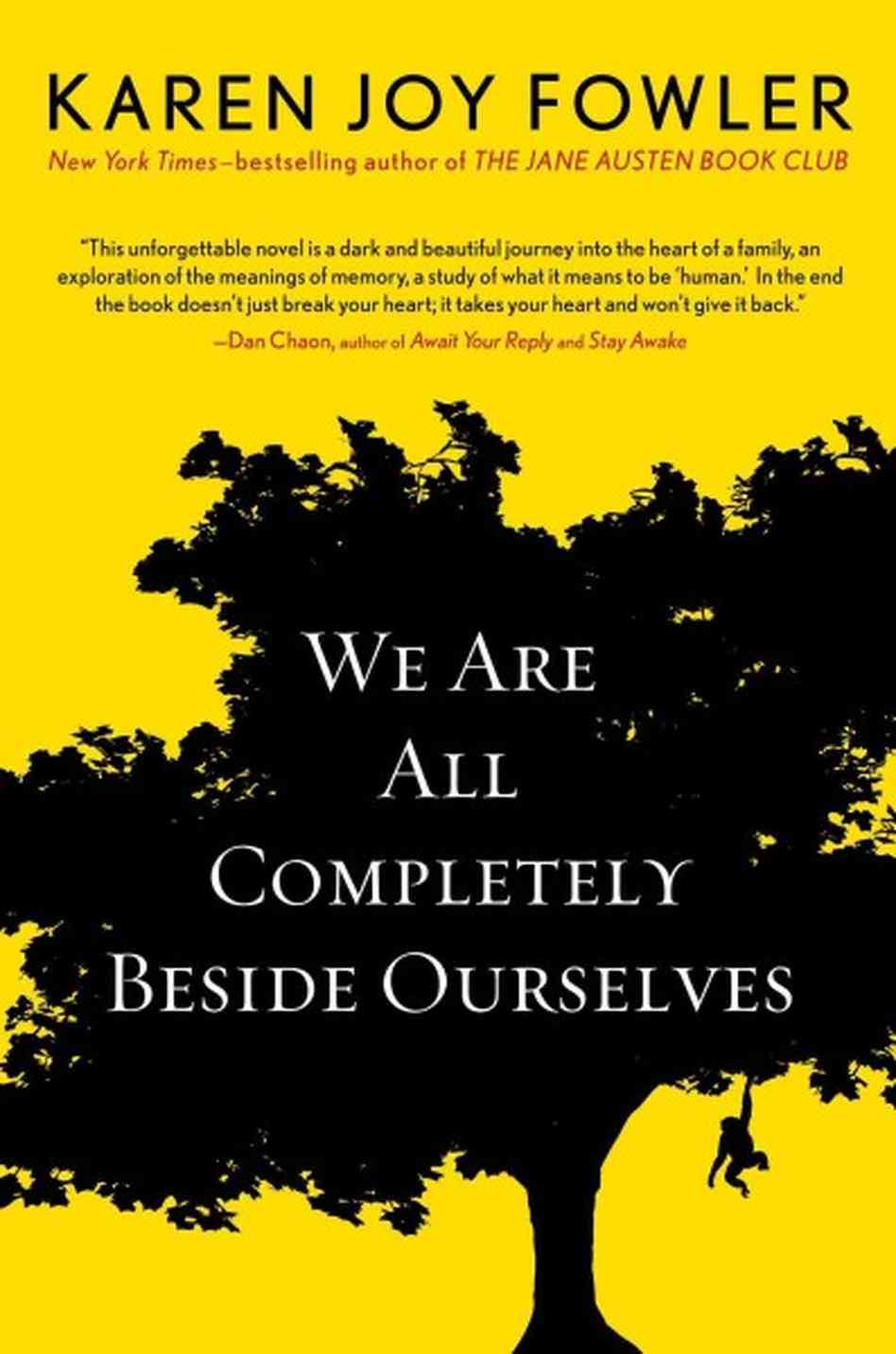
We Are All Completely Beside Ourselves book cover

We Are All Completely Beside Ourselves, by Karen Joy Fowler

“…I’d made a careful decision to never ever tell anyone about my sister, Fern. Back in those college days I never spoke of her and seldom thought of her…..Though I was only five when she disappeared from my life, I do remember her. I remember her sharply – her smell and touch, scattered images of her face, her ears, her chin, her eyes. Her arms, her feet, her fingers.”

***************************

MEMOIR

God's Hotel book cover

God’s Hotel: A Doctor, a Hospital, and a Pilgrimage to the Heart of Medicine, by Victoria Sweet

Inspired by Hildegard of Bingen (12th century German mystic and medical practitioner), as well as her own instinct for compassionate, attentive care, Dr. Sweet practices “slow medicine” at the last almshouse in the U.S. as it transitions to the modern age. We should all have a physician like Dr. Sweet.

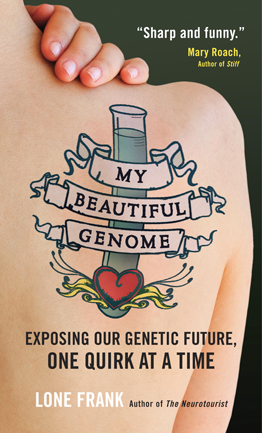
My Beautiful Genome book cover

My Beautiful Genome, by Lone Frank

“…we are each of us temporary depositories of information that has an almost eternal life, and which is passed on and on and on…”

“I am what I do with the beautiful information that has flowed through millions of years through billions of organisms and has, now, finally been entrusted to me.”

Joyce Maynard, Elizabeth Gilbert, George Saunders coming up

Been away for a bit while designer Nicole Bateman of The Pixel Boutique gives Books Can Save a Life a fresh, new look. (Thank you, Nicole!) But I’ve been reading, as always, and here’s what’s coming up:

After Her book coverAfter HerJoyce Maynard’s latest novel. Joyce has written several novels as well as the memoir, At Home in the World. After Her is loosely based on the true story of a serial killer who terrorized Northern California in the late 1970s.

Tenth of December – I don’t usually read short stories, but I’d heard so many wonderful things about George Saunders I had to pick up a copy of his latest collection when I saw it on our public library’s “Most Wanted” shelf. Besides, he teaches a stone’s throw away at Syracuse University – he’s someone I should know about.

Sons of MadnessI’ve written about Susan Nathiel’s excellent Daughters of Madness: Growing Up and Older With a Mentally Ill Mother, a collection of interviews with adult women. Sons of Madness: Growing Up and Older With a Mentally Ill Parent is a companion volume.

The Art of the Commonplace – I’ve always wanted to know what Wendell Berry is all about, so I’m reading his collection of agrarian essays.

Catching Fire, the second book in Suzanne Collins’ Hunger Games trilogy has been made into a movie and will be released November 22. I wrote about the first movie and book here, so I just have to check out the next installment.

The Signature of All Things book coverAnd last but not least, I can’t wait to dip into Elizabeth Gilbert’s latest novel, The Signature of All Things. Beautiful book jacket and end papers. The epigraph: “What life is, we know not. What life does, we know well.”  Lord Perceval

I’ll be back with a closer look at all of these.

David Schickler’s Dark Path

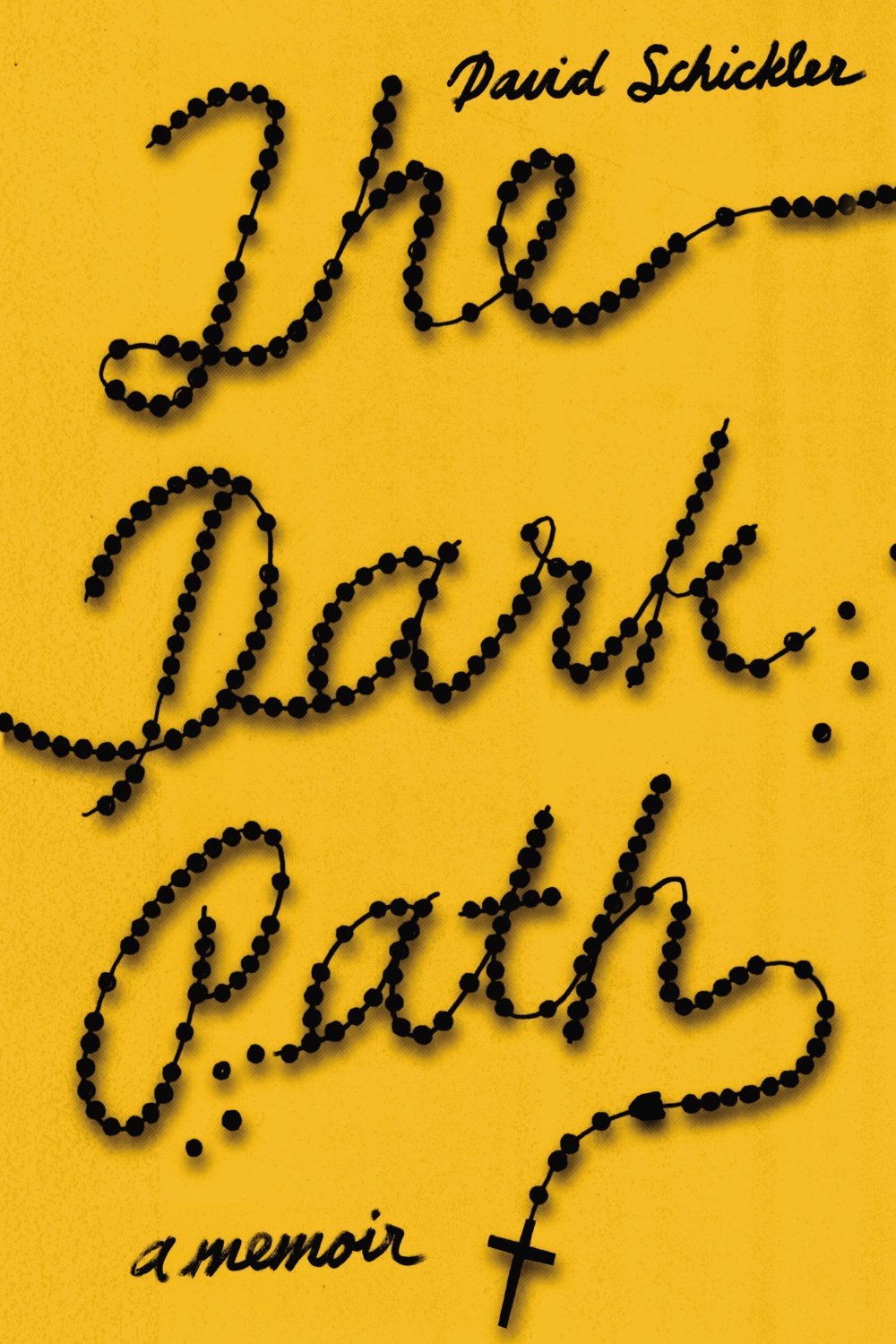
The Dark Path book cover

As I write this, I have a hangover from staying up too late reading David Schickler’s new memoir, The Dark Path, in one sitting.

When he was a boy attending Mass with his family in Rochester, New York, David fantasized about a blonde, blue-eyed Catholic girl named Caitlin. When he went to the country club swimming pool he pined after Leslie, a brown-haired, amber-eyed beauty who was Protestant and therefore dangerous.

David was obsessed with girls, but he also dreamed of becoming a priest. He’d walk the dark path through the woods behind his house, hoping to hear the voice of God telling him what he should do with his life.

Attending McQuaid Jesuit High School here in Rochester, David’s loyalties were still divided, and they remained so when he went off to college. Needless to say, this greatly complicated his love life.

His newly published memoir, The Dark Path, is about David’s comic, convoluted, and often anguished discernment of whether he should become a celibate priest or forgo all that for another kind of life altogether.

Thursday evening at our local Barnes and Noble, David read excerpts from his book to a standing-room-only crowd that included his family and many of his lifelong friends. After living in New York City for a while, David returned to Rochester several years ago. In addition to his literary writing, he is a screenwriter (co-creator of the TV series Banshee) who commutes to Los Angeles and New York.

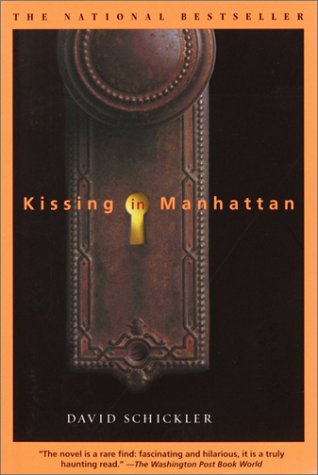
Years ago, I’d read and loved his Kissing in Manhattan. It’s a collection of strange and haunting linked stories about young singles in the 1990’s looking for love, living in a beautiful old building on the upper West side loosely based on the Dakota, where John Lennon lived and Rosemary’s Baby was filmed. (I’d been single in New York in the 80’s, which is partly why Kissing drew me in – David captured so well the big city headiness shot through with loneliness.) Last week, when I found out David was about to publish a memoir, I didn’t want to miss the debut.

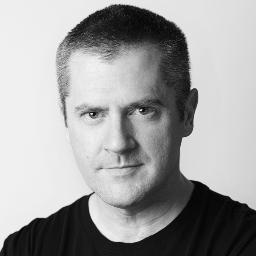
David SchicklerDavid read a scene from The Dark Path about jockeying for space in the bathroom while fighting with his sisters, vying for the hair dryer and mousse as they got ready for church.

I thought the scene sounded a lot like how it must have been when my husband’s family got ready for Mass when he was a boy. I’d brought my husband along with me to the reading – he’s not an obsessed reader like I – and he was immensely entertained, as were all the men in the audience. David is a natural stand-up comic, a down-to-earth, regular guy who appeals to other regular guys. Women love him, too, of course. Look at his photo and you’ll see why.

Kissing in Manhattan book coverLet me say a few words about Kissing in Manhattan before I tell you more about David’s memoir. I’ve never forgotten one particular story in Kissing, about a rich, handsome, deeply wounded stockbroker with a dark side. (Christian Grey comes to mind, but with a twist, and Schickler’s writing is orders of magnitude better.) Patrick Rigg can have any woman he wants, but instead of making love to them, he – well, he does something else. It falls to a priest, Father Thomas Merchant, to see if he can save Patrick from himself.

When Kissing was first published, it was an immediate sensation. David achieved literary stardom overnight. But when his father, a devout Catholic, read an early version of the manuscript, he’d been horrified.

“You think women will read your perverted stuff and let you baptize their babies?”

“But what about Andrew Greeley?” David asked. “He’s a priest and an author.”

David’s father pointed out that Greeley was a priest for 25 years before he began to write bodice-rippers.

In The Dark Path, David writes about the publication of Kissing. Yes, he became an overnight success, but there was fallout in his personal life. The Dark Path is about David’s crisis of faith; as well, it’s about what, exactly, a writer is supposed to write about. Truthful, authentic writers write about their obsessions, but what if you’re drawn to the dark stuff?

For that matter, to be a priest who truly ministers to those in need, don’t you have to acknowledge darkness (both inside ourselves and in the world) and help people grapple with it?

I think, for writers, it’s the stance you take. Parts of Kissing in Manhattan startled me, but I admired how David played out the tragic elements of his story. It was clear to me he wasn’t sugar-coating reality or condoning the grimmer, inexplicable aspects of human behavior. In my view, he offered readers glimmers of hope, a pathway to the light.

David doesn’t hold back in The Dark Path. He’s blazingly honest about his failings, vulnerabilities, struggles, and relationships with women. He’s hilarious, too. During his reading, he said he doesn’t write for therapy, he writes to entertain people.

The Dark Path is definitely book club material. In fact, it would be interesting to read Kissing in Manhattan and The Dark Path together. I believe these stories have something to say to Catholics and non-Catholics alike, to those of other faiths, to agnostics and atheists as well. To anyone who’s grappled with the absurdities of life and their place in the world.

For more memoirs of the spiritual journey, see my little book list below.

MEMOIRS OF FAITH

The Dark Path, by David Schickler

The Spiral Staircase, by Karen Armstrong

The Cloister Walk, by Kathleen Norris

Traveling Mercies, by Anne Lamott

The Crosswicks Journals, by Madeline L’Engle

Cheryl Strayed’s Wild changes lives

Pacific Coast beach, Oregon
Oregon coast (photo by Matt Hallinan)


One of my favorite columnists, Nicholas Kristof, wrote recently that Cheryl Strayed’s memoir, Wild, has inspired “hordes of young women” to hike the Pacific Crest Trail. 

Wild was one of the first books I wrote about on Books Can Save a Life. 

Strayed’s memoir has turned out to be not just a bestseller, but a transformational story that has given many women the courage to take enormous risks.

The other day I was reading an essay by Barry Lopez, “Landscape and Narrative.” He tells of visiting a small village in the Brooks Range of Alaska and listening to stories about animals and hunting. He says:

“The stories had renewed in me a sense of the purpose of my life.  This feeling, an inexplicable renewal of enthusiasm after storytelling, is familiar to many people. It does not seem to matter greatly what the subject is, as long as the context is intimate and the story is told for its own sake.”

Cheryl Strayed’s Wild has that kind of magic.

This summer Heather Anderson broke a record by backpacking the length of the Pacific Coast Trail, alone and without support, in 61 days.  It’s good to see women taking risks and feeling more at home in the world.

Columbia River
“Keep close to nature’s heart…and break clear away, once in a while, and climb a mountain or spend a week in the woods. Wash your spirit clean.” John Muir


Lopez quote: “Landscape and Narrative” in Crossing Open Ground by Barry Lopez, Vintage Books, 1989.

TransAtlantic inspires a look at our family history

Back from an Oregon vacation and an unforgettable family reunion in Cannon Beach.

Several books traveled with me, of course, including Colum McCann’s TransAtlantic, which we’d chosen for our family reunion book club, and Natalie Goldberg’s newest title, The True Secret of Writing: Connecting Life with Language. I tore through Goldberg’s book, as anyone who is a Goldberg fan will understand, while I mulled over how to frame our TransAtlantic book club discussion.

I didn’t expect to find this serendipitous connection between the two books on page 3 of The True Secret:

The True Secret of Writing book cover“Writing is for everyone, like eating and sleeping….Slaves were forbidden to learn to read or write. Slave owners were afraid to think of these people as human. To read and to write is to be empowered. No shackle can ultimately hold you.

To write is to continue the human lineage. For my grandfather, coming from Russia at seventeen, it was enough to learn the language. Today, it’s our responsibility to further the immigrant dream. To write, to pass on the dream and tell its truth. Get to work. Nothing fancy. Begin with the ordinary.”

Transatlantic book coverReading Goldberg’s words – get to work, nothing fancy, begin with the ordinary – I thought of Colum McCann’s writing, and of Lily Duggan, the fictitious Irish housemaid in TransAtlantic who could not read or write and came penniless to America, whose daughter became an influential journalist and wrote about the first non-stop transatlantic flight, by Alcock and Brown from Newfoundland to Ireland (see this photo of their landing.)

Reading Goldberg’s words – no shackles can ultimately hold you –  I thought of the former slave and abolitionist Frederick Douglass and what he was able to accomplish thanks to his education.

Reading Goldberg’s words – it’s our responsibility to further the immigrant dream –  I decided to ask my husband’s family if they identified with their Irish ancestry. Do they ever think about it, do they find it relevant to their lives, or do they see themselves as thoroughly American? If it’s our responsibility to further the immigrant dream (whether we consider ourselves writers or not), what does that mean and how do we do that?

One branch of my husband’s family came from Drummin Parish, Westport in County Mayo on the west coast of Ireland. They immigrated to America after the English Earl of Aran evicted them and 40 other families from the land where they were tenant farmers. Nearly the entire town came to America, including their local priest, shortly after the Civil War. (Again, I think of TransAtlantic’s Lily Duggan and her deep and involuntary involvement in the Civil War.) They settled in Little Falls, New York, where they may have worked on the enlargement of the Erie Canal. Several of the brothers started a construction and masonry company and built the Beechnut Plant in Canajoharie, locks in the Mohawk River, and many buildings in the Mohawk Valley.

In our discussion, my father-in-law said he thought of himself as American, while his sister identified strongly with her Irish Catholic heritage. I wondered why there was such a difference in the same family. My sister-in-law thought it might be that it had been the man’s responsibility to be successful and earn a good living; to do that he had to shed his ethnicity in the workplace and become “American.” The woman had stayed home, preserving family rituals and traditions, passing on family history, perhaps assimilating more slowly.

Someone said she thought it unusual TransAtlantic’s Lily Duggan was not religious and not raised Catholic, and that led to a discussion of Catholic identity. My mother-in-law, like my husband’s aunt, strongly identified as Irish Catholic, and said when she was growing up being Catholic was more important than being Irish. She told the story of an uncle who wept bitterly when one of his children married a Protestant. Someone else commented that in the New Jersey town where he grew up, there was an Italian Catholic church, an Irish Catholic church, and a Polish Catholic church.

I wanted to know which TransAtlantic characters made the deepest impression. My father-in-law was especially taken with the brilliance, dedication, and integrity of  Senator George Mitchell, who negotiated the peace talks in Northern Ireland. He did some research and found a fascinating interview with Mitchell after he was awarded the Presidential Medal of Freedom. Almost all of us loved Lily, of course. Some of us didn’t know anything about Frederick Douglass and his connection with Ireland, and we’d never heard of Alcock and Brown or their amazing flight.

There were at least four generations at our family reunion. I’m so glad some of us shared the reading of TransAtlantic. I, for one, could have kept our discussion going longer than we had time for.

I don’t think we answered the question of how to further the immigrant dream or whether that is something we’ll even think about, and I don’t know how strongly the younger generation will identify with their Irish heritage. But I do find it fascinating how McCann weaves fiction and nonfiction together to form a narrative arc that extends through time and across generations. It’s much larger than any single life, and yet every individual has a role to play.

I think I see similar through-lines across time in my husband’s family, whether they’re passed down through familial and social influences, or encoded in their DNA, or both: a mechanical and engineering aptitude, keen intelligence, a predilection for risk-taking, an independent spirit, a deep curiosity about the world, and a strong sense of justice. When all of us get together for these reunions that are way too brief, you can see these commonalities.

Have you ever had a book club at your family reunion? If so, what did you read? Tell us about it in the comments.

If you would like to learn more about Natalie Goldberg, her new book, and the true secret of writing (I’m not going to spill the beans), listen to this wonderful 30-minute podcast on Natalie’s website.

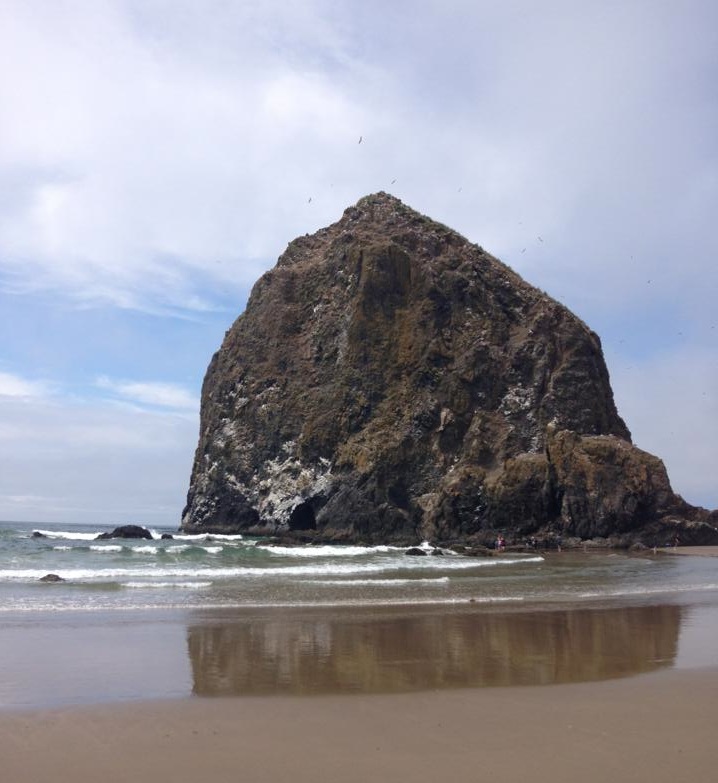
Haystack Rock at Cannon Beach
Haystack, Cannon Beach
Cannon Beach and bonfires
Evening bonfires

River House, a memoir of the high desert

Three Sisters mountains
Three Sisters


Before we head to our family reunion in Cannon Beach, Oregon, we’ve been exploring the high desert east of the Cascades. Of course, I had to find a book indigenous to this place, so I settled on Sarahlee Lawrence’s memoir, River House.

Sarahlee is a kind of modern-day superwoman: an expert river runner who navigated the most dangerous rivers in South America and Africa by the time she was 21, a rancher who built from scratch her own log cabin with the help of her father, and a talented young writer who gives us an honest, unromantic vision of what it is like to live off the land here.

After her almost unbelievably dangerous river adventures, Sarahlee decided to return to the ranch where she grew up with her parents and grandparents, to reconnect to the land and build her own log cabin.

River House chronicles the building of the cabin, Sarahlee’s struggle to reconcile her love of river running with the land-locked life of the ranch, and her fraught relationship with her father, a former surfer (riding wild water is in their blood) who has ranched for thirty years and is worn out by the land and the unrelenting physical labor.

If you want to steep yourself in the physical terrain and culture of central Oregon’s high desert, if you want a vicarious taste of backbreaking labor as told by a young woman with a strong spiritual connection to the land, River House is the book for you.

If your aim is to build a luxury McMansion with all the creature comforts and a picture window view of Three Sisters, this memoir will probably make you uncomfortable.

I found River House to be a great read. As we drove around the hot, dry land and hiked in the stunning forests along the ice-cold Metolius River and around the secluded Suttle Lake, I was very conscious of being a tourist, a stranger in this unusual place.

There is a vast divide between those of us who live a sedentary life behind computer screens and plugged into social media and those who work the land every single day of the year.

MEMOIRS OF LAND AND PLACE

River House, Sarahlee Lawrence

Dakota: A Spiritual Geography, Kathleen Norris

A Country Year, Sue Hubbell

Cross Creek, Marjorie Kinnan Rawlings

My First Summer in the Sierra, John Muir

Under the Tuscan Sun, Frances Mayes

Chapel in the Pines
Sunday morning, Chapel in the Pines, Camp Sherman
Quilt
Quilting is a fine art and craft here.
Fire Danger
A day after we saw this sign, it was 99 degrees and the fire precaution was upgraded to Extreme.
Ponderosa Pine
Ponderosa pine