Winners of the Literary Blog Hop Are…

Lynne Clark at Two Reads and Marie Stone are the Literary Blog Hop winners at Books Can Save a Life. Many thanks to Judith at Leeswammes for hosting this great event, and for all of you who stopped by to share what you’ve been reading.

The Signature of All Things book coverI’ll be sending Elizabeth Gilbert’s The Signature of All Things to Lynne.

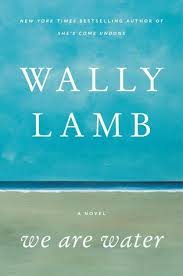
We Are Water book coverAnd to Marie, We Are Water by Wally Lamb.

Here is the list of tantalizing books you shared:

Back When We Were Grown-Ups, by Anne Tyler

The Luminaries, by Eleanor Catton

Forever, by Pete Hammill

Gone Girl, by Gillian Flynn

Netherland, by Joseph O’Neill

Dreams of Joy, by Lisa See

The Kite Runner; A Thousand Splendid Suns; And The Mountains Echoed, by Khaled Hosseini

Dept. of Speculation, by Jenny Offill

Easy: Burial Rites, by Hannah Kent

Good Bones and Simple Murders, by Margaret Atwood

The Fault in Our Stars, by John Green

I Am Livia, by Phyllis T. Smith

The Goldfinch, by Donna Tartt

Dr. Sleep, by Stephen King

NOS4A2, by Joe Hill

Written in Red, by Ann Bishop

The Great Gatsby, by F. Scott Fitzgerald

The Dovekeepers, by Alice Hoffman

The Book Thief, by Markus Zusak

Life After Life, by Kate Atkinson

Mansfield Park, by Jane Austen

Wuthering Heights, by Emily Bronte

Dear Life, by Alice Munro

Dark Triumph, by Robin LaFevers

We Have Always Lived in the Castle, by Shirley Jackson

We Are Water, by Wally Lamb

The Snow Child, by Eowyn Ivey

In the Garden of the Beast, by Erik Larson

Under the Wide and Starry Sky, by Nancy Horan

The Kabbalist, by Yoran Katz

The Dog Boy, by Eva Hornung

Dinner With Lenny, by Jonathan Cott

Isolation Door, by Anish Majumdar

The Count of Monte Cristo, by Alexandre Dumas

The Rosie Project, by Graeme Simsion

The Constellation of Vital Phenomena, by Anthony Marra

One Thousand Gifts, by Ann Voskamp

Standing in the Rainbow; The All-Girl Filling Station’s Last Reunion; Can’t Wait to Get to Heaven, by Fannie Flagg

Solomon the Peacemaker, by Hunter Welles

Once We Were Brothers, by Ronald H. Balson

Books to read in 2014

Here’s my to-read list for 2014. It’s incomplete, always changing, and I’m sure I won’t get to all of these, not by a long shot, but it’s a convenient list when I’m choosing my next book. You may see a few of them featured on Books Can Save a Life. I’ve included titles that will be published in 2014, so you won’t find all of them on the shelves yet.

If you have enticing choices on your list, please share them in the comments!

Watch for my book giveaway in February to celebrate the second anniversary of Books Can Save a Life.

FICTION
The Snow Queen book cover

The Snow Child, by Eowyn Ivey    “If All of Rochester Read the Same Book,” 2014

The Goldfinch, by Donna Tartt

Someone, by Alice McDermott

Carthage, by Joyce Carol Oates

Arctic Summer, by Damon Galgut

The Unknowns, by Gabriel Roth

The Circle, by David Eggers

Colorless Tsukuru Tazaki and His Years of Pilgrimage, by Haruki Murakami

The Signature of All Things, by Elizabeth Gilbert

Life After Life, by Kate Atkinson

How Should a Person Be? by Sheila Heti

The Paying Guests, by Sarah Waters

And Then We Came to the End; The Unnamed; To Rise Again at a Decent Hour, by Joshua Ferris

Orfeo, by Richard Powers

Never Go Back, by Lee Child

The Language of Flowers, by Vanessa Diffenbaugh

The Snow Queen, by Michael Cunningham

The Bone Clocks, by David Mitchell

The Interestings, by Meg Wolitzer

The Luminaries, by Eleanor Catton

Lila, by Marilynne Robinson

By Blood, Ellen Ullman

Canada, by Richard Ford

In Sunlight and in Shadow; and Winter’s Tale, by Mark Helprin

The Cuckoo’s Calling, by Robert Galbraith (J.K. Rowling) and Untitled (2014)

The Woman Who Lost Her Soul, by Bob Shacochis

Off Course, by Michelle Huneven

Gone Girl; Dark Places, by Gillian Flynn (movies in 2014)

Wolf Hall, by Hilary Mantel (Best book of the 21st century, according to Elizabeth Gilbert)

****************

IN TRANSLATION

My Struggle, Books 1, 2, 3 by Karl Ove Knausgaard (Norwegian)

Treasure Hunt; The Dance of the Seagull by Andrea Camilleri (Sicilian)

Story of a New Name, by Elena Ferrante (Italian)

YOUNG ADULT

Son book cover

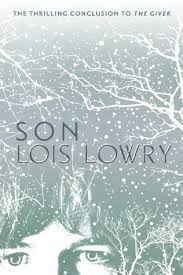
The Giver Quartet Series (including Son), by Lois Lowry

Divergent Series, by Veronica Roth

Mockingjay, by Suzanne Collins

The Fault in Our Stars, by John Green

*************************

MEMOIR

Wave book cover

Men We Reaped, by Jessamyn Ward

Still Writing, by Dani Shapiro

This Is the Story of a Happy Marriage, by Ann Patchett

Wave, by  Sonali Deraniyagala

Intensive Care: A Doctor’s Journey; and Medicine in Translation: Journeys with My Patients, by Danielle Ofri

**************

NONFICTION
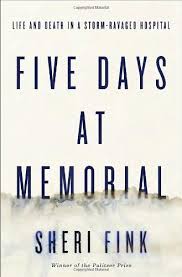
Five Days at Memorial book cover

Big Data: A Revolution that Will Transform How We Live, Work, and Think, by Victor Mayer-Schonberger and Kenneth Cukier

Who Owns the Future? by Jaron Lanier

The Burglary: The Discovery of J. Edgar Hoover’s Secret FBI, by Betty Medsger

Thank You for Your Service, by David Finkel

Five Days at Memorial: Life and Death in a Storm-Ravaged Hospital, by Sheri Fink

What Doctors Feel: How Emotions Affect the Practice of Medicine, by Danielle Ofri

Manson: The Life and Times of Charles Manson, by Jeff Guinn

The Unwinding: An Inner History of the New America, by George Packer

Margaret Fuller: A New American Life, by Megan Marshall

The Skies Belong to Us: Love and Terror in the Golden Age of Hijacking, by Brendan I. Koerner

The Gorgeous Nothings: Emily Dickinson’s Envelope Poems

Stalking the Divine, by Kristin Ohlson

Sons of Madness: Growing Up and Older with a Mentally Ill Parent, by Susan Nathiel

Is There No Place on Earth for Me? by Susan Sheehan

Dear Genius: The Letters of Ursula Nordstrom, by Leonard S. Marcus

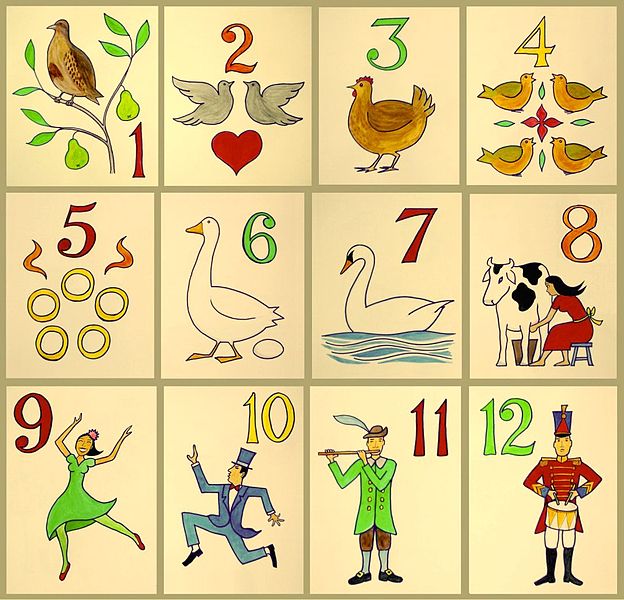
On the fifth day of Christmas: The Quivering Pen

12 Days of Christmas

The Quivering Pen has been my happiest blog discovery of late. It’s a rich, beautifully written site about books, writing, and the literary life by David Abrams, a former Army journalist and author of The Fobbit, a comic novel about the Iraq War.

David is an expansive, passionate reader who writes eloquently about new, backlist, classic, and “lost gem” titles. You’ll find unusual and off-the-beaten-path books to add to your to-read list, and if you’re a writer, you’ll appreciate David’s generous sharing of his own journey and the wisdom of other writers.

I’m looking forward to reading David’s enticing backlist of posts. Among other attractions, he features Trailer Park Tuesday (new book trailers), Friday Freebie (a book giveaway), Sunday Sentence (the best sentences he’s read that week), My First Time (writers talk about virgin experiences in their writing and publishing careers), and Bookstore of the Month.

The Twelve Days of Christmas Song Poster by Xavier-Romero Frias is licensed under CC BY-SA 3.0.

The Book Thief

“They say that war is death’s best friend, but I must offer you a different point of view on that one. To me, war is like the new boss who expects the impossible. He stands over your shoulder repeating one thing, incessantly: ‘Get it done, get it done.’ So you work harder. You get the job done. The boss, however, does not thank you. He asks for more.”       Death, in The Book Thief

The Book Thief book cover

Death is the narrator in The Book Thief, a young adult book about a German family during World War II that has a huge adult readership as well. It is one book not to be missed. The writing is outstanding. Published in 2005, The Book Thief won countless awards and honors, and has become a classic in YA fiction.

I recently reread the book before I saw the movie. I think the screen adaptation is a good one, although some viewers found it tame, and subtleties of the text can’t be captured on the screen. For example, Max, who is Jewish and hiding out in the home of Liesel and her foster parents, paints over every page of a copy of Mein Kampf and creates his own book, with illustrations. Max’s book is embedded within the pages of The Book Thief, and on the pages of Max’s book you can see faint traces of Hitler’s words.  One of the pages in Max’s book is a drawing of a girl and a boy holding hands and standing on a pile of bodies. Inscribed on the sun that shines down on them is a swastika, and the girl is saying, “Isn’t it a lovely day?”

The author, Markus Zusack, uses the written word as a thematic motif. While the Germans burn books thought to be subversive, Liesel and Hans write words on the wall of their basement as Liesel learns to read, and Liesel steals a book whenever she has the chance, in defiance of the Nazis. Liesel then begins to write her own book in order to make sense of the world’s chaos and carnage.

I do think the movie captured the essence of the story, and it is well cast, especially Sophie Nélisse as Liesel Meminger and Geoffrey Rush as Hans, her foster father. Death is the narrator in the movie, as he is in the book, and in both he is an unsettling storyteller who confesses he is haunted by humans. Of course, in addition to being the narrator, Death has a starring role in the plot as well.

My father was wounded in the war, just inside the German border. Occasionally, my mother spoke of her family’s Victory Garden, the rationing of meat and gasoline, and the “man shortage.”  I was born ten years after the war ended. As an adult, I eventually began to understand how the world turned upside down by war cast long shadows over my parents’ generation.

Have you seen the movie or read The Book Thief? What did you think?

Books by drone?

Holiday gifrs

Do you want your books and holiday gifts delivered by drones?

Please leave a comment and tell us what you think.

(Photo from FreeFoto.com)

If you want to be lifted up, read Kent Haruf

Benediction book coverShe looked at the two old brothers….

I want you to think about taking this girl in.

They stared at her.

You’re fooling, Harold said.

No, Maggie said. I am not.

They were dumbfounded. They looked at her, regarding her as if she might be dangerous. Then they peered into the palms of their thick callused hands spread out before them on the kitchen table and lastly they looked out the window toward the leafless and stunted elm trees.    

                                                                             Plainsong, by Kent Haruf

Yesterday I finished reading Kent Haruf’s new novel, Benediction, about an elderly hardware store owner, Dad Lewis, dying of cancer.  I realized it was three years to the day since my father passed away from cancer. More than a coincidence, probably. I imagine something unconscious was at play. But I would have read this book eventually, no matter what, because I read everything Haruf writes.

My devotion to Haruf began when I read Plainsong, which he published in 1999. One of Haruf’s critics describes Haruf’s work as “exalted.” If you want to be exalted, get a copy of  Plainsong or Eventide or Benediction and drop into the lives of the folks who live on the dry plains in the fictional town of Holt, Colorado.

Haruf writes about goodhearted people way off the beaten path trying to do the right thing. His prose is entrancing, deceptively simple, powerful. You may begin to be lulled by the humanity Haruf captures on the page, but before you get to feeling incredulous he hits you with some dark reality: bigotry, abuse, cruelty, abandonment, addiction.

I was surprised Haruf said in an interview one of the books that most influenced him as a writer was Ernest Hemingway’s The Sun Also Rises, a novel that underwhelmed me both times I read it. But in Haruf’s plain, spare prose I can see Hemingway’s legacy. And it reinforces my interest in how what we read speaks to us, personally. That’s going to be different for everyone.

Benediction is a beautiful book, but an especially quiet and somber one. If you want to sample a novel by Haruf, I suggest you begin with Plainsong, which has more action and a greater diversity of intriguing characters, followed by Eventide and then Benediction. All are set in Holt, in eastern Colorado. Plainsong and Eventide are companion novels that feature the same cast, while Benediction introduces a new set of characters. I suspect Haruf may continue their stories in a future novel.

In Benediction, an eighty-year-old woman, two sixty-year-old women, and an eight-year-old girl skinny-dip on a hot afternoon in a muddy water trough for cattle. Cool and refreshed, they lie down under a tree in their thin, sleeveless cotton dresses to take a nap. Somehow, Haruf makes this scene riveting. It is emblematic of his writing.

Two of my favorite characters in all of fiction are Plainsong’s rough-hewn cattle ranchers Harold and Raymond McPheron, who take in Victoria Roubideaux, a homeless, pregnant teenager. They are so sweet, and clueless to the point of hilarity. One of the funniest scenes I’ve ever read is their visit to the ob-gyn with Victoria.

As much as I enjoyed Benediction, the McPheron brothers from Plainsong and Eventide will always be in my heart.

Plainsong book coverRaymond, you’re my brother. But you’re getting flat unruly and difficult to abide. And I’ll say one thing more.

What?

This ain’t going to be no goddam Sunday school picnic.

No, it ain’t, Raymond said. But I don’t recall you ever attending Sunday school either.

Quotes from Plainsong, Kent Haruf. Vintage Books, New York: 1999.

BY KENT HARUF:

Plainsong

Eventide

Benediction

The Tie That Binds

Where You Once Belonged

Hemingway on life and death, love and war

I believe that basically you write for two people: yourself to try to make it absolutely perfect; or if not that then wonderful. Then you write for who you love whether she can read or write or not and whether she is alive or dead. Ernest Hemingway on Writing.

Ernest Hemingway on Writing book coverWhen I visit a new place, I like to read the literature associated with that place or the literature created there. So when I went to Key West last month and the home of Ernest Hemingway, I reread The Sun Also Rises, which Hemingway wrote there, followed by A Farewell to Arms. Last night I finished For Whom the Bell Tolls for the first time and went to bed feeling rather devastated.

In my last post I was dismissive of The Sun Also Rises. When I read it the first time, in high school, I didn’t understand the novel. Decades later, I again found the characters tedious, which was Hemingway’s intention, but I at least better understood the context of those alienated, war-devastated years. His writing style, a breakthrough in Hemingway’s time, was for me so stilted and self-conscious it sometimes pulled me completely out of the story, and I especially disliked his sole female character, Lady Brett Ashley.

My post about Hemingway generated a handful of interesting and insightful comments, all by women and mostly about Hemingway’s ego and sexism and macho persona. I wish my blog attracted more male readers, but I have noticed some gender segregation in the book blog world, and I can understand that. I tend to gravitate toward female authors, and when I find I’m reading only books written by women, I’ll switch to a male author. Reading Junot Diaz, for example, was a stretch for me, but I’m glad I did. I had to talk myself into reading Hemingway again, too, but I’m glad I did that as well.

I felt uncomfortable after I was dismissive of The Sun Also Rises, and I thought about that as I read Hemingway’s other novels. Because when all is said and done, I believe Hemingway is a master and, despite my personal reactions to it, I believe The Sun Also Rises is a great book. Visiting Hemingway’s home in Key West and looking at the many candid photos on every wall in every room, I sensed something of his spirit lingering. Reading The Paris Wife and Ernest Hemingway on Writing, I saw not just Hemingway the god-like, iconic writer but Hemingway the vulnerable artist.

I don’t do the close reading of a literary scholar or a book critic, though I admire those that do. On this blog, I don’t write book reviews, and I’ve been frustrated occasionally when I hear people say I do, although I understand why they wouldn’t make these distinctions. If you were to ask me to write a book synopsis or a book review, I’d have no enthusiasm for it. (And I’m a librarian.) Here, I want to share and talk about our own, highly individual reading journeys and our personal reactions to the books we read. I think if you’re an avid reader, books help to make you the person you are, and that’s going to make a difference in what you do and who you are out in the world.

(If you’re not an avid reader, maybe you love nature and have trekked across your country, or you know almost everything there is to know about the earliest jazz recordings, or you can recite from memory every baseball statistic ever recorded, or you’re devoted to helping the poor in Third World countries. You may be on some kind of personal journey of discovery that says something important about who you are and your place in the world. That journey of discovery is what I’m interested in.)

For Whom the Bell Tolls book coverHere are some of my personal reactions to Hemingway’s novels:

  • I disliked Lady Brett Ashley because she was self-centered and slept with every man who came her way (except for Jake Barnes). Then I realized the men in The Sun Also Rises were the same, yet I wasn’t as critical of them. I held the female to a different standard.
  • When I was young I accepted and enjoyed Hemingway’s fictional romances without question. I didn’t find them sexist or offensive until literary opinion told me I should, even though I came of age just after the feminist heyday. Now, while I don’t especially enjoy Hemingway’s portrayal of women, I have to say many women acted that way. I think Hemingway understood how we idealize the other in romantic love, and how we look to each other for rescue or at least a safe haven.
  • I have trouble understanding the American Robert Jordan’s  idealism and motivation for volunteering to fight in the Spanish Civil War in For Whom the Bell Tolls. But when I think about the Americans in Iraq and Afghanistan, I’m bothered that many of us are so emotionally removed from the reality of these wars and the sacrifices a small number of Americans are making. Since I’m not especially attracted to war novels, at first I didn’t take to For Whom the Bell Tolls. I didn’t want to follow Robert Jordan and the others on their mission to blow up the bridge. Of course, I became emotionally entangled in Robert’s relationship with Maria and the others. Hemingway fought and was nearly killed in World War I and reported from the front lines during the Spanish Civil War and World War II, so he understood war and he knew how to write about it. The last one hundred pages of For Whom the Bell Tolls contain some of the most beautiful, poignant and universally truthful passages I’ve ever read. With the final sentence, I do believe Hemingway achieved perfection.

BY ERNEST HEMINGWAY

A Moveable Feast

For Whom the Bell Tolls

The Old Man and the Sea

A Farewell to Arms

The Sun Also Rises

A Clean Well-Lighted Place

In Our Time

The Garden of Eden

To Have and Have Not

Men Without Women

Islands in the Stream

Death in the Afternoon

Southernmost Beach Cafe interior
This Key West cafe is the southernmost restaurant in the US, 90 miles from Cuba. I’m sure Hemingway must have enjoyed a brandy (or two or three) here.

Five favorite books and blogs

Many thanks to Claire McAlpine, who tagged me in a Five Favorite Books challenge, which I’m to pass on to five other bloggers. Here goes, but before you read on, be sure to visit Claire’s delightful blog, Word by Word. Claire, who lives and works in the south of France, is a prolific, passionate reader who never fails to inspire me when I’m wondering which book to read next.

Of course, it’s impossible for me to name my five favorite books of all time, so here are five books I love that happened to come to mind as I sat down to write this:

I Know This Much Is True book coverI Know This Much Is True, by Wally Lamb.  I’ve read all of Lamb’s novels, but my favorite is I Know This Much Is True, about twin brothers, one with schizophrenia. Dominick Birdsey is an unforgettable character, and so is his brother, Thomas, who battles the demons of serious mental illness. My mother had schizophrenia, so for me this book is especially meaningful. Lamb’s portrayal of the illness is spot on. I Know This Much Is True blends comedy and tragedy as Dominick soldiers on in the difficult odyssey that is his life, the kind of real-life struggles we can all identify with. You just won’t want to stop rooting for Dominick, and I, for one, couldn’t stop reading until I found out whether he would end up with the love of his life.  I was taken with the darkly comic opening involving a librarian who has an especially trying day. (I read this before I knew I was going to become a librarian.) Check out Wally Lamb on Facebook. He’s a generous, down-to-earth author who loves talking with his readers.

In October, 2013, Lamb will publish his newest novel, We Are Water. In this video, Wally Lamb tells how We Are Water came about. Listening to his story will make you want to get the book, which I’ll be writing about in a future post.

Jane Eyre, by Charlotte Bronte. I’m a romantic, partial to female gothics, and there is the undercurrent of madness, which “transfixes” me (as Mr. Rochester would say). I read this in high school and have been fascinated and mystified by it ever since. Has anyone seen the most recent movie incarnation? I thought Mia Wasikowska and Amelia Clarkson (young Jane) were fabulous. And Judi Dench, of course.

When We Were Orphans, by Kazuo Ishiguro. When I was looking for a hyperlink to When We Were Orphans, I was surprised Wikipedia authors say it is regarded by some as Ishiguro’s weakest book. I don’t see that at all. For me, it eloquently captures childhood loss and its lifelong consequences, and there’s also the fascination of Ishiguro’s typically unreliable, self-deluded narrator. Except in this case I think the narrator comes to a sad, more realistic understanding of himself and the world. I’ll say no more since I’d like to write further about this book in the future.

Plainsong, by Kent Haruf. I loved visiting this small Colorado town and meeting the simple, kind, and decent people there. It does my heart good to know there are writers like Haruf creating fictional worlds like this one. I was swept away by Plainsong and the sequel, Eventide. Haruf makes writing look easy, but this sort of simplicity isn’t easy at all. I’ve not had the pleasure of reading his newest book, Benediction. Can’t wait. I’ll be sure to write about it here.

David Copperfield, by Charles Dickens. I read this in high school, too, and haven’t read it since then, so I want to revisit it sometime soon. Another deprived childhood story.  (Do you see a trend here?) After I read David Copperfield I felt I’d lived an entire life. This is a great book to read when you are young and just starting out, and then at least once again when you’re looking back. I believe there was a PBS version that aired in the dark ages when I was reading the novel. It, too, was wonderful.

FIVE BLOGS I LIKE:

A Leaf in Springtime  Sheer exuberance in writing and photography, by Sharon, who is Chinese (born in Malaysia) and now living in Finland.

The Hiker Mama  I love the Pacific Northwest, and I wish this blog had been around when we were hiking with our sons. Jennifer and I had the pleasure of taking a class together taught by Christina Katz.

Fine Little Day  Because I’m half Swedish and I love fabrics and country houses and all sorts of beautiful domestic things.

66 Square Feet  A tiny terrace garden, seasonal living, cooking in New York City, and travels to South Africa, by Marie Viljoen. Just beautiful, reminds me of my big city days.

Flowery Prose  Plants, veggies, flowers, gardens, the outdoors, and lots of fascinating information about all of these.

Still reading Barry Lopez

Stories…offer patterns of sound and association, of event and image. Suspended as listeners and readers in these patterns, we might reimagine our lives…As long as it took for me to see that a writer’s voice had to grow out of his own knowledge and desire, that it could not rise legitimately out of the privilege of race or gender or social rank, so did it take time to grasp the depth of cruelty inflicted upon all of us the moment voices are silenced, when for prejudicial reasons people are told their stories are not valuable, not useful.                    Barry Lopez

About This Life book coverIn the introduction to his essay collection About This Life: Journeys on the Threshold of Memory, Barry Lopez tells of meeting a man on a plane who asked what words of advice he could pass on to his teen-age daughter, who wanted to be a writer. This is what Lopez said:

She must read, and her choices should be whatever she is drawn to.

She should read the classics, too, but she’ll have to work harder to find stories of heroism, love, and our noblest values that are written by women.

Second, she must “become someone” and “speak to us from within those beliefs.”

Third, he advised that she “separate herself from the familiar.” After exploring other places and meeting a diversity of people, she`ll know why she loves the familiar and share this knowledge through her writing.

Early on, Lopez felt he was noticed, accepted, and rewarded as a writer in part because he was white, male, privileged and well educated. If you read his work, you’ll find he is keenly sensitive to the fact that many voices haven’t been heard because they are different or not within traditional circles of power. He thrives on traveling to the far corners of the earth and seeking these people out –  artists, artisans, farmers, naturalists, explorers who live close to the land, indigenous peoples, and others.

I was mesmerized by an essay in About This Life, “Effleurage: The Stroke of Fire.”  An Oregon potter and builder of a unique anagama kiln invites clay artists from around the world to fire their work. Jack doesn’t care about marketing or commercial success; he’s totally immersed in the process of making pottery out of materials from nature. Every three or four months, up to twenty artists bring their work to be fired in the Dragon Kiln.  Families, friends, even pets tag along. The firing goes around the clock for several days. Building the tremendous fire that heats the kiln is an art in and of itself. Different kinds of wood – black locust, maple, cherry, Lombardy poplar, red cedar – make different kinds of fires, and keeping the fire properly stoked is a community effort of like-minded artists who put aside their egos for the benefit of the group.

Lopez says you must become someone to write. I think he would agree the kiln designer and the clay artists are “becoming” through their life’s work, just as their clay pieces are forged in the fire. It’s a process that never ends. Even the clay pot continues to change, subtly, after the firing.

Crow and Weasel book coverOver and over, Lopez celebrates journeys into the unknown, strangers who become friends, coming home again, and the writing of the story. You see this in About This Life and in his fable, Crow and Weasel.

Recently, Lopez published a revelatory personal essay that has received a lot of attention, “Sliver of Sky,”  in Harper’s Magazine, about a period of sexual abuse he endured as a child. That Lopez waited until his seventies to write about this suggests how deeply confounding and wounding it was. The trauma and years of silence may explain in part Lopez’s empathy and compassion for others who were silenced for one reason or another. And no doubt it has contributed to his sense of mission as a writer.

I’ve written about years of being silent and feeling silenced by others because of my mother’s mental illness. I think that is partly why I didn’t make the commitment to becoming a writer when I was younger. How can you mature as a human being and as a writer when you can’t work with the very material that is woven into your identity?

If we’re silenced, we’re blocked. We don’t become our fullest selves. Diminished in what we are able to offer the world, the world will be diminished, too. It is in our bests interests to see that no one among us is silenced.

So I find reading Lopez to be a rare and important form of encouragement.

In an interview with Bill Moyers, Lopez says he’s viewed as a nature writer but, actually, he is writing about humanity.

“Every story is an act of trust between a writer and a reader; each story, in the end, is social. Whatever a writer sets down can harm or help the community of which he or she is a part.”

Quotes from: About This Life: Journeys on the Threshold of Memory, Barry Lopez, Vintage Books, New York: 1998.

First anniversary book giveaway

What one loves in childhood stays in the heart forever.   Mary Jo Putney

Snow-covered trees
After the storm.


Books Can Save a Life is a year old this month.

I’ve grown so fond of it here and of you who visit and comment. Meeting people from all over and re-connecting with friends and distant family  –  I never expected that.

Not to mention the beautifully conceived and produced blogs about books, writing, food, nature, gardening, travel, creativity, and other topics I’ve discovered, and the artistic geniuses behind them.

Books Can Save a Life is a lot like my backyard retreat, where I sit by our homemade pond after I walk or run. I always look forward to visiting Books to set down my thoughts and see who has stopped by.

To celebrate a year of Books, I’m having a book giveaway. By the end of February, leave a comment about a book you’re reading. a book you want to read, a book that’s becoming a movie, a book memory, or anything at all to do with reading, and I’ll put your name in a hat. (Actually, I use a rice bowl.) If I draw your name I’ll send you the book of your choice. If you can’t decide on a book, I’ll surprise you.

You might have noticed I’ve redecorated, too. I’ve chosen a new design theme in honor of the coming year and to signify a more expansive focus on topics beyond books. There’s so much I want to write about.

But you’ll still find plenty of books here.

Your comments and guest posts are what I absolutely love about this blog. Many of you spoke of books from your childhood that years later still evoke memories of family and loved ones, places you’ve been, and particular times in your lives. I think sometimes the very story or book we need comes along, or  somehow we’re led to find it.

Here are a a few comments from readers of Books this past year. Please keep them coming.

I can’t imagine my room without my personal bookcase, or a world without books. (Giuseppe)

It’s hard to put yourself in their places [The Hunger Games], living their lives and going through what they do daily in their “world,” but that’s what’s so great about books, they take you to different places and times through the amazing imagination of the authors. (Diana)

I find many so called adult novels pretentious. I want a story. I return, often, to what is classified as young adult literature, mostly because these are stories of life. Stories – in the true sense of the word. And, I can’t help but say that, years ago, I was saying to people, “Have you read the Harry Potter book?” And everyone said no. Then came that glorious day on the L in Chicago, traveling home from work, and I saw not one, not two, but six adults reading the book. I wanted to laugh out loud at the thought of those six people entering into another world…. (Donna)

Agatha Christie wrote a story without heroes; to me, that was heroic honesty.  Conversely, the inevitability of justice satisfied me. For all my contempt for two-faced authority, I still relished the idea of wrongdoers punished by divine oversight.  My sense of my own weakness as a child needed that reassurance. (Doug)

Cooking from Moosewood, even with its imperfections, was utopian. Funny how small, utopian practices can make you feel, despite the deepest contradictions, that summer is everlasting and life is good. (Judith)

….even the smallest person can step away from comfort and into challenge, that change is possible on scales small and large, that our efforts and intentions matter. The story reinforced for me that there are things in this world worth protecting–fellowship and love, food and conversation, adventure and courage, songs and stories. These are the things that sustain us when life is difficult, when we are hurt or afraid and have to be so much braver than we feel. (Adrienne)

Snow-covered bench