
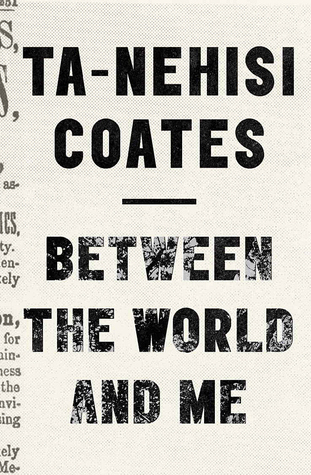
“We should seek not a world where the black race and white race live in harmony but a world in which black and white have no real political meaning.” Ta-Nehisi Coates, Between the World and Me
Between the World and Me, winner of the National Book Award, is written as a letter by Ta-Nehisi Coates to his 15-year-old son.
“You are growing into consciousness, and my wish for you is that you feel no need to constrict yourself to make other people comfortable.”
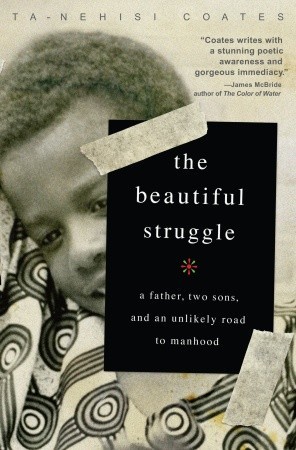
I read this book together with Ta-Nehisi Coates’ The Beautiful Struggle, a coming of age memoir about growing up black in West Baltimore, and the two are excellent read back to back. If you want to see what Ta-Nehisi Coates is all about, I recommend reading the memoir first, so you’ll have background about Coates’ childhood and family, and then follow up with Between the World and Me so you have some context.
Fair warning, though, I found neither book an easy read emotionally, and you may not either if you are a white American. (Or, as Coates would say, if you think you are white. Coates believes race is a falsehood.)
“Americans believe in the reality of ‘race’ as a defined, indubitable reality of the natural world. Racism – the need to ascribe bone-deep features to people and then humiliate, reduce, and destroy them – inevitably follows from this inalterable condition. In this way racism is rendered as the innocent daughter of Mother Nature, and one is left to deplore the Middle Passage or the Trail of Tears the way one deplores an earthquake, a tornado, or any other phenomenon that can be cast as beyond the handiwork of men.”
There is plenty of uncomfortable truth in these two books, and Coates does not mince words. Between the World and Me, especially, is meant to awaken America from its false Dream.
I grew up in a somewhat racially diverse town outside of Cleveland and attended public school alongside African Americans, but there was de facto segregation, with blacks in their own neighborhood not far from where I lived. In retrospect, and especially after having read Coates, I see how absolutely separate and different our lives actually were.
When I began reading The Beautiful Struggle, I found myself baffled by the words and phrases Coates used and many of his cultural references. I was reading a different language, the language of urban black America. The language is perhaps deliberately exaggerated in the first pages, and not decoded, maybe to act as a kind of culture shock or wake-up call to the reader.
A senior writer at The Atlantic, Ta-Nehisi Coates grew up in one of the toughest, most marginalized and deprived communities in America. His father was a Black Panther who later became a librarian; his employment at the Howard University library enabled his children to attend school there tuition free.
I’m not going to summarize too much about the books, because I can’t do justice to Coates’ eloquent, powerful prose as he describes how the African American body has been violated through slavery, segregation, incarceration, and death at the hands of our criminal justice system. His words are sometimes hard to take, and both books are unfailingly hard to put down. I was especially struck by these aspects:
- How very terrifying it is to be pulled over or questioned by a police officer if you are black in America. I think the only thing more powerful than Coates’ words are the videos we’ve seen of incidents gone wrong these past few years. I respect the bravery of police officers doing incredibly challenging work, but I’ve also been following the news in Cleveland, where I grew up, and how the police department there has been investigated by the US Department of Justice. My son attends the U. of Cincinnati, where this past year an unarmed black man was killed by a campus security officer for no apparent reason. (The officer has been charged with murder.) When the video went viral, I was chilled by what I saw, frightened for my son and anyone who might be at the wrong place at the wrong time.
- Coates recounts the first time he visited Paris, France. Growing up in West Baltimore, he could never have imagined such a gracious and beautiful place or that he would ever go there. It was moving to read Coates’ description of how easy it was for him to walk the streets of Paris, how differently he was treated, and how for the first time he wasn’t afraid.
- Coates concludes that the fate of all of us is in the hands of those with power who think they are white – he believes many, though not all, African Americans are still too disenfranchised to change the system. But he fears that we as a country will reap what we’ve sown; that our hunger for power has also meant the abuse and destruction of the earth. He fears that in the end the earth will prevail, likely at great cost to humanity.
Here is one more quote from Between the World and Me, an example of his powerful use of language that some may see as divisive or offensive:
“The truth is that the police reflect America in all of its will and fear, and whatever we might make of this country’s criminal justice policy, it cannot be said that it was imposed by a repressive minority. The abuses that have followed from these policies—the sprawling carceral state, the random detention of black people, the torture of suspects—are the product of democratic will. And so to challenge the police is to challenge the American people who send them into the ghettos armed with the same self-generated fears that compelled the people who think they are white to flee the cities and into the Dream. The problem with the police is not that they are fascist pigs but that our country is ruled by majoritarian pigs.”
(And from “Whitey” Tim Kreider, read this. I happened to discover this link on my Facebook page the day I wrote this post.)
Have you read Between the World and Me or The Beautiful Struggle? What do you think of the final quote above? Please share your thoughts in the comments.



 Lopez came to Rochester to receive his award and to deliver to us the poem
 If you’d like to read Barry Lopez,
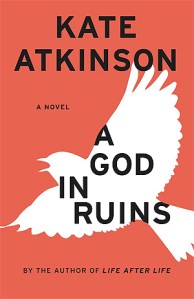 about her novel


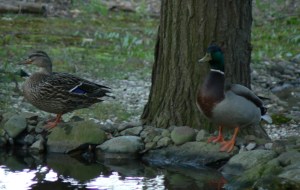 We never see any ducklings, though, and we worry because this is also the territory of a neighborhood fox, as well as hawks and owls. By midsummer our visiting ducks have disappeared – maybe they’re busy tending their nest – and I always miss them once they’ve gone.
 In Duck Eggs Daily, Maine hobby farmer Lisa Steele proves this is so, and I found her enthusiasm and love for ducks (and flocks of all kinds) to be contagious and inspiring.
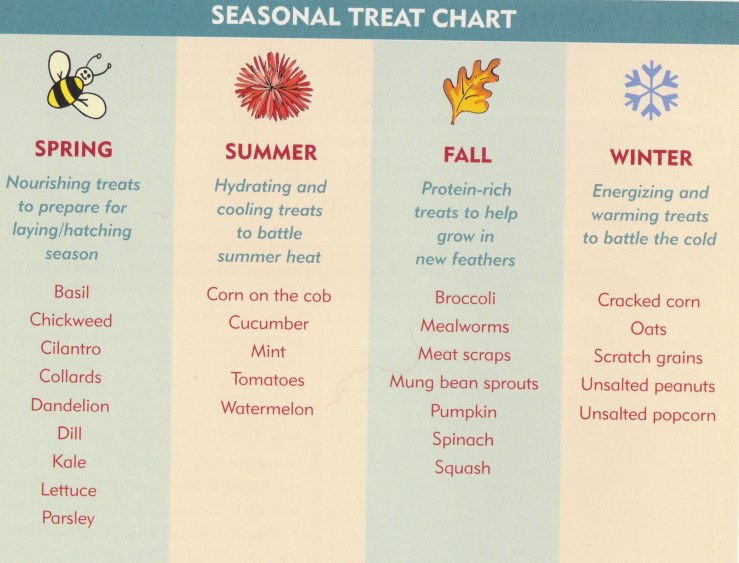 Lisa says that now is the perfect time to invest in a pair or trio of ducks, because many ducks adopted as pets are abandoned after Easter. She encourages interested readers to adopt two or three from one of the duck rescue organizations listed in the book’s appendix.
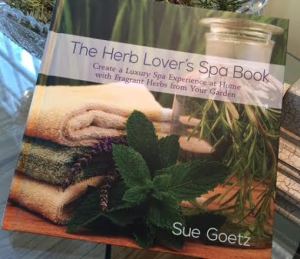 Slow Flowers, by Debra Prinzing
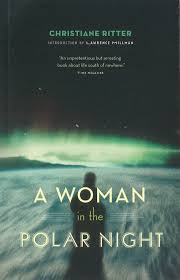 “Meanwhile the world out of doors falls into deepest night. The mountains are no more than white shadows, the sea no more than a black shadow – until that too dissolves away. And then everything is dead.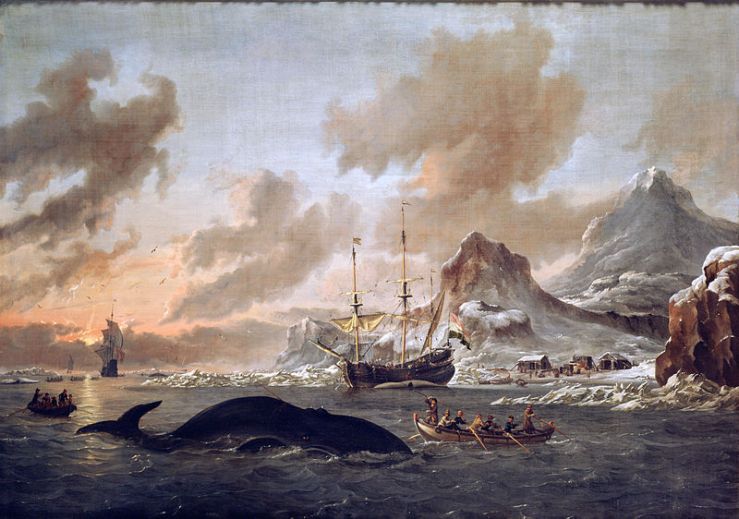

 So it was especially sad to read the excellent book I picked up next,
 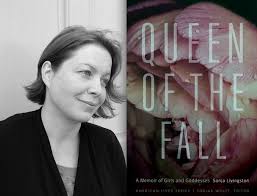 “The Italian word for gypsy, zingaro, is perhaps a better word. [The word] “heart” is merely a convenience, a sort of shorthand for what’s contained within the cautious body–the spark that thrives on wonder, that which is flung wide or ratcheted shut until it seems all but sealed but remains open, if only just a touch; the thing that moves and changes even as we seek to know it, that which stalks and stalks but cannot be satisfied. Not fully. Not permanently. The part of us that continues to yearn, to try, and to dream, despite the fact that there’s a certain space within us incapable of being filled, and that learning to live with this is a part of our humanity. But what does the heart know? Zingaro cuore. So great are some hungers, so unrelenting, that whatever even halfway fills them must be tried–miniature orange trees and birdhouses and homemade ukuleles. What can we do but feed, then feed again, the tender shoots within us? Sonja Livingston, Queen of the Fall: A Memoir of Girls and Goddesses (University of Nebraska Press)
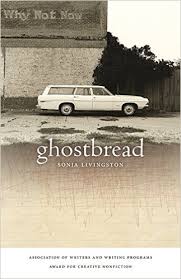 If you’d like the full story of Sonja’s remarkable life as a backdrop to her essays in Queen of the Fall, you could read her remarkable 2009 memoir,
  Here, for example, is a link to the

 I remember those three-hour sessions every Tuesday evening, all of us crowded around a large conference table in an undersized room. Usually, two people were in the hot seat: the writer whose essay we were critiquing, and the student moderator leading the critique.
