Books, writing, creativity, cool media and other delights….
Walking book clubs. Did you know these existed? Here are a couple in the UK hosted by two book bloggers who write fabulous reviews: Emily’s Walking Book Club with Daunt Books – turns out the one and only time I’ve been in London we went to Daunt Books, where we browsed for over an hour. Wish I’d known about Emily then, I’d have tried to connect with her; and The Northern Reader – see also her Flower Power if you love gardening, flowers and nature lit.
Book spine poetry. A few weeks back in honor of April being National Poetry Month, I wrote some book spine poetry and asked readers to share theirs. Here is what Naomi at Consumed by Ink came up with. I love her little poems. Try it yourself, and if you’ve created book spine poetry you like, please share in the comments.
A good book. My favorite book bloggers always give me titles to add to my to-read list. I love this review of Hill by the French writer Jean Giono that Melissa wrote at The Bookbinder’s Daughter.
“I, SNOW LEOPARD is both a lyric and an elegy. It is easy to imagine its lines being loudly hailed in whatever country the poem finds itself in. It’s publication comes at a time when people everywhere have begun to wonder what a voice like this, suppressed for centuries, wishes to say now, in this moment when the Snow Leopard’s human brothers and sisters find themselves side by side with him. Imperiled.” Barry Lopez
Barry Lopez came to Rochester this week to receive “The Art of Fact” award for literary nonfiction presented by The College at Brockport Writers Forum and M&T Bank.
If you’ve been following my blog, you know that Barry Lopez is one of my heroes, not quite at the level of Pope Francis and the Dalai Lama, but close. (See my blog’s header quote.)
Lopez is one of the very best nature writers, and if you love animals and wildlife, you’ll love his nonfiction books, essays, and short stories. He has travelled to 90 countries and has a tremendous respect for the animal world and the many indigenous peoples he’s come to know.
I wasn’t familiar with either the poet or the poem, but Lopez said that when he found out “I, Snow Leopard” had been published in Asia and Europe, but not in the United States, he had to set things right.
He felt that it was vitally important that the American people hear the words of the snow leopard in this poem. So he saw to its publication here, and wrote the foreword to the English edition.
Jidi Majia, a member of the indigenous Nuosu (Yi) people who live in the mountains of southwestern China, has won numerous literary awards. As far as I could tell from what I found online, few of his poems have been translated into English.
Majia’s poem is written in the words of a snow leopard, which is viewed by the Nuosu as a wisdom keeper, a being with “biological authority,” according to Lopez.
He told us that when he first began traveling the world and exploring, in his thirties, he viewed wild animals in an amateur, superficial, childlike way, until he learned to embrace the much more refined view held by native peoples.
A poem is a door anyone can walk through, Lopez said, and this poem is the mysterious and elusive snow leopard’s expression of grief and a warning to human kind: “Do not hunt me any longer.” Human violence toward animals puts everyone in peril, animals and humanity alike.
Before Lopez began, he said he wasn’t worthy to read “I, Snow Leopard,” but he’d try. He said that, as far as he knew, we’d be the very first American audience to hear the poem.
We listened to this exclusive reading in the soaring space that is the chapel in Rochester’s Temple B’rith Kodesh. “I, Snow Leopard” is beautiful, haunting, simply expressed and accessible even to listeners not accustomed to hearing poetry.
After the reading Lopez answered questions and spoke informally and earnestly. As we listened, the audience seemed to be hanging on his words. Here are some direct quotes I managed to scribble in my notebook:
“Each soul is essential to the warp and weft of the universe.”
“I want to see people come alive.”
“We know what to do and we have to do it now.”
Fixing our world “will take people of great courage. People like you. Because Washington is not doing it.”
“We should be holding hands.”
“The only thing that really matters is to be in love.”
I wrote down the following words, too, but I don’t recall if they are from the poem or if they are Barry Lopez’s words. I believe they are both:
“There is no other place for any of us to go.”
“I, Snow Leopard” is available on Amazon. Barry Lopez told me it is also to be published in a future issue of Orion Magazine.
If you’d like to read Barry Lopez, Arctic Dreams, his nonfiction work about the Far North that won the National Book Award, is a great book to start with. I haven’t yet read Of Wolves and Men, but when I saw the mesmerizing cover photo of a wolf on display at the reading, I added it to my to-read list.
Lopez writes fiction, too. I especially liked his subversive collection of short stories, Resistance, which he wrote shortly after 9/11, about surveillance and “parties of interest” to the government.
If you want to know more about the fascinating snow leopard, Peter Matthiessen’s memoir, The Snow Leopard, is a great read.
The Secret Life of Walter Mitty, with Ben Stiller and Sean Penn, is one of my favorite movies. Watch it. You might spot a snow leopard.
“There is perhaps only one thing to say to this infant, who is all future, overlapping briefly with me, whose life, barring the improbable, is all but past.
That message is simply:
When you come to one of the many moments in life where you must give an account of yourself, provide a ledger of what you have been, and done, and meant to the world, do not, I pray, discount that you filled a dying man’s days with a sated joy, a joy unknown to me in all my prior years, a joy that does not hunger for more and more but rests, satisfied. In this time, right now, that is an enormous thing.”Paul Kalanithi, in a letter to his daughter. Excerpt from When Breath Becomes Air
My brother passed away from pancreatic cancer last fall, and I didn’t feel quite ready for When Breath Becomes Air, a Stanford neurosurgery resident’s memoir about his cancer diagnosis. Also, in my work as a clinical librarian, I’d spent time supporting and rounding with clinical staff in neurology/neurosurgery. I had a special affection and respect for the brilliant, hard-working residents, who were about the same age as my sons. So to read about the death of a young resident from lung cancer….
But if you are a living, breathing person who likes to read memoir and nonfiction, and if you consider yourself an engaged participant in our death-denying culture, I would say When Breath Becomes Air is required reading.
One of my favorite authors, Ann Patchett, who owns a bookstore that practices the art of making personal recommendations to readers based on their interests, says, “This is one of the handful of books I consider to be a universal donor – I would recommend it to anyone, everyone.”
On publication, When Breath Becomes Air shot to number 1 on the New York Times Nonfiction Bestseller List. So when I saw Paul Kalanithi’s memoir on our library’s “Most Wanted Book” shelf, I decided to grab it.
Paul Kalanithi set out to be a writer and then switched to medicine and neurosurgery, one of the most challenging and consuming of all clinical disciplines. He believed that a person’s brain determines his identity, which is inseparable from his values and sense of life’s meaning.
Finding meaning was all-important to Kalanithi. During his residency, Paul came to see it was his responsibility to do his best to give his patients the quality of life that would allow them to live according to their most precious values.
We need more doctors who have both the time and desire to get to know and serve their patients in this way, wouldn’t you say?
In his memoir, Kalanithi says the twin pursuits of caring for patients with brain illnesses and writing as a way to explore the meaning of life’s joys and traumas was his perfect calling.
It’s just that he hadn’t planned on doing the writing part until much later in his career. Many months after his diagnosis, when he could no longer work as a neurosurgeon, Paul chose to use his remaining time to write a memoir that, among other things, explores living and dying from the unique perspective of someone who is both a patient and healer.
He and his wife decided to have a child, too. Paul writes of becoming a father with great joy. It reminded me of last summer, when my brother (and our extended family) lived with end-of-life illness, even as we celebrated his daughter’s wedding.
As you can see from the memoir excerpt above, Paul was an extraordinary writer. Medical humanities literature, also known as narrative medicine, written by patients, doctors, nurses, and clinicians, is really coming into its own, and I think When Breath Becomes Air will become a classic.
Paul Kalanithi stands right alongside Anthony Verghese,Danielle Ofri, Sherwin B. Nuland,Tilda Shalof, Theresa Brown,Atul Gawande,Oliver Sachs, and othersas one of the best. Really, his memoir is not to be missed.
“The fact of death is unsettling. Yet there is no other way to live.” Paul Kalanithi
Below is the trailer for When Breath Becomes Air.
Have you read When Breath Becomes Air, and what did you think? Have you read another medical humanities or health related memoir, novel, or essay that you have especially liked? Please share your thoughts and recommendations in the comments.
Once or twice a month I’ll share newsy items, links to some of my favorite blogs about books, writing, and creativity, and whatever else strikes my fancy that I think you might like.
Here is what’s caught my eye lately:
A short, beautiful video, “Lessons from Flowers,” that is a narrative about death and loss. Larisa Minerva at Wildest Blue says we could stand to change our attitudes about death. My next post will feature a new memoir about death and dying.
Lonesome Reader’s review of Kate Atkinson’sA God in Ruins. I’ve read and written about her novel Life After Life, and hadn’t planned to read her newest which features another character in Life After Life. What more could be said about this mesmerizing World War II story? But Lonesome Reader convinced me otherwise.
Coming April 12: 67 Shots: Kent State and the End of American Innocence by Howard Means. I can’t wait to get my hands on this book. I grew up near Kent State and the infamous day of May 4 has a small part in the memoir I’m writing.
“As the sun peeks up over the tops of the trees, I finish the last of my coffee and get dressed in my ‘barn attire.’ My schedule (and the ducks’) isn’t dictated by the time on the clock on the kitchen wall, but entirely on the sun. They want to be let out at sunup, whether that comes at 5:30 a.m. or 8:00 a.m….It’s cold outside, so I’ve heated up some water in the teakettle and have a special treat for the ducks to go with their breakfast. They’re getting a pan of oats, cracked corn, dried cranberries and mealworms, moistened with warm water.”Duck Eggs Daily by Lisa Steele
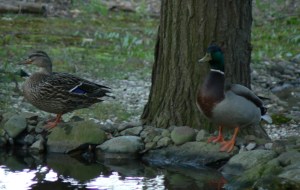
I know it’s spring when, every April, a pair of wood ducks appear in our backyard. They like to swim in our two small ponds and they nest somewhere in the miniature forest of beech, maple, and hemlock behind our house that gets a bit swampy in the spring.
Our ducks haven’t shown up yet, but I’m expecting them any day now.
We never see any ducklings, though, and we worry because this is also the territory of a neighborhood fox, as well as hawks and owls. By midsummer our visiting ducks have disappeared – maybe they’re busy tending their nest – and I always miss them once they’ve gone.
My husband and I have been learning (very) small-scale vegetable gardening, and I’ve been thinking about branching out into eggs. I’d read in one of my gardening books that ducks are great for pest control and fertilizer, and they’re easier to raise than chickens.
In Duck Eggs Daily, Maine hobby farmer Lisa Steele proves this is so, and I found her enthusiasm and love for ducks (and flocks of all kinds) to be contagious and inspiring.
An expert in small-flock poultry keeping, Lisa has been a long-time owner of chickens, too. She says that ducks are more cold hardy, heat tolerant, and disease resistant than chickens – so I’m thinking ducks might be the way for a beginner like me to get started. They have a longer and more productive laying life too, and duck eggs are especially rich in protein.
Duck Eggs Daily is a beautifully designed little how-to reference book that also reads like a daybook or nature journal, particularly the day-in-a-life-with-ducks chapter. Lisa’s eleven ducks clearly bring her a great deal of joy, and these duck tending activities are lovingly rendered:
hatching ducklings in an incubator
collecting eggs at sunrise
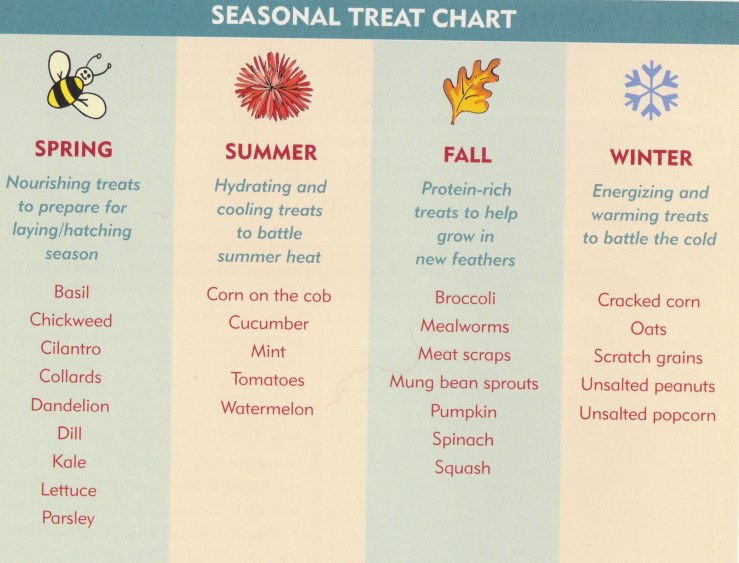
making ducks happy with special treats (such as watermelon, dandelion greens, fresh peas, leftover squash and pumpkins from the garden, and delicious mealworms)
giving ducks swim time in the kiddie pool
watching typical duck antics like walking in a row, mud dabbling, tail wagging, and happy quacks.
Each duck topic covered is packed with useful details:
the characteristics and advantages of various duck breeds
hatching, brooding and raising ducks
one complete day in a life with ducks, from sunrise to sunset
duck behavior and duck treats
duck houses and duck pools
duck health
cooking with duck eggs, with tempting recipes like crème brûlée, lemony egg rice soup, herbed deviled eggs, and homemade pasta.
Lisa says that now is the perfect time to invest in a pair or trio of ducks, because many ducks adopted as pets are abandoned after Easter. She encourages interested readers to adopt two or three from one of the duck rescue organizations listed in the book’s appendix.
After reading Duck Eggs Daily, I concluded that currently we don’t have a lifestyle conducive to raising ducks and doing it well. However, we’re looking forward to ducks in our future when the time is right. It’s a daily commitment, and we’d need to find someone to take over when we travel. I have a hard time picturing myself filling water tubs twice a day, especially during freezing, snowy western New York winters. And, in theory, I like the romance of getting up with the sun to let the ducks out and give them breakfast, but rising early isn’t my favorite thing to do. I’d have to make a commitment to make that happen on cold, dark winter mornings. Still, I like the discipline this entails. I think it would be a great way to start to my day and get me at my writing desk earlier.
But those ducks, they sure are cute, so maybe it will happen sooner rather than later. I’ve never tasted a duck egg, and wouldn’t it be fun to make homemade mint chip ice cream with fresh duck eggs?
I’ve had a small herb garden as long as I can remember, and I’ve always loved flowers, having grown up in a floral shop. Over the past year or two, since we began our vegetable garden and I discovered St. Lynn’s Press, I’ve assembled a great little library that’s still growing.
Slow Flowers, by Debra Prinzing
The 50 Mile Bouquet, by Debra Prinzing
Windowsill Art, by Nancy Ross Hugo
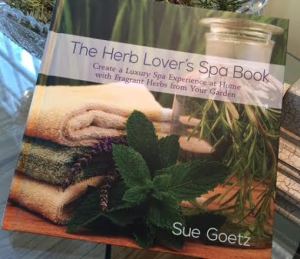
The Herb Lover’s Spa Book, by Sue Goetz
The Cancer Survivor’s Garden Companion, by Jenny Peterson
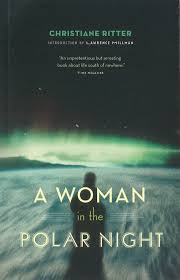
“Meanwhile the world out of doors falls into deepest night. The mountains are no more than white shadows, the sea no more than a black shadow – until that too dissolves away. And then everything is dead.
In this pitch darkness we cannot move far from the hut. I make the smallest possible turns around the hut – all that is left of my walks. When it is not snowing we spend hours outside the hut chopping and sawing wood by the light of the hurricane lamp….
The wind that, rising and falling, lasts for days, is in fact our last link with the reality of the world…”Christiane Ritter, A Woman in the Polar Night
A Woman in the Polar Nightis an astounding memoir by Austrian artist Christiane Ritter who, in 1933, joined her scientist and hunter-trapper husband, Hermann, on the remote island of Spitsbergen 400 miles off the coast of Norway.
If you love memoirs of travel, adventure and, especially, nature, I highly recommend A Woman in the Polar Night. This is an extraordinary book written in poetic, painterly prose by a woman with a fearless spirit who was profoundly moved and changed by her year in the Arctic.
Christiane writes brilliantly about the beauty of Spitsbergen and also its terror. She thrived on Spitsbergen, but during both the darkest and the brightest stretches of her polar immersion she approached the edges of madness. As anyone might.
She writes of a terrifying two weeks spent alone in a fierce snowstorm. The hut was buried completely except for the stovepipe attached to the roof. Christiane’s husband and their companion, Karl, had gone on a hunting trip, and she was left alone with the darkness, snow, and raging wind.
She survived the storm and isolation. But when a full moon finally broke the long darkness, Christiane became moonstruck:
“It is full moon. No European can have any idea of what this means on the smooth frozen surface of the earth. It is as though we were dissolving in moonlight…. One’s entire consciousness is penetrated by the brightness; it is as though we were being drawn into the moon itself…..
Neither the walls of the hut nor the roof of snow can dispel my fancy that I am moonlight myself.”
Fearing Christiane had rar, a strangeness that befalls some who winter in polar regions, Hermann and Karl kept Christiane in the hut, so she wouldn’t succumb to ishavet kaller – meaning “the Arctic calls” – which can drive a person to throw herself into the sea.
“Surrounded by this boundless deadness and rigidity of everything physical, one’s living senses begin slowly to go their own way. More frequently and more brightly as the winter is prolonged, a strange light spreads before the inner eye, a remote and yet familiar vision. It is as though here, in this apartness, we develop a particularly sharp awareness of the mighty laws of the spirit, of the unfathomable gulf between human magnitudes and eternal truth. Outside of time, everything is annihilated. The imprisoned senses circle in the past, in a scene without spatial dimensions, a play in which time stands still.
Often I see the flowers and trees of the distant sun world, but I do not see them as I used to see them. They are glowing with color and piercingly beautiful. Their most secret meaning lives in their growth and their color.”
Christiane writes of bear-hunting with Hermann and Karl in a “gigantic wilderness of ice”:
“We are in the middle of the bear kingdom. All my fear of bears has vanished. As in a dream I go on through the splendid strange world.
How quiet it is here. The sun shines on a soundless scene. The magical hues of the soft shadows glow deeply. Everything belongs together here, even the bear tracks in the deep snow, which show with what peace of mind the animals have gone on their way. Everything breathes the same serenity. It is as though a current of the most holy and perfect peace were streaming through all the landscape.
I feel that I am close to the essence of all nature. I can see its paths interlacing and still running alongside each other in accordance with eternal laws. I divine the ultimate salvation before which all human reasoning dissolves into nothing.”
Ptarmigan was part of Christiane’s Spitsbergen diet. The New York Public Library Digital Collections.
The memoir’s conclusion is triumphant and sad. Christiane must finally leave the island, forever changed and knowing she will never return. She doesn’t reveal she has an infant daughter at home in Austria until nearly the end of her memoir, a startling bit of information that for me highlighted what an unusual couple the Ritters were.
I was curious about what it was like for Christiane to return to civilization and wished for an epilogue (there is none), but on the other hand I wasn’t sure I wanted to know. On top of having to re-integrate into society, Christiane returned to Austria as Europe neared the onset of World War II.
I found a 1954 edition of Christiane’s memoir at the local library, illustrated with line drawings by the author. You may want to look for the University of Alaska Press edition, published in 2010, which includes a preface with biographical information about the Ritters. It may satisfy some of the inevitable curiosity you’ll have about how the lives of this remarkable couple played out.
Christiane wrote, “You must have gazed on the deadness of all things to grasp their livingness.”
It seems to me her memoir is a remarkable example of someone whose extreme adventure pushed her into completely letting go of her ego and recognizing that we don’t have dominion over nature; we are instead part of nature itself. I think the world would be a much better place if we could all come to know this.
Stephenson reports that many climate scientists now believe climate catastrophe is inevitable.
He explains the term “climate justice” and how it is different from climate activism and environmentalism. Many have come to realize that climate change is the moral and spiritual issue of our time, inseparable from social justice and equality. The poor and disadvantaged will suffer the most from climate disruptions, as we’ve already seen in places like New Orleans and in countries around the world.
Stephenson lives near Walden Pond in Massachusetts, and he looks at climate justice through the lens of Henry David Thoreau‘s principles of civil disobedience. He likens climate justice to the social justice struggles of abolitionism and civil rights.
Stephenson writes about how he came to leave his career in mainstream journalism to immerse in climate justice, and it’s fascinating to read his interviews with others devoted to the cause as they explain the spiritual and other motives that drive them.
Most are young, some got their start in the Occupy movement, others are evangelicals, Quakers, atheists, community organizers, and grandparents. Many of them have come to believe that the way to survive climate change is to build strong, local communities where people trust and look after each other.
I couldn’t get out of my mind a young woman Stephenson interviewed, Grace Ann Cagle, who said she’d much rather be on a farm having babies than on the front lines of climate justice. Grace took part in the Texas Tar Sands blockade.
“She’d been up in the trees for about a week, in late September, 2012….Sure enough, TransCanada’s machines came up from the south.
‘They came over the creek….They had a feller buncher – it grabs the trees, cuts them, and throws them. And as they cross the creek, they’re coming like ten feet, twenty feet away from me, practically at the base of my tree – and I thought they were going to kill me….Why would they care about me? And so I jumped onto this traverse rope, and I’m dangling there, wearing all black with a mask on my face, screaming, Go away! Get out of here! They stopped their machines…..I spent like six hours dangling there, in a harness, because I could protect two trees at once….'”
How sad that, since Christiane Ritter’s time, we’ve come to this.
Read A Woman in the Polar Night to be transported and to understand what we’re losing. Then, if you want to consider what your role might be in the greatest battle of our time, you could follow the memoir with What We’re Fighting for Now Is Each Other: Dispatches from the Front Lines of Climate Justice.
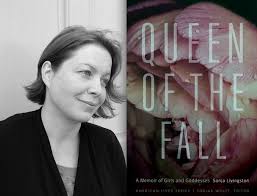
“The Italian word for gypsy, zingaro, is perhaps a better word. [The word] “heart” is merely a convenience, a sort of shorthand for what’s contained within the cautious body–the spark that thrives on wonder, that which is flung wide or ratcheted shut until it seems all but sealed but remains open, if only just a touch; the thing that moves and changes even as we seek to know it, that which stalks and stalks but cannot be satisfied. Not fully. Not permanently. The part of us that continues to yearn, to try, and to dream, despite the fact that there’s a certain space within us incapable of being filled, and that learning to live with this is a part of our humanity. But what does the heart know? Zingaro cuore. So great are some hungers, so unrelenting, that whatever even halfway fills them must be tried–miniature orange trees and birdhouses and homemade ukuleles. What can we do but feed, then feed again, the tender shoots within us?Sonja Livingston, Queen of the Fall: A Memoir of Girls and Goddesses (University of Nebraska Press)
This collection of linked essays, the 2016 choice for If All of Rochester Reads the Same Booksponsored by Writers & Books, is a wonderful example of how powerful and poetic the essay can be and how inventive the form.
(Despite the subtitle, this is a collection of essays–memoir-ish, rather than a true memoir.)
Sonja writes about how the term “essay” conjures visions of tedious school assignments. But the essay is actually an elastic form of literary exploration that can be novel and beautiful. If done well, an essay tantalizes, catching the reader up in an unfolding.
The author has dedicated Queen of the Fall to the memory of Judith Kitchen, a teacher and mentor who passed away in 2014. I wrote last week about how Sonja, who grew up in the Rochester area, took Judith Kitchen’s essay writing class at SUNY Brockport twice. (I took Judith’s class also, several years ago.) While she was enrolled in Judith’s classes, Sonja was inspired to give up her career as a school counselor and become a writer.
Her essays share the themes of womanhood, fertility, and poverty, which have been central to her own life–hence the term “memoir” in the book’s subtitle. Each essay stands on its own, but I found myself so captured by their momentum that I read several in one sitting, as though I were reading a novel or memoir.
When I was in graduate school at Syracuse University many years ago, two classmates and I made a documentary about rural poverty in New York State. I’d just moved here from New York City, and I loved the landscape of glacier-made Finger Lakes, deep gorges, and waterfalls. I had no idea that, hidden in all this rural beauty, many families lived in poverty.
Growing up in the 1980s and 1990s, Sonja Livingston, her mother, and her six siblings were among them. Though there were five fathers among the seven children, no father was present in their lives. They moved from place to place: a rural town, a Native American reservation, an urban slum in inner city Rochester.
In Queen of the Fall, (which refers to the apples Sonja and her siblings picked during a stint as farm workers), Livingston explores the lives of various women and girls, including the great suffragette Susan B. Anthony who lived in Rochester (“The Lady With the Alligator Purse”), the troubled young girls (and a boy) Sonja met as a school counselor (“One for Sorrow”), and the television character Ally McBeal (“The Lonely Hunters.”) They are some of my favorite essays, as well as “World Without End,” “What the Body Wants,” and “The Last American Virgin.”
Livingston casts the lives of women, especially disadvantaged and/or obscure women, in a new and dignifying light. Throughout, Sonja weaves in moments from her life as a teen taking risks yet hoping to avoid pregnancy, as a woman confronting infertility, and as the aunt of a young, unmarried niece who finds herself pregnant.
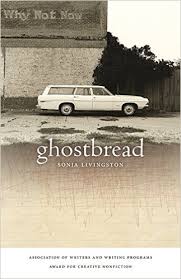
If you’d like the full story of Sonja’s remarkable life as a backdrop to her essays in Queen of the Fall, you could read her remarkable 2009 memoir, Ghostbread, first. After devouring her essays, I found a copy of the memoir at my local library.
Sonja will have a newly published collection of essays this month that has been described as a hidden history of women’s lives: Ladies’ Night at the Dreamland.(I believe the Dreamland refers to Seabreeze, a Rochester amusement park.)
I’m looking forward to reading about little-known and obscure women from the area where I live–among them, a woman who crossed Niagara Falls on a tightrope, and the Fox sisters, who became well-known Spiritualists and mediums. Western and upstate New York has always been known for its progressive spirit and energetic spirituality, a hotbed of abolitionism, women’s rights, religiosity, spiritualism, and utopianism.
Here, for example, is a link to the Women’s Declaration of Sentiments, written and signed in 1848 in Seneca Falls, New York. It is inscribed on a wall there, and I remember being very moved on my visit several years ago.
From Livington’s upcoming book:
“Women understand how to overlook or wait until next time, can spend years holding their tongues in the face of the thing that most wants letting. No, I need no convincing of the strength of women, but it’s too often a matter of restraint. I do not often see us standing bold or brazen before a crowd. I do not mean to belittle cheerleaders and fashion models and television weather women—though theirs seems a case of the body going through a series of prescribed and pleasant motions. Where are our wild women? Those with open mouths and muscled legs, who flare and flame, whose actions shock, and whose bodies defy gravity, whose every step rivets the eye so that we can’t look away?”
For the next few weeks, Sonja will be here for readings, signings and discussions at Writers & Books, local libraries, schools, colleges and bookstores.
Sonja is from the Rochester area, and divides her time between Rochester and the University of Memphis, where she teaches writing. The daughter of a single mother and one of seven children (with five different fathers), Sonya has also written a memoir, Ghostbread, about growing up in poverty in the Rochester slums and on the Tonawanda Reservation.
When I read the dedication page of Queen of the Fall,I was surprised and delighted to see this: “For my mothers, actual and acquired, and In memory of Judith Kitchen.”
I wondered: Does Sonja look upon Judith as a mother figure, a kind of midwife who helped Sonja give birth to her own writing?
Yes, she does. So do I, and so do many in the Rochester community. I know Sonja does because, flipping through her essays, I found “Flight,” about the personal essay writing class taught by Judith that Sonja enrolled in many times.
I took the same class from Judith years ago, when I first began writing memoir and essay. Poet, novelist and essayist Judith Kitchen was a professor at SUNY Brockport at the time. She was married to the poet Stan Rubin, also on the Brockport faculty. Both were master teachers beloved by students and the literary community here.
I’d had to wait a semester to get a spot in Judith’s class. She generously added a slot or two beyond the designated maximum enrollment of twenty to accommodate those of us at the top of the waiting list. Judith didn’t have to let us non-matriculated students in, but she did. I think that she welcomed the diversity of backgrounds and generations, because it made for lively, rich discussion and, ultimately, more learning and better writing.
Our class was made up mostly of young people enrolled in the Creative Writing MA program. There were a few women getting mid-life master’s degrees in the class, too. I was in the small group of moms with kids and/or jobs, taking the course as continuing ed, trying to squeeze in the class time, plus the hours of writing and preparing critiques.
Oddly, I sat next to another mom with young children who also happened to be writing about having a mother with schizophrenia. I wasn’t sure I liked that so much, but on the other hand we “got” each other. We were of the same tribe and found our own experiences validated in each other’s writing.
I remember those three-hour sessions every Tuesday evening, all of us crowded around a large conference table in an undersized room. Usually, two people were in the hot seat: the writer whose essay we were critiquing, and the student moderator leading the critique.
Being the moderator was nearly as stressful as having 20+ people deconstruct and critique your writing. Judith wanted us to practice and learn the art of critical reading and the art of leading a successful writing workshop. She knew the value of writers in community and that the best way to learn how to write is to learn from one other. So, in addition to our writing assignments, we were required to come to class prepared to intelligently discuss our classmates’ essays, having read them thoroughly and marked them with comments.
Judith was strict in her expectations, but she was also kind and nonjudgmental. This is crucial in a writing teacher, especially in a college setting where you have new, young writers grappling with their innermost secrets and shames and confessing them on the page, perhaps for the first time.
We wrote and shared funny essays, of course, and happy ones and contemplative ones. But in Judith’s class, I learned what it was like to be young and beautiful and anorexic in a dorm full of women with anorexia. I learned what it was like to have your dearest, life-long friend, the one who knew you better than anyone else, commit suicide. I learned what it was like to be secretly lesbian and have a Vietnam war veteran with undiagnosed PTSD for a father.
I wrote a couple of essays about my family, my mother, schizophrenia, and the boy I loved. I shared with the class stories I’d never told before and listened to their comments.
One classmate’s essay in particular has stayed with me all these years. He wrote about a long night of partying. Beer after beer, shot after shot. The girl he was madly in love with. (Who he was still madly in love with; it was all over every page and you could see it in his eyes as he listened to our comments.) The girl who didn’t know he was alive. The girl whose long blonde hair he pulled back and held as she vomited into a toilet.
I don’t think he was confident of his own potential and, for sure, he knew before we said anything that he hadn’t nailed it, this unrequited love he was trying to write about. I think this boy and his essay got to me because I had two sons on the young side of their teen years. I realized that I was old enough to be this writer’s mother, old enough to be the mother of all the young writers in the class. I knew that I would never hear about my own sons’ loves in this searing detail, because that is not what sons tell their mothers. I knew this boy’s mother would likely never hear the story her son was trying to tell us.
I wanted to offer him something helpful and constructive, but I was mystified. I, too, was finding that, when it came to writing about my own first love, I was at a loss. How do you write about love in a way that is not sentimental or cliche, but authentic, vivid, new?
In autobiographical writing, you need to learn how to methodically unearth your personal land mines without letting yourself go crazy all over again. Then, with focus, presence of mind, patience, and persistence, you teach yourself the craft of writing. Draft after draft, you learn how to spin your most intense life experiences and emotions into storytelling gold. It becomes not about you anymore. Your exquisitely cut but imperfect gem of a story (it will never be perfect), the only one like it in the world, is ultimately for the reader.
Maternal is the word I think of now to describe Judith Kitchen. The way she created a safe, nurturing, supportive place for new writers to learn how to do this.
In class, my comment to the boy writing about the girl he loved was only to say something that would help him feel some kinship in his struggle. I said I thought writing about love was one of the hardest things and I was trying to figure out how to do it, too. I told him his writing was, for me, authentic and deeply felt, and that I thought if he kept writing but didn’t try to force it, eventually it would become what it was supposed to be.
A few years after I took her class, Judith and her husband moved to Port Townsend, Washington, where they founded the Rainier Writing Workshop. It is a unique, 3-year low-residency program. Its focus is not on achieving heights of literary prowess or publication or prizes, but on helping students find for themselves a sustainable, lifelong writing practice. A worthy goal.
Judith passed away in 2014. Years after Judith left Rochester, there are a handful of writing groups that originated from her classes that are still going strong.
Next week: Sonja Livingston’s Queen of the Fall and Ghostbread.
Have you had a writing teacher or artistic mentor who has influenced you and helped you along on your creative path?
The Cancer Survivor’s Garden Companion, by Jenny Peterson
“‘Don’t let cancer define you, Jenny.’ So how did I not let cancer define me? Not knowing anything better, I simply kept doing what I knew to do. And one of those things was gardening….I’m not going to lie – I had many days when I did not feel like gardening. But I decided to change my approach and focus on small, doable tasks….little by little, my relationship with plants and my garden became the thing that turned me around – body, mind and spirit. No, it wasn’t easy. Nothing about cancer and cancer treatment is easy. But it was my reality, and I was determined to find some place where I could thrive and experience joy again.”
From time to time, I like to take a break from literary fiction and literary nonfiction at Books Can Save a Life to feature a slow living book that gets me out of my head and inspires me to enjoy the moment. I especially love the unique gardening books published by St. Lynn’s Press, so I was thrilled when they sent me a review copy of The Cancer Survivor’s Garden Companion.
This book is especially meaningful to me because over a year ago my brother was diagnosed with pancreatic cancer. Sadly, my brother passed away in the fall. As I thumbed through the pages of The Cancer Survivor’s Garden Companion, I wished Jenny Peterson‘s book had been available earlier. It would have been a wonderful gift for my brother and his family. From now on, The Cancer Survivor’s Garden Companion will be part of any care package I might give to friends and loved ones with health challenges.
Jenny’s book is filled with simple and enjoyable gardening activities to restore body, mind, and spirit, especially during treatment. I thought about my brother’s small backyard garden, which was a bit neglected after his diagnosis, and how this book might have inspired him to continue enjoying manageable tasks on his tiny plot of tomatoes and eggplants.
One of my fondest memories of that difficult time was the afternoon we decided to make jam from the two old crab apple trees and the grapevines in my brother’s backyard. Joe and my sister-in-law had never picked or eaten the tiny crab apples, and we had no idea how the jam would turn out. We had fun all afternoon picking, cooking, and then tasting the deep purple and ruby colored jams, which turned out delicious.
Jam made from the crab apple trees in my brother’s backyard.
Jenny Peterson is so right about the restorative powers of gardens and nature, because that afternoon my brother really enjoyed sorting and de-stemming the crab apples, the aroma of fruit cooking over the stove, and tasting the still-warm jam. I think he appreciated the little miracle of new and unexpected late-summer bounty from his backyard.
Wellness + Mindfulness + Gardening
Jenny Peterson, a writer and landscape designer with degrees in psychology and theology, is also a survivor of breast cancer and skin cancer. She wrote The Cancer Survivor’s Garden Companion not as a how-to gardening book, but “to encourage people who are diagnosed with cancer, going through cancer treatment, healing from cancer or living with cancer to view their gardens, plants and outdoor spaces as resources in creating the healthiest and most balanced life possible. Life can be difficult, but it can also be profoundly beautiful, and our gardens are the best teachers of this.”
So, you don’t have to be an experienced gardener, or even a gardener at all, to enjoy and benefit immensely from The Cancer Survivor’s Garden Companion. The activities, each centered around body, mind, or spirit, can be scaled up or scaled down, depending on needs and energy levels.
“Survivor Spotlights” feature gardening tips from individuals who have had a cancer diagnosis.
Jenny Peterson talks about her own physical, mental, emotional, and spiritual challenges during radiation, chemotherapy, and other treatments, and how she turned to her garden as both a haven and good medicine. She genuinely understands the rigors of cancer treatment and is deeply empathetic, warm, and encouraging.
The Garden That Heals: Body + Mind + Spirit
Her suggestions for restorative and healing garden activities include:
Gardening for cardio exercise, strength and flexibility, strong bones, circulation & boosting the immune system
Ideas for building a yoga deck garden
Beneficial fruits, vegetables and herbs for nourishment and strength during treatment, including aromatherapy and herbal remedies
Garden design, problem solving, and nature photography to relax the mind and keep it sharp
Sharing the garden with friends and family by hosting seed and plant sharing parties, social hours, and other events
Garden-themed music to enjoy
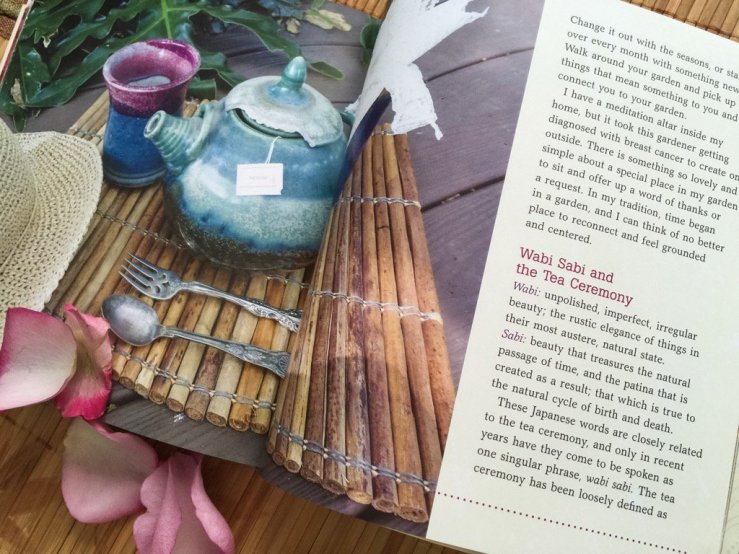
Prayer, meditation, and mindful movement, including labyrinths, suggested mantras, garden altars, and tea ceremonies
There is an appendix with suggested books (fiction and nonfiction), excellent health information sites, and sources for garden tools and clothing.
I love the Japanese words wabi sabi and have read other books on this fascinating topic, including Wabi Sabi for Writers by Richard R. Powell.




 Lopez came to Rochester to receive his award and to deliver to us the poem
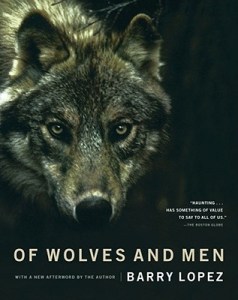 If you’d like to read Barry Lopez,
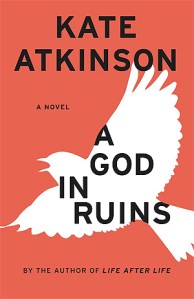 about her novel


 We never see any ducklings, though, and we worry because this is also the territory of a neighborhood fox, as well as hawks and owls. By midsummer our visiting ducks have disappeared – maybe they’re busy tending their nest – and I always miss them once they’ve gone.
 In Duck Eggs Daily, Maine hobby farmer Lisa Steele proves this is so, and I found her enthusiasm and love for ducks (and flocks of all kinds) to be contagious and inspiring.
 Lisa says that now is the perfect time to invest in a pair or trio of ducks, because many ducks adopted as pets are abandoned after Easter. She encourages interested readers to adopt two or three from one of the duck rescue organizations listed in the book’s appendix.
 Slow Flowers, by Debra Prinzing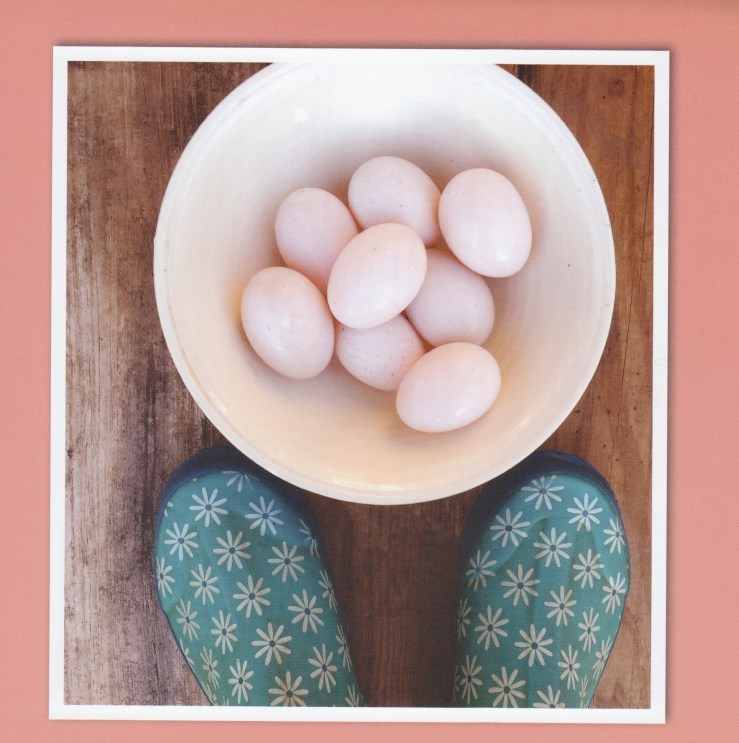
 “Meanwhile the world out of doors falls into deepest night. The mountains are no more than white shadows, the sea no more than a black shadow – until that too dissolves away. And then everything is dead.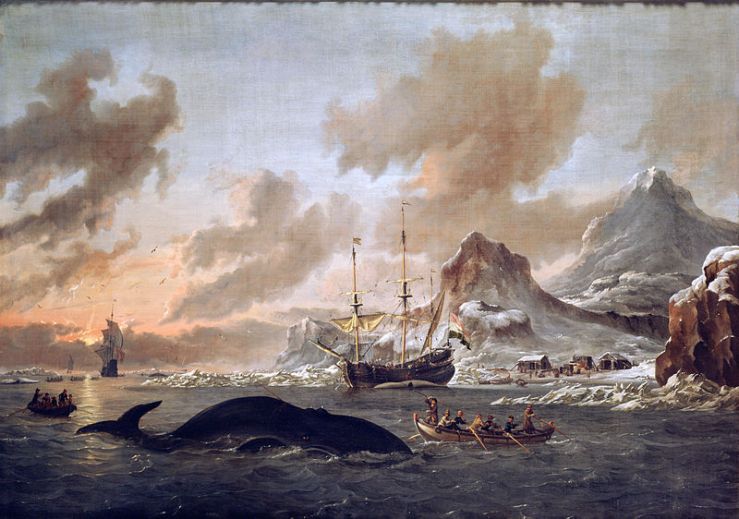

 So it was especially sad to read the excellent book I picked up next,
  “The Italian word for gypsy, zingaro, is perhaps a better word. [The word] “heart” is merely a convenience, a sort of shorthand for what’s contained within the cautious body–the spark that thrives on wonder, that which is flung wide or ratcheted shut until it seems all but sealed but remains open, if only just a touch; the thing that moves and changes even as we seek to know it, that which stalks and stalks but cannot be satisfied. Not fully. Not permanently. The part of us that continues to yearn, to try, and to dream, despite the fact that there’s a certain space within us incapable of being filled, and that learning to live with this is a part of our humanity. But what does the heart know? Zingaro cuore. So great are some hungers, so unrelenting, that whatever even halfway fills them must be tried–miniature orange trees and birdhouses and homemade ukuleles. What can we do but feed, then feed again, the tender shoots within us? Sonja Livingston, Queen of the Fall: A Memoir of Girls and Goddesses (University of Nebraska Press)
 If you’d like the full story of Sonja’s remarkable life as a backdrop to her essays in Queen of the Fall, you could read her remarkable 2009 memoir,
 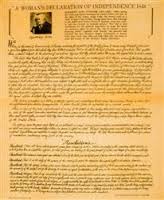 Here, for example, is a link to the

 I remember those three-hour sessions every Tuesday evening, all of us crowded around a large conference table in an undersized room. Usually, two people were in the hot seat: the writer whose essay we were critiquing, and the student moderator leading the critique.