Books to read in 2014

Here’s my to-read list for 2014. It’s incomplete, always changing, and I’m sure I won’t get to all of these, not by a long shot, but it’s a convenient list when I’m choosing my next book. You may see a few of them featured on Books Can Save a Life. I’ve included titles that will be published in 2014, so you won’t find all of them on the shelves yet.

If you have enticing choices on your list, please share them in the comments!

Watch for my book giveaway in February to celebrate the second anniversary of Books Can Save a Life.

FICTION

The Snow Queen book cover

The Snow Child, by Eowyn Ivey    “If All of Rochester Read the Same Book,” 2014

The Goldfinch, by Donna Tartt

Someone, by Alice McDermott

Carthage, by Joyce Carol Oates

Arctic Summer, by Damon Galgut

The Unknowns, by Gabriel Roth

The Circle, by David Eggers

Colorless Tsukuru Tazaki and His Years of Pilgrimage, by Haruki Murakami

The Signature of All Things, by Elizabeth Gilbert

Life After Life, by Kate Atkinson

How Should a Person Be? by Sheila Heti

The Paying Guests, by Sarah Waters

And Then We Came to the End; The Unnamed; To Rise Again at a Decent Hour, by Joshua Ferris

Orfeo, by Richard Powers

Never Go Back, by Lee Child

The Language of Flowers, by Vanessa Diffenbaugh

The Snow Queen, by Michael Cunningham

The Bone Clocks, by David Mitchell

The Interestings, by Meg Wolitzer

The Luminaries, by Eleanor Catton

Lila, by Marilynne Robinson

By Blood, Ellen Ullman

Canada, by Richard Ford

In Sunlight and in Shadow; and Winter’s Tale, by Mark Helprin

The Cuckoo’s Calling, by Robert Galbraith (J.K. Rowling) and Untitled (2014)

The Woman Who Lost Her Soul, by Bob Shacochis

Off Course, by Michelle Huneven

Gone Girl; Dark Places, by Gillian Flynn (movies in 2014)

Wolf Hall, by Hilary Mantel (Best book of the 21st century, according to Elizabeth Gilbert)

****************

IN TRANSLATION

My Struggle, Books 1, 2, 3 by Karl Ove Knausgaard (Norwegian)

Treasure Hunt; The Dance of the Seagull by Andrea Camilleri (Sicilian)

Story of a New Name, by Elena Ferrante (Italian)

YOUNG ADULT
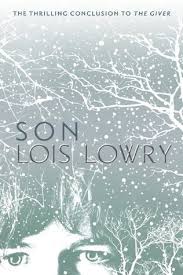
Son book cover

The Giver Quartet Series (including Son), by Lois Lowry

Divergent Series, by Veronica Roth

Mockingjay, by Suzanne Collins

The Fault in Our Stars, by John Green

*************************

MEMOIR
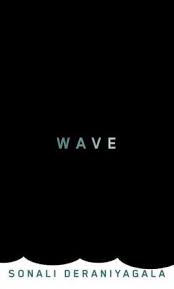
Wave book cover

Men We Reaped, by Jessamyn Ward

Still Writing, by Dani Shapiro

This Is the Story of a Happy Marriage, by Ann Patchett

Wave, by  Sonali Deraniyagala

Intensive Care: A Doctor’s Journey; and Medicine in Translation: Journeys with My Patients, by Danielle Ofri

**************

NONFICTION
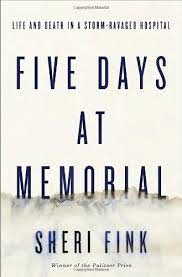
Five Days at Memorial book cover

Big Data: A Revolution that Will Transform How We Live, Work, and Think, by Victor Mayer-Schonberger and Kenneth Cukier

Who Owns the Future? by Jaron Lanier

The Burglary: The Discovery of J. Edgar Hoover’s Secret FBI, by Betty Medsger

Thank You for Your Service, by David Finkel

Five Days at Memorial: Life and Death in a Storm-Ravaged Hospital, by Sheri Fink

What Doctors Feel: How Emotions Affect the Practice of Medicine, by Danielle Ofri

Manson: The Life and Times of Charles Manson, by Jeff Guinn

The Unwinding: An Inner History of the New America, by George Packer

Margaret Fuller: A New American Life, by Megan Marshall

The Skies Belong to Us: Love and Terror in the Golden Age of Hijacking, by Brendan I. Koerner

The Gorgeous Nothings: Emily Dickinson’s Envelope Poems

Stalking the Divine, by Kristin Ohlson

Sons of Madness: Growing Up and Older with a Mentally Ill Parent, by Susan Nathiel

Is There No Place on Earth for Me? by Susan Sheehan

Dear Genius: The Letters of Ursula Nordstrom, by Leonard S. Marcus

Books Can Save a Life: most viewed posts in 2013

Snow-covered trees

Attractions in 2013

These are the Books Can Save a Life posts that got the most views in 2013.

I was gratified to see three of my most popular posts are about having a family member who suffers from mental illness. Early in the new year I’ll be writing about Susan Nathiel’s new book, Sons of Madness: Growing Up and Older with a Mentally Ill Parent. There is still very little written about the experience of having a mother or father with a mental illness; Susan’s book is an important contribution.

On the tenth day of Christmas: Brain Pickings

Deer in snow

7 Essential Books on the Art and Science of Happiness, at Brain Pickings. If you’re not familiar with this site, you’ll want to browse its long, generous excerpts from books by artists, scientists, and other fascinating people. See The Best of Brain Pickings 2013. This is not really a blog, but “a human-powered discovery engine for interestingness” by Maria Popova that has been praised by The New York Times and is included in the Library of Congress permanent web archive.

Photo: Christmas Eve visitors, through binoculars, by A. Hallinan

On the fifth day of Christmas: The Quivering Pen

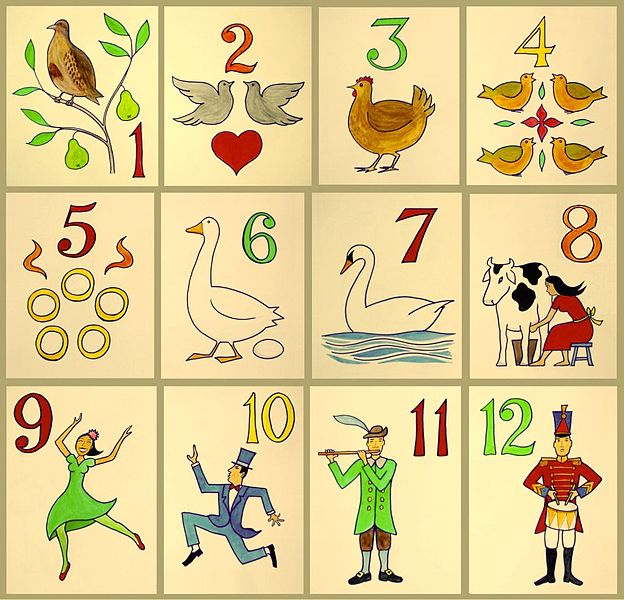
12 Days of Christmas

The Quivering Pen has been my happiest blog discovery of late. It’s a rich, beautifully written site about books, writing, and the literary life by David Abrams, a former Army journalist and author of The Fobbit, a comic novel about the Iraq War.

David is an expansive, passionate reader who writes eloquently about new, backlist, classic, and “lost gem” titles. You’ll find unusual and off-the-beaten-path books to add to your to-read list, and if you’re a writer, you’ll appreciate David’s generous sharing of his own journey and the wisdom of other writers.

I’m looking forward to reading David’s enticing backlist of posts. Among other attractions, he features Trailer Park Tuesday (new book trailers), Friday Freebie (a book giveaway), Sunday Sentence (the best sentences he’s read that week), My First Time (writers talk about virgin experiences in their writing and publishing careers), and Bookstore of the Month.

The Twelve Days of Christmas Song Poster by Xavier-Romero Frias is licensed under CC BY-SA 3.0.

On the third day of Christmas: Pen in Hand

Dog on top of Christmas tree
Illustration by Karen Sandstrom

Karen Sandstrom blogs at Pen in Hand. I love her drawings, her little stories, her commentary, and her wry sense of humor. She’s a writer, journalist and illustrator who lives in Cleveland, my hometown.

Karen created something called “I Must Remember This,” about the daily habit of creativity, which is posted in my home office and gets me back on the writing track when I need it.

Visit her website and take a look at the woman standing in the rowboat clutching a book – I love that picture.

Here are a few of my favorite Pen in Hand posts:

Cut Flowers

I like “Cut Flowers” because I grew up in a flower shop and because I also love Molly Peacock’s book, The Paper Garden. Now I don’t have to write about the book on Books Can Save a Life, I’ll just link to Karen’s fascinating and informed post.

The Geography of Memory

This one’s about a Cleveland suburb on Lake Erie that I visit from time to time.

An Artist’s Stool

I like “An Artist’s Stool” because I will always remember listening to jazz in the Flats on the Cuyahoga River when I was in high school. Yes, that’s the river that caught fire.

Gimme Some of Dat Bitter, Bitter Love

This one, because I belong to that tribe, too.

The Book Thief

“They say that war is death’s best friend, but I must offer you a different point of view on that one. To me, war is like the new boss who expects the impossible. He stands over your shoulder repeating one thing, incessantly: ‘Get it done, get it done.’ So you work harder. You get the job done. The boss, however, does not thank you. He asks for more.”       Death, in The Book Thief

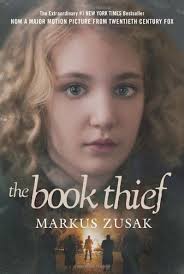
The Book Thief book cover

Death is the narrator in The Book Thief, a young adult book about a German family during World War II that has a huge adult readership as well. It is one book not to be missed. The writing is outstanding. Published in 2005, The Book Thief won countless awards and honors, and has become a classic in YA fiction.

I recently reread the book before I saw the movie. I think the screen adaptation is a good one, although some viewers found it tame, and subtleties of the text can’t be captured on the screen. For example, Max, who is Jewish and hiding out in the home of Liesel and her foster parents, paints over every page of a copy of Mein Kampf and creates his own book, with illustrations. Max’s book is embedded within the pages of The Book Thief, and on the pages of Max’s book you can see faint traces of Hitler’s words.  One of the pages in Max’s book is a drawing of a girl and a boy holding hands and standing on a pile of bodies. Inscribed on the sun that shines down on them is a swastika, and the girl is saying, “Isn’t it a lovely day?”

The author, Markus Zusack, uses the written word as a thematic motif. While the Germans burn books thought to be subversive, Liesel and Hans write words on the wall of their basement as Liesel learns to read, and Liesel steals a book whenever she has the chance, in defiance of the Nazis. Liesel then begins to write her own book in order to make sense of the world’s chaos and carnage.

I do think the movie captured the essence of the story, and it is well cast, especially Sophie Nélisse as Liesel Meminger and Geoffrey Rush as Hans, her foster father. Death is the narrator in the movie, as he is in the book, and in both he is an unsettling storyteller who confesses he is haunted by humans. Of course, in addition to being the narrator, Death has a starring role in the plot as well.

My father was wounded in the war, just inside the German border. Occasionally, my mother spoke of her family’s Victory Garden, the rationing of meat and gasoline, and the “man shortage.”  I was born ten years after the war ended. As an adult, I eventually began to understand how the world turned upside down by war cast long shadows over my parents’ generation.

Have you seen the movie or read The Book Thief? What did you think?

On the second day of Christmas: 66 Square Feet

Two turtle doves

Originally from South Africa, 66 Square Feet blogger Marie Viljoen lived in Brooklyn for many years while cultivating an amazing garden (from which she harvested fruits and vegetables) on her small terrace. Recently, she moved to Harlem, and it will be interesting to see her new not-so-secret garden in progress. Marie calls herself a writer, gardener, forager, and cook.

66 Square Feet book coverI have her new book, 66 Square Feet: A Delicious Life, which I love. I’m a former New Yorker, and I especially enjoy her nature and foraging expeditions around the city. I don’t have much of a garden, but I garden vicariously when I visit 66 Square Feet.

If you only have time for a quick blog stop, 66 Square Feet is perfect – the photography is fabulous, and often there is just a bit of text. Marie has another blog, 66 Square Feet (The Food) where you’ll find her recipes.

It so happens Marie was in South Africa when Nelson Mandela passed away. Here is a link to her post, Madiba’s Garden, about Mandela cultivating a garden while he was in prison and what it meant to him.

(Vintage bird illustration, turtle doves, photo from Vintageprintable1 is licensed under CC BY-SA 2.0)

Twelve blogs for Christmas: Word by Word

Partridge in a pear tree

I thought it would be fun to feature twelve of my favorite blogs, one each for the twelve days of Christmas. These are among my favorites because the authors are passionate about something – books, gardening, nature, cooking, art, spirituality – and they consistently draw me in, even if I know nothing about the topic. Always, I find renewal and a deeper appreciation for life thanks their insights and unique perspectives.

On the first day of Christmas I’ll highlight a book blog, Word by Word. Claire never fails to come up with a book I know I’ll love. Often it’s a book off the beaten path, one I wouldn’t encounter on my own, and her reading is international in scope. She lives in France, and I enjoy when she tells us about the literary scene in Paris, London, and other places she visits. Often, I learn something new about a writer or a moment in literary history.

I’ve never been to the Cité du livre, which must be a book lover’s dream. In this post Claire offers us a tour.

(“Partridge in a Pear Tree” photo by Cindy Mc is licensed under CC-by-NC 2.0)

Books by drone?

Holiday gifrs

Do you want your books and holiday gifts delivered by drones?

Please leave a comment and tell us what you think.

(Photo from FreeFoto.com)

Catching Fire, the movie

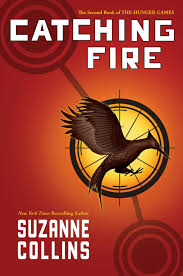
Catching Fire book coverI liked the movie version of the first book in the The Hunger Games trilogy, (unlike many viewers) and I liked Catching Fire, the movie version of book #2, even more.

When a book or movie is wildly popular, I’m curious to know the reasons. I want to know how the creator birthed a story that inspires passion in so many people. The Hunger Games is epic, powerful, and true to our times, and in capable artistic hands it speaks to us whether the medium is the page or the screen. The Hunger Games books and the movies have become fused in my memory, and it is difficult for me to separate the two – it’s the story itself that stays with me.

Suzanne Collins’ trilogy is based, in part, on the Greek myth of Theseus and the Minotaur, which she read when she was eight years old. According to Wikipedia, in one version of the myth, the king of Crete demanded that every nine years seven Athenian girls and seven Athenian boys be sacrificed to the half-man, half-bull Minotaur. Theseus volunteers to go in place of one of them and slays the Minotaur. (In The Hunger Games, Katniss volunteers to go in place of her younger sister, Prim, and Peeta volunteers to replace Haymitch.)

In interviews, Suzanne has said she was intrigued by reality TV shows that feature ordinary people viewers can relate to trying to prevail in impossible situations; she has also noticed our voyeuristic desire to watch others in their most private, vulnerable, and humiliating moments. Flipping through TV channels one evening, Suzanne was struck by news footage from the Iraq war on one channel and “Survivor” competitors on another channel. A former writer of children’s television programming, Collins has spoken in interviews about how viewers become desensitized to real-world violence if they are continuously exposed to the entertainment violence of modern media.

Probably most formative of Suzanne’s artistic vision was the fact that when she was six years old, her father served as a military advisor in Vietnam. News footage on TV of the death and destruction in Vietnam confused and frightened her. After the war, when her family was living in Europe, Suzanne’s father often took them on tours of famous World War I and World War II battlefields, where he taught them about military strategy and history.

Although she’s been criticized for depicting children killing children, Suzanne is not an advocate of violence or war. Katniss, Peeta, and many of the others in The Hunger Games clearly suffer the post-traumatic effects of war, oppression and deprivation. In my mind, they echo the child soldiers and the children who are victims of bombings and other atrocities we see often in the news.  Several stories about The Hunger Games in the media have highlighted the irony of the fact that Suzanne lives in Sandy Hook, Connecticut. I wonder if that experience will result in another powerful and timely story.

For me, iconic images from Catching Fire include the silhouettes at sunset of Katniss, Peeta, and a dying tribute who has just sacrificed her life for Peeta; the citizens of Rue’s District 11 giving the three-fingered salute; and, in one of the closing scenes, a riveting shot of Katniss that embodies the essence of sacrifice.

I’ve been especially moved by these characters: Cinna (Lenny Kravitz) and how he takes a stand with his art; Haymitch (Woody Harrelson) and his flawed strength; Eppie (Elizabeth Banks) and her transformation; the growing strength of Prim (Willow Shields); the fire and directness of Johanna Mason (Jena Malone); and the depth of feeling and loyalty of the deceptively shallow Finnick Odair (Sam Claflin).

Year of the Jungle book coverRecently, Suzanne Collins published Year of the Jungle, a picture book about a child whose father goes off to war.

Have you seen Catching Fire? What do you think of the movie and/or or the book? Please share your thoughts in the comments below.