Exceptional journalism for troubled times


fivedays


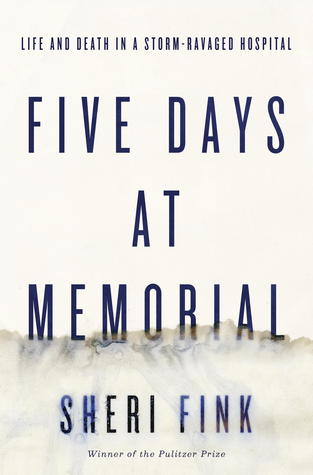
When I was a practicing medical librarian, I read an extraordinary work of medical humanities journalism by Sheri Fink, MD: Five Days at Memorial: Life and Death in a Storm-Ravaged Hospital. 

Dr. Fink won a Pulitzer Prize for her initial coverage of the disaster that played out in a New Orleans hospital serving the poor during Hurricane Katrina, and she is currently doing excellent reporting on the pandemic for The New York Times.

I wrote about Five Days at Memorial on Books Can Save a Life in 2014. I’m including a condensed version of the post below, because in pandemic hot spots around the United States, critical care resources are being stretched to their limits – needlessly so, thanks to the scandalously inadequate national response to COVID-19 – as they were in Hurricane Katrina.

Immersive and meticulously researched journalism like Dr. Fink’s can make these issues real for us in a way that is immediate and clarifying.

Secondly, I’m looking to pass along responsible, innovative journalism in this climate of conspiracy theories and misinformation. For excellent reporting about our current pandemic, for example, read or listen to Ed Yong’s work in The Atlantic, especially his must-read article published today, “How the Pandemic Defeated America.”

Here’s what Yong had to say about the current role of journalism in an interview with CNN: (Thanks to Tom Jones of The Poynter Report for passing this along.)

“I think of the information around the pandemic as rapids, really fast flowing torrential water. It’s so easy to be swept up in it and feel like you’re being carried along, feeling like you’re drowning in it. What I think really good journalism can do is to act as a rock in the middle of that fast flow to give people stable ground where they can stand and observe what is moving past them without being carried along by it.”

Below is a streamlined version of my original post about Five Days at Memorial:

“He would push 10 mg of morphine and 5 mg of the fast-acting sedative drug Versed and go up from there.”  –  Sheri Fink, Five Days at Memorial: Life and Death in a Storm-Ravaged Hospital

Five Days at Memorial is about five days in hell.

After Hurricane Katrina wreaked havoc on New Orleans, staff at Memorial Medical Center thought the facility and everyone in it had survived the storm intact.

Then the levees broke and the water came.

Darkness ensued, air conditioning stopped, and life support equipment shut down. No rescue was forthcoming from federal, state, or local disaster relief agencies or the hospital’s corporate owners. Toilets overflowed. Hospital staff occasionally heard gunshots in the surrounding neighborhood.

Memorial Medical Center had no evacuation plan for a disaster of this type, and staff were not trained in disaster management, even though the hospital had a history of flooding.

To get patients (most of them frail and elderly) to the helipad for the occasional helicopter that eventually did show up, staff had to carry them in sheets down several flights of dark stairs, through a small shaft into the parking garage, and up two more flights. This took well over half an hour for each patient.

By the time Memorial Medical Center was entirely evacuated, 45 patients had died. Twenty-three bodies were found to have high levels of morphine and other drugs.  According to the account Dr. Fink pieced together, it was alleged some patients were going to die anyway – they wouldn’t survive evacuation – and so they were euthanized to prevent suffering.

Dr. Fink covers the legal and political aftermath and discusses the role of families (or lack of it if they are excluded) in making difficult care decisions when resources are scarce. She calls for comprehensive national disaster response requirements for all US hospitals.

Five Days at Memorial will leave you unsettled by the perfect storm of failure on every level, and considerably more informed about the rationing of health care resources and the nearly impossible ethical decisions that must be made in disasters when there are not enough resources to save everyone.

Dr. Fink’s book could, literally, save lives.

Racism and social justice

Two outstanding, timely works of journalism I’ll be reading and posting about soon are by Pulitzer Prize winning Isabel Wilkerson. 

Wilkerson is an immensely gifted writer who spent decades researching and writing the two books below. In this powerful TED talk, she highlights the theme of her book The Warmth of Other Suns. Her Caste is getting rave reviews, and I expect will be on many a reading list this fall.
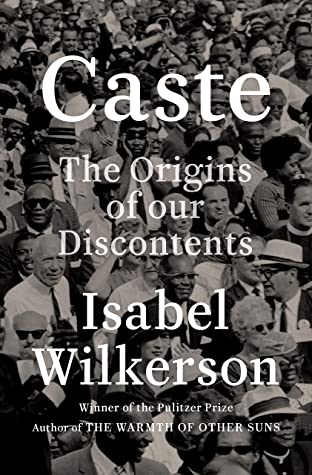
CasteCaste: The Origins of our Discontents (just published in the US today)

The Warmth of Other Suns: The Epic Story of America’s Great Migration (See Claire’s excellent post over at Word by Word.)


 

Inheritance

Inheritance.jpg


“Now the details are so clear to me, as if contained in a time capsule: the Hudson River in the darkness; the lights strung across the George Washington Bridge; the even timbre of my mother’s voice; the high plane of her cheekbone. Her long-fingered hands clasped in her lap. Institute. World-famous. Philadelphia.” Inheritance, Dani Shapiro

A Memoir of Genealogy, Paternity, and Love

Over the next month or two, I’ll be looking at memoir through the lens of inheritance – genetic, ancestral, cultural, and otherwise. This, as I send off my DNA to be analyzed and journey to my two ancestral homes: Sweden, for the first time; and Sicily, where we’ve traveled as a family on several occasions while raising our sons.

I’m not sure what I’ll find in Sweden – more about that in upcoming posts. As for Sicily, I look forward to seeing my extended family again and their stunningly beautiful landscape, their small city on the sea which has been their ancestral home for centuries, and their warm, embracing culture.

I wanted to begin with Dani Shapiro’s jaw-dropping Inheritance because it is a “big,” important memoir, masterfully executed by a seasoned memoirist and novelist, about an increasingly common situation: more people are having their DNA analyzed, and some are getting huge surprises. Others are having long-held suspicions about maternity or paternity confirmed.

In Dani’s case, she learned that her father, whom she adored, was not her biological father. Which meant that her half sister was not her sister. Her beloved aunts, uncles, cousins, and grandparents were not her blood relations, either. Their rich, storied Jewish history and culture were not hers. (Or were they? Do true blood ties matter? Or can nurture make up the difference? Dani explores this.)

Some of Dani’s memories are especially resonant and ironic in hindsight:

At a writer’s retreat, when she was young, aspiring, and still unknown, a famous poet, observing her fair-skinned features, commented: “There’s no way you are Jewish. No way.”

At a backyard barbecue in their close-knit, Jewish neighborhood, a friend and Holocaust survivor said to a baffled, eight-year-old Dani: ““We could have used you in the ghetto, little blondie. You could have gotten us bread from the Nazis.”

After a photographic portrait session, three-year-old Dani was selected by Kodak for the Grand Central Station Colorama photo: the iconic, blonde, All-American (non-Jewish) child in front of the Christmas tree waiting eagerly for Santa.

But I found the following memory most haunting of all: it speaks of Dani’s staggering loneliness and bewilderment as an only child who had always had an innate, deeply felt sense she didn’t belong in her own family. Years after it happened, a neighbor recalled how one day Dani ran across the street to her house, frightened and crying. A home security alarm had gone off, and Dani’s babysitter had been apparently indifferent or unconcerned. The neighbor said she later called Dani’s mother, fed up with Dani’s endless string of babysitters and what she saw as parental neglect. I should say here that Dani had a challenging, contentious relationship with her mother who was, to say the least, a difficult woman.

Inheritance is an important memoir for many reasons; among other things, it raises moral and ethical questions that we, as a society, need to confront. I’ve written before about Jaron Lanier’s call for a more humanitarian focus as our culture becomes shaped and influenced in unforeseen ways by advances in technology. As genetic identities become easily obtainable, we’d do well to ask:

At what point does the quest to have children, at all costs, become morally questionable?  (There is something deeply ironic about the profession chosen by Dani’s biological father, whose identity she goes on to discover.)

Is it not the basic human right of every individual to know his or her genetic identity? Is it ever right for that genetic identity to be legally or otherwise withheld?

Dani comes to think of her discovery as a form of trauma:

“Later, I will become a student of trauma. I will read deeply on the subject as a way of understanding the two opposite poles of my own history: the trauma my parents must have experienced in order to have made a decision so painful that it was buried at the moment it was made, and the trauma of my discovery of that decision more than half a century later.

It is the nature of trauma that, when left untreated, it deepens over time. I had experienced trauma over the years and had developed ways of dealing with it. I meditated each morning. I had a decades-long yoga practice. I had suffered other traumas – my parents’ car accident, Jacob’s childhood illness – and had come out the other side, eventually. What I didn’t understand was that as terrible as these were, they were singular incidents….

But this – the discovery that I wasn’t who I had believed myself to be all my life, that my parents had on some level, no matter how subtle, made the choice to keep the truth of my identity from me – this was no singular incident. It wasn’t something outside myself, to be held to the light and examined, and finally understood. It was inseparable from myself. It was myself.

Their trauma became mine – had always been mine. It was my inheritance, my lot.”

Dani Shapiro now has a podcast series, “Family Secrets.”

Memoir, as a genre, is coming into its own, partly because we are finally realizing how silence and secrets can deepen trauma, with impacts on individuals, families, communities, and our larger culture.

Coming up on Books Can Save a Life:

  • The Book of Help: A Memoir in Remedies, by Megan Griswold. There is something uniquely American and West Coast about this hilarious and deeply honest memoir by a fabulous writer. I’ll be looking at her familial and cultural “inheritance.”
  • My personal stake in memoir, my own writing of memoir, and what aspects of inheritance I’ll be searching for when I travel to Europe.


Villa window
Coming up: What I’ll be searching for in Sweden and Sicily


Sea, beach, sky
Not far from my Sicilian ancestral home

Five Days at Memorial


“He would push 10 mg of morphine and 5 mg of the fast-acting sedative drug Versed and go up from there.”       –  Sheri Fink, Five Days at Memorial: Life and Death in a Storm-Ravaged Hospital


In light of Hurricane Harvey, I’m reposting this from four years ago. Five Days at Memorial is a fabulous work of investigative journalism about one hospital’s desperate decisions in the aftermath of Hurricane Katrina. Much was learned the hard way about emergency preparedness in health care settings during Katrina, which seems to be making a difference as Houston copes with Hurricane Harvey. But with more mega-storms likely in our future, this is something we should all care about. Click on the link below to read my previous post about Five Days at Memorial, a work of nonfiction that has won numerous awards.

Source: Five Days at Memorial

Lab Girl

lab-girl “Each beginning is the end of a waiting. We are each given exactly one chance to be. Each of us is both impossible and inevitable. Every replete tree was first a seed that waited.”  – Hope Jahren, Lab Girl

“After scientists broke open the coat of a lotus seed (Nelumbo nucifera) and coddled the embryo into growth, they kept the empty husk. When they radiocarbon-dated this discarded outer shell, they discovered that their seedling had been waiting for them within a peat bog in China for no less than two thousand years. This tiny seed had stubbornly kept up the hope of its own future while entire human civilizations rose and fell. And then one day this little plant’s yearning finally burst forth within a laboratory.”

“Science has taught me that everything is more complicated than we first assume, and that being able to derive happiness from discovery is a recipe for a beautiful life.”

Lab Girl is an extraordinary memoir, and Hope Jahren is an important new voice who breaks new ground in literary autobiography. We just don’t hear from enough scientists and researchers, and certainly we don’t hear from enough women in science who have struggled and prevailed at making careers in difficult, often male-dominated fields.

Lab Girl is for the lay person who loves plants, trees, and nature, and for the lay person who thinks plants, trees, and nature are boring and who wants to be dazzled, moved, changed, and reconnected with the holiness and mystery of life.

hopeLab Girl is for women in science and research, and women thinking of careers in science and research. But men in science and research will love the book, too.
Lab Girl is for anyone making a career and building a family in the face of a serious mental illness, and for those who want to better understand people with mental illness.

Lab Girl is for those who care about the environment and climate change, and who want to connect with someone of like mind whose passion and energy are contagious. Because, as Hope says, we won’t have any trees left in six hundred years if we keep on our current path.

Lab Girl is for anyone who has important work to do and wants to be inspired and emboldened by someone not afraid to be different and go her own way.

I have Katie at Doing Dewey to thank for letting me know about this book. I’ve included several passages from the memoir because I couldn’t decide between them. They make me want to read Lab Girl all over again. I’m sure I will, since I’m working on a memoir of my own. For those of you who are memoir writers, this one is both inspiring and a great memoir model.

Women, and men, doing important work in science simply don’t get enough attention in our culture, which is especially saturated by superficial drivel at the moment. Lab Girl is the antidote. When I was a clinical librarian at UR Medicine, I was always impressed and mystified by the grad students and faculty, the women especially, who had lives so different from mine, who spent hours and hours in labs and out in the field researching esoteric topics that had the potential to change lives.

We should know more about them, the important work they are doing, and how they navigate the challenge of carving out rich, fulfilling personal lives as well. There is a deep vein of fascinating life stories in science that appeal to experts and lay people alike, and I hope Lab Girl will inspire many more memoirs of this kind.

The excerpt below is a good example of the organizing metaphor in Lab Girl: the rich and evocative parallels between plant life and human life. Hope alternates between chapters about plant life and her own life, which makes for a satisfying structure:

“Every species on Earth – past or present – from the single-celled microbe to the biggest dinosaur, daisies, trees, people – must accomplish the same five things in order to persist: grow, reproduce, rebuild, store resources, and defend itself….It seemed outrageous to hope that fertility, resources, time, desire, and love could all come together in the right way, and yet most women did eventually walk that path.”

Below are a few more quotes. Read the memoir!

“On some deep level, the realization that I could do good science was accompanied by the knowledge that I had formally and terminally missed my chance to become like any of the women that I had ever known.”

The boldface in the next quote is mine; I think it is an important point:

“A true scientist doesn’t perform prescribed experiments; she develops her own and thus generates wholly new knowledge. This transition between doing what you’re told and telling yourself what to do generally occurs midway through a dissertation. In many ways, it is the most difficult and terrifying thing that a student can do, and being unable or unwilling to do it is much of what weeds people out of Ph.D. programs.” 

“Public and private organizations all over the world have studied the mechanics of sexism within science and have concluded that they are complex and multifactorial. In my own small experience, sexism has been something very simple: the cumulative weight of constantly being told that you can’t possibly be what you are.”

“I’m good at science because I’m not good at listening. I have been told that I am intelligent, and I have been told that I am simple-minded. I have been told that I am trying to do too much, and I have been told that what I have done amounts to very little. I have been told that I can’t do what I want to do because I am a woman, and I have been told that I have only been allowed to do what I have done because I am a woman. I have been told that I can have eternal life, and I have been told that I will burn myself out into an early death. I have been admonished for being too feminine and I have been distrusted for being too masculine. I have been warned that I am far too sensitive and I have been accused of being heartlessly callous. But I was told all of these things by people who can’t understand the present or see the future any better than I can. Such recurrent pronouncements have forced me to accept that because I am a female scientist, nobody knows what the hell I am, and it has given me the delicious freedom to make it up as I go along. I don’t take advice from my colleagues, and I try not to give it. When I am pressed, I resort to these two sentences: You shouldn’t take this job too seriously. Except for when you should.”

Have you read Lab Girl? Do you have memoir favorites to recommend?

A Common Struggle

A Common Struggle image

A Personal Journey Through the Past and Future of Mental Illness and Addiction

“‘I have never seen a case worse than you, Patrick. You’ve been at this for so long, and the fact that you’ve survived and you’re still doing it almost makes you more dangerous. You’re able to manage it, just like your father managed it….’

He [Chris Lawford, Patrick Kennedy’s cousin] said he knew that at any given moment, I could say I wanted to go off to Australia with all my money and drink and drug myself to death. What he didn’t know, and neither did Amy, was that I had considered such a plan.”   Patrick J. Kennedy, A Common Struggle

I never thought I’d read a Kennedy memoir, we’ve been so saturated through the years with media coverage about the Kennedy family. Usually, I read literary memoirs, and this one isn’t. But I knew I had to read A Common Struggle, given my interest in mental health issues and wanting to see things change for the better, for once, rather than for the worse.

Patrick Kennedy has bipolar disorder, severe anxiety disorder, and has struggled with addiction to alcohol and prescription medication most of his life. His memoir, A Common Struggle, co-written with Stephen Fried, describes in excruciating detail how Ted Kennedy’s son managed somehow to keep this a secret (more or less) even as he served as Congressman from Rhode Island for many years.

In fact, Patrick’s entire nuclear family struggled with addiction, and all of them went through rehab at least once, if not multiple times – all except for Ted Kennedy. Not that he didn’t need it – Ted Kennedy’s family staged an intervention once, but Kennedy refused to acknowledge or accept that he had an addiction to alcohol.

This is a fascinating read. The Kennedys have a remarkable record of public service and, despite his debilitating mental health and addiction issues, Patrick Kennedy led the fight for successful passage of the Mental Health Parity and Addiction Equity Act. Given our complex and often dysfunctional political system, this is truly an achievement, even though the act, which requires insurance coverage of mental illness and addiction equal to coverage of physical illnesses, hasn’t yet been fully implemented.

Patrick Kennedy and others had to fight hard to make sure that addiction was included along with mental health. This was an enlightened step. It’s about time, since there is an epidemic of opioid and heroin addiction and overdose in the US. Only now are attitudes beginning to change so that addiction is increasingly viewed as a health problem, not a crime or a personal weakness.

Patrick ultimately decided that he couldn’t sustain his lifestyle as a Congressman and handle his addiction and mental health issues, so he eventually left Congress. He is currently the leading advocate in the US for mental health and substance abuse care, research and policy.

I’ve sometimes been dismissive of the Kennedys and their privilege, but Patrick’s memoir made me realize how devoted the extended family is to public service and what a difference they’ve made on many fronts. If you are interested in mental health and substance abuse issues, and/or if you want to become an advocate for better mental health care and research, I think you’ll get a lot out of Kennedy’s memoir. He weaves into his personal story a detailed history of mental health legislation in this country – legislation that is woefully lacking.

There are fantastic appendices, too, that summarize the many issues we need to advocate for and change, and that list the most prominent mental health and substance abuse support groups and organizations in the US.

I get discouraged about the lack of funding and services for people who suffer from mental illness and addiction and the long road it has been over the years to see improvement. Seems like common sense that we’d want to make changes for the better, but sadly our priorities are elsewhere. This is a shame, because these issues affect one out of five families – so is there anyone among us who hasn’t been touched in some way by mental illness or addiction?

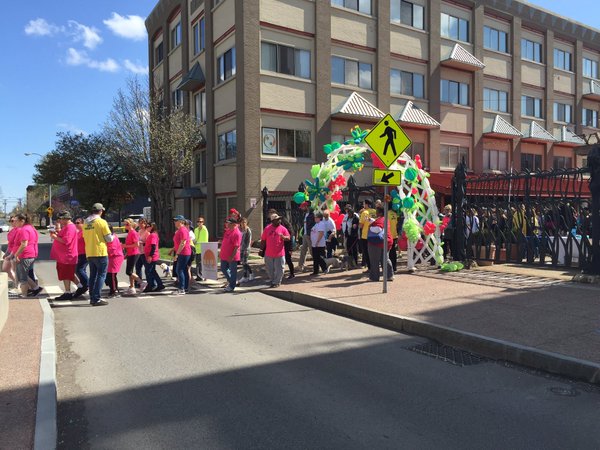
Last weekend my husband and I took part in NAMI Walks in Rochester, an annual May is Mental Health Month fund-raiser for the National Alliance on Mental Illness. Over a thousand people walked. (There is still time to donate, go to the NAMI Walks link!)

I’m also proud to report that NAMI Rochester has such an extensive and devoted cadre of family members and volunteers working on behalf of mental health education and advocacy, they have been named the TOP NAMI affiliate in the country for 2016. They will be honored at the NAMI National Convention in July.

NAMI Walks
NAMI Rochester Streakers take the lead for NAMI Walks.
NAMI Walks On the March
NAMI Walks leaving the Village Gate in Rochester’s Neighborhood of the Arts.

When Breath Becomes Air

When Breath Becomes Air

“There is perhaps only one thing to say to this infant, who is all future, overlapping briefly with me, whose life, barring the improbable, is all but past.

That message is simply:

When you come to one of the many moments in life where you must give an account of yourself, provide a ledger of what you have been, and done, and meant to the world, do not, I pray, discount that you filled a dying man’s days with a sated joy, a joy unknown to me in all my prior years, a joy that does not hunger for more and more but rests, satisfied. In this time, right now, that is an enormous thing.”   Paul Kalanithi, in a letter to his daughter.  Excerpt from When Breath Becomes Air

My brother passed away from pancreatic cancer last fall, and I didn’t feel quite ready for When Breath Becomes Air, a Stanford neurosurgery resident’s memoir about his cancer diagnosis. Also, in my work as a clinical librarian, I’d spent time supporting and rounding with clinical staff in neurology/neurosurgery. I had a special affection and respect for the brilliant, hard-working residents, who were about the same age as my sons. So to read about the death of a young resident from lung cancer….

But if you are a living, breathing person who likes to read memoir and nonfiction, and if you consider yourself an engaged participant in our death-denying culture, I would say When Breath Becomes Air is required reading.

One of my favorite authors, Ann Patchett, who owns a bookstore that practices the art of making personal recommendations to readers based on their interests, says, “This is one of the handful of books I consider to be a universal donor – I would recommend it to anyone, everyone.” 

On publication, When Breath Becomes Air shot to number 1 on the New York Times Nonfiction Bestseller List. So when I saw Paul Kalanithi’s memoir on our library’s “Most Wanted Book” shelf, I decided to grab it.

Paul Kalanithi set out to be a writer and then switched to medicine and neurosurgery, one of the most challenging and consuming of all clinical disciplines. He believed that a person’s brain determines his identity, which is inseparable from his values and sense of life’s meaning.

Finding meaning was all-important to Kalanithi. During his residency, Paul came to see it was his responsibility to do his best to give his patients the quality of life that would allow them to live according to their most precious values.

We need more doctors who have both the time and desire to get to know and serve their patients in this way, wouldn’t you say?

In his memoir, Kalanithi says the twin pursuits of caring for patients with brain illnesses and writing as a way to explore the meaning of life’s joys and traumas was his perfect calling.

It’s just that he hadn’t planned on doing the writing part until much later in his career. Many months after his diagnosis, when he could no longer work as a neurosurgeon, Paul chose to use his remaining time to write a memoir that, among other things, explores living and dying from the unique perspective of someone who is both a patient and healer.

He and his wife decided to have a child, too. Paul writes of becoming a father with great joy. It reminded me of last summer, when my brother (and our extended family) lived with end-of-life illness, even as we celebrated his daughter’s wedding.

As you can see from the memoir excerpt above, Paul was an extraordinary writer. Medical humanities literature, also known as narrative medicine, written by patients, doctors, nurses, and clinicians, is really coming into its own, and I think When Breath Becomes Air will become a classic.

Paul Kalanithi stands right alongside Anthony Verghese, Danielle Ofri, Sherwin B. Nuland, Tilda Shalof, Theresa Brown, Atul Gawande, Oliver Sachs, and others as one of the best. Really, his memoir is not to be missed.

“The fact of death is unsettling. Yet there is no other way to live.”  Paul Kalanithi

Below is the trailer for When Breath Becomes Air.

Have you read When Breath Becomes Air, and what did you think? Have you read another medical humanities or health related memoir, novel, or essay that you have especially liked? Please share your thoughts and recommendations in the comments.


April is National Poetry Month

Book Spine Poetry.jpg


Let’s go poemcrazy.

Here is some book spine poetry to celebrate National Poetry Month.

This is in memory of my brother. His birthday is April 5.


A Cancer in the Family

For a little while,

When breath becomes air,

Find me

Braiding sweetgrass &

Burning down the house.


If you have book spine poetry to share, please leave it in the comments. 


The Cancer Survivor’s Garden Companion

Cancer Survivor's
The Cancer Survivor’s Garden Companion, by Jenny Peterson


“‘Don’t let cancer define you, Jenny.’ So how did I not let cancer define me? Not knowing anything better, I simply kept doing what I knew to do. And one of those things was gardening….I’m not going to lie –  I had many days when I did not feel like gardening. But I decided to change my approach and focus on small, doable tasks….little by little, my relationship with plants and my garden became the thing that turned me around – body, mind and spirit. No, it wasn’t easy. Nothing about cancer and cancer treatment is easy. But it was my reality, and I was determined to find some place where I could thrive and experience joy again.”

From time to time, I like to take a break from literary fiction and literary nonfiction at Books Can Save a Life to feature a slow living book that gets me out of my head and inspires me to enjoy the moment. I especially love the unique gardening books published by St. Lynn’s Press, so I was thrilled when they sent me a review copy of The Cancer Survivor’s Garden Companion.

This book is especially meaningful to me because over a year ago my brother was diagnosed with pancreatic cancer. Sadly, my brother passed away in the fall.  As I thumbed through the pages of  The Cancer Survivor’s Garden Companion, I wished Jenny Peterson‘s book had been available earlier. It would have been a wonderful gift for my brother and his family. From now on, The Cancer Survivor’s Garden Companion will be part of any care package I might give to friends and loved ones with health challenges.

Jenny’s book is filled with simple and enjoyable gardening activities to restore body, mind, and spirit, especially during treatment. I thought about my brother’s small backyard garden, which was a bit neglected after his diagnosis, and how this book might have inspired him to continue enjoying manageable tasks on his tiny plot of tomatoes and eggplants.

One of my fondest memories of that difficult time was the afternoon we decided to make jam from the two old crab apple trees and the grapevines in my brother’s backyard. Joe and my sister-in-law had never picked or eaten the tiny crab apples, and we had no idea how the jam would turn out. We had fun all afternoon picking, cooking, and then tasting the deep purple and ruby colored jams, which turned out delicious.

Four jars of homemade jam
Jam made from the crab apple trees in my brother’s backyard.


Jenny Peterson is so right about the restorative powers of gardens and nature, because that afternoon my brother really enjoyed sorting and de-stemming the crab apples, the aroma of fruit cooking over the stove, and tasting the still-warm jam. I think he appreciated the little miracle of new and unexpected late-summer bounty from his backyard.

Wellness + Mindfulness + Gardening

Jenny Peterson, a writer and landscape designer with degrees in psychology and theology, is also a survivor of breast cancer and skin cancer. She wrote The Cancer Survivor’s Garden Companion not as a how-to gardening book, but “to encourage people who are diagnosed with cancer, going through cancer treatment, healing from cancer or living with cancer to view their gardens, plants and outdoor spaces as resources in creating the healthiest and most balanced life possible. Life can be difficult, but it can also be profoundly beautiful, and our gardens are the best teachers of this.”

So, you don’t have to be an experienced gardener, or even a gardener at all, to enjoy and benefit immensely from The Cancer Survivor’s Garden Companion. The activities, each centered around body, mind, or spirit, can be scaled up or scaled down, depending on needs and energy levels.

“Survivor Spotlights” feature gardening tips from individuals who have had a cancer diagnosis.

Jenny Peterson talks about her own physical, mental, emotional, and spiritual challenges during radiation, chemotherapy, and other treatments, and how she turned to her garden as both a haven and good medicine. She genuinely understands the rigors of cancer treatment and is deeply empathetic, warm, and encouraging.

CancerContents

The Garden That Heals: Body + Mind + Spirit

Her suggestions for restorative and healing garden activities include:

  • Gardening for cardio exercise, strength and flexibility, strong bones, circulation & boosting the immune system
  • Ideas for building a yoga deck garden
  • Beneficial fruits, vegetables and herbs for nourishment and strength during treatment, including aromatherapy and herbal remedies
  • Garden design, problem solving, and nature photography to relax the mind and keep it sharp
  • Sharing the garden with friends and family by hosting seed and plant sharing parties, social hours, and other events
  • Garden-themed music to enjoy
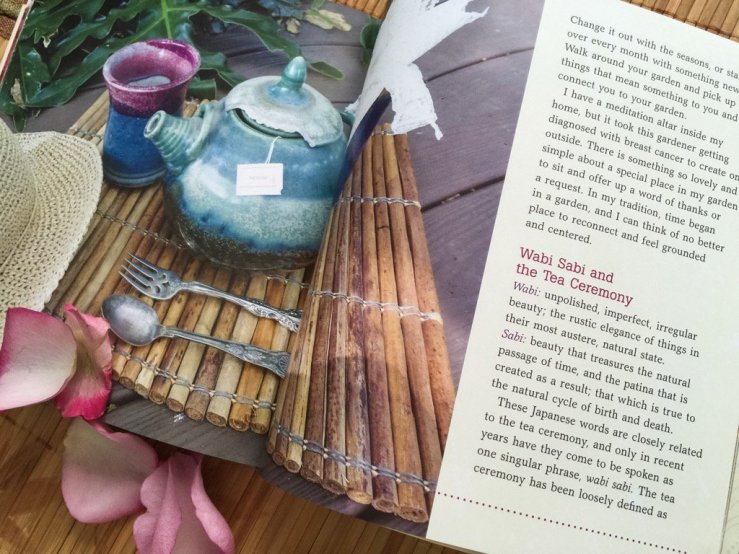
  • Prayer, meditation, and mindful movement, including labyrinths, suggested mantras, garden altars, and tea ceremonies

There is an appendix with suggested books (fiction and nonfiction), excellent health information sites, and sources for garden tools and clothing.

CancerWabiSabi
I love the Japanese words wabi sabi and have read other books on this fascinating topic, including Wabi Sabi for Writers  by Richard R. Powell.


I love these other books published by St. Lynn’s Press, too:

Slow Flowers, by Debra Prinzing

Windowsill Art, by Nancy Ross Hugo

The Herb Lover’s Spa Book, by Sue Goetz

If you have a personal story of gardening, illness and health, please share. I’d love to hear about your own gardening book favorites, too.

The Empathy Exams

“It’s news if a woman feels terrible about herself in the world – anywhere, anytime, ever.”    Leslie Jamison, The Empathy Exams


At work when I need a break, I go for coffee in the atrium of the medical school. On the way, I pass by the learning labs, where occasionally I see people–young, middle-aged, and older, male and female–sitting in the hallway, waiting for their turn to go in.

They have a twinkle in their eye as though they know something you don’t. They’re psyched, as if prepared to give a performance. That’s because they’re medical actors, hired so medical students can practice their empathic patient interviewing and diagnostic skills.

The Empathy Exams book coverIn The Empathy Exams, author Leslie Jamison explains what a medical actor does. She knows because she’s been one herself:

“My job title is medical actor, which means I play sick. I get paid by the hour. Medical students guess my maladies….

Medical acting works like this: You get a script and a paper gown. You get $13.50 an hour. Our scripts are ten to twelve pages long. They outline what’s wrong with us–not just what hurts but how to express it. They tell us how much to give away, and when. We are supposed to unfurl the answers according to specific protocol. The scripts dig deep into our fictive lives: the ages of our children and the diseases of our parents, the names of our husbands’ real estate and graphic design firms…

My specialty case is Stephanie Phillips, a twenty-three-year-old who suffers from something called conversion disorder. She is grieving the death of her brother, and her grief has sublimated into seizures. Her disorder is news to me. I didn’t know you could convulse from sadness. She’s not supposed to know either. She’s not supposed to think the seizures have anything to do with what she’s lost.”

These are the first paragraphs of the first essay in The Empathy Exams, and they intrigued me for a number of reasons: Leslie’s compelling voice; her take on the ironies and subtleties of medical acting; and because I, too, had been nonplussed when, as a medical librarian, I learned about conversion disorder.

A couple of years ago an “outbreak” of conversion disorder (known as mass psychogenic illness) among a dozen or more high school girls in a nearby upstate New York town captured the attention of media around the world.  One after another, the girls succumbed to uncontrollable tics and verbal outbursts. They were besieged with requests for interviews. Their physicians advised them to avoid social media so the frenzy wouldn’t cause their symptoms to get worse. Some people thought the girls were faking their illness. Erin Brockovich (with lawsuits in mind) suspected environmental poisoning. At the medical center where I work, I was asked to track the news coverage. Neurologists wanted to see if there was a correlation between spikes in media attention and exacerbation of the girls’ symptoms.

No environmental cause was ever found. Eventually, most of the girls recovered. One journalist wrote a well researched investigative piece that pointed out the girls came from troubled families in a town devastated by unemployment. Many of the girls had recently experienced significant domestic trauma. Perhaps this trauma triggered their conversion disorder.

In her essays, Leslie is concerned about physical and emotional pain, what it means to empathize with those who suffer, how difficult this can be, and why it is important to have our pain acknowledged by others, given the fact that we’re so often quick to accuse people of succumbing to victimhood. I often think about this when I read reviews dismissive of memoirs as self-indulgent. I wonder if I’m playing the victim when I write about some of my own experiences. Ours is not an empathic culture.

Leslie writes about her own pain and that of others in various walks of life: those suffering from “phantom” illnesses; a man in federal prison for a minor crime; ultra-marathoners who push their bodies beyond reason; three teen-age boys accused of murder on the thinnest of evidence.

As I read, I began to think of the girls with conversion disorder in a more nuanced way and, yes, with greater emapthy. The media stories had reduced the girls to caricatures. Leslie’s essays got me thinking the girls hadn’t had their fair share of empathy (or good fortune) in their personal lives and certainly not during the sensationalistic coverage of their illness.

I’d just about finished reading The Empathy Exams when I read a New York Times article about the alleged rape of a college freshman, Anna, by two football players. After what seems to have been a staggeringly incompetent college “investigation,” the football players were cleared. Anna left school after she was harassed for making accusations against members of the football team, but she plans to return this fall. She doesn’t want to be defeated, and she wants to help other women on campus.

I couldn’t get this story out of my mind.  I mulled it over when I went to work out at our community center. The story has unleashed a firestorm, with accusations back and forth: between Anna and the football players, as well as among college officials, the district attorney’s office, and Anna’s legal counsel. Many of the kids–the football players, the fraternity members, the girls who went to the party – were drunk to the point of oblivion. (Anna, herself, was so drunk she doesn’t remember being raped – hence, some of the controversy – though others witnessed it and did nothing. One of Anna’s friends did help her, and other friends decided to call the police.) How can this self-destructive partying be fun for anyone, and why are students driven to do it?

If you believe the unbelievable numbers cited in this story–that 20 percent of college women are sexually assaulted–it does seem as though we are not paying attention to something important. That perhaps we need to start listening to a certain segment of the population, and listening with empathy.

After I finished exercising, I sat in the lounge overlooking the pool, watching moms and dads swimming with their children. I pulled out Leslie’s essays and read the final one, “Grand Unified Theory of Female Pain.” Leslie seemed to be speaking about Anna.

“It’s news if a woman feels terrible about herself in the world–anywhere, anytime, ever….

Sure, some news is bigger news than other news….But I don’t believe in a finite economy of empathy; I happen to think paying attention yields as much as it taxes. You learn to start seeing.

I think dismissing female pain as overly familiar or somehow out of date…masks deeper accusations: that suffering women are playing victim, going weak, or choosing self-indulgence over bravery. I think dismissing wounds offers a convenient excuse: no need to struggle with the listening or telling anymore.”

Leslie has much more to say, and her essays are far richer than I’ve captured here. I won’t share her most important insights, as much would be lost in the translation.

She’s a remarkable new writer.

Five Days at Memorial

FiveDays


“He would push 10 mg of morphine and 5 mg of the fast-acting sedative drug Versed and go up from there.”       –  Sheri Fink, Five Days at Memorial: Life and Death in a Storm-Ravaged Hospital

Five Days at Memorial is about five days in hell.

After Hurricane Katrina wreaked havoc on New Orleans, staff at Memorial Medical Center thought the facility and everyone in it had survived the storm intact.

Then the levees broke and the water came.

Darkness ensued, air conditioning stopped, and life support equipment shut down. No rescue was forthcoming from federal, state, or local disaster relief agencies or the hospital’s corporate owners. Toilets overflowed. Hospital staff could hear gunshots and see looters ransacking the big box store nearby.

Memorial Medical Center had no evacuation plan for a disaster of this type, and staff were not trained in disaster management, even though the hospital had a history of flooding.

To get patients (most of them frail and elderly) to the helipad for the occasional helicopter that eventually did show up, staff had to carry them in sheets down several flights of dark stairs, through a small shaft into the the parking garage, and up two more flights. This took well over half an hour for each patient brought to the helipad.

By the time Memorial Medical Center was entirely evacuated, 45 patients had died. Twenty-three bodies were found to have high levels of morphine and other drugs. The DA arrested one physician and two nurses for the second-degree murder of 20 patients. According to the account Dr. Fink pieced together, it was believed some patients were going to die anyway – they wouldn’t survive evacuation – and so they were euthanized to prevent needless suffering. (Another physician who allegedly administered lethal doses of drugs was not arrested.) Ultimately, the nurses weren’t prosecuted, and a grand jury did not indict the physician.

Sheri Fink, a physician and journalist who tells the fraught story of a hospital in chaos and the legal and political aftermath, won a Pulitzer Prize for her initial reporting of these events in 2009. She spent six years researching and writing the book, including interviews with hundreds of people. Her narrative is sometimes hard to follow, and she necessarily leaves many questions unanswered but, overall, Dr. Fink has done an amazing job of reporting this story.

Five Days at Memorial will leave you unsettled, dumbfounded at the perfect storm of failure on every level, and considerably more informed about the rationing of health care resources in a disaster. Dr. Fink has focused her investigative reporting on the nearly impossible ethical decisions that must be made in disasters such as Katrina and the earthquake in Haiti, when there are not enough resources to save everyone.

Who should be rescued first – the most critically ill patients or the patients most likely to survive? Which patients should be allowed to remain on scarce, generator-powered life support?

Should patients and families be involved in these decisions?

If you’re a doctor or nurse and you’ve deemed someone not a high priority for rescue (because you feel their chances of survival are poor), do you tell her (if she is conscious) or her family?

Let’s say you’re a family member and you’ve been with your critically ill, elderly mother for days in a dark, flooded, sweltering hospital. You’re ordered to evacuate. The hospital staff assures you your mother will be taken care of. Do you leave her behind? What if you never see her again, and find out weeks later, via email, that she passed away in the hospital? An autopsy indicates high levels of morphine and other drugs.

That is what happened to one mother and daughter at Memorial Medical Center.

I’m greatly oversimplifying events in my summary. But here are some points I took away from Five Days at Memorial:

Everyone involved in the disaster – patients, families, and hospital staff – was heroic, but the corporate owners failed miserably and were never held accountable.

If what Dr. Fink writes is accurate, many patients were euthanized. While I don’t agree with that decision, I can sympathize with doctors and nurses who were exhausted, sleep deprived, and unable to make the best judgments. It seems, too, that a few patients were euthanized who would not have died.

I think it’s important that Dr. Fink’s book has brought this story to the attention of a wider audience. Clear, rational protocols and ethical guidelines need to be established for these types of situations. Patients, families and communities need to become involved in this discussion. (And that’s all of us, isn’t it?)

After Katrina, a ruling was proposed that would have required health care facilities to have emergency preparedness plans in place in order to participate in Medicare and Medicaid. No such ruling exists at the time of this writing, and there should be one.

Dr. Anna Pou, one of the physicians who allegedly euthanized patients and has lobbied for laws to exempt health care providers from legal prosecution in disasters such as Katrina, has accused Dr. Fink of misrepresenting herself, being a “journalist for hire,” and profiting “from the pain and suffering of others.” I believe journalism is an honorable profession, and I think there are easier ways to make money than writing a complex piece of investigative journalism like Five Days at Memorial. It’s an important book that needed to be written.

I think it will save lives.