The Empathy Exams

“It’s news if a woman feels terrible about herself in the world – anywhere, anytime, ever.”    Leslie Jamison, The Empathy Exams


At work when I need a break, I go for coffee in the atrium of the medical school. On the way, I pass by the learning labs, where occasionally I see people–young, middle-aged, and older, male and female–sitting in the hallway, waiting for their turn to go in.

They have a twinkle in their eye as though they know something you don’t. They’re psyched, as if prepared to give a performance. That’s because they’re medical actors, hired so medical students can practice their empathic patient interviewing and diagnostic skills.

The Empathy Exams book coverIn The Empathy Exams, author Leslie Jamison explains what a medical actor does. She knows because she’s been one herself:

“My job title is medical actor, which means I play sick. I get paid by the hour. Medical students guess my maladies….

Medical acting works like this: You get a script and a paper gown. You get $13.50 an hour. Our scripts are ten to twelve pages long. They outline what’s wrong with us–not just what hurts but how to express it. They tell us how much to give away, and when. We are supposed to unfurl the answers according to specific protocol. The scripts dig deep into our fictive lives: the ages of our children and the diseases of our parents, the names of our husbands’ real estate and graphic design firms…

My specialty case is Stephanie Phillips, a twenty-three-year-old who suffers from something called conversion disorder. She is grieving the death of her brother, and her grief has sublimated into seizures. Her disorder is news to me. I didn’t know you could convulse from sadness. She’s not supposed to know either. She’s not supposed to think the seizures have anything to do with what she’s lost.”

These are the first paragraphs of the first essay in The Empathy Exams, and they intrigued me for a number of reasons: Leslie’s compelling voice; her take on the ironies and subtleties of medical acting; and because I, too, had been nonplussed when, as a medical librarian, I learned about conversion disorder.

A couple of years ago an “outbreak” of conversion disorder (known as mass psychogenic illness) among a dozen or more high school girls in a nearby upstate New York town captured the attention of media around the world.  One after another, the girls succumbed to uncontrollable tics and verbal outbursts. They were besieged with requests for interviews. Their physicians advised them to avoid social media so the frenzy wouldn’t cause their symptoms to get worse. Some people thought the girls were faking their illness. Erin Brockovich (with lawsuits in mind) suspected environmental poisoning. At the medical center where I work, I was asked to track the news coverage. Neurologists wanted to see if there was a correlation between spikes in media attention and exacerbation of the girls’ symptoms.

No environmental cause was ever found. Eventually, most of the girls recovered. One journalist wrote a well researched investigative piece that pointed out the girls came from troubled families in a town devastated by unemployment. Many of the girls had recently experienced significant domestic trauma. Perhaps this trauma triggered their conversion disorder.

In her essays, Leslie is concerned about physical and emotional pain, what it means to empathize with those who suffer, how difficult this can be, and why it is important to have our pain acknowledged by others, given the fact that we’re so often quick to accuse people of succumbing to victimhood. I often think about this when I read reviews dismissive of memoirs as self-indulgent. I wonder if I’m playing the victim when I write about some of my own experiences. Ours is not an empathic culture.

Leslie writes about her own pain and that of others in various walks of life: those suffering from “phantom” illnesses; a man in federal prison for a minor crime; ultra-marathoners who push their bodies beyond reason; three teen-age boys accused of murder on the thinnest of evidence.

As I read, I began to think of the girls with conversion disorder in a more nuanced way and, yes, with greater emapthy. The media stories had reduced the girls to caricatures. Leslie’s essays got me thinking the girls hadn’t had their fair share of empathy (or good fortune) in their personal lives and certainly not during the sensationalistic coverage of their illness.

I’d just about finished reading The Empathy Exams when I read a New York Times article about the alleged rape of a college freshman, Anna, by two football players. After what seems to have been a staggeringly incompetent college “investigation,” the football players were cleared. Anna left school after she was harassed for making accusations against members of the football team, but she plans to return this fall. She doesn’t want to be defeated, and she wants to help other women on campus.

I couldn’t get this story out of my mind.  I mulled it over when I went to work out at our community center. The story has unleashed a firestorm, with accusations back and forth: between Anna and the football players, as well as among college officials, the district attorney’s office, and Anna’s legal counsel. Many of the kids–the football players, the fraternity members, the girls who went to the party – were drunk to the point of oblivion. (Anna, herself, was so drunk she doesn’t remember being raped – hence, some of the controversy – though others witnessed it and did nothing. One of Anna’s friends did help her, and other friends decided to call the police.) How can this self-destructive partying be fun for anyone, and why are students driven to do it?

If you believe the unbelievable numbers cited in this story–that 20 percent of college women are sexually assaulted–it does seem as though we are not paying attention to something important. That perhaps we need to start listening to a certain segment of the population, and listening with empathy.

After I finished exercising, I sat in the lounge overlooking the pool, watching moms and dads swimming with their children. I pulled out Leslie’s essays and read the final one, “Grand Unified Theory of Female Pain.” Leslie seemed to be speaking about Anna.

“It’s news if a woman feels terrible about herself in the world–anywhere, anytime, ever….

Sure, some news is bigger news than other news….But I don’t believe in a finite economy of empathy; I happen to think paying attention yields as much as it taxes. You learn to start seeing.

I think dismissing female pain as overly familiar or somehow out of date…masks deeper accusations: that suffering women are playing victim, going weak, or choosing self-indulgence over bravery. I think dismissing wounds offers a convenient excuse: no need to struggle with the listening or telling anymore.”

Leslie has much more to say, and her essays are far richer than I’ve captured here. I won’t share her most important insights, as much would be lost in the translation.

She’s a remarkable new writer.

Books at my door

Books at my doorDelancey book cover


If you like food writing combined with memoir, you will like Molly Wizenberg and her latest, Delancey: A Man, A Woman, A Restaurant, A Marriage. The restaurant is in Seattle. Her first book, A Homemade Life, is a bestseller.

Sicily book coverI bought Sicily: A Literary Guide for Travellers by Andrew and Suzanne Edwards for an upcoming trip – haven’t been there in seven years. Many of the greatest writers were drawn to this island.

Groundbreaking Food Gardens by Nikki Jabbour promises 73 plans that will change the way you grow your garden, such as: Slow Food Garden; Vintage Victory Garden; Edibles on a Patio; Heirloom Sampler; Formal Herb Garden; Eggs & Everything; and Living Walls.

Piazza, Carini
The piazza in Carini, Sicily, where my father was born

Cleveland was my home but I lost it

Go down and tell them what you’ve seen:

that the river burned and was not consumed.

“River on Fire” by David Lucas in Rust Belt Chic: The Cleveland Anthology

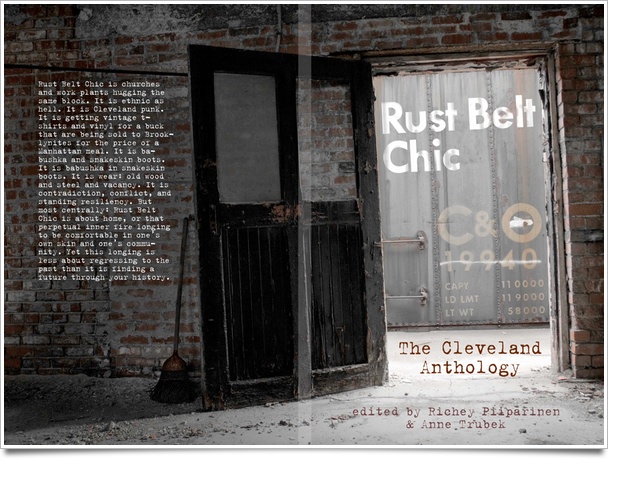
Rust Belt Chic cover photoI’ve been writing about the town where I grew up, how you can’t go home again and all that, and about my fraught relationship with Cleveland. This kind of ambivalence permeates Rust Belt Chic: The Cleveland Anthology, (published by the editors of the online magazine Belt) which I’ve been reading in between novels and book-length nonfiction. But all is not bleak – the collection includes a good share of essays by writers who unabashedly love Cleveland. The writing is excellent, the social commentary and history fascinating.

My childhood home just outside of Cleveland shared a driveway with our floral shop, where the locals bought their wedding and funeral flowers, Easter corsages and prom nosegays. We earned a good living in that small shop.

Those were prosperous times. I remember boarding a passenger ship docked on the dowtown shores of Lake Erie with my mother, some time in the late 1950s. We were going to visit my aunt, who lived in Michigan on the Detroit River, across from a mighty steel mill. This was no mere ferry we travelled on, but a big old steel ship; my memory of this seems outlandish to me now but, based on my cursory research, I presume we travelled on the SS Aquarama, a World War II troop carrier that was converted to a passenger ship after the war.

I loved going to my aunt’s house, where barges as big as factories floated past the backyard every day. Back then, Detroit and Cleveland were first-tier cities.

Today, Detroit is ranked first in the United States for poverty, and Cleveland is second.

As an adult, I moved to New York City, but eventually I settled and raised a family in another Rust Belt city on a lake (probably no coincidence). In Rochester, New York I worked for Kodak, for a time, but now the company is a shell of its former self. Rochester is ranked third in the US for poverty.

In 2008, my Ohio hometown was the epicenter of the mortgage crisis and still has not recovered. It has essentially become an extension of the blight that is East Cleveland. Homes have sold for as little as $1000 there. Other houses have been abandoned and stripped of their copper plumbing and aluminum siding. Many have been demolished.

Sometimes, I think about what it would be like to move back to Cleveland. I could host a book club for schoolchildren in the old flower shop. It would be a safe haven from the drugs in the vacant lot next door, the guns, the crime. We’d read poetry by Mary Oliver, who is from my hometown, and the novels of Toni Morrison, who is from Lorain. I’d give each child a book to take home.

But, of course, my life has long been elsewhere and I won’t move back. You can’t go home again and, besides, our house and the shop are (finally) about to be sold (fingers crossed).

Both optimists and pessimists write about Cleveland in this Rust Belt Chic anthology. (Rust Belt Chic anthologies of Detroit and Cincinnati have been published as well. Additional volumes are in the planning stages.) When it comes down to it, I’m essentially an optimist, because I don’t think things can get much worse, and I see a commitment to community and volunteerism among young people who choose to stay or settle in Rust Belt cities.

But I’m sad and bitter, too, when I think about what my childhood home has become. I feel shame, too, but I don’t mean I’m ashamed of where I’m from. I’m proud to be from Cleveland. Rather, I feel shame in the sense that we could have and should have done better in terms of taking care of our communities and each other.

What is the Rust Belt, and Rust Belt Chic? From the Cleveland Anthology

“What I’ve figured out, though, is that maybe I didn’t want baseball – I wanted Cleveland. I wanted to walk from the stadium past Tower City to my dad’s office parking lot at 11:34 pm after a Tribe game on a hot August night….ecstatic crowd walking outside the Gund, of guys in black sneakers and ladies with bra straps exposed and tans darker than the Cuyahoga in December….” Norene Malone

“I want to laugh when I hear that people are moving to Cleveland to practice their art. Then I want to spit in their faces….The first sign of the coming apocalypse is the art walk: the Typhoid Marys of gentrification. Developers show up, displaying all the sensitive charm of a multinational corporation….

All that beautiful decay, they seemed to say. Look at how wonderful this place used to be. Look how terrible it all was.”   Eric Anderson

“I was in love with Little Italy the moment I laid eyes on it, and still am, though it’s a long-distance thing now, with me pining away from the East Coast.”   Clare Malone

“But as Iraq fell apart on sectarian lines, Cleveland’s little Iraq fused closer together. I wasn’t authentic enough to intuit from last names and cities of origin which of our friends were Sunni and which were Shia, and for our purposes, the distinction was irrelevant.”   Huda Al-Marashi

“I have never, ever, met any single person of color with any great passion for this city.”   Jimi Izrael

“Rust Belt Chic is the opposite of Creative Class Chic. The latter [is] the globalization of hip and cool. Wondering how Pittsburgh can be more like Austin is an absurd enterprise and, ultimately, counterproductive. I want to visit the Cleveland of Harvey Pekar, not the Miami of LeBron James.”     Jim Russell

“The lips are gone. For years, they floated on an abutment at the base of the Detroit-Superior bridge in the Flats: a big pair of shiny red-enamel lips framing a mouthful of teeth….The lips first appeared sometime in the late 1970s, covering up an obscene tag someone had scrawled on the wall with an aerosol paint can. Below the lips was an equally mysterious signature announcing that this graffiti was the work of some so-called “Regional Art Terrorists.”    David C. Barnett

“Decades ago, Pekar’s work was already refuting the idea of the Rust Belt as a non-culture. Like today’s Rust Belt artists, he was fascinated by the city’s ethnic heritage, fluent in the history recorded in their grand architecture, obsessed with a sense of loss and ruin. But there’s one very important difference between him and his enthusiastic Rust Belt chic successors: Pekar’s view of Cleveland and the Rust Belt was almost entirely devoid of optimism.”  Erick Trickey

Mother and daughter in front of flower shop
Our flower shop, opening day


Note: The title for this post was inspired by a photograph on NewGeography.com.

Summer reading

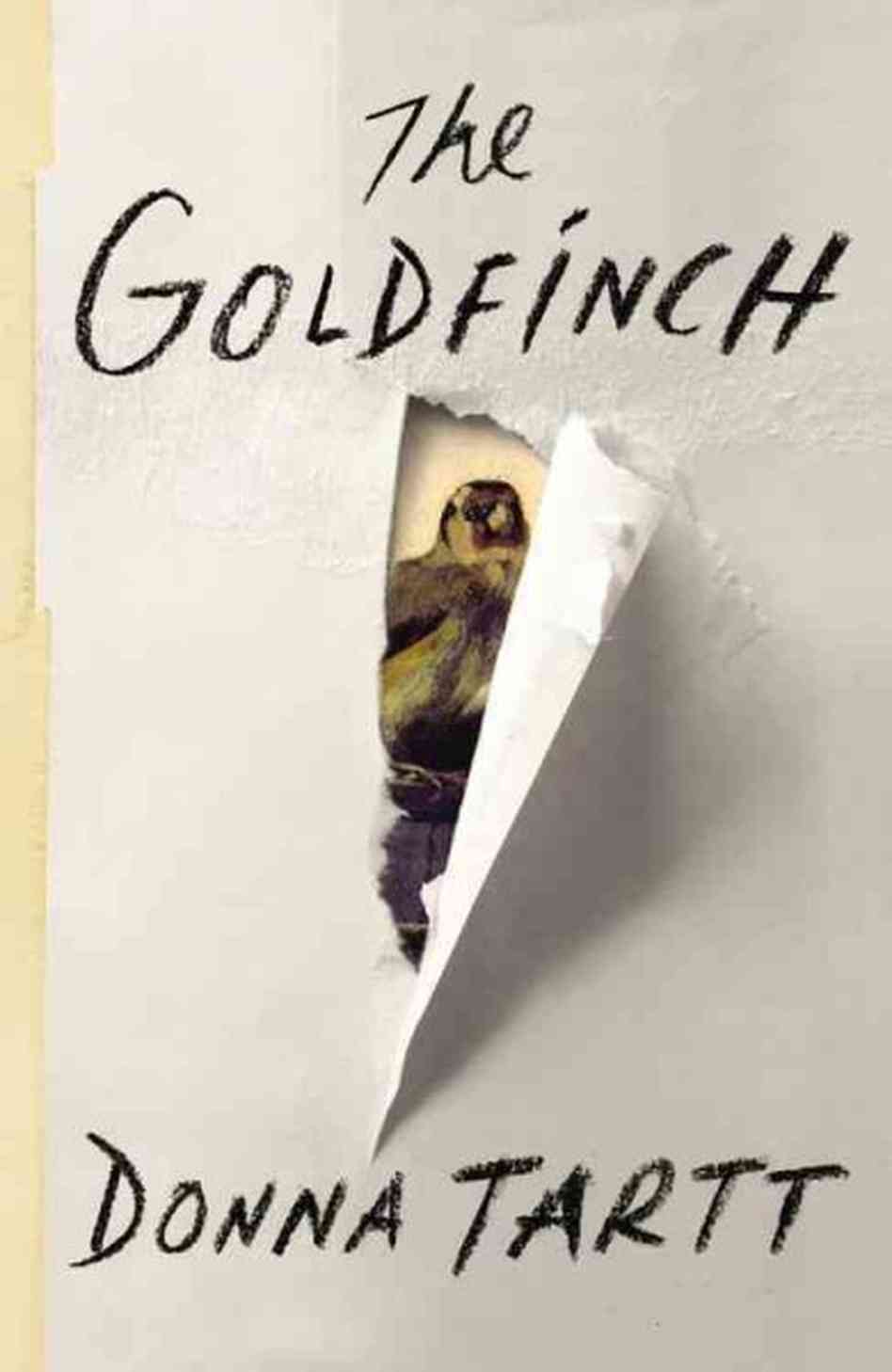
The Goldfinch book coverI am now thoroughly in the grip of Donna Tartt’s The Goldfinch. (In book circles, it seems as though half the universe is reading Tartt’s latest novel.)

After surviving a terrorist bombing at the Metropolitan Museum of Art in New York (a hellishly claustrophobic, terrifying scene masterfully written), a shell-shocked Theo Decker is making his way home amidst dozens of fire engines, blaring sirens, and chaos in the streets, where he is certain he’ll be reunited with his mother, who had been in the museum gift shop during the blast. Knowing Tartt, I believe things will only go further downhill for Theo in a tragic – comic, picaresque way. I’ll keep you posted over the next few weeks, without spoilers, of course. Having read Tartt’s previous books, The Secret History and The Little Friend, her latest book is a must-read for me.

In the Kingdom of Men book coverIn my perpetual online quest for good reads, I happened upon Kim Barnes the other day. I can’t believe I haven’t yet sampled her writing. In my stack of library books, I now have In the Kingdom of Men, the 1960s story of “a barefoot girl from red dirt Oklahoma, and all the marble floors in the world will never change that” who marries a college boy from her hometown. He takes a job with the Arabian American Oil Company in Saudi Arabia. The novel is loosely based on the experiences of Barnes’ aunt and other American women married to oil executives who worked in the Persian Gulf in the “Mad Men” era. I’ve also placed library holds on Barnes’ two memoirs, In the Wilderness and Hungry for the World.

My Struggle book coverAs usual, I’m overly ambitious, but I’ve decided to take on Norwegian Karl Knausgaard’s three-volume My Struggle after reading intriguing reviews. The fact that our local Barnes & Noble did not have Volume 1 only makes me more determined.

I just purchased Turn Right at Machu Picchu by Mark Adams (someday we’ll get there) and The Shelf: Adventures in Extreme Reading, by Phyllis Rose. (She wrote A Year of Reading Proust.) Rose read, straight through, all the 30 or so books from LEQ – LES on a random shelf in the New York Society Library stacks – no matter how obscure the author. The books and authors include The Phantom of the Opera, California detective fiction, a novel by an Afrikaans writer, stories of French Canadian farmers, and one “feminist, humane earth-mother Jewish writer” who raises award-winning Newfoundlands.

Domestic Matters

A Woman's Shed book cover

We’ve been putting in raised beds at our house, and my latest obsession is backyard domesticity. I just bought Gill Heriz’s delightful A Woman’s Shed. From our local library I borrowed three or four how-to titles about building fences (made of wood, stone, metal, and plants) and backyard sheds, gazebos, cabins, and other nature retreats.


The Kitchen Garden Cookbook coverI’ve also been browsing through Sylvia Thompson’s The Kitchen Garden Cookbook (1995). Thompson has also written The Kitchen Garden, which I’ll have to track down. Both are semi-classics endorsed by Alice Waters and other culinary experts. The cookbook is good reading, and if you’re growing your own vegetables you’ll like Thompson’s tips about when to harvest. The recipes are inventive and  sound delicious – I’m looking forward to trying some of them out. How did I find this title? It was on display at our library – a great way to discover good, not-so-new books.

In my quest to learn about gardening and raising vegetables, I’ve been reading Eliot Coleman’s Four-Season Harvest, as we hope to experiment with raising food through the winter. Eliot’s neighbors were Helen and Scott Nearing, who launched the modern-day homesteading movement. He has made the Nearing’s home farming techniques accessible to home gardeners and small organic farmers. Living the Good Life book cover(The Nearing’s influential book, Living the Good Life (1954) is a fascinating read, by the way.)  I like Coleman’s book because it is simple and straightforward, especially accessible and inspiring to the lay person. I’ve also rediscovered a book I purchased years ago, Barbara Damrosch’s The Garden Primer. Reading the forward to Coleman’s book, I discovered that he and Damrosch are married to each other.

Kitchen Garden book coverI love to visit the many small second-hand and consignment stores in our village. We have a used crafts supply shop I like to browse in, and there I discovered old copies of Betty Crocker’s delightful Kitchen Garden (1971) by Mary Mason Campbell with illustrations by Tasha Tudor; Gardening Made Easy binder coverand Gardening Made Easy (1995), International Masters Publishers, a collection of full-color pamphlets that you order individually and store in a three-ring binder. (I believe these are now out of print.)


The Supper of the Lamb book cover

For good measure, I requested from the library a copy of The Supper of the Lamb, (1969) by Robert Farrar Capon; this “culinary entertainment” written by an Episcopal priest comes highly recommended by a friend.

So there you are, my summer reading plans – all over the map, highbrow and not, typical for me.

What will you be reading this summer?


Raised beds
A work in progress


Quilt

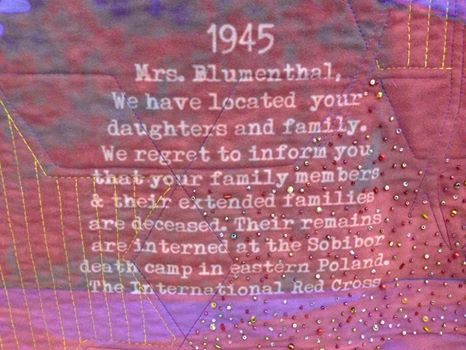
“Hello Mommie. We made it to AMERICA!!!!”

I didn’t read a book this week, I read a quilt.

Our community center hosted a quilt show last weekend, where we saw a quilt that tells one Rochester family’s story. It is well worth reading.

Created by Julie S. Brandon as a tribute to her great grandmother, Estera Blumenthal, A Cruel Twist of Fate won “Best Interpretation of a Theme” in the 2012 Mid-Atlantic Quilt Fest and 2nd prize in the 2011 Wall Hanging Diamond Jubilee Quilt Fest in Rochester.

(Photo #2 may be more legible. If you have a View function on your computer, select Zoom In. The conclusion is in Photo #3.)

Quilt with writing and photo
A Cruel Twist of Fate, by Julie S. Brandon


Excerpts from family letters
See the conclusion below.

Telegram

Sons of Madness

Sons of Madness book cover

Growing Up and Older with a Mentally Ill Parent

Considering the huge numbers of people who have a mental illness, their suffering and lost potential, and the tremendous cost to society, it’s high time we made mental illness a priority. Instead, it continues to be a topic we avoid. Our mental health services are shamefully and sorely lacking. Those who suffer from mental illness are not being served, nor are their families.

I’ve written about this topic before at Books Can Save a Life when I’ve featured books about families with mental illness, particularly the plight of children and adult children with mentally ill parents. (See Children of Mental Illness Part I, Children of Mental Illness Part 2, Encountering the Dark Matter of Mental Illness, and Do Genes Affect Our Mental Health?) I grew up with a mother who had schizophrenia and, as I’ve conducted research for a memoir about our family’s experiences, I’m sad to say many aspects of the mental health system are no better than they were decades ago, and mental illness carries as much stigma today as it did in the 1960s.

Today, I’d like to highlight the newly published Sons of Madness: Growing Up and Older with a Mentally Ill Parent, by Susan Nathiel, PhD, LMFT. It’s a companion volume to her first book, Daughters of Madness: Growing Up and Older with a Mentally Ill Mother. Susan (whose mother had schizophrenia) has collected here interviews with twelve men whose mother or father suffered from schizophrenia, depression, bipolar disorder, or another serious mental illness.

These are deeply disturbing stories of men who in many cases have never talked about their families or their childhood and teen years. They were too ashamed and traumatized to reveal their family secrets, and they’ve never been asked. Consider these chapter titles: “Nobody cared until my family was destroyed,” “My mother’s lobotomy saved my life,” “If you leave the house, you’ll be murdered,” “Our family code: Protect Dad at all costs,” “I called them nightly shows – all violence,” and “I should have been able to save her.”  While it’s never easy having a mentally ill parent, boys and men are especially challenged by the cultural expectation that they not show their emotions.

Some of these men have healed, some have not, and all are scarred. I want to point out that most people with mental illness are not violent, but their families, including their children, must contend with a high degree of dysfunction that can be continual, extremely frightening, and traumatizing. It’s painful to read the words of these men, but what impressed me especially was their profound isolation as children. In many cases, it was impossible to get the mentally ill parent anywhere near a psychiatrist or treatment facility. Saddest of all is that extended family members and sometimes the healthy parent turned a blind eye to the needs of the children. No one helped them, and no one seemed to care.

I can’t fathom how children this neglected, with no support systems, encouragement, or empathy, can grow up to be healthy, trusting, fulfilled, and able to contribute their unique talents and gifts to society. Many do. But consider all the lost potential. I also wondered, as I read the interviews, where child abuse and addiction end and mental illness begins – my point being that I believe many children grow up contending, alone, with parents whose dysfunctions can cause lifelong damage and persist across generations, whether or not the parents are ever formally diagnosed with an identifiable mental illness.

There’s been some criticism of the many memoirs of family dysfunction that have been published in the last few decades, and accusations of whining and naval gazing. This only increases shame and makes those who’ve been affected hesitate to bring their experiences into the light of day, where solutions can be found and those who need it given relief and support.

We need to pay more attention to our children and the invisible traumas they may be contending with.

In his New York Time’s column today, Nicholas Kristof has identified mental illness as an issue that needs more attention. I hope you’ll add your thoughts about mental illness and families here in the comments or on Kristof’s blog, On the Ground.  You can also visit his Facebook page and leave a comment. I welcome comments about this on my Facebook page as well.

“Be kind, for everyone you meet is fighting a hard battle.” Ian Maclaren, Scottish author and theologian

Books to read in 2014

Here’s my to-read list for 2014. It’s incomplete, always changing, and I’m sure I won’t get to all of these, not by a long shot, but it’s a convenient list when I’m choosing my next book. You may see a few of them featured on Books Can Save a Life. I’ve included titles that will be published in 2014, so you won’t find all of them on the shelves yet.

If you have enticing choices on your list, please share them in the comments!

Watch for my book giveaway in February to celebrate the second anniversary of Books Can Save a Life.

FICTION

The Snow Queen book cover

The Snow Child, by Eowyn Ivey    “If All of Rochester Read the Same Book,” 2014

The Goldfinch, by Donna Tartt

Someone, by Alice McDermott

Carthage, by Joyce Carol Oates

Arctic Summer, by Damon Galgut

The Unknowns, by Gabriel Roth

The Circle, by David Eggers

Colorless Tsukuru Tazaki and His Years of Pilgrimage, by Haruki Murakami

The Signature of All Things, by Elizabeth Gilbert

Life After Life, by Kate Atkinson

How Should a Person Be? by Sheila Heti

The Paying Guests, by Sarah Waters

And Then We Came to the End; The Unnamed; To Rise Again at a Decent Hour, by Joshua Ferris

Orfeo, by Richard Powers

Never Go Back, by Lee Child

The Language of Flowers, by Vanessa Diffenbaugh

The Snow Queen, by Michael Cunningham

The Bone Clocks, by David Mitchell

The Interestings, by Meg Wolitzer

The Luminaries, by Eleanor Catton

Lila, by Marilynne Robinson

By Blood, Ellen Ullman

Canada, by Richard Ford

In Sunlight and in Shadow; and Winter’s Tale, by Mark Helprin

The Cuckoo’s Calling, by Robert Galbraith (J.K. Rowling) and Untitled (2014)

The Woman Who Lost Her Soul, by Bob Shacochis

Off Course, by Michelle Huneven

Gone Girl; Dark Places, by Gillian Flynn (movies in 2014)

Wolf Hall, by Hilary Mantel (Best book of the 21st century, according to Elizabeth Gilbert)

****************

IN TRANSLATION

My Struggle, Books 1, 2, 3 by Karl Ove Knausgaard (Norwegian)

Treasure Hunt; The Dance of the Seagull by Andrea Camilleri (Sicilian)

Story of a New Name, by Elena Ferrante (Italian)

YOUNG ADULT

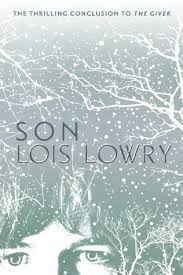
Son book cover

The Giver Quartet Series (including Son), by Lois Lowry

Divergent Series, by Veronica Roth

Mockingjay, by Suzanne Collins

The Fault in Our Stars, by John Green

*************************

MEMOIR

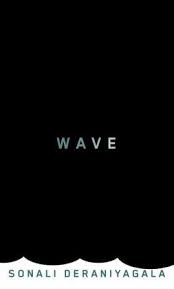
Wave book cover

Men We Reaped, by Jessamyn Ward

Still Writing, by Dani Shapiro

This Is the Story of a Happy Marriage, by Ann Patchett

Wave, by  Sonali Deraniyagala

Intensive Care: A Doctor’s Journey; and Medicine in Translation: Journeys with My Patients, by Danielle Ofri

**************

NONFICTION

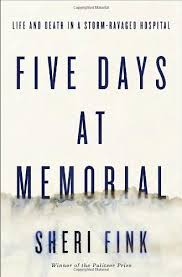
Five Days at Memorial book cover

Big Data: A Revolution that Will Transform How We Live, Work, and Think, by Victor Mayer-Schonberger and Kenneth Cukier

Who Owns the Future? by Jaron Lanier

The Burglary: The Discovery of J. Edgar Hoover’s Secret FBI, by Betty Medsger

Thank You for Your Service, by David Finkel

Five Days at Memorial: Life and Death in a Storm-Ravaged Hospital, by Sheri Fink

What Doctors Feel: How Emotions Affect the Practice of Medicine, by Danielle Ofri

Manson: The Life and Times of Charles Manson, by Jeff Guinn

The Unwinding: An Inner History of the New America, by George Packer

Margaret Fuller: A New American Life, by Megan Marshall

The Skies Belong to Us: Love and Terror in the Golden Age of Hijacking, by Brendan I. Koerner

The Gorgeous Nothings: Emily Dickinson’s Envelope Poems

Stalking the Divine, by Kristin Ohlson

Sons of Madness: Growing Up and Older with a Mentally Ill Parent, by Susan Nathiel

Is There No Place on Earth for Me? by Susan Sheehan

Dear Genius: The Letters of Ursula Nordstrom, by Leonard S. Marcus

Hildegard of Bingen, slow medicine, God’s Hotel

Recolate angel“Angels…what glorious shapes take place within you….”  Hildegard of Bingen

“I discovered Hildegard and her medicine…and that is where God’s Hotel starts.”…..Victoria Sweet, MD, author of God’s Hotel

The Hŏtel-Dieu (God’s Hotel) cared for the sick in the Middle Ages.  Hildegard’s music.

(And it’s All Saints’ Day weekend.)

Victoria Sweet at TEDxMiddlebury.

Photo: Recoleta Cemetary, Buenos Aires

Body and mind

What are the pros and cons of getting genetic testing if your parent has Huntington’s Disease? What about dating and relationships?

A resident in the pediatric intensive care unit wants patient education information about shaken baby syndrome and traumatic brain injury.

A mother whose child has just been diagnosed with epilepsy wants to know if a special diet will help.

At teaching rounds, medical students on their first patient rotations are led through the process of making a diagnosis. “He has weakness in his arm and leg,” says the neurologist. “If his symptoms are on the right side, where is the lesion in the brain?”

These are some of the situations I’ve seen as a medical librarian. Sometimes we forget how precious and fragile are our bodies and minds. We can walk, run, speak, love, laugh, cry, sing, read, write, think, create, make plans, give comfort, enjoy a meal with family and friends. Until one day something changes.

I know from personal experience a mind can become irrevocably altered and an identity can vanish seemingly overnight. Which is probably why I am so fascinated by medicine, especially medicine having to do with the brain and behavior.

Here are some of my favorite books (fiction and nonfiction) about illness, recovery, medicine, the search for cures and miracles, and the people caught up in it all: medical professionals, researchers, patients and families. If you follow my blog, a few of the books will be familiar.

FICTION

I Know This Much Is True book cover

I Know This Much is True, by Wally Lamb

“On the afternoon of October 12, 1990, my twin brother Thomas entered the Three Rivers Connecticut Public Library, retreated to one of the rear study carrels, and prayed to God the sacrifice he was about to commit would be deemed acceptable.”

This is the best evocation of schizophrenia I’ve ever read. Wally Lamb is my hero.

By the way, Wally’s newest novel, We Are Water, was just published this month. It is on my nightstand in my little stack of books to read.

Saturday book cover

Saturday, by Ian McEwan

A neurosurgeon. Huntington’s Disease. A home invasion. A poem.

(The poem nestled deep within the plot sparks a crucial turning point. It also happens to be one of my lifelong favorites.)

State of Wonder book cover

State of Wonder, by Ann Patchett

“She was not terrified that the patient would die or she would lose the baby, she was terrified that she was doing something wrong in the eyes of Dr. Swenson.”

“I write with unfortunate news of Dr. Eckman, who died of a fever two nights ago. Given our location, this rain, the petty bureaucracies of government (both this one and  your own), and the time sensitive nature of our project, we chose to bury him here in a manner in keeping with his Christian tradition….Despite any setbacks, we persevere.”

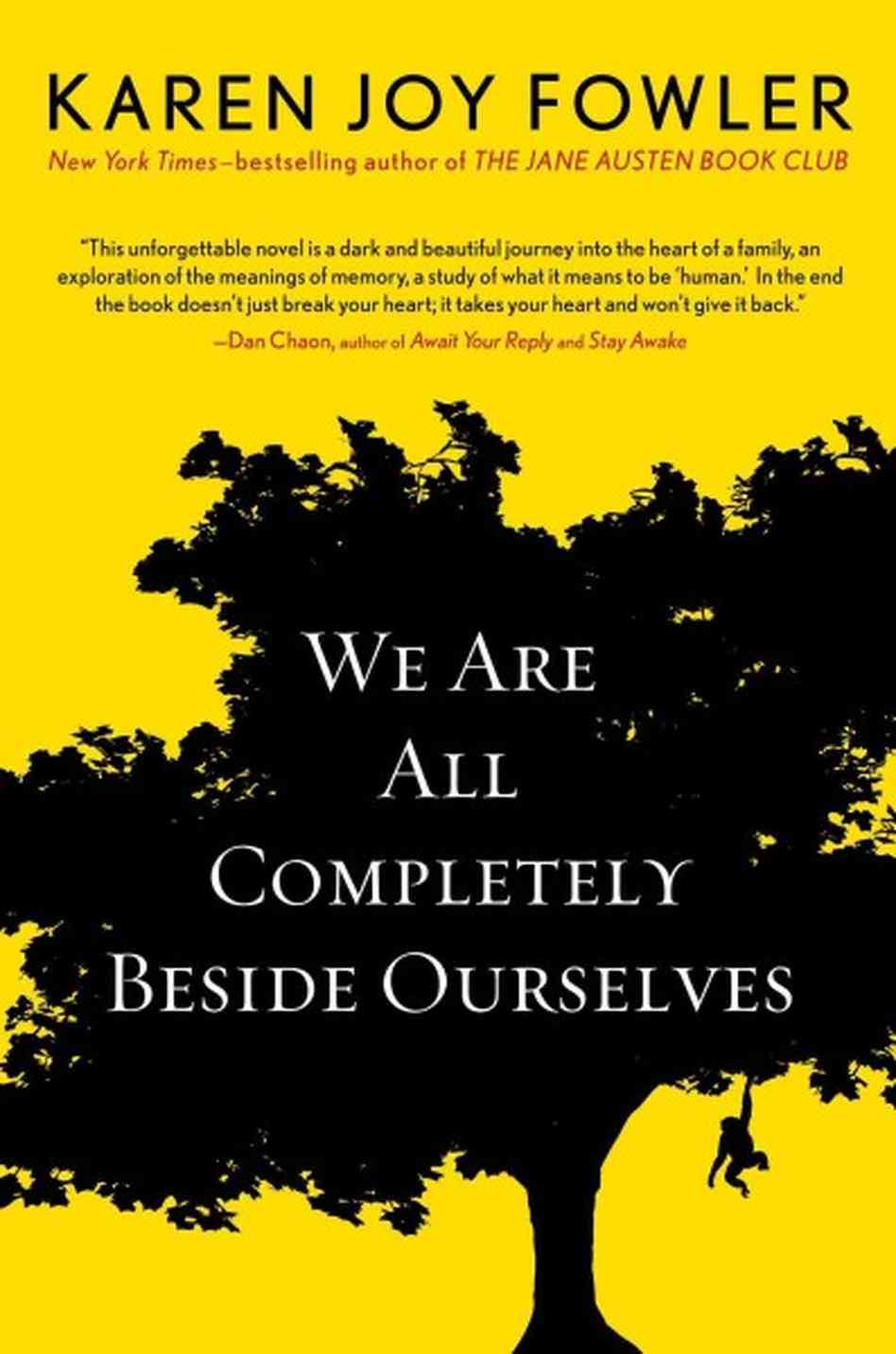
We Are All Completely Beside Ourselves book cover

We Are All Completely Beside Ourselves, by Karen Joy Fowler

“…I’d made a careful decision to never ever tell anyone about my sister, Fern. Back in those college days I never spoke of her and seldom thought of her…..Though I was only five when she disappeared from my life, I do remember her. I remember her sharply – her smell and touch, scattered images of her face, her ears, her chin, her eyes. Her arms, her feet, her fingers.”

***************************

MEMOIR

God's Hotel book cover

God’s Hotel: A Doctor, a Hospital, and a Pilgrimage to the Heart of Medicine, by Victoria Sweet

Inspired by Hildegard of Bingen (12th century German mystic and medical practitioner), as well as her own instinct for compassionate, attentive care, Dr. Sweet practices “slow medicine” at the last almshouse in the U.S. as it transitions to the modern age. We should all have a physician like Dr. Sweet.

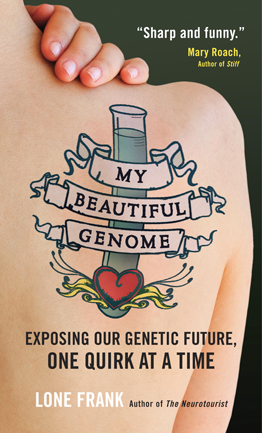
My Beautiful Genome book cover

My Beautiful Genome, by Lone Frank

“…we are each of us temporary depositories of information that has an almost eternal life, and which is passed on and on and on…”

“I am what I do with the beautiful information that has flowed through millions of years through billions of organisms and has, now, finally been entrusted to me.”

David Schickler’s Dark Path

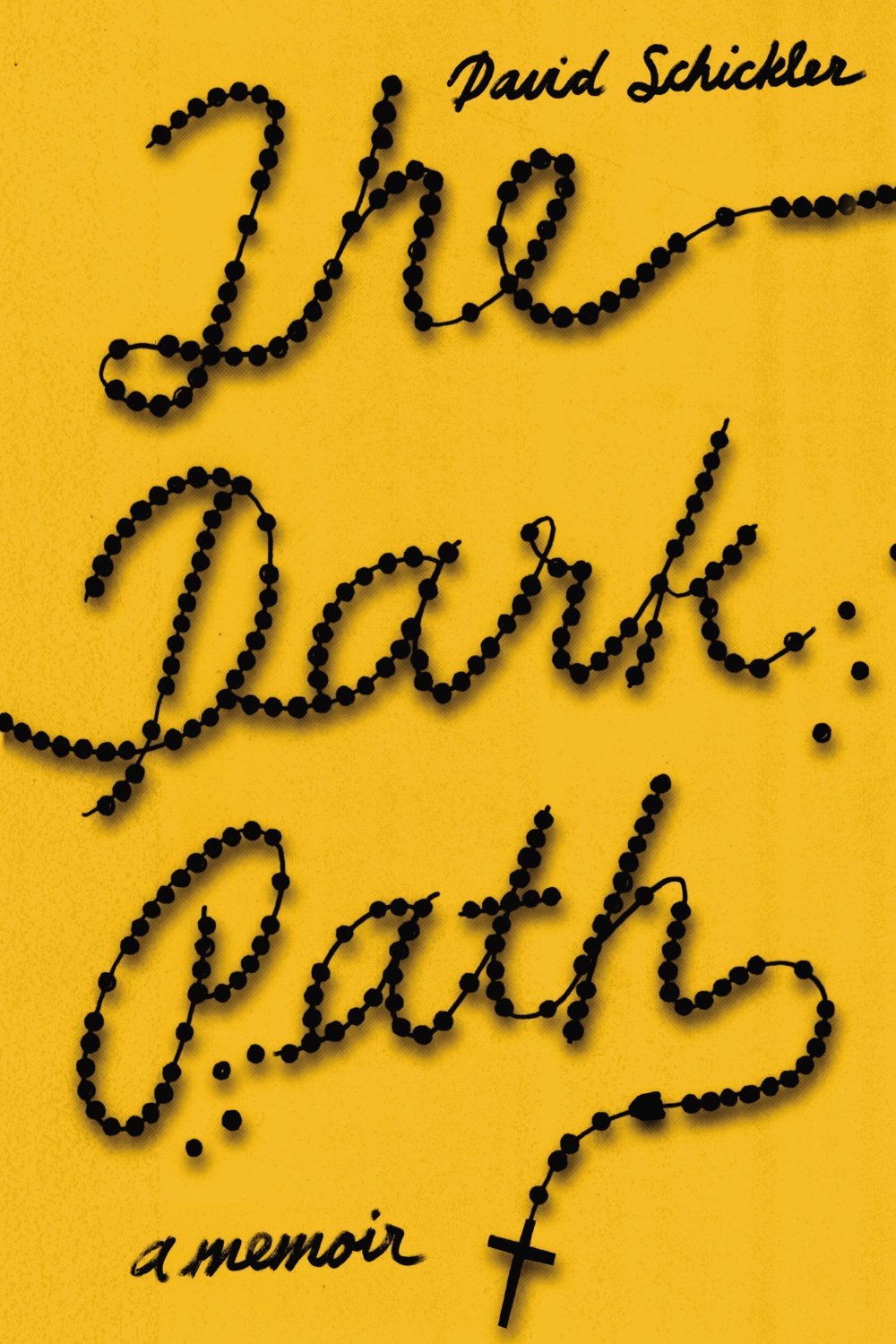
The Dark Path book cover

As I write this, I have a hangover from staying up too late reading David Schickler’s new memoir, The Dark Path, in one sitting.

When he was a boy attending Mass with his family in Rochester, New York, David fantasized about a blonde, blue-eyed Catholic girl named Caitlin. When he went to the country club swimming pool he pined after Leslie, a brown-haired, amber-eyed beauty who was Protestant and therefore dangerous.

David was obsessed with girls, but he also dreamed of becoming a priest. He’d walk the dark path through the woods behind his house, hoping to hear the voice of God telling him what he should do with his life.

Attending McQuaid Jesuit High School here in Rochester, David’s loyalties were still divided, and they remained so when he went off to college. Needless to say, this greatly complicated his love life.

His newly published memoir, The Dark Path, is about David’s comic, convoluted, and often anguished discernment of whether he should become a celibate priest or forgo all that for another kind of life altogether.

Thursday evening at our local Barnes and Noble, David read excerpts from his book to a standing-room-only crowd that included his family and many of his lifelong friends. After living in New York City for a while, David returned to Rochester several years ago. In addition to his literary writing, he is a screenwriter (co-creator of the TV series Banshee) who commutes to Los Angeles and New York.

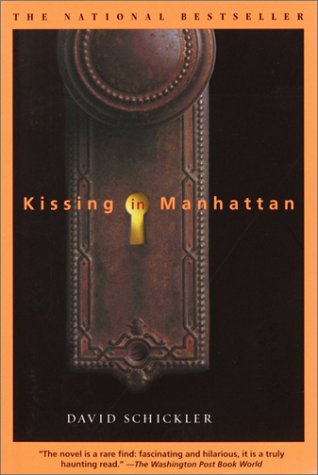
Years ago, I’d read and loved his Kissing in Manhattan. It’s a collection of strange and haunting linked stories about young singles in the 1990’s looking for love, living in a beautiful old building on the upper West side loosely based on the Dakota, where John Lennon lived and Rosemary’s Baby was filmed. (I’d been single in New York in the 80’s, which is partly why Kissing drew me in – David captured so well the big city headiness shot through with loneliness.) Last week, when I found out David was about to publish a memoir, I didn’t want to miss the debut.

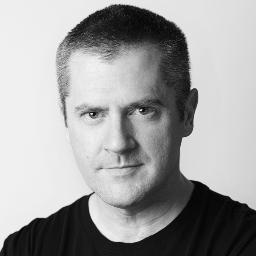
David SchicklerDavid read a scene from The Dark Path about jockeying for space in the bathroom while fighting with his sisters, vying for the hair dryer and mousse as they got ready for church.

I thought the scene sounded a lot like how it must have been when my husband’s family got ready for Mass when he was a boy. I’d brought my husband along with me to the reading – he’s not an obsessed reader like I – and he was immensely entertained, as were all the men in the audience. David is a natural stand-up comic, a down-to-earth, regular guy who appeals to other regular guys. Women love him, too, of course. Look at his photo and you’ll see why.

Kissing in Manhattan book coverLet me say a few words about Kissing in Manhattan before I tell you more about David’s memoir. I’ve never forgotten one particular story in Kissing, about a rich, handsome, deeply wounded stockbroker with a dark side. (Christian Grey comes to mind, but with a twist, and Schickler’s writing is orders of magnitude better.) Patrick Rigg can have any woman he wants, but instead of making love to them, he – well, he does something else. It falls to a priest, Father Thomas Merchant, to see if he can save Patrick from himself.

When Kissing was first published, it was an immediate sensation. David achieved literary stardom overnight. But when his father, a devout Catholic, read an early version of the manuscript, he’d been horrified.

“You think women will read your perverted stuff and let you baptize their babies?”

“But what about Andrew Greeley?” David asked. “He’s a priest and an author.”

David’s father pointed out that Greeley was a priest for 25 years before he began to write bodice-rippers.

In The Dark Path, David writes about the publication of Kissing. Yes, he became an overnight success, but there was fallout in his personal life. The Dark Path is about David’s crisis of faith; as well, it’s about what, exactly, a writer is supposed to write about. Truthful, authentic writers write about their obsessions, but what if you’re drawn to the dark stuff?

For that matter, to be a priest who truly ministers to those in need, don’t you have to acknowledge darkness (both inside ourselves and in the world) and help people grapple with it?

I think, for writers, it’s the stance you take. Parts of Kissing in Manhattan startled me, but I admired how David played out the tragic elements of his story. It was clear to me he wasn’t sugar-coating reality or condoning the grimmer, inexplicable aspects of human behavior. In my view, he offered readers glimmers of hope, a pathway to the light.

David doesn’t hold back in The Dark Path. He’s blazingly honest about his failings, vulnerabilities, struggles, and relationships with women. He’s hilarious, too. During his reading, he said he doesn’t write for therapy, he writes to entertain people.

The Dark Path is definitely book club material. In fact, it would be interesting to read Kissing in Manhattan and The Dark Path together. I believe these stories have something to say to Catholics and non-Catholics alike, to those of other faiths, to agnostics and atheists as well. To anyone who’s grappled with the absurdities of life and their place in the world.

For more memoirs of the spiritual journey, see my little book list below.

MEMOIRS OF FAITH

The Dark Path, by David Schickler

The Spiral Staircase, by Karen Armstrong

The Cloister Walk, by Kathleen Norris

Traveling Mercies, by Anne Lamott

The Crosswicks Journals, by Madeline L’Engle