“As noisy as Paris was in those days, it always had its unexpected moments of stillness. At Cours-la-Reine, between one and one-thirty in the afternoon, when the last trucks had reached their canteens, those who loved flowers and silence could savor a strange respite, a solitude in which the flowers seemed to recover from human curiosity.”
******************
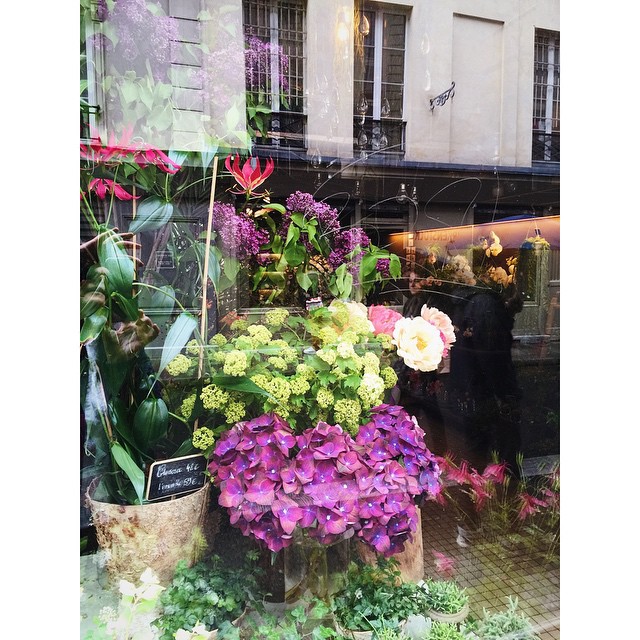
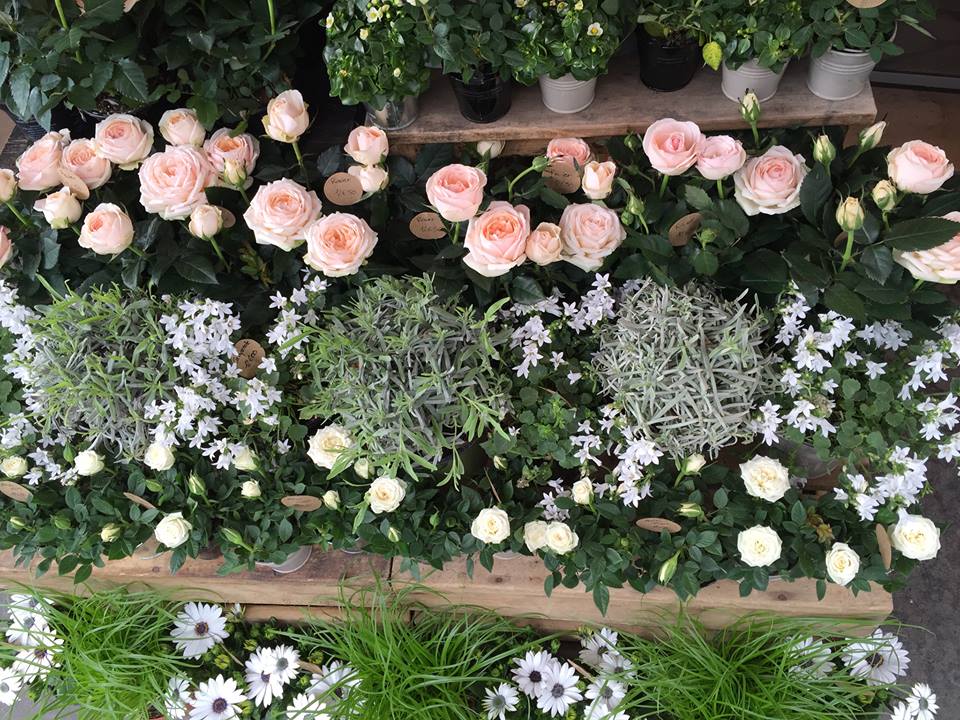
We’ve been in Paris, where our son has been studying and working in industrial design. I had so much fun walking around this enchanting city which, among other treasures, has secret gardens galore, flower vendors and flower markets, and floral shops offering spring flowers, herbs, and foliage, all beautifully arranged and presented.
A few years ago I was browsing in a local used book shop when I discovered a volume of essays by Colette,Flowers and Fruit,first printed in the US in 1986.
Some of the essays were inspired by a Swiss publisher, who for a time sent Colette a bouquet of flowers once or twice a week so she could write sketches of those that inspired her.
Colette wrote one of the longer essays in this collection, “Flora and Pomona,” during the Nazi occupation. According to the collection’s editor, Colette conceived of the writing project to “keep the coal bin at 9, rue de Beaujolais well filled and pay the black-market prices for rabbit and cheese and chicken and other comestibles otherwise unavailable, even to much-loved novelists living in the Palais-Royal.”
At the time of its publication, some critics said factual errors, weak editing, and a less than adequate translation detracted from Flowers and Fruit. I find Colette’s writing challenging, so this isn’t the kind of book I’d read straight through. It’s a little treasure for floral enthusiasts that’s fun to browse when I want Colette’s unusual take on flowers.
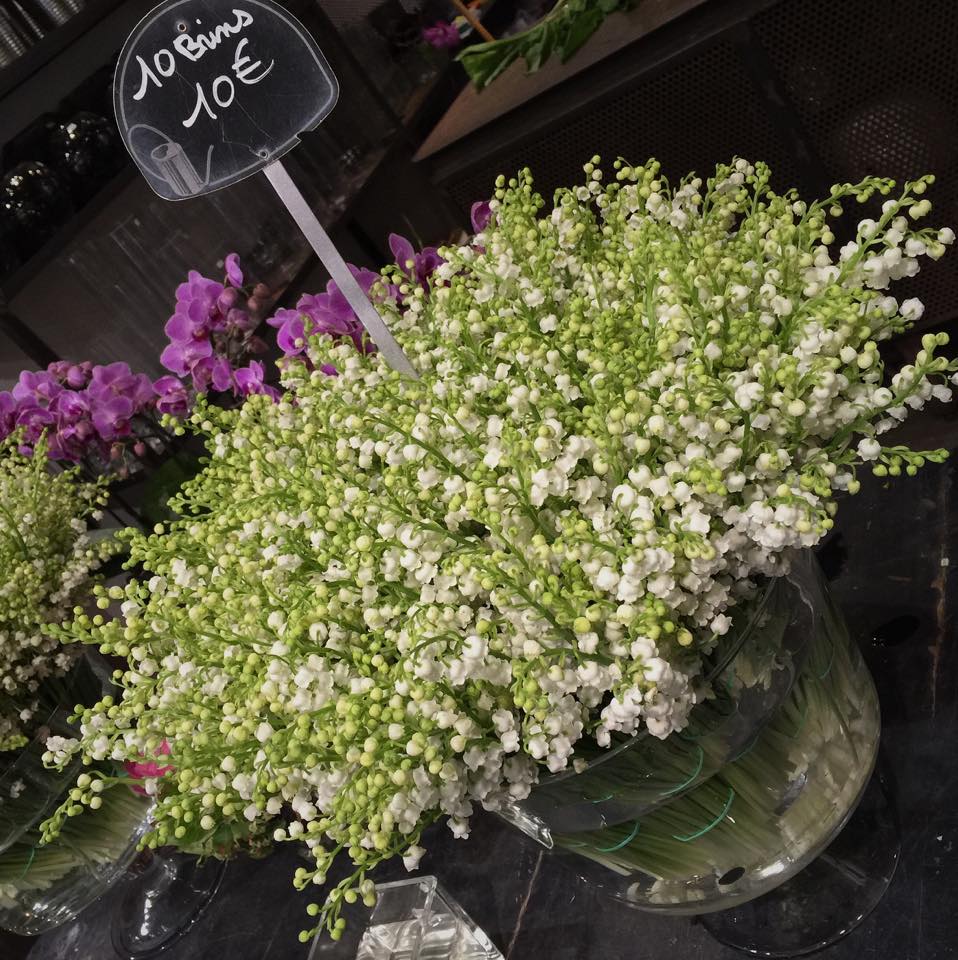
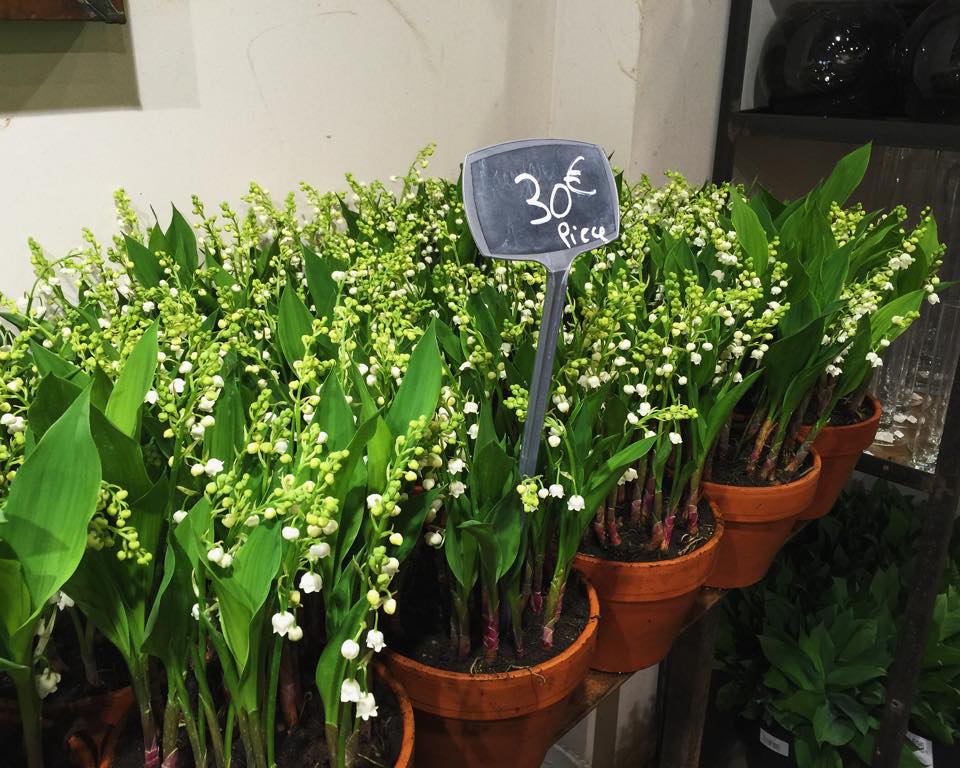
We were lucky to be in Paris on May Day. This holiday’s signature flower is lily of the valley, one of my favorites. They were everywhere.
Here are some of my Paris floral photos paired with Colette’s thoughts on flowers and gardens:
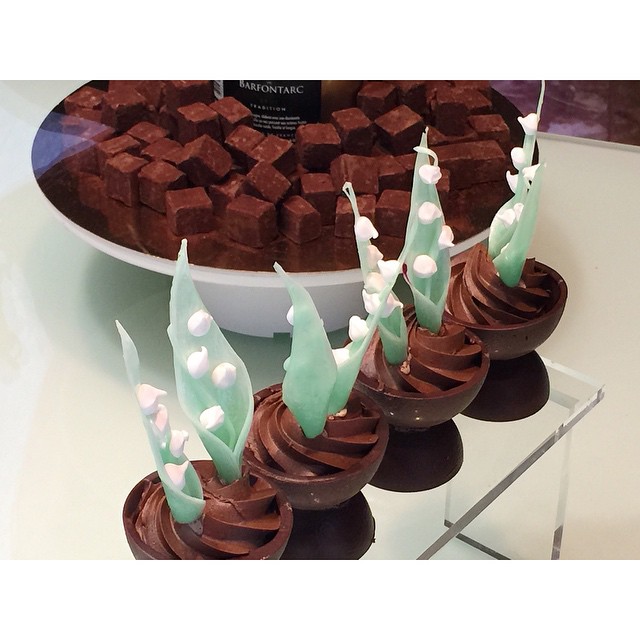
“Garnet red, bright pink, sentimental pink, and three or four other carmine reds, they are the colors of good health and will delight me throughout the coming week.” (These peonies have not yet opened, which is when you should buy them.)Lily of the valley is the May Day flower in Paris. “In spring, nearly an entire nation demands lily of the valley like bread.”“More than a flirtation, better than a superstition, almost a religion, the lily of the valley is celebrated on the first of May. Its cult stirs the Paris population to fever pitch…”You’ll find lily of the valley everywhere on May Day, even at the chocolatier. I saw these lovely desserts at Sylvain Mussy on Rue Bourg Tibourg.
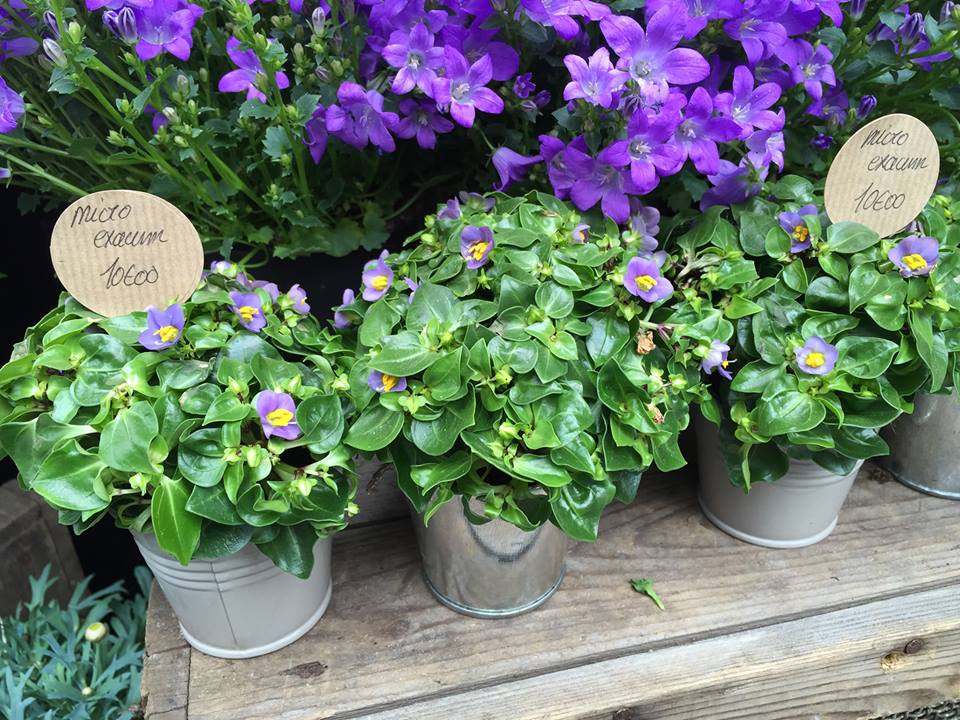
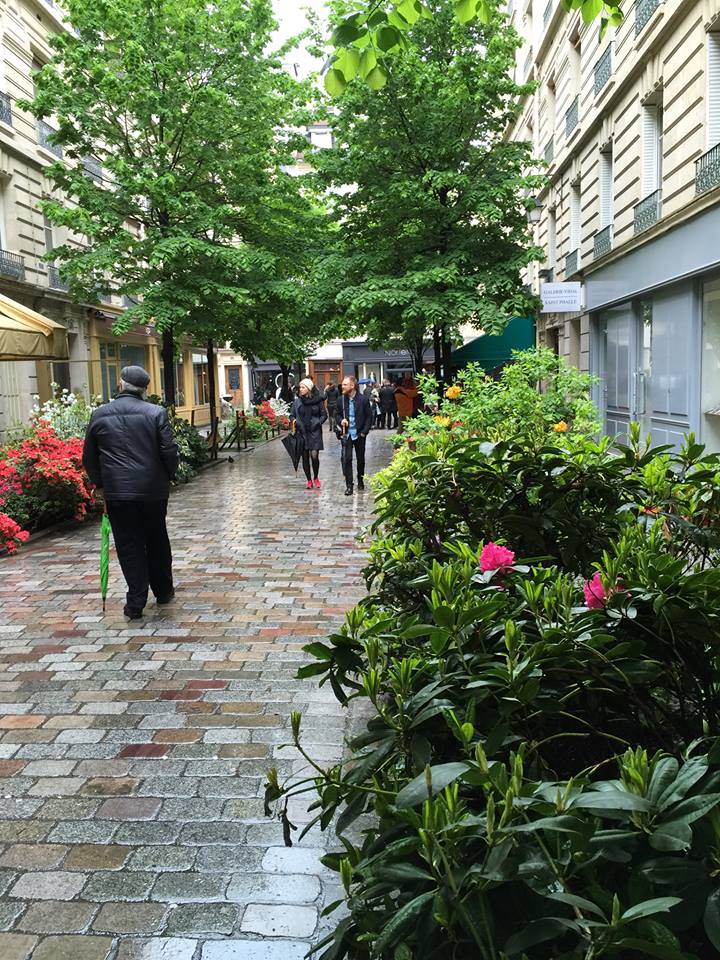
My May Day bouquet. Lily of the valley, gloriosa lily (also known as fire lily or flame lily), and angel hair fern. “The true lily’s favorite soil is the kitchen garden’s, with tarragon, sorrel edgings, and purple garlic for neighbors.”Campanula and Persian violets. “…the sleeve of blue-violet campanula that grows immoderately, framing the windows in a single rush and decking them with flowers all season long.”“Below my window, among the puddles of water, the bathing pigeons….we have old-fashioned, floriferous rosebushes that have survived both war and frost. Never have they failed to flower, and to flower again, and yet again before November.”There are many secret gardens hidden on the side streets of Paris, where the public is welcome.This one is Square Georges-Caïn on Rue Payenne. “Creating a garden takes us back to childhood imaginings.”Some streets, like Rue du Trésor, are gardens, too.
For starters, take two and a half minutes to watch astronaut Reid Wiseman’s video, “A Photo I Love,” and then come back here. You’ll see a new view of Italy (some of you know how much I love Italy). Notice in particular Reid’s photo of the earth’s atmosphere, “….so blue, so incredibly thin….” and Reid’s tweets (#spacetweets).
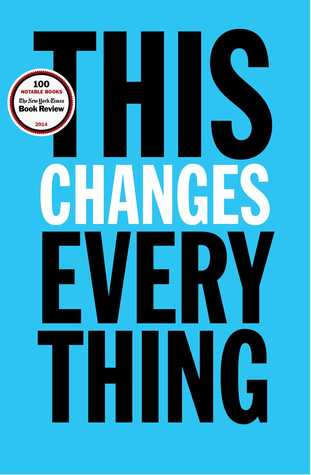
I wanted to begin on an upbeat note, hence Reid’s video of “watching our earth be alive” that so vividly highlights what the stakes are when it comes to the climate debate. It’s not that Canadian journalist Naomi Klein doesn’t offer hope in her latest book, This Changes Everything. Certainly, she does, but this is a read with plenty of emotional lows before you get to the highs.
This Changes Everything is proving to be enormously influential as well as controversial. If I read her correctly, Klein does not advocate a dismantling of capitalism, but her book is indeed a polemic against the extreme version of capitalism that pervades much of the world today. Her message is that the earth cannot possibly continue to sustain a world economy based on unlimited growth and the endless extraction of resources. We need to change course to keep the earth’s warming under two degrees Celsius (this is according to many climate scientists, who also maintain that a warming of four degrees Celsius would be catastrophic). We need to act now, on a massive scale.
If you care deeply about climate change, I highly recommend putting This Changes Everything at the top of your to-read list. There is so much I don’t know about this huge topic. Though I’ve been against fracking (recently outlawed here in New York), I didn’t know much about it, and I knew absolutely nothing of Canada’s tar sands project and its devastations. Klein brought me up to date on all of this, as well as the current climate change activist scene. She synthesized an enormous amount of research, which makes for slow reading at times, but it’s worth it if you want the big picture.
Here are some things I learned that surprised me:
We’ve come a long way with alternative energy technologies. It seems like a no-brainer – if we can meet our energy needs at very little cost using solar, wind, and other technologies, why would we continue using expensive and dirty fossil fuels?
Native Americans and indigenous populations around the world are winning important victories against the fossil fuel industry, more so than activists in the mainstream. In Canada and the US, for example, some of these groups, by treaty, retain rights to their land, including the right to make a living from it. The courts have, in many cases, upheld these rights, effectively blocking or delaying extraction projects. These delays have given alternative energy technologies time to develop.
Though it’s important for developed countries to convert to clean energy, it’s crucial that we help developing countries turn to clean energy, too–otherwise we’ll never be able to stop global warming. Klein and others maintain that, since developed countries have grown wealthy from fossil fuels, we have a responsibility to help developing countries pay for their energy infrastructures.
A New York Times review called This Changes Everything “…the most momentous and contentious book since Silent Spring,” and “…a book of such ambition and consequence it is almost unreviewable.”
This Changes Everything is absolutely a book that can save lives.
Have you read This Changes Everything? Do you recommend other important books about this topic? If so, please do in the comments. And if you care about climate change, I hope you’ll share this post.
What we don’t want to lose. View of Zingaro Nature Preserve in Sicily. (Photo by A. Hallinan)
“Dear Reader – I write this because I love a garden that gives back. Flowers, fragrance, flavor…all of it. A true giving-garden is filled with herbs. Discover them. Grab a leaf, rub it, hold it to your nose and breathe in. Voila! That plain, leafy plant becomes so much more when you learn ways to use it. This is what I share with you.” Sue Goetz, The Herb Lover’s Spa Book
In the middle of a hard winter I couldn’t ask for a better pick-me-up than The Herb Lover’s Spa Book by Sue Goetz, just published by St. Lynn’s Press. This is a little gem of a book. Looking at the photos and skimming through the recipes for facial steams and oatmeal soaks and lavender heat pillows while the snow fell outside my window was a spa experience in and of itself.
I grow the standard kitchen garden herbs and I love cooking with them. Now Sue Goetz has inspired me to try out recipes for herbal preparations that heal, sooth, relax, and refresh. I’d been making a list of seeds to order for this year’s garden, and I’ll have to expand it to include new-to-me herbs like lemon balm and lemon verbena, scented geranium and camomile. I want to try the recipes and the end products myself, of course, and if all goes well, when holiday time rolls around I’ll have homegrown, handmade gifts to give family and friends.
A well-known garden designer, writer, and speaker from Washington State, Sue Goetz packs a lot of information into this little book, and her passion for using herbs in the home for pleasurable and nurturing spa experiences shines on every page.
The Herb Lover’s Spa Book has three parts: Surround, Grow, and Create.
Surround
You can enjoy the herbal preparations you’ll learn to make in this book in your very own private spa. Sue shows how you can create a retreat in your own home, indoors or outdoors, where you can read, relax, soak, sleep, or meditate. She suggests designs, colors, and textures conducive to rest and relaxation, whether in a garden or in a favorite indoor space.
Grow
You’ll find information about nineteen of the most common and popular herbs used for skin treatments and teas and infusions, including lavender, hops, dandelion, eucalyptus, sage, parsley, witch hazel, and thyme. Sue includes growing tips, healing properties, and suitable varieties for each herb, a list of seasonal herb garden tasks, and tips for harvesting and preserving.
Create
In addition to over 50 herbal recipes, Sue provides information about sourcing and working with common ingredients and materials such as beeswax, baking soda, essential oils, epsom salt, ginger root and jojoba oil.
I loved leafing through the recipes. I didn’t know there are so many varieties of bath brews, each with its own effects. For a relaxing bath you can use chamomile, hops, and lavender. For a stimulating bath, try eucalyptus, lemon balm, mint, rosemary, sage, or thyme. For a healing bath, use calendula, lavender, lemon verbena, parsley, or spearmint.
First on my list of recipes I’d like to try is the Inspiration Bath. When you want to get your creativity flowing, put some calendula petals in a muslin sachet or directly into a warm bath, and add 6 drops each of lavender essential oil and rose essential oil.
Scroll down to the bottom of this post to see the complete recipe for Sue’s Basic Bath Brew. Other tempting concoctions: Peppermint Foot Soak, Midsummer’s Eve Floral Garden Water, Dusty Rose Body Powder, Winter Warming Steam, Chamomile Eye Soothers, Rosewater Cream, and Floral Water Skin Brightener.
Sue includes fascinating tidbits about historical aspects of the spa experience and herbal pharmacopoeia. I’d never heard of a stillroom, for example – a special room in homes of the early American colonies set aside to prepare household products from the garden. Sue says the lost art of the stillroom is coming back, and she encourages us to find a special space in our modern homes where we can store ingredients and experiment with herbal remedies.
I like that a glossary of commonly used terms is included at the end of the book, as well as a list of resources, including places to purchase herbs, oils, packaging materials, plants, and seeds.
I’m so impressed with St. Lynn’scollection of how-to gardening books. I’ve written about a couple of other St. Lynn’s titles here at Books Can Save a Life: Debra Prinzing’sSlow Flowers and Nancy Ross Hugo’s Windowsill Art.
I have a soft spot in my heart for small, inspired publishers with a strong sense of values and a well defined mission – I was an editor for such a publisher eons ago at the beginning of my career. I like St. Lynn’s because they make gardening so inviting and accessible to those of us who are beginners, and because they are strongly committed to ecology and our planet.
Make yourself a cup of tea and browse some of their other titles. (And if you want to know who St. Lynn is, click here.)
One of many tempting recipes in Sue Goetz’s The Herb Lover’s Spa Book
Do you make herbal preparations from your garden? If so, I’d love to hear about them, as well as books you recommend for those of us who want to learn more.
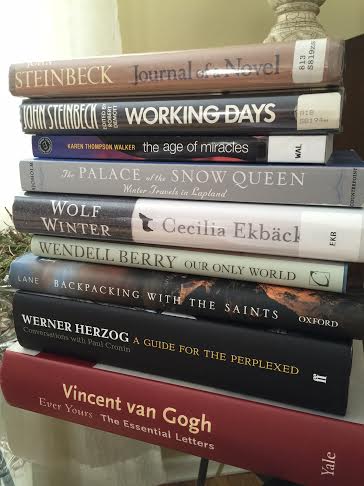
The Age of Miracles is this year’s selection for “If All of Rochester Read the Same Book.” We love to read through the deep winters in our part of the world, and this novel of catastrophe and survival will be on many a nightstand here. Why not try it along with us – I’ll be writing about this debut novel by Karen Thompson Walker soon.
Wendell Berry’sOur Only World (ten essays), because Berry is one of our greatest prophets, writing about the clash between humanity and nature and how we must do better. He’s been called a modern-day Emerson or Thoreau.
Backpacking with the Saints, a travel narrative and spiritual memoir. Belden C. Lane’s take on Celtic, Catholic, Protestant, Buddhist, Hindu and Sufi Muslim writings as he treks the Ozarks and the American Southwest. The book jacket compares him to other lovers of the backcountry, including John Muir and Cheryl Strayed,whose memoir, Wild,was just released as a movie.
Werner Herzog: A Guide for the Perplexed, is an overdue Christmas gift for my photographer son. This newly published series of interviews with the filmmaker is so popular it’s been out of stock. I hope he finds it worth the wait.
No one writes about creating art with as much love and eloquence as Vincent Van Gogh.
More about these in upcoming posts at Books Can Save a Life.
“It was one of those still days when you could hear snowdrifts collapsing in hisses, the sun so dazzling off the white-crusted ice that we seemed suspended on a cloud, bathed in light radiating from below. There we lay, three different species bound by a complex, often bitter history, taking simple comfort in the others’ presence, the sun’s warmth, and the passing of another winter.” A Wolf Called Romeo, Nick Jans
This winter I wanted to be sure to write about a remarkable work of nonfiction that I read a few months ago, A Wolf Called Romeo by Nick Jans. A winter storm is moving in to our parts today, so it seemed a good opportunity to settle in and revisit this captivating story about a very unusual wolf who “courted” the town of Juneau, Alaska. Nick Jans has lived in Alaska for more than three decades and is a nature writer of the highest order. If you love wildlife, wolves, and dogs, you won’t want to miss this book, and you’ll likely want to read Jans’ other work as well.
No one has solved the mystery of why a black wolf wanted to make friends with Nick’s dogs and the dogs of the other townspeople who let their pets romp in the vast open spaces outside of Juneau. The black wolf was playful and unfailingly polite, chivalrous, almost courtly, which inspired Nick’s wife to call him Romeo. For half a dozen years or so, Romeo seemed to confine himself to an area of about seven square miles outside of Juneau, whereas wolves usually roam a territory of hundreds of square miles. Romeo spent long days with his domesticated companions, while keeping his distance from their human owners. He’d disappear for days at a time; at least once Romeo was spotted with a pack of wolves that passed through the area.
This got to be a complicated and controversial situation for the citizens of Juneau. Many of them grew to love Romeo and were fascinated by the rare opportunity to observe a wolf up close, while others felt wolves were to be hunted or should stay where they belonged, in the wild. Some worried Romeo might attack their pets. Rules had to be devised about how to behave around Romeo. For example, Romeo was not to be fed, so as to keep his hunting and survival skills sharp. People were advised to keep their distance from Romeo and avoid physical contact.
It’s hard to believe that at one time Nick Jans hunted and killed wolves, because he is so passionate about protecting Romeo. He recounts the history of his own relationship with wildlife, as well as the fraught relationship between humans and wolves as the American frontier was settled.
Nick observed Romeo closely for several years. He recorded his observations with the intention of writing this book which was ten years in the making. I found myself worrying along with Nick every time Romeo disappeared. For, of course, Romeo’s befriending of the town also left him vulnerable to aspects of civilization that are destructive to wildlife and nature.
This is an emotionally powerful read. Nick Jans reminds me of Barry Lopez, a nature writer I greatly admire. Here, though, Nick has made the story of the relationship between humans and the wild very personal. Romeo is fascinating and haunting, a loner caught between two worlds, not fully at home in either one of them. Thanks to Nick Jans, his story has touched those of us who may go a lifetime without seeing a wolf in the wild.
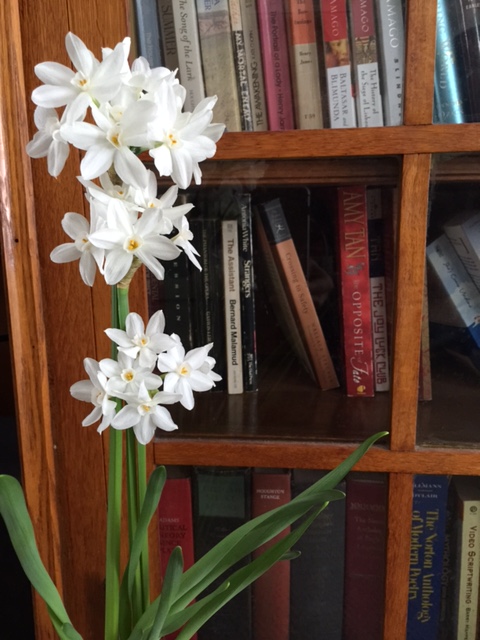
Taking this pic, I re-visited my long-ago college lit books on the bottom shelf: The Complete Pelican Shakespeare, The Norton Anthology of English Literature I and II, Victorian Poetry and Poetics, The Norton Anthology of Modern Poetry, Critical Theory Since Plato (oh, dear.) With many notes in the margins. Odd one out, a scriptwriting handbook. The “soil” of my literary leanings.
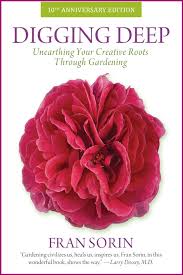
“I do believe that there’s something exquisitely powerful about taking something in nature and molding it with your own two hands. From the moment you dig up that first clump, you’re empowered because you immediately enter into collaboration with nature, and who better to be in collaboration with than the greatest force on earth?” Fran Sorin, Digging Deep
You don’t have to be a gardener to enjoy Fran’s book, though if you are, all the better. Fran says, “My mission is to show new and experienced gardeners alike how they can use their gardens – be they rolling, manicured lawns or tiny, blank plots of land – as tools for their creative awakening. I believe from the depths of my heart that gardening can be one of the most profound ways to unearth the creative spirit buried within every one of us. Once you unleash this creative energy, you’ll be amazed at what happens in all areas of your life. You’ll begin to see how living creatively opens up new vistas in your imagination and new windows of opportunity in your life.”
I’m a new gardener, and gardening has become for me a pleasurable, relaxing complement to writing, perfect for getting my body moving outdoors in nature. As I write about growing up in a family flower shop, sowing and tending and reaping resurrect the fragrance of fresh blooms and damp soil, and many other sensory pleasures, from my childhood.
When I ran across Fran’s book online, I was intrigued with her melding of gardening and creativity. The first edition of Digging Deep was immensely popular, hence the 10th anniversary edition in 2014. I’m glad to have discovered it this time around. In addition to being a garden expert and deep ecologist, Fran is an ordained interfaith minister and a soul tending coach. I point this out because the deceptively simple Digging Deep is a profound and spiritual book that is part memoir, as Fran draws upon her own rich life experiences to tell the story of how she arrived at the wisdom she shares here.
I’ve found that to nurture a creative practice (mine is writing), it is good to have other creative outlets just for pleasure, quite different from your primary practice. These “low-stakes” pastimes give your mind and body a break from routine and stimulate your imagination by allowing you to play and experiment. This spirit of play permeates Fran’s book. Her chapters take you sequentially through the cyclical nature of gardening, and creativity: Imagining: The Spark of Creativity. Envisioning: Giving Shape to Your Dreams. Planning: Laying Down the Bones. Planting: Taking Action. Tending: The Act of Nurturing. Enjoying: Reaping What You Have Sown. Completing: Cycling Through the Season.
Here is a favorite passage from a section called “Appreciating”: “Savoring your garden brings more than just sensory pleasure, though – it fills your creative well. In the moments that you experience the reverie of simply being there without working or planning or doing anything other than just drinking it in, you can experience a heightened awareness that elevates your consciousness. Any expression of art, be it a Rembrandt or your own garden, reflects the best of humankind, and tapping into this wonder expands your creative capacity so you may in turn create even more art – more awareness, more inspiration, more aliveness. The cycle feeds itself, but only if you stop to smell those literal and proverbial roses.” (boldface is mine)
Fran includes some excellent gardening guidance and tips, but her book is not a gardening manual. Rather, her aim is impart a deeper wisdom, a kind of spiritual instruction about connection to soil and nature, to foster creative awakening.
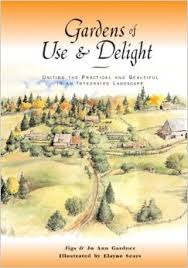
Jigs and Jo Ann Gardner’s Gardens of Use and Delightisabouta remarkable couple who for thirty years taught themselves how to live off the land on a farm on remote, hardscrabble Cape Breton Island in Nova Scotia. (They now live on a smaller farm in upstate New York.) I wanted to pair it with Digging Deep because, although Jigs and Jo Ann are immensely practical people, they are deeply connected to their land and passionate about homesteading, which they portray as at once the functional task of reawakening fertility and abundance in the landscape and making it beautiful as well. The subtitle is Uniting the Practical and the Beautiful in an Integrated Landscape, and that is exactly what Jigs and Jo Ann did on their isolated farm, while also raising four children (and a few foster children for good measure.)
Gardens of Use and Delight, like Digging Deep, is part memoir. More of a how-to book than Fran’s, Gardens, for me, stands out because of Jigs and Jo Ann’s instinctively creative approach to seamlessly blending beauty and fertility as they rejuvenate and work their land. I will never rehabilitate an entire farm as they did, but in Jigs and Jo Ann’s book I find an approach to making my much smaller landscape both productive and beautiful. Jigs and Jo Ann remind me of Helen and Scott Nearingand their classic and influential The Good Life,although Helen and Scott were not concerned with aesthetics as are Jigs and Jo Ann. The Gardners view their land as an artist does a blank canvas, to be molded and planted with flowers, herbs, vegetables, fruits, shrubs, and trees.
You’ll find some recipes and homemade craft instructions, too, such as pressed flower cards, candied petals, herb salt, rose petal jelly, and skin freshener. Elayne Sears’ watercolor illustrations of the landscape, fruits, vegetables, flowers, and Jo Ann’s rustic farm kitchen and pantry are delightful – I’d love to have prints of them to hang in my kitchen.
I have read other titles by Jo Ann Gardner and hope to collect everything written by this talented, tenacious homesteading and gardening virtuoso.
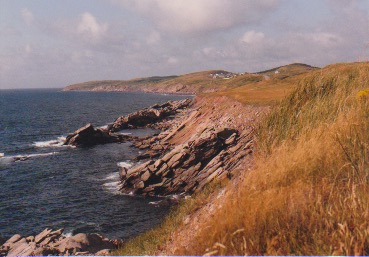
A very vintage photo of Cape Breton Island, from my honeymoon. Although I don’t believe they were on the coast, Jigs and Jo Ann Gardner must have encountered land much like this when they began to reclaim an old Nova Scotia farm.
Slow Flowers Challenge
I wanted to also tell you about Debra Prinzing’sSlow Flower Challenge for 2015, which you can join at any time. Every day, once a week, once a month, or once a season, you can design and make a floral arrangement using slow flowers. If you don’t know what slow flowers are, click on the above link, or read my post about Debra’s book, Slow Flowers. (St. Lynn’s Press)
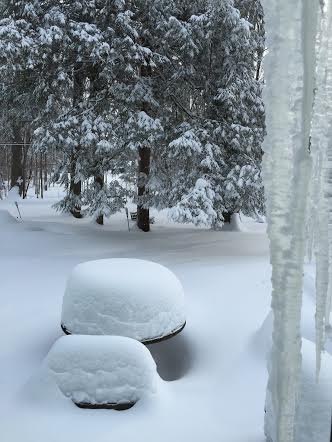
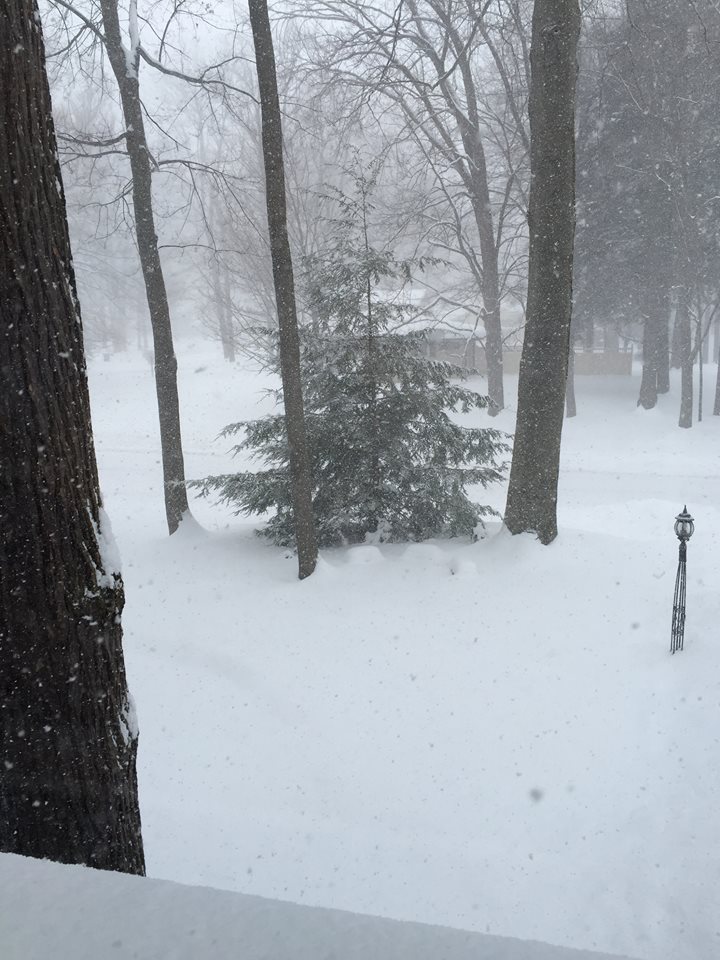
Our blank slate
Next up
More WW II fiction, a travel-to-the-ends-of-the-earth memoir, a wolf, Scandinavian literature, Little Golden Books, a favorite author visits Rome. Etc. Etc.
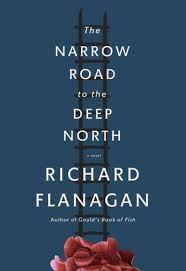
The Narrow Road to the Deep North, by Richard Flanagan. This World War II novel about an Australian surgeon in a Japanese POW camp won the 2014 Man Booker Prize. (The purpose of this UK prize is to bring quality fiction to intelligent general readers who might otherwise not hear about the work.) The prisoners helped build what became known as the Thailand-Burma Death Railway. The books is named after one of the most famous books in Japanese literature, written by the 17th century Japanese poet Matsuo Basho.I plan to read the books together. I’ll let you know how that works out.
A Platter of Figs and Other Recipes, by David Tanis I like this cookbook because it’s about eating with the seasons, and it features uncomplicated family meals you can easily make at home. Sections include “How to Cook a Rabbit,” “Feeling Italian,” “Nuevo Mexico,” “Peasant from a Parisian Kitchen,” and “Hot Day, Cold Chicken.” David Tanis is the head chef at Chez Panisse in Berkeley six months of the year; the other six months he lives in Paris, where he prepares meals in a tiny galley kitchen for his private dining club. I will read any cookbook affiliated with Alice Waters and Chez Panisse. My son bought this book at Spoonbill & Sugartown Booksellers in Williamsburg.
Cereal: Travel & Lifestyle Magazine, Vol. 8Click on this link right now and visit Cereal, a stunningly photographed and designed magazine and online journal. This volume features, among other things, a section on Yukon, Canada with spreads on Kluane National Park & Reserve and the Demptster Highway which leads to the Arctic Circle. (Someone in the family has been to the Arctic Circle via the Dalton Highway.) This mag’s style and visual aesthetic reminded me of a cookbook and lifestyle book I received last Christmas, The Kinfolk Table: Recipes for Small Gatherings. (Kinfolk is a magazine, too.) So I got out the book and saw there are a couple of recipes and a profile of food writer Rosa Park, who happens to be the editor of Cereal. Both Cereal and Kinfolk are beautifully designed and photographed, wonderful for browsing.
Southern Light: Images from Antarctica,by David Neilson. Someone in our family dreams of visiting Antarctica. This is a luscious collection of black and white and color photos, including several gatefolds that open up to three panels of photos on each side. At least seven kinds of penguins, all the major mountain ranges, Deception and Elephant Islands, historic exploration sites, and essays on climate change, too. Our son bought this book at Strand Booksin New York. (“Come for the books and stay for the synth musik.”)
RHS Vegetables for the Gourmet Gardener, by Simon Akeroyd. To feed my gardening habit and enrich my gardening and nature writing. RHS stands for Royal Horticultural Society, the UK’s leading gardening charity. This beautiful book was designed and produced by Quid Publishing in England, the same publisher that produced another volume I own, RHS Latin for Gardeners.
Our son purchased this at Daunt Books for Travellers in London. On the bookmark tucked inside: “The heart of Daunt Books is an original Edwardian bookshop with long oak galleries and graceful skylights. Its soul is the unique arrangement of books by country – where guides, novels, and nonfiction of all kinds will interest traveller and browser alike.” If I ever get to London this shop will be on my bookstore list.
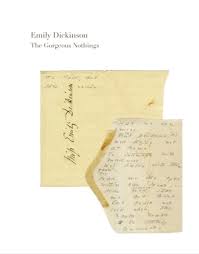
Emily Dickinson: The Gorgeous Nothings,by Marta Werner, a scholar of poetry, and Jen Bervin, a visual artist. No other book is quite like this one – a work of art, a facsimile publication of Emily Dickinson’s poems as she wrote them on fifty-two envelopes. These artifacts let the reader see Emily’s original line breaks and words spread across the entire space of a page, together with variant word lists that are meant to be part of the texts themselves. Reading these poems in their original medium, as opposed to in a traditional typeset book, is an entirely different experience.
My Struggle, Book Three, by Karl Ove Knausgaard. My son has read the first two autobiographical novels in the hugely popular series (there are to be six!) by the Norwegian author, published in 22 languages. I hope to tackle the first two volumes myself this year.
Berlin Wonderland: Wild Years Revisited 1990 – 1996 Amazing photos by seven photographers documenting the wild, artistic subculture that bloomed after the Berlin Wall came down. One of our sons is studying in Germany and bought this at Hundt Hammerstein in Berlin, a gift for the photographer in our family. The text is in English and German.
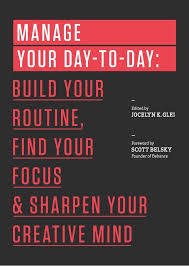
Manage Your Day-to-Day: Build Your Routine, Find Your Focus & Sharpen Your Creative Mind, edited by Jocelyn K. Glei. This is a great little book about how to meet creative goals and fulfill your calling rather than spend your days reacting to the demands of social media and new technology – a huge issue creative souls in the past did not have to deal with. Creative work, in the context of this book, can be anything from painting to starting a business to launching a volunteer effort or charity drive.
These very short articles by creatives and thought leaders like Seth Godin and Gretchen Rubin are practical and full of wisdom. I love this tiny red and black book and decided to pass it on to my photographer son (the industrial designer has browsed through it, too.) The most important take-away for me: disconnect from the Internet and get creative work done first thing, NO MATTER WHAT. Produced by Behance, which “is on a mission to empower the creative world.” (See: http://www.99u.com; http://www.behance.com)
“Christmas Eve he drove all the way to Helena to buy her figure skates. In the morning they wrapped themselves head to toe in furs and went out to skate the river. She held him by the hips and they glided through the blue dawn, skating hard up the frozen coils and shoals, beneath the leafless alders and cottonwoods, only the bare tips of creek willow showing above the snow.” “The Hunter’s Wife,” from The Shell Collector by Anthony Doerr.
“That night he drove her all the way north to Sweetgrass, on the Canadian border, to see the Northern Lights. Great sheets of violet, amber and pale green rose from the distances. Shapes like the head of a falcon, a scarf and a wing rippled above the mountains. They sat in the truck cab, the heater blowing on their knees. Behind the aurora the Milky Way burned.”“The Hunter’s Wife,” by Anthony Doerr
I liked All the Light We Cannot See so much, I got a copy of Anthony Doerr’s short story collection, The Shell Collector,and read “The Hunter’s Wife” (astonishing) while I had tea at Wegman’s today. One reviewer said about this collection: “Eight stunning exercises in steel-tipped feathery fineness….[Doerr is] able to pin down every butterfly wing and fleck of matter in the universe, yet willing to float the unanswerables….”
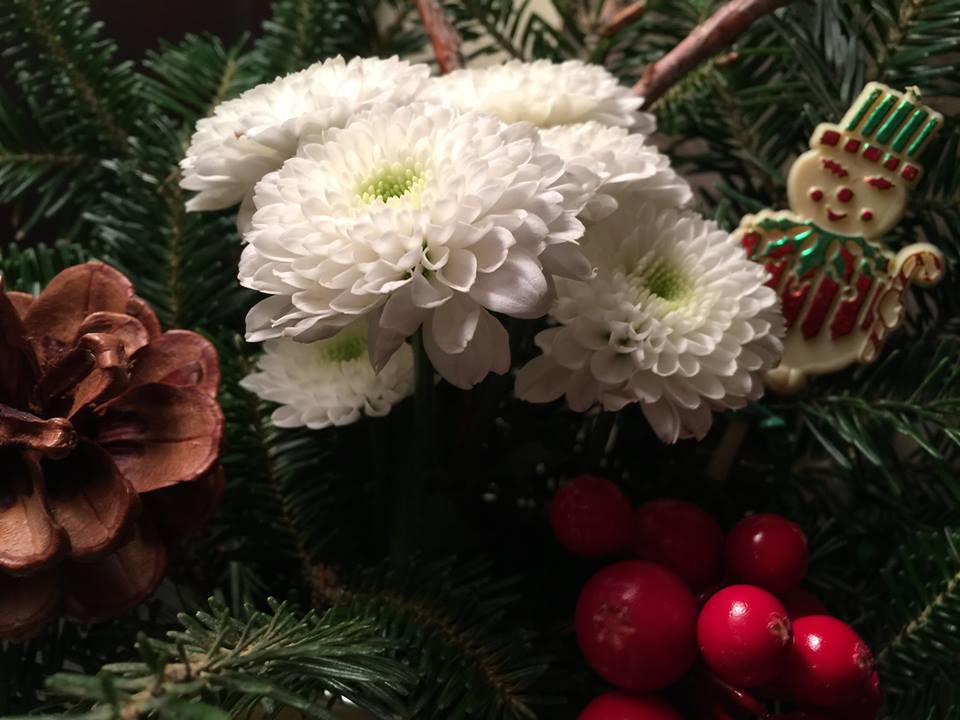
The snow was really coming down this afternoon. I watched people buying groceries for the evening’s dinner, rushing about and remarking on the weather, telling each other to drive safely. I bought some juniper boughs, white button mums, a ruby-red poinsettia. (And a meat loaf for supper.) The snow was still falling when I left. I swept about four inches’ worth off my car.
“For me, windowsill arranging is almost a spiritual practice. When I am looking for materials to display and placing them on the windowsill, I feel more like a poet placing words in a haiku than a floral designer placing stems in a vase. I love the limited space, the double connection to the outdoors (through the window and my materials), and the structure that repeating the same activity over and over provides.”Nancy Ross Hugo,Windowsill Art
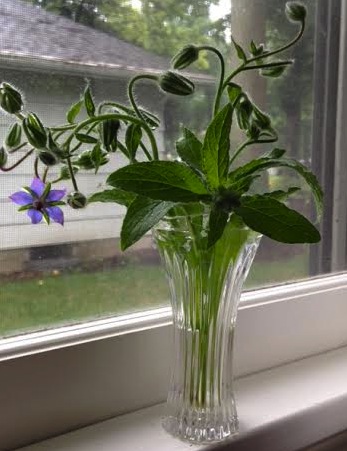
I was inspired by Nancy Ross Hugo’s delightful new book, Windowsill Art, to create this for “In a Vase on Monday,” the blog series by Rambling in the Garden. I used borage and pachysandra. The borage blossoms had flopped over from heavy rain the night before, so I decided to snip them off and enjoy them indoors.
I wrote about flowers and flower-themed books this past summer to commemorate the Ohio floral shop I grew up in (we just sold the building where my parents had the business for some fifty years) and to chronicle a renewed desire to have more flowers in my life. When St. Lynn’s Press asked me to review their new book, Windowsill Art, by Nancy Ross Hugo, I was thrilled. There is much, much more to this small, hand-sized book than meets the eye.
Windowsill Art is, first of all, about discovery: using seasonal blossoms and other easily accessible gifts of nature all around us – seedpods, cones, leaves, twigs, foliage, fruits, and vegetables – to make simple, striking designs we can display in the modest spaces of our windowsills.
Secondly, it is windowsill art as artist’s practice. Hugo writes, “Windowsill arranging can be to floral design what pen and ink drawing is to oil painting: a way to strip the art form to its basics and distill the essence of it.”
Nancy compares her windowsill practice to the work of a vegan cookbook author she once heard speak. The cookbook author focused exclusively on vegan cooking even though she was not a vegan. “She limited her universe in order to investigate a small part of it more deeply.” The simple art of windowsill arranging, Hugo writes, can be “a path back to….innocence and [the] beginner’s eye….And it can help focus a lifetime of practice and observation.”
The author is a naturalist and floral designer who, for three years, created floral windowsill art every day and posted photographs of it on her blog, Windowsill Arranging: Creating Nature on the Windowsill. She learned that her work greatly increased her readers’ sense of artistic freedom: techniques and ideas they hadn’t thought of before opened up new creative paths and possibilities.
Hugo offers instruction in how to find plant material and choose containers; ways to explore the process, including combining and shuffling materials and letting arrangements evolve; and experimenting with styles and techniques. She is suggestive and encouraging; there are no hard and fast rules. Nancy wants you to feel artistically uninhibited, free to try new things. Windowsill Art is generously photographed, featuring a gallery of Nancy’s arrangements through all four seasons.
You’ll want to keep Windowsill Artclose to your work area for inspiration.
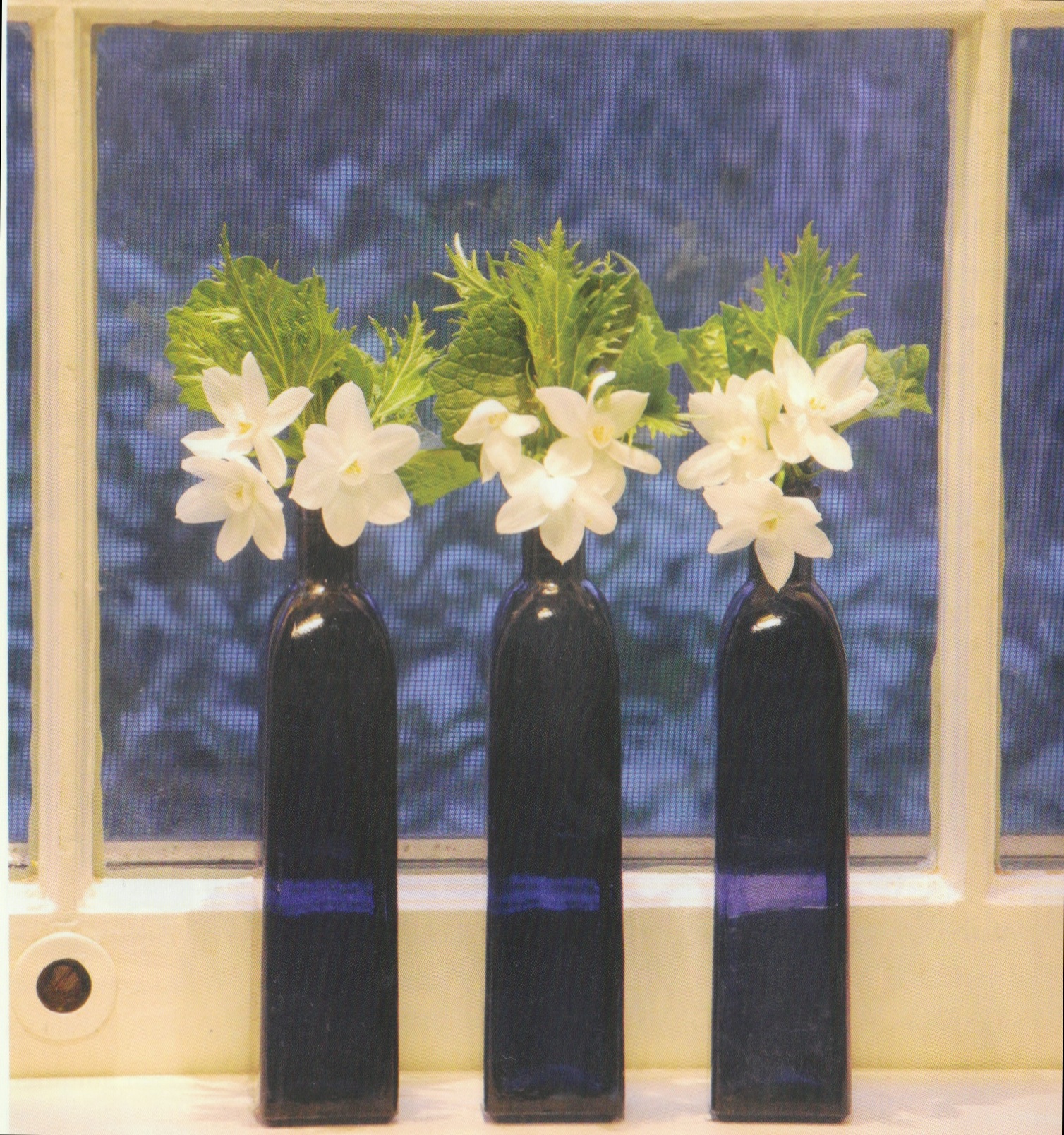
April’s Lenten rose blossoms on the left, set against Japanese kerria blooming outdoors; daffodils and violas on the right. Windowsill Art features nature on the window ledge for every month and season. By Nancy Ross Hugo.
Windowsill Art has inspired me to try some arrangements myself. I’ve noticed bits and pieces from nature in our yard I would have overlooked for use in an arrangement. We have a great deal of moss because of shade from our huge hemlock and beech trees, so I hope to use moss in my next arrangement.
I’m expanding my collection of vases and containers, too. At a local dairy, I bought large and small glass bottles of milk and cream; the empty bottles are terrific vases. I recently put aside a small jug that was filled with maple syrup, as well as an empty balsamic vinegar decanter.

 A few years ago I was browsing in a local used book shop when I discovered a volume of essays by Colette, Flowers and Fruit, first printed in the US in 1986.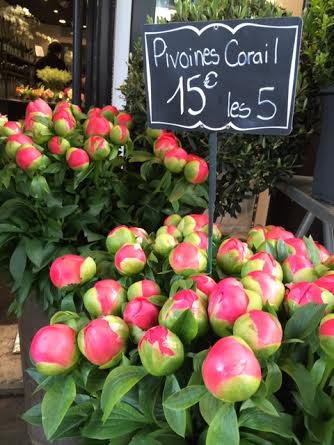














 Books Can Save A Life
