Why We Write About Ourselves (Excavating a Life)

Twenty Memoirists on Why They Expose Themselves (and Others) in the Name of Literature

Why We Write About Ourselves book coverA few days after I wrote my blog post Why I Write Memoir (one of my most shared and commented on posts ever – many thanks to those of you who did so), I was intrigued to see at our local Barnes & Noble Why We Write About Ourselves: Twenty Memoirists on Why They Expose Themselves (and Others) in the Name of Literature, edited by Meredith Maran, who is herself a memoirist.

Just published this year, I hadn’t known this was coming. Here’s Meredith’s dedication: “For those who read memoirs and those who write memoirs, and for those who wish we wouldn’t. We’re all just looking for the truth, aren’t we.”

Meredith writes that emotions ran high when she asked the authors, some of our finest memoirists, to share honestly what it was like for them to see a memoir through to publication.

Each memoirist gets his/her own chapter that concludes with a short “Wisdom for Memoir Writers” section.

You’ll find, of course, these writers have strong opinions and distinctive voices, with widely varying opinions about self-exposure, writing about others, truth and accuracy, and other memoir writing land mines.

As I try my hand at memoir writing, I appreciated the moral support, guidance, and encouragement I found here. If you’re writing one I think you will, too. Whatever challenges and blocks you’ve encountered, you can be sure these writers have faced down the same thing.

And if you love to read memoirs, you’ll likely find a few titles and authors you’ll want to check out. No doubt, you’ll be more aware of the behind-the-scenes decisions the memoirist had to make about how to tell her story, which will make your reading experience richer.

Here are some of my favorite memoirist comments:

The Great Santini book coverPat Conroy (The Great Santini): “Some of us are the designated rememberers. That’s why memoir interests us–because we’re the ones who pass on the stories.”

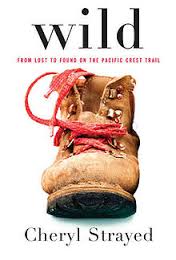
Cheryl Strayed (Wild): “I’m always asking myself if material I have from my own life would be best used in a novel or a memoir or a short story or an essay. I was moved to write Wild as a memoir because I thought that was the best way to tell that particular story.”

Jesmyn Ward (Men We Reaped): “The further I got into the book, the worse it got. Recounting the events when my brother died was so difficult….especially the very big edit I did with the direction of my editor, Kathy Belden, was one of the hardest things I’ve ever done in relation to writing. I did four drafts, and she was asking me at every point to offer some judgment, some assessment of these events…..I recounted a story about a cellar in the woods. Kathy had a page of notes on the section. She kept telling me to dig deeper, to look at myself in the past, to figure out why that cellar meant something to me…..I finally realized…All the feelings of self-loathing and worthlessness I had at that age were embodied by the cellar. It symbolized all the dark things that happened to me, things I thought I deserved because of the way I thought of myself at that time: as a young black woman in the South.” (Note: Jesmyn won the National Book Award for her novel, Salvage the Bones.)
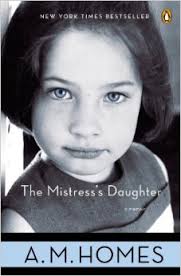
The Mistress's DaughterA.M. Homes (The Mistress’s Daughter): “There were many points at which I thought, I don’t really want to be doing this. I want to stop. What propelled me to keep going was that I felt I could bring to the memoir my experience and training as a writer–finding language for primitive emotional experiences. One of the things that worked about the book was that it gave voice to people who hadn’t found language for the adoption experience. It allowed them to explore their own experience in a different way, and/or to have their feelings about it articulated and confirmed.”   

(Note: I especially liked Homes’ memoir.)

Dani Shapiro (Three memoirs: Slow Motion, Devotion, and Still Writing) “After I gave my mother the galleys, her therapist called and asked me to meet with her. What can I say? We were all New York Jews. I gave the therapist a set of galleys so she could read it before my mother did. After she read it, she said she didn’t think there was anything that would upset my mother, that it was very fair to her. I had two thoughts: First, that this therapist didn’t know my mother at all, and second, that my mother had been wasting her money for years…

…when people in her life heard that her daughter had written a memoir, they all read it as a way of trying to understand her: her doorman, her lawyer, her dentist, her neighbors. I couldn’t have imagined such a thing happening. It was like she was in The Truman Show. The whole thing was very sad and painful, but not painful enough for me to wish I hadn’t written the book.”

James McBride (The Color of Water“The narrative of the book was as thin and muscled as my life was at that time. You know, with every story you do, you’re trying to shove a lot of things into the keyhole and drag the reader with you. You have to narrow the focus of the story so it has the push of a creek in a narrow spot.”

“You write a memoir for the same reason you write a song–to help someone feel better. You don’t write it to show how smart you are or how dumb they are. You’re trying to share from a sense of humbleness. It’s almost like you’re asking forgiveness of the reader for being so kind as to allow you to indulge yourself at their expense.”

(Note: James McBride won the National Book Award for his novel, The Good Lord Bird.)

Here’s my 2016 list of memoirs to read – who knows how many I’ll get to:

In Other WordsIn Other Words, Jhumpa Lahiri

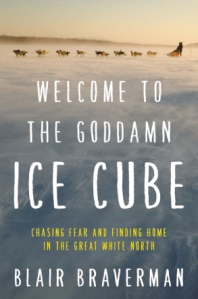
Welcome To the Goddamn Ice Cube, Blair Braverman

A Common Struggle, Patrick J. Kennedy and Stephen Fried

Beautiful Affliction, Lene Fogelberg

The Light of the World, Elizabeth Alexander

Into Great Silence: A Memory of Discovery and Loss Among Vanishing Orcas, Eva Salitis

When Breath Becomes Air, Paul Kalanithi

Just Kids; M Train, Patti Smith

Life From Scratch, Sasha MartinWelcome
Shepherd, Richard Gilbert

A Profession of Hope: Farming on the Edge of the Grizzly Trail, Jenna Butler

I would love to know if you have a favorite memoir, one that really spoke to you and that you’d recommend to others.


Why I Write Memoir (Excavating a Life)

SoldiersA long-time friend and important supporter of my work wisely suggested that I come out of the closet and become less close-mouthed about being a writer.

Hence this new Excavating a Life page on Books Can Save a Life, a kind of journal I’ll update from time to time as I work on a memoir.

My friend’s suggestion opened up a host of personal issues for me too numerous to delve into here: some are addressed in my memoir, and some I’ll write about in future posts. But suffice it to say I hesitated, in part because I believe in NOT saying much about the book or poem or essay one happens to be writing. Many writers would agree with this.

But not talking about a specific project isn’t the same thing as not talking about being a writer. And, let’s face it, I gave up a job I really liked and often miss because I needed more time and energy to see the memoir to completion. Since my days now largely revolve around writing the memoir (or they’re supposed to), it becomes very weird not to talk about this when other people ask me what I do with my time.

So, now I tell people I’m working on a memoir. Which generates all kinds of interesting questions and comments.

Liars' ClubYou may or may not know that memoirs have a REALLY bad reputation in some quarters. Mary Karr, whose memoir The Liars’ Club I view as a work of genius, wryly says memoir resides in the “low-rent” district of books and literature.

Some literary critics don’t even consider memoirs literature. Navel-gazing, they say, and often navel-gazing not done well.

For a time this bothered me. Was I spending my days navel-gazing?

But I’ve heard this criticism of memoir so many times now, that I’ve lost interest in it. For the most part, (not always) it no longer has the power to make me self-conscious when I write.

Without apology, I can say writing a memoir does require a good bit of navel-gazing. There’s no getting around that. The very nature of memoir is internal, psychological. It is first person point of view, however flawed and unreliable that interpretation of reality may be. (This is not an original thought on my part. See for example Brooke Warner’s thoughts at HuffPost Books.)

It is trying to figure out what the hell happened and then trying to make sense of it in a way that pulls the reader in. The writer’s journey becomes the reader’s journey, because the reader has had his own baffling, mind-blowing life. As the writer works things out on the page, the reader is right alongside her trying to come to grips with whatever blindsided her (the reader) on her own life journey.

If the memoir is powerful and offers a bit of wisdom and insight, that’s a win/win for the writer, the reader, and the world.

(This “without apology” business I learned from Eric Maisel and his Deep Writing seminar. He taught us to honor our writing, to make no apologies for it. He taught us to say this to ourselves when we need to: “That thought doesn’t serve me or my writing.” So if I get to thinking I’m navel-gazing, or if I hear someone else speak dismissively of memoir, I say to myself: “That thought doesn’t serve me if I want to complete my memoir and get it out into the world.”)

Getting back to those comments and questions I’ve gotten about memoir: A few people have a hard time with the idea that I reconstruct dialogue. How can I remember someone’s remark from twenty years ago, let alone an entire conversation? Aren’t I really just making things up? Isn’t that suspect?

If I’m making up the dialogue, what else might I be making up or misremembering? How else might I not really be writing the truth?

Considering how problematic memoir is, why not write a novel? Since I can’t guarantee 100 percent accuracy, why not write fiction? That way if I get something wrong it doesn’t matter. Fiction isn’t “the truth.”

Now, this is a loaded, much-debated issue with many facets. This is what I want to focus on here:

The Glass Castle
Another highly regarded memoir

My memoir is about growing up with a mother who had a serious mental illness. The illness was bad enough, but everyone pretended there was nothing wrong. No one spoke about or acknowledged the elephant in the room. Everyone seemed to feel it was perfectly fine to leave us kids alone with our mother, even though they certainly wouldn’t want to spend an afternoon with her. She could be, at best, decidedly unsociable and, at worst, hostile and scary.

(To be clear, my mother was a brave, strong, caring woman, and as good a mother as she could be.)

Not knowing what to do with my feelings of distress, sensing people didn’t want to deal with them and that no one was going to help us, I swallowed them. I pretended I was happy. I became ashamed of the dark feelings I shared with no one.

A parent in the throes of psychosis doesn’t really see her children. Her demons have all her attention, at least for the moment. The children become invisible to her, and the children know this. Between their parent not seeing them, and other people not acknowledging their unfortunate family situation, they begin to feel invisible.

They enter adulthood hollowed out, still feeling invisible. This they bring to their work, their relationships, their life. They pay a heavy price. They don’t really know themselves or why they do some of the things they do. Often, they don’t go after all they can in life. They hold back. They hesitate to take risks. Their lives are the poorer for it, and so is the world, which is robbed of their full talents, wisdom, and unique contributions.

As someone who wanted to write, who wanted to be creative, I found that I’d locked away my most essential, authentic self. I was alienated from my own shadow, my own best “material,” the very bedrock I should have been writing about. So I didn’t write, at least not for a long time.

One way to re-connect with one’s essential self is to write a memoir, as difficult as that process can be. One way to no longer feel invisible is to write a memoir.

I’m writing a memoir because I want to (and feel compelled to) tell my story, my own true story. I want to say what really happened, at least from my perspective. For me, writing fiction just won’t cut it.

Lord knows, the world is full of people far, far more wounded than I. In so many respects, I’ve been exceedingly fortunate. The best memoirists are not out to portray themselves as victims or to gain attention or sympathy. If they’ve made it as far as having a memoir published, they don’t need a reader’s sympathy. They are, among other things, trying to bring valuable stories into the world.

Wild
One of the most influential memoirs in recent years

I believe this is the age of the memoir, and it’s about time, because the world needs memoirs. (Though I acknowledge that reading memoirs isn’t for everyone.)

We’re bringing to light the dark secrets we hid growing up. We’re looking at what it means to be a family, what holds one together and what tears one apart. We’re hoping to change things so people like my mother get the help and support that is their right. We’re questioning long-accepted social values that have brought us to some bad places.

Just think of all the memoir writers – and readers – who no longer feel invisible, whose energy and creativity and wisdom are being liberated, helping all of us achieve a more enlightened world.

Next up: Back to books – The Buried Giant by Kazuo Ishiguro (I’m loving it.) Down the road on Excavating a Life: Memoir and shame.

Please share this post with memoir lovers, memoir writers and memoir skeptics. Do you have a favorite memoir? Do you dislike memoirs? Are you writing one? Tell us about it in the comments.

Excavating a Life

Momphotos-18This is a happy coincidence: I’m starting a new, ongoing theme here at Books Can Save a Life (in addition to my usual book posts) called Excavating a Life on my fourth anniversary, to the day, of blogging.

Excavating a Life will be my informal, occasional, online creative journal: notes and jottings about the writing life as I try to finish this exhilarating and confounding marathon of writing a memoir, which I’m aiming to complete in 2016.

I hope these musings will speak to you who are immersed in a creative endeavor, or inspire you to begin one, and that you’ll share the challenges and high points of your own journey.

For those who follow me primarily for books, I’ll often highlight an author or work that has taught me something about pursuing a writing or creative practice with intention–so books will be a big part of Excavating a Life, too.

For instance, you’ll see a lot of Vincent Van Gogh here. I’m not a painter by any means, never learned to draw (though I’m making attempts to keep a nature journal), but I find Van Gogh’s letters an endless source of inspiration; I have three collections of them.

Here is a nugget of wisdom from Van Gogh. And it doesn’t just apply to painting (or writing) does it?

Vincent
“If a peasant painting smells of bacon, smoke, potato steam–fine–that’s not unhealthy–if a stable smells of manure–very well, that’s what a stable’s for….Painting peasant life is a serious thing…”  Vincent Van Gogh: Ever Yours, The Essential Letters, Yale University Press 2014


I’m thrilled to acknowledge and thank my longtime friend and writing coach extraordinaire, Debra Marrs, who presented this gift of an idea for Excavating a Life when we met up a couple of times in Florida for afternoon tea and some fabulous Cuban food. We were in Florida to spend holiday time with family–a Christmas quite different from our usual upstate New York kind.

Thanks to my sister- and brother-in law, who have the perfect guest quarters, I started off the year with a week of intensive writing. During my mini-retreat, I was able to add 10,000 words to my memoir–not quite my goal of 13,000, but good enough.

Temple
Wat Mongkolrata Temple

My sister-in law, who is from Thailand, took us to the local Buddhist temple, where I meditated and enjoyed the beautiful surroundings. It was a unique blend of spiritualities for me this mid-winter. That, and a change of scene, did wonders for my writing.

Before I close, here is one more tidbit. Have you ever heard of the Helsinki Bus Station Theory of creativity? I hadn’t, but apparently it is well known among many photographers. I found out about it yesterday. I love it and agree with it. Don’t get off that #!?&! bus. And remember, in the first stages of a project, feedback from others or your own emotions “aren’t a reliable indication of how you’re doing.”

Orchids
A different Christmas this year: orchids instead of evergreen. My niece said these look like butterflies, and I agree.


Are you immersed in bringing something to fruition? Or would you like to be? It could be anything: writing a book, building a stone wall, starting a business, learning to knit, climbing all the Adirondack mountain peaks, whatever. What’s your biggest creative challenge at the moment?

Journal
I bought this well worn leather journal cover in Florence years ago.


Closing 2015 with The Story of the Lost Child

Little girl statue edited
Little girl at Casa Guidi


Opening 2016 with a poem

I ended 2015 reading Elena Ferrante’s fourth and final Neapolitan novel, The Story of the Lost Child, and this first week of 2016, a poem of mine, “At Casa Guidi,” was published in Loveliest Magazine.

Italy. Children. Creativity. I hadn’t planned this, but the poem and Ferrante’s novel have these in common. (The similarities end there – Elena Ferrante is a world-renowned author; I’m a novice poet.)

First, the poem. Some years ago I traveled to Florence with my sister-in-law, and we visited Casa Guidi, the home of Elizabeth Barrett Browning and Robert Browning in the Oltrarno quarter, where many artists and writers lived. Later, recalling our visit, I was inspired to write “At Casa Guidi.”

Loveliest Magazine, a new venue “for storytelling and togetherness,” caught my eye when I read the words “slow-lifestyle” and “literary” to describe its cross-genre purpose. That’s me, for sure, so I thought my poetry might be a good fit. Beautifully written and produced independent literary and lifestyle publications such as Loveliest often look for good fiction, poetry, and essays; if you’d like to see your work published consider submitting to these in addition to traditional literary journals.


Little boy statue edited
Little boy at Casa Guidi


If you are ever in Florence, be sure to visit this quieter part of the city, the Oltrarno, which literally means “beyond the Arno River.” In addition to the must-see attractions and many great works of art, Oltrarno streets are lined with stationery stores featuring the things writers love: Italian-made note papers and leather journals, ornate fountain pens, inks in every shade and color. When I was there, I bought a small, leather-bound copy of Sonnets from the Portuguese, and my sister-in-law bought a print of Leonardo Da Vinci’s Last Supper.

Closing 2015 with Elena Ferrante

I’ve written about Elena Ferrante’s Neapolitan novels in a previous post.  The Story of the Lost Child is Ferrante’s fourth and final novel in her Neapolitan series. The books are a probing look at the inner life of a writer; a family saga; a soap opera; a history of Italian feminism, culture and politics; and more.

So much has been said about these singular, internationally bestselling novels and their mysterious author, who publishes under a pseudonym, that I’ll simply add my thoughts here. (That we don’t know the identity of the author adds to the power of her work, in my opinion.)

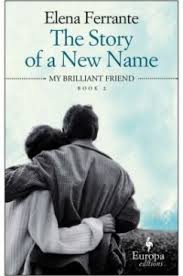
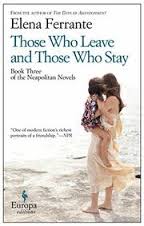
If you look at the book covers you’ll see dreamy, idealized illustrations that are misleading: the story of the lifelong friendship between Lila and Elena, born in Naples just after World War II, can often be raw, brutally honest, and bleak. The book covers belie the content, but perhaps that was intentional, as if to say: think again if you expect a story filled with roses and happy endings….

I wouldn’t say I was always entertained by the books, because they can be relentless in their depiction of Napoli poverty and the battle between the sexes in an era when feminism blossomed. But, as many readers do, I became obsessed with Lila and Elena and had to keep on reading to see what became of them.

  • Ferrante’s work is especially meaningful to me because my father was Sicilian. Now I better understand the values, traditions, and struggles of my Italian ancestors and how these may have had an impact on my own childhood. The cultural history of Italy and its focus on family reminded me of one of my favorite Italian movies, The Best of Youth. Although I have not yet read My Struggle by Karl Ove Knausgard, it sounds as though Ferrante’s penetrating look at the psychology of growing up and growing older may have similarities with Knausgard’s autobiographical series.
  • As a writer, I was especially taken with Elena’s love/jealousy/hatred of her friend, Lila. Though Elena was the outwardly successful one, with several novels published and lauded as a scholar of literature and culture, she always believed Lila was the more talented of the two, the one with wildness, fire, and true originality.  It’s often a struggle when I write to break out of my safe, everyday self and give creativity free reign. The genius of the Neapolitan novels is that Elena and Lila’s story can be read as the author’s own creative struggle with a psyche split in two.


IMG_2446


Elena and her friend, Lila, are strong women, survivors. Here is Elena during the earthquake in Naples, 1980:

“I felt that fear in me could not put down roots, and even the lava, the fiery stream of melting matter settled in my mind in orderly sentences, a pavement of black stones like the streets of Naples, where I was always and no matter what at the center. Everything that struck me–my studies, books, Franco, Pietro, the children, Nino, the earthquake–would pass, and I, whatever I among those I was accumulating, I would remain firm.”  – The Story of the Lost Child by Elena Ferrante


My Brilliant Friend book coverThe Story of a New Name book coverThose Who Leave and Those Who Stay book cover

Suite Française and my father

Bridge over Moselle River, Metz, France
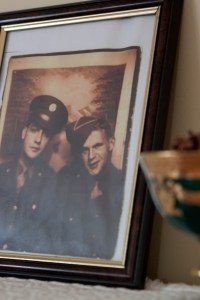
The Moselle River in Metz, France. My father was wounded on November 14, 1944 in the weeks-long Battle of Metz. After the city was liberated, the Allies went on to break through to Germany in the Battle of the Bulge.

Storm in June and Dolce, by Irène Némirovsky

I brought Suite Française by Irène Némirovsky with me when we travelled to France just before V-E Day to visit our son, who had a work coop in Paris, and to explore the region near Metz in northern France, where my father was wounded in World War II.

Suite Française consists of two novels set during the early days of the French Occupation, with exquisitely drawn French and German characters that dramatize the complicated relationship between France and Germany at that time.

Suite Française book coverI don’t know how Némirovsky could write during the terrible days of the French Occupation. An acclaimed novelist from a wealthy Russian family and a member of the highest social circles in France, she was also Jewish. Némirovsky knew at any moment she could be deported to a concentration camp, separated from her husband and her two young daughters.

But write she did, and superbly. She was driven and disciplined, and the writing must have given structure to her days and helped her cope. She finished two of the five novels she’d intended for Suite FrançaiseStorm in June and Dolce–before she was, indeed, arrested and deported in July, 1942. Némirovsky died a month later of typhus in a concentration camp. Her husband, Michel, was deported that fall and died in the gas chambers.

The family’s devoted nanny hid the two young daughters, Élisabeth and Denise, who were being hunted by Vichy officials, and they managed to survive the war. Fifty years later, Denise discovered that the papers left behind in one of her mother’s suitcases were two novels–she had thought they were diaries and had been reluctant to read them. Storm in June and Dolce were finally published in 2004 as Suite Française, which became an international literary sensation.

Included in my edition of Suite Française are the journal Némirovsky kept as she wrote the novels, and the desperate correspondence of Irène and Michel with Némirovksy’s publisher and French officials as they tried to avoid deportation.

On fleeing Paris:

“…groups of people appeared outside their houses–women, old people and children, gesticulating to one another, trying, at first calmly and then with increasing agitation and a mad, dizzy excitement, to get the family and all the baggage into a Renault, a saloon, a sports car…Not a single light shone through the windows. The stars were coming out, springtime stars with a silvery glow. Paris had its sweetest smell, the smell of chestnut trees in bloom and of petrol with a few grains of dust that crack under your teeth like pepper.”

On being a young, married French woman with a German soldier billeted in her home:

“She felt a very feminine pleasure, an almost sensual, sweet sensation at seeing this childish look on a face that was, after all, the face of an implacable enemy, a hardened warrior. For we can’t pretend, she thought, that we aren’t all in his hands. We’re defenseless. If we still have our lives and our possessions, it’s only because of his goodwill. She was almost afraid of the feelings growing within her. It was like stroking a wild animal–an exquisitely intense sensation, a mixture of tenderness and terror.”

On the French villagers and the Germans:

“Little by little, darkness spread across the lawns; they could still make out the gold decorations on the uniforms, the Germans’ blond hair, the musicians’ brass instruments on the terrace…All the light of the day, fleeing the earth, seemed for one brief moment to take refuge in the sky: pink clouds spiraled round the full moon that was as green as pistachio sorbet and as clear as glass; it was reflected in the lake. Exquisite perfumes filled the air: grass, fresh hay, wild strawberries. The music kept playing. Suddenly, the torches were lit…There was the lively, happy sound of champagne corks popping.

“Oh, those bastards! And to think it’s our wine they’re drinking, the Frenchmen said, but without real bitterness, because all happiness is contagious and disarms the spirit of hatred.

And of course, the Germans seemed to like the champagne so much (and had paid so much for it!) that the Frenchmen were vaguely flattered by their good taste.”

From Némirovsky’s journal:

“I must create something great and stop wondering if there is any point. Have no illusions: this is not for now. So mustn’t hold back, must strike with a vengeance wherever I want.”

“Never forget that the war will be over and that the entire historical side will fade away. Try to create as much as possible things, debates…that will interest people in 1952 or 2052.”

“What lives on:

1. Our humble day-to-day lives

2. Art

3. God”

Suite Française has just been made into a movie but, as far as I can tell, a US release date is not yet known. I can’t vouch for its quality. A writer I know who lives in France told me many reviews have not been favorable. Usually, I don’t see movies adapted from books that I like unless I know the production is a good one. Nonetheless, below is the UK trailer. I do like Michelle Williams and Kristen Scott Thomas.

A personal connection

Cemetery with white crosses
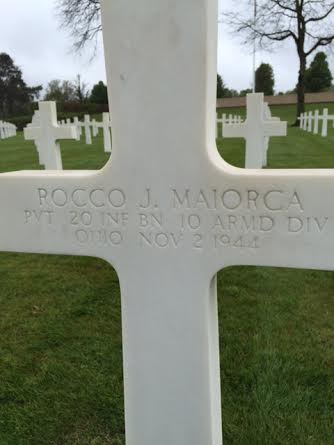
The Lorraine American Cemetery in France, where many soldiers from the Battle of the Bulge and the Battle of Metz are buried.
White cross, gravesite
This soldier was in my father’s battalion. Perhaps they knew each other.
Cathedral and buildings, Metz
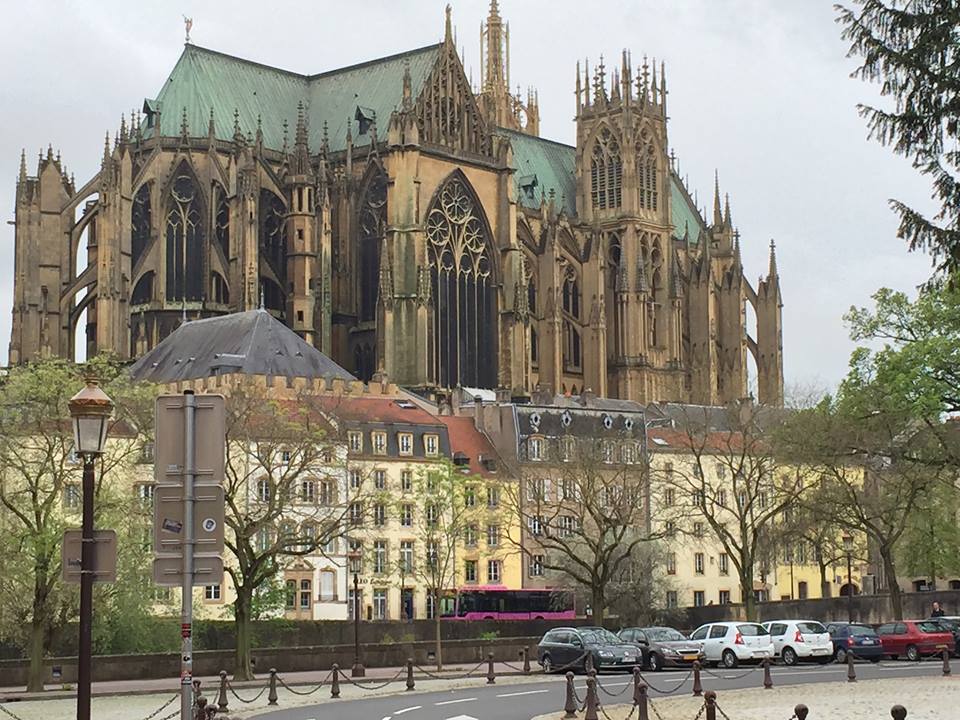
Cathedral of St. Etienne, Metz. My father was wounded before the Allies took Metz, so he never got to see the cathedral or this beautiful city.

I imagine the bells of St. Etienne rang on VE Day:

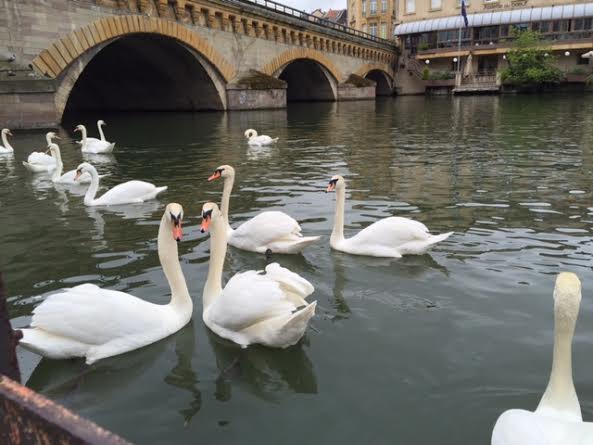
Moselle River, swans

Writing (and reading) can be dangerous

I wanted to share a post I love written by Valerie Davies of New Zealand, an accomplished writer and journalist who left blogging for a while and has now returned, to the great pleasure of her many followers.

David Copperfield book cover

Valerie writes about reading aloud to your children in front of the fire or under the covers on a cold winter night….David Copperfield (Did you read it at a young, impressionable time in your life?)….a Queen who couldn’t stop reading….what Stephen King says about writing truthfully….the dangers of reading and writing….what some brave bloggers are doing….and for good measure, a recipe.

Click on the link below to read Valerie’s post:

The dangers of words.

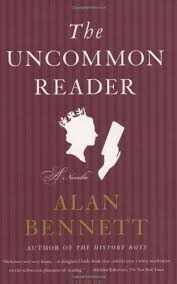
The Uncommon Reader book cover

John Steinbeck and Slow Writing

Clock, family photo

June 17, 1938

“Hope my nerves aren’t weak because they have a long haul ahead….Begin the detailed description of the family I am to live with for four months. Must take time in the description, detail, detail, looks, clothes, gestures. Ma very important. Uncle John important. Pa very. In fact all of them are important. Got to take it slowly. I don’t care how long it is. We have to know these people. Know their looks and nature. Must.”  Working Days: The Journals of The Grapes of Wrath, 1938 – 1941, John Steinbeck

The Art of Slow Writing book coverI’ve just finished reading Louise DeSalvo’s wonderful The Art of Slow Writing.  I like slow cooking, slow cities, slow flowers, and slow living, so of course I had to see what slow writing is all about.

In her book, Louise looks closely at every stage of the writing process and what it takes to achieve our best work.

Slow down, she recommends. Good writing cannot be rushed.

Slow writing is not a new trend: the best writers have always been slow writers.

Zadie Smith, Elizabeth Gilbert, Jo Ann Beard, Virginia Woolf, Michael Chabon, Henry Miller, D.H. Lawrence, Jeffrey Eugenides, Ian McEwan – DeSalvo synthesizes the wisdom of these and many other writers who have spoken frankly about what it takes to go deep into our creative process to achieve stellar writing.

Louise shows us her writing process, too (she has published several memoirs and other books), and shares anecdotes about getting stuck and how she eventually found a path forward.

Working Days book coverFor those of us writing a memoir or other book-length work, De Salvo recommends studying Steinbeck’s two published writing journals: Working Days: The Journals of the Grapes of Wrath and Journal of a Novel: The East of Eden Letters. She encourages us to keep our own writing journals, too, for long projects.

I’ve begun skimming Working Days. Notice in the opening quote above that John Steinbeck reminds himself to take it slowly, and give each character his or her due.

It’s surprising to see how lost Steinbeck sometimes felt and how he used his writing journal to keep himself going. Here are more excerpts:

September 7, 1938

“I’m afraid this book is going to pieces. If it does, I do too. I’ve wanted so badly for it to be good….if only I wouldn’t take this book so seriously. It is just a book after all, and a book is very dead in a very short time. I’ll be dead in a very short time too. [Steinbeck would live another 30 years.] So the hell with it….I must go on. I can’t stop…..How did I ever get started on this writing business anyway? To work.”

January 29, 1941

There are so many things to go into this book. An astonishing number of things. But I’ll get them all in if I just relax and get them in day by day and only worry about the 2000 words of each day’s work. That’s the only way to do it, I have found. But damn it, I have to learn it over again every time.

January 30, 1941

My head is a grey cloud in which colors drift about and images half-form. I’m bludgeoned and feel beaten by many little things. And I can’t figure answers to them. Maybe some people think clearly all the time and make nice decisions. I don’t know. But I feel very lost and lonely. 

The Grapes of Wrath book coverThe Grapes of Wrath won the Pulitzer Prize in 1940, and contributed to Steinbeck’s winning the Nobel Prize in 1962.

It has stirred up a great deal of controversy, too. According to Robert Demott, editor of Working Days, The Grapes of Wrath has been “banned repeatedly by school boards and libraries, and denounced by right-wing ministers, corporate farmers, and politicians as immoral, degrading, and untruthful.”

A Free Roundtable with Louise DeSalvo

If you’re interested in finding out more about stages of the writing process and how to begin and successfully complete a book-length work, consider registering for the National Association of Memoir Writers free Roundtable (teleconference) with Louise DeSalvo on Thursday, March 5 at 7 pm EST, 4 pm PST. I’ll be in the audience.

Winter reading

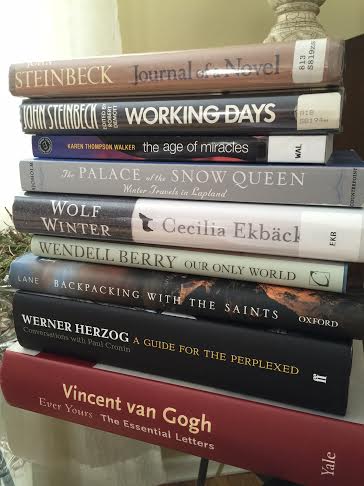
Stack of books


I’ve been out of town. A stack of books from the library and online were waiting when I got home.

The Steinbeck work journals for East of Eden and The Grapes of Wrath are recommended by Louise De Salvo in The Art of Slow Writing as essential if you’re writing a book-length work and want to learn about process.

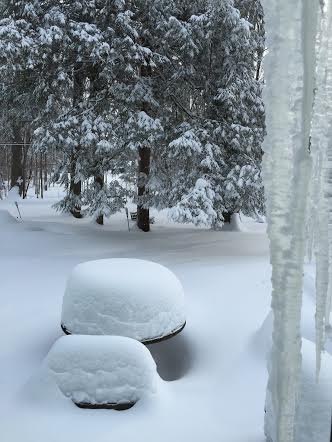
Deep snow in backyardThe Age of Miracles is this year’s selection for “If All of Rochester Read the Same Book.” We love to read through the deep winters in our part of the world, and this novel of catastrophe and survival will be on many a nightstand here. Why not try it along with us – I’ll be writing about this debut novel by Karen Thompson Walker soon.

The Palace of the Snow Queen: Winter Travels in Lapland, a memoir, and Wolf Winter, a novel. I want to know more about my Scandinavian roots; biography, memoir, and fiction are a great way to explore ancestry and heritage.

Wendell Berry’s Our Only World (ten essays), because Berry is one of our greatest prophets, writing about the clash between humanity and nature and how we must do better. He’s been called a modern-day Emerson or Thoreau.

Backpacking with the Saints, a travel narrative and spiritual memoir. Belden C. Lane’s take on Celtic, Catholic, Protestant, Buddhist, Hindu and Sufi Muslim writings as he treks the Ozarks and the American Southwest. The book jacket compares him to other lovers of the backcountry, including John Muir and Cheryl Strayed, whose memoir, Wild, was just released as a movie.

Werner Herzog: A Guide for the Perplexed, is an overdue Christmas gift for my photographer son. This newly published series of interviews with the filmmaker is so popular it’s been out of stock. I hope he finds it worth the wait.

No one writes about creating art with as much love and eloquence as Vincent Van Gogh.

More about these in upcoming posts at Books Can Save a Life.


Digging Deep

Narcissus, bookshelf
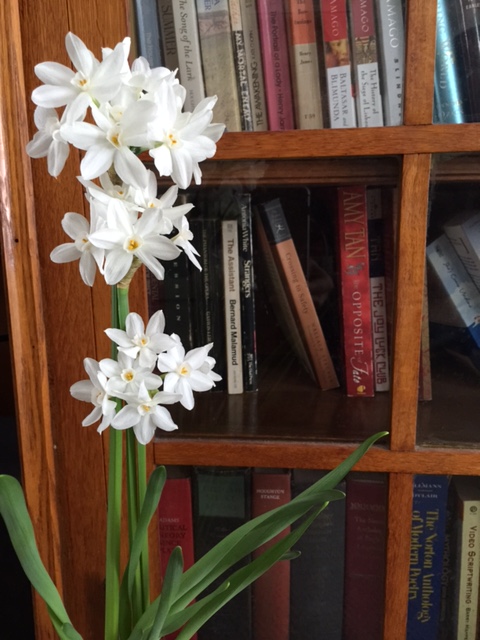
Taking this pic, I re-visited my long-ago college lit books on the bottom shelf: The Complete Pelican Shakespeare, The Norton Anthology of English Literature I and II, Victorian Poetry and Poetics, The Norton Anthology of Modern Poetry, Critical Theory Since Plato (oh, dear.) With many notes in the margins. Odd one out, a scriptwriting handbook. The “soil” of my literary leanings.


“I do believe that there’s something exquisitely powerful about taking something in nature and molding it with your own two hands. From the moment you dig up that first clump, you’re empowered because you immediately enter into collaboration with nature, and who better to be in collaboration with than the greatest force on earth?” Fran Sorin, Digging Deep


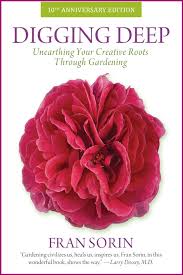
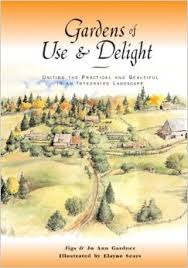
I have a delightful pairing to begin the new year: Digging Deep: Unearthing Your Creative Roots Through Gardening, the 10th anniversary edition by Fran Sorin; and Gardens of Use and Delight: Uniting the Practical and Beautiful in an Integrated Landscape, by Jigs and Jo Ann Gardnerpublished in 2002.

Digging Deep book coverYou don’t have to be a gardener to enjoy Fran’s book, though if you are, all the better. Fran says, “My  mission is to show new and experienced gardeners alike how they can use their gardens – be they rolling, manicured lawns or tiny, blank plots of land – as tools for their creative awakening. I believe from the depths of my heart that gardening can be one of the most profound ways to unearth the creative spirit buried within every one of us. Once you unleash this creative energy, you’ll be amazed at what happens in all areas of your life. You’ll begin to see how living creatively opens up new vistas in your imagination and new windows of opportunity in your life.”

I’m a new gardener, and gardening has become for me a pleasurable, relaxing complement to writing, perfect for getting my body moving outdoors in nature. As I write about growing up in a family flower shop, sowing and tending and reaping resurrect the fragrance of fresh blooms and damp soil, and many other sensory pleasures, from my childhood.

When I ran across Fran’s book online, I was intrigued with her melding of gardening and creativity. The first edition of Digging Deep was immensely popular, hence the 10th anniversary edition in 2014. I’m glad to have discovered it this time around. In addition to being a garden expert and deep ecologist, Fran is an ordained interfaith minister and a soul tending coach. I point this out because the deceptively simple Digging Deep is a profound and spiritual book that is part memoir, as Fran draws upon her own rich life experiences to tell the story of how she arrived at the wisdom she shares here.

I’ve found that to nurture a creative practice (mine is writing), it is good to have other creative outlets just for pleasure, quite different from your primary practice. These “low-stakes” pastimes give your mind and body a break from routine and stimulate your imagination by allowing you to play and experiment. This spirit of play permeates Fran’s book. Her chapters take you sequentially through the cyclical nature of gardening, and creativity: Imagining: The Spark of Creativity. Envisioning: Giving Shape to Your Dreams. Planning: Laying Down the Bones. Planting: Taking Action. Tending: The Act of Nurturing. Enjoying: Reaping What You Have Sown. Completing: Cycling Through the Season.

Here is a favorite passage from a section called “Appreciating”: “Savoring your garden brings more than just sensory pleasure, though – it fills your creative well. In the moments that you experience the reverie of simply being there without working or planning or doing anything other than just drinking it in, you can experience a heightened awareness that elevates your consciousness. Any expression of art, be it a Rembrandt or your own garden, reflects the best of humankind, and tapping into this wonder expands your creative capacity so you may in turn create even more art – more awareness, more inspiration, more aliveness. The cycle feeds itself, but only if you stop to smell those literal and proverbial roses.” (boldface is mine)

Fran includes some excellent gardening guidance and tips, but her book is not a gardening manual. Rather, her aim is impart a deeper wisdom, a kind of spiritual instruction about connection to soil and nature, to foster creative awakening.

Gardens of Use and Delight book coverJigs and Jo Ann Gardner’s Gardens of Use and Delight is about a remarkable couple who for thirty years taught themselves how to live off the land on a farm on remote, hardscrabble Cape Breton Island in Nova Scotia. (They now live on a smaller farm in upstate New York.) I wanted to pair it with Digging Deep because, although Jigs and Jo Ann are immensely practical people, they are deeply connected to their land and passionate about homesteading, which they portray as at once the functional task of reawakening fertility and abundance in the landscape and making it beautiful as well. The subtitle is Uniting the Practical and the Beautiful in an Integrated Landscape, and that is exactly what Jigs and Jo Ann did on their isolated farm, while also raising four children (and a few foster children for good measure.)

Gardens of Use and Delight, like Digging Deep, is part memoir. More of a how-to book than Fran’s, Gardens, for me, stands out because of Jigs and Jo Ann’s instinctively creative approach to seamlessly blending beauty and fertility as they rejuvenate and work their land. I will never rehabilitate an entire farm as they did, but in Jigs and Jo Ann’s book I find an approach to making my much smaller landscape both productive and beautiful. Jigs and Jo Ann remind me of Helen and Scott Nearing and their classic and influential The Good Life, although Helen and Scott were not concerned with aesthetics as are Jigs and Jo Ann. The Gardners view their land as an artist does a blank canvas, to be molded and planted with flowers, herbs, vegetables, fruits, shrubs, and trees.

You’ll find some recipes and homemade craft instructions, too, such as pressed flower cards, candied petals, herb salt, rose petal jelly, and skin freshener. Elayne Sears’ watercolor illustrations of the landscape, fruits, vegetables, flowers, and Jo Ann’s rustic farm kitchen and pantry are delightful – I’d love to have prints of them to hang in my kitchen.

I have read other titles by Jo Ann Gardner and hope to collect everything written by this talented, tenacious homesteading and gardening virtuoso.

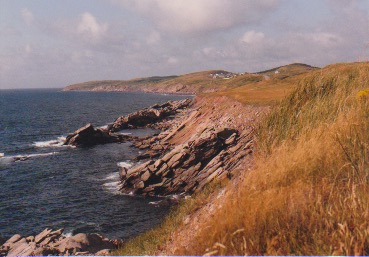
A very vintage photo of Cape Breton Island, from my honeymoon. Although I don't believe they were on the coast, Jigs and Jo Ann Snyder must have encountered land much like this when began to reclaim an old Nova Scotia farm.
A very vintage photo of Cape Breton Island, from my honeymoon. Although I don’t believe they were on the coast, Jigs and Jo Ann Gardner must have encountered land much like this when they began to reclaim an old Nova Scotia farm.


Slow Flowers Challenge

I wanted to also tell you about Debra Prinzing’s Slow Flower Challenge for 2015, which you can join at any time. Every day, once a week, once a month, or once a season, you can design and make a floral arrangement using slow flowers. If you don’t know what slow flowers are, click on the above link, or read my post about Debra’s book, Slow Flowers. (St. Lynn’s Press)

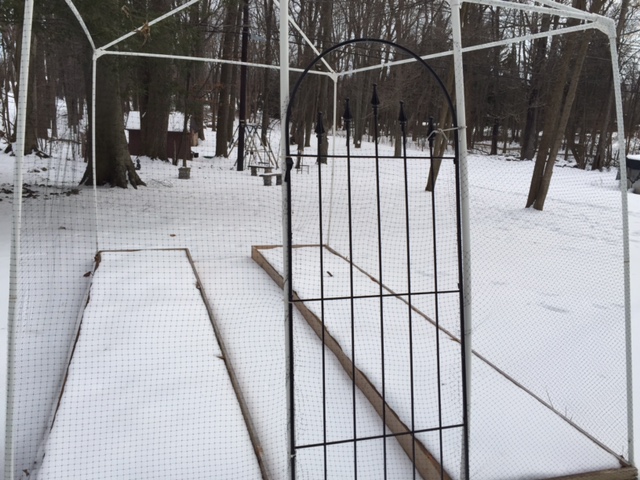
Raised beds covered with snow
Our blank slate


 Next up

More WW II fiction, a travel-to-the-ends-of-the-earth memoir, a wolf, Scandinavian literature, Little Golden Books, a favorite author visits Rome. Etc. Etc.


The story of a happy marriage & the right to read

When Ann Patchett came home from school one day, there was a boy she’d never met in the kitchen. Turns out, he was one of four new step siblings. Her mother and his father had married, but they hadn’t yet told the six children who were now part of a blended family.

This Is the Story of a Happy Marriage book coverThis might be why Patchett likes to write novels about people from very different walks of life thrown together in extreme circumstances – such as in Bel Canto, my favorite novel of hers about terrorists, an opera singer, and political and business leaders in a hostage situation. (See also my post about State of Wonder.)

It may also have had something to do with why, for a long while, she’d been committed to staying single. Ann’s mother had twice divorced and her grandmother had divorced. In fact, divorce was scattered liberally throughout her family tree.

This is the Story of a Happy Marriage is a collection of Ann Patchett’s personal essays, one of them about her early divorce and her relationship with the man who eventually became her second husband. It’s an honest, personally revealing, and entrancing story about love and commitment.

Marriage is a metaphor for the many happy relationships in Ann’s life, including relationships with her writing, her bookstore, her grandmother, the strong and nurturing Catholic nuns where she went to school, and her dog. There are essays about all of this and more in Ann’s new book, a fine collection of meditations about life, love, and fulfillment.

I especially enjoyed Ann’s essay about writing, “The Getaway Car,” and those of you who write will like it as well. She is not of the school that everyone has one great novel in them, as a woman Ann met at a family reunion insisted. Ann usually has enough good sense to avoid such conversations, but this time she gave in.

“Does everyone have one great floral arrangement in them? One five-minute mile? One algebraic proof?”

“No,” the woman said. But everyone has one great novel in them “because we each have the story of our life to tell.”

Ann does not agree and writes about how difficult it is to convey what we know on paper. This is what she has to say about writing a novel:

“I make up a novel in my head…I don’t take notes or make outlines; I’m figuring things out, and all the while the book makes a breeze around my head like an oversized butterfly whose wings were cut from the rose windows in Notre Dame. This book I have not yet written one word of is a thing of indescribable beauty, unpredictable in its patterns, piercing in its color, so wild and loyal in its nature that my love for this book and my faith in it as I track its lazy flight, is the single perfect joy in my life…..

…I reach up and pluck the butterfly from the air. I take it from the region of my head and I press it down against my desk, and there, with my own hand, I kill it. It’s not that I want to kill it, but it’s the only way I can get something that is so three-dimensional onto the flat page….Imagine running over a butterfly with an SUV…What I’m left with is a dry husk of my friend, a broken body chipped, dismantled, and poorly reassembled. Dead. That’s my book……The journey from the head to the hand is perilous and lined with bodies.”

It stops most would-be writers cold.

Ann writes about the panic that set in when she sat down to write her first novel at a fine arts retreat, a story she’d been constructing in her imagination for a long while:

“Now that I was sitting still in front of a blank screen, I was appalled by all the things I hadn’t considered….until that minute I had never considered the actual narrative structure….what in the hell had I been doing all that time?”

She was tempted to throw out her idea altogether and start fresh, but an experienced writer told her to stay with her story.

“It was life-saving counsel,” Ann writes. “Without it, I could have spent the next seven months writing the first chapters of eighteen different novels, all of which I would have hated as much as I hated this one.”

There is another essay in the collection, “The Love Between the Two Women Is Not Normal,” that especially stands out for me. Ann had been best friends with Lucy Grealy, the acclaimed author of a memoir, “Autobiography of a Face.”  Lucy had cancer of the jaw at age nine and 38 reconstructive surgeries. She died of a drug overdose, and Ann wrote a book about their friendship, Truth and Beauty. The book had been assigned to the incoming freshman class at Clemson University in 2006, and Ann was invited to speak there at the beginning of the school year.

All was well until a Clemson alum, whose nieces and a nephew were students there, objected to the book assignment. “The book contains a very extensive list of over-the-top sexual and antireligious references…The explicit message that this sends to the students is that they are encouraged to find themselves sexually.”

A hue and cry ensued. Many angry parents wanted another book chosen and Ann’s invitation rescinded, while most of the students and Clemson’s administration supported Ann and the book selection. The Clemson alum held a press conference the day before Ann appeared, distributed copies of bad reviews of her book posted by Amazon readers, and took out a full-page ad in the local paper. The ad, among other things, accused Clemson of the sexual harassment of freshmen students and suggested the assigned reading of Truth and Beauty was insensitive because a Clemson student had recently been raped and murdered.

When the day came for an extremely nervous and alarmed Ann to speak in Clemson’s coliseum, there were protests, and the administration had arranged for her to have a bodyguard. 

Ann has included her Clemson speech, “The Right to Read,” in this collection of essays. Among other things, she said most of the freshmen students were old enough to vote and go to war and could make their own decisions about what to read and how they’d be influenced by it. She pointed out that if they had to be protected from Truth and Beauty, they’d most certainly need to be protected from Lolita and The Great Gatsby and Anna Karenina.

Weeks after her speech, it occurred to Ann many of the students in the audience had likely never read Tolstoy or F. Scott Fitzgerald or Nabokov, and so they probably hadn’t understood what she was talking about.

As for me, I’m disturbed every time I hear about a protest of this nature over a book. If Patchett’s Truth and Beauty can cause such a furor, we live in a frightening world indeed.