If you want to be lifted up, read Kent Haruf

Benediction book coverShe looked at the two old brothers….

I want you to think about taking this girl in.

They stared at her.

You’re fooling, Harold said.

No, Maggie said. I am not.

They were dumbfounded. They looked at her, regarding her as if she might be dangerous. Then they peered into the palms of their thick callused hands spread out before them on the kitchen table and lastly they looked out the window toward the leafless and stunted elm trees.    

                                                                             Plainsong, by Kent Haruf

Yesterday I finished reading Kent Haruf’s new novel, Benediction, about an elderly hardware store owner, Dad Lewis, dying of cancer.  I realized it was three years to the day since my father passed away from cancer. More than a coincidence, probably. I imagine something unconscious was at play. But I would have read this book eventually, no matter what, because I read everything Haruf writes.

My devotion to Haruf began when I read Plainsong, which he published in 1999. One of Haruf’s critics describes Haruf’s work as “exalted.” If you want to be exalted, get a copy of  Plainsong or Eventide or Benediction and drop into the lives of the folks who live on the dry plains in the fictional town of Holt, Colorado.

Haruf writes about goodhearted people way off the beaten path trying to do the right thing. His prose is entrancing, deceptively simple, powerful. You may begin to be lulled by the humanity Haruf captures on the page, but before you get to feeling incredulous he hits you with some dark reality: bigotry, abuse, cruelty, abandonment, addiction.

I was surprised Haruf said in an interview one of the books that most influenced him as a writer was Ernest Hemingway’s The Sun Also Rises, a novel that underwhelmed me both times I read it. But in Haruf’s plain, spare prose I can see Hemingway’s legacy. And it reinforces my interest in how what we read speaks to us, personally. That’s going to be different for everyone.

Benediction is a beautiful book, but an especially quiet and somber one. If you want to sample a novel by Haruf, I suggest you begin with Plainsong, which has more action and a greater diversity of intriguing characters, followed by Eventide and then Benediction. All are set in Holt, in eastern Colorado. Plainsong and Eventide are companion novels that feature the same cast, while Benediction introduces a new set of characters. I suspect Haruf may continue their stories in a future novel.

In Benediction, an eighty-year-old woman, two sixty-year-old women, and an eight-year-old girl skinny-dip on a hot afternoon in a muddy water trough for cattle. Cool and refreshed, they lie down under a tree in their thin, sleeveless cotton dresses to take a nap. Somehow, Haruf makes this scene riveting. It is emblematic of his writing.

Two of my favorite characters in all of fiction are Plainsong’s rough-hewn cattle ranchers Harold and Raymond McPheron, who take in Victoria Roubideaux, a homeless, pregnant teenager. They are so sweet, and clueless to the point of hilarity. One of the funniest scenes I’ve ever read is their visit to the ob-gyn with Victoria.

As much as I enjoyed Benediction, the McPheron brothers from Plainsong and Eventide will always be in my heart.

Plainsong book coverRaymond, you’re my brother. But you’re getting flat unruly and difficult to abide. And I’ll say one thing more.

What?

This ain’t going to be no goddam Sunday school picnic.

No, it ain’t, Raymond said. But I don’t recall you ever attending Sunday school either.

Quotes from Plainsong, Kent Haruf. Vintage Books, New York: 1999.

BY KENT HARUF:

Plainsong

Eventide

Benediction

The Tie That Binds

Where You Once Belonged

Hemingway on life and death, love and war

I believe that basically you write for two people: yourself to try to make it absolutely perfect; or if not that then wonderful. Then you write for who you love whether she can read or write or not and whether she is alive or dead. Ernest Hemingway on Writing.

Ernest Hemingway on Writing book coverWhen I visit a new place, I like to read the literature associated with that place or the literature created there. So when I went to Key West last month and the home of Ernest Hemingway, I reread The Sun Also Rises, which Hemingway wrote there, followed by A Farewell to Arms. Last night I finished For Whom the Bell Tolls for the first time and went to bed feeling rather devastated.

In my last post I was dismissive of The Sun Also Rises. When I read it the first time, in high school, I didn’t understand the novel. Decades later, I again found the characters tedious, which was Hemingway’s intention, but I at least better understood the context of those alienated, war-devastated years. His writing style, a breakthrough in Hemingway’s time, was for me so stilted and self-conscious it sometimes pulled me completely out of the story, and I especially disliked his sole female character, Lady Brett Ashley.

My post about Hemingway generated a handful of interesting and insightful comments, all by women and mostly about Hemingway’s ego and sexism and macho persona. I wish my blog attracted more male readers, but I have noticed some gender segregation in the book blog world, and I can understand that. I tend to gravitate toward female authors, and when I find I’m reading only books written by women, I’ll switch to a male author. Reading Junot Diaz, for example, was a stretch for me, but I’m glad I did. I had to talk myself into reading Hemingway again, too, but I’m glad I did that as well.

I felt uncomfortable after I was dismissive of The Sun Also Rises, and I thought about that as I read Hemingway’s other novels. Because when all is said and done, I believe Hemingway is a master and, despite my personal reactions to it, I believe The Sun Also Rises is a great book. Visiting Hemingway’s home in Key West and looking at the many candid photos on every wall in every room, I sensed something of his spirit lingering. Reading The Paris Wife and Ernest Hemingway on Writing, I saw not just Hemingway the god-like, iconic writer but Hemingway the vulnerable artist.

I don’t do the close reading of a literary scholar or a book critic, though I admire those that do. On this blog, I don’t write book reviews, and I’ve been frustrated occasionally when I hear people say I do, although I understand why they wouldn’t make these distinctions. If you were to ask me to write a book synopsis or a book review, I’d have no enthusiasm for it. (And I’m a librarian.) Here, I want to share and talk about our own, highly individual reading journeys and our personal reactions to the books we read. I think if you’re an avid reader, books help to make you the person you are, and that’s going to make a difference in what you do and who you are out in the world.

(If you’re not an avid reader, maybe you love nature and have trekked across your country, or you know almost everything there is to know about the earliest jazz recordings, or you can recite from memory every baseball statistic ever recorded, or you’re devoted to helping the poor in Third World countries. You may be on some kind of personal journey of discovery that says something important about who you are and your place in the world. That journey of discovery is what I’m interested in.)

For Whom the Bell Tolls book coverHere are some of my personal reactions to Hemingway’s novels:

  • I disliked Lady Brett Ashley because she was self-centered and slept with every man who came her way (except for Jake Barnes). Then I realized the men in The Sun Also Rises were the same, yet I wasn’t as critical of them. I held the female to a different standard.
  • When I was young I accepted and enjoyed Hemingway’s fictional romances without question. I didn’t find them sexist or offensive until literary opinion told me I should, even though I came of age just after the feminist heyday. Now, while I don’t especially enjoy Hemingway’s portrayal of women, I have to say many women acted that way. I think Hemingway understood how we idealize the other in romantic love, and how we look to each other for rescue or at least a safe haven.
  • I have trouble understanding the American Robert Jordan’s  idealism and motivation for volunteering to fight in the Spanish Civil War in For Whom the Bell Tolls. But when I think about the Americans in Iraq and Afghanistan, I’m bothered that many of us are so emotionally removed from the reality of these wars and the sacrifices a small number of Americans are making. Since I’m not especially attracted to war novels, at first I didn’t take to For Whom the Bell Tolls. I didn’t want to follow Robert Jordan and the others on their mission to blow up the bridge. Of course, I became emotionally entangled in Robert’s relationship with Maria and the others. Hemingway fought and was nearly killed in World War I and reported from the front lines during the Spanish Civil War and World War II, so he understood war and he knew how to write about it. The last one hundred pages of For Whom the Bell Tolls contain some of the most beautiful, poignant and universally truthful passages I’ve ever read. With the final sentence, I do believe Hemingway achieved perfection.

BY ERNEST HEMINGWAY

A Moveable Feast

For Whom the Bell Tolls

The Old Man and the Sea

A Farewell to Arms

The Sun Also Rises

A Clean Well-Lighted Place

In Our Time

The Garden of Eden

To Have and Have Not

Men Without Women

Islands in the Stream

Death in the Afternoon

Southernmost Beach Cafe interior
This Key West cafe is the southernmost restaurant in the US, 90 miles from Cuba. I’m sure Hemingway must have enjoyed a brandy (or two or three) here.

Hemingway and The Paris Wife

I wished I had died before I ever loved anyone but her.    Ernest Hemingway,  A Moveable Feast

The Paris Wife book coverI was prepared not to like The Paris Wife, Paula McLain’s novel about Ernest Hemingway’s first of four marriages, to Hadley Richardson, written from Hadley’s point of view. Generally, I don’t like novelized versions of real people’s lives. The author has to work doubly hard for me to wholeheartedly enter her fictional world, because I can’t forget we’re seeing actual events filtered through her idiosyncratic speculations, which could be way off base.

I read The Paris Wife back-to-back with Hemingway’s The Sun Also Rises (which I read years ago) because I thought it would be interesting to see portrayed, in The Paris Wife, the “real” people who were models for Hemingway’s characters in The Sun Also Rises. (I hope you can follow this.) These two books I read while spending a few days in Key West with my family and visiting Hemingway’s former home, now a museum.

I found The Sun Also Rises just as tedious as when I read it as a baffled teenager. Aimless, self-absorbed people endlessly drinking in European bars and cafes, and then they go to a bullfight. I half-wished Hemingway would kill off the insufferable former war-time nurse, Lady Brett Ashley, but I knew better. I had to laugh when a note left by a previous reader fluttered out from between the pages of my library book: “Brett is a low-class whore.”

But this time, I tried to understand who these people were: the post World War I Lost Generation, stunned and alienated after the bloodiest war in history, surrounded by stratospheric, dissipated wealth alongside abject poverty. Despite my initial reservations, The Paris Wife was a good read and helped me see Hemingway and his first novel in a new light. Hemingway (and Jake Barnes, Hemingway’s alter ego in The Sun Also Rises) almost certainly had what we’d call today post-traumatic stress disorder. I hadn’t realized Hemingway was only 18 (about my son’s age) when he served as an ambulance driver in the war, saw horrific battles, and was seriously wounded. He then fell in love with a nurse a few years older than he (Catherine was her incarnation in A Farewell to Arms) who called off their marriage after she fell in love with an Italian officer.

This was Hemingway’s state of mind at 21 when he met Hadley, who was 28. I don’t mean to suggest his early adult experiences explain everything about Hemingway, because personalities and destinies are more complex than that. But Paula McLain is an excellent storyteller, and I trust her when she portrays a couple who were so right for each other at the time in their lives when they met, and then so wrong for each other a few years later, when both needed to move on.

(By the way, Paula lives in Cleveland, my hometown, and she wrote much of this book in a Starbucks there. Paula has also written a memoir about growing up in foster homes, Like Family: Growing Up in Other People’s Houses, which I look forward to reading.)

Here are some of my thoughts and impressions:

  • The Paris Wife didn’t fare well with many critics, but it is a bestseller. I think the more of a literary scholar and purist you are, the pickier you’ll be about how accurately McLain portrays motivations and personalities, how authentically and gracefully she finesses the dialog, and other matters. What I loved about her book was how richly she recreated the unconventional life led by an artistic, adventure-loving couple living in strange, unsettling times.
  • I appreciate the dynamic of the Hemingway-Hadley relationship McLain depicts. How the strong, self-effacing (and some would say stodgy and boring) Hadley appreciated, nurtured, and was subservient to the great artistic personality. But it wasn’t all one way. As Hadley wrote much later, Hemingway entered her life like an explosion and liberated her from what could have been a circumscribed, unrealized life. For a time, there was deep, genuine love between the two, and even though the marriage broke up, the trajectory of Hadley’s life was forever altered.
  • Marriages that end the way the first Hemingway marriage did are never pretty, but I think the ending of this marriage was especially nasty and torturous for Hadley. Pauline Pfeiffer, Vogue writer and wife #2, literally made my skin crawl. At the end of his life, Hemingway wrote an apology to Hadley, which he included in A Moveable Feast, a memoir in which he lovingly recalls his early years with Hadley. There has been more than one edition of A Moveable Feast, and I find it amusing that the edition published by one of the descendents of the Hemingway-Pfeiffer children removed the apology.
The Hemingway home, Key West Ernest Hemingway’s Key West home

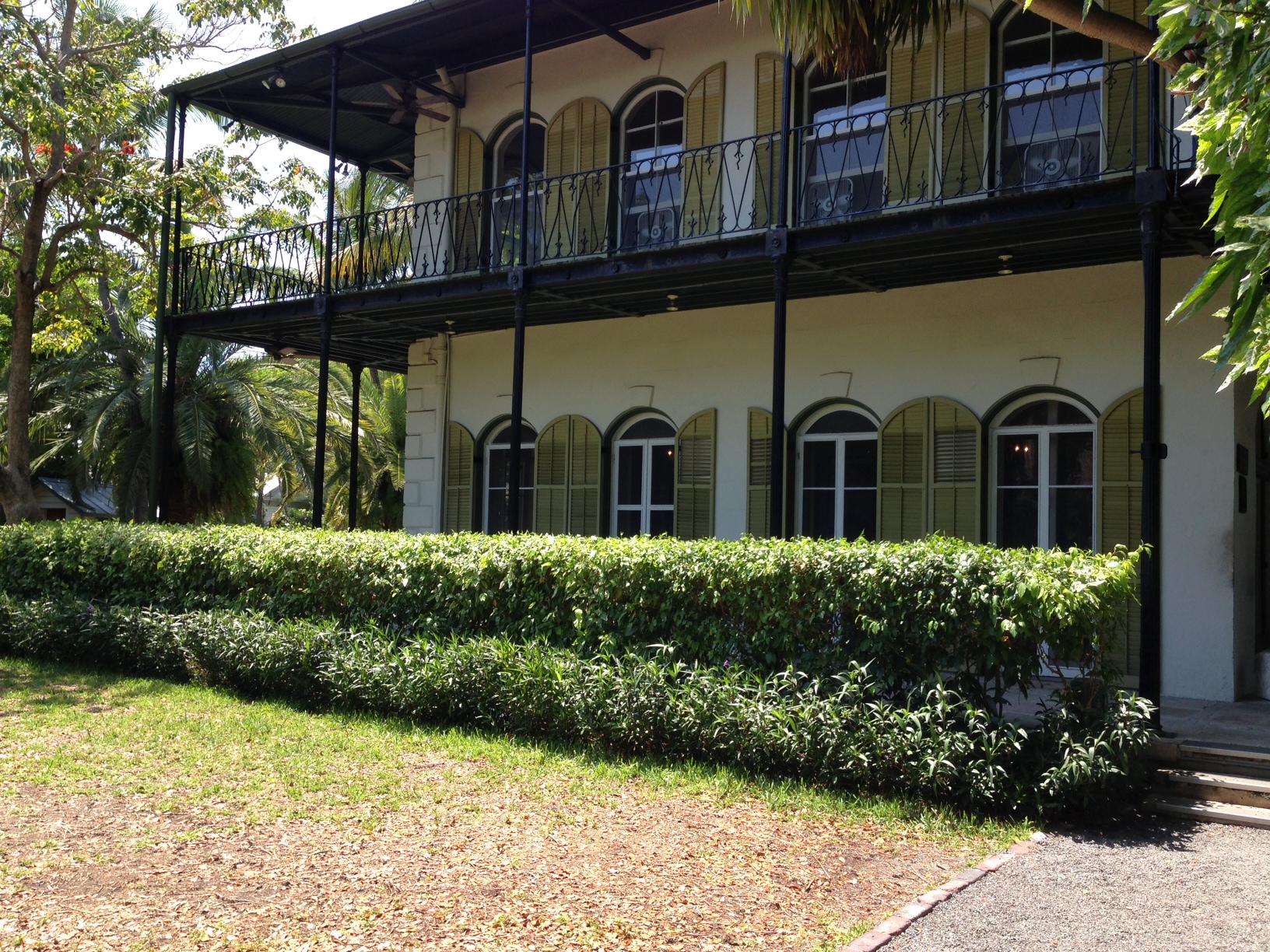
After Hemingway married Pauline, they moved to Key West. Visiting their former Spanish colonial home, I loved the wraparound balcony on the second floor and the tall, shuttered windows that let in the sea breezes, but there was an air of sadness and neglect about the place.

After his marriage to Pauline ended, Hemingway moved to Cuba, where he married journalist Martha Gellhorn. That marriage ended, too, and he spent his last years married to Mary Welsh in Idaho.

When my husband and son went snorkeling off the coast of Key West, their guide pointed out four posts several miles out. At one time, Hemingway’s “stilt” house, or fishing shack, sat atop these posts, where he’d spend days in solitude, writing. The writing life, Hemingway once wrote, is a lonely life.

Butterfly on blossom

Key West sunset Key West sunset

If you’ve read The Paris Wife and want to comment, or if you have thoughts about Ernest Hemingway, please add them to the comments below.

Tasting Home – Judith Newton on writing memoir

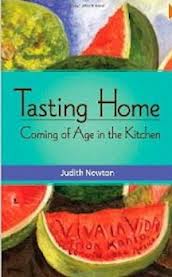
Tasting Home book coverI’ve been reading Judith Newton’s  Tasting Home: Coming of Age in the Kitchen.

I was curious about how Judith so successfully conquered new territory by authoring a memoir, having spent her career writing for academic audiences. My background as a marketing communications writer has been both a help and a hindrance when it comes to memoir and other personally expressive writing.

If you are a writer who wants to try new forms or reach new audiences, you may find Judith’s insights helpful.  And if you simply want to read more fine food memoir collections, Judith has some excellent suggestions.

In your acknowledgements you mention having to transition from writing academic texts to writing memoir. Can you comment about some of these challenges and how you overcame them?

When you write as an academic,  you are writing defensively.  It’s customary to begin a book by outlining  the arguments of other works on the subject. You then situate your own argument in relation to those of other works and point out how your own says something better or new. You’re always aware of how others might criticize your argument and you’re careful to defend yourself against that.  It’s a competitive culture and some people are downright mean.

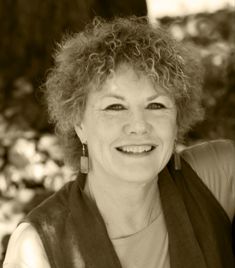
Judith NewtonWriting a memoir requires a different emotional orientation.  The idea is to open yourself up, to share private stories with your public, and  to engage with readers on an emotional level. I had to imagine a non-academic audience to write like that and, even then, writing the memoir sometimes felt like jumping into free fall off a cliff.   Taking classes was helpful with this.  I often imagined my audience as the other people in the class.

I did read other memoir writers. M.F.K. Fisher’s The Gastronomical Me was a big influence because it conveyed a great deal about the emotional hungers that are fed in cooking for, and dining with, others.  Laura Esquivel’s novel Like Water for Chocolate implicitly connects food to politics, which is something  I wanted to do. In Like Water cooking for, and eating with, others is what sustains women and men, physically, emotionally, spiritually, and politically as well.  Mollie Wizenberg’s A Homemade Life, which, among other food memoirs, combines personal vignettes with recipes, supplied a model for the form.Like Water for Chocolate

I had to learn how to write differently as well.  Although I made a habit of including personal stories in my academic writing,  those stories were an addition to, or comment on, the argument I was advancing.  I had to learn how to sustain a personal story for the length of a book, how to give it a narrative arc, how to write scenes, develop characters, write dialogue, use imagery and all the rest.  I took classes to do this (at U.C. Extension and Osher Lifelong Learning), and I really believe in classes for the instruction and for the community they give you.  I needed that community support.  (I also loved being a student rather than the teacher!)  I made a conscious decision to go into my classes feeling open to criticism because insightful criticism is a writer’s gold.  I wanted to experience, in a full way, whatever the class brought.

Your Life as StoryI can remember feeling that Annie Lamott’s Bird by Bird was incredibly liberating and comforting.  Two other really helpful books were Tristine Rainer’s Your Life as Story and Janet Burroway’s Imaginative Writing.  I especially like Rainer’s book and think that people who write screenplays have a lot to teach us.

If there are food memoirs and cookbooks you’ve especially enjoyed, let us know in the comments below.

Judith Newton is Professor Emerita in Women and Gender Studies at U.C. Davis. While at U.C. Davis she directed the Women and Gender Studies program for eight years and the Consortium for Women and Research for four.

Tasting Home is the recipient of a 2013 Independent Publisher Book Award.

In addition to Tasting Home, Judith is the author and co-editor of five works of nonfiction on nineteenth-century British women writers, feminist criticism, women’s history, and men’s movements. Four of these were reprinted by Routledge and the University of Michigan Press in fall 2012. Currently she writes for The Huffington Post.

Tasting Home – Judith Newton on cooking, coming of age, feminism

“…cookbooks were more to me than a reflection of my past. They’d been agents of my recovery – from childhood misery, from profound self-loss, from my fear, even as an adult, that the world would never seem like home. I’d cooked from them to save my life, and I’d succeeded.”

In her newly published memoir, writer and historian Judith Newton looks at her own life and the culture of her time, from the 1940s to the 2000s. Along the way she writes of the cookbooks and cuisine that fed her in body and spirit.

I can’t say enough good things about Tasting Home: Coming of Age in the Kitchen I just loved it. Judith writes of her difficult early childhood in Compton, California, of coming of age at Stanford and Berkeley in the 1960s, and of her beautiful and haunting relationship with her husband, Dick. I found Judith to be especially eloquent in describing her intellectual and spiritual awakening and continual growth.

As a young girl, I watched the 1960s unfold mostly on television and in newspapers and magazines. Reading Judith’s memoir, for me, was like hearing stories from an older sister who actually lived those events.

And the food! Judith includes childhood recipes inherited from her parents and the land they lived on (Death Valley Date Nut Bread, for example) and recipes from influential and groundbreaking cookbooks of the day, such as Mastering the Art of French Cooking by Julia Child, et al., and The New York Times Cookbook by Craig Claiborne. (Moosewood Cookbook is another classic Judith knows well. See a previous post with an excerpt from Tasting Home.) Throughout her memoir, Judith speaks of the joy, fulfillment, and healing power of cooking and sharing meals with loved ones.

Here is part 1 of an interview with Judith. Watch for part 2 in my next post. Thank you for talking with me and sharing your thoughts with us, Judith!

When I read your comment about cookbooks being an agent of your recovery, I realized I view books and music in the same way. I’m sure many of your readers have had a beloved pastime that got them through tough times. Has reader response to Tasting Home borne this out? Did this theme resonate with those who supported you during the writing process?

Tasting Home book coverYes,  it did!  One woman in my writing group found release in jazz and in singing and  dancing. Another reader, Linda Joy Myers, who is herself a memoirist, writes of how she was sustained by the warmth of a music teacher, by the beauty of music, art, and the Midwestern plains. Several of my old colleagues at Davis found refuge in cooking and understood very well how a kitchen table can lay the groundwork for political community.

How did you come to believe the personal affects the political and society?

My years of teaching women’s studies had made me aware that the private and public spheres are dependent on each other and that the personal always informs the political. Traditionally, for example, women have fed, cared for, educated, and humanized members of their household including men, children, and the old.  This frequently invisible and unpaid labor is essential to having a society at all, and especially one that involves people working in cooperation with each other.

In writing a book that celebrates home cooking as a humanizing and healing kind of work, I  think of myself as carrying on a feminist project—that of giving value to a traditionally female,  often unseen, but essential form of labor, one that the political scientist Janet Flammang, in her book A Taste for Civilization, calls a preparation for civil society itself.

Another feminist project has been to show how political movements also depend on a kind of emotion work.  The sociologist Belinda Robnett,  for example, in her book How Long? How Long? African American Women and the Struggle for Civil Rights, writes about how African American women worked behind the scenes during the Civil Rights Movement, meeting ordinary people, listening to their needs, and building face to face relations of friendship and trust. This emotion work was critical to the success of building a grassroots movement, and is critical to the success of present-day coalition as well. By demonstrating how cooking can bring people into connection with each other, not just in a domestic setting but in a political group as well, Tasting Home continues this project of linking the political to the personal and emotional.

Do you feel this healing through cooking helped you make a more meaningful contribution through your work?

Judith NewtonAbsolutely!  I learned from reading James Baldwin in 1963, the year I joined the Civil Rights Movement,  that a committed political life could and should involve “sensuality.”  “To be sensual,” Baldwin wrote, “is to respect and rejoice in the force of life itself, and to be present in all that one does, from the effort of loving to the breaking of bread.”

For me sensuality and joy in life were primarily expressed in food.  Being able to access this joy in a daily way kept me going in every facet of my life and work, making it possible for me to retain the optimism that has informed my politics and my writing.  If I didn’t feel that optimism, I wouldn’t write at all.

Judith Newton is Professor Emerita in Women and Gender Studies at U.C. Davis. While at U.C. Davis she directed the Women and Gender Studies program for eight years and the Consortium for Women and Research for four.

Tasting Home is the recipient of a 2013 Independent Publisher Book Award.

In addition to Tasting Home, she is also the author and co-editor of five works of nonfiction on nineteenth-century British women writers, feminist criticism, women’s history, and men’s movements. Four of these were reprinted by Routledge and the University of Michigan Press in fall 2012. Currently, she writes for The Huffington Post.

The Stories We Tell

Speaking of memoir, this just-released family documentary directed by Sarah Polley looks so tantalizing, and it’s gotten rave reviews. There are a few trailers floating around but I like this one the best:  The Stories We Tell.

Five favorite books and blogs

Many thanks to Claire McAlpine, who tagged me in a Five Favorite Books challenge, which I’m to pass on to five other bloggers. Here goes, but before you read on, be sure to visit Claire’s delightful blog, Word by Word. Claire, who lives and works in the south of France, is a prolific, passionate reader who never fails to inspire me when I’m wondering which book to read next.

Of course, it’s impossible for me to name my five favorite books of all time, so here are five books I love that happened to come to mind as I sat down to write this:

I Know This Much Is True book coverI Know This Much Is True, by Wally Lamb.  I’ve read all of Lamb’s novels, but my favorite is I Know This Much Is True, about twin brothers, one with schizophrenia. Dominick Birdsey is an unforgettable character, and so is his brother, Thomas, who battles the demons of serious mental illness. My mother had schizophrenia, so for me this book is especially meaningful. Lamb’s portrayal of the illness is spot on. I Know This Much Is True blends comedy and tragedy as Dominick soldiers on in the difficult odyssey that is his life, the kind of real-life struggles we can all identify with. You just won’t want to stop rooting for Dominick, and I, for one, couldn’t stop reading until I found out whether he would end up with the love of his life.  I was taken with the darkly comic opening involving a librarian who has an especially trying day. (I read this before I knew I was going to become a librarian.) Check out Wally Lamb on Facebook. He’s a generous, down-to-earth author who loves talking with his readers.

In October, 2013, Lamb will publish his newest novel, We Are Water. In this video, Wally Lamb tells how We Are Water came about. Listening to his story will make you want to get the book, which I’ll be writing about in a future post.

Jane Eyre, by Charlotte Bronte. I’m a romantic, partial to female gothics, and there is the undercurrent of madness, which “transfixes” me (as Mr. Rochester would say). I read this in high school and have been fascinated and mystified by it ever since. Has anyone seen the most recent movie incarnation? I thought Mia Wasikowska and Amelia Clarkson (young Jane) were fabulous. And Judi Dench, of course.

When We Were Orphans, by Kazuo Ishiguro. When I was looking for a hyperlink to When We Were Orphans, I was surprised Wikipedia authors say it is regarded by some as Ishiguro’s weakest book. I don’t see that at all. For me, it eloquently captures childhood loss and its lifelong consequences, and there’s also the fascination of Ishiguro’s typically unreliable, self-deluded narrator. Except in this case I think the narrator comes to a sad, more realistic understanding of himself and the world. I’ll say no more since I’d like to write further about this book in the future.

Plainsong, by Kent Haruf. I loved visiting this small Colorado town and meeting the simple, kind, and decent people there. It does my heart good to know there are writers like Haruf creating fictional worlds like this one. I was swept away by Plainsong and the sequel, Eventide. Haruf makes writing look easy, but this sort of simplicity isn’t easy at all. I’ve not had the pleasure of reading his newest book, Benediction. Can’t wait. I’ll be sure to write about it here.

David Copperfield, by Charles Dickens. I read this in high school, too, and haven’t read it since then, so I want to revisit it sometime soon. Another deprived childhood story.  (Do you see a trend here?) After I read David Copperfield I felt I’d lived an entire life. This is a great book to read when you are young and just starting out, and then at least once again when you’re looking back. I believe there was a PBS version that aired in the dark ages when I was reading the novel. It, too, was wonderful.

FIVE BLOGS I LIKE:

A Leaf in Springtime  Sheer exuberance in writing and photography, by Sharon, who is Chinese (born in Malaysia) and now living in Finland.

The Hiker Mama  I love the Pacific Northwest, and I wish this blog had been around when we were hiking with our sons. Jennifer and I had the pleasure of taking a class together taught by Christina Katz.

Fine Little Day  Because I’m half Swedish and I love fabrics and country houses and all sorts of beautiful domestic things.

66 Square Feet  A tiny terrace garden, seasonal living, cooking in New York City, and travels to South Africa, by Marie Viljoen. Just beautiful, reminds me of my big city days.

Flowery Prose  Plants, veggies, flowers, gardens, the outdoors, and lots of fascinating information about all of these.

Still reading Barry Lopez

Stories…offer patterns of sound and association, of event and image. Suspended as listeners and readers in these patterns, we might reimagine our lives…As long as it took for me to see that a writer’s voice had to grow out of his own knowledge and desire, that it could not rise legitimately out of the privilege of race or gender or social rank, so did it take time to grasp the depth of cruelty inflicted upon all of us the moment voices are silenced, when for prejudicial reasons people are told their stories are not valuable, not useful.                    Barry Lopez

About This Life book coverIn the introduction to his essay collection About This Life: Journeys on the Threshold of Memory, Barry Lopez tells of meeting a man on a plane who asked what words of advice he could pass on to his teen-age daughter, who wanted to be a writer. This is what Lopez said:

She must read, and her choices should be whatever she is drawn to.

She should read the classics, too, but she’ll have to work harder to find stories of heroism, love, and our noblest values that are written by women.

Second, she must “become someone” and “speak to us from within those beliefs.”

Third, he advised that she “separate herself from the familiar.” After exploring other places and meeting a diversity of people, she`ll know why she loves the familiar and share this knowledge through her writing.

Early on, Lopez felt he was noticed, accepted, and rewarded as a writer in part because he was white, male, privileged and well educated. If you read his work, you’ll find he is keenly sensitive to the fact that many voices haven’t been heard because they are different or not within traditional circles of power. He thrives on traveling to the far corners of the earth and seeking these people out –  artists, artisans, farmers, naturalists, explorers who live close to the land, indigenous peoples, and others.

I was mesmerized by an essay in About This Life, “Effleurage: The Stroke of Fire.”  An Oregon potter and builder of a unique anagama kiln invites clay artists from around the world to fire their work. Jack doesn’t care about marketing or commercial success; he’s totally immersed in the process of making pottery out of materials from nature. Every three or four months, up to twenty artists bring their work to be fired in the Dragon Kiln.  Families, friends, even pets tag along. The firing goes around the clock for several days. Building the tremendous fire that heats the kiln is an art in and of itself. Different kinds of wood – black locust, maple, cherry, Lombardy poplar, red cedar – make different kinds of fires, and keeping the fire properly stoked is a community effort of like-minded artists who put aside their egos for the benefit of the group.

Lopez says you must become someone to write. I think he would agree the kiln designer and the clay artists are “becoming” through their life’s work, just as their clay pieces are forged in the fire. It’s a process that never ends. Even the clay pot continues to change, subtly, after the firing.

Crow and Weasel book coverOver and over, Lopez celebrates journeys into the unknown, strangers who become friends, coming home again, and the writing of the story. You see this in About This Life and in his fable, Crow and Weasel.

Recently, Lopez published a revelatory personal essay that has received a lot of attention, “Sliver of Sky,”  in Harper’s Magazine, about a period of sexual abuse he endured as a child. That Lopez waited until his seventies to write about this suggests how deeply confounding and wounding it was. The trauma and years of silence may explain in part Lopez’s empathy and compassion for others who were silenced for one reason or another. And no doubt it has contributed to his sense of mission as a writer.

I’ve written about years of being silent and feeling silenced by others because of my mother’s mental illness. I think that is partly why I didn’t make the commitment to becoming a writer when I was younger. How can you mature as a human being and as a writer when you can’t work with the very material that is woven into your identity?

If we’re silenced, we’re blocked. We don’t become our fullest selves. Diminished in what we are able to offer the world, the world will be diminished, too. It is in our bests interests to see that no one among us is silenced.

So I find reading Lopez to be a rare and important form of encouragement.

In an interview with Bill Moyers, Lopez says he’s viewed as a nature writer but, actually, he is writing about humanity.

“Every story is an act of trust between a writer and a reader; each story, in the end, is social. Whatever a writer sets down can harm or help the community of which he or she is a part.”

Quotes from: About This Life: Journeys on the Threshold of Memory, Barry Lopez, Vintage Books, New York: 1998.

Reading Barry Lopez, gathering words

The role of the artist, in part, is to develop the conversations, the stories, the drawings, the films, the music—the expressions of awe and wonder and mystery—that remind us, especially in our worst times, of what is still possible, of what we haven’t yet imagined. Barry Lopez

Arctic Dreams book coverWhen I began this blog I chose for my tagline a quote by Barry Lopez about stories because it rang true for me. But I’d never actually read any of Lopez’s books. So I began with Arctic Dreams, followed by About This Life: Journeys on the Threshold of Memory.

If you want to be an armchair traveler of the world, if you love nature, if you crave being transported to another time and place by extraordinary writing, you must read Barry Lopez. Arctic Dreams has some of the most dazzling and poetic passages about the natural world you’ll ever encounter.

“The aurora borealis, pale gossamer curtains of light.”

“The mother-of-pearl iridescence of the sun’s or moon’s corona in clouds.”

“The outcry of birds, the bullet-whirr of their passing wings, the splashing of water, is, like the falling light, unending.”

You will find uncommon truths, beautifully expressed. Here is Lopez on the great Arctic explorers of the past: “The day after a little trouble in the ice it is possible to imagine, if but imperfectly, the sort of reach some of these men made into the unknown, day after day.” 

“I think we can hardly reconstruct the terror of it, the single-minded belief in something beyond the self.”

“Inescapable hardship transcended by a desire of spiritual elevation, or the desire to understand, to comprehend what lay in darkness.”

“What dreams there must have been that were never written down….that remained in the heart. The kind of dreams that give a whole life its bearing, what a person intends it should be, having seen those coasts.”

If you want to write, how can you move closer to this kind of mastery of language?

old dictionary
Webster’s New International Dictionary, 2nd ed., unabridged, 1944

When I was reading Lopez, I happened to make a happy discovery in my writing bible, Priscilla Long’s The Writer’s Portable Mentor:  Lexicon Practice. Lexicon Practice involves looking up words you don`t know and words you want to know better, not in in a pocket dictionary or online, but in a mammoth 600,000-word dictionary, the kind you still see in some libraries.  (Long advises writers to search online for such a dictionary, commonly published in the 1930s, 40s, and 50s. They aren’t cheap, but they are a wise investment.) You copy all of the definitions of a word in a notebook. These old dictionaries have detailed diagrams and illustrations, and occasionally I copy them as well.

I write down the word in its language of origin, too. If it has a Latin, Italian or Spanish root, I can brush up on my foreign language vocabulary. Long instructs you to also write out the sentence where you found the word and make up a sentence of your own, preferably a sentence you can use in a piece of writing you’re working on. You can choose a lexicon theme based on the work you are doing at the moment. Since I’m writing a memoir, for example, I have a lexicon with words commonly used in the 1960s – products, types of clothing, etc.

Long believes in Lexicon Practice. Otherwise, our writing derives from the uninspired language of generic, overused words and phrases we find in newspapers, magazines, advertising, and social media. As a teacher of writing, Long can tell immediately when a writer does not do a form of Lexicon Practice. She mentions Lopez as the kind of master writer we can emulate. He uses words with Old English and Old German roots, she says, and “…he favors concrete words…that can be seen, smelled, touched, tasted, or heard. For Lopez, language is a musical instrument…”

Now, Lexicon Practice is a geeky, writerly thing, but it appeals to me. I can certainly stand to expand my vocabulary, and I find it an especially relaxing pastime in front of a fire on a cold winter`s night. This kind of practice slows you down, teaches you to choose words with care. If you want to write rich, compelling fiction or nonfiction, you need to be in love with words in this way, or allow yourself to fall in love with them by doing work of this nature.

Culling words from Arctic Dreams was an inspiring way to for me to establish the habit of Lexicon Work. A variety of birds populate the first pages of my first lexicon: plover, whimbrel, curlew. There are many boats and nautical references: pinnace, tender, portolano chart.  Geographical terms, too: archipelago, scree, promontory.  Definitions and drawings(As I write this, my word processor does not recognize a few of these uncommon words and highlights them as misspellings.)

Long advises writers to compose word lists, too. Her examples: every possible synonym for blue (sapphire, smalt, cobalt, woad) and all the parts of a fiddle (peg box, side rib, bridge, button). You can work according to a theme. Chairs and chair parts. Types of roofs. Clothes for people who love the outdoors. Get an L.L. Bean catalog and find words like cargo pants, fleece, sun-washed, twill, seersucker, Mary Janes, wellies.

I found that keeping a lexicon is a good excuse to buy one of those expensive, fancy journals I love. Mine has a silvered filigree cover designed in Germany around 1800.

Currently, I’m gathering words from About This Life.

In my next post, more about Lopez and his themes. In the meantime, if you want to be uplifted, if you need encouragement in your life’s work, listen to a few minutes of this conversation between Barry Lopez and Bill Moyers.

Have you discovered any unusual words lately that you especially like? Leave them in the comments in my left sidebar.

Quotes:

On Writing: Statements of Purpose at http://www.barrylopez.com.

Arctic Dreams, Barry Lopez, Vintage Books, New York: 1986.

The Writer’s Portable Mentor, Priscilla Long, Wallingford Press, Seattle: 2010.

Chasing Ice

This is the memory of the landscape. That landscape is gone. It may never be seen again in the history of civilization.    James Balog

Ice Book CoverHe is a master photographer, an obsessed and possessed artist documenting our dying glaciers.

We sat with a packed audience Tuesday evening at The Little Theatre in Rochester watching Chasing Ice, a documentary about James Balog’s quest, which has become the quest of many others. After the movie, producer/director Jeff Orlowski (thoughtful, intelligent, thoroughly engaging) spoke with the audience via Skype.

Your first stop should be here, to listen to and watch this perfect marriage of music, image and theme: Scarlett Johansson singing “Before My Time”  to a montage of Balog’s magnificent work.

Chasing Ice is playing in selected cities around the country. You can request to host a screening by filling out a form on the Chasing Ice site. Let’s hope that it will be available on Netflix and other venues soon.

While you’re waiting for the documentary, visit the Extreme Ice Survey (art meets science) to see the official trailer, and then stop by the Earth Vision Trust.

Balog has just published Ice: Portraits of Vanishing Glaciers. His other books include Tree: A New Vision of the American Forest; Wildlife Requiem; Anima; and Survivors: A New Vision of Endangered Wildlife.

The filmmakers dedicated Chasing Ice to their children and their children’s children.

So stop by for a listen and a look. It’s the next best thing to seeing the movie.

Next up at Books Can Save a Life

At the moment I’m interested in nature, art, memoir, and fiction all rolled into one, so I’ll be featuring Barry Lopez (Arctic Dreams, Winter Count, About This Life, and “Sliver of Sky,” a recently published essay in Harper’s Magazine); The Voyage of the Narwhal by Andrea Barrett; and When Women Were Birds, by Terry Tempest Williams.

Arcadia, and what’s next

“The monster is peering in the window. The ice caps have melted, the glaciers are nearly gone; the interiors of the continents becoming unlivable, the coasts so storm-battered people are fleeing by the millions. New Orleans and the Florida Keys are being abandoned. The hot land-bound places are being given up for lost; Phoenix and Denver becoming ghost towns. Every day, refugees show up in the city. A family takes shelter in the lee of Bit’s front steps, parents with two small children, silent and watchful.”       from Arcadia, by Lauren Groff

Arcadia book cover

In the novel Arcadia, Bit and his family leave the dying commune they helped establish and move to New York City when Bit is fourteen. As an adult with a teen-age daughter, Bit is a good man who nonetheless feels guilty over what he calls his selfishness: his greatest concern is Grete’s survival in a world rendered dangerously unstable by climate change. No matter what happens, he says to himself and any greater power that may be listening, let Grete survive. That’s something I wonder about too, the kind of world my sons will inherit and the challenges they’ll face.

Reading this novel and Barbara Kingsolver’s Flight Behavior   got me thinking about a symposium on the environment I attended in 2010, sponsored by the Rochester Zen Center. Rochester has many treasures, and the Zen Center is one of them. Founded by Roshi Philip Kapleau in 1966 and now one of the largest organizations devoted to Zen Buddhism in the country, it occupies one of Rochester’s stately old homes off of East Avenue near the George Eastman House.  It has been extensively renovated, and the zendo is a stunning space for meditation.

The symposium, called “Turning Toward the Earth,” centered on the Buddhist response to our environmental crisis. This was an intense and unsettling day, the kind of day that makes you want to take dramatic action, upend your life to make a difference – but just how do you do that? The name of the symposium came from “The Great Turning,” a term coined by Joanna Macy, one of the featured speakers that day. Her stance is explained in an article in the Zen Bow:

“The Great Turning is a concept developed by Buddhist philosopher and activist Joanna Macy to help us understand and engage with the momentous change in worldview that is required of us now, at the close of the modern age. Because our species’ enormous technological power is not matched by our spiritual development we have reached a crisis-point unlike any other in the history of humankind, one in which all other sentient beings and so-called inanimate things are irrevocably caught up.”

In her talk at the symposium, Macy encouraged us to act, regardless of any specific outcomes, no matter how overwhelming the challenges may seem. Author and Zen Buddhist David Loy also spoke. He, too, talked of the need for spiritual transformation on an individual level to save our earth as we know it. A tall order, but he seemed hopeful. Conservation biologist Michael Soule, also a speaker, is largely concerned with the dramatic diminishing of species. He believes humans must change their self-centered nature and overcome their selfishness to solve the the extinction crisis, but he is less hopeful. He wasn’t shy about saying he thinks it is already too late.

If you’d like to know more about the Buddhist response to the environmental crisis, take a look at some of the books authored by Macy and Loy. I have read Macy’s World As Lover, World As Self, and I want to read more of her work.

Buddha

Chasing Ice is a documentary about environmental photographer James Balog, who set up time-lapse cameras across the Arctic to record the melting glaciers. One of the trailers shows an astounding view of a glacier calving – breaking up into an immense iceberg. Once part of a glacier becomes an iceberg, it melts much more quickly.

We’ll be watching the documentary Tuesday evening at the Little Theatre.

Introductory quote from Arcadia, Lauren Groff, Hyperion, New York: 2012. Quote from Zen Bow: “It Goes Along With Everything Else: Mass Extinction and the Great Turning,” Sensei Amala Wrightson, Zen Bow, 23(1), 3 – 8.