A Common Struggle

A Common Struggle image

A Personal Journey Through the Past and Future of Mental Illness and Addiction

“‘I have never seen a case worse than you, Patrick. You’ve been at this for so long, and the fact that you’ve survived and you’re still doing it almost makes you more dangerous. You’re able to manage it, just like your father managed it….’

He [Chris Lawford, Patrick Kennedy’s cousin] said he knew that at any given moment, I could say I wanted to go off to Australia with all my money and drink and drug myself to death. What he didn’t know, and neither did Amy, was that I had considered such a plan.”   Patrick J. Kennedy, A Common Struggle

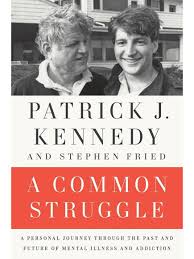
I never thought I’d read a Kennedy memoir, we’ve been so saturated through the years with media coverage about the Kennedy family. Usually, I read literary memoirs, and this one isn’t. But I knew I had to read A Common Struggle, given my interest in mental health issues and wanting to see things change for the better, for once, rather than for the worse.

Patrick Kennedy has bipolar disorder, severe anxiety disorder, and has struggled with addiction to alcohol and prescription medication most of his life. His memoir, A Common Struggle, co-written with Stephen Fried, describes in excruciating detail how Ted Kennedy’s son managed somehow to keep this a secret (more or less) even as he served as Congressman from Rhode Island for many years.

In fact, Patrick’s entire nuclear family struggled with addiction, and all of them went through rehab at least once, if not multiple times – all except for Ted Kennedy. Not that he didn’t need it – Ted Kennedy’s family staged an intervention once, but Kennedy refused to acknowledge or accept that he had an addiction to alcohol.

This is a fascinating read. The Kennedys have a remarkable record of public service and, despite his debilitating mental health and addiction issues, Patrick Kennedy led the fight for successful passage of the Mental Health Parity and Addiction Equity Act. Given our complex and often dysfunctional political system, this is truly an achievement, even though the act, which requires insurance coverage of mental illness and addiction equal to coverage of physical illnesses, hasn’t yet been fully implemented.

Patrick Kennedy and others had to fight hard to make sure that addiction was included along with mental health. This was an enlightened step. It’s about time, since there is an epidemic of opioid and heroin addiction and overdose in the US. Only now are attitudes beginning to change so that addiction is increasingly viewed as a health problem, not a crime or a personal weakness.

Patrick ultimately decided that he couldn’t sustain his lifestyle as a Congressman and handle his addiction and mental health issues, so he eventually left Congress. He is currently the leading advocate in the US for mental health and substance abuse care, research and policy.

I’ve sometimes been dismissive of the Kennedys and their privilege, but Patrick’s memoir made me realize how devoted the extended family is to public service and what a difference they’ve made on many fronts. If you are interested in mental health and substance abuse issues, and/or if you want to become an advocate for better mental health care and research, I think you’ll get a lot out of Kennedy’s memoir. He weaves into his personal story a detailed history of mental health legislation in this country – legislation that is woefully lacking.

There are fantastic appendices, too, that summarize the many issues we need to advocate for and change, and that list the most prominent mental health and substance abuse support groups and organizations in the US.

I get discouraged about the lack of funding and services for people who suffer from mental illness and addiction and the long road it has been over the years to see improvement. Seems like common sense that we’d want to make changes for the better, but sadly our priorities are elsewhere. This is a shame, because these issues affect one out of five families – so is there anyone among us who hasn’t been touched in some way by mental illness or addiction?

Last weekend my husband and I took part in NAMI Walks in Rochester, an annual May is Mental Health Month fund-raiser for the National Alliance on Mental Illness. Over a thousand people walked. (There is still time to donate, go to the NAMI Walks link!)

I’m also proud to report that NAMI Rochester has such an extensive and devoted cadre of family members and volunteers working on behalf of mental health education and advocacy, they have been named the TOP NAMI affiliate in the country for 2016. They will be honored at the NAMI National Convention in July.


NAMI Walks
NAMI Rochester Streakers take the lead for NAMI Walks.
NAMI Walks On the March
NAMI Walks leaving the Village Gate in Rochester’s Neighborhood of the Arts.

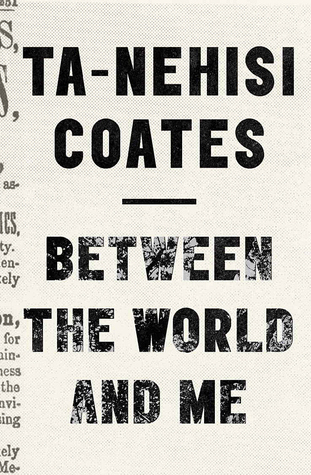
Between the World and Me

Between the World and Me


“We should seek not a world where the black race and white race live in harmony but a world in which black and white have no real political meaning.” Ta-Nehisi Coates, Between the World and Me

Between the World and Me, winner of the National Book Award, is written as a letter by Ta-Nehisi Coates to his 15-year-old son.

“You are growing into consciousness, and my wish for you is that you feel no need to constrict yourself to make other people comfortable.”

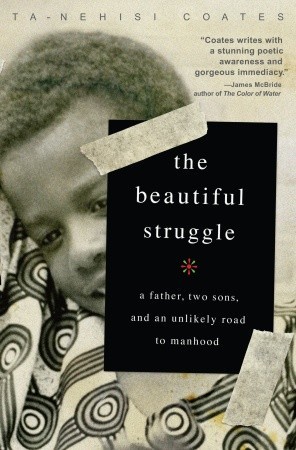
I read this book together with Ta-Nehisi Coates’ The Beautiful Struggle, a coming of age memoir about growing up black in West Baltimore, and the two are excellent read back to back. If you want to see what Ta-Nehisi Coates is all about, I recommend reading the memoir first, so you’ll have background about Coates’ childhood and family, and then follow up with Between the World and Me so you have some context.

Fair warning, though, I found neither book an easy read emotionally, and you may not either if you are a white American. (Or, as Coates would say, if you think you are white. Coates believes race is a falsehood.)

“Americans believe in the reality of ‘race’ as a defined, indubitable reality of the natural world. Racism – the need to ascribe bone-deep features to people and then humiliate, reduce, and destroy them – inevitably follows from this inalterable condition. In this way racism is rendered as the innocent daughter of Mother Nature, and one is left to deplore the Middle Passage or the Trail of Tears the way one deplores an earthquake, a tornado, or any other phenomenon that can be cast as beyond the handiwork of men.”

There is plenty of uncomfortable truth in these two books, and Coates does not mince words. Between the World and Me, especially, is meant to awaken America from its false Dream.

I grew up in a somewhat racially diverse town outside of Cleveland and attended public school alongside African Americans, but there was de facto segregation, with blacks in their own neighborhood not far from where I lived. In retrospect, and especially after having read Coates, I see how absolutely separate and different our lives actually were.

When I began reading The Beautiful Struggle, I found myself baffled by the words and phrases Coates used and many of his cultural references. I was reading a different language, the language of urban black America. The language is perhaps deliberately exaggerated in the first pages, and not decoded, maybe to act as a kind of culture shock or wake-up call to the reader.

A senior writer at The Atlantic, Ta-Nehisi Coates grew up in one of the toughest, most marginalized and deprived communities in America. His father was a Black Panther who later became a librarian; his employment at the Howard University library enabled his children to attend school there tuition free.

I’m not going to summarize too much about the books, because I can’t do justice to Coates’ eloquent, powerful prose as he describes how the African American body has been violated through slavery, segregation, incarceration, and death at the hands of our criminal justice system. His words are sometimes hard to take, and both books are unfailingly hard to put down. I was especially struck by these aspects:

  • How very terrifying it is to be pulled over or questioned by a police officer if you are black in America. I think the only thing more powerful than Coates’ words are the videos we’ve seen of incidents gone wrong these past few years. I respect the bravery of police officers doing incredibly challenging work, but I’ve also been following the news in Cleveland, where I grew up, and how the police department there has been investigated by the US Department of Justice. My son attends the U. of Cincinnati, where this past year an unarmed black man was killed by a campus security officer for no apparent reason. (The officer has been charged with murder.) When the video went viral, I was chilled by what I saw, frightened for my son and anyone who might be at the wrong place at the wrong time.
  • Coates recounts the first time he visited Paris, France. Growing up in West Baltimore, he could never have imagined such a gracious and beautiful place or that he would ever go there. It was moving to read Coates’ description of how easy it was for him to walk the streets of Paris, how differently he was treated, and how for the first time he wasn’t afraid.
  • Coates concludes that the fate of all of us is in the hands of those with power who think they are white – he believes many, though not all, African Americans are still too disenfranchised to change the system. But he fears that we as a country will reap what we’ve sown; that our hunger for power has also meant the abuse and destruction of the earth. He fears that in the end the earth will prevail, likely at great cost to humanity.

Here is one more quote from Between the World and Me, an example of his powerful use of language that some may see as divisive or offensive:

“The truth is that the police reflect America in all of its will and fear, and whatever we might make of this country’s criminal justice policy, it cannot be said that it was imposed by a repressive minority. The abuses that have followed from these policies—the sprawling carceral state, the random detention of black people, the torture of suspects—are the product of democratic will. And so to challenge the police is to challenge the American people who send them into the ghettos armed with the same self-generated fears that compelled the people who think they are white to flee the cities and into the Dream. The problem with the police is not that they are fascist pigs but that our country is ruled by majoritarian pigs.”

(And from “Whitey” Tim Kreider, read this. I happened to discover this link on my Facebook page the day I wrote this post.)

Have you read Between the World and Me or The Beautiful Struggle? What do you think of the final quote above? Please share your thoughts in the comments.


The Beautiful Struggle

When Breath Becomes Air

When Breath Becomes Air

“There is perhaps only one thing to say to this infant, who is all future, overlapping briefly with me, whose life, barring the improbable, is all but past.

That message is simply:

When you come to one of the many moments in life where you must give an account of yourself, provide a ledger of what you have been, and done, and meant to the world, do not, I pray, discount that you filled a dying man’s days with a sated joy, a joy unknown to me in all my prior years, a joy that does not hunger for more and more but rests, satisfied. In this time, right now, that is an enormous thing.”   Paul Kalanithi, in a letter to his daughter.  Excerpt from When Breath Becomes Air

My brother passed away from pancreatic cancer last fall, and I didn’t feel quite ready for When Breath Becomes Air, a Stanford neurosurgery resident’s memoir about his cancer diagnosis. Also, in my work as a clinical librarian, I’d spent time supporting and rounding with clinical staff in neurology/neurosurgery. I had a special affection and respect for the brilliant, hard-working residents, who were about the same age as my sons. So to read about the death of a young resident from lung cancer….

But if you are a living, breathing person who likes to read memoir and nonfiction, and if you consider yourself an engaged participant in our death-denying culture, I would say When Breath Becomes Air is required reading.

One of my favorite authors, Ann Patchett, who owns a bookstore that practices the art of making personal recommendations to readers based on their interests, says, “This is one of the handful of books I consider to be a universal donor – I would recommend it to anyone, everyone.” 

On publication, When Breath Becomes Air shot to number 1 on the New York Times Nonfiction Bestseller List. So when I saw Paul Kalanithi’s memoir on our library’s “Most Wanted Book” shelf, I decided to grab it.

Paul Kalanithi set out to be a writer and then switched to medicine and neurosurgery, one of the most challenging and consuming of all clinical disciplines. He believed that a person’s brain determines his identity, which is inseparable from his values and sense of life’s meaning.

Finding meaning was all-important to Kalanithi. During his residency, Paul came to see it was his responsibility to do his best to give his patients the quality of life that would allow them to live according to their most precious values.

We need more doctors who have both the time and desire to get to know and serve their patients in this way, wouldn’t you say?

In his memoir, Kalanithi says the twin pursuits of caring for patients with brain illnesses and writing as a way to explore the meaning of life’s joys and traumas was his perfect calling.

It’s just that he hadn’t planned on doing the writing part until much later in his career. Many months after his diagnosis, when he could no longer work as a neurosurgeon, Paul chose to use his remaining time to write a memoir that, among other things, explores living and dying from the unique perspective of someone who is both a patient and healer.

He and his wife decided to have a child, too. Paul writes of becoming a father with great joy. It reminded me of last summer, when my brother (and our extended family) lived with end-of-life illness, even as we celebrated his daughter’s wedding.

As you can see from the memoir excerpt above, Paul was an extraordinary writer. Medical humanities literature, also known as narrative medicine, written by patients, doctors, nurses, and clinicians, is really coming into its own, and I think When Breath Becomes Air will become a classic.

Paul Kalanithi stands right alongside Anthony Verghese, Danielle Ofri, Sherwin B. Nuland, Tilda Shalof, Theresa Brown, Atul Gawande, Oliver Sachs, and others as one of the best. Really, his memoir is not to be missed.

“The fact of death is unsettling. Yet there is no other way to live.”  Paul Kalanithi

Below is the trailer for When Breath Becomes Air.

Have you read When Breath Becomes Air, and what did you think? Have you read another medical humanities or health related memoir, novel, or essay that you have especially liked? Please share your thoughts and recommendations in the comments.


Remembering Judith Kitchen

Excavating a Life

Queen of the Fall book coverQueen of the Fall: A Memoir of Girls and Goddesses, is a collection of linked essays by Sonja Livingston and the If All of Rochester Reads the Same Book selection for 2016.

For the next few weeks, Sonja will be here for readings, signings and discussions at Writers & Books, local libraries, schools, colleges and bookstores.

Sonja is from the Rochester area, and divides her time between Rochester and the University of Memphis, where she teaches writing. The daughter of a single mother and one of seven children (with five different fathers), Sonya has also written a memoir, Ghostbread, about growing up in poverty in the Rochester slums and on the Tonawanda Reservation.

When I read the dedication page of Queen of the Fall, I was surprised and delighted to see this: “For my mothers, actual and acquired, and In memory of Judith Kitchen.

I wondered: Does Sonja look upon Judith as a mother figure, a kind of midwife who helped Sonja give birth to her own writing?

Yes, she does. So do I, and so do many in the Rochester community. I know Sonja does because, flipping through her essays, I found “Flight,” about the personal essay writing class taught by Judith that Sonja enrolled in many times.

I took the same class from Judith years ago, when I first began writing memoir and essay. Poet, novelist and essayist Judith Kitchen was a professor at SUNY Brockport at the time. She was married to the poet Stan Rubin, also on the Brockport faculty. Both were master teachers beloved by students and the literary community here.

I’d had to wait a semester to get a spot in Judith’s class. She generously added a slot or two beyond the designated maximum enrollment of twenty to accommodate those of us at the top of the waiting list. Judith didn’t have to let us non-matriculated students in, but she did. I think that she welcomed the diversity of backgrounds and generations, because it made for lively, rich discussion and, ultimately, more learning and better writing.

Our class was made up mostly of young people enrolled in the Creative Writing MA program. There were a few women getting mid-life master’s degrees in the class, too. I was in the small group of moms with kids and/or jobs, taking the course as continuing ed, trying to squeeze in the class time, plus the hours of writing and preparing critiques.

Oddly, I sat next to another mom with young children who also happened to be writing about having a mother with schizophrenia. I wasn’t sure I liked that so much, but on the other hand we “got” each other. We were of the same tribe and found our own experiences validated in each other’s writing.

HouseOnEcclesI remember those three-hour sessions every Tuesday evening, all of us crowded around a large conference table in an undersized room. Usually, two people were in the hot seat: the writer whose essay we were critiquing, and the student moderator leading the critique.

Being the moderator was nearly as stressful as having 20+ people deconstruct and critique your writing. Judith wanted us to practice and learn the art of critical reading and the art of leading a successful writing workshop. She knew the value of writers in community and that the best way to learn how to write is to learn from one other. So, in addition to our writing assignments, we were required to come to class prepared to intelligently discuss our classmates’ essays, having read them thoroughly and marked them with comments.

Judith was strict in her expectations, but she was also kind and nonjudgmental. This is crucial in a writing teacher, especially in a college setting where you have new, young writers grappling with their innermost secrets and shames and confessing them on the page, perhaps for the first time.

We wrote and shared funny essays, of course, and happy ones and contemplative ones. But in Judith’s class, I learned what it was like to be young and beautiful and anorexic in a dorm full of women with anorexia. I learned what it was like to have your dearest, life-long friend, the one who knew you better than anyone else, commit suicide. I learned what it was like to be secretly lesbian and have a Vietnam war veteran with undiagnosed PTSD for a father.

I wrote a couple of essays about my family, my mother, schizophrenia, and the boy I loved. I shared with the class stories I’d never told before and listened to their comments.

One classmate’s essay in particular has stayed with me all these years. He wrote about a long night of partying. Beer after beer, shot after shot. The girl he was madly in love with. (Who he was still madly in love with; it was all over every page and you could see it in his eyes as he listened to our comments.) The girl who didn’t know he was alive. The girl whose long blonde hair he pulled back and held as she vomited into a toilet.

I don’t think he was confident of his own potential and, for sure, he knew before we said anything that he hadn’t nailed it, this unrequited love he was trying to write about. I think this boy and his essay got to me because I had two sons on the young side of their teen years. I realized that I was old enough to be this writer’s mother, old enough to be the mother of all the young writers in the class. I knew that I would never hear about my own sons’ loves in this searing detail, because that is not what sons tell their mothers. I knew this boy’s mother would likely never hear the story her son was trying to tell us.

I wanted to offer him something helpful and constructive, but I was mystified. I, too, was finding that, when it came to writing about my own first love, I was at a loss. How do you write about love in a way that is not sentimental or cliche, but authentic, vivid, new?

In autobiographical writing, you need to learn how to methodically unearth your personal land mines without letting yourself go crazy all over again. Then, with focus, presence of mind, patience, and persistence, you teach yourself the craft of writing. Draft after draft, you learn how to spin your most intense life experiences and emotions into storytelling gold. It becomes not about you anymore. Your exquisitely cut but imperfect gem of a story (it will never be perfect), the only one like it in the world, is ultimately for the reader.

Maternal is the word I think of now to describe Judith Kitchen. The way she created a safe, nurturing, supportive place for new writers to learn how to do this.

In class, my comment to the boy writing about the girl he loved was only to say something that would help him feel some kinship in his struggle. I said I thought writing about love was one of the hardest things and I was trying to figure out how to do it, too. I told him his writing was, for me, authentic and deeply felt, and that I thought if he kept writing but didn’t try to force it, eventually it would become what it was supposed to be.

A few years after I took her class, Judith and her husband moved to Port Townsend, Washington, where they founded the Rainier Writing Workshop. It is a unique, 3-year low-residency program. Its focus is not on achieving heights of literary prowess or publication or prizes, but on helping students find for themselves a sustainable, lifelong writing practice. A worthy goal.

Judith passed away in 2014. Years after Judith left Rochester, there are a handful of writing groups that originated from her classes that are still going strong.

Next week: Sonja Livingston’s Queen of the Fall and Ghostbread.

Have you had a writing teacher or artistic mentor who has influenced you and helped you along on your creative path?


Why We Write About Ourselves (Excavating a Life)

Twenty Memoirists on Why They Expose Themselves (and Others) in the Name of Literature

Why We Write About Ourselves book coverA few days after I wrote my blog post Why I Write Memoir (one of my most shared and commented on posts ever – many thanks to those of you who did so), I was intrigued to see at our local Barnes & Noble Why We Write About Ourselves: Twenty Memoirists on Why They Expose Themselves (and Others) in the Name of Literature, edited by Meredith Maran, who is herself a memoirist.

Just published this year, I hadn’t known this was coming. Here’s Meredith’s dedication: “For those who read memoirs and those who write memoirs, and for those who wish we wouldn’t. We’re all just looking for the truth, aren’t we.”

Meredith writes that emotions ran high when she asked the authors, some of our finest memoirists, to share honestly what it was like for them to see a memoir through to publication.

Each memoirist gets his/her own chapter that concludes with a short “Wisdom for Memoir Writers” section.

You’ll find, of course, these writers have strong opinions and distinctive voices, with widely varying opinions about self-exposure, writing about others, truth and accuracy, and other memoir writing land mines.

As I try my hand at memoir writing, I appreciated the moral support, guidance, and encouragement I found here. If you’re writing one I think you will, too. Whatever challenges and blocks you’ve encountered, you can be sure these writers have faced down the same thing.

And if you love to read memoirs, you’ll likely find a few titles and authors you’ll want to check out. No doubt, you’ll be more aware of the behind-the-scenes decisions the memoirist had to make about how to tell her story, which will make your reading experience richer.

Here are some of my favorite memoirist comments:

The Great Santini book coverPat Conroy (The Great Santini): “Some of us are the designated rememberers. That’s why memoir interests us–because we’re the ones who pass on the stories.”
Cheryl Strayed (Wild): “I’m always asking myself if material I have from my own life would be best used in a novel or a memoir or a short story or an essay. I was moved to write Wild as a memoir because I thought that was the best way to tell that particular story.”

Jesmyn Ward (Men We Reaped): “The further I got into the book, the worse it got. Recounting the events when my brother died was so difficult….especially the very big edit I did with the direction of my editor, Kathy Belden, was one of the hardest things I’ve ever done in relation to writing. I did four drafts, and she was asking me at every point to offer some judgment, some assessment of these events…..I recounted a story about a cellar in the woods. Kathy had a page of notes on the section. She kept telling me to dig deeper, to look at myself in the past, to figure out why that cellar meant something to me…..I finally realized…All the feelings of self-loathing and worthlessness I had at that age were embodied by the cellar. It symbolized all the dark things that happened to me, things I thought I deserved because of the way I thought of myself at that time: as a young black woman in the South.” (Note: Jesmyn won the National Book Award for her novel, Salvage the Bones.)

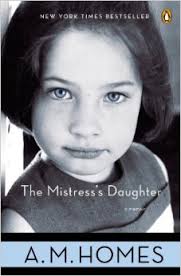
The Mistress's DaughterA.M. Homes (The Mistress’s Daughter): “There were many points at which I thought, I don’t really want to be doing this. I want to stop. What propelled me to keep going was that I felt I could bring to the memoir my experience and training as a writer–finding language for primitive emotional experiences. One of the things that worked about the book was that it gave voice to people who hadn’t found language for the adoption experience. It allowed them to explore their own experience in a different way, and/or to have their feelings about it articulated and confirmed.”   

(Note: I especially liked Homes’ memoir.)

Dani Shapiro (Three memoirs: Slow Motion, Devotion, and Still Writing) “After I gave my mother the galleys, her therapist called and asked me to meet with her. What can I say? We were all New York Jews. I gave the therapist a set of galleys so she could read it before my mother did. After she read it, she said she didn’t think there was anything that would upset my mother, that it was very fair to her. I had two thoughts: First, that this therapist didn’t know my mother at all, and second, that my mother had been wasting her money for years…

…when people in her life heard that her daughter had written a memoir, they all read it as a way of trying to understand her: her doorman, her lawyer, her dentist, her neighbors. I couldn’t have imagined such a thing happening. It was like she was in The Truman Show. The whole thing was very sad and painful, but not painful enough for me to wish I hadn’t written the book.”

James McBride (The Color of Water“The narrative of the book was as thin and muscled as my life was at that time. You know, with every story you do, you’re trying to shove a lot of things into the keyhole and drag the reader with you. You have to narrow the focus of the story so it has the push of a creek in a narrow spot.”

“You write a memoir for the same reason you write a song–to help someone feel better. You don’t write it to show how smart you are or how dumb they are. You’re trying to share from a sense of humbleness. It’s almost like you’re asking forgiveness of the reader for being so kind as to allow you to indulge yourself at their expense.”

(Note: James McBride won the National Book Award for his novel, The Good Lord Bird.)

Here’s my 2016 list of memoirs to read – who knows how many I’ll get to:

In Other WordsIn Other Words, Jhumpa Lahiri

Welcome To the Goddamn Ice Cube, Blair Braverman

A Common Struggle, Patrick J. Kennedy and Stephen Fried

Beautiful Affliction, Lene Fogelberg

The Light of the World, Elizabeth Alexander

Into Great Silence: A Memory of Discovery and Loss Among Vanishing Orcas, Eva Salitis

When Breath Becomes Air, Paul Kalanithi

Just Kids; M Train, Patti Smith

Life From Scratch, Sasha MartinWelcome

Shepherd, Richard Gilbert

A Profession of Hope: Farming on the Edge of the Grizzly Trail, Jenna Butler

I would love to know if you have a favorite memoir, one that really spoke to you and that you’d recommend to others.