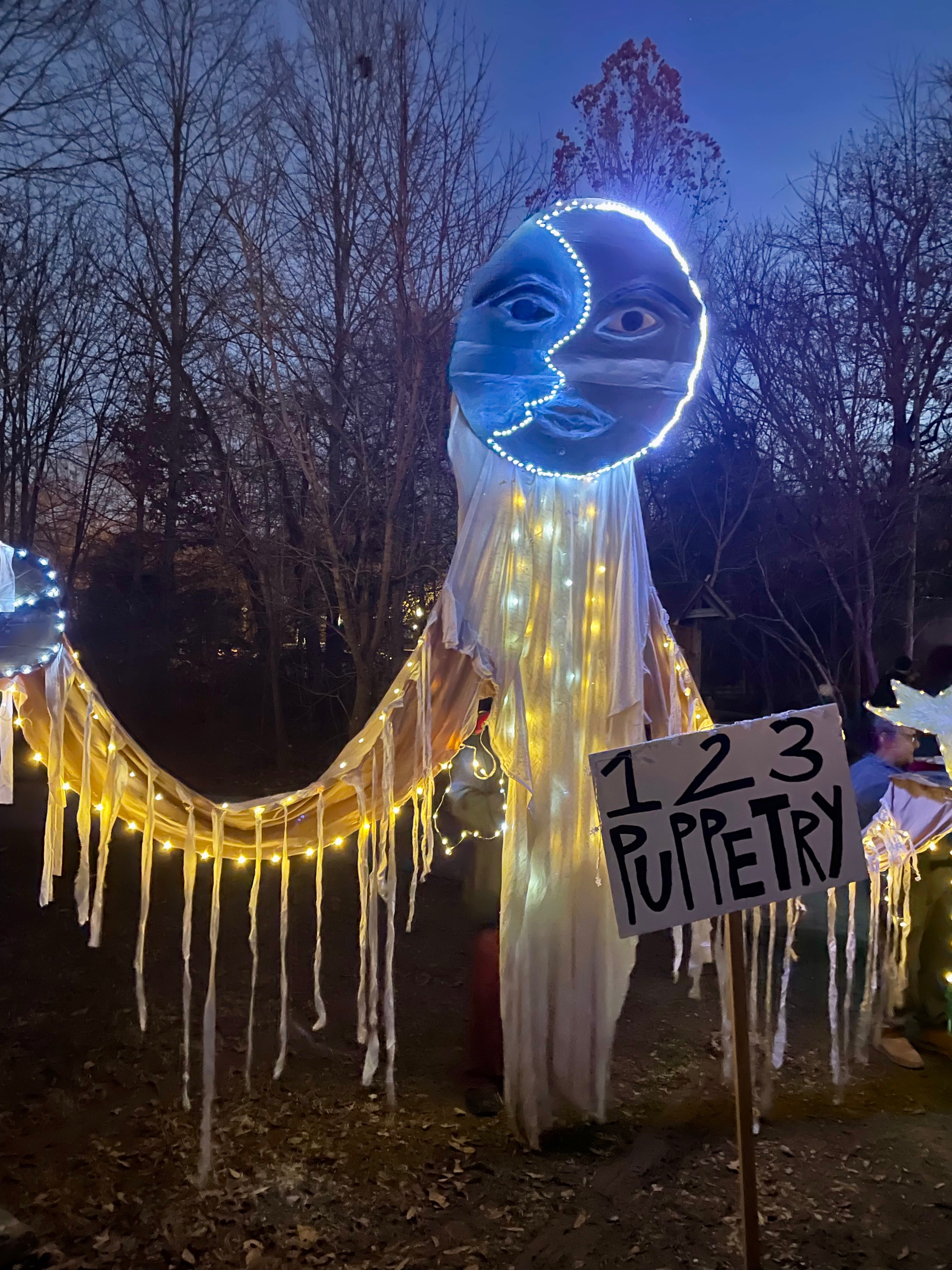
A highlight of the Winter Solstice Lantern Walk along the Eno River, NC, 2025.
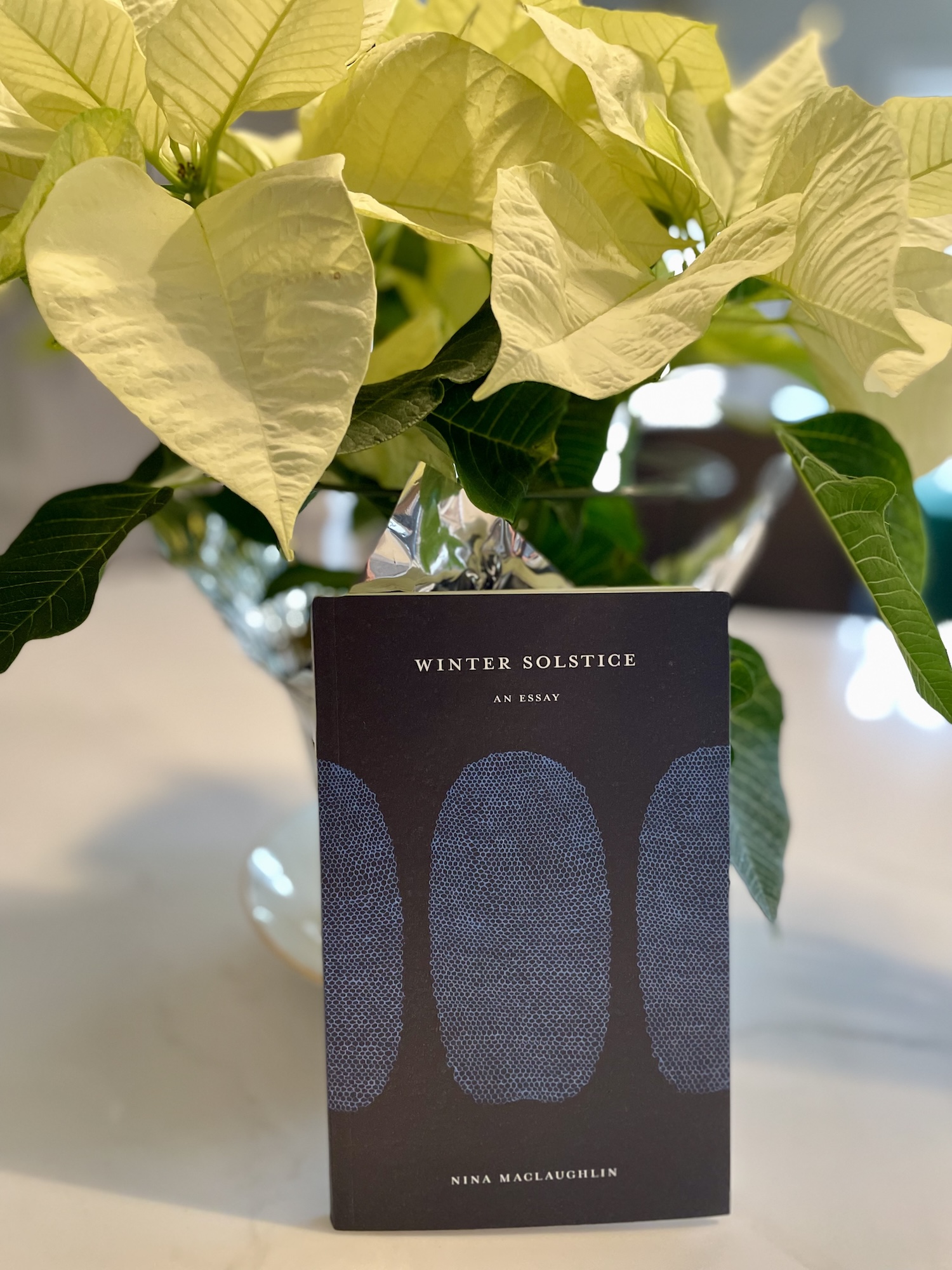
The fear is ancient and uncomplicated, part of our human-animal inheritance…will the darkness swallow me, will it swallow us all together? Nina MacLaughlin, Winter Solstice: An Essay
Happy New Year to my friends and readers!
Here is a post full of little treasures to light up your midwinter days and usher in the New Year.
Never in my life have I seen the winter solstice celebrated with so much exuberance. Last year, on our first winter solstice in Hillsborough, North Carolina, I assumed the annual lantern walk along the Eno River would be a quiet affair with a few dozen souls. Not at all. Thousands of people showed up with the most inventive homemade lanterns I’d ever seen.
Before you read past this paragraph, PLEASE click the link below to last year’s walk. It will put you in the mood for the rest of this post, which is full of all things Winter Solstice. In last year’s video, you’ll see drone footage of the magical riverside procession, an illuminated spiral, and beyond-belief lanterns, with a poetic narration by our town’s very own Poet Laureate, Amal Kassir. (YES, our town has a Poet Laureate. More about Amal at the end of this post.)
Here is the link. Please turn up your volume, enjoy, and then hop back over here:
I’ve sprinkled quotes from Nina MacLaughlin’s earthy, primal Winter Solstice essay throughout this post, because it speaks deeply to writer and mixed-media/book artist Suzi Banks Baum, who created and leads Advent Dark Journal. This is an immersion in art, writing, nature, and daily creative practice that I enjoy during the last six weeks of the year.
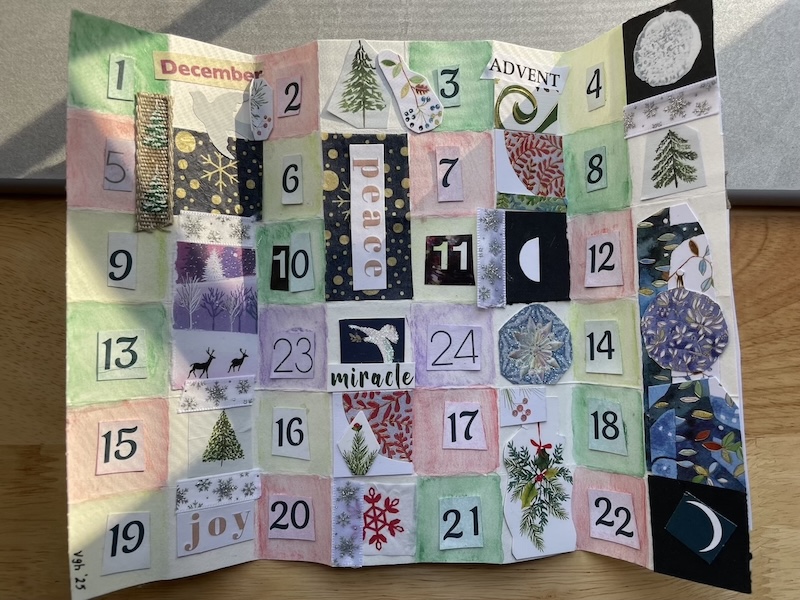
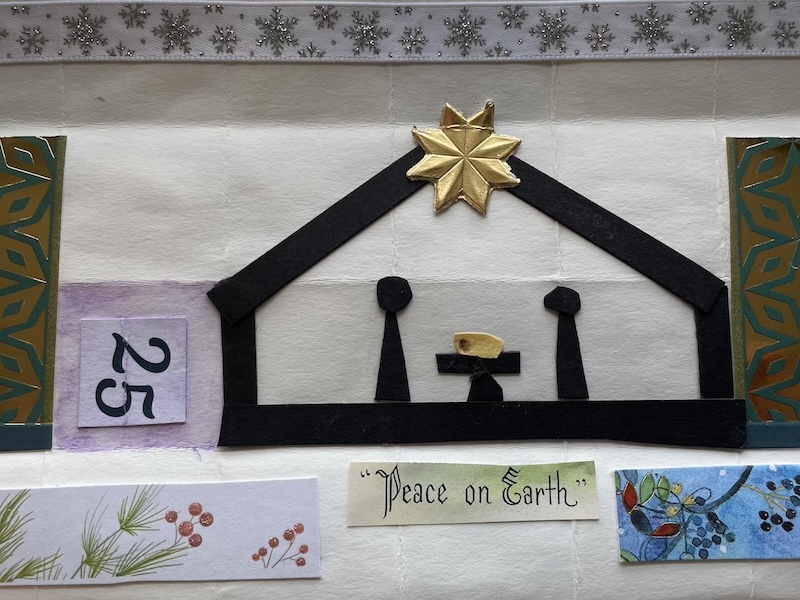
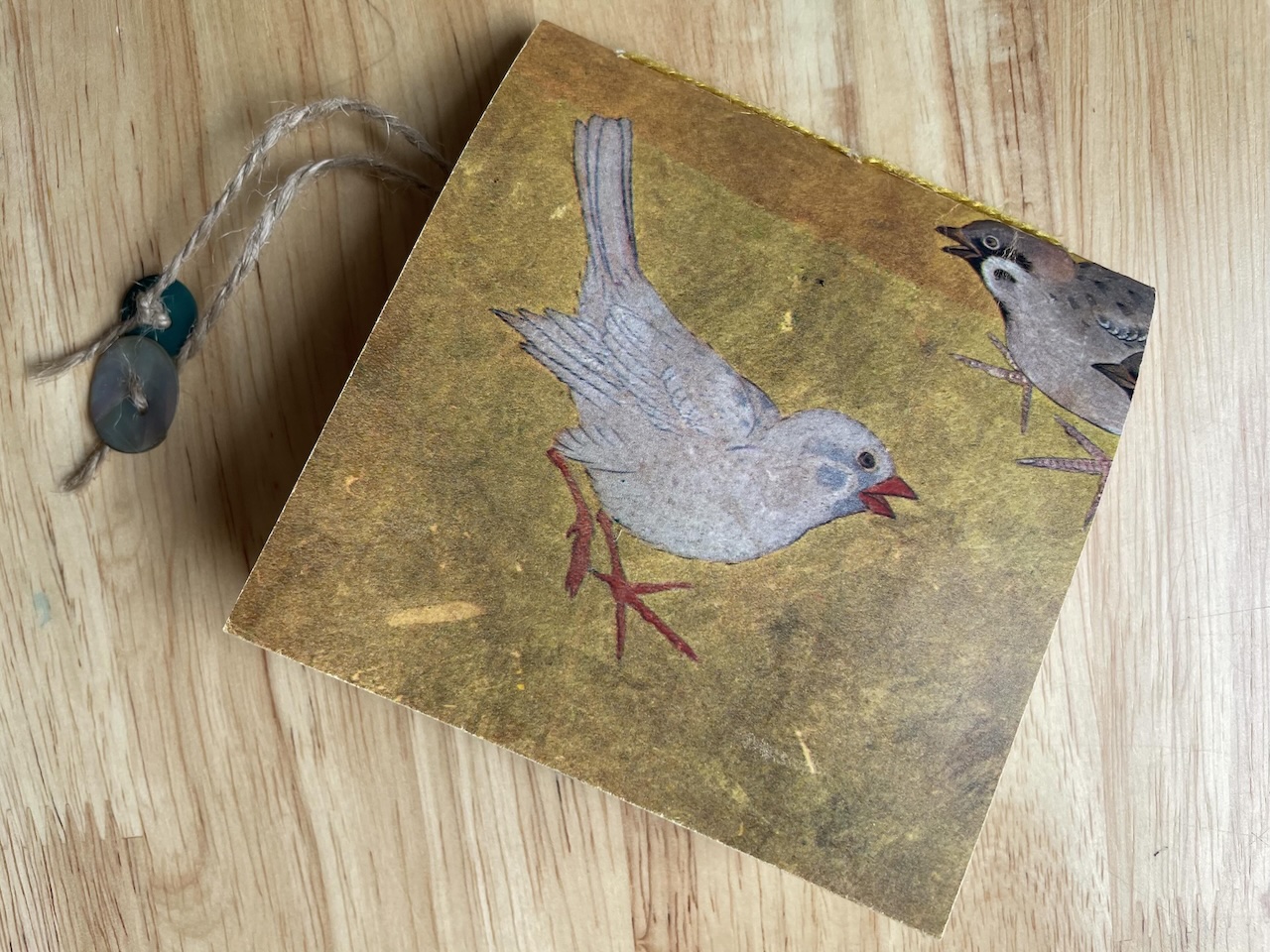
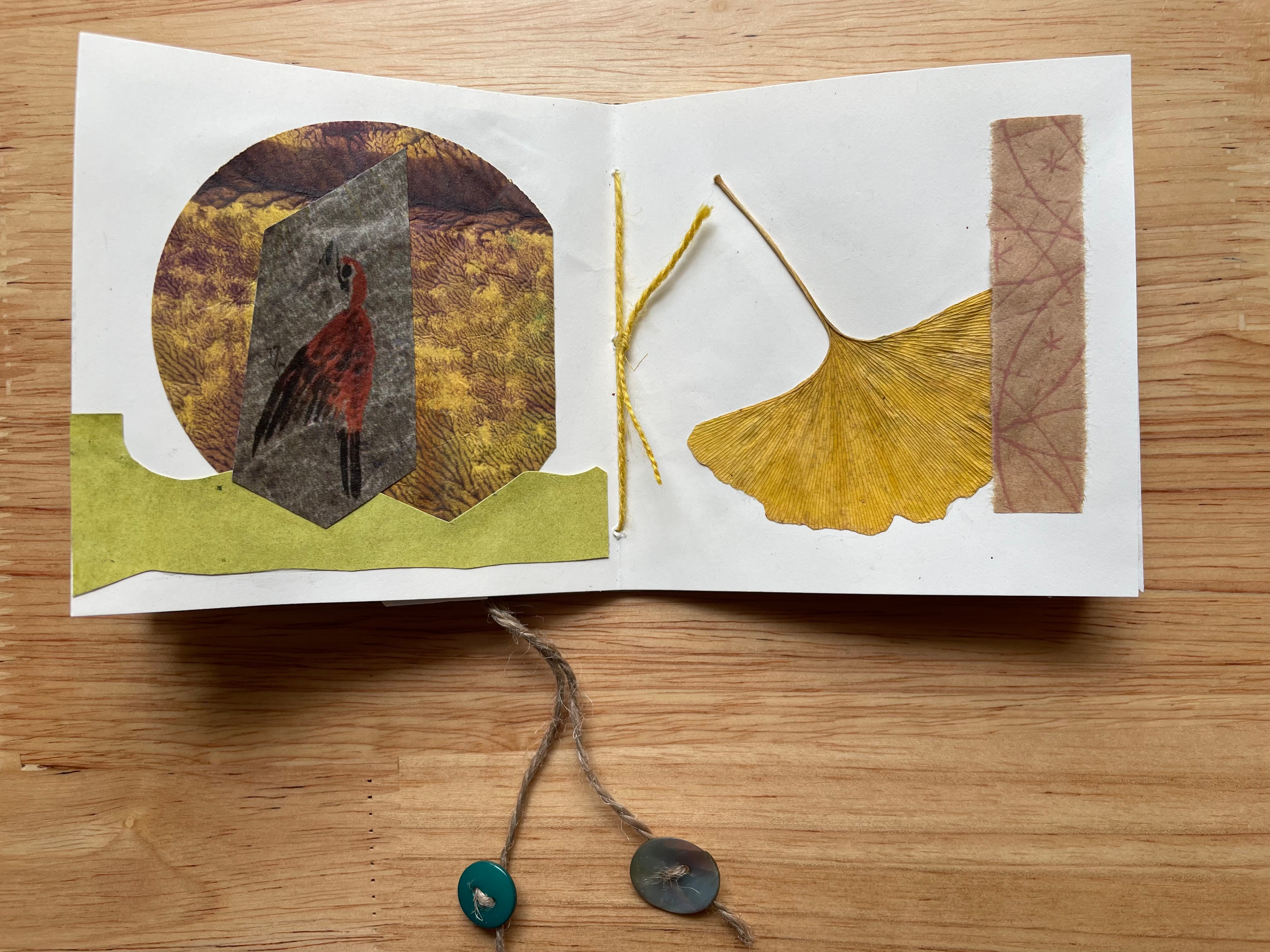
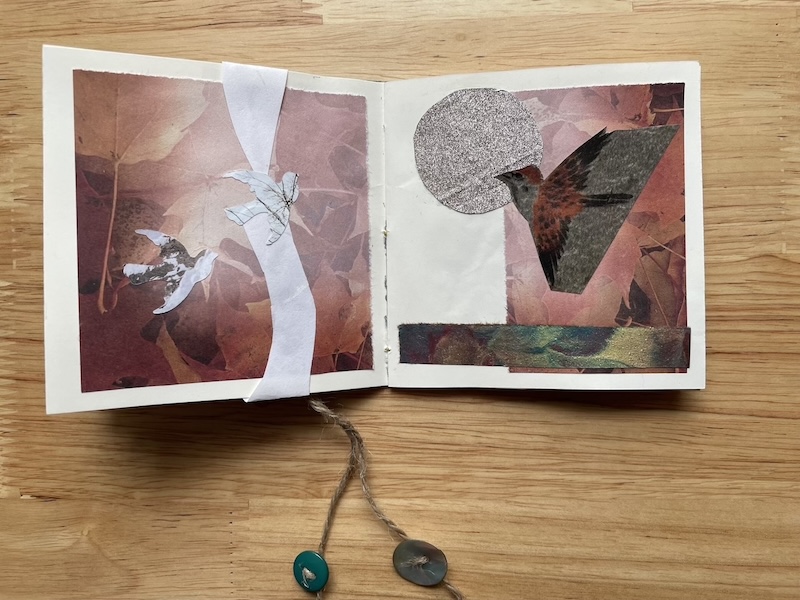
I’ll write more about Advent Dark Journal in an upcoming post, because Suzi and her creation are worth an in-depth look. For now, here is a glimpse of the small collage and art projects I’ve completed as part of this experience. You’ll see that my Advent calendar has a religious theme, but Advent Dark Journal is not centered around organized religion; rather, it is a “container” of rituals for participants to explore wherever our soulful arisings lead us during this sacred time of year.
“Advent Miracle”
“Earth Holder”
These small, collaged journals and art pieces were sent off to friends – one in Australia – as soon as I completed them. In addition to the art we create in Advent Dark Journal, Suzi encourages us in new, transformational directions. Since I’ve become a regular in Suzi’s workshop, I’ve added a tradition our adult sons and partner enjoy when they visit for the holidays – a fireside Winter Solstice ritual. More about that in an upcoming post, but suffice it to say, Suzi has shown me how to weave a daily creative practice into my life in ways that promote my well-being and that of others in my life.
It is the animal in us that knows the dark. This season stirs that animal in us, and stirs the memories that live in all of us, submerged so deep, of the ancient dark, of a time before gods, before form and words and light….Winter reminds us: the dark was first.
…maybe death is all potential, a means of moving on. And on we go, absorbed into the wet warm belly of eternity, or the roaring big black void, back here as a robin or a wren, in dusted orbit around another planet’s moon, riding on the light. Winter Solstice
Nina MacLaughlin’s Winter Solstice is stellar writing, moody and mysterious. She reminds us of our primal, animal origins; ultimately, we are bound up in the life web and rhythms of the earth, whether we recognize this or not. I purchased Nina’s Summer Solstice essay as well, which I’ll read come summer.
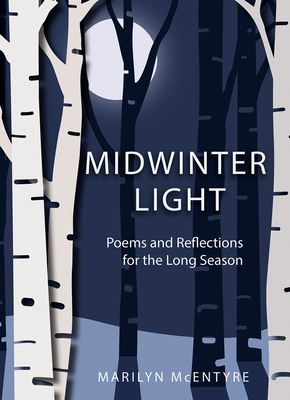
If you are interested in writing that is more traditional, something you can read in small bits alongside your daily journaling or meditation, I recommend Midwinter Light: Poems and Reflections for the Long Seasonby Marilyn McEntyre. Each day, she includes a poem with commentary that honors this dark season, when growth seems to stop but germinates unseen, to be manifested as the light returns.
“Winter makes us see differently. Noticing is rooted in desires so easily satisfied in spring we barely feel them—for color, for movement, for the sound of birds, and things that bloom. On a walk in midwinter, we experience solitude in a different key. We are surrounded by reminders of mortality and loss, by the absence of what is lush and vivid. We are clothed in layers and aware of our bodily needs in new ways. And the quiet, sometimes, is palpable. It is a good time for prayer: the veil between this dimension and the next seems to have thinned.” Marilyn McEntyre, Midwinter Light: Meditations for the Long Season
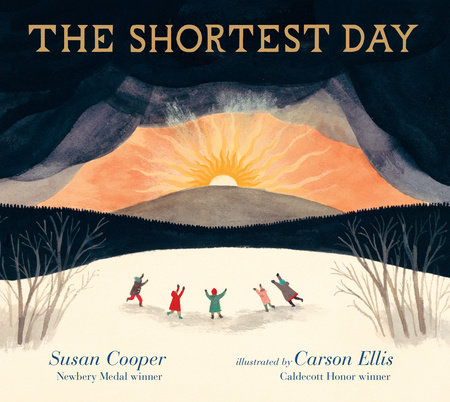
Finally, I discovered an excellent picture book with a poem by Susan Cooper and art by Carson Ellis. Both Susan and Carson have won the highest honors for children’s books, and this particular collaboration is special. Susan’s poem “The Shortest Day” is easy to find online. I encourage you to read it. I think you’ll find that Susan’s half-rhymes and cadence create an incantation that perfectly captures the magic and mystery of this dark season.
If you would like the perfect picture book for this time of year, for yourself, or as a gift, I suggest The Shortest Day, written by Newbery Medal winner Susan Cooper and illustrated by Caldecott Honor recipient Carson Ellis.
Happy New Year!
I will return in January with more about Advent Dark Journal, as well as commentary about a provocative documentary you won’t want to miss, especially if you are an avid reader and book-lover.
As Amal Kassir says in her winter solstice poem you may have listened to in the above-linked video, “It only gets brighter from here.”
By the way, PLEASE be sure to check out Amal Kassir’s website and watch her perform her heartbreaking poem, “Broken Arabic.” Her poetry collection, Scud Missile Blues, is available from Amazon. I encourage you to consider purchasing it. We need to support our young poets, and Amal is immensely talented. Just think of all the poems she has yet to give to the world!
If you have last-minute holiday shopping to do and would like to give a fine memoir as a gift, I have a suggestion.
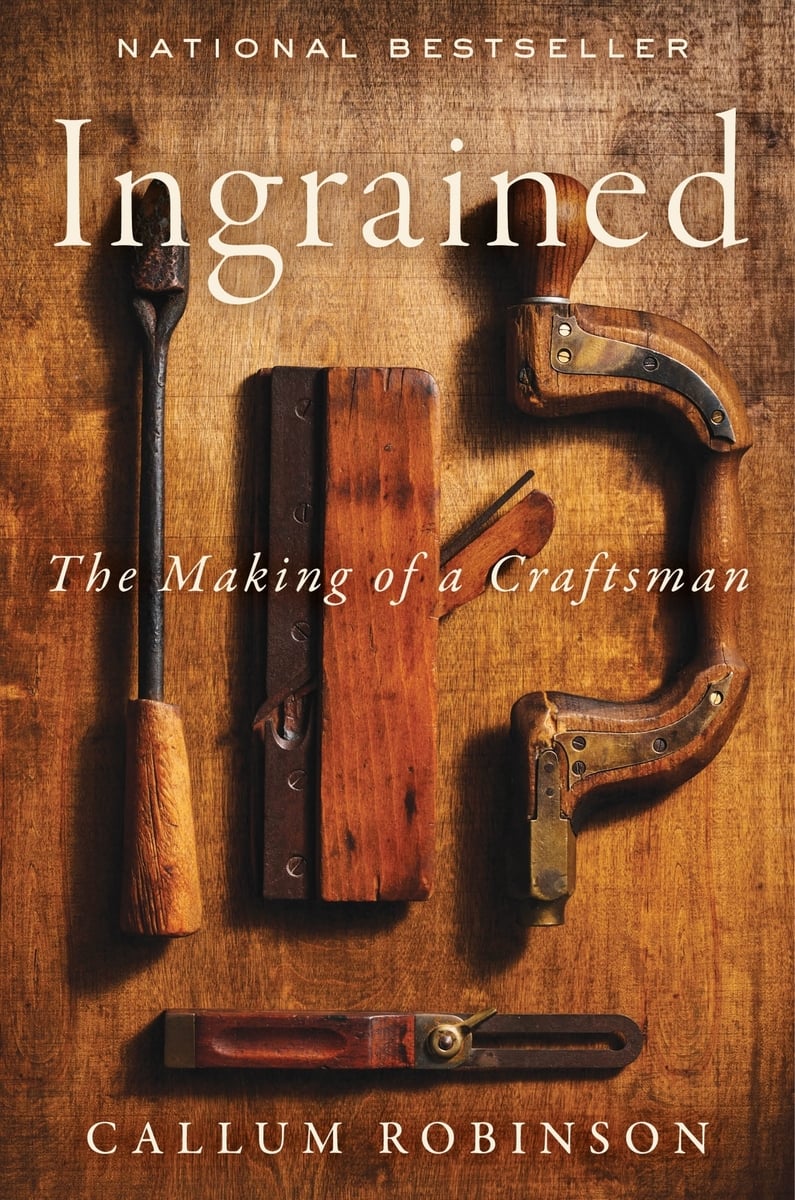
I spotted Ingrained: The Making of a Craftsman by Callum Robinson in a local bookstore and thought that my son’s partner, who is an amateur furniture-maker, might like it. Of course, I decided to sample a chapter. Two days later, I’d finished the memoir, having enjoyed a kind of bliss through the entire reading.
This is a superb, deeply personal book that is also suspenseful, sensual, poetic, and universal. I could smell the cedar, pine, and oak as I read. Makers will love this story, but I don’t think you have to be a maker to respond deeply to this nature-based memoir.
The neat flat-cut edge of its end-grain revealing the gently arcing lines of the tree’s growth rings. Dark reddish brown, like burnt umber or strong tea…It is a broad piece of one-inch elm…Fine close grain tumbles down the board’s length. And a tracery of spectral green streaks across it, like the northern lights.”
Callum Robinson, Ingrained
The workshop owned by master woodworker Callum and his wife, landscape architect and designer Marisa, is about to go under, thanks to the cancellation of a substantial corporate project. Already leveraged to the hilt, the relatively young business faces imminent bankruptcy.
They must change direction, and fast.
Chapter by chapter, the story expands to reveal Callum and Marisa’s world: the devoted young craftsmen who work for them; Callum’s father, also a master woodworker, who jumps in to help set the business in a new direction; the small Scottish town of Linlithgow, where their little studio and workshop reside; the beautiful Scottish forests that supply much of the timber from which their furniture is made; and the customers who eventually browse their shop and can’t resist the furniture they see.
And with its flowing organic transitions, to me the grand elm table feels more like a sculpture than a piece of furniture. To one edge of its mighty top, among the swirling purples, reds, and greens, there remains just the tiniest taste of the tree’s true form. A handbreadth of live edge and finely sanded bark, still visible in the straight, sharp, otherwise regimented lines. A perfect imperfection – a signature – like the crimped pie crust or the fingerprint in the clay.
Callum Robinson
Callum Robinson seamlessly blends the past and present as he tells of his own coming-of-age and how he found his life’s work. His story is relevant to anyone concerned with living in a deeply authentic, meaningful way. You will be rooting for these singular people who design and make furniture of great beauty that will be loved and handed down through the ages.
This is a celebration of the human-designed and handmade. Callum approaches crafting fine furniture from some of the world’s most beautiful trees as if it were pure poetry. His writing is the same.
I look forward to reading more of him.
Nostalgia is a powerful thing. An ethereal link. An ache for something long ago, something that might never really have existed. No other material I know can hold it, or radiate it, quite the way that wood can. And almost nothing made from wood will ever have as many stories locked inside as a family table. Used so often it’s almost invisible, passed down through the generations, scarred by the lives and ingrained with the memories of all those who gathered around it.
Callum Robinson
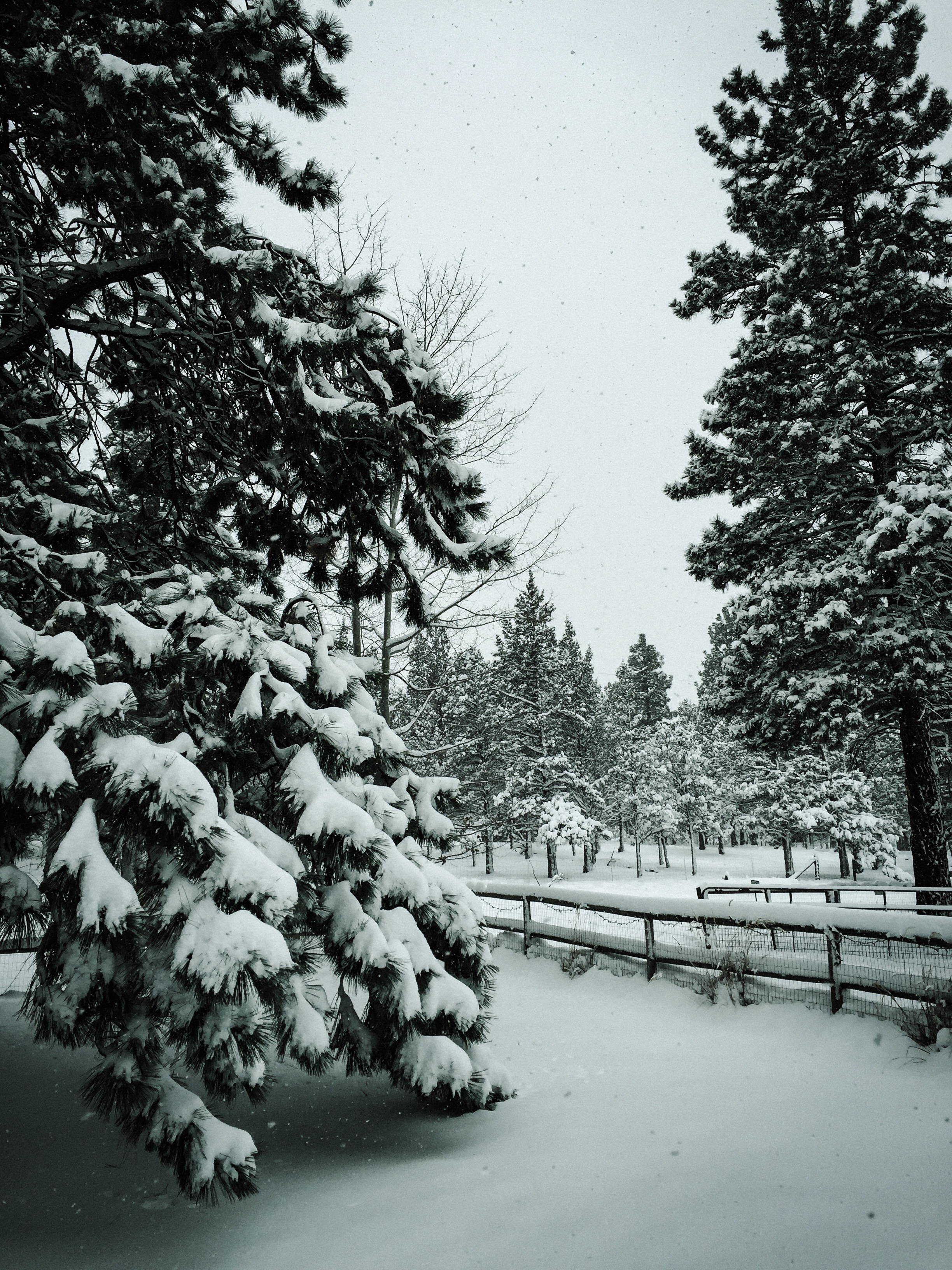
Our ponderosa pine homeplace in central Oregon, where we lived for a few years.
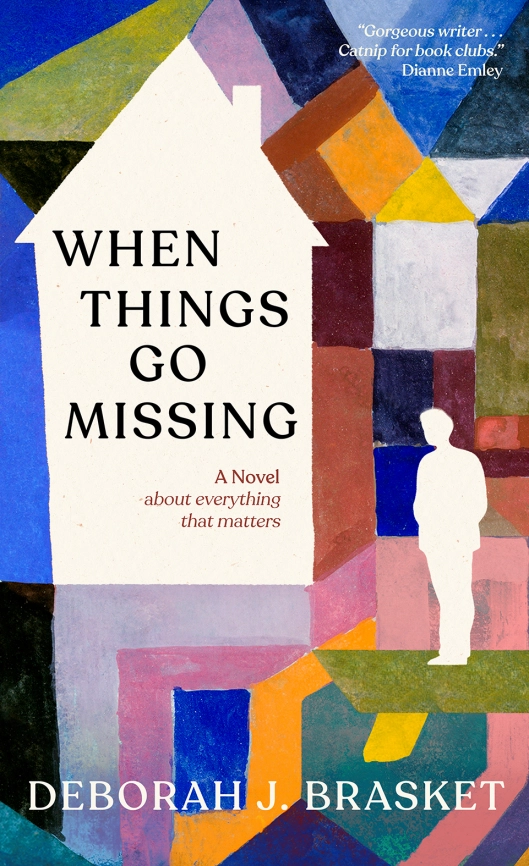
One of my favorite writers and bloggers, Deborah J. Brasket, will publish her first novel, When Things Go Missing, in just a few days! It’s a pleasure to participate in Deborah’s Book Blog Tour along with nine other bloggers. Please enjoy Deborah’s guest post below, and be sure to scroll to the end to find links to the other posts.
I hope you’ll leave comments here and on the other book blogger sites for a chance to win a free E-book with extra chapters of the novel! Here also is a link to my review of When Things Go Missing.
Here is what Deborah has to say about an important phase in the writing of her novel:
I thought I’d share something that I wrote six years ago about When Things Go Missing when it was still a novel-in-progress. At that time the working title of my novel was From the Far Ends of the Earth, and it was in the hands of an agent who was submitting it to publishers. This post shows how long and messy the road to publication can be and the choices writers must make along the way
Endings and Beginnings, A Writer’s Life
Well, I just finished rewriting the ending of my novel as requested by a publisher. We will see what they think.
Either way, I believe this new ending is stronger–-still hopeful, but less certain. More in keeping with the way things are for most of us when things we love go missing, or when struggling with our own demons and addictions.
I’ve decided something else too. Quite a few publishers wanted to see more of the missing mother in my story, yet I wasn’t willing to do that. It would have unraveled the very premise of my novel, which was, how do we cope when the center holding everything together falls apart? When the person upon which we most depend disappears?
I wanted the mother to be part of the puzzle, not a presence herself, but that “absent” presence we feel, even yearn for, but cannot quite pin down, and never really know for certain.
Do any of us ever, really, know our mothers? Don’t we only know them through our own often faulty and incomplete perceptions of them? What they’ve allowed us to see, or what we choose to believe? All knowledge is partial and open to revision. We may know the facts that lay before us. But do facts a person make?
Yet even while I’ve resisted the call to add the mother’s perspective to this novel, I can understand how a reader might want more of her, to hear about her journey as she travels away from her family and through South America. What does she learn as she discovers the world through the new lens of her photography? Does it lend insight into her past? Into herself as a mother and wife and now an artist? How does it shape her anew? Where does it take her?
So I’m considering a “sequel” to From the Far Ends of the Earth, if we can call it that, since it will cover the same time-space as the first novel.
I think it might be fun to give the mother her own voice and space, to see what shaped her past and how her journey shapes her future.
It’s the thing I love most about writing, discovering what I never knew I knew before I began to write it, as if the words themselves are drawn from some inner well of insight or vision I never knew I had.
“We create ourselves out of our innermost intuitions,” so writes a sage.
I believe that. And I also believe our characters are created in much of the same way. I wonder if we all contain multiple characters within us that make themselves known to us through our writing? Or are we just writing our larger selves?
Perhaps all the selves of all the people we’ve come to know, to experience, in this wider world, once known, become part of us, at least partially?
I believe there is a collective consciousness that we tap into from time to time, and writers, perhaps, most of all.
Sometimes I don’t know where I end and another begins.
My son says I have boundary issues. No doubt he’s right.
When Things Go Missing BOOK BLOG TOUR
Below are the bloggers, authors, and book reviewers participating in this tour promoting When Things Go Missing. Participants will either be spotlighting the book, posting reviews, or interviewing the author.
GIVEAWAY
Please bookmark this and join us on the tour! Those who leave the most likes and comments on the participating sites will have a chance to win a free E-book PLUSextra chapters of the novel (which the author reluctantly had to cut.)
“To all families who fall apart and struggle to find their way home again.” – Deborah J. Brasket
What happens when a mother leaves her family?
Shopping list and coupons in hand, fifty-something Fran heads to the grocery store. But instead of shopping, she keeps driving – all the way to the California border, into Mexico, and beyond.
It is 1997. Fran will not be coming home anytime soon.
With deep pleasure, I bring Books Can Save a Life out of retirement to tell you about Deborah J. Brasket’s debut novel, When Things Go Missing.
But first, let me say that I have been following Deborah’s blog, Writing on the Edge of the Wild, for many years on WordPress. (She now has a Substack version as well.) I have always found her insights about art, literature, truth, beauty, and the human dilemma to be evocative and profound. Truly, her blog has always stood apart from the rest. So it was with great anticipation that I powered up my Kindle and let Deborah’s story carry me away.
We witness Fran’s confused, angry, and bereft family as they begin to navigate life on their own, on ground that has shifted dramatically. The family Fran leaves behind, like so many families, was already fractured – I would even say traumatized. Where do they go from here, when it feels like the end of life as they’ve known it?
Kay, an aspiring archeologist, receives periodic voice mails from her mother:
“She’s in mourning, she tells herself, mourning a mother she thought she knew who she now realizes she may never have truly known: A mother who always was the still center of comfort she could turn to in times like these, who is there no more. A mother who held her dysfunctional family together, a family she now fears will fall apart. The grief isn’t only about losing her mother but losing everything her mother represented: family, home, security, unconditional love. It’s like her mother’s absence blew a hole through the center of her universe, and everything is flying apart, including Kay. There’s nothing left to hold onto.”
To her son Cal, a heroin addict, Kay mails her mysterious photographs from various South American locations. As the mother of two adult sons, I was haunted by this passage, as I considered what it must have taken for Fran to let go of her son:
“…he gets sideswiped by this opposing flood of thoughts that gushes through his mind like his mother’s conscience. That’s how he sees it too – not his conscience but some uncomfortable and undesirable feeling that drifts in from his mother’s looks and sighs and follows him around like a fucking rain cloud. Hell, if she isn’t still doing it, even now when she’s disappeared.
He clears out a space on the bathroom mirror so he can look at himself, the image blurry in the wetness, surreal, with the steam all around, his face ringed by a bright halo of light. He thinks if he stares at this face ringed with light long enough, hard enough, deep enough, he might catch a glimmer of who the hell he really is or was supposed to be in another lifetime. Whatever it was, he knows it was good. Whatever could have been, whatever he blew away, it was all unbelievably good.”
Walter, Fran’s husband, a taciturn, sometimes volatile, father, gets Fran’s credit card bills:
“He’s been taking care of Frannie since she graduated from high school and he got home from Vietnam….He never minded that she didn’t work. Why should she: He earned enough on his own…
He’s never tried to stop her before from doing anything she wanted. He just has to keep letting the rope out more, giving her as much lead as she needs, and then, when she’s ready, she’ll find her way home again. It’s what he tells himself, what he needs to believe to get through the day.”
We get a sense of the kind of wife and mother Fran was and is, as Kay, Cal, and Walter at first simply react to Fran’s abandonment. As each of them barely manages to keep going – largely on their own and isolated from one another – they begin to separate from the mother and wife bonds. They begin to individuate. We are witness to a trio of heroic journeys that unfolds in surprising and unexpected directions.
When Things Go Missing will stay with you long after you’ve read the final page. To me, this is the mark of a powerful and authentic story, one that is so true for America and for our time. You may find yourself reflecting on your own life path, the choices you’ve made, and the choices that await you.
What are our responsibilities as mothers, parents, and partners?
Is there such a thing as the perfect mother?
Are there limits to the bonds of love and family? How do these relationships change over time? Are they meant to be forever?
What are our responsibilities to our own self-actualization? When do we sacrifice our own desires and aspirations for the good of our families and communities?
How do we come to find our chosen families? Can they ever replace our families of origin? Is it possible to achieve a happy blend of the two?
As a longtime reader of Deborah Brasket’s work, I trust her wisdom and relish the grace and richness of her writing. When Things Go Missing is a beautiful unfolding – a tender, loving portrait of a family contending with grief, loss, and regret, while fully embracing all the joy that life can hold.
I will close with the epigraph that opens When Things Go Missing:
“I have loved thee with an everlasting love: therefore, with lovingkindness have I drawn thee.” – Jeremiah 31:3
When Things Go Missing, an excellent book club choice, includes discussion questions. Publication date: September, 2025, Sea Stone Press.
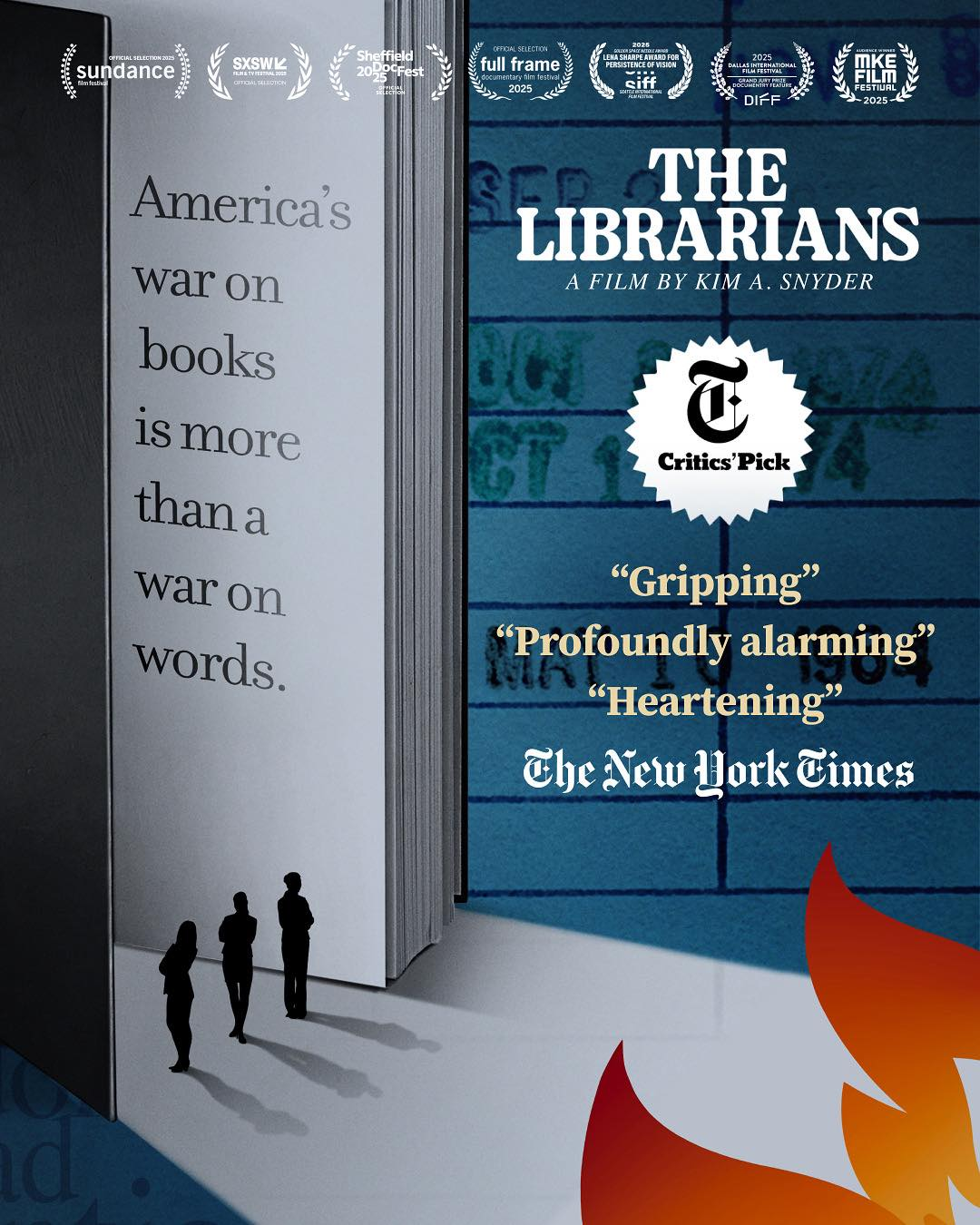
“Members of the German Student Union carried out the book burning with enthusiasm. At Opera Square, the students formed a human chain, passed the books from hand to hand, and then cast them into a pile. Estimates of the number of books in the bonfire pile range from twenty-five thousand to ninety thousand. As each book was thrown in, a student announced the reason this particular book was being ‘sentenced to death.’ The reasons were stated like criminal charges. …The Feuersprüche [Fire Incantations] had a party atmosphere with dancing, singing, and live music. At midnight, [May 10, 1933] Goebbels appeared and gave a raving discourse known as the Fire Speech. That same night, similar events were held in Munich, Dresden, Frankfurt, and Breslau….”The Library Book, by Susan Orlean
Calling all book and library lovers and their friends! (Especially print book lovers.) If you’re looking for a last-minute Christmas gift for the reader on your list, stop by your local bookstore and pick up a copy of The Library Book.
While she was writing The Library Book,author Susan Orlean lit a match and burned one of her tattered old paperbacks – just to see what it felt like to burn a sacred object and how easily a book could be set alight. It didn’t feel good, she said, but it was easy to burn once the book reached 451 degrees, the temperature at which paper burns: Fahrenheit 451 vanished in a small conflagration.
One of the most riveting parts of The Library Bookis Orlean’s description of the 1933 Nazi-instigated book burnings in 34 university towns and cities, conducted in part by a minority of college students who called themselves the German Student Union. I’d always imagined small bonfires sacrificing a few hundred books. Maybe because I find book burning incomprehensible, I never conceived of the vast numbers burned – up to 90,000 in one fire! – or the live music, enthusiastic crowds, and tragic number of libraries destroyed in World War II and other wars, both deliberately and collaterally.
“Books are a sort of cultural DNA, the code for who, as a society, we are, and what we know. All the wonders and failures, all the champions and villains, all the legends and ideas and revelations of a culture last forever in its books. Destroying those books is a way of saying that the culture itself no longer exists; its history has disappeared; the continuity between its past and its future is ruptured. Taking books away from a culture is to take away its shared memory. It’s like taking away the ability to remember your dreams. Destroying a culture’s books is sentencing it to something worse than death: it is sentencing it to seem as if it never lived.”
Susan Orlean is one of the most brilliant contemporary American writers of nonfiction. She writes for The New Yorker and has authored many books; I’ve read only one other: the quirky The Orchid Thief: A True Story of Beauty and Obsession, which was made into the movie Adaptation (starring Meryl Street, Nicolas Cage, and Chris Cooper.) The book is strange and marvelous, and the movie is even stranger – perhaps not to everyone’s taste. If you love books, though, you’ll find The Library Book more accessible yet equally as passionate. Orlean is a book-lover from way back and writes movingly about her childhood library visits with her mother, who always said that if she’d had a career, she would have been a librarian.
Susan’s private book burning and those of the Germans echo and deepen The Library Book’scentral plot, which involves the tragic burning of the Los Angeles Public Library in 1986. It burned for seven hours; over 400,000 books were destroyed and 700,000 more damaged. No one is sure whether the fire was arson or an accident. The prime suspect, Harry Peak, a compulsive but likable liar and something of a tragic figure, changed his story every time he was questioned by the police. Woven into the story of the burning and resurrection of the LA Public Library is Orlean’s love letter to books, reading, libraries, and librarians.
Susan writes of her own motivation to write, one of the most eloquent and true statements I’ve ever read about why someone would devote oneself to this painstaking labor:
“I fear not just that I, personally, will be forgotten, but that we are all doomed to being forgotten – that the sum of life is ultimately nothing; that we experience joy and disappointment and aches and delights and loss, make our little mark on the world, and then we vanish, and the mark is erased, and it is as if we never existed…..But if something you learn or observe or imagine can be set down and saved, and if you can see your life reflected in previous lives, and can imagine it reflected in subsequent ones, you can begin to discover order and harmony. You know that you are part of a larger story that has shape and purpose – a tangible, familiar past and a constantly refreshed future. We are all whispering in a tin can on a string, but we are heard, so we whisper the message into the next tin can and the next string. Writing a book, just like building a library, is an act of sheer defiance. It is a declaration that you believe in the persistence of memory.”
Isn’t this why we haunt libraries and bookstores, to find those singular voices, many from the past, that for whatever reason speak to us so personally and vividly?
“You don’t need to take a book off a shelf to know there is a voice inside that is waiting to speak to you, and behind that was someone who truly believed that if he or she spoke, someone would listen. It was that affirmation that always amazed me. Even the oddest, most peculiar book was written with that kind of courage — the writer’s belief that someone would find his or her book important to read. I was struck by how precious and foolish and brave that belief is, and how necessary, and how full of hope it is to collect these books and manuscripts and preserve them. It declares that stories matter, and so does every effort to create something that connects us to one another, and to our past, and to what is still to come.”
Like Susan, I’d never heard about this:
“In Senegal, the polite expression for saying someone died is to say his or her library has burned. When I first heard the phrase, I didn’t understand it, but over time I came to realize it was perfect. Our minds and souls contain volumes inscribed by our experiences and emotions; each individual’s consciousness is a collection of memories we’ve cataloged and stored inside us, a private library of a life lived. It is something that no one else can entirely share, one that burns down and disappears when we die. But if you can take something from that internal collection and share it – with one person or with the larger world – on the page or in a story recited – it takes on a life of its own.”
These excerpts don’t even begin to address Orlean’s fine chapters about libraries, librarians, their history, and their future. Having been a book editor and a (medical/academic) librarian, I’ve heard more than once from people who are quite sure books will disappear and that we no longer need libraries. To them, I’d say: fake news, conspiracy theories and the disruption of democracy. I’d point them to these and many, many other links:
I leave you with this arresting image from The Library Book, which takes place around the clock in my hometown of Cleveland:
“The lobby of the OverDrive headquarters [in Cleveland] is huge and high. A ten-foot-square screen that displays a world map dominates the center of the lobby. Every few seconds, a bubble pops up from somewhere on the map, showing the name of the library and the title of the book that had just been borrowed. The screen is mesmerizing. If you stand there for a few minutes, you will see that someone at a small library in Arles, France, has just checked out L’Instant présent by Guillaume Musso; that someone in Boulder, Colorado, has borrowed Harry Potter and the Cursed Child by J.K. Rowling; and that in Mexico City, someone has claimed a copy of El cuerpo en que nací by Guadalupe Nettel. It feels like you’re watching a real-time thought map of the world.”
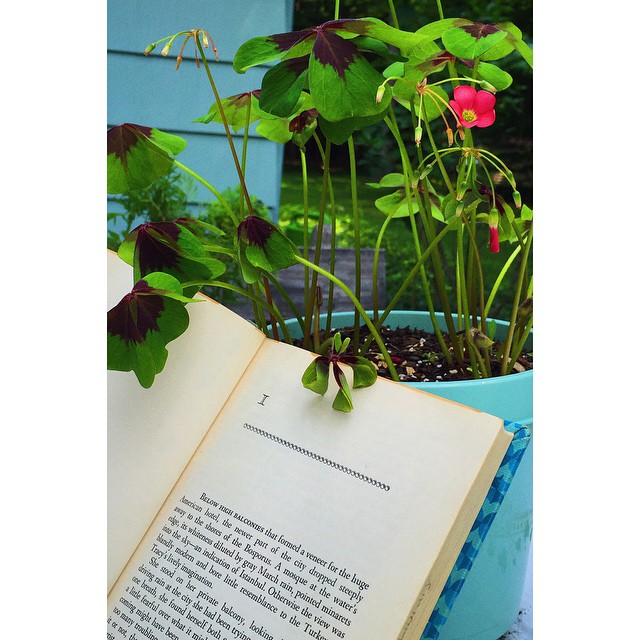
Guess the book (hint: gothic romance) and/or the flower for a chance to win a book or a package of seeds. You don’t have to get the correct answer to win. Ends Wednesday, June 24, midnight EST.
Here are a few of the books I’ll be reading and writing about this summer:
How to Be Both, by Ali Smith
Laudato Si: Praise Be to You, On Care for Our Common Home, by Pope Francis
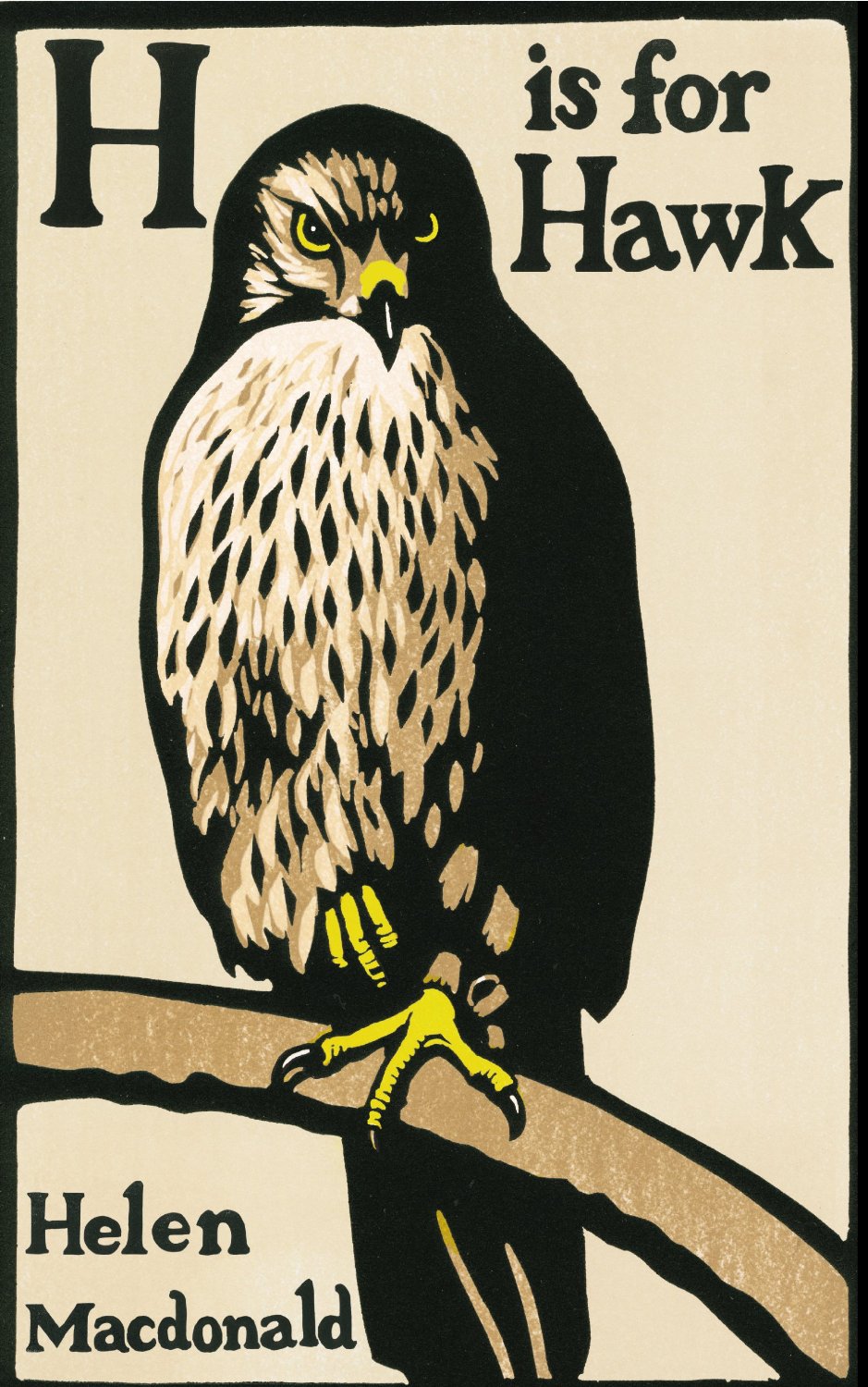
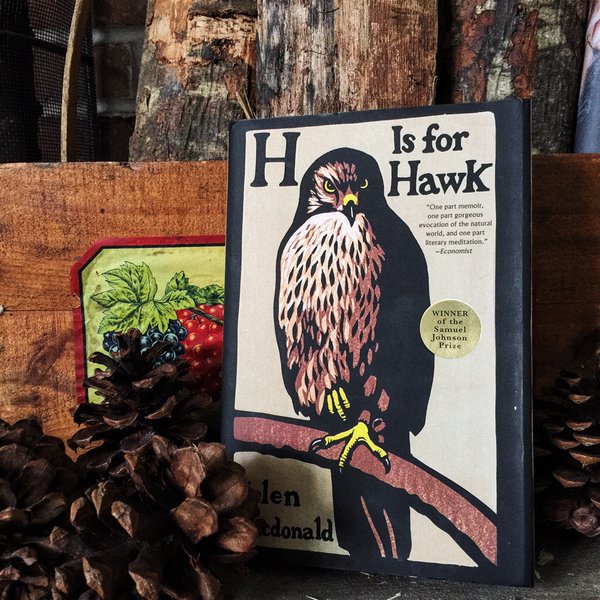
H Is for Hawk, by Helen Macdonald
Bad Feminist, by Roxane Gray
Smile of a Midsummer Night: A Picture of Sweden, by Lars Gustafsson & Agneta Blomqvist
Rhythm of the Wild, by Kim Heacox
How Should a Person Be? by Sheila Heti
The Collapse of Western Civilization, by Naomi Oreskes & Eric M. Conway
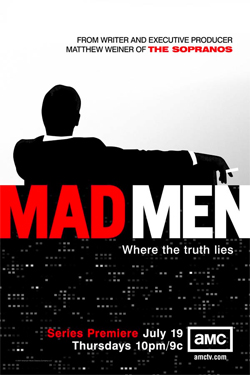
I was surprised at how bereft I was the day after the Mad Men finale, as though I’d said goodbye to my childhood forever. The only thing that made me feel better is the memoir I’m writing; nearly every day lately I return to the 1960s.
This post has spoilers, so if you haven’t seen the last episode of Mad Men, or if you’ve yet to watch the entire 7-season, 92-hour epic, you may want to stop reading right here. (Or click on these links to the New York Public Library’s Mad Men reading lists and NPR’s guide to the music of Mad Men. If you plan to watch or re-watch the series, you could supplement with books and music of the times.)
A few seasons into Mad Men, a couple of friends predicted that Don Draper would commit suicide, given his self-destructive tendencies. Many viewers thought the opening animation of a man in a suit falling from a skyscraper foreshadowed such an ending.
No, I thought. That’s wrong. A misreading of his character. Don is a survivor. (Indeed, so says one of the characters in the final episode.)
I bristled at the judgmental tone I sometimes heard, as if Don deserved such an end, given his many faults. On the contrary, Don was emblematic of a certain kind of self-made man of his time–raised in poverty and neglect, a traumatized war veteran who became a successful ad man, rich beyond his wildest dreams, yet alienated and lonely. Like all humans, he struggles. Like The Man in the Gray Flannel Suit, he’s lost.
You can find Don Draper in much of the literature of the 1950s and ’60s. The show’s creator, Matthew Weiner, drew heavily on bestselling books of that era, and was particularly influenced by the short stories of John Cheever, as well as Cheever’s journals. In fact, at the beginning of every season of scriptwriting, Weiner read the introduction to Cheever’s stories to the writers as a source of inspiration.
Weiner says that he loved reading the journals of 1950s and 1960s writers and ad executives and found them enormously helpful. While many of us look upon advertising with distaste, or at least ambivalence, Don Draper and his colleagues were in fact supporting families while doing deeply creative work. I think Weiner got it so right as he charted the highs and lows of these highly creative men and women. Weiner also points out that many famous artists have had to do advertising work to make a living.
When I was in college, a couple of my male friends had fathers who were prominent ad men, having commuted from the suburbs into Manhattan every day for thirty years. They seemed to feel pressure to follow in their fathers’ footsteps, and I sometimes sensed they were afraid they wouldn’t measure up. Advertising was a difficult, high-pressure career, but also an exciting and fulfilling way to make a living. And, of course, most ad execs were not deeply flawed Don Drapers.
One note of nostalgia for me is that the show ends in 1970, and in 1977 I moved to Manhattan, where I worked in book publishing. For a time I was in the advertising department of a large publisher, where I worked with artists, graphic designers, photographers, and other creative people. Publishing was a different world from high-stakes Madison Avenue advertising, of course, a backwater compared to the pressure of Mad Men agencies. But when I saw Mad Men’s meek Peggy Olson show up for her first job in that office in the sky, I was taken right back to my New York City days. Peggy’s world, where women in the workplace were all secretaries, was to a large degree my world. Needless to say, watching Peggy’s transformation has been riveting.
In a remarkably candid interview conducted by the author A.M. Homes at the New York Public Library, Weiner says that he often discussed with his therapist the challenges of his work as the creator of Mad Men,and they often talked about Don Draper–his flaws, his motivations, his journey in life. Weiner reveals that his therapist helped him figure out whether it was necessary to be miserable when one is in the midst of creating. (Weiner implies that he was often miserable and concludes that, no, one does not have to be miserable when one is creating.)
Weiner says Frank O’Hara’s poetry in particular helped him understand the zeitgeist of the times. He read Lunch Poemsand Meditations in an Emergency (which we see Don reading in one episode), and says that Meditations changed his life. That makes me curious, so I’ve added O’Hara to my reading list.
Here’s another fascinating tidbit: when they were looking for an actor to play the stranger that Don reaches out to at the Esalen style retreat, Weiner told the talent scouts that the stranger had to be an actor who was not famous and that this character “was the most important character in the entire series.” Weiner has more to say about this character and the closing scene in the New York Public Library interview. (The final scene is shown during the interview.)
The last episode concludes with what has been called the most famous commercial of all time: the Coke ad with the song, “I’d Like to Teach the World to Sing.” People critical of this ending feel cynical about pairing this uplifting message, sung in harmony by people of all races, with crass commercialism. As for me, I thought the ending was perfect, in sync with the person Don is, and in sync with the times. Yes, Don Draper the ad man may have risen like the phoenix to create the most popular commercial in history. But I took his encounter with the lonely stranger at Big Sur to be an authentic moment of growth and greater self-awareness. I haven’t been to Esalen, but I’ve been to a place called Spirit Rock, and things like that do happen to people.
If Mad Menwere to continue, I think Don Draper would still be the flawed man we know, far from perfect. And yet, a better man, too. You can hear Matthew Weiner’s thoughts about Don here in the NYPL interview.
I think Matthew Weiner ranks right up there with the great novelists of our time.
If you’d like to meet the real ad man who created the Coke commercial (Bill Backer, who makes clear he has nothing in common with Don Draper), click here.
Mad Men Books and Music
Mad Mencharacters love to read. Here are lists of the books they are seen reading on screen:
The Mad Men Reading List compiled by Billy Parrott, Managing Librarian at the New York Public Library
This week I’m passing along a few of my favorite bloggers, people who have important things to say and they say it well.
I’ve recently become a follower of Book Guy Reviews, written by James Neenan, a Denver high school English teacher. I love what he says about reading difficult books.
I wanted to share a post I love written by Valerie Davies of New Zealand, an accomplished writer and journalist who left blogging for a while and has now returned, to the great pleasure of her many followers.
Valerie writes about reading aloud to your children in front of the fire or under the covers on a cold winter night….David Copperfield (Did you read it at a young, impressionable time in your life?)….a Queen who couldn’t stop reading….what Stephen King says about writing truthfully….the dangers of reading and writing….what some brave bloggers are doing….and for good measure, a recipe.
“I do not like postmodernism, postapocalyptic settings, postmortem narrators, or magic realism….I do not like genre mash-ups a la the literary detective novel or the literary fantasy. Literary should be literary, and genre should be genre, and crossbreeding rarely results in anything satisfying. I do not like children’s books, especially ones with orphans, and I prefer not to clutter my shelves with young adult. I do not like anything over four hundred pages or under one hundred fifty pages. I am repulsed by ghostwritten novels by reality television stars, celebrity picture books, sports memoirs, movie tie-in editions, novelty items, and – I imagine this goes without saying – vampires. I rarely stock debuts, chick lit, poetry, or translation….Above all…I find slim literary memoirs about little old men whose little old wives have died from cancer to be absolutely intolerable.” A.J. Fikry, bookseller, in The Storied Life of A.J. Fikry
This is a quick, funny, sweet read about a bookseller who is down on his luck and turning quite bitter in his middle age. It’s a tribute to booksellers, book lovers, beloved authors, and their stories. “A Good Man is Hard to Find” (Flannery O’Conner), “Lamb to the Slaughter” (Roald Dahl), “The Diamond as Big as the Ritz” (F. Scott Fitzgerald), “The Tell-Tale Heart” (Edgar Allen Poe), “Ironhead” (Aimee Bender), “What We Talk About When We Talk About Love” (Raymond Carver), Infinite Jest (David Foster Wallace), and many others have little parts to play in Gabrielle Zevin’s clever story.
After something good follows the tragic turn in A.J.’s life, he begins to change.
He’s inspired to write pithy little reviews for someone he loves. This is what he has to say about “A Good Man is Hard to Find” –
“It’s Amy’s favorite. (She always seems so sweet on the surface, no?)…When she told me it was her favorite, it suggested to me strange and wonderful things about her character that I had not guessed, dark places that I might like to visit.”
You can tell a lot about a person by the books she loves.