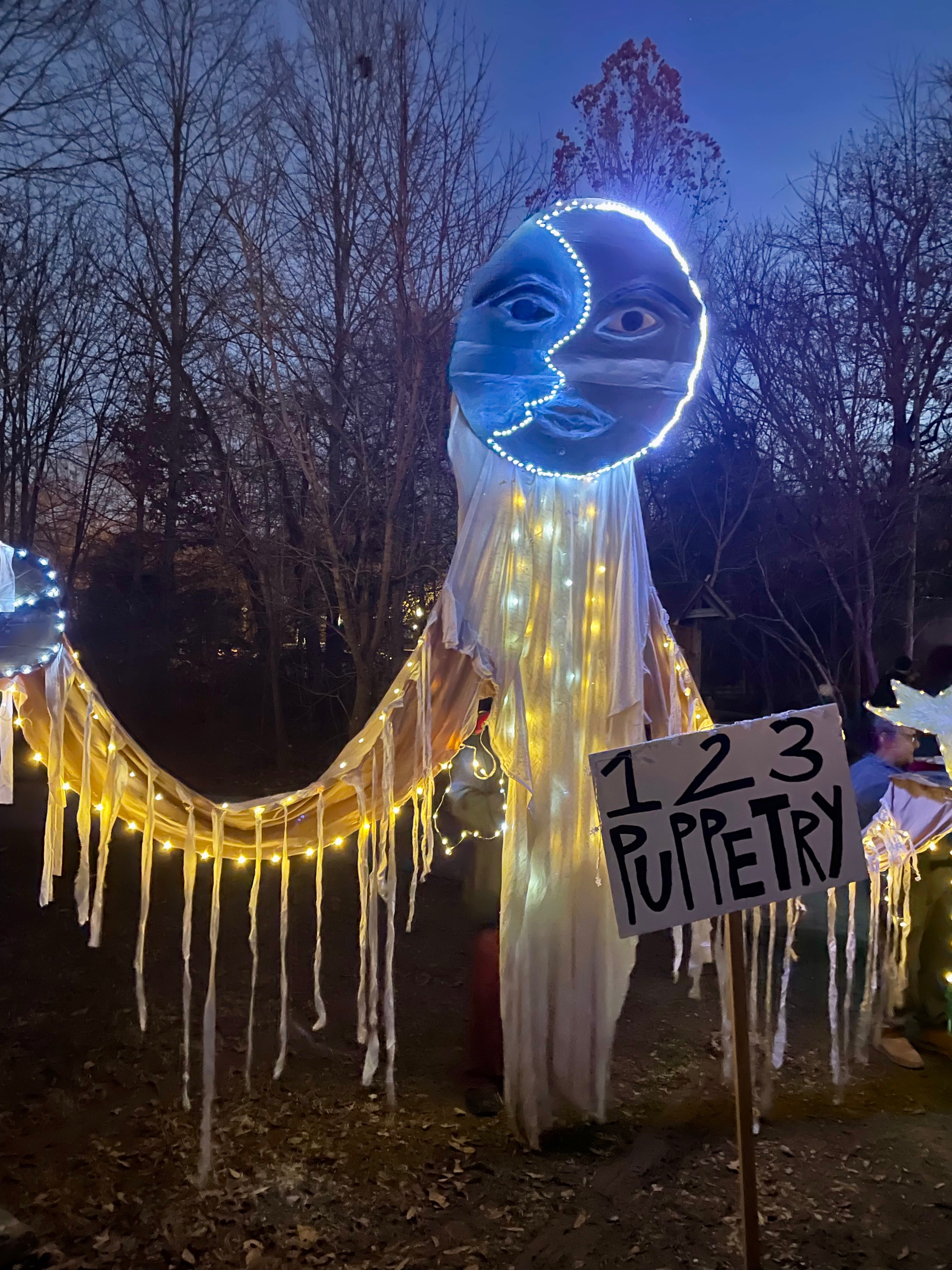
A highlight of the Winter Solstice Lantern Walk along the Eno River, NC, 2025.
The fear is ancient and uncomplicated, part of our human-animal inheritance…will the darkness swallow me, will it swallow us all together? Nina MacLaughlin, Winter Solstice: An Essay
Happy New Year to my friends and readers!
Here is a post full of little treasures to light up your midwinter days and usher in the New Year.
Never in my life have I seen the winter solstice celebrated with so much exuberance. Last year, on our first winter solstice in Hillsborough, North Carolina, I assumed the annual lantern walk along the Eno River would be a quiet affair with a few dozen souls. Not at all. Thousands of people showed up with the most inventive homemade lanterns I’d ever seen.
Before you read past this paragraph, PLEASE click the link below to last year’s walk. It will put you in the mood for the rest of this post, which is full of all things Winter Solstice. In last year’s video, you’ll see drone footage of the magical riverside procession, an illuminated spiral, and beyond-belief lanterns, with a poetic narration by our town’s very own Poet Laureate, Amal Kassir. (YES, our town has a Poet Laureate. More about Amal at the end of this post.)
Here is the link. Please turn up your volume, enjoy, and then hop back over here:
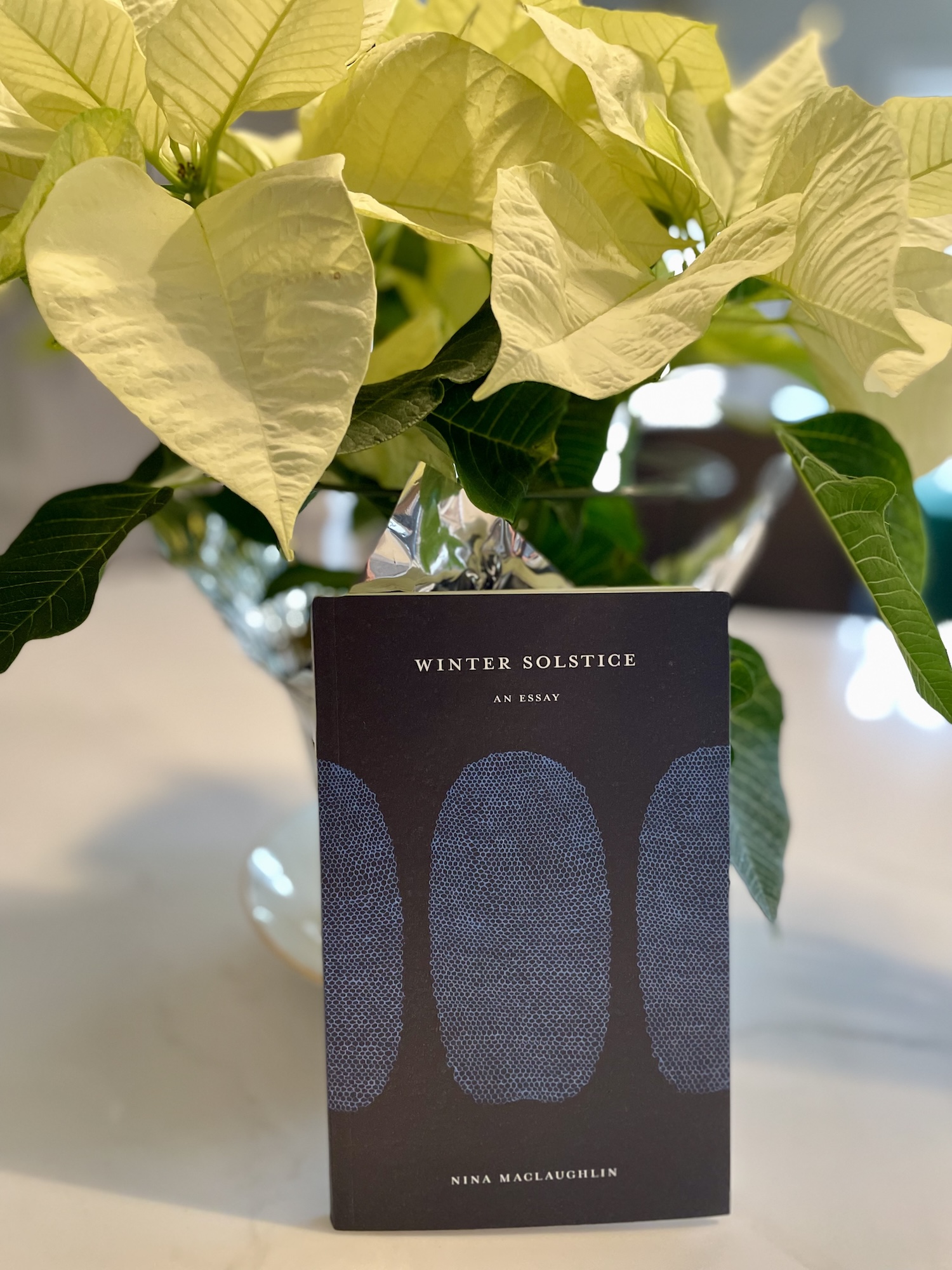
I’ve sprinkled quotes from Nina MacLaughlin’s earthy, primal Winter Solstice essay throughout this post, because it speaks deeply to writer and mixed-media/book artist Suzi Banks Baum, who created and leads Advent Dark Journal. This is an immersion in art, writing, nature, and daily creative practice that I enjoy during the last six weeks of the year.
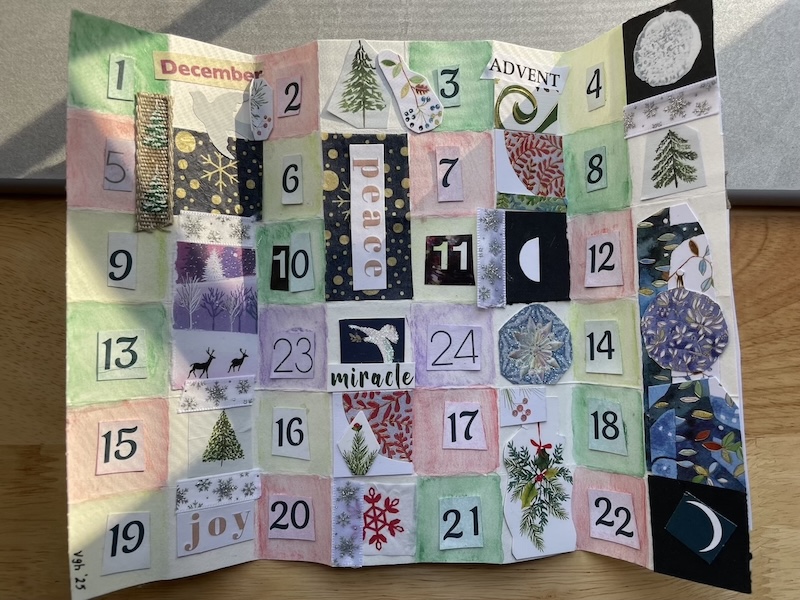
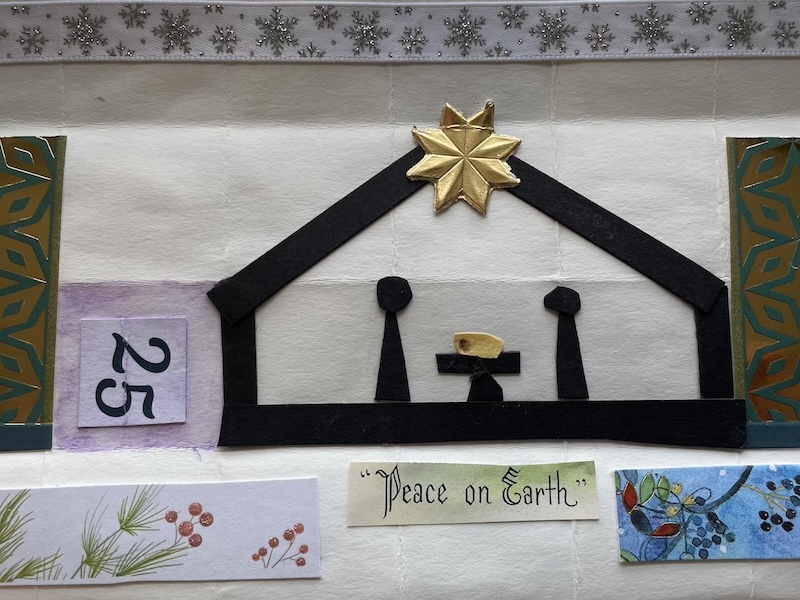
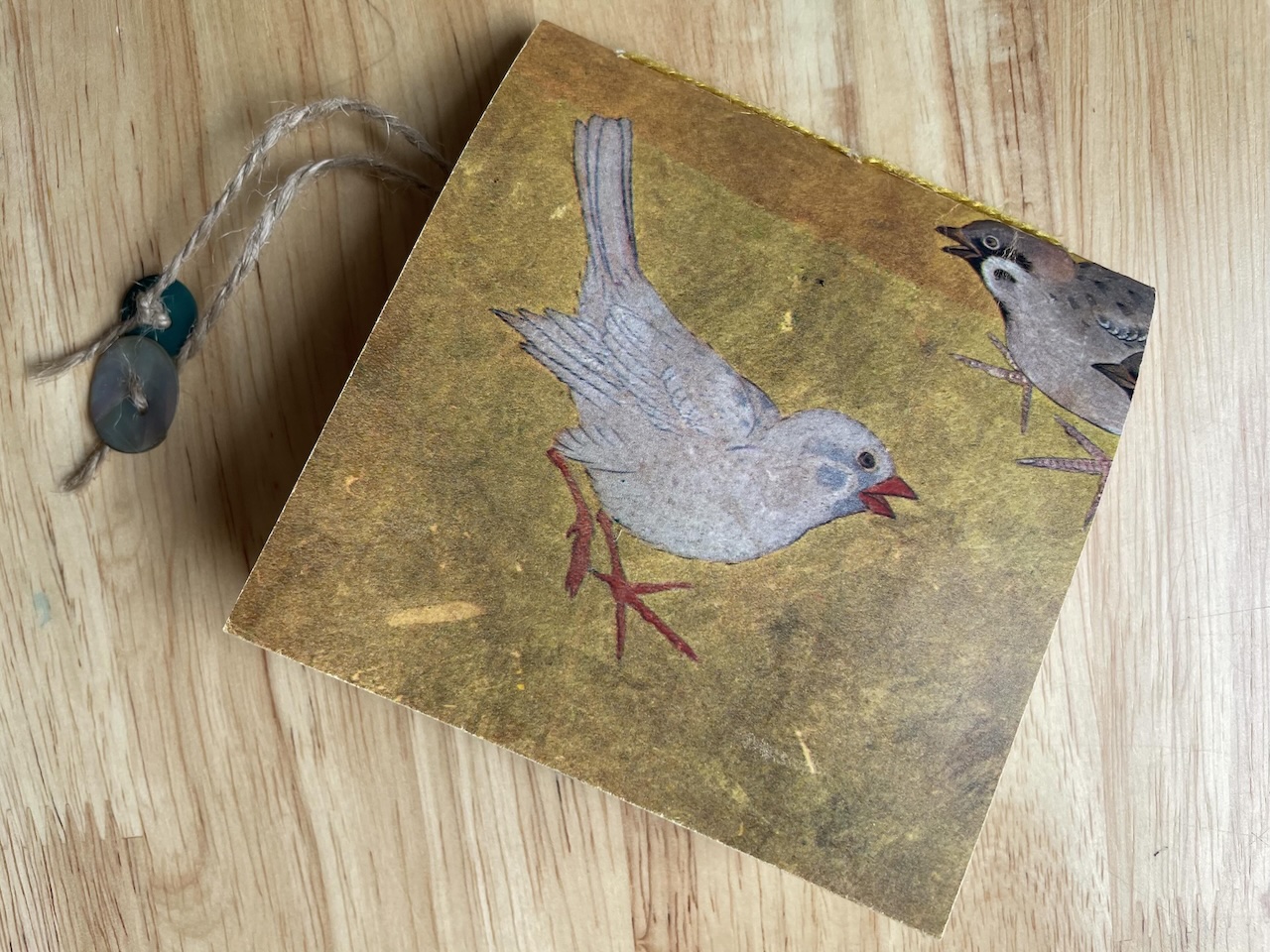
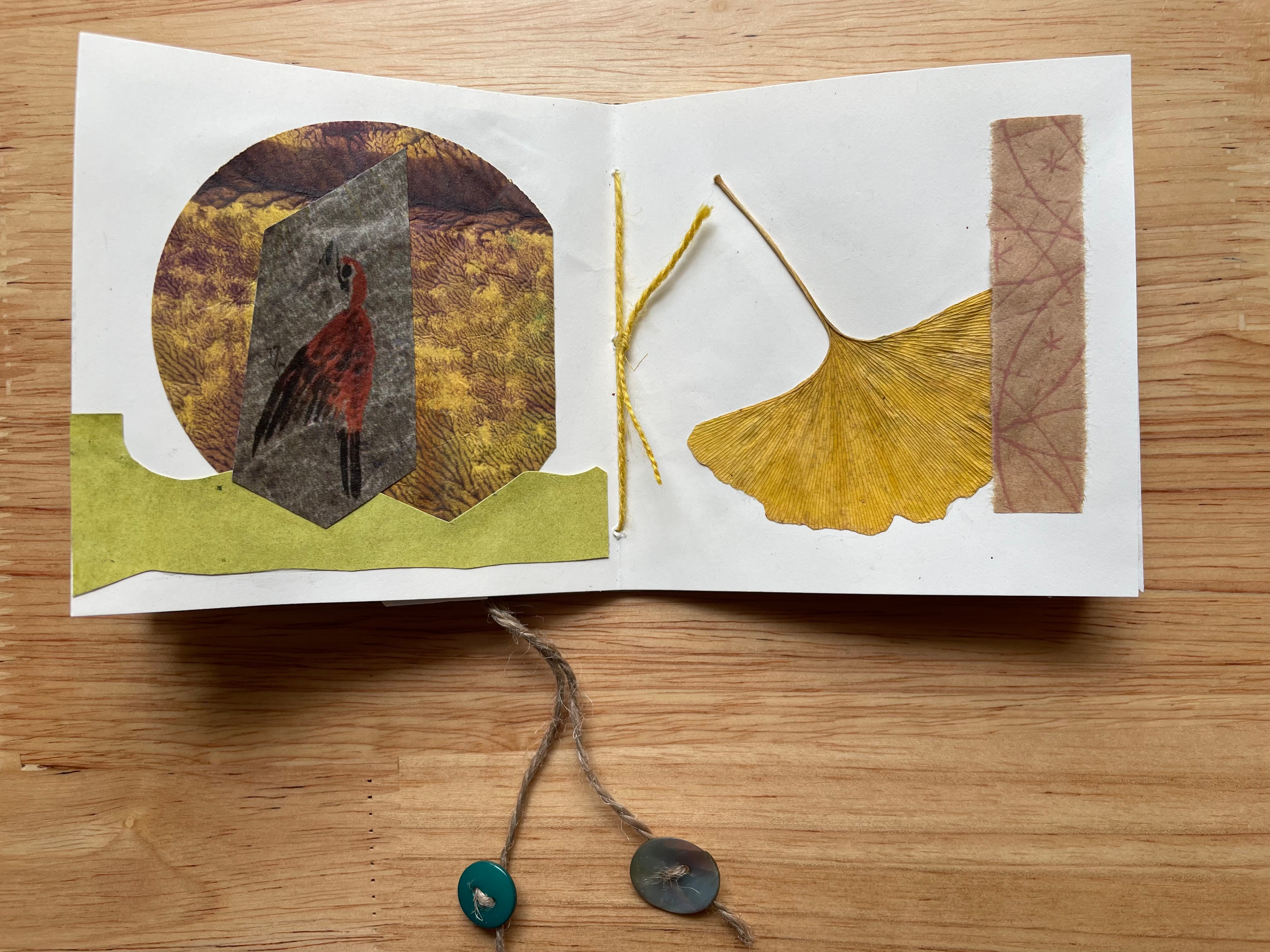
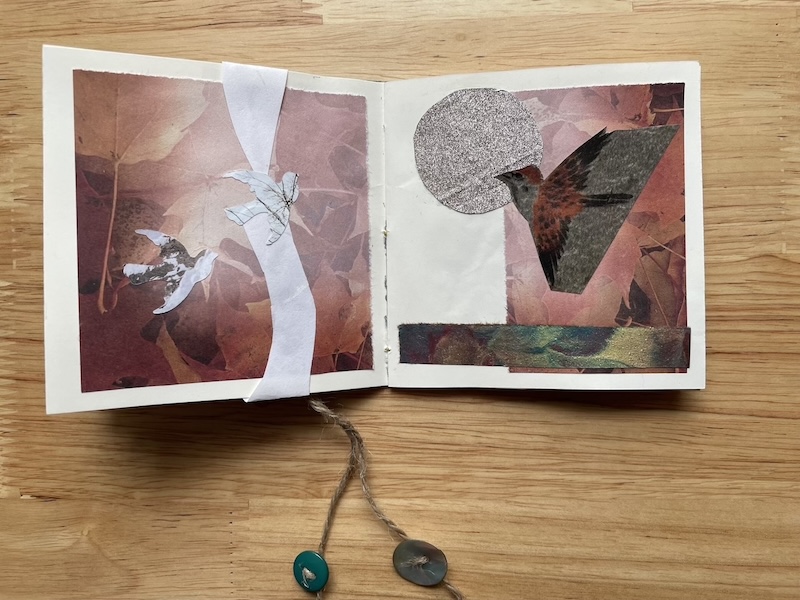
I’ll write more about Advent Dark Journal in an upcoming post, because Suzi and her creation are worth an in-depth look. For now, here is a glimpse of the small collage and art projects I’ve completed as part of this experience. You’ll see that my Advent calendar has a religious theme, but Advent Dark Journal is not centered around organized religion; rather, it is a “container” of rituals for participants to explore wherever our soulful arisings lead us during this sacred time of year.
“Advent Miracle”
“Earth Holder”
These small, collaged journals and art pieces were sent off to friends – one in Australia – as soon as I completed them. In addition to the art we create in Advent Dark Journal, Suzi encourages us in new, transformational directions. Since I’ve become a regular in Suzi’s workshop, I’ve added a tradition our adult sons and partner enjoy when they visit for the holidays – a fireside Winter Solstice ritual. More about that in an upcoming post, but suffice it to say, Suzi has shown me how to weave a daily creative practice into my life in ways that promote my well-being and that of others in my life.
It is the animal in us that knows the dark. This season stirs that animal in us, and stirs the memories that live in all of us, submerged so deep, of the ancient dark, of a time before gods, before form and words and light….Winter reminds us: the dark was first.
…maybe death is all potential, a means of moving on. And on we go, absorbed into the wet warm belly of eternity, or the roaring big black void, back here as a robin or a wren, in dusted orbit around another planet’s moon, riding on the light. Winter Solstice
Nina MacLaughlin’s Winter Solstice is stellar writing, moody and mysterious. She reminds us of our primal, animal origins; ultimately, we are bound up in the life web and rhythms of the earth, whether we recognize this or not. I purchased Nina’s Summer Solstice essay as well, which I’ll read come summer.
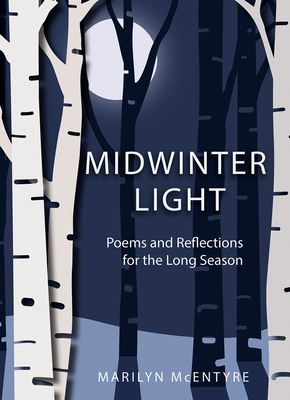
If you are interested in writing that is more traditional, something you can read in small bits alongside your daily journaling or meditation, I recommend Midwinter Light: Poems and Reflections for the Long Seasonby Marilyn McEntyre. Each day, she includes a poem with commentary that honors this dark season, when growth seems to stop but germinates unseen, to be manifested as the light returns.
“Winter makes us see differently. Noticing is rooted in desires so easily satisfied in spring we barely feel them—for color, for movement, for the sound of birds, and things that bloom. On a walk in midwinter, we experience solitude in a different key. We are surrounded by reminders of mortality and loss, by the absence of what is lush and vivid. We are clothed in layers and aware of our bodily needs in new ways. And the quiet, sometimes, is palpable. It is a good time for prayer: the veil between this dimension and the next seems to have thinned.” Marilyn McEntyre, Midwinter Light: Meditations for the Long Season
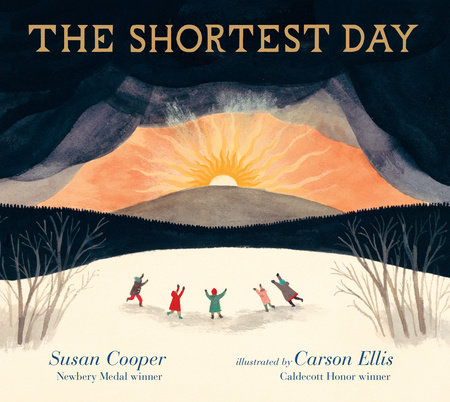
Finally, I discovered an excellent picture book with a poem by Susan Cooper and art by Carson Ellis. Both Susan and Carson have won the highest honors for children’s books, and this particular collaboration is special. Susan’s poem “The Shortest Day” is easy to find online. I encourage you to read it. I think you’ll find that Susan’s half-rhymes and cadence create an incantation that perfectly captures the magic and mystery of this dark season.
If you would like the perfect picture book for this time of year, for yourself, or as a gift, I suggest The Shortest Day, written by Newbery Medal winner Susan Cooper and illustrated by Caldecott Honor recipient Carson Ellis.
Happy New Year!
I will return in January with more about Advent Dark Journal, as well as commentary about a provocative documentary you won’t want to miss, especially if you are an avid reader and book-lover.
As Amal Kassir says in her winter solstice poem you may have listened to in the above-linked video, “It only gets brighter from here.”
By the way, PLEASE be sure to check out Amal Kassir’s website and watch her perform her heartbreaking poem, “Broken Arabic.” Her poetry collection, Scud Missile Blues, is available from Amazon. I encourage you to consider purchasing it. We need to support our young poets, and Amal is immensely talented. Just think of all the poems she has yet to give to the world!
If you have last-minute holiday shopping to do and would like to give a fine memoir as a gift, I have a suggestion.
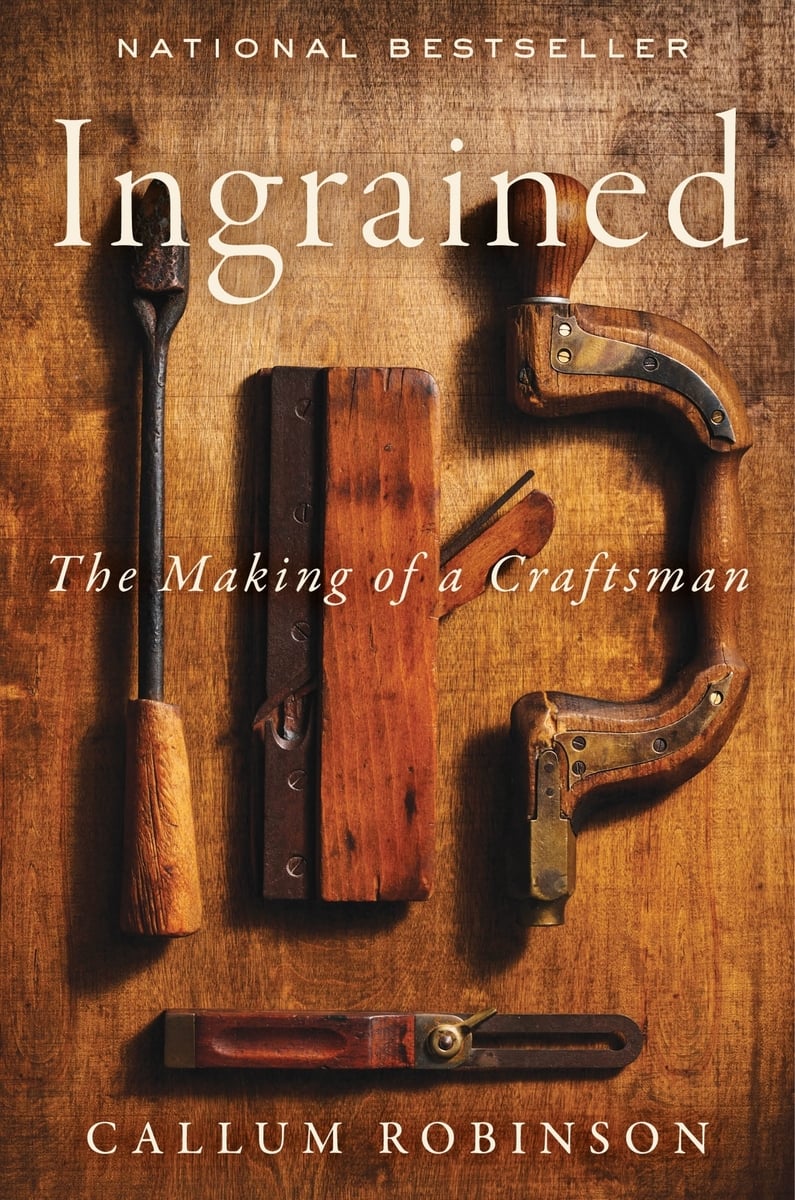
I spotted Ingrained: The Making of a Craftsman by Callum Robinson in a local bookstore and thought that my son’s partner, who is an amateur furniture-maker, might like it. Of course, I decided to sample a chapter. Two days later, I’d finished the memoir, having enjoyed a kind of bliss through the entire reading.
This is a superb, deeply personal book that is also suspenseful, sensual, poetic, and universal. I could smell the cedar, pine, and oak as I read. Makers will love this story, but I don’t think you have to be a maker to respond deeply to this nature-based memoir.
The neat flat-cut edge of its end-grain revealing the gently arcing lines of the tree’s growth rings. Dark reddish brown, like burnt umber or strong tea…It is a broad piece of one-inch elm…Fine close grain tumbles down the board’s length. And a tracery of spectral green streaks across it, like the northern lights.”
Callum Robinson, Ingrained
The workshop owned by master woodworker Callum and his wife, landscape architect and designer Marisa, is about to go under, thanks to the cancellation of a substantial corporate project. Already leveraged to the hilt, the relatively young business faces imminent bankruptcy.
They must change direction, and fast.
Chapter by chapter, the story expands to reveal Callum and Marisa’s world: the devoted young craftsmen who work for them; Callum’s father, also a master woodworker, who jumps in to help set the business in a new direction; the small Scottish town of Linlithgow, where their little studio and workshop reside; the beautiful Scottish forests that supply much of the timber from which their furniture is made; and the customers who eventually browse their shop and can’t resist the furniture they see.
And with its flowing organic transitions, to me the grand elm table feels more like a sculpture than a piece of furniture. To one edge of its mighty top, among the swirling purples, reds, and greens, there remains just the tiniest taste of the tree’s true form. A handbreadth of live edge and finely sanded bark, still visible in the straight, sharp, otherwise regimented lines. A perfect imperfection – a signature – like the crimped pie crust or the fingerprint in the clay.
Callum Robinson
Callum Robinson seamlessly blends the past and present as he tells of his own coming-of-age and how he found his life’s work. His story is relevant to anyone concerned with living in a deeply authentic, meaningful way. You will be rooting for these singular people who design and make furniture of great beauty that will be loved and handed down through the ages.
This is a celebration of the human-designed and handmade. Callum approaches crafting fine furniture from some of the world’s most beautiful trees as if it were pure poetry. His writing is the same.
I look forward to reading more of him.
Nostalgia is a powerful thing. An ethereal link. An ache for something long ago, something that might never really have existed. No other material I know can hold it, or radiate it, quite the way that wood can. And almost nothing made from wood will ever have as many stories locked inside as a family table. Used so often it’s almost invisible, passed down through the generations, scarred by the lives and ingrained with the memories of all those who gathered around it.
Callum Robinson
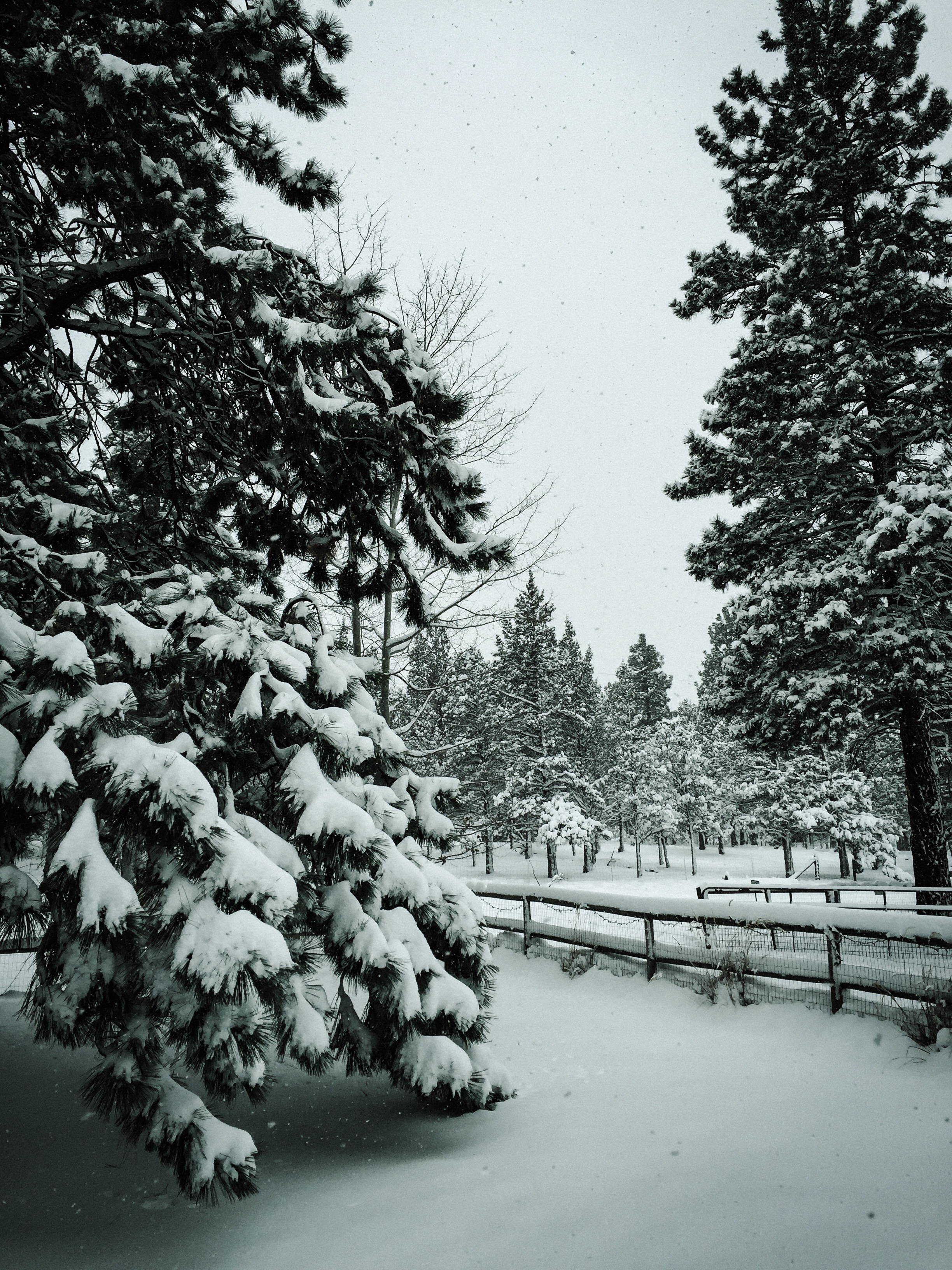
Our ponderosa pine homeplace in central Oregon, where we lived for a few years.
“To all families who fall apart and struggle to find their way home again.” – Deborah J. Brasket
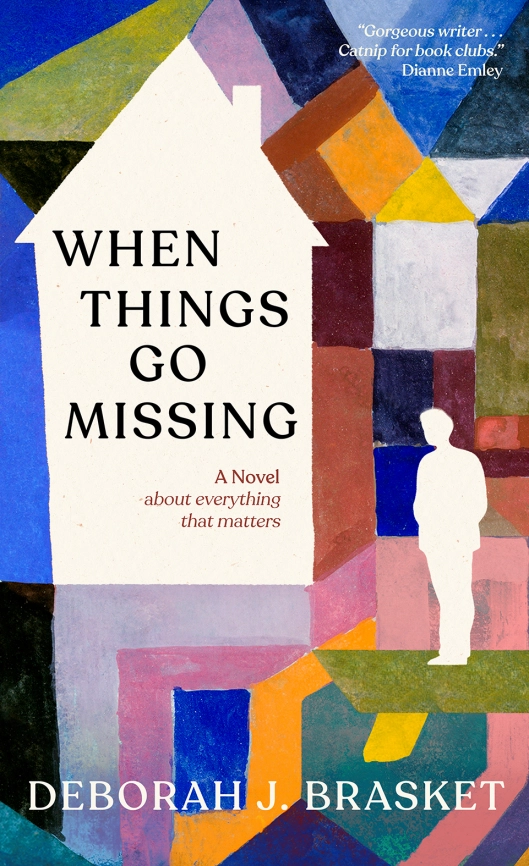
What happens when a mother leaves her family?
Shopping list and coupons in hand, fifty-something Fran heads to the grocery store. But instead of shopping, she keeps driving – all the way to the California border, into Mexico, and beyond.
It is 1997. Fran will not be coming home anytime soon.
With deep pleasure, I bring Books Can Save a Life out of retirement to tell you about Deborah J. Brasket’s debut novel, When Things Go Missing.
But first, let me say that I have been following Deborah’s blog, Writing on the Edge of the Wild, for many years on WordPress. (She now has a Substack version as well.) I have always found her insights about art, literature, truth, beauty, and the human dilemma to be evocative and profound. Truly, her blog has always stood apart from the rest. So it was with great anticipation that I powered up my Kindle and let Deborah’s story carry me away.
We witness Fran’s confused, angry, and bereft family as they begin to navigate life on their own, on ground that has shifted dramatically. The family Fran leaves behind, like so many families, was already fractured – I would even say traumatized. Where do they go from here, when it feels like the end of life as they’ve known it?
Kay, an aspiring archeologist, receives periodic voice mails from her mother:
“She’s in mourning, she tells herself, mourning a mother she thought she knew who she now realizes she may never have truly known: A mother who always was the still center of comfort she could turn to in times like these, who is there no more. A mother who held her dysfunctional family together, a family she now fears will fall apart. The grief isn’t only about losing her mother but losing everything her mother represented: family, home, security, unconditional love. It’s like her mother’s absence blew a hole through the center of her universe, and everything is flying apart, including Kay. There’s nothing left to hold onto.”
To her son Cal, a heroin addict, Kay mails her mysterious photographs from various South American locations. As the mother of two adult sons, I was haunted by this passage, as I considered what it must have taken for Fran to let go of her son:
“…he gets sideswiped by this opposing flood of thoughts that gushes through his mind like his mother’s conscience. That’s how he sees it too – not his conscience but some uncomfortable and undesirable feeling that drifts in from his mother’s looks and sighs and follows him around like a fucking rain cloud. Hell, if she isn’t still doing it, even now when she’s disappeared.
He clears out a space on the bathroom mirror so he can look at himself, the image blurry in the wetness, surreal, with the steam all around, his face ringed by a bright halo of light. He thinks if he stares at this face ringed with light long enough, hard enough, deep enough, he might catch a glimmer of who the hell he really is or was supposed to be in another lifetime. Whatever it was, he knows it was good. Whatever could have been, whatever he blew away, it was all unbelievably good.”
Walter, Fran’s husband, a taciturn, sometimes volatile, father, gets Fran’s credit card bills:
“He’s been taking care of Frannie since she graduated from high school and he got home from Vietnam….He never minded that she didn’t work. Why should she: He earned enough on his own…
He’s never tried to stop her before from doing anything she wanted. He just has to keep letting the rope out more, giving her as much lead as she needs, and then, when she’s ready, she’ll find her way home again. It’s what he tells himself, what he needs to believe to get through the day.”
We get a sense of the kind of wife and mother Fran was and is, as Kay, Cal, and Walter at first simply react to Fran’s abandonment. As each of them barely manages to keep going – largely on their own and isolated from one another – they begin to separate from the mother and wife bonds. They begin to individuate. We are witness to a trio of heroic journeys that unfolds in surprising and unexpected directions.
When Things Go Missing will stay with you long after you’ve read the final page. To me, this is the mark of a powerful and authentic story, one that is so true for America and for our time. You may find yourself reflecting on your own life path, the choices you’ve made, and the choices that await you.
What are our responsibilities as mothers, parents, and partners?
Is there such a thing as the perfect mother?
Are there limits to the bonds of love and family? How do these relationships change over time? Are they meant to be forever?
What are our responsibilities to our own self-actualization? When do we sacrifice our own desires and aspirations for the good of our families and communities?
How do we come to find our chosen families? Can they ever replace our families of origin? Is it possible to achieve a happy blend of the two?
As a longtime reader of Deborah Brasket’s work, I trust her wisdom and relish the grace and richness of her writing. When Things Go Missing is a beautiful unfolding – a tender, loving portrait of a family contending with grief, loss, and regret, while fully embracing all the joy that life can hold.
I will close with the epigraph that opens When Things Go Missing:
“I have loved thee with an everlasting love: therefore, with lovingkindness have I drawn thee.” – Jeremiah 31:3
When Things Go Missing, an excellent book club choice, includes discussion questions. Publication date: September, 2025, Sea Stone Press.
“They were constantly chirping, and what they were saying, or what I heard them say, was: Stand up. Look around. Be in the world.”
********
“For me, birding and writing did not feel interchangeable. Birding was the opposite of writing, a welcome and necessary flight from the awkward daily consciousness of making art. It allowed me to exist in a simple continuity, amid a river of birds and people and hours. The stubborn anxiety that filled the rest of my life was calmed for as long as I was standing in the river.”
********
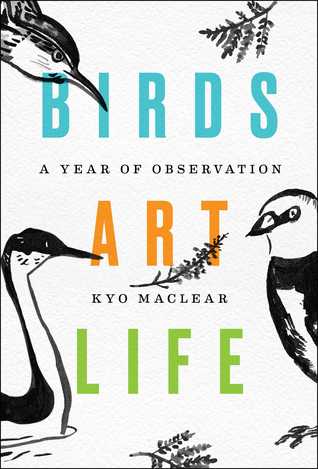
“As long as I can remember I have been drawn to people who have side loves. Maybe because no single job or category has ever worked for me, I am particularly interested in artists who find inspiration alongside their creative practice. It could be a zest for car mechanics or iron welding (Bob Dylan) or for beekeeping (Sylvia Plath). I love the idea that something completely unexpected can be a person’s wellspring or dark inner cavern, that our artistic lives can be so powerfully shaped and lavishly cross-pollinated by what we do in our so-called spare time.” Birds Art Life: A Year of Observation by Kyo Maclear
I just love this little memoir. Writer Kyo Maclear, a novelist, essayist, and children’s book author, was feeling overwhelmed by the illness of her father, caring for her two young boys, keeping up her writing, and all of life’s other demands. She decided to begin a side practice, something to relax her and refresh her writing and creative spirit.
For a year, she accompanied an avid birder who is also a musician and performer in birding adventures around Toronto and wrote about it, along the way finding truths about life and art.
Many artists and writers are dabblers or become accomplished in a side practice that cross pollinates their art and their life. Vladimir Nabokov was a world renowned butterfly expert. Virginia Woolf gardened.
I’m not sure I have a side practice. Certainly nature feeds my writing and inspires me, and I’m experimenting with learning how to paint watercolors because painting is nonverbal, a relief from hours of being in my own head when I write.
For Kyo, birding was a delightful hobby and new passion because it was relatively easy to do. Despite living in an urban environment, Kyo and her birding companion were intrigued and entertained by the wide range of birds they found along the lake front and in streams, parks, vacant lots, parking lots, backyards, and right outside their picture windows.
Each chapter in Birds Art Life is devoted to a month and a theme: Love, Cages, Smallness, Waiting, Knowledge, Faltering, Lulls, Roaming, Regrets, Questions, and Endings.
A few chapter subtitles will give you an idea of Kyo’s thematic reflections:
Smallness: On the satisfactions of small birds and small art and the audacity of aiming tiny in an age of big ambitions
Lulls: On peaceful lulls and terrifying lulls and the general difficulty of being alone and unbusy
In one chapter, Kyo broadens her scope to reflect on climate change and how, day to day, urbanites and suburbanites don’t notice the human-caused environmental disruption and species depletion happening just outside their view.
Many birders have a spark bird, a particular species of bird that ignites their interest and launches them into birding. Likewise, many devoted readers have a spark book, a book they read in childhood that became a portal to a life of passionate reading.
Do you have a spark book? What comes to mind for me is A Wrinkle in Time by Madeleine L’Engle.
This is a hugely satisfying memoir and meditation on life and art that will replenish your spirit. I highly recommend it.
“This is what birds do when they join a swirl of other birds, I thought. They don’t proclaim their individuality or try to make a splash. They dissolve into the group. I wondered if this merging felt so relaxing because it was an antidote to the artist ego, built on an endless need to individuate, to be your own you. In place of exhausting self-assertion, the relief of disappearing into the crowd.”
Do you have a side practice that complements your primary work? Do you have a spark book, or a spark bird, or something specific that sparked your passion in another hobby or practice?
Italy. Children. Creativity. I hadn’t planned this, but the poem and Ferrante’s novel have these in common. (The similarities end there – Elena Ferrante is a world-renowned author; I’m a novice poet.)
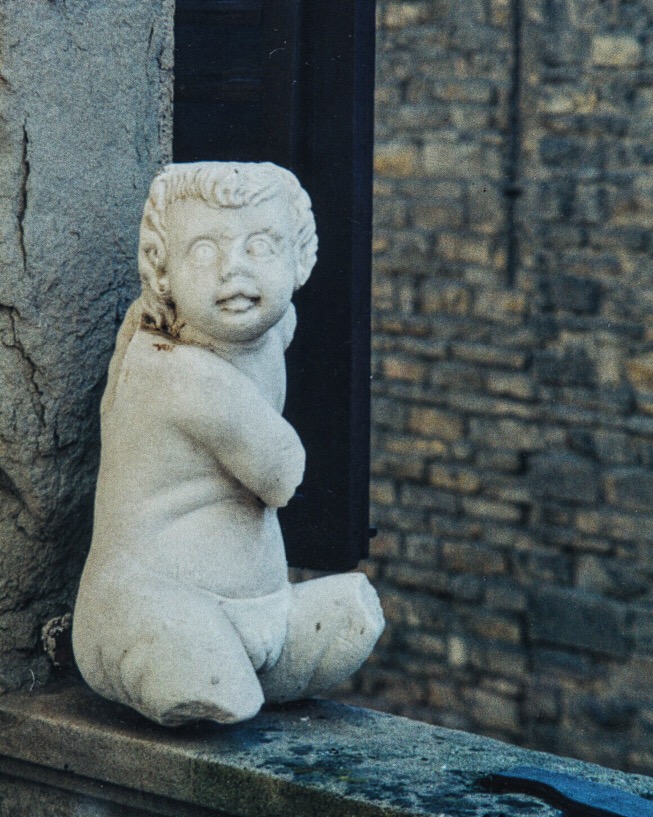
First, the poem. Some years ago I traveled to Florence with my sister-in-law, and we visited Casa Guidi, the home of Elizabeth Barrett Browning and Robert Browning in the Oltrarno quarter, where many artists and writers lived. Later, recalling our visit, I was inspired to write “At Casa Guidi.”
Loveliest Magazine, a new venue “for storytelling and togetherness,” caught my eye when I read the words “slow-lifestyle” and “literary” to describe its cross-genre purpose. That’s me, for sure, so I thought my poetry might be a good fit. Beautifully written and produced independent literary and lifestyle publications such as Loveliest often look for good fiction, poetry, and essays; if you’d like to see your work published consider submitting to these in addition to traditional literary journals.
Little boy at Casa Guidi
If you are ever in Florence, be sure to visit this quieter part of the city, the Oltrarno, which literally means “beyond the Arno River.” In addition to the must-see attractions and many great works of art, Oltrarno streets are lined with stationery stores featuring the things writers love: Italian-made note papers and leather journals, ornate fountain pens, inks in every shade and color. When I was there, I bought a small, leather-bound copy of Sonnets from the Portuguese, and my sister-in-law bought a print of Leonardo Da Vinci’s Last Supper.
Closing 2015 with Elena Ferrante
I’ve written about Elena Ferrante’s Neapolitan novels in a previous post.The Story of the Lost Child is Ferrante’s fourth and final novel in her Neapolitan series. The books are a probing look at the inner life of a writer; a family saga; a soap opera; a history of Italian feminism, culture and politics; and more.
So much has been said about these singular, internationally bestselling novels and their mysterious author, who publishes under a pseudonym, that I’ll simply add my thoughts here. (That we don’t know the identity of the author adds to the power of her work, in my opinion.)
If you look at the book covers you’ll see dreamy, idealized illustrations that are misleading: the story of the lifelong friendship between Lila and Elena, born in Naples just after World War II, can often be raw, brutally honest, and bleak. The book covers belie the content, but perhaps that was intentional, as if to say: think again if you expect a story filled with roses and happy endings….
I wouldn’t say I was always entertained by the books, because they can be relentless in their depiction of Napoli poverty and the battle between the sexes in an era when feminism blossomed. But, as many readers do, I became obsessed with Lila and Elena and had to keep on reading to see what became of them.
Ferrante’s work is especially meaningful to me because my father was Sicilian. Now I better understand the values, traditions, and struggles of my Italian ancestors and how these may have had an impact on my own childhood. The cultural history of Italy and its focus on family reminded me of one of my favorite Italian movies, The Best of Youth.Although I have not yet read My Struggle by Karl Ove Knausgard, it sounds as though Ferrante’s penetrating look at the psychology of growing up and growing older may have similarities with Knausgard’s autobiographical series.
As a writer, I was especially taken with Elena’s love/jealousy/hatred of her friend, Lila. Though Elena was the outwardly successful one, with several novels published and lauded as a scholar of literature and culture, she always believed Lila was the more talented of the two, the one with wildness, fire, and true originality. It’s often a struggle when I write to break out of my safe, everyday self and give creativity free reign. The genius of the Neapolitan novels is that Elena and Lila’s story can be read as the author’s own creative struggle with a psyche split in two.
Elena and her friend, Lila, are strong women, survivors. Here is Elena during the earthquake in Naples, 1980:
“I felt that fear in me could not put down roots, and even the lava, the fiery stream of melting matter settled in my mind in orderly sentences, a pavement of black stones like the streets of Naples, where I was always and no matter what at the center. Everything that struck me–my studies, books, Franco, Pietro, the children, Nino, the earthquake–would pass, and I, whatever I among those I was accumulating, I would remain firm.” –The Story of the Lost Childby Elena Ferrante
As most of the world knows by now, Go Set a Watchman was an early draft of what went on to become To Kill a Mockingbird.Harper Lee turned Watchman in to her publisher in 1957, and her editor encouraged her to write a very different story.
Lee’s initial draft was about a young women (based on Lee herself) living in New York City who visits her Alabama hometown and clashes with the racist views of her father, Atticus Finch, and her boyfriend, Henry, in the aftermath of the 1954 Supreme Court Brown vs. Board of Education decision, which declared unconstitutional state laws establishing separate public schools for black and white students.
This story morphed into the iconic novel we all know and love, set in the 1930s when Harper Lee was a child and Atticus defended a falsely accused black man.
In my last post, I wrote about how Lee’s publisher has marketed Go Set a Watchman as a newly discovered novel, a sequel to To Kill a Mockingbird. This has confused, upset, and disappointed devoted Harper Lee fans. Some people believe Lee has dementia and would not have wanted this second book published. Harper Lee has stated in the past that she’d said all she wanted to say with To Kill a Mockingbird and that she would not publish again.
Nonetheless, we now have Go Set a Watchman, and before I ever opened the book I decided to read it to the end because I was curious. As many have pointed out, usually a first draft of this nature is of interest only to literature scholars and writers seeking to learn from another writer’s process. Now the rest of us have the opportunity to read a young novelist’s first attempt and make of it what we will.
Some things have surprised me. First, while many readers have been disappointed (as a novel it doesn’t work for me, but I didn’t expect it to), other readers are enjoying Go Set a Watchman, happy to experience more work by a beloved author. For some, Watchman is simply a good story; for others, it’s fascinating to read an author’s first crack at writing a novel; and still others see this new vision of an imperfect Atticus living in an imperfect time as especially relevant, given the racial tumult playing out in America. They find Watchman’s Atticus a more authentic, believable character than the idealized hero portrayed in Mockingbird.
Much as I dislike the publisher’s tactics, I do think Go Set a Watchman is a valuable contribution to our conversation about race. In the end, I don’t think Harper Lee’s reputation will be damaged. Nothing can take away from the power of To Kill a Mockingbird. And those who are interested in the genesis of truly great literature can see, by comparing the two books, how far and difficult a road a writer must sometimes travel to craft a story that speaks to readers. It’s been said that at one point in writing To Kill a Mockingbird,Harper Lee threw the manuscript out of her apartment window in despair.
There is something that I wonder about, though. Harper Lee initially tried to tell the story of a young person striking out on her own who can’t abide the attitudes and beliefs of those she loves in her hometown. Isn’t this what many of us have experienced? At the time, Harper Lee’s editor may have persuaded her that American readers weren’t ready to grapple with the provocative views held by Atticus and Henry as Harper portrayed them. I think it is a shame that Harper Lee never had the opportunity to take her initial idea and give voice to that story as well, in a more fully formed and crafted novel than the current Watchman.
So much of Atticus, the fictionalized character, was based on Harper Lee’s true father. It takes a lot of courage to portray someone you love in a less than attractive light, and it takes a lot of skill. Contemporary writers of memoir and autobiographical novels do it all the time, but only a few succeed in doing it well. I’m sure Harper Lee had it in her to bring her original story to life, if she’d had the right editor and artistic support (clearly not those currently at the editorial helm of HarperCollins), but I’m not sure Harper Lee herself knew she had it in her.
Many have wondered why Harper Lee never published again. After the initial overwhelm of To Kill a Mockingbird’s publication, Harper Lee granted no interviews. Though she shared with friends a list of the additional books she wanted to write, she apparently never wrote them. She said herself that she couldn’t face the intense publicity again, and that she wouldn’t be able to top To Kill a Mockingbird, that the only place for her to go was down.
Who’s to say how Harper Lee really felt, but it may have been very frustrating for her if she was blocked in her writing after Mockingbird. Perhaps having her original story of a family portrayed in a less than flattering light rejected by her editor, and then being encouraged to craft a more idealized, palatable one, alienated Harper Lee from her own truth.
Writers of memoir and autobiographical novels often struggle with a sense of shame as they write the truth as they see it. Often they are criticized for being self-serving or narcissistic or for violating privacy. Cheryl Strayed’sWild and Mary Karr’sThe Liar’s Club are two memoirs that come to mind which required brutal honesty and tremendous courage to write. Nowadays, there are coaches, instructors, and editors skilled at helping memoir writers, especially, write their own truth; this wasn’t so much the case when Harper Lee was writing.
In Go Set a Watchman I see the seeds of an equally valuable story that may have been ahead of its time.
Have you read Go Set a Watchman? What do you think? Should it have been published? Has it changed your views of Harper Lee? How do Go Set a Watchman and To Kill a Mockingbird compare, or are they incomparable?
I wanted to share a post I love written by Valerie Davies of New Zealand, an accomplished writer and journalist who left blogging for a while and has now returned, to the great pleasure of her many followers.
Valerie writes about reading aloud to your children in front of the fire or under the covers on a cold winter night….David Copperfield (Did you read it at a young, impressionable time in your life?)….a Queen who couldn’t stop reading….what Stephen King says about writing truthfully….the dangers of reading and writing….what some brave bloggers are doing….and for good measure, a recipe.
“Hope my nerves aren’t weak because they have a long haul ahead….Begin the detailed description of the family I am to live with for four months. Must take time in the description, detail, detail, looks, clothes, gestures. Ma very important. Uncle John important. Pa very. In fact all of them are important. Got to take it slowly. I don’t care how long it is. We have to know these people. Know their looks and nature. Must.” Working Days: The Journals of The Grapes of Wrath, 1938 – 1941,John Steinbeck
In her book, Louise looks closely at every stage of the writing process and what it takes to achieve our best work.
Slow down, she recommends. Good writing cannot be rushed.
Slow writing is not a new trend: the best writers have always been slow writers.
Zadie Smith, Elizabeth Gilbert, Jo Ann Beard, Virginia Woolf, Michael Chabon, Henry Miller, D.H. Lawrence, Jeffrey Eugenides, Ian McEwan – DeSalvo synthesizes the wisdom of these and many other writers who have spoken frankly about what it takes to go deep into our creative process to achieve stellar writing.
Louise shows us her writing process, too (she has published several memoirs and other books), and shares anecdotes about getting stuck and how she eventually found a path forward.
I’ve begun skimming Working Days. Notice in the opening quote above that John Steinbeckreminds himself to take it slowly, and give each character his or her due.
It’s surprising to see how lost Steinbeck sometimes felt and how he used his writing journal to keep himself going. Here are more excerpts:
September 7, 1938
“I’m afraid this book is going to pieces. If it does, I do too. I’ve wanted so badly for it to be good….if only I wouldn’t take this book so seriously. It is just a book after all, and a book is very dead in a very short time. I’ll be dead in a very short time too. [Steinbeck would live another 30 years.] So the hell with it….I must go on. I can’t stop…..How did I ever get started on this writing business anyway? To work.”
January 29, 1941
There are so many things to go into this book. An astonishing number of things. But I’ll get them all in if I just relax and get them in day by day and only worry about the 2000 words of each day’s work. That’s the only way to do it, I have found. But damn it, I have to learn it over again every time.
January 30, 1941
My head is a grey cloud in which colors drift about and images half-form. I’m bludgeoned and feel beaten by many little things. And I can’t figure answers to them. Maybe some people think clearly all the time and make nice decisions. I don’t know. But I feel very lost and lonely.
The Grapes of Wrath won the Pulitzer Prize in 1940, and contributed to Steinbeck’s winning the Nobel Prize in 1962.
It has stirred up a great deal of controversy, too. According to Robert Demott, editor of Working Days,The Grapes of Wrath has been “banned repeatedly by school boards and libraries, and denounced by right-wing ministers, corporate farmers, and politicians as immoral, degrading, and untruthful.”
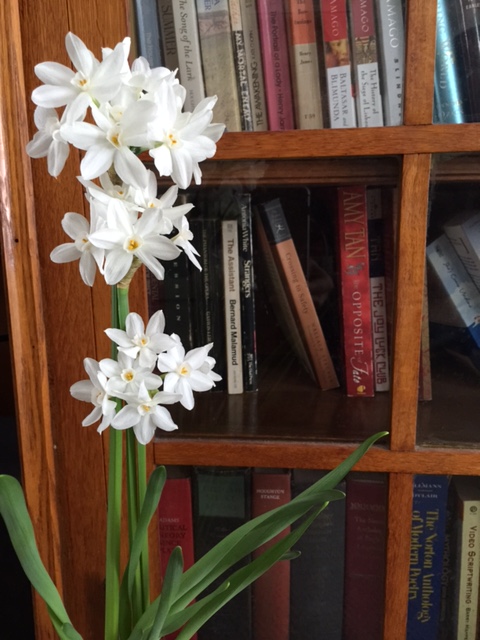
Taking this pic, I re-visited my long-ago college lit books on the bottom shelf: The Complete Pelican Shakespeare, The Norton Anthology of English Literature I and II, Victorian Poetry and Poetics, The Norton Anthology of Modern Poetry, Critical Theory Since Plato (oh, dear.) With many notes in the margins. Odd one out, a scriptwriting handbook. The “soil” of my literary leanings.
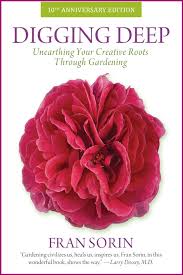
“I do believe that there’s something exquisitely powerful about taking something in nature and molding it with your own two hands. From the moment you dig up that first clump, you’re empowered because you immediately enter into collaboration with nature, and who better to be in collaboration with than the greatest force on earth?” Fran Sorin, Digging Deep
You don’t have to be a gardener to enjoy Fran’s book, though if you are, all the better. Fran says, “My mission is to show new and experienced gardeners alike how they can use their gardens – be they rolling, manicured lawns or tiny, blank plots of land – as tools for their creative awakening. I believe from the depths of my heart that gardening can be one of the most profound ways to unearth the creative spirit buried within every one of us. Once you unleash this creative energy, you’ll be amazed at what happens in all areas of your life. You’ll begin to see how living creatively opens up new vistas in your imagination and new windows of opportunity in your life.”
I’m a new gardener, and gardening has become for me a pleasurable, relaxing complement to writing, perfect for getting my body moving outdoors in nature. As I write about growing up in a family flower shop, sowing and tending and reaping resurrect the fragrance of fresh blooms and damp soil, and many other sensory pleasures, from my childhood.
When I ran across Fran’s book online, I was intrigued with her melding of gardening and creativity. The first edition of Digging Deep was immensely popular, hence the 10th anniversary edition in 2014. I’m glad to have discovered it this time around. In addition to being a garden expert and deep ecologist, Fran is an ordained interfaith minister and a soul tending coach. I point this out because the deceptively simple Digging Deep is a profound and spiritual book that is part memoir, as Fran draws upon her own rich life experiences to tell the story of how she arrived at the wisdom she shares here.
I’ve found that to nurture a creative practice (mine is writing), it is good to have other creative outlets just for pleasure, quite different from your primary practice. These “low-stakes” pastimes give your mind and body a break from routine and stimulate your imagination by allowing you to play and experiment. This spirit of play permeates Fran’s book. Her chapters take you sequentially through the cyclical nature of gardening, and creativity: Imagining: The Spark of Creativity. Envisioning: Giving Shape to Your Dreams. Planning: Laying Down the Bones. Planting: Taking Action. Tending: The Act of Nurturing. Enjoying: Reaping What You Have Sown. Completing: Cycling Through the Season.
Here is a favorite passage from a section called “Appreciating”: “Savoring your garden brings more than just sensory pleasure, though – it fills your creative well. In the moments that you experience the reverie of simply being there without working or planning or doing anything other than just drinking it in, you can experience a heightened awareness that elevates your consciousness. Any expression of art, be it a Rembrandt or your own garden, reflects the best of humankind, and tapping into this wonder expands your creative capacity so you may in turn create even more art – more awareness, more inspiration, more aliveness. The cycle feeds itself, but only if you stop to smell those literal and proverbial roses.” (boldface is mine)
Fran includes some excellent gardening guidance and tips, but her book is not a gardening manual. Rather, her aim is impart a deeper wisdom, a kind of spiritual instruction about connection to soil and nature, to foster creative awakening.
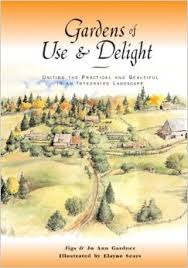
Jigs and Jo Ann Gardner’s Gardens of Use and Delightisabouta remarkable couple who for thirty years taught themselves how to live off the land on a farm on remote, hardscrabble Cape Breton Island in Nova Scotia. (They now live on a smaller farm in upstate New York.) I wanted to pair it with Digging Deep because, although Jigs and Jo Ann are immensely practical people, they are deeply connected to their land and passionate about homesteading, which they portray as at once the functional task of reawakening fertility and abundance in the landscape and making it beautiful as well. The subtitle is Uniting the Practical and the Beautiful in an Integrated Landscape, and that is exactly what Jigs and Jo Ann did on their isolated farm, while also raising four children (and a few foster children for good measure.)
Gardens of Use and Delight, like Digging Deep, is part memoir. More of a how-to book than Fran’s, Gardens, for me, stands out because of Jigs and Jo Ann’s instinctively creative approach to seamlessly blending beauty and fertility as they rejuvenate and work their land. I will never rehabilitate an entire farm as they did, but in Jigs and Jo Ann’s book I find an approach to making my much smaller landscape both productive and beautiful. Jigs and Jo Ann remind me of Helen and Scott Nearingand their classic and influential The Good Life,although Helen and Scott were not concerned with aesthetics as are Jigs and Jo Ann. The Gardners view their land as an artist does a blank canvas, to be molded and planted with flowers, herbs, vegetables, fruits, shrubs, and trees.
You’ll find some recipes and homemade craft instructions, too, such as pressed flower cards, candied petals, herb salt, rose petal jelly, and skin freshener. Elayne Sears’ watercolor illustrations of the landscape, fruits, vegetables, flowers, and Jo Ann’s rustic farm kitchen and pantry are delightful – I’d love to have prints of them to hang in my kitchen.
I have read other titles by Jo Ann Gardner and hope to collect everything written by this talented, tenacious homesteading and gardening virtuoso.
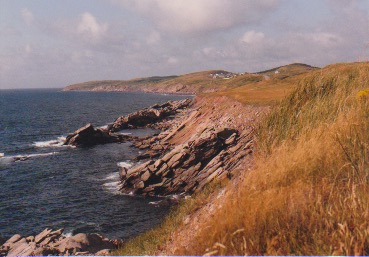
A very vintage photo of Cape Breton Island, from my honeymoon. Although I don’t believe they were on the coast, Jigs and Jo Ann Gardner must have encountered land much like this when they began to reclaim an old Nova Scotia farm.
Slow Flowers Challenge
I wanted to also tell you about Debra Prinzing’sSlow Flower Challenge for 2015, which you can join at any time. Every day, once a week, once a month, or once a season, you can design and make a floral arrangement using slow flowers. If you don’t know what slow flowers are, click on the above link, or read my post about Debra’s book, Slow Flowers. (St. Lynn’s Press)
Our blank slate
Next up
More WW II fiction, a travel-to-the-ends-of-the-earth memoir, a wolf, Scandinavian literature, Little Golden Books, a favorite author visits Rome. Etc. Etc.
When Ann Patchett came home from school one day, there was a boy she’d never met in the kitchen. Turns out, he was one of four new step siblings. Her mother and his father had married, but they hadn’t yet told the six children who were now part of a blended family.
This might be why Patchett likes to write novels about people from very different walks of life thrown together in extreme circumstances – such as in Bel Canto, my favorite novel of hers about terrorists, an opera singer, and political and business leaders in a hostage situation. (See also my post about State of Wonder.)
It may also have had something to do with why, for a long while, she’d been committed to staying single. Ann’s mother had twice divorced and her grandmother had divorced. In fact, divorce was scattered liberally throughout her family tree.
This is the Story of a Happy Marriageis a collection of Ann Patchett’s personal essays, one of them about her early divorce and her relationship with the man who eventually became her second husband. It’s an honest, personally revealing, and entrancing story about love and commitment.
Marriage is a metaphor for the many happy relationships in Ann’s life, including relationships with her writing, her bookstore, her grandmother, the strong and nurturing Catholic nuns where she went to school, and her dog. There are essays about all of this and more in Ann’s new book, a fine collection of meditations about life, love, and fulfillment.
I especially enjoyed Ann’s essay about writing, “The Getaway Car,” and those of you who write will like it as well. She is not of the school that everyone has one great novel in them, as a woman Ann met at a family reunion insisted. Ann usually has enough good sense to avoid such conversations, but this time she gave in.
“Does everyone have one great floral arrangement in them? One five-minute mile? One algebraic proof?”
“No,” the woman said. But everyone has one great novel in them “because we each have the story of our life to tell.”
Ann does not agree and writes about how difficult it is to convey what we know on paper. This is what she has to say about writing a novel:
“I make up a novel in my head…I don’t take notes or make outlines; I’m figuring things out, and all the while the book makes a breeze around my head like an oversized butterfly whose wings were cut from the rose windows in Notre Dame. This book I have not yet written one word of is a thing of indescribable beauty, unpredictable in its patterns, piercing in its color, so wild and loyal in its nature that my love for this book and my faith in it as I track its lazy flight, is the single perfect joy in my life…..
…I reach up and pluck the butterfly from the air. I take it from the region of my head and I press it down against my desk, and there, with my own hand, I kill it. It’s not that I want to kill it, but it’s the only way I can get something that is so three-dimensional onto the flat page….Imagine running over a butterfly with an SUV…What I’m left with is a dry husk of my friend, a broken body chipped, dismantled, and poorly reassembled. Dead. That’s my book……The journey from the head to the hand is perilous and lined with bodies.”
It stops most would-be writers cold.
Ann writes about the panic that set in when she sat down to write her first novel at a fine arts retreat, a story she’d been constructing in her imagination for a long while:
“Now that I was sitting still in front of a blank screen, I was appalled by all the things I hadn’t considered….until that minute I had never considered the actual narrative structure….what in the hell had I been doing all that time?”
She was tempted to throw out her idea altogether and start fresh, but an experienced writer told her to stay with her story.
“It was life-saving counsel,” Ann writes. “Without it, I could have spent the next seven months writing the first chapters of eighteen different novels, all of which I would have hated as much as I hated this one.”
There is another essay in the collection, “The Love Between the Two Women Is Not Normal,” that especially stands out for me. Ann had been best friends with Lucy Grealy, the acclaimed author of a memoir, “Autobiography of a Face.” Lucy had cancer of the jaw at age nine and 38 reconstructive surgeries. She died of a drug overdose, and Ann wrote a book about their friendship, Truth and Beauty.The book had been assigned to the incoming freshman class at Clemson University in 2006, and Ann was invited to speak there at the beginning of the school year.
All was well until a Clemson alum, whose nieces and a nephew were students there, objected to the book assignment. “The book contains a very extensive list of over-the-top sexual and antireligious references…The explicit message that this sends to the students is that they are encouraged to find themselves sexually.”
A hue and cry ensued. Many angry parents wanted another book chosen and Ann’s invitation rescinded, while most of the students and Clemson’s administration supported Ann and the book selection. The Clemson alum held a press conference the day before Ann appeared, distributed copies of bad reviews of her book posted by Amazon readers, and took out a full-page ad in the local paper. The ad, among other things, accused Clemson of the sexual harassment of freshmen students and suggested the assigned reading of Truth and Beauty was insensitive because a Clemson student had recently been raped and murdered.
When the day came for an extremely nervous and alarmed Ann to speak in Clemson’s coliseum, there were protests, and the administration had arranged for her to have a bodyguard.
Ann has included her Clemson speech, “The Right to Read,” in this collection of essays. Among other things, she said most of the freshmen students were old enough to vote and go to war and could make their own decisions about what to read and how they’d be influenced by it. She pointed out that if they had to be protected from Truth and Beauty, they’d most certainly need to be protected from Lolita and The Great Gatsby and Anna Karenina.
Weeks after her speech, it occurred to Ann many of the students in the audience had likely never read Tolstoy or F. Scott Fitzgerald or Nabokov, and so they probably hadn’t understood what she was talking about.
As for me, I’m disturbed every time I hear about a protest of this nature over a book. If Patchett’s Truth and Beautycan cause such a furor, we live in a frightening world indeed.








 Books Can Save A Life