The Quivering Pen has been my happiest blog discovery of late. It’s a rich, beautifully written site about books, writing, and the literary life by David Abrams, a former Army journalist and author of The Fobbit, a comic novel about the Iraq War.
David is an expansive, passionate reader who writes eloquently about new, backlist, classic, and “lost gem” titles. You’ll find unusual and off-the-beaten-path books to add to your to-read list, and if you’re a writer, you’ll appreciate David’s generous sharing of his own journey and the wisdom of other writers.
I’m looking forward to reading David’s enticing backlist of posts. Among other attractions, he features Trailer Park Tuesday (new book trailers), Friday Freebie (a book giveaway), Sunday Sentence (the best sentences he’s read that week), My First Time (writers talk about virgin experiences in their writing and publishing careers), and Bookstore of the Month.
“They say that war is death’s best friend, but I must offer you a different point of view on that one. To me, war is like the new boss who expects the impossible. He stands over your shoulder repeating one thing, incessantly: ‘Get it done, get it done.’ So you work harder. You get the job done. The boss, however, does not thank you. He asks for more.” Death, in The Book Thief
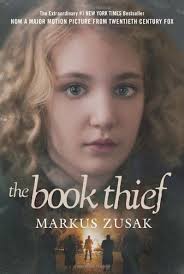
Death is the narrator in The Book Thief, a young adult book about a German family during World War II that has a huge adult readership as well. It is one book not to be missed. The writing is outstanding. Published in 2005, The Book Thief won countless awards and honors, and has become a classic in YA fiction.
I recently reread the book before I saw the movie. I think the screen adaptation is a good one, although some viewers found it tame, and subtleties of the text can’t be captured on the screen. For example, Max, who is Jewish and hiding out in the home of Liesel and her foster parents, paints over every page of a copy of Mein Kampf and creates his own book, with illustrations. Max’s book is embedded within the pages of The Book Thief,and on the pages of Max’s book you can see faint traces of Hitler’s words. One of the pages in Max’s book is a drawing of a girl and a boy holding hands and standing on a pile of bodies. Inscribed on the sun that shines down on them is a swastika, and the girl is saying, “Isn’t it a lovely day?”
The author, Markus Zusack, uses the written word as a thematic motif. While the Germans burn books thought to be subversive, Liesel and Hans write words on the wall of their basement as Liesel learns to read, and Liesel steals a book whenever she has the chance, in defiance of the Nazis. Liesel then begins to write her own book in order to make sense of the world’s chaos and carnage.
I do think the movie captured the essence of the story, and it is well cast, especially Sophie Nélisse as Liesel Meminger and Geoffrey Rush as Hans, her foster father. Death is the narrator in the movie, as he is in the book, and in both he is an unsettling storyteller who confesses he is haunted by humans. Of course, in addition to being the narrator, Death has a starring role in the plot as well.
My father was wounded in the war, just inside the German border. Occasionally, my mother spoke of her family’s Victory Garden, the rationing of meat and gasoline, and the “man shortage.” I was born ten years after the war ended. As an adult, I eventually began to understand how the world turned upside down by war cast long shadows over my parents’ generation.
Have you seen the movie or read The Book Thief? What did you think?
The art of diving is not to do anything new but simply to cease doing something. You have only to let yourself go….It is only necessary….to abandon all efforts at self-preservation.
C.S. Lewis, The Pilgrim’s Regress, as quoted in Standing at Water’s Edge: Moving Past Fear, Blocks, and Pitfalls to Discover the Power of Creative Immersion, by Anne Paris
Watching the movieGoodbye First Love,I encountered The Water, byJohnny Flynn, a beautiful companion song to this sentiment. The water sustains me without even tryin’….
Blog post title quote from “The Water,” by Johnny Flynn.
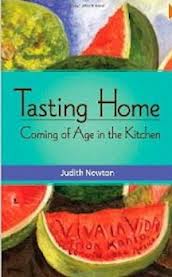
I was curious about how Judith so successfully conquered new territory by authoring a memoir, having spent her career writing for academic audiences. My background as a marketing communications writer has been both a help and a hindrance when it comes to memoir and other personally expressive writing.
If you are a writer who wants to try new forms or reach new audiences, you may find Judith’s insights helpful. And if you simply want to read more fine food memoir collections, Judith has some excellent suggestions.
In your acknowledgements you mention having to transition from writing academic texts to writing memoir. Can you comment about some of these challenges and how you overcame them?
When you write as an academic, you are writing defensively. It’s customary to begin a book by outlining the arguments of other works on the subject. You then situate your own argument in relation to those of other works and point out how your own says something better or new. You’re always aware of how others might criticize your argument and you’re careful to defend yourself against that. It’s a competitive culture and some people are downright mean.
Writing a memoir requires a different emotional orientation. The idea is to open yourself up, to share private stories with your public, and to engage with readers on an emotional level. I had to imagine a non-academic audience to write like that and, even then, writing the memoir sometimes felt like jumping into free fall off a cliff. Taking classes was helpful with this. I often imagined my audience as the other people in the class.
I did read other memoir writers. M.F.K. Fisher’sThe Gastronomical Mewas a big influence because it conveyed a great deal about the emotional hungers that are fed in cooking for, and dining with, others. Laura Esquivel’s novel Like Water for Chocolate implicitly connects food to politics, which is something I wanted to do. In Like Water cooking for, and eating with, others is what sustains women and men, physically, emotionally, spiritually, and politically as well. Mollie Wizenberg’sA Homemade Life, which, among other food memoirs, combines personal vignettes with recipes, supplied a model for the form.
I had to learn how to write differently as well. Although I made a habit of including personal stories in my academic writing, those stories were an addition to, or comment on, the argument I was advancing. I had to learn how to sustain a personal story for the length of a book, how to give it a narrative arc, how to write scenes, develop characters, write dialogue, use imagery and all the rest. I took classes to do this (at U.C. Extension and Osher Lifelong Learning), and I really believe in classes for the instruction and for the community they give you. I needed that community support. (I also loved being a student rather than the teacher!) I made a conscious decision to go into my classes feeling open to criticism because insightful criticism is a writer’s gold. I wanted to experience, in a full way, whatever the class brought.
I can remember feeling that Annie Lamott’sBird by Bird was incredibly liberating and comforting. Two other really helpful books were Tristine Rainer’sYour Life as Story and Janet Burroway’sImaginative Writing. I especially like Rainer’s book and think that people who write screenplays have a lot to teach us.
If there are food memoirs and cookbooks you’ve especially enjoyed, let us know in the comments below.
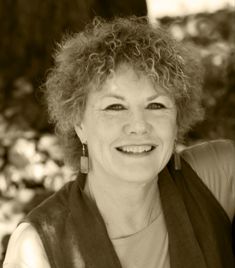
Judith Newton is Professor Emerita in Women and Gender Studies at U.C. Davis. While at U.C. Davis she directed the Women and Gender Studies program for eight years and the Consortium for Women and Research for four.
Tasting Home is the recipient of a 2013 Independent Publisher Book Award.
In addition to Tasting Home, Judith is the author and co-editor of five works of nonfiction on nineteenth-century British women writers, feminist criticism, women’s history, and men’s movements. Four of these were reprinted by Routledge and the University of Michigan Press in fall 2012. Currently she writes for The Huffington Post.
Stories…offer patterns of sound and association, of event and image. Suspended as listeners and readers in these patterns, we might reimagine our lives…As long as it took for me to see that a writer’s voice had to grow out of his own knowledge and desire, that it could not rise legitimately out of the privilege of race or gender or social rank, so did it take time to grasp the depth of cruelty inflicted upon all of us the moment voices are silenced, when for prejudicial reasons people are told their stories are not valuable, not useful. Barry Lopez
In the introduction to his essay collection About This Life: Journeys on the Threshold of Memory, Barry Lopez tells of meeting a man on a plane who asked what words of advice he could pass on to his teen-age daughter, who wanted to be a writer. This is what Lopez said:
She must read, and her choices should be whatever she is drawn to.
She should read the classics, too, but she’ll have to work harder to find stories of heroism, love, and our noblest values that are written by women.
Second, she must “become someone” and “speak to us from within those beliefs.”
Third, he advised that she “separate herself from the familiar.” After exploring other places and meeting a diversity of people, she`ll know why she loves the familiar and share this knowledge through her writing.
Early on, Lopez felt he was noticed, accepted, and rewarded as a writer in part because he was white, male, privileged and well educated. If you read his work, you’ll find he is keenly sensitive to the fact that many voices haven’t been heard because they are different or not within traditional circles of power. He thrives on traveling to the far corners of the earth and seeking these people out – artists, artisans, farmers, naturalists, explorers who live close to the land, indigenous peoples, and others.
I was mesmerized by an essay in About This Life, “Effleurage: The Stroke of Fire.” An Oregon potter and builder of a unique anagama kiln invites clay artists from around the world to fire their work. Jack doesn’t care about marketing or commercial success; he’s totally immersed in the process of making pottery out of materials from nature. Every three or four months, up to twenty artists bring their work to be fired in the Dragon Kiln. Families, friends, even pets tag along. The firing goes around the clock for several days. Building the tremendous fire that heats the kiln is an art in and of itself. Different kinds of wood – black locust, maple, cherry, Lombardy poplar, red cedar – make different kinds of fires, and keeping the fire properly stoked is a community effort of like-minded artists who put aside their egos for the benefit of the group.
Lopez says you must become someone to write. I think he would agree the kiln designer and the clay artists are “becoming” through their life’s work, just as their clay pieces are forged in the fire. It’s a process that never ends. Even the clay pot continues to change, subtly, after the firing.
Over and over, Lopez celebrates journeys into the unknown, strangers who become friends, coming home again, and the writing of the story. You see this in About This Life and in his fable, Crow and Weasel.
Recently, Lopez published a revelatory personal essay that has received a lot of attention, “Sliver of Sky,” in Harper’s Magazine, about a period of sexual abuse he endured as a child. That Lopez waited until his seventies to write about this suggests how deeply confounding and wounding it was. The trauma and years of silence may explain in part Lopez’s empathy and compassion for others who were silenced for one reason or another. And no doubt it has contributed to his sense of mission as a writer.
I’ve written about years of being silent and feeling silenced by others because of my mother’s mental illness. I think that is partly why I didn’t make the commitment to becoming a writer when I was younger. How can you mature as a human being and as a writer when you can’t work with the very material that is woven into your identity?
If we’re silenced, we’re blocked. We don’t become our fullest selves. Diminished in what we are able to offer the world, the world will be diminished, too. It is in our bests interests to see that no one among us is silenced.
So I find reading Lopez to be a rare and important form of encouragement.
In an interview with Bill Moyers, Lopez says he’s viewed as a nature writer but, actually, he is writing about humanity.
“Every story is an act of trust between a writer and a reader; each story, in the end, is social. Whatever a writer sets down can harm or help the community of which he or she is a part.”
Quotes from: About This Life: Journeys on the Threshold of Memory, Barry Lopez, Vintage Books, New York: 1998.
The role of the artist, in part, is to develop the conversations, the stories, the drawings, the films, the music—the expressions of awe and wonder and mystery—that remind us, especially in our worst times, of what is still possible, of what we haven’t yet imagined. Barry Lopez
If you want to be an armchair traveler of the world, if you love nature, if you crave being transported to another time and place by extraordinary writing, you must read Barry Lopez. Arctic Dreams has some of the most dazzling and poetic passages about the natural world you’ll ever encounter.
“The aurora borealis, pale gossamer curtains of light.”
“The mother-of-pearl iridescence of the sun’s or moon’s corona in clouds.”
“The outcry of birds, the bullet-whirr of their passing wings, the splashing of water, is, like the falling light, unending.”
You will find uncommon truths, beautifully expressed. Here is Lopez on the great Arctic explorers of the past: “The day after a little trouble in the ice it is possible to imagine, if but imperfectly, the sort of reach some of these men made into the unknown, day after day.”
“I think we can hardly reconstruct the terror of it, the single-minded belief in something beyond the self.”
“Inescapable hardship transcended by a desire of spiritual elevation, or the desire to understand, to comprehend what lay in darkness.”
“What dreams there must have been that were never written down….that remained in the heart. The kind of dreams that give a whole life its bearing, what a person intends it should be, having seen those coasts.”
If you want to write, how can you move closer to this kind of mastery of language?
Webster’s New International Dictionary, 2nd ed., unabridged, 1944
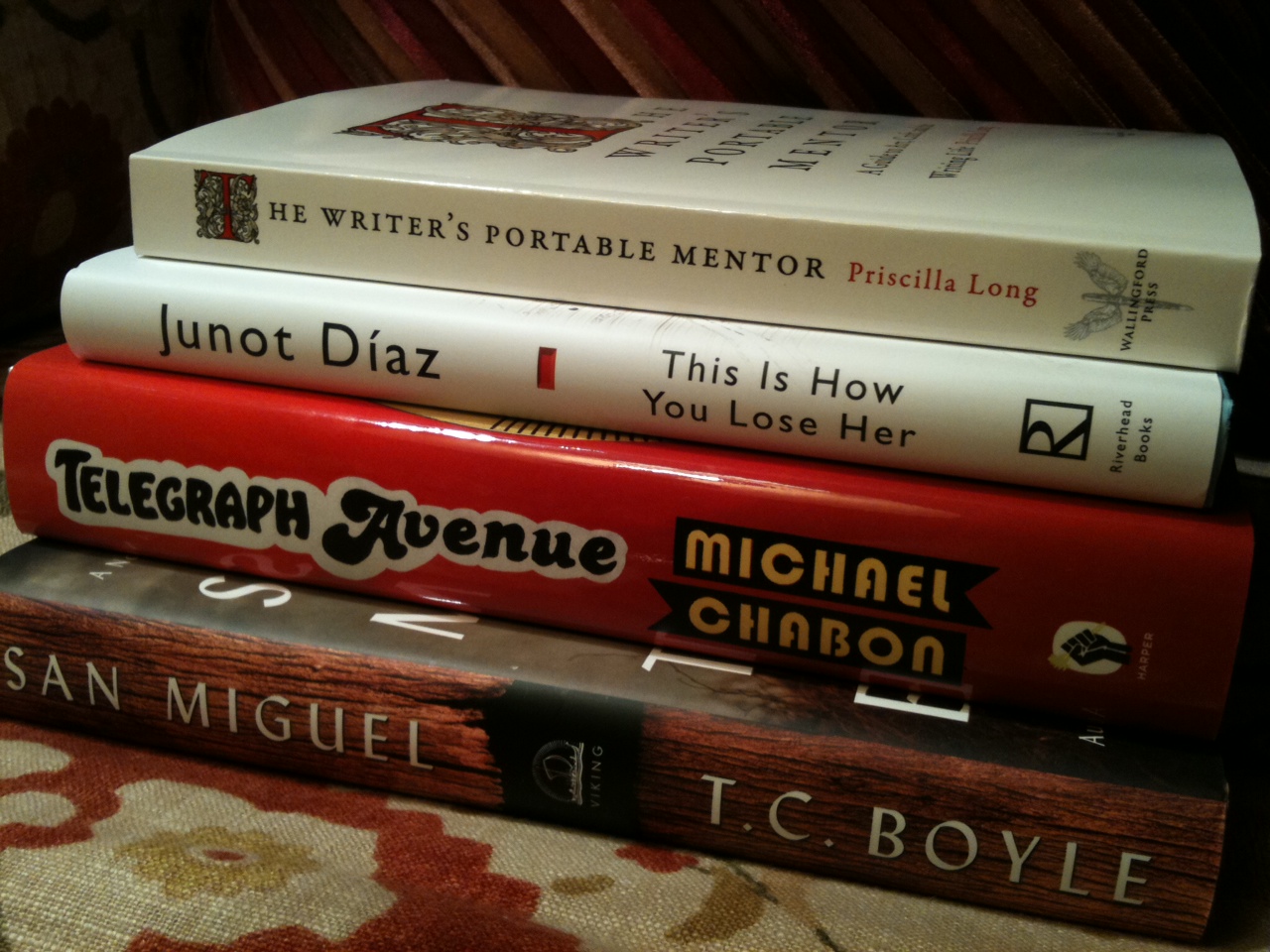
When I was reading Lopez, I happened to make a happy discovery in my writing bible, Priscilla Long’s The Writer’s Portable Mentor: Lexicon Practice. Lexicon Practice involves looking up words you don`t know and words you want to know better, not in in a pocket dictionary or online, but in a mammoth 600,000-word dictionary, the kind you still see in some libraries. (Long advises writers to search online for such a dictionary, commonly published in the 1930s, 40s, and 50s. They aren’t cheap, but they are a wise investment.) You copy all of the definitions of a word in a notebook. These old dictionaries have detailed diagrams and illustrations, and occasionally I copy them as well.
I write down the word in its language of origin, too. If it has a Latin, Italian or Spanish root, I can brush up on my foreign language vocabulary. Long instructs you to also write out the sentence where you found the word and make up a sentence of your own, preferably a sentence you can use in a piece of writing you’re working on. You can choose a lexicon theme based on the work you are doing at the moment. Since I’m writing a memoir, for example, I have a lexicon with words commonly used in the 1960s – products, types of clothing, etc.
Long believes in Lexicon Practice. Otherwise, our writing derives from the uninspired language of generic, overused words and phrases we find in newspapers, magazines, advertising, and social media. As a teacher of writing, Long can tell immediately when a writer does not do a form of Lexicon Practice. She mentions Lopez as the kind of master writer we can emulate. He uses words with Old English and Old German roots, she says, and “…he favors concrete words…that can be seen, smelled, touched, tasted, or heard. For Lopez, language is a musical instrument…”
Now, Lexicon Practice is a geeky, writerly thing, but it appeals to me. I can certainly stand to expand my vocabulary, and I find it an especially relaxing pastime in front of a fire on a cold winter`s night. This kind of practice slows you down, teaches you to choose words with care. If you want to write rich, compelling fiction or nonfiction, you need to be in love with words in this way, or allow yourself to fall in love with them by doing work of this nature.
Culling words from Arctic Dreams was an inspiring way to for me to establish the habit of Lexicon Work. A variety of birds populate the first pages of my first lexicon: plover, whimbrel, curlew. There are many boats and nautical references: pinnace, tender, portolano chart. Geographical terms, too: archipelago, scree, promontory. (As I write this, my word processor does not recognize a few of these uncommon words and highlights them as misspellings.)
Long advises writers to compose word lists, too. Her examples: every possible synonym for blue (sapphire, smalt, cobalt, woad) and all the parts of a fiddle (peg box, side rib, bridge, button). You can work according to a theme. Chairs and chair parts. Types of roofs. Clothes for people who love the outdoors. Get an L.L. Bean catalog and find words like cargo pants, fleece, sun-washed, twill, seersucker, Mary Janes, wellies.
I found that keeping a lexicon is a good excuse to buy one of those expensive, fancy journals I love. Mine has a silvered filigree cover designed in Germany around 1800.
Currently, I’m gathering words from About This Life.
In my next post, more about Lopez and his themes. In the meantime, if you want to be uplifted, if you need encouragement in your life’s work, listen to a few minutes of this conversation between Barry Lopez and Bill Moyers.
Have you discovered any unusual words lately that you especially like? Leave them in the comments in my left sidebar.
I wanted to share author Steven Pressfield’s recent blog post, “Why I Don’t Speak,” the minute I read it on the “Writing Wednesdays” column of his website. He writes about why he doesn’t accept invitations to speak about his books on writing and creativity.
But my blog is for book lovers, I reminded myself, and he wrote “Why I Don’t Speak” primarily for writers and others involved in creative projects. (Though he would be the first to say creativity is any sustained effort to bring something to fruition, such as training for a marathon, overcoming an addiction, advocating for a social cause.)
He writes,
“In the secret communion between writer and reader, soul-altering material was gifted to me, and I accepted it with gratitude. No one knew. Not even the writer. But he or she had imparted something seminal, and it changed me and saved me.”
The italics are mine.
I think readers already know about the secret communion between writer and reader.
But what they may not know: Pressfield says the biggest challenge of any creative act, of giving the gift of soul-altering material, is overcoming resistance.
I have Pressfield’s book, Do the Work, on my “What I’m Reading” sidebar. I’ve been spending time with Do the Work along with his other book, The War of Art, as I look at my own writing process.
He has hard things to say about how insidious resistance can be. How we often blame our lack of progress, our inability to do the work, on some external obstacle when, really, we need to look inside ourselves.
I felt squirmy as I read certain passages. I didn’t like knowing these things about myself. And once I knew these uncomfortable truths, I then had to actually change.
Pressfield writes,
“I’m confessing some of the darkest hours and most shameful failures of my life. But more than that, I’m holding these moments up to the reader, who no doubt has experienced the same in her own life, as a means of confronting her and making her face her own shit. I don’t know how to do that in a public setting, and I wouldn’t want to try. It’s too private. It’s too personal.”
That’s why Pressfield doesn’t do speaking engagements.
Even though authors make pulling off that communion between writer and reader look easy, it’s not. The great, gifted writers confront the same resistance that is in all of us.
The next time you finish reading a book that possessed you or changed you; the next time you re-read a favorite, treasured work – know that the writer may have had to fight a great battle to bring her creation into the world.




 Books Can Save A Life