Modiano’s elusive Paris: what my father never saw

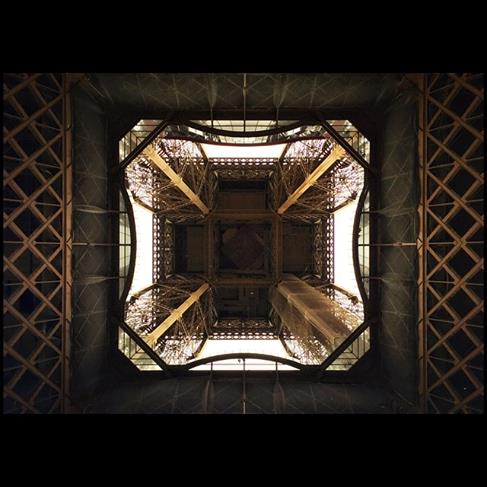
Eiffel Tower
La tour Eiffel. (Photo by A. Hallinan)

“Tell all the truth but tell it slant–“ Emily Dickinson

If you dislike ambiguity and prefer straightforward plots, you may become impatient with Patrick Modiano’s inconclusive and sometimes maddening quests. In his stories of Paris during and after the Occupation, the “missing” person in question is never found; the mystery of his or her identity is never solved.

Modiano tells the truth–what little of it he knows–but he tells it slant.

Reading is a way for me to immerse myself in other times and places, and on our recent trip to France, I wanted to see the country through the lens of World War II, when my father was a soldier there. So I brought along Irène Némirovsky (I wrote about Suite Française in my last post) and Patrick Modiano’s The Search Warrant (published as Dora Bruder in Europe). Coincidentally, my son had just read three novellas by Modiano: Afterimage, Suspended Sentences, and Flowers of Ruin, so I read them, too. (These are published in one volume entitled Suspended Sentences.)

I was thinking about my father, who passed away five years ago, and musing about events in 1940s Europe that may soon be all but forgotten. Once I became accustomed to Modiano’s method and spirit of storytelling, I could appreciate the author’s preoccupation with identity and memory, and his attempts to reconstruct and understand the past.

Even as I explored the Jewish quarter of Le Marais, where we stayed, and conjured up the WWII Paris I’ve seen in movies, I realized that a new story is playing out in France, making my father’s time seem even more remote. We passed by many military personnel armed with automatic weapons guarding Parisian monuments, temples, churches, and other sites in the wake of January’s Charlie Hebdo attack.

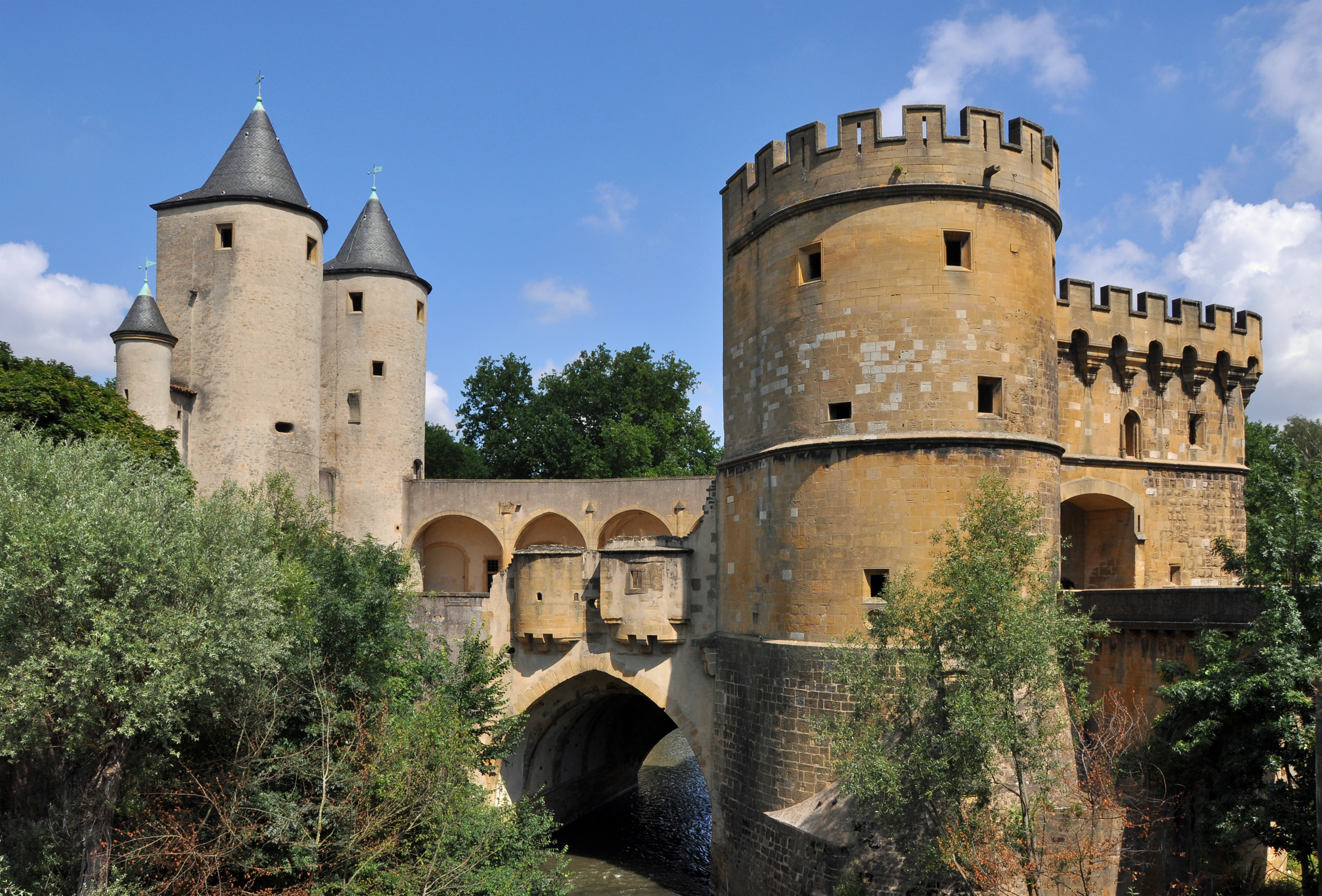
My father never got the chance to explore Europe as he’d hoped. He’d been fascinated by France and Luxembourg (where he spent the weekend in training before he was wounded in the Battle of Metz in 1944), and he’d planned to visit Sicily, where he was born. Instead, he was shipped out to Liverpool after he was injured, and then back to America, where he spent over a year in recovery. Though he did visit Sicily later in life, my father never returned to France. Suspended Sentences book cover

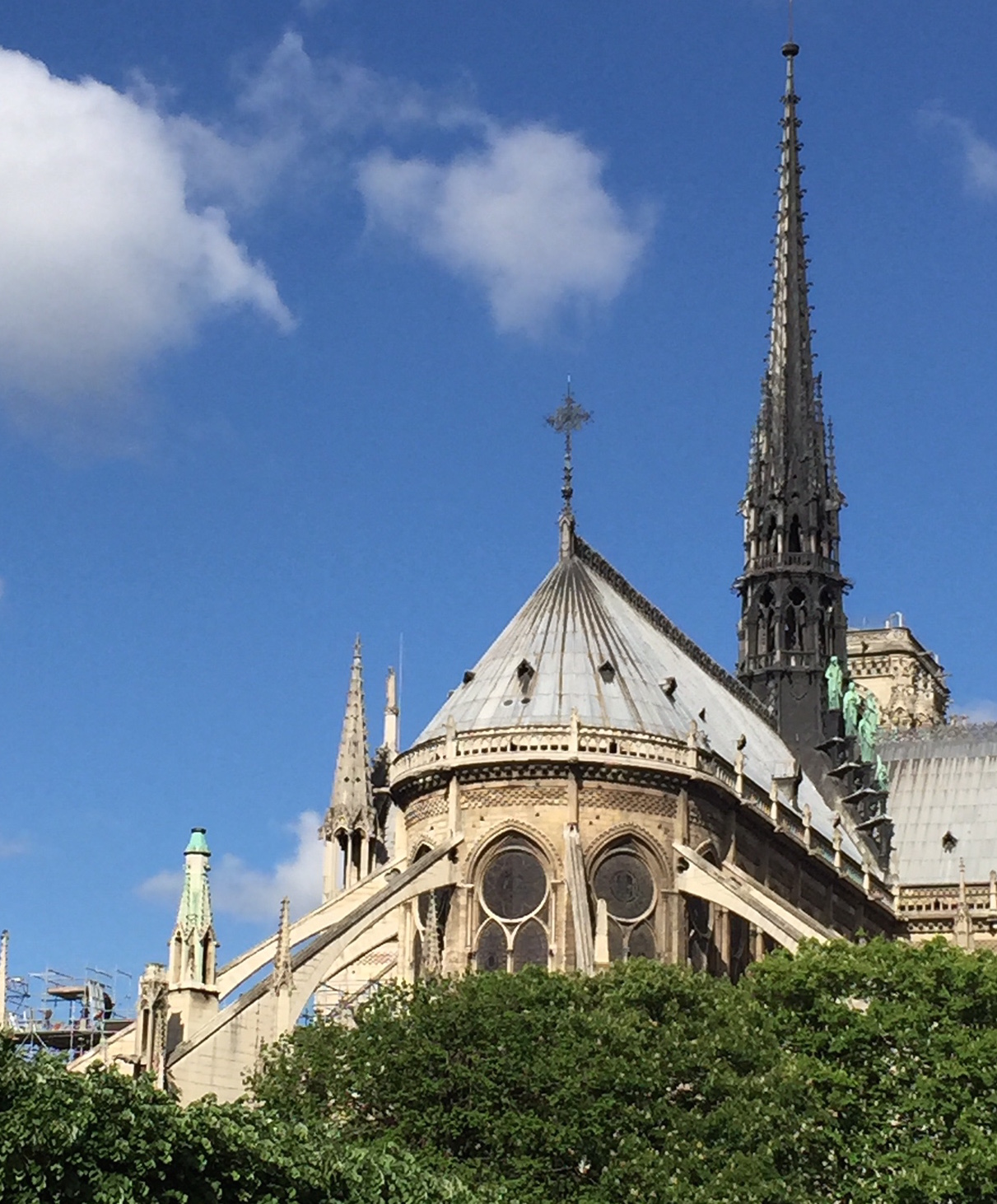
I found myself imagining what he might have thought if he’d seen Notre Dame (he was awed by cathedrals) or tasted Parisian escargot (which he would have relished) or strolled across the many old bridges spanning the Seine.

During our drive to Metz, I looked out over the French countryside and along the Moselle River, thinking that perhaps my father had been injured in one of the passing fields or forest groves.

In The Search Warrant, Modiano is obsessed with reconstructing the life of a young Jewish girl who died at Auschwitz. In a 1941 Parisian newspaper, he’d discovered an ad placed by the parents of Dora Bruder, asking for information about the whereabouts of Dora, who had run away from her convent school. It’s as if Modiano can’t accept that someone–that so many, in fact–could live lives so brief and obscure and die such senseless deaths, as they did in the war.

The Search Warrant fuses nonfiction (the facts he unearths about Dora Bruder) with memoir (Modiano’s autobiographical speculations about his father during the Occupation) and fiction. As I read, sometimes I couldn’t separate truth from fiction.
The Search Warrant book coverInterrupting the narrative flow are lengthy lists of the names and last known addresses of people deported to concentration camps. Modiano seems compelled to show his readers the documentation and proof behind any fact he asserts about Dora. He meticulously describes the Paris neighborhoods that he wanders in, too: the old, timeworn urban landscapes and the bland contemporary ones that have replaced them.

Such lists and geographical minutia also appear in Modiano’s three novellas. Each story portrays a protagonist searching for a person he’s lost touch with long ago or seeking to understand some incident from the past.

Before I started the three novellas, I read the editor’s introduction to see if I could better understand what Modiano was trying to do with his stories. I learned that his mother had been an actress and was often absent during his childhood, while his estranged father paid little attention to Modiano and his younger brother. Modiano surmises that his father was a black market smuggler and somehow aligned with French Nazi collaborators. Another heartbreaking autobiographical fact is that Modiano’s beloved brother, Rudy, died from an illness when they were young. Modiano’s obsessive search for Dora Bruder is emblematic of Modiano’s search for his lost family, and for a pre-war Paris that no longer exists.

Patrick Modiano won the Nobel Prize in 2014.

From Flowers of Ruin:

“Little by little, that man melted into the wall. Or else the rain, from falling on him so heavily, had dissolved him, the way water dilutes a fresco that hasn’t had time to dry properly. As hard as I pressed my forehead against the glass and peered at the dark gray wall, no trace of him remained. He had vanished in that sudden way that I’d later noticed in other people, like my father, which leaves you so puzzled that you have no choice but to look for proofs and clues to convince yourself these people had really existed.”
Notre Dame
Notre Dame
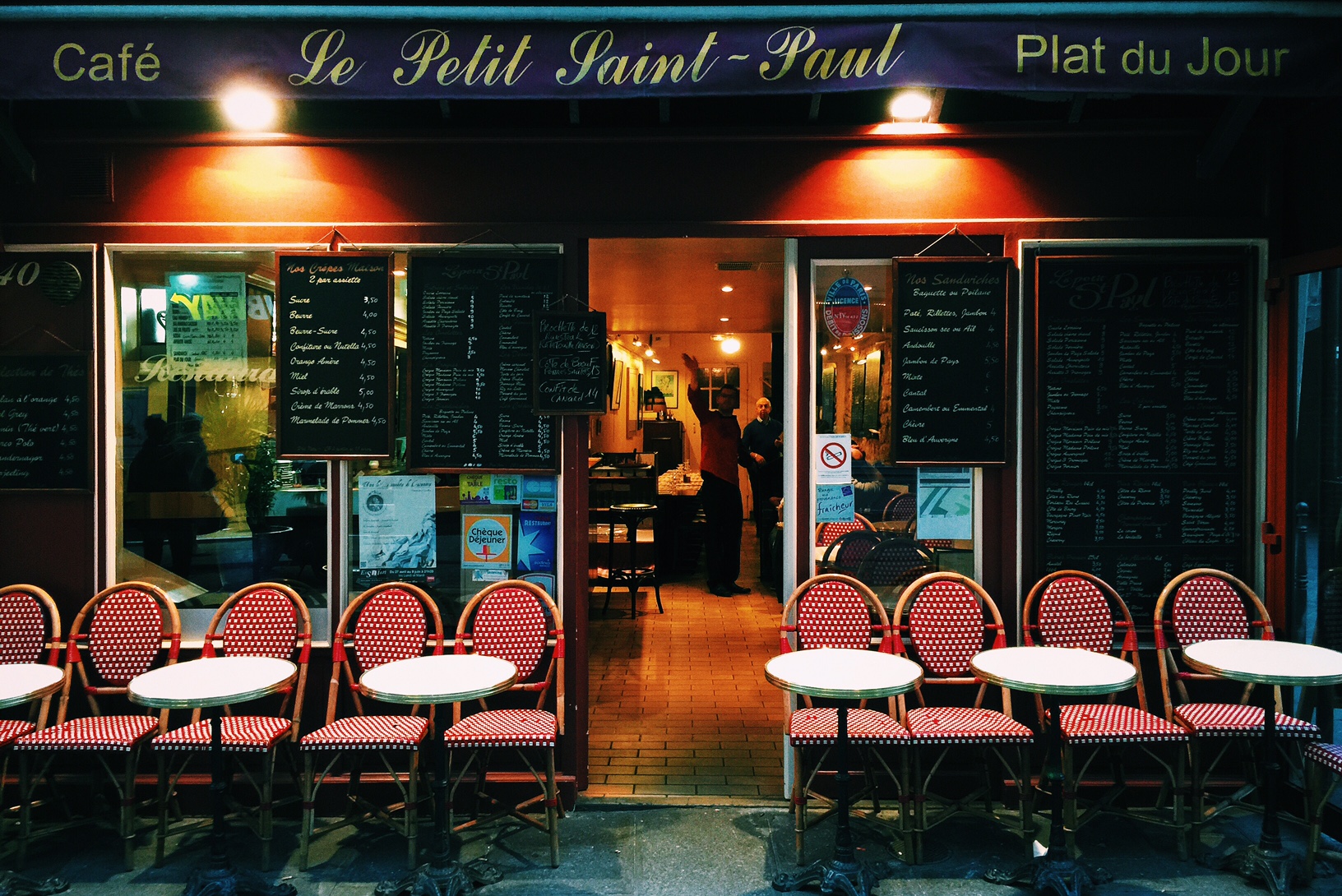
Cafe in Paris
Where to eat….they all look so good. Can you see the maître d’ beckoning?
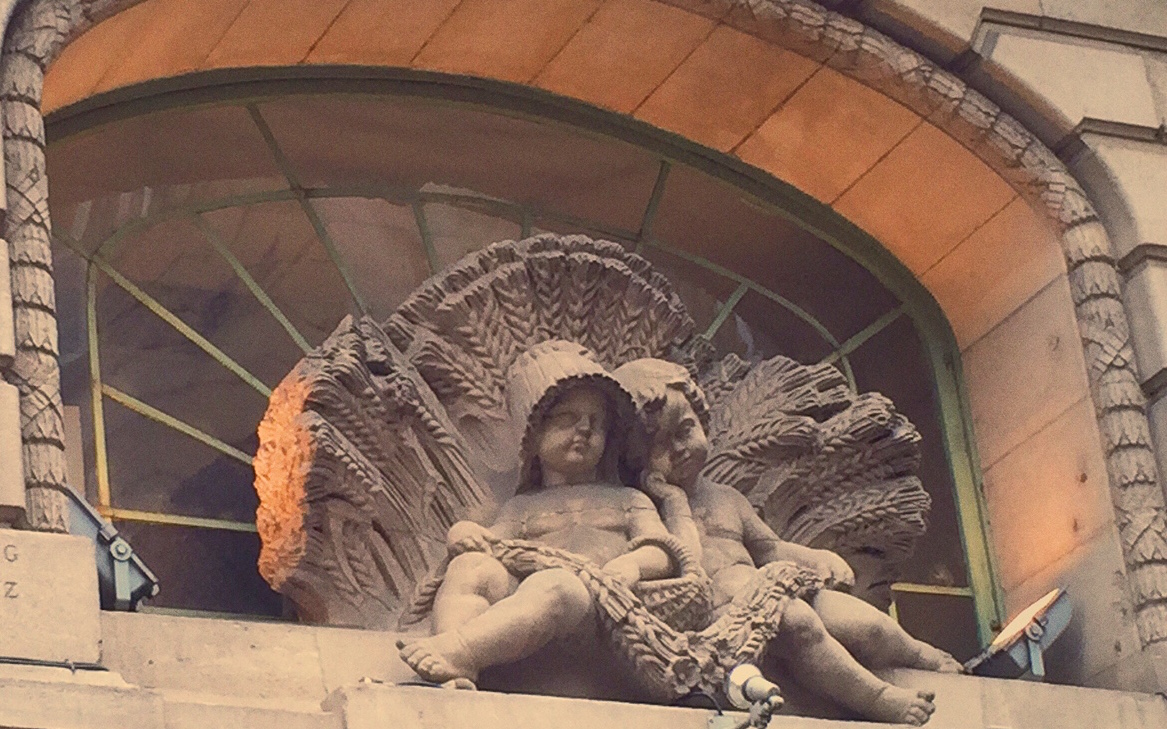
Stone carving of two children
Children on a street corner in France.

Suite Française and my father

Bridge over Moselle River, Metz, France
The Moselle River in Metz, France. My father was wounded on November 14, 1944 in the weeks-long Battle of Metz. After the city was liberated, the Allies went on to break through to Germany in the Battle of the Bulge.

Storm in June and Dolce, by Irène Némirovsky

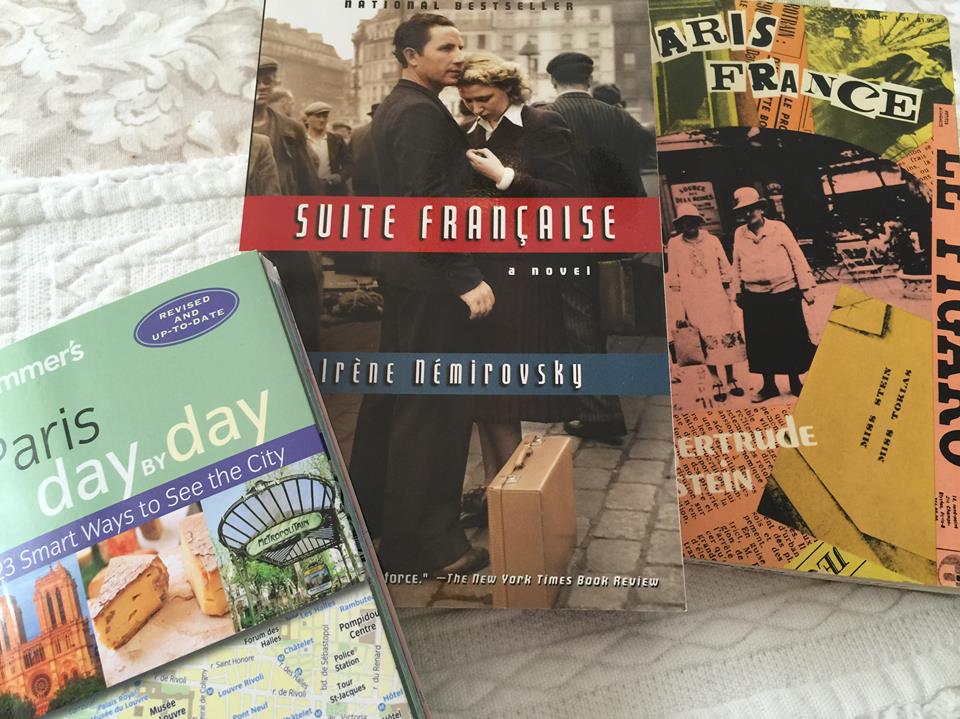
I brought Suite Française by Irène Némirovsky with me when we travelled to France just before V-E Day to visit our son, who had a work coop in Paris, and to explore the region near Metz in northern France, where my father was wounded in World War II.

Suite Française consists of two novels set during the early days of the French Occupation, with exquisitely drawn French and German characters that dramatize the complicated relationship between France and Germany at that time.

Suite Française book coverI don’t know how Némirovsky could write during the terrible days of the French Occupation. An acclaimed novelist from a wealthy Russian family and a member of the highest social circles in France, she was also Jewish. Némirovsky knew at any moment she could be deported to a concentration camp, separated from her husband and her two young daughters.

But write she did, and superbly. She was driven and disciplined, and the writing must have given structure to her days and helped her cope. She finished two of the five novels she’d intended for Suite FrançaiseStorm in June and Dolce–before she was, indeed, arrested and deported in July, 1942. Némirovsky died a month later of typhus in a concentration camp. Her husband, Michel, was deported that fall and died in the gas chambers.

The family’s devoted nanny hid the two young daughters, Élisabeth and Denise, who were being hunted by Vichy officials, and they managed to survive the war. Fifty years later, Denise discovered that the papers left behind in one of her mother’s suitcases were two novels–she had thought they were diaries and had been reluctant to read them. Storm in June and Dolce were finally published in 2004 as Suite Française, which became an international literary sensation.

Included in my edition of Suite Française are the journal Némirovsky kept as she wrote the novels, and the desperate correspondence of Irène and Michel with Némirovksy’s publisher and French officials as they tried to avoid deportation.

On fleeing Paris:

“…groups of people appeared outside their houses–women, old people and children, gesticulating to one another, trying, at first calmly and then with increasing agitation and a mad, dizzy excitement, to get the family and all the baggage into a Renault, a saloon, a sports car…Not a single light shone through the windows. The stars were coming out, springtime stars with a silvery glow. Paris had its sweetest smell, the smell of chestnut trees in bloom and of petrol with a few grains of dust that crack under your teeth like pepper.”

On being a young, married French woman with a German soldier billeted in her home:

“She felt a very feminine pleasure, an almost sensual, sweet sensation at seeing this childish look on a face that was, after all, the face of an implacable enemy, a hardened warrior. For we can’t pretend, she thought, that we aren’t all in his hands. We’re defenseless. If we still have our lives and our possessions, it’s only because of his goodwill. She was almost afraid of the feelings growing within her. It was like stroking a wild animal–an exquisitely intense sensation, a mixture of tenderness and terror.”

On the French villagers and the Germans:

“Little by little, darkness spread across the lawns; they could still make out the gold decorations on the uniforms, the Germans’ blond hair, the musicians’ brass instruments on the terrace…All the light of the day, fleeing the earth, seemed for one brief moment to take refuge in the sky: pink clouds spiraled round the full moon that was as green as pistachio sorbet and as clear as glass; it was reflected in the lake. Exquisite perfumes filled the air: grass, fresh hay, wild strawberries. The music kept playing. Suddenly, the torches were lit…There was the lively, happy sound of champagne corks popping.

“Oh, those bastards! And to think it’s our wine they’re drinking, the Frenchmen said, but without real bitterness, because all happiness is contagious and disarms the spirit of hatred.

And of course, the Germans seemed to like the champagne so much (and had paid so much for it!) that the Frenchmen were vaguely flattered by their good taste.”

From Némirovsky’s journal:

“I must create something great and stop wondering if there is any point. Have no illusions: this is not for now. So mustn’t hold back, must strike with a vengeance wherever I want.”

“Never forget that the war will be over and that the entire historical side will fade away. Try to create as much as possible things, debates…that will interest people in 1952 or 2052.”

“What lives on:

1. Our humble day-to-day lives

2. Art

3. God”

Suite Française has just been made into a movie but, as far as I can tell, a US release date is not yet known. I can’t vouch for its quality. A writer I know who lives in France told me many reviews have not been favorable. Usually, I don’t see movies adapted from books that I like unless I know the production is a good one. Nonetheless, below is the UK trailer. I do like Michelle Williams and Kristen Scott Thomas.

A personal connection

Cemetery with white crosses
The Lorraine American Cemetery in France, where many soldiers from the Battle of the Bulge and the Battle of Metz are buried.
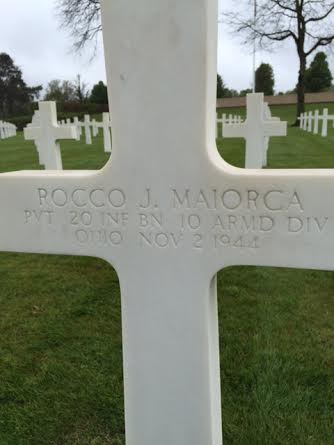
White cross, gravesite
This soldier was in my father’s battalion. Perhaps they knew each other.
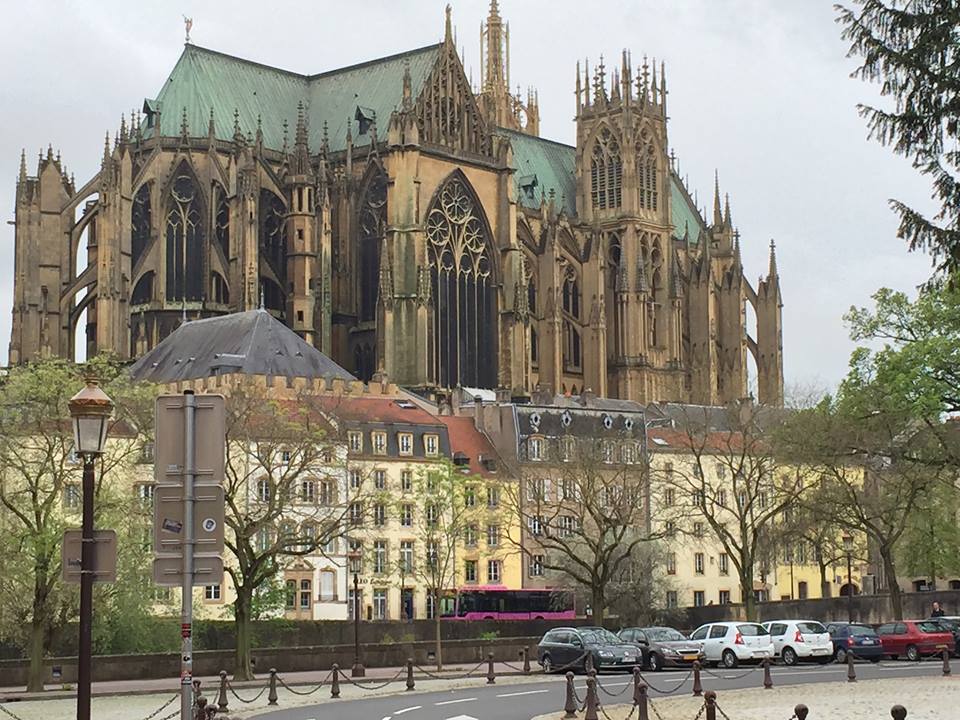
Cathedral and buildings, Metz
Cathedral of St. Etienne, Metz. My father was wounded before the Allies took Metz, so he never got to see the cathedral or this beautiful city.

I imagine the bells of St. Etienne rang on VE Day:

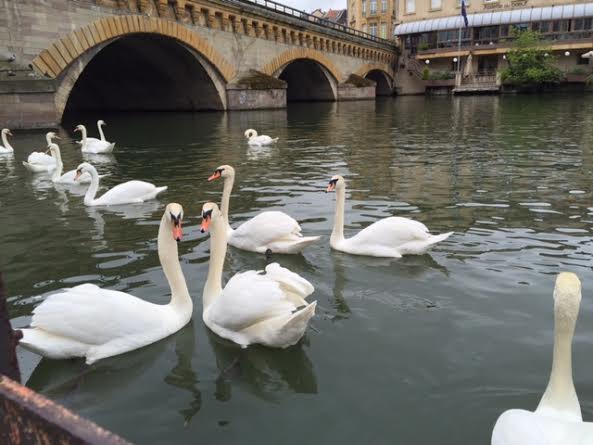
Moselle River, swans

Spring flowers and Colette, in Paris

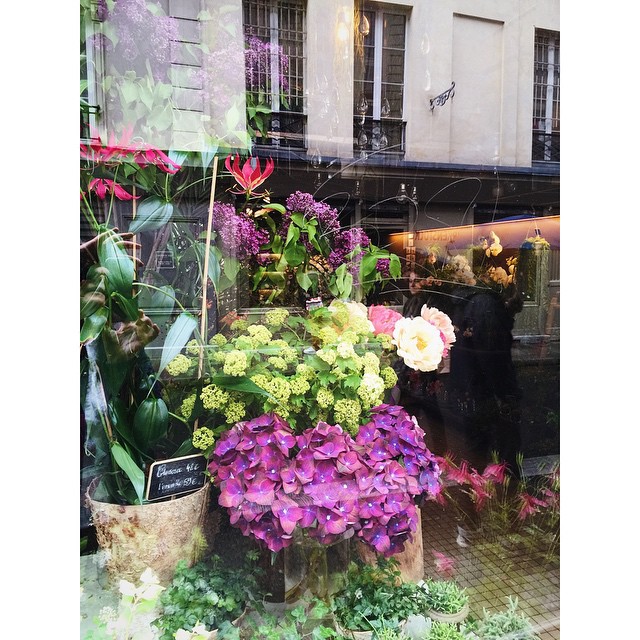
Floral shop window
“As noisy as Paris was in those days, it always had its unexpected moments of stillness. At Cours-la-Reine, between one and one-thirty in the afternoon, when the last trucks had reached their canteens, those who loved flowers and silence could savor a strange respite, a solitude in which the flowers seemed to recover from human curiosity.”

******************

We’ve been in Paris, where our son has been studying and working in industrial design. I had so much fun walking around this enchanting city which, among other treasures, has secret gardens galore, flower vendors and flower markets, and floral shops offering spring flowers, herbs, and foliage, all beautifully arranged and presented.

Flowers and Fruit book coverA few years ago I was browsing in a local used book shop when I discovered a volume of essays by Colette, Flowers and Fruit, first printed in the US in 1986.

Some of the essays were inspired by a Swiss publisher, who for a time sent Colette a bouquet of flowers once or twice a week so she could write sketches of those that inspired her.

Colette wrote one of the longer essays in this collection, “Flora and Pomona,” during the Nazi occupation. According to the collection’s editor, Colette conceived of the writing project to “keep the coal bin at 9, rue de Beaujolais well filled and pay the black-market prices for rabbit and cheese and chicken and other comestibles otherwise unavailable, even to much-loved novelists living in the Palais-Royal.”

At the time of its publication, some critics said factual errors, weak editing, and a less than adequate translation detracted from Flowers and Fruit. I find Colette’s writing challenging, so this isn’t the kind of book I’d read straight through. It’s a little treasure for floral enthusiasts that’s fun to browse when I want Colette’s unusual take on flowers.

We were lucky to be in Paris on May Day. This holiday’s signature flower is lily of the valley, one of my favorites. They were everywhere.

Here are some of my Paris floral photos paired with Colette’s thoughts on flowers and gardens:

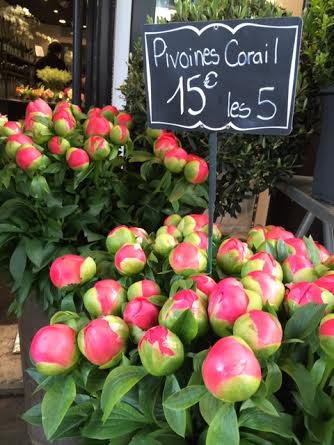
Peonies
“Garnet red, bright pink, sentimental pink, and three or four other carmine reds, they are the colors of good health and will delight me throughout the coming week.” (These peonies have not yet opened, which is when you should buy them.)
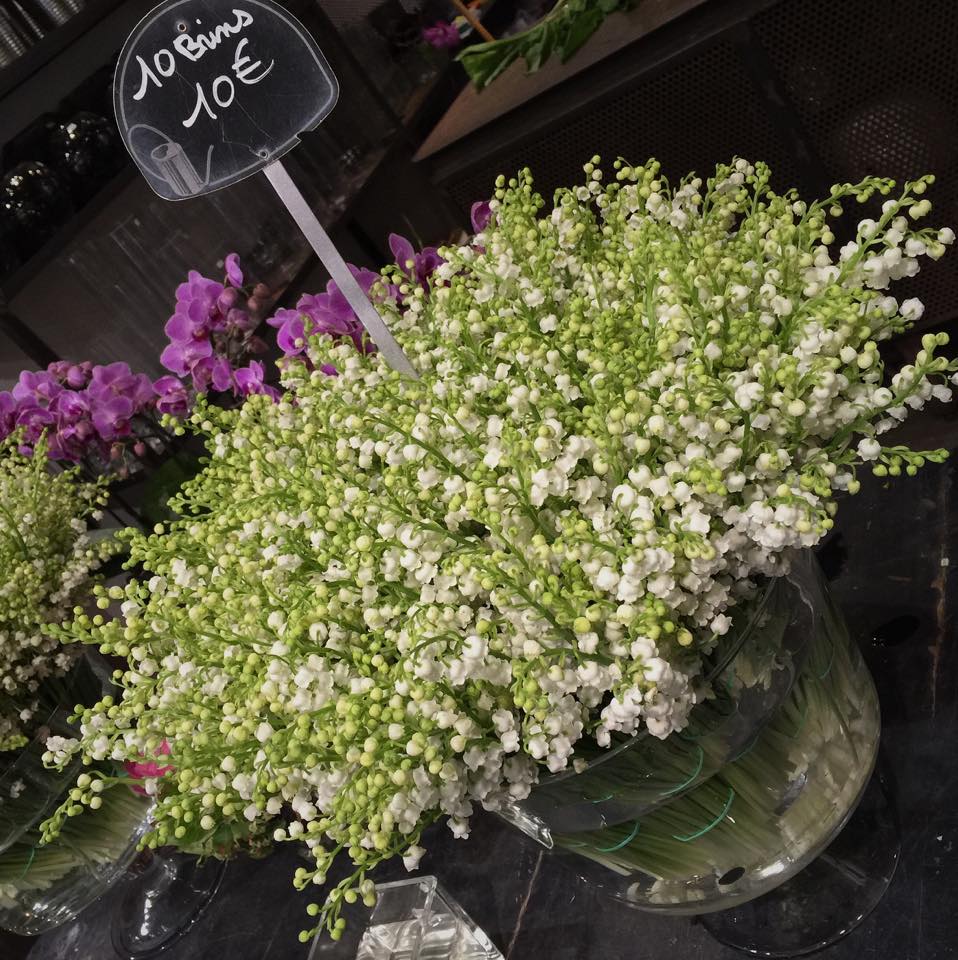
Lily of the valley
Lily of the valley is the May Day flower in Paris. “In spring, nearly an entire nation demands lily of the valley like bread.”
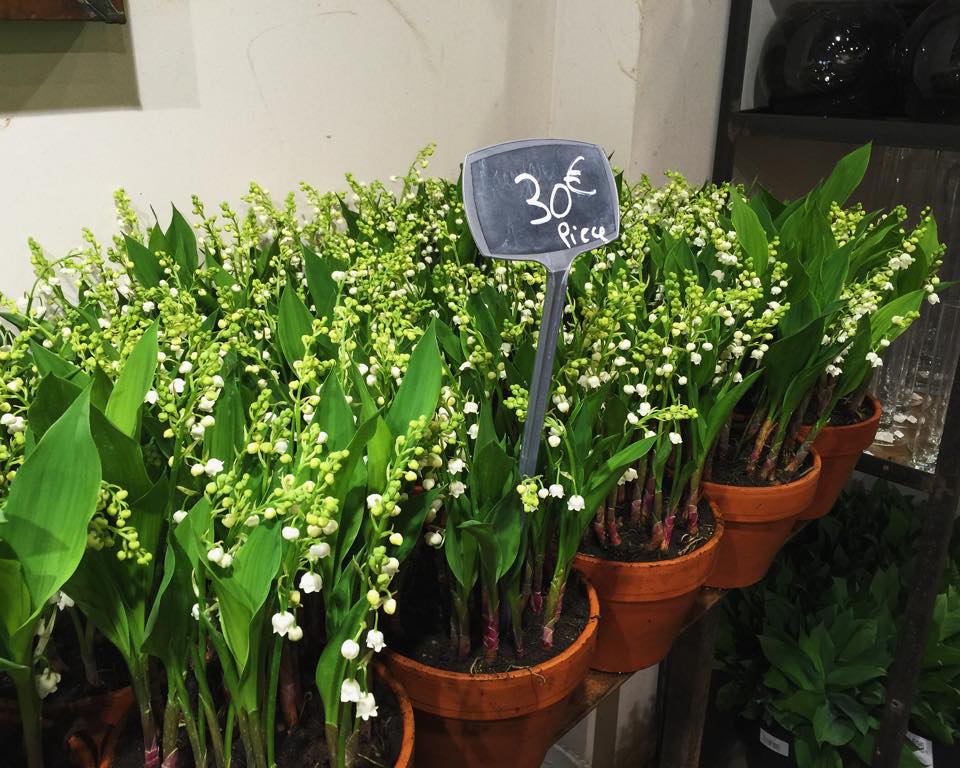
Pots of lily of the valley
“More than a flirtation, better than a superstition, almost a religion, the lily of the valley is celebrated on the first of May. Its cult stirs the Paris population to fever pitch…”
Chocolate & lily of the valley
You’ll find lily of the valley everywhere on May Day, even at the chocolatier. I saw these lovely desserts at Sylvain Mussy on Rue Bourg Tibourg.


Lily of the valley bouquet
My May Day bouquet. Lily of the valley, gloriosa lily (also known as fire lily or flame lily), and angel hair fern. “The true lily’s favorite soil is the kitchen garden’s, with tarragon, sorrel edgings, and purple garlic for neighbors.”
Flowers
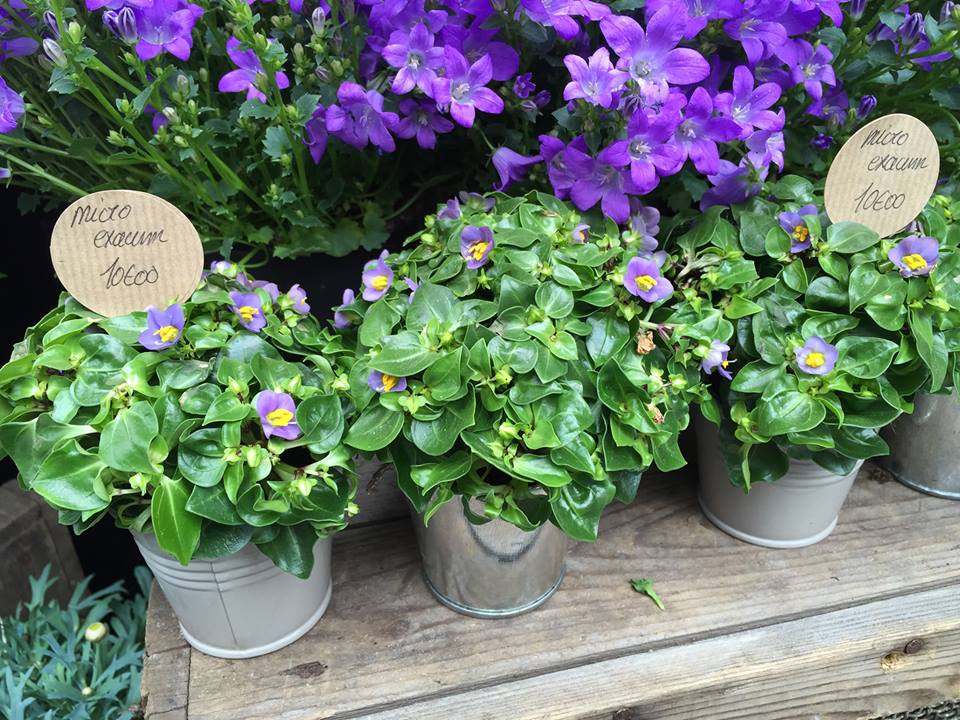
Campanula and Persian violets. “…the sleeve of blue-violet campanula that grows immoderately, framing the windows in a single rush and decking them with flowers all season long.”
Pink and white roses
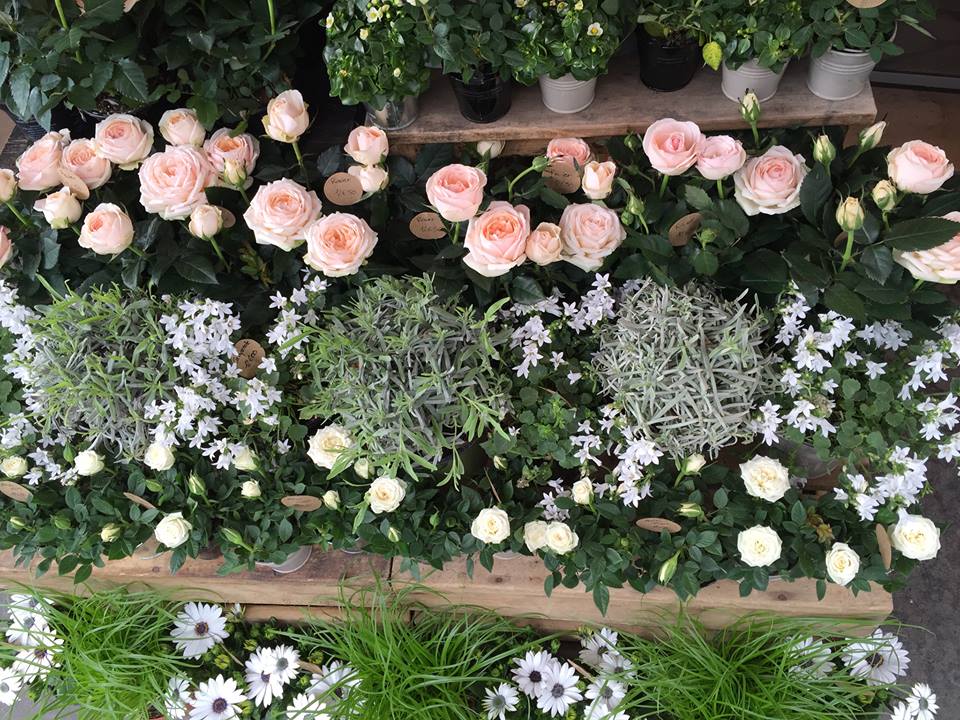
“Below my window, among the puddles of water, the bathing pigeons….we have old-fashioned, floriferous rosebushes that have survived both war and frost. Never have they failed to flower, and to flower again, and yet again before November.”
Stone figures on garden wall
There are many secret gardens hidden on the side streets of Paris, where the public is welcome.
Garden flowers
This one is Square Georges-Caïn on Rue Payenne. “Creating a garden takes us back to childhood imaginings.”
Paris street with plants, flowers
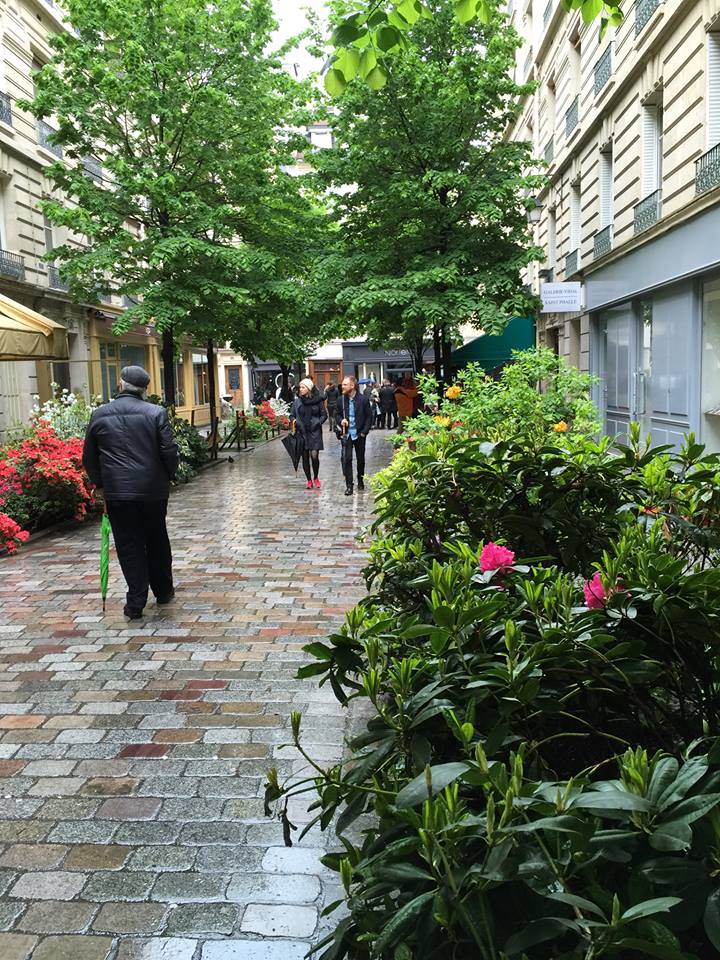
Some streets, like Rue du Trésor, are gardens, too.

Remembering Jonathan Crombie’s Gilbert Blythe

Anne of Green Gables cover, illustration

Did you ever see the Canadian Broadcasting Corporation’s 1985 TV mini-series of Anne of Green Gables? One of the finer book-to-television adaptations. Remembering Jonathan Crombie’s Gilbert Blythe. Crombie passed away yesterday.

Illustration by Troy Howell, in the Children’s Classics Division/dilithium Press Ltd edition of Anne of Green Gables by Lucy Maud Montgomery, published in 1988.

The epigraph: “The good stars met in your horoscope, Made you of spirit and fire and dew.”  Browning

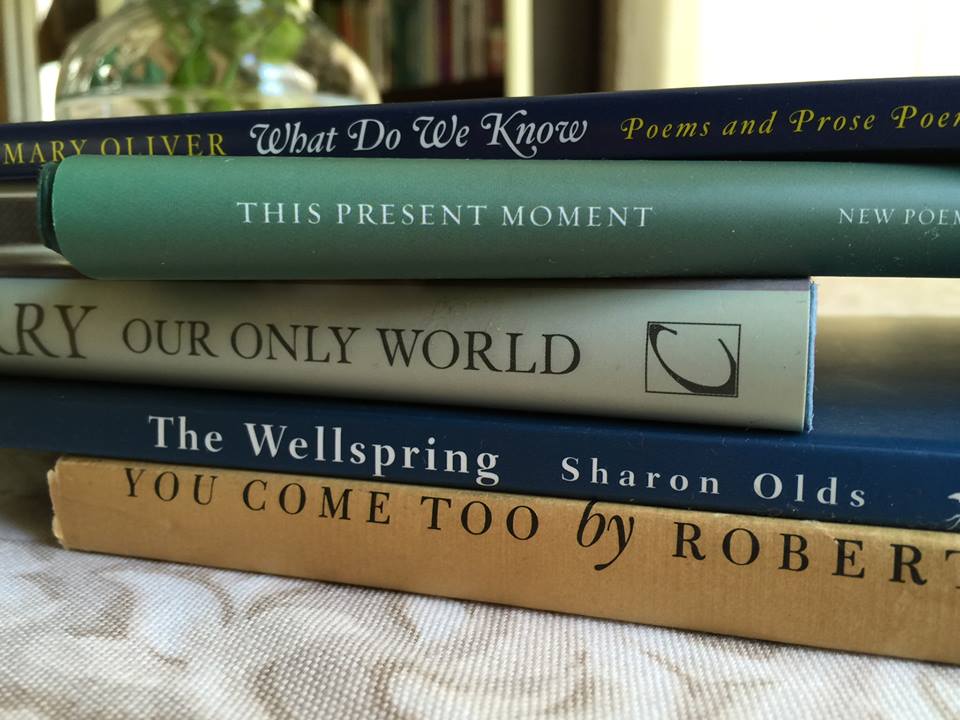
Book spine poetry for National Poetry Month

Stack of poetry books

What do we know

This present moment

Our only world

The wellspring.

You come too.

Packing for Paris

Books

I try to make my traveling adventures reading adventures, too. We’re headed to Paris to see our son, with a two-day stop in London, my first visit to both cities.

Then we’ll go to Metz, France for a couple of days, with a road trip to Luxembourg City. In World War II, my father fought in the battle of Metz, and we think we’ve figured out approximately where he was wounded (on November 14, 1944). So we’ll investigate and see what we find.

My father spent a weekend in Luxembourg City just before the battle and had an interesting story to tell about that, which I’ll share in an upcoming post.

Metz
Metz, France (Wikipedia)
Luxembourg City
Luxembourg City (Wikipedia)

Besides Gertrude Stein, Irene Nemirovsky and our trusty travel guides, I’m bringing Henry Miller and Ernest Hemingway. (No books related to London because I won’t be able to contain myself in the bookstores.)

Tropic of Cancer book cover
One of the most banned books in history

A Movable Feast Book Cover

I’ll share my impressions, literary and otherwise, in upcoming posts.

Which books or authors would you recommend to a reader visiting France? Please comment!

On Reading the Tough Stuff

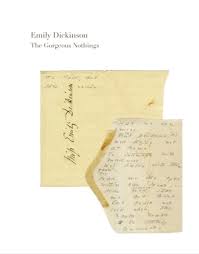
The Gorgeous Nothings book coverThis week I’m passing along a few of my favorite bloggers, people who have important things to say and they say it well.

I’ve recently become a follower of Book Guy Reviews, written by James Neenan, a Denver high school English teacher. I love what he says about reading difficult books.

On Reading the Tough Stuff

Writing (and reading) can be dangerous

I wanted to share a post I love written by Valerie Davies of New Zealand, an accomplished writer and journalist who left blogging for a while and has now returned, to the great pleasure of her many followers.

David Copperfield book cover

Valerie writes about reading aloud to your children in front of the fire or under the covers on a cold winter night….David Copperfield (Did you read it at a young, impressionable time in your life?)….a Queen who couldn’t stop reading….what Stephen King says about writing truthfully….the dangers of reading and writing….what some brave bloggers are doing….and for good measure, a recipe.

Click on the link below to read Valerie’s post:

The dangers of words.

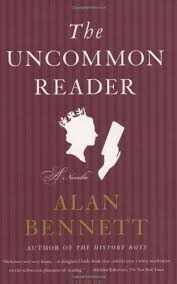
The Uncommon Reader book cover

Literary Blog Hop Book Giveaway

Literary Blog Hop logo


Welcome to The Literary Blog Hop!

My Giveaways: The Story of a New Name by Elena Ferrante

The Children Act by Ian McEwan

(I will ship to international addresses.)

Books Can Save a Life is participating in the 2015 Literary Blog Hop, hosted by My Book Self.

Between now and midnight on Sunday, April 12, you can hop over to a dozen or so blogs, all offering giveaways of books, book gift cards, or bookish items. Click HERE to see the many fabulous blogs participating in this hop!

My Giveaway

I will be giving away two works of literary fiction by renowned authors. (One book each to two lucky winners.) Just leave a comment about books on my blog (see left sidebar) between now and April 12 and you’re eligible. Winners will be notified via email and will have 48 hours to respond or an alternate winner will be selected.

The Story of a New Name book coverAccording to The New Yorker,Elena Ferrante is one of Italy’s best-known least-known contemporary writers.” An international literary sensation, Elena publishes under a pseudonym, so her identity remains unknown. I’m pleased to offer The Story of a New Name, the second in Ferrante’s best-selling Neapolitan trilogy. You’ve just got to experience her remarkable voice! Click HERE to read a previous post about Ferrante.

Ian McEwan has long been one of my favorites. The Children Act is the haunting story of a teen-age boy with a life-threatening disease who refuses medical treatment on religious grounds.The Children Act book cover

Anyone can enter The Literary Blog Hop. You do not need to have a blog or follow my blog, but if you find Books Can Save a Life of interest, please become one of my followers by email or on Facebook or Twitter.

Oh, and please share this post on your favorite social media!

The Literary Blog Hop ENDS:

MIDNIGHT EST April 12, 2015

Thank you for visiting Books Can Save a Life. Remember, leave a comment if you want a chance to win, and then start BLOG HOPPING!

This Changes Everything

“…only mass social movements can save us now.”  Naomi Klein, This Changes Everything: Capitalism vs. The Climate

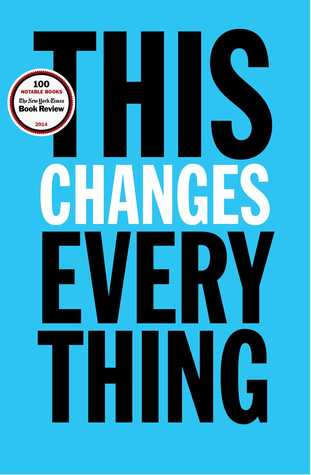
This Changes Everything book cover
Notice the cover. No author, no subtitle. One clear message.

 “….this impossibly thin blue curve keeps everything alive beneath it.”  Reid Wiseman, #spacetweets.  

For starters, take two and a half minutes to watch astronaut Reid Wiseman’s video, “A Photo I Love,” and then come back here. You’ll see a new view of Italy (some of you know how much I love Italy). Notice in particular Reid’s photo of the earth’s atmosphere, “….so blue, so incredibly thin….” and Reid’s tweets (#spacetweets).

I wanted to begin on an upbeat note, hence Reid’s video of “watching our earth be alive” that so vividly highlights what the stakes are when it comes to the climate debate. It’s not that Canadian journalist Naomi Klein doesn’t offer hope in her latest book, This Changes Everything. Certainly, she does, but this is a read with plenty of emotional lows before you get to the highs.

This Changes Everything is proving to be enormously influential as well as controversial. If I read her correctly, Klein does not advocate a dismantling of capitalism, but her book is indeed a polemic against the extreme version of capitalism that pervades much of the world today. Her message is that the earth cannot possibly continue to sustain a world economy based on unlimited growth and the endless extraction of resources. We need to change course to keep the earth’s warming under two degrees Celsius (this is according to many climate scientists, who also maintain that a warming of four degrees Celsius would be catastrophic). We need to act now, on a massive scale.

If you care deeply about climate change, I highly recommend putting This Changes Everything at the top of your to-read list. There is so much I don’t know about this huge topic. Though I’ve been against fracking (recently outlawed here in New York), I didn’t know much about it, and I knew absolutely nothing of Canada’s tar sands project and its devastations. Klein brought me up to date on all of this, as well as the current climate change activist scene. She synthesized an enormous amount of research, which makes for slow reading at times, but it’s worth it if you want the big picture.

Here are some things I learned that surprised me:

  • We’ve come a long way with alternative energy technologies. It seems like a no-brainer – if we can meet our energy needs at very little cost using solar, wind, and other technologies, why would we continue using expensive and dirty fossil fuels?
  • Native Americans and indigenous populations around the world are winning important victories against the fossil fuel industry, more so than activists in the mainstream. In Canada and the US, for example, some of these groups, by treaty, retain rights to their land, including the right to make a living from it. The courts have, in many cases, upheld these rights, effectively blocking or delaying extraction projects. These delays have given alternative energy technologies time to develop.
  • Though it’s important for developed countries to convert to clean energy, it’s crucial that we help developing countries turn to clean energy, too–otherwise we’ll never be able to stop global warming. Klein and others maintain that, since developed countries have grown wealthy from fossil fuels, we have a responsibility to help developing countries pay for their energy infrastructures.

A New York Times review called This Changes Everything “…the most momentous and contentious book since Silent Spring,” and “…a book of such ambition and consequence it is almost unreviewable.”

This Changes Everything is absolutely a book that can save lives.

Have you read This Changes Everything? Do you recommend other important books about this topic? If so, please do in the comments. And if you care about climate change, I hope you’ll share this post.

Scopello sunset
What we don’t want to lose. View of Zingaro Nature Preserve in Sicily. (Photo by A. Hallinan)