A Woman in the Polar Night

Polar Night“Meanwhile the world out of doors falls into deepest night. The mountains are no more than white shadows, the sea no more than a black shadow – until that too dissolves away. And then everything is dead.

In this pitch darkness we cannot move far from the hut. I make the smallest possible turns around the hut – all that is left of my walks. When it is not snowing we spend hours outside the hut chopping and sawing wood by the light of the hurricane lamp….

The wind that, rising and falling, lasts for days, is in fact our last link with the reality of the world…”  Christiane Ritter, A Woman in the Polar Night

A Woman in the Polar Night is an astounding memoir by Austrian artist Christiane Ritter who, in 1933, joined her scientist and hunter-trapper husband, Hermann, on the remote island of Spitsbergen 400 miles off the coast of Norway.

If you love memoirs of travel, adventure and, especially, nature, I highly recommend A Woman in the Polar Night. This is an extraordinary book written in poetic, painterly prose by a woman with a fearless spirit who was profoundly moved and changed by her year in the Arctic.

Christiane writes brilliantly about the beauty of Spitsbergen and also its terror. She thrived on Spitsbergen, but during both the darkest and the brightest stretches of her polar immersion she approached the edges of madness. As anyone might.

She writes of a terrifying two weeks spent alone in a fierce snowstorm. The hut was buried completely except for the stovepipe attached to the roof. Christiane’s husband and their companion, Karl, had gone on a hunting trip, and she was left alone with the darkness, snow, and raging wind.

She survived the storm and isolation. But when a full moon finally broke the long darkness, Christiane became moonstruck:

“It is full moon. No European can have any idea of what this means on the smooth frozen surface of the earth. It is as though we were dissolving in moonlight…. One’s entire consciousness is penetrated by the brightness; it is as though we were being drawn into the moon itself…..

Neither the walls of the hut nor the roof of snow can dispel my fancy that I am moonlight myself.”

Fearing Christiane had rar, a strangeness that befalls some who winter in polar regions, Hermann and Karl kept Christiane in the hut, so she wouldn’t succumb to ishavet kaller – meaning “the Arctic calls” – which can drive a person to throw herself into the sea.

“Surrounded by this boundless deadness and rigidity of everything physical, one’s living senses begin slowly to go their own way. More frequently and more brightly as the winter is prolonged, a strange light spreads before the inner eye, a remote and yet familiar vision. It is as though here, in this apartness, we develop a particularly sharp awareness of the mighty laws of the spirit, of the unfathomable gulf between human magnitudes and eternal truth. Outside of time, everything is annihilated. The imprisoned senses circle in the past, in a scene without spatial dimensions, a play in which time stands still.

Often I see the flowers and trees of the distant sun world, but I do not see them as I used to see them. They are glowing with color and piercingly beautiful. Their most secret meaning lives in their growth and their color.”
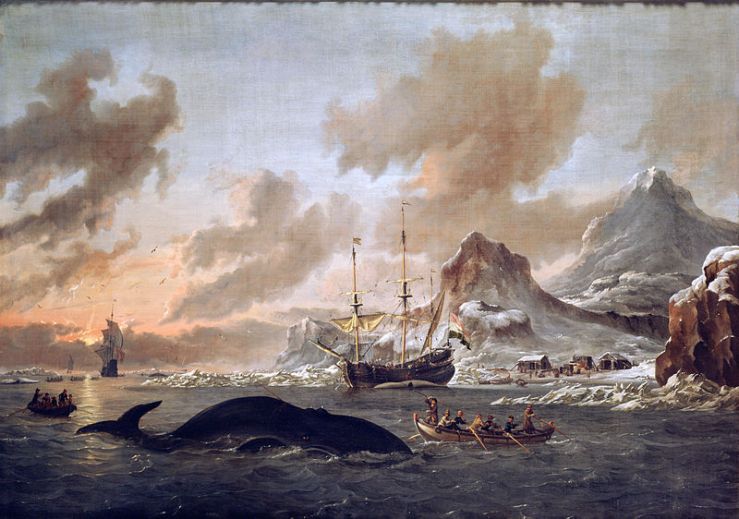
Dutch Whalers Spitzbergen.jpg

Dutch Whalers near Spitsbergen. By Abraham Storck – Stichting Rijksmuseum het Zuiderzeemuseum. 022296, Public Domain, https://commons.wikimedia.org/w/index.php?curid=5040261

Christiane writes of bear-hunting with Hermann and Karl in a “gigantic wilderness of ice”:

“We are in the middle of the bear kingdom. All my fear of bears has vanished. As in a dream I go on through the splendid strange world.

How quiet it is here. The sun shines on a soundless scene. The magical hues of the soft shadows glow deeply. Everything belongs together here, even the bear tracks in the deep snow, which show with what peace of mind the animals have gone on their way. Everything breathes the same serenity. It is as though a current of the most holy and perfect peace were streaming through all the landscape.

I feel that I am close to the essence of all nature. I can see its paths interlacing and still running alongside each other in accordance with eternal laws. I divine the ultimate salvation before which all human reasoning dissolves into nothing.”

nypl.digitalcollections.510d47e1-29ed-a3d9-e040-e00a18064a99.001.w
Ptarmigan was part of Christiane’s Spitsbergen diet. The New York Public Library Digital Collections.

The memoir’s conclusion is triumphant and sad. Christiane must finally leave the island, forever changed and knowing she will never return. She doesn’t reveal she has an infant daughter at home in Austria until nearly the end of her memoir, a startling bit of information that for me highlighted what an unusual couple the Ritters were.

I was curious about what it was like for Christiane to return to civilization and wished for an epilogue (there is none), but on the other hand I wasn’t sure I wanted to know. On top of having to re-integrate into society, Christiane returned to Austria as Europe neared the onset of World War II.

I found a 1954 edition of Christiane’s memoir at the local library, illustrated with line drawings by the author. You may want to look for the University of Alaska Press edition, published in 2010, which includes a preface with biographical information about the Ritters. It may satisfy some of the inevitable curiosity you’ll have about how the lives of this remarkable couple played out.

Christiane wrote, “You must have gazed on the deadness of all things to grasp their livingness.”

It seems to me her memoir is a remarkable example of someone whose extreme adventure pushed her into completely letting go of her ego and recognizing that we don’t have dominion over nature; we are instead part of nature itself. I think the world would be a much better place if we could all come to know this.

What We're Fighting for NowSo it was especially sad to read the excellent book I picked up next, What We’re Fighting for Now Is Each Other: Dispatches from the Front Lines of Climate Justice by Wen Stephenson, which makes clear that humanity hasn’t learned what Christiane Ritter learned. This book is depressing but empowering at the same time.

Stephenson reports that many climate scientists now believe climate catastrophe is inevitable.

He explains the term “climate justice” and how it is different from climate activism and environmentalism. Many have come to realize that climate change is the moral and spiritual issue of our time, inseparable from social justice and equality. The poor and disadvantaged will suffer the most from climate disruptions, as we’ve already seen in places like New Orleans and in countries around the world.

Stephenson lives near Walden Pond in Massachusetts, and he looks at climate justice through the lens of Henry David Thoreau‘s principles of civil disobedience. He likens climate justice to the social justice struggles of abolitionism and civil rights.

Stephenson writes about how he came to leave his career in mainstream journalism to immerse in climate justice, and it’s fascinating to read his interviews with others devoted to the cause as they explain the spiritual and other motives that drive them.

Most are young, some got their start in the Occupy movement, others are evangelicals, Quakers, atheists, community organizers, and grandparents. Many of them have come to believe that the way to survive climate change is to build strong, local communities where people trust and look after each other.

I couldn’t get out of my mind a young woman Stephenson interviewed, Grace Ann Cagle, who said she’d much rather be on a farm having babies than on the front lines of climate justice. Grace took part in the Texas Tar Sands blockade. 

“She’d been up in the trees for about a week, in late September, 2012….Sure enough, TransCanada’s machines came up from the south.

‘They came over the creek….They had a feller buncher – it grabs the trees, cuts them, and throws them. And as they cross the creek, they’re coming like ten feet, twenty feet away from me, practically at the base of my tree – and I thought they were going to kill me….Why would they care about me? And so I jumped onto this traverse rope, and I’m dangling there, wearing all black with a mask on my face, screaming, Go away! Get out of here! They stopped their machines…..I spent like six hours dangling there, in a harness, because I could protect two trees at once….'” 

How sad that, since Christiane Ritter’s time, we’ve come to this.

Read A Woman in the Polar Night to be transported and to understand what we’re losing. Then, if you want to consider what your role might be in the greatest battle of our time, you could follow the memoir with What We’re Fighting for Now Is Each Other: Dispatches from the Front Lines of Climate Justice.
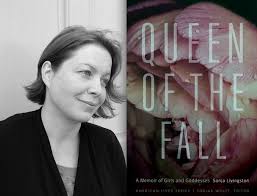


Sonja Livingston’s Queen of the Fall

Livingston“The Italian word for gypsy, zingaro, is perhaps a better word. [The word] “heart” is merely a convenience, a sort of shorthand for what’s contained within the cautious body–the spark that thrives on wonder, that which is flung wide or ratcheted shut until it seems all but sealed but remains open, if only just a touch; the thing that moves and changes even as we seek to know it, that which stalks and stalks but cannot be satisfied. Not fully. Not permanently. The part of us that continues to yearn, to try, and to dream, despite the fact that there’s a certain space within us incapable of being filled, and that learning to live with this is a part of our humanity. But what does the heart know? Zingaro cuore. So great are some hungers, so unrelenting, that whatever even halfway fills them must be tried–miniature orange trees and birdhouses and homemade ukuleles. What can we do but feed, then feed again, the tender shoots within us?    Sonja Livingston, Queen of the Fall: A Memoir of Girls and Goddesses (University of Nebraska Press)
If you want to read something different and magical, try  Queen of the Fall: A Memoir of Girls and Goddesses by Sonja Livingston.

This collection of linked essays, the 2016 choice for If All of Rochester Reads the Same Book sponsored by Writers & Books, is a wonderful example of how powerful and poetic the essay can be and how inventive the form.

(Despite the subtitle, this is a collection of essays–memoir-ish, rather than a true memoir.)

Sonja writes about how the term “essay” conjures visions of tedious school assignments. But the essay is actually an elastic form of literary exploration that can be novel and beautiful. If done well, an essay tantalizes, catching the reader up in an unfolding.

The author has dedicated Queen of the Fall to the memory of Judith Kitchen, a teacher and mentor who passed away in 2014. I wrote last week about how Sonja, who grew up in the Rochester area, took Judith Kitchen’s essay writing class at SUNY Brockport twice. (I took Judith’s class also, several years ago.) While she was enrolled in Judith’s classes, Sonja was inspired to give up her career as a school counselor and become a writer.

Her essays share the themes of womanhood, fertility, and poverty, which have been central to her own life–hence the term “memoir” in the book’s subtitle. Each essay stands on its own, but I found myself so captured by their momentum that I read several in one sitting, as though I were reading a novel or memoir.

When I was in graduate school at Syracuse University many years ago, two classmates and I made a documentary about rural poverty in New York State. I’d just moved here from New York City, and I loved the landscape of glacier-made Finger Lakes, deep gorges, and waterfalls. I had no idea that, hidden in all this rural beauty, many families lived in poverty.

Growing up in the 1980s and 1990s, Sonja Livingston, her mother, and her six siblings were among them. Though there were five fathers among the seven children, no father was present in their lives. They moved from place to place: a rural town, a Native American reservation, an urban slum in inner city Rochester.

In Queen of the Fall, (which refers to the apples Sonja and her siblings picked during a stint as farm workers), Livingston explores the lives of various women and girls, including the great suffragette Susan B. Anthony who lived in Rochester (“The Lady With the Alligator Purse”), the troubled young girls (and a boy) Sonja met as a school counselor (“One for Sorrow”), and the television character Ally McBeal  (“The Lonely Hunters.”) They are some of my favorite essays, as well as “World Without End,” “What the Body Wants,” and “The Last American Virgin.”

Livingston casts the lives of women, especially disadvantaged and/or obscure women, in a new and dignifying light. Throughout, Sonja weaves in moments from her life as a teen taking risks yet hoping to avoid pregnancy, as a woman confronting infertility, and as the aunt of a young, unmarried niece who finds herself pregnant.

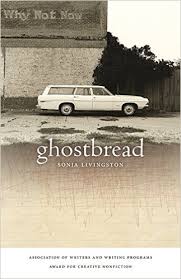
GhostbreadIf you’d like the full story of Sonja’s remarkable life as a backdrop to her essays in Queen of the Fall, you could read her remarkable 2009 memoir, Ghostbread, first. After devouring her essays, I found a copy of the memoir at my local library.
Sonja will have a newly published collection of essays this month that has been described as a hidden history of women’s lives: Ladies’ Night at the Dreamland. (I believe the Dreamland refers to Seabreeze, a Rochester amusement park.)

I’m looking forward to reading about little-known and obscure women from the area where I live–among them, a woman who crossed Niagara Falls on a tightrope, and the Fox sisters, who became well-known Spiritualists and mediums. Western and upstate New York has always been known for its progressive spirit and energetic spirituality, a hotbed of abolitionism, women’s rights, religiosity, spiritualism, and utopianism.

Declaration of SentimentsHere, for example, is a link to the Women’s Declaration of Sentiments, written and signed in 1848 in Seneca Falls, New York. It is inscribed on a wall there, and I remember being very moved on my visit several years ago.

From Livington’s upcoming book:

“Women understand how to overlook or wait until next time, can spend years holding their tongues in the face of the thing that most wants letting. No, I need no convincing of the strength of women, but it’s too often a matter of restraint. I do not often see us standing bold or brazen before a crowd. I do not mean to belittle cheerleaders and fashion models and television weather women—though theirs seems a case of the body going through a series of prescribed and pleasant motions. Where are our wild women? Those with open mouths and muscled legs, who flare and flame, whose actions shock, and whose bodies defy gravity, whose every step rivets the eye so that we can’t look away?”

Ladies Night

Remembering Judith Kitchen

Excavating a Life

Queen of the Fall book coverQueen of the Fall: A Memoir of Girls and Goddesses, is a collection of linked essays by Sonja Livingston and the If All of Rochester Reads the Same Book selection for 2016.

For the next few weeks, Sonja will be here for readings, signings and discussions at Writers & Books, local libraries, schools, colleges and bookstores.

Sonja is from the Rochester area, and divides her time between Rochester and the University of Memphis, where she teaches writing. The daughter of a single mother and one of seven children (with five different fathers), Sonya has also written a memoir, Ghostbread, about growing up in poverty in the Rochester slums and on the Tonawanda Reservation.

When I read the dedication page of Queen of the Fall, I was surprised and delighted to see this: “For my mothers, actual and acquired, and In memory of Judith Kitchen.

I wondered: Does Sonja look upon Judith as a mother figure, a kind of midwife who helped Sonja give birth to her own writing?

Yes, she does. So do I, and so do many in the Rochester community. I know Sonja does because, flipping through her essays, I found “Flight,” about the personal essay writing class taught by Judith that Sonja enrolled in many times.

I took the same class from Judith years ago, when I first began writing memoir and essay. Poet, novelist and essayist Judith Kitchen was a professor at SUNY Brockport at the time. She was married to the poet Stan Rubin, also on the Brockport faculty. Both were master teachers beloved by students and the literary community here.

I’d had to wait a semester to get a spot in Judith’s class. She generously added a slot or two beyond the designated maximum enrollment of twenty to accommodate those of us at the top of the waiting list. Judith didn’t have to let us non-matriculated students in, but she did. I think that she welcomed the diversity of backgrounds and generations, because it made for lively, rich discussion and, ultimately, more learning and better writing.

Our class was made up mostly of young people enrolled in the Creative Writing MA program. There were a few women getting mid-life master’s degrees in the class, too. I was in the small group of moms with kids and/or jobs, taking the course as continuing ed, trying to squeeze in the class time, plus the hours of writing and preparing critiques.

Oddly, I sat next to another mom with young children who also happened to be writing about having a mother with schizophrenia. I wasn’t sure I liked that so much, but on the other hand we “got” each other. We were of the same tribe and found our own experiences validated in each other’s writing.

HouseOnEcclesI remember those three-hour sessions every Tuesday evening, all of us crowded around a large conference table in an undersized room. Usually, two people were in the hot seat: the writer whose essay we were critiquing, and the student moderator leading the critique.

Being the moderator was nearly as stressful as having 20+ people deconstruct and critique your writing. Judith wanted us to practice and learn the art of critical reading and the art of leading a successful writing workshop. She knew the value of writers in community and that the best way to learn how to write is to learn from one other. So, in addition to our writing assignments, we were required to come to class prepared to intelligently discuss our classmates’ essays, having read them thoroughly and marked them with comments.

Judith was strict in her expectations, but she was also kind and nonjudgmental. This is crucial in a writing teacher, especially in a college setting where you have new, young writers grappling with their innermost secrets and shames and confessing them on the page, perhaps for the first time.

We wrote and shared funny essays, of course, and happy ones and contemplative ones. But in Judith’s class, I learned what it was like to be young and beautiful and anorexic in a dorm full of women with anorexia. I learned what it was like to have your dearest, life-long friend, the one who knew you better than anyone else, commit suicide. I learned what it was like to be secretly lesbian and have a Vietnam war veteran with undiagnosed PTSD for a father.

I wrote a couple of essays about my family, my mother, schizophrenia, and the boy I loved. I shared with the class stories I’d never told before and listened to their comments.

One classmate’s essay in particular has stayed with me all these years. He wrote about a long night of partying. Beer after beer, shot after shot. The girl he was madly in love with. (Who he was still madly in love with; it was all over every page and you could see it in his eyes as he listened to our comments.) The girl who didn’t know he was alive. The girl whose long blonde hair he pulled back and held as she vomited into a toilet.

I don’t think he was confident of his own potential and, for sure, he knew before we said anything that he hadn’t nailed it, this unrequited love he was trying to write about. I think this boy and his essay got to me because I had two sons on the young side of their teen years. I realized that I was old enough to be this writer’s mother, old enough to be the mother of all the young writers in the class. I knew that I would never hear about my own sons’ loves in this searing detail, because that is not what sons tell their mothers. I knew this boy’s mother would likely never hear the story her son was trying to tell us.

I wanted to offer him something helpful and constructive, but I was mystified. I, too, was finding that, when it came to writing about my own first love, I was at a loss. How do you write about love in a way that is not sentimental or cliche, but authentic, vivid, new?

In autobiographical writing, you need to learn how to methodically unearth your personal land mines without letting yourself go crazy all over again. Then, with focus, presence of mind, patience, and persistence, you teach yourself the craft of writing. Draft after draft, you learn how to spin your most intense life experiences and emotions into storytelling gold. It becomes not about you anymore. Your exquisitely cut but imperfect gem of a story (it will never be perfect), the only one like it in the world, is ultimately for the reader.

Maternal is the word I think of now to describe Judith Kitchen. The way she created a safe, nurturing, supportive place for new writers to learn how to do this.

In class, my comment to the boy writing about the girl he loved was only to say something that would help him feel some kinship in his struggle. I said I thought writing about love was one of the hardest things and I was trying to figure out how to do it, too. I told him his writing was, for me, authentic and deeply felt, and that I thought if he kept writing but didn’t try to force it, eventually it would become what it was supposed to be.

A few years after I took her class, Judith and her husband moved to Port Townsend, Washington, where they founded the Rainier Writing Workshop. It is a unique, 3-year low-residency program. Its focus is not on achieving heights of literary prowess or publication or prizes, but on helping students find for themselves a sustainable, lifelong writing practice. A worthy goal.

Judith passed away in 2014. Years after Judith left Rochester, there are a handful of writing groups that originated from her classes that are still going strong.

Next week: Sonja Livingston’s Queen of the Fall and Ghostbread.

Have you had a writing teacher or artistic mentor who has influenced you and helped you along on your creative path?


Why We Write About Ourselves (Excavating a Life)

Twenty Memoirists on Why They Expose Themselves (and Others) in the Name of Literature

Why We Write About Ourselves book coverA few days after I wrote my blog post Why I Write Memoir (one of my most shared and commented on posts ever – many thanks to those of you who did so), I was intrigued to see at our local Barnes & Noble Why We Write About Ourselves: Twenty Memoirists on Why They Expose Themselves (and Others) in the Name of Literature, edited by Meredith Maran, who is herself a memoirist.

Just published this year, I hadn’t known this was coming. Here’s Meredith’s dedication: “For those who read memoirs and those who write memoirs, and for those who wish we wouldn’t. We’re all just looking for the truth, aren’t we.”

Meredith writes that emotions ran high when she asked the authors, some of our finest memoirists, to share honestly what it was like for them to see a memoir through to publication.

Each memoirist gets his/her own chapter that concludes with a short “Wisdom for Memoir Writers” section.

You’ll find, of course, these writers have strong opinions and distinctive voices, with widely varying opinions about self-exposure, writing about others, truth and accuracy, and other memoir writing land mines.

As I try my hand at memoir writing, I appreciated the moral support, guidance, and encouragement I found here. If you’re writing one I think you will, too. Whatever challenges and blocks you’ve encountered, you can be sure these writers have faced down the same thing.

And if you love to read memoirs, you’ll likely find a few titles and authors you’ll want to check out. No doubt, you’ll be more aware of the behind-the-scenes decisions the memoirist had to make about how to tell her story, which will make your reading experience richer.

Here are some of my favorite memoirist comments:

The Great Santini book coverPat Conroy (The Great Santini): “Some of us are the designated rememberers. That’s why memoir interests us–because we’re the ones who pass on the stories.”
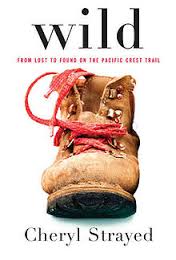
Cheryl Strayed (Wild): “I’m always asking myself if material I have from my own life would be best used in a novel or a memoir or a short story or an essay. I was moved to write Wild as a memoir because I thought that was the best way to tell that particular story.”

Jesmyn Ward (Men We Reaped): “The further I got into the book, the worse it got. Recounting the events when my brother died was so difficult….especially the very big edit I did with the direction of my editor, Kathy Belden, was one of the hardest things I’ve ever done in relation to writing. I did four drafts, and she was asking me at every point to offer some judgment, some assessment of these events…..I recounted a story about a cellar in the woods. Kathy had a page of notes on the section. She kept telling me to dig deeper, to look at myself in the past, to figure out why that cellar meant something to me…..I finally realized…All the feelings of self-loathing and worthlessness I had at that age were embodied by the cellar. It symbolized all the dark things that happened to me, things I thought I deserved because of the way I thought of myself at that time: as a young black woman in the South.” (Note: Jesmyn won the National Book Award for her novel, Salvage the Bones.)

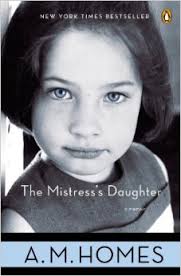
The Mistress's DaughterA.M. Homes (The Mistress’s Daughter): “There were many points at which I thought, I don’t really want to be doing this. I want to stop. What propelled me to keep going was that I felt I could bring to the memoir my experience and training as a writer–finding language for primitive emotional experiences. One of the things that worked about the book was that it gave voice to people who hadn’t found language for the adoption experience. It allowed them to explore their own experience in a different way, and/or to have their feelings about it articulated and confirmed.”   

(Note: I especially liked Homes’ memoir.)

Dani Shapiro (Three memoirs: Slow Motion, Devotion, and Still Writing) “After I gave my mother the galleys, her therapist called and asked me to meet with her. What can I say? We were all New York Jews. I gave the therapist a set of galleys so she could read it before my mother did. After she read it, she said she didn’t think there was anything that would upset my mother, that it was very fair to her. I had two thoughts: First, that this therapist didn’t know my mother at all, and second, that my mother had been wasting her money for years…

…when people in her life heard that her daughter had written a memoir, they all read it as a way of trying to understand her: her doorman, her lawyer, her dentist, her neighbors. I couldn’t have imagined such a thing happening. It was like she was in The Truman Show. The whole thing was very sad and painful, but not painful enough for me to wish I hadn’t written the book.”

James McBride (The Color of Water“The narrative of the book was as thin and muscled as my life was at that time. You know, with every story you do, you’re trying to shove a lot of things into the keyhole and drag the reader with you. You have to narrow the focus of the story so it has the push of a creek in a narrow spot.”

“You write a memoir for the same reason you write a song–to help someone feel better. You don’t write it to show how smart you are or how dumb they are. You’re trying to share from a sense of humbleness. It’s almost like you’re asking forgiveness of the reader for being so kind as to allow you to indulge yourself at their expense.”

(Note: James McBride won the National Book Award for his novel, The Good Lord Bird.)

Here’s my 2016 list of memoirs to read – who knows how many I’ll get to:

In Other WordsIn Other Words, Jhumpa Lahiri

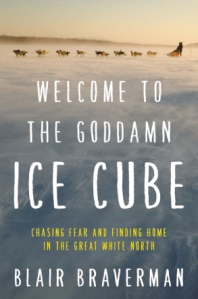
Welcome To the Goddamn Ice Cube, Blair Braverman

A Common Struggle, Patrick J. Kennedy and Stephen Fried

Beautiful Affliction, Lene Fogelberg

The Light of the World, Elizabeth Alexander

Into Great Silence: A Memory of Discovery and Loss Among Vanishing Orcas, Eva Salitis

When Breath Becomes Air, Paul Kalanithi

Just Kids; M Train, Patti Smith

Life From Scratch, Sasha MartinWelcome

Shepherd, Richard Gilbert

A Profession of Hope: Farming on the Edge of the Grizzly Trail, Jenna Butler

I would love to know if you have a favorite memoir, one that really spoke to you and that you’d recommend to others.


Why I Write Memoir (Excavating a Life)

SoldiersA long-time friend and important supporter of my work wisely suggested that I come out of the closet and become less close-mouthed about being a writer.

Hence this new Excavating a Life page on Books Can Save a Life, a kind of journal I’ll update from time to time as I work on a memoir.

My friend’s suggestion opened up a host of personal issues for me too numerous to delve into here: some are addressed in my memoir, and some I’ll write about in future posts. But suffice it to say I hesitated, in part because I believe in NOT saying much about the book or poem or essay one happens to be writing. Many writers would agree with this.

But not talking about a specific project isn’t the same thing as not talking about being a writer. And, let’s face it, I gave up a job I really liked and often miss because I needed more time and energy to see the memoir to completion. Since my days now largely revolve around writing the memoir (or they’re supposed to), it becomes very weird not to talk about this when other people ask me what I do with my time.

So, now I tell people I’m working on a memoir. Which generates all kinds of interesting questions and comments.

Liars' ClubYou may or may not know that memoirs have a REALLY bad reputation in some quarters. Mary Karr, whose memoir The Liars’ Club I view as a work of genius, wryly says memoir resides in the “low-rent” district of books and literature.

Some literary critics don’t even consider memoirs literature. Navel-gazing, they say, and often navel-gazing not done well.

For a time this bothered me. Was I spending my days navel-gazing?

But I’ve heard this criticism of memoir so many times now, that I’ve lost interest in it. For the most part, (not always) it no longer has the power to make me self-conscious when I write.

Without apology, I can say writing a memoir does require a good bit of navel-gazing. There’s no getting around that. The very nature of memoir is internal, psychological. It is first person point of view, however flawed and unreliable that interpretation of reality may be. (This is not an original thought on my part. See for example Brooke Warner’s thoughts at HuffPost Books.)

It is trying to figure out what the hell happened and then trying to make sense of it in a way that pulls the reader in. The writer’s journey becomes the reader’s journey, because the reader has had his own baffling, mind-blowing life. As the writer works things out on the page, the reader is right alongside her trying to come to grips with whatever blindsided her (the reader) on her own life journey.

If the memoir is powerful and offers a bit of wisdom and insight, that’s a win/win for the writer, the reader, and the world.

(This “without apology” business I learned from Eric Maisel and his Deep Writing seminar. He taught us to honor our writing, to make no apologies for it. He taught us to say this to ourselves when we need to: “That thought doesn’t serve me or my writing.” So if I get to thinking I’m navel-gazing, or if I hear someone else speak dismissively of memoir, I say to myself: “That thought doesn’t serve me if I want to complete my memoir and get it out into the world.”)

Getting back to those comments and questions I’ve gotten about memoir: A few people have a hard time with the idea that I reconstruct dialogue. How can I remember someone’s remark from twenty years ago, let alone an entire conversation? Aren’t I really just making things up? Isn’t that suspect?

If I’m making up the dialogue, what else might I be making up or misremembering? How else might I not really be writing the truth?

Considering how problematic memoir is, why not write a novel? Since I can’t guarantee 100 percent accuracy, why not write fiction? That way if I get something wrong it doesn’t matter. Fiction isn’t “the truth.”

Now, this is a loaded, much-debated issue with many facets. This is what I want to focus on here:

The Glass Castle
Another highly regarded memoir

My memoir is about growing up with a mother who had a serious mental illness. The illness was bad enough, but everyone pretended there was nothing wrong. No one spoke about or acknowledged the elephant in the room. Everyone seemed to feel it was perfectly fine to leave us kids alone with our mother, even though they certainly wouldn’t want to spend an afternoon with her. She could be, at best, decidedly unsociable and, at worst, hostile and scary.

(To be clear, my mother was a brave, strong, caring woman, and as good a mother as she could be.)

Not knowing what to do with my feelings of distress, sensing people didn’t want to deal with them and that no one was going to help us, I swallowed them. I pretended I was happy. I became ashamed of the dark feelings I shared with no one.

A parent in the throes of psychosis doesn’t really see her children. Her demons have all her attention, at least for the moment. The children become invisible to her, and the children know this. Between their parent not seeing them, and other people not acknowledging their unfortunate family situation, they begin to feel invisible.

They enter adulthood hollowed out, still feeling invisible. This they bring to their work, their relationships, their life. They pay a heavy price. They don’t really know themselves or why they do some of the things they do. Often, they don’t go after all they can in life. They hold back. They hesitate to take risks. Their lives are the poorer for it, and so is the world, which is robbed of their full talents, wisdom, and unique contributions.

As someone who wanted to write, who wanted to be creative, I found that I’d locked away my most essential, authentic self. I was alienated from my own shadow, my own best “material,” the very bedrock I should have been writing about. So I didn’t write, at least not for a long time.

One way to re-connect with one’s essential self is to write a memoir, as difficult as that process can be. One way to no longer feel invisible is to write a memoir.

I’m writing a memoir because I want to (and feel compelled to) tell my story, my own true story. I want to say what really happened, at least from my perspective. For me, writing fiction just won’t cut it.

Lord knows, the world is full of people far, far more wounded than I. In so many respects, I’ve been exceedingly fortunate. The best memoirists are not out to portray themselves as victims or to gain attention or sympathy. If they’ve made it as far as having a memoir published, they don’t need a reader’s sympathy. They are, among other things, trying to bring valuable stories into the world.

Wild
One of the most influential memoirs in recent years

I believe this is the age of the memoir, and it’s about time, because the world needs memoirs. (Though I acknowledge that reading memoirs isn’t for everyone.)

We’re bringing to light the dark secrets we hid growing up. We’re looking at what it means to be a family, what holds one together and what tears one apart. We’re hoping to change things so people like my mother get the help and support that is their right. We’re questioning long-accepted social values that have brought us to some bad places.

Just think of all the memoir writers – and readers – who no longer feel invisible, whose energy and creativity and wisdom are being liberated, helping all of us achieve a more enlightened world.

Next up: Back to books – The Buried Giant by Kazuo Ishiguro (I’m loving it.) Down the road on Excavating a Life: Memoir and shame.

Please share this post with memoir lovers, memoir writers and memoir skeptics. Do you have a favorite memoir? Do you dislike memoirs? Are you writing one? Tell us about it in the comments.

H Is for Hawk

H is for Hawk

“….her feet were gnarled and dusty, her eyes a deep, fiery orange, and she was beautiful. Beautiful like a granite cliff or a thunder-cloud. She completely filled the room. She had a massive back of sun-bleached grey feathers, was as muscled as a pit bull, and intimidating as hell….”  H is for Hawk, by Helen Macdonald

Helen Macdonald’s reaction to her father dying suddenly was to embark on the extraordinarily difficult task of training a goshawk, one of nature’s fiercest and most ruthless predators.

Goshawks are cold-hearted, lifelong loners with no social instincts whatsoever. They bond with no one, not the goshawk they mate with, not other goshawks, not any human who wants to train them. You can’t look them in the eye, either, because if you do they might attack you.

Goshawks don’t respond to punishment. The only way to train a goshawk is to be submissive and patient, eyes cast down at all times. Tim Gallagher, in a review of H Is for Hawk, likens this to being a kind of monk. It is not a part-time thing. Training a goshawk is all-consuming. It takes over your life.

Helen writes about the hawk she is training, whom she names Mabel:

“Everything about the hawk is tuned and turned to hunt and kill. Yesterday I discovered that when I suck air through my teeth and make a squeaking noise like an injured rabbit, all the tendons in her toes instantaneously contract, driving her talons into the glove with terrible, crushing force. This killing grip is an old, deep pattern in her brain, an innate response that hasn’t yet found the stimulus meant to release it. Because other sounds provoke it: door hinges, squealing breaks, bicycles with unoiled wheels – and on the second afternoon, Joan Sutherland singing an aria on the radio. Ow. I laughed out loud at that. Stimulus: opera. Response: kill.”

Two goshawks
Goshawk. Rare Book Division, New York Public Library


Helen’s father was a prominent photographer, Alisdair Macdonald, and the two were close. When she was a child, they spent many days roaming the countryside as Alisdair indulged his passion for airplanes and Helen her growing passion for birds.

After Alisdair died, Helen wanted a distraction from her grief, something deeply immersive and challenging. In this respect, H Is for Hawk is unlike other memoirs. There isn’t a lot about Helen’s father or her relationship with him, or about Helen’s feelings of sadness and loss, per se. These are subsumed into an arresting narrative of Helen’s struggle to achieve what seems to be impossible as she grapples with her grief.

As Helen comes to understand, “Shocking loss isn’t to be shared, no matter how hard you try.”

Helen was, in fact, an experienced falconer, but she’d never taken on a goshawk before. She brought along a companion in her unusual undertaking: T. H. White’s, The Goshawk, White’s account of his own experience training a goshawk in the 1930s. (Remember T.H. White’s The Sword in the Stone, The Once and Future King, and other tales of Arthurian legend? Even if you didn’t read the books, you’ve probably seen the movie/musical Camelot and the Disney version of The Sword in the Stone.)

This weaving of T.H. White’s experiences into Helen’s narrative is fascinating; White, who was gay in a culture and time when this was unacceptable, was grappling with his own loss and inner darkness. Helen writes,

“It took me a long time to realise how many of our classic books on animals were by gay writers who wrote of their relationships with animals in lieu of human loves of which they could not speak.”

And this:

“….White wrote one of the saddest sentences I have ever read: ‘Falling in love is a desolating experience, but not when it is with a countryside.’ He could not imagine a human love returned. He had to displace his desires onto the landscape, that great, blank green field that cannot love you back, but cannot hurt you either.”

Helen’s immersion with Mabel, her goshawk, is harrowing. She holds nothing back in the struggle, and she holds nothing back from her reader.

Ultimately, Helen has to confront her obsession with the goshawk and her nearly complete withdrawal from friends and family. Where does obsession end and madness begin?

Before you read H Is for Hawk, I highly recommend that you read this fascinating review by Tim Gallagher at the Cornell Lab of Ornithology All About Birds site. Gallagher puts the human-training-a-goshawk challenge into context, and I think it will pique your interest. Not knowing a raptor from a falcon from a hawk myself, I wish I’d read this review first. And I’ve a soft spot in my heart for the Cornell Lab of Ornithology and the good work they do. We live not far from there, and I’ve seen at least one of their research sites in the Finger Lakes countryside.

Read H Is for Hawk if you want a different kind of memoir that demands to be read slowly, one word, one phrase, one sentence at a time. If you’re willing and want to slow down and immerse in another world entirely.

I expect I’ll read H Is for Hawk once or twice more down the road, as I simply couldn’t take it all in the first time through. If I’ve painted a rather dark picture of this unusual memoir, there is light and wisdom gained, too:

“There is a time in life when you expect the world to be always full of new things. And then comes a day when you realise that is not how it will be at all. You see that life will become a thing made of holes. Absences. Losses. Things that were there and are no longer. And you realise, too, that you have to grow around and between the gaps, […]”

Have  you read H Is for Hawk? What did you think? Are there similar books you might recommend?

Excavating a Life

Momphotos-18This is a happy coincidence: I’m starting a new, ongoing theme here at Books Can Save a Life (in addition to my usual book posts) called Excavating a Life on my fourth anniversary, to the day, of blogging.

Excavating a Life will be my informal, occasional, online creative journal: notes and jottings about the writing life as I try to finish this exhilarating and confounding marathon of writing a memoir, which I’m aiming to complete in 2016.

I hope these musings will speak to you who are immersed in a creative endeavor, or inspire you to begin one, and that you’ll share the challenges and high points of your own journey.

For those who follow me primarily for books, I’ll often highlight an author or work that has taught me something about pursuing a writing or creative practice with intention–so books will be a big part of Excavating a Life, too.

For instance, you’ll see a lot of Vincent Van Gogh here. I’m not a painter by any means, never learned to draw (though I’m making attempts to keep a nature journal), but I find Van Gogh’s letters an endless source of inspiration; I have three collections of them.

Here is a nugget of wisdom from Van Gogh. And it doesn’t just apply to painting (or writing) does it?

Vincent
“If a peasant painting smells of bacon, smoke, potato steam–fine–that’s not unhealthy–if a stable smells of manure–very well, that’s what a stable’s for….Painting peasant life is a serious thing…”  Vincent Van Gogh: Ever Yours, The Essential Letters, Yale University Press 2014


I’m thrilled to acknowledge and thank my longtime friend and writing coach extraordinaire, Debra Marrs, who presented this gift of an idea for Excavating a Life when we met up a couple of times in Florida for afternoon tea and some fabulous Cuban food. We were in Florida to spend holiday time with family–a Christmas quite different from our usual upstate New York kind.

Thanks to my sister- and brother-in law, who have the perfect guest quarters, I started off the year with a week of intensive writing. During my mini-retreat, I was able to add 10,000 words to my memoir–not quite my goal of 13,000, but good enough.

Temple
Wat Mongkolrata Temple

My sister-in law, who is from Thailand, took us to the local Buddhist temple, where I meditated and enjoyed the beautiful surroundings. It was a unique blend of spiritualities for me this mid-winter. That, and a change of scene, did wonders for my writing.

Before I close, here is one more tidbit. Have you ever heard of the Helsinki Bus Station Theory of creativity? I hadn’t, but apparently it is well known among many photographers. I found out about it yesterday. I love it and agree with it. Don’t get off that #!?&! bus. And remember, in the first stages of a project, feedback from others or your own emotions “aren’t a reliable indication of how you’re doing.”

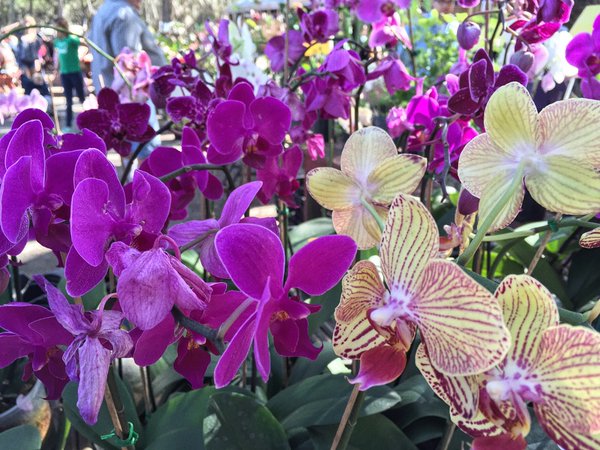
Orchids
A different Christmas this year: orchids instead of evergreen. My niece said these look like butterflies, and I agree.


Are you immersed in bringing something to fruition? Or would you like to be? It could be anything: writing a book, building a stone wall, starting a business, learning to knit, climbing all the Adirondack mountain peaks, whatever. What’s your biggest creative challenge at the moment?

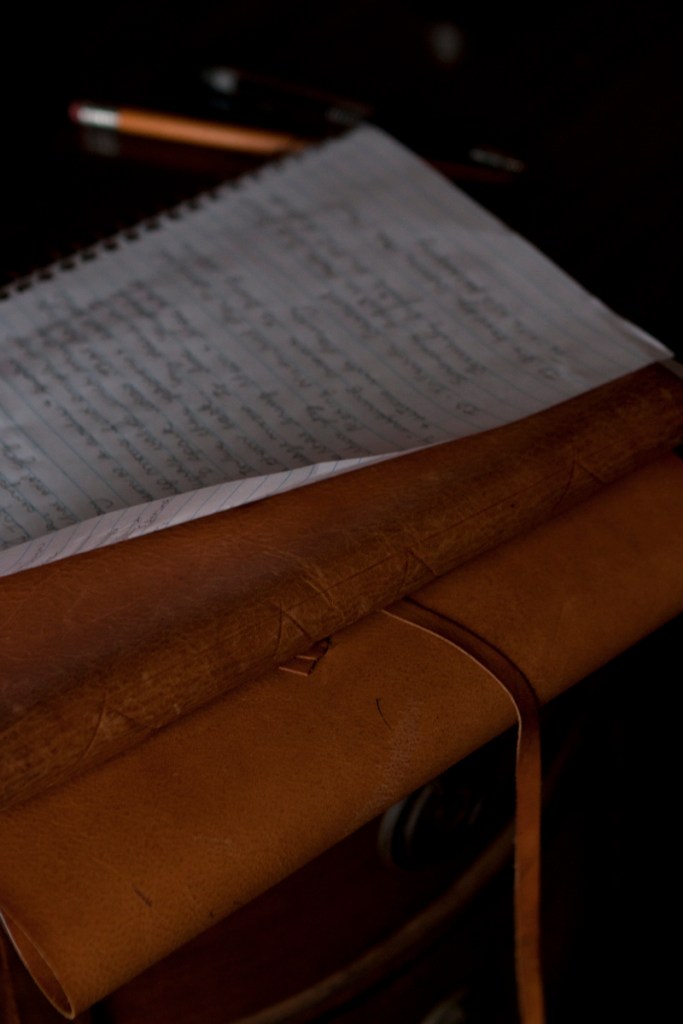
Journal
I bought this well worn leather journal cover in Florence years ago.


Wild Arts!

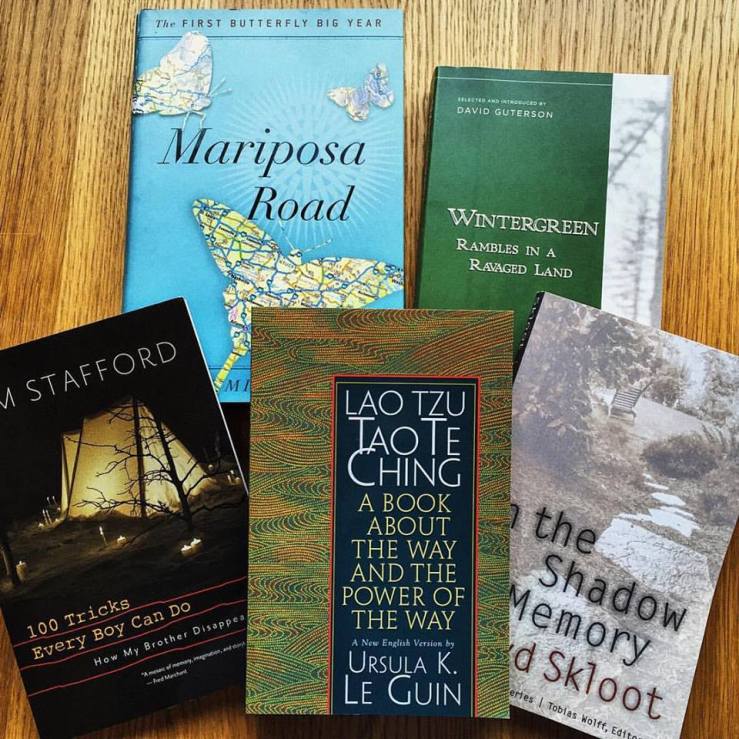
Five books
Books purchased at the Wild Arts Festival in Portland, signed in person by the authors.


Litmosphere: 1. the vast domain of the world’s readers and writers 2. a lively literary mood permeating the air ~ sign in Powell’s Books, Portland

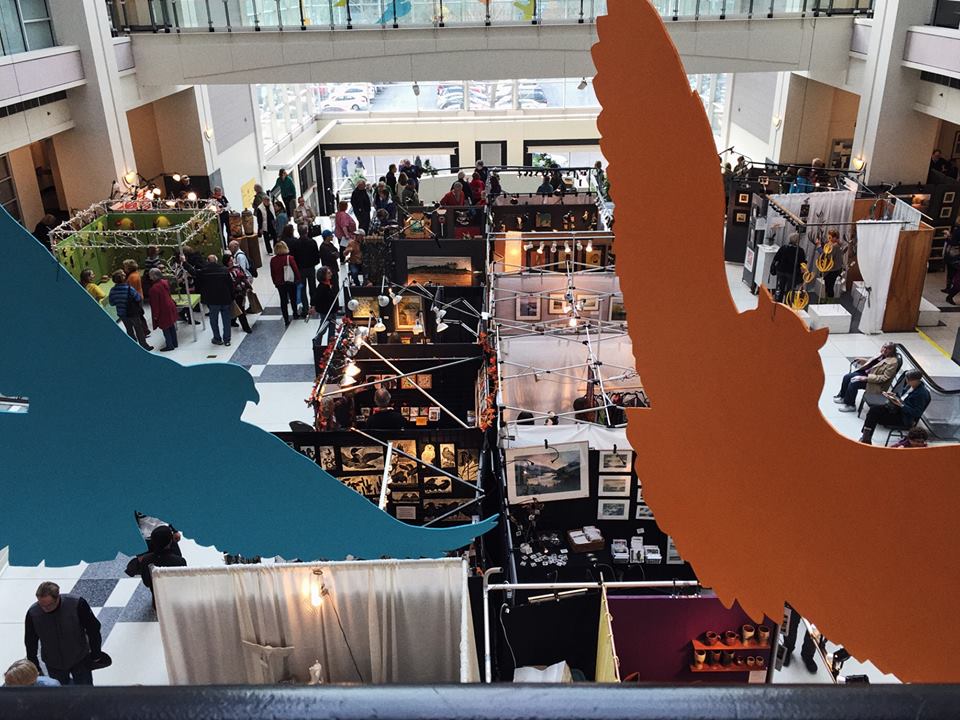
Wild Arts FestivalI love the literary scene in Portland. Our Thanksgiving visit there coincided with the annual Wild Arts Festival, a celebration of nature in art and books hosted by the Audubon Society of Portland in the old Montgomery Ward building, now known as Montgomery Park.

Walking into the festival, where hundreds of artists and authors were on hand, was like getting a gigantic embrace from the creative community.

I couldn’t decide among Ursula Le Guin’s many, many science fiction and fantasy books. In the end I chose her translation of Lao Tzu: Tao Te Ching: A Book About the Way and the Power of the Way, and she graciously signed a copy for me.

Next, we met Robert Michael Pyle, a jolly teddy bear of a man who spent no less than 15 minutes entertaining us with stories about how, in his Honda Civic with 345,000 miles on the odometer, he spent a year searching for as many of the 800 species of American butterflies as he could find. I could have spent hours listening to this man; instead I bought his memoir and travelogue, Mariposa Road, which he signed with, “May these far rambles on bright wings incite your own wild road trips!”

A dedicated ecologist and naturalist, Robert Michael Pyle has written nearly 20 books and is the co-editor of Nabokov’s Butterflies: Unpublished and Uncollected Writings. (The literary genius Vladimir Nabokov was a butterfly expert and had an extensive collection.)

I purchased another of Robert’s memoirs, Wintergreen: Rambles in a Ravaged Land, about Washington’s Willapa Hills, whose forests have been plundered by lumber companies. Robert lives on a farm in Grays River once owned by a Swedish immigrant. I’m descended from Swedes, who were attracted to the deep forests of the Pacific Northwest because it reminded them of home; I’d love to see Willapa country one day. Of course, Robert signed Wintergreen, too, with these words, together with a sketch of a snail: “May these moss murmurs and fern-words honor your own hills of home – and maybe urge you Northwesterly!”

I can’t say enough about Floyd Skloot and Kim Stafford. They are both poets, and they’ve both written memoirs. (Actually, they’ve both written more than one, and I look forward to reading all of them.)

Since I’m writing a memoir myself, I decided to go for the memoirs: In the Shadow of MemoryFloyd Skloot’s first memoir (part neuroscience and part autobiography about a virus that left Skloot disabled and bereft of memories) and 100 Tricks Every Boy Can Do: My Brother’s Disappearance by Kim Stafford (his brother committed suicide.)

Both of these generous writers spoke with me about their work and asked at great length about mine. Kim wanted to know the working title of my memoir and, when I told him, he gave me a writing assignment to try. As I did the exercise Kim recommended, I discovered that one particular word in the title is especially important to my memoir’s theme. It got me thinking about how I could bring out the theme more vividly as I revise.

The authors I spoke with at the Wild Arts Festival were incredibly kind and gracious. I had instant connections with these generous writers, who are among the best in America today. Don’t be shy at these kinds of events. Writers and artists are the most giving and engaged people you’ll ever meet.

Portland is a book-loving town, and as I walked around the neighborhoods with family, I noticed several Little Free Libraries. It’s also a poetry-loving town, and a couple of the homes I passed by had poems on display – including one by Kim Stafford’s father, the great poet William Stafford.

Slipped inside the Kim Stafford memoir I bought was the gift of a poem that begins, “The only heroic thing is to not be a hero.” I believe Kim borrowed this phrase from a poem by his father, William: “At the Un-National Monument Along the Canadian Border.”

Kim’s poem is called “A Few Words, Each Day,” and it includes this line: “The only heroic thing is to be a child of four…of fifteen…of forty…of eighty – trying with the heart and mind to listen to the self, each other, and the earth….”

Litmosphere definition sign in Powell's Books
We stopped by Powell’s Books for good measure, where I learned a new word.


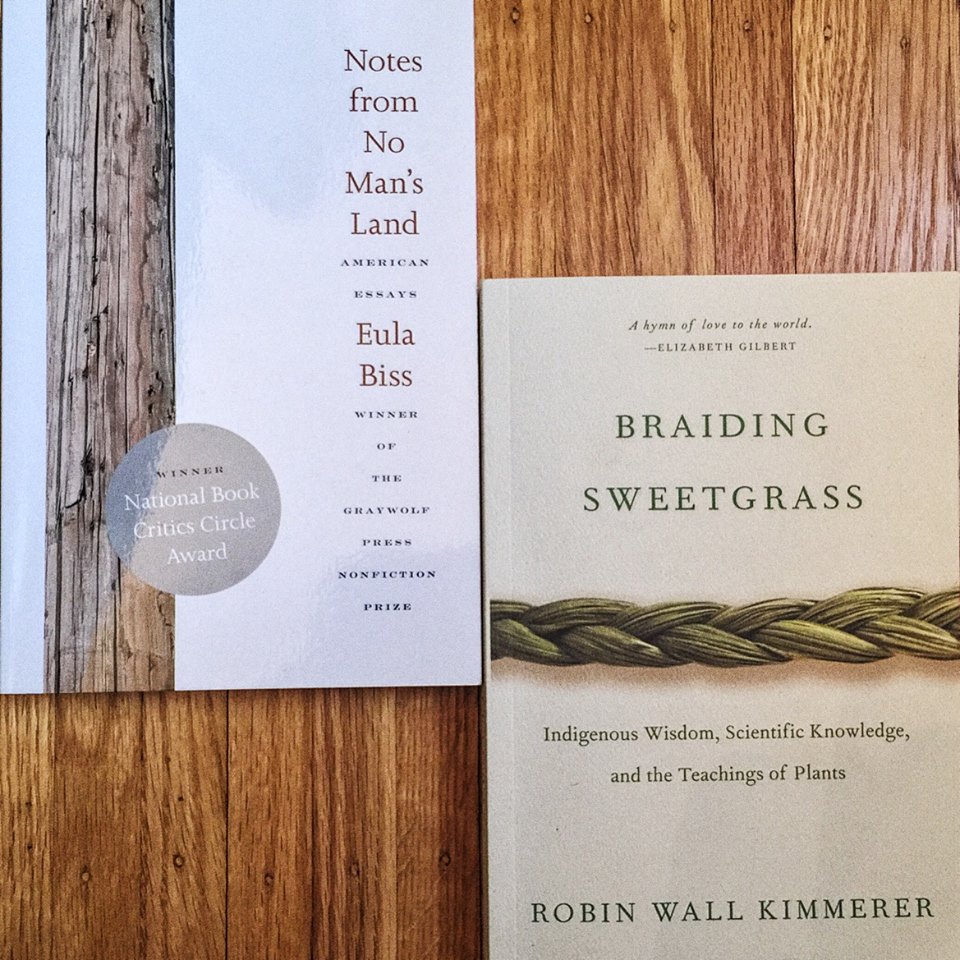
Books: Braiding Sweetgrass; Notes from No Man's Land
At Powell’s I bought Eula Biss’s collection of essays and the latest book by Robin Wall Kimmerer, who is a botanist and member of the Citizen Potawatoni Nation.


Northern spotted owl at the Wild Arts Festival


Kim Stafford: “That is my story.”


Circling the Sun

A life has to move or it stagnates. Even this life, I think. Every tomorrow ought not to resemble every yesterday.”  Beryl Markham

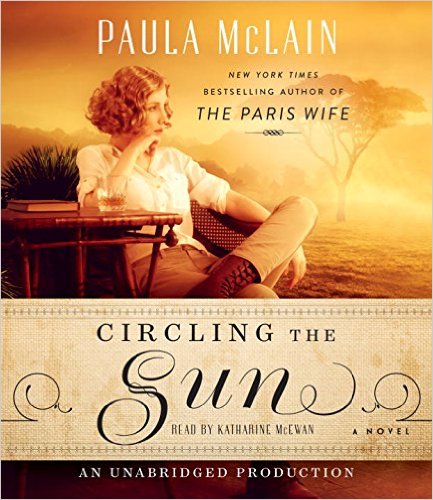
Circling the Sun book cover

If you want one last, lush, escapist summer read, consider Circling the Sun by Paula McLain, a fictionalized account of the life of Beryl Markham,  the first woman to fly across the Atlantic from east to west.

Born in England and raised in Kenya, Markham was a larger-than-life adventuress and socialite – a renowned horse trainer, an accomplished bush pilot, perpetually in the spotlight of gossip and scandal.

Especially if you’re a woman of a certain age, you might remember the romantic Out of Africa, a 1985 movie based on the memoir by Dutch writer Isak Dinesen (Karen Blixen), who for some years ran a coffee plantation near Nairobi. Karen, played by Meryl Streep, had a long-term affair with charismatic safari hunter Denys Finch Hatton (Robert Redford.) Denys had the power to make women of the day swoon, but was adamantly against commitment and marriage. Karen and Beryl became friends, and Beryl went on to have a secret, short-lived affair with Denys.

Though Beryl married three times and had other lovers – allegedly one of them Prince Henry, Duke of Gloucester –  many believe that Denys Hatton was the true love of her life. Author Paula McLain is adept at writing about affairs of the heart – she did a masterful job in depicting Ernest Hemingway’s first marriage in The Paris Wife – and she depicts Beryl’s affair with Denys in a sympathetic light, while plumbing the depths of the friendship between Beryl and Karen, who were in many respects kindred spirits even though they loved the same man.

I enjoy Cleveland-based author Paula McLain’s writing. She was drawn to Beryl Markham’s story when she learned that Beryl’s mother abandoned her at the age of four, only to reappear again when Beryl was twenty – which is exactly what happened to Paula McLain. She calls it a “shared emotional genealogy.” McLain writes with particular authenticity and empathy as she explores the lifelong effects, both good and bad, of maternal abandonment.

Despite Beryl’s remarkable feat of aviation, there isn’t a whole lot about flying in this novel. McLain instead focuses on the first half of Beryl’s life – her remarkable childhood in Kenya as she grew up next door to and on an intimate basis with the Kipsigis tribes, and her years spent learning and perfecting her horse training skills. McLain portrays Beryl’s love of Kenya in lyrical prose that will cast a spell over you if you love exotic lands and nature still relatively unspoiled by the ravages of civilization.

I think that one of Paula McLain’s strengths is her depiction of remarkable women who have not received the attention they deserve. As I read, I chafed at the difficult lot of women in Beryl Markham’s time. In the 1930s, many women still survived by making a good marriage. In both The Paris Wife and Circling the Sun there is a distinct feminist subtext.

West With the Night book coverI’m now inclined to read Beryl’s memoir, West With the Night, which didn’t initially receive the acclaim that Dinesen’s memoir, Out of Africa, did, though it sold well when it was later republished. Some believe that Beryl’s third husband, a journalist, wrote the memoir, though I almost hesitate to write about what could be a sexist rumor. Maybe it doesn’t matter – Beryl Markham lived a remarkable life that many a man and woman envy. Ernest Hemingway had this to say about West With the Night:

“Did you read Beryl Markham’s book, West with the Night? …She has written so well, and marvelously well, that I was completely ashamed of myself as a writer. I felt that I was simply a carpenter with words, picking up whatever was furnished on the job and nailing them together and sometimes making an okay pig pen. But this girl, who is to my knowledge very unpleasant and we might even say a high-grade bitch, can write rings around all of us who consider ourselves as writers … it really is a bloody wonderful book.”

In Circling the Sun, Beryl says this about her lover, Denys:

“More than anyone I’d known, Denys understood how nothing ever holds still for us, or should. The trick is learning to take things as they come and fully, too, with no resistance or fear, not trying to grip them too tightly or make them bend.”

The publisher kindly provided an Advanced Reader Copy (ARC) of Circling the Sun.

Where Do Poems Come From?

I recently had a poem published in Verse-Virtual: An Online Community Journal of Poetry.  In this excellent and unique publication, the published poets are encouraged to contact each other to show their support for poems that move them. (No critiquing allowed.) The editor, Firestone Feinberg, is a joy to work with and warmly encouraging of new writers.

I wrote “Nadezhda, If You Were Here” quite a while ago, and as I prepared it for submission I was thinking about where poems – my poems – come from. In this case, I was reading a memoir by Paul Auster (I believe it was The Invention of Solitude.) In it, he includes an extraordinary letter written by Nadezhda Mandelstam to her husband, the poet Osip Mandelstam, after he’d been sent to a labor camp by Stalin. I had never heard of these people, but I was so struck by the letter I just had to read Nadezhda’s amazing memoir, Hope Against Hope, about her life with Osip.

I was reading the memoir in Wegmans grocery store on a cold winter day, when I was inspired to get another cup of coffee and start writing. That’s where my poem came from. I wasn’t sure I had much to say, but it turned out to be a direction worth exploring.

The Present MomentThis summer I’m enjoying This Present Moment, a collection of poems by Gary Snyder, who is now 85. Remember the Beat Generation? Gary Snyder is one of America’s greatest living poets. This volume includes poems about being a homesteader, father, husband, friend, and neighbor. (I’m paraphrasing the jacket copy because it is a good summary of the subject matter.) The final poem, “Go Now,” is about the death of his wife.

Even if you’re not a fan of poetry, I encourage you to take three minutes to listen to this poem by Nobel laureate Wislawa Szymborska, “Life While-You-Wait,” read by Amanda Palmer and passed along by Maria Popova and Brain Pickings. (Scroll down the page to get to the recording.) I think you’ll like it.

I’ve ordered a copy of Laudato Si’, Pope Francis’ encyclical on climate change. It is available from Amazon and other booksellers, and you can download the pdf at this link: Laudato Si’ . I’ll be writing about it here in late July, mostly from a secular perspective. Why don’t you read it with me – I welcome your thoughts, faith-based or otherwise.