Happy Spring! Duck Eggs Daily

duck eggs daily

“As the sun peeks up over the tops of the trees, I finish the last of my coffee and get dressed in my ‘barn attire.’ My schedule (and the ducks’) isn’t dictated by the time on the clock on the kitchen wall, but entirely on the sun. They want to be let out at sunup, whether that comes at 5:30 a.m. or 8:00 a.m….It’s cold outside, so I’ve heated up some water in the teakettle and have a special treat for the ducks to go with their breakfast. They’re getting a pan of oats, cracked corn, dried cranberries and mealworms, moistened with warm water.”  Duck Eggs Daily by Lisa Steele

I know it’s spring when, every April, a pair of wood ducks appear in our backyard. They like to swim in our two small ponds and they nest somewhere in the miniature forest of beech, maple, and hemlock behind our house that gets a bit swampy in the spring.

Our ducks haven’t shown up yet, but I’m expecting them any day now.
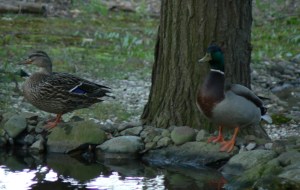
A pair of ducksWe never see any ducklings, though, and we worry because this is also the territory of a neighborhood fox, as well as hawks and owls. By midsummer our visiting ducks have disappeared – maybe they’re busy tending their nest – and I always miss them once they’ve gone.

So I was delighted when my favorite gardening and sustainable living publisher, St. Lynn’s Press, sent me a review copy of Duck Eggs Daily: Raising Happy, Healthy Ducks…Naturally by Lisa Steele. (Lisa is also the author of Fresh Eggs Daily.)

My husband and I have been learning (very) small-scale vegetable gardening, and I’ve been thinking about branching out into eggs. I’d read in one of my gardening books that ducks are great for pest control and fertilizer, and they’re easier to raise than chickens.

DucksIn Duck Eggs Daily, Maine hobby farmer Lisa Steele proves this is so, and I found her enthusiasm and love for ducks (and flocks of all kinds) to be contagious and inspiring.

An expert in small-flock poultry keeping, Lisa has been a long-time owner of chickens, too. She says that ducks are more cold hardy, heat tolerant, and disease resistant than chickens – so I’m thinking ducks might be the way for a beginner like me to get started. They have a longer and more productive laying life too, and duck eggs are especially rich in protein.

Duck Eggs Daily is a beautifully designed little how-to reference book that also reads like a daybook or nature journal, particularly the day-in-a-life-with-ducks chapter.  Lisa’s eleven ducks clearly bring her a great deal of joy, and these duck tending activities are lovingly rendered:

  • hatching ducklings in an incubator
  • collecting eggs at sunrise
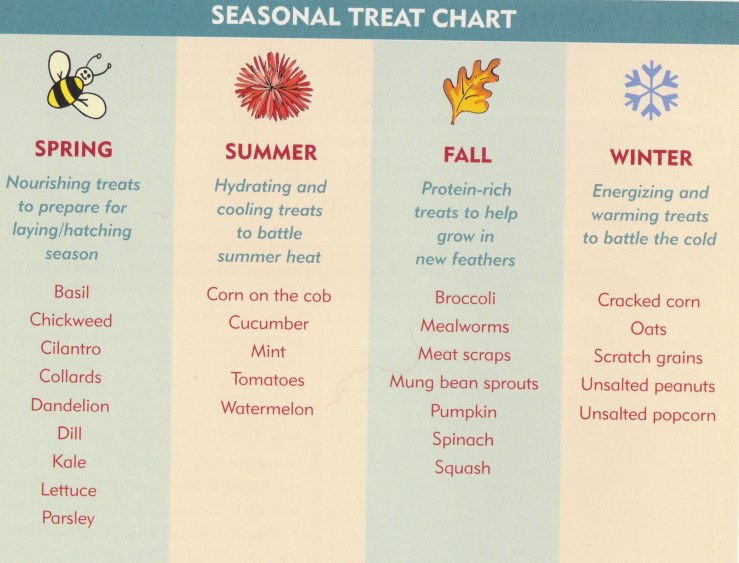
  • making ducks happy with special treats (such as watermelon, dandelion greens, fresh peas, leftover squash and pumpkins from the garden, and delicious mealworms)
  • giving ducks swim time in the kiddie pool
  • watching typical duck antics like walking in a row, mud dabbling, tail wagging, and happy quacks.

Each duck topic covered is packed with useful details:

  • the characteristics and advantages of various duck breeds
  • hatching, brooding and raising ducks
  • one complete day in a life with ducks, from sunrise to sunset
  • duck behavior and duck treats
  • duck houses and duck pools
  • duck health
  • cooking with duck eggs, with tempting recipes like crème brûlée, lemony egg rice soup, herbed deviled eggs, and homemade pasta.
Ducks 2Lisa says that now is the perfect time to invest in a pair or trio of ducks, because many ducks adopted as pets are abandoned after Easter. She encourages interested readers to adopt two or three from one of the duck rescue organizations listed in the book’s appendix.

After reading Duck Eggs Daily, I concluded that currently we don’t have a lifestyle conducive to raising ducks and doing it well. However, we’re looking forward to ducks in our future when the time is right. It’s a daily commitment, and we’d need to find someone to take over when we travel. I have a hard time picturing myself filling water tubs twice a day, especially during freezing, snowy western New York winters. And, in theory, I like the romance of getting up with the sun to let the ducks out and give them breakfast, but rising early isn’t my favorite thing to do. I’d have to make a commitment to make that happen on cold, dark winter mornings. Still, I like the discipline this entails. I think it would be a great way to start to my day and get me at my writing desk earlier.

But those ducks, they sure are cute, so maybe it will happen sooner rather than later. I’ve never tasted a duck egg, and wouldn’t it be fun to make homemade mint chip ice cream with fresh duck eggs?

My St. Lynn’s Press Library

I’ve had a small herb garden as long as I can remember, and I’ve always loved flowers, having grown up in a floral shop. Over the past year or two, since we began our vegetable garden and I discovered St. Lynn’s Press, I’ve assembled a great little library that’s still growing.
Herb Lovers Spa BookSlow Flowers, by Debra Prinzing

The 50 Mile Bouquet, by Debra Prinzing

Windowsill Art, by Nancy Ross Hugo

The Herb Lover’s Spa Book, by Sue Goetz

The Cancer Survivor’s Garden Companion, by Jenny Peterson

Yards, by Billy Goodnick

 

Ducks 1

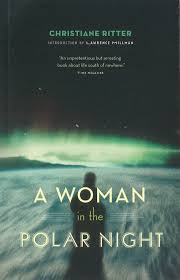
A Woman in the Polar Night

Polar Night“Meanwhile the world out of doors falls into deepest night. The mountains are no more than white shadows, the sea no more than a black shadow – until that too dissolves away. And then everything is dead.
In this pitch darkness we cannot move far from the hut. I make the smallest possible turns around the hut – all that is left of my walks. When it is not snowing we spend hours outside the hut chopping and sawing wood by the light of the hurricane lamp….

The wind that, rising and falling, lasts for days, is in fact our last link with the reality of the world…”  Christiane Ritter, A Woman in the Polar Night

A Woman in the Polar Night is an astounding memoir by Austrian artist Christiane Ritter who, in 1933, joined her scientist and hunter-trapper husband, Hermann, on the remote island of Spitsbergen 400 miles off the coast of Norway.

If you love memoirs of travel, adventure and, especially, nature, I highly recommend A Woman in the Polar Night. This is an extraordinary book written in poetic, painterly prose by a woman with a fearless spirit who was profoundly moved and changed by her year in the Arctic.

Christiane writes brilliantly about the beauty of Spitsbergen and also its terror. She thrived on Spitsbergen, but during both the darkest and the brightest stretches of her polar immersion she approached the edges of madness. As anyone might.

She writes of a terrifying two weeks spent alone in a fierce snowstorm. The hut was buried completely except for the stovepipe attached to the roof. Christiane’s husband and their companion, Karl, had gone on a hunting trip, and she was left alone with the darkness, snow, and raging wind.

She survived the storm and isolation. But when a full moon finally broke the long darkness, Christiane became moonstruck:

“It is full moon. No European can have any idea of what this means on the smooth frozen surface of the earth. It is as though we were dissolving in moonlight…. One’s entire consciousness is penetrated by the brightness; it is as though we were being drawn into the moon itself…..

Neither the walls of the hut nor the roof of snow can dispel my fancy that I am moonlight myself.”

Fearing Christiane had rar, a strangeness that befalls some who winter in polar regions, Hermann and Karl kept Christiane in the hut, so she wouldn’t succumb to ishavet kaller – meaning “the Arctic calls” – which can drive a person to throw herself into the sea.

“Surrounded by this boundless deadness and rigidity of everything physical, one’s living senses begin slowly to go their own way. More frequently and more brightly as the winter is prolonged, a strange light spreads before the inner eye, a remote and yet familiar vision. It is as though here, in this apartness, we develop a particularly sharp awareness of the mighty laws of the spirit, of the unfathomable gulf between human magnitudes and eternal truth. Outside of time, everything is annihilated. The imprisoned senses circle in the past, in a scene without spatial dimensions, a play in which time stands still.

Often I see the flowers and trees of the distant sun world, but I do not see them as I used to see them. They are glowing with color and piercingly beautiful. Their most secret meaning lives in their growth and their color.”

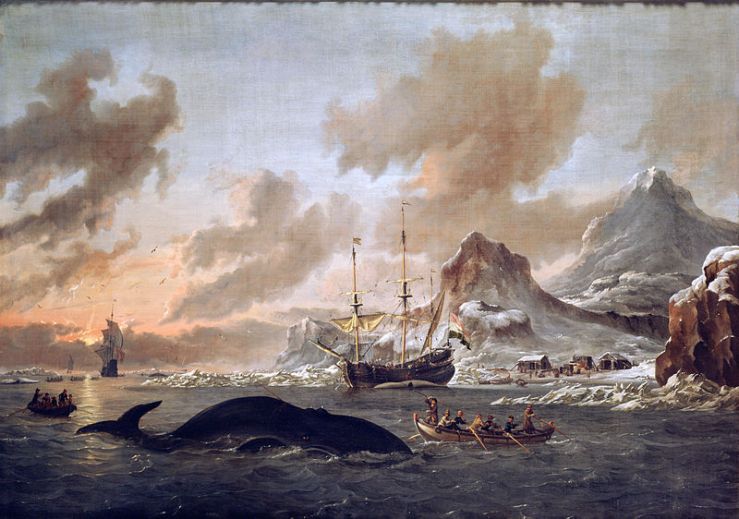
Dutch Whalers Spitzbergen.jpg

Dutch Whalers near Spitsbergen. By Abraham Storck – Stichting Rijksmuseum het Zuiderzeemuseum. 022296, Public Domain, https://commons.wikimedia.org/w/index.php?curid=5040261

Christiane writes of bear-hunting with Hermann and Karl in a “gigantic wilderness of ice”:

“We are in the middle of the bear kingdom. All my fear of bears has vanished. As in a dream I go on through the splendid strange world.

How quiet it is here. The sun shines on a soundless scene. The magical hues of the soft shadows glow deeply. Everything belongs together here, even the bear tracks in the deep snow, which show with what peace of mind the animals have gone on their way. Everything breathes the same serenity. It is as though a current of the most holy and perfect peace were streaming through all the landscape.

I feel that I am close to the essence of all nature. I can see its paths interlacing and still running alongside each other in accordance with eternal laws. I divine the ultimate salvation before which all human reasoning dissolves into nothing.”

nypl.digitalcollections.510d47e1-29ed-a3d9-e040-e00a18064a99.001.w
Ptarmigan was part of Christiane’s Spitsbergen diet. The New York Public Library Digital Collections.

The memoir’s conclusion is triumphant and sad. Christiane must finally leave the island, forever changed and knowing she will never return. She doesn’t reveal she has an infant daughter at home in Austria until nearly the end of her memoir, a startling bit of information that for me highlighted what an unusual couple the Ritters were.

I was curious about what it was like for Christiane to return to civilization and wished for an epilogue (there is none), but on the other hand I wasn’t sure I wanted to know. On top of having to re-integrate into society, Christiane returned to Austria as Europe neared the onset of World War II.

I found a 1954 edition of Christiane’s memoir at the local library, illustrated with line drawings by the author. You may want to look for the University of Alaska Press edition, published in 2010, which includes a preface with biographical information about the Ritters. It may satisfy some of the inevitable curiosity you’ll have about how the lives of this remarkable couple played out.

Christiane wrote, “You must have gazed on the deadness of all things to grasp their livingness.”

It seems to me her memoir is a remarkable example of someone whose extreme adventure pushed her into completely letting go of her ego and recognizing that we don’t have dominion over nature; we are instead part of nature itself. I think the world would be a much better place if we could all come to know this.

What We're Fighting for NowSo it was especially sad to read the excellent book I picked up next, What We’re Fighting for Now Is Each Other: Dispatches from the Front Lines of Climate Justice by Wen Stephenson, which makes clear that humanity hasn’t learned what Christiane Ritter learned. This book is depressing but empowering at the same time.

Stephenson reports that many climate scientists now believe climate catastrophe is inevitable.

He explains the term “climate justice” and how it is different from climate activism and environmentalism. Many have come to realize that climate change is the moral and spiritual issue of our time, inseparable from social justice and equality. The poor and disadvantaged will suffer the most from climate disruptions, as we’ve already seen in places like New Orleans and in countries around the world.

Stephenson lives near Walden Pond in Massachusetts, and he looks at climate justice through the lens of Henry David Thoreau‘s principles of civil disobedience. He likens climate justice to the social justice struggles of abolitionism and civil rights.

Stephenson writes about how he came to leave his career in mainstream journalism to immerse in climate justice, and it’s fascinating to read his interviews with others devoted to the cause as they explain the spiritual and other motives that drive them.

Most are young, some got their start in the Occupy movement, others are evangelicals, Quakers, atheists, community organizers, and grandparents. Many of them have come to believe that the way to survive climate change is to build strong, local communities where people trust and look after each other.

I couldn’t get out of my mind a young woman Stephenson interviewed, Grace Ann Cagle, who said she’d much rather be on a farm having babies than on the front lines of climate justice. Grace took part in the Texas Tar Sands blockade. 

“She’d been up in the trees for about a week, in late September, 2012….Sure enough, TransCanada’s machines came up from the south.

‘They came over the creek….They had a feller buncher – it grabs the trees, cuts them, and throws them. And as they cross the creek, they’re coming like ten feet, twenty feet away from me, practically at the base of my tree – and I thought they were going to kill me….Why would they care about me? And so I jumped onto this traverse rope, and I’m dangling there, wearing all black with a mask on my face, screaming, Go away! Get out of here! They stopped their machines…..I spent like six hours dangling there, in a harness, because I could protect two trees at once….'” 

How sad that, since Christiane Ritter’s time, we’ve come to this.

Read A Woman in the Polar Night to be transported and to understand what we’re losing. Then, if you want to consider what your role might be in the greatest battle of our time, you could follow the memoir with What We’re Fighting for Now Is Each Other: Dispatches from the Front Lines of Climate Justice.


The Cancer Survivor’s Garden Companion

Cancer Survivor's
The Cancer Survivor’s Garden Companion, by Jenny Peterson


“‘Don’t let cancer define you, Jenny.’ So how did I not let cancer define me? Not knowing anything better, I simply kept doing what I knew to do. And one of those things was gardening….I’m not going to lie –  I had many days when I did not feel like gardening. But I decided to change my approach and focus on small, doable tasks….little by little, my relationship with plants and my garden became the thing that turned me around – body, mind and spirit. No, it wasn’t easy. Nothing about cancer and cancer treatment is easy. But it was my reality, and I was determined to find some place where I could thrive and experience joy again.”

From time to time, I like to take a break from literary fiction and literary nonfiction at Books Can Save a Life to feature a slow living book that gets me out of my head and inspires me to enjoy the moment. I especially love the unique gardening books published by St. Lynn’s Press, so I was thrilled when they sent me a review copy of The Cancer Survivor’s Garden Companion.

This book is especially meaningful to me because over a year ago my brother was diagnosed with pancreatic cancer. Sadly, my brother passed away in the fall.  As I thumbed through the pages of  The Cancer Survivor’s Garden Companion, I wished Jenny Peterson‘s book had been available earlier. It would have been a wonderful gift for my brother and his family. From now on, The Cancer Survivor’s Garden Companion will be part of any care package I might give to friends and loved ones with health challenges.

Jenny’s book is filled with simple and enjoyable gardening activities to restore body, mind, and spirit, especially during treatment. I thought about my brother’s small backyard garden, which was a bit neglected after his diagnosis, and how this book might have inspired him to continue enjoying manageable tasks on his tiny plot of tomatoes and eggplants.

One of my fondest memories of that difficult time was the afternoon we decided to make jam from the two old crab apple trees and the grapevines in my brother’s backyard. Joe and my sister-in-law had never picked or eaten the tiny crab apples, and we had no idea how the jam would turn out. We had fun all afternoon picking, cooking, and then tasting the deep purple and ruby colored jams, which turned out delicious.

Four jars of homemade jam
Jam made from the crab apple trees in my brother’s backyard.


Jenny Peterson is so right about the restorative powers of gardens and nature, because that afternoon my brother really enjoyed sorting and de-stemming the crab apples, the aroma of fruit cooking over the stove, and tasting the still-warm jam. I think he appreciated the little miracle of new and unexpected late-summer bounty from his backyard.

Wellness + Mindfulness + Gardening

Jenny Peterson, a writer and landscape designer with degrees in psychology and theology, is also a survivor of breast cancer and skin cancer. She wrote The Cancer Survivor’s Garden Companion not as a how-to gardening book, but “to encourage people who are diagnosed with cancer, going through cancer treatment, healing from cancer or living with cancer to view their gardens, plants and outdoor spaces as resources in creating the healthiest and most balanced life possible. Life can be difficult, but it can also be profoundly beautiful, and our gardens are the best teachers of this.”

So, you don’t have to be an experienced gardener, or even a gardener at all, to enjoy and benefit immensely from The Cancer Survivor’s Garden Companion. The activities, each centered around body, mind, or spirit, can be scaled up or scaled down, depending on needs and energy levels.

“Survivor Spotlights” feature gardening tips from individuals who have had a cancer diagnosis.

Jenny Peterson talks about her own physical, mental, emotional, and spiritual challenges during radiation, chemotherapy, and other treatments, and how she turned to her garden as both a haven and good medicine. She genuinely understands the rigors of cancer treatment and is deeply empathetic, warm, and encouraging.

CancerContents

The Garden That Heals: Body + Mind + Spirit

Her suggestions for restorative and healing garden activities include:

  • Gardening for cardio exercise, strength and flexibility, strong bones, circulation & boosting the immune system
  • Ideas for building a yoga deck garden
  • Beneficial fruits, vegetables and herbs for nourishment and strength during treatment, including aromatherapy and herbal remedies
  • Garden design, problem solving, and nature photography to relax the mind and keep it sharp
  • Sharing the garden with friends and family by hosting seed and plant sharing parties, social hours, and other events
  • Garden-themed music to enjoy
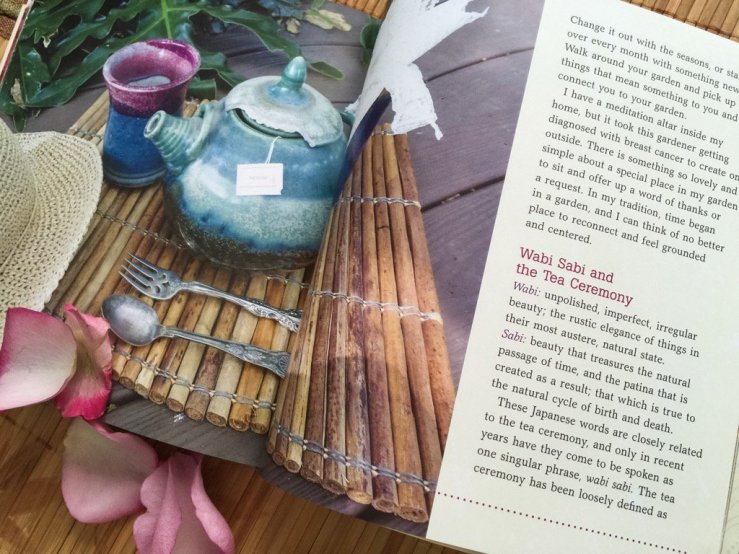
  • Prayer, meditation, and mindful movement, including labyrinths, suggested mantras, garden altars, and tea ceremonies

There is an appendix with suggested books (fiction and nonfiction), excellent health information sites, and sources for garden tools and clothing.

CancerWabiSabi
I love the Japanese words wabi sabi and have read other books on this fascinating topic, including Wabi Sabi for Writers  by Richard R. Powell.


I love these other books published by St. Lynn’s Press, too:

Slow Flowers, by Debra Prinzing

Windowsill Art, by Nancy Ross Hugo

The Herb Lover’s Spa Book, by Sue Goetz

If you have a personal story of gardening, illness and health, please share. I’d love to hear about your own gardening book favorites, too.

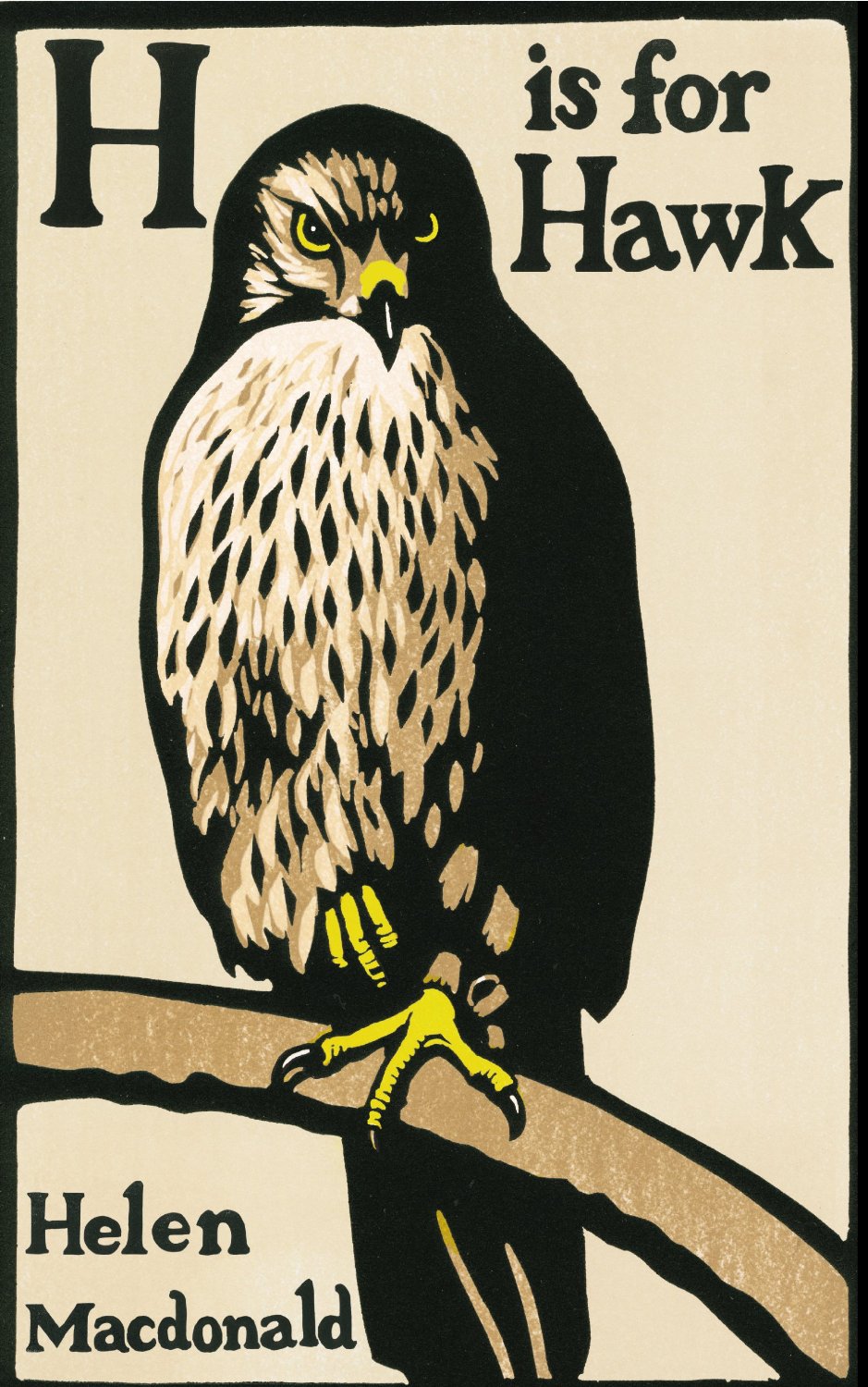
H Is for Hawk

H is for Hawk

“….her feet were gnarled and dusty, her eyes a deep, fiery orange, and she was beautiful. Beautiful like a granite cliff or a thunder-cloud. She completely filled the room. She had a massive back of sun-bleached grey feathers, was as muscled as a pit bull, and intimidating as hell….”  H is for Hawk, by Helen Macdonald

Helen Macdonald’s reaction to her father dying suddenly was to embark on the extraordinarily difficult task of training a goshawk, one of nature’s fiercest and most ruthless predators.

Goshawks are cold-hearted, lifelong loners with no social instincts whatsoever. They bond with no one, not the goshawk they mate with, not other goshawks, not any human who wants to train them. You can’t look them in the eye, either, because if you do they might attack you.

Goshawks don’t respond to punishment. The only way to train a goshawk is to be submissive and patient, eyes cast down at all times. Tim Gallagher, in a review of H Is for Hawk, likens this to being a kind of monk. It is not a part-time thing. Training a goshawk is all-consuming. It takes over your life.

Helen writes about the hawk she is training, whom she names Mabel:

“Everything about the hawk is tuned and turned to hunt and kill. Yesterday I discovered that when I suck air through my teeth and make a squeaking noise like an injured rabbit, all the tendons in her toes instantaneously contract, driving her talons into the glove with terrible, crushing force. This killing grip is an old, deep pattern in her brain, an innate response that hasn’t yet found the stimulus meant to release it. Because other sounds provoke it: door hinges, squealing breaks, bicycles with unoiled wheels – and on the second afternoon, Joan Sutherland singing an aria on the radio. Ow. I laughed out loud at that. Stimulus: opera. Response: kill.”

Two goshawks
Goshawk. Rare Book Division, New York Public Library


Helen’s father was a prominent photographer, Alisdair Macdonald, and the two were close. When she was a child, they spent many days roaming the countryside as Alisdair indulged his passion for airplanes and Helen her growing passion for birds.

After Alisdair died, Helen wanted a distraction from her grief, something deeply immersive and challenging. In this respect, H Is for Hawk is unlike other memoirs. There isn’t a lot about Helen’s father or her relationship with him, or about Helen’s feelings of sadness and loss, per se. These are subsumed into an arresting narrative of Helen’s struggle to achieve what seems to be impossible as she grapples with her grief.

As Helen comes to understand, “Shocking loss isn’t to be shared, no matter how hard you try.”

Helen was, in fact, an experienced falconer, but she’d never taken on a goshawk before. She brought along a companion in her unusual undertaking: T. H. White’s, The Goshawk, White’s account of his own experience training a goshawk in the 1930s. (Remember T.H. White’s The Sword in the Stone, The Once and Future King, and other tales of Arthurian legend? Even if you didn’t read the books, you’ve probably seen the movie/musical Camelot and the Disney version of The Sword in the Stone.)

This weaving of T.H. White’s experiences into Helen’s narrative is fascinating; White, who was gay in a culture and time when this was unacceptable, was grappling with his own loss and inner darkness. Helen writes,

“It took me a long time to realise how many of our classic books on animals were by gay writers who wrote of their relationships with animals in lieu of human loves of which they could not speak.”

And this:

“….White wrote one of the saddest sentences I have ever read: ‘Falling in love is a desolating experience, but not when it is with a countryside.’ He could not imagine a human love returned. He had to displace his desires onto the landscape, that great, blank green field that cannot love you back, but cannot hurt you either.”

Helen’s immersion with Mabel, her goshawk, is harrowing. She holds nothing back in the struggle, and she holds nothing back from her reader.

Ultimately, Helen has to confront her obsession with the goshawk and her nearly complete withdrawal from friends and family. Where does obsession end and madness begin?

Before you read H Is for Hawk, I highly recommend that you read this fascinating review by Tim Gallagher at the Cornell Lab of Ornithology All About Birds site. Gallagher puts the human-training-a-goshawk challenge into context, and I think it will pique your interest. Not knowing a raptor from a falcon from a hawk myself, I wish I’d read this review first. And I’ve a soft spot in my heart for the Cornell Lab of Ornithology and the good work they do. We live not far from there, and I’ve seen at least one of their research sites in the Finger Lakes countryside.

Read H Is for Hawk if you want a different kind of memoir that demands to be read slowly, one word, one phrase, one sentence at a time. If you’re willing and want to slow down and immerse in another world entirely.

I expect I’ll read H Is for Hawk once or twice more down the road, as I simply couldn’t take it all in the first time through. If I’ve painted a rather dark picture of this unusual memoir, there is light and wisdom gained, too:

“There is a time in life when you expect the world to be always full of new things. And then comes a day when you realise that is not how it will be at all. You see that life will become a thing made of holes. Absences. Losses. Things that were there and are no longer. And you realise, too, that you have to grow around and between the gaps, […]”

Have  you read H Is for Hawk? What did you think? Are there similar books you might recommend?

Wild Arts!

Five books
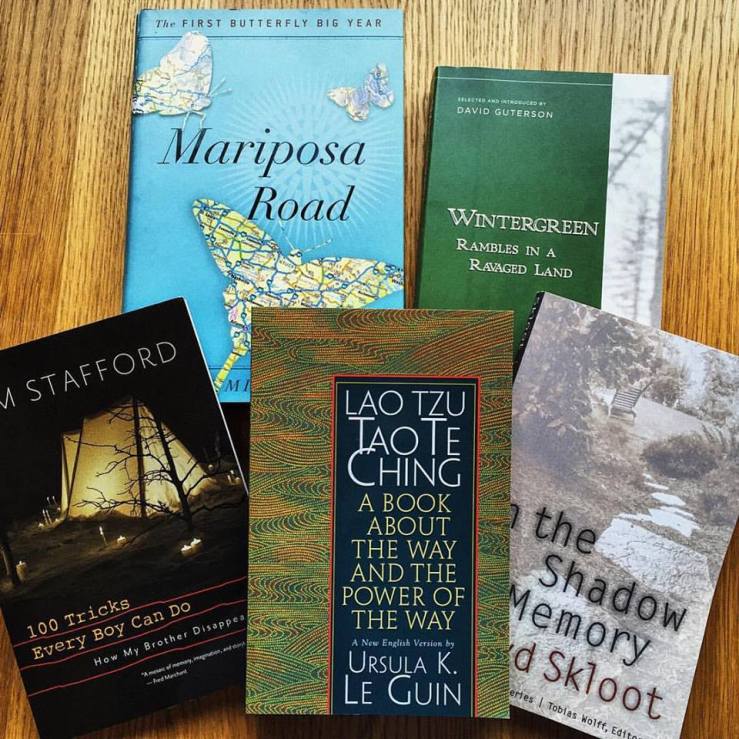
Books purchased at the Wild Arts Festival in Portland, signed in person by the authors.


Litmosphere: 1. the vast domain of the world’s readers and writers 2. a lively literary mood permeating the air ~ sign in Powell’s Books, Portland

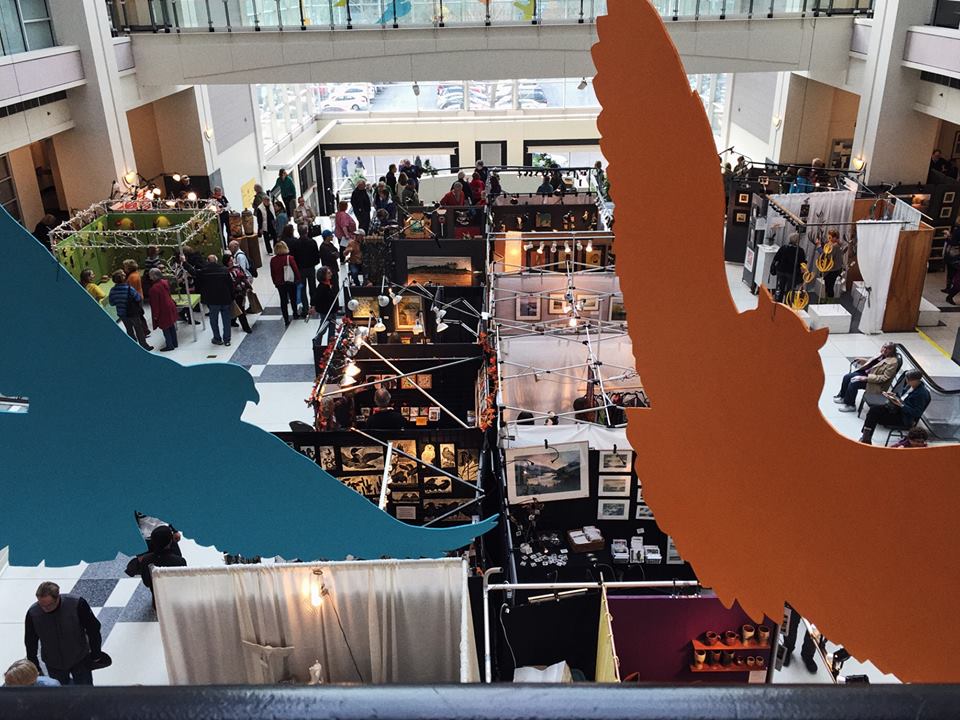
Wild Arts FestivalI love the literary scene in Portland. Our Thanksgiving visit there coincided with the annual Wild Arts Festival, a celebration of nature in art and books hosted by the Audubon Society of Portland in the old Montgomery Ward building, now known as Montgomery Park.

Walking into the festival, where hundreds of artists and authors were on hand, was like getting a gigantic embrace from the creative community.

I couldn’t decide among Ursula Le Guin’s many, many science fiction and fantasy books. In the end I chose her translation of Lao Tzu: Tao Te Ching: A Book About the Way and the Power of the Way, and she graciously signed a copy for me.

Next, we met Robert Michael Pyle, a jolly teddy bear of a man who spent no less than 15 minutes entertaining us with stories about how, in his Honda Civic with 345,000 miles on the odometer, he spent a year searching for as many of the 800 species of American butterflies as he could find. I could have spent hours listening to this man; instead I bought his memoir and travelogue, Mariposa Road, which he signed with, “May these far rambles on bright wings incite your own wild road trips!”

A dedicated ecologist and naturalist, Robert Michael Pyle has written nearly 20 books and is the co-editor of Nabokov’s Butterflies: Unpublished and Uncollected Writings. (The literary genius Vladimir Nabokov was a butterfly expert and had an extensive collection.)

I purchased another of Robert’s memoirs, Wintergreen: Rambles in a Ravaged Land, about Washington’s Willapa Hills, whose forests have been plundered by lumber companies. Robert lives on a farm in Grays River once owned by a Swedish immigrant. I’m descended from Swedes, who were attracted to the deep forests of the Pacific Northwest because it reminded them of home; I’d love to see Willapa country one day. Of course, Robert signed Wintergreen, too, with these words, together with a sketch of a snail: “May these moss murmurs and fern-words honor your own hills of home – and maybe urge you Northwesterly!”

I can’t say enough about Floyd Skloot and Kim Stafford. They are both poets, and they’ve both written memoirs. (Actually, they’ve both written more than one, and I look forward to reading all of them.)

Since I’m writing a memoir myself, I decided to go for the memoirs: In the Shadow of MemoryFloyd Skloot’s first memoir (part neuroscience and part autobiography about a virus that left Skloot disabled and bereft of memories) and 100 Tricks Every Boy Can Do: My Brother’s Disappearance by Kim Stafford (his brother committed suicide.)

Both of these generous writers spoke with me about their work and asked at great length about mine. Kim wanted to know the working title of my memoir and, when I told him, he gave me a writing assignment to try. As I did the exercise Kim recommended, I discovered that one particular word in the title is especially important to my memoir’s theme. It got me thinking about how I could bring out the theme more vividly as I revise.

The authors I spoke with at the Wild Arts Festival were incredibly kind and gracious. I had instant connections with these generous writers, who are among the best in America today. Don’t be shy at these kinds of events. Writers and artists are the most giving and engaged people you’ll ever meet.

Portland is a book-loving town, and as I walked around the neighborhoods with family, I noticed several Little Free Libraries. It’s also a poetry-loving town, and a couple of the homes I passed by had poems on display – including one by Kim Stafford’s father, the great poet William Stafford.

Slipped inside the Kim Stafford memoir I bought was the gift of a poem that begins, “The only heroic thing is to not be a hero.” I believe Kim borrowed this phrase from a poem by his father, William: “At the Un-National Monument Along the Canadian Border.”

Kim’s poem is called “A Few Words, Each Day,” and it includes this line: “The only heroic thing is to be a child of four…of fifteen…of forty…of eighty – trying with the heart and mind to listen to the self, each other, and the earth….”

Litmosphere definition sign in Powell's Books
We stopped by Powell’s Books for good measure, where I learned a new word.


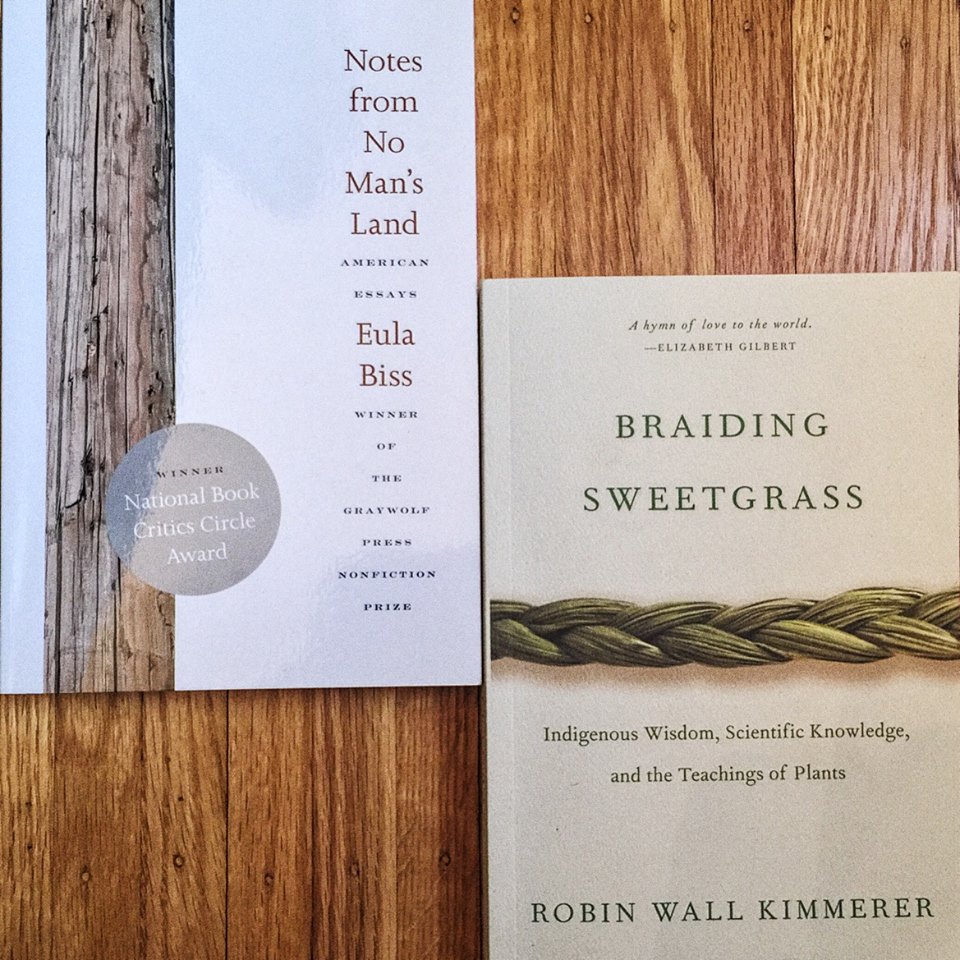
Books: Braiding Sweetgrass; Notes from No Man's Land
At Powell’s I bought Eula Biss’s collection of essays and the latest book by Robin Wall Kimmerer, who is a botanist and member of the Citizen Potawatoni Nation.


Northern spotted owl at the Wild Arts Festival


Kim Stafford: “That is my story.”


The Collapse of Western Civilization (in 50 pages)

WesternCivilization“The year 2009 is viewed as ‘the last best chance’ the Western world had to save itself…”

The Collapse of Western Civilization is a disturbing 50-page work of fiction that reads with the authority of nonfiction.

In the Second People’s Republic of China in the year 2393, a scholar writes an account the Great Collapse of 2093, brought about by failure to take action on climate change.

Pair it with CCR’s Bad Moon Rising; you can read it in an hour or two.

The book came about when co-author Naomi Oreskes, a geologist and historian who teaches at Harvard, reviewed the scholarly literature on climate change to see if indeed there was a lack of consensus among scientists, as is often claimed.

After looking at 1,000 peer-reviewed articles, she concluded that in fact scientists do agree that a high concentration of greenhouse gas is causing climate change.

When Oreskes published her findings in Science, she was championed by the likes of Al Gore. At the same time, to her astonishment, she began receiving hate mail. As she said in an interview, articles published in the scholarly literature are typically ignored by the public.

She and coauthor Eric Conway hoped a work of fiction that remained true to the facts of science might change opinions. Conway is a fan of science fiction and has been especially influenced by Frank Herbert’s Dune and Kim Stanley Robinson’s trilogies about Mars and climate change.

It’s unsettling to read about ideas and ways of life that we take for granted portrayed as extreme short-sightedness, self-delusion, and magical thinking.  The Collapse of Western Civilization will give you a jolt. It’s a quick, page-turning read to put you in a receptive frame of mind when the UN/Paris Climate Change Conference begins on November 30.

Here are some excerpts:

“There is no need to rehearse the details of the human tragedy that occurred; every schoolchild knows of the terrible suffering. Suffice it to say that total losses – social, cultural, economic, and demographic – were greater than any in recorded human history. Survivors’ accounts make clear that many thought the end of the human race was near.”

“At the time, most countries still used the archaic concept of a gross domestic product, a measure of consumption, rather than the Bhutanian concept of gross domestic happiness to evaluate well-being in a state.”

“…survivors in northern inland regions of Europe, Asia, and North America, as well as inland and high-altitude regions of South America, were able to regroup and rebuild. The human populations of Australia and Africa, of course, were wiped out.”

Commonly used terms that we don’t question are cast as old-fashioned and obsolete in the Lexicon of Archaic Terms at the end of the book:

“capitalism: ….One popular notion about capitalism of the period was that it operated through a process of creative destruction. Ultimately, capitalism was paralyzed in the face of the rapid climate destabilization it drove, destroying itself.”

“invisible hand: A form of magical thinking, popularized in the eighteenth century, that economic markets in a capitalist system were “balanced” by the actions of an unseen, immaterial power, which both ensured that markets functioned efficiently and that they would address human needs. Belief in the invisible hand….formed a kind of quasi-religious foundation for capitalism.”

“Period of the Penumbra: the shadow of anti-intellectualism that fell over the once-Enlightened techno-scientific nations of the Western world during the second half of the twentieth century, preventing them from acting on the scientific knowledge available at the time and condemning their successors to the inundation and desertification of the late twenty-first and twenty-second centuries.”

Coming Back to Life book coverFor an antidote to all the doom, read Joanna Macy‘s books, Coming Back to Life and Active Hope: How to Face the Mess We’re In Without Going Crazy. See also her short film, Joanna Macy and The Great Turning, about civilization’s shift from industrial growth to sustainability.

Have you read any good books about climate change? Are you planning to follow upcoming events related to the UN Conference on Climate Change? Are there local activities planned for your area?

Nine books that can (help) save the planet

Laudato Si books

It still amazes me that there has not been more discussion of climate change in the media in the United States, nor have the presidential candidates said much. But we seem, finally, to have turned a corner; more people are paying attention.

Recently, stories have been published about Exxon’s alleged campaign of climate change disinformation and denial, while another industry leader has pledged to be carbon neutral by 2030. This week’s Hurricane Patricia was the strongest hurricane ever recorded at sea, while climate scientists expect 2015 to be the hottest year on record. I’ve a son living temporarily in southern California, and I just read that mosquitos carrying dengue, chikungunya, and yellow fever have arrived. Scientists believe they are rapidly reproducing in part because of the drought.

Countries around the world are preparing for the 2015 UN Conference on Climate Change to be held in Paris November 30 – December 11. There will be climate marches in major cities around the world on November 28 and 29 and a Mass Mobilization and Civil Disobedience Action in Paris on December 12.

When Pope Francis visited the United States in September, he spoke to Congress, the United Nations, and other groups about the need for action on climate change, framing it as the greatest moral issue of our time. His climate change encyclical, Laudato Si’: On Care for Our Common Home, calls for the world to adopt an integrated ecology that combines eco-justice, which understands the earth has limits, with social justice, which recognizes that the poor are the hardest hit by the ravages of climate change.

The Pope calls for “a revolution of tenderness, a revolution of the heart” in regards to the earth and the earth’s poor.

The Huffington Post article at this link is a brief and excellent introduction to the concept of integral ecology. The author of the article, a former NASA researcher, says: “The fates of all peoples are linked, and they are linked ultimately to the fate of the earth. What befalls the earth befalls us all.”

Here is a link to the Buddhist perspective on climate change: A Buddhist Declaration on Climate Change

If you will be following the UN Conference on Climate Change and would like to do some reading beforehand, here are eight more of my favorite fiction and nonfiction titles that are relevant:

Arcadia book coverArcadia, by Lauren Goff

Flight Behavior, by Barbara Kingsolver

The Collapse of Western Civilization, by Naomi Oreskes and Eric M. Conway (See my next blog post about this fascinating fictitious “report,” written in 2393 from the Second People’s Republic of China, chronicling reasons for the collapse of western culture.)

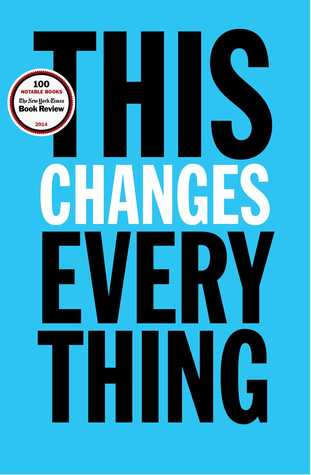
This Changes Everything, by Naomi Klein

The Sixth Extinction, by Elizabeth Kolbert

The Great Disruption, by Paul Gilding

The End of Nature, by Bill McKibben

The Only Kayak, by Kim Heacox

And if you are an earth and nature lover, you absolutely must acquaint yourselves with these writers if you haven’t already:

Wendell Berry (essays and poetry); Mary Oliver (poetry); Barry Lopez (See “The Case for Going Uncivilized.”)

This Changes Everything book cover

Pope Francis spoke with great passion and love about families during his visit to the US. There are many parallels between our nuclear families and the family composed of all creatures on mother earth, aren’t there?

Are you planning to participate in any climate change events before or during the UN Climate Change Conference? Do you belong to a climate change group? If you’ve read other good books about the topic, please let us know in the comments.

If you believe we need to act to prevent disastrous climate change, please share this post on your favorite social media.


“I wish to address every living person on this planet.”

“I urgently appeal, then, for a new dialogue about how we are shaping the future of our planet. We need a conversation that includes everyone, since the environmental challenge we are undergoing, and its human roots, concern and affect us all.”    Pope Francis, Laudato Si’: On Care for Our Common Home

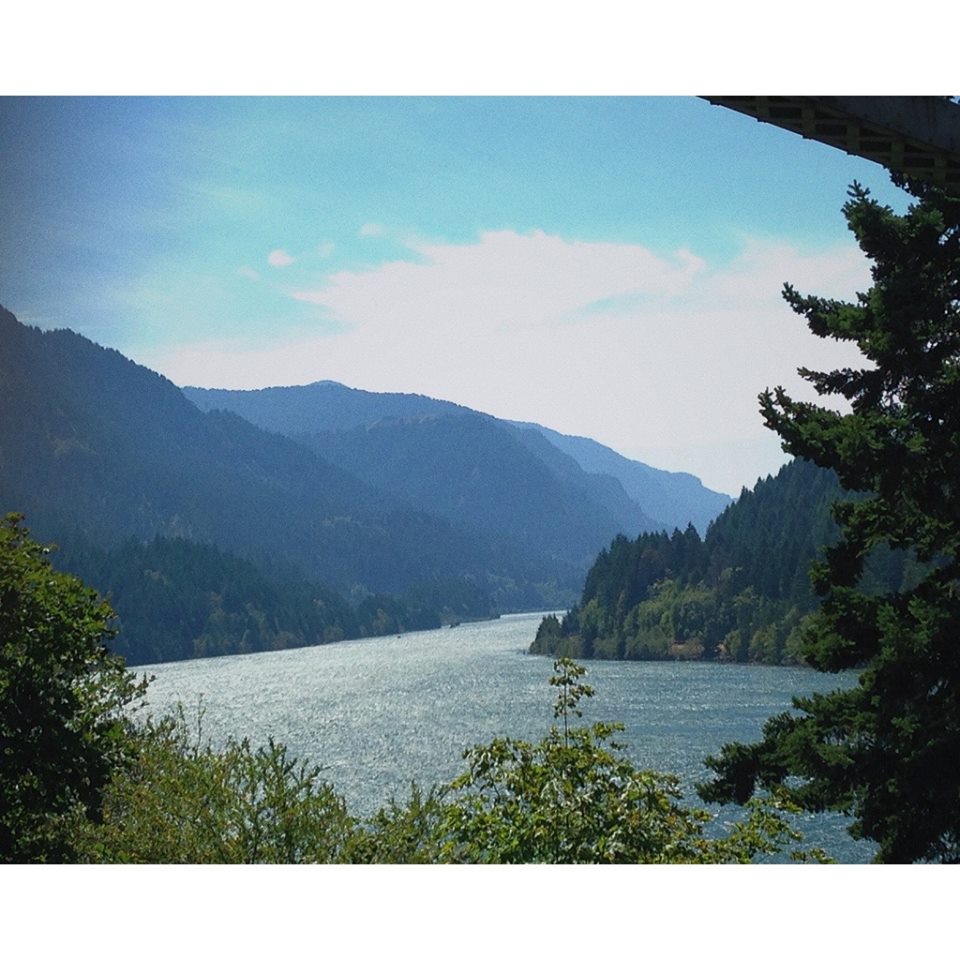
Columbia River Gorge
(Columbia Gorge) “If we acknowledge the value and fragility of nature and, at the same time, our God-given abilities, we can finally leave behind the modern myth of unlimited material progress.” Pope Francis

Pope Francis will visit the United States September 22 – 27 and will no doubt speak about climate change.

His recently published encyclical on the environment and human ecology can be downloaded for free or ordered at this link: Laudato Si’: On Care for Our Common Home.

I believe Laudato Si’ will prove to be one of the most important documents of our time. It is a stirring, eloquent, and direct call to action.

I’ll be featuring it here on Books Can Save a Life during the pope’s visit. I hope you’ll read it along with me and join in our discussion. I welcome both secular and faith-based perspectives.

On Care for Our Common Home is urgent and wide-ranging; you may be surprised at the topics addressed as the pope seeks to show how our values and our actions have far-reaching implications for humanity and for the planet.

Here are some excerpts to get us started:

“…the earth herself, burdened and laid waste, is among the most abandoned and maltreated of our poor…”

“The poverty and austerity of Saint Francis were no mere veneer of asceticism, but something much more radical: a refusal to turn reality into an object simply to be used and controlled.”

“The earth, our home, is beginning to look more and more like an immense pile of filth.”

“…access to safe drinkable water is a basic and universal human right, since it is essential to human survival and, as such, is a condition for the exercise of other human rights. Our world has a grave social debt towards the poor who lack access to drinking water, because they are denied the right to a life consistent with their inalienable dignity.”

“We seem to think that we can substitute an irreplaceable and irretrievable beauty with something which we have created ourselves.”

“We were not meant to be inundated by cement, asphalt, glass and metal, and deprived of physical contact with nature.”

“…when media and the digital world become omnipresent, their influence can stop people from learning how to live wisely, to think deeply and to love generously…True wisdom, as the fruit of self-examination, dialogue and generous encounter between persons, is not acquired by a mere accumulation of data which eventually leads to overload and confusion, a sort of mental pollution….Today’s media….shield us from direct contact with the pain, the fears and the joys of others and the complexity of their personal experiences….alongside the exciting possibilities offered by these media, a deep and melancholic dissatisfaction with interpersonal relations, or a harmful sense of isolation, can also arise.”

Please share this post on social media and leave a comment. Will you be watching and listening to Pope Francis? Have you read, or read about, Laudato Si’? Do you agree that it may prove to be one of the most important documents of our time?

Laudato Si' books

Rhythm of the Wild by Kim Heacox

“Looking back, I see now that Denali did more than charm me that first summer; it saved me. The whole damn place beguiled me and believed in me when I didn’t believe in myself. Call me crazy or blessed or crazy blessed. But I swear that again and again Denali has done this–made me buckle down and find inspiration and become the free man I am today.”   Kim Heacox, Rhythm of the Wild: A Life Inspired by Alaska’s Denali National Park

Rhythm of the Wild book cover

“What you hold, dear reader, is a story of love and hope, equal parts natural history, human history, personal narrative, and conservation polemic. I make no attempt to be a neutral journalist, a rare bird in today’s corporate culture. I’m a story teller.”

At the moment, Alaska is burning, and I’d love to hear Kim Heacox’s thoughts about this. I recently finished reading his new book, Rhythm of the Wild: A Life Inspired by Alaska’s Denali National Park, and I liked it so much I bought a copy of his first memoir about Alaska, The Only Kayak, and liked that one too.

Denali Mountain
Denali. Wikipedia.

I’ve tried to persuade my husband to read the latter book, as he’s a kayaker and a Beatles lover, as Heacox is. I believe Heacox and J. are kindred spirits, but so far no luck, J. hasn’t picked up the book–he’s not a particularly avid reader. However, he has been to Alaska, while I have not, so I think that counts for more than reading two books about Alaska.

Kim Heacox is an award-winning writer (with four books for National Geographic to his credit), a photographer, a speaker, a conservationist, and a lover of Alaska and Denali. (Denali, the mountain, which is the highest in North America, and Denali National Park.)


Grizzly bear
Grizzly bear. NPS photo.

He and his wife, Melanie, have resided in Alaska for over thirty years; they are two remarkable people who have devoted their lives to educating others about the inestimable value of our wilderness areas. Heacox writes in a very personal way about Alaska and Denali, weaving together his own wilderness stories with coming of age in the Northwest during the 1960s and 70s. I admire him for many reasons, among them his talent for lyrical writing and his willingness to be vulnerable as he shares his love for the wilderness that is Alaska.

As I read, I began to feel sorry for the tourists Heacox describes who find their way to Denali but after a few short days must return to their Dilbert cubicle lives in cities and suburbs. Then I realized that has been much of my life, too. Heacox paints such a compelling picture of Alaska he made me feel deprived for never having experienced this wild, remote place.

Heacox recounts his fascination with the Beatles and their reinvention of music – from an early age he identified with outsiders and challengers of the status quo. Naturally, he’s been deeply influenced by “outsider” environmentalists as well, including  Edward Abbey and Adolph Murie. He writes about their legacies in Rhythm of the Wild.

Those of you who follow my blog know I’m a fan of Barry Lopez and Wendell Berry and other influential writers who care about nature and wilderness. I’ll look for more writing by Kim Heacox in the future. I consider him an important addition to my nature and conservation bookshelf. He’s the kind of writer we should be reading if we want to protect our national parks and take climate change seriously.

Here are a few enticing samples of this singular voice in Rhythm of the Wild:

“Years ago in a cowboy cafe in Moab, Utah, I met a nine-fingered guitarist who poured Tobasco on his scrambled eggs and told me matter-of-factly that Utah was nice, Montana too. And of course, Colorado. But any serious student of spirituality and the American landscape must one day address his relationship with Alaska, and once in Alaska, he must confront Denali, the heart of the state, the state of the heart….by Denali he meant both the mountain and the national park.”

Great Horned Owls
Great Horned Owls. NPS photo.

“Denali is what America was; it’s the old and new, the real and ideal, the wild earth working itself into us on days stormy and calm, brutal and beautiful, unforgiving and blessed. It’s where we came from, long before television and designer coffee, even agriculture itself. Before we lost our way and granted ourselves dominion over all living things, before our modern, paradoxical definitions of progress and prosperity, and too much stuff; it’s the lean, mean, primal place buried in our bones no matter how much we might deny it, no matter how fancy our homes, how busy our routines, how cherished our myths. Denali resides in each of us as the deep quiet, the profound moment, the essence of discovery. It offers a chance to find our proper size in this world.”

The publisher of Rhythm of the Wild kindly provided me with an Advanced Reader’s Copy (ARC).

I’ve ordered a copy of Laudato Si’, Pope Francis’ encyclical on climate change. It is available from Amazon and other booksellers, and you can download the pdf at this link: Laudato Si’ . I’ll be writing about it here in late July, primarily from a secular perspective. Why don’t you read it with me – I welcome your thoughts.

Northern Lights and trees

Summer book giveaway

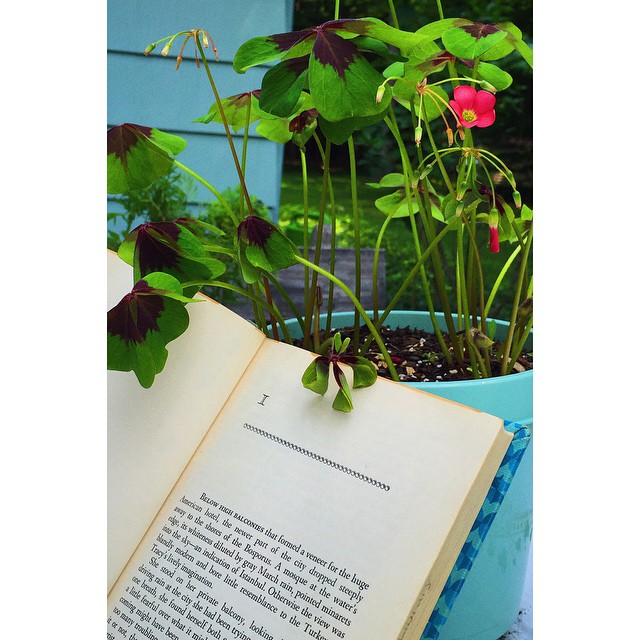
Guess book & flower

Guess the book (hint: gothic romance) and/or the flower for a chance to win a book or a package of seeds. You don’t have to get the correct answer to win. Ends Wednesday, June 24, midnight EST.

Here are a few of the books I’ll be reading and writing about this summer:

How to Be Both, by Ali Smith

Laudato Si: Praise Be to You, On Care for Our Common Home, by Pope Francis

H Is for Hawk book coverH Is for Hawk, by Helen Macdonald

Bad Feminist, by Roxane Gray

Smile of a Midsummer Night: A Picture of Sweden, by Lars Gustafsson & Agneta Blomqvist

Rhythm of the Wild, by Kim Heacox

How Should a Person Be? by Sheila Heti

The Collapse of Western Civilization, by Naomi Oreskes & Eric M. Conway

Everything I Never Told You, by Celeste Ng

Laudato Si books