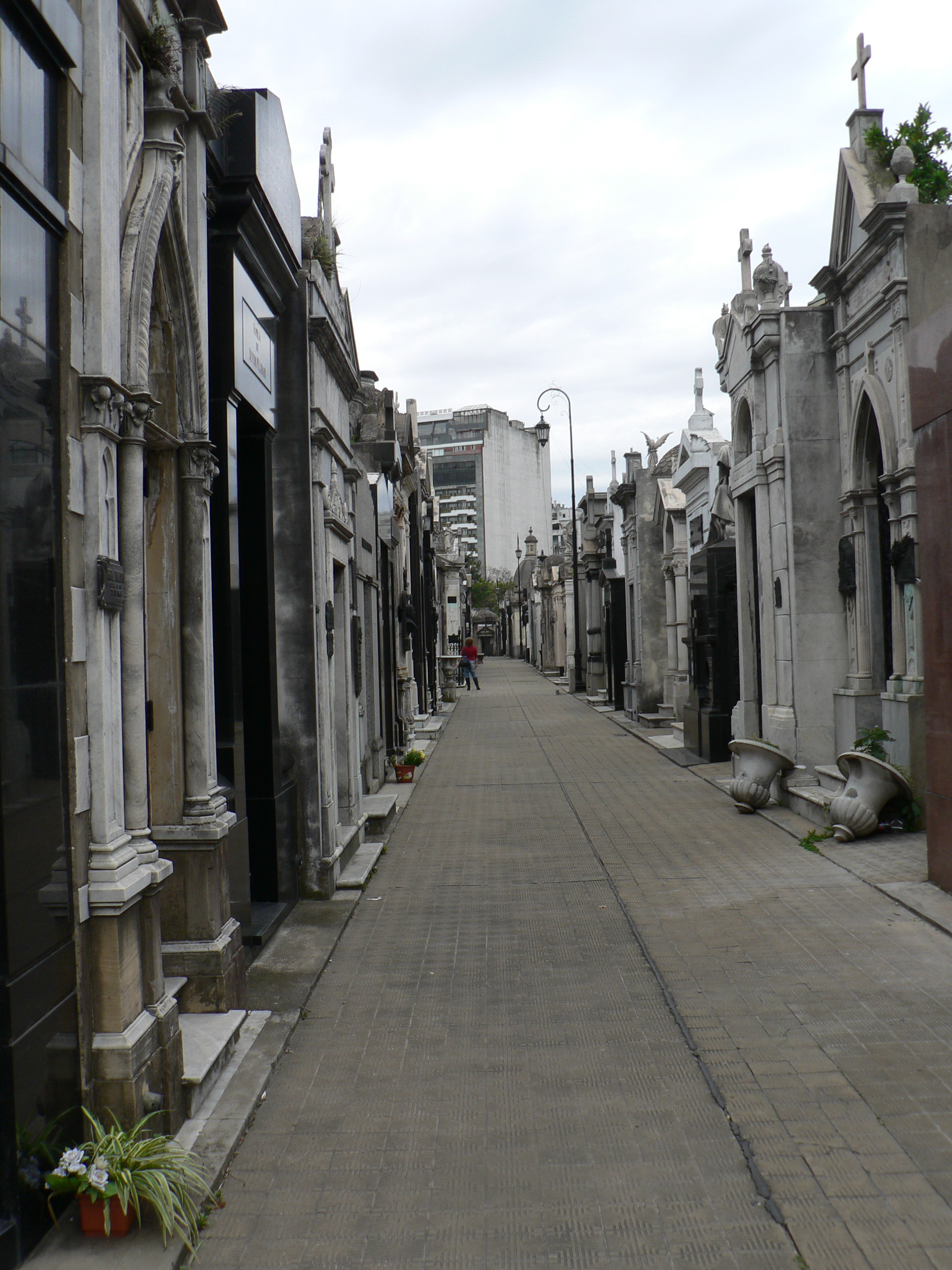
We visited Recoleta, a well-to-do neighborhood in Buenos Aires, and browsed at Cúspide Libros, a popular chain in Argentina. Here we found a collection spanning many subjects – politics, history, travel, art, design, cooking, current fiction and nonfiction, the classics, and more.
Cúspide Libros is in an upscale shopping mall. In the U.S., you might not expect to find a bookstore with such a broad, deep selection of titles.
Our traveling companions, who live in New York City, commented that Buenos Aires seems especially devoted to bookstores and reading.
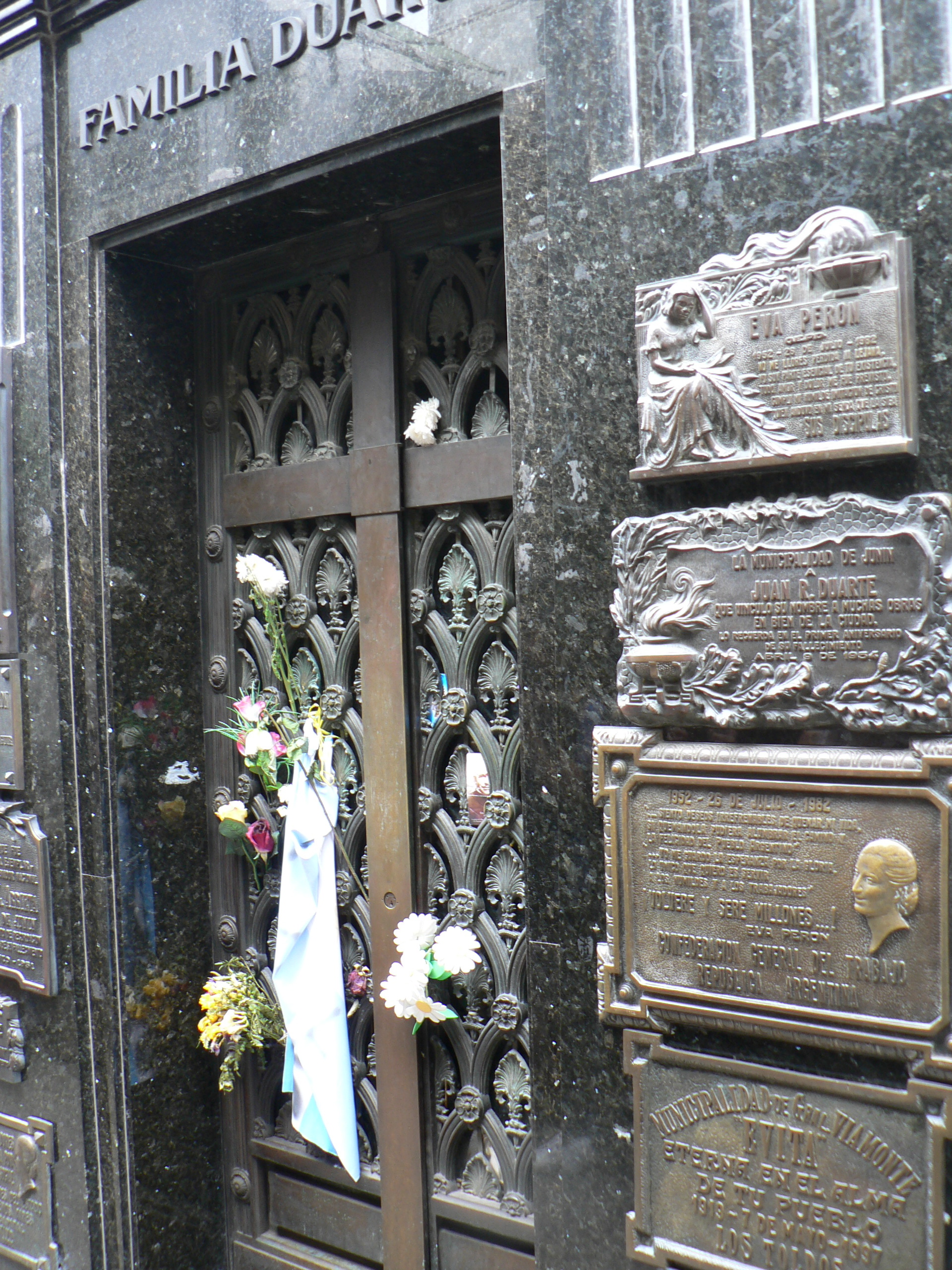
La Recoleta Cemetary is across the street, where many Argentinian notables have elaborate tombs. It’s a fascinating place, a dense grid of narrow walkways lined with mausoleums, some crumbling and in disrepair, others pristine. Despite the somewhat morbid undertones, it’s quiet and peaceful, a stunning outdoor art gallery.
[El Carrusel] nos permite viajar como viaja un niño. Dando vueltas y más vueltas y otra vez a casa…a un lugar en el gue sabemos que nos quieren. Don Draper, “Mad Men”
The Carousel allows us to travel as a child travels. Going round and round and home again … to a place where we know we are loved. Don Draper, “Mad Men”
We visited Prometeo Libros, an excellent bookstore on Avenida Honduras in the Palermo Soho neighborhood of Buenos Aires.
I bought Madmen: Reyes de la Avenida Madison, by Jesús G. Requena and Concepción Cascajosa, figuring if I’m familiar with the subject matter it will be easier for me to understand the Spanish. I like the quote especially because I produced slide shows for the Carousel when I worked for Kodak.
Also a collection of poems by Jorge Luis Borges, El oro de los tigres/La rosa profunda. Short bits of poetry are easier to understand than long prose passages.
Children’s books at Prometeo Libros
Cupcakes, shoes and many other fine things in the shop windows of Palermo Soho.
Quote from: MadMen: Reyes de la Avenida Madison, Jesús G. Requena and Concepción Cascajosa, Capitán Swing Libros, Madrid: 2010.
Been too long away from the blog. Visiting family, and it’s the busiest time of year at the library, where I’ve had the privilege of working with eleven first-year medical students. I’ll be their personal librarian for the next four years, a role we librarians are inventing and making our own as we go along.
When it comes to Books Can Save A Life, I often wonder who might stop by and whether I can make their visit personal and meaningful, especially considering most of my readers are anonymous.
One thing I know, I have to feel passionate or intensely curious about the books, writers, and topics I feature here.
You may be inspired to read some of the books or authors you find on Books Can Save A Life but, ultimately, I hope Books gives you a moment of pleasure, speaks to some aspect of your own life, stirs up memories of past good reads, or inspires you to try a new path in your personal reading.
After visiting my favorite book spots on the Internet, I was energized to find that this fall will bring a perfect storm of new fiction and nonfiction by some of our best writers. Everyone in the book world is excited about the upcoming publishing season.
Some of my favorite authors will publish new books, and others have been on my to-read list for a while. This fall and winter I want to feature some of them on Books Can Save A Life. Let’s immerse ourselves in the spirit and mood of our time. What are our obsessions, passions, predictions, hopes, fears, delusions and delights? How are we, personally, caught up in all of it?
I loved Kingsolver’s The Poisonwood Bible. Her new book, Flight Behavior, is right up my alley, with a larger-than-life plot about a farmer’s wife caught up in a biological disaster that draws worldwide attention and fuels the controversy over climate change.
I’ve read McEwan’s Saturday twice (someday I’ll tell you why that book is so special to me), and I’m looking forward to his Sweet Tooth.It’s about a Cold War spy who falls in love with the novelist she’s supposed to be manipulating. One reviewer calls it a complex “Russian doll of a novel” that’s really about readers, reading, how we respond to fiction, and what we want from it.
Mark Helprin will have a new book out, too, In Sunlight and In Shadow. Have any of you read Winter’s Tale? Among other things, it’s a love letter to New York City of the early 1900s (and of the future.) I read it when I was saying goodbye to New York and a particular time in my life. Helprin’s newest book takes place in post World War II New York and is, I think, a similarly fabulous and grand tale.
Also coming up: two book stories to share with you from a couple of my readers, and a trip to Buenos Aires in October, where I’ll be re-reading Imagining Argentina and writing about my adventures.
What are you reading? Are there any forthcoming books you plan to buy the minute they’re available?
State-of-the-art genetic testing can trace ancestry ten or eleven generations back, by looking at a man’s Y-chromosome DNA (which he inherits unchanged from his father) or the mitochondrial-DNA of a man or a women (which they inherit unchanged from their mother.)
Many people interested in genealogy are now supplementing their research with DNA testing of this kind.
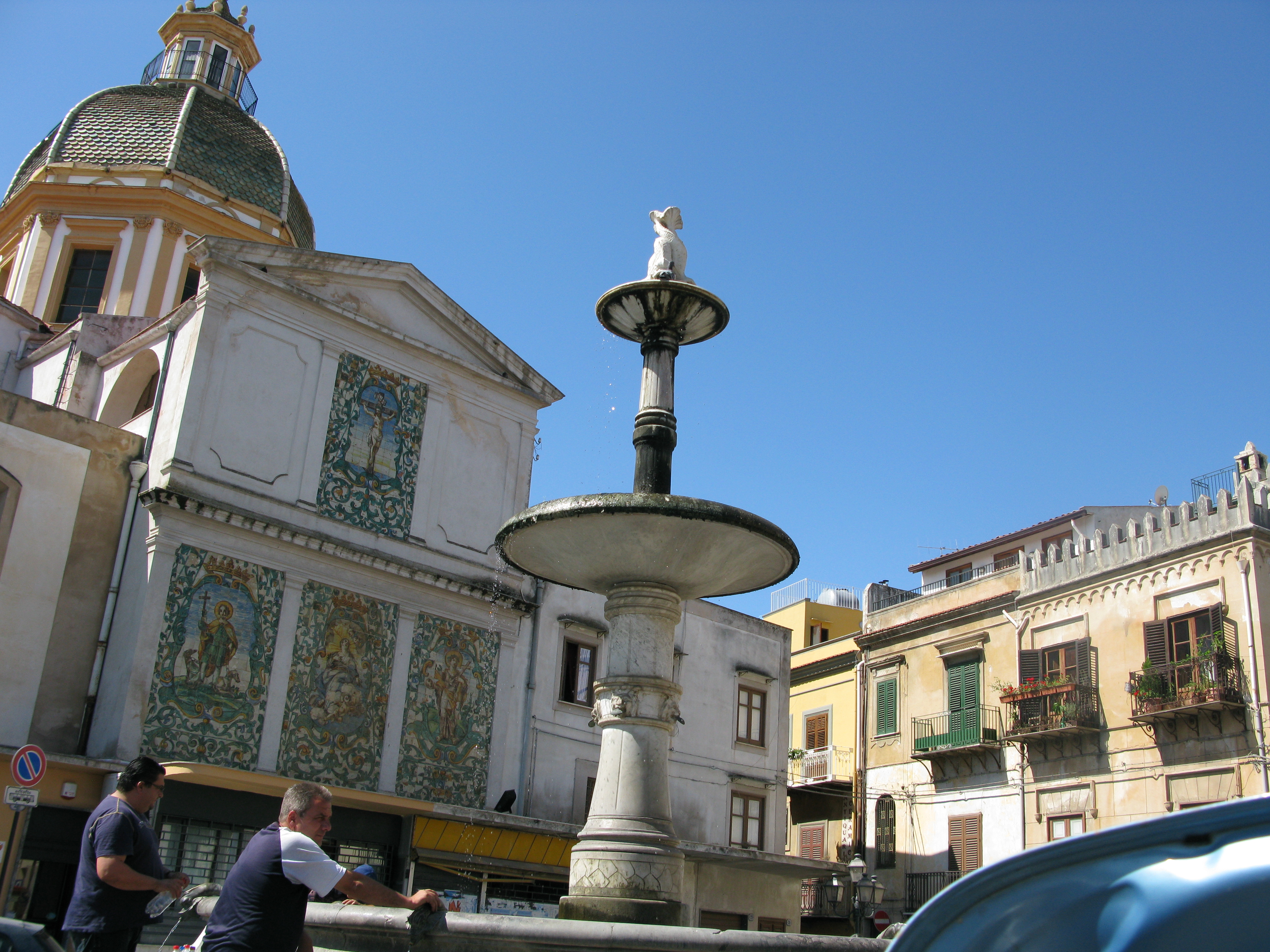
Piazza in my father’s hometown, Carini, Sicily
As I read about Lone tracing her ancestry, I thought about trips to my father’s birthplace in Sicily I’ve taken with my family. My father was a baby when he crossed the Atlantic Ocean with my grandmother to Ellis Island. I heard the story many times growing up. My grandparents kept in touch with their relatives and returned to Sicily several times to visit.
Because they did, I’ve been able to travel to Carini to meet my father’s family, and my sons have had the opportunity to get to know their Sicilian cousins. That connection with the “old country” is continuing into the next generation, and I hope my children will keep it going with their children.
On our first trip, when we were exploring the cobblestone streets of Carini, we stopped in a bakery. There, we met a man who had my last name (my maiden name.) My family’s surname name is common in Carini.
That day our cousins took us to a nearby castle that had been built around 1075. In the evening we gathered for an elaborate, home-cooked meal at my father’s cousin’s villa in the old section of Carini. Like most Sicilian homes, it is walled off and gated. We sat at several picnic tables end-to-end next to a large, well-tended garden and talked late into the night.
I was steeped in antiquity but surrounded by modernity. Vespas and other traffic passed by outside the garden walls. I felt a sense of completion. Here were my roots, or half of them, anyway. I looked at the faces of my family and thought about the fact that Sicily has been conquered repeatedly, by the Greeks, Romans, Byzantines, Muslims, Normans, Spanish, and probably others. We have the blood of many races, and who knows what parts of the world our earliest ancestors came from.
I think people are looking for this sense of identity when they do genealogical research and probe their DNA for ancestry. We are, each of us, unique. Yet when it comes down to it, we all come from the same human family.
Have you had your DNA analyzed for ancestry? Are you considering it? If so and you’d like to share your thoughts and experiences, please do in the comments below.
In meditation class, our instructor read a poem by Rumi about welcoming all emotions as you would a house guest, even the negative ones, as they may be clearing you out for something else.
You can sample some of David Whyte’s poems on his beautiful, rich website. David leads groups on hiking tours in Italy, England, and Ireland, where he reads his poetry and visits artists, cooks, gardeners, farmers, and other creatives committed to their locales.
Genome Management Information System, Oak Ridge National Laboratory
I am what I do with the beautiful information that has flowed through millions of years through billions of organisms and has, now, finally been entrusted to me. Lone Frank
Genetic tests for consumers now cost as little as $99.
Send in a sample of your DNA (usually a swab of saliva) and you’ll be notified of the results by mail, email, or online. (In some states, such as New York, genetic tests must be requested by a physician.)
Science journalist Lone Frank purchased a genetic test kit and sent in her sample of saliva. In My Beautiful Genome, she describes going online and finding out her risk for Alzheimer’s, glaucoma, asthma, gallstones, arteriosclerosis, and other conditions.
Breast cancer is Lone’s number one concern; her mother and maternal grandmother died relatively young from it. At first, she’s relieved, because the test says she has a 7.7 percent risk for breast cancer, lower than a woman’s average risk of 12%.
But when Lone interviews the founder of the genetic testing company, he advises her to get a BRCA gene test because of her family history. Mutations in these genes can mean up to an 80% risk for breast cancer.
When Lone tries to get a BRCA test, she’s turned down, because the testers want evidence of breast cancer in her family going back one more generation, and Lone doesn’t have that information. Nonetheless, she manages to convince them to give her the test.
I’ll permit myself one spoiler and tell you Lone doesn’t have the BRCA genes. She’s tremendously relieved, of course – between that and her lower-than-average 7.7 % risk, maybe the genetic roll-of-the-dice is in her favor.
Not so fast.
The genetic counselor tells Lone that, because both her mother and grandmother died of breast cancer, there could be another risk factor at play – a genetic anomaly for breast cancer that hasn’t been discovered yet.
Let’s say another genetic risk factor for breast cancer comes to light and Lone has it. That would mean her risk rating would increase from 7.7% to something much higher.
The risk ratings from consumer genetic testing are based on limited information, because there is so much we don’t know yet about the human genome and disease. As more of the human genome is decoded, people’s risk ratings change.
The fact of the matter is, every human has over 20,000 genes, and consumer genetic tests examine only a handful of them.
So, just how useful are these tests?
I asked my general practitioner, an excellent physician, what he thinks of direct-to-consumer genetic tests. He’s not enthusiastic. They yield information that’s incomplete, possibly inaccurate, and worrying. He believes specific genetic tests for specific conditions – the kind of test you’d obtain after a discussion with your health care provider – can be useful, but only if you’re prepared to act on the information. A woman may get a BRCA test, for example, with the intention of having a double mastectomy if the results are not in her favor.
I’m not going to be asking him to request a genetic profile for me anytime soon. When I first began reading My Beautiful Genome, I considered it, but I’m not convinced I’ll learn anything useful, I’ll wonder about accuracy and, depending on the results, I’ll probably worry.
There are lots of other drawbacks, too, which Lone discusses in her book. But she gives equal time to the potential benefits of genetic testing, and writes about what is being done on the cutting edge. Some of what she has to say sounds like science fiction, but it’s really happening.
Lone Frank wants very much to know her own genome; I’ve decided to postpone exploring my own DNA for health reasons until more is known. If and when I do, I’d want to discuss the results with a genetic counselor or other qualified expert.
Still, I’m excited about the prospect of someday knowing something about my own genetic code. I hope that day isn’t too far away.
And if I ever have the opportunity to participate in a research study about the genetics of something I care about – schizophrenia, for example – I’d volunteer in a heartbeat.
Would you choose to explore your DNA with a genetic test? Have you already been tested? What do you think of consumer genetic tests? Please share your thoughts in the comments below.
Would I have my DNA analyzed for ancestry? That’s another story. In my next and last post about My Beautiful Genome, I’ll write about what Lone learned about her genetic roots.
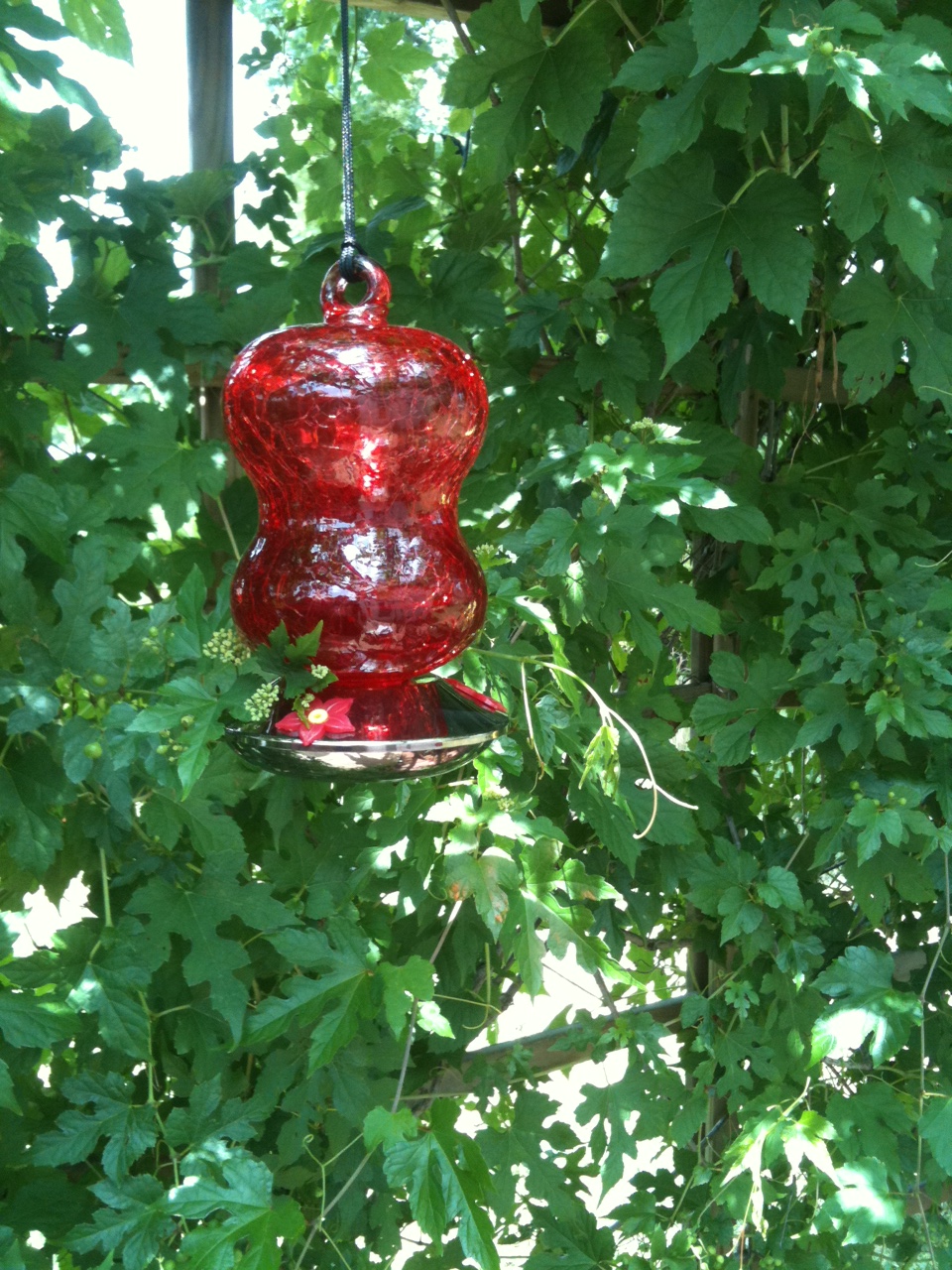
A moment of pleasure: Sitting under the pergola at my brother’s house outside of Cleveland. Taking in the Cleveland-ness of being here.
I can’t really explain this. Something in the air has a distinctive quality, maybe the humidity and the heat of Ohio, and it takes me back to summers growing up here: listening to the Beatles on my transistor radio (WIXY 1260), swimming with my friend, Nena, at Stafford Park, play-by-play of the Indians’ baseball game always in the background….
In meditation class this week, our teacher read Wild Geese by Mary Oliver, who is from my hometown.
“I want to know what it feels like to have a close encounter with my DNA, this invisible, digital self that lies curled up like a fetus in every single cell of my body.” –Lone Frank
When asked by the researcher if she has first-degree relatives with mental health problems, Lone Frank says yes.
Asked which ones, Lone says: all of them.
Depression, multiple suicides, bipolar disorder, alcoholism. With mordant humor, Lone Frank describes her family history. She’s forthcoming about her own three episodes of depression, then lies to the researcher about how many drinks she has each week. Fourteen glasses of red wine, for the health benefits. (But it’s really closer to twenty drinks or more. At least, that’s what she tells the reader.)
Lone, a Danish science journalist with a PH.D. in neurobiology, volunteered to take part in a major research project to study the connection between personality, an inclination toward depression, and specific genes.
In My Beautiful Genome: Exploring My Genetic Future One Quirk at a Time,she takes us along as she undergoes genetic testing, completes questionnaires and personality tests, and talks with multiple experts who interpret the results. Along the way she grapples with many questions.
Does she, indeed, have genes that predispose her to depression?
How does the environment factor in, as well as her upbringing and her own free will to pull herself out of depression and make cognitive and lifestyle changes to prevent it?
Does she unwittingly contribute to her own dark moods and temperament by building her own, unique environment – under the influence of her genes – that is conducive to depression?
On the other hand, does she possess certain genes or genetic variations that give rise to traits that help her excel in certain areas?
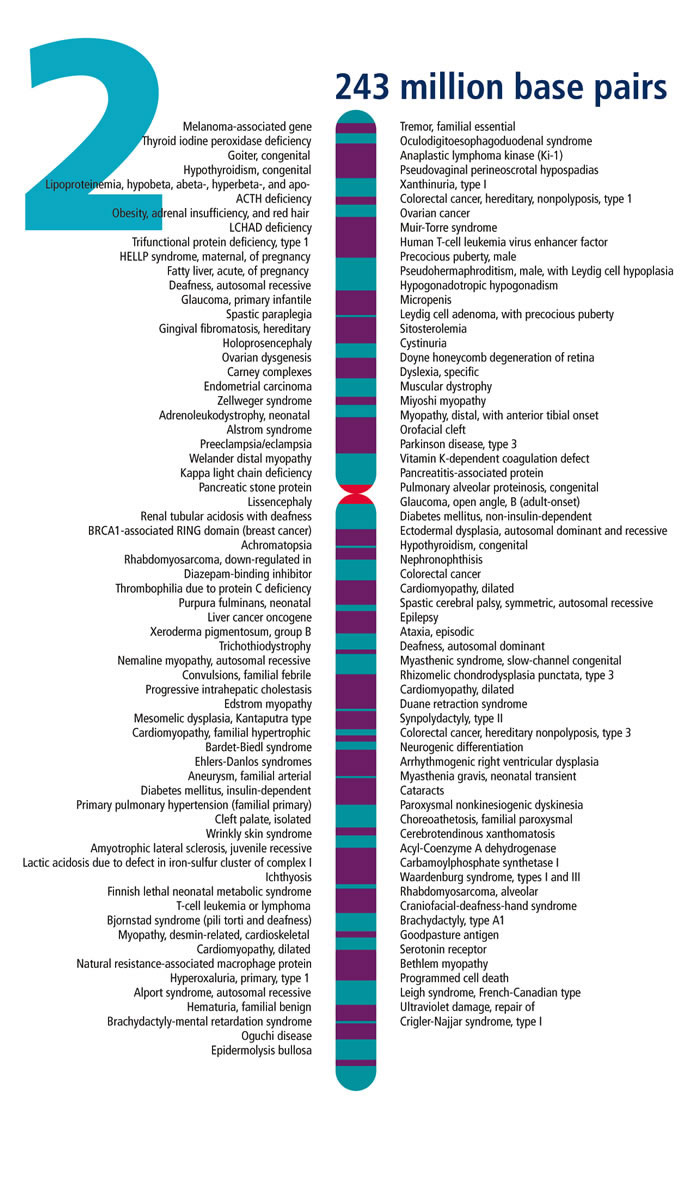
Chromosome 2 (click twice for larger image) Genome Management Information System, Oak Ridge National Laboratory Human Chromosomes from “Human Genome Landmarks: Selected Genes, Traits, and Disorders” Poster, 2002. (Gene Gateway)
Do some genetic variations mitigate the effects of others?
Are there “good” and “bad,” “healthy” and “unhealthy” genetic variations, or simply variations that lead to different outcomes depending on one’s circumstances?
I won’t give away what Lone discovers, but she finds out a lot and, in the end, concludes the information is enormously helpful.
Let me stress that the average lay person could not mine their own genome for this information the way Lone did. Because she’s a journalist with a doctorate in neurobiology, she had access to sophisticated genetic tests and, more importantly, to experts who could interpret the results and how they might affect her personality and behavior.
Nonetheless, mining Lone’s genome with her is a glimpse into what may be possible for all of us, eventually, if we want it.
How much would you want to know about your genes and how they might shape your personality and behavior? Please share your thoughts in the comments.
Coming up, what Lone’s DNA reveals about her future health.
Quote from My Beautiful Genome: Exploring My Genetic Future One Gene at a Time, by Lone Frank, Oneworld Publications, Oxford, 2011.
For my mindfulness meditation class, this week we are to record one pleasurable moment each day. Here are two:
Friday morning: helping a medical student find information about adolescent health. Enjoying her youth, beauty, enthusiasm, the unfolding of her potential. She will help many people.
Saturday morning: visiting the backyard pond, enjoying the coolness.












 Books Can Save A Life