Enter my book giveaway in The Literary Blog Hop

literarybloghop_februaryBooks Can Save a Life is two years old this month, and to celebrate I’m participating in The Literary Giveaway Blog Hop.

Over 40 blogs are part of the hop, which is the mastermind of Judith who blogs at Leeswammes’ Blog in the Netherlands.

Between now and Wednesday, February 12, you can hop to over 40 different book blogs, all offering one or more giveaways of books or bookish items. All books will be literary (non)fiction or something close to that. Follow the links at the bottom of this post to find the other participating blogs.

My Giveaway

As part of the blog hop I will be giving away 2 novels, which are open for North American entries.

The Rules

1. Anyone can enter. You do not need to have a blog.
2. You need a post-office recognised address in North America where you can receive packages.
3. You do not have to be a follower or become a follower, although if you like my blog I hope you will! You can follow by email or on Facebook or Twitter.
4. Leave a comment (on the left sidebar) letting me know the last best book or author you’ve read and providing me with an email address where you can be contacted should you win.
5. You can enter the giveaway until Wednesday 12th February. I will close the giveaway at midnight. Winners will be randomly picked using random.com.
6. Double or invalid entries will be removed.
7. I will notify the winners by email. The winners need to answer my email within 3 days, or I’ll announce a new winner.

MY BOOK GIVEAWAY ENDS AT MIDNIGHT EST, WEDNESDAY, 2/12/2014!

Thank you for visiting my blog. Now start blog hopping!

  1. Leeswammes
  2. Seaside Book Nook
  3. Booklover Book Reviews
  4. Biblionomad
  5. Laurie Here
  6. The Well-Read Redhead (US/CA)
  7. River City Reading
  8. GirlVsBookshelf
  9. Ciska’s Book Chest
  10. The Book Stop
  11. Ragdoll Books Blog
  12. Nishita’s Rants and Raves
  13. Lucybird’s Book Blog
  14. Reading World (N-America)
  15. Journey Through Books
  16. Readerbuzz
  17. Always With a Book (US)
  18. 52 Books or Bust (N.Am./UK)
  19. Guiltless Reading (US/CA)
  20. Book-alicious Mama (US)
  21. Wensend
  22. Books Speak Volumes
  23. Words for Worms
  24. The Relentless Reader
  25. A Lovely Bookshelf on the Wall (US)
  1. Fourth Street Review
  2. Vailia’s Page Turner
  3. The Little Reader Library
  4. Lost Generation Reader
  5. Heavenali
  6. Roof Beam Reader
  7. Mythical Books
  8. Word by Word
  9. The Misfortune of Knowing
  10. Aymaran Shadow > Behind The Scenes
  11. The Things You Can Read (US)
  12. Bay State Reader’s Advisory
  13. Curiosity Killed the Bookworm
  14. Lizzy’s Literary Life
  15. Books Can Save a Life (N. America)
  16. Words And Peace (US)
  17. The Book Club Blog

Books to read in 2014

Here’s my to-read list for 2014. It’s incomplete, always changing, and I’m sure I won’t get to all of these, not by a long shot, but it’s a convenient list when I’m choosing my next book. You may see a few of them featured on Books Can Save a Life. I’ve included titles that will be published in 2014, so you won’t find all of them on the shelves yet.

If you have enticing choices on your list, please share them in the comments!

Watch for my book giveaway in February to celebrate the second anniversary of Books Can Save a Life.

FICTION
The Snow Queen book cover

The Snow Child, by Eowyn Ivey    “If All of Rochester Read the Same Book,” 2014

The Goldfinch, by Donna Tartt

Someone, by Alice McDermott

Carthage, by Joyce Carol Oates

Arctic Summer, by Damon Galgut

The Unknowns, by Gabriel Roth

The Circle, by David Eggers

Colorless Tsukuru Tazaki and His Years of Pilgrimage, by Haruki Murakami

The Signature of All Things, by Elizabeth Gilbert

Life After Life, by Kate Atkinson

How Should a Person Be? by Sheila Heti

The Paying Guests, by Sarah Waters

And Then We Came to the End; The Unnamed; To Rise Again at a Decent Hour, by Joshua Ferris

Orfeo, by Richard Powers

Never Go Back, by Lee Child

The Language of Flowers, by Vanessa Diffenbaugh

The Snow Queen, by Michael Cunningham

The Bone Clocks, by David Mitchell

The Interestings, by Meg Wolitzer

The Luminaries, by Eleanor Catton

Lila, by Marilynne Robinson

By Blood, Ellen Ullman

Canada, by Richard Ford

In Sunlight and in Shadow; and Winter’s Tale, by Mark Helprin

The Cuckoo’s Calling, by Robert Galbraith (J.K. Rowling) and Untitled (2014)

The Woman Who Lost Her Soul, by Bob Shacochis

Off Course, by Michelle Huneven

Gone Girl; Dark Places, by Gillian Flynn (movies in 2014)

Wolf Hall, by Hilary Mantel (Best book of the 21st century, according to Elizabeth Gilbert)

****************

IN TRANSLATION

My Struggle, Books 1, 2, 3 by Karl Ove Knausgaard (Norwegian)

Treasure Hunt; The Dance of the Seagull by Andrea Camilleri (Sicilian)

Story of a New Name, by Elena Ferrante (Italian)

YOUNG ADULT

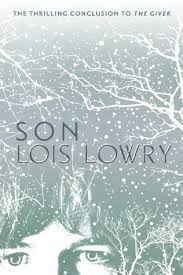
Son book cover

The Giver Quartet Series (including Son), by Lois Lowry

Divergent Series, by Veronica Roth

Mockingjay, by Suzanne Collins

The Fault in Our Stars, by John Green

*************************

MEMOIR

Wave book cover

Men We Reaped, by Jessamyn Ward

Still Writing, by Dani Shapiro

This Is the Story of a Happy Marriage, by Ann Patchett

Wave, by  Sonali Deraniyagala

Intensive Care: A Doctor’s Journey; and Medicine in Translation: Journeys with My Patients, by Danielle Ofri

**************

NONFICTION
Five Days at Memorial book cover

Big Data: A Revolution that Will Transform How We Live, Work, and Think, by Victor Mayer-Schonberger and Kenneth Cukier

Who Owns the Future? by Jaron Lanier

The Burglary: The Discovery of J. Edgar Hoover’s Secret FBI, by Betty Medsger

Thank You for Your Service, by David Finkel

Five Days at Memorial: Life and Death in a Storm-Ravaged Hospital, by Sheri Fink

What Doctors Feel: How Emotions Affect the Practice of Medicine, by Danielle Ofri

Manson: The Life and Times of Charles Manson, by Jeff Guinn

The Unwinding: An Inner History of the New America, by George Packer

Margaret Fuller: A New American Life, by Megan Marshall

The Skies Belong to Us: Love and Terror in the Golden Age of Hijacking, by Brendan I. Koerner

The Gorgeous Nothings: Emily Dickinson’s Envelope Poems

Stalking the Divine, by Kristin Ohlson

Sons of Madness: Growing Up and Older with a Mentally Ill Parent, by Susan Nathiel

Is There No Place on Earth for Me? by Susan Sheehan

Dear Genius: The Letters of Ursula Nordstrom, by Leonard S. Marcus

The Book Thief

“They say that war is death’s best friend, but I must offer you a different point of view on that one. To me, war is like the new boss who expects the impossible. He stands over your shoulder repeating one thing, incessantly: ‘Get it done, get it done.’ So you work harder. You get the job done. The boss, however, does not thank you. He asks for more.”       Death, in The Book Thief

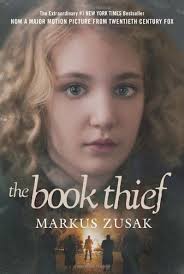
The Book Thief book cover

Death is the narrator in The Book Thief, a young adult book about a German family during World War II that has a huge adult readership as well. It is one book not to be missed. The writing is outstanding. Published in 2005, The Book Thief won countless awards and honors, and has become a classic in YA fiction.

I recently reread the book before I saw the movie. I think the screen adaptation is a good one, although some viewers found it tame, and subtleties of the text can’t be captured on the screen. For example, Max, who is Jewish and hiding out in the home of Liesel and her foster parents, paints over every page of a copy of Mein Kampf and creates his own book, with illustrations. Max’s book is embedded within the pages of The Book Thief, and on the pages of Max’s book you can see faint traces of Hitler’s words.  One of the pages in Max’s book is a drawing of a girl and a boy holding hands and standing on a pile of bodies. Inscribed on the sun that shines down on them is a swastika, and the girl is saying, “Isn’t it a lovely day?”

The author, Markus Zusack, uses the written word as a thematic motif. While the Germans burn books thought to be subversive, Liesel and Hans write words on the wall of their basement as Liesel learns to read, and Liesel steals a book whenever she has the chance, in defiance of the Nazis. Liesel then begins to write her own book in order to make sense of the world’s chaos and carnage.

I do think the movie captured the essence of the story, and it is well cast, especially Sophie Nélisse as Liesel Meminger and Geoffrey Rush as Hans, her foster father. Death is the narrator in the movie, as he is in the book, and in both he is an unsettling storyteller who confesses he is haunted by humans. Of course, in addition to being the narrator, Death has a starring role in the plot as well.

My father was wounded in the war, just inside the German border. Occasionally, my mother spoke of her family’s Victory Garden, the rationing of meat and gasoline, and the “man shortage.”  I was born ten years after the war ended. As an adult, I eventually began to understand how the world turned upside down by war cast long shadows over my parents’ generation.

Have you seen the movie or read The Book Thief? What did you think?

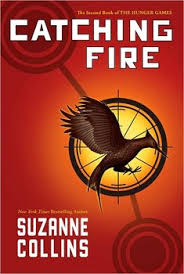
Catching Fire, the movie

Catching Fire book coverI liked the movie version of the first book in the The Hunger Games trilogy, (unlike many viewers) and I liked Catching Fire, the movie version of book #2, even more.

When a book or movie is wildly popular, I’m curious to know the reasons. I want to know how the creator birthed a story that inspires passion in so many people. The Hunger Games is epic, powerful, and true to our times, and in capable artistic hands it speaks to us whether the medium is the page or the screen. The Hunger Games books and the movies have become fused in my memory, and it is difficult for me to separate the two – it’s the story itself that stays with me.

Suzanne Collins’ trilogy is based, in part, on the Greek myth of Theseus and the Minotaur, which she read when she was eight years old. According to Wikipedia, in one version of the myth, the king of Crete demanded that every nine years seven Athenian girls and seven Athenian boys be sacrificed to the half-man, half-bull Minotaur. Theseus volunteers to go in place of one of them and slays the Minotaur. (In The Hunger Games, Katniss volunteers to go in place of her younger sister, Prim, and Peeta volunteers to replace Haymitch.)

In interviews, Suzanne has said she was intrigued by reality TV shows that feature ordinary people viewers can relate to trying to prevail in impossible situations; she has also noticed our voyeuristic desire to watch others in their most private, vulnerable, and humiliating moments. Flipping through TV channels one evening, Suzanne was struck by news footage from the Iraq war on one channel and “Survivor” competitors on another channel. A former writer of children’s television programming, Collins has spoken in interviews about how viewers become desensitized to real-world violence if they are continuously exposed to the entertainment violence of modern media.

Probably most formative of Suzanne’s artistic vision was the fact that when she was six years old, her father served as a military advisor in Vietnam. News footage on TV of the death and destruction in Vietnam confused and frightened her. After the war, when her family was living in Europe, Suzanne’s father often took them on tours of famous World War I and World War II battlefields, where he taught them about military strategy and history.

Although she’s been criticized for depicting children killing children, Suzanne is not an advocate of violence or war. Katniss, Peeta, and many of the others in The Hunger Games clearly suffer the post-traumatic effects of war, oppression and deprivation. In my mind, they echo the child soldiers and the children who are victims of bombings and other atrocities we see often in the news.  Several stories about The Hunger Games in the media have highlighted the irony of the fact that Suzanne lives in Sandy Hook, Connecticut. I wonder if that experience will result in another powerful and timely story.

For me, iconic images from Catching Fire include the silhouettes at sunset of Katniss, Peeta, and a dying tribute who has just sacrificed her life for Peeta; the citizens of Rue’s District 11 giving the three-fingered salute; and, in one of the closing scenes, a riveting shot of Katniss that embodies the essence of sacrifice.

I’ve been especially moved by these characters: Cinna (Lenny Kravitz) and how he takes a stand with his art; Haymitch (Woody Harrelson) and his flawed strength; Eppie (Elizabeth Banks) and her transformation; the growing strength of Prim (Willow Shields); the fire and directness of Johanna Mason (Jena Malone); and the depth of feeling and loyalty of the deceptively shallow Finnick Odair (Sam Claflin).

Year of the Jungle book coverRecently, Suzanne Collins published Year of the Jungle, a picture book about a child whose father goes off to war.

Have you seen Catching Fire? What do you think of the movie and/or or the book? Please share your thoughts in the comments below.

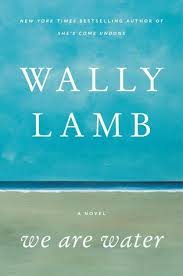
Wally Lamb’s We Are Water

We Are Water book cover

“Viveca’s wedding dress has a name: Gaia. Layers of sea green silk chiffon, cap sleeves, an empire waist, an asymmetrical A-line skirt with the suggestion of a train….Gaia: I Googled it yesterday….chaos, incest, monsters, warring siblings: it’s a strange name for a wedding dress.”    – Outsider artist Annie Oh, in We Are Water

Annie Oh throws a mug of red wine on the designer wedding dress of her future wife because she’s momentarily feeling ambivalent about the marriage. She likes the effect of the wine on the chiffon and proceeds to pour wine on the three expensive dresses Viveca has chosen for Annie to consider wearing on their wedding day. Thus she turns the dresses into pricey art that will fetch five figures, if not more.

I had a hard time engaging with Wally Lamb’s latest novel, at first, but I kept on because, having read I Know This Much Is True (the best book about schizophrenia and being a family member of someone with schizophrenia I’ve ever read) and She’s Come Undone, I’m loyal to Lamb and interested in his body of work. At first, the characters in We Are Water seemed pretentious; I’m used to the blue collar world he often writes about. But the writing is fabulous, as usual, and it wasn’t long before I was invested in the Job-like trials, tribulations, and family secrets of the Oh’s – Annie’s husband, Orion, and their adult children Ariane, Marissa, and Andrew.

After 27 years of marriage, Annie has left her husband and is about to marry Viveca, the art dealer who has made her famous. The wedding sets off a chain of events that harks back to 1963, when Annie, as a five-year-old, lost her mother and little sister in a flood that swept through her town. Lamb builds the story on a flood that actually occurred in his hometown of Norwich, Connecticut when he was a boy.

Annie has never told anyone what, exactly, happened in the flood and its aftermath. These secrets have an impact on the kind of wife and mother she is, they fuel her art, and they result in a tragic turn in the lives of one of her children. Lamb always has compassion for his characters, but he is also unflinching about placing them in terrible circumstances. One of the things he does so well here is show how the devastating effects of child abuse and neglect can pass from generation to generation.

Wally LambLamb is a generous, down-to-earth true believer in the healing power of art. For many years, he as led a writer’s group for women at the York Correctional Institution. (See Couldn’t Keep It To Myself: Wally Lamb and the Women of York Correctional Institution.)  While he was working on We Are Water, the shootings at Sandy Hook Elementary School in Newtown occurred; in a postscript to the novel he invites readers to contribute to the Brady Campaign to Prevent Gun Violence and the National Alliance for Mental Illness. 

 “For the first nine months of our lives, we float underwater. Then we hit the cold air, the glaring light of day, and start crying salty tears. Begin the lifelong challenge of trying to figure out why we’re here, what it all means.”  – Orion Oh, We Are Water

One small fact

The Book Thief Book CoverHERE IS A SMALL FACT

You are going to die.

….the grave diggers were rubbing their hands together and whining about the snow and the current digging conditions. “So hard to get through all the ice,” and so forth. One of them couldn’t have been more than fourteen. An apprentice. When he walked away, after a dozen paces, a black book fell innocuously from his coat pocket without his knowledge.”   The Book Thief, by Markus Zusak

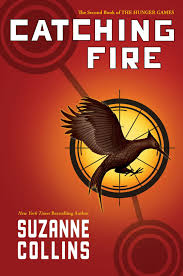
Catching Fire book cover

“If it were up to me, I would try to forget the Hunger Games entirely.”  Katniss Everdeen

Catching Fire, by Suzanne Collins

I’ll be at the movies this month watching two visions of apocalypse. One really happened. The other – well, take a world of haves and have-nots to the extreme, and maybe that’s where we’re headed.

I love watching my favorite books on the screen, as long as it’s done well. If you’ve read these young adult books that obsess grown-ups, too, and/or see the movies, stop by Books Can Save a Life and tell us your thoughts. Why do you think these end-of-the-world stories are so popular? I’ll revisit this soon, once I’ve seen the movies.

Body and mind

What are the pros and cons of getting genetic testing if your parent has Huntington’s Disease? What about dating and relationships?

A resident in the pediatric intensive care unit wants patient education information about shaken baby syndrome and traumatic brain injury.

A mother whose child has just been diagnosed with epilepsy wants to know if a special diet will help.

At teaching rounds, medical students on their first patient rotations are led through the process of making a diagnosis. “He has weakness in his arm and leg,” says the neurologist. “If his symptoms are on the right side, where is the lesion in the brain?”

These are some of the situations I’ve seen as a medical librarian. Sometimes we forget how precious and fragile are our bodies and minds. We can walk, run, speak, love, laugh, cry, sing, read, write, think, create, make plans, give comfort, enjoy a meal with family and friends. Until one day something changes.

I know from personal experience a mind can become irrevocably altered and an identity can vanish seemingly overnight. Which is probably why I am so fascinated by medicine, especially medicine having to do with the brain and behavior.

Here are some of my favorite books (fiction and nonfiction) about illness, recovery, medicine, the search for cures and miracles, and the people caught up in it all: medical professionals, researchers, patients and families. If you follow my blog, a few of the books will be familiar.

FICTION

I Know This Much Is True book cover

I Know This Much is True, by Wally Lamb

“On the afternoon of October 12, 1990, my twin brother Thomas entered the Three Rivers Connecticut Public Library, retreated to one of the rear study carrels, and prayed to God the sacrifice he was about to commit would be deemed acceptable.”

This is the best evocation of schizophrenia I’ve ever read. Wally Lamb is my hero.

By the way, Wally’s newest novel, We Are Water, was just published this month. It is on my nightstand in my little stack of books to read.

Saturday book cover

Saturday, by Ian McEwan

A neurosurgeon. Huntington’s Disease. A home invasion. A poem.

(The poem nestled deep within the plot sparks a crucial turning point. It also happens to be one of my lifelong favorites.)

State of Wonder book cover

State of Wonder, by Ann Patchett

“She was not terrified that the patient would die or she would lose the baby, she was terrified that she was doing something wrong in the eyes of Dr. Swenson.”

“I write with unfortunate news of Dr. Eckman, who died of a fever two nights ago. Given our location, this rain, the petty bureaucracies of government (both this one and  your own), and the time sensitive nature of our project, we chose to bury him here in a manner in keeping with his Christian tradition….Despite any setbacks, we persevere.”

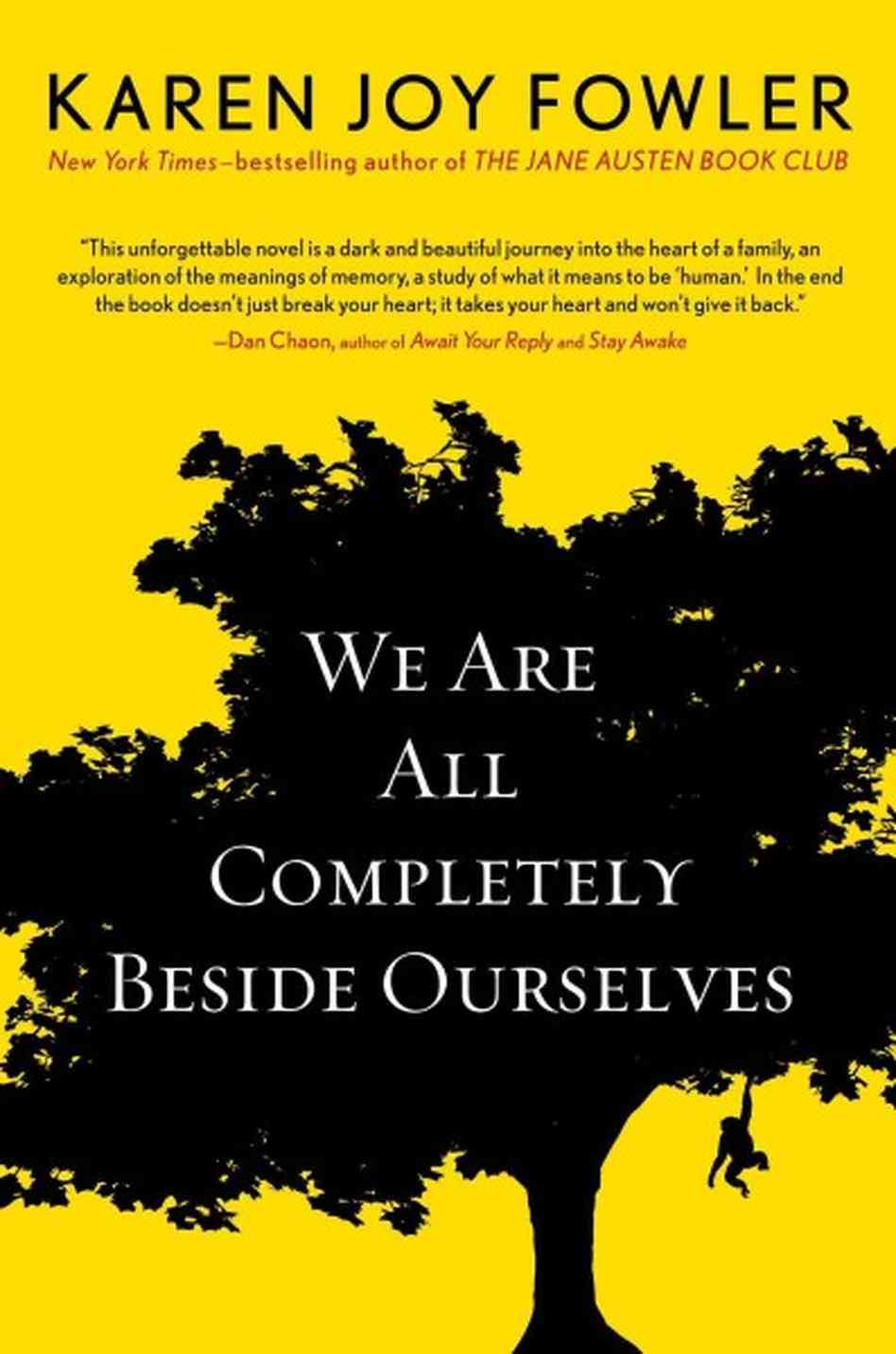
We Are All Completely Beside Ourselves book cover

We Are All Completely Beside Ourselves, by Karen Joy Fowler

“…I’d made a careful decision to never ever tell anyone about my sister, Fern. Back in those college days I never spoke of her and seldom thought of her…..Though I was only five when she disappeared from my life, I do remember her. I remember her sharply – her smell and touch, scattered images of her face, her ears, her chin, her eyes. Her arms, her feet, her fingers.”

***************************

MEMOIR

God's Hotel book cover

God’s Hotel: A Doctor, a Hospital, and a Pilgrimage to the Heart of Medicine, by Victoria Sweet

Inspired by Hildegard of Bingen (12th century German mystic and medical practitioner), as well as her own instinct for compassionate, attentive care, Dr. Sweet practices “slow medicine” at the last almshouse in the U.S. as it transitions to the modern age. We should all have a physician like Dr. Sweet.

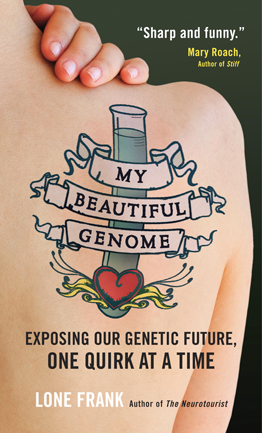
My Beautiful Genome book cover

My Beautiful Genome, by Lone Frank

“…we are each of us temporary depositories of information that has an almost eternal life, and which is passed on and on and on…”

“I am what I do with the beautiful information that has flowed through millions of years through billions of organisms and has, now, finally been entrusted to me.”

Joyce Maynard, Elizabeth Gilbert, George Saunders coming up

Been away for a bit while designer Nicole Bateman of The Pixel Boutique gives Books Can Save a Life a fresh, new look. (Thank you, Nicole!) But I’ve been reading, as always, and here’s what’s coming up:

After Her book coverAfter HerJoyce Maynard’s latest novel. Joyce has written several novels as well as the memoir, At Home in the World. After Her is loosely based on the true story of a serial killer who terrorized Northern California in the late 1970s.

Tenth of December – I don’t usually read short stories, but I’d heard so many wonderful things about George Saunders I had to pick up a copy of his latest collection when I saw it on our public library’s “Most Wanted” shelf. Besides, he teaches a stone’s throw away at Syracuse University – he’s someone I should know about.

Sons of MadnessI’ve written about Susan Nathiel’s excellent Daughters of Madness: Growing Up and Older With a Mentally Ill Mother, a collection of interviews with adult women. Sons of Madness: Growing Up and Older With a Mentally Ill Parent is a companion volume.

The Art of the Commonplace – I’ve always wanted to know what Wendell Berry is all about, so I’m reading his collection of agrarian essays.

Catching Fire, the second book in Suzanne Collins’ Hunger Games trilogy has been made into a movie and will be released November 22. I wrote about the first movie and book here, so I just have to check out the next installment.

The Signature of All Things book coverAnd last but not least, I can’t wait to dip into Elizabeth Gilbert’s latest novel, The Signature of All Things. Beautiful book jacket and end papers. The epigraph: “What life is, we know not. What life does, we know well.”  Lord Perceval

I’ll be back with a closer look at all of these.

We Are All Completely Beside Ourselves

As part of leaving Bloomington for college and my brand new start, I’d made a careful decision to never ever tell anyone about my sister, Fern. Back in those college days I never spoke of her and seldom thought of her….Though I was only five when she disappeared from my life, I do remember her. I remember her sharply — her smell and touch, scattered images of her face, her ears, her chin, her eyes. Her arms, her feet, her fingers. – We Are All Completely Beside Ourselves, by Karen Joy Fowler.

(I try to avoid spoilers, but there is one here, since I couldn’t write meaningfully about the book otherwise.)

We Are All Completely Beside Ourselves book coverIn Karen Joy Fowler’s novel, We Are All Completely Beside Ourselves, Rosemary Cooke and her twin sister, Fern, do everything together – toddle around in diapers,  share ice cream cones, play in the snow. One morning Rosemary and her brother awaken to find Fern gone, sent away by their parents.

Fern is a chimpanzee.

In the 1970s, a handful of behavioral psychologists thought it would be interesting to raise a chimpanzee as a human child, in adoptive human families. In part, they wanted to see if chimps could learn to communicate by using American Sign Language, thinking that might shed light on human language acquisition.

We Are All Completely Beside Ourselves is a fictional account of one such experiment and the disastrous consequences. No one in the Clarke family comes away unscathed – not Rosemary, not her brother, not her mother or her behavioral psychologist father. And certainly not Fern.

Rosemary is too young to understand the circumstances behind Fern’s banishment, which was mishandled by her parents (no surprise there), and she blocks out much of what happened. This is relatively easy to do, since her shattered mother and father don’t speak of Fern. Rosemary’s brother never forgives his parents for removing their little sister from the family with such confounding callousness; Rosemary wonders if someday she’ll be sent away, too.

When Rosemary enters kindergarten she has to learn to shed her chimp-like mannerisms. Still, the children sense Rosemary is different and call her “the monkey child.”

Friendless, chronically unable to get close to people, never feeling like she fits in, Rosemary must eventually piece together her past and then figure out where to go from there.

I read We Are All Completely Beside Ourselves with a great deal of admiration for Fowler’s storytelling skills, yet also with a kind of dread. I wanted to know why Fern was sent away and what became of her. And yet, I didn’t want to know.

Along the way, I learned some of the history of the use of animals in research. Though there is still much controversy, thanks to the Animal Welfare Act and similar policies, there is now a more enlightened approach to the treatment of animals used in research and testing. Whenever possible, non-animal alternatives are found. One of my medical librarian colleagues specializes in searching the biomedical literature for alternatives to animal testing for research.

The National Institutes of Health announced this summer it will greatly reduce the use of chimpanzees in NIH funded research. Many NIH chimps will be sent to the Federal Sanctuary System in Shreveport, Louisiana.

We Are All Completely Beside Ourselves is an extraordinary story.

THE HUMAN – CHIMP BOND

We Are All Completely Beside Ourselves, by Karen Joy Fowler

Ape House, by Sara Gruen

The Chimps of Fauna Sanctuary, by Andrew Westoll, winner of the Charles Taylor Prize for Literary Nonfiction

In the Shadow of Man, by Jane Goodall

Gorillas in the Mist, by Dian Fossey

Next of Kin, by Roger Fouts


If you’ve read Karen Joy Fowler’s book or any of the above, tell us what you think in the comments.

TransAtlantic inspires a look at our family history

Back from an Oregon vacation and an unforgettable family reunion in Cannon Beach.

Several books traveled with me, of course, including Colum McCann’s TransAtlantic, which we’d chosen for our family reunion book club, and Natalie Goldberg’s newest title, The True Secret of Writing: Connecting Life with Language. I tore through Goldberg’s book, as anyone who is a Goldberg fan will understand, while I mulled over how to frame our TransAtlantic book club discussion.

I didn’t expect to find this serendipitous connection between the two books on page 3 of The True Secret:

The True Secret of Writing book cover“Writing is for everyone, like eating and sleeping….Slaves were forbidden to learn to read or write. Slave owners were afraid to think of these people as human. To read and to write is to be empowered. No shackle can ultimately hold you.

To write is to continue the human lineage. For my grandfather, coming from Russia at seventeen, it was enough to learn the language. Today, it’s our responsibility to further the immigrant dream. To write, to pass on the dream and tell its truth. Get to work. Nothing fancy. Begin with the ordinary.”

Transatlantic book coverReading Goldberg’s words – get to work, nothing fancy, begin with the ordinary – I thought of Colum McCann’s writing, and of Lily Duggan, the fictitious Irish housemaid in TransAtlantic who could not read or write and came penniless to America, whose daughter became an influential journalist and wrote about the first non-stop transatlantic flight, by Alcock and Brown from Newfoundland to Ireland (see this photo of their landing.)

Reading Goldberg’s words – no shackles can ultimately hold you –  I thought of the former slave and abolitionist Frederick Douglass and what he was able to accomplish thanks to his education.

Reading Goldberg’s words – it’s our responsibility to further the immigrant dream –  I decided to ask my husband’s family if they identified with their Irish ancestry. Do they ever think about it, do they find it relevant to their lives, or do they see themselves as thoroughly American? If it’s our responsibility to further the immigrant dream (whether we consider ourselves writers or not), what does that mean and how do we do that?

One branch of my husband’s family came from Drummin Parish, Westport in County Mayo on the west coast of Ireland. They immigrated to America after the English Earl of Aran evicted them and 40 other families from the land where they were tenant farmers. Nearly the entire town came to America, including their local priest, shortly after the Civil War. (Again, I think of TransAtlantic’s Lily Duggan and her deep and involuntary involvement in the Civil War.) They settled in Little Falls, New York, where they may have worked on the enlargement of the Erie Canal. Several of the brothers started a construction and masonry company and built the Beechnut Plant in Canajoharie, locks in the Mohawk River, and many buildings in the Mohawk Valley.

In our discussion, my father-in-law said he thought of himself as American, while his sister identified strongly with her Irish Catholic heritage. I wondered why there was such a difference in the same family. My sister-in-law thought it might be that it had been the man’s responsibility to be successful and earn a good living; to do that he had to shed his ethnicity in the workplace and become “American.” The woman had stayed home, preserving family rituals and traditions, passing on family history, perhaps assimilating more slowly.

Someone said she thought it unusual TransAtlantic’s Lily Duggan was not religious and not raised Catholic, and that led to a discussion of Catholic identity. My mother-in-law, like my husband’s aunt, strongly identified as Irish Catholic, and said when she was growing up being Catholic was more important than being Irish. She told the story of an uncle who wept bitterly when one of his children married a Protestant. Someone else commented that in the New Jersey town where he grew up, there was an Italian Catholic church, an Irish Catholic church, and a Polish Catholic church.

I wanted to know which TransAtlantic characters made the deepest impression. My father-in-law was especially taken with the brilliance, dedication, and integrity of  Senator George Mitchell, who negotiated the peace talks in Northern Ireland. He did some research and found a fascinating interview with Mitchell after he was awarded the Presidential Medal of Freedom. Almost all of us loved Lily, of course. Some of us didn’t know anything about Frederick Douglass and his connection with Ireland, and we’d never heard of Alcock and Brown or their amazing flight.

There were at least four generations at our family reunion. I’m so glad some of us shared the reading of TransAtlantic. I, for one, could have kept our discussion going longer than we had time for.

I don’t think we answered the question of how to further the immigrant dream or whether that is something we’ll even think about, and I don’t know how strongly the younger generation will identify with their Irish heritage. But I do find it fascinating how McCann weaves fiction and nonfiction together to form a narrative arc that extends through time and across generations. It’s much larger than any single life, and yet every individual has a role to play.

I think I see similar through-lines across time in my husband’s family, whether they’re passed down through familial and social influences, or encoded in their DNA, or both: a mechanical and engineering aptitude, keen intelligence, a predilection for risk-taking, an independent spirit, a deep curiosity about the world, and a strong sense of justice. When all of us get together for these reunions that are way too brief, you can see these commonalities.

Have you ever had a book club at your family reunion? If so, what did you read? Tell us about it in the comments.

If you would like to learn more about Natalie Goldberg, her new book, and the true secret of writing (I’m not going to spill the beans), listen to this wonderful 30-minute podcast on Natalie’s website.

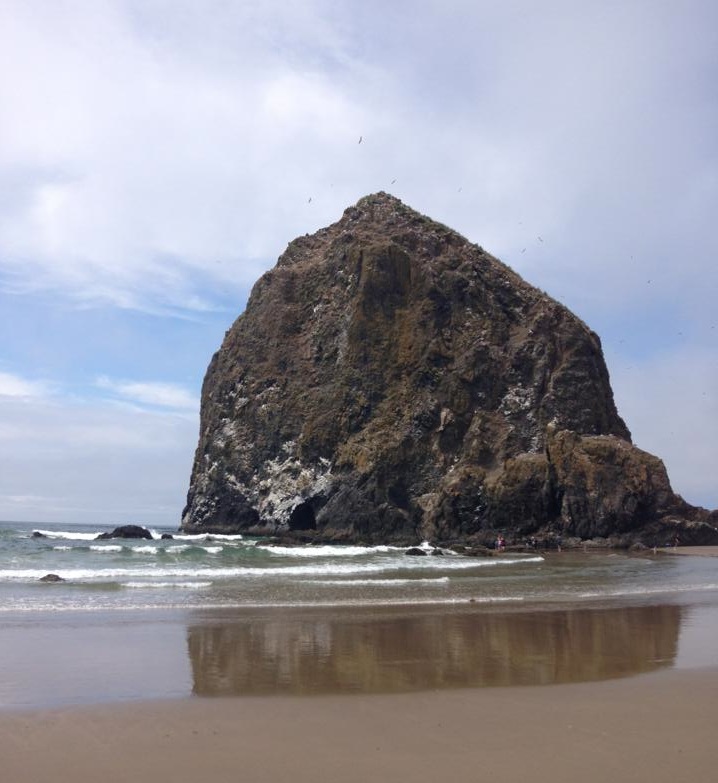
Haystack Rock at Cannon Beach
Haystack, Cannon Beach
Cannon Beach and bonfires
Evening bonfires