In Sicily

“I had found my island, and I wanted to stay forever.”  Theresa Maggio, Mattanza

Villa window


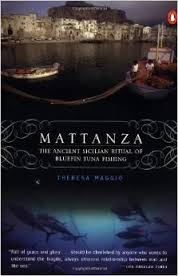
Mattanza book coverWhen I visit Sicily, I enjoy following in the footsteps of Theresa Maggio, author of Mattanza: The Ancient Sicilian Ritual of Bluefin Tuna Fishing and The Stone Boudoir: Travels through the Hidden Villages of Sicily.  

My family and I first travelled to Sicily 14 years ago, in part to re-connect with my father’s relatives. That was when I discovered Theresa’s splendid books.

Reading them again on our recent trip was like meeting up with an old friend. When I see Sicily through Theresa’s eyes, I see the island so vividly, with a more nuanced understanding of the complex people, culture, and history of this stunningly beautiful place.

We usually stay on the outskirts of Scopello, a small fishing village that is now a quiet, secluded haven for tourists. On this trip, we rented a villa halfway up a mountain on the edge of Zingaro Nature Reserve. Once the home of a tonnara (tuna factory), in years past Scopello celebrated the mattanza, the ritualized killing of bluefin tuna, every May and June. The mattanza was first practiced by the Arabs, or perhaps the Carthaginians before them.  The custom died out in the 1980s when industrial over-fishing made it obsolete.
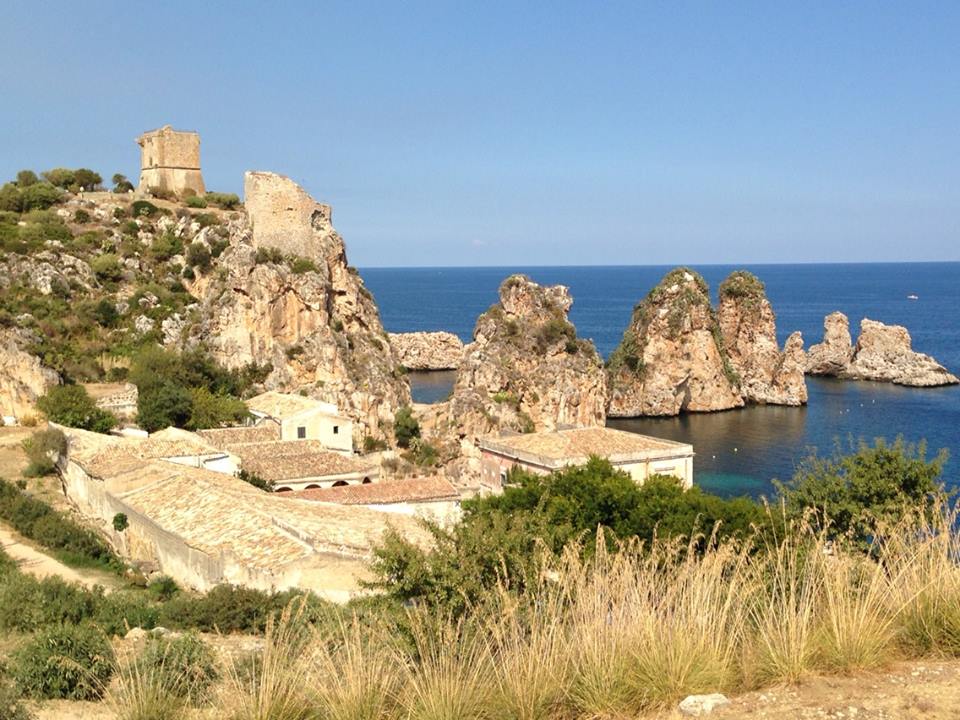
 

Former tuna factory in Scopello
Scopello’s former tonnara, converted to tourist apartments


Theresa’s book is a love letter and an elegy to the mattanza and the people whose lives were intimately bound to it. During one of the last years of the mattanza, Theresa befriended the fishermen (tonnatori) on the island of Favignana and accompanied them on their boats as they watched and waited for the tuna to become trapped in their underwater chambers of ropes and nets. When several hundred tuna had been captured, the tonnaroti lured them from one chamber to the next, while chanting thanks and prayers to God, the Virgin Mary, the saints.

The bluefins’ final destination: the chamber of death.

“After a while huge black shapes rose up into the backlit square. Their slow rising was mystical, like a birth. They rose higher. Dorsal fins swirled, wild animals drawn up from a silent abyss.

They were giants, eight feet long, some bigger, and there were hundreds of them. The net was drawn taut and they skittered in front of us, half out of the water. I looked into their glassy black eyes. The fish were as big as men, some bigger than four men. When their tails slapped the water it rose in columns above our heads. I remember the din, the thunder of falling water, and their frantic thrashing. They darted to the corners of the net, but there was no way out.

The crowd went wild. People were soaked, screaming and cheering….The fish were churning the sea into a white froth, and then the froth turned pink.”

Rusted anchors
Tonnara anchors


At one time, these hand-made tuna traps were in Spain, France, Algeria, Tunisia, Turkey, Dalmatia and Corsica, as well as Italy; some sixty tonnaras dotted the Sicilian coast.

“Gone, all gone,” writes Theresa.

The old tonnara in Scopello is beautiful, but I didn’t like seeing it in the hands of tourists. In their heyday, the tonnaras employed, directly or indirectly, thousands of men and women; some even had child care centers on site. Theresa writes with great sadness of the tonnaroti who netted fewer and fewer tuna each year until they had to stop.

I don’t like a world where men and women who love working on or near the sea, who make their living by physical labor, can no longer do so because it is not profitable. I’ve never seen a mighty bluefin tuna, but I’d prefer to have our seas teeming with them.

Theresa Maggio is a compassionate and keenly intelligent traveler. Her passion for discerning the heart and soul of a people and a place will enrich your own explorations.

Scopello sunset
Scopello sunset

Sunset photo by A. Hallinan.


Love on a Plate

“When I’m on the road in Sicily I eat street food. It’s cheap, it’s good, and it’s a way to watch Sicilians. Street food feeds a need in them much deeper than hunger – their need to be close. Sicilians telephone each other from the back of the bus to the front, and seek out the crowded beaches, the piazzas packed with people, and markets where they’re likely to get mauled. They must have company, or at least an audience, for whatever they do. In Sicily, where food is love and the street is a stage, street food is more than a cheap meal, it’s Communion.”   “Love on a Plate” from The Stone Boudoir by Theresa Maggio

Fritters made from chickpea flour
Filomena’s panelle di ceci


We’ve been in Sicily visiting family and I couldn’t wait to post something about our trip.

I decided to begin with Filomena’s wonderful panelle, made from chickpea flour, which she prepared for us and we enjoyed one night after our cousin and friends took us sightseeing in Terrasini. We drizzled the fritters with lemon juice and ate them in sandwiches made from thick, soft rolls.

Theresa writes that in Sicily you can buy bags of small, crisp panelle squares, which are great with beer.

During our stay I read once again Theresa Maggio’s lovely The Stone Boudoir: Travels through the Hidden Villages of Sicily, an old favorite. No one captures the poetry and romance of the island quite like Theresa, whose grandmother is from Sicily. More about her writing, and about Sicily, in my next post.

I agree with Theresa. Food is love.


The Summer Book

“It was a particularly good evening to begin a book.”   The Summer Book, Tove Jansson


Reading a book in the hammock
Reading in the hammock


I’m discovering Tove Jansson this summer, thanks to Claire McAlpine and her blog, Word by Word. I don’t know how I went this long without delving into this amazing Finnish, Swedish-speaking writer and world-renowned creator of the Moomintroll comic strip.

Next week I’ll show you her Moomins, but today I’m reading The Summer Book, a novel about a girl spending the summer with her grandmother, who lives on an island at the end of the Finland archipelago.  The island in the book is like the one Tove lived on with her partner for many years, a wild and beautiful place superbly evoked in this story.

I’m lazy on these idyllic summer weekends, so I’m going to borrow the copy that’s written on the back of the book, which captures the novel much better than I could:

The Summer Book cover, Swedish
The Summer Book, by Tove Jansson

“….Jansson distills the essence of the summer – it’s sunlight and storms – into twenty-two crystalline vignettes. This brief novel tells the story of Sophia, a six-year-old girl awakening to existence, and Sophia’s grandmother, nearing the end of hers, as they spend the summer on a tiny unspoiled island in the Gulf of Finland. The grandmother is unsentimental and wise, if a little cranky; Sophia is impetuous and volatile, but she tends to her grandmother with the care of a new parent. Together they amble over coastline and forest in easy companionship, build boats from bark, create a miniature Venice, write a fanciful study of local bugs. They discuss things that matter to young and old alike: life, death, the nature of God and of love.”

This slim paperback, a New York Review Books Classic, was originally published in 1972. I love the cover illustration by Tove Jansson, which was on the original jacket cover. Jansson’s simple, black and white sketches are scattered throughout the book.

Her novel has inspired me to begin planning a summer vacation in Sweden, where my grandparents are from. It would be fun to stay in a fisherman’s cottage like the one Sophia’s grandmother lived in, perhaps near to the farm where my grandmother grew up.

To come: Jansson’s memoir, Sculptor’s Daughter; her collection of stories about the artist’s life – Fair Play; and the Moomins.

Mushrooms next to tree
I don’t know if you’d find these mushrooms on Tove’s Finnish island, but that’s what I thought of when I saw these in our neighborhood.


Slow flowers

 “There were Lupines, Sweet Peas, Phlox, Bluebells, Day and Tiger Lilies, Monkshood, Peonies, Columbine, Daffodils, single and double, a Bleeding-heart bush in the front yard, and vines at each corner, which at times nearly covered the house. And always there was Golden-glow by the kitchen door.”   An Old-Time Gardener

Lilies
Grace’s Garden lilies


In The Language of Flowers, the main character, Victoria Jones, is a floral designer with a knack for choosing just the right foliage and blossoms for her customers, based on Victorian-inspired flower dictionaries that she’s studied. Having grown up in an Ohio floral shop, I was intrigued by the contemporary, upscale San Francisco flower scene depicted in Vanessa Diffenbaugh’s story.

In the 1950s, 60s, and 70s, our shop carried the standard blooms – roses, carnations, gladiolas and the like – which were shipped from California and South America – and laden with pesticides, though at the time we didn’t give that much thought. Nowadays, floral designers are artisans who use seasonal, locally grown, pesticide-free cultivated and wild flowers, in artful, natural-looking bouquets and arrangements.

Slow Flowers book coverWriter and horticulture expert Debra Prinzing coined the term slow flowers, which has caught on in the floral industry. I’ve been enjoying two of her books, The 50 Mile Bouquet, and Slow Flowers: Four Seasons of Locally Grown Bouquets from the Garden, Meadow and Farm.  They were a timely discovery for me, as this summer we sold the building where my parents had their floral shop for nearly fifty years.

In both books, Debra highlights American flower farmers who are passionate about sustainable methods and land stewardship. Slow Flowers is a colorful, lush, small-sized, book with flower arrangements for every week of the year. As in a cookbook, Debra lists the “ingredients” (4 stems hydrangea, 9 stems pink snowberry, 5 stems Dahlia ‘Nijinsky,’ 15 stems amaranth), provides instructions, and suggests vintage and unusual vases and containers.

In The Language of Flowers, Victoria Jones falls in love with Grant, a flower farmer. She first meets him at a flower market, where he is selling varieties of lilies: tiger, stargazer, imperial, and pure white Casablancas. Here is what Victoria has to say about Grant:

“His face had the dusty, lined look of a manual laborer. I imagined he planted, tended, and harvested his flowers himself. His body was lean and muscular as a result, and he neither flinched nor smiled as I examined him…

He withdrew a single orange tiger lily from a bucket.

‘Take one,’ he said, handing it to me.”

Lily

The language of flowers

“I wanted to spend my life choosing flowers for perfect strangers.”     The Language of Flowers, Vanessa Diffenbaugh

Daylily garden
Grace Gardens, Penn Yan, NY


Flowers were part of my earliest days and inseparable from family life. My parents opened a flower shop in July, 1952. This month, fifty-eight years later, we sold the building that housed our shop, though the floral business closed some years ago.

To commemorate the flowers of my past and mark how flowers remain part of my life, I’m highlighting a handful of books and authors, and a Finger Lakes “secret” garden. First, a book. Here’s an excerpt:

I’m single but I don’t want to be, the woman said.

She watched me work, arranging the white lilac around the roses until the red was no longer visible. I wound sprigs of rosemary–which I had learned at the library could mean commitment as well as remembrance–around the stem like a ribbon. The rosemary was young and supple, and did not break when I tied it in a knot. I added a white ribbon for support and wrapped the whole thing in brown paper.

First emotions of love, true love, and commitment, I said, handing her the flowers.

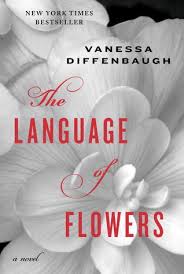
The Language of Flowers book coverIn a review of the novel The Language of Flowers by Vanessa Diffenbaugh, Paula McLain (author of The Paris Wife and herself a foster child) writes: “I feel it’s only fair to warn you, dear reader, that Vanessa Diffenbaugh’s central character, Victoria Jones, is going to break your heart three ways from Sunday.”

The character of Victoria Jones and her fate drew me to The Language of Flowers, as did the lush California landscape of flowers against which this story is set. 

Victoria has lived in more than 30 foster homes, and when she is emancipated at 18, she isn’t ready. It’s difficult to imagine any child emerging intact from our foster care system. I don’t know which was more heartbreaking, to see foster care let down Victoria time after time, or to see the ramifications of this in Victoria’s adult life.

Victoria’s talent with flowers, which may ultimately be her salvation, is another dimension of the novel that intrigued me. Her one kind and loving foster parent, Elizabeth, passed on to Victoria her floral “genius.” Victoria can not only artfully arrange flowers, she has a knack for giving people the particular flowers they need.

I loved this book and plan to read it again.

Vanessa Diffenbaugh cofounded the Camellia Network to support youth transitioning from foster care to independence. The flower camellia means my destiny is in your hands.

A Victorian Flower Dictionary coverThere is a companion volume to this novel, A Victorian Flower Dictionary, compiled by Mandy Kirkby. Neither of these books is to be confused with the classic Kate Greenaway’s Language of Flowers, first published in 1884.


A secret garden

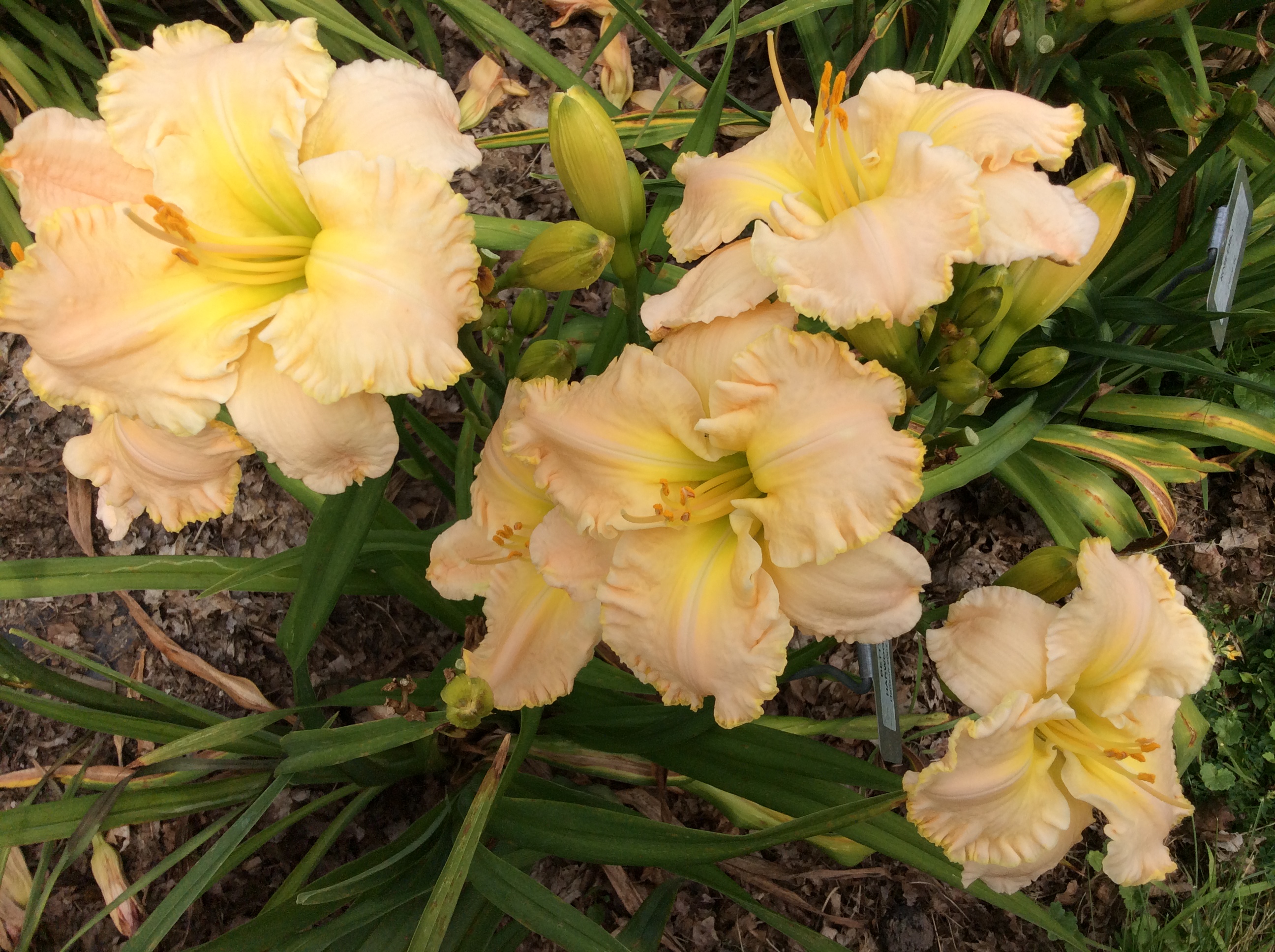
Hidden away in the woods on a hillside overlooking Seneca Lake in the Finger Lakes is a stunning collection of over 40,000 day lilies. Grace Rood planted her first lilies in 1957, and now her son oversees Grace’s Garden. We visited the garden in mid July, when the day lilies were at their peak.

In the language of flowers, lily (Lilium) stands for majesty.  A white lily stands for purity and sweetness. In Kate Greenaway’s dictionary, a day lily stands for coquetry.

A passionate bouquet could consist of bird of paradise for magnificence, bougainvillea for passion, and lily for majesty.

Doesn’t the secret language of flowers inspire you to make your own bouquet for someone you love?


Bright orange lilies
Some lily names: Serene Madonna; Miss Jessie; Golden Chimes; Angels Unawares; Little Dancing Dress; Little Fat Cat; Buttered Popcorn; Coyote Moon
A cottage window
Grace’s cottage


If you enjoy flowers, check out Rambling in the Garden, and join the “In a Vase on Monday” crowd.


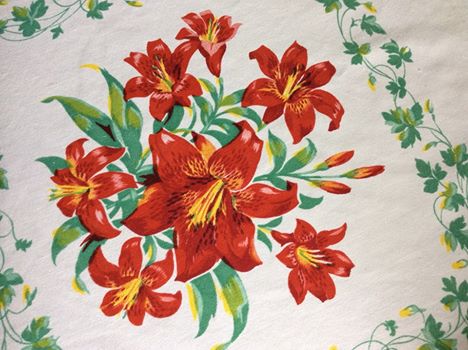
Tablecloth with lilies
I found this lily-laden tablecloth in a Finger Lakes antique shop. Perfect for a summer picnic.


Standing in front of floral shop
Our flower shop opening day, July 24, 1956

More flowers to come in my next post.


The Empathy Exams

“It’s news if a woman feels terrible about herself in the world – anywhere, anytime, ever.”    Leslie Jamison, The Empathy Exams


At work when I need a break, I go for coffee in the atrium of the medical school. On the way, I pass by the learning labs, where occasionally I see people–young, middle-aged, and older, male and female–sitting in the hallway, waiting for their turn to go in.

They have a twinkle in their eye as though they know something you don’t. They’re psyched, as if prepared to give a performance. That’s because they’re medical actors, hired so medical students can practice their empathic patient interviewing and diagnostic skills.

The Empathy Exams book coverIn The Empathy Exams, author Leslie Jamison explains what a medical actor does. She knows because she’s been one herself:

“My job title is medical actor, which means I play sick. I get paid by the hour. Medical students guess my maladies….

Medical acting works like this: You get a script and a paper gown. You get $13.50 an hour. Our scripts are ten to twelve pages long. They outline what’s wrong with us–not just what hurts but how to express it. They tell us how much to give away, and when. We are supposed to unfurl the answers according to specific protocol. The scripts dig deep into our fictive lives: the ages of our children and the diseases of our parents, the names of our husbands’ real estate and graphic design firms…

My specialty case is Stephanie Phillips, a twenty-three-year-old who suffers from something called conversion disorder. She is grieving the death of her brother, and her grief has sublimated into seizures. Her disorder is news to me. I didn’t know you could convulse from sadness. She’s not supposed to know either. She’s not supposed to think the seizures have anything to do with what she’s lost.”

These are the first paragraphs of the first essay in The Empathy Exams, and they intrigued me for a number of reasons: Leslie’s compelling voice; her take on the ironies and subtleties of medical acting; and because I, too, had been nonplussed when, as a medical librarian, I learned about conversion disorder.

A couple of years ago an “outbreak” of conversion disorder (known as mass psychogenic illness) among a dozen or more high school girls in a nearby upstate New York town captured the attention of media around the world.  One after another, the girls succumbed to uncontrollable tics and verbal outbursts. They were besieged with requests for interviews. Their physicians advised them to avoid social media so the frenzy wouldn’t cause their symptoms to get worse. Some people thought the girls were faking their illness. Erin Brockovich (with lawsuits in mind) suspected environmental poisoning. At the medical center where I work, I was asked to track the news coverage. Neurologists wanted to see if there was a correlation between spikes in media attention and exacerbation of the girls’ symptoms.

No environmental cause was ever found. Eventually, most of the girls recovered. One journalist wrote a well researched investigative piece that pointed out the girls came from troubled families in a town devastated by unemployment. Many of the girls had recently experienced significant domestic trauma. Perhaps this trauma triggered their conversion disorder.

In her essays, Leslie is concerned about physical and emotional pain, what it means to empathize with those who suffer, how difficult this can be, and why it is important to have our pain acknowledged by others, given the fact that we’re so often quick to accuse people of succumbing to victimhood. I often think about this when I read reviews dismissive of memoirs as self-indulgent. I wonder if I’m playing the victim when I write about some of my own experiences. Ours is not an empathic culture.

Leslie writes about her own pain and that of others in various walks of life: those suffering from “phantom” illnesses; a man in federal prison for a minor crime; ultra-marathoners who push their bodies beyond reason; three teen-age boys accused of murder on the thinnest of evidence.

As I read, I began to think of the girls with conversion disorder in a more nuanced way and, yes, with greater emapthy. The media stories had reduced the girls to caricatures. Leslie’s essays got me thinking the girls hadn’t had their fair share of empathy (or good fortune) in their personal lives and certainly not during the sensationalistic coverage of their illness.

I’d just about finished reading The Empathy Exams when I read a New York Times article about the alleged rape of a college freshman, Anna, by two football players. After what seems to have been a staggeringly incompetent college “investigation,” the football players were cleared. Anna left school after she was harassed for making accusations against members of the football team, but she plans to return this fall. She doesn’t want to be defeated, and she wants to help other women on campus.

I couldn’t get this story out of my mind.  I mulled it over when I went to work out at our community center. The story has unleashed a firestorm, with accusations back and forth: between Anna and the football players, as well as among college officials, the district attorney’s office, and Anna’s legal counsel. Many of the kids–the football players, the fraternity members, the girls who went to the party – were drunk to the point of oblivion. (Anna, herself, was so drunk she doesn’t remember being raped – hence, some of the controversy – though others witnessed it and did nothing. One of Anna’s friends did help her, and other friends decided to call the police.) How can this self-destructive partying be fun for anyone, and why are students driven to do it?

If you believe the unbelievable numbers cited in this story–that 20 percent of college women are sexually assaulted–it does seem as though we are not paying attention to something important. That perhaps we need to start listening to a certain segment of the population, and listening with empathy.

After I finished exercising, I sat in the lounge overlooking the pool, watching moms and dads swimming with their children. I pulled out Leslie’s essays and read the final one, “Grand Unified Theory of Female Pain.” Leslie seemed to be speaking about Anna.

“It’s news if a woman feels terrible about herself in the world–anywhere, anytime, ever….

Sure, some news is bigger news than other news….But I don’t believe in a finite economy of empathy; I happen to think paying attention yields as much as it taxes. You learn to start seeing.

I think dismissing female pain as overly familiar or somehow out of date…masks deeper accusations: that suffering women are playing victim, going weak, or choosing self-indulgence over bravery. I think dismissing wounds offers a convenient excuse: no need to struggle with the listening or telling anymore.”

Leslie has much more to say, and her essays are far richer than I’ve captured here. I won’t share her most important insights, as much would be lost in the translation.

She’s a remarkable new writer.

Books at my door

Books at my doorDelancey book cover


If you like food writing combined with memoir, you will like Molly Wizenberg and her latest, Delancey: A Man, A Woman, A Restaurant, A Marriage. The restaurant is in Seattle. Her first book, A Homemade Life, is a bestseller.

Sicily book coverI bought Sicily: A Literary Guide for Travellers by Andrew and Suzanne Edwards for an upcoming trip – haven’t been there in seven years. Many of the greatest writers were drawn to this island.

Groundbreaking Food Gardens by Nikki Jabbour promises 73 plans that will change the way you grow your garden, such as: Slow Food Garden; Vintage Victory Garden; Edibles on a Patio; Heirloom Sampler; Formal Herb Garden; Eggs & Everything; and Living Walls.

Piazza, Carini
The piazza in Carini, Sicily, where my father was born

Cleveland was my home but I lost it

Go down and tell them what you’ve seen:

that the river burned and was not consumed.

“River on Fire” by David Lucas in Rust Belt Chic: The Cleveland Anthology

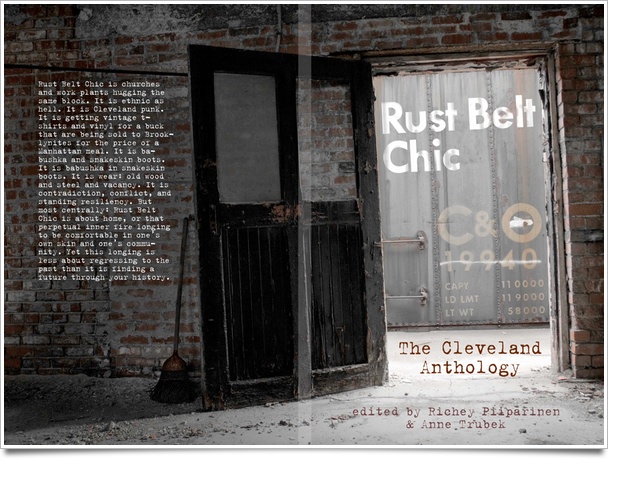
Rust Belt Chic cover photoI’ve been writing about the town where I grew up, how you can’t go home again and all that, and about my fraught relationship with Cleveland. This kind of ambivalence permeates Rust Belt Chic: The Cleveland Anthology, (published by the editors of the online magazine Belt) which I’ve been reading in between novels and book-length nonfiction. But all is not bleak – the collection includes a good share of essays by writers who unabashedly love Cleveland. The writing is excellent, the social commentary and history fascinating.

My childhood home just outside of Cleveland shared a driveway with our floral shop, where the locals bought their wedding and funeral flowers, Easter corsages and prom nosegays. We earned a good living in that small shop.

Those were prosperous times. I remember boarding a passenger ship docked on the dowtown shores of Lake Erie with my mother, some time in the late 1950s. We were going to visit my aunt, who lived in Michigan on the Detroit River, across from a mighty steel mill. This was no mere ferry we travelled on, but a big old steel ship; my memory of this seems outlandish to me now but, based on my cursory research, I presume we travelled on the SS Aquarama, a World War II troop carrier that was converted to a passenger ship after the war.

I loved going to my aunt’s house, where barges as big as factories floated past the backyard every day. Back then, Detroit and Cleveland were first-tier cities.

Today, Detroit is ranked first in the United States for poverty, and Cleveland is second.

As an adult, I moved to New York City, but eventually I settled and raised a family in another Rust Belt city on a lake (probably no coincidence). In Rochester, New York I worked for Kodak, for a time, but now the company is a shell of its former self. Rochester is ranked third in the US for poverty.

In 2008, my Ohio hometown was the epicenter of the mortgage crisis and still has not recovered. It has essentially become an extension of the blight that is East Cleveland. Homes have sold for as little as $1000 there. Other houses have been abandoned and stripped of their copper plumbing and aluminum siding. Many have been demolished.

Sometimes, I think about what it would be like to move back to Cleveland. I could host a book club for schoolchildren in the old flower shop. It would be a safe haven from the drugs in the vacant lot next door, the guns, the crime. We’d read poetry by Mary Oliver, who is from my hometown, and the novels of Toni Morrison, who is from Lorain. I’d give each child a book to take home.

But, of course, my life has long been elsewhere and I won’t move back. You can’t go home again and, besides, our house and the shop are (finally) about to be sold (fingers crossed).

Both optimists and pessimists write about Cleveland in this Rust Belt Chic anthology. (Rust Belt Chic anthologies of Detroit and Cincinnati have been published as well. Additional volumes are in the planning stages.) When it comes down to it, I’m essentially an optimist, because I don’t think things can get much worse, and I see a commitment to community and volunteerism among young people who choose to stay or settle in Rust Belt cities.

But I’m sad and bitter, too, when I think about what my childhood home has become. I feel shame, too, but I don’t mean I’m ashamed of where I’m from. I’m proud to be from Cleveland. Rather, I feel shame in the sense that we could have and should have done better in terms of taking care of our communities and each other.

What is the Rust Belt, and Rust Belt Chic? From the Cleveland Anthology

“What I’ve figured out, though, is that maybe I didn’t want baseball – I wanted Cleveland. I wanted to walk from the stadium past Tower City to my dad’s office parking lot at 11:34 pm after a Tribe game on a hot August night….ecstatic crowd walking outside the Gund, of guys in black sneakers and ladies with bra straps exposed and tans darker than the Cuyahoga in December….” Norene Malone

“I want to laugh when I hear that people are moving to Cleveland to practice their art. Then I want to spit in their faces….The first sign of the coming apocalypse is the art walk: the Typhoid Marys of gentrification. Developers show up, displaying all the sensitive charm of a multinational corporation….

All that beautiful decay, they seemed to say. Look at how wonderful this place used to be. Look how terrible it all was.”   Eric Anderson

“I was in love with Little Italy the moment I laid eyes on it, and still am, though it’s a long-distance thing now, with me pining away from the East Coast.”   Clare Malone

“But as Iraq fell apart on sectarian lines, Cleveland’s little Iraq fused closer together. I wasn’t authentic enough to intuit from last names and cities of origin which of our friends were Sunni and which were Shia, and for our purposes, the distinction was irrelevant.”   Huda Al-Marashi

“I have never, ever, met any single person of color with any great passion for this city.”   Jimi Izrael

“Rust Belt Chic is the opposite of Creative Class Chic. The latter [is] the globalization of hip and cool. Wondering how Pittsburgh can be more like Austin is an absurd enterprise and, ultimately, counterproductive. I want to visit the Cleveland of Harvey Pekar, not the Miami of LeBron James.”     Jim Russell

“The lips are gone. For years, they floated on an abutment at the base of the Detroit-Superior bridge in the Flats: a big pair of shiny red-enamel lips framing a mouthful of teeth….The lips first appeared sometime in the late 1970s, covering up an obscene tag someone had scrawled on the wall with an aerosol paint can. Below the lips was an equally mysterious signature announcing that this graffiti was the work of some so-called “Regional Art Terrorists.”    David C. Barnett

“Decades ago, Pekar’s work was already refuting the idea of the Rust Belt as a non-culture. Like today’s Rust Belt artists, he was fascinated by the city’s ethnic heritage, fluent in the history recorded in their grand architecture, obsessed with a sense of loss and ruin. But there’s one very important difference between him and his enthusiastic Rust Belt chic successors: Pekar’s view of Cleveland and the Rust Belt was almost entirely devoid of optimism.”  Erick Trickey

Mother and daughter in front of flower shop
Our flower shop, opening day


Note: The title for this post was inspired by a photograph on NewGeography.com.

The Goldfinch

“Every new event—everything I did for the rest of my life—would only separate us more and more: days she was no longer a part of, an ever-growing distance between us. Every single day for the rest of my life, she would only be further away.”   The Goldfinch 

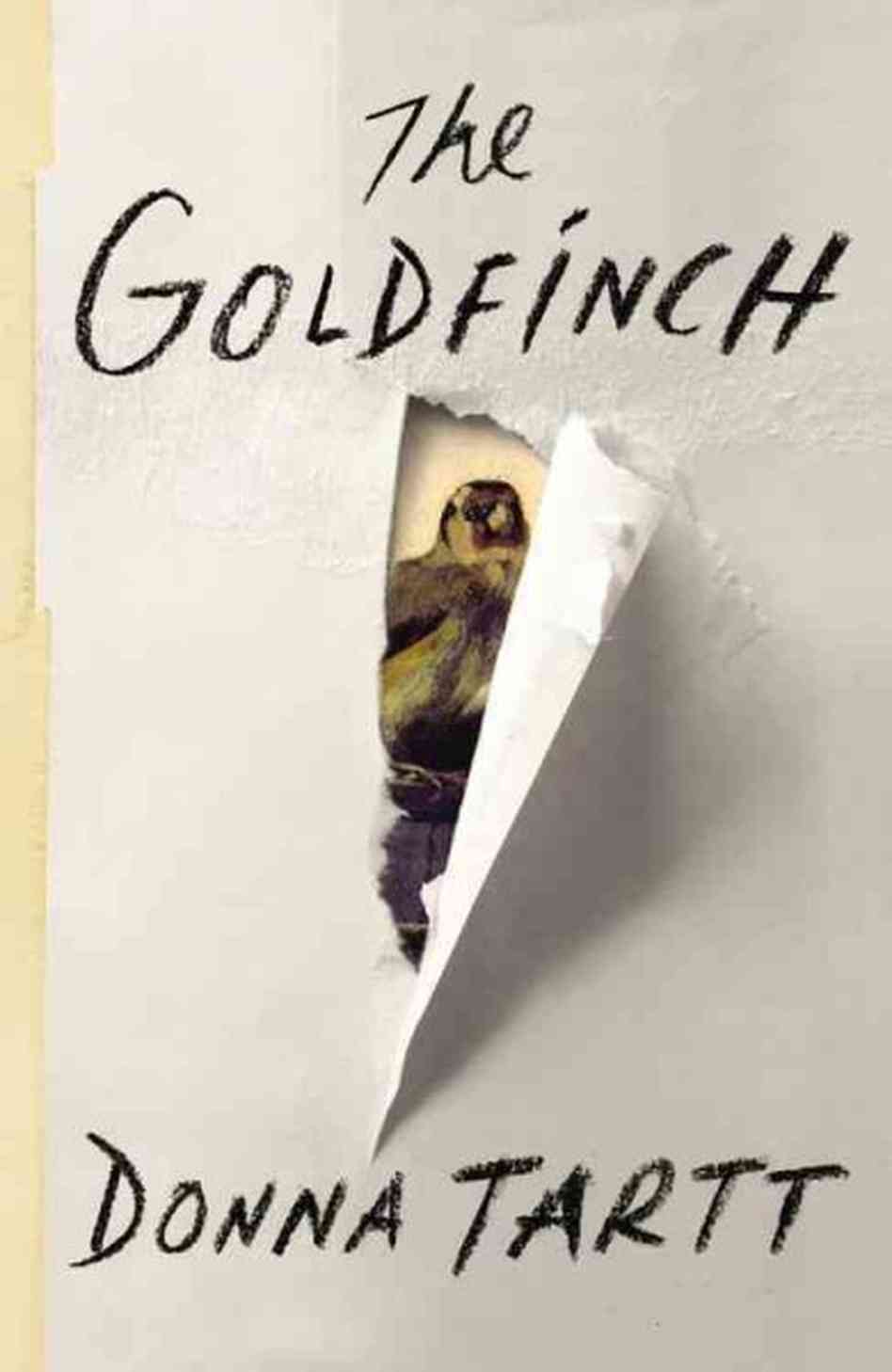
The Goldfinch book coverI made it through all 771 pages of The Goldfinch. That may sound as though reading it was a struggle. It was, occasionally, but I couldn’t abandon Theo Decker, even though things get awfully dark, because just about everyone else in Theo’s life lets him down one way or another. This doesn’t mean I don’t like the novel – I do, very much. But Donna Tartt’s fiction is a commitment, in the way I remember David Copperfield being a commitment when I read it in high school.

(After I wrote this, I found out Stephen King has compared Donna Tartt to Charles Dickens.)

You have to be a reader to take this one on, and a devotee of fiction, and willing to grapple with life’s big questions.

Thirteen-year-old Theo and his mother, a lover of art, are in the Metropolitan Museum of Art when a terrorist bomb explodes. Unbeknownst to Theo, his mother is killed instantly, while Theo finds himself comforting a dying man in his last moments. The delirious man urges Theo to take the painting that has landed in the rubble nearby. In shock, Theo obeys, managing to find his way out of the museum clutching The Goldfinch, a priceless 17th century painting by Carel Fabritius.

Theo is left completely alone. His alcoholic, flimflam artist father abandoned Theo and his mother some years before. So Theo goes to live with the wealthy family of one of his friends from school. Theo still has The Goldfinch in his possession, though no one knows. He can’t bear to part with it.

“How was it possible to miss someone as much as I missed my mother? I missed her so much I wanted to die: a hard, physical longing, like a craving for air underwater.”

Eventually, Theo’s father and his father’s new girlfriend whisk him away to a god-forsaken development in the Nevada desert, where most of the houses are in foreclosure or were abandoned, half-built, by the developer.

Donna Tartt’s third novel is a serious, funny, sad, wicked story, which won the Pulitzer Prize. It takes her about ten years to write a novel; she has also published The Secret History and The Little Friend. 

Theo’s life is suffused with, and saved by, the spirit of The Goldfinch. He has this to say, which I think also applies to Tartt’s novel:

“I add my own love to the history of people who have loved beautiful things, and looked out for them, and pulled them from the fire, and sought them when they were lost, and tried to preserve them and save them while passing them along literally from hand to hand, singing out brilliantly from the wreck of time to the next generation of lovers, and the next.” 

Summer reading

The Goldfinch book coverI am now thoroughly in the grip of Donna Tartt’s The Goldfinch. (In book circles, it seems as though half the universe is reading Tartt’s latest novel.)

After surviving a terrorist bombing at the Metropolitan Museum of Art in New York (a hellishly claustrophobic, terrifying scene masterfully written), a shell-shocked Theo Decker is making his way home amidst dozens of fire engines, blaring sirens, and chaos in the streets, where he is certain he’ll be reunited with his mother, who had been in the museum gift shop during the blast. Knowing Tartt, I believe things will only go further downhill for Theo in a tragic – comic, picaresque way. I’ll keep you posted over the next few weeks, without spoilers, of course. Having read Tartt’s previous books, The Secret History and The Little Friend, her latest book is a must-read for me.

In the Kingdom of Men book coverIn my perpetual online quest for good reads, I happened upon Kim Barnes the other day. I can’t believe I haven’t yet sampled her writing. In my stack of library books, I now have In the Kingdom of Men, the 1960s story of “a barefoot girl from red dirt Oklahoma, and all the marble floors in the world will never change that” who marries a college boy from her hometown. He takes a job with the Arabian American Oil Company in Saudi Arabia. The novel is loosely based on the experiences of Barnes’ aunt and other American women married to oil executives who worked in the Persian Gulf in the “Mad Men” era. I’ve also placed library holds on Barnes’ two memoirs, In the Wilderness and Hungry for the World.

My Struggle book coverAs usual, I’m overly ambitious, but I’ve decided to take on Norwegian Karl Knausgaard’s three-volume My Struggle after reading intriguing reviews. The fact that our local Barnes & Noble did not have Volume 1 only makes me more determined.

I just purchased Turn Right at Machu Picchu by Mark Adams (someday we’ll get there) and The Shelf: Adventures in Extreme Reading, by Phyllis Rose. (She wrote A Year of Reading Proust.) Rose read, straight through, all the 30 or so books from LEQ – LES on a random shelf in the New York Society Library stacks – no matter how obscure the author. The books and authors include The Phantom of the Opera, California detective fiction, a novel by an Afrikaans writer, stories of French Canadian farmers, and one “feminist, humane earth-mother Jewish writer” who raises award-winning Newfoundlands.

Domestic Matters

A Woman's Shed book cover

We’ve been putting in raised beds at our house, and my latest obsession is backyard domesticity. I just bought Gill Heriz’s delightful A Woman’s Shed. From our local library I borrowed three or four how-to titles about building fences (made of wood, stone, metal, and plants) and backyard sheds, gazebos, cabins, and other nature retreats.


The Kitchen Garden Cookbook coverI’ve also been browsing through Sylvia Thompson’s The Kitchen Garden Cookbook (1995). Thompson has also written The Kitchen Garden, which I’ll have to track down. Both are semi-classics endorsed by Alice Waters and other culinary experts. The cookbook is good reading, and if you’re growing your own vegetables you’ll like Thompson’s tips about when to harvest. The recipes are inventive and  sound delicious – I’m looking forward to trying some of them out. How did I find this title? It was on display at our library – a great way to discover good, not-so-new books.

In my quest to learn about gardening and raising vegetables, I’ve been reading Eliot Coleman’s Four-Season Harvest, as we hope to experiment with raising food through the winter. Eliot’s neighbors were Helen and Scott Nearing, who launched the modern-day homesteading movement. He has made the Nearing’s home farming techniques accessible to home gardeners and small organic farmers. Living the Good Life book cover(The Nearing’s influential book, Living the Good Life (1954) is a fascinating read, by the way.)  I like Coleman’s book because it is simple and straightforward, especially accessible and inspiring to the lay person. I’ve also rediscovered a book I purchased years ago, Barbara Damrosch’s The Garden Primer. Reading the forward to Coleman’s book, I discovered that he and Damrosch are married to each other.

Kitchen Garden book coverI love to visit the many small second-hand and consignment stores in our village. We have a used crafts supply shop I like to browse in, and there I discovered old copies of Betty Crocker’s delightful Kitchen Garden (1971) by Mary Mason Campbell with illustrations by Tasha Tudor; Gardening Made Easy binder coverand Gardening Made Easy (1995), International Masters Publishers, a collection of full-color pamphlets that you order individually and store in a three-ring binder. (I believe these are now out of print.)


The Supper of the Lamb book cover

For good measure, I requested from the library a copy of The Supper of the Lamb, (1969) by Robert Farrar Capon; this “culinary entertainment” written by an Episcopal priest comes highly recommended by a friend.

So there you are, my summer reading plans – all over the map, highbrow and not, typical for me.

What will you be reading this summer?


Raised beds
A work in progress