Train Dreams

Mount Index
Mount Index

I first published this post in May, 2012, when we were staying in a remote cabin near the town of Index in Washington State’s Cascade Mountains. I was also reading the novella, Train Dreams, by Denis Johnson. I’m reposting it now because the gorgeous movie adaptation has just been released. (It is currently in theaters and on Netflix.)

Train Dreams is a beautifully filmed, meditative story about an early 20th century Idaho logger who travels to Washington and environs to work on crews that take down the largest trees in the forest. I promise you, the movie will sweep you away, completely and utterly, to another time and place. New York Magazine calls Train Dreams a staggering work of art, and they are right. The translation from book to film is flawless, and those of us who are avid readers know how special it is when the essence of a beloved book comes to life on the screen.

Here is my original post:

Just steps from our front door, the peaks of Mount Index are illuminated in great detail by the last rays of sun.

It’s spring and we’re in Washington’s Cascade Mountains. This is wild, intimidating territory. Rivers and creeks rage as snow melts in the mountains. Along the highway, as we made our way here, we passed by dozens of cascades of snowmelt tumbling down steep walls of rock on either side.

Our vacation cabin is perched on the banks of the Skykomish River. It was raining our first night here, and the rain, together with the rushing river, created quite a din. The mountaintop had been hidden by fog.

We built a fire in the wood burning stove, which took the chill out of the air and made everything cozier. Later in the evening, a dull roll of thunder swelling to a roar overpowered the sounds of downpour and river flow outside our picture window. My first, nervous thought was “flash flood,” but when the high-pitched whine of metal-on-metal joined the mix, we realized the sound was a train.
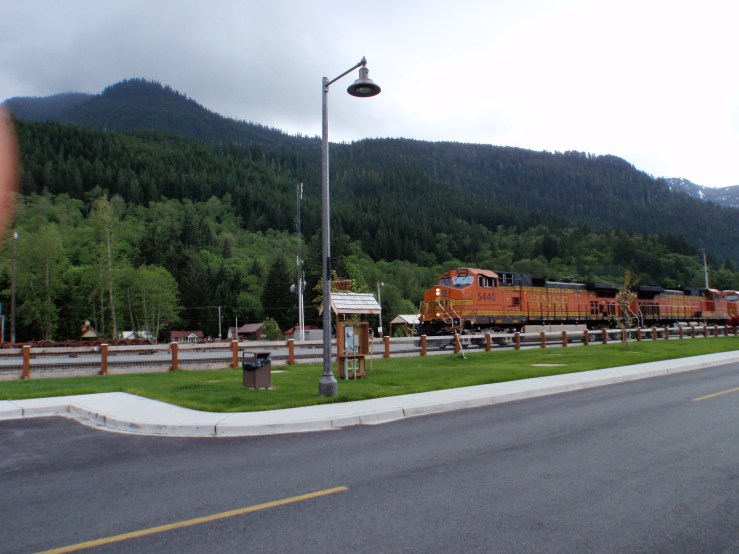
Train in Skykomish
View from the Cascadia Hotel in Skykomish

We are in high train country. The legend of the Great Northern Railroad is very much alive here, though nowadays the trains that run are mostly on the Burlington Northern Santa Fe line. Twice now, while having lunch at the Cascadia Hotel Cafe in Skykomish, we’ve watched trains pass through, heading east from the port of Seattle with container cars from China, Germany, and Scandinavia.

Several times a day and into the night we hear the trains.

In a kind of parallel journey to my vacation, I’m reading Train Dreams, a novel by Denis Johnson about a logger and laborer who worked for the Pacific Northwest train companies of the early twentieth century.

The Pacific Northwest is surreal and dangerous in Train Dreams, as much a character as Johnson’s protagonist, Robert Grainier.
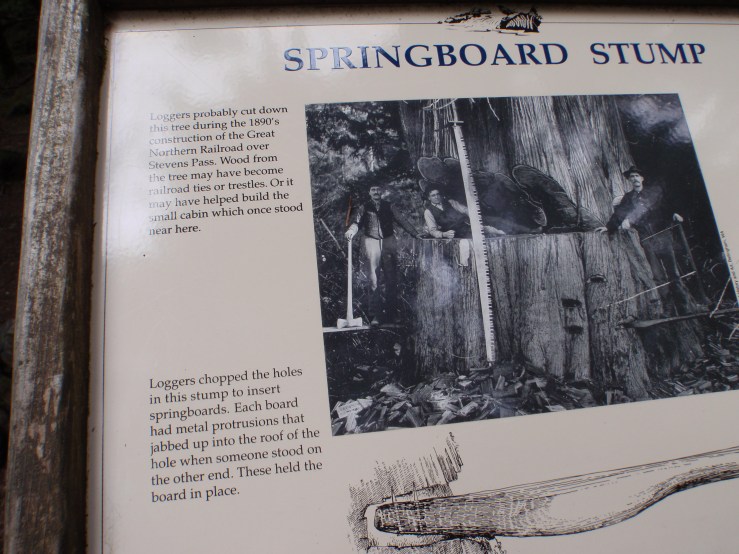
Photos of loggers
Loggers taking down 500-year-old cedar and fir

I thought about the life and times of Grainier when we hiked the Iron Goat Trail the other day, along the now abandoned Great Northern Railway bed. On plaques along the way, old photographs depicted loggers like Grainier taking down giant cedar and fir trees.

Grainier grew “hungry to be around….massive undertakings, where swarms of men did away with portions of the forest and assembled structures as big as anything going, knitting massive wooden trestles in the air of impassable chasms, always bigger, longer, deeper.”

Yet Grainier also saw the great mountains and forests defeat the ambitious plans of mere humans. The land defeated him, too, in a very personal way, but he learned acceptance and, finally, a kind of reverence for the terrible beauty of the place he called home.

The Iron Goat was the last spur of the Great Northern Railway, crossing the Cascades at the treacherous Stevens Pass. I found Stevens Pass stunning the first time we drove through, going east at sunny noon. But on the late afternoon return trip, when it was foggy with rain turning to sleet, I could hardly stand the vertigo as we tried to avoid skidding on the slick highway.

Disaster Viewpoint on the Iron Goat Trail marks the spot where, in 1910, an avalanche swept two snowbound passenger trains into the Tye River below, killing nearly 100 people.

Snowshed
Snowshed

To alleviate the dangers of avalanches, the railroad companies eventually built snowsheds, huge retaining walls to protect trains from tumbling snow. My husband and I walked alongside an old snowshed on our hike.

We knew our hike would be cut short because a sign at the trailhead indicated an avalanche had made the trail impassable a half mile in.

Sure enough, just a few feet from where the snowshed ended, we could go no further, thanks to a wall of hard-packed, dirt-encrusted snow.

“All his life Robert Grainier would remember vividly the burned valley at sundown, the most dreamlike business he’d ever witnessed waking—the brilliant pastels of the last light overhead, some clouds high and white, catching daylight from beyond the valley, others ribbed and gray and pink, the lowest of them rubbing the peaks of Bussard and Queen mountains; and beneath this wondrous sky the black valley, utterly still, the train moving through it making a great noise but unable to wake this dead world.” – Denis Johnson, Train Dreams


View from Spirit Lake trail
View from Spirit Lake Trail

Train Dreams, Denis Johnson, Farrar, Straus & Giroux, New York, 2011.

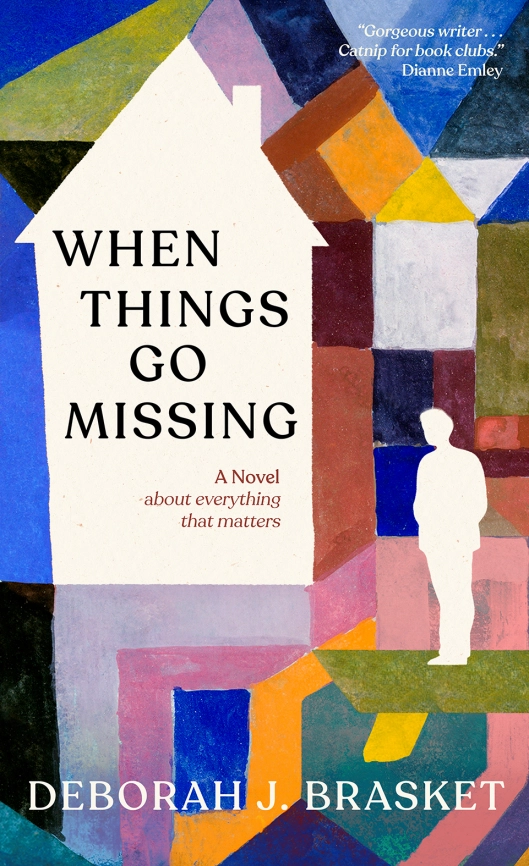
The making of a first novel, When Things Go Missing

One of my favorite writers and bloggers, Deborah J. Brasket, will publish her first novel, When Things Go Missing, in just a few days! It’s a pleasure to participate in Deborah’s Book Blog Tour along with nine other bloggers. Please enjoy Deborah’s guest post below, and be sure to scroll to the end to find links to the other posts.

I hope you’ll leave comments here and on the other book blogger sites for a chance to win a free E-book with extra chapters of the novel! Here also is a link to my review of When Things Go Missing.

Here is what Deborah has to say about an important phase in the writing of her novel:

I thought I’d share something that I wrote six years ago about When Things Go Missing when it was still a novel-in-progress. At that time the working title of my novel was From the Far Ends of the Earth, and it was in the hands of an agent who was submitting it to publishers. This post shows how long and messy the road to publication can be and the choices writers must make along the way

Endings and Beginnings, A Writer’s Life

Well, I just finished rewriting the ending of my novel as requested by a publisher. We will see what they think.

Either way, I believe this new ending is stronger–-still hopeful, but less certain. More in keeping with the way things are for most of us when things we love go missing, or when struggling with our own demons and addictions.

I’ve decided something else too. Quite a few publishers wanted to see more of the missing mother in my story, yet I wasn’t willing to do that. It would have unraveled the very premise of my novel, which was, how do we cope when the center holding everything together falls apart? When the person upon which we most depend disappears?

I wanted the mother to be part of the puzzle, not a presence herself, but that “absent” presence we feel, even yearn for, but cannot quite pin down, and never really know for certain.

Do any of us ever, really, know our mothers? Don’t we only know them through our own often faulty and incomplete perceptions of them? What they’ve allowed us to see, or what we choose to believe? All knowledge is partial and open to revision. We may know the facts that lay before us. But do facts a person make?

Yet even while I’ve resisted the call to add the mother’s perspective to this novel, I can understand how a reader might want more of her, to hear about her journey as she travels away from her family and through South America. What does she learn as she discovers the world through the new lens of her photography? Does it lend insight into her past? Into herself as a mother and wife and now an artist? How does it shape her anew?  Where does it take her?

So I’m considering a “sequel” to From the Far Ends of the Earth, if we can call it that, since it will cover the same time-space as the first novel.

I think it might be fun to give the mother her own voice and space, to see what shaped her past and how her journey shapes her future.

It’s the thing I love most about writing, discovering what I never knew I knew before I began to write it, as if the words themselves are drawn from some inner well of insight or vision I never knew I had.

“We create ourselves out of our innermost intuitions,” so writes a sage.

I believe that. And I also believe our characters are created in much of the same way. I wonder if we all contain multiple characters within us that make themselves known to us through our writing? Or are we just writing our larger selves?

Perhaps all the selves of all the people we’ve come to know, to experience, in this wider world, once known, become part of us, at least partially?

I believe there is a collective consciousness that we tap into from time to time, and writers, perhaps, most of all.

Sometimes I don’t know where I end and another begins.

My son says I have boundary issues. No doubt he’s right.

When Things Go Missing BOOK BLOG TOUR

Below are the bloggers, authors, and book reviewers participating in this tour promoting When Things Go Missing. Participants will either be spotlighting the book, posting reviews, or interviewing the author.

GIVEAWAY

Please bookmark this and join us on the tour! Those who leave the most likes and comments on the participating sites will have a chance to win a free E-book PLUS extra chapters of the novel (which the author reluctantly had to cut.)

BOOK BLOG PARTICIPANTS

• Sep. 15 – Sally Cronin, Smorgasbord Blog Magazine – SPOTLIGHT

• Sep. 16 – Valorie Hallinan, Books Can Save a Life – INTERVIEW / GUEST POST

• Sep. 18 – Laura Bruno Lilly, Classical Guitarist/Composer – BOOK REVIEW

• Sept. 20 – Margaret Moon, Book Chat – AUTHOR INTERVIEW

• Sept. 21 – Luanne Castle, Poet/Author – BOOK REVIEW

• Sep. 23 – Dr. Vicki Atkinson, Therapist/Author – BOOK REVIEW

• Sep. 24 – Jacqui Murray, Author, Book Reviewer – BOOK REVIEW

• Sep. 25 – Liz Gauffreau, Poet/Author – SPOTLIGHT

• Sep. 26 – Wynne Leon, The Heart of the Matter Podcast – INTERVIEW

• Sep. 27 – Liz Dexter – Editor, Book Reviewer – BOOK REVIEW

When Things Go Missing will be published by Sea Stone Press September 22, 2025.

PRE-ORDER NOW

Amazon Bookshop Barnes & Noble

When Things Go Missing

“To all families who fall apart and struggle to find their way home again.”Deborah J. Brasket

What happens when a mother leaves her family?

Shopping list and coupons in hand, fifty-something Fran heads to the grocery store. But instead of shopping, she keeps driving – all the way to the California border, into Mexico, and beyond.

It is 1997. Fran will not be coming home anytime soon.

With deep pleasure, I bring Books Can Save a Life out of retirement to tell you about Deborah J. Brasket’s debut novel, When Things Go Missing. 

But first, let me say that I have been following Deborah’s blog, Writing on the Edge of the Wild, for many years on WordPress. (She now has a Substack version as well.) I have always found her insights about art, literature, truth, beauty, and the human dilemma to be evocative and profound. Truly, her blog has always stood apart from the rest. So it was with great anticipation that I powered up my Kindle and let Deborah’s story carry me away. 

We witness Fran’s confused, angry, and bereft family as they begin to navigate life on their own, on ground that has shifted dramatically. The family Fran leaves behind, like so many families, was already fractured – I would even say traumatized. Where do they go from here, when it feels like the end of life as they’ve known it?

Kay, an aspiring archeologist, receives periodic voice mails from her mother:

“She’s in mourning, she tells herself, mourning a mother she thought she knew who she now realizes she may never have truly known: A mother who always was the still center of comfort she could turn to in times like these, who is there no more. A mother who held her dysfunctional family together, a family she now fears will fall apart. The grief isn’t only about losing her mother but losing everything her mother represented: family, home, security, unconditional love. It’s like her mother’s absence blew a hole through the center of her universe, and everything is flying apart, including Kay. There’s nothing left to hold onto.”

To her son Cal, a heroin addict, Kay mails her mysterious photographs from various South American locations. As the mother of two adult sons, I was haunted by this passage, as I considered what it must have taken for Fran to let go of her son:

“…he gets sideswiped by this opposing flood of thoughts that gushes through his mind like his mother’s conscience. That’s how he sees it too – not his conscience but some uncomfortable and undesirable feeling that drifts in from his mother’s looks and sighs and follows him around like a fucking rain cloud. Hell, if she isn’t still doing it, even now when she’s disappeared.

He clears out a space on the bathroom mirror so he can look at himself, the image blurry in the wetness, surreal, with the steam all around, his face ringed by a bright halo of light. He thinks if he stares at this face ringed with light long enough, hard enough, deep enough, he might catch a glimmer of who the hell he really is or was supposed to be in another lifetime. Whatever it was, he knows it was good. Whatever could have been, whatever he blew away, it was all unbelievably good.”

Walter, Fran’s husband, a taciturn, sometimes volatile, father, gets Fran’s credit card bills: 

“He’s been taking care of Frannie since she graduated from high school and he got home from Vietnam….He never minded that she didn’t work. Why should she: He earned enough on his own…

He’s never tried to stop her before from doing anything she wanted. He just has to keep letting the rope out more, giving her as much lead as she needs, and then, when she’s ready, she’ll find her way home again. It’s what he tells himself, what he needs to believe to get through the day.”

We get a sense of the kind of wife and mother Fran was and is, as Kay, Cal, and Walter at first simply react to Fran’s abandonment. As each of them barely manages to keep going – largely on their own and isolated from one another – they begin to separate from the mother and wife bonds. They begin to individuate. We are witness to a trio of heroic journeys that unfolds in surprising and unexpected directions. 

When Things Go Missing will stay with you long after you’ve read the final page. To me, this is the mark of a powerful and authentic story, one that is so true for America and for our time. You may find yourself reflecting on your own life path, the choices you’ve made, and the choices that await you.  

What are our responsibilities as mothers, parents, and partners? 

Is there such a thing as the perfect mother? 

Are there limits to the bonds of love and family? How do these relationships change over time? Are they meant to be forever?

What are our responsibilities to our own self-actualization? When do we sacrifice our own desires and aspirations for the good of our families and communities?

How do we come to find our chosen families? Can they ever replace our families of origin? Is it possible to achieve a happy blend of the two?

As a longtime reader of Deborah Brasket’s work, I trust her wisdom and relish the grace and richness of her writing. When Things Go Missing is a beautiful unfolding – a tender, loving portrait of a family contending with grief, loss, and regret, while fully embracing all the joy that life can hold. 

I will close with the epigraph that opens When Things Go Missing: 

“I have loved thee with an everlasting love: therefore, with lovingkindness have I drawn thee.”Jeremiah 31:3

When Things Go Missing, an excellent book club choice, includes discussion questions. Publication date: September, 2025, Sea Stone Press.

When Things Go Missing is now available for pre-order at AmazonBookshop, and Barnes & Noble.

(Still) reading Barry Lopez

Stories…offer patterns of sound and association, of event and image. Suspended as listeners and readers in these patterns, we might reimagine our lives…As long as it took for me to see that a writer’s voice had to grow out of his own knowledge and desire, that it could not rise legitimately out of the privilege of race or gender or social rank, so did it take time to grasp the depth of cruelty inflicted upon all of us the moment voices are silenced, when for prejudicial reasons people are told their stories are not valuable, not useful. Barry Lopez

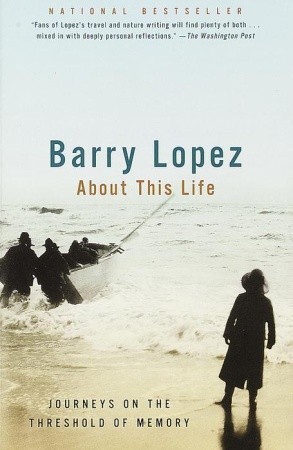
About This Life: Journeys on the Threshold of Memory, Barry Lopez

Here is my third and final reposting of my Barry Lopez Books Can Save a Life writings, in honor of his passing on December 25, 2020:

In the introduction to his essay collection About This Life: Journeys on the Threshold of Memory, Barry Lopez tells of meeting a man on a plane who asked what words of advice he could pass on to his teen-age daughter, who wanted to be a writer. This is what Lopez said:

She must read, and her choices should be whatever she is drawn to.

She should read the classics, too, but she’ll have to work harder to find stories of heroism, love, and our noblest values that are written by women.

Second, she must “become someone” and “speak to us from within those beliefs.”

Third, he advised that she “separate herself from the familiar.” After exploring other places and meeting a diversity of people, she`ll know why she loves the familiar and share this knowledge through her writing.

Early on, Lopez felt he was noticed, accepted, and rewarded as a writer in part because he was white, male, privileged and well educated. If you read his work, you’ll find he is keenly sensitive to the fact that many voices haven’t been heard because they are different or not within traditional circles of power. He thrives on traveling to the far corners of the earth and seeking these people out –  artists, artisans, farmers, naturalists, explorers who live close to the land, indigenous peoples, and others.

I was mesmerized by an essay in About This Life, “Effleurage: The Stroke of Fire.”  An Oregon potter and builder of a unique anagama kiln invites clay artists from around the world to fire their work. Jack doesn’t care about marketing or commercial success; he’s totally immersed in the process of making pottery out of materials from nature. Every three or four months, up to twenty artists bring their work to be fired in the Dragon Kiln.  Families, friends, even pets tag along. The firing goes around the clock for several days. Building the tremendous fire that heats the kiln is an art in and of itself. Different kinds of wood – black locust, maple, cherry, Lombardy poplar, red cedar – make different kinds of fires, and keeping the fire properly stoked is a community effort of like-minded artists who put aside their egos for the benefit of the group.

Lopez says you must become someone to write. I think he would agree the kiln designer and the clay artists are “becoming” through their life’s work, just as their clay pieces are forged in the fire. It’s a process that never ends. Even the clay pot continues to change, subtly, after the firing.

Crow and Weasel book cover

Over and over, Lopez celebrates journeys into the unknown, strangers who become friends, coming home again, and the writing of the story. You see this in About This Life and in his fable, Crow and Weasel.

Recently, Lopez published a revelatory personal essay that has received a lot of attention, “Sliver of Sky,”  in Harper’s Magazine, about a period of sexual abuse he endured as a child. That Lopez waited until his seventies to write about this suggests how deeply confounding and wounding it was. The trauma and years of silence may explain in part Lopez’s empathy and compassion for others who were silenced for one reason or another. And no doubt it has contributed to his sense of mission as a writer.

I’ve written about years of being silent and feeling silenced by others because of my mother’s mental illness. I think that is partly why I didn’t make the commitment to becoming a writer when I was younger. How can you mature as a human being and as a writer when you can’t work with the very material that is woven into your identity?

If we’re silenced, we’re blocked. We don’t become our fullest selves. Diminished in what we are able to offer the world, the world will be diminished, too. It is in our best interests to see that no one among us is silenced.

So I find reading Lopez to be a rare and important form of encouragement.

In an interview with Bill Moyers, Lopez says he’s viewed as a nature writer but, actually, he is writing about humanity.

“Every story is an act of trust between a writer and a reader; each story, in the end, is social. Whatever a writer sets down can harm or help the community of which he or she is a part.”

Pandemic Reading: Kristin Lavransdatter

IMG_2172
“An older woman sitting by me on the subway, or waiting beside me in a line at the Department of Motor Vehicles, or having lunch at a nearby table, would cross the boundary separating strangers in order to volunteer that she, too, had once read Kristin Lavransdatter – a remark accompanied by that special glow which comes at the recollection of a distant but enduring pleasure.”  – Brad Leithauser, from the Introduction to Kristin Lavransdatter.


“He was well, but had cast himself into a wild life, just as many young people, out of despair, had done. They said that whoever was afraid would be sure to die, and so they blunted their fear with carousing and drinking, playing cards, dancing, and carrying on with women.” – Kristin Lavransdatter, by Sigrid Undset


Historical fiction is what I’ve been immersed in lately, what with watching the Outlander series and reading the remarkable 14th century Norwegian trilogy Kristin Lavransdatter.  I first read The Wreath, The Wife, and The Cross by Sigrid Undset when I was in my twenties, thanks to my college roommate, Kathy, (of Norwegian descent) who highly recommended it. I vowed to read it again someday from the perspective of a good portion of life lived. A few weeks ago I ordered it; the time was right, I thought, especially because the Black Plague has a part to play in Kristin’s story and we’re living through our own time’s pandemic.

The story centers around the life of Kristin from childhood to elderhood, and her sexual, emotional, familial and spiritual pilgrimage across the span of life. I see many similarities between Kristin and Claire Fraser, the protagonist of Outlander.

Published in 1920, 1921, and 1922, Kristin Lavransdatter was a worldwide literary sensation. Sigrid Undset won the Nobel Prize in Literature in 1928.

Here is something about Sigrid’s singular protagonist from the Introduction to the edition I’m reading:

IMG_2179“In the annals of literary ‘fallen women,’ Kristin Lavransdatter, the twentieth-century/fourteenth-century literary figure, occupies a curious and fascinating place. After they fell, a number of Kristin’s nineteenth-century counterparts were whisked offstage, often to meet a premature end. In the latter part of the twentieth century, many of Kristin’s successors were sexual adventuresses whose exploits were pure and liberated triumphs. Writing in the first quarter of the twentieth century, Undset chose a middle path for her heroine. Kristin never doubts that she has covertly sinned, and the pain of her deceptions remains a lifelong affliction. Even so, her unshakable guilt in no way paralyzes her and she carries on with her life. Throughout the trilogy, Kristin is an indomitable presence in every role she undertakes….”
At age seven Kristin gazes at the view from her home:

“There were forest-clad mountain slopes below her in all directions; her valley was no more than a hollow between the enormous mountains, and the neighboring valleys were even smaller hollows; there were many of them, and yet there were fewer valleys than there were mountains. On all sides gray domes, golden-flamed with lichen, loomed above the carpet of forest; and far off in the distance, toward the horizon, stood blue peaks with white glints of snow, seeming to merge with the grayish-blue and dazzling white summer clouds. But to the northeast, close by – just beyond the pasture woods – stood a cluster of magnificent stone-blue mountains with streaks of new snow on their slopes…

She knew that wolves and bears reigned in the forest, and under every rock lived trolls and goblins and elves, and she was suddenly afraid, for no one knew how many there were, but there were certainly many more of them than of Christian people.”  

Kristian Lavransdatter seemed to fall out of favor for a time, but it is having something of a resurgence. My son and his girlfriend are waiting eagerly in line to read it once I’m finished. (My son lives in the heart of the US Covid outbreak in Brooklyn, and we were glad when he was able to stay temporarily near to us. Yesterday was a fine, warm day, and he and his girlfriend came for a socially distanced visit. They brought a blanket and sat on the grass while I picked weeds. We talked about the books we’re reading.)


IMG_2176
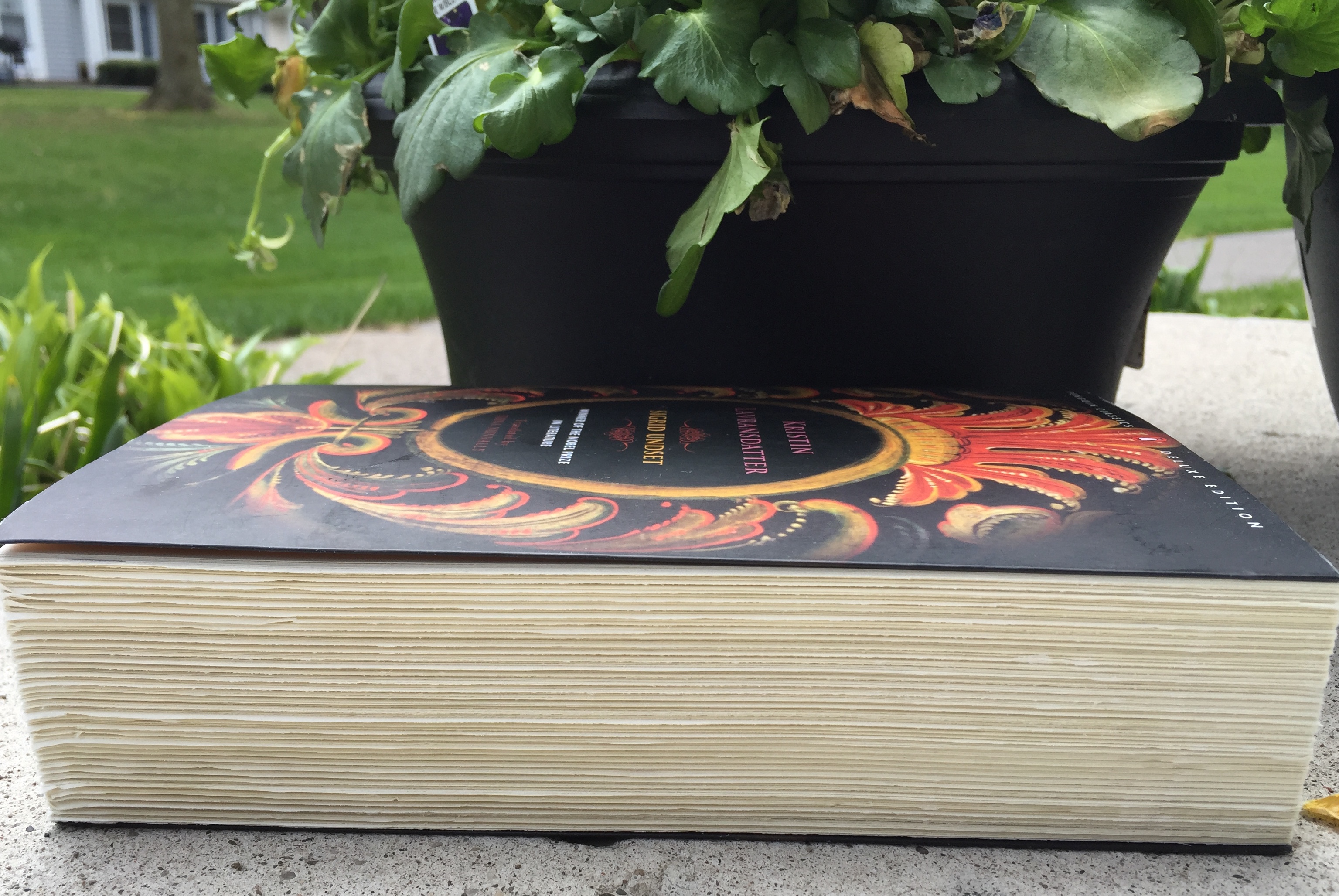
At over 1100 pages, the trilogy I have is the beautifully produced, deckle edged Penguin Classics Deluxe edition, with smooth, cream-colored paper, translated by Tiina Nunnally. Helpful footnotes – not too many – explain aspects of medieval Norwegian life.


This line in particular, which refers to the time of the Black Death, spoke to me as something that could be said about our current pandemic:

“Now it almost seemed as if all people were equally close and distant to each other at this time of great need.”

Kristin was skilled in herbal and healing remedies:

“They now had to do the milking and chores in the cowshed themselves; they cooked their own food, and they brought back juniper and fresh evergreen branches for the cleansing smoke. Everyone did whatever task needed doing. They nursed the sick as best they could and handed out healing remedies: their supplies of theriac and calamus root were gone, but they doled out ginger, pepper, saffron, and vinegar against the sickness, along with milk and food. When the bread ran out, they baked at night; when the spices were gone, people had to chew on juniper berries and pine needles against the sickness.” 


FritslaMural
One of the murals in Älekulla Church, Sweden, where my great, great, great grandfather lived. Christian morality and the medieval church have central roles in the life of Kristin Lavransdatter. Reading it, I’ve been reminded of the rural churches I visited last spring in the Swedish towns where my grandparents lived.


SwedishBible
In a distant century, my ancestor donated this Bible to his church in Älekulla. (In his handwritten dedication, he calls the Bible “his greatest treasure.”) I’d hoped to return to Sweden to do more family research this summer, but I won’t be getting on a plane anytime soon.


My dear friend Kathy of Blueberry Hills Art first introduced me to Kristin Lavransdatter. Please follow the link and check out her gorgeous website, which just made its debut. She’s on Instagram, too. Here is one of her woodcut prints, which reminds me of the nature that infuses Kristin’s world:


IMG_3750


FritslaChurch
Fritsla Church, Sweden


Kristin Lavransdatter is wonderful reading, especially if you’re spending hours at home. Have you read it? What are you reading these days? I have some special books to share with you in my next post; they are making my pandemic days richer.

Station Eleven (for real this time (almost))

StationEleven


“Couldn’t put it down,” my son says, leaving Station Eleven on a chair outside my door, which is propped open a few inches with – what else – a book. A friend sent him the novel, urging him to read it. We talk about it through the glass door for a few minutes, but it’s cold outside and my son returns to the apartment he’s living in, temporarily, in the complex next to ours.

His being here has given my life a small, gratifying purpose during the pandemic; I enjoy cooking hot meals for him, which we leave in a paper bag on our front stoop or deliver to his doorstep.

Look, I’m a mom. I’d hoped our son would choose to take a break from the NYC borough and neighborhood he’s loyal to – a place that still has obscene daily death tolls. But it was up to him. We were lucky to find a place in Rochester where he could land (and quarantine for a couple of weeks in case he’s a carrier.)

“Think of it as an artist’s residency,” I’d said. “You can work on your photo editing.”

I pick up the copy of Station Eleven, wipe it down even though it’s a paperback. What’s great about having had Books Can Save a Life for over eight years is, I can go back to see what I wrote about a book years ago. Some books shine the more time passes. Below is what I wrote about Station Eleven in 2014: I’d choose different excerpts now, and in fact have added one at the end that is a bit of a spoiler, but which has remained emblazoned in my memory over the years.

I get that some of you can’t bear to read about a pandemic now. One reason you might choose to is Emily’s transcendent concluding chapter that celebrates youth and a vision for a different, hopefully better, world. But of course I understand if pandemic books are not the thing for you at the moment!

I do urge you, though, to listen to six minutes of the magnificent Ursula K. Le Guin below. Sadly, she is no longer with us, but her words resonate in 2020. She passed away in 2018.

Here’s the post I wrote in 2014:

“On Day Seven the networks began to blink off the air, one by one. ‘So that all of our employees may be with their families,’ a CNN anchor said, ashen and glassy-eyed after forty-eight hours without sleep, ‘we are temporarily suspending broadcast operations.’ ‘Good night,’ NBC said an hour later, ‘and good luck.’ CBS switched without comment to reruns of America’s Got Talent. This was at five in the morning, and everyone who was awake watched for a few hours – it was nice to take a quick break from the end of the world – and then in the early afternoon the lights went out.”     Station Eleven, Emily St. John Mandel

I’ve been reading dystopian fiction lately and looking forward to the third installment of The Hunger Games: Mockingjay. Just as I dipped into pandemic-ridden Station Eleven, Ebola was front and center in the news. Reality and fiction are getting too close for comfort.

Emily St. John Mandel’s Station Eleven, a National Book Award finalist, portrays a flu pandemic that kills 99.9 percent of the population in a matter of days. We see the end of advanced civilization through the eyes of five characters, and the first decades after the collapse.

Clark is a corporate consultant who specializes in coaching problematic executives and CEOs to change their behavior. Days before the outbreak of the Georgia flu, Clark interviews an especially perceptive employee to see what others think of a particular manager. I love this exchange:

“‘….it’s like the corporate world is full of ghosts. And actually, let me revise that, my parents are in academia so I’ve had front-row seats for that horror show, I know academia’s no different, so maybe a fairer way of putting this would be to say that adulthood’s full of ghosts.'”

“‘I’m talking about these people who have ended up in one life instead of another and they are just so disappointed. Do you know what I mean? They’ve done what’s expected of them. They want to do something different but it’s impossible now, there’s a mortgage, kids, whatever, they’re trapped. Dan’s like that….but I don’t think he even realizes it. You probably encounter people like him all the time. High-functioning sleepwalkers, essentially.'”

What was it in this statement that made Clark want to weep?

“…you go on like that, looking forward to five o’clock and then the weekend and then your two or three annual weeks of paid vacation time, day in day, and that’s what happens to your life.”

“Right,” Clark said. He was filled in that moment with an inexpressible longing.

“Guys like Dan, they’re like sleepwalkers,” she said, “and nothing ever jolts them awake.”

Clark, of course, is jolted awake in a very big way when his flight to Toronto is diverted to a small Michigan airport after the pandemic explodes. He and his fellow passengers, untouched by the flu, watch the end of life as they know it on television. They never leave the airport – it becomes their settlement, their home. Eventually, Clark establishes a Museum of Civilization, where people donate iPads and smart phones and other remnants of their now-lost advanced culture.

“Like educated children everywhere, the children in the airport school memorized abstractions: the airplanes outside once flew through the air. You could use an airplane to travel to the other side of the world, but….when you were on an airplane you had to turn off your electronic devices before takeoff and landing, devices such as the tiny flat machines that played music and the larger machines that opened up like books and had screens that hadn’t always been dark, the insides brimming with circuitry, and these machines were the portals into a worldwide network. Satellites beamed information down to Earth. Goods traveled in ships and airplanes across the world. There was no place on earth that was too far away to get to.”

Meanwhile, a roving theater troupe travels from town to town performing classical music and Shakespeare for groups of survivors living in abandoned Walmarts and gas stations. In this troupe are characters we’ve met earlier in the novel.  The younger members only dimly remember a world with electricity and other marvels, and some were born after the collapse. One day, they arrive at Clark’s airport settlement, and there is a poignant reunion of sorts for Clark.

Station Eleven, among other things, asks whether art can save and redeem humanity. I can’t help but think of this outpouring of dystopian literature as the proverbial canary in the mine. A wake-up call for those of us who, like the characters in Station Eleven, may need it.

Here is another excerpt I’m adding to this post in 2020 (beware the spoiler):

“Miranda woke at four in the morning with a fever. She fought it off with three aspirin, but her joints were knots of pain, her legs weak, her skin hurt where her clothes touched her. It was difficult to cross the room to the desk. She read the latest news on the laptop, her eyes aching from the light of the screen, and understood…. 

It took a long time and considerable concentration to put on her shoes…..

Outside the air was heavy and still. A greenish light on the horizon, the beginnings of sunrise….She was thinking about the container ship on the horizon. The crew out there wouldn’t have been exposed to the flu. Too late to get to a ship herself now, but she smiled at the thought that there were people in this reeling world who were safe.”

*****

Ursula Le Guin, in her stirring National Book Award acceptance speech, said we will need more writers like Emily St. John Mandel who can imagine a different way of being. Six minutes well worth listening to.


Have you read Station Eleven? Do you have other pandemic literature to recommend? Stay well, everyone!

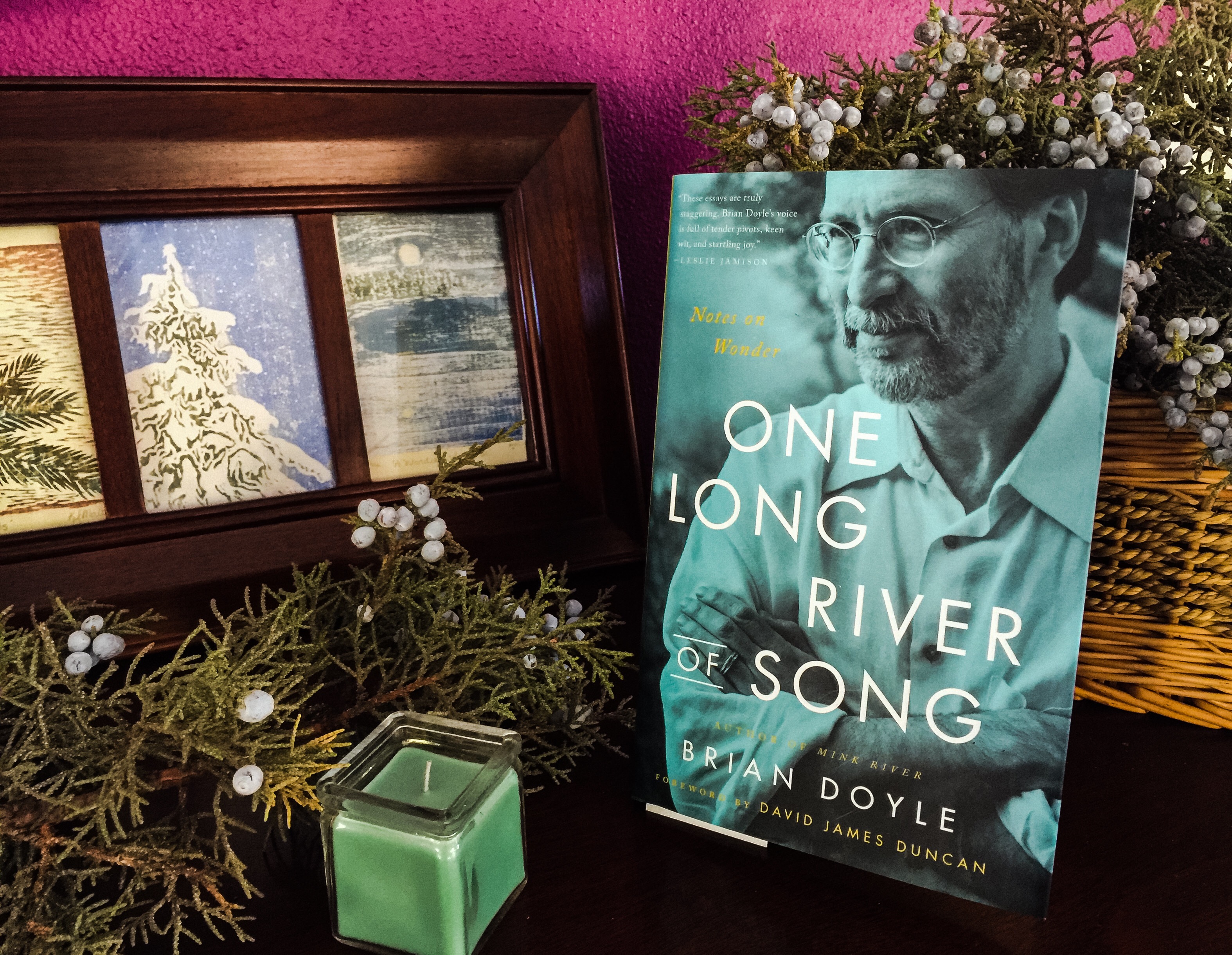
One Long River of Song

7E5C6154-B46F-4071-9A5F-5F2508052340

“So much held in a heart in a lifetime. So much held in a heart in a day, an hour, a moment. We are utterly open with no one, in the end — not mother and father, not wife or husband, not lover, not child, not friend. We open windows to each but we live alone in the house of the heart. Perhaps we must. Perhaps we could not bear to be so naked, for fear of a constantly harrowed heart…..You can brick up your heart as stout and tight and hard and cold and impregnable as you possibly can and down it comes in an instant, felled by a woman’s second glance, a child’s apple breath, the shatter of glass in the road, the words ‘I have something to tell you,’ a cat with a broken spine dragging itself into the forest to die, the brush of your mother’s papery ancient hand in a thicket of your hair, the memory of your father’s voice early in the morning echoing from the kitchen where he is making pancakes for his children.” – One Long River of Song: Notes on Wonder for the Spiritual and Nonspiritual Alike by Brian Doyle

Easter Sunday, 2020 in the time of COVID-19: Just about the coolest and most uplifting and loving and literary and funny and expansive collection of essays you could ever read.

In my last post I wrote that I discovered two favorite, amazing, new-to-me authors in my 2019 reading. Margaret Renkl is one; Brian Doyle is the other.

During the first month of our time in Oregon, we lived in Lake Oswego. The first time I entered the public library, I saw a Christmas tree decorated with hand-written tributes to Brian Doyle, who had made his home in Lake Oswego and who had recently died.

I ended up reading a collection of his essays and his most famous novel. If you are looking for joy in the midst of this pandemic, Brian Doyle would be the writer to read.

Here is what Margaret Renkl had to say about One Long River of Song:

“If you are in love with language, here is how you will read Brian Doyle’s posthumous collection of essays: by underlining sentences and double-underlining other sentences….by marking whole astonishing paragraphs with a squiggly line in the margin, and by highlighting many of those squiggle-marked sections with a star to identify the best of the astonishing lines therein…. and, finally, by dog-earing whole pages, and then whole essays, because there is not enough ink in the world to do justice to such annotations, slim as this book is and so full of white space, too.” – Margaret Renkl in The New York Times

Below are some excerpts. By the way, Brian was a devout Catholic, but you do not have to be a Catholic, or a Christian, or religious or spiritual in any way to sip from the wellspring of joy that runs like a river through all of Brian’s writing.

“But you cannot control everything…All you can do is face the world with quiet grace and hope you make a sliver of difference…You must trust that you being the best possible you matters somehow…That being an attentive and generous friend and citizen will prevent a thread or two of the social fabric from unraveling.”

****

“A 5.56-millimeter bullet can punch nearly half an inch into steel, and punch right through a bulletproof vest, and punch right through a human being of any size and shape and age and nationality and gender and religion and sexual orientation and combatant status, or not….

Dear outraged shrieking lunatic, you who are about to lecture me on how this was just an accident, and how it’s a necessary part of the capitalist system, and how I am clearly a yellow liberal pansy: Are you only stupid, or are you insane?”

****

[On hummingbirds} “Each one visits a thousand flowers a day. They can dive at sixty miles an hour. They can fly backward. They can fly more than five hundred miles without pausing to rest. But when they rest they come close to death: on frigid nights, or when they are starving, they retreat into torpor, their metabolic rate slowing to a fifteenth of their normal sleep rate, their hearts sludging nearly to a halt, barely beating, and if they are not soon warmed, if they do not soon find that which is sweet, their hearts grow cold and they cease to be.”

****

“Every creature on earth has approximately two billion heartbeats to spend in a lifetime. You can spend them slowly, like a tortoise and live to be two hundred years old, or you can spend them fast, like a hummingbird, and live to be two years old.”

MinkRiverMink River

This novel is about the quirky people who make up a quirky “little green cup of a town” on the Oregon coast.

“On a clear day the Oregon coast is the most beautiful place on earth—clear and crisp and clean, a rich green in the land and a bright blue in the sky, the air fat and salty and bracing, the ocean spreading like a grin. Brown pelicans rise and fall in their chorus lines in the wells of the waves, cormorants arrow, an eagle kingly queenly floats south high above the water line.”

****

“Rained gently last night, just enough to wash the town clean, and then today a clean crisp fat spring day, the air redolent, the kind of green minty succulent air you’d bottle if you could and snort greedily on bleak, wet January evenings when the streetlights hzzzt on at four in the afternoon and all existence seems hopeless and sad.”

****

“She’ll be a fierce woman, that one. It’ll take a hell of a man to love her right. Be like living with a thunderstorm. Same as her mother. A fierce woman. Force of nature. The kind of woman you just hand on for the ride. The most exciting and the most heartbreaking woman you could ever meet. They don’t know their own minds most of the time, but their hearts are so damn big it hurts em inside.”

****

“Dawn. A pregnant green moist silence everywhere: and the robins start, and then starlings, and the jays, and the juncos, and the barred owl closing up shop for the night, and a hound howling in the hills which starts a couple other dogs going, which sets a guy to shouting at the dogs to shut up for chrissake, and someone tries to get a recalcitrant truck going, and the truck just can’t get going, it gasps and gasps and gasps, which sets the owl going again….and then the truck finally starts but then immediately dies, which sets the driver to cursing steadily feck feck feck which sets his passenger to giggling and the passenger’s giggle is so infectious that the driver can’t help but laugh either, so they are laughing…”

****

“They pull in the lines and up come three small halibut, a vermilion rockfish that is the reddest thing Nicholas has ever seen, and a ling cod with a gaping mouth the size of China. They clean and ice the fish. Gulls wheel and dive at the offal flung into the water.

See? No snot, no shit, and birds clean up after you, says Grace.

Can I ask you a question? says Nicholas.

No.

Do you miss your dad?

No.

Is your mom dead?

No.

Should we bait up again?

Yes. 

Am I bugging you?

Yes.

I’ll stop talking.

No.”

****

“These things matter to me, Daniel, says the man with six days to live. They are sitting on the porch in the last light. These things matter to me, son. The way the hawks huddle their shoulders angrily against hissing snow. Wrens whirring in the bare bones of bushes in winter. The way swallows and swifts veer and whirl and swim and slice and carve and curve and swerve. The way that frozen dew outlines every blade of grass. Salmonberries thimbleberries cloudberries snowberries elderberries salalberries gooseberries. My children learning to read. My wife’s voice velvet in my ear at night in the dark under the covers. Her hair in my nose as we slept curled like spoons. The sinuous pace of rivers and minks and cats. Fresh bread with too much butter. My children’s hands when they cup my face in their hands. Toys. Exuberance. Mowing the lawn. Tiny wrenches and screwdrivers. Tears of sorrow, which are the salt sea of the heart. Sleep in every form from doze to bone-weary. Pay stubs. Trains. The shivering ache of a saxophone and the yearning of a soprano. Folding laundry hot from the dryer. A spotless kitchen floor. The sound of bagpipes. The way horses smell in spring. Red wines. Furnaces. Stone walls. Sweat. Postcards on which the sender has written so much that he or she can barely squeeze in the signature. Opera on the radio. Bathrobes, back rubs. Potatoes. Mink oil on boots. …..Rain in every form from mist to sluice. The sound of my daughters typing their papers for school. My wife’s eyes, as blue and green and gray as the sea. The sea, as blue and green and gray as her eyes. Her eyes. Her.”

Brian Doyle passed away from complications of a brain tumor in 2017.


Columbia River
Columbia River, view from Amtrak train heading for Portland, 2018.


Birdsong on the trolley trail, Easter Sunday, 2020.


We come from Joy; we are sustained in Joy, and to Joy we will return. – The Upanishads

Sicilian Wedding

5E19A226-E4B7-496D-B69E-A48B08AC5085
Segesta, a view from the wedding reception. As the sun set, we could see the temple illuminated on the hillside. It stood silent and mysterious at 1 am as we boarded the bus back to Carini. Are there important historical sites in the land of your ancestors?

“Walking, I am listening to a deeper way. Suddenly all my ancestors are behind me. Be still, they say. Watch and listen. You are the result of the love of thousands.”Linda Hogan, as quoted in Jung and the Ancestors: Beyond Biography, Mending the Ancestral Web, by Sandra Easter

In May, after researching my mother’s family ancestry in Sweden, I went to Sicily with my husband for a family wedding, to ancient Carini where my father was born.

Sweden and the gracious Swedes were new to me. Going to Carini was like coming home.

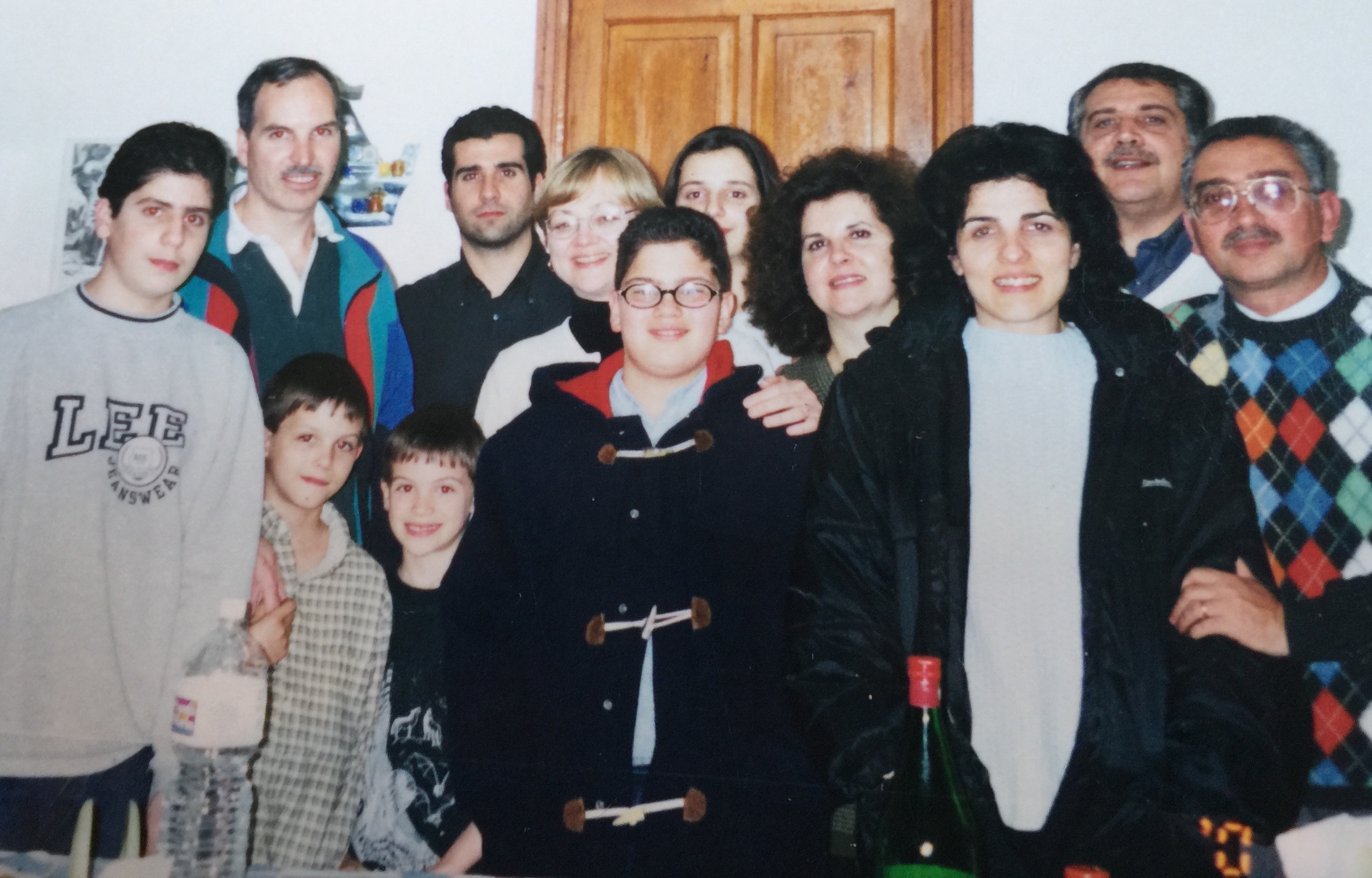
One of the best decisions my husband and I ever made was to travel to Sicily with our boys to reconnect with my father’s family in Carini. Over the years, we went back when we could – a couple of times with my father, and once with extended family. We watched my cousin Giuseppe grow up, along with several of his cousins.

Last spring we were thrilled to receive Giuseppe and Eloisa’s wedding invitation in the mail. Since the wedding was to be shortly after my Sweden trip, I decided to make it an extended journey.

Giuseppe and Eloisa’s wedding reception was within view of Segesta, built around 420 BC and one of the best preserved Doric temple in all of Europe. Overlooking the Gulf of Castellammare, the temple is a mystery, because it appears to have been abandoned before it was completed. And although the Greeks claim it was built by an Athenian architect, during that time period the area was likely inhabited by people indigenous to Sicily, and not the Greeks, though they were elsewhere on the island.

(Some scholars believe that parts of the epic Greek poem the Odyssey are set in Sicily – that Odysseus encountered Cyclops off the eastern coast, for example, and Scylla and Charybdis in the Strait of Messina.)

At any rate, I was thrilled to see the temple of Segesta once again; our first time in Sicily, in 2001, Giuseppe’s family took us there on a sightseeing trip. At the reception, the sun setting behind the illuminated temple gave an air of timelessness to the festivities. I could imagine the spirits of the ancients looking down on us as we celebrated with Giuseppe and Eloisa, and their friends and families.

C603028F-6407-4270-B03A-732EF1B26C3A
Carini, Sicily, where my father was born. “We need to see where we have been before we see where we should go, we need to know how to get there and we need to have help on our journey.”Vine Deloria, as quoted in Jung and the Ancestors.

IMG_0514
Carini has its own castle and a scandalous story connected with it. The Baroness of Carini was murdered at the age of 34 by her father in 1563 for committing adultery. Her story has become part of Italian poetry and literature.  My son, who was learning to play the violin on our first trip to Sicily, composed a musical score inspired by the castle.  If you look at the literature of your ancestry, you’re sure to find intriguing and inspiring stories.

IMG_0474
My cousin has this drawing of the Baroness Laura Lanza with her lover, Lodovico, who was also murdered, by either Laura’s father or her husband. Many years ago, my cousin showed us Laura Lanza’s death certificate, preserved in the town’s historical records.

IMG_0427
From the castle, a view of Carini and the sea beyond

IMG_1130.JPG
Our first visit to Sicily, in April, 2001. 9/11 happened five months later.

IMG_0390
Angel’s trumpets in Angelo and Piera’s garden.

IMG_1129
This is thought to be my father’s birthplace in Carini.

IMG_0473
Portrait of an ancestor, Katarina (my grandfather’s sister)

IMG_0532.JPG
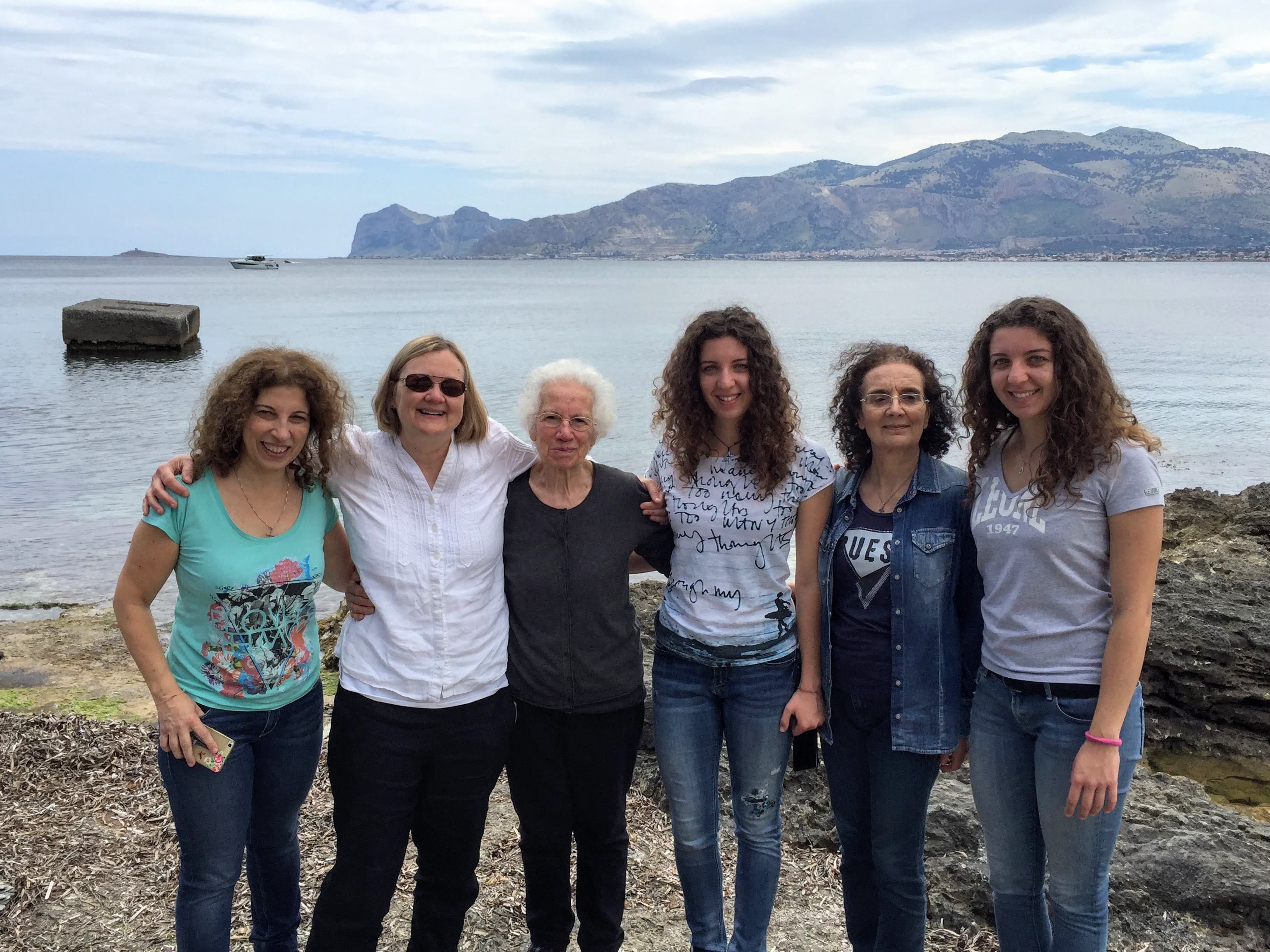
I was thrilled to meet a beautiful family brand new to me on la mia nonna’s side. Here we are on a picnic in Carini. Concetta, third from left, corresponded with my grandmother for many years. Rosaria, second from right, is a teacher and an avid reader. I loved discussing literature with her. She has fond memories of the Easter baskets filled with chocolate kisses my grandma sent from America every year.

IMG_0673
I was so surprised when I met the twins, Alessia and Erica, who look like my niece in America. They are about the same age, too! I hope the three of them can meet one day –  that Malena, my niece, can travel to Sicily and that we can welcome the twins to America.

Palermo.JPG
We had a wonderful time in Palermo with Concetta, Rosaria, and their family. Here is Teatro Politeama, home of the Sicilian Symphony Orchestra. The bronze quadriga (chariot drawn by four horses) depicts the Triumph of Apollo (the god of music and dance) and Euterpe (the muse of lyric poetry).

IMG_0476
I loved the church in Palermo where Giuseppe and Eloisa were married, Basilica della Santissima Trinità del Cancelliere, “La Magione” (the mansion).

IMG-20190602-WA0051
Giuseppe and Eloisa, our future! She is a journalist, he an interpreter and translator. They currently live in Palermo. (Giuseppe has tirelessly interpreted for us on our visits with family – his English far exceeds our Italian.)

Reception
Angela and Pepino, my father’s cousin.

IMG_0487.JPG
Rosalia and Enzo, my father’s cousin. Pepino, Enzo, and Angelo (see Angelo in photo below) have passed down to us so many family stories. Thanks to Enzo, I know that when my grandparents went back to visit Sicily, my grandfather’s family made rice pudding for his birthday celebration, his favorite dessert. An entire wheelbarrow filled with rice pudding. In the telling of this story, a heated argument ensued as to whether the pudding was made from sheep’s milk or cow’s milk.

IMG_0331
Amate e bella famiglia, celebrating a 60th birthday. (l. to r: Eloisa, Giuseppe, Pino, Vita, Piera, and Angelo, my father’s second cousin.)  A beautiful evening, just like the wedding reception.

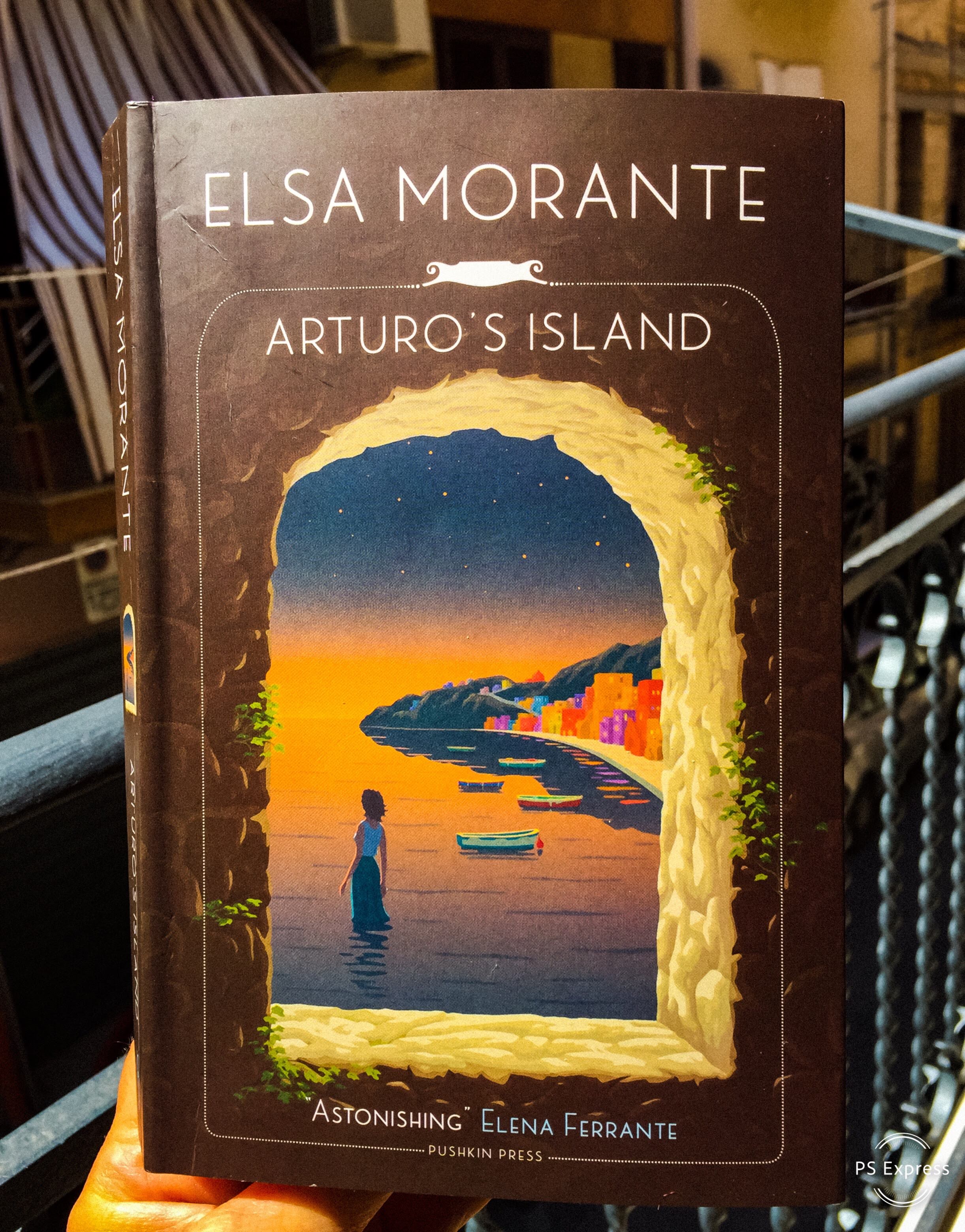
This is what I read when I was in Sicily:

0B6F6479-676E-4A5A-A590-6761D8016539
I figured if Elena Ferrante liked it, I would too, and I did.  “’I don’t feel like seeing Procida grow distant and indistinct…I’d rather pretend it didn’t exist. So until the moment you can’t see it anymore, it’ll be better if I don’t look…’
And I remained with my face against my arm…until Silvestro shook me gently and said: ‘Arturo, come, you can wake up.’
Around our ship the sea was uniform, endless as an ocean. The island could no longer be seen.”

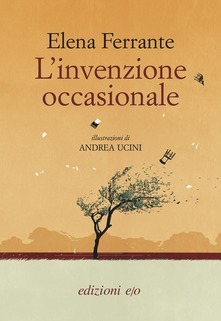
L'invenzione
If I ever get back to learning Italian, I’ll read this collection of essays by Elena Ferrante I bought in Palermo. The essays are about a page each, manageable for a language learner.

Our airbnb was in the old city of Carini. It had a small, shuttered balcony that opened to the noisy, busy, colorful street, almost like another room. We made friends with the neighbors across the strada and chatted with them from our balcony in the evening. Here, a mamma and her figlio, with the neighborhood dogs chiming in:

We’ve been lucky to have been able to travel to see extended family and our ancestral lands.  I feel as though I have a second home far away and a fuller, more complete identity, anchored in a specific time and place in history. I hope we’ve given that to our sons, too, and that the younger generations – in Italy and Sweden – will someday come to visit their cousins in America.

8DE5A32F-B3DC-4878-B147-968DBE10E02B.jpeg
Grandma and me, Cleveland, Ohio, circa 1960.

SicilianSunset.JPG
Sicilian sunset

“Take a moment and look at your life from the perspective of being an ancestor. You are with those who came before you and those yet to be born looking back at your descendants as they live their lives moving forward in time. Imagine that you can see your entire lineage from the first born to the last in your line. Imagine yourself as an ancestor, one of the thousands whose love expresses itself and is embodied now in your descendants. Who we are at this moment in time is a result of the countless generations that have come before and a response to the generations that will follow…..  –  Sandra Easter, Jung and the Ancestors

What I found in Sweden, Part 1

IMG_6070
This is the Kattegatt, a sea off the coast of western Sweden, sometimes considered a bay of the North Sea and the Baltic Sea. Many kinds of seabirds nest here. Photo by A. Hallinan.


Mormor

I’d just have to trespass. It seemed no one was home, and I’d come so far.

Some 4,949 miles, according to Google Maps, from central Oregon to Långås, Sweden – hoping to find at least one of the three farmhouses Mormor (Swedish for maternal grandmother) had lived in before coming to Cleveland, Ohio when she was sixteen in 1914.

My son, Andrew, and I were standing in front of one of her former homes, a classic red Swedish farmhouse that matched the photo I’d kept buried with other family papers in a box for years. We were here thanks to my incredibly kind and knowledgeable Swedish fifth cousin, Jan, whom we’d connected with after my nephew and I had DNA tests.

After Jan wrote to us, I sent him family photos and some facts about my maternal Swedish grandparents. A few days after I arrived in Sweden, Jan sent me the GPS coordinates for one of Mormor’s childhood homes. And here we were – in stunningly beautiful Halland county, flat and lush green, on Sweden’s west coast.

A few housing developments dotted the landscape, but mostly this was still wide open agricultural land with old, old farmhouses like my grandmother’s, and squat, black windmills built long before my grandmother’s time, with modern wind turbines close by as well.

It was late afternoon, mid May, but the sun was still high, this being Sweden with its long days. I stepped into the yard while Andrew stayed behind the property line taking pictures.

I walked around the grounds, marveling at the obvious care with which the old exterior architectural details had been preserved.


IMG_9878
A hidden retreat next to an old stone wall in the backyard


I took my time, communing with this ancestral home and the spirits of those who’d lived there once upon a time, marveling that Mormor had left 105 years ago, never to return. Did her hands touch this old doorknob? Maybe she had the key for this old lock. Where would the garden have been that she must have helped tend?


What would Mormor think of her granddaughter and great grandson making a pilgrimage to this place? I wanted to leave the owners a note – we still had time to return the next morning before the next leg of our trip – but for once in my life I had no pen or pencil.

Jan had also given me the name and approximate location of another house where he said my grandmother had been born.  I had no photo for this house, or any other information besides what Jan had given me. Andrew and I decided to drive there, next. I didn’t think we could top what we’d just seen – but I was wrong.


IMG_9885
They did not seem pleased to see us when we arrived at our second location, where one of the old houses bore the name of the farm where Jan said my grandmother had been born.


At this second location, a cluster of farmhouses, Andrew and I stood debating. Which of the houses would have been my grandmother’s birthplace? I thought it must be the house with the old sign – Lönestig gård – the name Jan had given me – but Andrew thought it might be one of the houses across the road. As we approached those homes, I debated whether I should knock on one of the doors.

Just then, a woman came across the meadow, walking five magnificent dogs – two fluffy, snow-white Pyrenees and three sheep dogs. She studied us – we were obviously strangers in these parts. I introduced myself and Andrew.

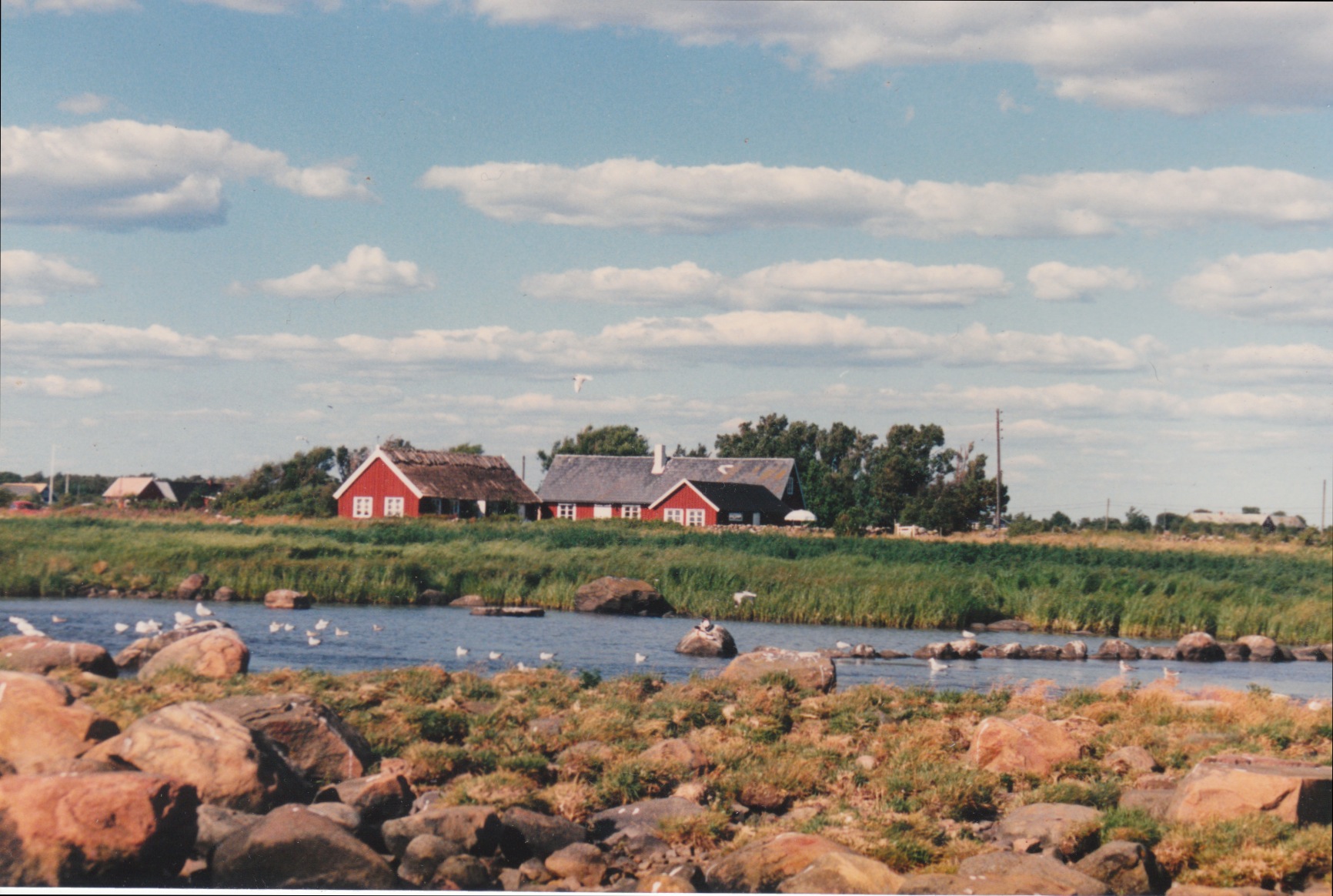
“We’re from the United States,” I said. On a hunch, I decided to show her another old photo I’d had for years, of yet a third farmhouse my grandmother had lived in, directly on the sea. I’d always loved the photo’s romantic aura, with seabirds, rocks and water.

“We’re looking for this farm,” I said, taking out my smartphone and pulling up the photo. “It was where my grandmother – my mormor – lived.”

Louise gazed at the photo for a moment. “I know this house,” she said. “I’ll take you there.”


MormorFarm
My photo of Mormor’s farmhouse on the sea that I’ve had for years


This is where Louise took us:


IMG_9895 (2)
The farmhouse, found.


We stayed for a couple of hours, talking, talking, talking with the current owners. We met Lars, who lives in one portion of the house with his wife, and Lennart, who resides in what was once the boathouse.  The farmhouse is directly on the sea – we walked way, way out on the rocks. Lars told us many species of seabirds nest in this protected area. It was still bright daylight even though it was nearly 8 pm; it felt as though the universe was making the day longer just for us, to give us more time to linger.

Lennart invited us into his portion of the house. He dug out a regional history book in Swedish, and there we found a photo of my great grandparents. Lennart gave me the book as a gift.


Swedishfarm
Lars lives in the main house. Louise, on the right, led my son and me to Mormor’s house. You can see the house on the horizon. The shadow belongs to my son.


IMG_9896
You can walk to the sea directly from Mormor’s house.


After our visit with Lennart and Lars and the old farmhouse, Louise invited us to her home nearby, where she raises prize-winning sheepdogs. When I stepped into her old classic Swedish farmhouse I was astonished; it was like walking into one of the Carl Larsson prints I’d hung in my upstate New York home for decades.

IMG_6138
Detail from Louise’s kakelugn, an old masonry heater or stove. (A. Hallinan)

Louise has an old, Swedish floor-to-ceiling stove that heats the entire house, and a spacious Swedish kitchen and dining room with a wall of windows to let in as much light as possible on dark winter days.

And best, best of all, a few days later Louise connected me with two of my closest Swedish relatives!! I haven’t seen them yet – that’s for the next trip.

In everyone we met on our sojourn, I sensed a strong, deep love for this corner of Scandinavia and it’s beautiful natural world.

Countless thanks to Jan, Louise, Lars, Lennart, and all our new Swedish friends who helped my son and me dive deeper into our family history.

*****


Below is a book about how knowing little about our ancestors may not be the best thing, and how learning about them can heal us. I’ll let you know when I finish reading what I think and how its insights might impact my family history research. So far, a couple of chapters in, I’m fascinated.


JungAncestors


More family history discoveries to come on my next post, about Morfar (Grandpa).


414D253B-F4CD-40D7-AB72-5EE3DE0B1907
My son and I stayed in Falkenberg a few blocks from the sea.


What I was reading, etc, etc:

I read The Royal Physician’s Visit by Per Olov Enquist as I travelled, a fictionalized account of the mentally ill Danish King Christian VII, his young wife Caroline Mathilde, and the king’s physician (Johann Struensee) who tried to enact Enlightenment reforms that were not appreciated by the people. Later in my trip, I bought The Wandering Pine, an autobiographical novel I haven’t read yet.


Below are scenes from Waldemarsudde in Stockholm, the former home of Prins Eugens, now a gorgeous museum. My friend, Darlene, and I lingered a long time in this beautiful place. The day we visited there was an exhibit about an art colony in Grez, France, where many late 19th century and early 20th century Swedish artists went to paint. The lower left photo is part of a Carl Larsson painting of his wife, Karin (who was also an artist), and their child, entitled “Lilla Suzanne” (Little Susanne). The lower right painting is by William Blair Bruce, “Plein-Air Studio.”


IMG_6117
The Kattegatt. This photo, and the first sea scene in this post, are views from Mormor’s farm. (A. Hallinan)


Next on Books Can Save a Life:

What I found in Sweden, Part 2

Enchanting Sicily, and a wedding

In Sweden, what will I find?

Swedish farm
Will I find them? I have photos, but no addresses, of the two Swedish farms where my grandmother lived at the turn of the century. At the farmhouse above, my mormor, Hulda, helped her mother and father with baking, cleaning fishing gear, etc.


I am in Sweden for the first time, exploring Stockholm with a friend, preparing for a journey west to research family ancestry with my son.

I’d like to find at least one, if not both, of the farms near Falkenberg and the North Sea where my grandmother (mormor) lived. I have photos, but no addresses.

I’d like to find out more about my mysterious grandfather (morfar), who was said to have been orphaned in a flu epidemic and who sailed for America a few days behind the Titanic, having missed that ill-fated ship because of a rail strike in England.

For the most part, seeing extended Swedish family will have to wait until another trip to Sweden, although we do have plans to meet up with a distant cousin. Many years ago when I was living in New York City, two Swedish cousins came to sightsee and I had a great time showing them around. They have both since passed away. My aunts visited Sweden a few decades ago and saw many cousins, but there is a new generation now whose addresses I don’t have.

We’ll see what I find this time around.


img_9213-e1557127103197.jpg
Morfar and Mormor: Ivar Emmanuel Håkansson and Hulda Viktoria Johansson


IMG_9220
My maternal great grandparents – stora farföräldrar – on their 50th wedding anniversary


DoctorGlas
“How is it to be done? I have known a long while now. Chance has so arranged matters that the solution is as good as given: my potassium cyanide pills which I once made up without a thought to anyone but myself, must be brought into service.”  Doctor Glas, by Hjalmar Söderberg

I brought with me the classic Swedish novel Doctor Glas, a brooding, psychological period piece that foreshadows modern-day themes of euthanasia and abortion. Margaret Atwood wrote the foreword to the paperback edition I have.

It has been intriguing to find turn-of-the-century landmarks, such as restaurants and museums, mentioned in the novel as we pass by them sightseeing around Stockholm.

And there is the unusual, early morning light of the 4 am Swedish spring sunrise – Atwood mentions eerie evening light below.

“Doctor Glass is deeply unsettling, in the way certain dreams are – or, no coincidence, certain films by Bergman….the eerie blue northern nights of midsummer combined with an unexplained anxiety, the nameless Kirkegaardean dread that strikes Glas at the most ordinary of moments….It occurs on the cusp of the nineteenth and twentieth centuries, but it opens doors the novel has been opening ever since.”   – Margaret Atwood


130A6BB9-55E3-4769-BA44-8CFF5E072DCF
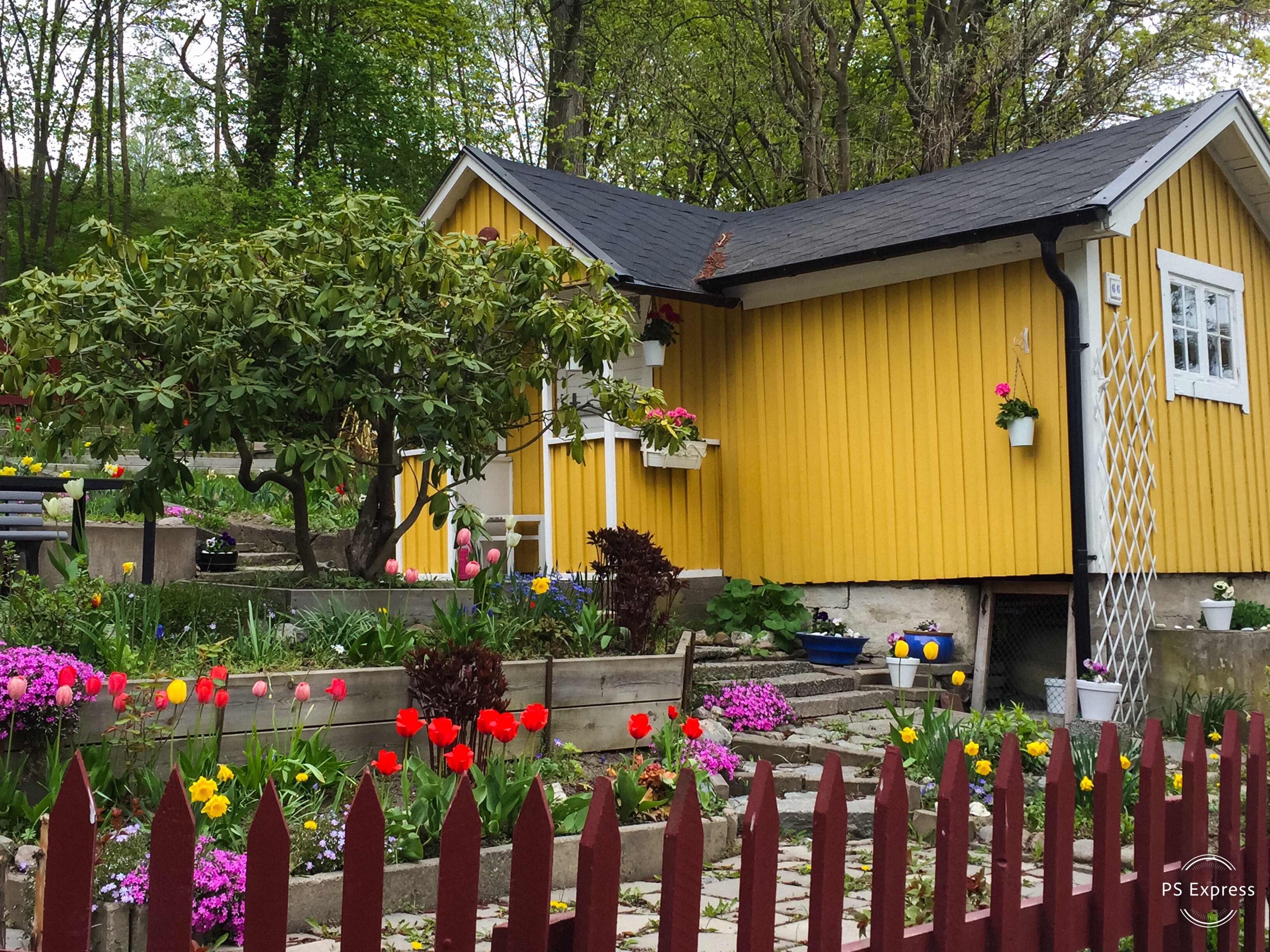
A city garden allotment in Eriksdalslunden, Stockholm on the Årstaviken inlet/canal. Imagine living in a beautiful, spacious pre-war apartment in Stockholm and having your very own garden hideaway several city blocks away. You can be placed on a waiting list for one of these coveted allotments, but you will wait 30 years!


In Stockholm, I found my way to a city park, which gave way to an enchanting neighborhood of garden allotments along the water, with a public, tree-lined hiking path. I saw the following passage in Swedish on a plaque. I used Google Translate to decipher it. Because that tool is imperfect, I took liberties and edited the passage, so it’s not a literal translation:

“From the cottages on the slopes above the Eriksdalslunden, with its aspen and small flowering gardens, look down to the water and the dark wilderness of coniferous forests across thew way; it’s as if you’ve been transported to Sweden’s Norrland (Northland). – Architect Osvald Almqvist, 1930s


3023A171-F5A2-4380-A1AE-70F54903FFD8.JPEG
This garden allotment (kolonilottor) reminds me of a Carl Larsson painting.


EEDD311F-B4B6-4AEC-870F-BA4615D99650
Allotment spring flowers (blommor)


IMG_9569
Parked along the Eriksdaslunden path


Birdsong and flowers in Eriksdaslunden:


F2AB3C69-C8E4-4270-B4F7-F35660C9E1D6.JPEG
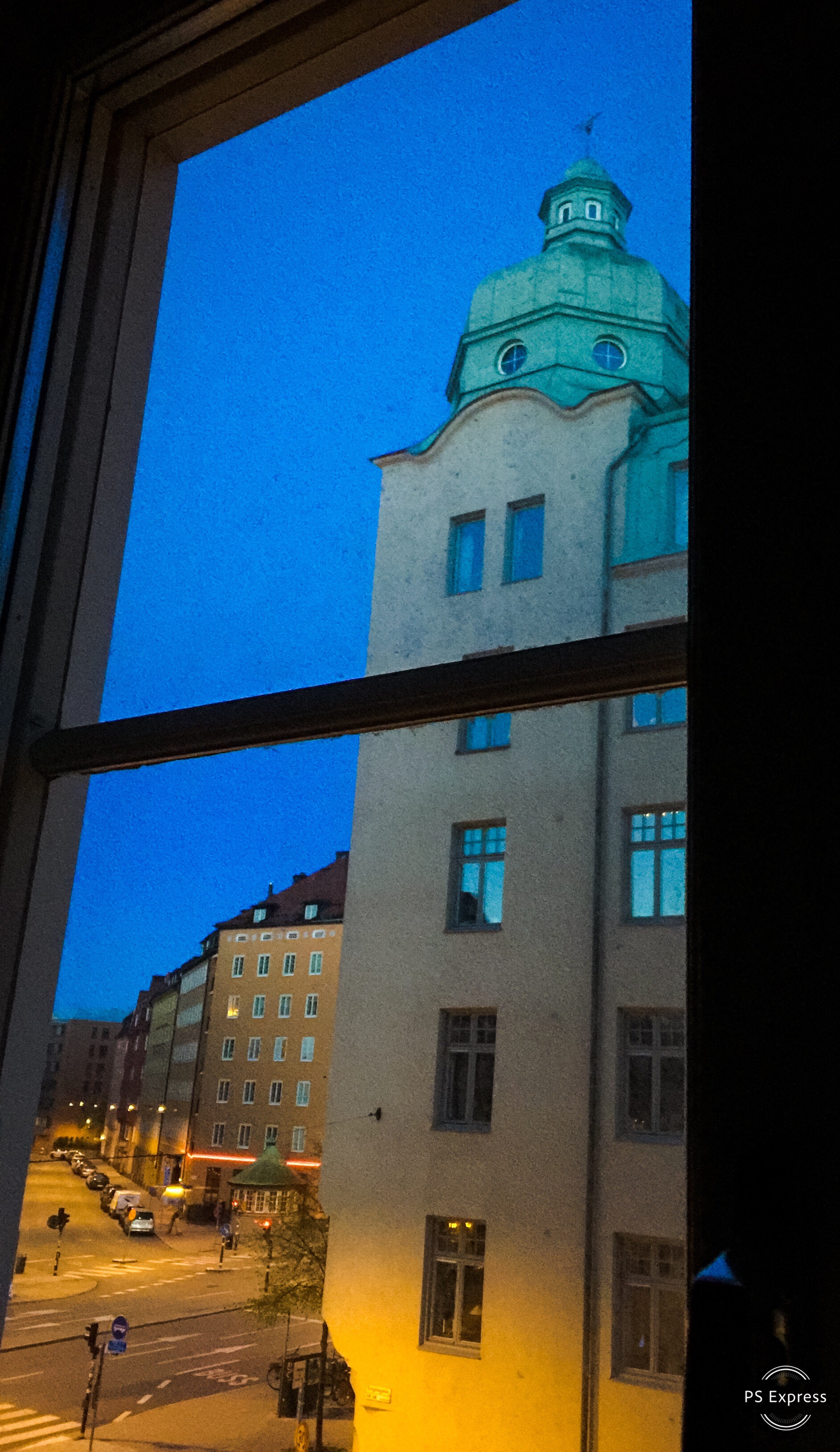
View from my airbnb in Skanstull, Stockholm, on Sunday morning, 6 am.


IMG_9594.JPG
The quaint old elevator in our airbnb. Or I can walk two floors up on a winding staircase.


IMG_9592
Good, strong Swedish coffee in a konditori, with cardamom and cinnamon buns, budapests, and princesses (these are the names of various desserts).  No such thing as decaf here.


GreatEnigma

I’ve been carrying around (and not so much reading) the poetry of Swedish poet Tomas Tranströmer. Here, his poem about espresso:

The black coffee they serve outdoors/among tables and chairs gaudy as insects.

Precious distillations/filled with the same strength as Yes and No.

It’s carried out from the gloomy kitchen/and looks into the sun without blinking.

In the daylight a dot of beneficent black/that quickly flows into a pale customer.

It’s like the drops of black profoundness/sometimes gathered up by the soul,

giving a salutary push: Go!/Inspiration to open your eyes.


IMG_9612.JPG
Tomas Tranströmer 1931 – 2015. His grave is in the Katarina Church cemetery in Stockholm. Many prominent Swedes are buried there, including actor Michael Nyqvist of The Girl with the Dragon Tattoo fame.


IMG_9280.JPG
Katarina Church, Stockholm


FB3DBEFD-3D7F-490E-95B8-43C685E3CEDB.JPEG
Stockholm light at 4 am.