Closing 2015 with The Story of the Lost Child

Little girl statue edited
Little girl at Casa Guidi


Opening 2016 with a poem

I ended 2015 reading Elena Ferrante’s fourth and final Neapolitan novel, The Story of the Lost Child, and this first week of 2016, a poem of mine, “At Casa Guidi,” was published in Loveliest Magazine.

Italy. Children. Creativity. I hadn’t planned this, but the poem and Ferrante’s novel have these in common. (The similarities end there – Elena Ferrante is a world-renowned author; I’m a novice poet.)

First, the poem. Some years ago I traveled to Florence with my sister-in-law, and we visited Casa Guidi, the home of Elizabeth Barrett Browning and Robert Browning in the Oltrarno quarter, where many artists and writers lived. Later, recalling our visit, I was inspired to write “At Casa Guidi.”

Loveliest Magazine, a new venue “for storytelling and togetherness,” caught my eye when I read the words “slow-lifestyle” and “literary” to describe its cross-genre purpose. That’s me, for sure, so I thought my poetry might be a good fit. Beautifully written and produced independent literary and lifestyle publications such as Loveliest often look for good fiction, poetry, and essays; if you’d like to see your work published consider submitting to these in addition to traditional literary journals.


Little boy statue edited
Little boy at Casa Guidi


If you are ever in Florence, be sure to visit this quieter part of the city, the Oltrarno, which literally means “beyond the Arno River.” In addition to the must-see attractions and many great works of art, Oltrarno streets are lined with stationery stores featuring the things writers love: Italian-made note papers and leather journals, ornate fountain pens, inks in every shade and color. When I was there, I bought a small, leather-bound copy of Sonnets from the Portuguese, and my sister-in-law bought a print of Leonardo Da Vinci’s Last Supper.

Closing 2015 with Elena Ferrante

I’ve written about Elena Ferrante’s Neapolitan novels in a previous post.  The Story of the Lost Child is Ferrante’s fourth and final novel in her Neapolitan series. The books are a probing look at the inner life of a writer; a family saga; a soap opera; a history of Italian feminism, culture and politics; and more.

So much has been said about these singular, internationally bestselling novels and their mysterious author, who publishes under a pseudonym, that I’ll simply add my thoughts here. (That we don’t know the identity of the author adds to the power of her work, in my opinion.)

If you look at the book covers you’ll see dreamy, idealized illustrations that are misleading: the story of the lifelong friendship between Lila and Elena, born in Naples just after World War II, can often be raw, brutally honest, and bleak. The book covers belie the content, but perhaps that was intentional, as if to say: think again if you expect a story filled with roses and happy endings….

I wouldn’t say I was always entertained by the books, because they can be relentless in their depiction of Napoli poverty and the battle between the sexes in an era when feminism blossomed. But, as many readers do, I became obsessed with Lila and Elena and had to keep on reading to see what became of them.

  • Ferrante’s work is especially meaningful to me because my father was Sicilian. Now I better understand the values, traditions, and struggles of my Italian ancestors and how these may have had an impact on my own childhood. The cultural history of Italy and its focus on family reminded me of one of my favorite Italian movies, The Best of Youth. Although I have not yet read My Struggle by Karl Ove Knausgard, it sounds as though Ferrante’s penetrating look at the psychology of growing up and growing older may have similarities with Knausgard’s autobiographical series.
  • As a writer, I was especially taken with Elena’s love/jealousy/hatred of her friend, Lila. Though Elena was the outwardly successful one, with several novels published and lauded as a scholar of literature and culture, she always believed Lila was the more talented of the two, the one with wildness, fire, and true originality.  It’s often a struggle when I write to break out of my safe, everyday self and give creativity free reign. The genius of the Neapolitan novels is that Elena and Lila’s story can be read as the author’s own creative struggle with a psyche split in two.


IMG_2446


Elena and her friend, Lila, are strong women, survivors. Here is Elena during the earthquake in Naples, 1980:

“I felt that fear in me could not put down roots, and even the lava, the fiery stream of melting matter settled in my mind in orderly sentences, a pavement of black stones like the streets of Naples, where I was always and no matter what at the center. Everything that struck me–my studies, books, Franco, Pietro, the children, Nino, the earthquake–would pass, and I, whatever I among those I was accumulating, I would remain firm.”  – The Story of the Lost Child by Elena Ferrante
 

My Brilliant Friend book coverThe Story of a New Name book coverThose Who Leave and Those Who Stay book cover

Our Souls at Night

Our Souls at Night book cover

“I wonder if you would consider coming to my house sometimes to sleep with me.”

“What? How do you mean?”

“I mean we’re both alone. We’ve been by ourselves for too long. For years. I’m lonely. I think you might be too. I wonder if you would come and sleep in the night with me. And talk.”

He stared at her, watching her, curious now, cautious….

….he stood at the door watching her, this medium-sized seventy-year-old woman with white hair walking away under the trees in the patches of light thrown out by the corner street lamp. What in the hell, he said. Now don’t get ahead of yourself.”

Our Souls at Night by Kent Haruf

There is no writer quite like Kent Haruf. He’s been a favorite of mine for a long time. I wrote about his other novels, Plainsong (my favorite), Eventide, and Benediction here.

Haruf passed away a year ago, and his final novel, Our Souls at Night, about the blossoming of an older couple’s relationship, was just published.

Like his other novels, Our Souls at Night takes place in the fictitious eastern Colorado town of Holt. I’m not going to say too much about this book because Haruf’s writing doesn’t lend itself to heavy analysis; I think that might ruin it for readers new to this author.

Instead, I’ll refer you to this review by Ursula Le Guin, who greatly admires Haruf’s writing and does a good job of summarizing Haruf’s themes, characters and style.

If you are new to Kent Haruf, you could start with Plainsong. I think you’ll be entranced by the characters in the lonely little desert town of Holt and you’ll want to read the other books.

Our Souls at Night would make a wonderful holiday gift.

“They stopped in one of the towns for hamburgers and then drove up the highway through the Arkansas River canyon, the beautiful fast water, steep red jagged cliffs on each side, there were Rocky Mountain sheep along the road, all ewes with short sharp horns, and went on and then turned off toward North Fork Campground on County Road 240 and entered the national forest…..They could hear it running and rushing. The clear icy water, with brook trout holed up in the hollows below the rocks. There were tall fir trees and big ponderosas and aspen along the creek and back in the hillside.”

The Wonder Garden

The Wonder Garden book cover

“She opens her eyes and looks at the television, a car commercial. An American couple achieves the top of a mountain, commanding a vista. She breathes in and breathes out. It is all right to retreat. She will pull back, she will redraw her boundaries. She will find her balance. When she emerges again, she will be refreshed, reenergized. She will be the best Rosalie she can be. The best and only.”

The Wonder Garden is a collection of exquisite short stories by Lauren Acampora, a new writer whom I’ve added to my “read-everything-by-this-author” list.

I’ve been reading more short stories lately, and I especially like these because they are linked: a protagonist in one story appears as a supporting character in the other stories, so that the collection reads like novel.

The stories are wickedly funny, psychologically complex, dark, uniquely American, and occasionally bleak – but leavened with an understated joy in the ebbs and flows and seasons of life. Living in suburbia and having raised children there, I find them so resonant.

Fictitious Old Cranbury is John Cheever and Mad Men territory, except post 9/11: an upscale Connecticut town on Long Island Sound, the home of a few have-nots but mostly haves. There is a memorial dedicated to five fathers who worked for Cantor Fitzgerald and were killed on September 11.

The houses of Old Cranbury form a motif that further links the stories. The restored salt boxes and farmhouses, pretentious mansions, and humbler ranches fitted with granite countertops and fake shutters reflect their inhabitants’ aspirations and obsessions.

Acampora has compassion for her characters, but she can be scathing, too. Rosalie, for example (see above quote) is the type of hyperactive suburban mother who does everything and knows everyone and gives over her life to her five children: she is on the school board, she is prominent in the PTA, she hosts a book club, she makes themed halloween costumes for the entire family, including her brain surgeon husband. She is a good Christian woman who understands she has been greatly blessed and decides to host a poor Bangladeshi foreign exchange student for a semester.

There is a wonderful turning point in the story when the student, Nayana, expresses her sympathy for Noah, Rosalie’s youngest.  Rosalie is puzzled by this, and Nayana explains that Noah had revealed his true history to her: he was adopted into the family, having lost his birth father in 9/11. Noah’s story is sheer fabrication and Rosalie is horrified, having seen to it that her children have lacked for nothing.

Confronting Noah, she is undone by this previously unseen side of her son: it may as well be true, he says, because his neurosurgeon father is never around, implying that Rosalie, too, is lacking as a mother. Concurrent threads in the story reveal that the all-male members of the school board condescend to Rosalie and, most chillingly of all, her husband seems to view her with contempt.

I disliked Rosalie and was highly entertained by her, but at the same I recognized that, though she works hard and means well, she is an aging, marginalized woman in what is still a sexist culture. She is in many respects a throwback to the 1950s, pre-feminist, stay-at-home wives.

Another story is about a young single mother who meets a brain surgeon (yes, Rosalie’s husband) and really believes he will whisk her away to a glamorous life in Paris.

The brain surgeon gets his own story, and we find out he has a few really bizarre secrets of his own.

I loved the aging artist and his wife who transcend themselves to make one last work of art.

Then there’s the newly married advertising executive compelled to leave his job so he can follow his animal spirit.

And the 50-something real estate broker caught in traffic who decides to just stop; she turns off the ignition as cars maneuver around her and spends a long night in the driver’s seat, reviewing her life.

Here is a couple who live as though it’s the 18th century and regularly attend early American reenactments. I recognize this ritual of the children leaving home after a holiday visit:

“The next morning, Cheryl and Roger drive them to the airport. They embrace at the security gate. Both parents resist the itch to remind and advise, to command their son to complete the semester, to tell their daughter to skip Afrikaans. Instead, they let their children pull out of their arms and join the security line. They watch them remove their shoes and put them on the conveyer belt….They watch their children pass through the metal detector’s trellis and, on the other side, give a brief wave and disappear around a corner. They will sit together for the six-hour flight, then part ways in San Francisco, one aimed south, the other east. By the time the sun sets in New England, they will be speeding over freeways their parents have never driven, along the lurid blue coastline at the edge of America….”

In another story, the young adult children of some of the characters we’ve met go to a music festival, including Noah, Rosalie’s son, now a few years older. I love the final image in this passage, where we see Old Cranbury from the perspective of a young person who grew up there:

“Eventually, she will distance herself from the incident, tamp it into a story she tells at parties. She will put herself apart from the man who died. He was fundamentally different, she will rationalize, not from Old Cranbury, unanchored by good parents and constructive surroundings….Far off to the side, before the parking lot, Bethany notices a gathering of people on an open field. This would be the morning yoga session, offered to those able to rise early enough, still interested in breathing. The rows of people move in sync, adopting the same poses, configuring and reconfiguring their limbs like children experimenting with their bodies. Bethany watches as they all bend at once to plant their hands upon the bare field, then arch up in unison, a hundred arms saluting the sun.”

Oh, and, by the way, we haven’t seen the last of Rosalie, who rises like a phoenix in the final story.

Lauren Acampora lives in a suburban town much like the one she depicts. Her husband is an artist, and one of his works is the cover art for The Wonder Garden.

This is one book to add to your holiday wish list, and it’s a great book club choice.

Here is a video that features Lauren Acampora and her husband:

The Collapse of Western Civilization (in 50 pages)

WesternCivilization“The year 2009 is viewed as ‘the last best chance’ the Western world had to save itself…”

The Collapse of Western Civilization is a disturbing 50-page work of fiction that reads with the authority of nonfiction.

In the Second People’s Republic of China in the year 2393, a scholar writes an account the Great Collapse of 2093, brought about by failure to take action on climate change.

Pair it with CCR’s Bad Moon Rising; you can read it in an hour or two.

The book came about when co-author Naomi Oreskes, a geologist and historian who teaches at Harvard, reviewed the scholarly literature on climate change to see if indeed there was a lack of consensus among scientists, as is often claimed.

After looking at 1,000 peer-reviewed articles, she concluded that in fact scientists do agree that a high concentration of greenhouse gas is causing climate change.

When Oreskes published her findings in Science, she was championed by the likes of Al Gore. At the same time, to her astonishment, she began receiving hate mail. As she said in an interview, articles published in the scholarly literature are typically ignored by the public.

She and coauthor Eric Conway hoped a work of fiction that remained true to the facts of science might change opinions. Conway is a fan of science fiction and has been especially influenced by Frank Herbert’s Dune and Kim Stanley Robinson’s trilogies about Mars and climate change.

It’s unsettling to read about ideas and ways of life that we take for granted portrayed as extreme short-sightedness, self-delusion, and magical thinking.  The Collapse of Western Civilization will give you a jolt. It’s a quick, page-turning read to put you in a receptive frame of mind when the UN/Paris Climate Change Conference begins on November 30.

Here are some excerpts:

“There is no need to rehearse the details of the human tragedy that occurred; every schoolchild knows of the terrible suffering. Suffice it to say that total losses – social, cultural, economic, and demographic – were greater than any in recorded human history. Survivors’ accounts make clear that many thought the end of the human race was near.”

“At the time, most countries still used the archaic concept of a gross domestic product, a measure of consumption, rather than the Bhutanian concept of gross domestic happiness to evaluate well-being in a state.”

“…survivors in northern inland regions of Europe, Asia, and North America, as well as inland and high-altitude regions of South America, were able to regroup and rebuild. The human populations of Australia and Africa, of course, were wiped out.”

Commonly used terms that we don’t question are cast as old-fashioned and obsolete in the Lexicon of Archaic Terms at the end of the book:

“capitalism: ….One popular notion about capitalism of the period was that it operated through a process of creative destruction. Ultimately, capitalism was paralyzed in the face of the rapid climate destabilization it drove, destroying itself.”

“invisible hand: A form of magical thinking, popularized in the eighteenth century, that economic markets in a capitalist system were “balanced” by the actions of an unseen, immaterial power, which both ensured that markets functioned efficiently and that they would address human needs. Belief in the invisible hand….formed a kind of quasi-religious foundation for capitalism.”

“Period of the Penumbra: the shadow of anti-intellectualism that fell over the once-Enlightened techno-scientific nations of the Western world during the second half of the twentieth century, preventing them from acting on the scientific knowledge available at the time and condemning their successors to the inundation and desertification of the late twenty-first and twenty-second centuries.”

Coming Back to Life book coverFor an antidote to all the doom, read Joanna Macy‘s books, Coming Back to Life and Active Hope: How to Face the Mess We’re In Without Going Crazy. See also her short film, Joanna Macy and The Great Turning, about civilization’s shift from industrial growth to sustainability.

Have you read any good books about climate change? Are you planning to follow upcoming events related to the UN Conference on Climate Change? Are there local activities planned for your area?

Nine books that can (help) save the planet

Laudato Si books

It still amazes me that there has not been more discussion of climate change in the media in the United States, nor have the presidential candidates said much. But we seem, finally, to have turned a corner; more people are paying attention.

Recently, stories have been published about Exxon’s alleged campaign of climate change disinformation and denial, while another industry leader has pledged to be carbon neutral by 2030. This week’s Hurricane Patricia was the strongest hurricane ever recorded at sea, while climate scientists expect 2015 to be the hottest year on record. I’ve a son living temporarily in southern California, and I just read that mosquitos carrying dengue, chikungunya, and yellow fever have arrived. Scientists believe they are rapidly reproducing in part because of the drought.

Countries around the world are preparing for the 2015 UN Conference on Climate Change to be held in Paris November 30 – December 11. There will be climate marches in major cities around the world on November 28 and 29 and a Mass Mobilization and Civil Disobedience Action in Paris on December 12.

When Pope Francis visited the United States in September, he spoke to Congress, the United Nations, and other groups about the need for action on climate change, framing it as the greatest moral issue of our time. His climate change encyclical, Laudato Si’: On Care for Our Common Home, calls for the world to adopt an integrated ecology that combines eco-justice, which understands the earth has limits, with social justice, which recognizes that the poor are the hardest hit by the ravages of climate change.

The Pope calls for “a revolution of tenderness, a revolution of the heart” in regards to the earth and the earth’s poor.

The Huffington Post article at this link is a brief and excellent introduction to the concept of integral ecology. The author of the article, a former NASA researcher, says: “The fates of all peoples are linked, and they are linked ultimately to the fate of the earth. What befalls the earth befalls us all.”

Here is a link to the Buddhist perspective on climate change: A Buddhist Declaration on Climate Change

If you will be following the UN Conference on Climate Change and would like to do some reading beforehand, here are eight more of my favorite fiction and nonfiction titles that are relevant:

Arcadia book coverArcadia, by Lauren Goff

Flight Behavior, by Barbara Kingsolver

The Collapse of Western Civilization, by Naomi Oreskes and Eric M. Conway (See my next blog post about this fascinating fictitious “report,” written in 2393 from the Second People’s Republic of China, chronicling reasons for the collapse of western culture.)

This Changes Everything, by Naomi Klein

The Sixth Extinction, by Elizabeth Kolbert

The Great Disruption, by Paul Gilding

The End of Nature, by Bill McKibben

The Only Kayak, by Kim Heacox

And if you are an earth and nature lover, you absolutely must acquaint yourselves with these writers if you haven’t already:

Wendell Berry (essays and poetry); Mary Oliver (poetry); Barry Lopez (See “The Case for Going Uncivilized.”)

This Changes Everything book cover

Pope Francis spoke with great passion and love about families during his visit to the US. There are many parallels between our nuclear families and the family composed of all creatures on mother earth, aren’t there?

Are you planning to participate in any climate change events before or during the UN Climate Change Conference? Do you belong to a climate change group? If you’ve read other good books about the topic, please let us know in the comments.

If you believe we need to act to prevent disastrous climate change, please share this post on your favorite social media.


Circling the Sun

A life has to move or it stagnates. Even this life, I think. Every tomorrow ought not to resemble every yesterday.”  Beryl Markham

Circling the Sun book cover

If you want one last, lush, escapist summer read, consider Circling the Sun by Paula McLain, a fictionalized account of the life of Beryl Markham,  the first woman to fly across the Atlantic from east to west.

Born in England and raised in Kenya, Markham was a larger-than-life adventuress and socialite – a renowned horse trainer, an accomplished bush pilot, perpetually in the spotlight of gossip and scandal.

Especially if you’re a woman of a certain age, you might remember the romantic Out of Africa, a 1985 movie based on the memoir by Dutch writer Isak Dinesen (Karen Blixen), who for some years ran a coffee plantation near Nairobi. Karen, played by Meryl Streep, had a long-term affair with charismatic safari hunter Denys Finch Hatton (Robert Redford.) Denys had the power to make women of the day swoon, but was adamantly against commitment and marriage. Karen and Beryl became friends, and Beryl went on to have a secret, short-lived affair with Denys.

Though Beryl married three times and had other lovers – allegedly one of them Prince Henry, Duke of Gloucester –  many believe that Denys Hatton was the true love of her life. Author Paula McLain is adept at writing about affairs of the heart – she did a masterful job in depicting Ernest Hemingway’s first marriage in The Paris Wife – and she depicts Beryl’s affair with Denys in a sympathetic light, while plumbing the depths of the friendship between Beryl and Karen, who were in many respects kindred spirits even though they loved the same man.

I enjoy Cleveland-based author Paula McLain’s writing. She was drawn to Beryl Markham’s story when she learned that Beryl’s mother abandoned her at the age of four, only to reappear again when Beryl was twenty – which is exactly what happened to Paula McLain. She calls it a “shared emotional genealogy.” McLain writes with particular authenticity and empathy as she explores the lifelong effects, both good and bad, of maternal abandonment.

Despite Beryl’s remarkable feat of aviation, there isn’t a whole lot about flying in this novel. McLain instead focuses on the first half of Beryl’s life – her remarkable childhood in Kenya as she grew up next door to and on an intimate basis with the Kipsigis tribes, and her years spent learning and perfecting her horse training skills. McLain portrays Beryl’s love of Kenya in lyrical prose that will cast a spell over you if you love exotic lands and nature still relatively unspoiled by the ravages of civilization.

I think that one of Paula McLain’s strengths is her depiction of remarkable women who have not received the attention they deserve. As I read, I chafed at the difficult lot of women in Beryl Markham’s time. In the 1930s, many women still survived by making a good marriage. In both The Paris Wife and Circling the Sun there is a distinct feminist subtext.

West With the Night book coverI’m now inclined to read Beryl’s memoir, West With the Night, which didn’t initially receive the acclaim that Dinesen’s memoir, Out of Africa, did, though it sold well when it was later republished. Some believe that Beryl’s third husband, a journalist, wrote the memoir, though I almost hesitate to write about what could be a sexist rumor. Maybe it doesn’t matter – Beryl Markham lived a remarkable life that many a man and woman envy. Ernest Hemingway had this to say about West With the Night:

“Did you read Beryl Markham’s book, West with the Night? …She has written so well, and marvelously well, that I was completely ashamed of myself as a writer. I felt that I was simply a carpenter with words, picking up whatever was furnished on the job and nailing them together and sometimes making an okay pig pen. But this girl, who is to my knowledge very unpleasant and we might even say a high-grade bitch, can write rings around all of us who consider ourselves as writers … it really is a bloody wonderful book.”

In Circling the Sun, Beryl says this about her lover, Denys:

“More than anyone I’d known, Denys understood how nothing ever holds still for us, or should. The trick is learning to take things as they come and fully, too, with no resistance or fear, not trying to grip them too tightly or make them bend.”

The publisher kindly provided an Advanced Reader Copy (ARC) of Circling the Sun.

Was Harper Lee ahead of her time?

Go Set a Watchman cover

As most of the world knows by now, Go Set a Watchman was an early draft of what went on to become To Kill a Mockingbird. Harper Lee turned Watchman in to her publisher in 1957, and her editor encouraged her to write a very different story.

Lee’s initial draft was about a young women (based on Lee herself) living in New York City who visits her Alabama hometown and clashes with the racist views of her father, Atticus Finch, and her boyfriend, Henry, in the aftermath of the 1954 Supreme Court Brown vs. Board of Education decision, which declared unconstitutional state laws establishing separate public schools for black and white students.

This story morphed into the iconic novel we all know and love, set in the 1930s when Harper Lee was a child and Atticus defended a falsely accused black man.

In my last post, I wrote about how Lee’s publisher has marketed Go Set a Watchman as a newly discovered novel, a sequel to To Kill a Mockingbird. This has confused, upset, and disappointed devoted Harper Lee fans. Some people believe Lee has dementia and would not have wanted this second book published. Harper Lee has stated in the past that she’d said all she wanted to say with To Kill a Mockingbird and that she would not publish again.

Nonetheless, we now have Go Set a Watchman, and before I ever opened the book I decided to read it to the end because I was curious. As many have pointed out, usually a first draft of this nature is of interest only to literature scholars and writers seeking to learn from another writer’s process. Now the rest of us have the opportunity to read a young novelist’s first attempt and make of it what we will.

Some things have surprised me. First, while many readers have been disappointed (as a novel it doesn’t work for me, but I didn’t expect it to), other readers are enjoying Go Set a Watchman, happy to experience more work by a beloved author. For some, Watchman is simply a good story; for others, it’s fascinating to read an author’s first crack at writing a novel; and still others see this new vision of an imperfect Atticus living in an imperfect time as especially relevant, given the racial tumult playing out in America. They find Watchman’s Atticus a more authentic, believable character than the idealized hero portrayed in Mockingbird.

Much as I dislike the publisher’s tactics, I do think Go Set a Watchman is a valuable contribution to our conversation about race. In the end, I don’t think Harper Lee’s reputation will be damaged. Nothing can take away from the power of To Kill a Mockingbird. And those who are interested in the genesis of truly great literature can see, by comparing the two books, how far and difficult a road a writer must sometimes travel to craft a story that speaks to readers. It’s been said that at one point in writing To Kill a Mockingbird, Harper Lee threw the manuscript out of her apartment window in despair.

There is something that I wonder about, though. Harper Lee initially tried to tell the story of a young person striking out on her own who can’t abide the attitudes and beliefs of those she loves in her hometown.  Isn’t this what many of us have experienced? At the time, Harper Lee’s editor may have persuaded her that American readers weren’t ready to grapple with the provocative views held by Atticus and Henry as Harper portrayed them. I think it is a shame that Harper Lee never had the opportunity to take her initial idea and give voice to that story as well, in a more fully formed and crafted novel than the current Watchman.

So much of Atticus, the fictionalized character, was based on Harper Lee’s true father. It takes a lot of courage to portray someone you love in a less than attractive light, and it takes a lot of skill. Contemporary writers of memoir and autobiographical novels do it all the time, but only a few succeed in doing it well. I’m sure Harper Lee had it in her to bring her original story to life, if she’d had the right editor and artistic support (clearly not those currently at the editorial helm of HarperCollins), but I’m not sure Harper Lee herself knew she had it in her.

Many have wondered why Harper Lee never published again. After the initial overwhelm of To Kill a Mockingbird’s publication, Harper Lee granted no interviews. Though she shared with friends a list of the additional books she wanted to write, she apparently never wrote them. She said herself that she couldn’t face the intense publicity again, and that she wouldn’t be able to top To Kill a Mockingbird, that the only place for her to go was down.

Who’s to say how Harper Lee really felt, but it may have been very frustrating for her if she was blocked in her writing after Mockingbird. Perhaps having her original story of a family portrayed in a less than flattering light rejected by her editor, and then being encouraged to craft a more idealized, palatable one, alienated Harper Lee from her own truth.

Writers of memoir and autobiographical novels often struggle with a sense of shame as they write the truth as they see it. Often they are criticized for being self-serving or narcissistic or for violating privacy. Cheryl Strayed’s Wild and Mary Karr’s The Liar’s Club are two memoirs that come to mind which required brutal honesty and tremendous courage to write. Nowadays, there are coaches, instructors, and editors skilled at helping memoir writers, especially, write their own truth; this wasn’t so much the case when Harper Lee was writing.

In Go Set a Watchman I see the seeds of an equally valuable story that may have been ahead of its time.

Have you read Go Set a Watchman? What do you think? Should it have been published? Has it changed your views of Harper Lee? How do Go Set a Watchman and To Kill a Mockingbird compare, or are they incomparable?

Go Set a Watchman: What do publishers and book bloggers owe their readers?

Go Set a Watchman cover

“To those whose bubble was burst about Atticus, well, Santa Claus was really our parents, Bill Cosby wasn’t really Bill Cosby, and Bruce Jenner is now Caitlyn Jenner. Let’s get over it and get real about racism. How can we fix it otherwise?” Wally Lamb

“It’s being sent to us as a gift. It’s a blueprint to decode, something that we need to be better than we are.” Nikky Finney

I don’t have insider information about the controversy surrounding the publication of Harper Lee’s novel, Go Set a Watchman. I know only what I’ve learned from the articles and opinion pieces I’ve read since the book came out a few weeks ago.

I’ve chosen to trust Harper Lee’s biographer, Marja Mills, who doubts that Lee would have wanted Go Set a Watchman published if she were fully functioning. Harper Lee had a stroke a few years ago and currently resides in a nursing home, where a guard posted at the door maintains a list of people who are allowed to visit her. Some have questioned whether Harper Lee is capable of making informed publishing decisions, especially since she maintained for decades that no further books by her were forthcoming.

Go Set a Watchman was the initial draft of what would be transformed into To Kill a Mockingbird. It was problematic because it was a draft written by a novice writer learning her craft, though Harper Lee’s editor saw the talent and potential behind it. What’s more, the Atticus Finch portrayed in this first draft was not the iconic hero America went on to embrace. He was an Atticus Finch that perhaps American readers were not ready for. Lee’s editor, Tay Hohoff, mentored and guided Harper as she crafted quite a different story, the one that became To Kill a Mockingbird.

Fast forward many decades. After Harper Lee’s sister, Alice, died (Alice was a lawyer who looked after Harper’s estate and protected her interests), Harper’s new estate lawyer and the publisher HarperCollins spearheaded the publication of the initial manuscript, the one Harper Lee had originally called Go Set a Watchman.  

The manuscript was lightly copy edited, but no substantive editing was done. Any revisions, of course, would have required consultations with Harper Lee and perhaps some rewriting on her part, which many believe she cannot do since she is nearly deaf and blind and may be otherwise incapacitated.

HarperCollins has marketed the book as another, newly found novel by Harper Lee.

I’ll save my opinions about the literary quality and content of Watchman for my next post. Here, I want to say how disappointed I am in HarperCollins and the current big business model of book publishing. The publication of Go Set a Watchman has been called a money grab on the part of a publisher capitalizing on Harper Lee’s name and reputation. I agree with that assessment.

Back in the day, I started my career as a book editor in educational publishing, and I’ve been told by a friend who has remained in the business that I wouldn’t be happy if I’d stayed. Books must rake in the profits. Literary and other books with less popular appeal are often not supported or even published in the first place, regardless of their artistic merit. Fortunately, independent publishers, university presses, and self-published authors are filling the gap to some extent; many are committed to producing literary works of art regardless of their profit potential.

I believe, too, that the publication of this unedited first draft shows a profound disrespect for Harper Lee and puts her at risk of an undeserved tarnished reputation.

What if the unedited first drafts of F. Scott Fitzgerald or Ernest Hemingway or Margaret Atwood were published and marketed as new novels? Might our opinions of them as writers change?

Writers, sculptors, painters and other artists have a right to their first drafts, their initial conceptions, their trial and error efforts, and they have the right to keep this work to themselves or at least have it viewed in context.

I’ve been disappointed by a couple of bloggers and social media bibliophiles I’ve read, who seem to have no knowledge of the controversy and circumstances behind the publication of Go Set a Watchman, and little understanding of or interest in book editing, authorship, and responsible publishing. They are providing no context for their readers.

In one case, a book lover on Instagram with many followers heaped nothing but vitriol on Harper Lee. He claimed that she “knows nothing” about race – a serious misreading of her – and seemed to not take into account that Go Set a Watchman is a dated first draft written by a young writer in the 1950s. Many of this Instagram-er’s readers thanked him for steering them away from the book and seemed to take his indictment of Harper Lee at face value.

I unfollowed him.

Sometimes I’m ambivalent about being a book blogger, though most of the time I believe blogging is valuable. I was educated as a journalist, I was a book editor for a highly regarded book publisher that produced quality work, and I was paid for the editing and writing I did, with the expectation that I’d maintain the highest standards.

As bloggers, we can write whatever we want, with no one to fact check or edit our work. That’s the beauty of it – no gatekeepers, the opportunity to express ourselves, explore our passions, and share them with others. But there is a down side, too.

All of this said, I believe the publication of Go Set a Watchman will turn out to be a good thing, as you can likely tell from the opening quotes I’ve chosen. More about that in my next post.

Please share your thoughts about Go Set a Watchman. Should it have been published? And if you’ve read it, what do you think? If you find this post valuable, please share it so more readers can join in the discussion!

Here is a video of Ursula Le Guin talking about books as commodities. I’ve posted this before:

Read Go Set a Watchman with me

Go Set a Watchman coverBarnes & Noble in Rochester opens at 7 am tomorrow for the release of the story Harper Lee originally tried to tell. I expect, wherever you live, your local bookstore will have plenty of copies of Go Set a Watchman on hand.

Maybe we weren’t ready for the book in 1960.

Lee’s editor set aside Go Set a Watchman and worked with Harper for 2 years as she wrote To Kill a Mockingbird, the book we grew up with.

I’ll be talking about Go Set a Watchman here and on my FB fan page.  I would love for you to join in the discussion. But be prepared to be shocked by a very different Atticus Finch. If you like your memories about To Kill a Mockingbird just the way they are, then this book probably isn’t for you.

Please share this post with your friends so we can get a good discussion going on Books Can Save a Life.  I’ll be kicking off comments at the end of July, so go buy or borrow your copy of Go Set a Watchman now and get reading!

Summer book giveaway

Guess book & flower

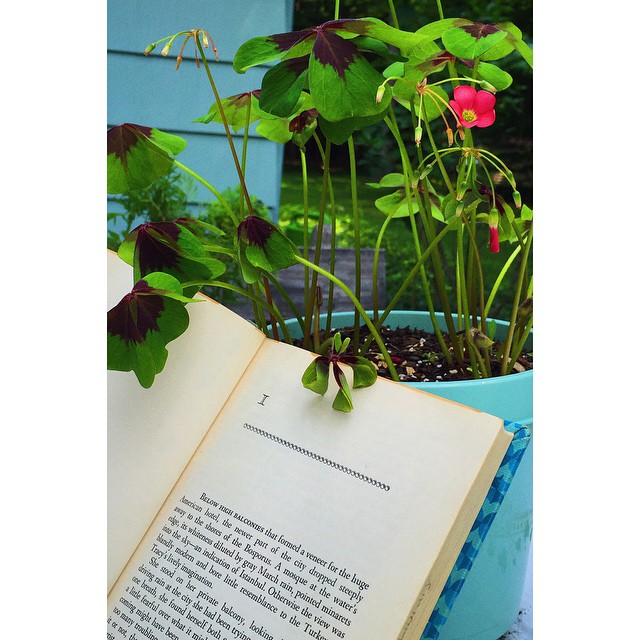
Guess the book (hint: gothic romance) and/or the flower for a chance to win a book or a package of seeds. You don’t have to get the correct answer to win. Ends Wednesday, June 24, midnight EST.

Here are a few of the books I’ll be reading and writing about this summer:

How to Be Both, by Ali Smith

Laudato Si: Praise Be to You, On Care for Our Common Home, by Pope Francis

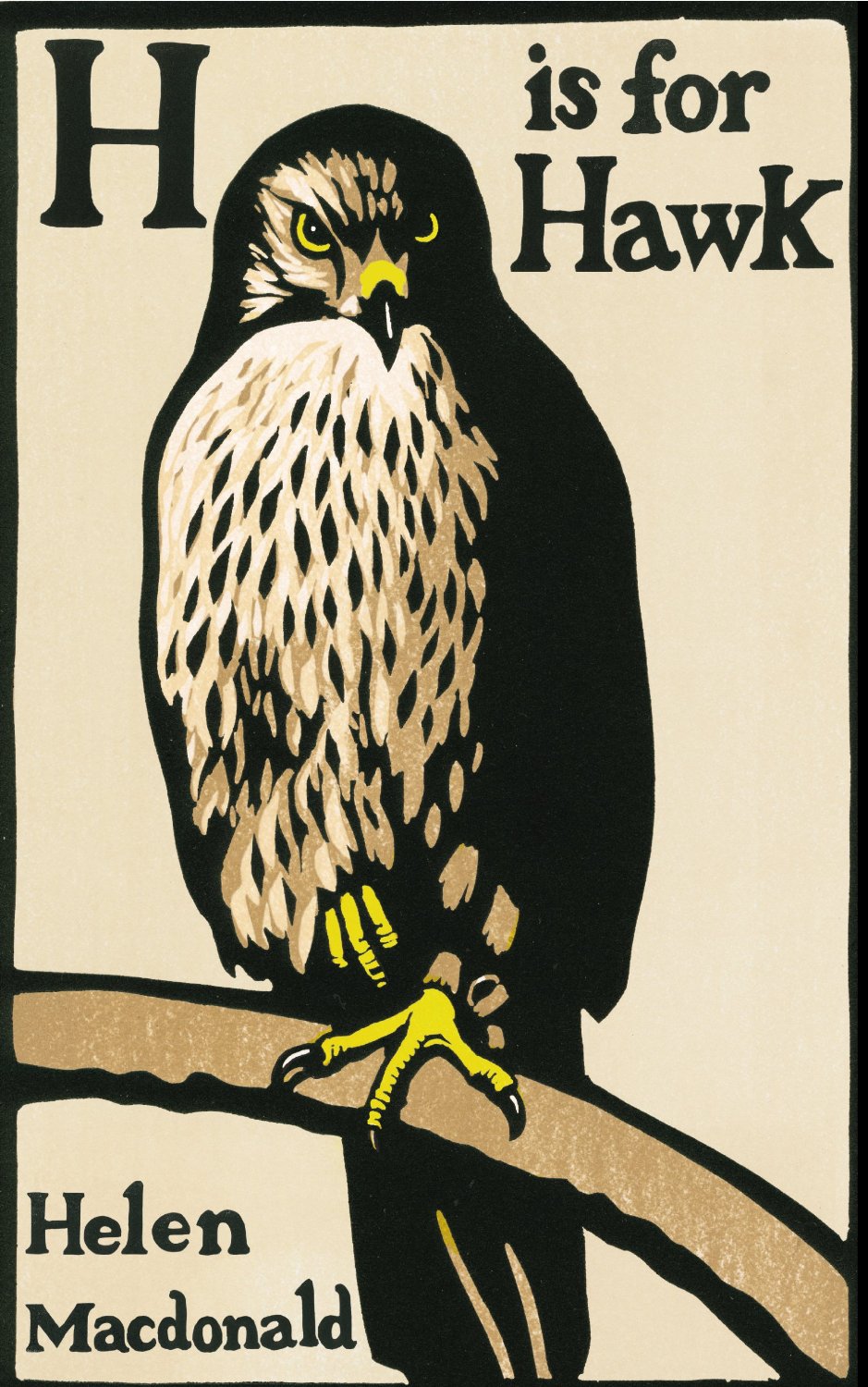
H Is for Hawk book coverH Is for Hawk, by Helen Macdonald

Bad Feminist, by Roxane Gray

Smile of a Midsummer Night: A Picture of Sweden, by Lars Gustafsson & Agneta Blomqvist

Rhythm of the Wild, by Kim Heacox

How Should a Person Be? by Sheila Heti

The Collapse of Western Civilization, by Naomi Oreskes & Eric M. Conway

Everything I Never Told You, by Celeste Ng

Laudato Si books