To the Bright Edge of the World

To the Bright Edge

Lieut. Col. Allen Forrester, June 25, 1885:

“Pruitt keeps shouting above the storm–Do you feel that? Can’t you feel that?

What he says makes no sense. He says there are hands on him. Something pulls at him. He says he has to run. I have warned him to stay put.

(undated entry)

My dearest Sophie. I pray you will read this. You are first and last to me.

I do not know if we will survive the night. They are all around us. They scream and cry so that it is hard to think to put these words on the page.

You must know that I love you.

I am not afraid of death but instead of the passage from here to oblivion, of being aware of its coming. I would rather have been run through with a spear than face this long dread.”

Eowyn Ivey’s novel, To the Bright Edge of the World, is truly a standout for me, a cut above the rest.

Many of you know that I’m partial to nature and wilderness stories, especially historical ones. To the Bright Edge of the World reminds me of one of my all-time favorite novels, Voyage of the Narwhal by Andrea Barrett. The novel and short stories of Anthony Doerr come to mind as well when I read Eowyn Ivey’s writing, which is lyrical and replete with exquisite detail. A Woman in the Polar Night by Christiane Ritter is another fine book, a memoir, in the same vein.

“I fell in love with this book; it captured both my head and my heart, completely and utterly.” – Jane, Beyond Eden Rock.  — I was browsing on Goodreads and found Jane’s endorsement of To the Bright Edge of the World. Her words spoke to me because they are my sentiments about the novel, too, and I couldn’t have said it better.

I loved Eowyn Ivey’s first novel, The Snow Child, which was selected for If All of Rochester Reads the Same Book in 2014. Like The Snow Child, To the Bright Edge of the World takes place in Ivey’s native Alaska. It’s a great love story, a  wilderness tale of a hero and heroine’s quests infused with magical realism, and a flawlessly researched portrayal of 19th century Alaska.

Lieutenant Colonel Allen Forrester must lead a dangerous, seemingly impossible expedition through the fictitious Wolverine River Valley deep in the Alaskan wilds of 1885, a journey no one has ever survived. His pregnant wife, Sophie Forrester, stays behind in Vancouver Barracks, destined to have adventures and heartbreaks of her own.

Ivey has cleverly constructed the narrative entirely from letters, journals, diaries, newspaper articles, military reports, photographs, and other documents.

We, the readers, are privy to the contemporary correspondence between Walter Forrester, Allen Forrester’s great nephew, and Joshua Sloan, who is part Native American and curator of the Alpine Historical Museum in Alaska. Walter sends his great uncle’s papers to Joshua in the hopes that he’ll display and archive them for safekeeping. As Joshua makes his way through the journals, diaries, and letters, he and Walter piece together Allen and Sophie’s stories, fill in the gaps, and reflect on their own lives.

As always, Ivey’s descriptions of geography and landscape take us vividly to long-ago Alaska:

“The canyon bound the Wolverine so that when, over the course of the winter, the ice moved, it crumpled violently. Great blocks three feet thick & as much as twenty feet high had been torn asunder & turned sideways. It seemed an impassable range of buckles & ridges & upended slabs of ice pressed up against the canyon walls, which are vertical rock the color of lead.”

Here are Sophie’s words as she undergoes her own dark night of the soul:

Sophie Forrester, Vancouver Barracks, April 26, 1885:

“…it continued its steady and hard rapping, and the sound became more and more horrible…The raven stopped its knocking and cocked an eye toward me.

I then noticed something most peculiar….A bird’s eye ought to be flattened in shape, with a dark iris surrounded by a dark-gray sclera, and entirely unmoving in its socket. Yet this eye was round, with white sclera, and it rotated about in the socket. It looked nothing like a bird’s eye, but rather that of a mammal. More to the point, a human.” 


nypl.digitalcollections.510d47e1-2a08-a3d9-e040-e00a18064a99.001.w
A raven shape shifts into a trickster who brings Allen and Sophie good fortune and sorrow.

The New York Public Library. (1849). Raven.

nypl.digitalcollections.510d47e1-29f2-a3d9-e040-e00a18064a99.001.w
Sophie Forrester teaches herself the art of photographing birds. Her descriptions of the technical and creative challenges are beautifully rendered, and inspiring.

The New York Public Library. (1901 – 1914).Horned And Tufted Puffins.


nypl.digitalcollections.510d47e1-1af4-a3d9-e040-e00a18064a99.001.w
Allen Forrester’s darker mission is to assess tribal threats to US expansion in Alaska, even as native tribes give life-saving aid to Forrester and his men. The author weaves Native American myths into the plot. These fierce stories blur the line between humans, animals and nature. In the end, the hard wisdom of the stories so valued by indigenous people seems far truer than the scientific knowledge possessed by “civilized” people.

The New York Public Library. (1869-04). Indian summer encampment.


Have you read To the Bright Edge of the World or The Snow Child? What did you think? Can you recommend similar historical books about nature, travel, and adventure, fiction or nonfiction? Click on the comments link in the left sidebar and let us know.

What does Tribe (the book and the noun) have to do with family reunions? I’ll be writing about that in my next post…

Off the Beaten Path: De Potter’s Grand Tour


De Potter's Grand Tour

“She is fascinated but not dismayed to discover that she has forgotten so much.

Is she really the same woman who celebrated Easter 1889 in Athens and walked up to the Acropolis with her husband?

Who spent a ‘most interesting day viewing the cisterns of Carthage’ with Victor and Armand in 1896?

Who once wrote on her anniversary in 1900, in an apartment on 97 rue de la Pompe in Paris, ‘In afternoon we went to Exp. and up the Trocadéro tower, then to Élysée Palace Hotel, saw King Leopold come in. In evening at dinner we ordered St. Honoré and champagne. M. Guerrier got up and improvised a poem and there was much gaiety and good humor. Armand gave me a gold watch charm’?”  De Potter’s Grand Tour,  Joanna Scott

This much, we know: In 1905, Joanna Scott’s great grandfather disappeared while on board a ship off the coast of Greece. A collector of ancient Egyptian art (some of it is at the Brooklyn Museum) and a world tour guide, he was at his wit’s end, hounded by creditors and litigators.

The question is: Did he commit suicide? Was he pushed overboard? Or, did he fake his own death and assume a new identity, leaving behind his beloved wife, Aimée, and his son?

How would you like to inherit that family mystery?

Joanna Scott did, in the form of Armand’s letters, postcards, photos, and documents, and the multi-volume journal of his wife, Aimée. This treasure trove had been sitting in a steamer trunk in Scott’s mother’s storage unit for years, until one day they unearthed it while searching for a diploma.

Intrigued, Scott threw herself into research and began writing a nonfiction account of Armand de Potter’s life. Ultimately, that proved too confining: Scott discovered that the mysterious and elusive Armand wasn’t who he said he was, and no one knew, not even his wife. So Scott switched to fiction, which gave her more freedom to suppose and imagine.

I read this novel ages ago and never got around to posting about it, but the book has stayed with me all this time. It’s not for everyone–Joanna Scott is a celebrated writer, but this particular novel didn’t garner the best of reviews.


To Travel.jpeg
A photo of Armand de Potter, the author’s great grandfather, walking away from the camera. He was, indeed, a mysterious figure.


I, on the other hand, loved it. I loved the larger-than-life way Armand and Aimée lived traveling all over the world leading their educational tours. Armand was an autodidact who pretended to be descended from Belgian royalty and more educated than he was. Nonetheless, as Scott portrays him, he was a scholar and a lover of the world with a passion for sharing that love with the people who signed up for his tours.

“To travel is to live,” Armand de Potter wrote in one of the documents Scott found in the steamer trunk.

His tour company went to these places: Algeria, Austria, Belgium, Czech Republic, Egypt, England, France, Germany, Gibralter, Greece, Hong Kong, Hungary, India, Italy, Japan, Malaysia, Monaco, Netherlands, Romania, Scotland, Singapore, Spain, Sri Lanka, Switzerland, Tunisia, Turkey, various locations in the US, and Yemen.

Some time in the late 1800s, Armand also wrote this prescient and hopeful passage: “The incalculable benefits of foreign travel can only be half told by our children….They will be appreciated by their sons and daughters, at a time when travel will have made the world very small and the human race what it is destined to be–one great fraternity.”

If you’re an armchair traveler, if you love history, and if you want an unusual story, I think you might like De Potter’s Grand Tour.

I enjoy Joanna Scott’s novels a great deal. One of my all-time favorites is Liberation, which takes place in Sicily, one of my favorite places in the world, during World War II. Scott is a much loved Professor of English here at the University of Rochester.

Speaking of family history, I’m off to a family reunion next week, where we’ll be reading a book loosely connected with a couple of the more colorful family members. I’ll tell you about it when I return.

I’ll leave you with what Armand de Potter had to say about good books (I would also add “women” of course):

“In the most beautiful books, great men speak with us, they give their most precious thoughts, and pour their soul into ours. Let us thank God for the creation of books. They are the voices of those that are far and of those that are dead; they make us heirs of the intellectual life of the past ages. Books furnish to all those who will use them with sincerity the society, the spiritual presences of the best and the greatest men.”


Braiding Sweetgrass

Braiding Sweetgrass cover

“Hold out your hands and let me lay upon them a sheaf of freshly picked sweetgrass, loose and flowing, like newly washed hair… Hold the bundle up to your nose. Find the fragrance of honeyed vanilla over the scent of river water and black earth and you understand its scientific name: Hierochloe odorata, meaning the fragrant, holy grass. In our language it is called wiingaashk, the sweet-smelling hair of Mother Earth. Breathe it in and you start to remember things you didn’t know you had forgotten.”   Robin Wall Kimmerer, Braiding Sweetgrass

I’ve been working on my first podcast in a nature series, and as part of my research I visited Ganondagan, a cultural center and historic site that was the home of the Seneca Nation of the Iroquois Confederacy. It has an intriguing array of programs, from animal tracking to music to meditation to dance. Last Sunday, I heard Robin Wall Kimmerer speak about her book, Braiding Sweetgrass, which I highly recommend to anyone who cares about nature, the land, and saving the earth.

IMG_2842
Robin Wall Kimmerer leads us in a song to save the earth at Ganondagan

I first heard of Robin Kimmerer via Elizabeth Gilbert, who found the inspiration for her book, The Signature of All Things, when she read Gathering Moss by Kimmerer.

I’m about a quarter of the way through Braiding Sweetgrass. I’m loving the poetry of her writing as I take in the simple but profound indigenous wisdom Kimmerer is eager to pass on. It’s wisdom we as a culture have long overlooked and which may save us all, if we pay attention. Braiding Sweetgrass is a book to read slowly and savor.

Robin is a botanist, a professor of environmental biology, and a member of the Citizen Potawatomi Nation. She is descended from the Anishinabekwe of the New England region; in the forced Native American migration her people settled in Oklahoma.

There, her grandfather, by law, had to leave the reservation when he was nine years old to attend public school. At that point, their language and most of their indigenous wisdom was lost.

Robin has spent a good part of her adulthood reclaiming both as she also pursues the life of a botanist and university professor.


597px-Making_Sweet_Grass_Medicine

Making sweet grass medicine. © Ad Meskens / Wikimedia Commons

Here Robin expresses what she aimed for in writing Braiding Sweetgrass:

“I offer…a braid of stories meant to heal our relationship with the world. This braid is woven from three strands: indigenous ways of knowing, scientific knowledge, and the story of an Anishinabekwe scientist trying to bring them together in service to what matters most. It is an intertwining of science, spirit, and story – old stories and new ones that can be medicine for our broken relationship with earth, a pharmacopoeia of healing stories that allow us to imagine a different relationship, in which people and land are good medicine for each other.” 

I’ve still many pages to go, so I’ll write more once I finish the book. I’ll leave you with this:

“In the settler mind, land was property, real estate, capital or natural resources. But to our people, it was everything: identity, the connection to our ancestors, the home of our nonhuman kinfolk, our pharmacy, our library, the source of all that sustained us….It belonged to itself; it was a gift, not a commodity, so it could never be sold.”


Indigenous Peoples

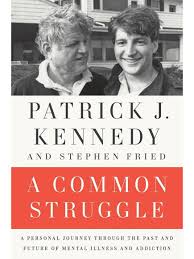
A Common Struggle

A Common Struggle image

A Personal Journey Through the Past and Future of Mental Illness and Addiction

“‘I have never seen a case worse than you, Patrick. You’ve been at this for so long, and the fact that you’ve survived and you’re still doing it almost makes you more dangerous. You’re able to manage it, just like your father managed it….’

He [Chris Lawford, Patrick Kennedy’s cousin] said he knew that at any given moment, I could say I wanted to go off to Australia with all my money and drink and drug myself to death. What he didn’t know, and neither did Amy, was that I had considered such a plan.”   Patrick J. Kennedy, A Common Struggle

I never thought I’d read a Kennedy memoir, we’ve been so saturated through the years with media coverage about the Kennedy family. Usually, I read literary memoirs, and this one isn’t. But I knew I had to read A Common Struggle, given my interest in mental health issues and wanting to see things change for the better, for once, rather than for the worse.

Patrick Kennedy has bipolar disorder, severe anxiety disorder, and has struggled with addiction to alcohol and prescription medication most of his life. His memoir, A Common Struggle, co-written with Stephen Fried, describes in excruciating detail how Ted Kennedy’s son managed somehow to keep this a secret (more or less) even as he served as Congressman from Rhode Island for many years.

In fact, Patrick’s entire nuclear family struggled with addiction, and all of them went through rehab at least once, if not multiple times – all except for Ted Kennedy. Not that he didn’t need it – Ted Kennedy’s family staged an intervention once, but Kennedy refused to acknowledge or accept that he had an addiction to alcohol.

This is a fascinating read. The Kennedys have a remarkable record of public service and, despite his debilitating mental health and addiction issues, Patrick Kennedy led the fight for successful passage of the Mental Health Parity and Addiction Equity Act. Given our complex and often dysfunctional political system, this is truly an achievement, even though the act, which requires insurance coverage of mental illness and addiction equal to coverage of physical illnesses, hasn’t yet been fully implemented.

Patrick Kennedy and others had to fight hard to make sure that addiction was included along with mental health. This was an enlightened step. It’s about time, since there is an epidemic of opioid and heroin addiction and overdose in the US. Only now are attitudes beginning to change so that addiction is increasingly viewed as a health problem, not a crime or a personal weakness.

Patrick ultimately decided that he couldn’t sustain his lifestyle as a Congressman and handle his addiction and mental health issues, so he eventually left Congress. He is currently the leading advocate in the US for mental health and substance abuse care, research and policy.

I’ve sometimes been dismissive of the Kennedys and their privilege, but Patrick’s memoir made me realize how devoted the extended family is to public service and what a difference they’ve made on many fronts. If you are interested in mental health and substance abuse issues, and/or if you want to become an advocate for better mental health care and research, I think you’ll get a lot out of Kennedy’s memoir. He weaves into his personal story a detailed history of mental health legislation in this country – legislation that is woefully lacking.

There are fantastic appendices, too, that summarize the many issues we need to advocate for and change, and that list the most prominent mental health and substance abuse support groups and organizations in the US.

I get discouraged about the lack of funding and services for people who suffer from mental illness and addiction and the long road it has been over the years to see improvement. Seems like common sense that we’d want to make changes for the better, but sadly our priorities are elsewhere. This is a shame, because these issues affect one out of five families – so is there anyone among us who hasn’t been touched in some way by mental illness or addiction?

Last weekend my husband and I took part in NAMI Walks in Rochester, an annual May is Mental Health Month fund-raiser for the National Alliance on Mental Illness. Over a thousand people walked. (There is still time to donate, go to the NAMI Walks link!)

I’m also proud to report that NAMI Rochester has such an extensive and devoted cadre of family members and volunteers working on behalf of mental health education and advocacy, they have been named the TOP NAMI affiliate in the country for 2016. They will be honored at the NAMI National Convention in July.

NAMI Walks
NAMI Rochester Streakers take the lead for NAMI Walks.
NAMI Walks On the March
NAMI Walks leaving the Village Gate in Rochester’s Neighborhood of the Arts.

When Memoir and History Collide

67 Shots

“…Kent State on that early afternoon of May 4 is where all the raging waters of the 1960s, bad and good, evil and sublime, flowed together for one brief, horrible moment.”

“…the Guardsmen turned back toward the parking lot, went down on one knee or crouched, and raised their M1s to their shoulders.”     –     Howard Means, 67 Shots: Kent State and the End of American Innocence

Excavating a Life

May 4, 2016 is the 46th anniversary of the shootings at Kent State in Ohio, where four students were killed and nine injured by the National Guard during campus protests of US involvement in the Vietnam War.

I was fifteen at the time and lived about 40 minutes away from the Kent State campus. That tragic day has a part to play in the memoir I’m writing, but at first I didn’t realize it. In early memoir drafts, I mentioned May 4 only briefly. In my view it was someone else’s story, and I was having a hard time remembering how I felt about this tragedy that happened so long ago. 

But the more I wrote, the more Kent State haunted me. I began to realize May 4 had been a turning point in my political consciousness. It’s probably more accurate to say that Kent State was the birth of my political consciousness. 

I began to think about the role of the tumultuous 1960s in the life of my family. I had two younger brothers, and I didn’t realize back then how much my father worried about them being drafted. Years later, he told me he’d happily have given them some cash and urged them off to Canada. A World War II veteran with a Purple Heart and an active member of AMVETS, my dad kept his anti-war opinions to himself because he’d have been viewed as unpatriotic by most of his friends.

My father was badly wounded during World War II, and in retrospect I think he may have had a form of PTSD. In the days after May 4, it was common to hear angry locals say the National Guard should have shot all of the student protesters. I don’t recall talking with my father about Kent, but he must have been horrified by the military takeover of the campus and the fact that students had been killed.

As for me, up until May 4, 1970, I’d been just an interested onlooker while the 1960s played out on the nightly news. I had my hands full maneuvering my teen years with a mentally ill mother, and I hadn’t given much thought to social causes. But suddenly the older brothers and sisters of my friends were hitchhiking home, refugees from Kent State, Ohio State, and other local colleges that had been shut down amid protests, tear gassing, and riots. I recall plenty of arguing about who did what to whom and who was at fault.

To me, it seemed clear: the National Guard had bullets, and the students didn’t.

For decades, people have been trying to piece together the sequence of events that led to the Kent State tragedy on May 4, with only partial success. No one directly or indirectly involved has the big picture, and it’s unlikely anyone ever will. My Spanish teacher took a leave for a couple of months to serve on the federal grand jury that investigated the shootings. Later, she told us that she remained baffled. No one admitted to giving the order to fire on the students, and no one was held accountable.

67 Shots: Kent State and the End of American Innocence by Howard Means was published in April, and I bought the book as soon as it was available. It’s a fascinating read that has given me a much clearer picture of the fraught atmosphere in my part of the world and in the nation in 1970. This historical context will be invaluable as I continue to work on my memoir.

I think Means has done a good job of even-handedly summarizing what is known about May 4, the events that led up to it, and its aftermath. His book is a page-turner, packed with many first-person accounts from all sides: student onlookers, student protesters, Guardsmen, Kent faculty and administration, and many others.

Now I understand that there was no focused planning by the students protesting the war in the days before May 4 and on that fateful afternoon. In fact, the hard-core protesters were only a small group among many thousands of students who were curious onlookers or simply passing by on their way to class. Nor did the Kent State administration, the office of Ohio Governor Jim Rhodes, or the National Guard have a rational plan for diffusing the situation.

Instead, as Means clearly depicts, there was only monumental incompetence and mismanagement on the part of just about everyone.

Ultimately, Means takes the view that the students had a right to peacefully assemble and protest, and this right was violated by a vast over-reaction that turned deadly when the military became involved.

Means makes clear that the students weren’t blameless. A small group of them burned down the ROTC building on the Friday evening before the Monday shootings, and a crowd of drunk students vandalized businesses in downtown Kent, badly frightening the residents. (ROTC buildings on many a campus across the nation were destroyed.) Just before the shootings, the hard-core war protesters were throwing rocks and bricks at the Guardsmen. But Means says that videotapes show these students weren’t close enough to the Guardsmen to seriously hurt them, and in the end only one Guardsman was taken to the hospital, for hyperventilation.

Here are a few excerpts that I found enlightening but disturbing. I hadn’t realized the depth of the hostility between Kent State and the larger community back then:

“’The town hated the students, and the town hated the faculty,’ recalled Lew Fried, who joined the English faculty in the fall of 1969 and would remain at Kent State for the rest of his career. ‘This was a very conservative, right-wing-to-reactionary town. I was told that after the shootings, when students were being forced to leave campus, the majority of the town, which had grown fat on student-generated income, refused to sell them food, refused to sell them gas.'”

And this:

“Janice Marie Wascko was sitting with her roommates on the front lawn of their house in downtown Kent that evening when a patrolling police cruiser noticed antiwar slogans chalked on the sidewalk and a low retaining wall. The cruiser, she said, had no license plates. Badge numbers were taped over. ‘They had a sawed-off shotgun and pulled it on us. And they got out of the cruiser and stood there, pulled the guns on us, and said, ‘Wipe it up, scum,’ and made us get down on our hands and knees and wipe it off, the slogans off the wall and the sidewalk. [They were] saying, ‘We should have killed you all,’ and laughing at us. A short time later…they caught somebody down by what is Pufferbelly’s [restaurant] now and beat the crap out of him against a wall.’”

I’ve been selective in the excerpts I’ve included, based on my own stance and bias. I want to emphasize that Means provides a more balanced, nuanced view in 67 Shots.

Here are additional points from the book that I found noteworthy:

  • Over 1300 National Guardsmen, 17 helicopters, and 250 half tracks, full tracks and armored personnel carriers, including three mortar launchers, were sent to the Kent State campus. On Saturday and Sunday before the shootings, helicopters hovered 24/7 over the campus and town, lighting the sky with searchlights throughout the night. This greatly fueled paranoia, suspicion, and fear among the students and townspeople.
  • After initial media stories mistakenly reported that National Guard soldiers had been killed, some residents of Kent were armed and ready in the streets and on rooftops for the hordes of students they feared were about to raid their town. Rumors circulated that student radicals had poisoned the water supply with LSD.
  • The vast majority of Kent State students were interested onlookers, not war protestors, but some became instantly radicalized by the overwhelming military presence. Most students and faculty assumed that the National Guardsmen’s M1 rifles were not loaded. Many of the Guardsmen were young, inexperienced, and poorly led – local boys who were the same age as the students.
  • President Nixon was frustrated when FBI Director J. Edgar Hoover and his COINTELPRO program of spying on war protestors, black activists, and women’s rights and lesbian/gay groups found no evidence of communist involvement in the protests at Kent and other universities. Some historians believe Kent State was the beginning of Nixon’s downfall – his obsession with spying eventually ended in the Watergate scandal.
  • Some say Kent State helped stopped the Vietnam War. Others believe the military response had a chilling effect on protests; in the 1970s social movements died out and people turned inward.

There’s lots more I could say about 67 Shots and its impact on my own story. I also worry about how ripe we are here in the US again for protests to become violent. But for now, I’ll leave you with this:

My dad often told stories about World War II, which I now realize he censored quite heavily. One day when our sons, Andrew and Matt, were just old enough to appreciate that their grandfather had once been a young man with interesting experiences, we’d been talking about the war in Iraq. My father reminisced about being drafted in World War II and boarding the train with his cousin, bound for basic training, and how the extended family saw them off. He talked about the Battle of Metz, where he was wounded and many were killed.

“I think about the war every single day of my life.” Turning to Andrew and Matt, my father said, “War is a terrible thing. Just because someone tells you to do something, doesn’t mean you have to do it.”

The song “Ohio” by Crosby, Stills, Nash & Young captures the tenor of the times. There is a video with Kent State photos and an “Ohio” soundtrack uploaded by Mars Daniels on YouTube you might want to check out. Daniels claims fair use, but I have my doubts about copyright legality, so I’m not linking to it directly.

Note: Ten days after the Kent State shootings, two African American students were killed and many were wounded by police and state troopers at Jackson State College in Mississippi. The students were protesting racial intimidation as well as the killings at Kent State. The tragedy at Jackson State received little media coverage, whereas the deaths of white students at Kent was all over the news.

If you lived through the 1960s, are there events that resonate for you on a personal level? If you’re younger, do your parents have memories of that time that they find especially meaningful? If you write memoir, have you used historical sources to shed light on your own formative experiences?


Closing 2015 with The Story of the Lost Child

Little girl statue edited
Little girl at Casa Guidi


Opening 2016 with a poem

I ended 2015 reading Elena Ferrante’s fourth and final Neapolitan novel, The Story of the Lost Child, and this first week of 2016, a poem of mine, “At Casa Guidi,” was published in Loveliest Magazine.

Italy. Children. Creativity. I hadn’t planned this, but the poem and Ferrante’s novel have these in common. (The similarities end there – Elena Ferrante is a world-renowned author; I’m a novice poet.)

First, the poem. Some years ago I traveled to Florence with my sister-in-law, and we visited Casa Guidi, the home of Elizabeth Barrett Browning and Robert Browning in the Oltrarno quarter, where many artists and writers lived. Later, recalling our visit, I was inspired to write “At Casa Guidi.”

Loveliest Magazine, a new venue “for storytelling and togetherness,” caught my eye when I read the words “slow-lifestyle” and “literary” to describe its cross-genre purpose. That’s me, for sure, so I thought my poetry might be a good fit. Beautifully written and produced independent literary and lifestyle publications such as Loveliest often look for good fiction, poetry, and essays; if you’d like to see your work published consider submitting to these in addition to traditional literary journals.


Little boy statue edited
Little boy at Casa Guidi


If you are ever in Florence, be sure to visit this quieter part of the city, the Oltrarno, which literally means “beyond the Arno River.” In addition to the must-see attractions and many great works of art, Oltrarno streets are lined with stationery stores featuring the things writers love: Italian-made note papers and leather journals, ornate fountain pens, inks in every shade and color. When I was there, I bought a small, leather-bound copy of Sonnets from the Portuguese, and my sister-in-law bought a print of Leonardo Da Vinci’s Last Supper.

Closing 2015 with Elena Ferrante

I’ve written about Elena Ferrante’s Neapolitan novels in a previous post.  The Story of the Lost Child is Ferrante’s fourth and final novel in her Neapolitan series. The books are a probing look at the inner life of a writer; a family saga; a soap opera; a history of Italian feminism, culture and politics; and more.

So much has been said about these singular, internationally bestselling novels and their mysterious author, who publishes under a pseudonym, that I’ll simply add my thoughts here. (That we don’t know the identity of the author adds to the power of her work, in my opinion.)

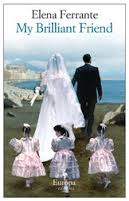
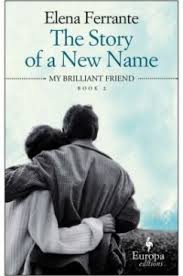
If you look at the book covers you’ll see dreamy, idealized illustrations that are misleading: the story of the lifelong friendship between Lila and Elena, born in Naples just after World War II, can often be raw, brutally honest, and bleak. The book covers belie the content, but perhaps that was intentional, as if to say: think again if you expect a story filled with roses and happy endings….

I wouldn’t say I was always entertained by the books, because they can be relentless in their depiction of Napoli poverty and the battle between the sexes in an era when feminism blossomed. But, as many readers do, I became obsessed with Lila and Elena and had to keep on reading to see what became of them.

  • Ferrante’s work is especially meaningful to me because my father was Sicilian. Now I better understand the values, traditions, and struggles of my Italian ancestors and how these may have had an impact on my own childhood. The cultural history of Italy and its focus on family reminded me of one of my favorite Italian movies, The Best of Youth. Although I have not yet read My Struggle by Karl Ove Knausgard, it sounds as though Ferrante’s penetrating look at the psychology of growing up and growing older may have similarities with Knausgard’s autobiographical series.
  • As a writer, I was especially taken with Elena’s love/jealousy/hatred of her friend, Lila. Though Elena was the outwardly successful one, with several novels published and lauded as a scholar of literature and culture, she always believed Lila was the more talented of the two, the one with wildness, fire, and true originality.  It’s often a struggle when I write to break out of my safe, everyday self and give creativity free reign. The genius of the Neapolitan novels is that Elena and Lila’s story can be read as the author’s own creative struggle with a psyche split in two.


IMG_2446


Elena and her friend, Lila, are strong women, survivors. Here is Elena during the earthquake in Naples, 1980:

“I felt that fear in me could not put down roots, and even the lava, the fiery stream of melting matter settled in my mind in orderly sentences, a pavement of black stones like the streets of Naples, where I was always and no matter what at the center. Everything that struck me–my studies, books, Franco, Pietro, the children, Nino, the earthquake–would pass, and I, whatever I among those I was accumulating, I would remain firm.”  – The Story of the Lost Child by Elena Ferrante


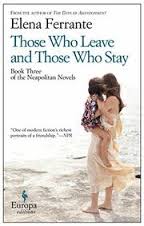
My Brilliant Friend book coverThe Story of a New Name book coverThose Who Leave and Those Who Stay book cover

Where Do Poems Come From?

I recently had a poem published in Verse-Virtual: An Online Community Journal of Poetry.  In this excellent and unique publication, the published poets are encouraged to contact each other to show their support for poems that move them. (No critiquing allowed.) The editor, Firestone Feinberg, is a joy to work with and warmly encouraging of new writers.

I wrote “Nadezhda, If You Were Here” quite a while ago, and as I prepared it for submission I was thinking about where poems – my poems – come from. In this case, I was reading a memoir by Paul Auster (I believe it was The Invention of Solitude.) In it, he includes an extraordinary letter written by Nadezhda Mandelstam to her husband, the poet Osip Mandelstam, after he’d been sent to a labor camp by Stalin. I had never heard of these people, but I was so struck by the letter I just had to read Nadezhda’s amazing memoir, Hope Against Hope, about her life with Osip.

I was reading the memoir in Wegmans grocery store on a cold winter day, when I was inspired to get another cup of coffee and start writing. That’s where my poem came from. I wasn’t sure I had much to say, but it turned out to be a direction worth exploring.

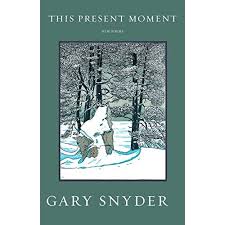
The Present MomentThis summer I’m enjoying This Present Moment, a collection of poems by Gary Snyder, who is now 85. Remember the Beat Generation? Gary Snyder is one of America’s greatest living poets. This volume includes poems about being a homesteader, father, husband, friend, and neighbor. (I’m paraphrasing the jacket copy because it is a good summary of the subject matter.) The final poem, “Go Now,” is about the death of his wife.

Even if you’re not a fan of poetry, I encourage you to take three minutes to listen to this poem by Nobel laureate Wislawa Szymborska, “Life While-You-Wait,” read by Amanda Palmer and passed along by Maria Popova and Brain Pickings. (Scroll down the page to get to the recording.) I think you’ll like it.

I’ve ordered a copy of Laudato Si’, Pope Francis’ encyclical on climate change. It is available from Amazon and other booksellers, and you can download the pdf at this link: Laudato Si’ . I’ll be writing about it here in late July, mostly from a secular perspective. Why don’t you read it with me – I welcome your thoughts, faith-based or otherwise.

Rhythm of the Wild by Kim Heacox

“Looking back, I see now that Denali did more than charm me that first summer; it saved me. The whole damn place beguiled me and believed in me when I didn’t believe in myself. Call me crazy or blessed or crazy blessed. But I swear that again and again Denali has done this–made me buckle down and find inspiration and become the free man I am today.”   Kim Heacox, Rhythm of the Wild: A Life Inspired by Alaska’s Denali National Park

Rhythm of the Wild book cover

“What you hold, dear reader, is a story of love and hope, equal parts natural history, human history, personal narrative, and conservation polemic. I make no attempt to be a neutral journalist, a rare bird in today’s corporate culture. I’m a story teller.”

At the moment, Alaska is burning, and I’d love to hear Kim Heacox’s thoughts about this. I recently finished reading his new book, Rhythm of the Wild: A Life Inspired by Alaska’s Denali National Park, and I liked it so much I bought a copy of his first memoir about Alaska, The Only Kayak, and liked that one too.

Denali Mountain
Denali. Wikipedia.

I’ve tried to persuade my husband to read the latter book, as he’s a kayaker and a Beatles lover, as Heacox is. I believe Heacox and J. are kindred spirits, but so far no luck, J. hasn’t picked up the book–he’s not a particularly avid reader. However, he has been to Alaska, while I have not, so I think that counts for more than reading two books about Alaska.

Kim Heacox is an award-winning writer (with four books for National Geographic to his credit), a photographer, a speaker, a conservationist, and a lover of Alaska and Denali. (Denali, the mountain, which is the highest in North America, and Denali National Park.)


Grizzly bear
Grizzly bear. NPS photo.

He and his wife, Melanie, have resided in Alaska for over thirty years; they are two remarkable people who have devoted their lives to educating others about the inestimable value of our wilderness areas. Heacox writes in a very personal way about Alaska and Denali, weaving together his own wilderness stories with coming of age in the Northwest during the 1960s and 70s. I admire him for many reasons, among them his talent for lyrical writing and his willingness to be vulnerable as he shares his love for the wilderness that is Alaska.

As I read, I began to feel sorry for the tourists Heacox describes who find their way to Denali but after a few short days must return to their Dilbert cubicle lives in cities and suburbs. Then I realized that has been much of my life, too. Heacox paints such a compelling picture of Alaska he made me feel deprived for never having experienced this wild, remote place.

Heacox recounts his fascination with the Beatles and their reinvention of music – from an early age he identified with outsiders and challengers of the status quo. Naturally, he’s been deeply influenced by “outsider” environmentalists as well, including  Edward Abbey and Adolph Murie. He writes about their legacies in Rhythm of the Wild.

Those of you who follow my blog know I’m a fan of Barry Lopez and Wendell Berry and other influential writers who care about nature and wilderness. I’ll look for more writing by Kim Heacox in the future. I consider him an important addition to my nature and conservation bookshelf. He’s the kind of writer we should be reading if we want to protect our national parks and take climate change seriously.

Here are a few enticing samples of this singular voice in Rhythm of the Wild:

“Years ago in a cowboy cafe in Moab, Utah, I met a nine-fingered guitarist who poured Tobasco on his scrambled eggs and told me matter-of-factly that Utah was nice, Montana too. And of course, Colorado. But any serious student of spirituality and the American landscape must one day address his relationship with Alaska, and once in Alaska, he must confront Denali, the heart of the state, the state of the heart….by Denali he meant both the mountain and the national park.”

Great Horned Owls
Great Horned Owls. NPS photo.

“Denali is what America was; it’s the old and new, the real and ideal, the wild earth working itself into us on days stormy and calm, brutal and beautiful, unforgiving and blessed. It’s where we came from, long before television and designer coffee, even agriculture itself. Before we lost our way and granted ourselves dominion over all living things, before our modern, paradoxical definitions of progress and prosperity, and too much stuff; it’s the lean, mean, primal place buried in our bones no matter how much we might deny it, no matter how fancy our homes, how busy our routines, how cherished our myths. Denali resides in each of us as the deep quiet, the profound moment, the essence of discovery. It offers a chance to find our proper size in this world.”

The publisher of Rhythm of the Wild kindly provided me with an Advanced Reader’s Copy (ARC).

I’ve ordered a copy of Laudato Si’, Pope Francis’ encyclical on climate change. It is available from Amazon and other booksellers, and you can download the pdf at this link: Laudato Si’ . I’ll be writing about it here in late July, primarily from a secular perspective. Why don’t you read it with me – I welcome your thoughts.

Northern Lights and trees

Modiano’s elusive Paris: what my father never saw

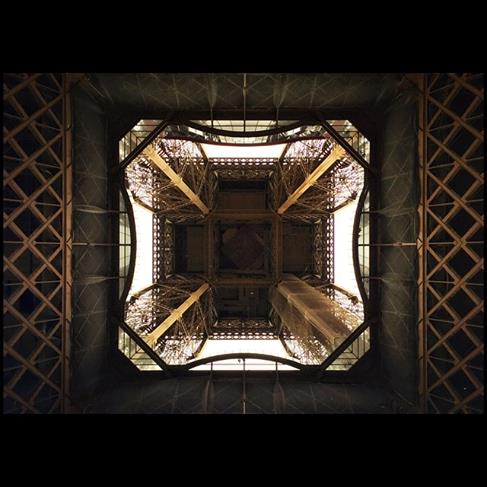
Eiffel Tower
La tour Eiffel. (Photo by A. Hallinan)

“Tell all the truth but tell it slant–“ Emily Dickinson

If you dislike ambiguity and prefer straightforward plots, you may become impatient with Patrick Modiano’s inconclusive and sometimes maddening quests. In his stories of Paris during and after the Occupation, the “missing” person in question is never found; the mystery of his or her identity is never solved.

Modiano tells the truth–what little of it he knows–but he tells it slant.

Reading is a way for me to immerse myself in other times and places, and on our recent trip to France, I wanted to see the country through the lens of World War II, when my father was a soldier there. So I brought along Irène Némirovsky (I wrote about Suite Française in my last post) and Patrick Modiano’s The Search Warrant (published as Dora Bruder in Europe). Coincidentally, my son had just read three novellas by Modiano: Afterimage, Suspended Sentences, and Flowers of Ruin, so I read them, too. (These are published in one volume entitled Suspended Sentences.)

I was thinking about my father, who passed away five years ago, and musing about events in 1940s Europe that may soon be all but forgotten. Once I became accustomed to Modiano’s method and spirit of storytelling, I could appreciate the author’s preoccupation with identity and memory, and his attempts to reconstruct and understand the past.

Even as I explored the Jewish quarter of Le Marais, where we stayed, and conjured up the WWII Paris I’ve seen in movies, I realized that a new story is playing out in France, making my father’s time seem even more remote. We passed by many military personnel armed with automatic weapons guarding Parisian monuments, temples, churches, and other sites in the wake of January’s Charlie Hebdo attack.

My father never got the chance to explore Europe as he’d hoped. He’d been fascinated by France and Luxembourg (where he spent the weekend in training before he was wounded in the Battle of Metz in 1944), and he’d planned to visit Sicily, where he was born. Instead, he was shipped out to Liverpool after he was injured, and then back to America, where he spent over a year in recovery. Though he did visit Sicily later in life, my father never returned to France. Suspended Sentences book cover

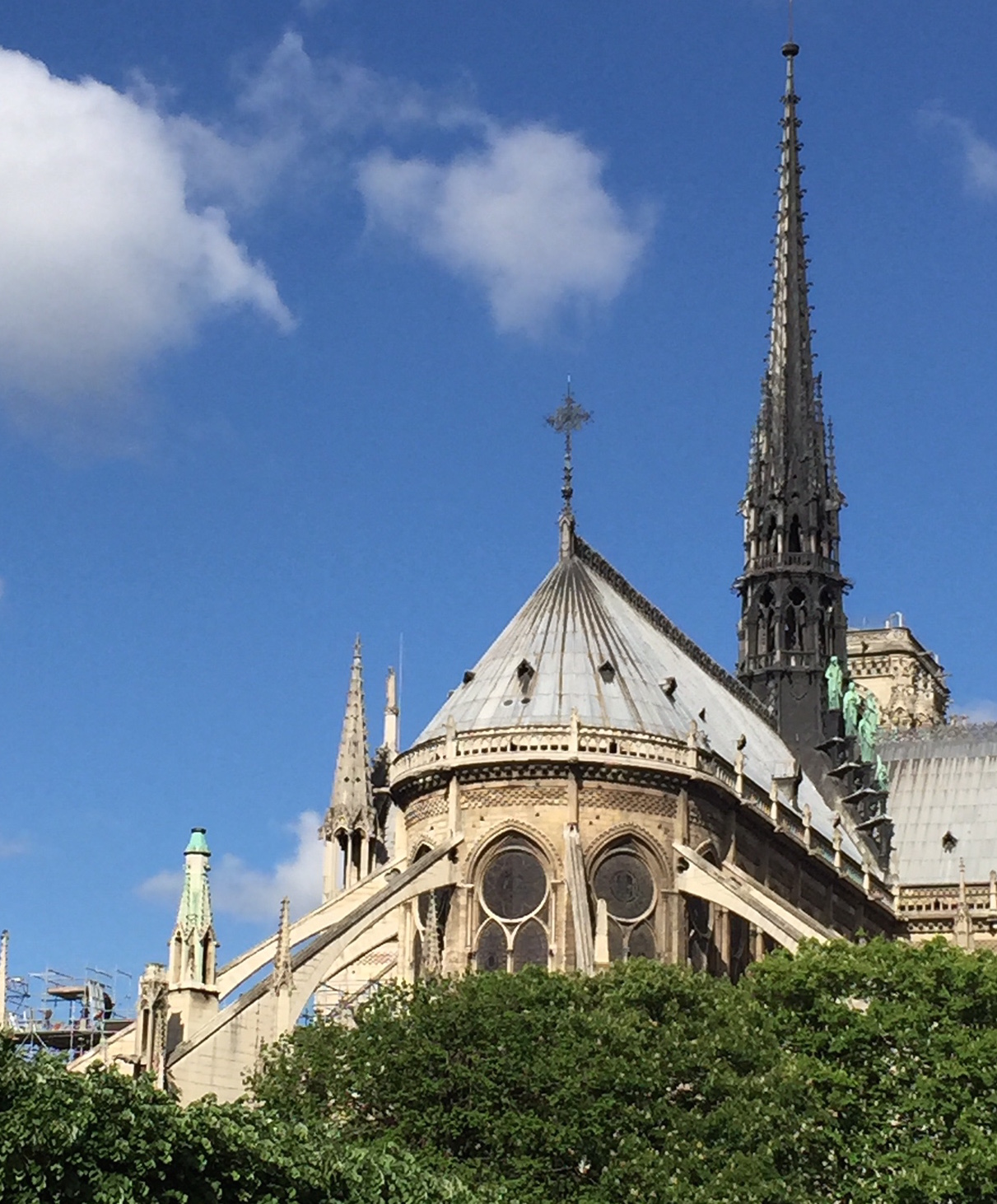
I found myself imagining what he might have thought if he’d seen Notre Dame (he was awed by cathedrals) or tasted Parisian escargot (which he would have relished) or strolled across the many old bridges spanning the Seine.

During our drive to Metz, I looked out over the French countryside and along the Moselle River, thinking that perhaps my father had been injured in one of the passing fields or forest groves.

In The Search Warrant, Modiano is obsessed with reconstructing the life of a young Jewish girl who died at Auschwitz. In a 1941 Parisian newspaper, he’d discovered an ad placed by the parents of Dora Bruder, asking for information about the whereabouts of Dora, who had run away from her convent school. It’s as if Modiano can’t accept that someone–that so many, in fact–could live lives so brief and obscure and die such senseless deaths, as they did in the war.

The Search Warrant fuses nonfiction (the facts he unearths about Dora Bruder) with memoir (Modiano’s autobiographical speculations about his father during the Occupation) and fiction. As I read, sometimes I couldn’t separate truth from fiction.

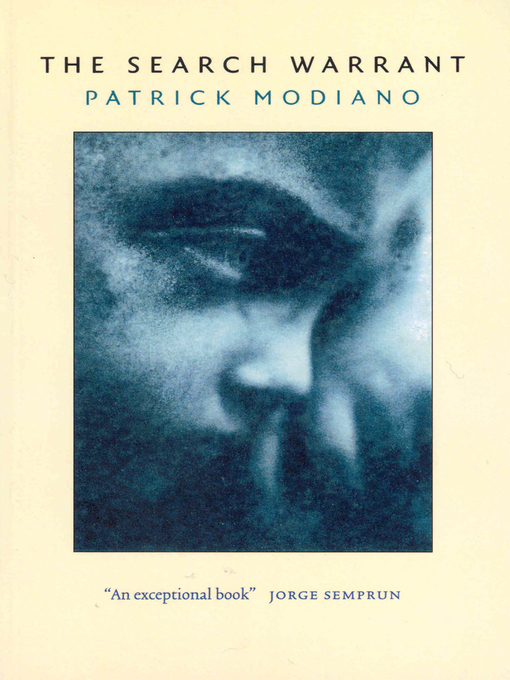
The Search Warrant book coverInterrupting the narrative flow are lengthy lists of the names and last known addresses of people deported to concentration camps. Modiano seems compelled to show his readers the documentation and proof behind any fact he asserts about Dora. He meticulously describes the Paris neighborhoods that he wanders in, too: the old, timeworn urban landscapes and the bland contemporary ones that have replaced them.

Such lists and geographical minutia also appear in Modiano’s three novellas. Each story portrays a protagonist searching for a person he’s lost touch with long ago or seeking to understand some incident from the past.

Before I started the three novellas, I read the editor’s introduction to see if I could better understand what Modiano was trying to do with his stories. I learned that his mother had been an actress and was often absent during his childhood, while his estranged father paid little attention to Modiano and his younger brother. Modiano surmises that his father was a black market smuggler and somehow aligned with French Nazi collaborators. Another heartbreaking autobiographical fact is that Modiano’s beloved brother, Rudy, died from an illness when they were young. Modiano’s obsessive search for Dora Bruder is emblematic of Modiano’s search for his lost family, and for a pre-war Paris that no longer exists.

Patrick Modiano won the Nobel Prize in 2014.

From Flowers of Ruin:

“Little by little, that man melted into the wall. Or else the rain, from falling on him so heavily, had dissolved him, the way water dilutes a fresco that hasn’t had time to dry properly. As hard as I pressed my forehead against the glass and peered at the dark gray wall, no trace of him remained. He had vanished in that sudden way that I’d later noticed in other people, like my father, which leaves you so puzzled that you have no choice but to look for proofs and clues to convince yourself these people had really existed.”

Notre Dame
Notre Dame
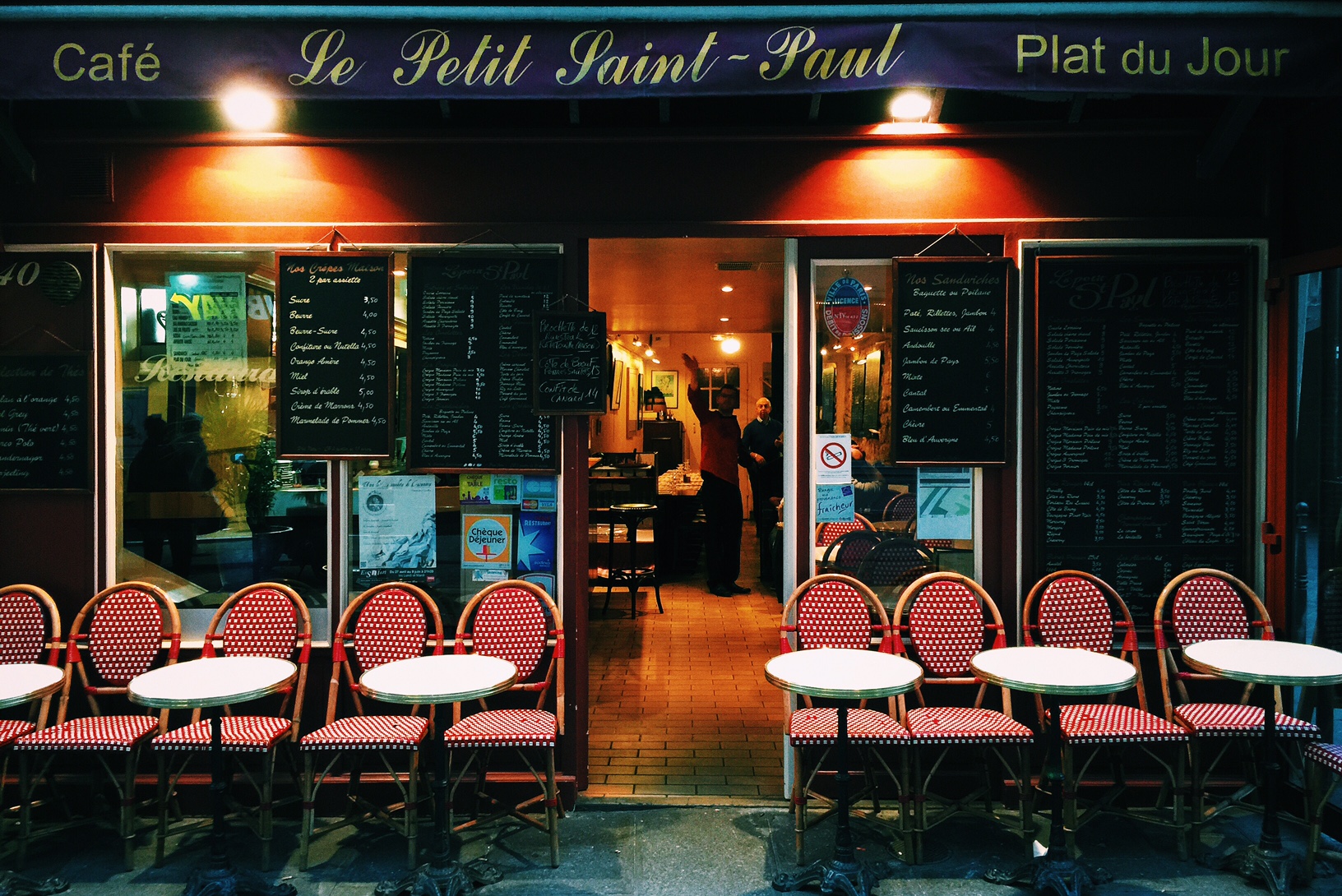
Cafe in Paris
Where to eat….they all look so good. Can you see the maître d’ beckoning?
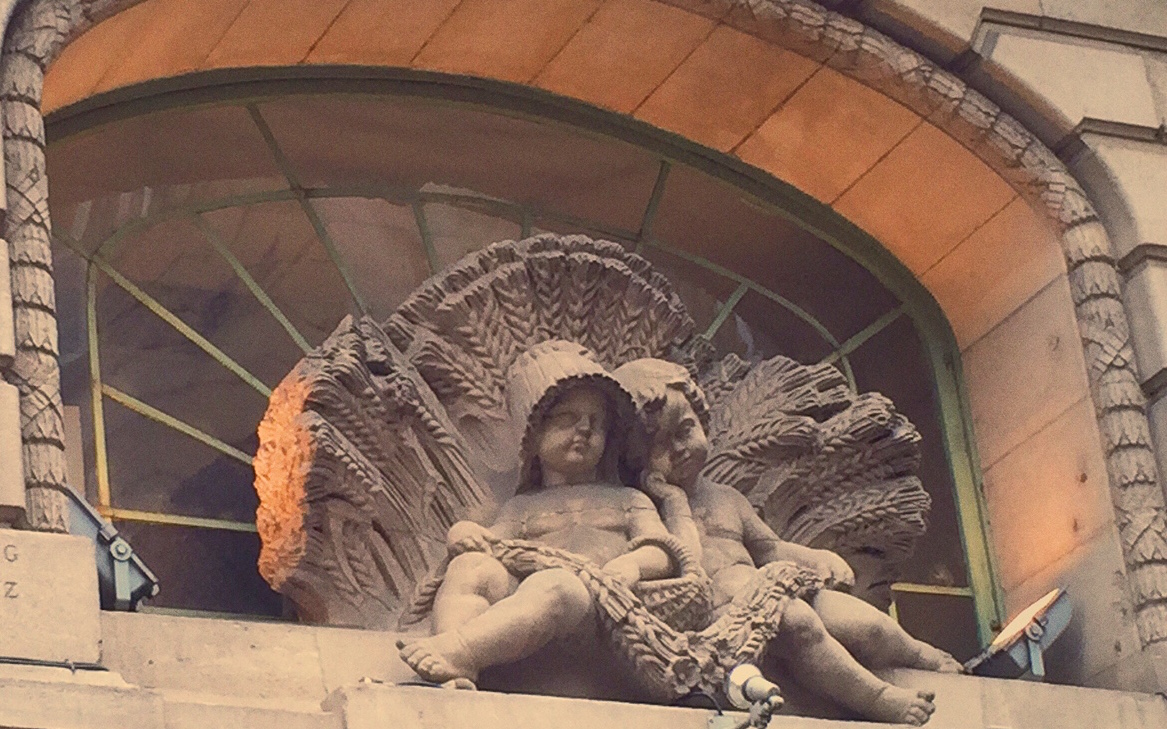
Stone carving of two children
Children on a street corner in France.

Suite Française and my father

Bridge over Moselle River, Metz, France
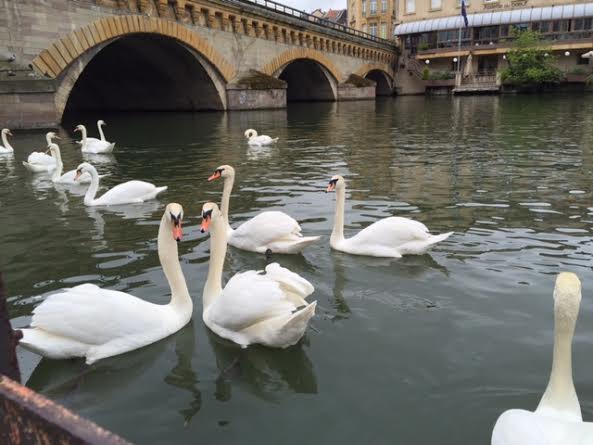
The Moselle River in Metz, France. My father was wounded on November 14, 1944 in the weeks-long Battle of Metz. After the city was liberated, the Allies went on to break through to Germany in the Battle of the Bulge.

Storm in June and Dolce, by Irène Némirovsky

I brought Suite Française by Irène Némirovsky with me when we travelled to France just before V-E Day to visit our son, who had a work coop in Paris, and to explore the region near Metz in northern France, where my father was wounded in World War II.

Suite Française consists of two novels set during the early days of the French Occupation, with exquisitely drawn French and German characters that dramatize the complicated relationship between France and Germany at that time.

Suite Française book coverI don’t know how Némirovsky could write during the terrible days of the French Occupation. An acclaimed novelist from a wealthy Russian family and a member of the highest social circles in France, she was also Jewish. Némirovsky knew at any moment she could be deported to a concentration camp, separated from her husband and her two young daughters.

But write she did, and superbly. She was driven and disciplined, and the writing must have given structure to her days and helped her cope. She finished two of the five novels she’d intended for Suite FrançaiseStorm in June and Dolce–before she was, indeed, arrested and deported in July, 1942. Némirovsky died a month later of typhus in a concentration camp. Her husband, Michel, was deported that fall and died in the gas chambers.

The family’s devoted nanny hid the two young daughters, Élisabeth and Denise, who were being hunted by Vichy officials, and they managed to survive the war. Fifty years later, Denise discovered that the papers left behind in one of her mother’s suitcases were two novels–she had thought they were diaries and had been reluctant to read them. Storm in June and Dolce were finally published in 2004 as Suite Française, which became an international literary sensation.

Included in my edition of Suite Française are the journal Némirovsky kept as she wrote the novels, and the desperate correspondence of Irène and Michel with Némirovksy’s publisher and French officials as they tried to avoid deportation.

On fleeing Paris:

“…groups of people appeared outside their houses–women, old people and children, gesticulating to one another, trying, at first calmly and then with increasing agitation and a mad, dizzy excitement, to get the family and all the baggage into a Renault, a saloon, a sports car…Not a single light shone through the windows. The stars were coming out, springtime stars with a silvery glow. Paris had its sweetest smell, the smell of chestnut trees in bloom and of petrol with a few grains of dust that crack under your teeth like pepper.”

On being a young, married French woman with a German soldier billeted in her home:

“She felt a very feminine pleasure, an almost sensual, sweet sensation at seeing this childish look on a face that was, after all, the face of an implacable enemy, a hardened warrior. For we can’t pretend, she thought, that we aren’t all in his hands. We’re defenseless. If we still have our lives and our possessions, it’s only because of his goodwill. She was almost afraid of the feelings growing within her. It was like stroking a wild animal–an exquisitely intense sensation, a mixture of tenderness and terror.”

On the French villagers and the Germans:

“Little by little, darkness spread across the lawns; they could still make out the gold decorations on the uniforms, the Germans’ blond hair, the musicians’ brass instruments on the terrace…All the light of the day, fleeing the earth, seemed for one brief moment to take refuge in the sky: pink clouds spiraled round the full moon that was as green as pistachio sorbet and as clear as glass; it was reflected in the lake. Exquisite perfumes filled the air: grass, fresh hay, wild strawberries. The music kept playing. Suddenly, the torches were lit…There was the lively, happy sound of champagne corks popping.

“Oh, those bastards! And to think it’s our wine they’re drinking, the Frenchmen said, but without real bitterness, because all happiness is contagious and disarms the spirit of hatred.

And of course, the Germans seemed to like the champagne so much (and had paid so much for it!) that the Frenchmen were vaguely flattered by their good taste.”

From Némirovsky’s journal:

“I must create something great and stop wondering if there is any point. Have no illusions: this is not for now. So mustn’t hold back, must strike with a vengeance wherever I want.”

“Never forget that the war will be over and that the entire historical side will fade away. Try to create as much as possible things, debates…that will interest people in 1952 or 2052.”

“What lives on:

1. Our humble day-to-day lives

2. Art

3. God”

Suite Française has just been made into a movie but, as far as I can tell, a US release date is not yet known. I can’t vouch for its quality. A writer I know who lives in France told me many reviews have not been favorable. Usually, I don’t see movies adapted from books that I like unless I know the production is a good one. Nonetheless, below is the UK trailer. I do like Michelle Williams and Kristen Scott Thomas.

A personal connection

Cemetery with white crosses
The Lorraine American Cemetery in France, where many soldiers from the Battle of the Bulge and the Battle of Metz are buried.
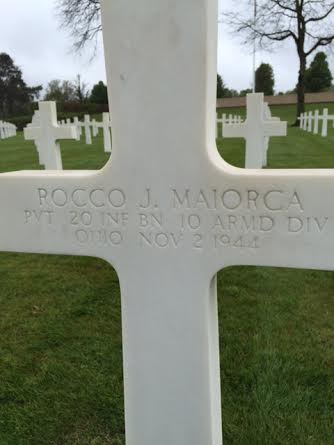
White cross, gravesite
This soldier was in my father’s battalion. Perhaps they knew each other.
Cathedral and buildings, Metz
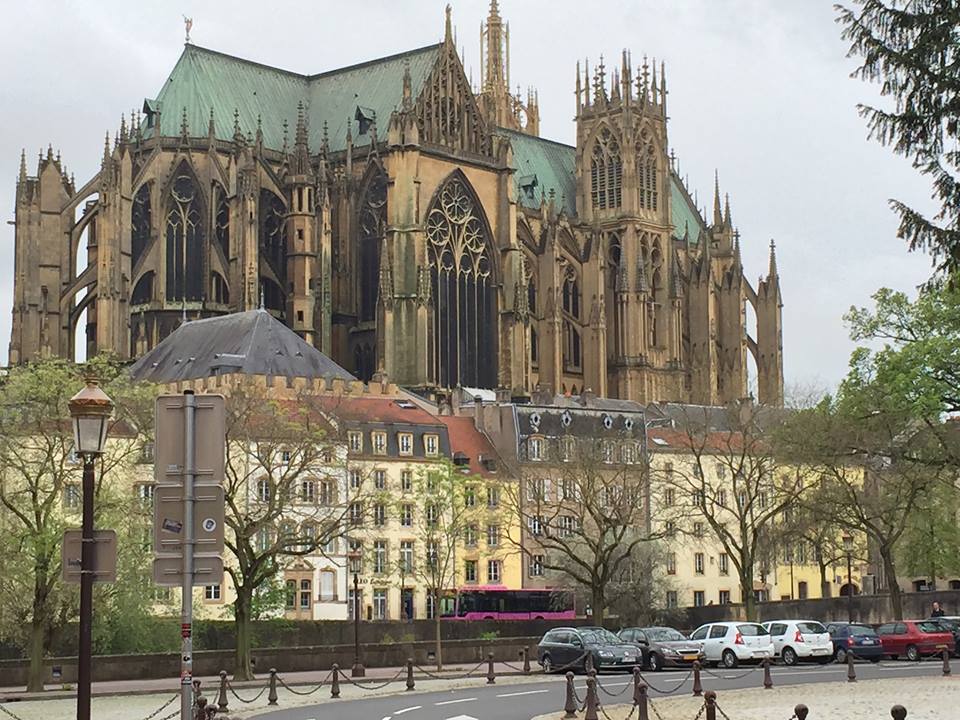
Cathedral of St. Etienne, Metz. My father was wounded before the Allies took Metz, so he never got to see the cathedral or this beautiful city.

I imagine the bells of St. Etienne rang on VE Day:

Moselle River, swans