Books at my door

Books at my doorDelancey book cover


If you like food writing combined with memoir, you will like Molly Wizenberg and her latest, Delancey: A Man, A Woman, A Restaurant, A Marriage. The restaurant is in Seattle. Her first book, A Homemade Life, is a bestseller.

Sicily book coverI bought Sicily: A Literary Guide for Travellers by Andrew and Suzanne Edwards for an upcoming trip – haven’t been there in seven years. Many of the greatest writers were drawn to this island.

Groundbreaking Food Gardens by Nikki Jabbour promises 73 plans that will change the way you grow your garden, such as: Slow Food Garden; Vintage Victory Garden; Edibles on a Patio; Heirloom Sampler; Formal Herb Garden; Eggs & Everything; and Living Walls.

Piazza, Carini
The piazza in Carini, Sicily, where my father was born

Cleveland was my home but I lost it

Go down and tell them what you’ve seen:

that the river burned and was not consumed.

“River on Fire” by David Lucas in Rust Belt Chic: The Cleveland Anthology

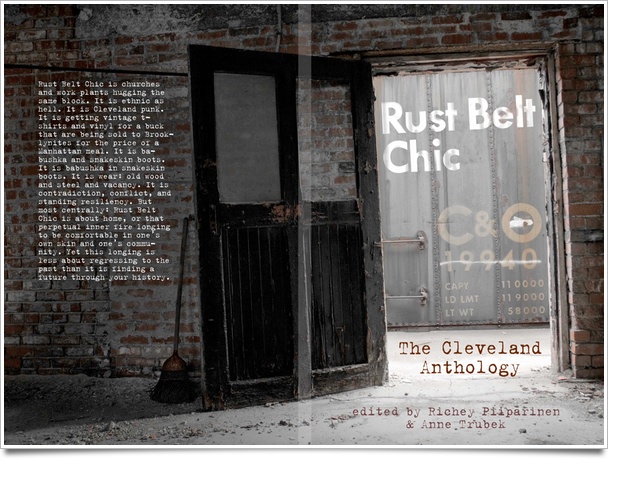
Rust Belt Chic cover photoI’ve been writing about the town where I grew up, how you can’t go home again and all that, and about my fraught relationship with Cleveland. This kind of ambivalence permeates Rust Belt Chic: The Cleveland Anthology, (published by the editors of the online magazine Belt) which I’ve been reading in between novels and book-length nonfiction. But all is not bleak – the collection includes a good share of essays by writers who unabashedly love Cleveland. The writing is excellent, the social commentary and history fascinating.

My childhood home just outside of Cleveland shared a driveway with our floral shop, where the locals bought their wedding and funeral flowers, Easter corsages and prom nosegays. We earned a good living in that small shop.

Those were prosperous times. I remember boarding a passenger ship docked on the dowtown shores of Lake Erie with my mother, some time in the late 1950s. We were going to visit my aunt, who lived in Michigan on the Detroit River, across from a mighty steel mill. This was no mere ferry we travelled on, but a big old steel ship; my memory of this seems outlandish to me now but, based on my cursory research, I presume we travelled on the SS Aquarama, a World War II troop carrier that was converted to a passenger ship after the war.

I loved going to my aunt’s house, where barges as big as factories floated past the backyard every day. Back then, Detroit and Cleveland were first-tier cities.

Today, Detroit is ranked first in the United States for poverty, and Cleveland is second.

As an adult, I moved to New York City, but eventually I settled and raised a family in another Rust Belt city on a lake (probably no coincidence). In Rochester, New York I worked for Kodak, for a time, but now the company is a shell of its former self. Rochester is ranked third in the US for poverty.

In 2008, my Ohio hometown was the epicenter of the mortgage crisis and still has not recovered. It has essentially become an extension of the blight that is East Cleveland. Homes have sold for as little as $1000 there. Other houses have been abandoned and stripped of their copper plumbing and aluminum siding. Many have been demolished.

Sometimes, I think about what it would be like to move back to Cleveland. I could host a book club for schoolchildren in the old flower shop. It would be a safe haven from the drugs in the vacant lot next door, the guns, the crime. We’d read poetry by Mary Oliver, who is from my hometown, and the novels of Toni Morrison, who is from Lorain. I’d give each child a book to take home.

But, of course, my life has long been elsewhere and I won’t move back. You can’t go home again and, besides, our house and the shop are (finally) about to be sold (fingers crossed).

Both optimists and pessimists write about Cleveland in this Rust Belt Chic anthology. (Rust Belt Chic anthologies of Detroit and Cincinnati have been published as well. Additional volumes are in the planning stages.) When it comes down to it, I’m essentially an optimist, because I don’t think things can get much worse, and I see a commitment to community and volunteerism among young people who choose to stay or settle in Rust Belt cities.

But I’m sad and bitter, too, when I think about what my childhood home has become. I feel shame, too, but I don’t mean I’m ashamed of where I’m from. I’m proud to be from Cleveland. Rather, I feel shame in the sense that we could have and should have done better in terms of taking care of our communities and each other.

What is the Rust Belt, and Rust Belt Chic? From the Cleveland Anthology

“What I’ve figured out, though, is that maybe I didn’t want baseball – I wanted Cleveland. I wanted to walk from the stadium past Tower City to my dad’s office parking lot at 11:34 pm after a Tribe game on a hot August night….ecstatic crowd walking outside the Gund, of guys in black sneakers and ladies with bra straps exposed and tans darker than the Cuyahoga in December….” Norene Malone

“I want to laugh when I hear that people are moving to Cleveland to practice their art. Then I want to spit in their faces….The first sign of the coming apocalypse is the art walk: the Typhoid Marys of gentrification. Developers show up, displaying all the sensitive charm of a multinational corporation….

All that beautiful decay, they seemed to say. Look at how wonderful this place used to be. Look how terrible it all was.”   Eric Anderson

“I was in love with Little Italy the moment I laid eyes on it, and still am, though it’s a long-distance thing now, with me pining away from the East Coast.”   Clare Malone

“But as Iraq fell apart on sectarian lines, Cleveland’s little Iraq fused closer together. I wasn’t authentic enough to intuit from last names and cities of origin which of our friends were Sunni and which were Shia, and for our purposes, the distinction was irrelevant.”   Huda Al-Marashi

“I have never, ever, met any single person of color with any great passion for this city.”   Jimi Izrael

“Rust Belt Chic is the opposite of Creative Class Chic. The latter [is] the globalization of hip and cool. Wondering how Pittsburgh can be more like Austin is an absurd enterprise and, ultimately, counterproductive. I want to visit the Cleveland of Harvey Pekar, not the Miami of LeBron James.”     Jim Russell

“The lips are gone. For years, they floated on an abutment at the base of the Detroit-Superior bridge in the Flats: a big pair of shiny red-enamel lips framing a mouthful of teeth….The lips first appeared sometime in the late 1970s, covering up an obscene tag someone had scrawled on the wall with an aerosol paint can. Below the lips was an equally mysterious signature announcing that this graffiti was the work of some so-called “Regional Art Terrorists.”    David C. Barnett

“Decades ago, Pekar’s work was already refuting the idea of the Rust Belt as a non-culture. Like today’s Rust Belt artists, he was fascinated by the city’s ethnic heritage, fluent in the history recorded in their grand architecture, obsessed with a sense of loss and ruin. But there’s one very important difference between him and his enthusiastic Rust Belt chic successors: Pekar’s view of Cleveland and the Rust Belt was almost entirely devoid of optimism.”  Erick Trickey

Mother and daughter in front of flower shop
Our flower shop, opening day


Note: The title for this post was inspired by a photograph on NewGeography.com.

Summer reading

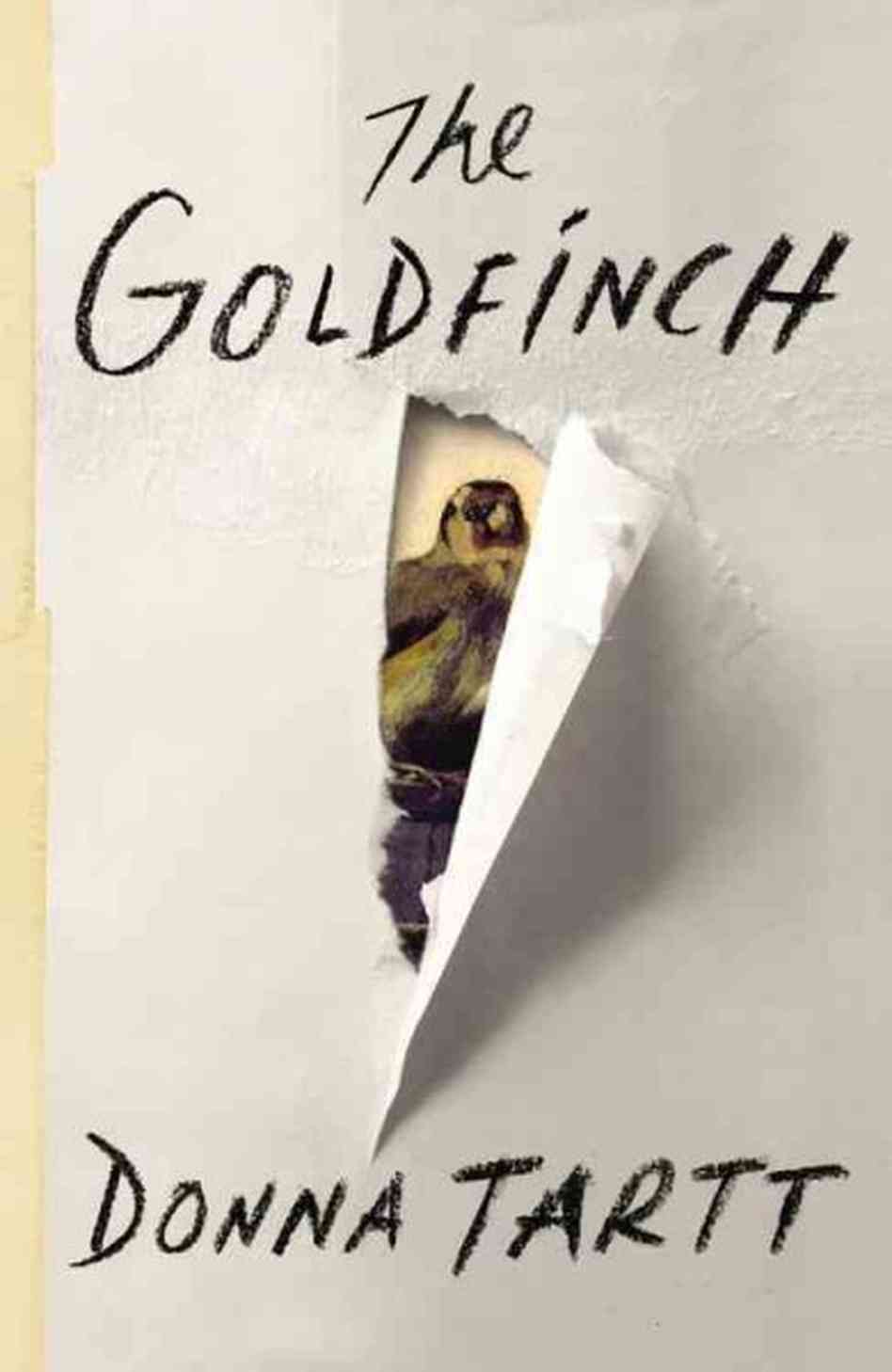
The Goldfinch book coverI am now thoroughly in the grip of Donna Tartt’s The Goldfinch. (In book circles, it seems as though half the universe is reading Tartt’s latest novel.)

After surviving a terrorist bombing at the Metropolitan Museum of Art in New York (a hellishly claustrophobic, terrifying scene masterfully written), a shell-shocked Theo Decker is making his way home amidst dozens of fire engines, blaring sirens, and chaos in the streets, where he is certain he’ll be reunited with his mother, who had been in the museum gift shop during the blast. Knowing Tartt, I believe things will only go further downhill for Theo in a tragic – comic, picaresque way. I’ll keep you posted over the next few weeks, without spoilers, of course. Having read Tartt’s previous books, The Secret History and The Little Friend, her latest book is a must-read for me.

In the Kingdom of Men book coverIn my perpetual online quest for good reads, I happened upon Kim Barnes the other day. I can’t believe I haven’t yet sampled her writing. In my stack of library books, I now have In the Kingdom of Men, the 1960s story of “a barefoot girl from red dirt Oklahoma, and all the marble floors in the world will never change that” who marries a college boy from her hometown. He takes a job with the Arabian American Oil Company in Saudi Arabia. The novel is loosely based on the experiences of Barnes’ aunt and other American women married to oil executives who worked in the Persian Gulf in the “Mad Men” era. I’ve also placed library holds on Barnes’ two memoirs, In the Wilderness and Hungry for the World.

My Struggle book coverAs usual, I’m overly ambitious, but I’ve decided to take on Norwegian Karl Knausgaard’s three-volume My Struggle after reading intriguing reviews. The fact that our local Barnes & Noble did not have Volume 1 only makes me more determined.

I just purchased Turn Right at Machu Picchu by Mark Adams (someday we’ll get there) and The Shelf: Adventures in Extreme Reading, by Phyllis Rose. (She wrote A Year of Reading Proust.) Rose read, straight through, all the 30 or so books from LEQ – LES on a random shelf in the New York Society Library stacks – no matter how obscure the author. The books and authors include The Phantom of the Opera, California detective fiction, a novel by an Afrikaans writer, stories of French Canadian farmers, and one “feminist, humane earth-mother Jewish writer” who raises award-winning Newfoundlands.

Domestic Matters

A Woman's Shed book cover

We’ve been putting in raised beds at our house, and my latest obsession is backyard domesticity. I just bought Gill Heriz’s delightful A Woman’s Shed. From our local library I borrowed three or four how-to titles about building fences (made of wood, stone, metal, and plants) and backyard sheds, gazebos, cabins, and other nature retreats.


The Kitchen Garden Cookbook coverI’ve also been browsing through Sylvia Thompson’s The Kitchen Garden Cookbook (1995). Thompson has also written The Kitchen Garden, which I’ll have to track down. Both are semi-classics endorsed by Alice Waters and other culinary experts. The cookbook is good reading, and if you’re growing your own vegetables you’ll like Thompson’s tips about when to harvest. The recipes are inventive and  sound delicious – I’m looking forward to trying some of them out. How did I find this title? It was on display at our library – a great way to discover good, not-so-new books.

In my quest to learn about gardening and raising vegetables, I’ve been reading Eliot Coleman’s Four-Season Harvest, as we hope to experiment with raising food through the winter. Eliot’s neighbors were Helen and Scott Nearing, who launched the modern-day homesteading movement. He has made the Nearing’s home farming techniques accessible to home gardeners and small organic farmers. Living the Good Life book cover(The Nearing’s influential book, Living the Good Life (1954) is a fascinating read, by the way.)  I like Coleman’s book because it is simple and straightforward, especially accessible and inspiring to the lay person. I’ve also rediscovered a book I purchased years ago, Barbara Damrosch’s The Garden Primer. Reading the forward to Coleman’s book, I discovered that he and Damrosch are married to each other.

Kitchen Garden book coverI love to visit the many small second-hand and consignment stores in our village. We have a used crafts supply shop I like to browse in, and there I discovered old copies of Betty Crocker’s delightful Kitchen Garden (1971) by Mary Mason Campbell with illustrations by Tasha Tudor; Gardening Made Easy binder coverand Gardening Made Easy (1995), International Masters Publishers, a collection of full-color pamphlets that you order individually and store in a three-ring binder. (I believe these are now out of print.)


The Supper of the Lamb book cover

For good measure, I requested from the library a copy of The Supper of the Lamb, (1969) by Robert Farrar Capon; this “culinary entertainment” written by an Episcopal priest comes highly recommended by a friend.

So there you are, my summer reading plans – all over the map, highbrow and not, typical for me.

What will you be reading this summer?


Raised beds
A work in progress


Quilt

“Hello Mommie. We made it to AMERICA!!!!”

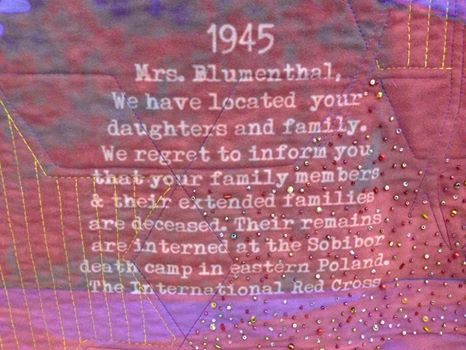
I didn’t read a book this week, I read a quilt.

Our community center hosted a quilt show last weekend, where we saw a quilt that tells one Rochester family’s story. It is well worth reading.

Created by Julie S. Brandon as a tribute to her great grandmother, Estera Blumenthal, A Cruel Twist of Fate won “Best Interpretation of a Theme” in the 2012 Mid-Atlantic Quilt Fest and 2nd prize in the 2011 Wall Hanging Diamond Jubilee Quilt Fest in Rochester.

(Photo #2 may be more legible. If you have a View function on your computer, select Zoom In. The conclusion is in Photo #3.)

Quilt with writing and photo
A Cruel Twist of Fate, by Julie S. Brandon


Excerpts from family letters
See the conclusion below.

Telegram

The story of a happy marriage & the right to read

When Ann Patchett came home from school one day, there was a boy she’d never met in the kitchen. Turns out, he was one of four new step siblings. Her mother and his father had married, but they hadn’t yet told the six children who were now part of a blended family.

This Is the Story of a Happy Marriage book coverThis might be why Patchett likes to write novels about people from very different walks of life thrown together in extreme circumstances – such as in Bel Canto, my favorite novel of hers about terrorists, an opera singer, and political and business leaders in a hostage situation. (See also my post about State of Wonder.)

It may also have had something to do with why, for a long while, she’d been committed to staying single. Ann’s mother had twice divorced and her grandmother had divorced. In fact, divorce was scattered liberally throughout her family tree.

This is the Story of a Happy Marriage is a collection of Ann Patchett’s personal essays, one of them about her early divorce and her relationship with the man who eventually became her second husband. It’s an honest, personally revealing, and entrancing story about love and commitment.

Marriage is a metaphor for the many happy relationships in Ann’s life, including relationships with her writing, her bookstore, her grandmother, the strong and nurturing Catholic nuns where she went to school, and her dog. There are essays about all of this and more in Ann’s new book, a fine collection of meditations about life, love, and fulfillment.

I especially enjoyed Ann’s essay about writing, “The Getaway Car,” and those of you who write will like it as well. She is not of the school that everyone has one great novel in them, as a woman Ann met at a family reunion insisted. Ann usually has enough good sense to avoid such conversations, but this time she gave in.

“Does everyone have one great floral arrangement in them? One five-minute mile? One algebraic proof?”

“No,” the woman said. But everyone has one great novel in them “because we each have the story of our life to tell.”

Ann does not agree and writes about how difficult it is to convey what we know on paper. This is what she has to say about writing a novel:

“I make up a novel in my head…I don’t take notes or make outlines; I’m figuring things out, and all the while the book makes a breeze around my head like an oversized butterfly whose wings were cut from the rose windows in Notre Dame. This book I have not yet written one word of is a thing of indescribable beauty, unpredictable in its patterns, piercing in its color, so wild and loyal in its nature that my love for this book and my faith in it as I track its lazy flight, is the single perfect joy in my life…..

…I reach up and pluck the butterfly from the air. I take it from the region of my head and I press it down against my desk, and there, with my own hand, I kill it. It’s not that I want to kill it, but it’s the only way I can get something that is so three-dimensional onto the flat page….Imagine running over a butterfly with an SUV…What I’m left with is a dry husk of my friend, a broken body chipped, dismantled, and poorly reassembled. Dead. That’s my book……The journey from the head to the hand is perilous and lined with bodies.”

It stops most would-be writers cold.

Ann writes about the panic that set in when she sat down to write her first novel at a fine arts retreat, a story she’d been constructing in her imagination for a long while:

“Now that I was sitting still in front of a blank screen, I was appalled by all the things I hadn’t considered….until that minute I had never considered the actual narrative structure….what in the hell had I been doing all that time?”

She was tempted to throw out her idea altogether and start fresh, but an experienced writer told her to stay with her story.

“It was life-saving counsel,” Ann writes. “Without it, I could have spent the next seven months writing the first chapters of eighteen different novels, all of which I would have hated as much as I hated this one.”

There is another essay in the collection, “The Love Between the Two Women Is Not Normal,” that especially stands out for me. Ann had been best friends with Lucy Grealy, the acclaimed author of a memoir, “Autobiography of a Face.”  Lucy had cancer of the jaw at age nine and 38 reconstructive surgeries. She died of a drug overdose, and Ann wrote a book about their friendship, Truth and Beauty. The book had been assigned to the incoming freshman class at Clemson University in 2006, and Ann was invited to speak there at the beginning of the school year.

All was well until a Clemson alum, whose nieces and a nephew were students there, objected to the book assignment. “The book contains a very extensive list of over-the-top sexual and antireligious references…The explicit message that this sends to the students is that they are encouraged to find themselves sexually.”

A hue and cry ensued. Many angry parents wanted another book chosen and Ann’s invitation rescinded, while most of the students and Clemson’s administration supported Ann and the book selection. The Clemson alum held a press conference the day before Ann appeared, distributed copies of bad reviews of her book posted by Amazon readers, and took out a full-page ad in the local paper. The ad, among other things, accused Clemson of the sexual harassment of freshmen students and suggested the assigned reading of Truth and Beauty was insensitive because a Clemson student had recently been raped and murdered.

When the day came for an extremely nervous and alarmed Ann to speak in Clemson’s coliseum, there were protests, and the administration had arranged for her to have a bodyguard. 

Ann has included her Clemson speech, “The Right to Read,” in this collection of essays. Among other things, she said most of the freshmen students were old enough to vote and go to war and could make their own decisions about what to read and how they’d be influenced by it. She pointed out that if they had to be protected from Truth and Beauty, they’d most certainly need to be protected from Lolita and The Great Gatsby and Anna Karenina.

Weeks after her speech, it occurred to Ann many of the students in the audience had likely never read Tolstoy or F. Scott Fitzgerald or Nabokov, and so they probably hadn’t understood what she was talking about.

As for me, I’m disturbed every time I hear about a protest of this nature over a book. If Patchett’s Truth and Beauty can cause such a furor, we live in a frightening world indeed.

Five Days at Memorial

FiveDays


“He would push 10 mg of morphine and 5 mg of the fast-acting sedative drug Versed and go up from there.”       –  Sheri Fink, Five Days at Memorial: Life and Death in a Storm-Ravaged Hospital

Five Days at Memorial is about five days in hell.

After Hurricane Katrina wreaked havoc on New Orleans, staff at Memorial Medical Center thought the facility and everyone in it had survived the storm intact.

Then the levees broke and the water came.

Darkness ensued, air conditioning stopped, and life support equipment shut down. No rescue was forthcoming from federal, state, or local disaster relief agencies or the hospital’s corporate owners. Toilets overflowed. Hospital staff could hear gunshots and see looters ransacking the big box store nearby.

Memorial Medical Center had no evacuation plan for a disaster of this type, and staff were not trained in disaster management, even though the hospital had a history of flooding.

To get patients (most of them frail and elderly) to the helipad for the occasional helicopter that eventually did show up, staff had to carry them in sheets down several flights of dark stairs, through a small shaft into the the parking garage, and up two more flights. This took well over half an hour for each patient brought to the helipad.

By the time Memorial Medical Center was entirely evacuated, 45 patients had died. Twenty-three bodies were found to have high levels of morphine and other drugs. The DA arrested one physician and two nurses for the second-degree murder of 20 patients. According to the account Dr. Fink pieced together, it was believed some patients were going to die anyway – they wouldn’t survive evacuation – and so they were euthanized to prevent needless suffering. (Another physician who allegedly administered lethal doses of drugs was not arrested.) Ultimately, the nurses weren’t prosecuted, and a grand jury did not indict the physician.

Sheri Fink, a physician and journalist who tells the fraught story of a hospital in chaos and the legal and political aftermath, won a Pulitzer Prize for her initial reporting of these events in 2009. She spent six years researching and writing the book, including interviews with hundreds of people. Her narrative is sometimes hard to follow, and she necessarily leaves many questions unanswered but, overall, Dr. Fink has done an amazing job of reporting this story.

Five Days at Memorial will leave you unsettled, dumbfounded at the perfect storm of failure on every level, and considerably more informed about the rationing of health care resources in a disaster. Dr. Fink has focused her investigative reporting on the nearly impossible ethical decisions that must be made in disasters such as Katrina and the earthquake in Haiti, when there are not enough resources to save everyone.

Who should be rescued first – the most critically ill patients or the patients most likely to survive? Which patients should be allowed to remain on scarce, generator-powered life support?

Should patients and families be involved in these decisions?

If you’re a doctor or nurse and you’ve deemed someone not a high priority for rescue (because you feel their chances of survival are poor), do you tell her (if she is conscious) or her family?

Let’s say you’re a family member and you’ve been with your critically ill, elderly mother for days in a dark, flooded, sweltering hospital. You’re ordered to evacuate. The hospital staff assures you your mother will be taken care of. Do you leave her behind? What if you never see her again, and find out weeks later, via email, that she passed away in the hospital? An autopsy indicates high levels of morphine and other drugs.

That is what happened to one mother and daughter at Memorial Medical Center.

I’m greatly oversimplifying events in my summary. But here are some points I took away from Five Days at Memorial:

Everyone involved in the disaster – patients, families, and hospital staff – was heroic, but the corporate owners failed miserably and were never held accountable.

If what Dr. Fink writes is accurate, many patients were euthanized. While I don’t agree with that decision, I can sympathize with doctors and nurses who were exhausted, sleep deprived, and unable to make the best judgments. It seems, too, that a few patients were euthanized who would not have died.

I think it’s important that Dr. Fink’s book has brought this story to the attention of a wider audience. Clear, rational protocols and ethical guidelines need to be established for these types of situations. Patients, families and communities need to become involved in this discussion. (And that’s all of us, isn’t it?)

After Katrina, a ruling was proposed that would have required health care facilities to have emergency preparedness plans in place in order to participate in Medicare and Medicaid. No such ruling exists at the time of this writing, and there should be one.

Dr. Anna Pou, one of the physicians who allegedly euthanized patients and has lobbied for laws to exempt health care providers from legal prosecution in disasters such as Katrina, has accused Dr. Fink of misrepresenting herself, being a “journalist for hire,” and profiting “from the pain and suffering of others.” I believe journalism is an honorable profession, and I think there are easier ways to make money than writing a complex piece of investigative journalism like Five Days at Memorial. It’s an important book that needed to be written.

I think it will save lives.


Sons of Madness

Sons of Madness book cover

Growing Up and Older with a Mentally Ill Parent

Considering the huge numbers of people who have a mental illness, their suffering and lost potential, and the tremendous cost to society, it’s high time we made mental illness a priority. Instead, it continues to be a topic we avoid. Our mental health services are shamefully and sorely lacking. Those who suffer from mental illness are not being served, nor are their families.

I’ve written about this topic before at Books Can Save a Life when I’ve featured books about families with mental illness, particularly the plight of children and adult children with mentally ill parents. (See Children of Mental Illness Part I, Children of Mental Illness Part 2, Encountering the Dark Matter of Mental Illness, and Do Genes Affect Our Mental Health?) I grew up with a mother who had schizophrenia and, as I’ve conducted research for a memoir about our family’s experiences, I’m sad to say many aspects of the mental health system are no better than they were decades ago, and mental illness carries as much stigma today as it did in the 1960s.

Today, I’d like to highlight the newly published Sons of Madness: Growing Up and Older with a Mentally Ill Parent, by Susan Nathiel, PhD, LMFT. It’s a companion volume to her first book, Daughters of Madness: Growing Up and Older with a Mentally Ill Mother. Susan (whose mother had schizophrenia) has collected here interviews with twelve men whose mother or father suffered from schizophrenia, depression, bipolar disorder, or another serious mental illness.

These are deeply disturbing stories of men who in many cases have never talked about their families or their childhood and teen years. They were too ashamed and traumatized to reveal their family secrets, and they’ve never been asked. Consider these chapter titles: “Nobody cared until my family was destroyed,” “My mother’s lobotomy saved my life,” “If you leave the house, you’ll be murdered,” “Our family code: Protect Dad at all costs,” “I called them nightly shows – all violence,” and “I should have been able to save her.”  While it’s never easy having a mentally ill parent, boys and men are especially challenged by the cultural expectation that they not show their emotions.

Some of these men have healed, some have not, and all are scarred. I want to point out that most people with mental illness are not violent, but their families, including their children, must contend with a high degree of dysfunction that can be continual, extremely frightening, and traumatizing. It’s painful to read the words of these men, but what impressed me especially was their profound isolation as children. In many cases, it was impossible to get the mentally ill parent anywhere near a psychiatrist or treatment facility. Saddest of all is that extended family members and sometimes the healthy parent turned a blind eye to the needs of the children. No one helped them, and no one seemed to care.

I can’t fathom how children this neglected, with no support systems, encouragement, or empathy, can grow up to be healthy, trusting, fulfilled, and able to contribute their unique talents and gifts to society. Many do. But consider all the lost potential. I also wondered, as I read the interviews, where child abuse and addiction end and mental illness begins – my point being that I believe many children grow up contending, alone, with parents whose dysfunctions can cause lifelong damage and persist across generations, whether or not the parents are ever formally diagnosed with an identifiable mental illness.

There’s been some criticism of the many memoirs of family dysfunction that have been published in the last few decades, and accusations of whining and naval gazing. This only increases shame and makes those who’ve been affected hesitate to bring their experiences into the light of day, where solutions can be found and those who need it given relief and support.

We need to pay more attention to our children and the invisible traumas they may be contending with.

In his New York Time’s column today, Nicholas Kristof has identified mental illness as an issue that needs more attention. I hope you’ll add your thoughts about mental illness and families here in the comments or on Kristof’s blog, On the Ground.  You can also visit his Facebook page and leave a comment. I welcome comments about this on my Facebook page as well.

“Be kind, for everyone you meet is fighting a hard battle.” Ian Maclaren, Scottish author and theologian

Books to read in 2014

Here’s my to-read list for 2014. It’s incomplete, always changing, and I’m sure I won’t get to all of these, not by a long shot, but it’s a convenient list when I’m choosing my next book. You may see a few of them featured on Books Can Save a Life. I’ve included titles that will be published in 2014, so you won’t find all of them on the shelves yet.

If you have enticing choices on your list, please share them in the comments!

Watch for my book giveaway in February to celebrate the second anniversary of Books Can Save a Life.

FICTION
The Snow Queen book cover

The Snow Child, by Eowyn Ivey    “If All of Rochester Read the Same Book,” 2014

The Goldfinch, by Donna Tartt

Someone, by Alice McDermott

Carthage, by Joyce Carol Oates

Arctic Summer, by Damon Galgut

The Unknowns, by Gabriel Roth

The Circle, by David Eggers

Colorless Tsukuru Tazaki and His Years of Pilgrimage, by Haruki Murakami

The Signature of All Things, by Elizabeth Gilbert

Life After Life, by Kate Atkinson

How Should a Person Be? by Sheila Heti

The Paying Guests, by Sarah Waters

And Then We Came to the End; The Unnamed; To Rise Again at a Decent Hour, by Joshua Ferris

Orfeo, by Richard Powers

Never Go Back, by Lee Child

The Language of Flowers, by Vanessa Diffenbaugh

The Snow Queen, by Michael Cunningham

The Bone Clocks, by David Mitchell

The Interestings, by Meg Wolitzer

The Luminaries, by Eleanor Catton

Lila, by Marilynne Robinson

By Blood, Ellen Ullman

Canada, by Richard Ford

In Sunlight and in Shadow; and Winter’s Tale, by Mark Helprin

The Cuckoo’s Calling, by Robert Galbraith (J.K. Rowling) and Untitled (2014)

The Woman Who Lost Her Soul, by Bob Shacochis

Off Course, by Michelle Huneven

Gone Girl; Dark Places, by Gillian Flynn (movies in 2014)

Wolf Hall, by Hilary Mantel (Best book of the 21st century, according to Elizabeth Gilbert)

****************

IN TRANSLATION

My Struggle, Books 1, 2, 3 by Karl Ove Knausgaard (Norwegian)

Treasure Hunt; The Dance of the Seagull by Andrea Camilleri (Sicilian)

Story of a New Name, by Elena Ferrante (Italian)

YOUNG ADULT

Son book cover

The Giver Quartet Series (including Son), by Lois Lowry

Divergent Series, by Veronica Roth

Mockingjay, by Suzanne Collins

The Fault in Our Stars, by John Green

*************************

MEMOIR

Wave book cover

Men We Reaped, by Jessamyn Ward

Still Writing, by Dani Shapiro

This Is the Story of a Happy Marriage, by Ann Patchett

Wave, by  Sonali Deraniyagala

Intensive Care: A Doctor’s Journey; and Medicine in Translation: Journeys with My Patients, by Danielle Ofri

**************

NONFICTION
Five Days at Memorial book cover

Big Data: A Revolution that Will Transform How We Live, Work, and Think, by Victor Mayer-Schonberger and Kenneth Cukier

Who Owns the Future? by Jaron Lanier

The Burglary: The Discovery of J. Edgar Hoover’s Secret FBI, by Betty Medsger

Thank You for Your Service, by David Finkel

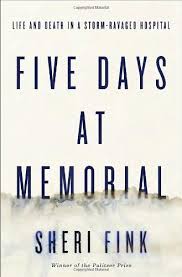
Five Days at Memorial: Life and Death in a Storm-Ravaged Hospital, by Sheri Fink

What Doctors Feel: How Emotions Affect the Practice of Medicine, by Danielle Ofri

Manson: The Life and Times of Charles Manson, by Jeff Guinn

The Unwinding: An Inner History of the New America, by George Packer

Margaret Fuller: A New American Life, by Megan Marshall

The Skies Belong to Us: Love and Terror in the Golden Age of Hijacking, by Brendan I. Koerner

The Gorgeous Nothings: Emily Dickinson’s Envelope Poems

Stalking the Divine, by Kristin Ohlson

Sons of Madness: Growing Up and Older with a Mentally Ill Parent, by Susan Nathiel

Is There No Place on Earth for Me? by Susan Sheehan

Dear Genius: The Letters of Ursula Nordstrom, by Leonard S. Marcus

Books Can Save a Life: most viewed posts in 2013

Snow-covered trees

Attractions in 2013

These are the Books Can Save a Life posts that got the most views in 2013.

I was gratified to see three of my most popular posts are about having a family member who suffers from mental illness. Early in the new year I’ll be writing about Susan Nathiel’s new book, Sons of Madness: Growing Up and Older with a Mentally Ill Parent. There is still very little written about the experience of having a mother or father with a mental illness; Susan’s book is an important contribution.

On the tenth day of Christmas: Brain Pickings

Deer in snow

7 Essential Books on the Art and Science of Happiness, at Brain Pickings. If you’re not familiar with this site, you’ll want to browse its long, generous excerpts from books by artists, scientists, and other fascinating people. See The Best of Brain Pickings 2013. This is not really a blog, but “a human-powered discovery engine for interestingness” by Maria Popova that has been praised by The New York Times and is included in the Library of Congress permanent web archive.

Photo: Christmas Eve visitors, through binoculars, by A. Hallinan