“I turned left after the bridge over the Snake and headed east along the trail country. The basalt cliffs along the river gleamed in the sunlight, and the austerity of landscape reminded me of the austerity of mission.
Journey is all, and we did it, we made it, we got there. We had followed the Platte to the Sweetwater, the Sweetwater to South Pass, and then we slid the wagon down Dempsey Ridge to the indescribable beauty along the Bear. Broken wheels and a thousand miles of fences couldn’t stop us.
The impossible is doable as long as you have a great brother and good trail friends. Uncertainty is all. Crazyass passion is the staple of life and persistence its nourishing force. Without them, you cannot cross the trail.” The Oregon Trail: A New American Journey, byRinker Buck
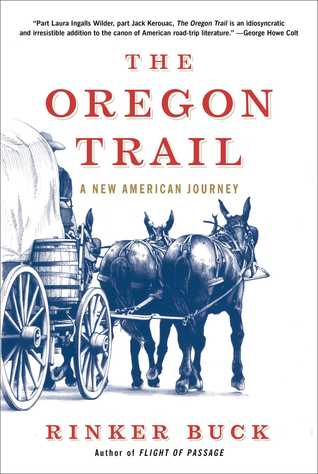
Things have been mighty serious here on the blog the past few months, so it’s time for a book that is guaranteed to make you feel good, satisfy your armchair travel cravings, and restore your faith in humanity. The Oregon Trail: A New American Journey by Rinker Buck is a perfect delight, especially if you love American history, travel, nature, a dash of memoir, and immersive, challenging expeditions.
Rinker Buck, a former reporter for the Hartford Courant, and his brother, Nick, crossed the 2,000-mile Oregon Trail in a covered wagon a couple of years ago, along with Nick’s dog, Olive Oyl, and a team of three mules: Jake, Beck and Bute.
They probably wouldn’t have made it if they hadn’t been experienced drivers of mule and horse teams. Even given their expertise, wagon transport presented scary and nearly insurmountable challenges along sometimes very hostile terrain. I don’t have a technical bent, so I wouldn’t have thought I’d be fascinated by the interpersonal dynamics between three mules and their drivers or the intricacies of harnesses and wagon paraphernalia. But Rinker Buck is an excellent writer, and he conveys beautifully how you have to get these important details right for such an undertaking, and the disasters that can happen if they go wrong.
Rinker Buck is funny and self-effacing, too. He gives just enough personal and family history to explain why two guys well past middle age might be inspired to take on the Oregon Trail. There are at least three levels of story braided together: Rinker and Nick’s personal, psychic journeys; the challenges and unexpected blessings of the landscape and people they met along the way; and vivid historical portraits of the colorful trailblazers who pioneered the trail in the mid 1800s.
The Oregon Trail spans Missouri, Kansas, Nebraska, Wyoming, Idaho, and Oregon. Up to 45,000 pioneers died along the trail.
I was especially taken with the story of Narcissa and Marcus Whitman, an upstate New York couple who were among the first pioneers to successfully maneuver the trail. Narcissa was a missionary and Marcus a doctor. Both wanted to head west, and they married essentially for convenience and companionship so they could travel together.
Along the way, Narcissa fell in love with Marcus, and she wrote eloquent letters to family describing their adventures. Narcissa gave permission for the letters to be published in the local newspaper, and soon her latest installments were being read by people across the country. Readers were mesmerized, and the Whitman success inspired the great wave of pioneers who came after.
The Oregon Trail is a great read if you like a blend of travel, history, nature and adventure, and Rinker Buck is a wise, funny, unsentimental writer who doesn’t take himself too seriously.
If you have similar “epic journey” books to recommend I’d love to hear about them in the comments.
New Year’s weekend I retrieved from the closet the boxes of letters I’d saved from my younger days, back when people took up pen and paper to communicate. I thought it was about time to sort, organize, and purge.
I’m not sure why I saved these missives, but I’m glad I did, especially now that I write memoir. Picking up an old letter and hearing the voice of a friend from long ago can take me back in an instant and call up a stream of long-lost memories. After decades, I still recognize a friend’s distinctive handwriting.
Well, that’s great advice when it comes to saving or not saving old letters. I found many letters that sparked joy, so I ended up saving more than I discarded, but that’s OK.
I’d like to share excerpts from one of those letters with you. I’m quite sure the author wouldn’t mind.
The letter is from my first manager at Eastman Kodak. Ronn hired me into his department of instructional designers and media producers when I moved upstate, after 7 years in New York City and then grad school.
I was having a tough time getting acclimated to Rochester after the big city. It’s a family town, and I was single and lonely. I’ll give it a year, I thought.
I was lucky, though, to meet Ronn, a brilliant and eccentric outlier, and to get the interesting Kodak job that I did. To me, instructional design was ho-hum, but as one of the department’s media producers, I worked with photographers, videographers, graphic designers, and other creative people. It was stressful, sometimes consuming, but fun, too. I remember visiting the photo lab one day at Kodak’s State Street headquarters, where one of the gigantic Colorama photos that always graced a wall of Grand Central Terminal was being assembled.
At the time, Kodak was the home of world class photographers and innovators who brought the science and art of imaging to the world. Rochester had reaped the benefits of the altruistic genius, George Eastman, and as I began to discover the riches here, I felt more at home. Rochester had art films, dance, world renowned schools of music and photography, and medical research. This was before cities marketed themselves, and Rochester had always been quiet about its cultural and technical riches and quality of life. If it tended to be overlooked, that was just fine with the people who lived here.
My old copy of Ronn’s letter was a photocopied good-bye and thank you to our department. After I’d been at Kodak about a year, Ronn took early retirement. I believe he was in his late forties or early fifties at the time. He was one of the thousands upon thousands of employees who would take early retirement or be laid off over the next decades as Kodak had to dismantle itself.
I would go on to have two other managers at Kodak, both male. All three of them made a point of paying me well. Kodak definitely had its flaws, but in the 1980s it was a progressive leader in employee development and training and equitable treatment of women. In my view, my years at Kodak would turn out to be the only time I was fairly compensated, except for when I was a consultant and could set my own rates. Although I’ve had other satisfying jobs, they did not pay well for a variety of reasons: they were more creative than technical; some were traditionally women’s occupations; I got further behind when I became a mother; and we’ve had decades of stagnant or declining wages. I mention this in light of what Ronn had to say to us in his letter.
Ronn had never been a corporate type. He could get away with wearing jeans among the suits because everyone loved him. He’d been restless, and was eager to make a change so he could have more time to write, paddle his canoe, read, and go fly fishing, among other things.
When I hear Steve Jobs’ famous words, “Stay hungry. Stay foolish,” I think of Ronn. He wasn’t hungry in the ambitious, Silicon Valley sense of the word. He was hungry for life, and he was never afraid to open himself up to others, even if some might see him as sentimental or naive.
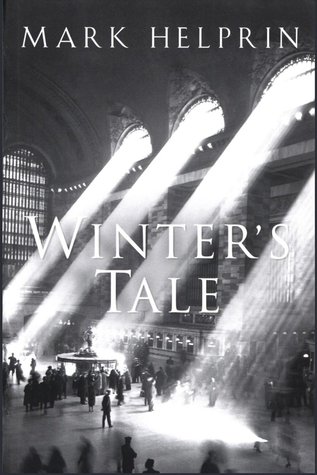
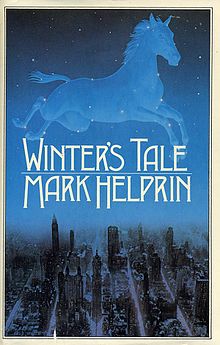
Before he left, Ronn made a point of spending some time with each of us. He wanted to introduce me to the founder of one of Rochester’s ad agencies, so we drove there one afternoon. On the way, we talked about Mark Helprin’sremarkable novel “Winter’s Tale,” and how it had affected our lives. I told him I’d been astonished to encounter one of my very own dreams among the pages of that novel, and we speculated on the meaning of dreams in our lives.
I remember Ronn speaking to us at his going away party, holding next to him the tall, graceful canoe paddle carved from hardwood that we’d gotten him as a farewell gift.
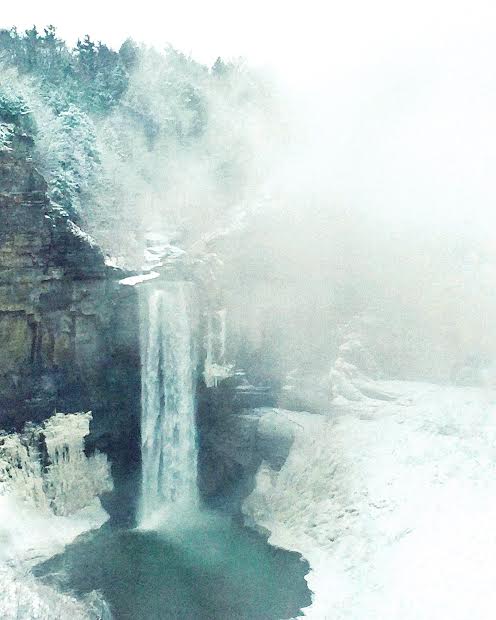
Later he sent us the letter which I ended up saving. He’d gone off to Vermont and had been consulting, reading fiction and poetry “like a bandit,” and paddling among the waterfalls, ponds, lakes, rivers and granite cliffs of Western Quebec and the Adirondacks.
He wrote:
“Please take care of yourselves (and I don’t mean that as a pseudo-parent statement.) Remember to honor yourselves. I know what it’s like to be a developer or producer. The crap can be overwhelming. And not all clients can recognize your talents.
Know that I think of all of you. (I truly mean that.) In fact, in a strange way I think that I see each of you more clearly than when I saw you every day. To be very old fashioned, I think that I see each of you as individual souls – which is very nice.”
If it sounds like I was a little bit in love with Ronn, I was, though I don’t think I realized it at the time.
There are some wonderful people in the world, aren’t there?
Do you save old letters? Which remarkable people have you crossed paths with in your life?
Another view, by M. HallinanI met my husband here, and so I stayed. (He is a paddler, too, by the way.)A village near Lake of the Coheeries
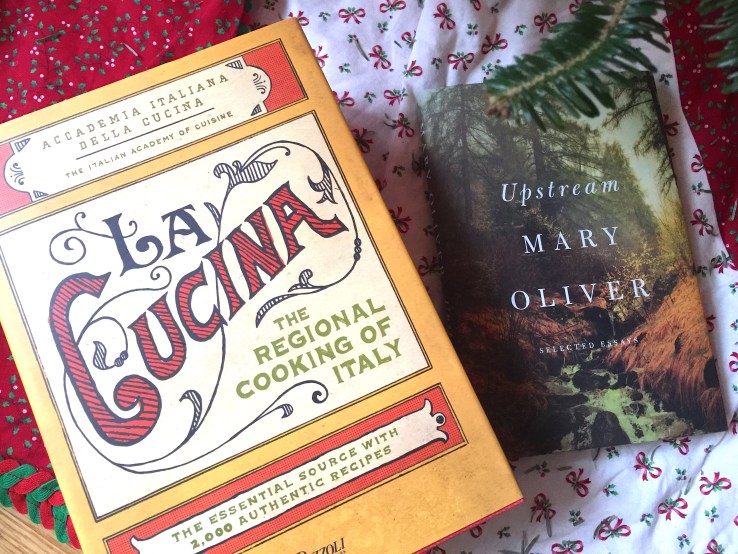
“The most regretful people on earth are those who felt the call to creative work, who felt their own creative power restive and uprising, and gave to it neither power nor time.”Upstream, by Mary Oliver
I’ve learned many things from America’s most beloved poet, with honoring one’s creative impulse being the most important, followed by: pay attention. She has shown us, through her poetry and essays, how to do both of these across the span of a long and fruitful life.
Her latest collection of essays, Upstream, (which contains both new and older work) is a look back at a life well lived, steeped in nature and literature. It has been on the New York Times Bestseller Nonfiction List for many weeks.
Oliver writes of the preoccupations and obsessions of the poets and thinkers that most influenced her, including Walt Whitman, William Wordsworth, Ralph Waldo Emerson, Edgar Allen Poe, and Percy Bysshe Shelley. You don’t have to like poetry to appreciate what she has to say about these fascinating writers.
I like those essays, but I love the more personal essays taken from daily life, my favorites being “Bird” and “Building the House.” I say personal, but Mary Oliver often shines a light on some miracle of nature – a wounded gull, or a female spider, or black bear – in a way that tells us much about her own life and her deepest beliefs.
If you have not yet read Mary Oliver, you could start by listening to a few of her most famous poems, such as “Wild Geese” and “The Summer Day” and “The Journey.”
Upstream is a beautiful little book for ringing out 2016, welcoming 2017, and reading on a cold winter’s night.
“I would say that there exist a thousand unbreakable links between each of us and everything else, and that our dignity and our chances are one. The farthest star and the mud at our feet are a family; and there is no decency or sense in honoring one thing, or a few things, and then closing the list. The pine tree, the leopard, the Platte River, and ourselves – we are at risk together, or we are on our way to a sustainable world together. We are each other’s destiny.”
Merry Christmas and Happy Holidays to all!
We’ve had this little birchbark canoe for many years.
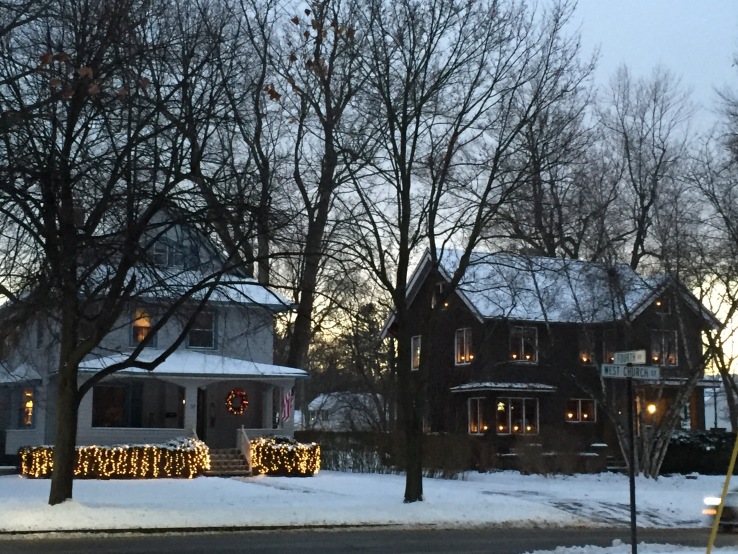
A favorite house in our village, vintage upstate New York.
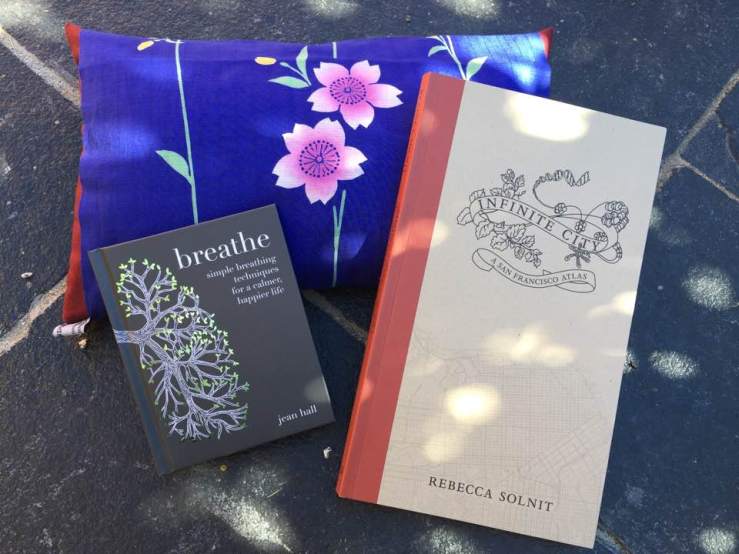
I’ll be taking a break from Books Can Save a Life until December so I can finish a draft of my memoir and get a good start on the revision. Before I go, I wanted to share highlights of my trip to San Francisco, where I attended the 2016 Magic of Memoir conference and spent some time with my son.
I’ve been working with Linda Joy for well over a year, and I had the chance to meet her in person for the first time. We had lunch together and talked memoir, of course. I was fascinated to hear about behind-the-scenes research she did for her second memoir, Song of the Plains, which will be published in 2017 – a delving into family history that took her to Oklahoma, Iowa, and Scotland. (Linda Joy’s first memoir is Don’t Call Me Mother: A Daughter’s Journey from Abandonment to Forgiveness.)
Linda gave me a whirlwind tour of Berkeley, too, whisking me past Chez Panisse, a restaurant I’ve long admired, and other famous spots like Telegraph Avenue, the UC Berkeley campus, the Campanile, People’s Park, and the Berkeley Hills with their incredible views.
At the conference, I met many other writers who have memoirs in progress, which is one of the most valuable aspects of a conference like this. Memoir writing can be lonely, and it’s tremendously inspiring to meet others making the same journey.
We shared our writing with each other as we worked through the exercises and activities concocted by Brooke and Linda Joy to supplement their excellent instruction on the craft of memoir and developing an effective author platform.
Several brave souls shared their work in progress during an open mic session hosted by Laurel Bookstore.
Brooke and Linda Joy are top-notch, experienced teachers in the art of memoir. Their discussions of memoir craft cover the important elements of theme, scene, narration, characterization, and takeaway. They demonstrate these elements with excerpts and examples from memoir classics, such as H Is for Hawk by Helen MacDonald,Wildby Cheryl Strayed,The Duke of Deceptionby Gregory Wolff, and The Glass Castle by Jeannette Walls.
Also cited were some newer memoirs and others I haven’t yet read that you might want to check out if you enjoy the genre, including Body 2.0 by Krista Haapala,Drinking by Caroline Knapp, Sex Object by Jessica Valenti, Brain on Fire by Susannah Cahalan, Love Warriorby Glennon Doyle Melton,Dog Medicine by Julie Barton, and Not My Father’s Son by Alan Cumming.
Here, for example, is takeaway – the heart of a good memoir, a big-picture message or moment of shared connection with the reader, from Body 2.0:
“Endurance pain will not relent with change, as indeed this flavor of pain has changed you. Loved ones may find you unrecognizable. You will see life through different eyes. In fact, endurance pain affords us the incredible opportunity to shed many useless cultural constructs like superficial success, unfulfilling relationships, and external validation.”
To this list I would add another excellent, just-published memoir, Lab Girl by Hope Jahren, which I wrote about in my last post.
With that, I’m off to write. I plan to finish my draft in conjunction with NaNoWriMo,which takes place in November. Since I’m not working on a novel, I guess that makes me a NaNoWriMo rebel. I’ll see you all back here in December, when I hope to have plenty of books to recommend for holiday giving and receiving.
Do you enjoy reading memoir? If so, can you recommend some of your favorites?
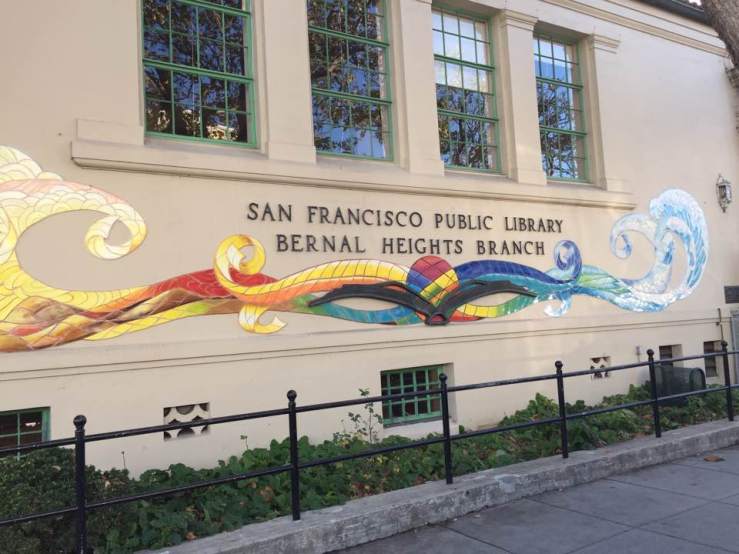
I stayed in Bernal Heights and made it nearly to the top of Bernal Heights Park, where I was treated to this view of the city.
I love all the colorful, artistic touches.
I explored Golden Gate Park with my son. This is Stowe Lake.
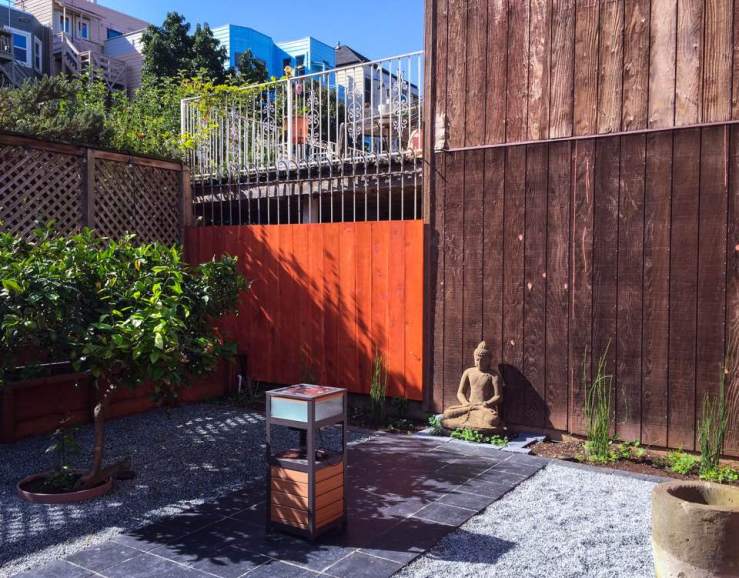
At my airbnb, I found this wonderful surprise, a beautifully designed backyard retreat.
“Each beginning is the end of a waiting. We are each given exactly one chance to be. Each of us is both impossible and inevitable. Every replete tree was first a seed that waited.” – Hope Jahren, Lab Girl
“After scientists broke open the coat of a lotus seed (Nelumbo nucifera) and coddled the embryo into growth, they kept the empty husk. When they radiocarbon-dated this discarded outer shell, they discovered that their seedling had been waiting for them within a peat bog in China for no less than two thousand years. This tiny seed had stubbornly kept up the hope of its own future while entire human civilizations rose and fell. And then one day this little plant’s yearning finally burst forth within a laboratory.”
“Science has taught me that everything is more complicated than we first assume, and that being able to derive happiness from discovery is a recipe for a beautiful life.”
Lab Girl is an extraordinary memoir, and Hope Jahren is an important new voice who breaks new ground in literary autobiography. We just don’t hear from enough scientists and researchers, and certainly we don’t hear from enough women in science who have struggled and prevailed at making careers in difficult, often male-dominated fields.
Lab Girl is for the lay person who loves plants, trees, and nature, and for the lay person who thinks plants, trees, and nature are boring and who wants to be dazzled, moved, changed, and reconnected with the holiness and mystery of life.
Lab Girl is for women in science and research, and women thinking of careers in science and research. But men in science and research will love the book, too.
Lab Girl is for anyone making a career and building a family in the face of a serious mental illness, and for those who want to better understand people with mental illness.
Lab Girl is for those who care about the environment and climate change, and who want to connect with someone of like mind whose passion and energy are contagious. Because, as Hope says, we won’t have any trees left in six hundred years if we keep on our current path.
Lab Girl is for anyone who has important work to do and wants to be inspired and emboldened by someone not afraid to be different and go her own way.
I have Katie at Doing Deweyto thank for letting me know about this book. I’ve included several passages from the memoir because I couldn’t decide between them. They make me want to read Lab Girl all over again. I’m sure I will, since I’m working on a memoir of my own. For those of you who are memoir writers, this one is both inspiring and a great memoir model.
Women, and men, doing important work in science simply don’t get enough attention in our culture, which is especially saturated by superficial drivel at the moment. Lab Girl is the antidote. When I was a clinical librarian at UR Medicine, I was always impressed and mystified by the grad students and faculty, the women especially, who had lives so different from mine, who spent hours and hours in labs and out in the field researching esoteric topics that had the potential to change lives.
We should know more about them, the important work they are doing, and how they navigate the challenge of carving out rich, fulfilling personal lives as well. There is a deep vein of fascinating life stories in science that appeal to experts and lay people alike, and I hope Lab Girlwill inspire many more memoirs of this kind.
The excerpt below is a good example of the organizing metaphor in Lab Girl:the rich and evocativeparallels between plant life and human life. Hope alternates between chapters about plant life and her own life, which makes for a satisfying structure:
“Every species on Earth – past or present – from the single-celled microbe to the biggest dinosaur, daisies, trees, people – must accomplish the same five things in order to persist: grow, reproduce, rebuild, store resources, and defend itself….It seemed outrageous to hope that fertility, resources, time, desire, and love could all come together in the right way, and yet most women did eventually walk that path.”
Below are a few more quotes. Read the memoir!
“On some deep level, the realization that I could do good science was accompanied by the knowledge that I had formally and terminally missed my chance to become like any of the women that I had ever known.”
The boldface in the next quote is mine; I think it is an important point:
“A true scientist doesn’t perform prescribed experiments; she develops her own and thus generates wholly new knowledge. This transition between doing what you’re told and telling yourself what to do generally occurs midway through a dissertation. In many ways, it is the most difficult and terrifying thing that a student can do, and being unable or unwilling to do it is much of what weeds people out of Ph.D. programs.”
“Public and private organizations all over the world have studied the mechanics of sexism within science and have concluded that they are complex and multifactorial. In my own small experience, sexism has been something very simple: the cumulative weight of constantly being told that you can’t possibly be what you are.”
“I’m good at science because I’m not good at listening. I have been told that I am intelligent, and I have been told that I am simple-minded. I have been told that I am trying to do too much, and I have been told that what I have done amounts to very little. I have been told that I can’t do what I want to do because I am a woman, and I have been told that I have only been allowed to do what I have done because I am a woman. I have been told that I can have eternal life, and I have been told that I will burn myself out into an early death. I have been admonished for being too feminine and I have been distrusted for being too masculine. I have been warned that I am far too sensitive and I have been accused of being heartlessly callous. But I was told all of these things by people who can’t understand the present or see the future any better than I can. Such recurrent pronouncements have forced me to accept that because I am a female scientist, nobody knows what the hell I am, and it has given me the delicious freedom to make it up as I go along. I don’t take advice from my colleagues, and I try not to give it. When I am pressed, I resort to these two sentences: You shouldn’t take this job too seriously. Except for when you should.”
Have you read Lab Girl? Do you have memoir favorites to recommend?
Asja and Sebree. If you’d like to hear a story about them, click on this link.
I’m all over the map with this My Favorite Things post – literally. Here are a few of my favorite things you might enjoy reading, watching, or listening to:
It’s a great little list if you want to take on some ambitious reading, which I like to do from time to time. Do any of these over-the-top books appeal to you? Which one(s)?
I want to begin Knausgaard’s My Struggleseries one of these days (my son loves it), that’s what I keep saying, but I’m dismayed to find his last volume in the series is 900 pages!
I’m fascinated by the sound of A True Novel by Minae Mizumura set in postwar Japan because it has been compared to Wuthering Heights.
Giacomo Leopardi’s 2500-page Zibaldone may be worth dipping into, though not reading straight through, because of my Italian heritage. “Zibaldone” is what this great poet and thinker called his gigantic notebook, and these are his collected writings. I’m curious about it – there are SEVEN translators, including Ann Goldstein, who translated Elena Ferrante’s novels.
Several of the others appeal to me, too. Do any appeal to you enough to take one on?
Geeky things like an old video about the first Kodak Colorama made from a photo taken under water: For years and years, a giant Kodak photograph, known as a Colorama, hung over the crowds passing through Grand Central Station in New York. I was in those crowds; little did I know that in a few years I’d be living upstate in Rochester and working for Kodak.
Rochester is still steeped in the mythology, lore, and beauty of photography, despite Kodak’s decline. The Rochester Institute of Technology, where my son studied photography, is one of the top photo schools in the country. Fabulous photographers and photography teachers are plentiful here, as are photo galleries, photo equipment retailers, and photography experts. The George Eastman House is one of the world’s largest repositories of photos and films.
Neil Montanus was one of the elite Kodak photographers who documented America and baby boomers coming of age for Kodak advertising. I found this vintage video on the site of Jim Montanus, his son. If you’re fascinated by how things are invented and how they work, you might enjoy this.
People who make things: I think the trend of calling people “makers” is a little weird and pretentious, but I do love the movement back to “old soul crafts and lost arts,” in the words of one of the artisans in this delightful little video. I guarantee it will lift your spirits, especially your creative spirit. The With Love Projectwill soon be made into a book – I would buy it. After you watch this, tell us in the comments who your favorite maker is in the video. I’m partial to the shoe maker/designer, myself.
What do you think about anything on this list? Might you read any of the chunksters on the LitHub list? Are you especially enchanted by any of the makers in the With Love Project?
“…she listens to reports of war in Europe…people lean in to discuss FDR, the Lindbergh baby, Amelia Earhart’s final flight…Audrey stands in line, overhearing news of the McCarthy hearings, Eisenhower, and Nixon…she watches anchormen speak of Korea, Vietnam, and the Cold War, start to finish…Satellites, astronauts, and the moon landing. Martin Luther King and Kennedy, their eventual assassinations, until talk is replaced by Three Mile Island. Love Canal, the Exxon Valdez…She’s there for all of it: Iran-Contra and Monica Lewinsky. The invention of the automatic coffeemaker, the atomic bomb, personal computers. The years fall like spent leaves…Audrey remains at the Saint Lawrence State Hospital from 1931 to 1996.” — Ladies Night at the Dreamland,by Sonja Livingston
Now she has a new collection just published, a strange and haunting meditation on the lives of women and girls from the past. Some of these women were accomplished and briefly famous, some were trail-blazers and rule-breakers, others were unremarkable on the surface but heroic in their strength and endurance, and some were outright victims.
Sonja is from Rochester, and several of the women she writes about have connections with upstate New York where I live.
It’s difficult to describe these essays, they’re so clever, beautiful, and unusual. Ladies Night at the Dreamland is a great read if you want something very different. Using detailed, thorough research and brilliant conjecture, Sonja sheds light on women who were largely ignored and gives them a dignity they never had in life. Often, Sonja inserts herself in the stories she tells in moving and provocative ways.
The Carousel at Charlotte Beach in Rochester, NY
The collection of essays is framed by two imaginary scenes in 1920 that take place at the Charlotte Beach carousel on Lake Ontario in Rochester, New York, and at the dance hall that once stood there, known as the Dreamland. (It burned to the ground in 1923.) My husband and I visit the carousel on hot summer nights when we want to walk by the lake and cool off. Charlotte Beach was once known as the Coney Island of the West.
In the last of the two scenes, Susan B. Anthony,who is buried in Rochester’s Mount Hope Cemetery, which is across the street from the medical center where I used to work, makes an appearance and speaks with Sonja. The author dresses Susan in the flapper get-up of the day, and tells her that the Nineteenth Amendment has passed. Thanks to Susan’s hard work, finally women have the right to vote.
One after the other, the women Sonja has written about gather around Susan B. Anthony to speak with her and thank her.
Sonja Livingston wrote these essays with love. Here are a few of them:
“Some Names and What They Mean” Carmen, Wanda, and Michelle were young girls strangled, raped, and killed in the early 1970s in Rochester by a serial killer known as the Alphabet Murderer.
Carmen managed to escape from the killer, and was seen by drivers running along 490 West, but no one stopped to help, and her abductor caught up with her. Sonja imagines herself back in 1971, driving on 490; she sees Carmen and rescues her. They drive on and encounter Wanda and Michelle, and rescue them, too. Together in the car, Sonja asks them who they’d like to become and helps them choose new names.
“Mad Love: The Ballad of Fred and Allie” In 1892, a society girl from Memphis, Alice Mitchell, murdered her female lover, Freda Ward. Sonja tells their story, imagining what Alice thought and felt.
“Human Curiosity: A Circular Concordance” Krao Farini, known as “The Human Monkey,” was a carnival attraction loved by no one who eventually became the bearded lady at Coney Island.
“The Goddess of Ogdensburg: A Rise and Fall in Seventeen Poses” – Audrey Munson was an artist’s model for the greatest sculptors in the early 1900s. Her naked body is on the Pulitzer Fountain in Central Park and the Manhattan Bridge; in Penn Station; and atop the Municipal Building in Manhattan and other municipal buildings across the country. She died in a state mental institution in Point Airy, New York.
“The Opposite of Fear” Maria Spelterini crossed Niagara Falls on a tightrope in 1876.
“Freeze-Frame”Valaida Snow was an African American jazz trumpet player of enormous talent known as “Queen of the Horn” from east Tennessee. She played in Harlem, then Paris, then Germany, where she was imprisoned by the Nazis during World War II.
It’s especially gratifying to read these essays about women as Hillary Clinton runs for president. I imagine Sonja telling Susan B. Anthony all about it.
Do you read creative nonfiction? Any recommendations? Are there books that you love that are extra meaningful because they take place in the region where you live?
I’d love to hear what you’ve been reading, too, so let us know in the comments. Book suggestions are appreciated and welcome, especially for those categories I’ve left blank.
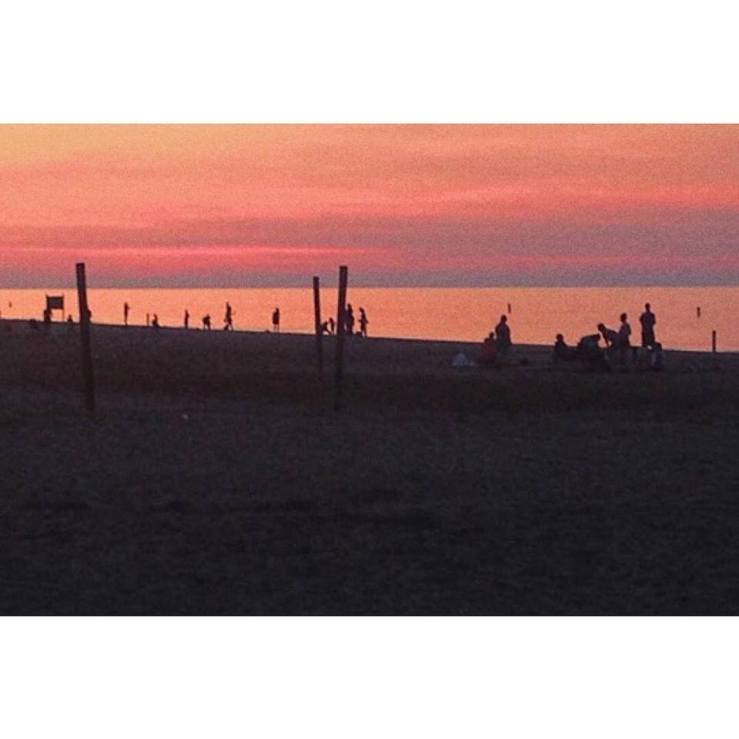
By the way, Ann just released her new novel, Commonwealth. Many of you know she’s one of my favorite novelists, so I’ll be sure to get my hands on it as soon as I can.
True story, when Ann was a girl, one morning she woke up to find kids she didn’t know in the kitchen. Turned out, her mother had gotten remarried, and these were her new half siblings.
Ann has translated some of that strange family experience into a novel that isn’t, literally, a true story, but that I imagine has plenty of emotional truth, as writers of fiction often say about their work.
Read a nonfiction book about science: Lab Girl, by Hope Jahren. (I’m reading it now). It has gotten excellent reviews, a memoir about a female scientist. It’s an eye opener, in part about what women in science are (still) up against, but there’s a lot more to this memoir about a woman passionate about plants.
I just borrowed Half-Earth: Our Planet’s Fight for Life, by Edward O. Wilson from the library. Nearing the end of his life, Wilson felt compelled to sound the alarm once more. He proposes that we devote half the surface of the earth to nature.
Read a book out loud to someone else: TheHarry Potter series; The Giver;andHatchet. Not this year, but when our sons were growing up, these were unforgettable read alouds. Harry Potteris especially captivating read deep in the woods at night when you’re camping.
Read a middle grade novel: see above, none this year for me.
Read a biography (not memoir or autobiography): Charlotte Bronté: A Fiery Heart,by Claire Harmon is on my to-read list. See the feminist category below.
Read a dystopian or post-apocalyptic novel: The Buried Giantby Kazuo Ishiguro, and Find Me,by Laura Van Den Berg.I read everything by Ishiguro. The latter novel by Van Den Berg was well reviewed and is excellent, though it didn’t really speak to me.
Read a book originally published in the decade you were born: I’ve been wanting to re-read Australian Neville Shute’s chilling dystopian novel, On the Beach. His A Town Like Alice blew me away in 1981 as a 5-hour Masterpiece Theatre production, and I would love to watch it again. (It’s only available on VHS.) I don’t believe I ever read the book.
Listen to an audiobook that has won an Audie Award:
The Bully Pulpit: Theodore Roosevelt, William Howard Taft, and the Golden Age of Journalism,by Dorothy Kearns Goodwin.OK, I haven’t read this book or even listened to it, but I gave it as a gift to a friend who loves Teddy Roosevelt. It won an Audie in 2015 for the best History/Biography category. This would qualify for the over 500 pages category, too, which is reason enough to listen to the audio version. I should read this or listen to it, considering that I believe journalism today is in a sorry state.
There is an Audie Classic Category, which I didn’t know about but just may entice me to finally start listening to audio books. Here’s a suggestion that sounds intriguing, also an Audie award winner: The New York Stories by John O’Hara.
I will try audio books soon, but I resist them. I don’t want to constantly fill my head with media, I need plenty of silence to think and to let my own writing germinate.
I’ve read and hear often that print books will disappear. Some people announce this with a great deal of glee, and I don’t understand why. Can we have both? Why does it seem to make some people happy that print books may disappear?
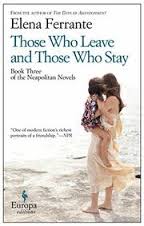
Read a book over 500 pages long:Elena Ferrante’sNeapolitan Novels. I’m counting this as a long read, even though there are four in the series. Had a great discussion about these books in a book club attended by many Italian-American women. One day I’ll read her other novels, which I’ve heard are rather devastating.
Read a book under 100 pages: Tribe, by Sebastian Junger. (130 pages, close enough)
Read a book by or about a person that identifies as transgender: Middlesex, by Jeffrey Eugenides, one of my favorites. Read this a few years back, superb.
Read a book that is set in the Middle East
Read a book that is by an author from Southeast Asia
Read a non-superhero comic that debuted in the last three years: This book is older than three years–I picked up Fun Home: A Family Tragicomic, by Alison Bechdel, but didn’t finish it. I may get back to it someday. It’s becoming a classic.
Read a book that was adapted into a movie, then watch the movie. Debate which is better:
I did see the movie, Brooklyn, by Colm Toibin, but didn’t read the book, don’t plan to. The movie was pretty good, mostly because of the acting, otherwise predictable.
I also saw this year the movie Carol based on the novel, The Price of Salt, by Patricia Highsmith. I thought it was excellent, haven’t read the novel. I was flabbergasted when someone I know said the main character in the movie was a predator. That is not how I interpreted the character in this movie about a lesbian relationship in the 1950s. I saw her as sympathetic. If anyone else has seen the movie and can comment, I’d love to hear your thoughts. I felt the predator comment revealed perhaps unconscious LGTBQ bias; but then again, Highsmith’s novels have disturbing characters. Perhaps the actual novel was darker, and some of that came through in the movie?
Read a nonfiction book about feminism or dealing with feminist themes:
My Life on the Road,by Gloria Steinem is a big bio this year, though I haven’t read it. I HAVE read, this year, and in the case of Bronté’s novel, many years in the past: Jane Eyre’s Sisters, by Jody Gentian BowerandJane Eyre. These, because my memoir has a Jane Eyre theme. Last year I read Bad Feminist by Roxane Gay. Fabulous.
Read a book about religion (fiction or nonfiction): After Buddhism, by Stephen Batchelor. (On my to-read list)
Read a food memoir: On my to-read list is Blue PlateSpecialby Kate Christensen. Classics I love are Laurie Colwin’s food memoirs. Elizabeth David was a superb food writer, though her books aren’t really memoirs. Ruth Reichl has come out with a new food memoir this year that I haven’t read, My Kitchen Life: 136 Recipes that Changed My Life.
Read a play
Read a book with a main character that has a mental illness: A Common Struggle, by Patrick J. Kennedy. This is a memoir. I also read the riveting memoir, A Mother’s Reckoning.The Eagle Tree by Ned Hayes is fiction, and it’s absolutely great.
Here’s a smidgen of The Masterpiece Theatre version of A Town Like Alice.
Have you read any books in these categories, or do you have any suggestions? Are you following the Read Harder challenge? Let us know in the comments.
Big Man’s Stool from the middle Sepic River region of Papua New Guinea. This was a wedding gift to us many years ago from my husband’s uncle, an expert on Melanesian art.
“Humans don’t mind hardship, in fact they thrive on it; what they mind is not feeling necessary. Modern society has perfected the art of making people not feel necessary.
I was fascinated by David Brooks’ recent column in The New York Times,“The Great Affluence Fallacy,” in which he says that, back in the day, many Americans joined Native American tribes, either voluntarily or because they were captured. Often, whites who were allowed to return to their original culture chose to stay with Native Americans.
This rarely happened the other way around: Native Americans never willingly chose white society.
David Brooks read about this phenomenon in Tribe: On Homecoming and Belonging, by Sebastian Junger, (Junger is the author of The Perfect Stormand War) which inspired me to read this short, well written extended essay on the plight of the lonely, autonomous individual in modern American culture.
I highly recommend Tribe if you feel that we’ve taken a wrong turn somewhere along the way in our relentless pursuit of autonomy and self-actualization, and if you feel we’re in need of a course correction. At about 130 pages, it is a quick but memorable read.
Here are a couple more quotes that spoke to me:
“A person living in a modern city or a suburb can, for the first time in history, go through an entire day–or an entire life–mostly encountering complete strangers. They can be surrounded by others and yet feel deeply, dangerously alone.”
“We are not good to each other. Our tribalism is to an extremely narrow group of people: our children, our spouse, maybe our parents. Our society is alienating, technical, cold, and mystifying. Our fundamental desire, as human beings, is to be close to others, and our society does not allow for that.” – Sharon Abramowitz
Family Reunion
Speaking of tribes, connection, and meaning, this summer I went to a family reunion held every three years or so by my husband’s large extended family of Irish descent. It’s always a great time, and through the years I’ve enjoyed watching four generations gather from the east and west coasts and many places in between. At the reunion we had a memorial tribute to my husband’s uncle, Peter, who recently passed away.
As a young man, Peter emigrated to Australia, started out in advertising and, beginning in the 1960s, spent three decades traveling deep into the interior of New Guinea and collecting tribal art. Eventually, Peter became one of the world’s foremost experts on Melanesian art.
Reading through Peter’s autobiographical material on display at the reunion, I found this:
“…he would spend months at a time traveling in remote areas, living amongst the people and studying their culture and traditional art….he would spend weeks traveling to small, obscure villages…No place was too far. There were trips to the most remote regions of Milne Bay, the Dampier and Vitiaz straits, off the beaten track in the Highlands, even an eleven month trip which delivered a major Kula canoe from Kitava Island to the South Australian Museum.”
Peter’s catalog descriptions make for fascinating reading. I love the vivid, succinct descriptions and the precise words. It’s almost like poetry. Here is one:
“A Wood Mask, Kandrian Sub-District, Wosom Village, the oval white face with an hollowed mouth showing teeth and tongue, hollowed eyes, pierced ears, and the high forehead with three cylindrical shafts issuing feathers, strands of shells and pig teeth hanging from the ear lobes, painted with white, black and red pigments. Height 63 cm. (24 3/4 in.)
This type of dance mask, called ‘Waku,’ was used in circumcision festivities.”
It strikes me that Peter’s fascination with Aboriginal art and life may have been inspired, in part, because he admired their community values and human bonds that ran deep…which is what Sebastian Junger writes about in Tribe. Peter must have resonated with their deep connection to nature, too.
So much knowledge and wisdom can be lost with the passing of intrepid individuals such as Peter. Fortunately, much of his knowledge and many of his experiences have been preserved in books and photographs, which we were able to see at the family reunion. As time goes on, the grandchildren and great grandchildren will be left with some sense of Peter’s remarkable life.
For him, no place was too far.
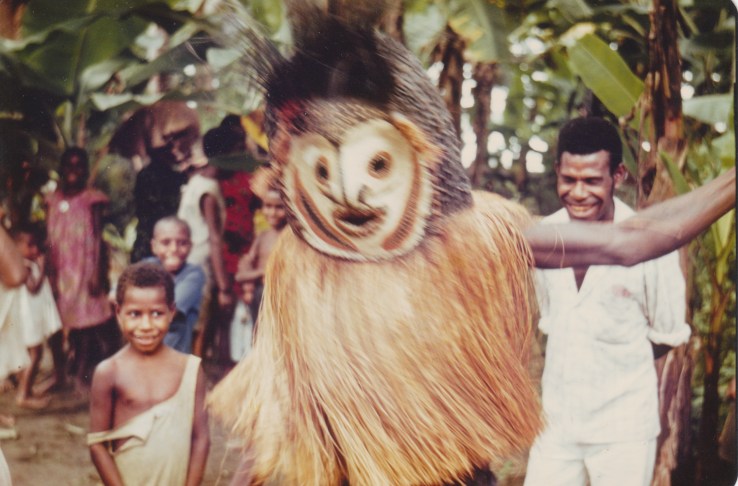
One of the old photos Peter left behind. I have no way of knowing what tribe this is or which village. Can you imagine pulling up in your canoe at some remote river location and receiving such a warm welcome? Or, maybe it was posed…either way, everyone looks happy.
Art by Sammy Clarmon of the Lockhard River Art Gang, in Gatherings II: Contemporary Aboriginal and Torres Strait Islander Art from Queensland, Australia. This is one of the Keeaira Press books designed by Great Uncle Peter. These esoteric, small press books about tribal culture are invaluable; they preserve glimpses of a past way of life and a unique body of wisdom for future generations.
Are there fascinating figures in your family history? Do you agree with Sebastian Junger that modern society makes people feel unnecessary?

 “I turned left after the bridge over the Snake and headed east along the trail country. The basalt cliffs along the river gleamed in the sunlight, and the austerity of landscape reminded me of the austerity of mission.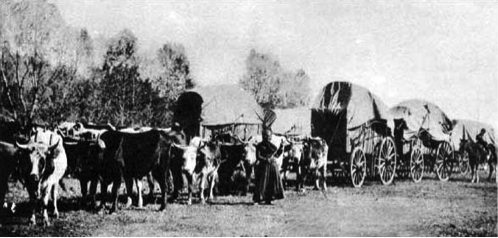
 Before he left, Ronn made a point of spending some time with each of us. He wanted to introduce me to the founder of one of Rochester’s ad agencies, so we drove there one afternoon. On the way, we talked about
  “Please take care of yourselves (and I don’t mean that as a pseudo-parent statement.) Remember to honor yourselves. I know what it’s like to be a developer or producer. The crap can be overwhelming. And not all clients can recognize your talents.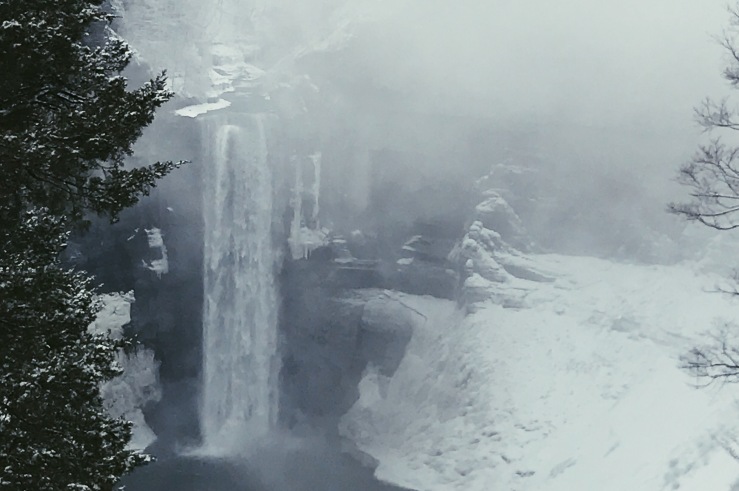
 #1
#1  #1
#1  #1
#1 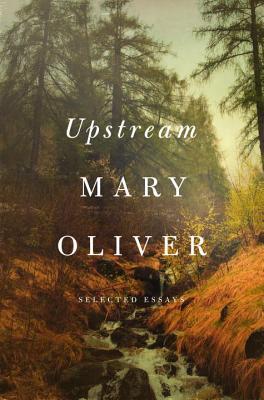 “The most regretful people on earth are those who felt the call to creative work, who felt their own creative power restive and uprising, and gave to it neither power nor time.” Upstream, by Mary Oliver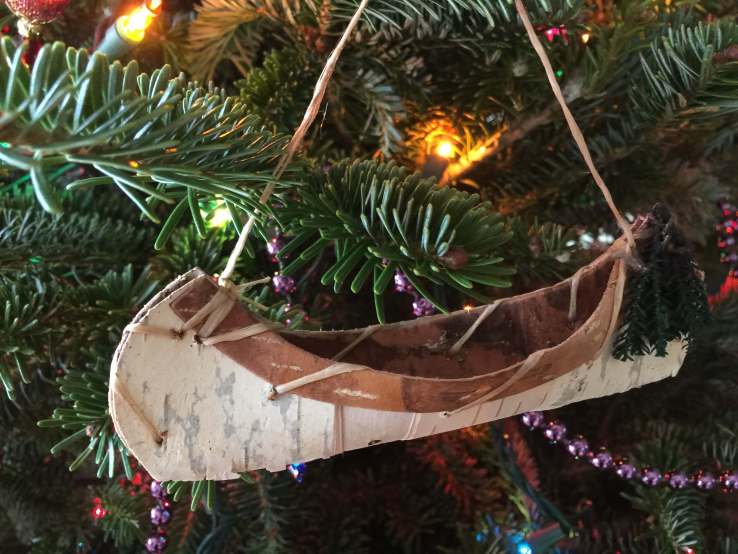




 “Each beginning is the end of a waiting. We are each given exactly one chance to be. Each of us is both impossible and inevitable. Every replete tree was first a seed that waited.” –
  Lab Girl is for women in science and research, and women thinking of careers in science and research. But men in science and research will love the book, too.

 I’m fascinated by the sound of
  “…she listens to reports of war in Europe…people lean in to discuss FDR, the Lindbergh baby, Amelia Earhart’s final flight…Audrey stands in line, overhearing news of the McCarthy hearings, Eisenhower, and Nixon…she watches anchormen speak of Korea, Vietnam, and the Cold War, start to finish…Satellites, astronauts, and the moon landing. Martin Luther King and Kennedy, their eventual assassinations, until talk is replaced by Three Mile Island. Love Canal, the Exxon Valdez…She’s there for all of it: Iran-Contra and Monica Lewinsky. The invention of the automatic coffeemaker, the atomic bomb, personal computers. The years fall like spent leaves…Audrey remains at the Saint Lawrence State Hospital from 1931 to 1996.” —
 By the way, Ann just released her new novel,
  Read a collection of essays:
  Read a dystopian or post-apocalyptic novel:
  Read a book over 500 pages long:
  Read a book about politics, in your country or another (fiction or nonfiction):
 “Humans don’t mind hardship, in fact they thrive on it; what they mind is not feeling necessary. Modern society has perfected the art of making people not feel necessary.
 “A Wood Mask, Kandrian Sub-District, Wosom Village, the oval white face with an hollowed mouth showing teeth and tongue, hollowed eyes, pierced ears, and the high forehead with three cylindrical shafts issuing feathers, strands of shells and pig teeth hanging from the ear lobes, painted with white, black and red pigments. Height 63 cm. (24 3/4 in.)