Braiding Sweetgrass

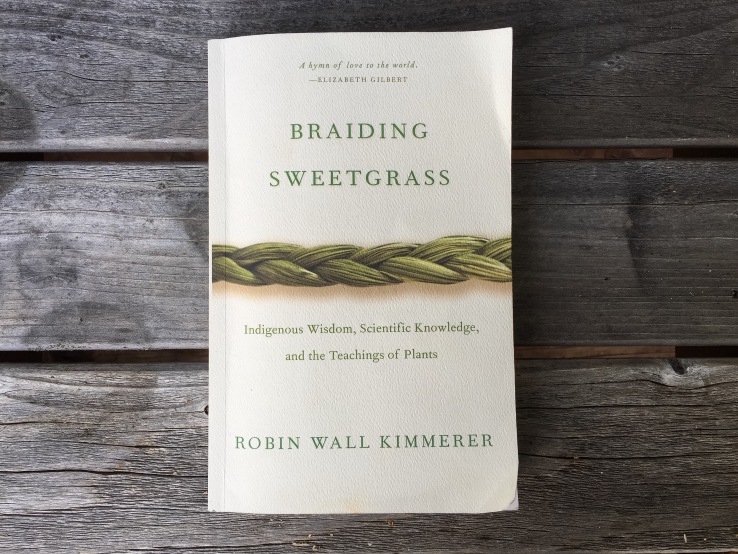
Braiding Sweetgrass cover

“Hold out your hands and let me lay upon them a sheaf of freshly picked sweetgrass, loose and flowing, like newly washed hair… Hold the bundle up to your nose. Find the fragrance of honeyed vanilla over the scent of river water and black earth and you understand its scientific name: Hierochloe odorata, meaning the fragrant, holy grass. In our language it is called wiingaashk, the sweet-smelling hair of Mother Earth. Breathe it in and you start to remember things you didn’t know you had forgotten.”   Robin Wall Kimmerer, Braiding Sweetgrass

I’ve been working on my first podcast in a nature series, and as part of my research I visited Ganondagan, a cultural center and historic site that was the home of the Seneca Nation of the Iroquois Confederacy. It has an intriguing array of programs, from animal tracking to music to meditation to dance. Last Sunday, I heard Robin Wall Kimmerer speak about her book, Braiding Sweetgrass, which I highly recommend to anyone who cares about nature, the land, and saving the earth.

IMG_2842
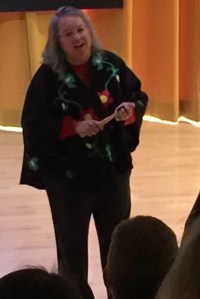
Robin Wall Kimmerer leads us in a song to save the earth at Ganondagan

I first heard of Robin Kimmerer via Elizabeth Gilbert, who found the inspiration for her book, The Signature of All Things, when she read Gathering Moss by Kimmerer.

I’m about a quarter of the way through Braiding Sweetgrass. I’m loving the poetry of her writing as I take in the simple but profound indigenous wisdom Kimmerer is eager to pass on. It’s wisdom we as a culture have long overlooked and which may save us all, if we pay attention. Braiding Sweetgrass is a book to read slowly and savor.

Robin is a botanist, a professor of environmental biology, and a member of the Citizen Potawatomi Nation. She is descended from the Anishinabekwe of the New England region; in the forced Native American migration her people settled in Oklahoma.

There, her grandfather, by law, had to leave the reservation when he was nine years old to attend public school. At that point, their language and most of their indigenous wisdom was lost.

Robin has spent a good part of her adulthood reclaiming both as she also pursues the life of a botanist and university professor.


597px-Making_Sweet_Grass_Medicine

Making sweet grass medicine. © Ad Meskens / Wikimedia Commons

Here Robin expresses what she aimed for in writing Braiding Sweetgrass:

“I offer…a braid of stories meant to heal our relationship with the world. This braid is woven from three strands: indigenous ways of knowing, scientific knowledge, and the story of an Anishinabekwe scientist trying to bring them together in service to what matters most. It is an intertwining of science, spirit, and story – old stories and new ones that can be medicine for our broken relationship with earth, a pharmacopoeia of healing stories that allow us to imagine a different relationship, in which people and land are good medicine for each other.” 

I’ve still many pages to go, so I’ll write more once I finish the book. I’ll leave you with this:

“In the settler mind, land was property, real estate, capital or natural resources. But to our people, it was everything: identity, the connection to our ancestors, the home of our nonhuman kinfolk, our pharmacy, our library, the source of all that sustained us….It belonged to itself; it was a gift, not a commodity, so it could never be sold.”


Indigenous Peoples

My Favorite Things

P1060521
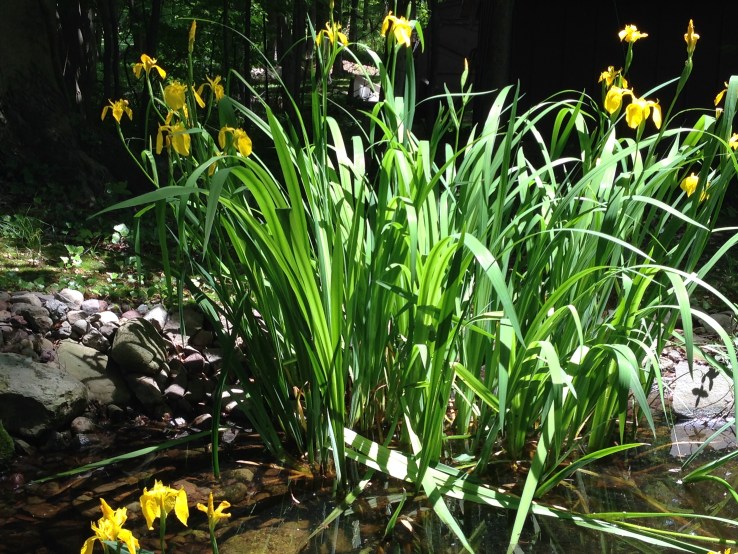
Our backyard water garden, where I’ve been hanging out making a podcast.


Podcasting!

I’ve been dusting off my out-of-date media production skills and taking a podcasting class online with Creative Nonfiction magazine. It’s been fun, aggravating and, at times, all-consuming. Last night I put the finishing touches on “Water Bewitched,” the first in my nature series entitled “From Where I Stand.”

Fingers crossed, there is an eco-literary site interested in my series. (I think I maybe made up the term eco-literary. Don’t know. There is something called eco-fiction, so…) We’ll see if they like my first one.

Quite some time has passed since I did media production for Kodak, and decades ago I received a master’s degree from the Newhouse School at Syracuse University. Since then, technology has reinvented itself. Now, anyone can be creative with media, but the learning curve can be steep and complex, at first.

There are about eight of us in the class from around the country and Australia who have been immersed in scripting and audio production, under the guidance of a devoted and patient reporter/teacher who works for an NPR affiliate. It’s been fascinating to see everyone’s projects as they progress. Occasionally, we meet together via Google Hangout to learn the audio editing software, trouble shoot technical difficulties, and give each other creative support.

During this, our final week, we’ll work on finishing touches and draft pitch letters for placing the podcasts.

Podcasting has taken off these past few years to become a HUGELY popular medium. The debut of the NPR podcast, Serial, was groundbreaking. This free podcast tells a true story in weekly installments. My friends and my son who listened to the first season became so hooked, they could hardly wait for each Thursday’s new episode. Sarah Koenig, the writer/producer, pioneered this new way of telling a story through sound. She’s immensely talented.

I confess I have not listened to Serial, which is in its third season, because I know I’d be hooked too, and I didn’t want it to take up lots of my time. That said, now that I’ve produced my first humble 6-minute podcast, I’ll be listening to Serial, out of curiosity and for inspiration. I highly recommend you check out Serial if you want to hear the powerful storytelling potential of podcasting.

Here are more noteworthy podcasts that I like. There are literally thousands, though, so if you’re interested, see what you can find by simply exploring online:

  • I highly recommend StoryCorps, if you haven’t heard it already. It is a public service dedicated to sharing and preserving humanity’s stories. These unscripted conversations are fascinating. If you live in certain big cities, like San Francisco or Chicago, you can reserve time in the StoryCorps booth to record your own conversation with a friend or loved one.
  • Radiolab is another high quality podcast that evolves around curiosity. These are longer programs that explore something fascinating or mysterious about…just about anything. Heady and intellectual.
  • This American Life is currently the most popular podcast in the US – that’s what they say, anyway. This is fine journalism. You can hear This American Life on your local NPR radio station, and you can subscribe to the shortened version as a podcast.
  • You can post your own podcast on SoundCloud, or you can browse to find podcasts of interest.
  • On Being with Krista Tippett is one of my favorite, favorite podcasts. It’s on public radio, too, in addition to being a syndicated podcast. A spiritual conversation that explores what it is to be human.
  • If you have a creative practice or you’re interested in the creative process, Elizabeth Gilbert, author of the excellent book Big Magic, produces a series I love, called Magic Lessons.
  • Check out The Moth Podcast, based on the fine Moth Radio Hour on public radio.
  • Oops, almost forgot Tiny Desk Concerts, another NPR creation.  Fabulous, and we are lucky to know one of the talented co-producers!

There are lots more!

IMG_0876
Water irises in our backyard pond

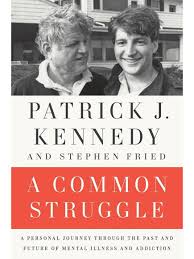
A Common Struggle

A Common Struggle image

A Personal Journey Through the Past and Future of Mental Illness and Addiction

“‘I have never seen a case worse than you, Patrick. You’ve been at this for so long, and the fact that you’ve survived and you’re still doing it almost makes you more dangerous. You’re able to manage it, just like your father managed it….’

He [Chris Lawford, Patrick Kennedy’s cousin] said he knew that at any given moment, I could say I wanted to go off to Australia with all my money and drink and drug myself to death. What he didn’t know, and neither did Amy, was that I had considered such a plan.”   Patrick J. Kennedy, A Common Struggle

I never thought I’d read a Kennedy memoir, we’ve been so saturated through the years with media coverage about the Kennedy family. Usually, I read literary memoirs, and this one isn’t. But I knew I had to read A Common Struggle, given my interest in mental health issues and wanting to see things change for the better, for once, rather than for the worse.

Patrick Kennedy has bipolar disorder, severe anxiety disorder, and has struggled with addiction to alcohol and prescription medication most of his life. His memoir, A Common Struggle, co-written with Stephen Fried, describes in excruciating detail how Ted Kennedy’s son managed somehow to keep this a secret (more or less) even as he served as Congressman from Rhode Island for many years.

In fact, Patrick’s entire nuclear family struggled with addiction, and all of them went through rehab at least once, if not multiple times – all except for Ted Kennedy. Not that he didn’t need it – Ted Kennedy’s family staged an intervention once, but Kennedy refused to acknowledge or accept that he had an addiction to alcohol.

This is a fascinating read. The Kennedys have a remarkable record of public service and, despite his debilitating mental health and addiction issues, Patrick Kennedy led the fight for successful passage of the Mental Health Parity and Addiction Equity Act. Given our complex and often dysfunctional political system, this is truly an achievement, even though the act, which requires insurance coverage of mental illness and addiction equal to coverage of physical illnesses, hasn’t yet been fully implemented.

Patrick Kennedy and others had to fight hard to make sure that addiction was included along with mental health. This was an enlightened step. It’s about time, since there is an epidemic of opioid and heroin addiction and overdose in the US. Only now are attitudes beginning to change so that addiction is increasingly viewed as a health problem, not a crime or a personal weakness.

Patrick ultimately decided that he couldn’t sustain his lifestyle as a Congressman and handle his addiction and mental health issues, so he eventually left Congress. He is currently the leading advocate in the US for mental health and substance abuse care, research and policy.

I’ve sometimes been dismissive of the Kennedys and their privilege, but Patrick’s memoir made me realize how devoted the extended family is to public service and what a difference they’ve made on many fronts. If you are interested in mental health and substance abuse issues, and/or if you want to become an advocate for better mental health care and research, I think you’ll get a lot out of Kennedy’s memoir. He weaves into his personal story a detailed history of mental health legislation in this country – legislation that is woefully lacking.

There are fantastic appendices, too, that summarize the many issues we need to advocate for and change, and that list the most prominent mental health and substance abuse support groups and organizations in the US.

I get discouraged about the lack of funding and services for people who suffer from mental illness and addiction and the long road it has been over the years to see improvement. Seems like common sense that we’d want to make changes for the better, but sadly our priorities are elsewhere. This is a shame, because these issues affect one out of five families – so is there anyone among us who hasn’t been touched in some way by mental illness or addiction?

Last weekend my husband and I took part in NAMI Walks in Rochester, an annual May is Mental Health Month fund-raiser for the National Alliance on Mental Illness. Over a thousand people walked. (There is still time to donate, go to the NAMI Walks link!)

I’m also proud to report that NAMI Rochester has such an extensive and devoted cadre of family members and volunteers working on behalf of mental health education and advocacy, they have been named the TOP NAMI affiliate in the country for 2016. They will be honored at the NAMI National Convention in July.

NAMI Walks
NAMI Rochester Streakers take the lead for NAMI Walks.
NAMI Walks On the March
NAMI Walks leaving the Village Gate in Rochester’s Neighborhood of the Arts.

When Memoir and History Collide

67 Shots

“…Kent State on that early afternoon of May 4 is where all the raging waters of the 1960s, bad and good, evil and sublime, flowed together for one brief, horrible moment.”

“…the Guardsmen turned back toward the parking lot, went down on one knee or crouched, and raised their M1s to their shoulders.”     –     Howard Means, 67 Shots: Kent State and the End of American Innocence

Excavating a Life

May 4, 2016 is the 46th anniversary of the shootings at Kent State in Ohio, where four students were killed and nine injured by the National Guard during campus protests of US involvement in the Vietnam War.

I was fifteen at the time and lived about 40 minutes away from the Kent State campus. That tragic day has a part to play in the memoir I’m writing, but at first I didn’t realize it. In early memoir drafts, I mentioned May 4 only briefly. In my view it was someone else’s story, and I was having a hard time remembering how I felt about this tragedy that happened so long ago. 

But the more I wrote, the more Kent State haunted me. I began to realize May 4 had been a turning point in my political consciousness. It’s probably more accurate to say that Kent State was the birth of my political consciousness. 

I began to think about the role of the tumultuous 1960s in the life of my family. I had two younger brothers, and I didn’t realize back then how much my father worried about them being drafted. Years later, he told me he’d happily have given them some cash and urged them off to Canada. A World War II veteran with a Purple Heart and an active member of AMVETS, my dad kept his anti-war opinions to himself because he’d have been viewed as unpatriotic by most of his friends.

My father was badly wounded during World War II, and in retrospect I think he may have had a form of PTSD. In the days after May 4, it was common to hear angry locals say the National Guard should have shot all of the student protesters. I don’t recall talking with my father about Kent, but he must have been horrified by the military takeover of the campus and the fact that students had been killed.

As for me, up until May 4, 1970, I’d been just an interested onlooker while the 1960s played out on the nightly news. I had my hands full maneuvering my teen years with a mentally ill mother, and I hadn’t given much thought to social causes. But suddenly the older brothers and sisters of my friends were hitchhiking home, refugees from Kent State, Ohio State, and other local colleges that had been shut down amid protests, tear gassing, and riots. I recall plenty of arguing about who did what to whom and who was at fault.

To me, it seemed clear: the National Guard had bullets, and the students didn’t.

For decades, people have been trying to piece together the sequence of events that led to the Kent State tragedy on May 4, with only partial success. No one directly or indirectly involved has the big picture, and it’s unlikely anyone ever will. My Spanish teacher took a leave for a couple of months to serve on the federal grand jury that investigated the shootings. Later, she told us that she remained baffled. No one admitted to giving the order to fire on the students, and no one was held accountable.

67 Shots: Kent State and the End of American Innocence by Howard Means was published in April, and I bought the book as soon as it was available. It’s a fascinating read that has given me a much clearer picture of the fraught atmosphere in my part of the world and in the nation in 1970. This historical context will be invaluable as I continue to work on my memoir.

I think Means has done a good job of even-handedly summarizing what is known about May 4, the events that led up to it, and its aftermath. His book is a page-turner, packed with many first-person accounts from all sides: student onlookers, student protesters, Guardsmen, Kent faculty and administration, and many others.

Now I understand that there was no focused planning by the students protesting the war in the days before May 4 and on that fateful afternoon. In fact, the hard-core protesters were only a small group among many thousands of students who were curious onlookers or simply passing by on their way to class. Nor did the Kent State administration, the office of Ohio Governor Jim Rhodes, or the National Guard have a rational plan for diffusing the situation.

Instead, as Means clearly depicts, there was only monumental incompetence and mismanagement on the part of just about everyone.

Ultimately, Means takes the view that the students had a right to peacefully assemble and protest, and this right was violated by a vast over-reaction that turned deadly when the military became involved.

Means makes clear that the students weren’t blameless. A small group of them burned down the ROTC building on the Friday evening before the Monday shootings, and a crowd of drunk students vandalized businesses in downtown Kent, badly frightening the residents. (ROTC buildings on many a campus across the nation were destroyed.) Just before the shootings, the hard-core war protesters were throwing rocks and bricks at the Guardsmen. But Means says that videotapes show these students weren’t close enough to the Guardsmen to seriously hurt them, and in the end only one Guardsman was taken to the hospital, for hyperventilation.

Here are a few excerpts that I found enlightening but disturbing. I hadn’t realized the depth of the hostility between Kent State and the larger community back then:

“’The town hated the students, and the town hated the faculty,’ recalled Lew Fried, who joined the English faculty in the fall of 1969 and would remain at Kent State for the rest of his career. ‘This was a very conservative, right-wing-to-reactionary town. I was told that after the shootings, when students were being forced to leave campus, the majority of the town, which had grown fat on student-generated income, refused to sell them food, refused to sell them gas.'”

And this:

“Janice Marie Wascko was sitting with her roommates on the front lawn of their house in downtown Kent that evening when a patrolling police cruiser noticed antiwar slogans chalked on the sidewalk and a low retaining wall. The cruiser, she said, had no license plates. Badge numbers were taped over. ‘They had a sawed-off shotgun and pulled it on us. And they got out of the cruiser and stood there, pulled the guns on us, and said, ‘Wipe it up, scum,’ and made us get down on our hands and knees and wipe it off, the slogans off the wall and the sidewalk. [They were] saying, ‘We should have killed you all,’ and laughing at us. A short time later…they caught somebody down by what is Pufferbelly’s [restaurant] now and beat the crap out of him against a wall.’”

I’ve been selective in the excerpts I’ve included, based on my own stance and bias. I want to emphasize that Means provides a more balanced, nuanced view in 67 Shots.

Here are additional points from the book that I found noteworthy:

  • Over 1300 National Guardsmen, 17 helicopters, and 250 half tracks, full tracks and armored personnel carriers, including three mortar launchers, were sent to the Kent State campus. On Saturday and Sunday before the shootings, helicopters hovered 24/7 over the campus and town, lighting the sky with searchlights throughout the night. This greatly fueled paranoia, suspicion, and fear among the students and townspeople.
  • After initial media stories mistakenly reported that National Guard soldiers had been killed, some residents of Kent were armed and ready in the streets and on rooftops for the hordes of students they feared were about to raid their town. Rumors circulated that student radicals had poisoned the water supply with LSD.
  • The vast majority of Kent State students were interested onlookers, not war protestors, but some became instantly radicalized by the overwhelming military presence. Most students and faculty assumed that the National Guardsmen’s M1 rifles were not loaded. Many of the Guardsmen were young, inexperienced, and poorly led – local boys who were the same age as the students.
  • President Nixon was frustrated when FBI Director J. Edgar Hoover and his COINTELPRO program of spying on war protestors, black activists, and women’s rights and lesbian/gay groups found no evidence of communist involvement in the protests at Kent and other universities. Some historians believe Kent State was the beginning of Nixon’s downfall – his obsession with spying eventually ended in the Watergate scandal.
  • Some say Kent State helped stopped the Vietnam War. Others believe the military response had a chilling effect on protests; in the 1970s social movements died out and people turned inward.

There’s lots more I could say about 67 Shots and its impact on my own story. I also worry about how ripe we are here in the US again for protests to become violent. But for now, I’ll leave you with this:

My dad often told stories about World War II, which I now realize he censored quite heavily. One day when our sons, Andrew and Matt, were just old enough to appreciate that their grandfather had once been a young man with interesting experiences, we’d been talking about the war in Iraq. My father reminisced about being drafted in World War II and boarding the train with his cousin, bound for basic training, and how the extended family saw them off. He talked about the Battle of Metz, where he was wounded and many were killed.

“I think about the war every single day of my life.” Turning to Andrew and Matt, my father said, “War is a terrible thing. Just because someone tells you to do something, doesn’t mean you have to do it.”

The song “Ohio” by Crosby, Stills, Nash & Young captures the tenor of the times. There is a video with Kent State photos and an “Ohio” soundtrack uploaded by Mars Daniels on YouTube you might want to check out. Daniels claims fair use, but I have my doubts about copyright legality, so I’m not linking to it directly.

Note: Ten days after the Kent State shootings, two African American students were killed and many were wounded by police and state troopers at Jackson State College in Mississippi. The students were protesting racial intimidation as well as the killings at Kent State. The tragedy at Jackson State received little media coverage, whereas the deaths of white students at Kent was all over the news.

If you lived through the 1960s, are there events that resonate for you on a personal level? If you’re younger, do your parents have memories of that time that they find especially meaningful? If you write memoir, have you used historical sources to shed light on your own formative experiences?


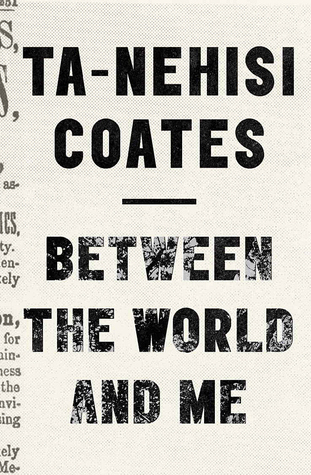
Between the World and Me

Between the World and Me


“We should seek not a world where the black race and white race live in harmony but a world in which black and white have no real political meaning.” Ta-Nehisi Coates, Between the World and Me

Between the World and Me, winner of the National Book Award, is written as a letter by Ta-Nehisi Coates to his 15-year-old son.

“You are growing into consciousness, and my wish for you is that you feel no need to constrict yourself to make other people comfortable.”

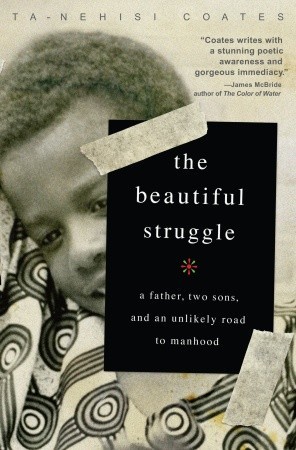
I read this book together with Ta-Nehisi Coates’ The Beautiful Struggle, a coming of age memoir about growing up black in West Baltimore, and the two are excellent read back to back. If you want to see what Ta-Nehisi Coates is all about, I recommend reading the memoir first, so you’ll have background about Coates’ childhood and family, and then follow up with Between the World and Me so you have some context.

Fair warning, though, I found neither book an easy read emotionally, and you may not either if you are a white American. (Or, as Coates would say, if you think you are white. Coates believes race is a falsehood.)

“Americans believe in the reality of ‘race’ as a defined, indubitable reality of the natural world. Racism – the need to ascribe bone-deep features to people and then humiliate, reduce, and destroy them – inevitably follows from this inalterable condition. In this way racism is rendered as the innocent daughter of Mother Nature, and one is left to deplore the Middle Passage or the Trail of Tears the way one deplores an earthquake, a tornado, or any other phenomenon that can be cast as beyond the handiwork of men.”

There is plenty of uncomfortable truth in these two books, and Coates does not mince words. Between the World and Me, especially, is meant to awaken America from its false Dream.

I grew up in a somewhat racially diverse town outside of Cleveland and attended public school alongside African Americans, but there was de facto segregation, with blacks in their own neighborhood not far from where I lived. In retrospect, and especially after having read Coates, I see how absolutely separate and different our lives actually were.

When I began reading The Beautiful Struggle, I found myself baffled by the words and phrases Coates used and many of his cultural references. I was reading a different language, the language of urban black America. The language is perhaps deliberately exaggerated in the first pages, and not decoded, maybe to act as a kind of culture shock or wake-up call to the reader.

A senior writer at The Atlantic, Ta-Nehisi Coates grew up in one of the toughest, most marginalized and deprived communities in America. His father was a Black Panther who later became a librarian; his employment at the Howard University library enabled his children to attend school there tuition free.

I’m not going to summarize too much about the books, because I can’t do justice to Coates’ eloquent, powerful prose as he describes how the African American body has been violated through slavery, segregation, incarceration, and death at the hands of our criminal justice system. His words are sometimes hard to take, and both books are unfailingly hard to put down. I was especially struck by these aspects:

  • How very terrifying it is to be pulled over or questioned by a police officer if you are black in America. I think the only thing more powerful than Coates’ words are the videos we’ve seen of incidents gone wrong these past few years. I respect the bravery of police officers doing incredibly challenging work, but I’ve also been following the news in Cleveland, where I grew up, and how the police department there has been investigated by the US Department of Justice. My son attends the U. of Cincinnati, where this past year an unarmed black man was killed by a campus security officer for no apparent reason. (The officer has been charged with murder.) When the video went viral, I was chilled by what I saw, frightened for my son and anyone who might be at the wrong place at the wrong time.
  • Coates recounts the first time he visited Paris, France. Growing up in West Baltimore, he could never have imagined such a gracious and beautiful place or that he would ever go there. It was moving to read Coates’ description of how easy it was for him to walk the streets of Paris, how differently he was treated, and how for the first time he wasn’t afraid.
  • Coates concludes that the fate of all of us is in the hands of those with power who think they are white – he believes many, though not all, African Americans are still too disenfranchised to change the system. But he fears that we as a country will reap what we’ve sown; that our hunger for power has also meant the abuse and destruction of the earth. He fears that in the end the earth will prevail, likely at great cost to humanity.

Here is one more quote from Between the World and Me, an example of his powerful use of language that some may see as divisive or offensive:

“The truth is that the police reflect America in all of its will and fear, and whatever we might make of this country’s criminal justice policy, it cannot be said that it was imposed by a repressive minority. The abuses that have followed from these policies—the sprawling carceral state, the random detention of black people, the torture of suspects—are the product of democratic will. And so to challenge the police is to challenge the American people who send them into the ghettos armed with the same self-generated fears that compelled the people who think they are white to flee the cities and into the Dream. The problem with the police is not that they are fascist pigs but that our country is ruled by majoritarian pigs.”

(And from “Whitey” Tim Kreider, read this. I happened to discover this link on my Facebook page the day I wrote this post.)

Have you read Between the World and Me or The Beautiful Struggle? What do you think of the final quote above? Please share your thoughts in the comments.


The Beautiful Struggle

My Favorite Things


Tulips in Orange


Books, writing, creativity, cool media and other delights….

  • Walking book clubs. Did you know these existed? Here are a couple in the UK hosted by two book bloggers who write fabulous reviews: Emily’s Walking Book Club with Daunt Books – turns out the one and only time I’ve been in London we went to Daunt Books, where we browsed for over an hour. Wish I’d known about Emily then, I’d have tried to connect with her; and  The Northern Reader – see also her Flower Power if you love gardening, flowers and nature lit.
  • Book spine poetry. A few weeks back in honor of April being National Poetry Month, I wrote some book spine poetry and asked readers to share theirs. Here is what Naomi at Consumed by Ink came up with. I love her little poems. Try it yourself, and if you’ve created book spine poetry you like, please share in the comments.
  • A good book. My favorite book bloggers always give me titles to add to my to-read list. I love this review of Hill by the French writer Jean Giono that Melissa wrote at The Bookbinder’s Daughter.
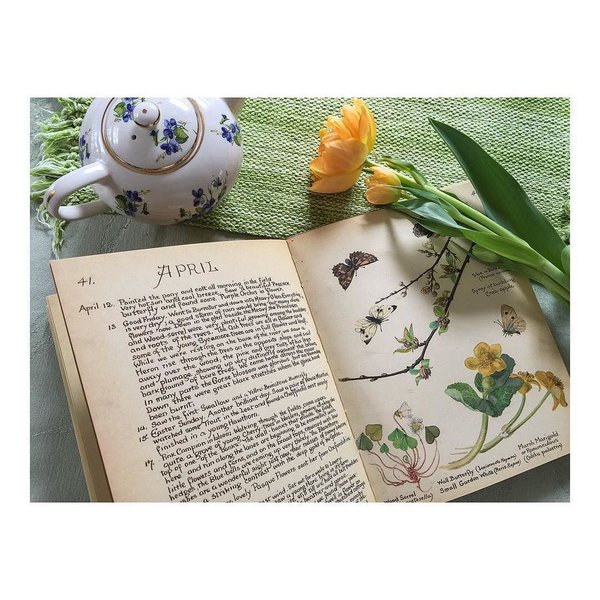
  • Instagram flat lays. I’ve been messing around with photography lately, teaching myself to do still lifes of books, flowers, and whatnot, and posting some of it on Instagram. I adore Cristina Coli’s floral work on IG, and enjoyed her “A Day of Creative Connection” blog post recently.

Have a great week!

litricity: a potent form of energy generated by great literature – – from Powell’s Compendium of Readerly Terms

April Lit
The Country Diary of an Edwardian Lady, by Edith Holden. First entry, January 1, 1906.


Barry Lopez brings us I, Snow Leopard

Snow Leopard
Male snow leopard

Photo by Tambako The Jaguar Creative Commons Attribution-Share Alike 2.0 Generic license

“I, SNOW LEOPARD is both a lyric and an elegy. It is easy to imagine its lines being loudly hailed in whatever country the poem finds itself in. It’s publication comes at a time when people everywhere have begun to wonder what a voice like this, suppressed for centuries, wishes to say now, in this moment when the Snow Leopard’s human brothers and sisters find themselves side by side with him. Imperiled.”   Barry Lopez

Barry Lopez


Barry Lopez came to Rochester this week to receive “The Art of Fact” award for literary nonfiction presented by The College at Brockport Writers Forum and M&T Bank.

If you’ve been following my blog, you know that Barry Lopez is one of my heroes, not quite at the level of Pope Francis and the Dalai Lama, but close. (See my blog’s header quote.)

Lopez is one of the very best nature writers, and if you love animals and wildlife, you’ll love his nonfiction books, essays, and short stories. He has travelled to 90 countries and has a tremendous respect for the animal world and the many indigenous peoples he’s come to know.

I, Snow LeopardLopez came to Rochester to receive his award and to deliver to us the poem “I, Snow Leopard” by Jidi Majia. 

I wasn’t familiar with either the poet or the poem, but Lopez said that when he found out “I, Snow Leopard” had been published in Asia and Europe, but not in the United States, he had to set things right.

He felt that it was vitally important that the American people hear the words of the snow leopard in this poem. So he saw to its publication here, and wrote the foreword to the English edition.

Jidi Majia, a member of the indigenous Nuosu (Yi) people who live in the mountains of southwestern China, has won numerous literary awards.  As far as I could tell from what I found online, few of his poems have been translated into English.

Majia’s poem is written in the words of a snow leopard, which is viewed by the Nuosu as a wisdom keeper, a being with “biological authority,” according to Lopez.

He told us that when he first began traveling the world and exploring, in his thirties, he viewed wild animals in an amateur, superficial, childlike way, until he learned to embrace the much more refined view held by native peoples.

A poem is a door anyone can walk through, Lopez said, and this poem is the mysterious and elusive snow leopard’s expression of grief and a warning to human kind:  “Do not hunt me any longer.”  Human violence toward animals puts everyone in peril, animals and humanity alike.

Before Lopez began, he said he wasn’t worthy to read “I, Snow Leopard,” but he’d try. He said that, as far as he knew, we’d be the very first American audience to hear the poem.

We listened to this exclusive reading in the soaring space that is the chapel in Rochester’s Temple B’rith Kodesh. “I, Snow Leopard” is beautiful, haunting, simply expressed and accessible even to listeners not accustomed to hearing poetry.

Uncia_uncia
Photo by Bernard Landgraf. CC BY-SA 3.0


After the reading Lopez answered questions and spoke informally and earnestly. As we listened, the audience seemed to be hanging on his words.  Here are some direct quotes I managed to scribble in my notebook:

“Each soul is essential to the warp and weft of the universe.”

“I want to see people come alive.”

“We know what to do and we have to do it now.”

Fixing our world “will take people of great courage. People like you. Because Washington is not doing it.”

“We should be holding hands.”

“The only thing that really matters is to be in love.”

I wrote down the following words, too, but I don’t recall if they are from the poem or if they are Barry Lopez’s words. I believe they are both:

“There is no other place for any of us to go.”

“I, Snow Leopard” is available on Amazon. Barry Lopez told me it is also to be published in a future issue of Orion Magazine.

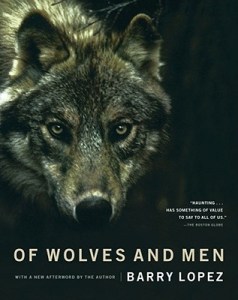
Of Wolves and MenIf you’d like to read Barry Lopez, Arctic Dreams, his nonfiction work about the Far North that won the National Book Award, is a great book to start with. I haven’t yet read Of Wolves and Men, but when I saw the mesmerizing cover photo of a wolf on display at the reading, I added it to my to-read list.

Lopez writes fiction, too. I especially liked his subversive collection of short stories, Resistance, which he wrote shortly after 9/11, about surveillance and “parties of interest” to the government.

If you want to know more about the fascinating snow leopard, Peter Matthiessen’s memoir, The Snow Leopard, is a great read.

The Secret Life of Walter Mitty, with Ben Stiller and Sean Penn, is one of my favorite movies. Watch it. You might spot a snow leopard.

When Breath Becomes Air

When Breath Becomes Air

“There is perhaps only one thing to say to this infant, who is all future, overlapping briefly with me, whose life, barring the improbable, is all but past.

That message is simply:

When you come to one of the many moments in life where you must give an account of yourself, provide a ledger of what you have been, and done, and meant to the world, do not, I pray, discount that you filled a dying man’s days with a sated joy, a joy unknown to me in all my prior years, a joy that does not hunger for more and more but rests, satisfied. In this time, right now, that is an enormous thing.”   Paul Kalanithi, in a letter to his daughter.  Excerpt from When Breath Becomes Air

My brother passed away from pancreatic cancer last fall, and I didn’t feel quite ready for When Breath Becomes Air, a Stanford neurosurgery resident’s memoir about his cancer diagnosis. Also, in my work as a clinical librarian, I’d spent time supporting and rounding with clinical staff in neurology/neurosurgery. I had a special affection and respect for the brilliant, hard-working residents, who were about the same age as my sons. So to read about the death of a young resident from lung cancer….

But if you are a living, breathing person who likes to read memoir and nonfiction, and if you consider yourself an engaged participant in our death-denying culture, I would say When Breath Becomes Air is required reading.

One of my favorite authors, Ann Patchett, who owns a bookstore that practices the art of making personal recommendations to readers based on their interests, says, “This is one of the handful of books I consider to be a universal donor – I would recommend it to anyone, everyone.” 

On publication, When Breath Becomes Air shot to number 1 on the New York Times Nonfiction Bestseller List. So when I saw Paul Kalanithi’s memoir on our library’s “Most Wanted Book” shelf, I decided to grab it.

Paul Kalanithi set out to be a writer and then switched to medicine and neurosurgery, one of the most challenging and consuming of all clinical disciplines. He believed that a person’s brain determines his identity, which is inseparable from his values and sense of life’s meaning.

Finding meaning was all-important to Kalanithi. During his residency, Paul came to see it was his responsibility to do his best to give his patients the quality of life that would allow them to live according to their most precious values.

We need more doctors who have both the time and desire to get to know and serve their patients in this way, wouldn’t you say?

In his memoir, Kalanithi says the twin pursuits of caring for patients with brain illnesses and writing as a way to explore the meaning of life’s joys and traumas was his perfect calling.

It’s just that he hadn’t planned on doing the writing part until much later in his career. Many months after his diagnosis, when he could no longer work as a neurosurgeon, Paul chose to use his remaining time to write a memoir that, among other things, explores living and dying from the unique perspective of someone who is both a patient and healer.

He and his wife decided to have a child, too. Paul writes of becoming a father with great joy. It reminded me of last summer, when my brother (and our extended family) lived with end-of-life illness, even as we celebrated his daughter’s wedding.

As you can see from the memoir excerpt above, Paul was an extraordinary writer. Medical humanities literature, also known as narrative medicine, written by patients, doctors, nurses, and clinicians, is really coming into its own, and I think When Breath Becomes Air will become a classic.

Paul Kalanithi stands right alongside Anthony Verghese, Danielle Ofri, Sherwin B. Nuland, Tilda Shalof, Theresa Brown, Atul Gawande, Oliver Sachs, and others as one of the best. Really, his memoir is not to be missed.

“The fact of death is unsettling. Yet there is no other way to live.”  Paul Kalanithi

Below is the trailer for When Breath Becomes Air.

Have you read When Breath Becomes Air, and what did you think? Have you read another medical humanities or health related memoir, novel, or essay that you have especially liked? Please share your thoughts and recommendations in the comments.


My Favorite Things

I’m trying something new.

Once or twice a month I’ll share newsy items, links to some of my favorite blogs about books, writing, and creativity, and whatever else strikes my fancy that I think you might like.

Here is what’s caught my eye lately:

  • A short, beautiful video, “Lessons from Flowers,” that is a narrative about death and loss. Larisa Minerva at Wildest Blue says we could stand to change our attitudes about death. My next post will feature a new memoir about death and dying.

67 Shots


April is National Poetry Month

Book Spine Poetry.jpg


Let’s go poemcrazy.

Here is some book spine poetry to celebrate National Poetry Month.

This is in memory of my brother. His birthday is April 5.


A Cancer in the Family

For a little while,

When breath becomes air,

Find me

Braiding sweetgrass &

Burning down the house.


If you have book spine poetry to share, please leave it in the comments.