
 “Each beginning is the end of a waiting. We are each given exactly one chance to be. Each of us is both impossible and inevitable. Every replete tree was first a seed that waited.” – Hope Jahren, Lab Girl
“After scientists broke open the coat of a lotus seed (Nelumbo nucifera) and coddled the embryo into growth, they kept the empty husk. When they radiocarbon-dated this discarded outer shell, they discovered that their seedling had been waiting for them within a peat bog in China for no less than two thousand years. This tiny seed had stubbornly kept up the hope of its own future while entire human civilizations rose and fell. And then one day this little plant’s yearning finally burst forth within a laboratory.”
“Science has taught me that everything is more complicated than we first assume, and that being able to derive happiness from discovery is a recipe for a beautiful life.”
Lab Girl is an extraordinary memoir, and Hope Jahren is an important new voice who breaks new ground in literary autobiography. We just don’t hear from enough scientists and researchers, and certainly we don’t hear from enough women in science who have struggled and prevailed at making careers in difficult, often male-dominated fields.
Lab Girl is for the lay person who loves plants, trees, and nature, and for the lay person who thinks plants, trees, and nature are boring and who wants to be dazzled, moved, changed, and reconnected with the holiness and mystery of life.
 Lab Girl is for women in science and research, and women thinking of careers in science and research. But men in science and research will love the book, too.
Lab Girl is for anyone making a career and building a family in the face of a serious mental illness, and for those who want to better understand people with mental illness.
Lab Girl is for those who care about the environment and climate change, and who want to connect with someone of like mind whose passion and energy are contagious. Because, as Hope says, we won’t have any trees left in six hundred years if we keep on our current path.
Lab Girl is for anyone who has important work to do and wants to be inspired and emboldened by someone not afraid to be different and go her own way.
I have Katie at Doing Dewey to thank for letting me know about this book. I’ve included several passages from the memoir because I couldn’t decide between them. They make me want to read Lab Girl all over again. I’m sure I will, since I’m working on a memoir of my own. For those of you who are memoir writers, this one is both inspiring and a great memoir model.
Women, and men, doing important work in science simply don’t get enough attention in our culture, which is especially saturated by superficial drivel at the moment. Lab Girl is the antidote. When I was a clinical librarian at UR Medicine, I was always impressed and mystified by the grad students and faculty, the women especially, who had lives so different from mine, who spent hours and hours in labs and out in the field researching esoteric topics that had the potential to change lives.
We should know more about them, the important work they are doing, and how they navigate the challenge of carving out rich, fulfilling personal lives as well. There is a deep vein of fascinating life stories in science that appeal to experts and lay people alike, and I hope Lab Girl will inspire many more memoirs of this kind.
The excerpt below is a good example of the organizing metaphor in Lab Girl: the rich and evocative parallels between plant life and human life. Hope alternates between chapters about plant life and her own life, which makes for a satisfying structure:
“Every species on Earth – past or present – from the single-celled microbe to the biggest dinosaur, daisies, trees, people – must accomplish the same five things in order to persist: grow, reproduce, rebuild, store resources, and defend itself….It seemed outrageous to hope that fertility, resources, time, desire, and love could all come together in the right way, and yet most women did eventually walk that path.”
Below are a few more quotes. Read the memoir!
“On some deep level, the realization that I could do good science was accompanied by the knowledge that I had formally and terminally missed my chance to become like any of the women that I had ever known.”
The boldface in the next quote is mine; I think it is an important point:
“A true scientist doesn’t perform prescribed experiments; she develops her own and thus generates wholly new knowledge. This transition between doing what you’re told and telling yourself what to do generally occurs midway through a dissertation. In many ways, it is the most difficult and terrifying thing that a student can do, and being unable or unwilling to do it is much of what weeds people out of Ph.D. programs.”
“Public and private organizations all over the world have studied the mechanics of sexism within science and have concluded that they are complex and multifactorial. In my own small experience, sexism has been something very simple: the cumulative weight of constantly being told that you can’t possibly be what you are.”
“I’m good at science because I’m not good at listening. I have been told that I am intelligent, and I have been told that I am simple-minded. I have been told that I am trying to do too much, and I have been told that what I have done amounts to very little. I have been told that I can’t do what I want to do because I am a woman, and I have been told that I have only been allowed to do what I have done because I am a woman. I have been told that I can have eternal life, and I have been told that I will burn myself out into an early death. I have been admonished for being too feminine and I have been distrusted for being too masculine. I have been warned that I am far too sensitive and I have been accused of being heartlessly callous. But I was told all of these things by people who can’t understand the present or see the future any better than I can. Such recurrent pronouncements have forced me to accept that because I am a female scientist, nobody knows what the hell I am, and it has given me the delicious freedom to make it up as I go along. I don’t take advice from my colleagues, and I try not to give it. When I am pressed, I resort to these two sentences: You shouldn’t take this job too seriously. Except for when you should.”
Have you read Lab Girl? Do you have memoir favorites to recommend?
 “Sometimes I wonder whether some other force is at hand–something equally obscured, warning us that none of us should be in Antarctica at all.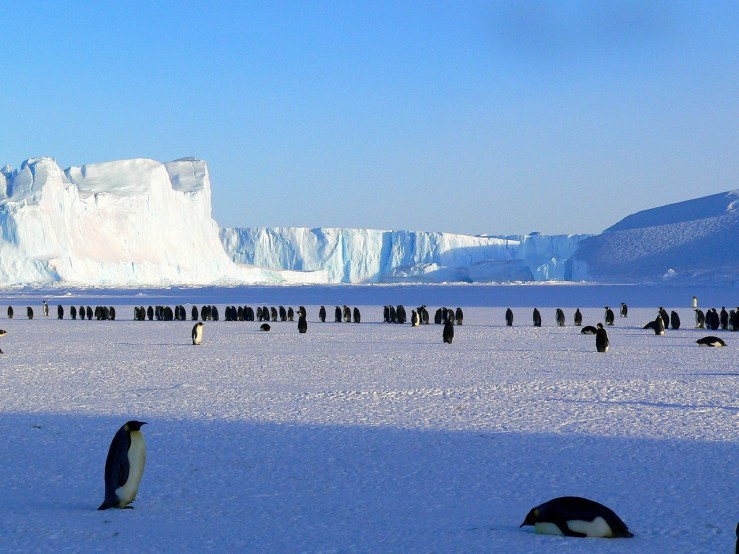


 I’m fascinated by the sound of
  “…she listens to reports of war in Europe…people lean in to discuss FDR, the Lindbergh baby, Amelia Earhart’s final flight…Audrey stands in line, overhearing news of the McCarthy hearings, Eisenhower, and Nixon…she watches anchormen speak of Korea, Vietnam, and the Cold War, start to finish…Satellites, astronauts, and the moon landing. Martin Luther King and Kennedy, their eventual assassinations, until talk is replaced by Three Mile Island. Love Canal, the Exxon Valdez…She’s there for all of it: Iran-Contra and Monica Lewinsky. The invention of the automatic coffeemaker, the atomic bomb, personal computers. The years fall like spent leaves…Audrey remains at the Saint Lawrence State Hospital from 1931 to 1996.” —
 By the way, Ann just released her new novel,
  Read a collection of essays:
  Read a dystopian or post-apocalyptic novel:
 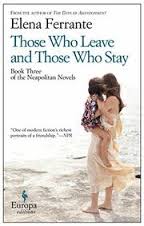 Read a book over 500 pages long:
  Read a book of historical fiction set before 1900:
 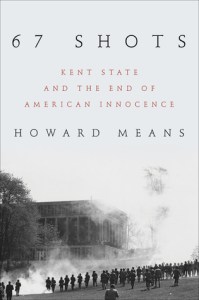 Read a book about politics, in your country or another (fiction or nonfiction):
 “Humans don’t mind hardship, in fact they thrive on it; what they mind is not feeling necessary. Modern society has perfected the art of making people not feel necessary.
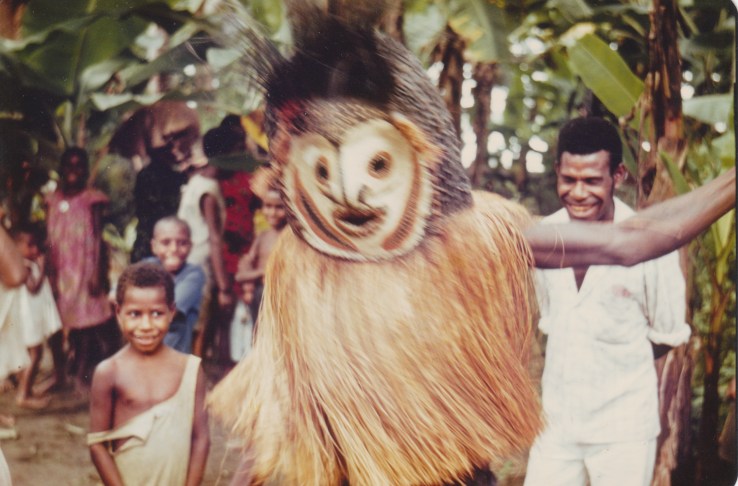
 “A Wood Mask, Kandrian Sub-District, Wosom Village, the oval white face with an hollowed mouth showing teeth and tongue, hollowed eyes, pierced ears, and the high forehead with three cylindrical shafts issuing feathers, strands of shells and pig teeth hanging from the ear lobes, painted with white, black and red pigments. Height 63 cm. (24 3/4 in.)




 What have you read this summer that you love? Let us know by leaving a comment via the link in the left sidebar.

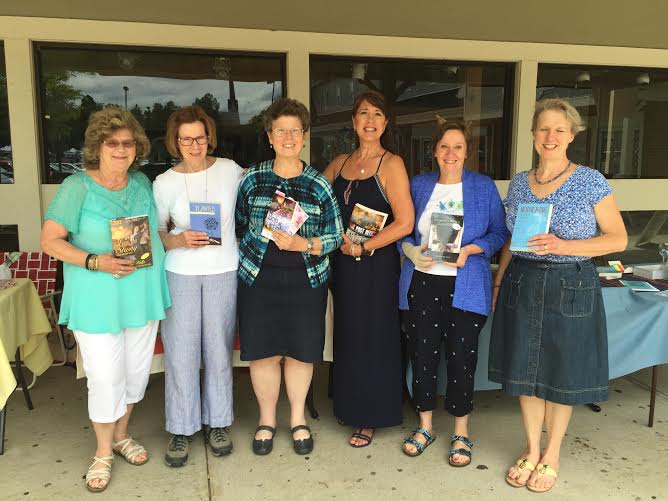 Left to right: Bev Lewis (writing as Beverly Wells); Kate Collier (writing as Katie O’Boyle & C.T. Collier); Ellen Hegarty (writing as Roz Murphy); Kim Cruise; Elizabeth Osta; Liz O’Toole
 “I usually write long historical romance–mostly set in western America in the 1800’s, but I will also have a Medieval anthology coming out in the fall/winter and a civil war novel in the future, as well as a Canadian Mounted Police novel. I’ve also been included in anthologies and novellas.
 “I started writing as a form of catharsis made necessary by having to watch my son suffer through drug addiction. You see, books save lives in the writing, as well as in the reading of them.
 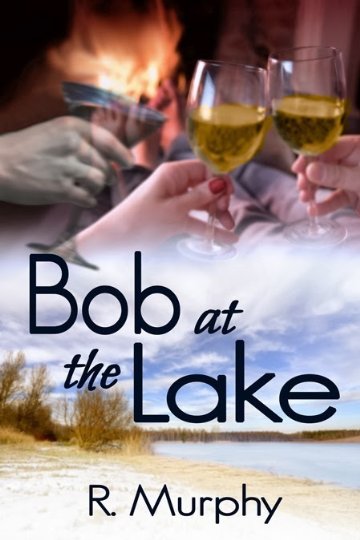 Roz Murphy’s Bob books [
 “In January 2012, my sister and brother-in-law invited me to celebrate the 90th birthday of a dear friend on the porch of
  And just published:
  At the height of the Irish famine of the 1840s, in a small town of Ahadallane, north of Cork City and south of Mallow, Jeremiah joins the rebels in the fight for Ireland’s freedom from British rule and learns firsthand the futility of violence. He and his best friend and brother-in-law, Father Michael Riordan disagree about the means to the end and ultimately take diverse paths when Michael is assigned to a parish in America.
 Mothering: An Art of the Heart is a collection of short and engaging stories that celebrate family life, told by nine moms who want to share the wisdom and experience they gained in the process of raising their children. Each story highlights a specific idea or activity that may be used by the readers to enhance their families’ experience as their children grow.
