Read Harder 2016

Have you heard about Bookriot’s Read Harder Challenge?

I thought it would be interesting to see which books I’ve read in these categories, since Ann Patchett just wrote about her own progress in making her way through the list.

I’d love to hear what you’ve been reading, too, so let us know in the comments. Book suggestions are appreciated and welcome, especially for those categories I’ve left blank.

commonwealthBy the way, Ann just released her new novel, Commonwealth. Many of you know she’s one of my favorite novelists, so I’ll be sure to get my hands on it as soon as I can.

True story, when Ann was a girl, one morning she woke up to find kids she didn’t know in the kitchen. Turned out, her mother had gotten remarried, and these were her new half siblings.

Ann has translated some of that strange family experience into a novel that isn’t, literally, a true story, but that I imagine has plenty of emotional truth, as writers of fiction often say about their work.

If you’re looking for other suggestions, check out the New York Public Library’s Read Harder recommendations. See also the reader-generated lists on Goodreads.

If I’ve left the category blank, it means I haven’t read that category and don’t have any particular suggestions. If you do, please let us know.

BOOKRIOT’S READ HARDER CHALLENGE 2016

Read a horror book

Read a nonfiction book about science: Lab Girl, by Hope Jahren. (I’m reading it now). It has gotten excellent reviews, a memoir about a female scientist. It’s an eye opener, in part about what women in science are (still) up against, but there’s a lot more to this memoir about a woman passionate about plants.

I just borrowed Half-Earth: Our Planet’s Fight for Life, by Edward O. Wilson from the library. Nearing the end of his life, Wilson felt compelled to sound the alarm once more. He proposes that we devote half the surface of the earth to nature.

Queen of the Fall book coverRead a collection of essays: Queen of the Fall, by Sonja Livingston; and Why We Write About Ourselves, edited by Meredith Maran.

Read a book out loud to someone else: The Harry Potter series; The Giver; and Hatchet. Not this year, but when our sons were growing up, these were unforgettable read alouds. Harry Potter is especially captivating read deep in the woods at night when you’re camping.

Read a middle grade novel: see above, none this year for me.

Read a biography (not memoir or autobiography): Charlotte Bronté: A Fiery Heart, by Claire Harmon is on my to-read list. See the feminist category below.

The Buried Giant by Kazuo IshiguroRead a dystopian or post-apocalyptic novel: The Buried Giant by Kazuo Ishiguro, and Find Me, by Laura Van Den Berg. I read everything by Ishiguro. The latter novel by Van Den Berg was well reviewed and is excellent, though it didn’t really speak to me.

Read a book originally published in the decade you were born: I’ve been wanting to re-read Australian Neville Shute’s chilling dystopian novel, On the Beach. His  A Town Like Alice blew me away in 1981 as a 5-hour Masterpiece Theatre production, and I would love to watch it again. (It’s only available on VHS.) I don’t believe I ever read the book.

Listen to an audiobook that has won an Audie Award: 

The Bully Pulpit: Theodore Roosevelt, William Howard Taft, and the Golden Age of Journalism, by Dorothy Kearns Goodwin. OK, I haven’t read this book or even listened to it, but I gave it as a gift to a friend who loves Teddy Roosevelt. It won an Audie in 2015 for the best History/Biography category. This would qualify for the over 500 pages category, too, which is reason enough to listen to the audio version. I should read this or listen to it, considering that I believe journalism today is in a sorry state.

There is an Audie Classic Category, which I didn’t know about but just may entice me to finally start listening to audio books. Here’s a suggestion that sounds intriguing, also an Audie award winner: The New York Stories by John O’Hara.

I will try audio books soon, but I resist them. I don’t want to constantly fill my head with media, I need plenty of silence to think and to let my own writing germinate.

I’ve read and hear often that print books will disappear. Some people announce this with a great deal of glee, and I don’t understand why. Can we have both? Why does it seem to make some people happy that print books may disappear?
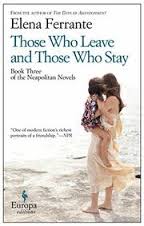
Those Who Leave and Those Who Stay book coverRead a book over 500 pages long: Elena Ferrante’s Neapolitan Novels. I’m counting this as a long read, even though there are four in the series. Had a great discussion about these books in a book club attended by many Italian-American women. One day I’ll read her other novels, which I’ve heard are rather devastating.

Read a book under 100 pages: Tribeby Sebastian Junger. (130 pages, close enough)

Read a book by or about a person that identifies as transgender: Middlesex, by Jeffrey Eugenides, one of my favorites. Read this a few years back, superb.

Read a book that is set in the Middle East

Read a book that is by an author from Southeast Asia

To the Bright EdgeRead a book of historical fiction set before 1900: To the Bright Edge of the World by Eown Ivey; De Potter’s Grand Tour, by Joanna Scott.

Read the first book in a series by a person of color: Not a series, but this year I read and loved Ta-Nehisi Coates’ Between the World and Me, and his memoir, The Beautiful Struggle. 

Read a non-superhero comic that debuted in the last three years: This book is older than three years–I picked up Fun Home: A Family Tragicomic, by Alison Bechdel, but didn’t finish it. I may get back to it someday. It’s becoming a classic.

Read a book that was adapted into a movie, then watch the movie. Debate which is better:

I did see the movie, Brooklyn, by Colm Toibin, but didn’t read the book, don’t plan to. The movie was pretty good, mostly because of the acting, otherwise predictable.

I also saw this year the movie Carol based on the novel, The Price of Salt, by Patricia Highsmith. I thought it was excellent, haven’t read the novel. I was flabbergasted when someone I know said the main character in the movie was a predator. That is not how I interpreted the character in this movie about a lesbian relationship in the 1950s. I saw her as sympathetic. If anyone else has seen the movie and can comment, I’d love to hear your thoughts. I felt the predator comment revealed perhaps unconscious LGTBQ bias; but then again, Highsmith’s novels have disturbing characters. Perhaps the actual novel was darker, and some of that came through in the movie?

Read a nonfiction book about feminism or dealing with feminist themes:

My Life on the Road, by Gloria Steinem is a big bio this year, though I haven’t read it. I HAVE read, this year, and in the case of Bronté’s novel, many years in the past:  Jane Eyre’s Sisters, by Jody Gentian Bower and Jane Eyre. These, because my memoir has a Jane Eyre theme. Last year I read Bad Feminist by Roxane Gay. Fabulous.

Read a book about religion (fiction or nonfiction): After Buddhism, by Stephen Batchelor. (On my to-read list)
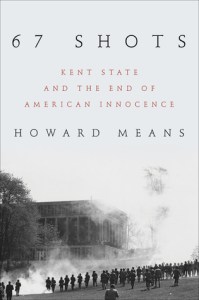
67 ShotsRead a book about politics, in your country or another (fiction or nonfiction): 67 Shots: Kent State and the End of American Innocence, by Howard MeansThis one is personally meaningful.

Read a food memoir: On my to-read list is Blue Plate Special by Kate Christensen. Classics I love are Laurie Colwin’s food memoirs. Elizabeth David was a superb food writer, though her books aren’t really memoirs. Ruth Reichl has come out with a new food memoir this year that I haven’t read, My Kitchen Life: 136 Recipes that Changed My Life.

Read a play

Read a book with a main character that has a mental illness:  A Common Struggle, by Patrick J. Kennedy. This is a memoir. I also read the riveting memoir, A Mother’s Reckoning. The Eagle Tree by Ned Hayes is fiction, and it’s absolutely great.

Here’s a smidgen of The Masterpiece Theatre version of A Town Like Alice.

Have you read any books in these categories, or do you have any suggestions? Are you following the Read Harder challenge? Let us know in the comments.

Tribe

Bigmanstool
Big Man’s Stool from the middle Sepic River region of Papua New Guinea. This was a wedding gift to us many years ago from my husband’s uncle, an expert on Melanesian art.


Tribe“Humans don’t mind hardship, in fact they thrive on it; what they mind is not feeling necessary. Modern society has perfected the art of making people not feel necessary.

It’s time for that to end.”

Tribe: On Homecoming and Belonging, by Sebastian Junger

I was fascinated by David Brooks’ recent column in The New York Times, “The Great Affluence Fallacy,” in which he says that, back in the day, many Americans joined Native American tribes, either voluntarily or because they were captured. Often, whites who were allowed to return to their original culture chose to stay with Native Americans.

This rarely happened the other way around: Native Americans never willingly chose white society.

David Brooks read about this phenomenon in Tribe: On Homecoming and Belonging, by Sebastian Junger, (Junger is the author of The Perfect Storm and War) which inspired me to read this short, well written extended essay on the plight of the lonely, autonomous individual in modern American culture.

I highly recommend Tribe if you feel that we’ve taken a wrong turn somewhere along the way in our relentless pursuit of autonomy and self-actualization, and if you feel we’re in need of a course correction. At about 130 pages, it is a quick but memorable read.

Here are a couple more quotes that spoke to me:

“A person living in a modern city or a suburb can, for the first time in history, go through an entire day–or an entire life–mostly encountering complete strangers. They can be surrounded by others and yet feel deeply, dangerously alone.”

“We are not good to each other. Our tribalism is to an extremely narrow group of people: our children, our spouse, maybe our parents. Our society is alienating, technical, cold, and mystifying. Our fundamental desire, as human beings, is to be close to others, and our society does not allow for that.” – Sharon Abramowitz

Family Reunion

Speaking of tribes, connection, and meaning, this summer I went to a family reunion held every three years or so by my husband’s large extended family of Irish descent. It’s always a great time, and through the years I’ve enjoyed watching four generations gather from the east and west coasts and many places in between. At the reunion we had a memorial tribute to my husband’s uncle, Peter, who recently passed away.

As a young man, Peter emigrated to Australia, started out in advertising and, beginning in the 1960s, spent three decades traveling deep into the interior of New Guinea and collecting tribal art. Eventually, Peter became one of the world’s foremost experts on Melanesian art.

Reading through Peter’s autobiographical material on display at the reunion, I found this:

“…he would spend months at a time traveling in remote areas, living amongst the people and studying their culture and traditional art….he would spend weeks traveling to small, obscure villages…No place was too far. There were trips to the most remote regions of Milne Bay, the Dampier and Vitiaz straits, off the beaten track in the Highlands, even an eleven month trip which delivered a major Kula canoe from Kitava Island to the South Australian Museum.”

Peter’s catalog descriptions make for fascinating reading. I love the vivid, succinct descriptions and the precise words. It’s almost like poetry. Here is one:

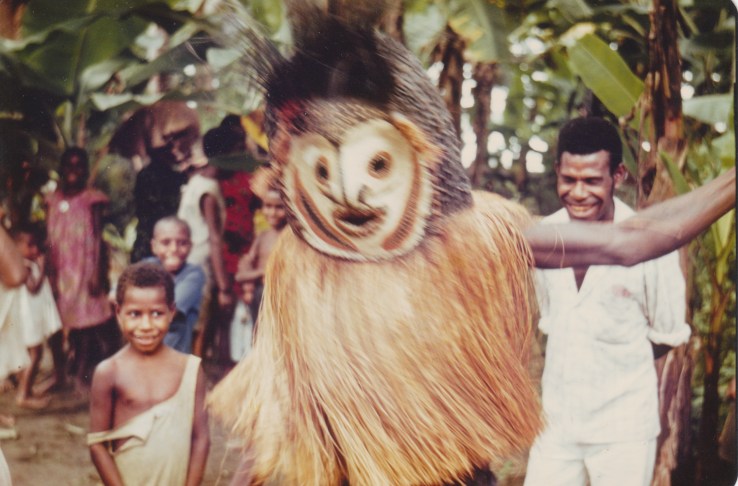
IMG_3634A Wood Mask, Kandrian Sub-District, Wosom Village, the oval white face with an hollowed mouth showing teeth and tongue, hollowed eyes, pierced ears, and the high forehead with three cylindrical shafts issuing feathers, strands of shells and pig teeth hanging from the ear lobes, painted with white, black and red pigments. Height 63 cm. (24 3/4 in.) 

This type of dance mask, called ‘Waku,’ was used in circumcision festivities.”

It strikes me that Peter’s fascination with Aboriginal art and life may have been inspired, in part, because he admired their community values and human bonds that ran deep…which is what Sebastian Junger writes about in Tribe. Peter must have resonated with their deep connection to nature, too.

So much knowledge and wisdom can be lost with the passing of intrepid individuals such as Peter. Fortunately, much of his knowledge and many of his experiences have been preserved in books and photographs, which we were able to see at the family reunion. As time goes on, the grandchildren and great grandchildren will be left with some sense of Peter’s remarkable life.

For him, no place was too far.


TribeWelcome.jpeg
One of the old photos Peter left behind. I have no way of knowing what tribe this is or which village. Can you imagine pulling up in your canoe at some remote river location and receiving such a warm welcome? Or, maybe it was posed…either way, everyone looks happy.

Mask.jpeg

Snake.jpeg

Dance 1

IMG_3636

Art by Sammy Clarmon of the Lockhard River Art Gang, in Gatherings II: Contemporary Aboriginal and Torres Strait Islander Art from Queensland, Australia. This is one of the Keeaira Press books designed by Great Uncle Peter. These esoteric, small press books about tribal culture are invaluable; they preserve glimpses of a past way of life and a unique body of wisdom for future generations.

Are there fascinating figures in your family history? Do you agree with Sebastian Junger that modern society makes people feel unnecessary?


To the Bright Edge of the World

To the Bright Edge

Lieut. Col. Allen Forrester, June 25, 1885:

“Pruitt keeps shouting above the storm–Do you feel that? Can’t you feel that?

What he says makes no sense. He says there are hands on him. Something pulls at him. He says he has to run. I have warned him to stay put.

(undated entry)

My dearest Sophie. I pray you will read this. You are first and last to me.

I do not know if we will survive the night. They are all around us. They scream and cry so that it is hard to think to put these words on the page.

You must know that I love you.

I am not afraid of death but instead of the passage from here to oblivion, of being aware of its coming. I would rather have been run through with a spear than face this long dread.”

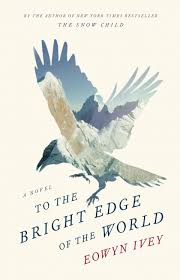
Eowyn Ivey’s novel, To the Bright Edge of the World, is truly a standout for me, a cut above the rest.

Many of you know that I’m partial to nature and wilderness stories, especially historical ones. To the Bright Edge of the World reminds me of one of my all-time favorite novels, Voyage of the Narwhal by Andrea Barrett. The novel and short stories of Anthony Doerr come to mind as well when I read Eowyn Ivey’s writing, which is lyrical and replete with exquisite detail. A Woman in the Polar Night by Christiane Ritter is another fine book, a memoir, in the same vein.

“I fell in love with this book; it captured both my head and my heart, completely and utterly.” – Jane, Beyond Eden Rock.  — I was browsing on Goodreads and found Jane’s endorsement of To the Bright Edge of the World. Her words spoke to me because they are my sentiments about the novel, too, and I couldn’t have said it better.

I loved Eowyn Ivey’s first novel, The Snow Child, which was selected for If All of Rochester Reads the Same Book in 2014. Like The Snow Child, To the Bright Edge of the World takes place in Ivey’s native Alaska. It’s a great love story, a  wilderness tale of a hero and heroine’s quests infused with magical realism, and a flawlessly researched portrayal of 19th century Alaska.

Lieutenant Colonel Allen Forrester must lead a dangerous, seemingly impossible expedition through the fictitious Wolverine River Valley deep in the Alaskan wilds of 1885, a journey no one has ever survived. His pregnant wife, Sophie Forrester, stays behind in Vancouver Barracks, destined to have adventures and heartbreaks of her own.

Ivey has cleverly constructed the narrative entirely from letters, journals, diaries, newspaper articles, military reports, photographs, and other documents.

We, the readers, are privy to the contemporary correspondence between Walter Forrester, Allen Forrester’s great nephew, and Joshua Sloan, who is part Native American and curator of the Alpine Historical Museum in Alaska. Walter sends his great uncle’s papers to Joshua in the hopes that he’ll display and archive them for safekeeping. As Joshua makes his way through the journals, diaries, and letters, he and Walter piece together Allen and Sophie’s stories, fill in the gaps, and reflect on their own lives.

As always, Ivey’s descriptions of geography and landscape take us vividly to long-ago Alaska:

“The canyon bound the Wolverine so that when, over the course of the winter, the ice moved, it crumpled violently. Great blocks three feet thick & as much as twenty feet high had been torn asunder & turned sideways. It seemed an impassable range of buckles & ridges & upended slabs of ice pressed up against the canyon walls, which are vertical rock the color of lead.”

Here are Sophie’s words as she undergoes her own dark night of the soul:

Sophie Forrester, Vancouver Barracks, April 26, 1885:

“…it continued its steady and hard rapping, and the sound became more and more horrible…The raven stopped its knocking and cocked an eye toward me.

I then noticed something most peculiar….A bird’s eye ought to be flattened in shape, with a dark iris surrounded by a dark-gray sclera, and entirely unmoving in its socket. Yet this eye was round, with white sclera, and it rotated about in the socket. It looked nothing like a bird’s eye, but rather that of a mammal. More to the point, a human.” 


nypl.digitalcollections.510d47e1-2a08-a3d9-e040-e00a18064a99.001.w
A raven shape shifts into a trickster who brings Allen and Sophie good fortune and sorrow.

The New York Public Library. (1849). Raven.

nypl.digitalcollections.510d47e1-29f2-a3d9-e040-e00a18064a99.001.w
Sophie Forrester teaches herself the art of photographing birds. Her descriptions of the technical and creative challenges are beautifully rendered, and inspiring.

The New York Public Library. (1901 – 1914).Horned And Tufted Puffins.


nypl.digitalcollections.510d47e1-1af4-a3d9-e040-e00a18064a99.001.w
Allen Forrester’s darker mission is to assess tribal threats to US expansion in Alaska, even as native tribes give life-saving aid to Forrester and his men. The author weaves Native American myths into the plot. These fierce stories blur the line between humans, animals and nature. In the end, the hard wisdom of the stories so valued by indigenous people seems far truer than the scientific knowledge possessed by “civilized” people.

The New York Public Library. (1869-04). Indian summer encampment.


Have you read To the Bright Edge of the World or The Snow Child? What did you think? Can you recommend similar historical books about nature, travel, and adventure, fiction or nonfiction? Click on the comments link in the left sidebar and let us know.

What does Tribe (the book and the noun) have to do with family reunions? I’ll be writing about that in my next post…

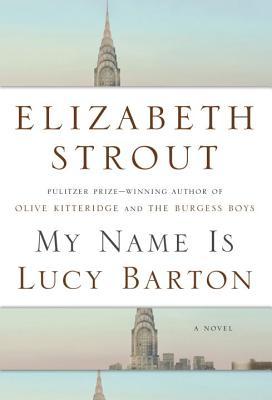
My Name Is Lucy Barton

LucyBarton2


This is one of my favorite scenes in My Name is Lucy Barton, by Elizabeth Strout:

The narrator is in a writing workshop led by a famous author she admires:

“…through the open window a cat suddenly jumped into the room, right onto the large table. The cat was huge, and long; in my memory he may as well have been a small tiger. I jumped up with terrible fear, and Sarah Payne [the author/instructor] jumped up as well; terribly she jumped, she had been that frightened. And then the cat ran out through the door of the classroom. The psychoanalyst woman from California, who usually said very little, said that day to Sarah Payne, in a voice that was–to my ears–almost snide, ‘How long have you suffered from post-traumatic stress?’

And what I remember is the look on Sarah’s face. She hated this woman for saying that. She hated her. There was a silence long enough that people saw this on Sarah’s face, this is how I think of it anyway. Then the man who had lost his wife said, ‘Well, hey, that was a really big cat.’

After that, Sarah talked a lot to the class about judging people, and about coming to the page without judgment.”

I highly recommend My Name is Lucy Barton, which has been lavishly praised by reviewers and other book bloggers and was nominated for the Man Booker Prize.

It has a deceptively simple plot about a young mother in a Manhattan hospital visited by her difficult mother, who she hasn’t seen in years.

The two women are now worlds apart, estranged by distance, education, class, their difficult past, and their own inability to express love and emotion and speak in a direct way about their lives. The writing is powerful yet understated, and unsentimental.

Lucy, raised in rural midwestern poverty and abuse, has reinvented herself in New York City. When her mother visits, Lucy reflects on the harsh childhood and upbringing she never talks about in her new life except occasionally with therapists.

The premise of the novel sounds like a cliché, but this is a page-turner. There is an urgency to Lucy Barton’s story. Strout has a strong sense of what to tell, when to tell it, and what not to tell at all.

I especially like this review in The New York Times by Claire Messud. This is a great choice for book club reading.

Now that I’ve finally discovered Elizabeth Strout long after the rest of the reading world, (she won the Pulitzer Prize for Olive Kitteridge, which was made into a TV miniseries), I look forward to reading her other novels.

“Sarah Payne, the day she told us to go to the page without judgment, reminded us that we never knew, and never would know, what it would be like to understand another person fully.”

My End-of Summer Reading

Currently on my nightstand are books by authors who were previously chosen for If All of Rochester Reads the Same Book:

To The Bright Edge of the World.jpegTo the Bright Edge of the World, by Eowyn Ivey (because I loved The Snow Child)

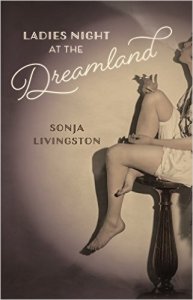
Ladies Night at the Dreamland, by Sonja Livingston (because I loved Ghostbread and Queen of the Fall, and because it’s about women, past and present, known and  unknown, in my neck of the woods)

I’m also reading:

The Art of X-Ray Reading: How the Secrets of 25 Great Works of Literature Will Improve Your Writing, by Ray Peter Clark

Clark mines great books, short stories, a poem or two, and a few movies for hidden treasures–the secret, powerful techniques of accomplished writers. Taking another look at some of these stories is fascinating: The Great Gatsby; Madame Bovary; A Visit from the Goon Squad; Lolita; A Farewell to Arms; The Bell Jar; Miss Lonelyhearts; “The Lottery”; “A Good Man Is Hard to Find”; “Notorious”; The Goldfinch; and Hiroshima, among others.

Ladies NightWhat have you read this summer that you love? Let us know by leaving a comment via the link in the left sidebar.

 

Off the Beaten Path: De Potter’s Grand Tour


De Potter's Grand Tour

“She is fascinated but not dismayed to discover that she has forgotten so much.

Is she really the same woman who celebrated Easter 1889 in Athens and walked up to the Acropolis with her husband?

Who spent a ‘most interesting day viewing the cisterns of Carthage’ with Victor and Armand in 1896?

Who once wrote on her anniversary in 1900, in an apartment on 97 rue de la Pompe in Paris, ‘In afternoon we went to Exp. and up the Trocadéro tower, then to Élysée Palace Hotel, saw King Leopold come in. In evening at dinner we ordered St. Honoré and champagne. M. Guerrier got up and improvised a poem and there was much gaiety and good humor. Armand gave me a gold watch charm’?”  De Potter’s Grand Tour,  Joanna Scott

This much, we know: In 1905, Joanna Scott’s great grandfather disappeared while on board a ship off the coast of Greece. A collector of ancient Egyptian art (some of it is at the Brooklyn Museum) and a world tour guide, he was at his wit’s end, hounded by creditors and litigators.

The question is: Did he commit suicide? Was he pushed overboard? Or, did he fake his own death and assume a new identity, leaving behind his beloved wife, Aimée, and his son?

How would you like to inherit that family mystery?

Joanna Scott did, in the form of Armand’s letters, postcards, photos, and documents, and the multi-volume journal of his wife, Aimée. This treasure trove had been sitting in a steamer trunk in Scott’s mother’s storage unit for years, until one day they unearthed it while searching for a diploma.

Intrigued, Scott threw herself into research and began writing a nonfiction account of Armand de Potter’s life. Ultimately, that proved too confining: Scott discovered that the mysterious and elusive Armand wasn’t who he said he was, and no one knew, not even his wife. So Scott switched to fiction, which gave her more freedom to suppose and imagine.

I read this novel ages ago and never got around to posting about it, but the book has stayed with me all this time. It’s not for everyone–Joanna Scott is a celebrated writer, but this particular novel didn’t garner the best of reviews.


To Travel.jpeg
A photo of Armand de Potter, the author’s great grandfather, walking away from the camera. He was, indeed, a mysterious figure.


I, on the other hand, loved it. I loved the larger-than-life way Armand and Aimée lived traveling all over the world leading their educational tours. Armand was an autodidact who pretended to be descended from Belgian royalty and more educated than he was. Nonetheless, as Scott portrays him, he was a scholar and a lover of the world with a passion for sharing that love with the people who signed up for his tours.

“To travel is to live,” Armand de Potter wrote in one of the documents Scott found in the steamer trunk.

His tour company went to these places: Algeria, Austria, Belgium, Czech Republic, Egypt, England, France, Germany, Gibralter, Greece, Hong Kong, Hungary, India, Italy, Japan, Malaysia, Monaco, Netherlands, Romania, Scotland, Singapore, Spain, Sri Lanka, Switzerland, Tunisia, Turkey, various locations in the US, and Yemen.

Some time in the late 1800s, Armand also wrote this prescient and hopeful passage: “The incalculable benefits of foreign travel can only be half told by our children….They will be appreciated by their sons and daughters, at a time when travel will have made the world very small and the human race what it is destined to be–one great fraternity.”

If you’re an armchair traveler, if you love history, and if you want an unusual story, I think you might like De Potter’s Grand Tour.

I enjoy Joanna Scott’s novels a great deal. One of my all-time favorites is Liberation, which takes place in Sicily, one of my favorite places in the world, during World War II. Scott is a much loved Professor of English here at the University of Rochester.

Speaking of family history, I’m off to a family reunion next week, where we’ll be reading a book loosely connected with a couple of the more colorful family members. I’ll tell you about it when I return.

I’ll leave you with what Armand de Potter had to say about good books (I would also add “women” of course):

“In the most beautiful books, great men speak with us, they give their most precious thoughts, and pour their soul into ours. Let us thank God for the creation of books. They are the voices of those that are far and of those that are dead; they make us heirs of the intellectual life of the past ages. Books furnish to all those who will use them with sincerity the society, the spiritual presences of the best and the greatest men.”


Going local: six Rochester storytellers

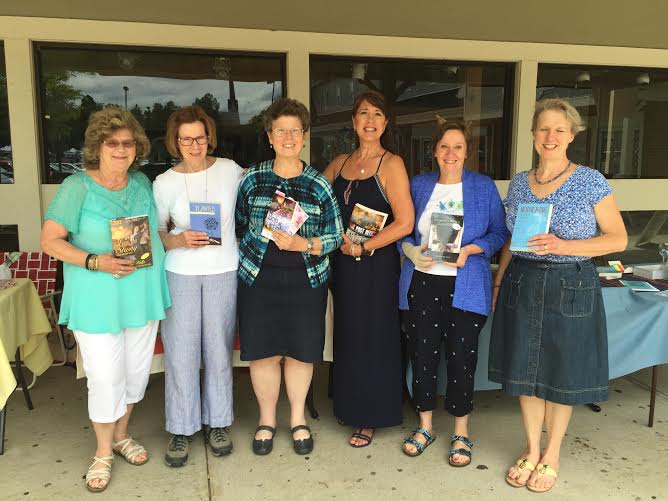
RochesterAuthorsLeft to right: Bev Lewis (writing as Beverly Wells); Kate Collier (writing as Katie O’Boyle & C.T. Collier); Ellen Hegarty (writing as Roz Murphy); Kim Cruise; Elizabeth Osta; Liz O’Toole

Historical romance & fiction, mystery & suspense, ghost stories & essays on motherhood

A couple of weeks ago I went to the Saturday farmer’s market, where quite unexpectedly I met six local authors. I’ve written before about the great small businesses in our town, and our pharmacy is one of them. Gift department manager Stefani Tadio supports and promotes the work of local artists and authors, and she organized this author/book event.

I enjoyed meeting and talking with Beverly, Kim, Roz, Katie, Elizabeth and Liz. I asked them about their writerly inspiration and research.

***

Historical Romance by Beverly Wells

Cowboy Kisses“I usually write long historical romance–mostly set in western America in the 1800’s, but I will also have a Medieval anthology coming out in the fall/winter and a civil war novel in the future, as well as a Canadian Mounted Police novel. I’ve also been included in anthologies and novellas.

As far as researching goes: first I investigate climate, terrain, foliage and fauna, foods, and items used at the time, types of lingo, and slang.

For example, in A COWBOY CELEBRATION, which is set in Wyoming in 1882, I had to make sure there were apples and what kinds, what the growing season would have been, and the ripeness and color of the apples hanging on the trees. Thank God for the internet, because it’s so much easier today than years ago doing research.

But my problem is, I get so wrapped up in research that I spend hours reading every tidbit and never use half of I read. I think that happens to a lot of us. But I love finding the answers!”

 ***

The Post Office by Kim Cruise

PO_Boxes_Kim_cruise“I started writing as a form of catharsis made necessary by having to watch my son suffer through drug addiction.  You see, books save lives in the writing, as well as in the reading of them. 
Shortly after I started writing The Post Office, my son was arrested on drug-related charges and ended up in a prison where he was not allowed to have books. He’s been an avid reader all his life; this was the very definition of cruel and unusual punishment.  So I started sending him my chapters, imbedded into letters, so he’d have something to read. He would edit them and make suggestions in the margins and mail them back. We had a flurry of mail going back and forth and I’ve not been as prolific since.   His one pencil became his most important possession while he suffered through his time there, and his proverbial fingerprints are all over my book.

My suspense novel features six characters, five of which are made up and one of whom is not –it’s me; putting my story and feelings into keystrokes, which turned into pages, then chapters, made it possible to function during some very dire times. I keep writing now that he is clean, to document his success and to let other mothers know that drug addiction can be survived. It’s my belief that it is very important to be talking about addiction; there are so many suffering from it, and even more people who suffer on the sidelines as I did and do; I hope that my efforts will help people to be comfortable with this conversation.”

 ***

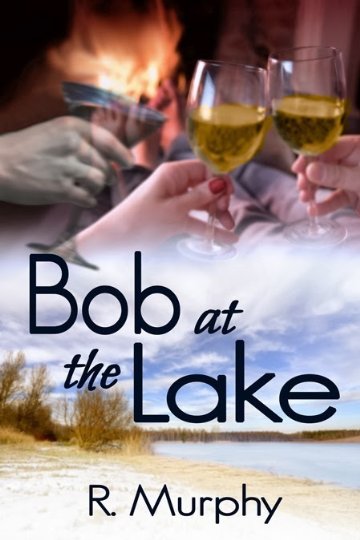
Bob Book Ghost Stories by Roz Murphy

Bob at the LakeRoz Murphy’s Bob books [Bob at the Lake, Bob at the Plaza] narrate the screwball adventures of a crabby woman of a certain age, the kind grape grower who lives up the hill, and a martini-loving ghost.

“Since I’m the “crabby woman of a certain age” in this scenario, all I pretty much had to do was tell the story of Bob, my pain-in-the-butt martini-loving ghost, and our misadventures here in the Finger Lakes. I usually write early in the morning, while Bob is still nursing his hangover from the night before, since he’ll leave me alone for a couple of hours then.”

***

Lakeside Porches Romance Novels and Novellas by Katie O’Boyle

cover-steppinguptolove.jpg“In January 2012, my sister and brother-in-law invited me to celebrate the 90th birthday of a dear friend on the porch of Belhurst Castle for their famous Sunday Brunch. Watching the staff serve up incredible food and fuss over our friend made me wonder about their lives, their hopes and dreams. And wonder about the guests. And wonder about the visitors to the dining room and the spa. So many stories!

The idea for Lakeside Porches was born that sunny winter morning. That said, Tompkins Falls is not an actual city. Chestnut Lake is not Seneca or Canandaigua Lake or any of the Finger Lakes, although it has much in common with several of them. The Manse Inn and Spa is not Belhurst Castle, although the Belhurst may very well be one of the beautiful lakeside inns with a dining porch that serves lunch to the characters from my books.”

MysteryAnd just published: Planted: The Penningtons Investigate

It’s Monday of spring break when Professor Lyssa Pennington’s backyard garden project unearths a loaded revolver. With no record of violence at their address and no related cold case, the Tompkins Falls police have no interest. But the Penningtons and a friend with the State Police believe there’s a body somewhere. Whose? Where? And who pulled the trigger?

***


Jeremiah’s Hunger by Elizabeth Osta

jeremiahs-hunger-largeAt the height of the Irish famine of the 1840s, in a small town of Ahadallane, north of Cork City and south of Mallow, Jeremiah joins the rebels in the fight for Ireland’s freedom from British rule and learns firsthand the futility of violence. He and his best friend and brother-in-law, Father Michael Riordan disagree about the means to the end and ultimately take diverse paths when Michael is assigned to a parish in America.

Elizabeth took more than a dozen trips to Ireland to research Jeremiah’s Hunger, which is based on her own family history. Currently, she’s working on a memoir about her years in a convent with the Sisters of St. Joseph.

“My research has been chronologically driven.  For Jeremiah’s Hunger, I discovered genealogical records that led the way. For Saving Faith: A Convent Memoir, I am working with a distinct time period (1968-1977) so am able to explore those times historically, culturally, politically and cull the important and relevant facts.  Imagination for the historical fiction and memory for the memoir are key elements.”

 ***


Mothering: An Art of the Heart,  Elizabeth O’Toole (along with 8 more moms)

MotheringMothering: An Art of the Heart is a collection of short and engaging stories that celebrate family life, told by nine moms who want to share the wisdom and experience they gained in the process of raising their children. Each story highlights a specific idea or activity that may be used by the readers to enhance their families’ experience as their children grow.
This is not a text book or how-to manual, rather it is a forum where one set of mothers hopes to help another set of mothers by sharing “things that worked” in their families. There are 118 stories in all.

Welcome to the Goddamn Ice Cube

WelcomeToTheIceCube

“For all its occasional monotony, driving a dogsled never let my mind wander. It was an overwhelmingly physical experience: the cold, the shifting runners, the wandering trail. It made my mind shallower. There was the brushing sound of snow under the sled. There were the dogs, the beautiful dogs, running, and I could spend hours watching the changing, hypnotic rhythms of their back legs punching up and down. Occasionally I talked to them, and then I’d drift off in midsentence and recall the rest of my thoughts minutes later. Or else I’d run up a hill, or fix a tangle, or scooter my feet to keep warm. It didn’t matter. I was still just driving dogs.”

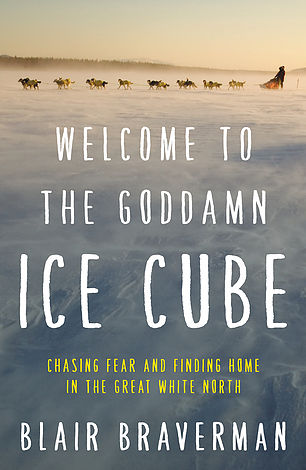
Blair Braverman sent me an advance copy of her just-published memoir, Welcome to the Goddamn Ice Cube: Chasing Fear and Finding Home in the Great White North.

I’m so glad she did, and not just because it was great reading in the middle of a hot July. This is an exquisitely written coming of age story about Blair’s love affair with the North, focusing especially on her stays in Norway, where she set up a small museum, learned to drive sled dogs, and befriended a town; and her stint as a tour guide on a glacier in Alaska.

I loved reading about Blair’s adventures, and her depictions of nature and the wild are so well done. But for me the heart of the story was her relationship with the folks in a northern Norwegian town, Mortenhals, especially a sixties-something shopkeeper, Arild, who becomes a beloved friend and Blair’s Norwegian “father.”

There is a dark theme that motivates Blair to make her way in the North that is just as strong as her love of the harsh and beautiful land, but this is not really a memoir about trauma: there is so much more light than shadow.

Raised in California, Blair had a clear calling for the North, but one of her first stays in Norway had an unfortunate twist. As a 16-year-old exchange student, she didn’t feel safe around the strange, sexually threatening father of the family she was placed with. Her subsequent journeys North become, in part, a way for Blair to prove to herself she could be tough and strong in a world where women are often vulnerable to physically threatening men.

If you are a fan of autobiographical writing, you’ll appreciate the quiet, intimate scenes of small town life just as much, if not more, as Blair’s adventures out in the elements. I marveled at the skill with which Blair rendered scene after scene, and found myself deconstructing long passages so I could capture some of her magic in my writing.

Blair is now a dogsledder in northern Wisconsin and training to race the Iditerod in 2019. She’ll have lots more to write about, which is great for us readers who love top-notch memoirs and nature writing.

Here’s a 9-minute look at what it’s like to run a 100-mile dogsled race.


My Favorite Things

BuddhaEdited

Our backyard pond. If you’d like to listen to a story about this special place, please click on this link: “Water Bewitched.”


Not long ago, I wrote about podcasts being one of my favorite things and how I was in the midst of creating one myself. My audio essay about home, “Water Bewitched,” is now finished and up on Terrain.org: A Journal of the Built + Natural Environments.

(Technically, it isn’t a podcast because you can’t subscribe to get new episodes. You can, however, subscribe to Terrain.org, in which case the next essay in my audio series will be emailed to you.)

It’s been a difficult week here in the US, and if the news has been getting to you like it has me, I hope you’ll take a restorative six minutes and listen to my little story. It’s the first in a series called From Where I Stand, in which I’ll explore our connection to the places we call home.

Please let me know what you think in the comments here or on the Terrain.org site, and share the link with your friends.

I’m honored to have my work on Terrain.org, which has great fiction, nonfiction, poetry, videos, interviews, articles, and other fabulous content.

IMG_2983Speaking of podcasts, I recently discovered a great book podcast, WSIRN, which stands for What Should I Read Next, with Anne Bogel. You can subscribe to it on iTunes.  I love this series, especially What Should I Read Next Podcast #28, which features Browsers Bookshop owner Andrea Y. Griffith.
Some of you may recall that I wandered into Andrea’s bookstore when we were vacationing in the Pacific Northwest. Olympia is lucky to have Andrea and such a finely curated bookstore. On the podcast, Andrea talks about how she came to own Browsers Bookshop, what she’s been reading that she loves, what she’s read that she hasn’t loved (I whole-heartedly agree with her choice on the latter), and what’s she’s craving to read.

And last, but certainly not least, there is this. I wish Choir!Choir!Choir! would come to my town.

What are you reading or listening to this summer? Any 5-star recommendations?

Excavating a Life

IMG_3500.jpg

About the creative life and writing memoir…

“I didn’t know that if you want to write and don’t, because you don’t feel worthy enough or able enough, not writing will eventually begin to erase who you are.”

“What if writing were as important as a basic human function and as significant to maintaining and promoting our psychic and physical wellness as, say, exercise, healthful food, pure water, clean air, rest and repose, and some soul-satisfying practice?”

“This book is an invitation for you to use the simple act of writing as a way of reimagining who you are or remembering who you were.”      – Louise DeSalvo

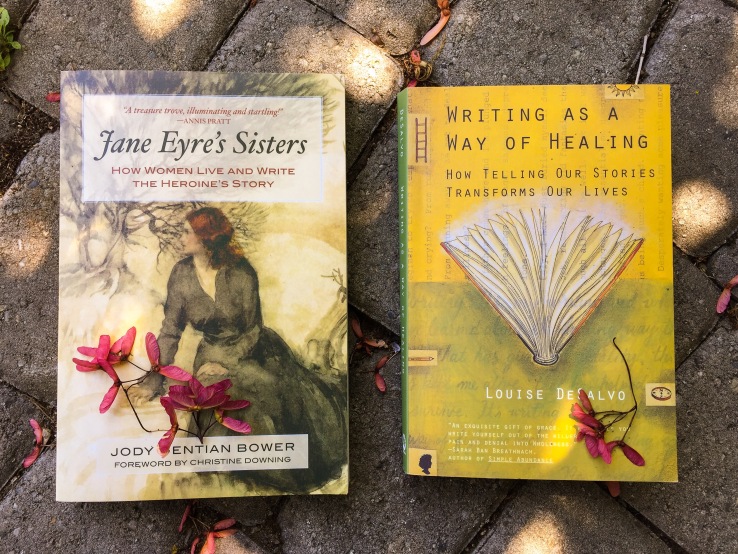
When I was staying in Port Townsend, I picked up a copy of Louise DeSalvo’s book, Writing As a Way of Healing, at The Writers’ Workshoppe and Imprint Bookstore.

I’d heard DeSalvo speak at a free National Association of Memoir Writers teleseminar, and she was fantastic. (The founder of NAMW is my wonderful writing coach, Linda Joy Myers, who does an outstanding job connecting the best memoir writers and teachers with those of us trying to make our way through the wilderness of writing our own memoirs.)

I would say if you are writing a memoir, a novel, or any long-form work of nonfiction, or if you want to write about your life as a form of self-expression, this book is a must-read, a valuable companion to have at your side at all times while you work. DeSalvo’s voice is warm, wise, encouraging, and firm. She’ll help you develop a common sense writing practice that is less of a struggle and more intentional, self-caring, and restorative.

One of DeSalvo’s key points is that writing your story is healing and transformative, but only if you go about it the right way. As a medical librarian, I’m all for looking at what the scientific research has to say before making a claim about anything, and DeSalvo does just that.

We’ve all heard that writing can be healing, but simply venting emotions on the page may cause a writer to get stuck or even set the writer back. On the other hand, telling what happened in a dispassionate way – a mere listing of events – won’t do much, either.

Writers need to do both – honestly tell about events and honestly recount their emotions – and link them in a meaningful way. “A healing narrative links feelings with events.”

Research has shown that only when a person tells what happened with honesty, nuance, and detail that includes not just events, but feelings, and with the intention of unearthing and crafting a true, meaningful story – only then does writing about one’s life hold the possibility of transformation.

This is not easy. It requires honest self-evaluation and facing aspects of yourself you may have kept hidden. It requires putting yourself in the place of others so you can understand why they may have behaved in certain ways.

Vivid characterization, dialogue reconstructed to the best of your ability, movie-like scenes that highlight key events and emotional peaks and valleys, all woven into a narrative, is a lot of work, but it’s a way to re-experience life events that can bring catharsis, insight, and meaning.

DeSalvo points to research that suggests people who recall traumatic events in a vague, general way – without detail or nuance – have not yet begun the healing process. I was amazed when I read this, because my first drafts tend to be frustratingly superficial. As a child and adolescent, I’d numbed out to protect myself and, as an adult, to avoid grappling with painful events. Writing about them now often requires several drafts as I gradually mine through to the essentials of the experience. I thought this was a sign that I was a mediocre writer. DeSalvo helped me understand that this is a normal part of the healing and writing process.

Even though I haven’t finished writing my memoir, I’ve already reaped benefits. Writing about events that are emotionally difficult or that arouse shame indeed lose their repressive power over me once they are on the page.

Honoring people’s privacy is also a concern that can hold writers back, but DeSalvo encourages us to remember we are writing a draft, and that these issues can be carefully considered later, if we want to publish. At that time, we can make revisions to protect privacy.

She reminds us, too, that there is a lot to be said for public testimony (in a way that doesn’t harm others) about trauma and issues that society has pressured many of us to keep silent about. In the case of mental illness, for example, no one is healed and nothing can improve unless long-avoided issues are brought into the light of day and confronted.

For me, DeSalvo’s book is most valuable because she has given me a way to write a memoir without losing my mind. She breaks down the process into phases and walks me through each one: Preparing, Planning, Germinating, Working, Deepening, Shaping, Ordering, and Completing.

Not every phase is pleasurable, and if we have difficulty, we aren’t to blame ourselves, but persist. It’s just part of the process. We learn what we can realistically expect in each phase, which greatly reduces anxiety.

I’m still learning how to integrate writing into my everyday life so it becomes habitual, manageable, and enjoyable. I’m still learning how to care for myself as I write – for example, by writing in short, frequent doses so I’m not overwhelmed emotionally and by judiciously sharing my writing only with those who support my work and have some understanding of the rigors of the process.

I should add that, as I’ve excavated my life and the effects of my mother’s mental illness on our family over the years, I’ve had the help of an excellent therapist. DeSalvo encourages writers to connect with a good therapist if they’re having difficulties. Writing is not a substitute for therapy. She says: “I personally believe it is essential for people wanting to write about extreme situations to have skilled professional support while writing or to attend a reputable support group.”

There is so much more to this book. DeSalvo draws on the wisdom of psychologists, researchers, and well-known writers, integrating their knowledge into a compelling and enormously helpful guide.

Many, many passages in my copy of Writing As a Way of Healing are underlined. Here are a few:

“Sometimes the writer is unsure about precisely what happened because…she or he was in a state of shock or emotional numbness while it was happening. The most basic and important survival tactics often involve blunting the emotions, carefully watching, splitting the consciousness (watching the event as if it’s happening to someone else), even splitting the self (into two or more personae). Finding words, finding literary forms to convey these self-preserving defensive tactics, these superlinguistic layers of meaning, often seems impossible.”

“Virginia Woolf said moments of profound insight that come from writing about our soulful, thoughtful examination of our psychic wounds should be called ‘shocks.’ For they force us into an awareness about ourselves and our relationship to others and our place in the world that we wouldn’t otherwise have had. They realign the essential nature of our being.”

“In time, I learned how Zen artists and writers devote themselves to an orderly, contemplative way of life that prepares them for their work. But how doing their work, too, becomes a form of meditation. Work and life are deeply integrated.”

A quote by Henry Miller:“[Writing] lifts the sufferer out of his obsessions and frees him for the rhythm and movement of life by joining him to the great universal stream in which we all have our being.”

Note: After reading this post, my dear writing coach, Linda Joy, tried to leave a comment, but either WordPress or my comment settings didn’t allow her to. So I’m putting her words here, which I greatly appreciate:

What a wonderful essay about the essentials in writing memoir and narrating our truths. I have loved Louise DeSalvo’s book for years and was so happy when she joined us for two NAMW presentations last year! I also got the other books, Jane Eyre’s Sisters thanks to you Valorie, and love it. It offers a more accurate template for the heroine’s story, which is necessarily an internal journey, not just an external one. Thank you for illuminating these gems and what you find valuable in your lovely blog! – Linda Joy Myers

Thank you, Linda Joy.

Below are photos of Port Townsend, where I did some writing and read Louise DeSalvo’s book. Nature is a wonderful restorative when you’re writing memoir.

(By the way, the photo above shows Jane Eyre’s Sisters, which I also picked up at The Writer’s Workshoppe and Imprint Bookstore. I’m still making my way through it. Jane Eyre has a role to play in my memoir.)


IMG_3333
My airbnb had a secret garden with a view of Puget Sound, which has many moods…


IMG_3330
7 a.m.


IMG_3450
Shades of pink as sunset approaches


IMG_3473
One morning I woke up and saw the Cascades.


IMG_3384
A blue and gray day


IMG_3493
I zoomed in with my iPhone so the photo is grainy, but this day was exceptionally crisp and clear.


IMG_3465
Port Townsend has many fascinating and unusual shops where you just want to linger. (Note the reflection of the bay in the window.)


IMG_3456
I bought this luscious Australian mohair in another color at Bazaar Girls Yarn Shop & Fibre Emporium on Quincy Street for my sister-in-law. They are a crafting community, crafting community. Don’t you love their tagline?


IMG_3376
The Port Townsend Farmer’s Market is lots of fun, and a good place to meet people because everyone there loves to talk about the wonders of living on the Olympic Peninsula. The musicians below are Ranger & the Re-Arrangers, a Gypsy jazz band from Seattle.


Becoming Wise

A quick post today….

IMG_2995In my last post I told you about the wonderful Browsers Bookshop I visited in Olympia. In addition to The Eagle Tree, by Ned Hayes, I picked up a copy of Becoming Wise: An Inquiry into the Mystery and Art of Living by Krista Tippett, who hosts and produces one of my favorite public radio programs/podcasts, On Being.

This book is a bit hard to describe, but I think you will like it if you wonder about the great spiritual and ethical questions of our time and enjoy hearing from some of our greatest contemporary thinkers – scientists, physicians, psychologists, poets, theologians, activists, etc.

This is essentially what Krista Tippett does on her radio program – engage in the art of conversation with them as they probe the meaning of life together – and in Becoming Wise she’s included highlights of some of these intriguing interviews, organized around the themes of Words, Flesh, Love, Faith and Hope.

The book jacket calls Becoming Wise a master class in living, curated by Krista Tippett. It left me feeling uplifted and hopeful, and I think it will leave you the same way.

Here are selected passages:

“I’m stretching my point only a bit when I say that in American life, every vision must begin and end in an economic argument in order to be heard, on urgent matters of human life: education, immigration, refugees, prisons, poverty, health care…

…we are bigger and wilder and more precious than numbers, more complex than any economic outcome or political prescription can describe.”  Krista Tippett

“Centering prayer, spiritual direction, retreats, and meditation sat quiet for centuries, largely reserved for “experts,” the cloistered, monks or nuns or dedicated oblates and pilgrims deep inside all of our traditions. Now, even as many Western monastic communities in their traditional forms are growing smaller…..their physical spaces for prayer and retreat are bursting to the seams with modern people retreating for rest and silence and centering. They are learning arts of contemplation to take back into their families and workplaces and communities and schools.” Krista Tippett

********

“…there is something deeply built into us that needs story itself. Story is such a source of nurture that we cannot become really true human beings for ourselves and for each other without story – and without finding ways in which to tell it, to share it, to create it…

Do we exist for some reason other than competing with China or finding the best possible technological advances? Are there some things that are even deeper that we are meant for, meant to be, meant to do, meant to achieve?” Vincent Harding

********

“We all come from a single source. Everything that lives has its genetic code written in the same alphabet. Unity creates diversity. So don’t think of one God, one truth, one way. Think of one God creating this extraordinary number of ways, the 6,800 languages that are actually spoken. Don’t think there’s only one language within which we can speak to God.”  Rabbi Lord Jonathan Sacks

********

“…anybody who travels know that you’re not really doing so in order to move around – you’re traveling in order to be moved. And what you’re seeing is not just the Grand Canyon or the Great Wall but some moods or intimations or places inside yourself that you never ordinarily see when you’re sleepwalking through your daily life.”  Pico Iyer


IMG_2987
An enticing sign in front of Browers Bookshop.


This post and my last have been a tribute to independent bookstores like Browers Bookshop. Many thanks to Browers for putting Becoming Wise where I could find it.

I picked up an interesting little booklet of two reprinted articles by Ann Patchett with an appendix listing some of her favorite books, called The Care and Feeding of an Independent Bookstore. In it she writes of her own bookstore, Parnassus Books and, by extension, all good bookstores.

“All my life I’ve been telling people what to read. Ask my family, ask my friends. It’s the habit of all passionate readers. When you read a book you love, the experience is not complete until you can turn around and say to someone else, ‘You have to read this book. You will love this book.'”

“Book by book, our customers vote against free overnight shipping in favor of a community of book lovers.”    Ann Patchett, The Care and Feeding of an Independent Bookstore


Secret Garden
My temporary secret garden on the Olympic Peninsula. The Strait is beyond the fence.


Do you have a favorite bookstore? Tell us about it.