
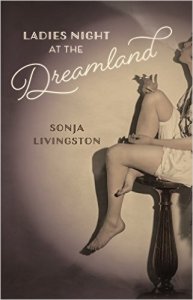
 “…she listens to reports of war in Europe…people lean in to discuss FDR, the Lindbergh baby, Amelia Earhart’s final flight…Audrey stands in line, overhearing news of the McCarthy hearings, Eisenhower, and Nixon…she watches anchormen speak of Korea, Vietnam, and the Cold War, start to finish…Satellites, astronauts, and the moon landing. Martin Luther King and Kennedy, their eventual assassinations, until talk is replaced by Three Mile Island. Love Canal, the Exxon Valdez…She’s there for all of it: Iran-Contra and Monica Lewinsky. The invention of the automatic coffeemaker, the atomic bomb, personal computers. The years fall like spent leaves…Audrey remains at the Saint Lawrence State Hospital from 1931 to 1996.” — Ladies Night at the Dreamland, by Sonja Livingston
I recently wrote about Sonja Livingston’s first essay collection, Queen of the Fall, which was the 2016 choice for If All of Rochester Reads the Same Book, and her memoir, Ghostbread.
Now she has a new collection just published, a strange and haunting meditation on the lives of women and girls from the past. Some of these women were accomplished and briefly famous, some were trail-blazers and rule-breakers, others were unremarkable on the surface but heroic in their strength and endurance, and some were outright victims.
Sonja is from Rochester, and several of the women she writes about have connections with upstate New York where I live.
It’s difficult to describe these essays, they’re so clever, beautiful, and unusual. Ladies Night at the Dreamland is a great read if you want something very different. Using detailed, thorough research and brilliant conjecture, Sonja sheds light on women who were largely ignored and gives them a dignity they never had in life. Often, Sonja inserts herself in the stories she tells in moving and provocative ways.

The collection of essays is framed by two imaginary scenes in 1920 that take place at the Charlotte Beach carousel on Lake Ontario in Rochester, New York, and at the dance hall that once stood there, known as the Dreamland. (It burned to the ground in 1923.) My husband and I visit the carousel on hot summer nights when we want to walk by the lake and cool off. Charlotte Beach was once known as the Coney Island of the West.
In the last of the two scenes, Susan B. Anthony, who is buried in Rochester’s Mount Hope Cemetery, which is across the street from the medical center where I used to work, makes an appearance and speaks with Sonja. The author dresses Susan in the flapper get-up of the day, and tells her that the Nineteenth Amendment has passed. Thanks to Susan’s hard work, finally women have the right to vote.
One after the other, the women Sonja has written about gather around Susan B. Anthony to speak with her and thank her.
Sonja Livingston wrote these essays with love. Here are a few of them:
“Some Names and What They Mean” Carmen, Wanda, and Michelle were young girls strangled, raped, and killed in the early 1970s in Rochester by a serial killer known as the Alphabet Murderer.
Carmen managed to escape from the killer, and was seen by drivers running along 490 West, but no one stopped to help, and her abductor caught up with her. Sonja imagines herself back in 1971, driving on 490; she sees Carmen and rescues her. They drive on and encounter Wanda and Michelle, and rescue them, too. Together in the car, Sonja asks them who they’d like to become and helps them choose new names.
“Mad Love: The Ballad of Fred and Allie” In 1892, a society girl from Memphis, Alice Mitchell, murdered her female lover, Freda Ward. Sonja tells their story, imagining what Alice thought and felt.
“Human Curiosity: A Circular Concordance” Krao Farini, known as “The Human Monkey,” was a carnival attraction loved by no one who eventually became the bearded lady at Coney Island.
“The Goddess of Ogdensburg: A Rise and Fall in Seventeen Poses” – Audrey Munson was an artist’s model for the greatest sculptors in the early 1900s. Her naked body is on the Pulitzer Fountain in Central Park and the Manhattan Bridge; in Penn Station; and atop the Municipal Building in Manhattan and other municipal buildings across the country. She died in a state mental institution in Point Airy, New York.
“The Opposite of Fear” Maria Spelterini crossed Niagara Falls on a tightrope in 1876.
“Freeze-Frame” Valaida Snow was an African American jazz trumpet player of enormous talent known as “Queen of the Horn” from east Tennessee. She played in Harlem, then Paris, then Germany, where she was imprisoned by the Nazis during World War II.
It’s especially gratifying to read these essays about women as Hillary Clinton runs for president. I imagine Sonja telling Susan B. Anthony all about it.
Do you read creative nonfiction? Any recommendations? Are there books that you love that are extra meaningful because they take place in the region where you live?
 By the way, Ann just released her new novel,
  Read a collection of essays:
  Read a dystopian or post-apocalyptic novel:
  Read a book over 500 pages long:
  Read a book of historical fiction set before 1900:
  Read a book about politics, in your country or another (fiction or nonfiction):
 “Humans don’t mind hardship, in fact they thrive on it; what they mind is not feeling necessary. Modern society has perfected the art of making people not feel necessary.
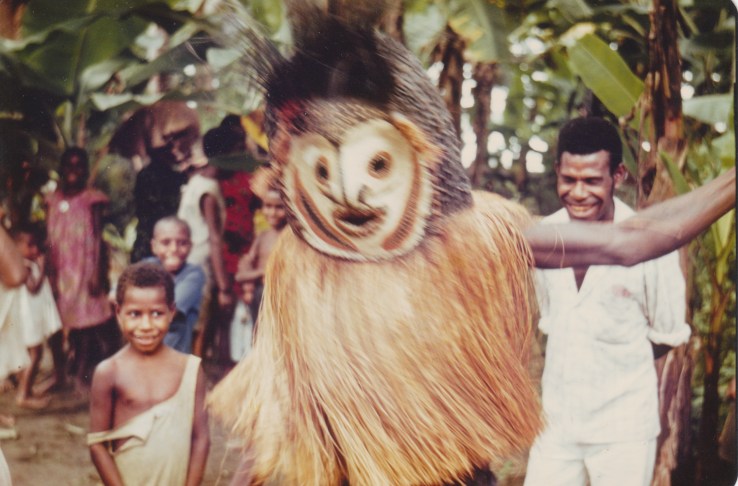
 “A Wood Mask, Kandrian Sub-District, Wosom Village, the oval white face with an hollowed mouth showing teeth and tongue, hollowed eyes, pierced ears, and the high forehead with three cylindrical shafts issuing feathers, strands of shells and pig teeth hanging from the ear lobes, painted with white, black and red pigments. Height 63 cm. (24 3/4 in.)




 What have you read this summer that you love? Let us know by leaving a comment via the link in the left sidebar.

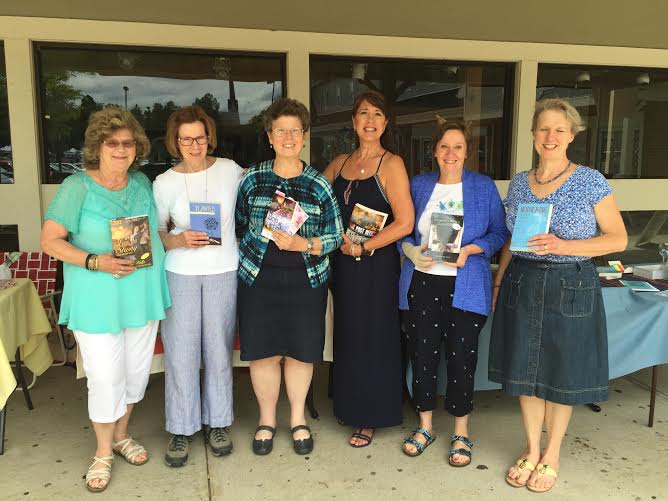 Left to right: Bev Lewis (writing as Beverly Wells); Kate Collier (writing as Katie O’Boyle & C.T. Collier); Ellen Hegarty (writing as Roz Murphy); Kim Cruise; Elizabeth Osta; Liz O’Toole
 “I usually write long historical romance–mostly set in western America in the 1800’s, but I will also have a Medieval anthology coming out in the fall/winter and a civil war novel in the future, as well as a Canadian Mounted Police novel. I’ve also been included in anthologies and novellas.
 “I started writing as a form of catharsis made necessary by having to watch my son suffer through drug addiction. You see, books save lives in the writing, as well as in the reading of them.
 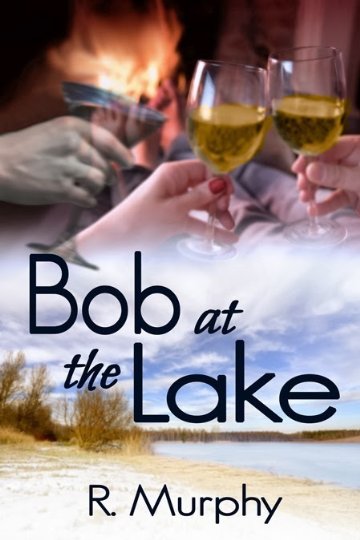 Roz Murphy’s Bob books [
 “In January 2012, my sister and brother-in-law invited me to celebrate the 90th birthday of a dear friend on the porch of
  And just published:
  At the height of the Irish famine of the 1840s, in a small town of Ahadallane, north of Cork City and south of Mallow, Jeremiah joins the rebels in the fight for Ireland’s freedom from British rule and learns firsthand the futility of violence. He and his best friend and brother-in-law, Father Michael Riordan disagree about the means to the end and ultimately take diverse paths when Michael is assigned to a parish in America.
 Mothering: An Art of the Heart is a collection of short and engaging stories that celebrate family life, told by nine moms who want to share the wisdom and experience they gained in the process of raising their children. Each story highlights a specific idea or activity that may be used by the readers to enhance their families’ experience as their children grow.
 Speaking of podcasts, I recently discovered a great book podcast, WSIRN, which stands for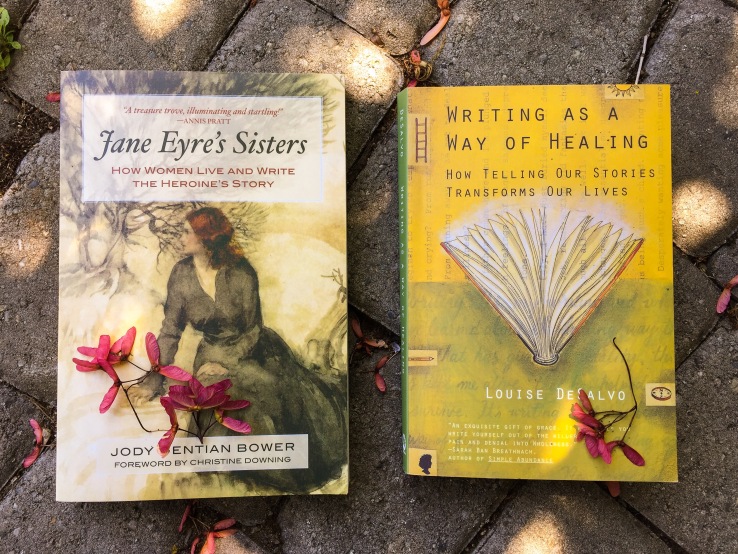


 Books Can Save A Life